Long-time London resident and avid museum and theatre-goer. I started this blog in 2014, and got serious about it in 2020 when I realised how much I missed arts and culture during lockdowns. I go to a lot more events than anyone would think is sensible, and love sharing my thoughts in the forms of reviews, the occasional thought piece, and travel recommendations when I leave my London HQ.
On a return visit to Hong Kong I make the most of staying in a new neighbourhood and explore Wan Chai, a restaurant and nightlife hotspot.
Google Searches Are Not Always the Answer
I recently had the very good fortune of making a return trip to Hong Kong. It’s one of my favourite places – I love the blend of warm climate, great food, friends to catch up with, busy city, and lush nature. On my last trip in 2024, I flirted with an arts festival, went in search of clan villages in the New Territories, learned about housing history in two museums in Kowloon, and visited Tai Kwun, a former police station turned cultural venue. This trip, like the last one, was more business than pleasure. But that doesn’t mean I can’t squeeze a few things into my down time.
I am something of a creature of habit in Hong Kong – normally when I visit, I have a favourite hotel I stay in, overlooking Tai Kwun. This time, however, I branched out. I stayed at the Hopewell Hotel, a new hotel in a skyscraper development that started in the 1980s. It is in Wan Chai, a district I’d come to before for restaurants, and to walk along the waterfront, but hadn’t previously stayed in.
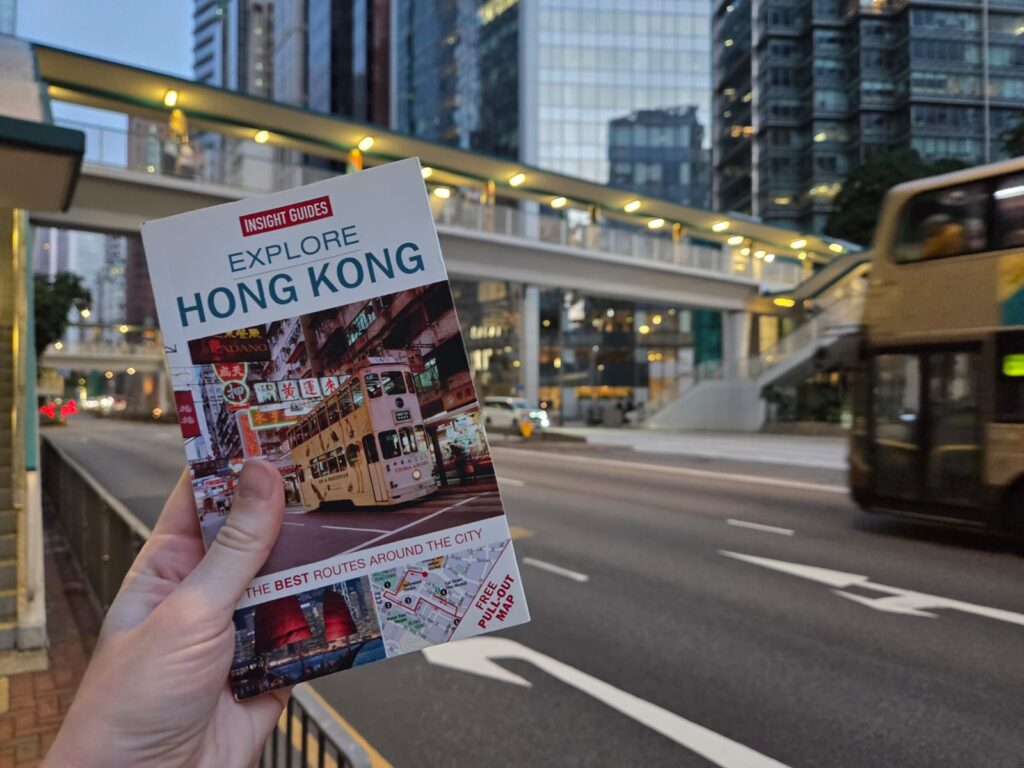
Given my flight landed in the afternoon, I needed to stretch my legs after landing and also find a way to stay awake until bedtime. I decided I would explore Wan Chai. I spent ages looking for a self-guided walking route online, but nothing was very satisfactory. It was only a day or two before my trip that I looked for the Hong Kong travel guides on my bookshelf, and remembered I had Insight Guides’ Explore Hong Kong. It’s the 2014 edition, so not everything is the same. But it’s got walking routes including not one, but two tours of Wan Chai. One was a nightlife walk, but the other was entitled ‘Wan Chai Afternoon’. Perfect.
We Start our Wan Chai Afternoon
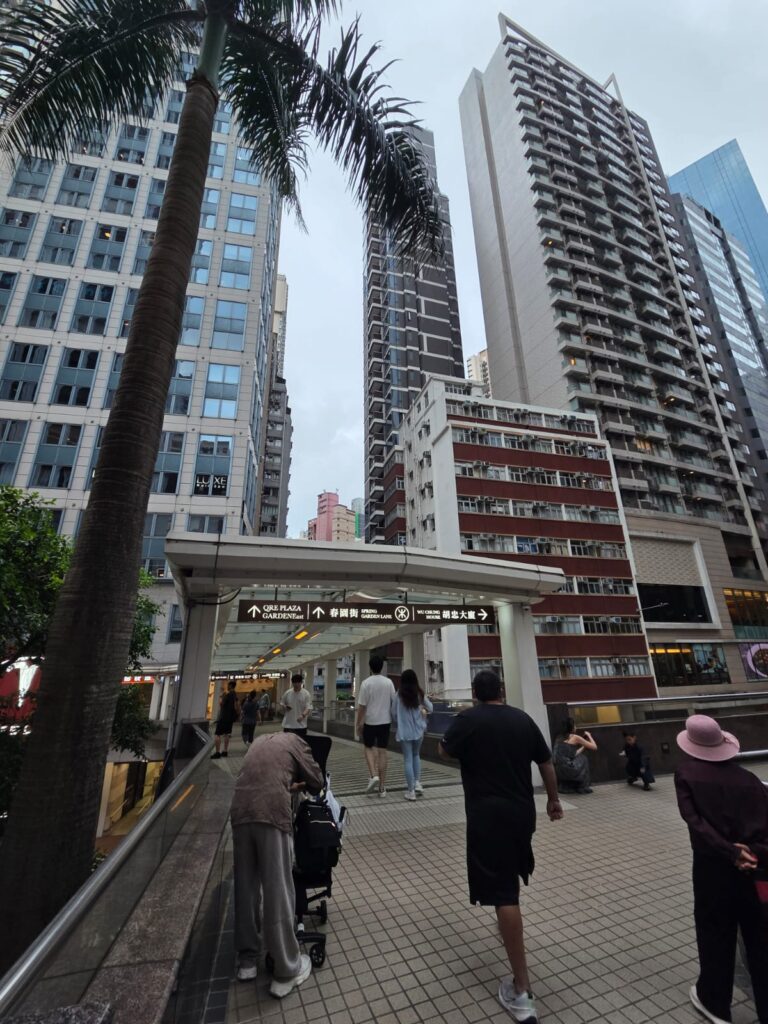
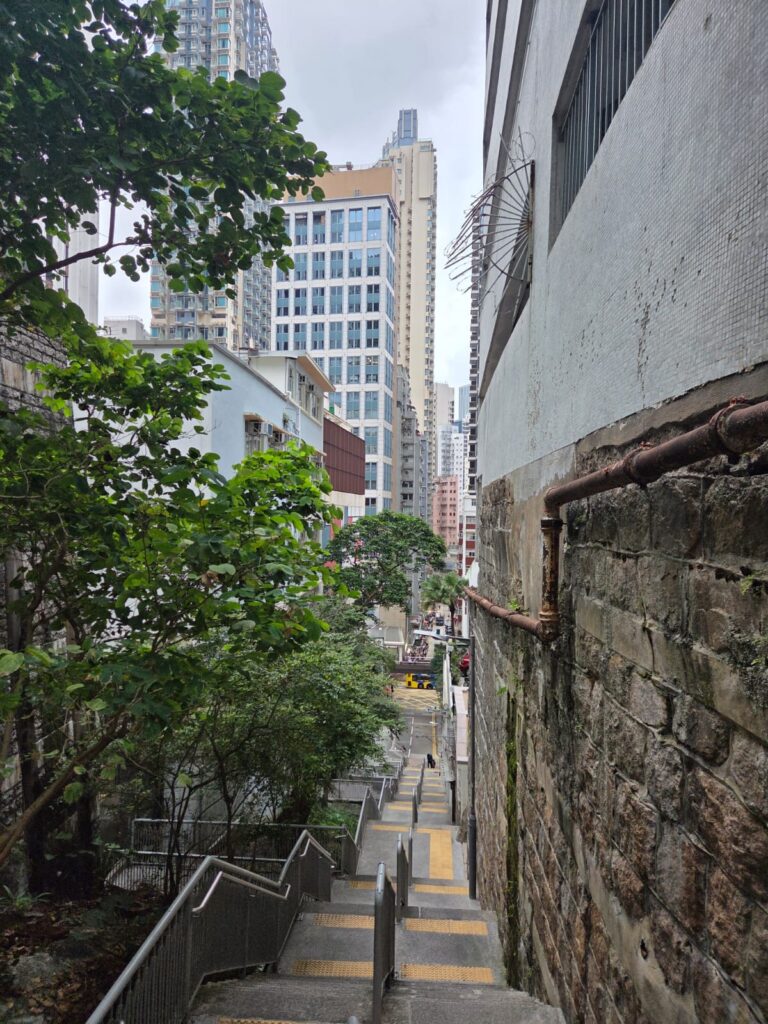
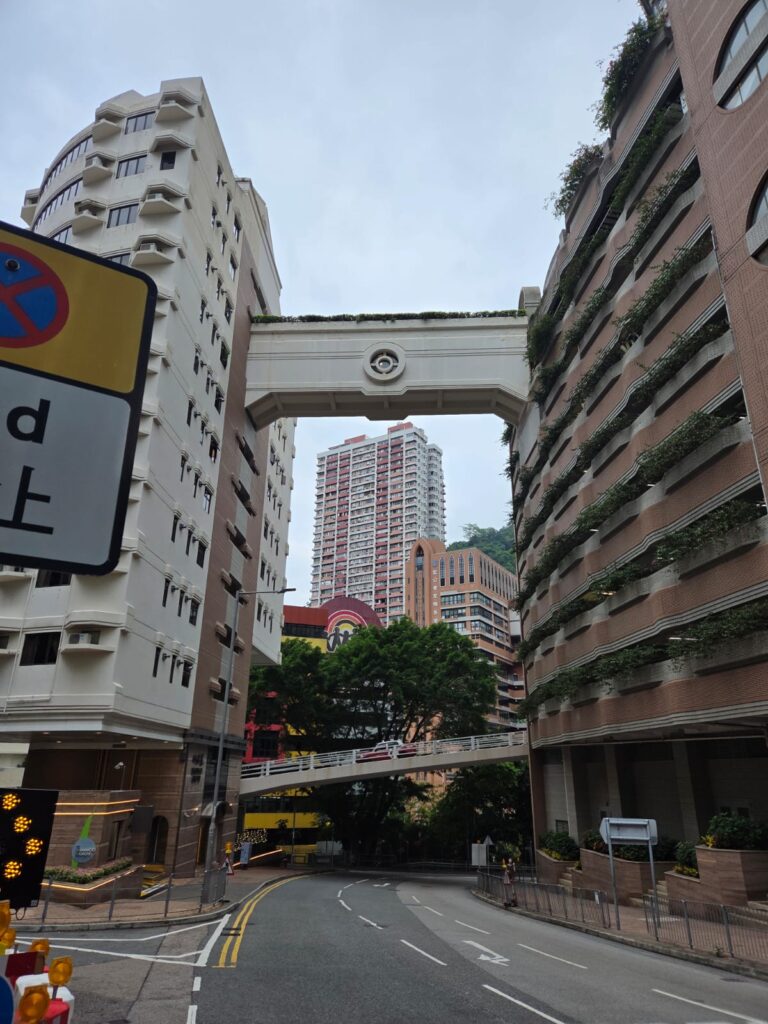
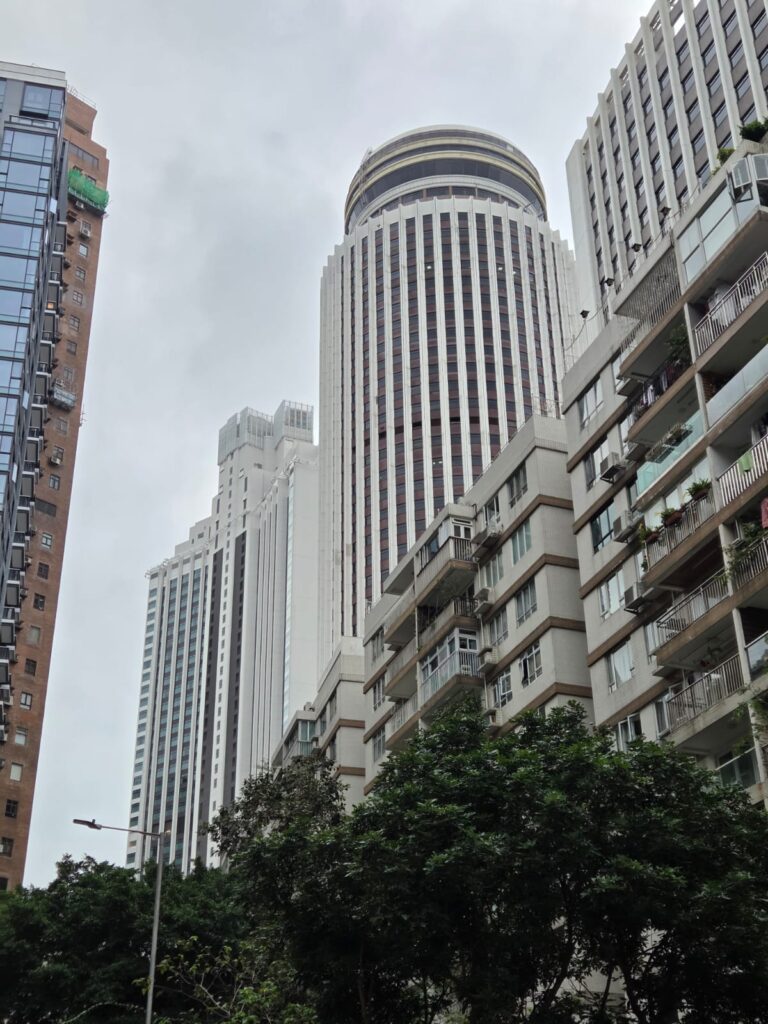
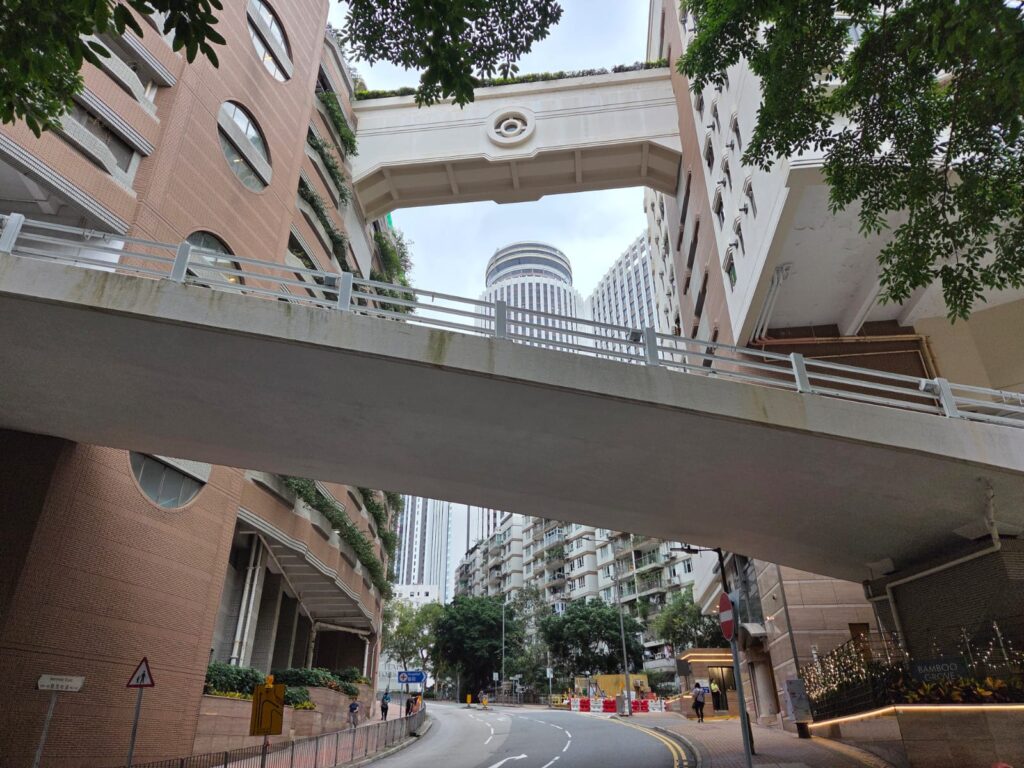
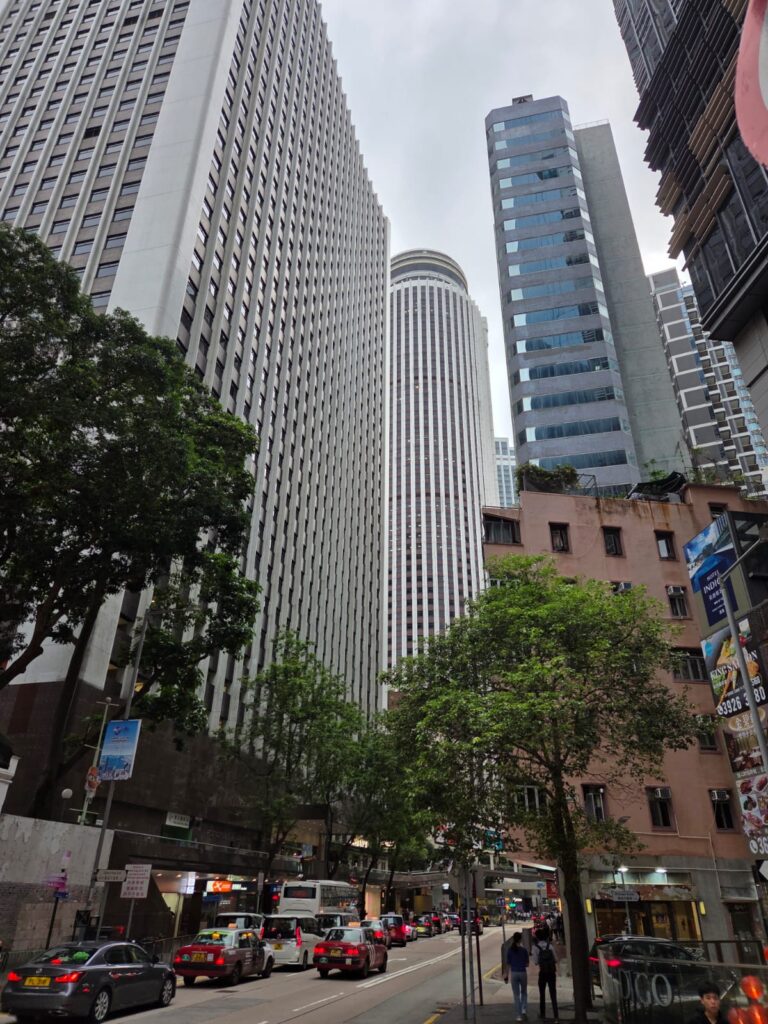
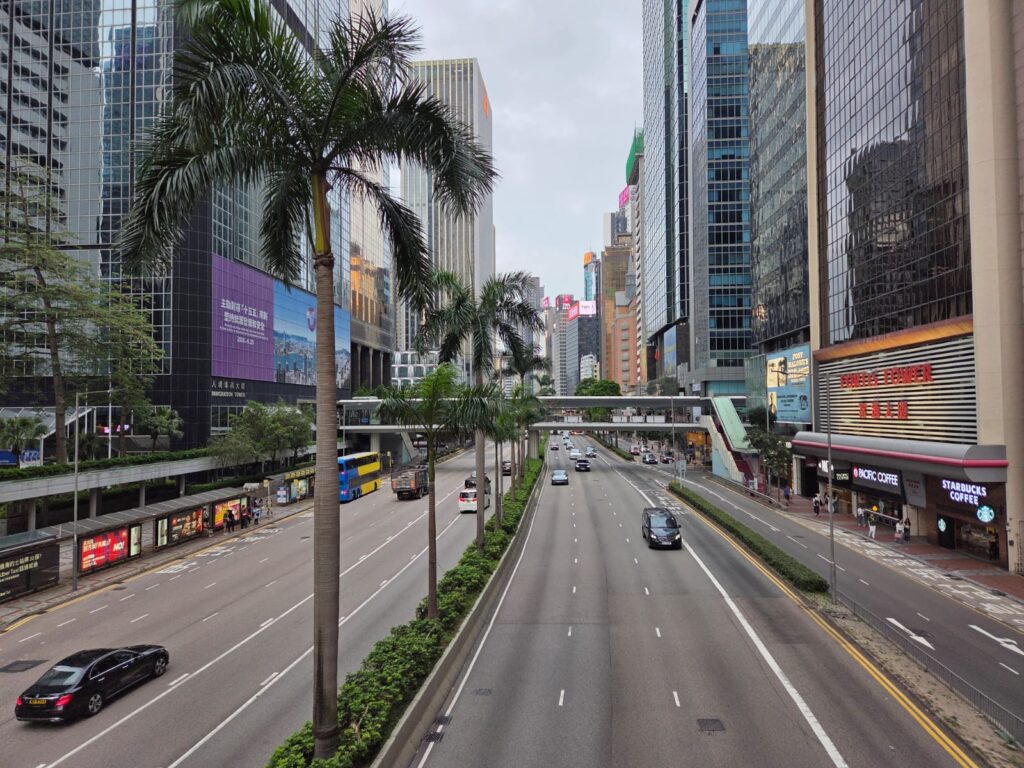
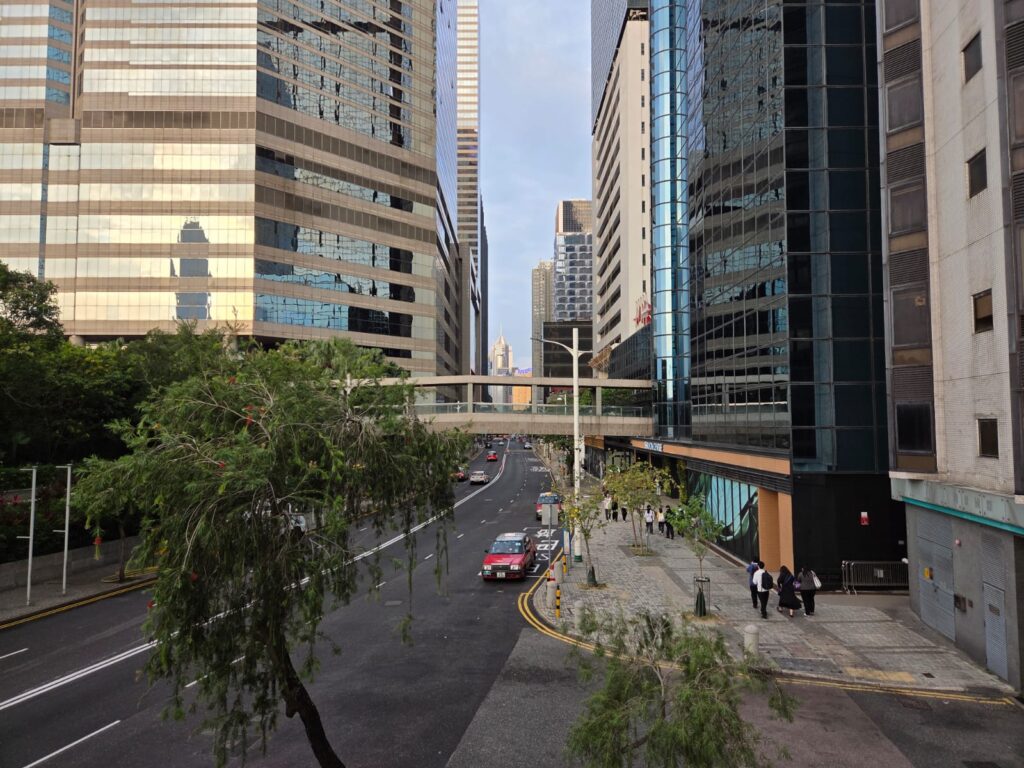
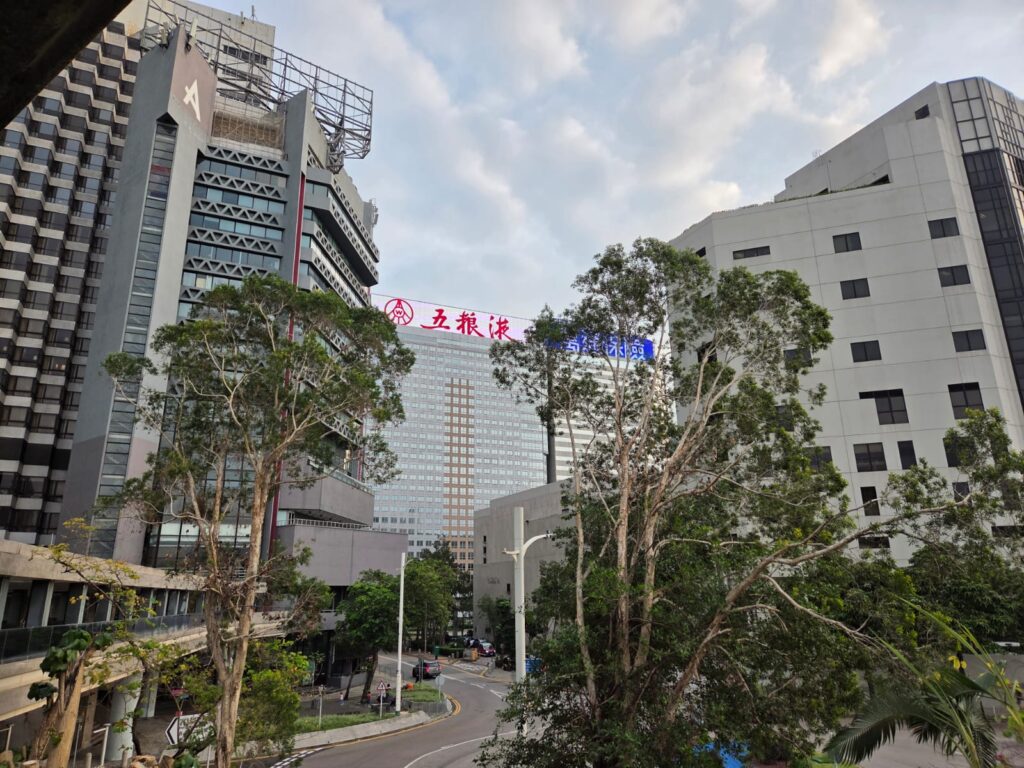
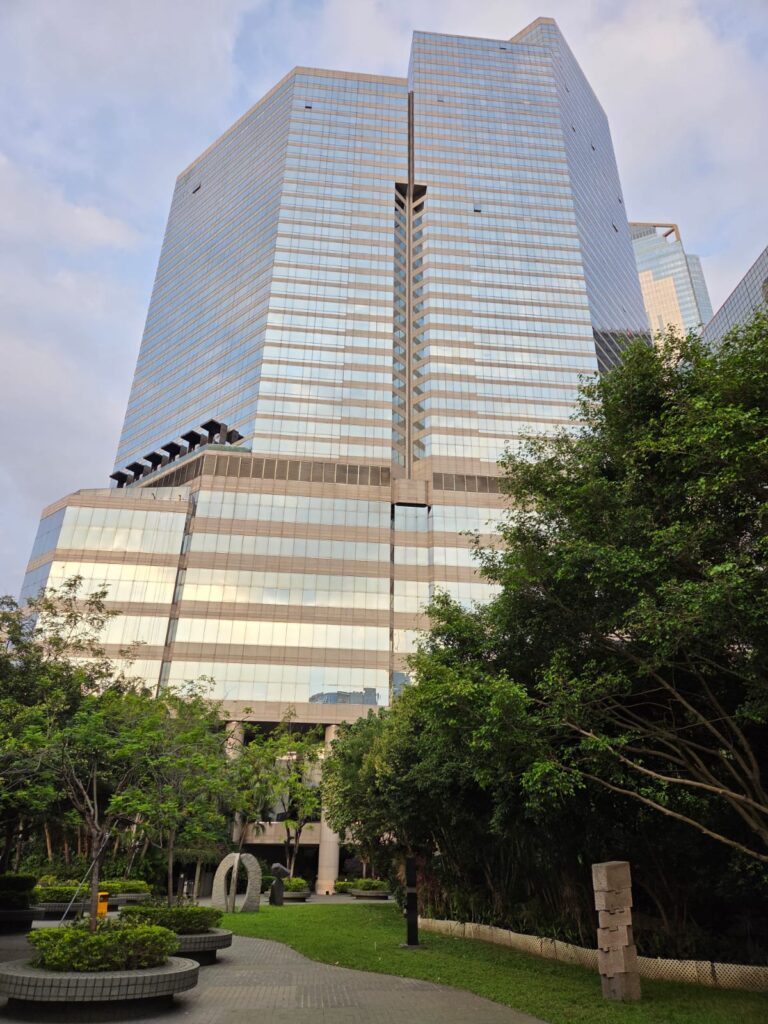
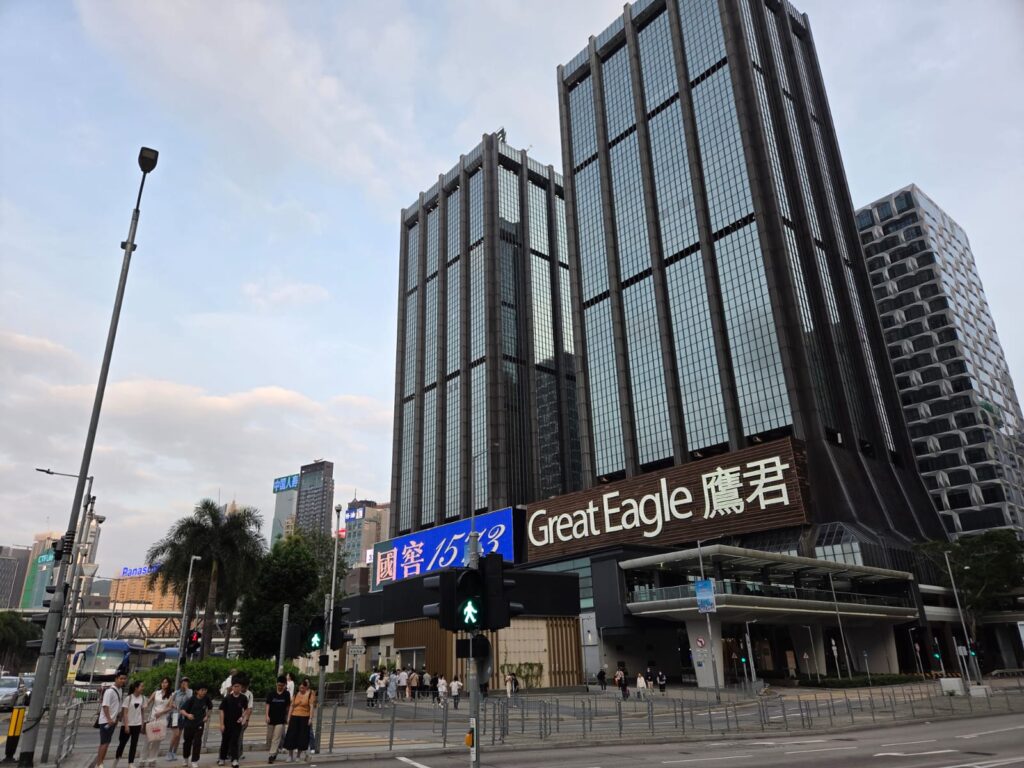
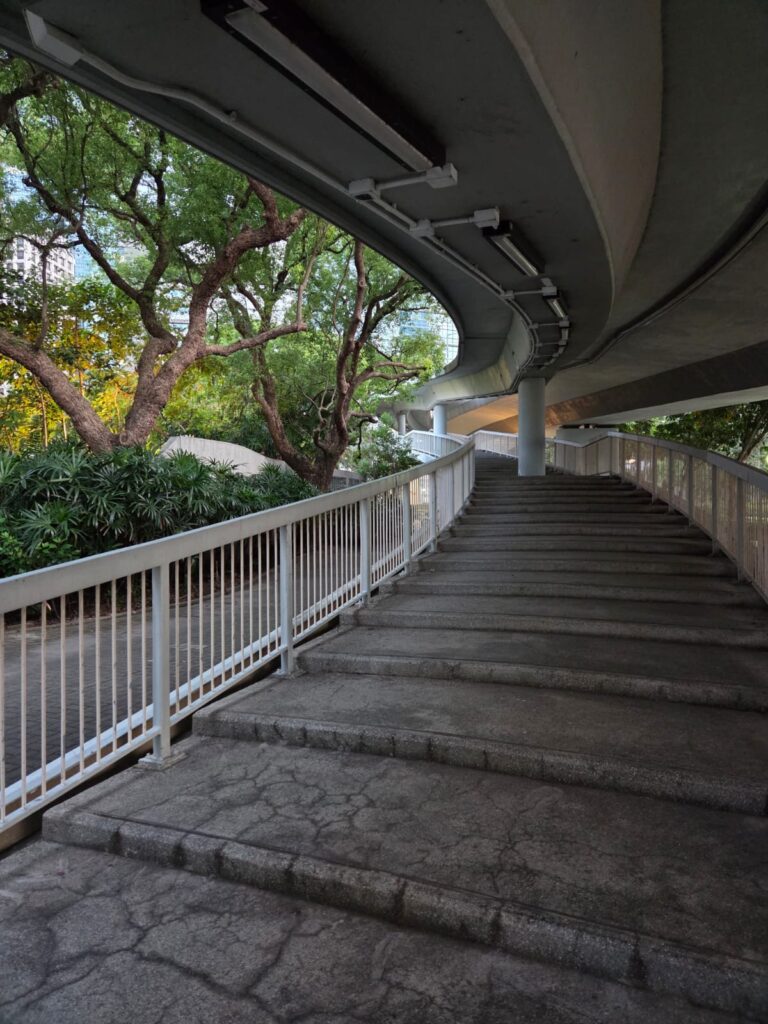
The first thing to do, which I often find is the case in Hong Kong, was to get my bearings. Call me a GPS system, but tall buildings often confuse my sense of direction. And Hong Kong is a city that works in 3D. A taxi had dropped me off on something like the 18th floor of one side of my hotel, but I needed to find a starting point for the walk at ground level on the other side. With a mall to contend with before I even got outdoors. Good luck to me, that’s all I can say.OK I think I need to go up these stairs. I’m looking for an MTR exit (Hong Kong’s subway) with tram lines, near Tai Yuen Street. While I’m getting my bearings, I may as well explain a little bit about Wan Chai. Wan Chai started out as a fishing village named Ha Wan. By the 1860s, it was a residential and commercial hub with lots of British merchants. In the 20th century it became a hotspot for bars, soldiers and prostitution, as immortalised in the book and film The World of Suzie Wong.We’ll just catch our breath quickly at the top of these steps.Quite a good representation here of multi-level living in Hong Kong, with one road above another. I’m starting to realise though that I’ve gone completely wrong and didn’t need to go up those steps at all.Should I go back down and start again? Or just work it out from here?You know what? This is one of the stops on the walk, so let’s start here. The Hopewell Centre, the 1980s skyscraper which forms part of a complex with my hotel and a mall, is this round building. Apparently it has a swimming pool on the roof, to counter the feng shui reading of it as a cigarette. It was the tallest building in Hong Kong in the 1980s, but is dwarfed by some of the later towers.
We Get Our Wan Chai Walking Tour Back On Track
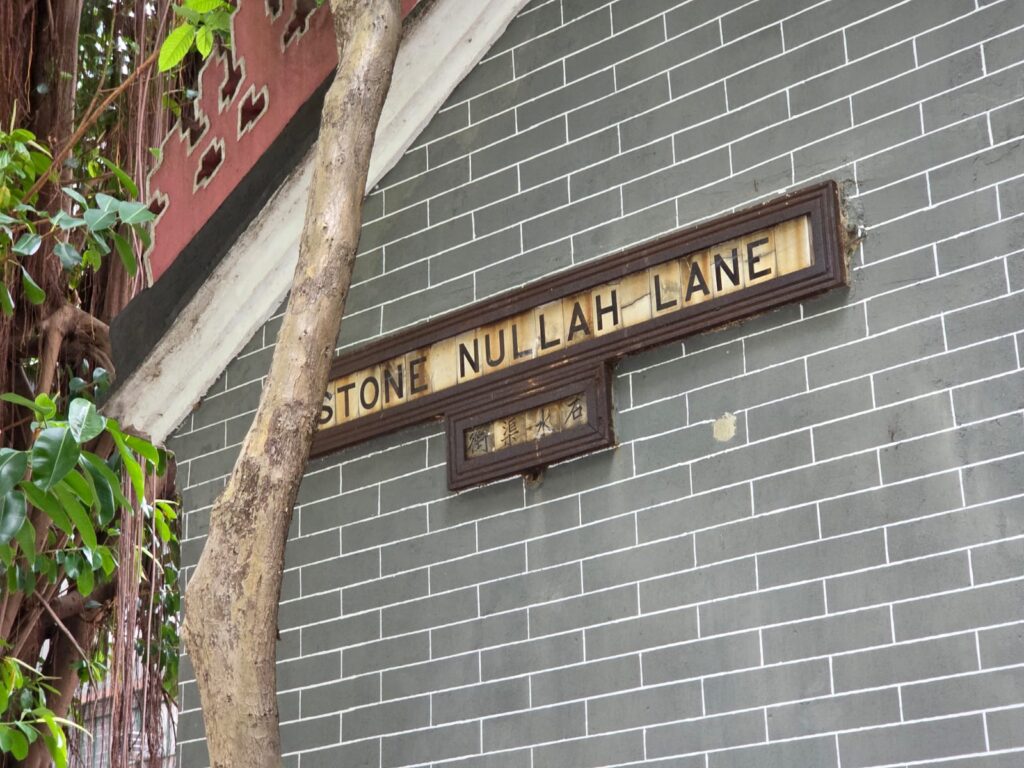
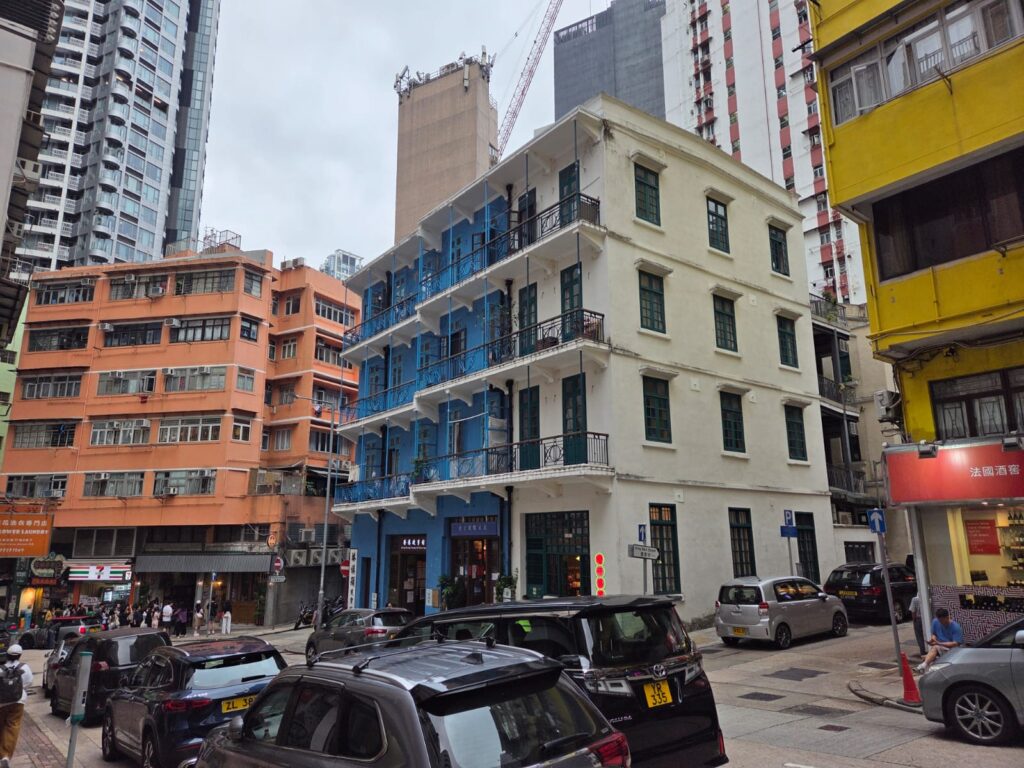
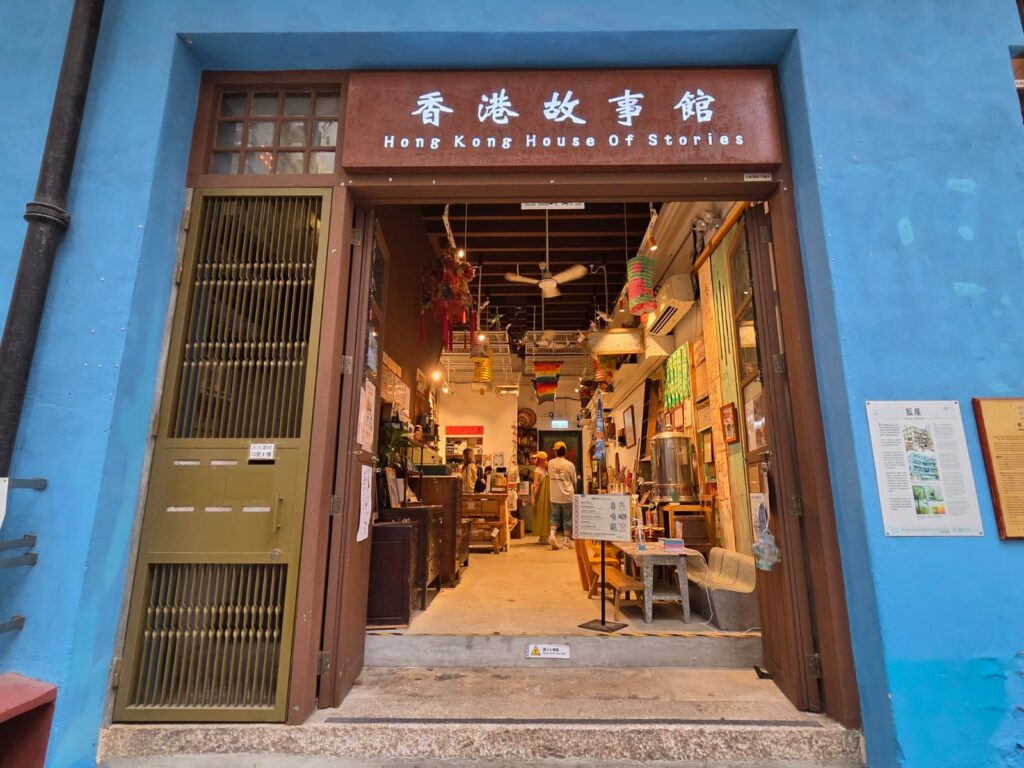
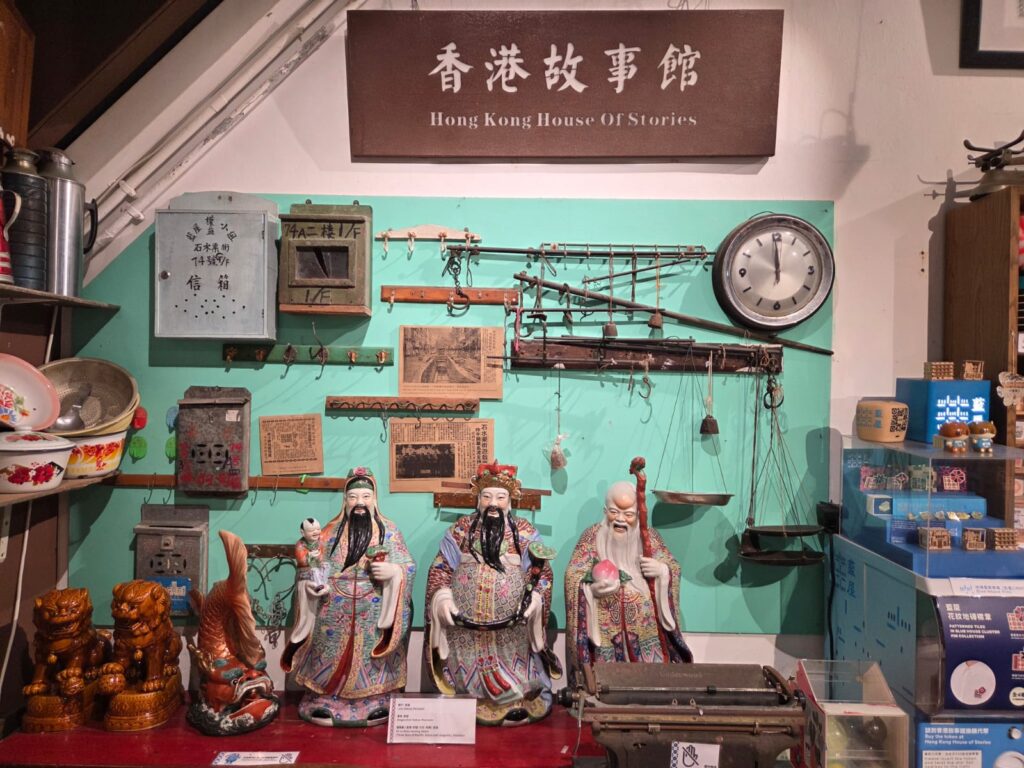
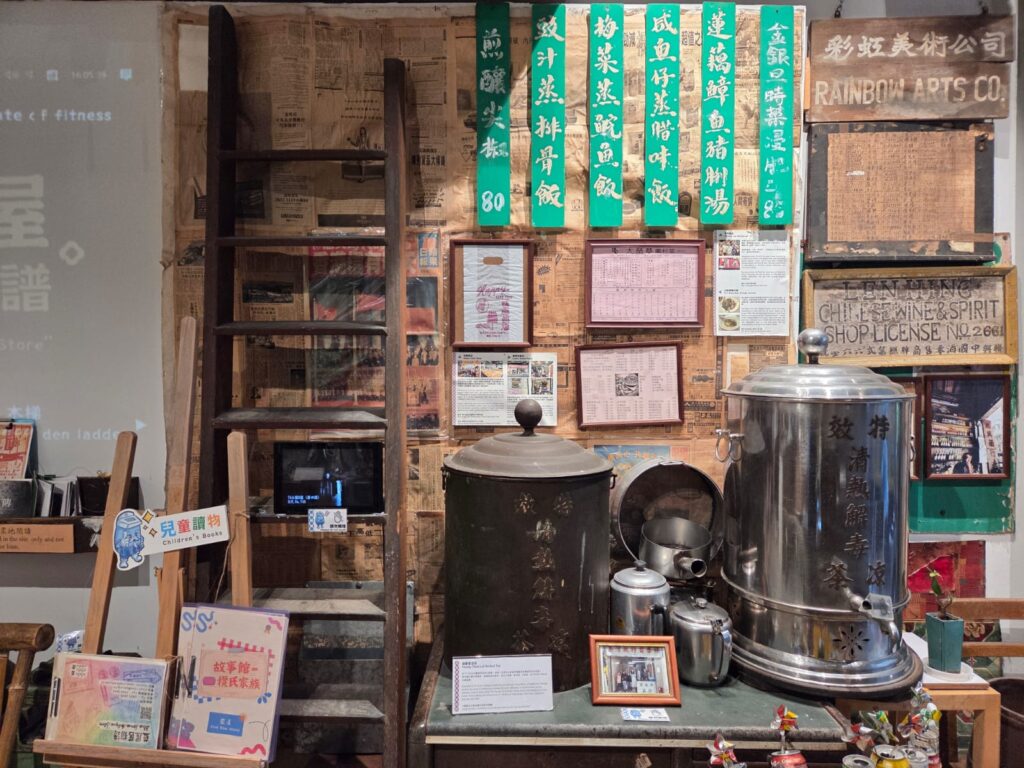
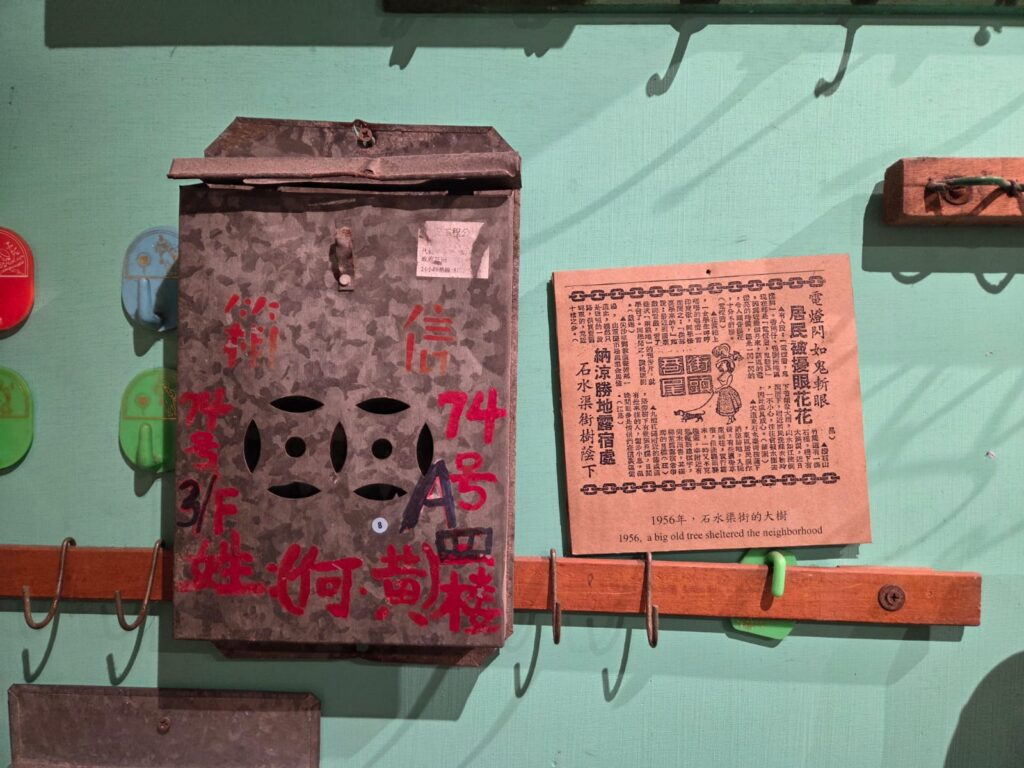
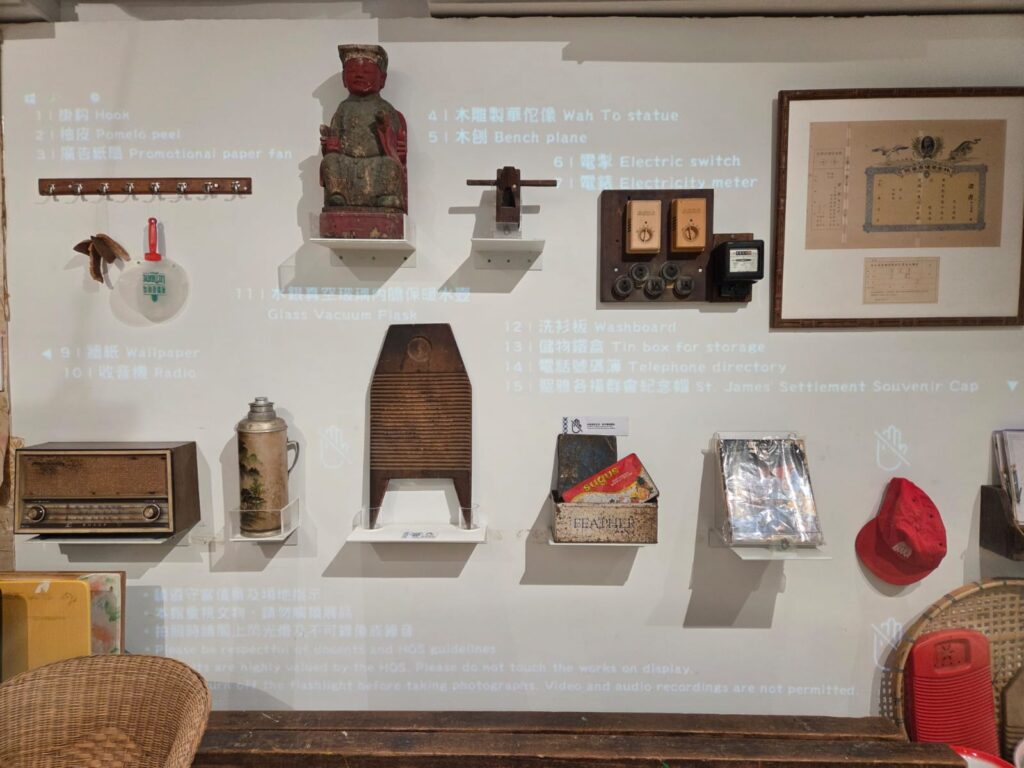
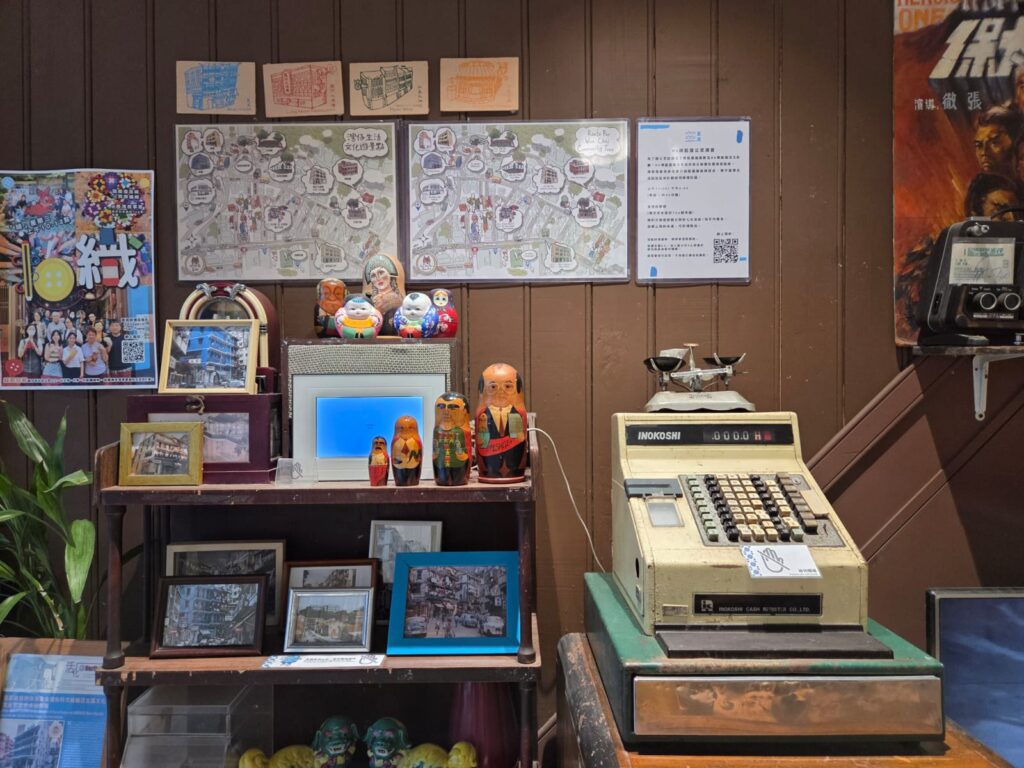
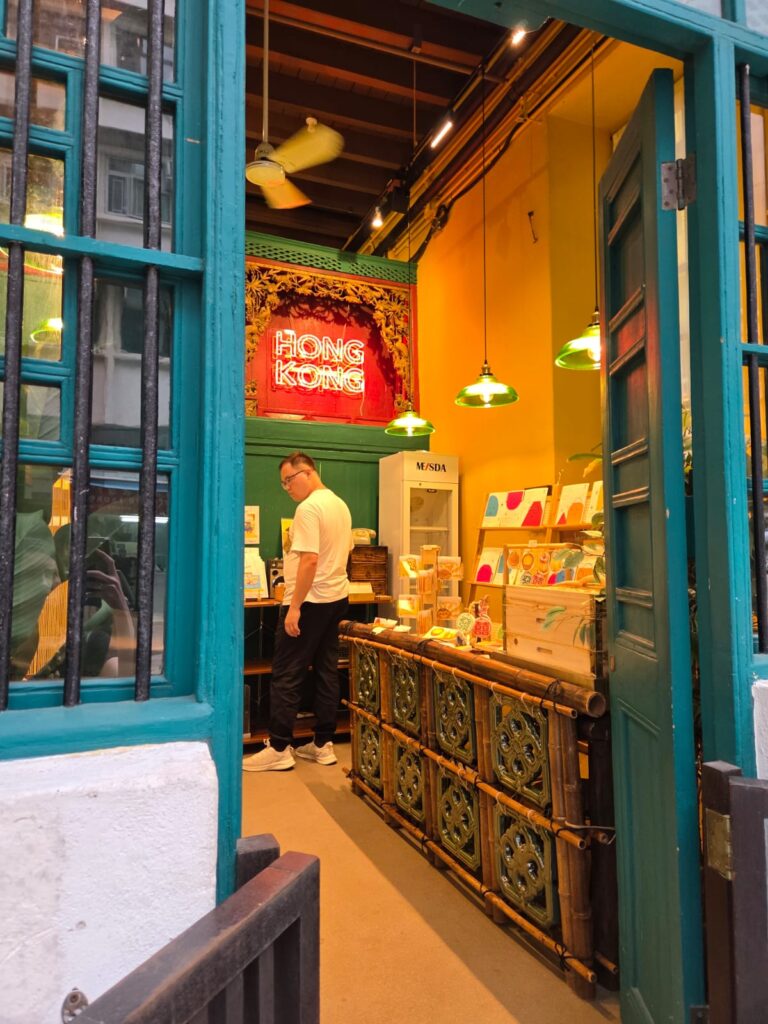
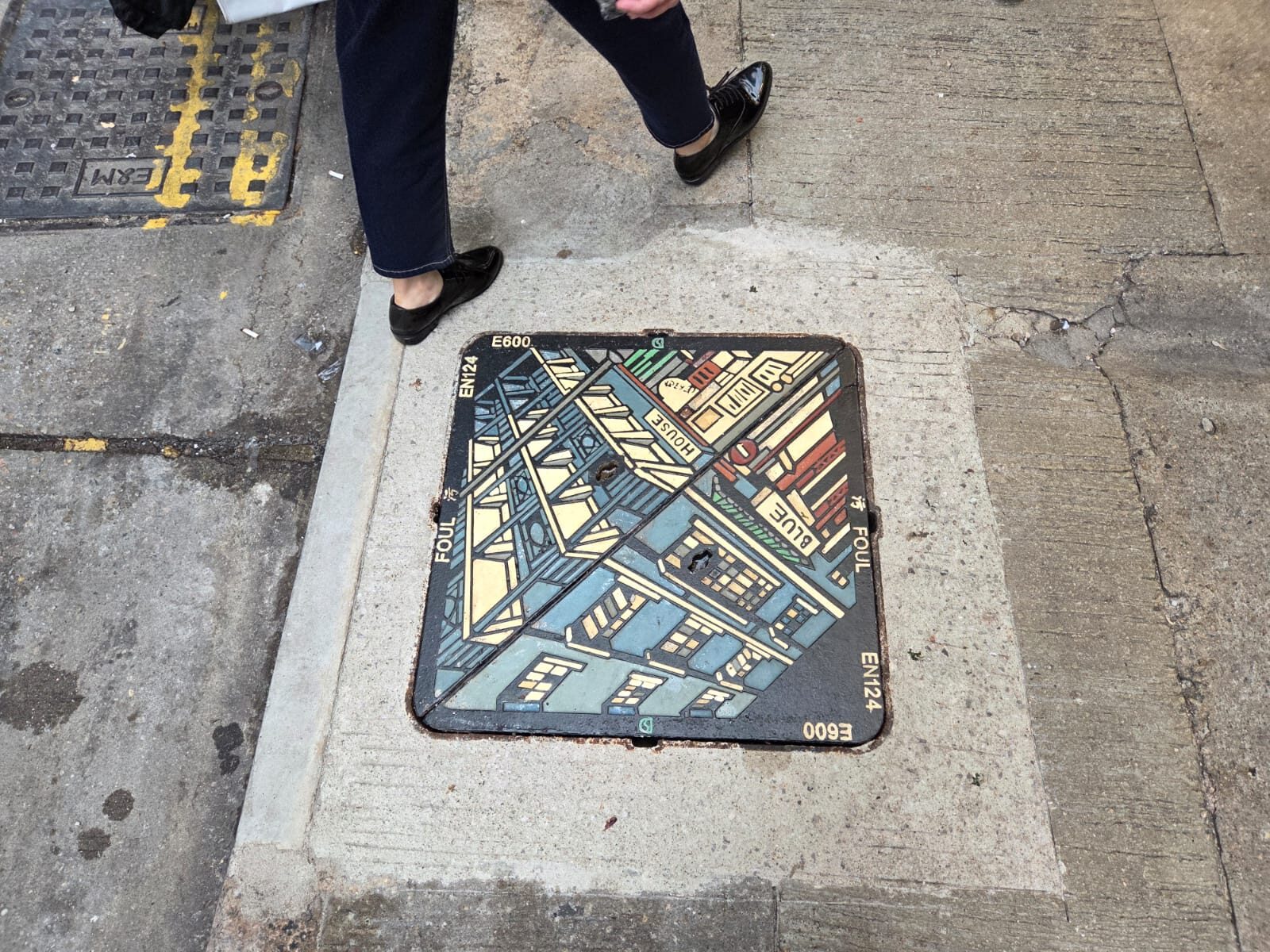
OK, I’m starting to figure out where I am. If I just follow this road around, I should come across……Pak Tai Temple! We did it, we’re back on track!By the time I arrived, the temple was closed for the day. But we can admire it from the outside. Pak Tai Temple, also known as Yuk Hui Kung, dates to the 1860s. Inside, there is a three metre tall, Ming Dynasty statue of Pak Tai, a Taoist deity associated with water and fishermen and particularly popular in Hong Kong. Three additional halls are devoted to other deities.The temple is on Stone Nullah Lane. This name is a memory of an earlier version of Wan Chai. A nullah is a word for a water channel, and there was one here until the 1950s, carrying a stream from the hills above: handy for washing laundry and for local businesses. Its outlet to the sea was once close, but extensive reclamation work has since pushed the shoreline far from here. As is often the case, the stream got polluted and smelly, and was culverted in 1959.Also on Stone Nullah Lane is the Blue House, a 1920s tenement building. At the time of my guidebook it was closed to the public, but there is now an interesting heritage and memory project on the ground floor. Not quite a museum, so no separate post, but intriguing.The Hong Kong House of Stories is free to visit. It contains a range of objects that were once familiar sights in Hong Kong residences – some but not all explanatory texts are in English as well as Cantonese.It’s quite a lovely jumble of memories – sort of a cross between something like Rome Museum in Grenada, and Heritage of Mei Ho House over in Kowloon. The latter also preserves the memory of a type of housing that has almost disappeared from Hong Kong: tenement style houses with shops below. If you’re in the area it’s definitely worth popping in, but I wouldn’t travel out of my way for it.The adjoining shops also lean into heritage nostalgia for old Hong Kong.The Blue House is also commemorated in the design for local manhole covers. This is part of a series of Hong Kong sights, with designs chosen in a competition in 2024.
From The Old Post Office to Hung Shing Temple
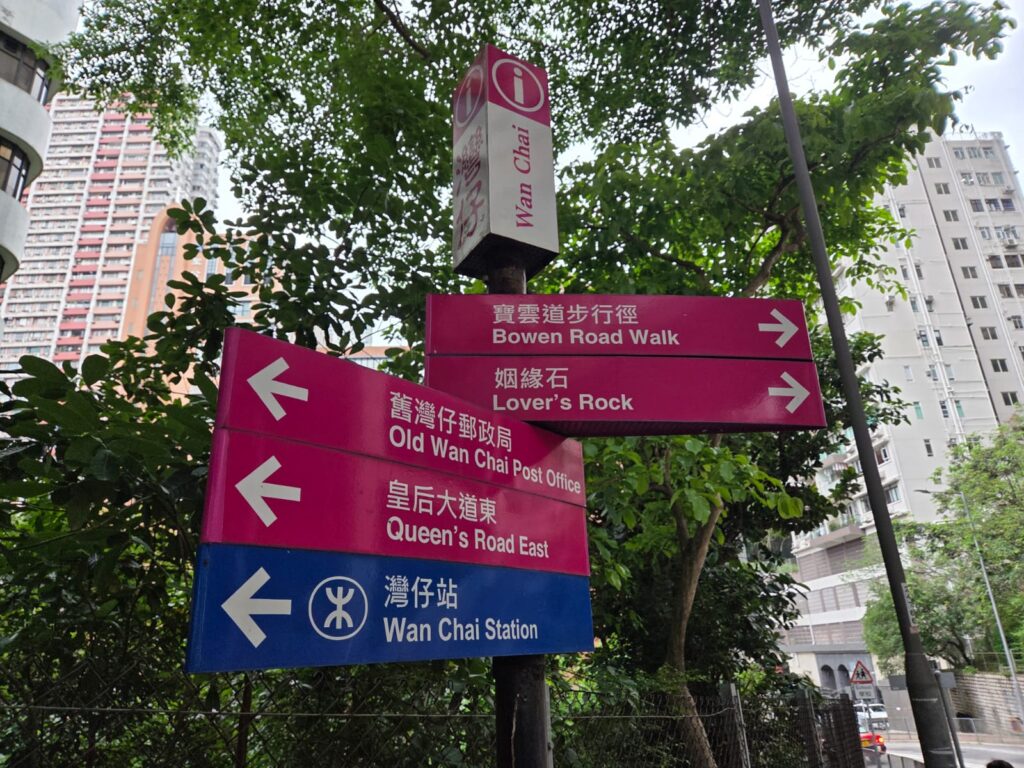
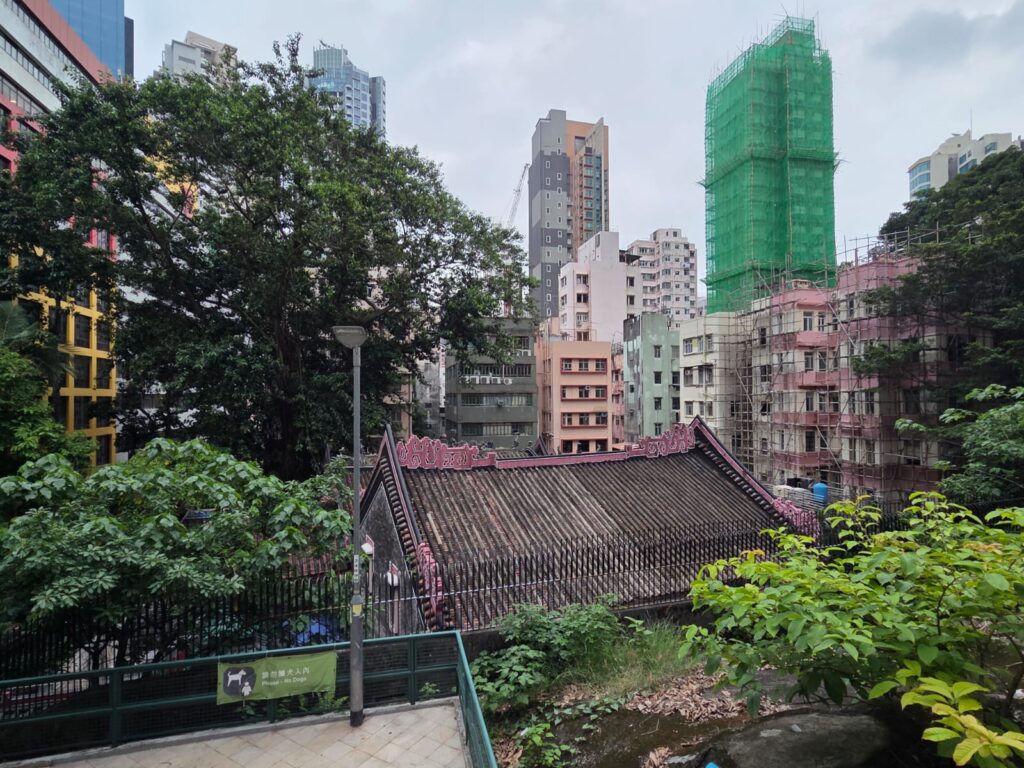
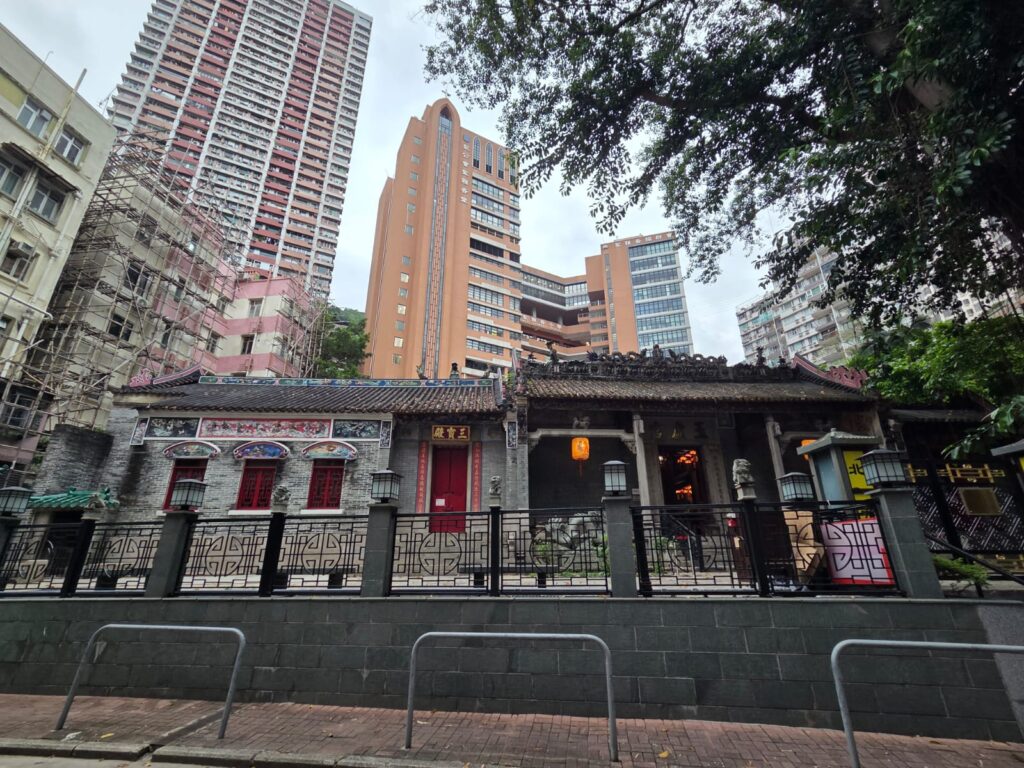
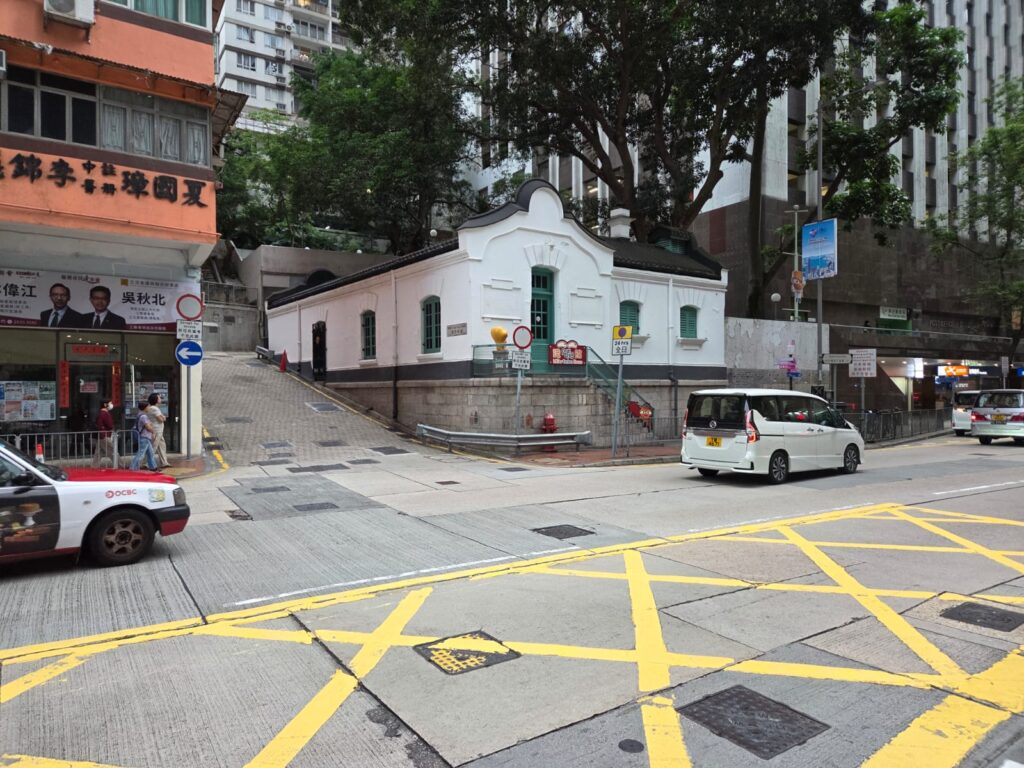
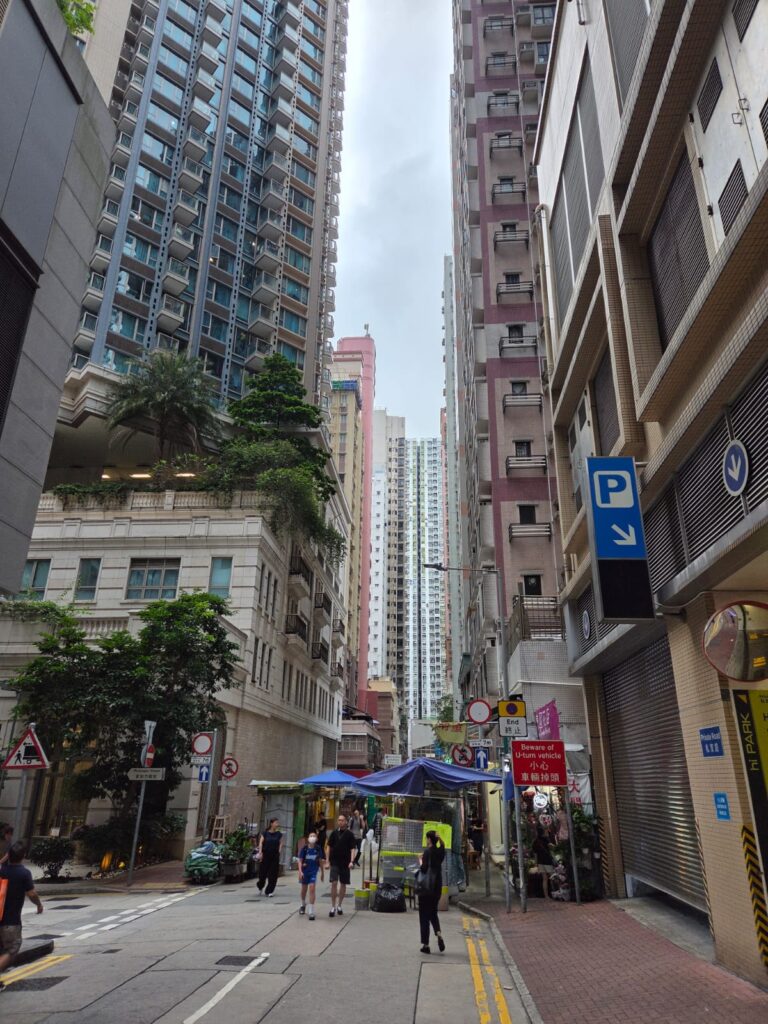
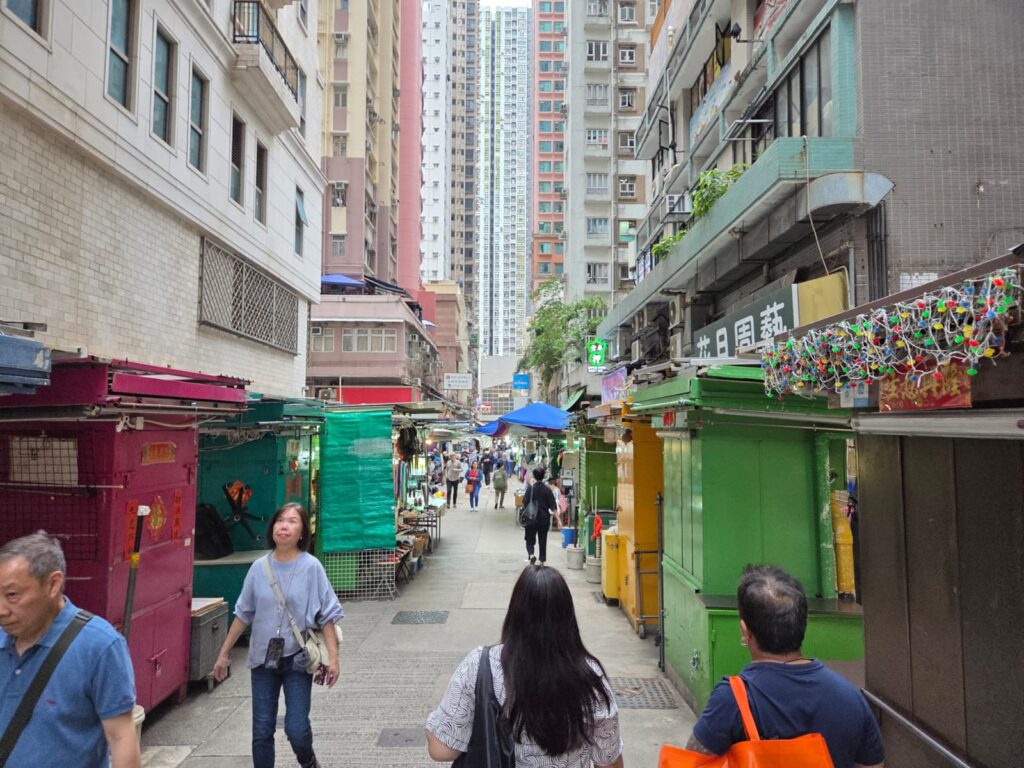
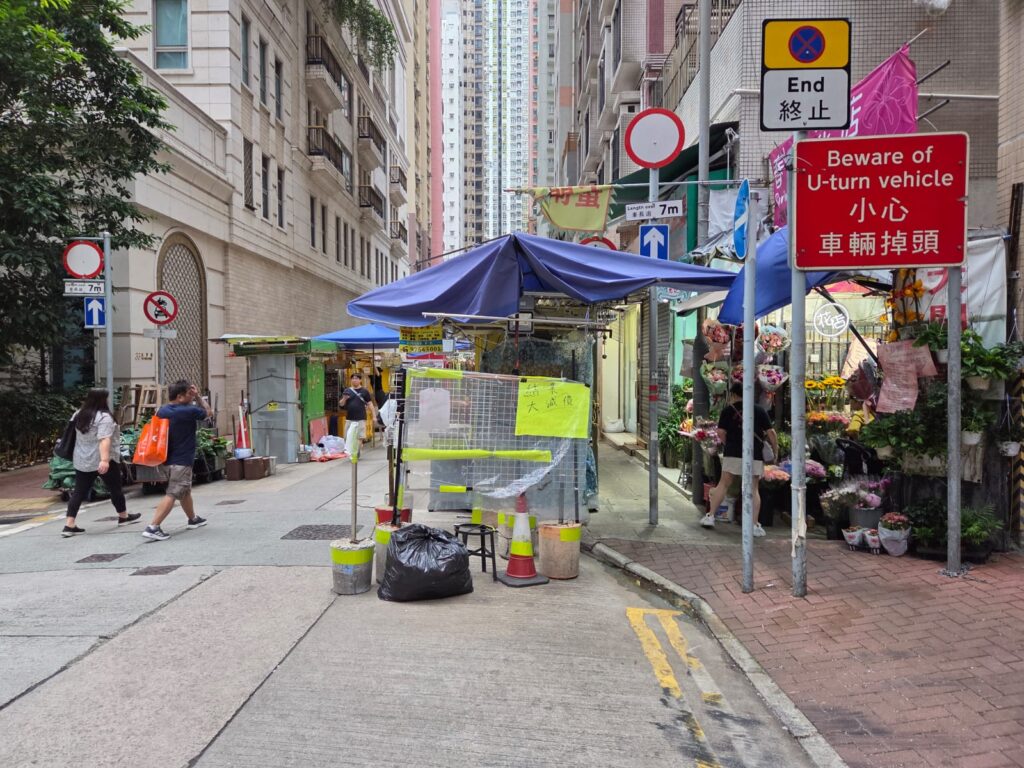
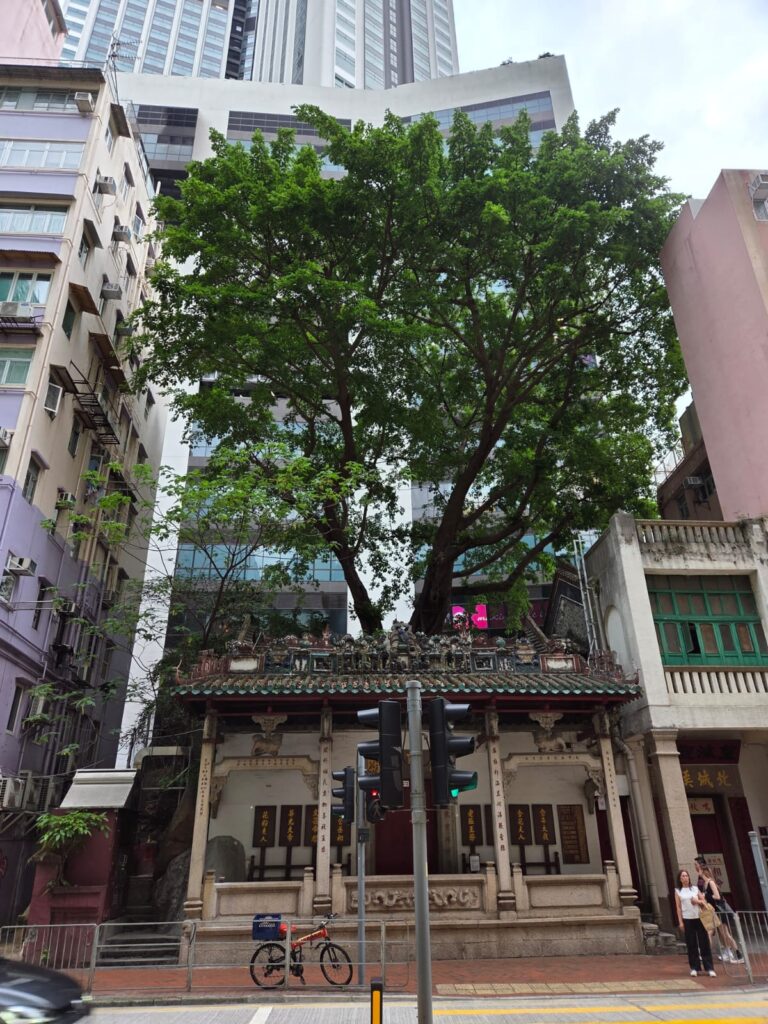
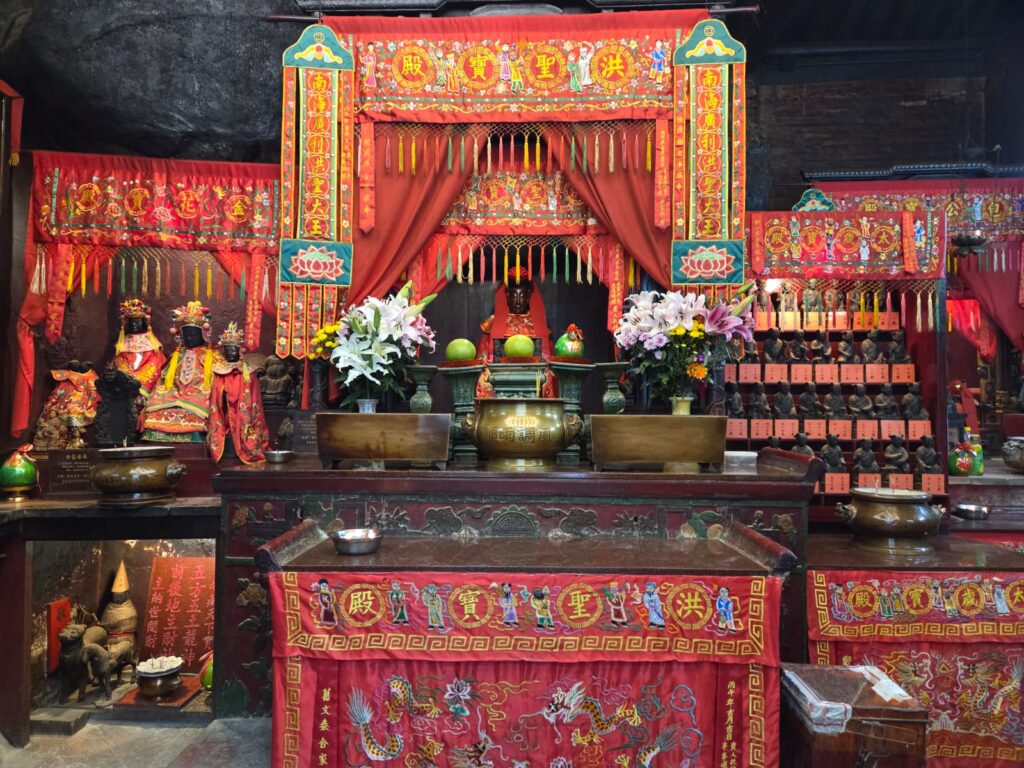
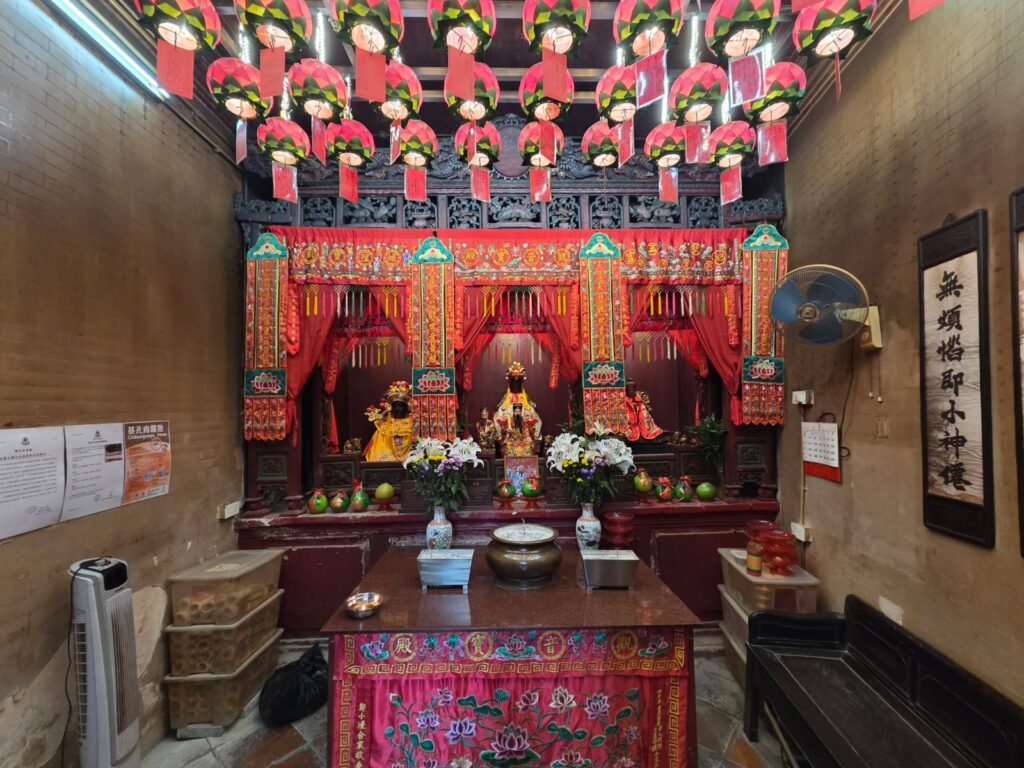
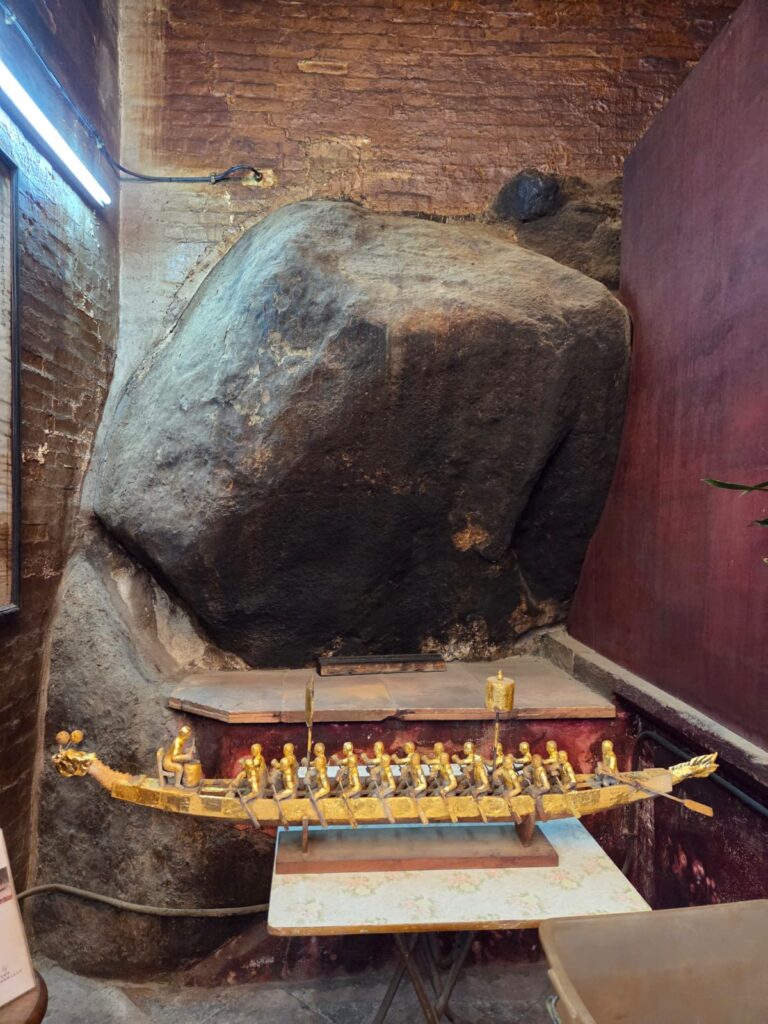
The next sight on our walk is the former Wan Chai Post Office. Successive waves of development in Hong Kong have come and gone: fishing village to colonial territory to global city. Like Pak Tai Temple, I find this 1912 post office building gives a sense of a Hong Kong that was on more of a human scale. It’s now kNow Carbon House, which aims to raise public awareness on carbon neutrality. I didn’t go inside, but apparently it still has some of the original post office fixtures.Now we’re back on the other side of the Hopewell Centre, where we should have started our walk.This area, around Tai Yuen Street, retains, according to our guidebook, “much of the flavour of old Hong Kong.” Is this true? Or is it something that’s changed in the last decade? To me it felt much like the rest of Hong Kong Island and parts of Kowloon.I did like the market in this area, though. Quite a mix of goods on offer.Another temple for you now. This is Hung Shing Temple, or Hung Shing Tai Wong, on Queen’s Road East. Hung Shing is a folk deity we’ve met before on the Ping Shan Heritage Trail. He was apparently a Tang Dynasty government official in life, and is portrayed as a righteous and virtuous government official and protector.The Hung Shing Temple was also closed when I was on my walk. But it was easy enough for me to come back another day and take a couple of pictures for you. This was once a waterfront temple. Dating to 1847, it incorporates boulders into its design, and has a sacred banyan tree behind. It’s likely there was a shrine here before the temple.
Tai Wong Street to Gloucester Road
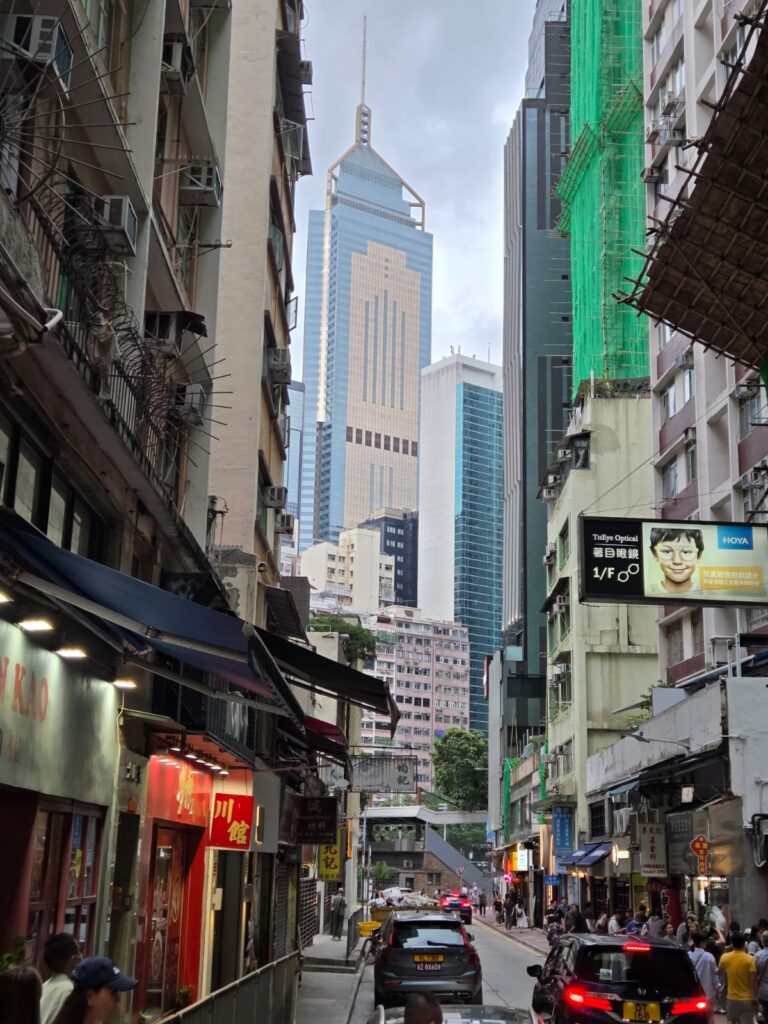
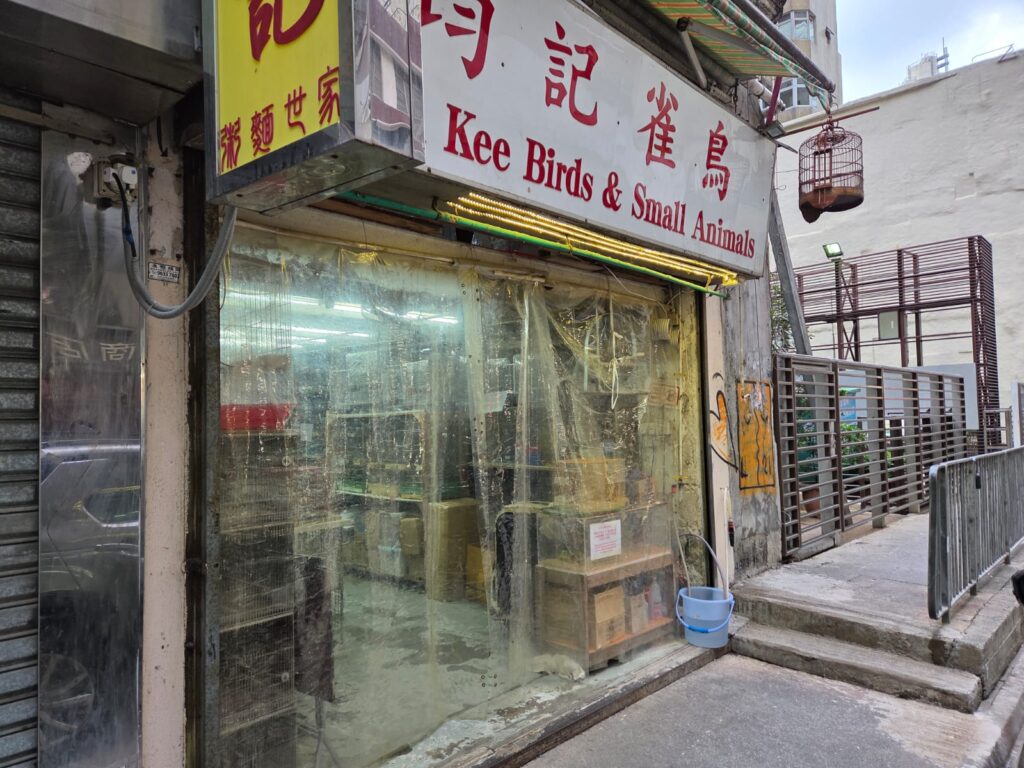
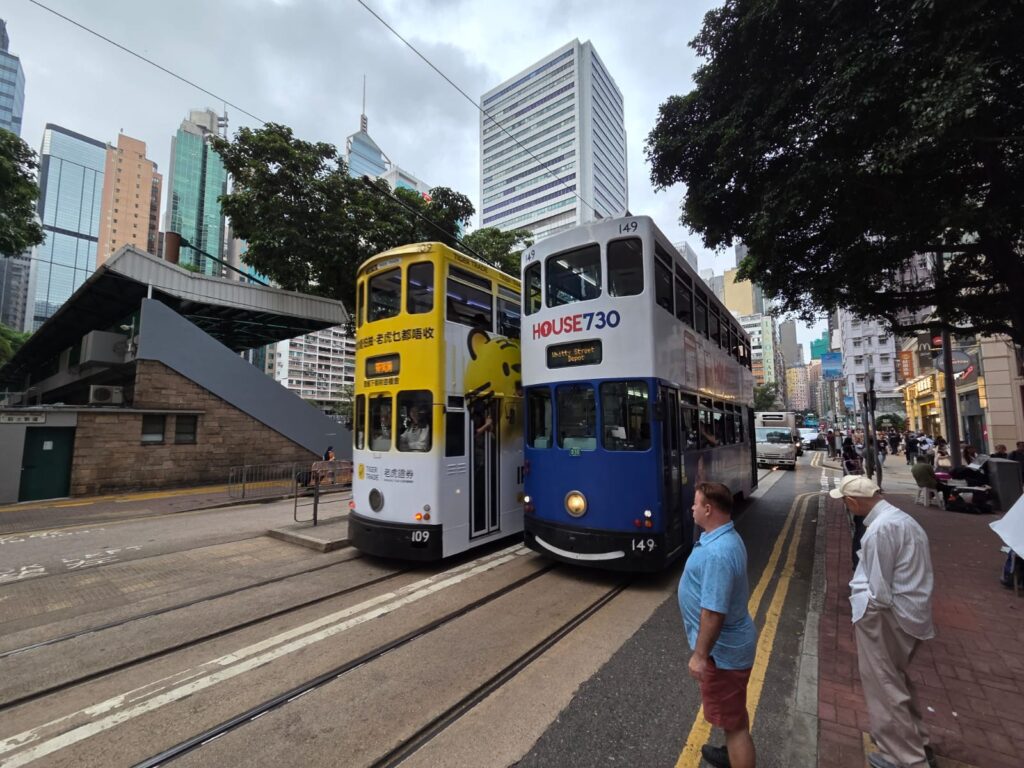
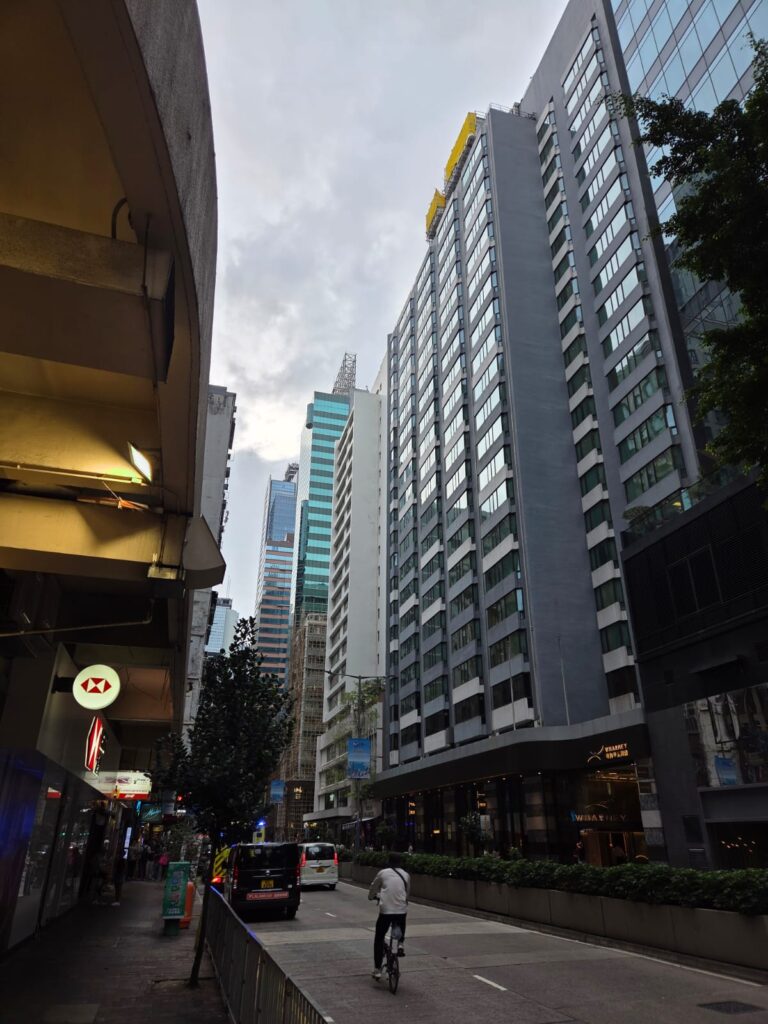
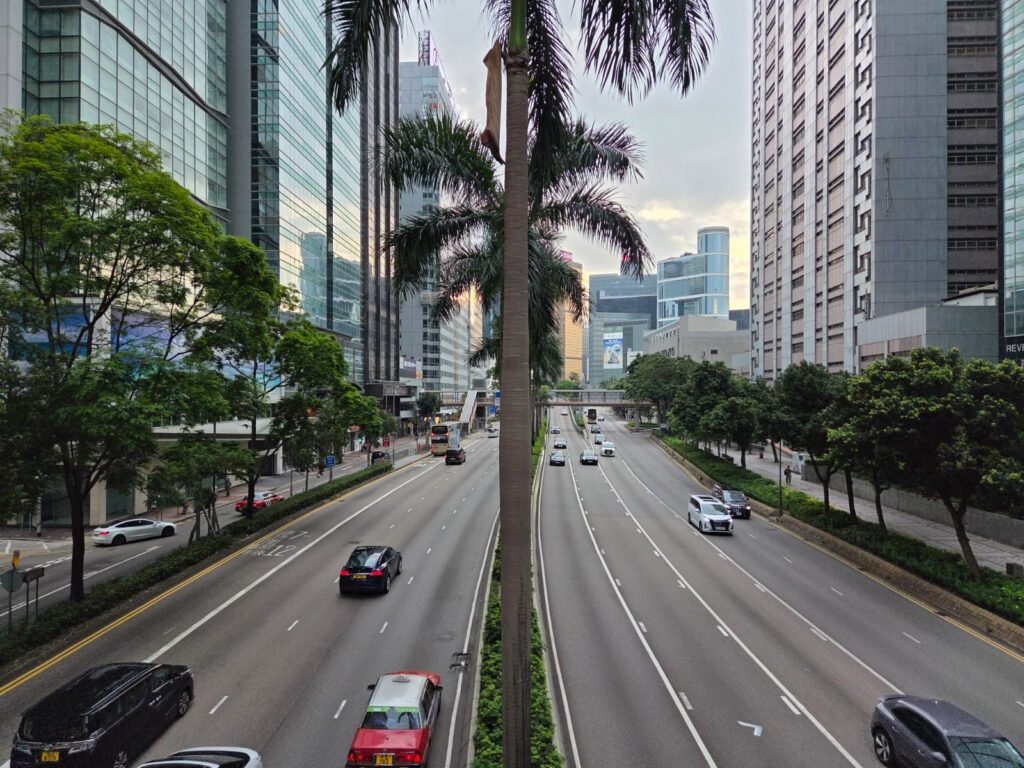
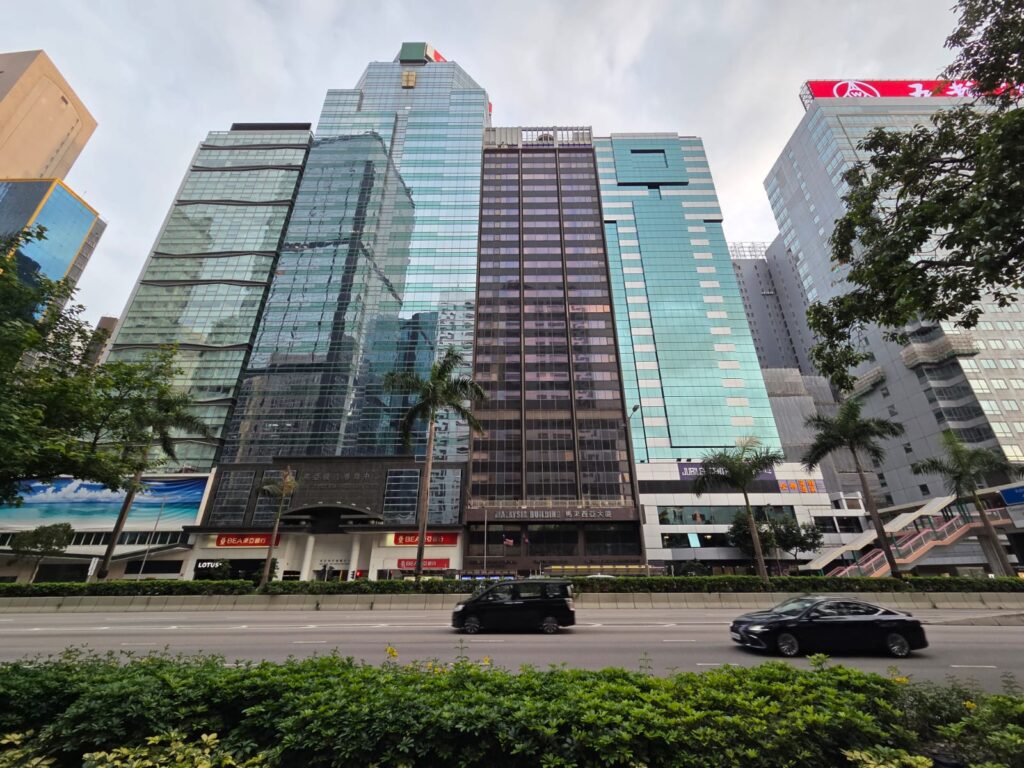
Now we’re heading for Tai Wong Street (and remembering that Tai Wong is another name for Hung Shing). The building in the background is Central Plaza, a 1992 development and the third tallest skyscraper in Hong Kong. Hong Kong’s first skyscraper was the 1935 Hong Kong and Shanghai Bank, and it now boasts more than 9,000 high-rise buildings. Pretty impressive for a small territory which is 40% public green space.Our guidebook calls Tai Wong Street East a “characteristically Wan Chai street”. It named a number of businesses, some of which were still there (International Curry House) and others which I couldn’t find. The World Peace Café has definitely closed now. The old Woo Cheong Pawn Shop is still there (the building, not the pawn shop), but seems to be on Johnston Road so I missed it. Here is a picture. Anyway, I liked this pet shop, with plenty of chirping birds. Many Hong Kong residents enjoy keeping pet birds, even taking them to parks so birds and owners can socialise.And now we’re on Johnston Road. Part of this road was once named Strand Road for its proximity to the water. But, as you’ll see, we still have a ways to go before we reach today’s coastline. The trams have plied these streets since 1904. They are a quintessential part of Hong Kong, and a useful way to get around.We continue along Luard Road, which takes us into the heart of Wan Chai’s nightlife district.Next up is Gloucester Road. Street names are definitely one colonial legacy in Hong Kong. This is also another example of Hong Kong as a city you navigate in three dimensions. Knowing and using pedestrian walkways makes moving around the city much easier, whether as a means of crossing busy roads, or to avoid bad weather. Hong Kong’s 3D pedestrian network covers more than 8,300 KM.
We Get Lost in ‘New Wan Chai’
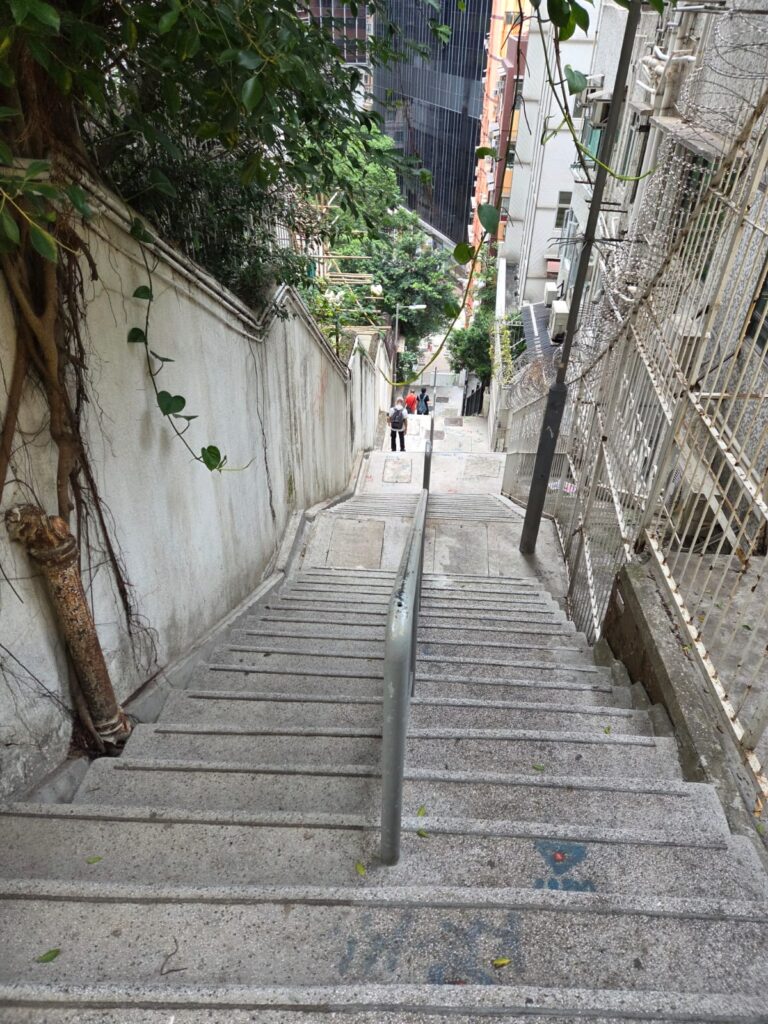
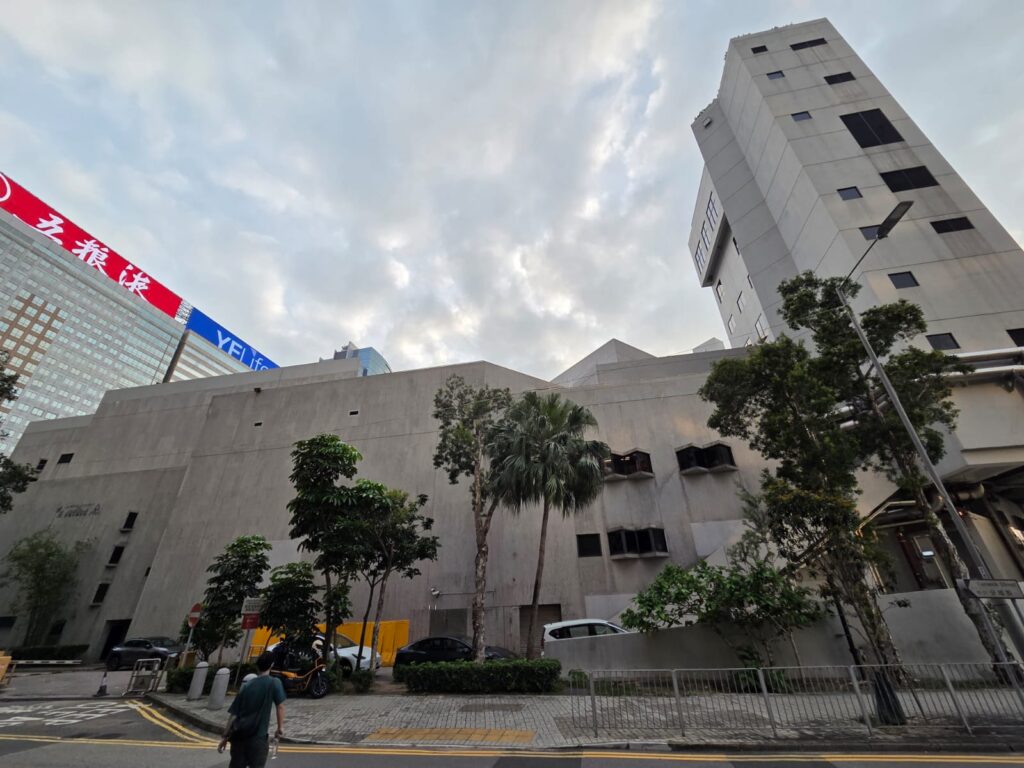
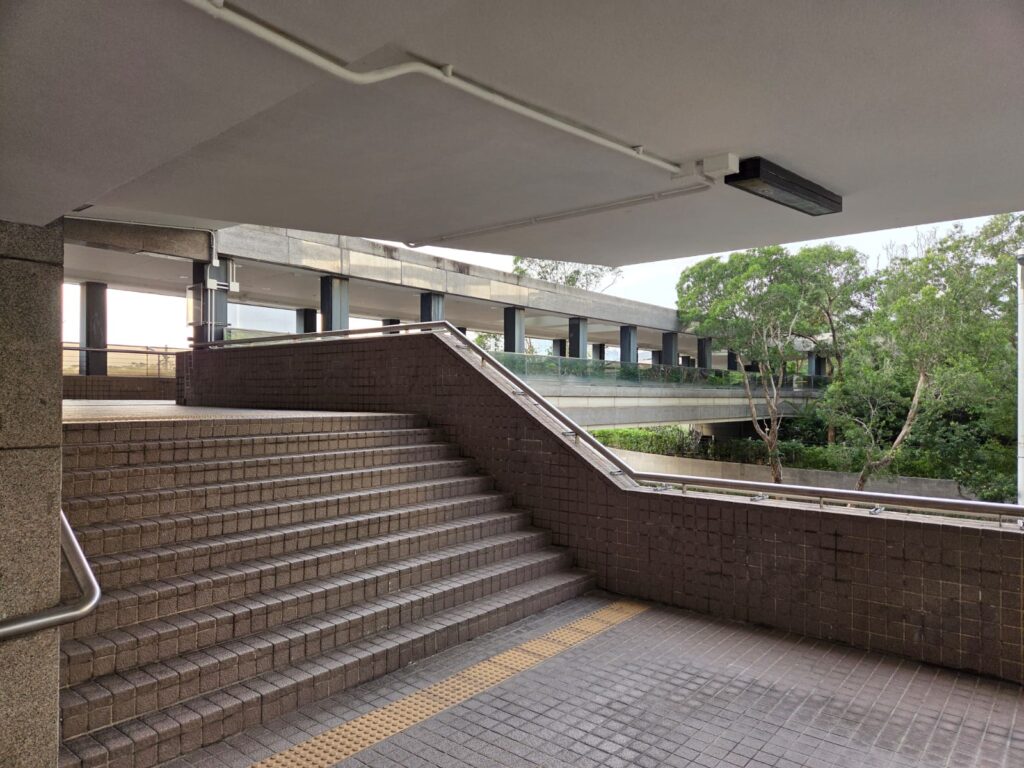
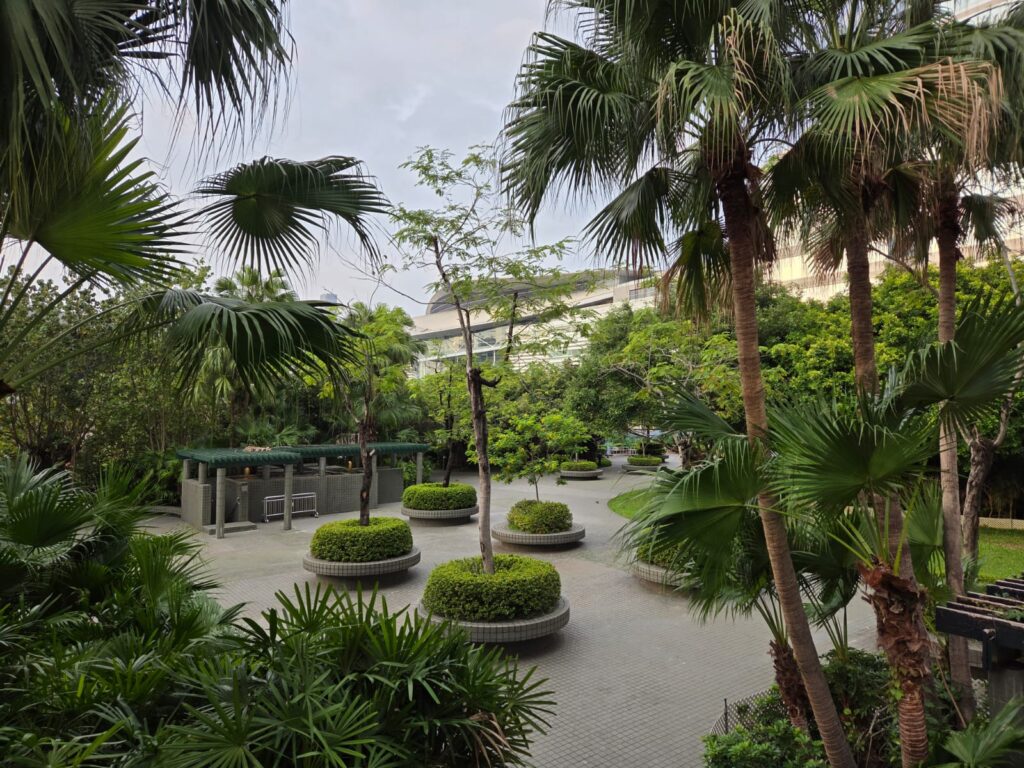
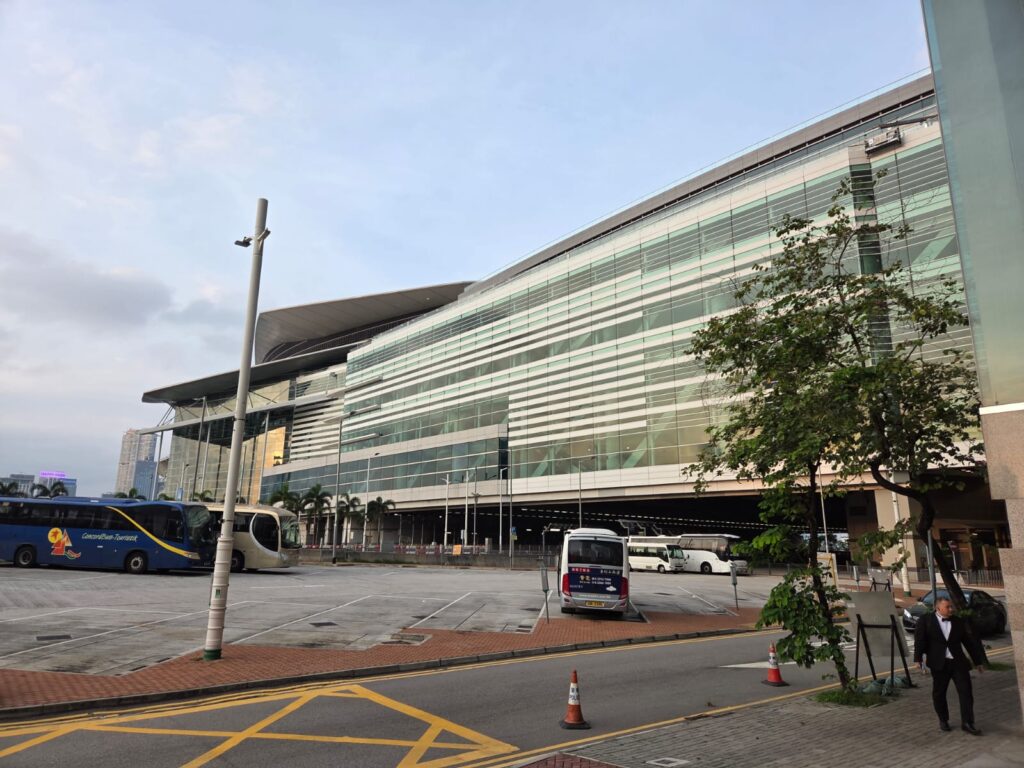
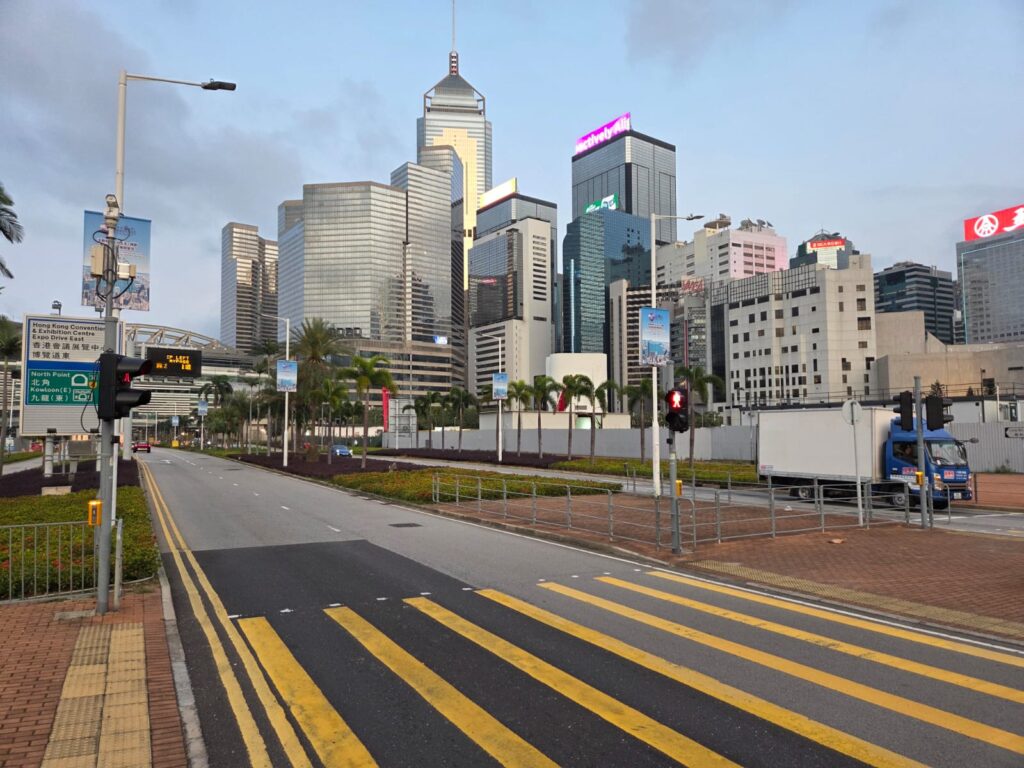
This side of Wan Chai – the reclaimed land – is much harder to make sense of. I spent the rest of the walk trying to simultaneously follow the guidebook and navigate construction work. This is truly a city in constant flux.I at least managed to find our first point of interest on this side of Gloucester Road without too much difficulty. This is the Hong Kong Academy for Performing Arts, a performance venue and also a college of dance, music and drama. This is the main campus, which opened in 1985.Ground level is often the last place you want to be to get where you’re going.Let’s try these stairs. We’re looking for the Hong Kong Arts Centre.Ah, here we go, it’s the building on the left. The Hong Kong Arts Centre has a contemporary art exhibition space, theatre, and cinema, plus a café and a shop. I wasn’t too taken by the offering during my week in Hong Kong, but would happily come back if I stay in this neighbourhood again.A bit more navigating of walkways and staircases to get to this small sculpture garden in front of the Grand Hyatt. I definitely felt this was more ‘sculpture garden to say we have a sculpture garden’ rather than demonstrating any dedication to art.I was properly confused by the directions again now, so here is a very poor side view of the Hong Kong Convention and Exhibition Centre. I’ll have a nicer view of it for you shortly. The HKCEC first opened in 1988, but more than doubled its footprint by reclaiming more land, in time for the Handover Ceremony in 1997. If you’re unsure what I’m talking about, Hong Kong was a British colonial territory from 1841, but this included a 99 year lease arrangement from 1898. At the expiration of the lease, the UK government ceded control of Hong Kong back to China. Hong Kong is now more than halfway through a 50 year transitionary period where the official line is “one country, two systems.” When there are no historic ceremonies on, the HKCEC hosts the usual sort of trade fairs and other events.
A Final Look Around Wan Chai
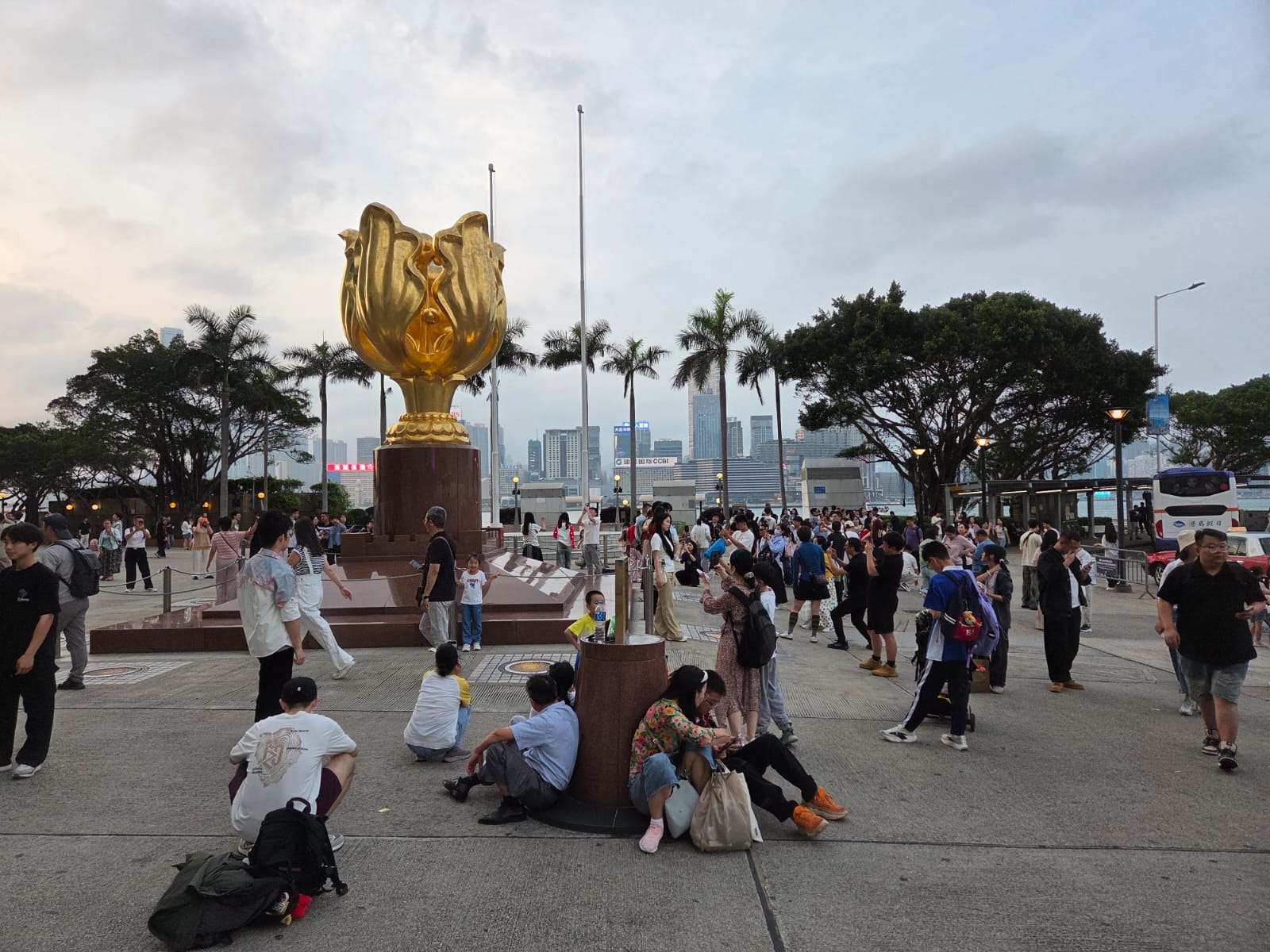
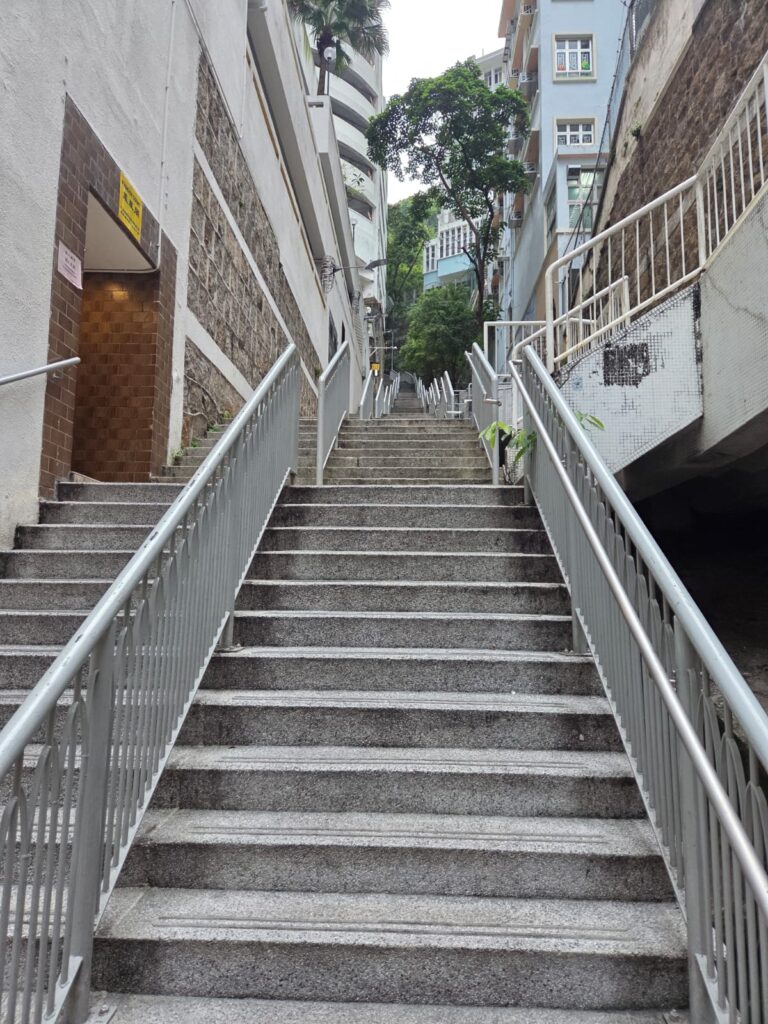
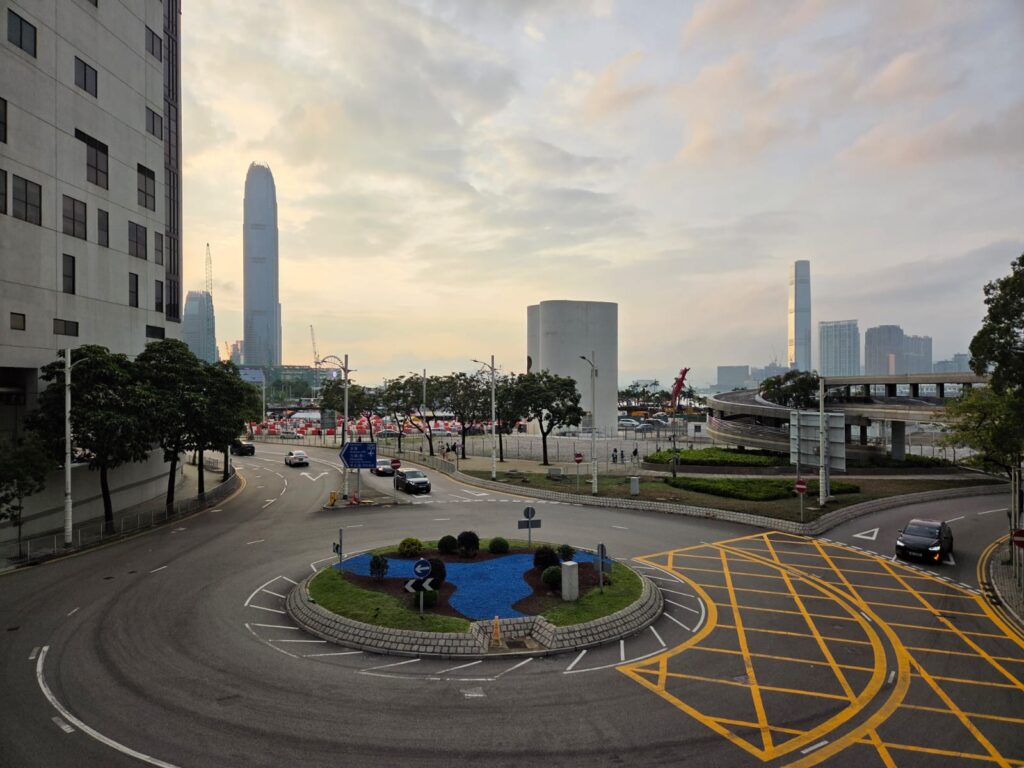
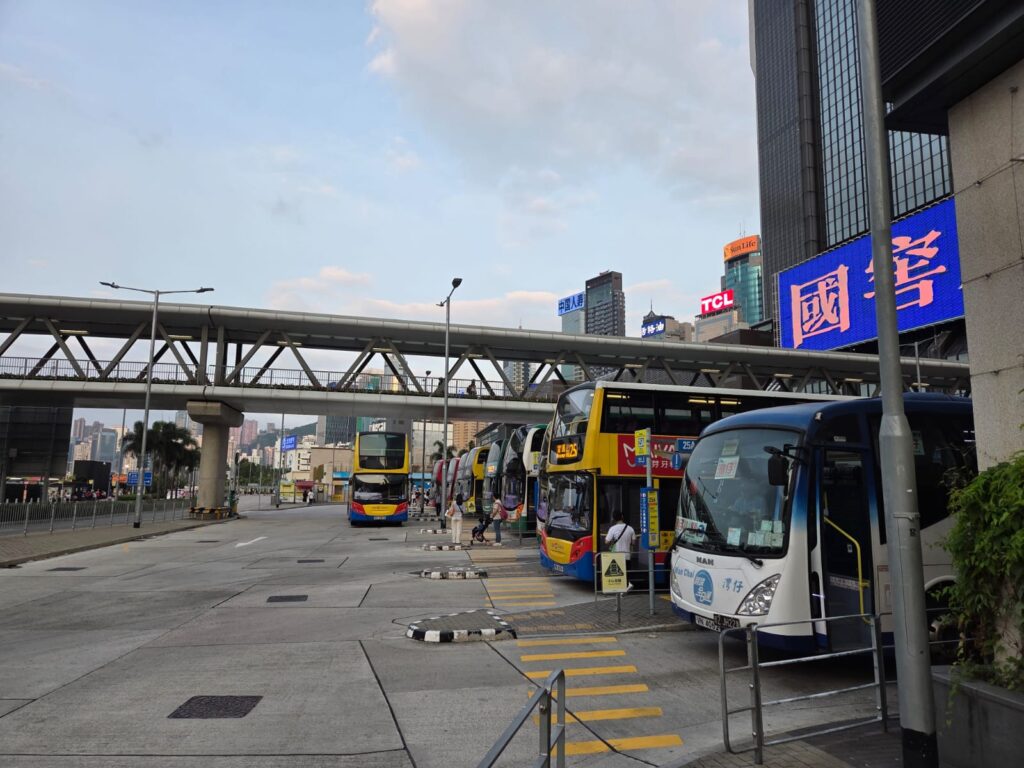
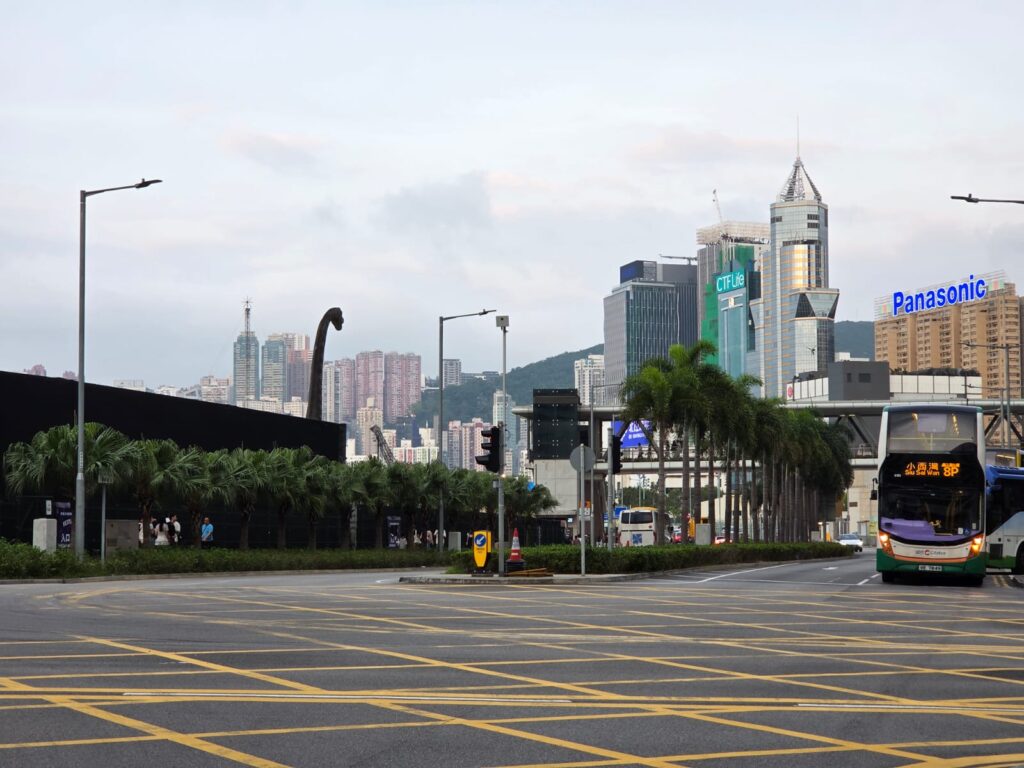
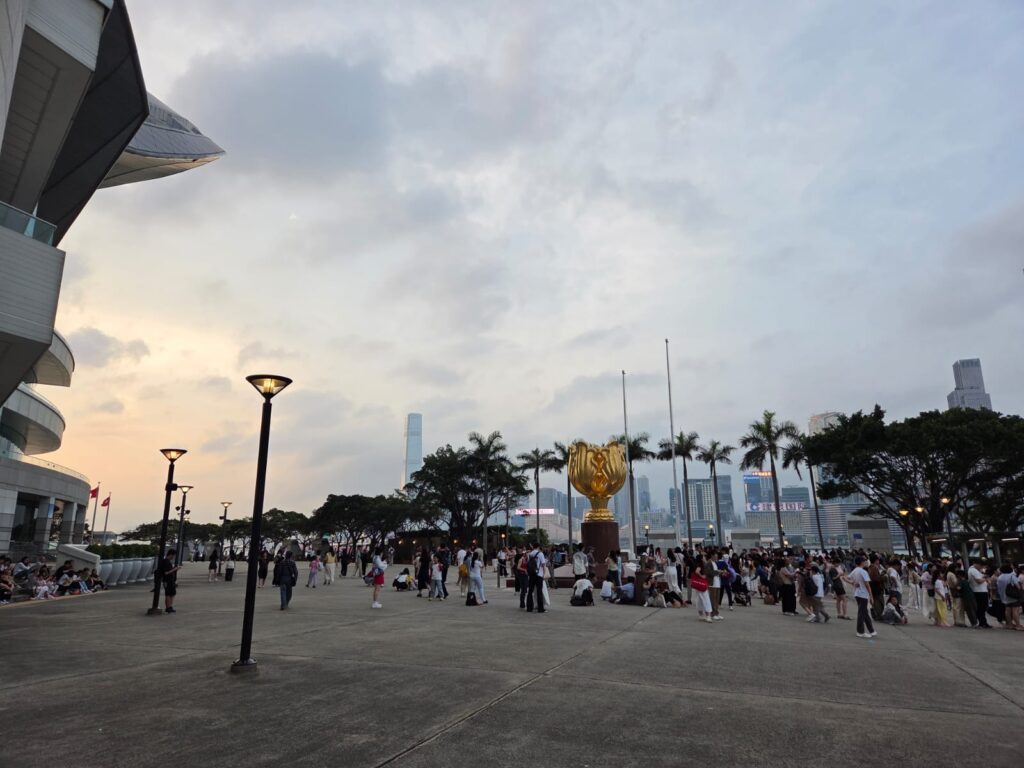
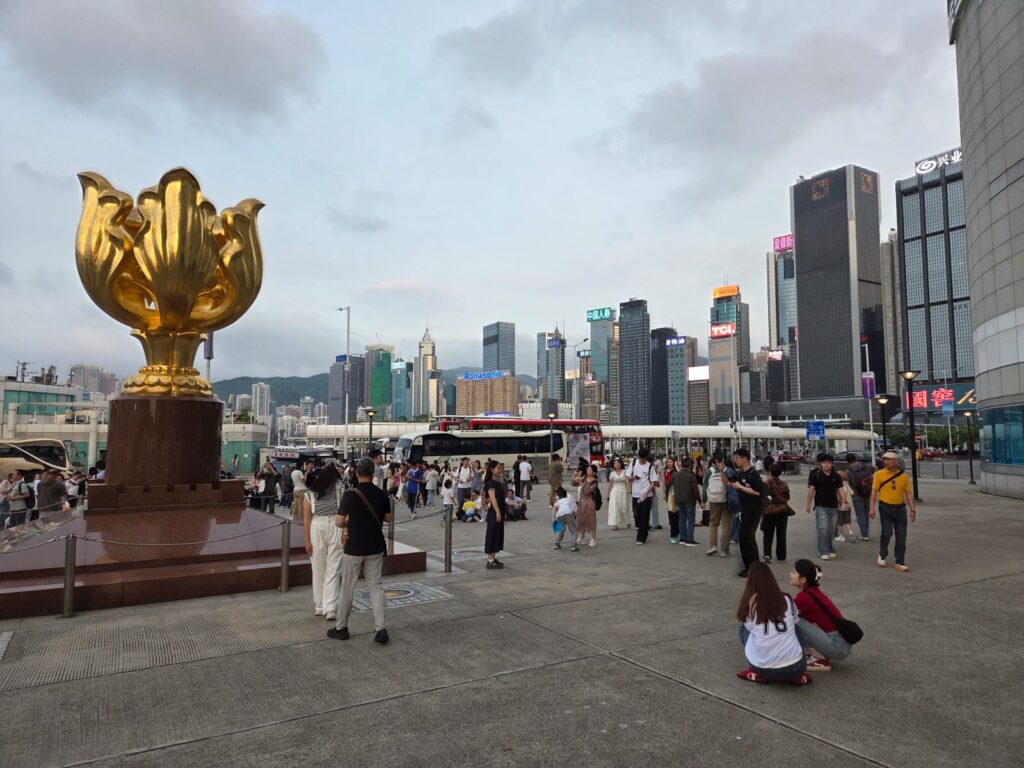
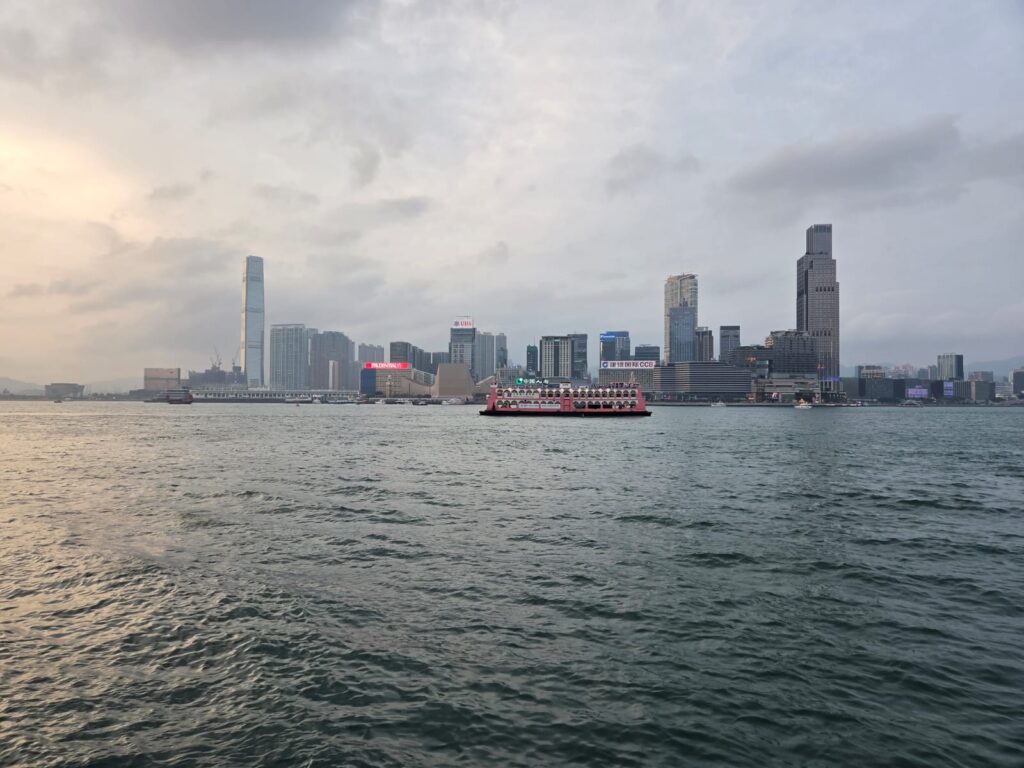
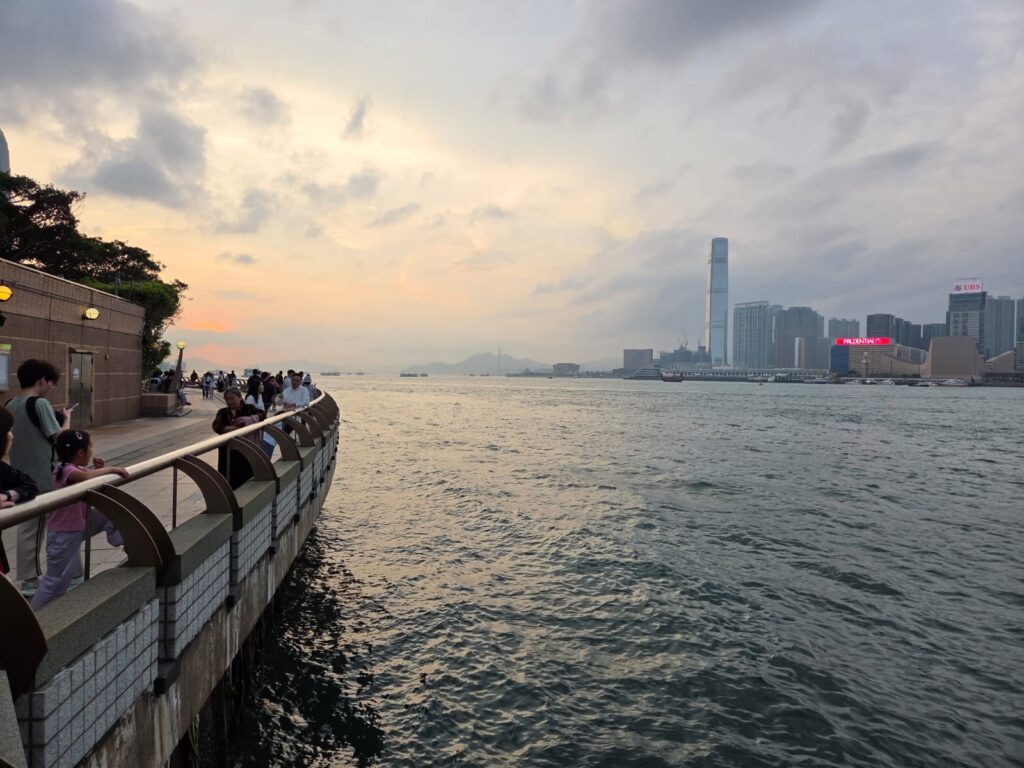
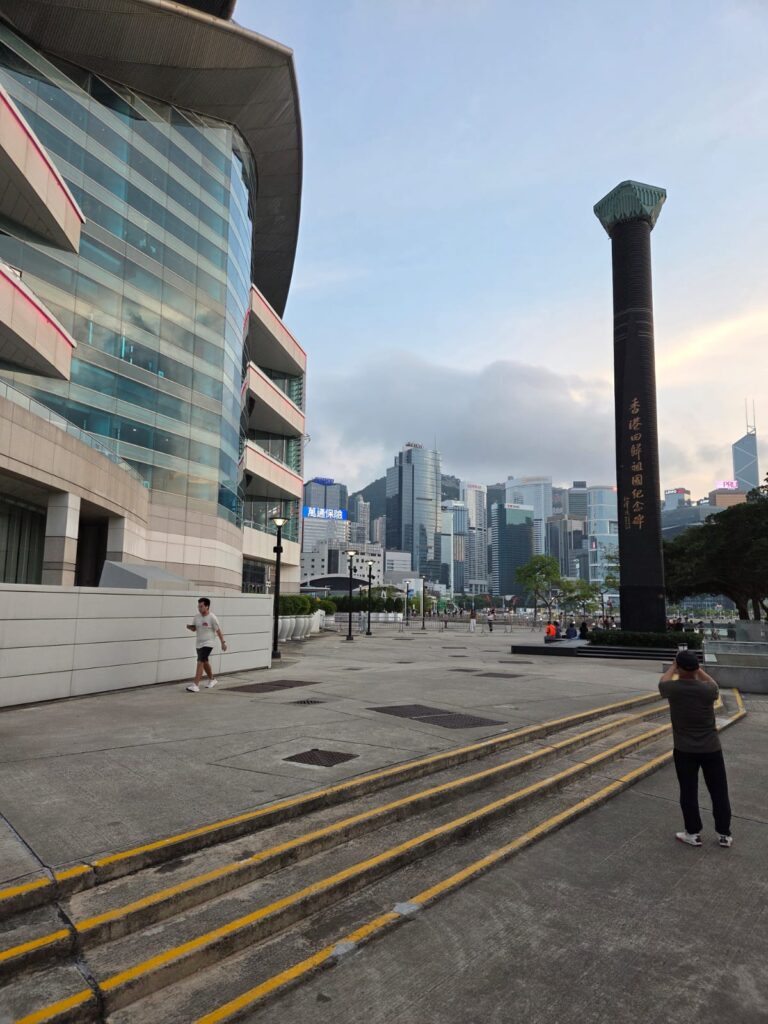
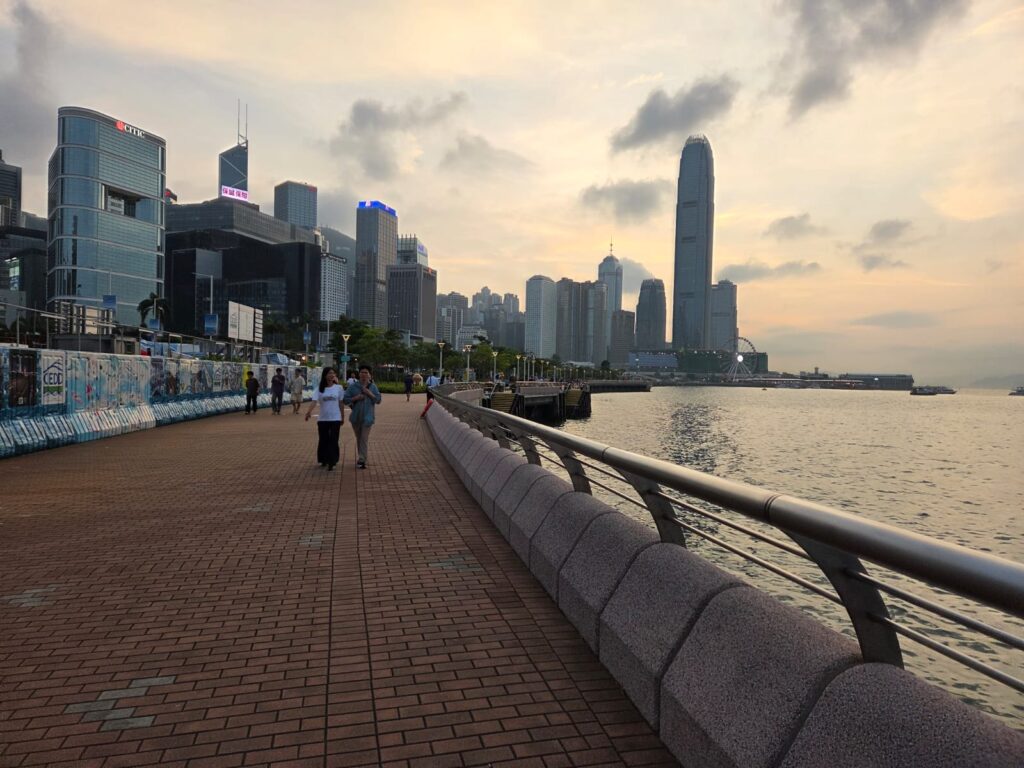
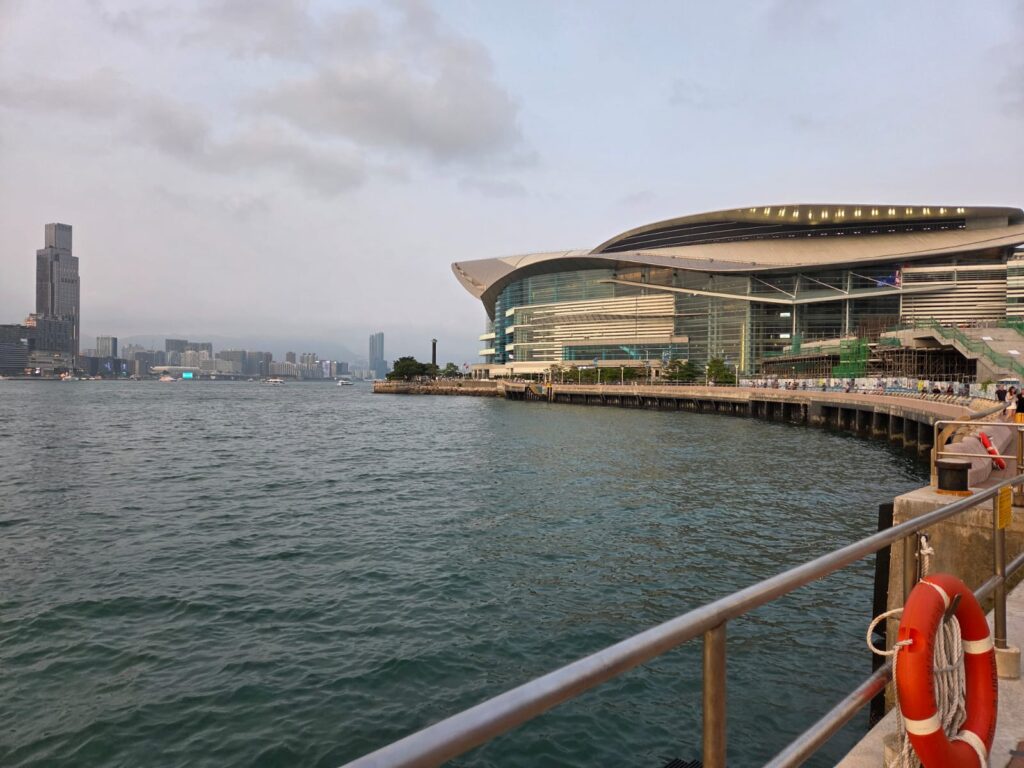
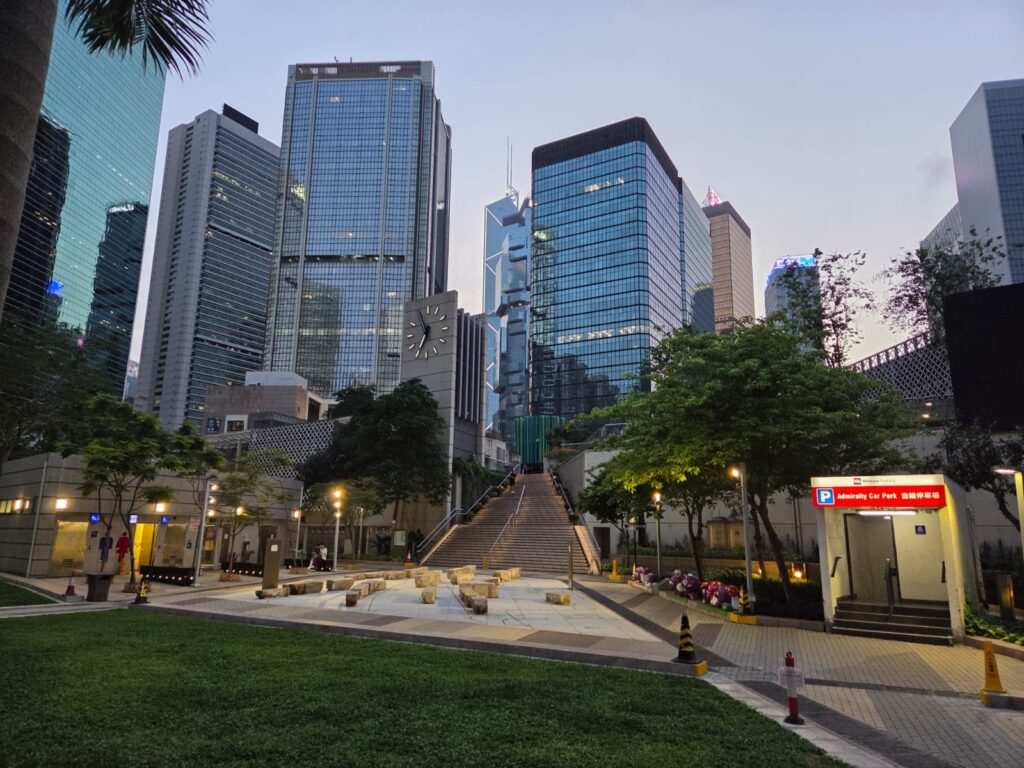
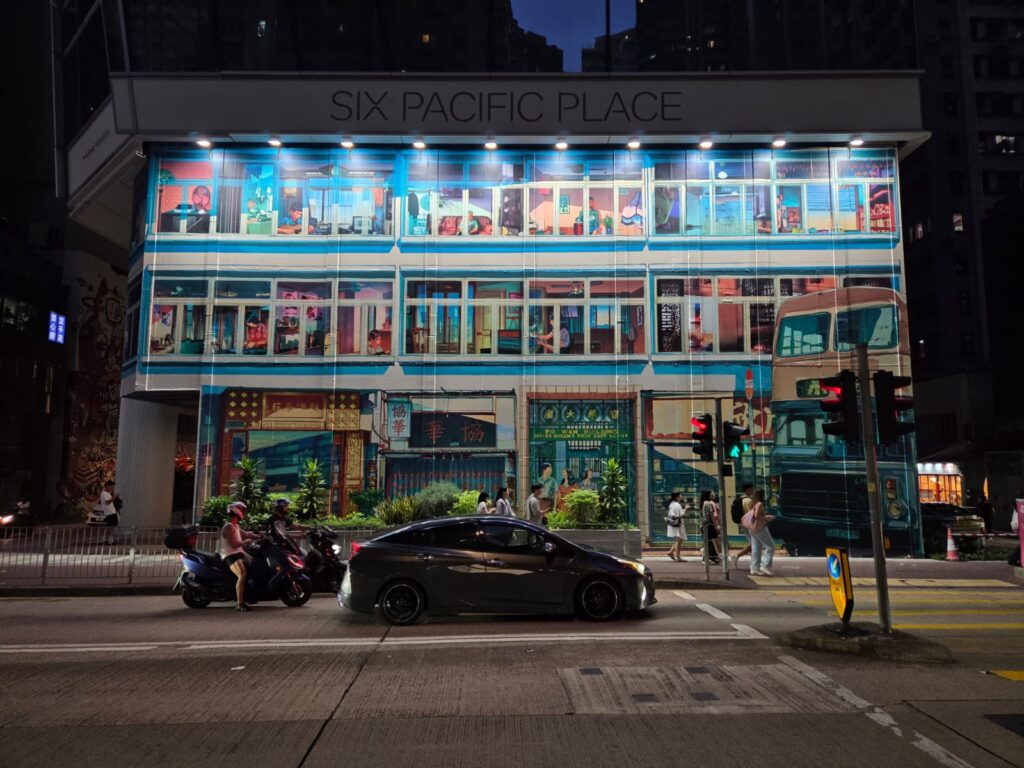
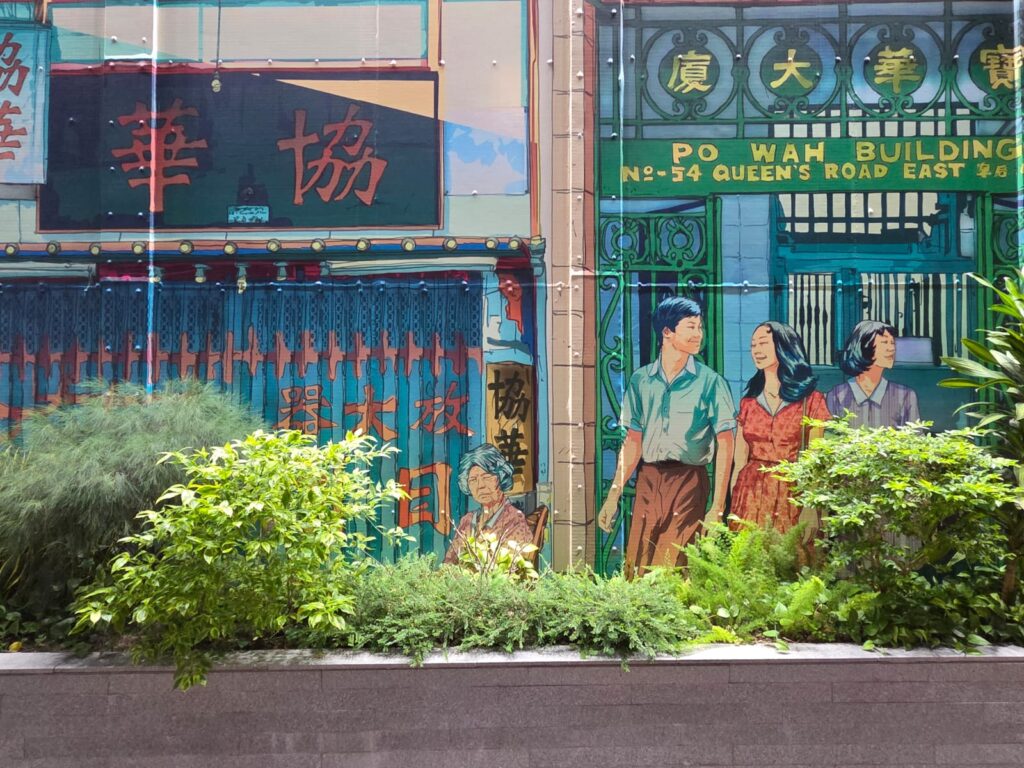
Passing under the HKCEC, I spent some time trying to figure out how to get to the waterfront. Spoiler alert: it was not this way.I found a bus station, but couldn’t find a handy pedestrian walkway to where I was going.Is that a dinosaur? It sure was, part of new open-air festival festilumi, which had finished the week before my trip.After a bit of backtracking, we made it! This is Golden Bauhinia Square. The golden bauhinia you can see in the middle there. Bauhinia blakeana is the floral emblem of Hong Kong, appearing on the territory’s flag.It’s a popular spot at sunset – there is a waterfront path from here all the way to the Ferris wheel at the Central Ferry Piers.We’ve now reached the farthest extent of reclaimed land in Wan Chai, and can look over to Kowloon on the other side.That very tall building is the International Commerce Center in Kowloon. It’s currently Hong Kong’s tallest building. To the left of it is the new West Kowloon Cultural District, which we visited once, and will be seeing again soon.The final sight from our guidebook is this Reunification Monument from the 1997 handover.And then we will head along a bit of the waterfront path. Once again, not at all the way I should have gone, but it worked out.As promised, a much nicer view of the HKCEC.Now, how do we get back to the hotel? Maybe across this street?Maybe up these steps?We’re definitely getting closer. This is Harcourt Garden, and those stone blocks are fragments from the 19th century seawall. We’ve taken, shall we say, the scenic route.And now we’re back almost on home territory, on Queen’s Road East. This mural once more hearkens back to that mid-century version of Wan Chai which lingers in Hong Kong’s memory. I found it interesting just how many versions of Wan Chai there have been, and how there is still a trace of each, whether it’s a temple, a street name, a historic building, or a modern building on reclaimed land. In many ways, Wan Chai is a microcosm of Hong Kong. Definitely somewhere worth exploring. As for the original objective of this walk, I have well and truly stretched my legs after my flight, and am now off to bed!
Trending
Travelers' Map is loading... If you see this after your page is loaded completely, leafletJS files are missing.