
Les Machines de l’Île, Nantes
A visit to les Machines de l’île is a great starting point in Nantes. Genuinely fun, it’s also an insight into what makes the city special.
An Excursion to Look Forward To
In my last post, I wrote about a very quick trip to Nantes. Just a taster, in fact. Nantes wasn’t our ultimate destination. That was a rural community in the Deux-Sèvres region (which nonetheless has great contemporary art: see here and here). But Nantes was the most convenient place for us to fly into and pick up a hire car.
If you’ve spent any time at all on this blog, you’ll know that I’m incapable at a very visceral level of going somewhere and not trying to see the sights. I’ve squeezed tourism in around work trips like this, for instance. Or around transport (or transport mishaps) such as here or here. The moral of this story is that I wasn’t going to come to Nantes without having a look around.
Top of my list, for art history reasons, was the subject of my next post, le Musée d’arts de Nantes. But when I looked at what else I could do, one attraction stood out. And this was les Machines de l’île. I mean, who wouldn’t like to ride on a great mechanical elephant? But I was also interested in such an endeavour having permanent space in a city as part of post-industrial regeneration.
Really experiencing les Machines de l’île requires tickets, which sell out in advance, at least in the summer. By the time I got around to booking, there were not many options that worked with our flight time. I had to make a choice about what to book – between the carousel and the elephant. I obviously chose the elephant. Good, tickets secured. I then took a punt on buying tickets for la Galerie des machines. This was still a timed slot, but not a ride, so I was hoping it would have some flexibility. This turned out to be the case. We were a bit late landing, and therefore late to our timed slot. The attendant cheerfully let us in, provided we didn’t mind explanations in Spanish, and kept an eye on when were due to board the elephant (not a phrase you use every day).
Before I explain more about the specific attractions we saw, though, let me take you back to the beginnings of les Machines de l’île.
Les Machines de l’île and Urban Regeneration in Nantes
Les Machines de l’île is the brainchild of François Delarozière (as Artistic Director) and Pierre Orefice. It evolved out of la Machine (also the work of Delarozière), a street theatre company founded in 1999 which specialises in unusual creations and collaborations. These collaborations have included the Nantes street theatre company Royal de Luxe, amongst others.
In the early 2000s, la Machine and municipal authority Nantes Métropole decided to work together to extend this concept of unusual mechanical creations, and to give it a permanent home. This home was on l’Île de Nantes, in disused naval shipyards. The Chantiers Dubigeon were founded in 1760, and became a leading producer of merchant and military vessels in France. Nantes, you will recall from my last post, was France’s main port for transatlantic trade. As ships grew larger and the Loire silted up, shipbuilding, including these yards, moved increasingly to l’Île de Nantes. But eventually international competition and the changing nature of global shipping led to a downturn. The Chantiers Dubigeon closed in 1987.
From the late 1980s, the city started to work on an urban regeneration plan. Part of it meant turning this disused industrial space into a cultural hub (le Parc des Chantiers) while retaining a connection with the past. La Maison des Hommes et des Techniques (The House of Men and Technology – the title doesn’t sound as odd in French) opened in former shipyard workshops in 1994. It has an exhibition on shipbuilders and union archives, but is inconveniently closed on weekends. The other main permanent cultural fixture in the area is les Machines de l’île.
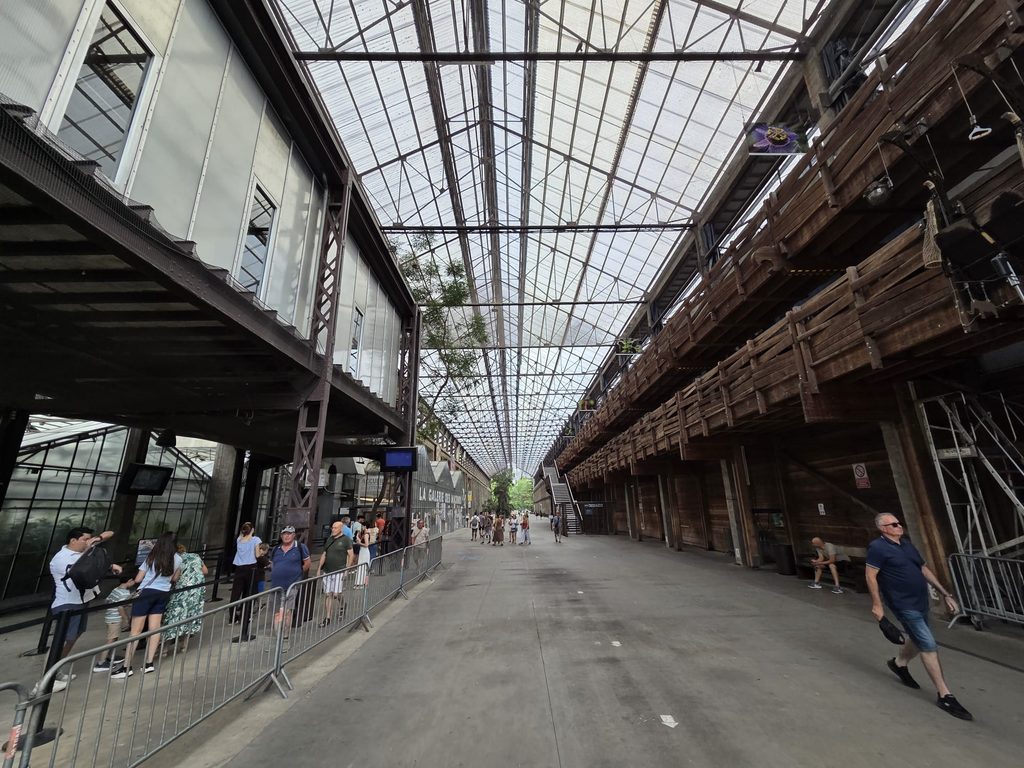
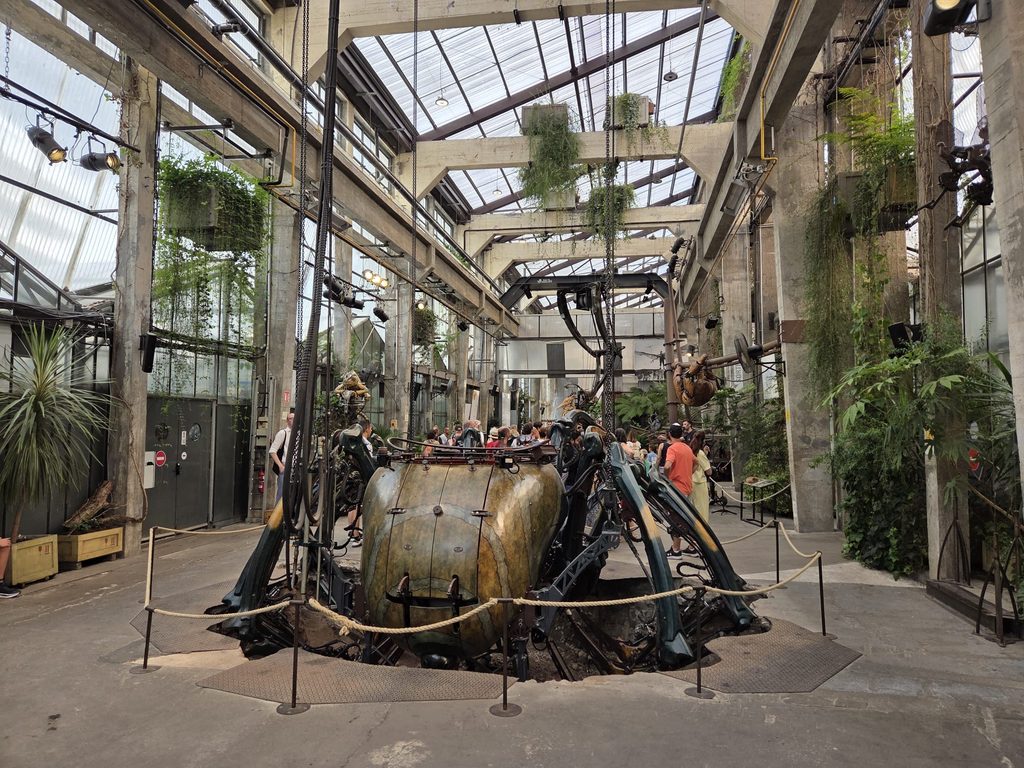
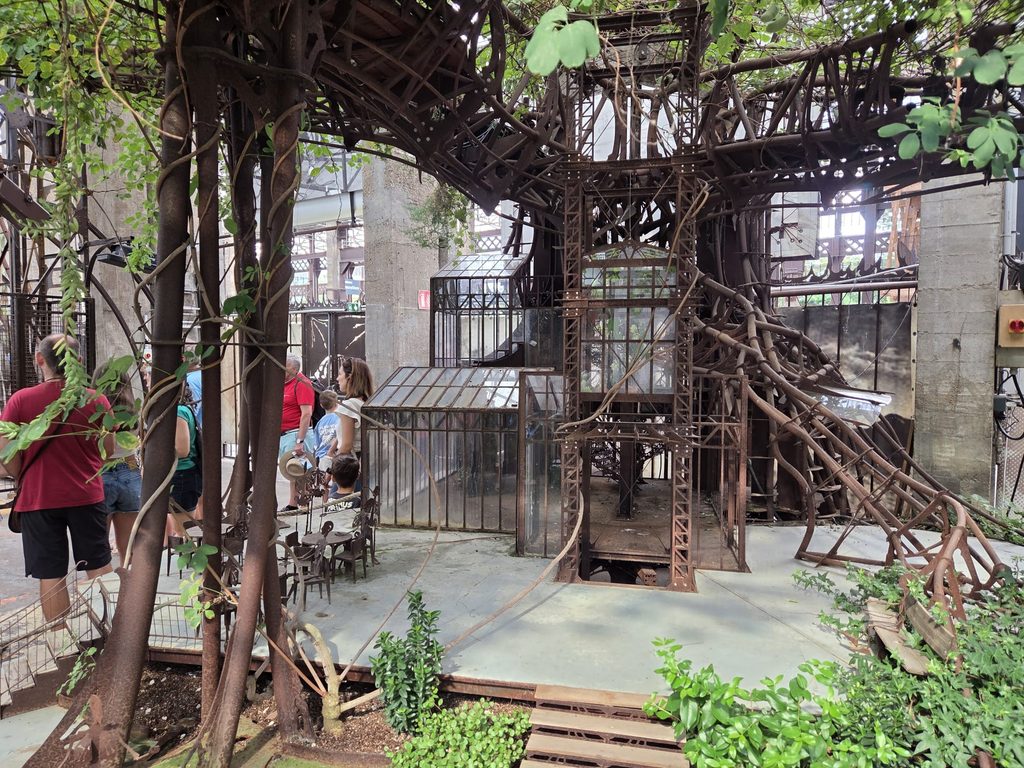
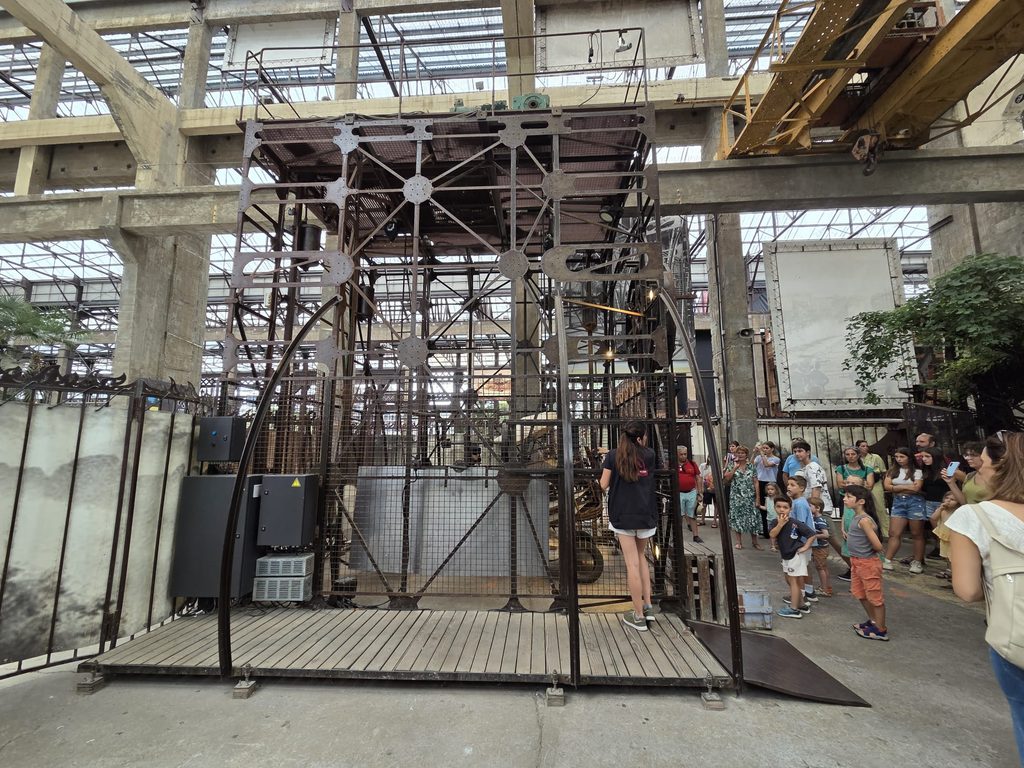
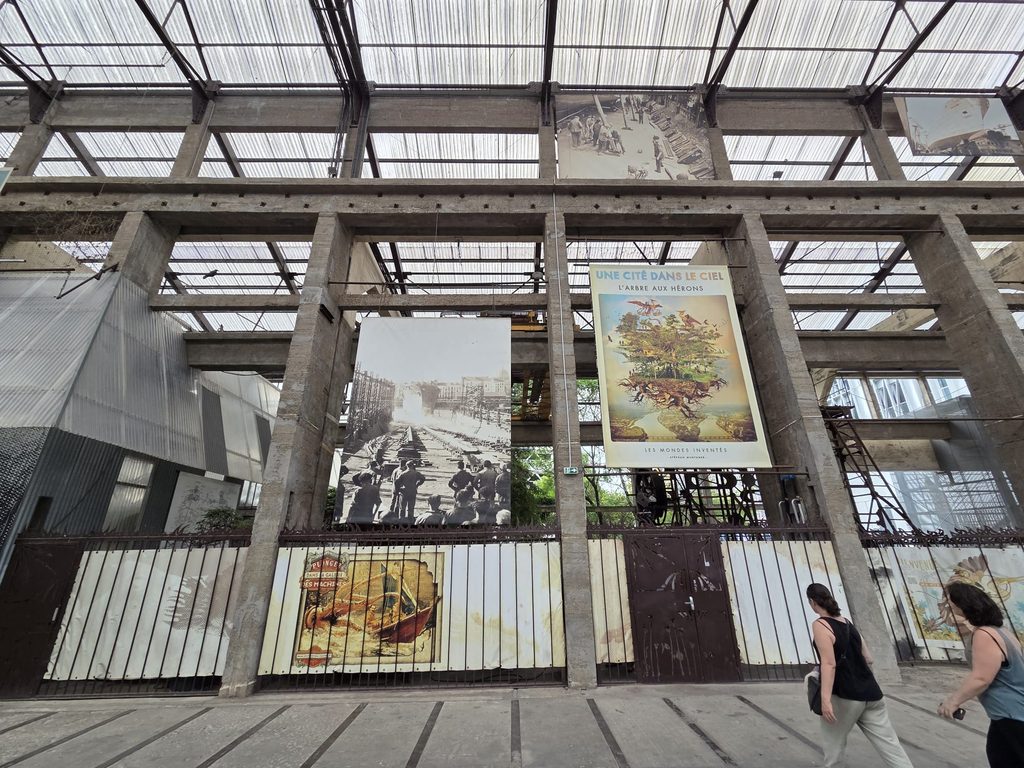
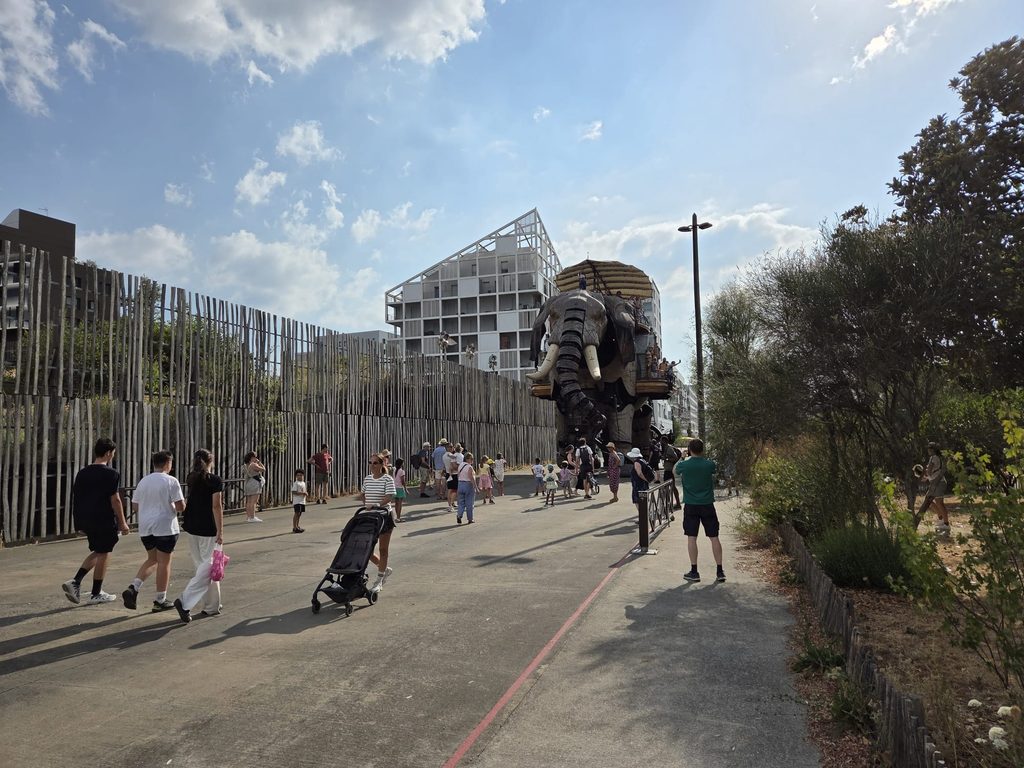
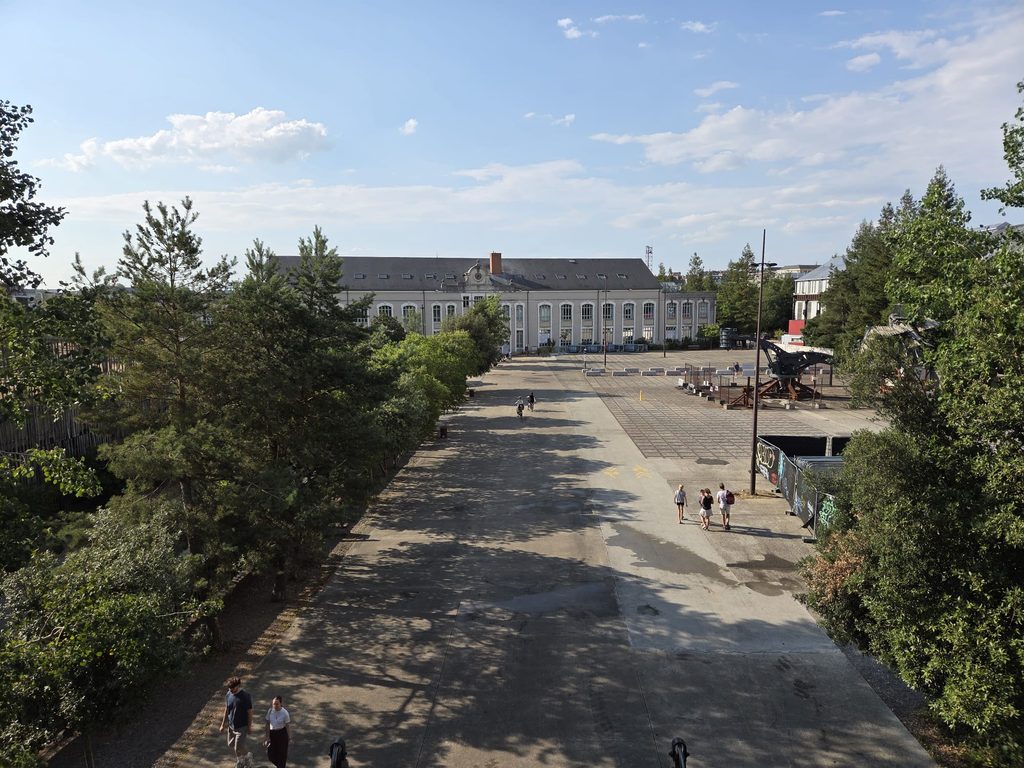
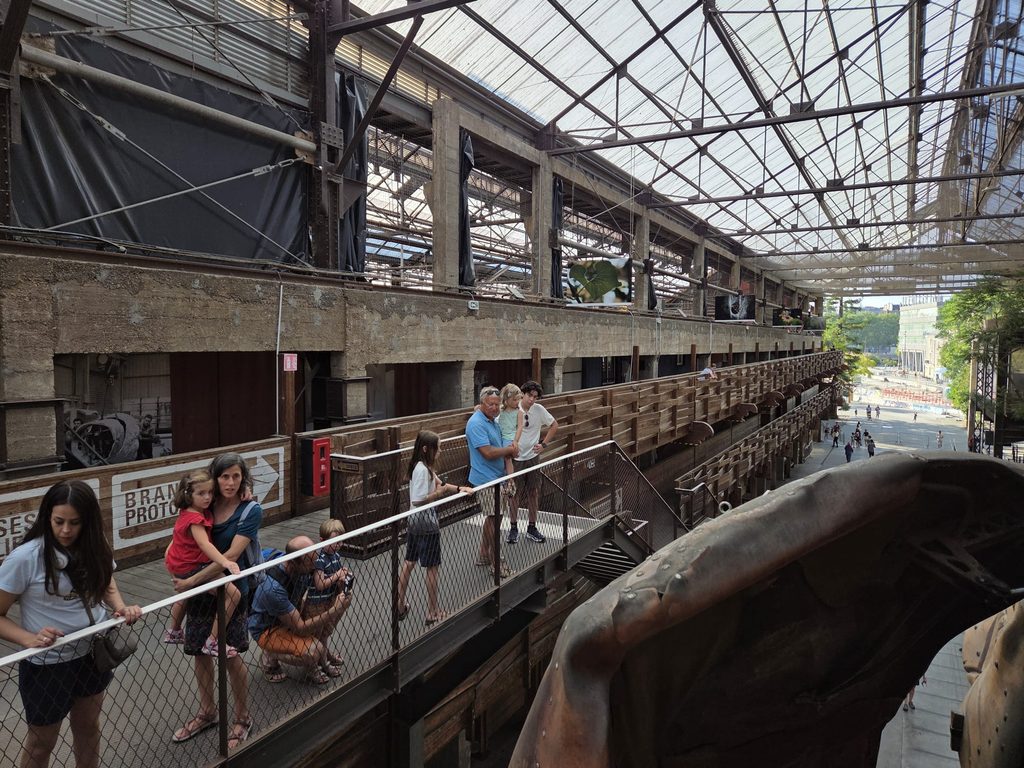
The vision when it came to les Machines de l’île was to do urban regeneration differently. The company worked on three attractions – le Grand Éléphant (2007), le Carrousel des Mondes Marins (2012) and next l’Arbre aux Hérons (cancelled in 2023). Rather than being fenced off and ticketed like most theme parks, les Machines de l’île is relatively open and part of the urban landscape. Visitors can walk inside the former shipyards and see the attractions. They only need a ticket to get up close or go on a ride. Panoramic viewpoints offer new perspectives and a view of ongoing construction.
Creation and Imagination
The inspirations for the creations of les Machines de l’île include Jules Verne and Leonardo da Vinci. I can see more of Jules Verne in it. And after all, he was a local, born in Nantes in 1828. None of his finished works is set in Nantes, but you can see how the bustling port and busy industrial city might have had an influence on a young mind. There’s a Musée Jules Verne in the Chantenay district of Nantes which I’d like to visit on a return trip.
But back to the machines. There is something steam punk about them, which is definitely something Verne’s imaginary worlds inspire. Foundational to the the project is also its open concept. Visitors can watch engineers, sculptors, technicians and woodworkers bringing new machines to life, speak to their operators, and ultimately ride a few of the machines. And because it’s always a work in progress, the number of machines will continue to grow, attracting visitors back again to see new additions.
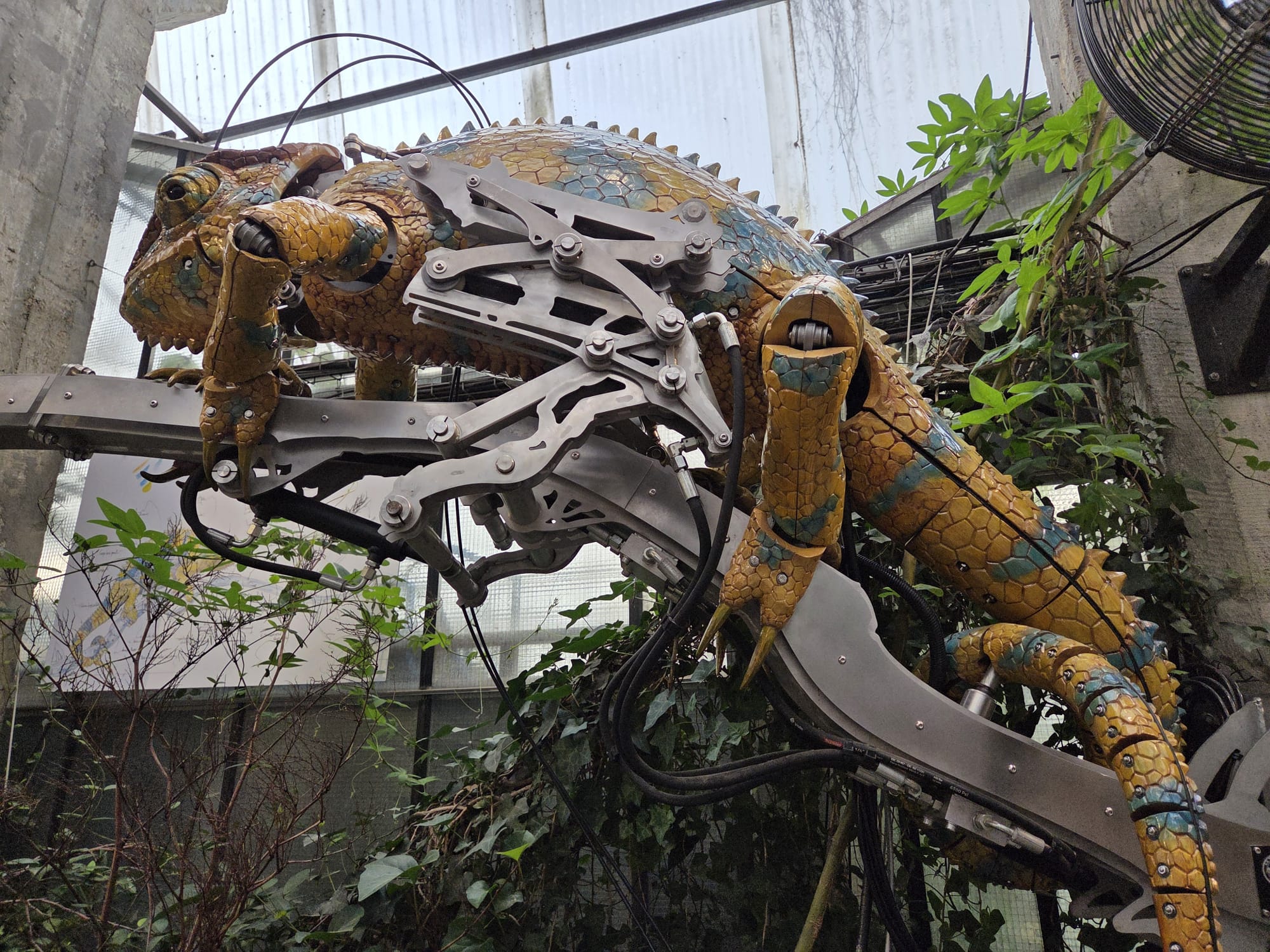
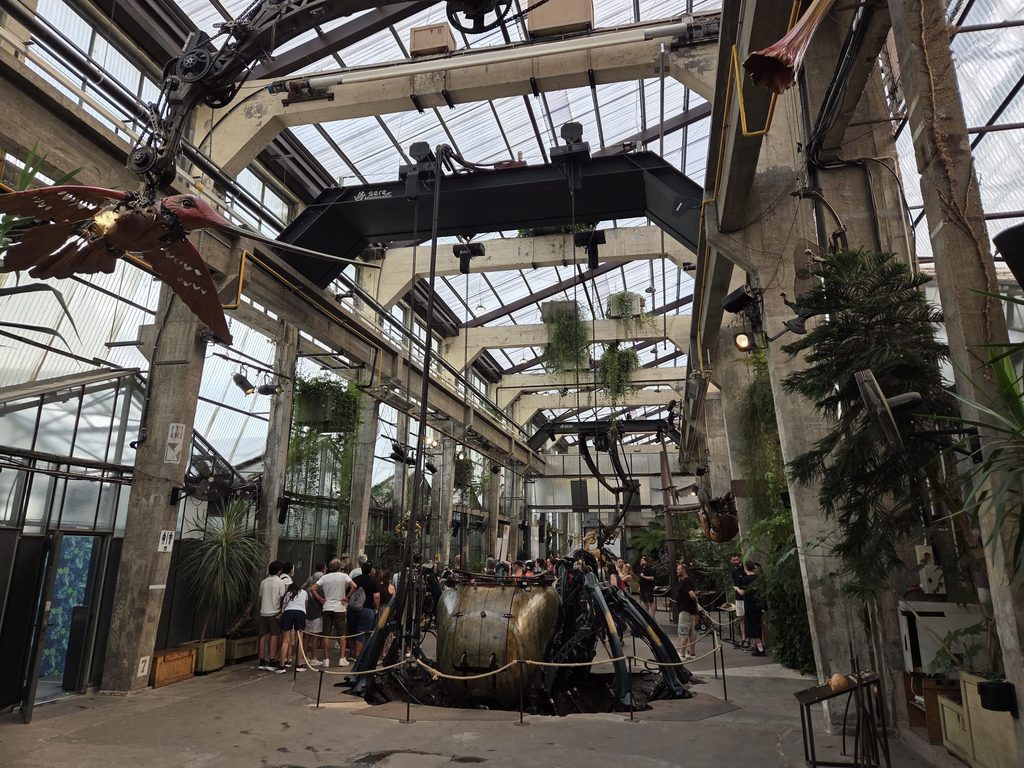
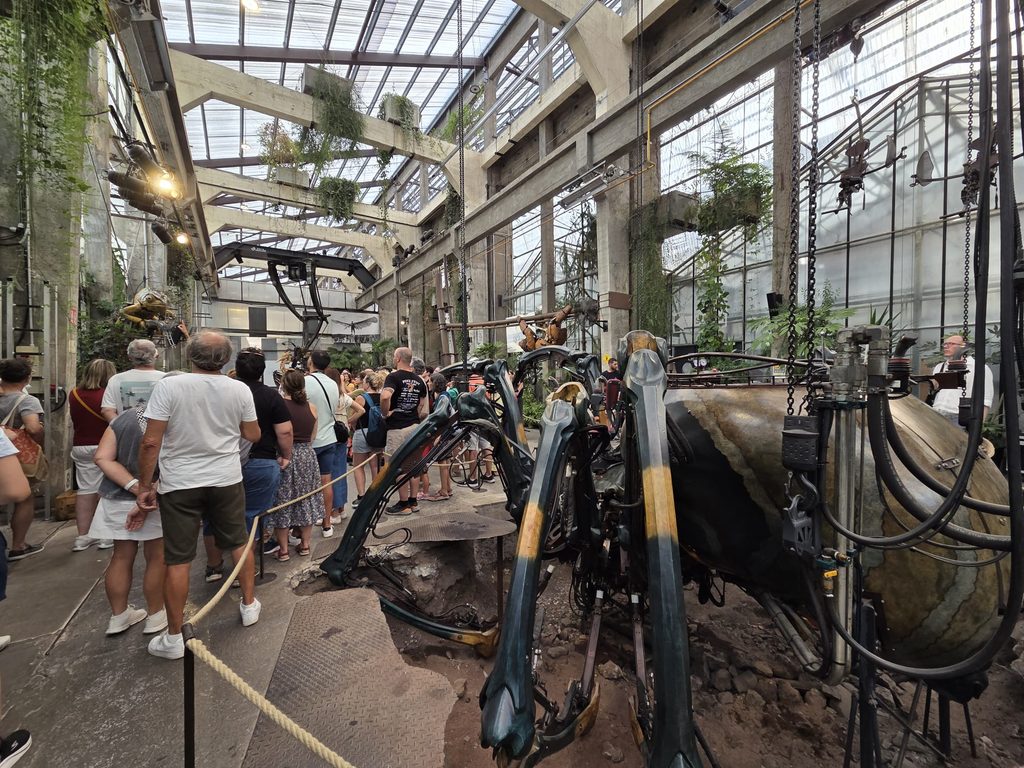
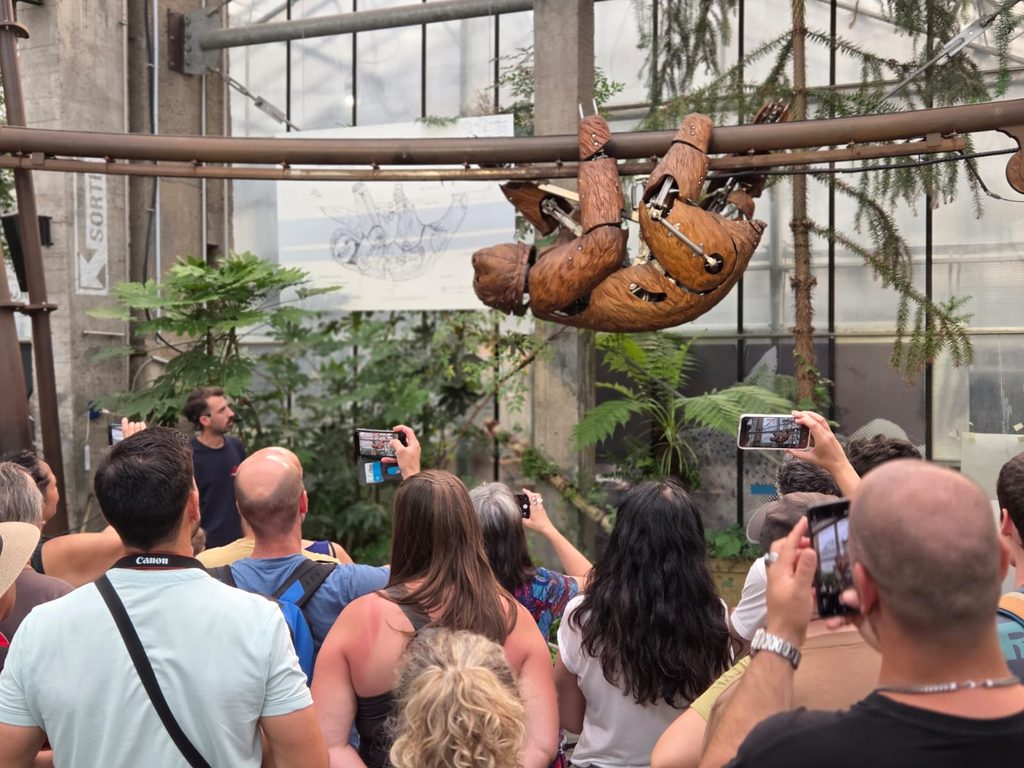
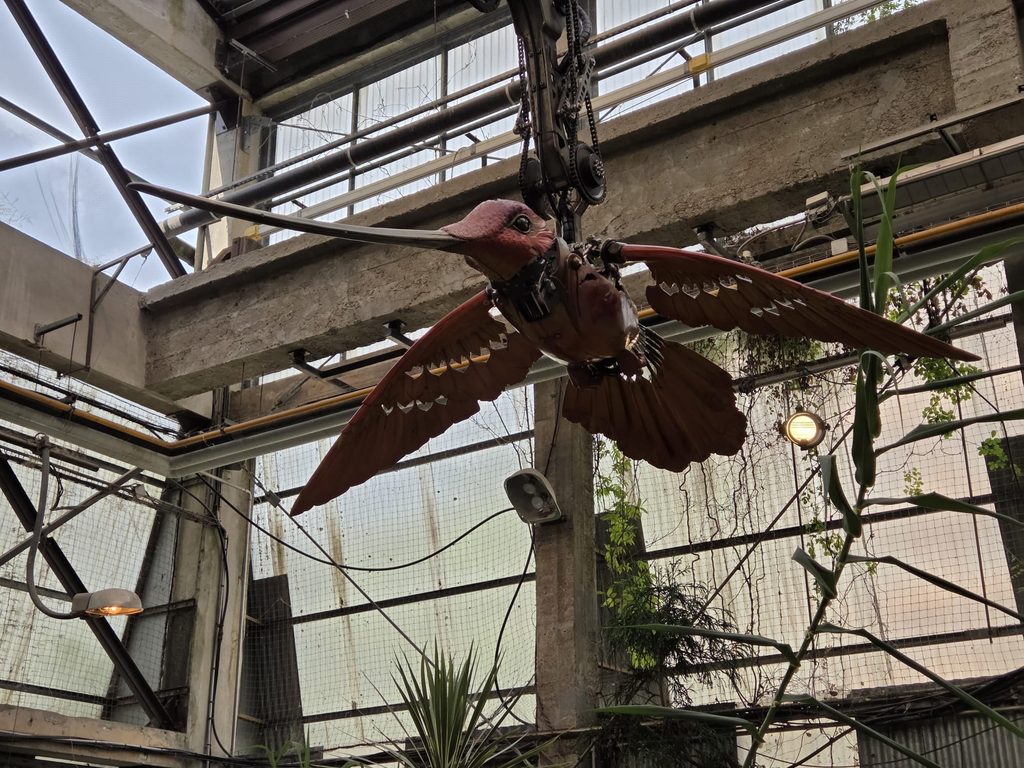
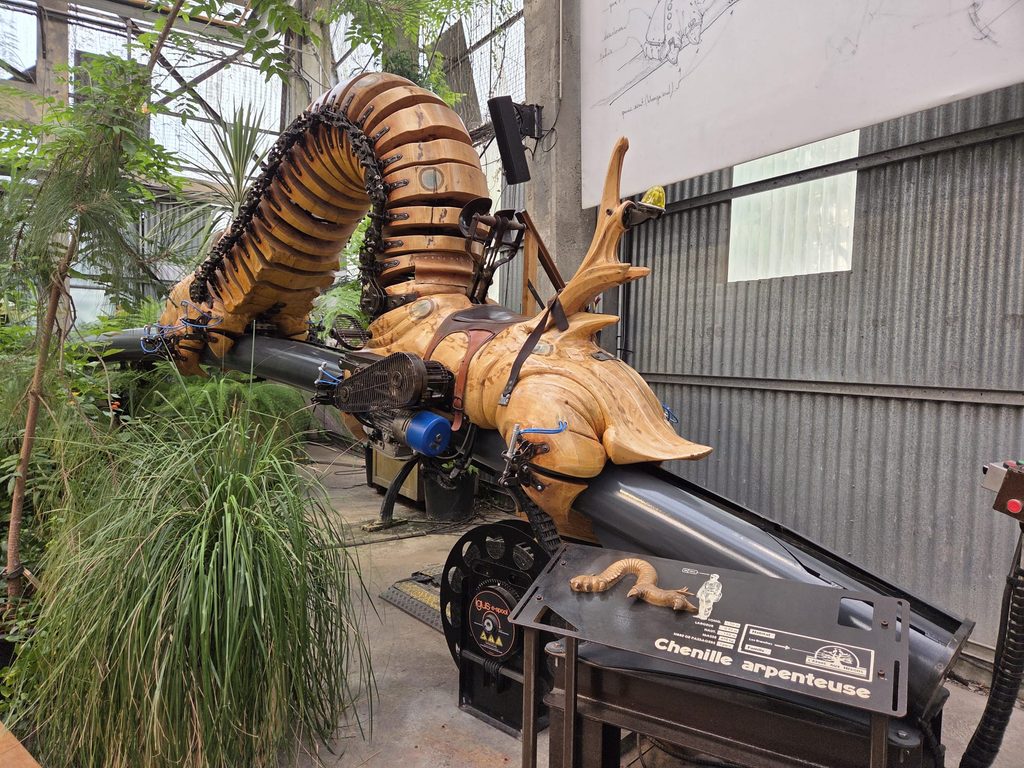
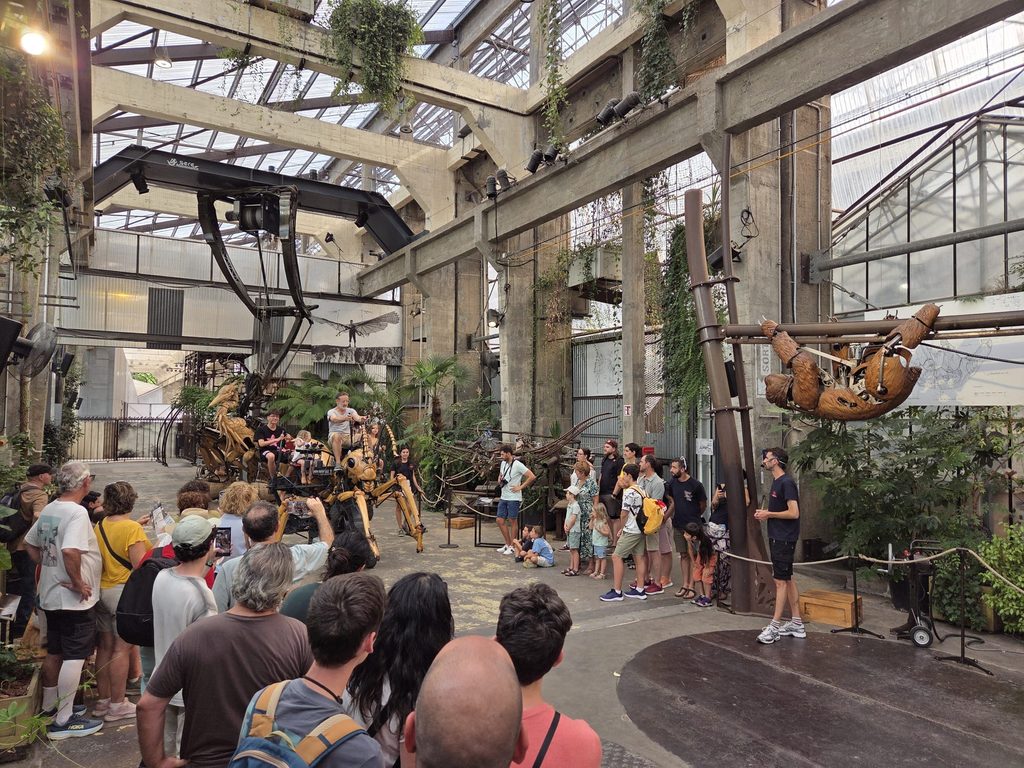
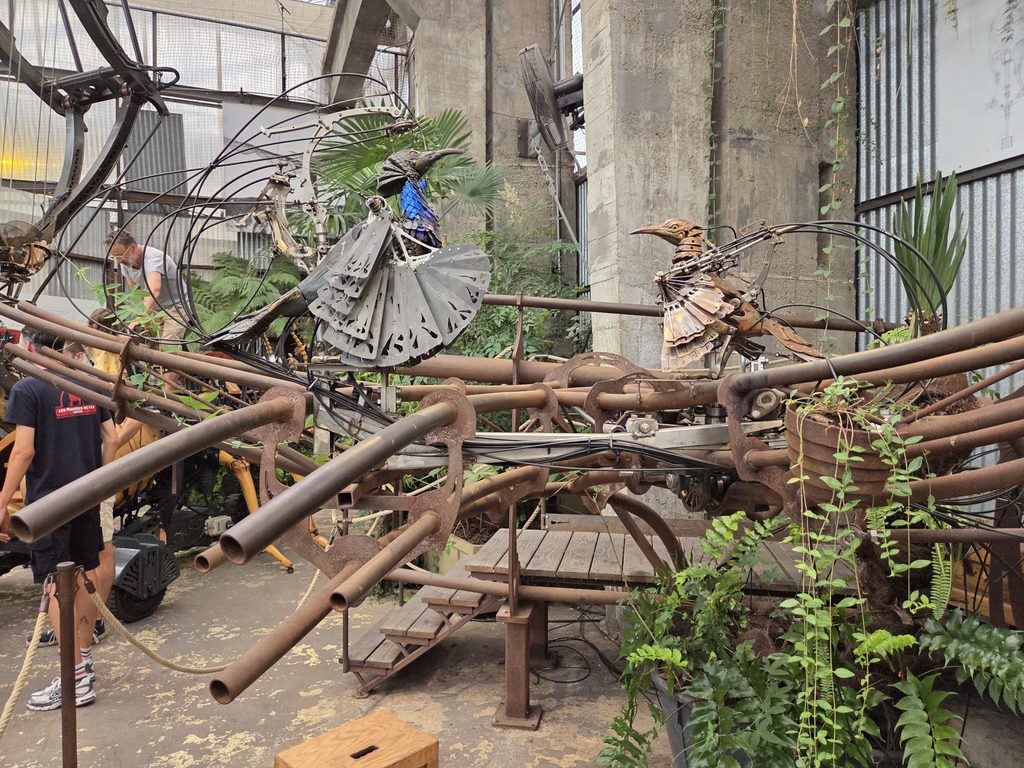
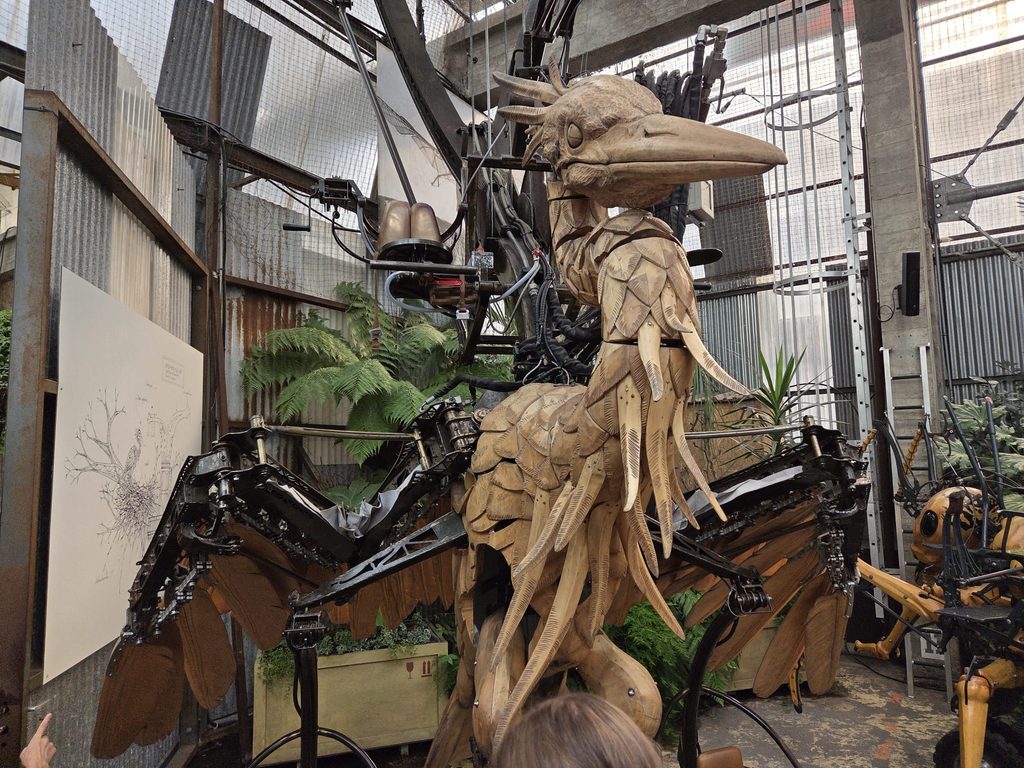
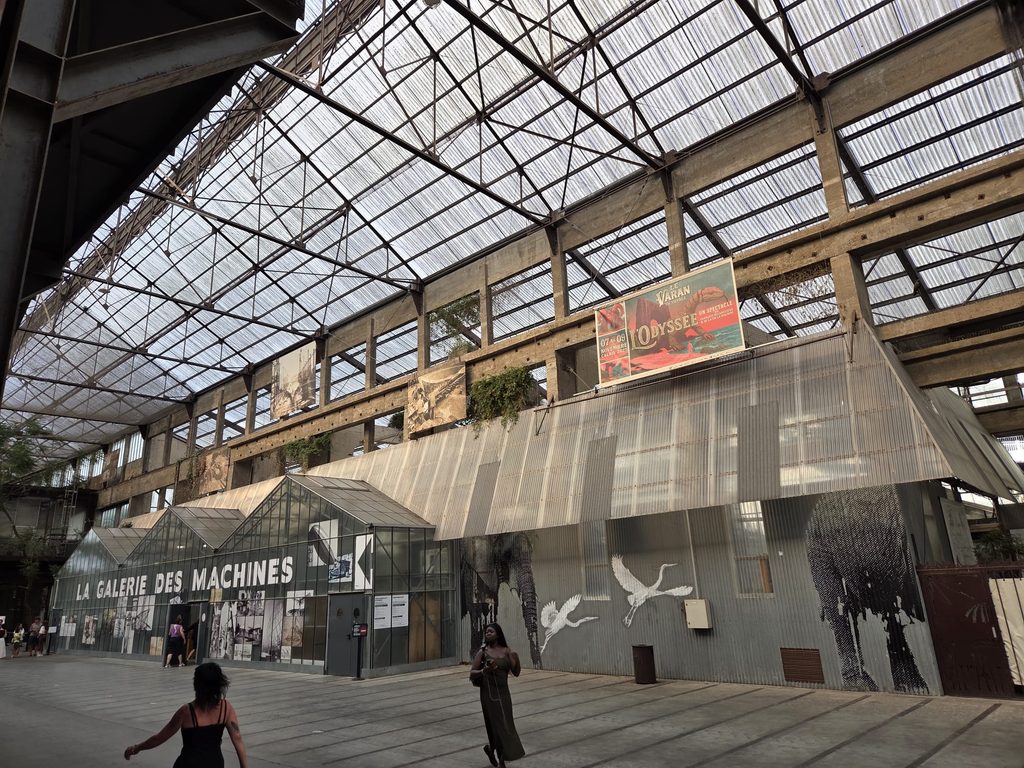
Let’s start with la Galerie des Machines. It happens to be where the Urban Geographer and I started. But I also think it helps to get a sense of the place. Visits to the gallery take the form of a tour rather than a ride. The various animals created by la Machine over the years are arranged along it. They come to life one by one at the hands of an operator, often involving audience members. You can see a chameleon catch a fly, a sloth slowly climb along a rope, elegant birds, and a not so elegant (but very comical) flying machine. Not all of the machines in the gallery are in fixed positions, either. A family driving an ant arrived halfway through our tour – a welcome interruption. There’s also a spider, hummingbirds, mechanical plants, a cloud of butterflies, and the list goes on.
Throughout la Galerie des Machines, the process is laid bare through the inclusion of sketches and technical information. This is great for sparking the imaginations of young and old alike. To really get the most of the experience it’s worth booking ahead to secure a tour in a language you’re familiar with. The machines almost speak for themselves, but the operators add a lot to it.
Elephants, Herons, and Maritime Worlds
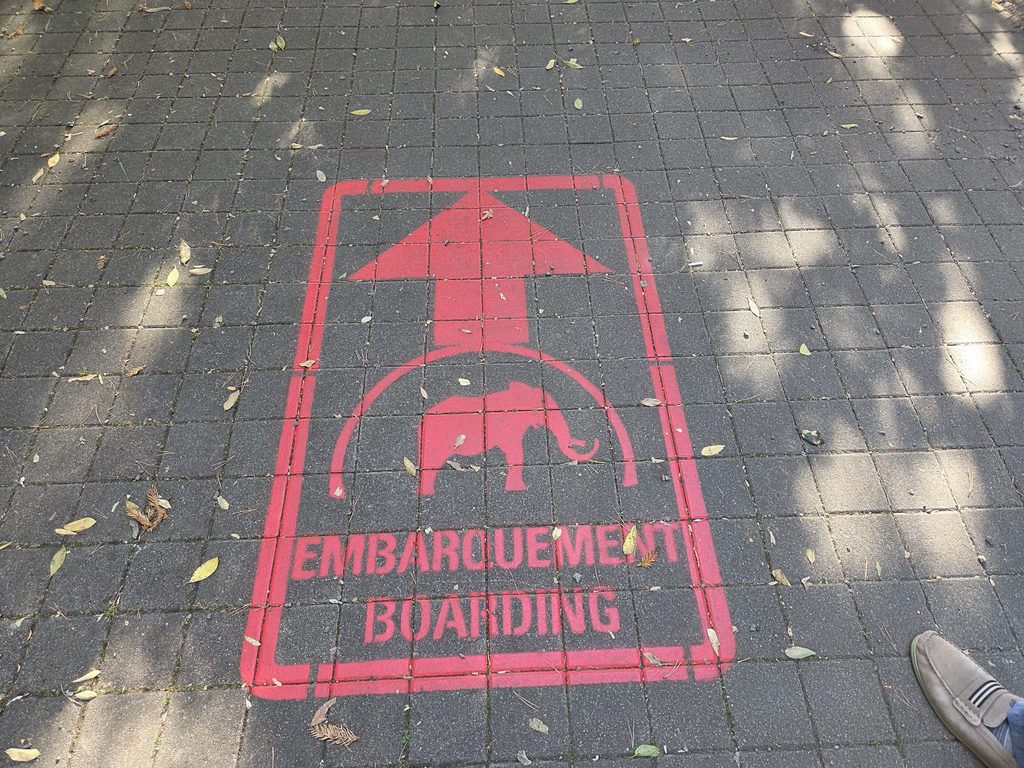
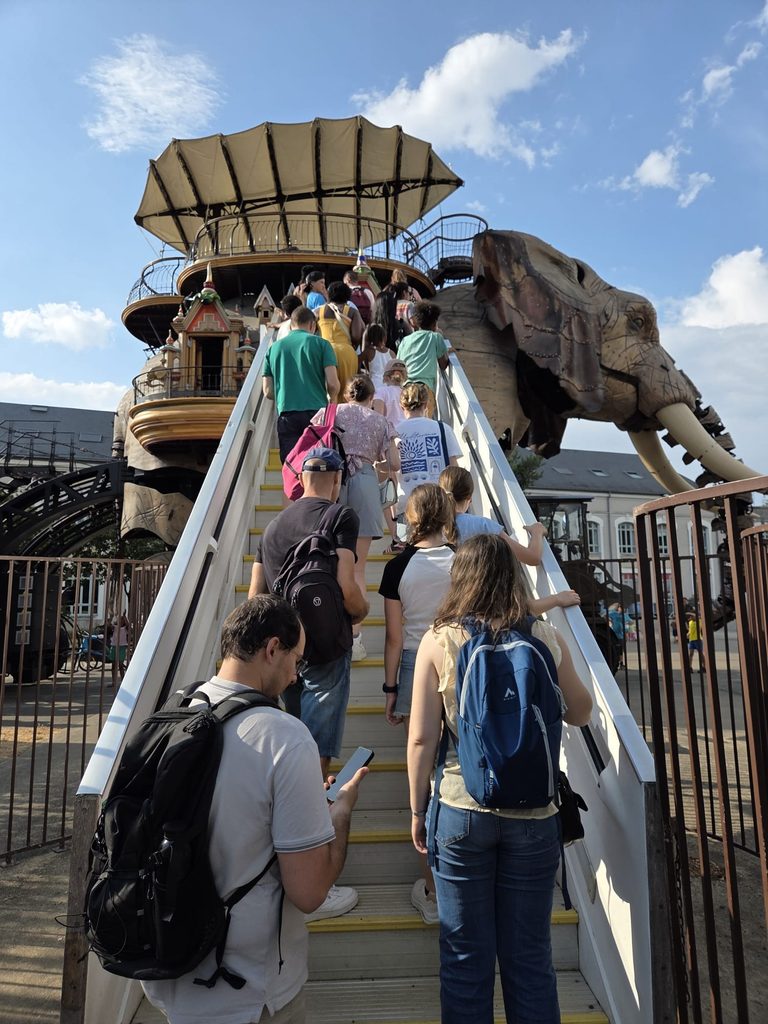
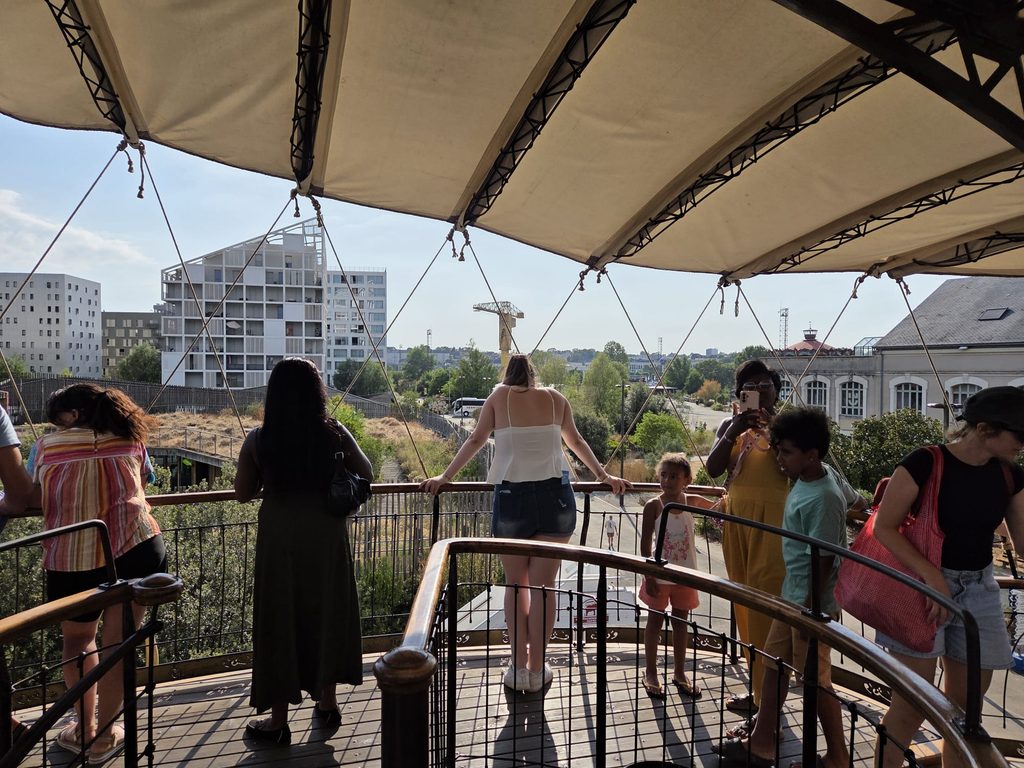
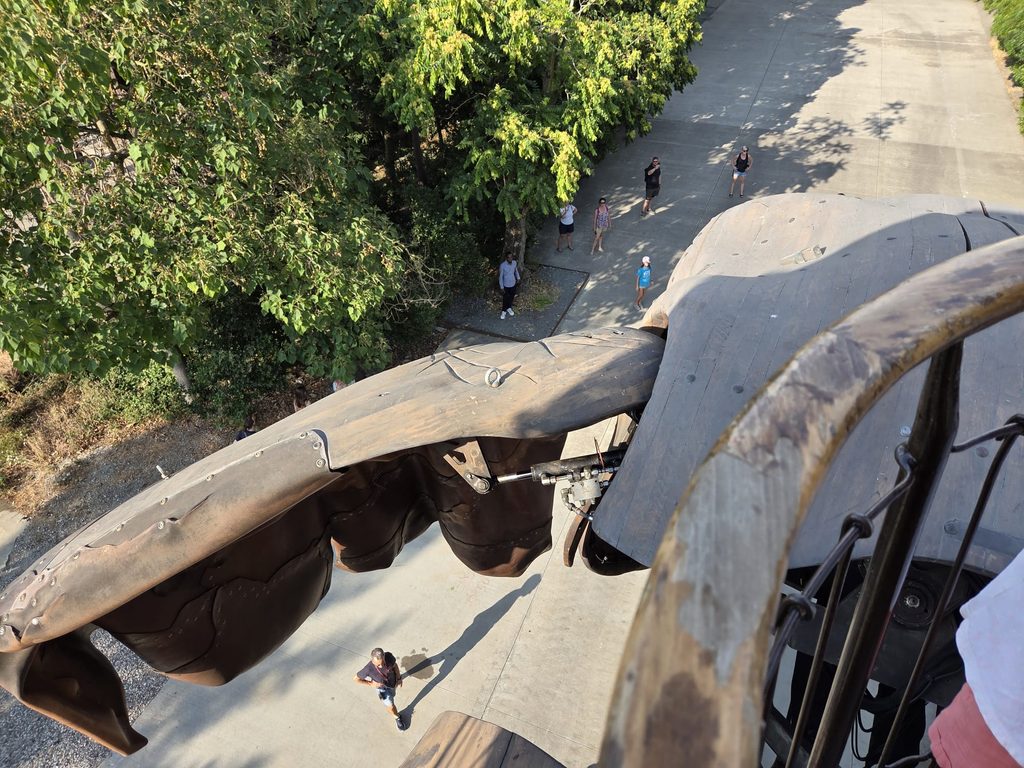
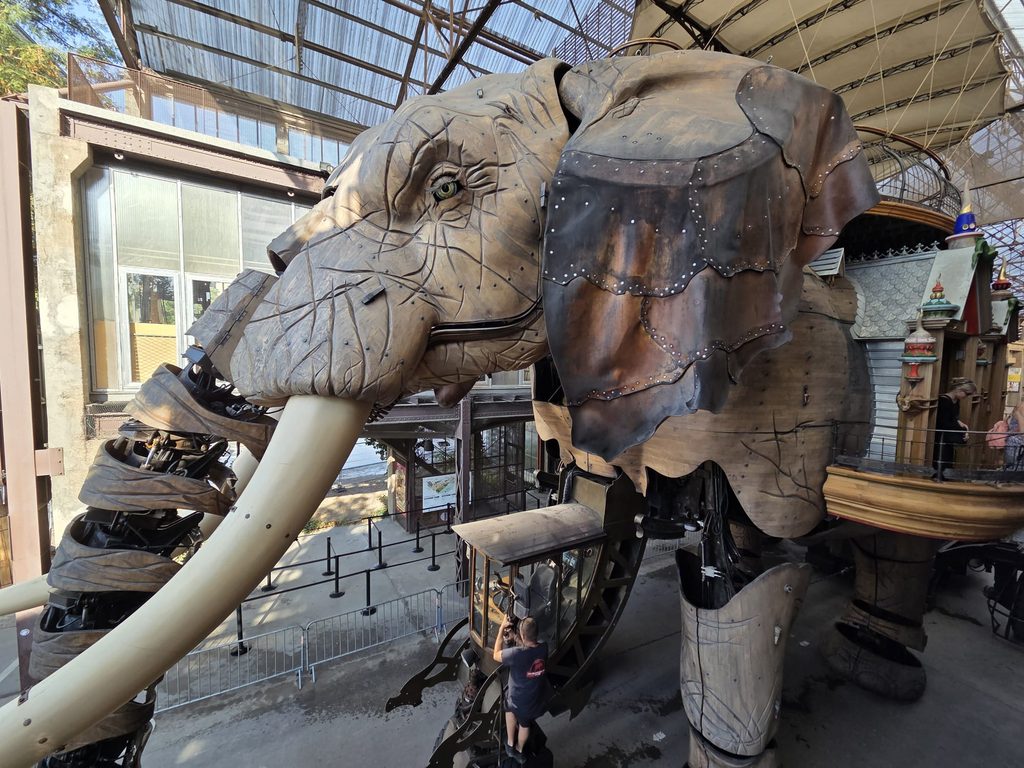
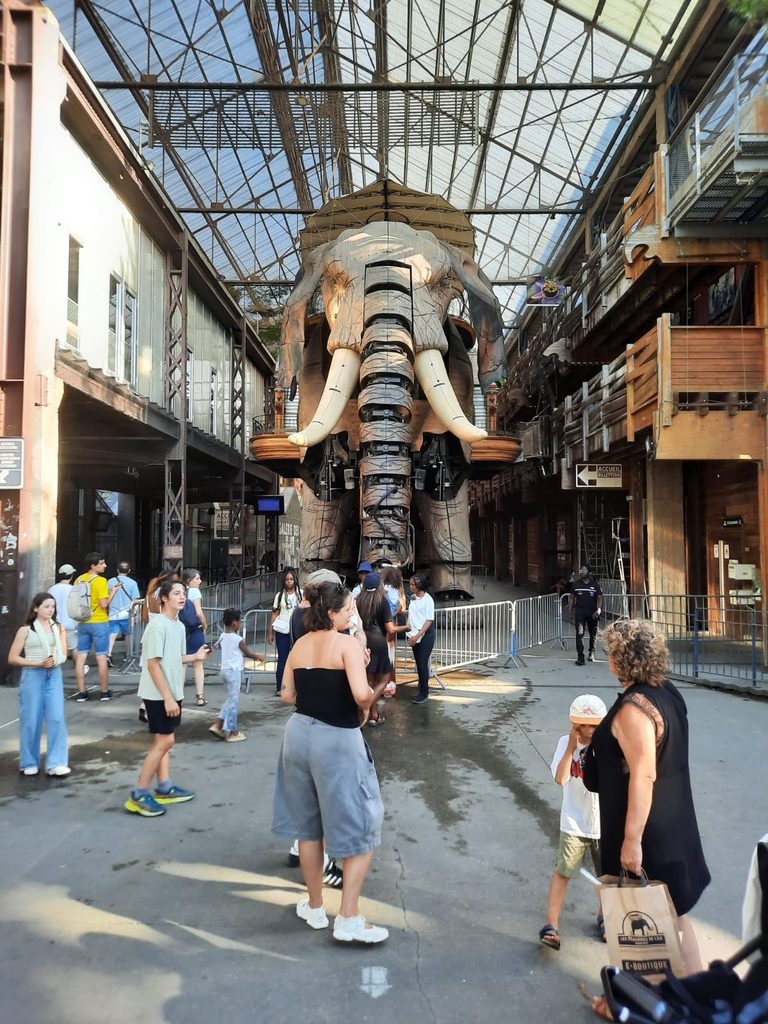
As we had arrived late, we had to leave our tour of la Galerie des Machines a little early to get to le Grand Éléphant on time. The elephant has been giving rides since 2007. It is made of steel and tulipwood, weighs 48.4 tons, and is 12 metres high and 8 metres wide. 52 people can ride on it at a time, on one of a couple of paths around the site.
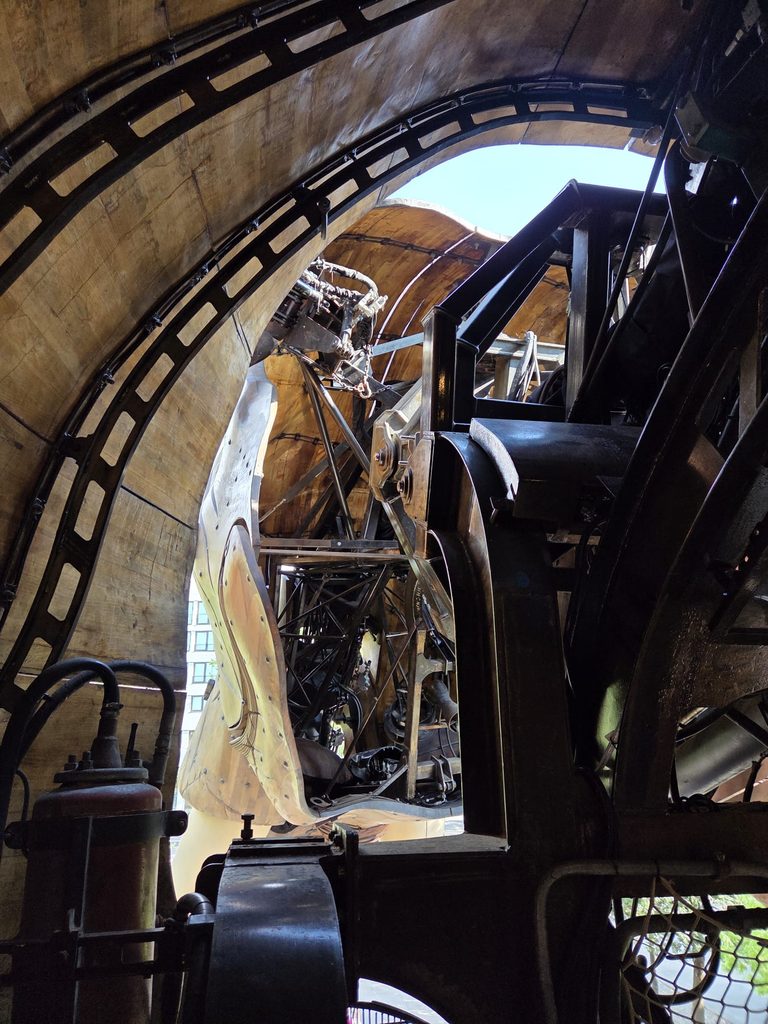
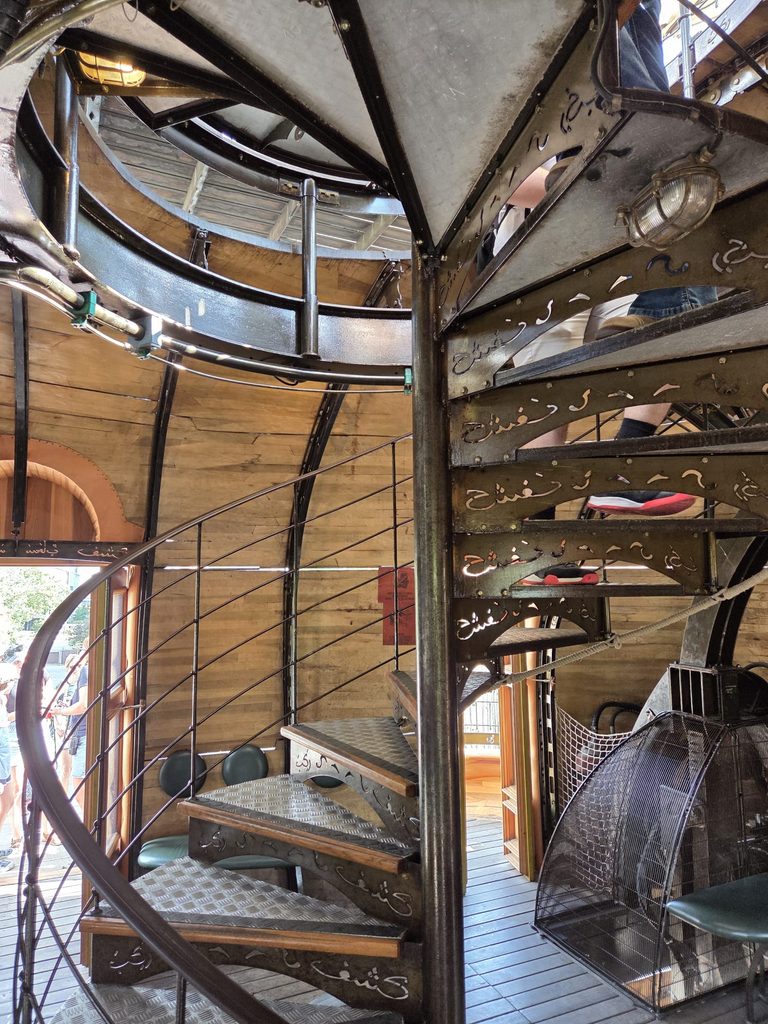
The elephant is a bit like the Eiffel Tower – the only place you can’t really get a good look at it is when you’re riding on it. But it is nonetheless very fun. Visitors can move freely around the elephant during the ride – there is a crow’s nest over its head, space on its back, and a platform over its bottom where you can move a lever to wave its tail. Or you can go into the belly of the beast, and from there pop out into viewing balconies on each side.
Watch out for the water, though – the elephant (or operator) seems to enjoy spraying passersby from its trunk, and every now and then turns the water on itself, and therefore its riders. There’s one open air point where you might board or disembark via something like airplane stairs – otherwise there are platforms built into the workshops and the carousel.
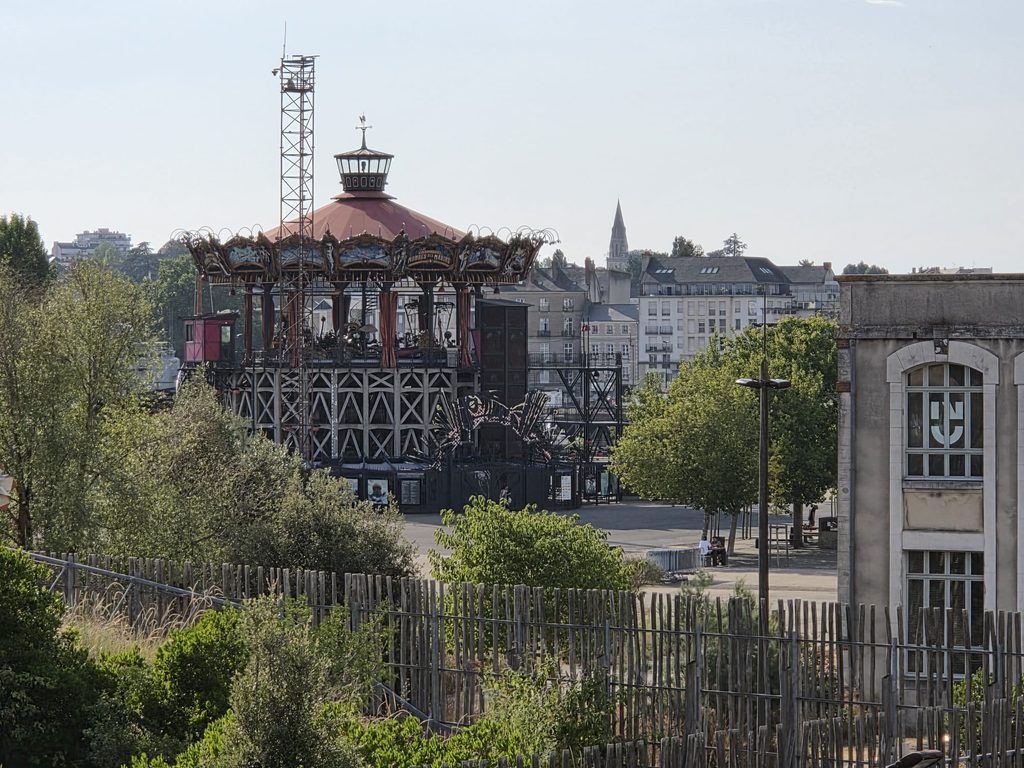
Speaking of the carousel, let’s come onto that now. The Urban Geographer and I didn’t have time to ride on it before the site closed for the day, so that will be for another time. The Carrousel des Mondes Marins (Carousel of Marine Worlds) opened in 2012. It’s a giant carousel, 25 metres high, with 35 moving elements representing marine creatures. It replicates the different levels at sea – at the top are boats, the middle level has sea creatures, and the bottom level has the more mysterious creatures of the seabed. 300 people can ride on it at once, 89 of them on the moving elements. The Machines de l’île website describes it as 360° theatre, which I think is probably true.
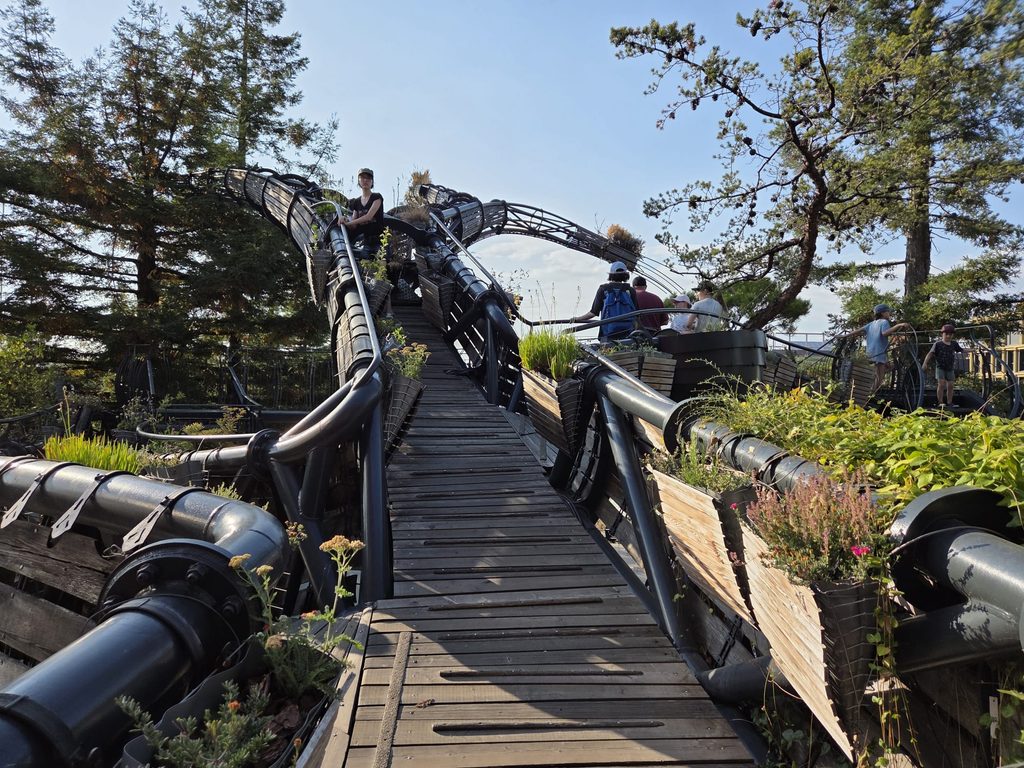
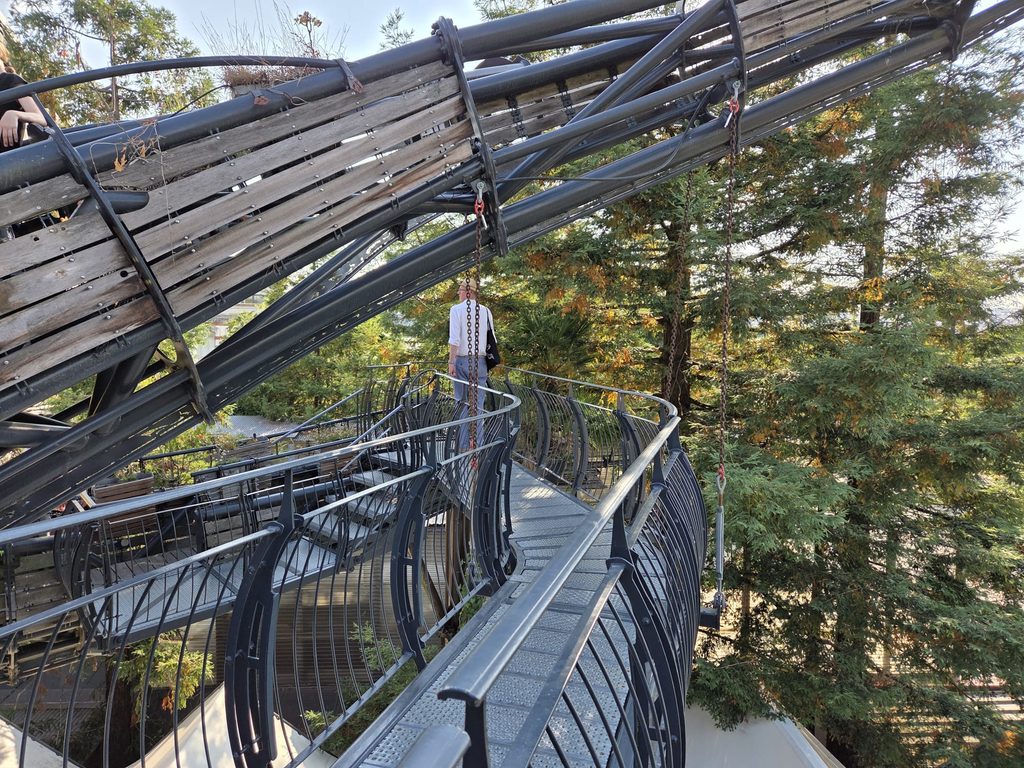
Another major project, l’Arbre aux Hérons (the Heron Tree) remains unrealised other than a trial branch. The plan was to build a steel tree 50 metres wide and 35 metres tall, with two herons on top. It got bogged down in feasibility studies as costs rose, and was cancelled by the municipal authorities. It looks from the website like the founders would like to find alternative funding.
Final Thoughts on les Machines de l’île
We’ve been through each element in turn. But what is the experience like? As I’ve mentioned, it’s a lot of fun. It does feel a bit like a theme park, only you don’t feel like you have to get your money’s worth as you may have paid only a modest sum for a ride, or have come to enjoy the atmosphere for free. And it’s more balanced between adults’ and families’ enjoyment than a lot of theme parks.
I had a great time watching the creations of la Galerie des Machines come to life, and then riding on the elephant. And as the Urban Geographer and I rode around the park, we started a conversation about urban regeneration that continued that evening. A lot of times (and maybe I’m being cynical here), urban regeneration seems to mean cleaning a place up, inviting in some businesses and trendy cafes or restaurants, and converting spaces into apartments. Hopefully some of the businesses are independent, but it’s not a given. This model makes for spaces that are visually appealing because of the retained heritage elements, but are all a bit the same after a while.
Nantes has gone in such a bold direction with les Machines de l’île. To turn over a disused industrial space to such a project is genuinely interesting and inventive. It’s a completely different way to use an old work site, that keeps it closer to its roots but transforms it for the present. I’m very glad to have been, and can’t wait to go back. I hope more cities have creative people like François Delarozière and Pierre Orefice to come up with ideas like this.
Trending
If you see this after your page is loaded completely, leafletJS files are missing.