
La Corbata Rosa, Val en Vignes
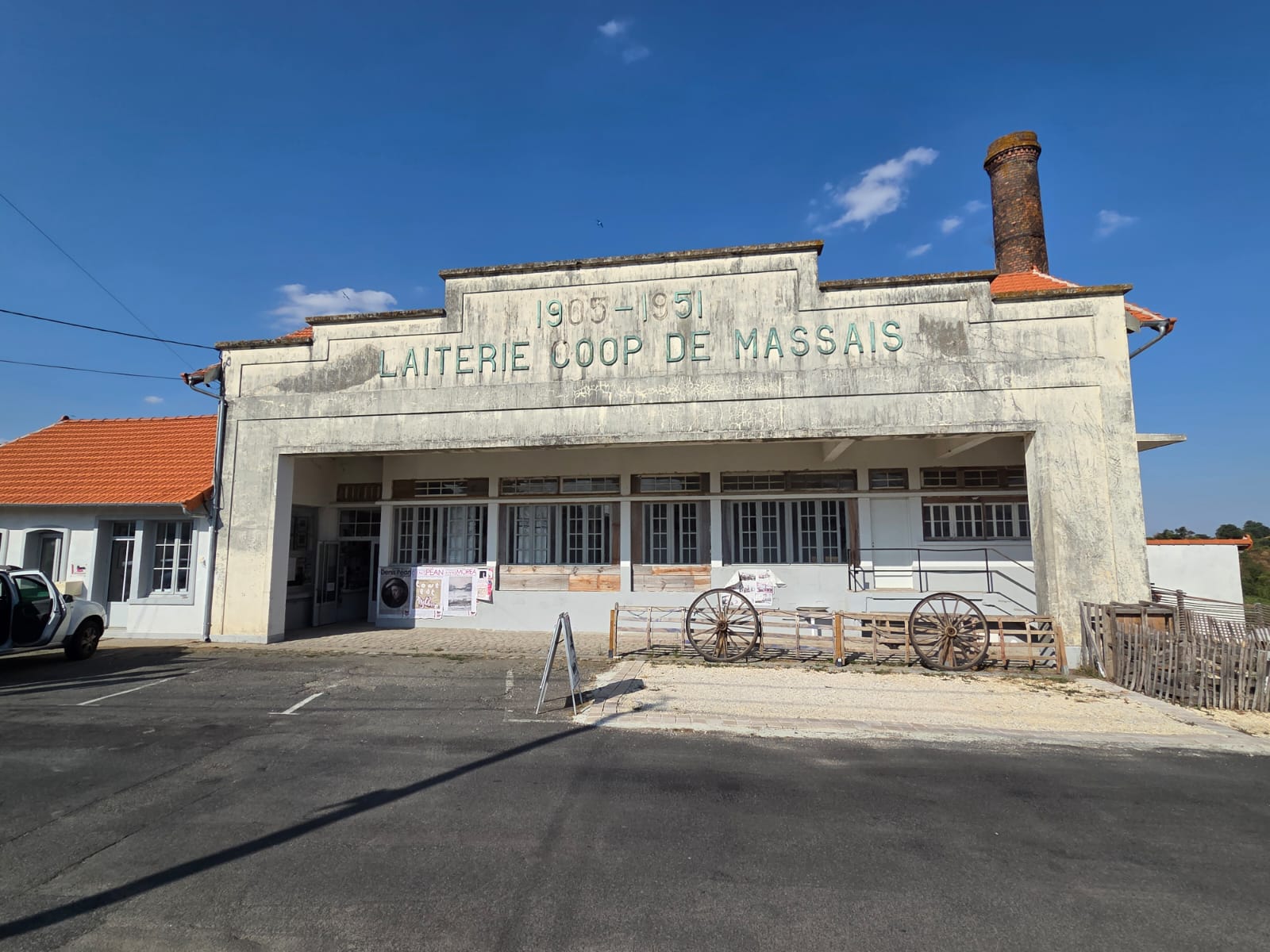
An unexpected find in an old industrial building, la corbata rosa is a great asset for its rural community.
la corbata rosa – Contemporary Art in a Historic Setting
Now, if you had asked me even a few weeks back whether the Deux-Sèvres region in France was a good place to see contemporary art, I might have been doubtful. Plenty of history around here, sure. Even some long-running community festivals. But I hadn’t seen a contemporary art gallery there before. Until now, that is. On a recent long weekend in the region, I found myself visiting not one, but two, high quality commercial galleries. That I had not expected to find them here says something either about my ignorance, or about the changing nature of rural life in France. A few other posts from my weekend will follow some time later, but as the two galleries both had temporary exhibitions, I wanted to share my thoughts on them first.
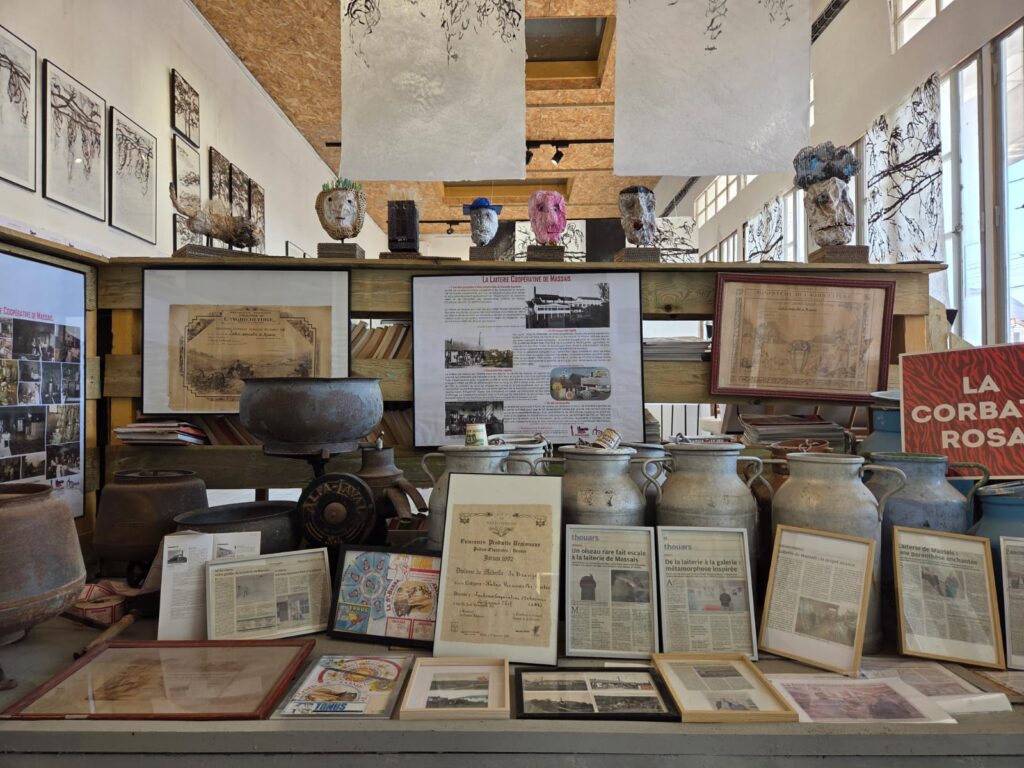
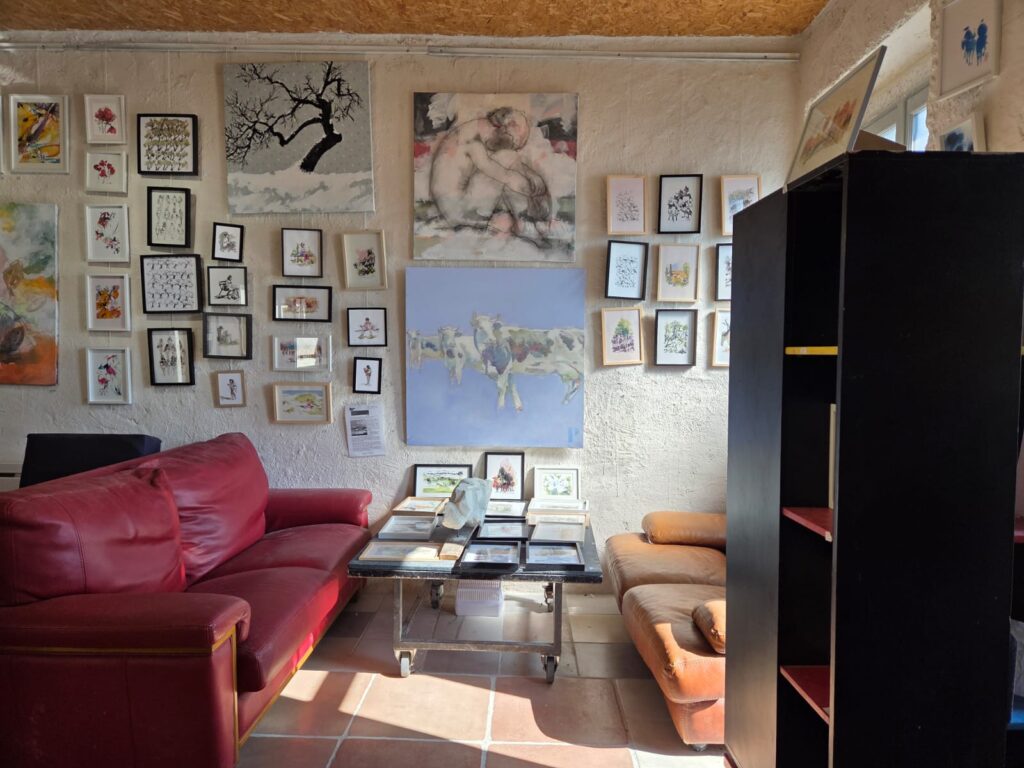
We are making a start, today, with la corbata rosa (meaning ‘the pink tie’ in Spanish). La corbata rosa, the brainchild of François-Victor Brunet and his wife Rachel Thibault, is more than the gallery itself. They founded it as a cultural enterprise in 2013, and since then have hosted events and exhibitions in various places around the Loire Valley, Brittany, and Paris. For some time they had a base in Rochefort-sur-Loire, before moving more recently to Massais in Val-en-Vignes, where they have bought and are restoring an old cooperative dairy. In both Rochefort and Massais the couple have also incorporated a gîte (holiday cottage rental – with the potential here to be artist-in-residence accommodation), which seems a sensible diversification.
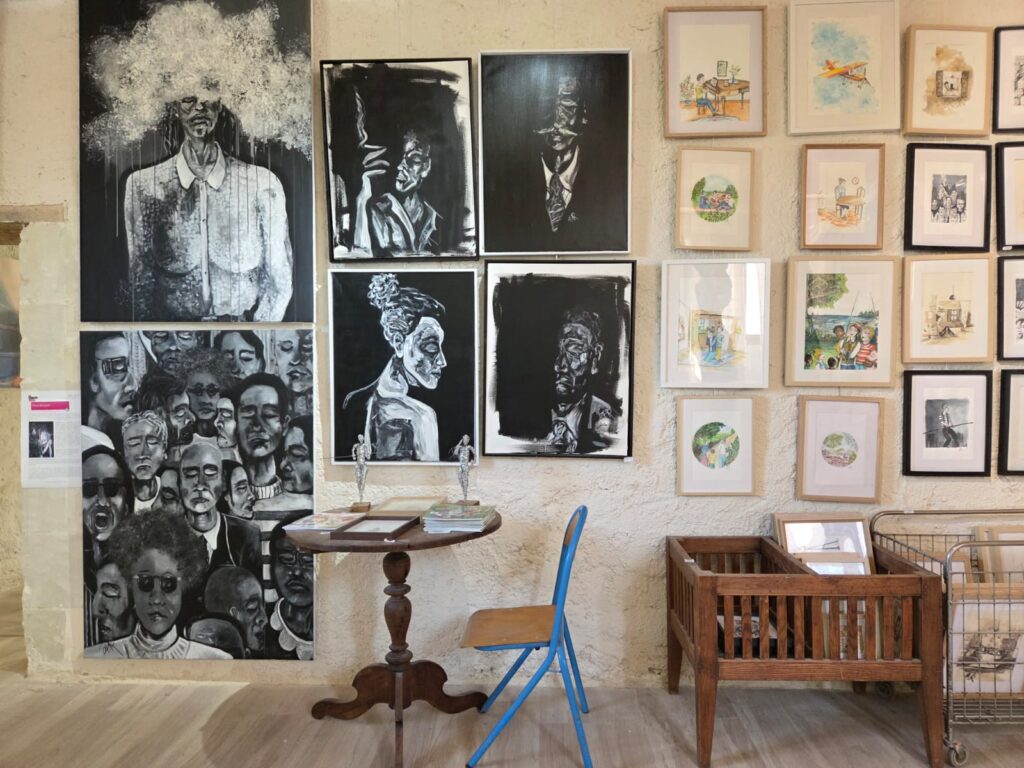
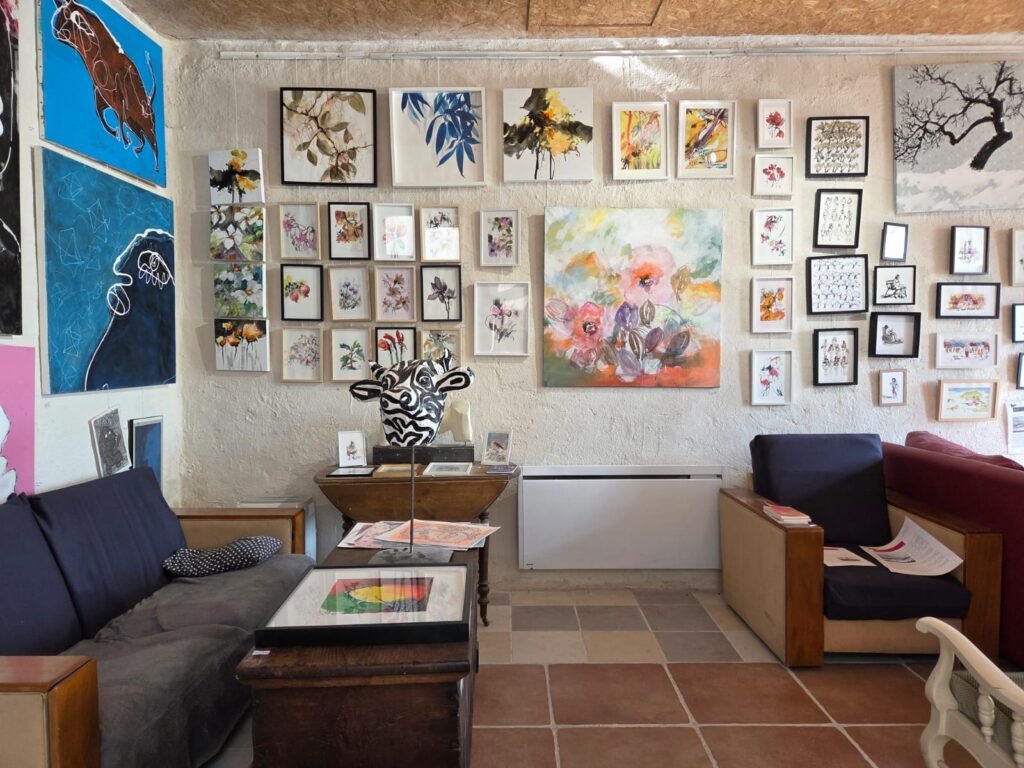
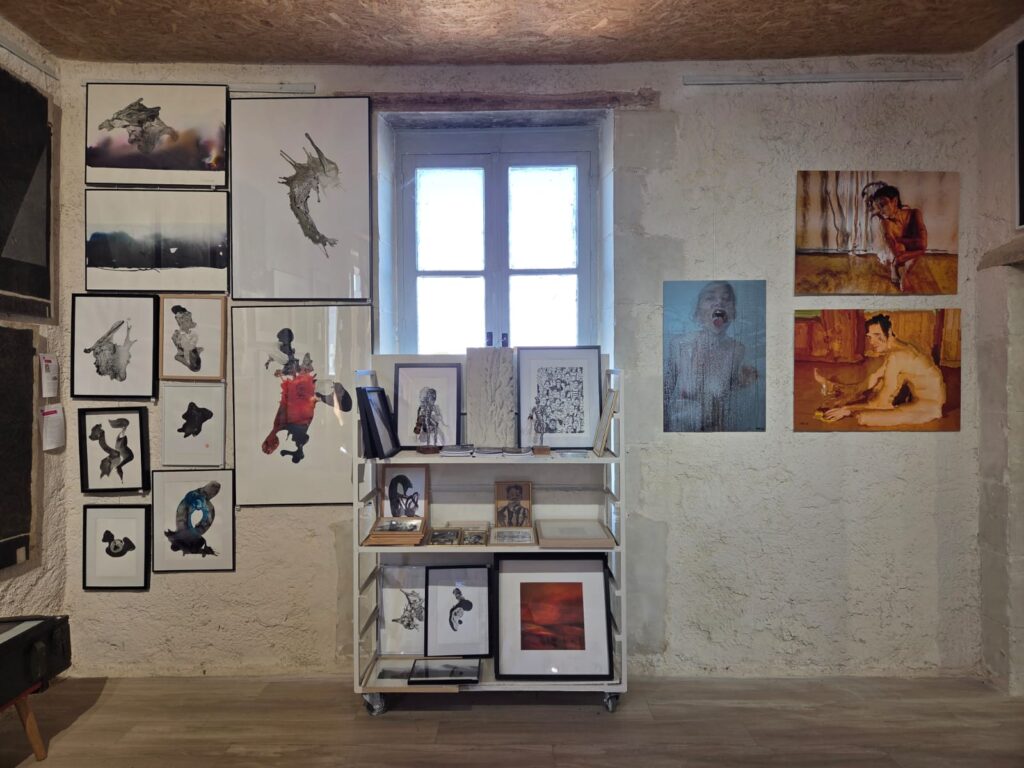
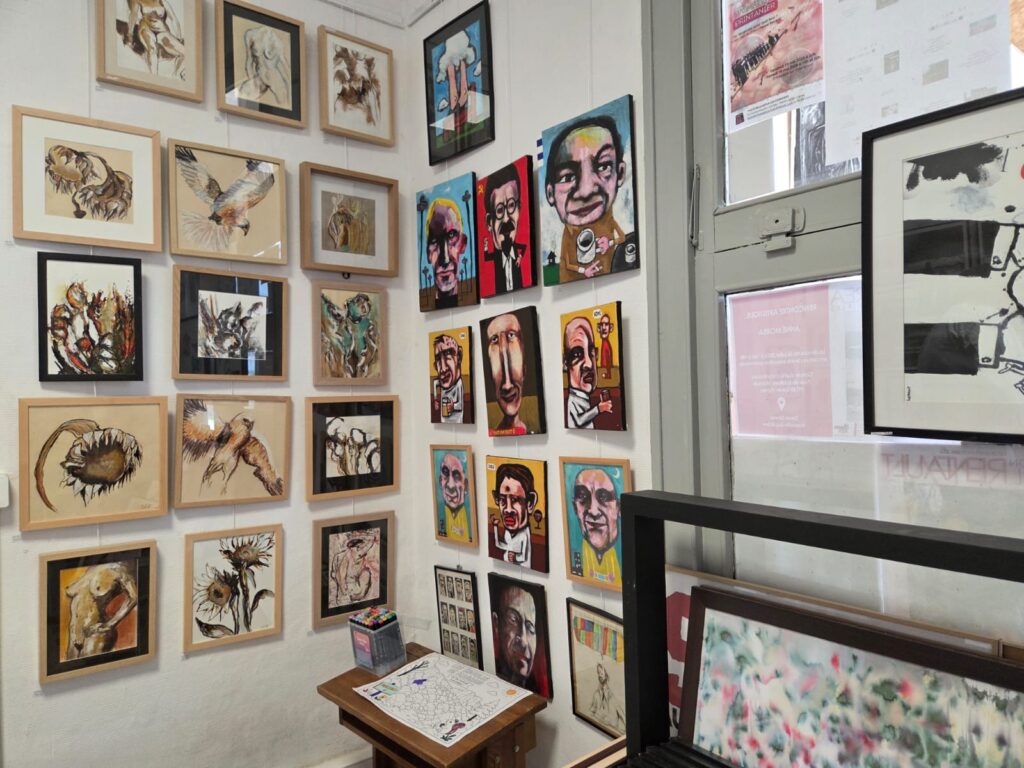
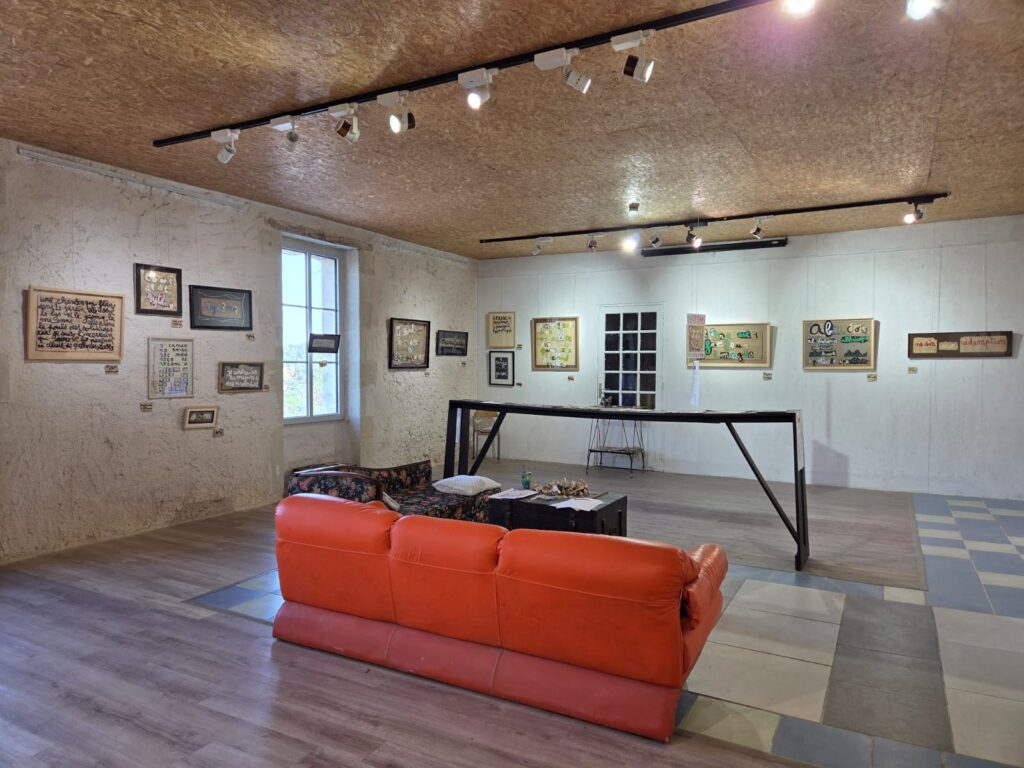
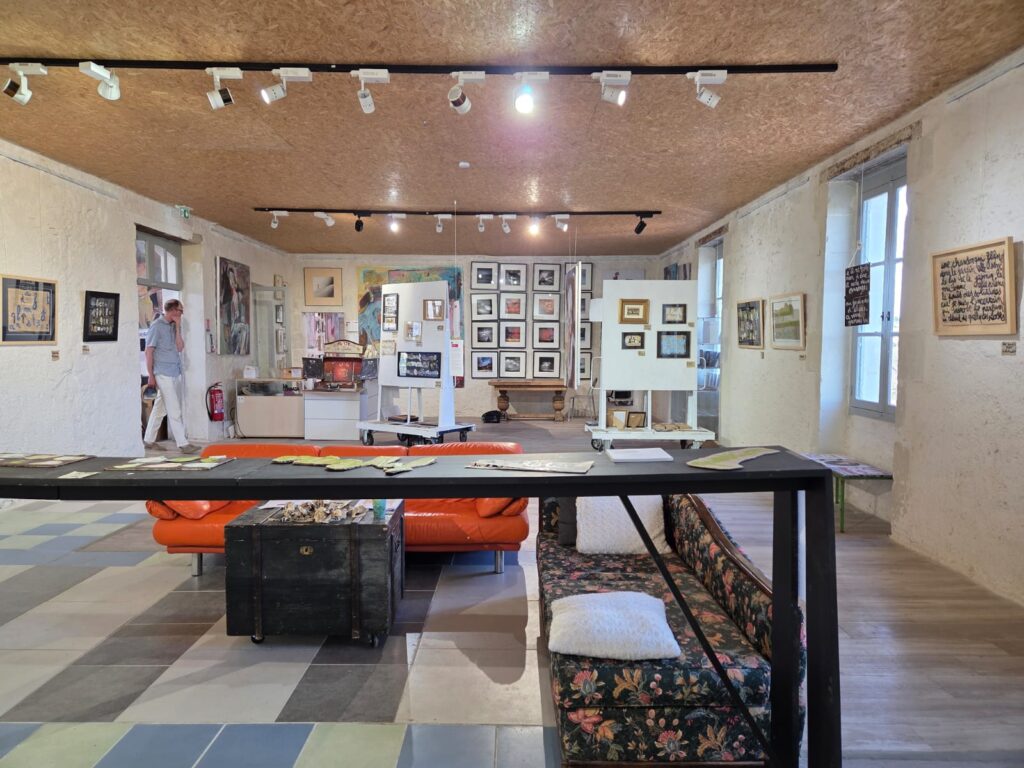
The dairy gives la corbata rosa a space of around 300 square metres. In this they present more than 400 works by over a dozen artists, as well as having two temporary exhibition spaces. Many of the artists are local, and the works very reasonably priced. The gallery gives, at one and the same time, exposure for local creatives, and a cultural gathering point for residents. Brunet is generous with his time in explaining the history of the building and renovation project as well as the art and artists. He even did a tour in English for the Urban Geographer. All in all, this is a wonderful use of a historic building to invigorate a community. A complete reinvention of how the dairy coop functions as a gathering place for locals, and now visitors as well.
Temporary Exhibitions – Anne Morea: Territoires Sensibles & Denis Péan: Calligraphies Sauvages
Now, as promised, some information about those temporary exhibitions. The renovated dairy – done using reclaimed materials – provides two very nice exhibition spaces. Good backdrops for a variety of art, with a lot more character than the ‘white cube’ type of galleries.
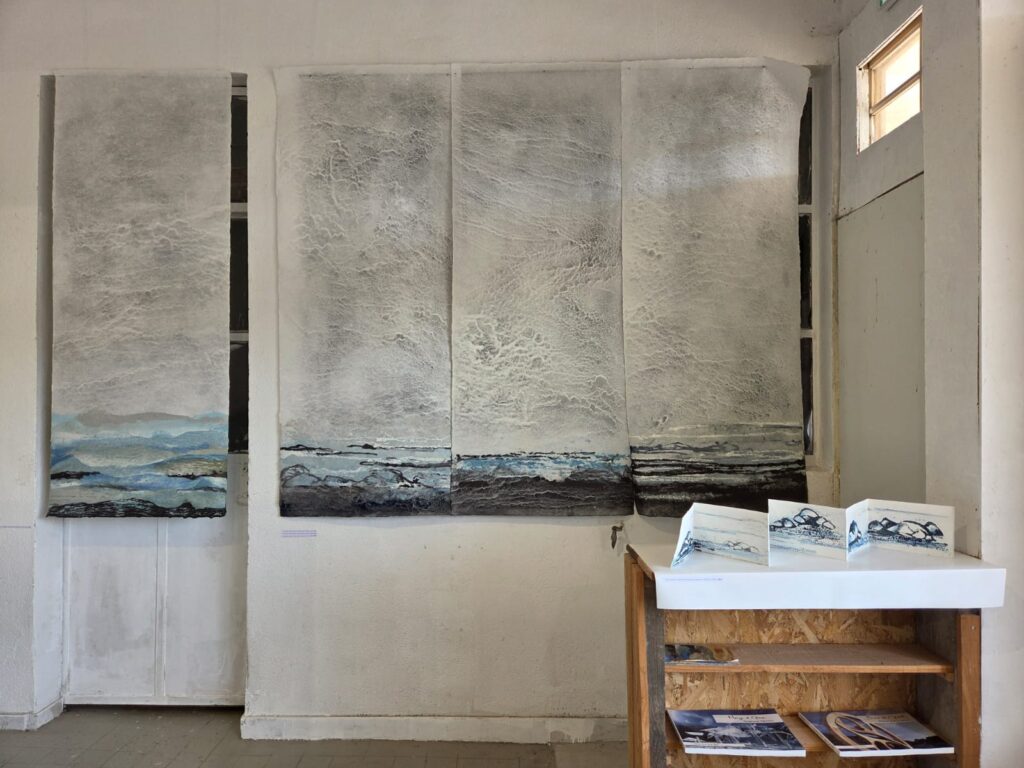
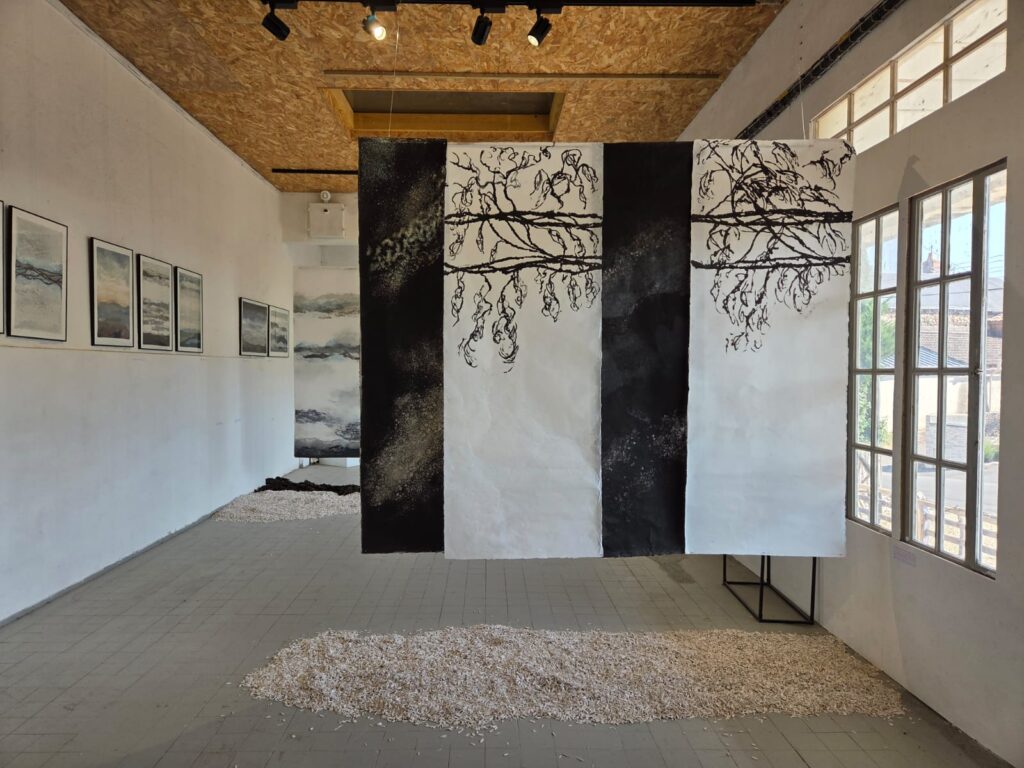
But I digress. The first exhibition we visited was recent works by Anne Morea in an exhibition entitled Territoires Sensibles (Sensive Territories). Morea, who lives fairly locally, has exhibited with la corbata rosa before. The majority of works in this exhibition are recent works, compositions created using plant fibres. Morea gathers and processes the fibres, using different shades to create trees or abstracted landscapes. The forms are an integral part of the paper itself. Elsewhere, engravings continue the themes of ephemerality, fragility and the natural world. Morea’s work feels very grounded, cool and calm – a balm against the sultry summer weather outside.
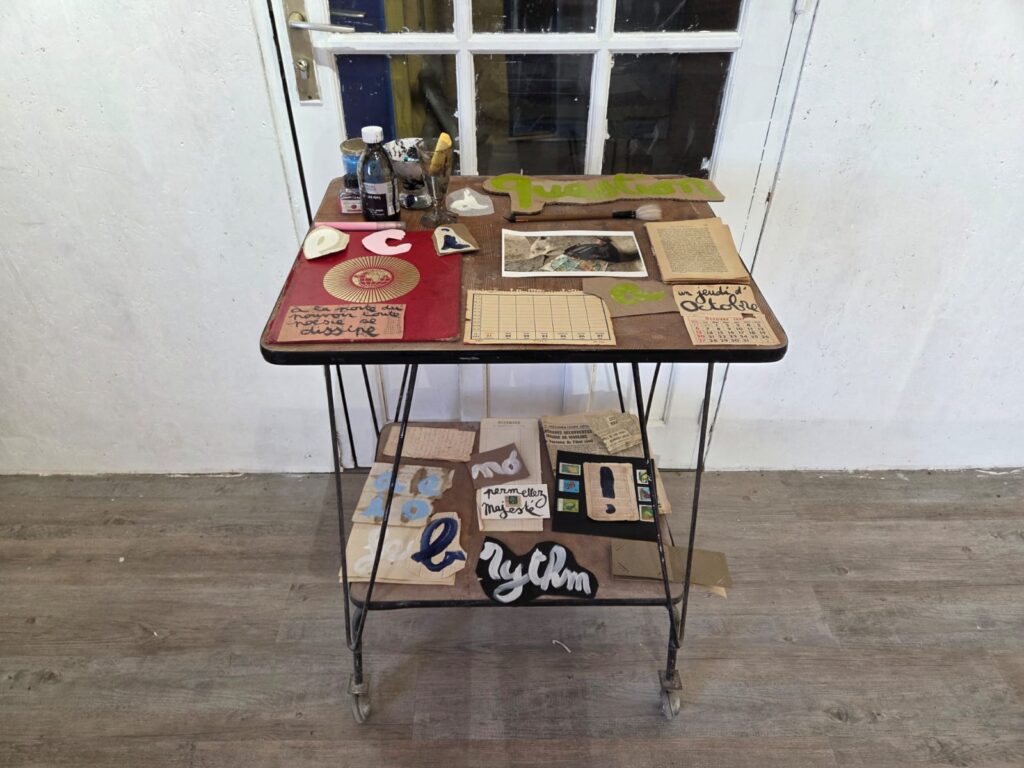
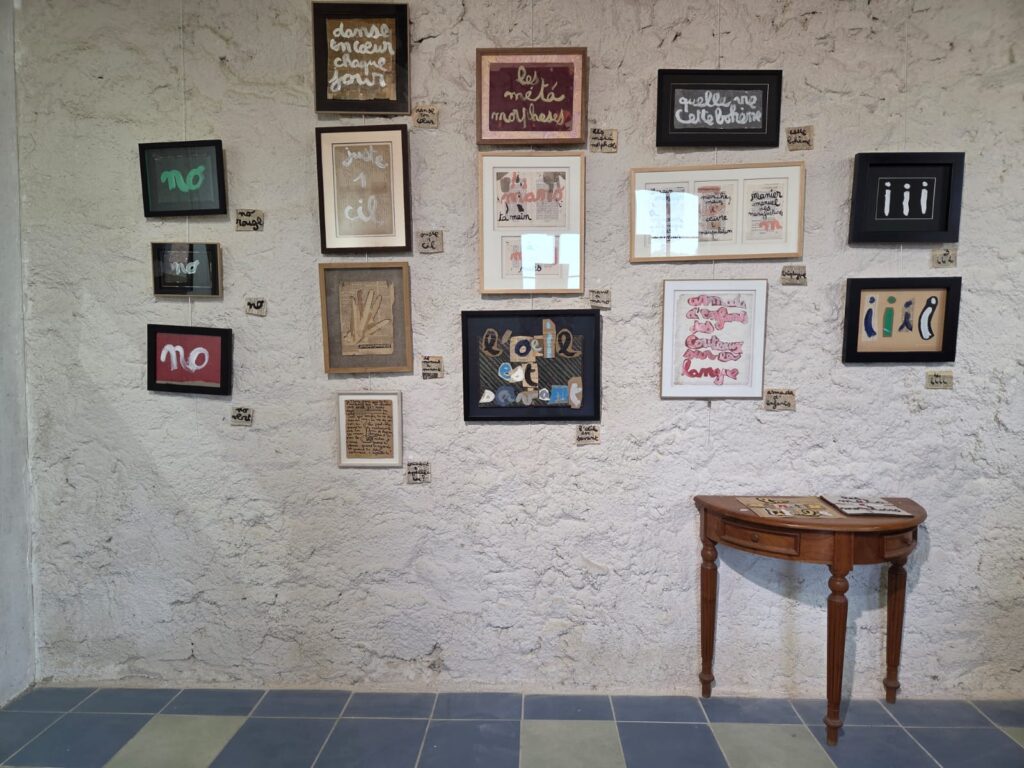
The second exhibition was Denis Péan: Calligraphies Sauvages (Wild Calligraphies). French audiences and music lovers may be familiar with Péan as a musician, author, poet, composer, and front man of the band Lo’jo. In Calligraphies Sauvages we see fragments of poetry written instinctively (the savage calligraphy) on different found materials. This is a dreamlike and creative world, in which words bounce off each other, sparking unexpected sounds and rhythms. I’m not familiar with Péan’s work as a musician, but his work as an artist is certainly playful and rather inviting.
In due course, some of these works may take their place amongst the permanent collection, ceding the exhibition spaces to new artists. I look forward to seeing how the space, and la corbata rosa’s cultural programming, evolve.
Anne Morea: Territoires Sensibles on until 13 September 2026
Denis Péan: Calligraphies Sauvages on until 11 October 2026
For more information on la corbata rosa, including events and exhibitions, see here.
Trending
If you see this after your page is loaded completely, leafletJS files are missing.