
Zurbarán – National Gallery, London
It’s a world of saintly visions and the drama of the ordinary as the National Gallery puts Francisco de Zurbarán centre stage.
Zurbarán
There’s just about a month left to see Zurbarán at the National Gallery. I’ve got myself into the position I always seem to, where I’m rushing around all the galleries before exhibitions close, so this one had been on my list for a while. I rather like Zurbarán’s work. For a generally mild-mannered person, I like a touch of the dramatic in my artistic tastes. I prefer Russian composers like Stravinsky over gentle Italians when it comes to classical music (a frequent subject of dissent between myself and the Urban Geographer), and I prefer the more dramatic of the Old Masters to, say, pastoral or Rococo fantasies.
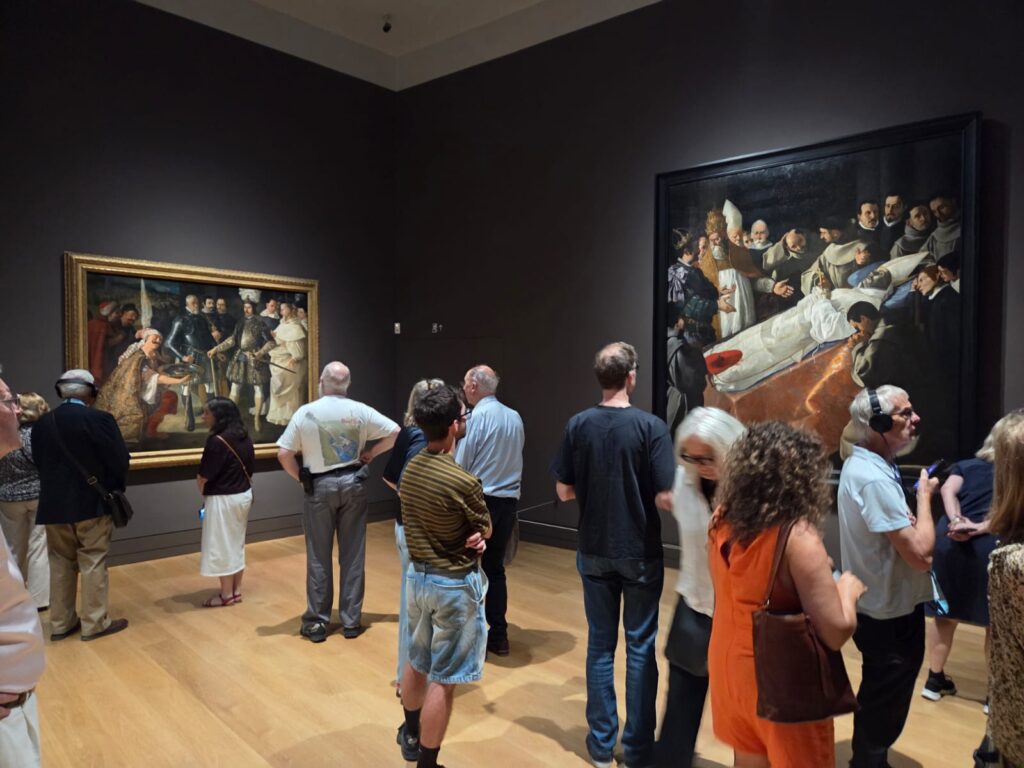
I’m also finding my feet with the National Gallery’s bigger exhibitions. There was a time when a good portion of this post would have been complaining about the crowds. I think I’m finally working out when to visit to actually see the works, without being elbow to elbow with fellow visitors. Now if only I could do the same at the British Museum…
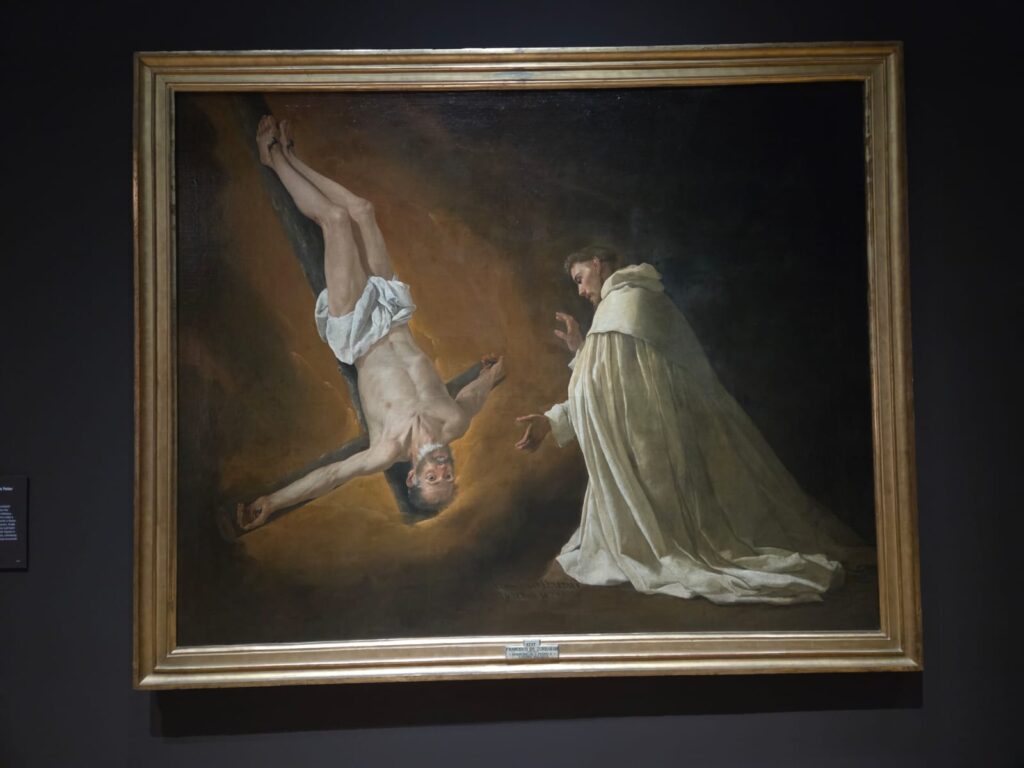
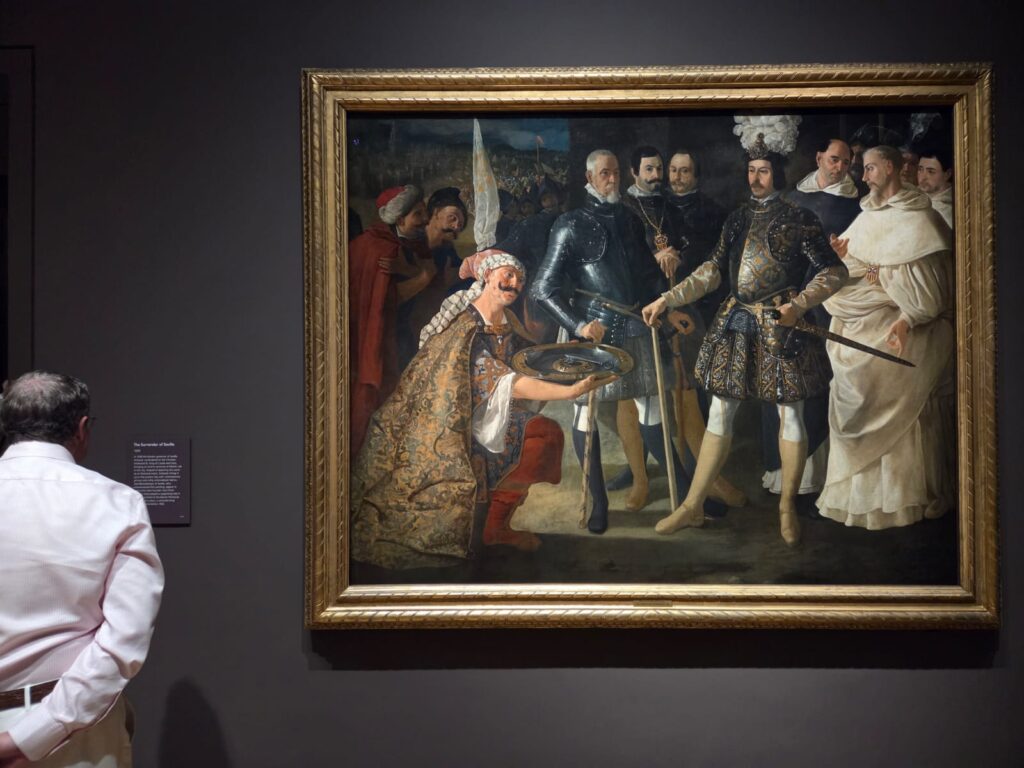
But anyway, I’m getting close to going off on a complaining tangent now. We want to talk about Zurbarán. It occupies an interesting place in the museum’s programming, in my opinion. The National Gallery has long leaned into exhibitions which are academically noteworthy but not necessarily blockbusters. On the one hand, they have chosen in Francisco de Zurbarán an artist who is perhaps less well-known than contemporaries Murillo and Velázquez. And this is the biggest exhibition of his work yet staged in the UK. But on the other hand, the life-sized, Caravaggesque images Zurbarán produced make for dramatic marketing materials of broad appeal. A real sweet spot, it seems.
Introducing Francisco de Zurbarán
Francisco de Zurbarán was a Spanish Baroque painter, born in 1598 in Fuente de Cantos, Extremadura. His father was a haberdasher, and, after young Francisco showed early talent by imitating objects in charcoal, sent his son to be apprenticed to artist Pedro Díaz de Villanueva in 1614. After completing his apprenticeship, Zurbarán worked as an artist while also starting a family with wife María Paet. After María unfortunately died in childbirth in 1624, he married wealthy widow (always a good move for an artist) Beatriz de Morales in 1625.
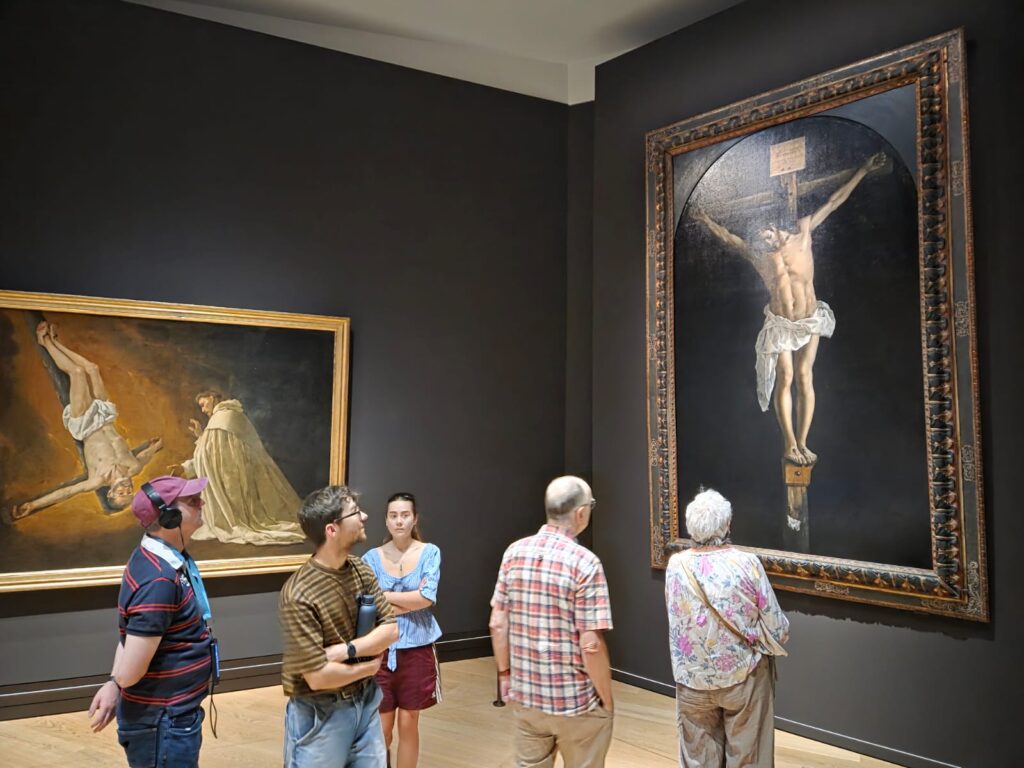
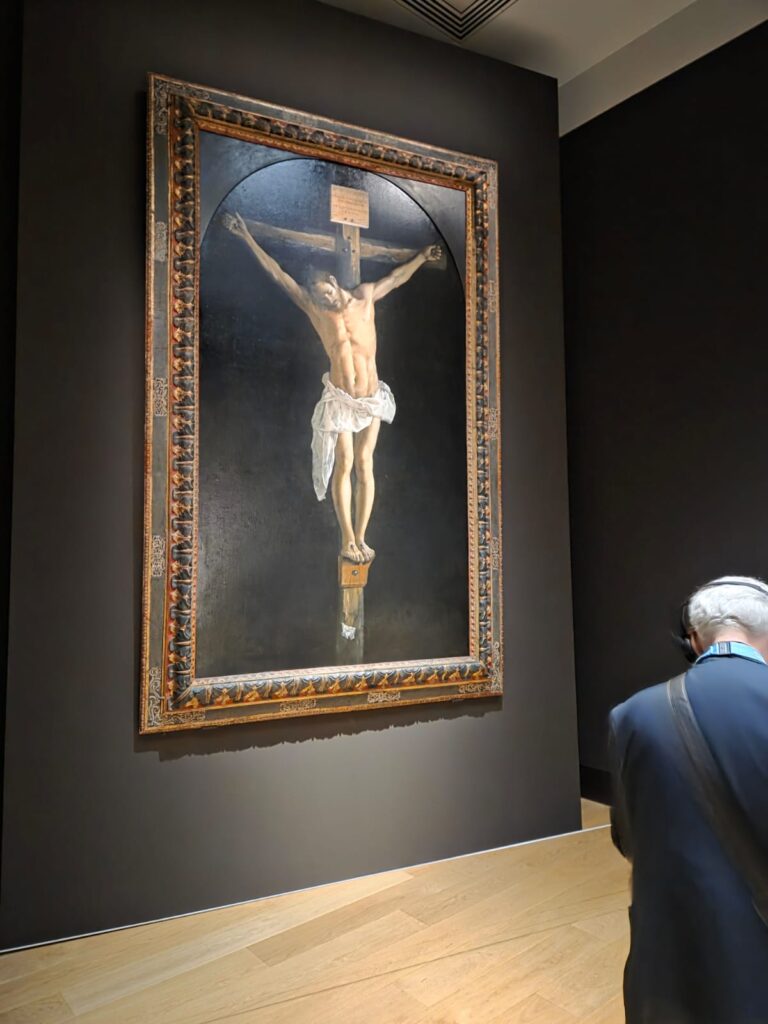
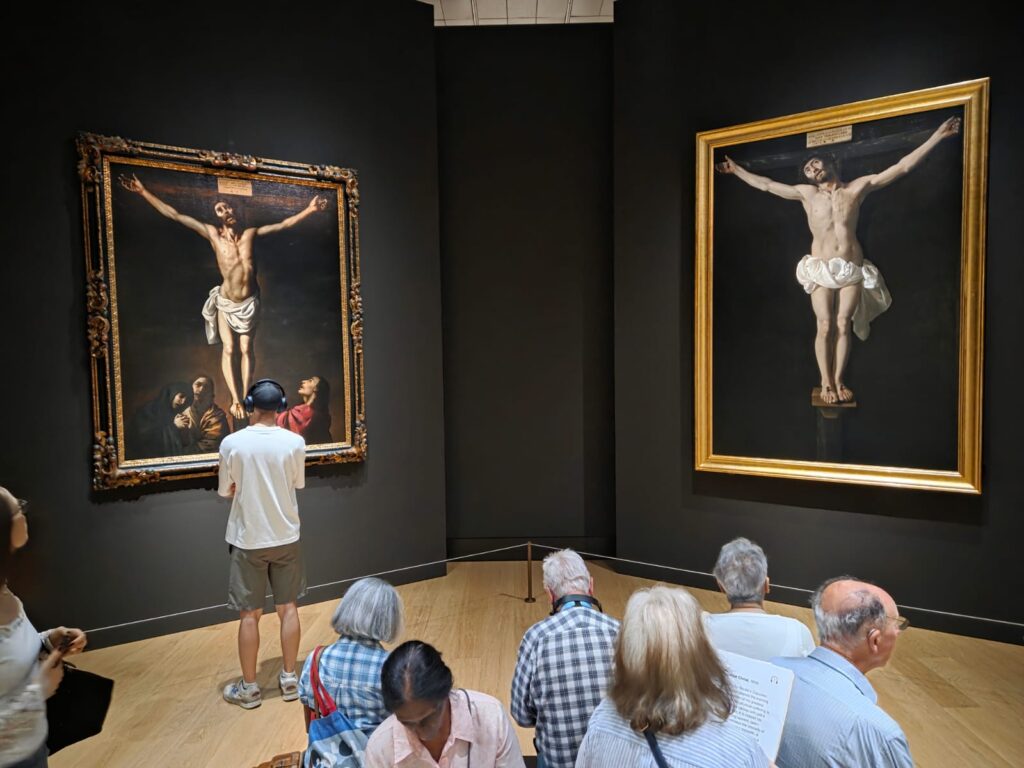
In 1626 Zurbarán signed a contract with a Dominican priory in Seville to produce 21 paintings in eight months. An early work, The Crucifixion (1627) forms part of the exhibition and shows his talent – lit by candlelight, its effect was so striking many people thought it was a sculpture. These early triumphs made the artist’s name, and after taking another big commission from the Mercedarians in 1629, he relocated permanently to Seville at the request of the city’s Elders that same year. Seville was then one of the richest cities in Spain, so the fact the Elders thought Zurbarán would be a draw says quite a lot.
Further glory followed in 1630 when Zurbarán became court painter to Philip IV. This golden period was not to last, though, with his style falling out of fashion from about 1640. Zurbarán’s workshop was producing a number of paintings for the South American market by this point. It was not smooth sailing in his personal life, either. His second wife died in 1639, and he married another wealthy widow, Leonor de Torder, in 1644.
Zurbarán moved to Madrid in 1658, in search of work. He died there in 1664 – not quite in penury as myth would have it but with an estate worth 20,000 reales (maybe £100,000 today).
A Spanish Caravaggisto
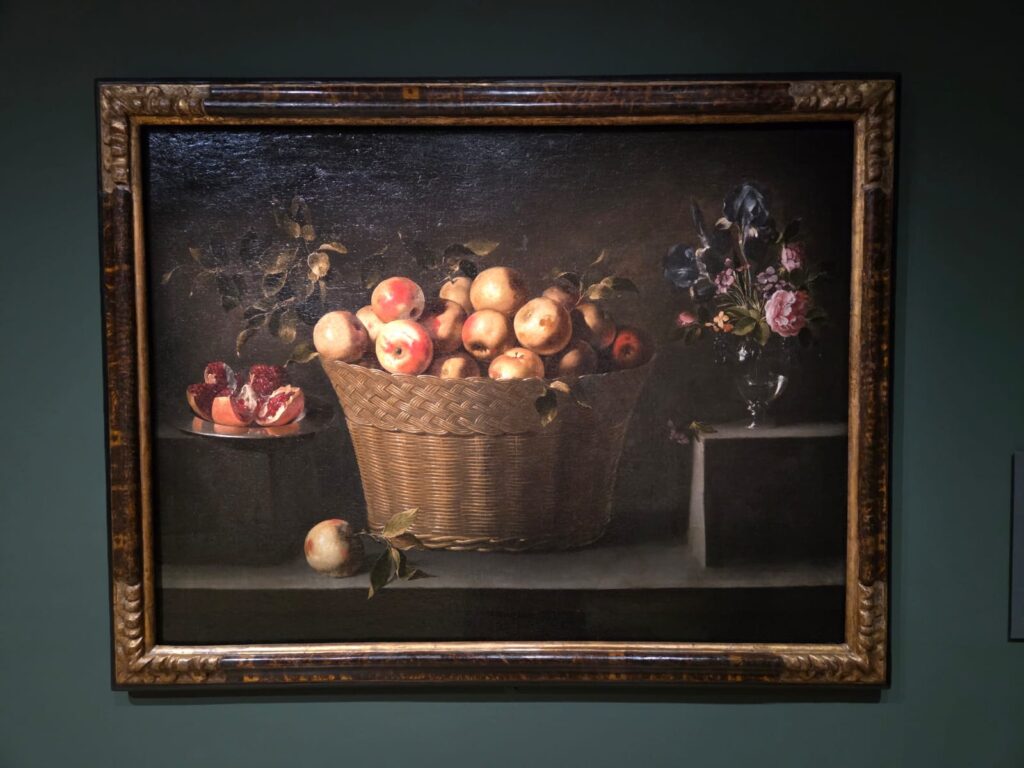
Given that Zurbarán stayed in Spain throughout his career, we don’t know if he ever saw any paintings by Caravaggio. But he was definitely of that school, whether you call them Caravaggisti, tenebrists, or lovers of chiaroscuro. He wasn’t the only Spanish painter to adopt dramatic lighting and stark compositions – see Juan Sánchez Cotán, for instance.
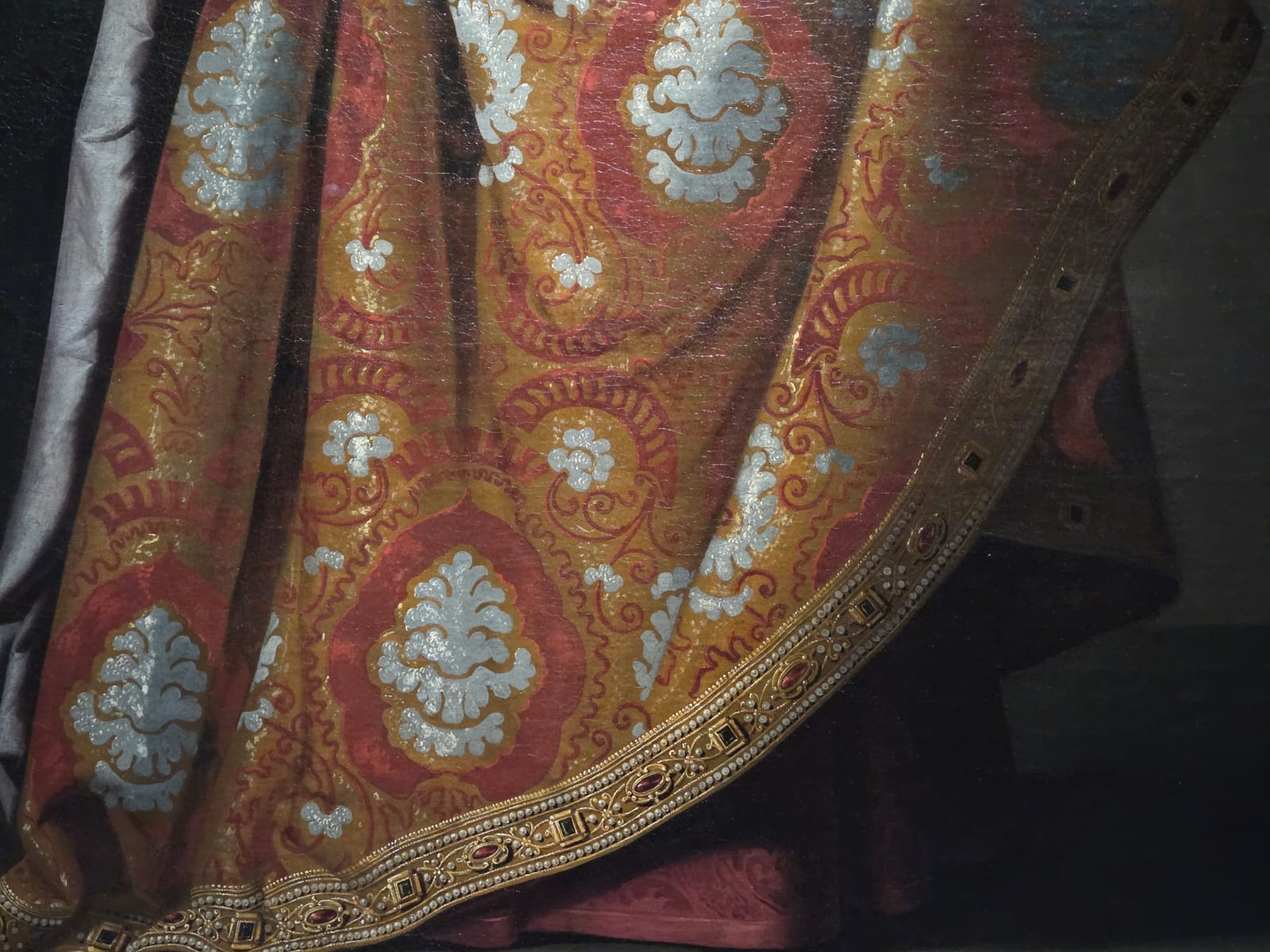
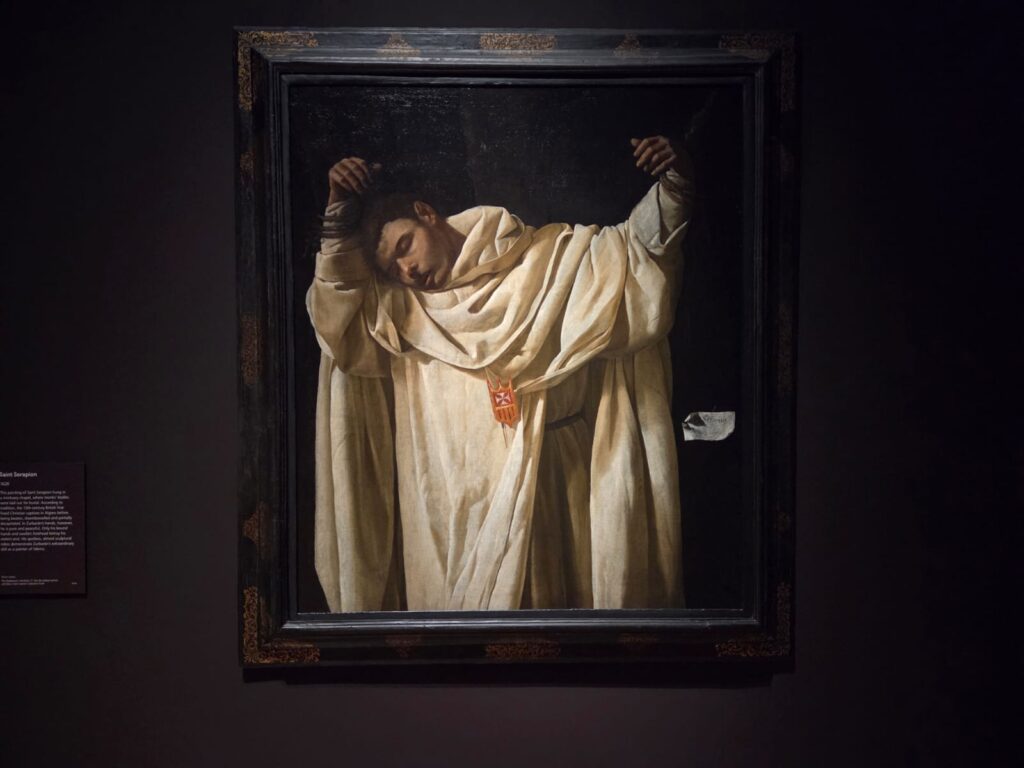
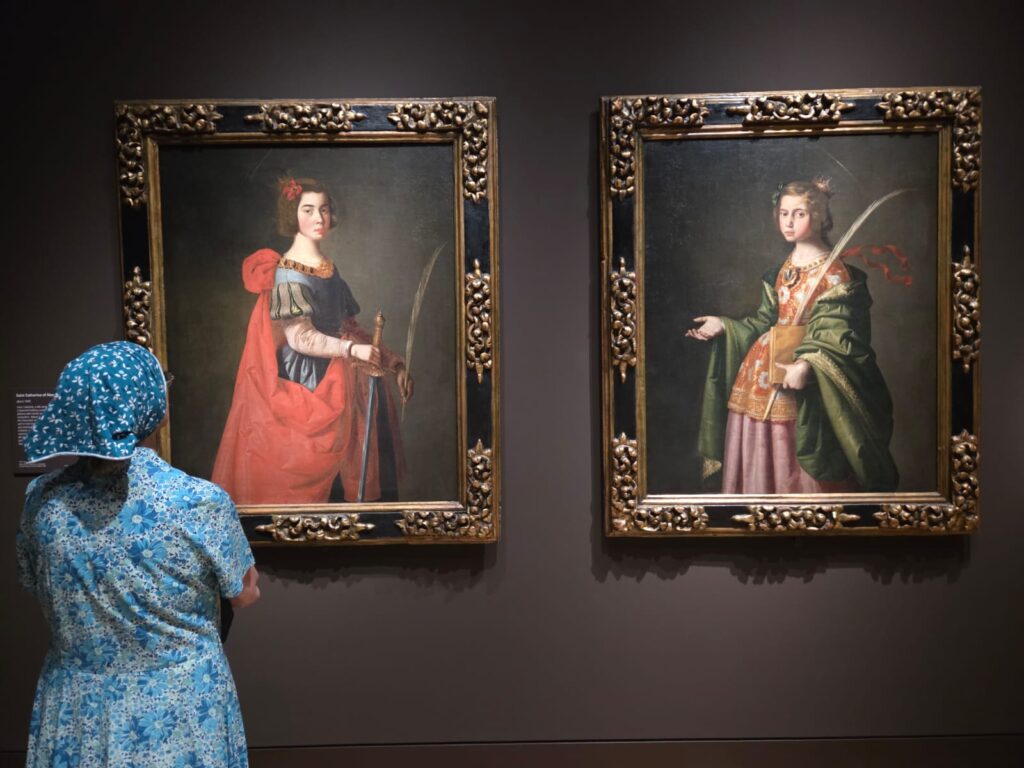
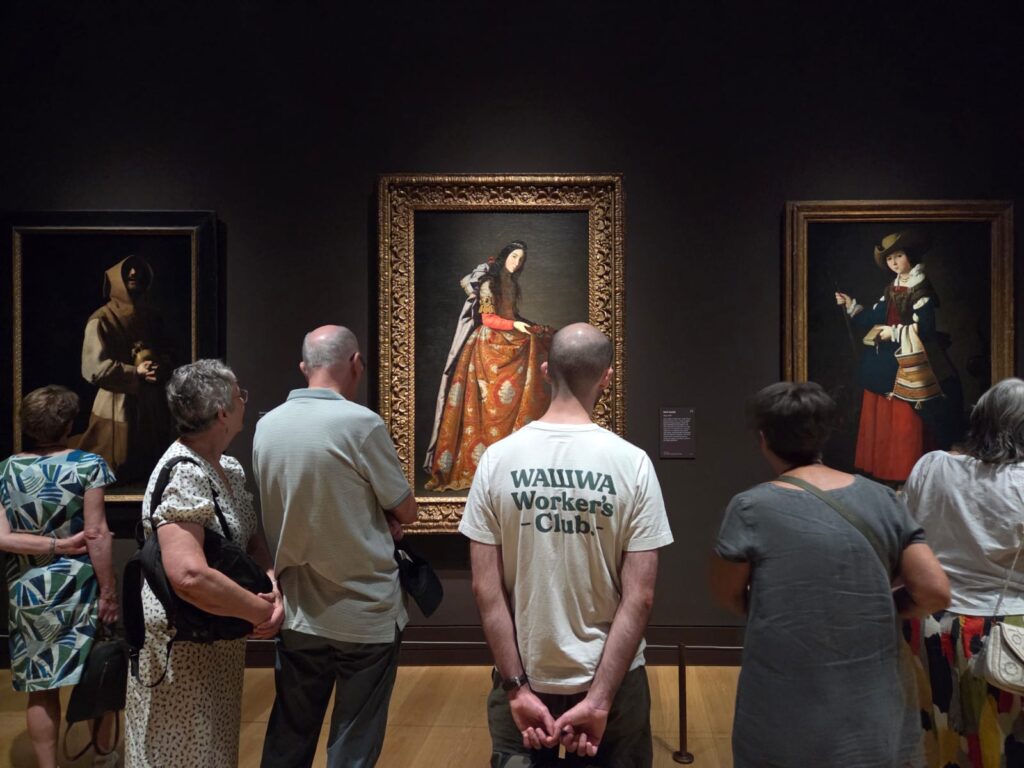
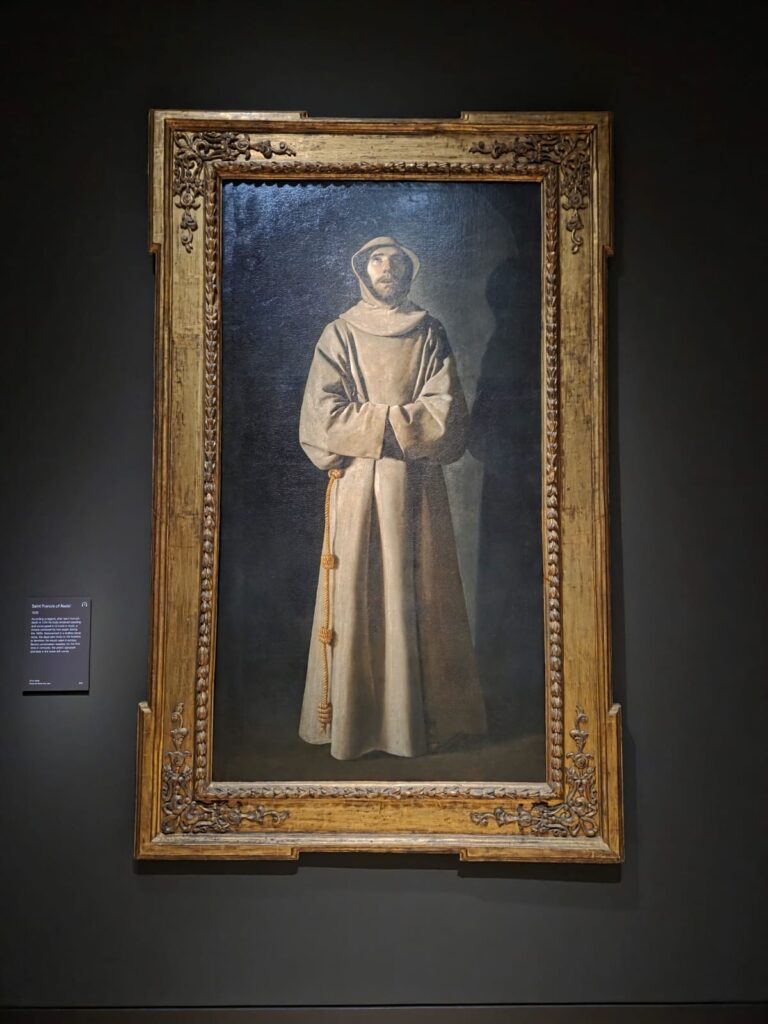
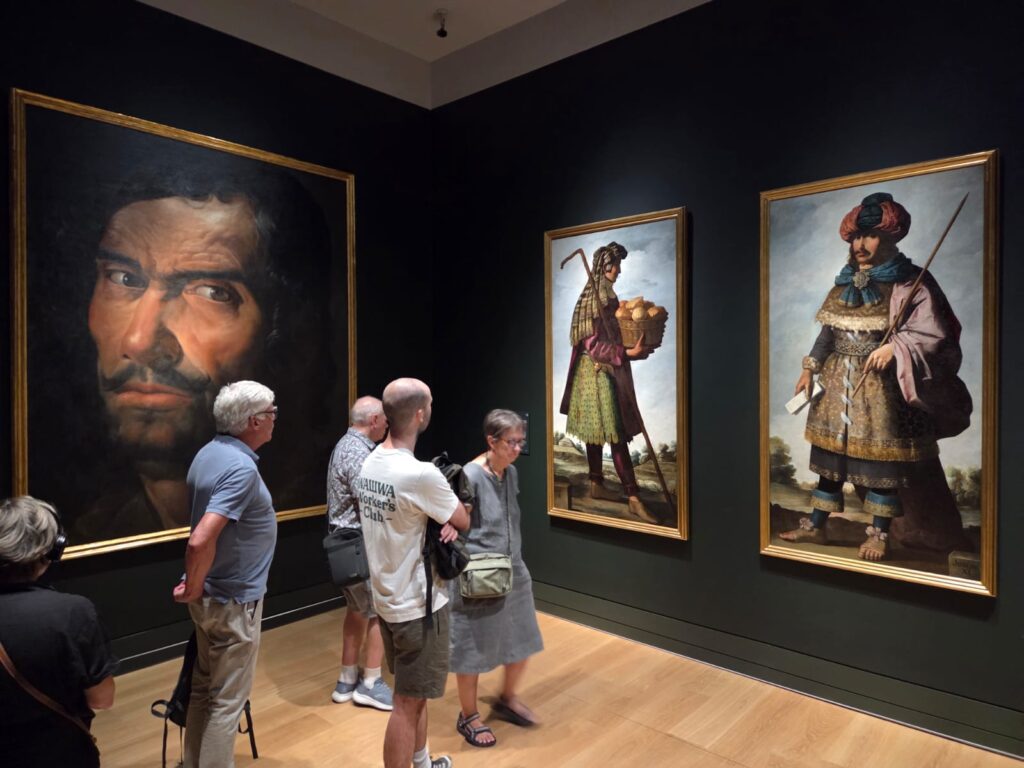
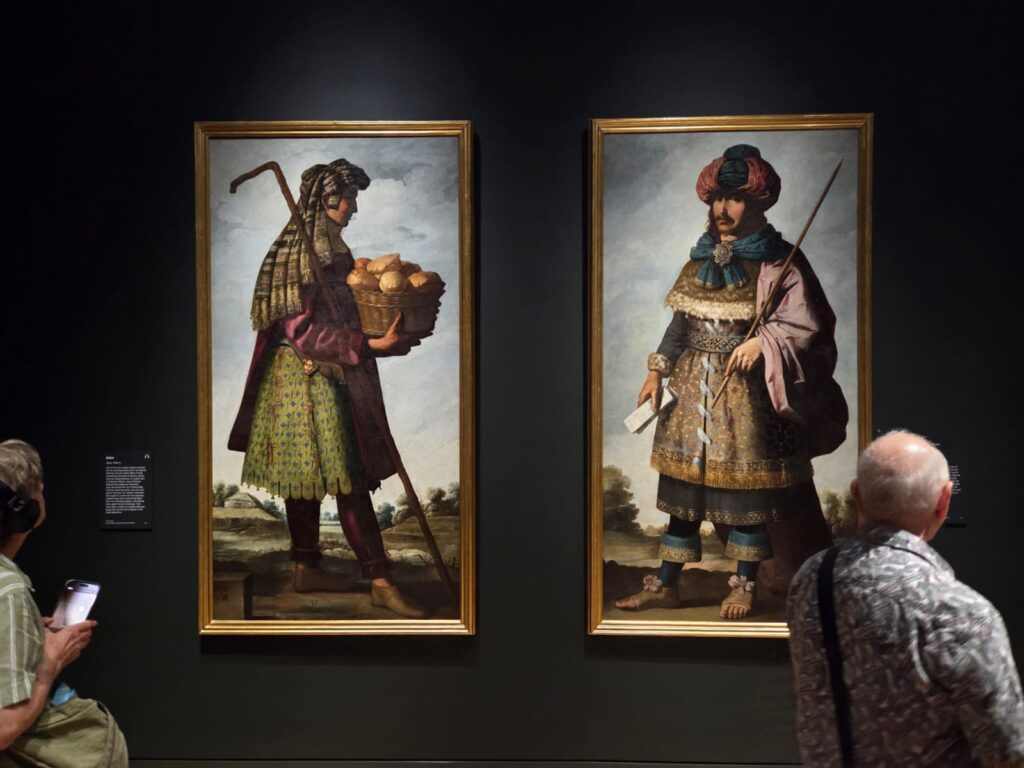
Zurbarán painted directly from life and preferred simple compositions – often life-sized paintings of saints. A narrative painter he was not. We saw a really nice set of these saints a while back at the Museu Nacional de Arte Antiga in Lisbon. He was particularly good at drapery and fabrics (maybe not surprising given he was a haberdasher’s son?), and often featured it in his works to great effect. And, like many artists of his time, he revisited favourite compositions. I know of basically identical paintings of St Francis of Assisi now located at the Musée des Beaux-Arts de Lyon and Museu Nacional d’Art de Catalunya, and basically identical agnus dei (lamb of God) compositions in the collections of the Prado and the San Diego Museum of Art. If it ain’t broke, don’t fix it!
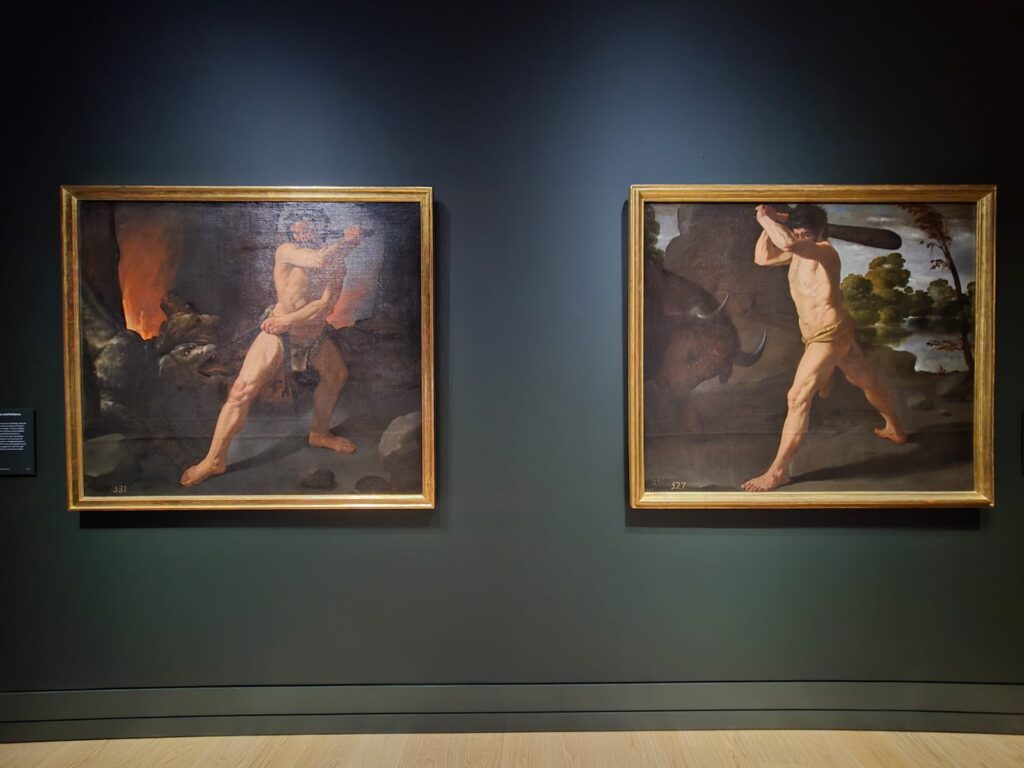
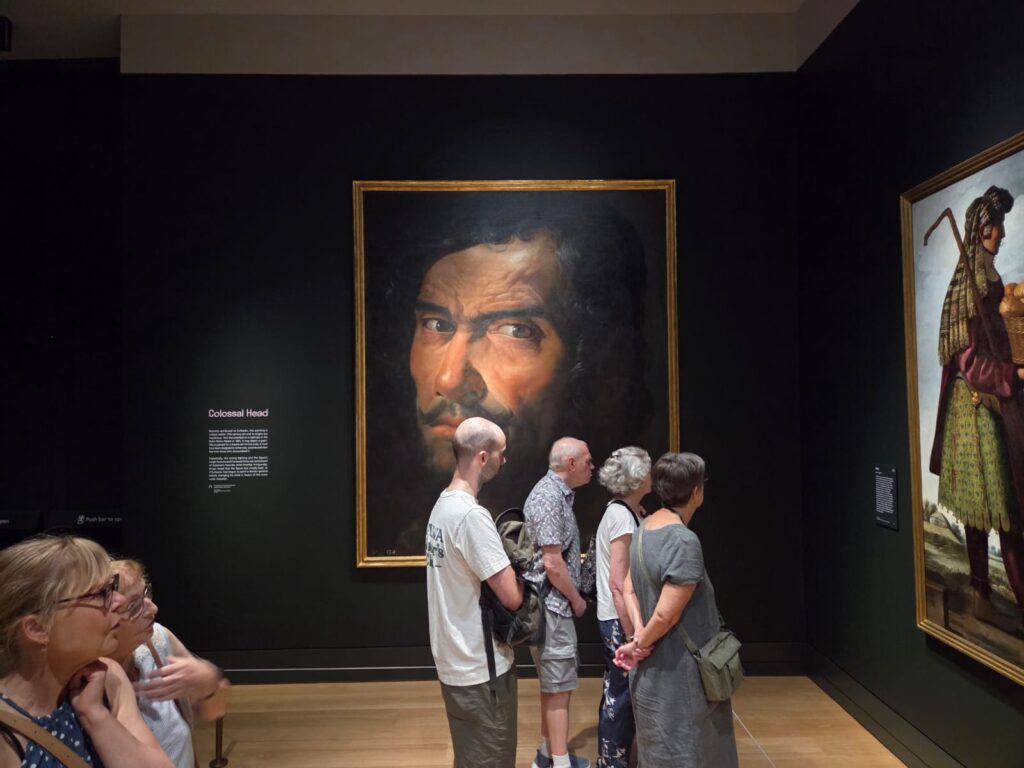
Backgrounds and natural settings were not really a strong suit of Zurbarán’s. A series on the Labours of Hercules, some of which are on view here, proves the point. This, and an enormous image of a man’s face, are interesting as novelties within his oeuvre, but less emotionally effective than his religious works.
Another part of Zurbarán’s artistic output were still lifes. His son, Juan de Zurbarán (who died aged 29 in 1649 of the plague) was also a still life painter. Their works are displayed together, and show an eye for simplicity and realism.
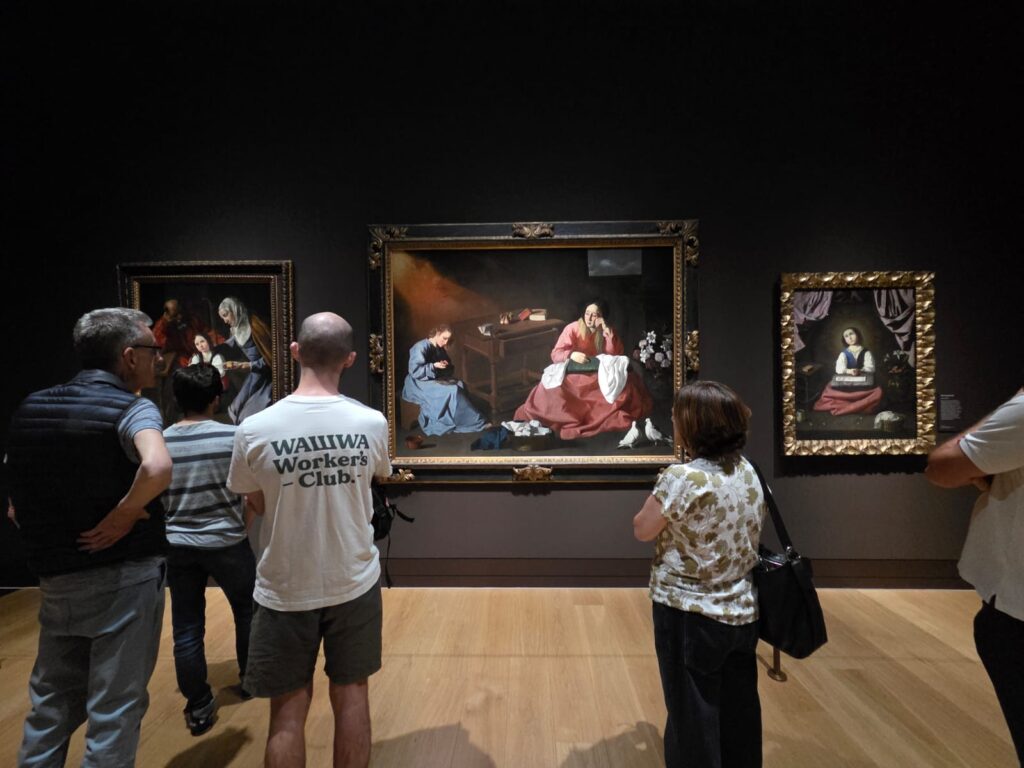
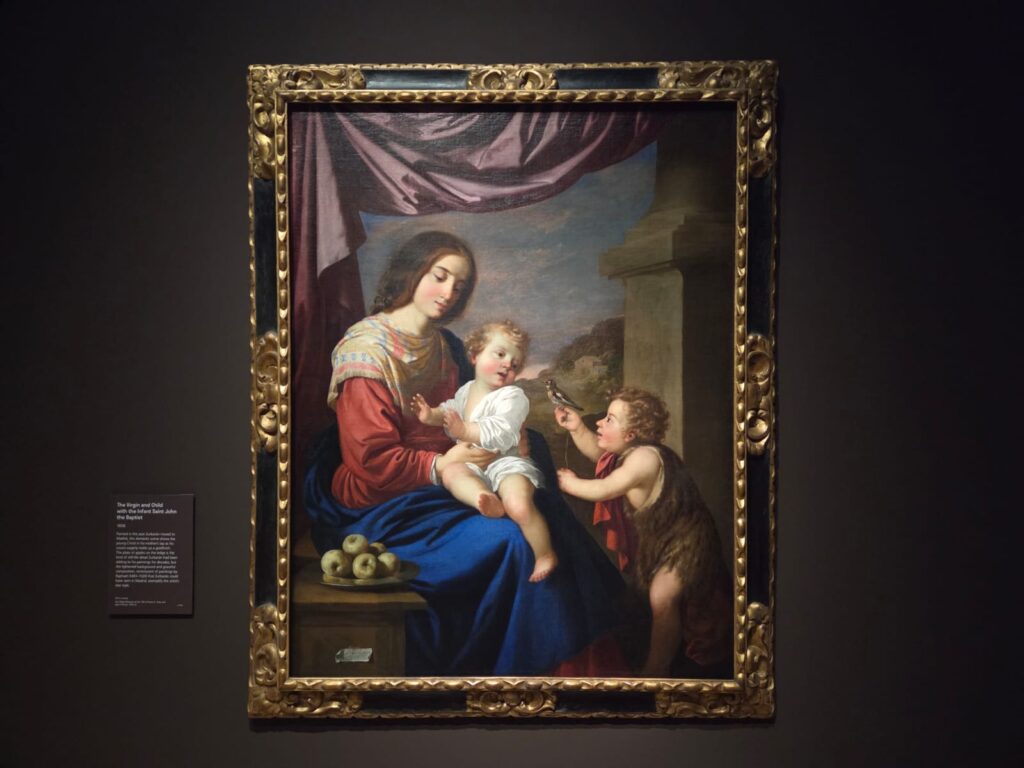
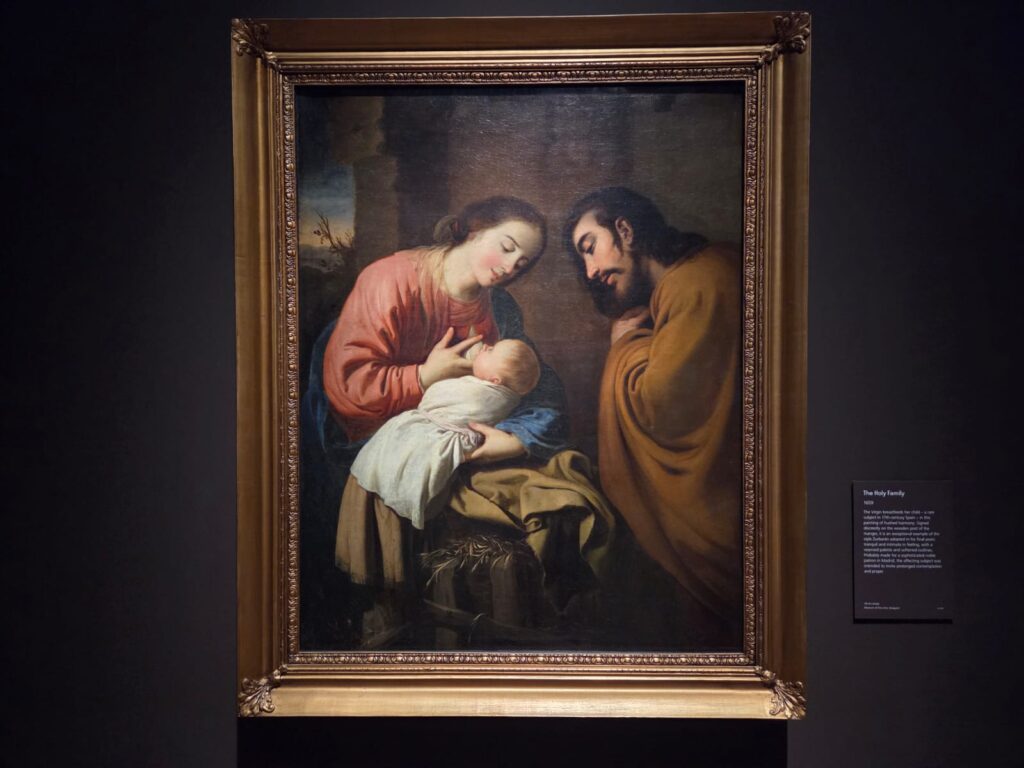
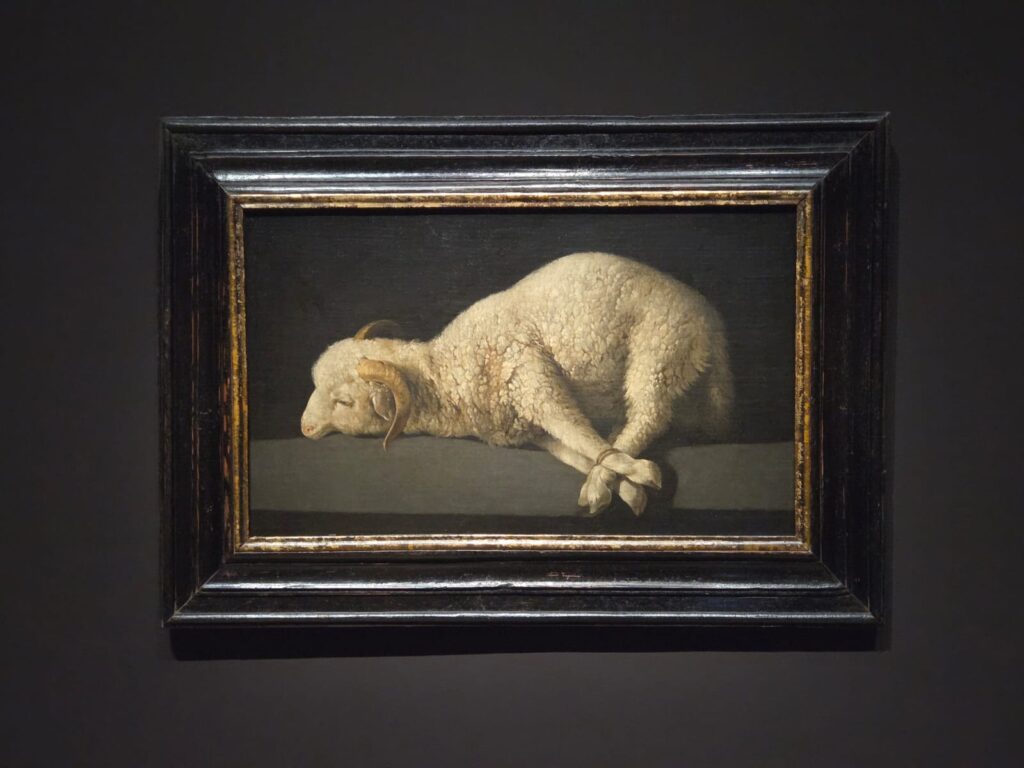
A Well Put Together Exhibition
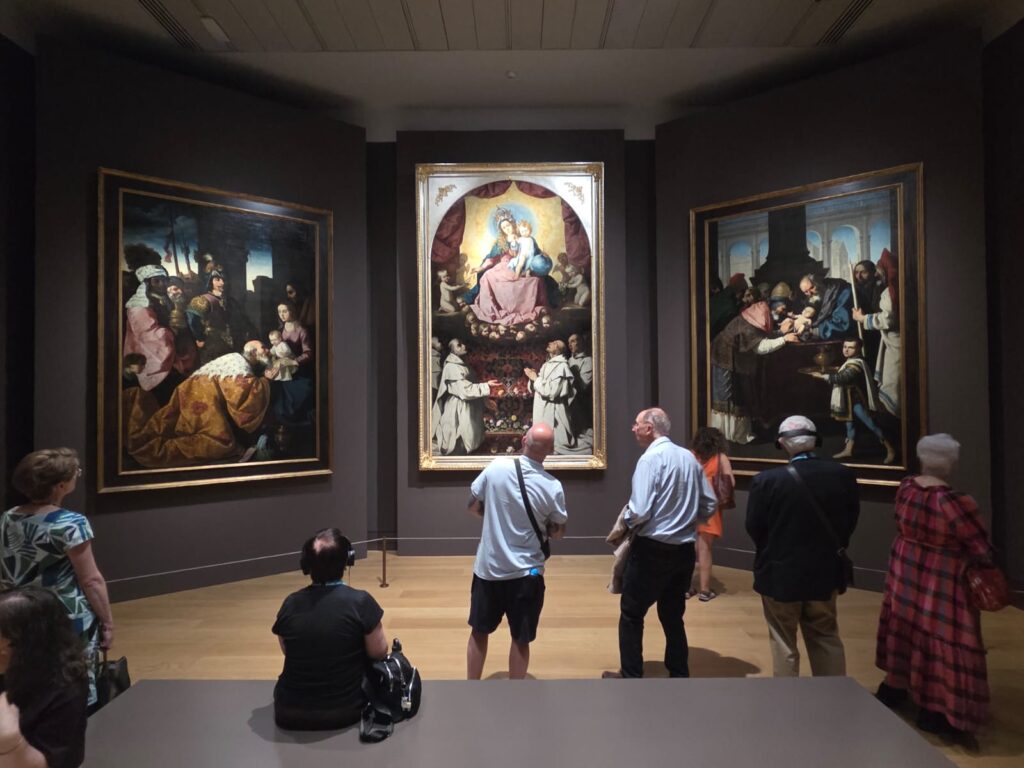
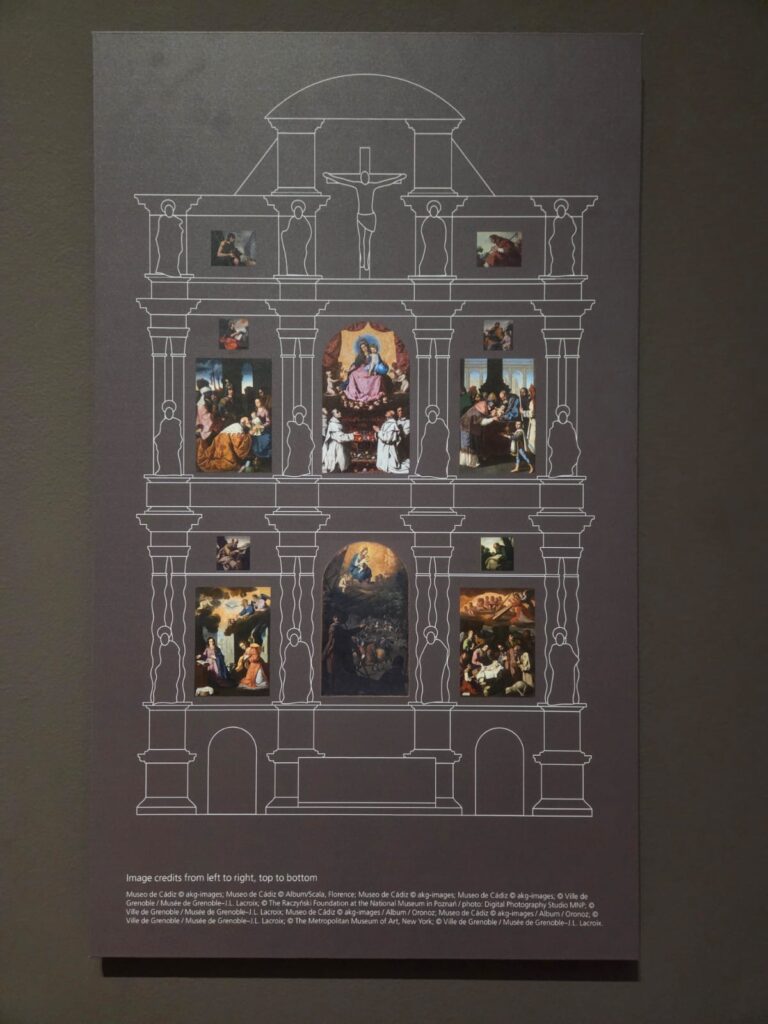
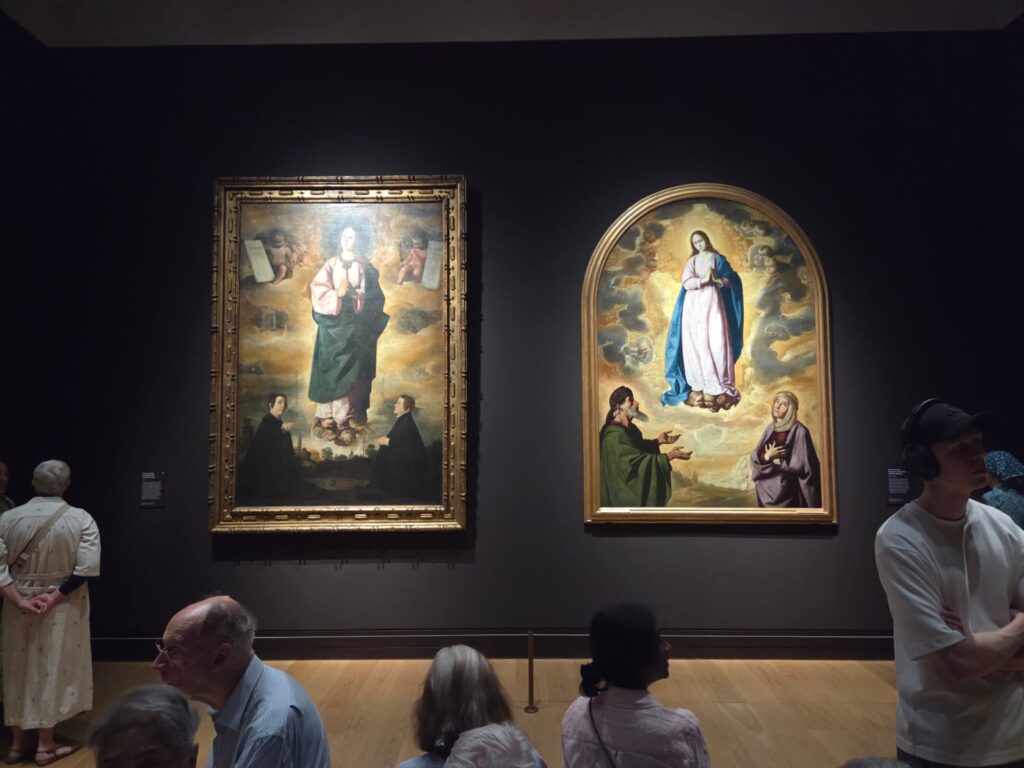
Like many major exhibitions these days, this one is a collaboration. On this occasion the National Gallery has worked with the Musée du Louvre, and the Art Institute of Chicago. Not to say that the National Gallery alone wouldn’t have great power to pull together excellent loans from public and private collections. We’ve seen before that that’s the case. But the three institutions together have done an excellent job. I love it when works are shown together for the first time in centuries, and that’s the case in a couple of places here. Notably three paintings that were part of an enormous altarpiece commissioned by the Charterhouse of Nuestra Señora de la Defensión in Jerez de la Frontera, and are now dispersed.
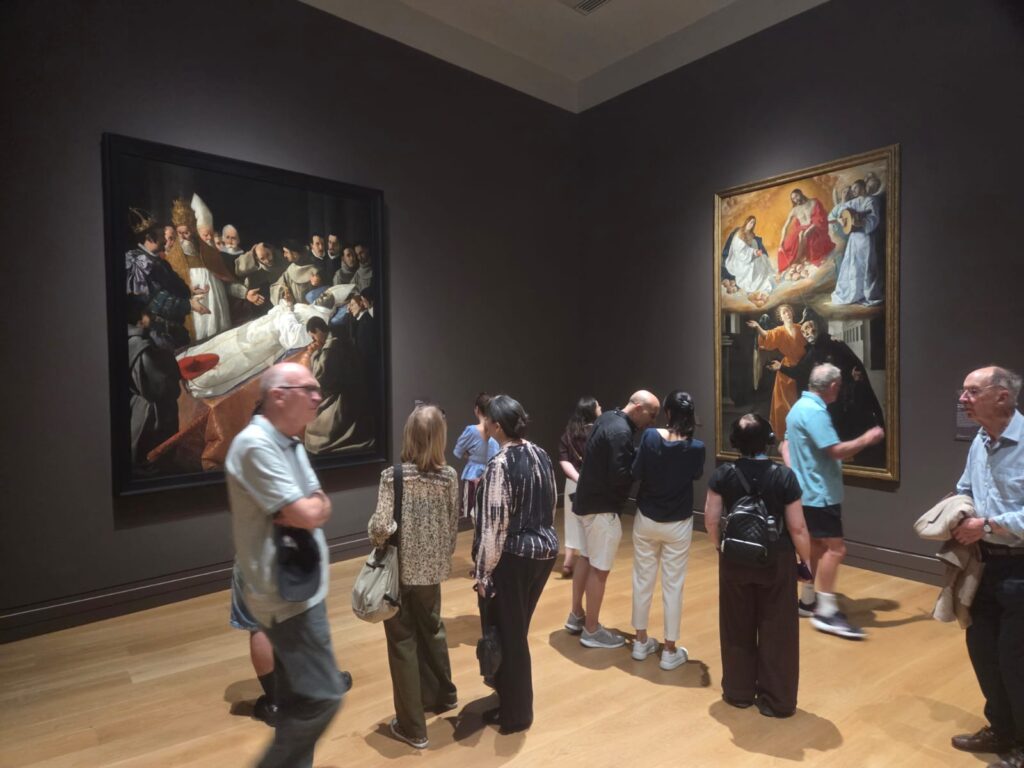
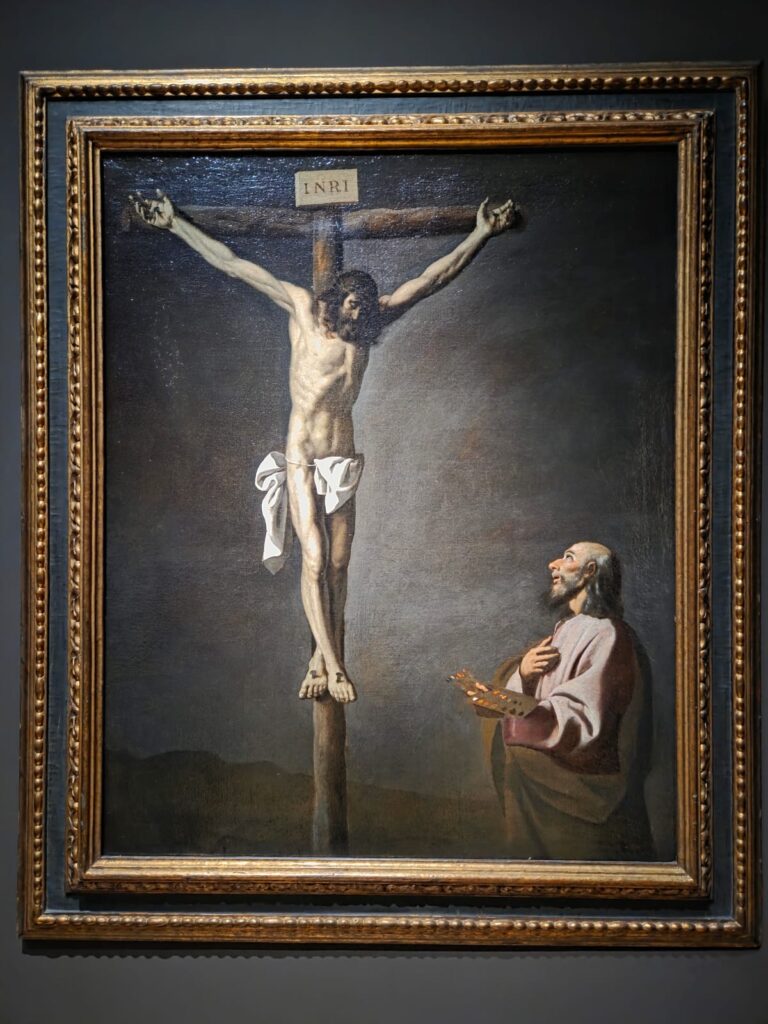
And with great works to choose from, the exhibition has a nice flow. We start with some early works, including that Crucifixion from the Art Institute of Chicago’s own collection. We then see religious commissions and saints, those unusual works (the enormous head is almost worth going to see in its own right – why? Who? Huh?), the still lifes of Francisco and Juan de Zurbarán, and then a really nice group of late works to finish. Almost the last painting in the exhibition is worth lingering over. The Crucified Christ with a Painter is not really a self-portrait, but is the closest thing we have. A painter contemplates Christ on the cross, palette and brushes in hand. A lovely image of the way this artist saw his faith, and his role in disseminating it.
So if you, too, like a touch of the dramatic when it comes to Old Master paintings, this is an excellent exhibition to see. I learned a lot about an artist I only knew in broad strokes (excuse the pun), and enjoyed being towered over by saints and giants alike.
Salterton Arts Review’s rating: 4/5
Zurbarán on until 23 August 2026.
Trending
If you see this after your page is loaded completely, leafletJS files are missing.