
Bitter Visions: By Order of Hildegard – Grimeborn Festival 2026 / Arcola Theatre, London
A 900-year-old work gets an immersive update in Bitter Visions: By Order of Hildegard. Presented by Ololyga as part of Grimeborn Festival 2026.
Bitter Visions: By Order of Hildegard
I’ve lived in London for quite a long time now, and yet until yesterday had never been to either Glyndebourne or Grimeborn Festivals. Glyndebourne, you may be aware, is an opera venue in East Sussex that opens each summer. Think formal dress and picnics. Grimeborn, now in its 19th year, is an annual opera festival that presents radically new and different work. In the end, it was the latter that tempted me.
The specific temptation (which, given the context, is a somewhat ironic way to frame it) was hearing that one of the works at Grimeborn involved Hildegard of Bingen. I’ve encountered Hildegard before, and find her fascinating. Hildegard of Bingen was a 12th century Abbess and polymath. She was a writer, composer, philosopher, visionary, and arguably even the founder of scientific natural history in Germany.
Two of these roles are particularly relevant to today’s post. Firstly Hildegard as composer: more of her chants survive than of any other medieval composer. She was also rare in that she composed both the words and music. Ordo Virtutum, which we will come onto shortly, may even be the oldest-surviving morality play. Secondly, Hildegard as visionary is interesting. In a time when women did not have much of a voice, the framing of Hildegard’s teachings as visions made them harder to ignore. At the same time, she held very typical moral views for her time, and described herself and women generally in terms of weakness and inferiority, so was not a feminist by today’s standards.
Back to the Ordo Virtutum (Order of the Virtues). Hildegard composed this morality play around 1151, and the nuns in her new abbey at Rupertsberg may have performed it at the dedication in 1152. It’s about the temptation, fall, and redemption of a soul. This is where the contemporary morality comes into play – virginity ends up being the deciding factor in the soul’s ultimate fate. This is also where this new interpretation gets interesting, as this 900 year-old work gets an update for 2026.
A Collaboration Across Centuries
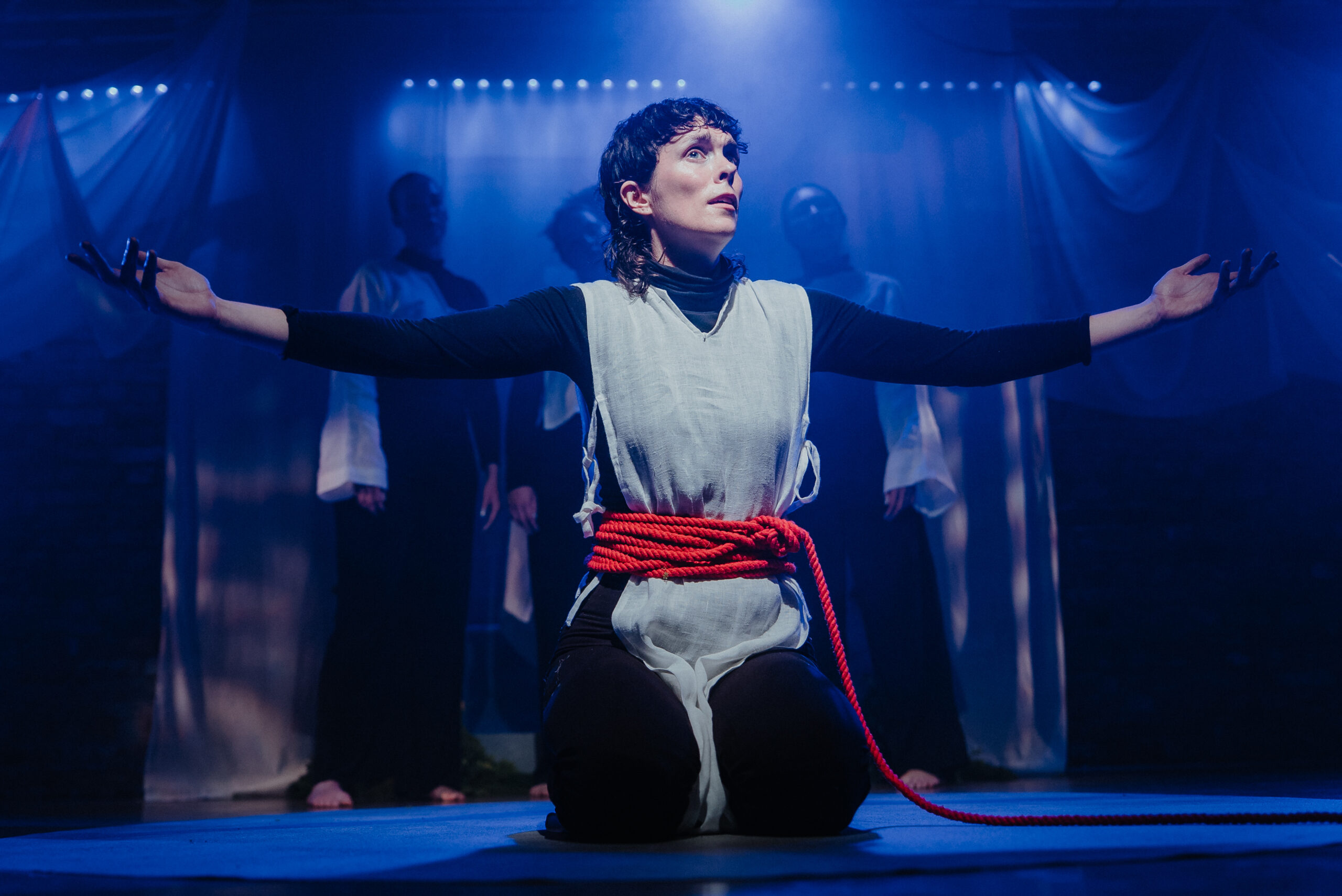
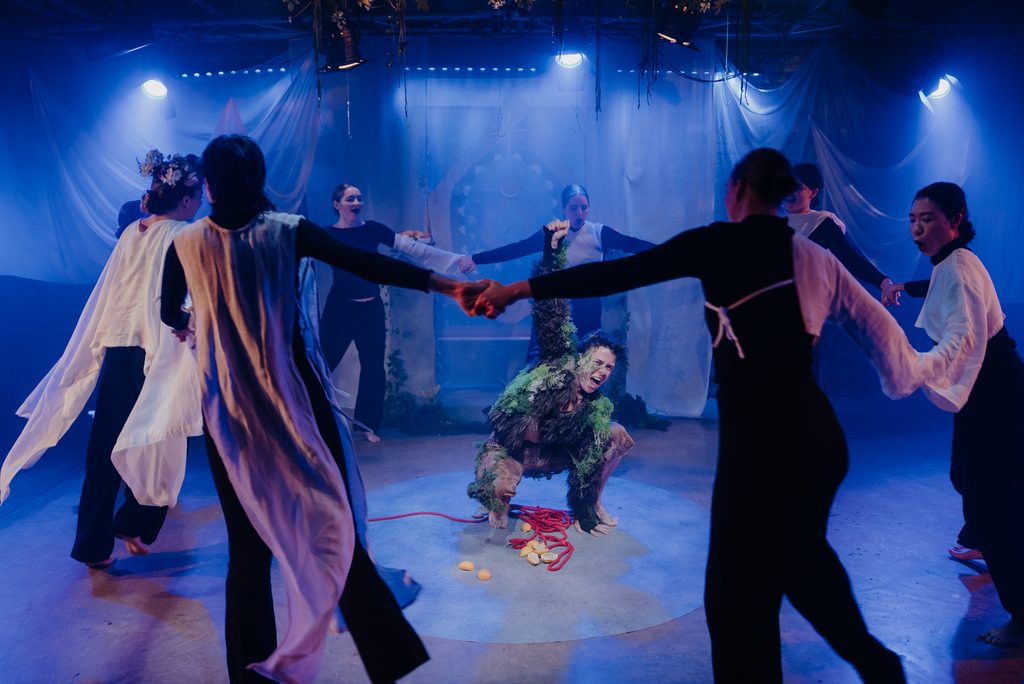
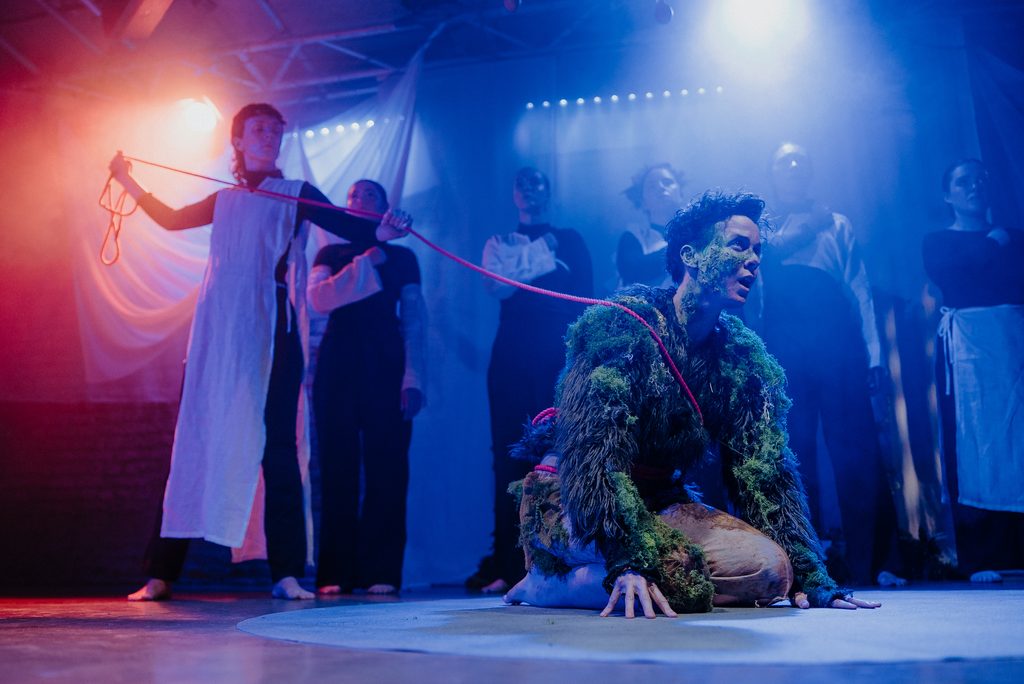
Bitter Visions: By Order of Hildegard is performed by experimental vocal ensemble Ololyga,* and arranged by Florence Carruthers-Andrews. Hildegard still gets the credit as composer, but Carruthers-Andrews has set her chants within an immersive electronic soundscape. She has also encouraged experimentation and contributions from the members of Ololyga. And, as I mentioned, the work gets a morality update. Rather than the celebration of virginity and shunning of the devil, the Soul (Carruthers-Andrews) in this version is able to acknowledge desire as an integral part of herself, and the community of Virtue accepts rather than shuns the Devil (Eleanor Westbrook).
The combination of medieval plainchant** and electronic soundscape is a remarkably effective one. The work is captivating from the outset. This is a combination of the strong vocals from the whole ensemble, and the design. Eli Hunt’s lighting draws us into an otherworldly realm, while Bea Viña’s minimal set design and inspired costumes are perfection. I loved the use of linen – a very traditional fabric – in contemporary designs: analogous to the modernising of Hildegard’s work. And then the organic and earthy outfit the Devil wears is a perfect offset.
I thoroughly enjoyed the entirety of Bitter Visions. The movement direction by Katie Kelly works very nicely with the vocals and soundscape. Westbrook’s improvisations added to the sonic landscape in unexpected ways. The whole work builds up to a euphoric state that I think even Hildegard would approve of, even if she wouldn’t understand the moral shifts. And the final acceptance and shedding of shame is cathartic.
In my last post I had a small practical note, and I have another one today. Audience members, on entering the Arcola Theatre’s Studio 2, are given a gauzy black scarf to wear during the first meditation. However, unless you’re good at Latin, you might not know when that is. Not many audience members seemed to pick up on the cue yesterday. This is a very minor point, and I’m sure has a sensible fix. It certainly didn’t ruin my enjoyment of an excellent evening of radically different opera.
Salterton Arts Review’s rating: 5/5
Bitter Visions: By Order of Hildegard on until 22 August 2026 as part of Grimeborn Festival, which continues until 5 September.
*I have to share what I learned from the programme – that ololyga is an Ancient Greek word for a special type of high-pitched cry uttered by women during things like childbirth, rituals, or sacrifice. Women got together to practice ololyga far away from men. I think we should bring this back.
**To save you looking it up like I did, plainchant is a Western tradition of unaccompanied sacred music sung as a single melody line in unison.
Trending
If you see this after your page is loaded completely, leafletJS files are missing.