Long-time London resident and avid museum and theatre-goer. I started this blog in 2014, and got serious about it in 2020 when I realised how much I missed arts and culture during lockdowns. I go to a lot more events than anyone would think is sensible, and love sharing my thoughts in the forms of reviews, the occasional thought piece, and travel recommendations when I leave my London HQ.
An attempt to see fewer museums and more of the city on a recent weekend trip led me to discover octogenarian graffiti artist Harald Naegeli, known as the Sprayer von Zürich.
Looking for Something Different to Do
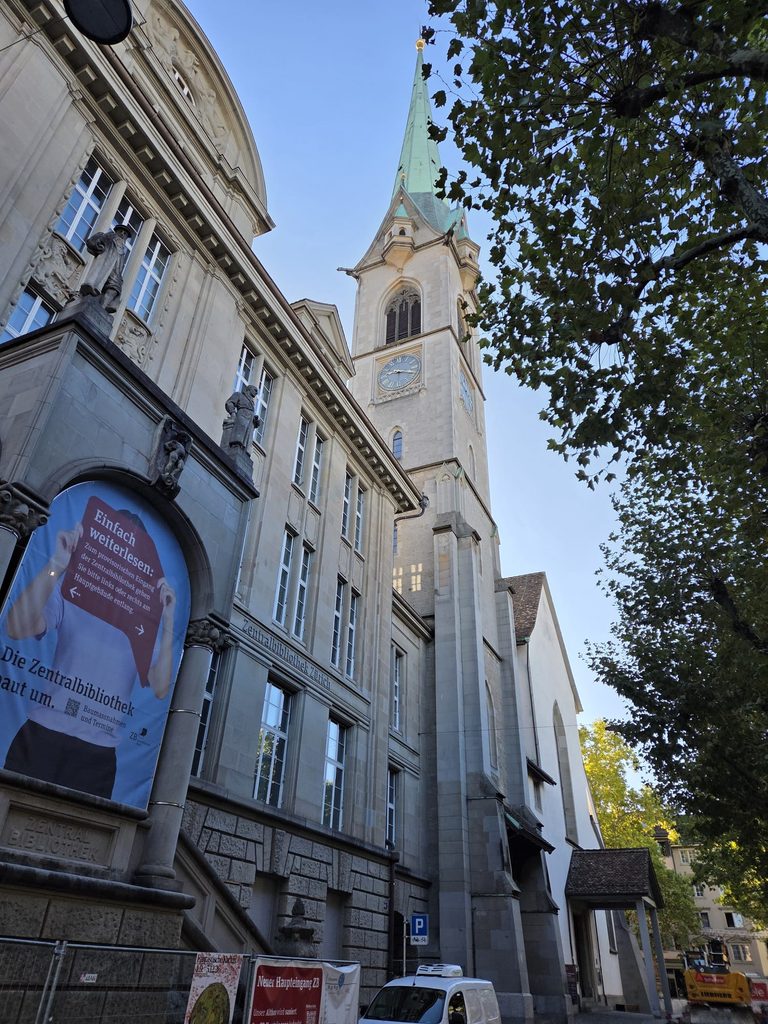
In my last couple of posts about the Kunsthaus Zürich and the exhibition I wanted to see there, I talked a bit about how I wanted something different from my weekend than my usual cultural whirlwind. It was perhaps the last really nice weekend of the year, and I wanted to get out and see a different side of the city. I’d been to Zurich once or twice before, for personal and business trips. So I’d been to a few museums, seen the Chagall windows at the Fraumünster, and other standard tourist activities. What could I do that would see me spending more time outdoors, but would still be interesting?
There are various ways to get this sort of inspiration. But from time to time I do turn to ChatGPT to get me started. I put in a prompt explaining what I was looking for and the sorts of things I’d done already. One of its suggestions was fairly obvious – a boat trip on Lake Zurich – which I did nonetheless on the Saturday afternoon and had a nice time. There were a few other ideas that didn’t really tempt me. But one did: ChatGPT uncovered an intriguing walking tour with a cultural twist.
The walking tour was this one, put together a couple of years ago by Stella Jarvis while doing an apprenticeship at le Musée Visionnaire. This is a museum describing its focus as “art that deviates from the conventional in a self-willed, subversive, and instinctive manner, unconstrained by boundaries”. The subject of the walking tour, Harald Naegeli, certainly fits this bill. Naegeli, now 86, started contributing his illegal ‘spray art’ (to use the terminology of the walking tour) to Zurich’s cityscape in the 1970s. He even went to jail for it, moving to Düsseldorf thereafter for many years. But, during the pandemic, he returned to Zurich. And fascinatingly, despite his advanced years, art by the Sprayer von Zürich started appearing around the city once more.
I was hooked. An octogenarian graffiti artist is not something you see every day. And I am also interested in spray art as an ephemeral medium. How much of the walking tour would still be relevant, a couple of years on? And what other works by the Sprayer von Zürich could I find?
Introducing the Sprayer von Zürich
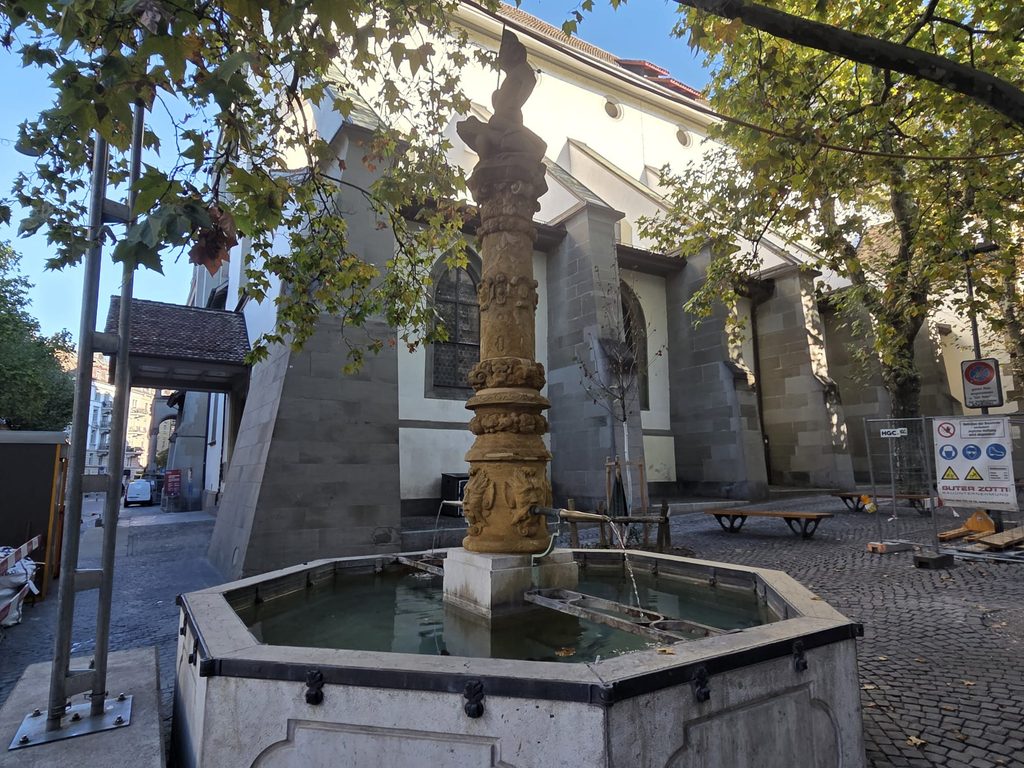
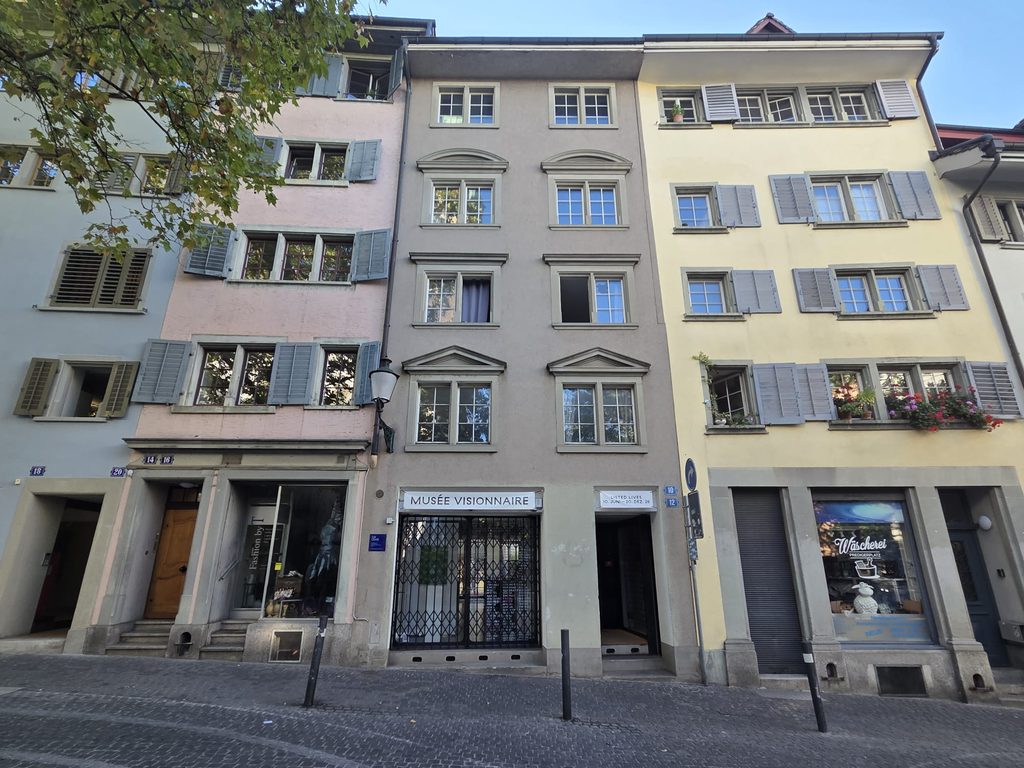
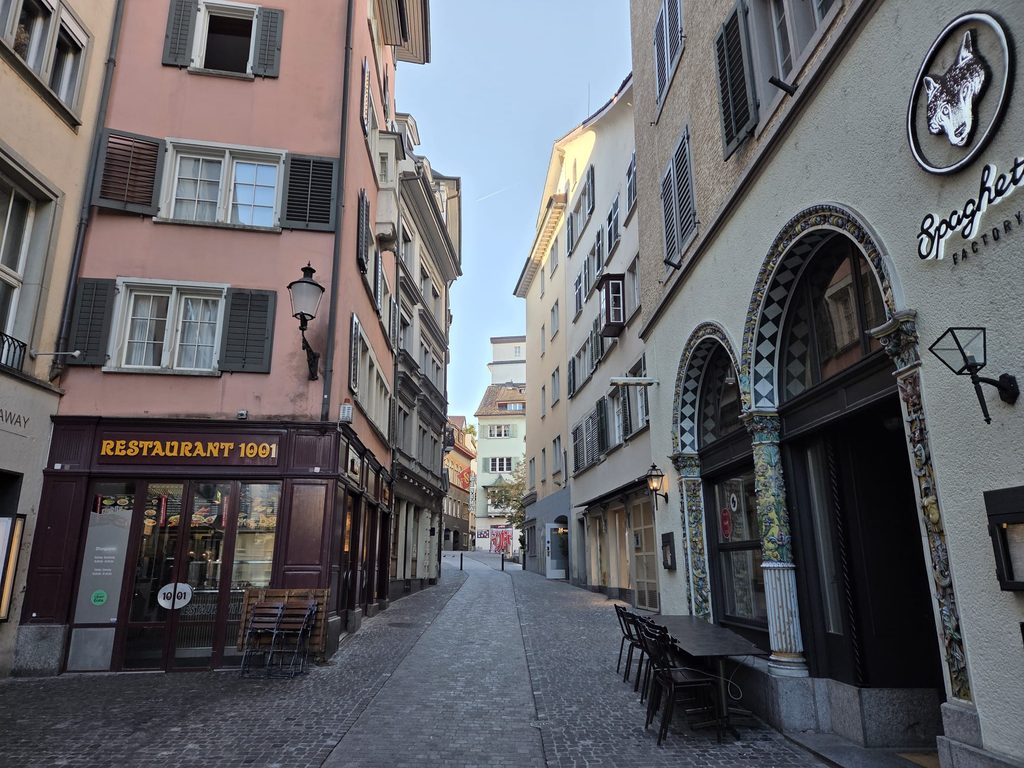
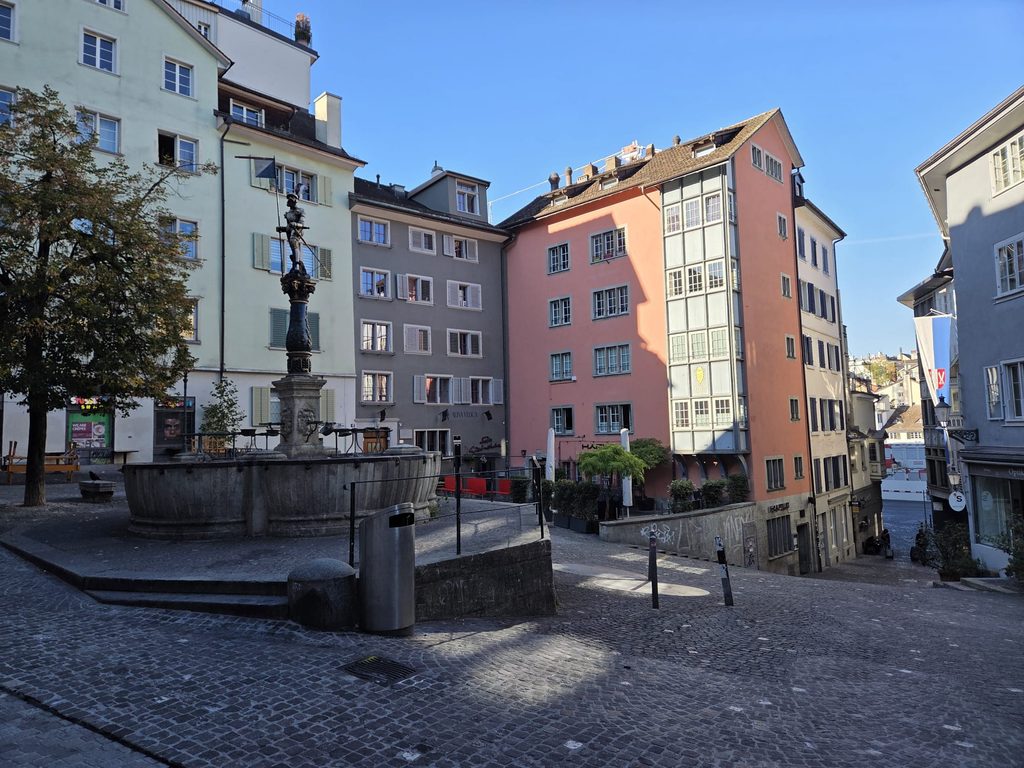
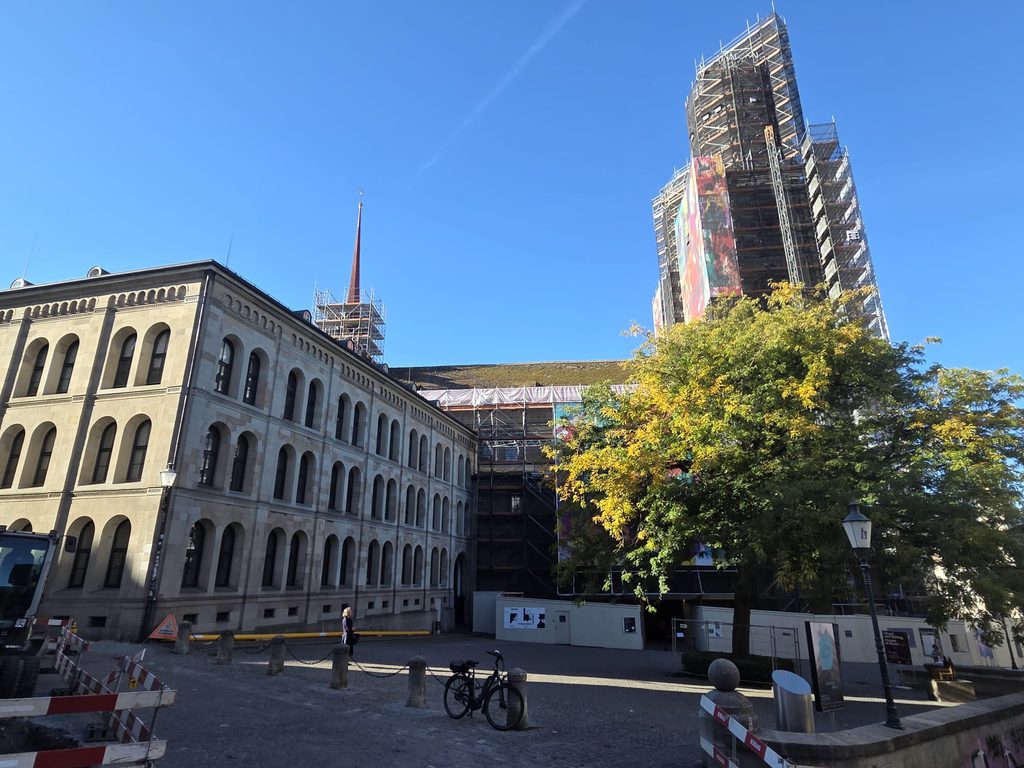
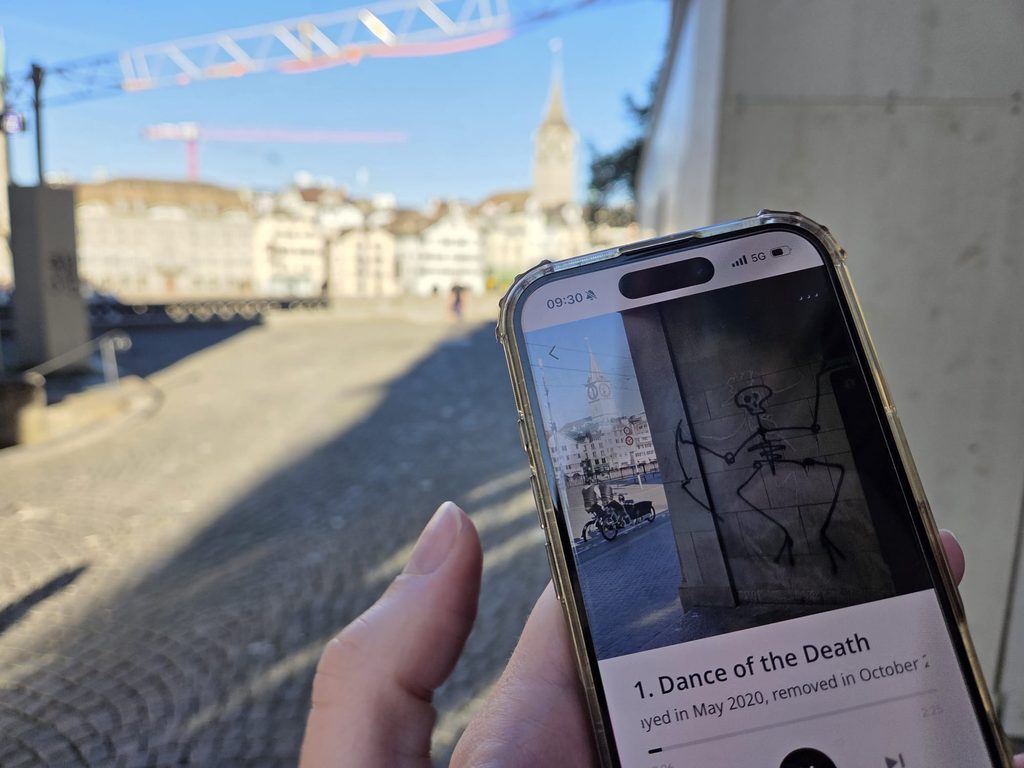
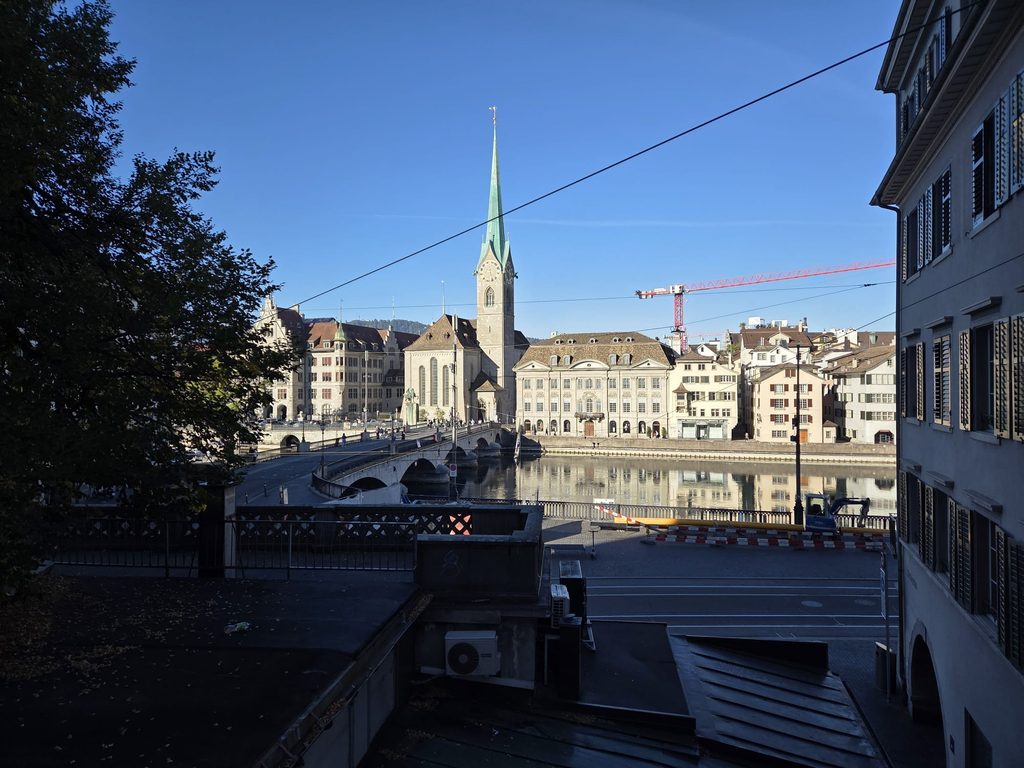
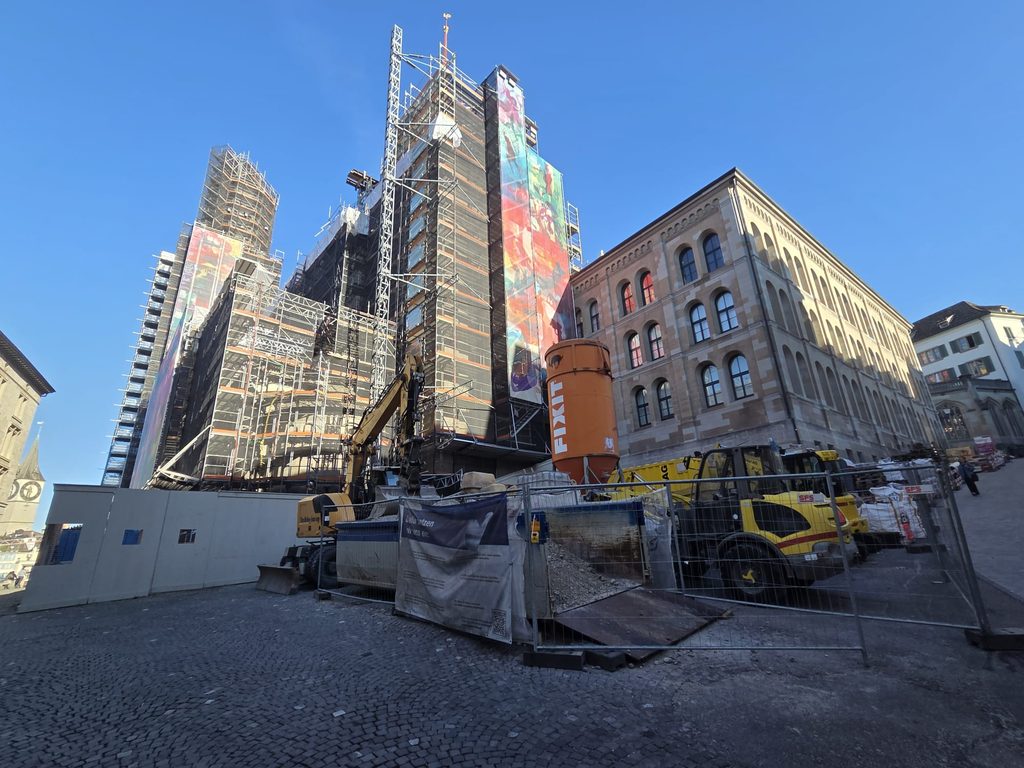
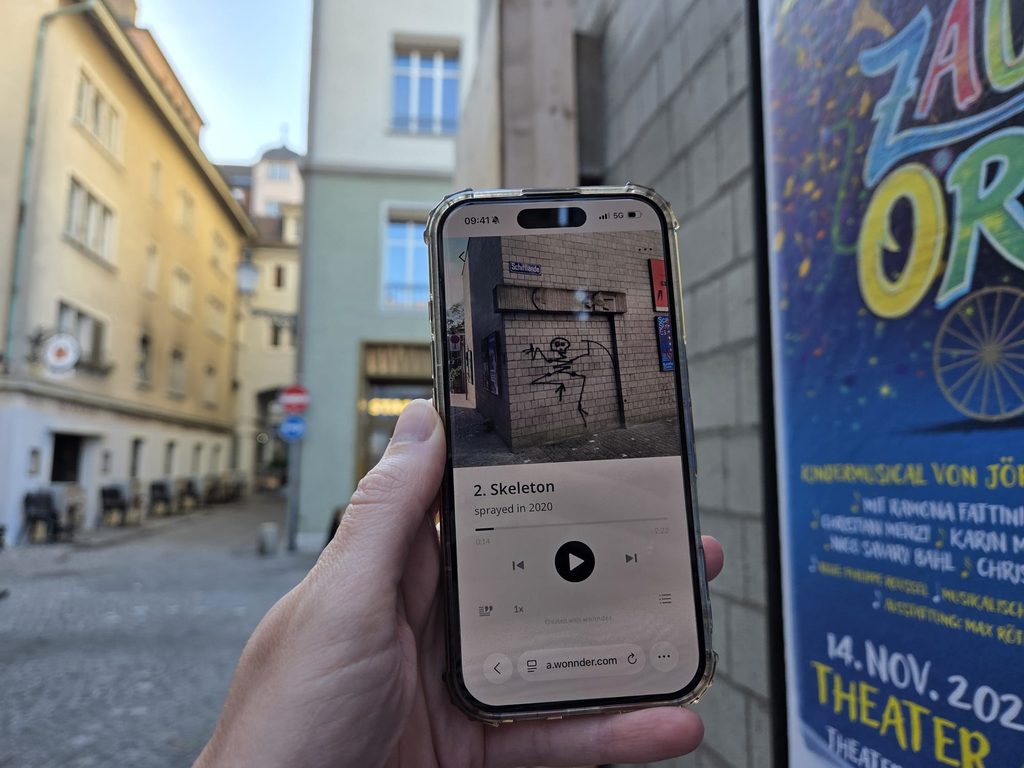
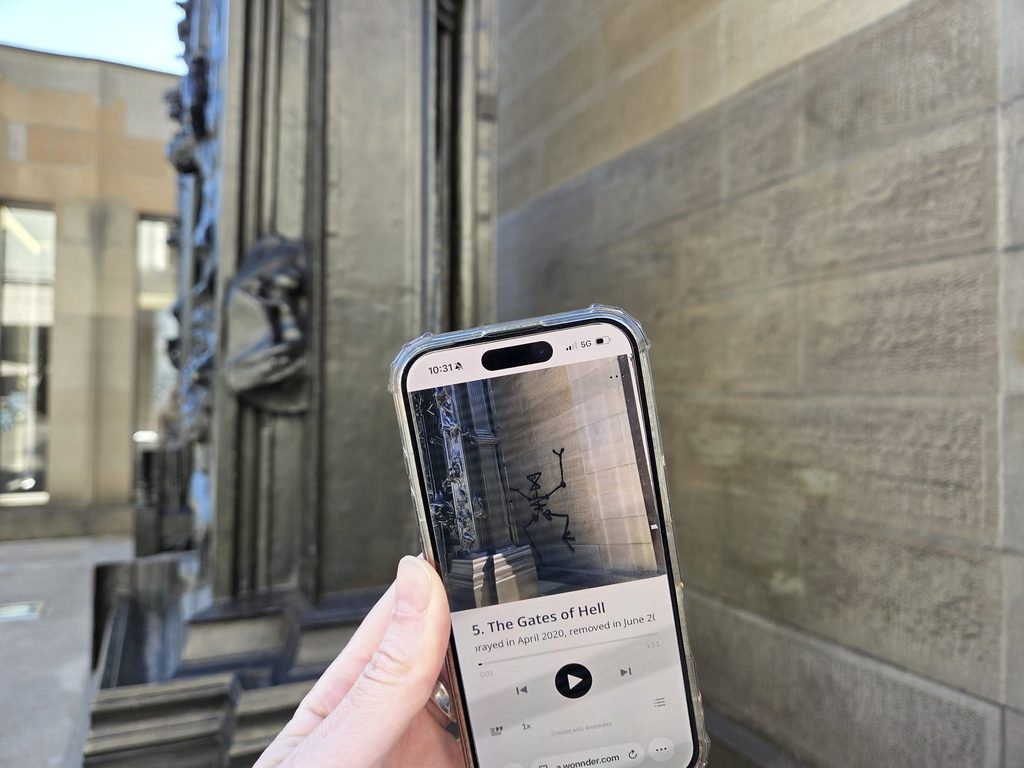
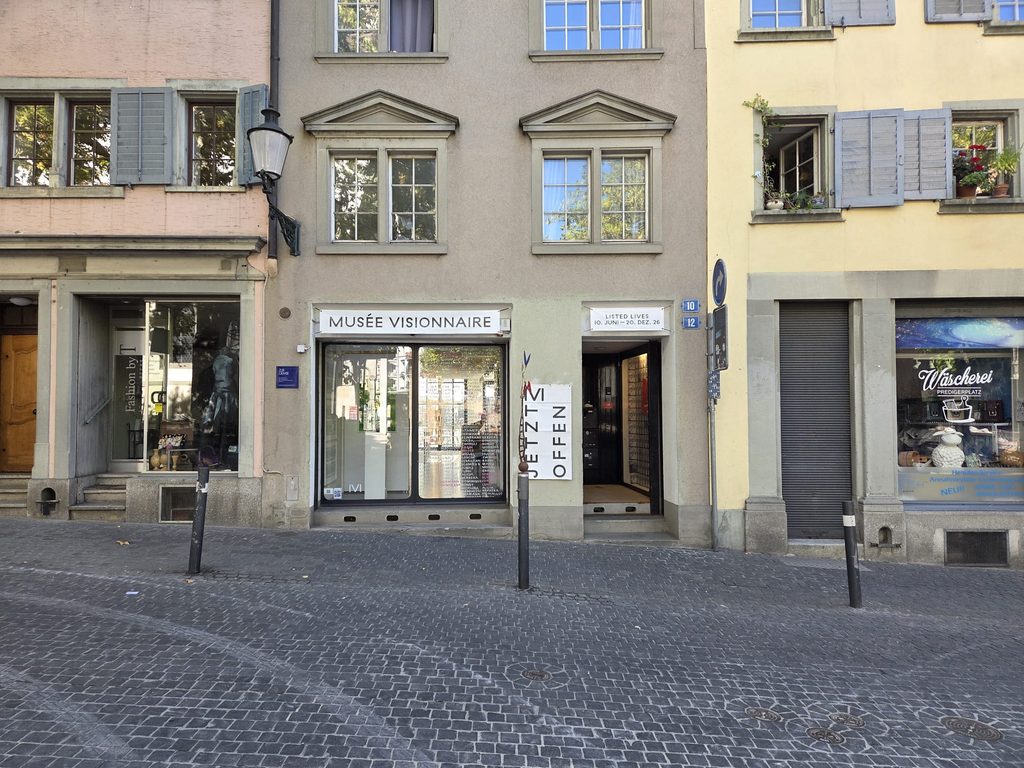
The audio tour I’d selected starts at Grossmünsterplatz and goes to the Kunsthaus Zürich, which we’re already familiar with. But my version is a slightly extended one. Why not take the opportunity to have a bit of a look around Zurich, I thought? And I had also found this website, which collates examples of Naegeli’s work. I was getting to grips with all this while walking past the 13th century Romanesque Predigerkirche, just opposite my hotel.I always find Switzerland has a lot of interesting fountains. Very handy for refilling water bottles: got to keep hydrated while on the trail of the Sprayer von Zürich. This is a name Naegeli, born in 1939, has had since the 1970s. There’s even a song about him, De Sprayer vo Züri (in local dialect) which the audio tour makes good use of.Here, by the way, is le Musée Visionnaire, who kindly provided us with today’s tour. We’re going to end up back here later. I tried not to go to museums much this weekend, but accidentally went to two while on the hunt for Naegeli’s work.OK, let’s get on with it. We’re on our way to Grossmünsterplatz.And here is the Grossmünster. Another Romanesque church, it was built between 1100 and 1220. It’s clearly undergoing a major restoration at the moment, though, which doesn’t bode well for our first stop.But it turns out the first stop was the absence of spray art rather than its presence, anyway. Jarvis wanted to draw our attention to Dance of the Death, sprayed and removed in 2020 shortly after Naegeli’s return to Zurich. The skeleton motif is not new in Naegeli’s work, but took on renewed meaning during the pandemic.Nice views around here anyway, even if we weren’t successful in finding our first bit of spray art. That’s the Fraumünster, which has the famous windows by Marc Chagall, over the Limmat River. They’re very lovely, do go and see them if you get the chance.
I Get Knocked Down (Lost), But I Get Up Again (Find What I’m Looking For)
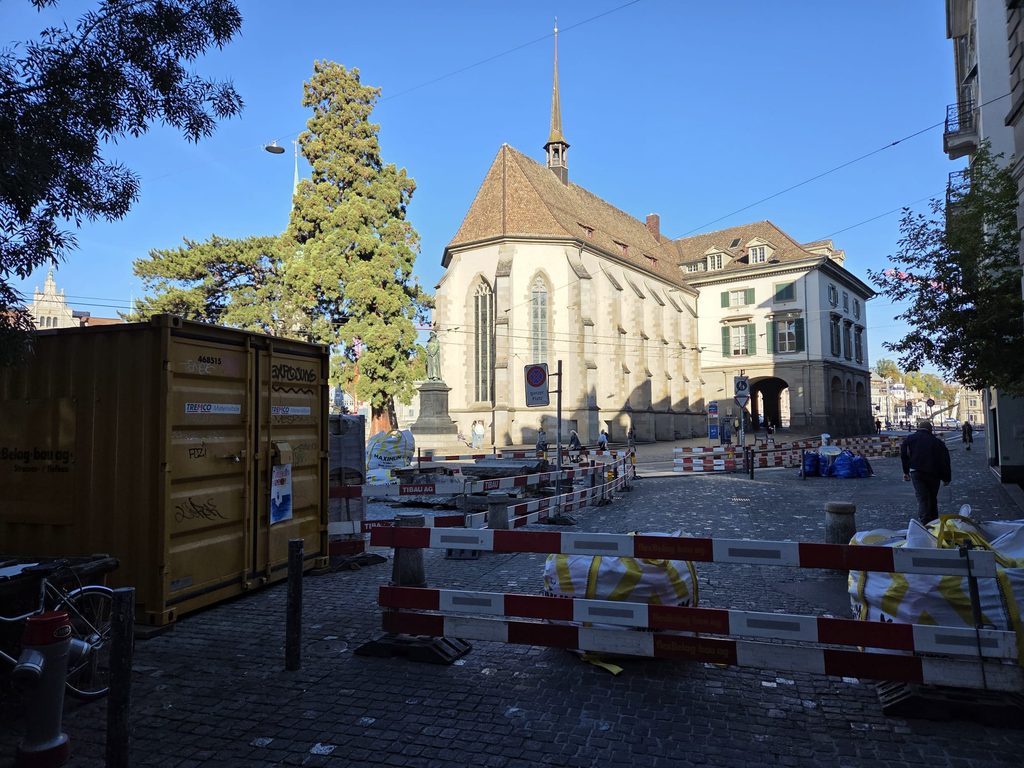
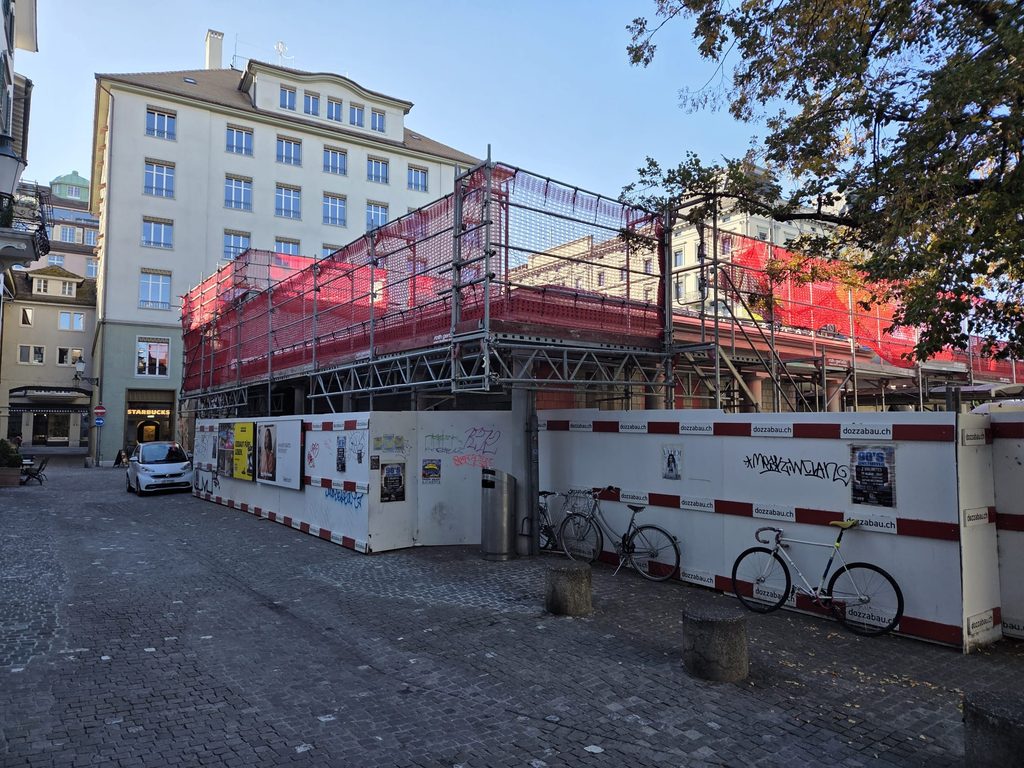
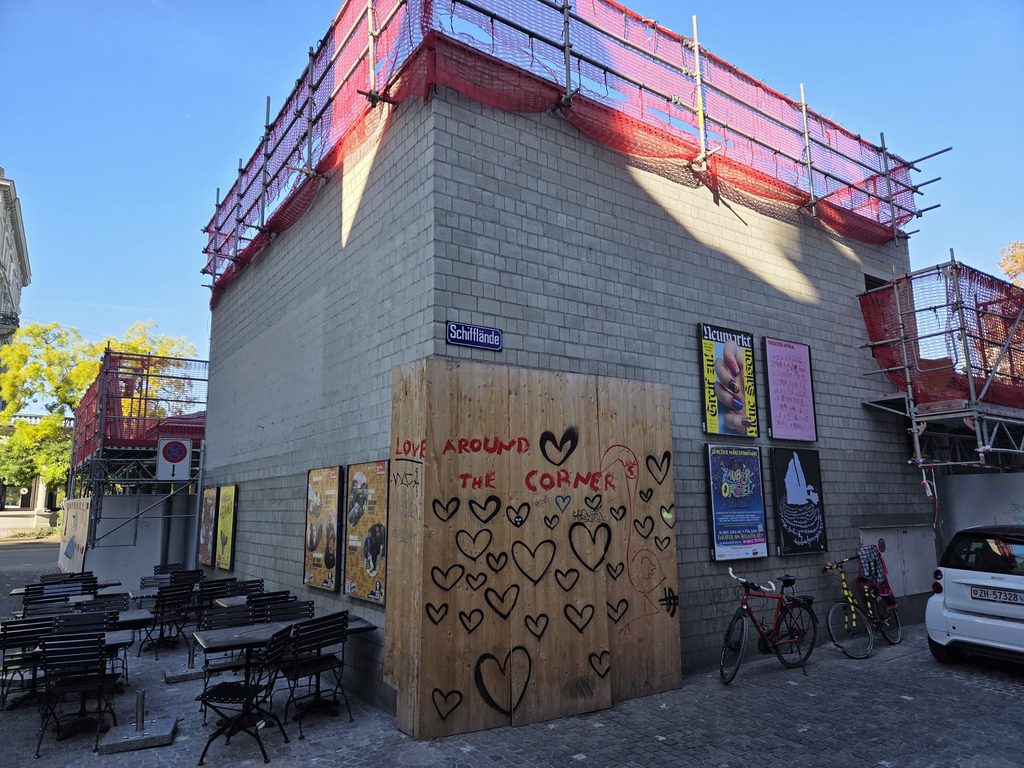
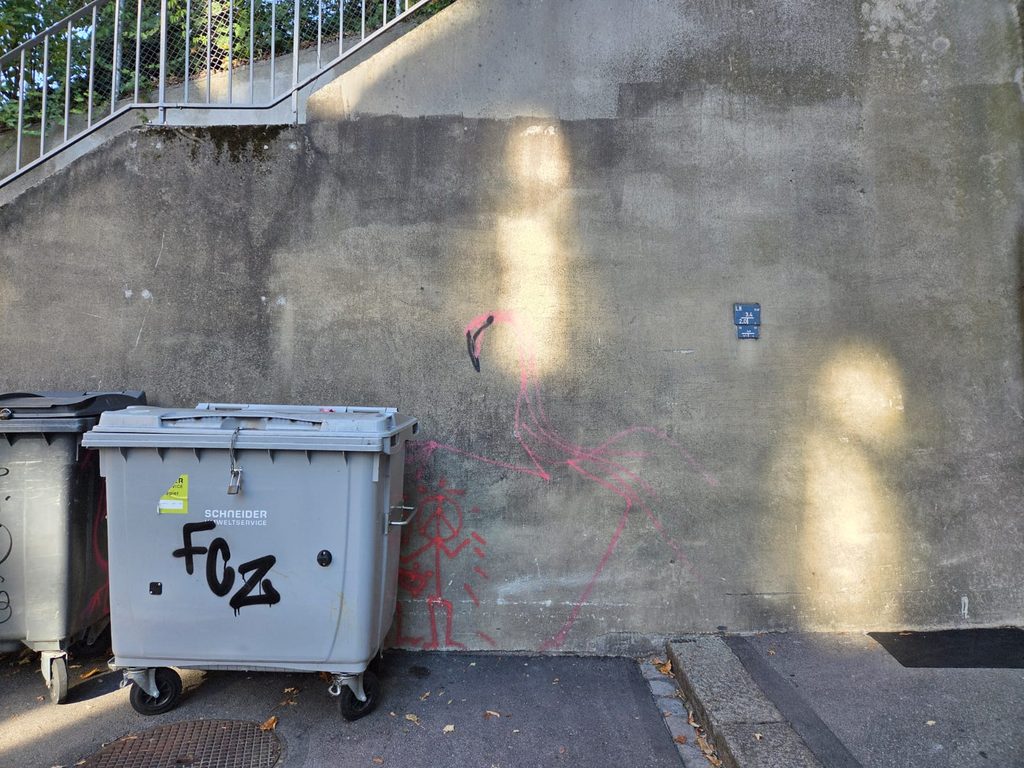
It’s goodbye to the Grossmünster, then, as we continue on our way.We pass yet another church here, the late Gothic Wasserkirche (Water Church). Just in front is a monument to Ulrich Zwingli, a Swiss Protestant reformer.And now we come to Schifflände, or ‘Ships’ Landing’. Not quite on the waterfront these days, but not far from it. I was here to try for a double Naegeli sighting. It was the location of the audio tour’s next stop, and also a pin on the more extensive website map.I found one fairly easily. This was the one from the map, on the Theater am Hechtplatz. But, despite walking up and down Schifflände a couple of times, I couldn’t find the one from the audio tour. I couldn’t even find the street sign that should have been my landmark. Until I worked it out…It’s spray art upon spray art. There’s another Dance of Death, this time a sword-brandishing one, underneath this hoarding. Or at least there was. The website/map has an updated image of the current artwork, but gives it the same date of May 2020, which is partly what confused me. But really this is what I was expecting from trying to follow a walking tour that’s a few years old now – spray art is after all a very fast-moving medium.The next one, on nearby Waldmannstrasse, was easier to find. This flamingo has been here since 2017, which coincides with Naegeli coming to Zurich for a Christmas visit. The flamingo is another common motif in Naegeli’s work, perhaps representing freedom, as opposed to the captive examples he has observed in zoos. There are (or have been) dozens more flamingos by Naegeli in Düsseldorf.
In and Around the Kunsthaus
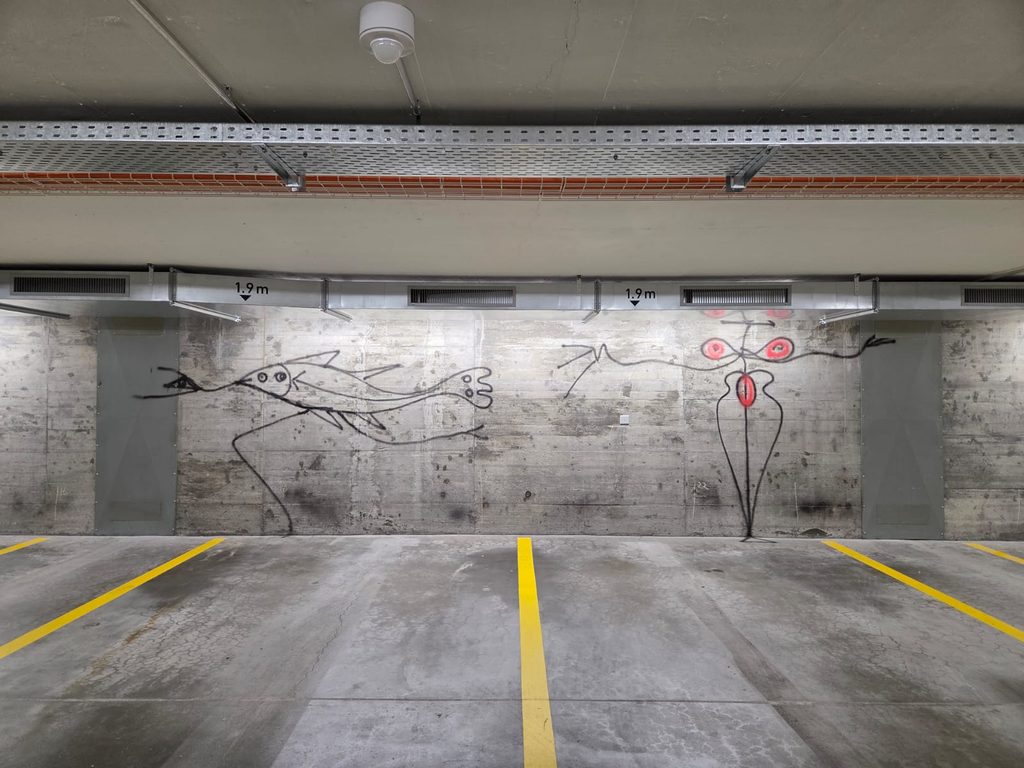
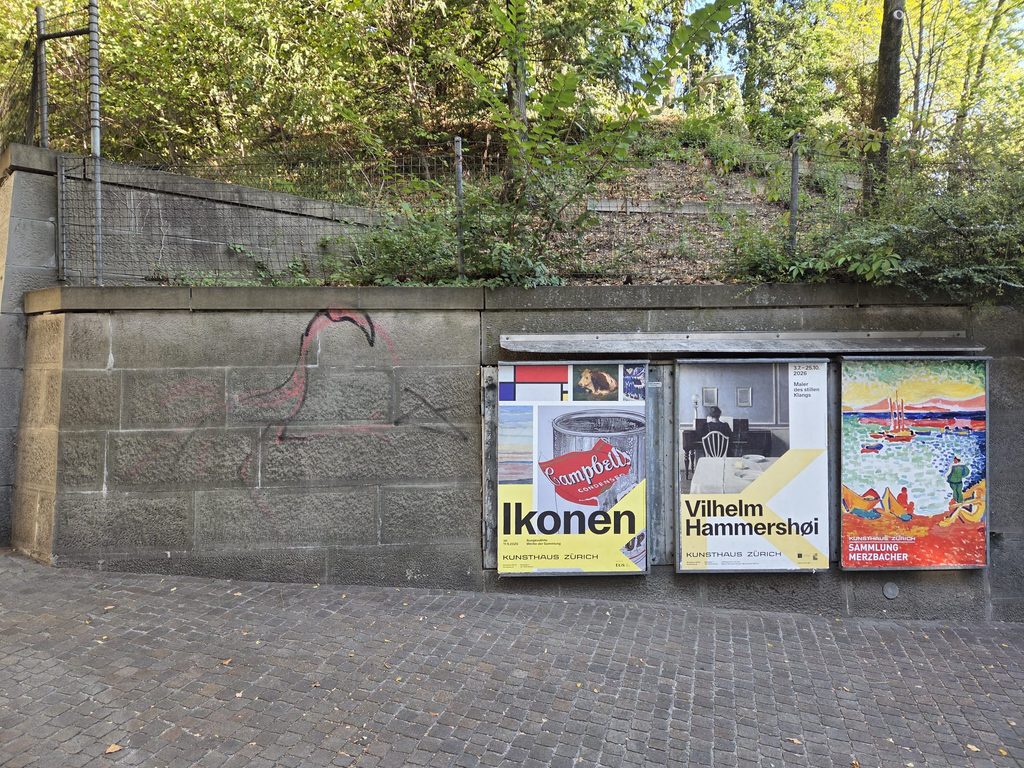
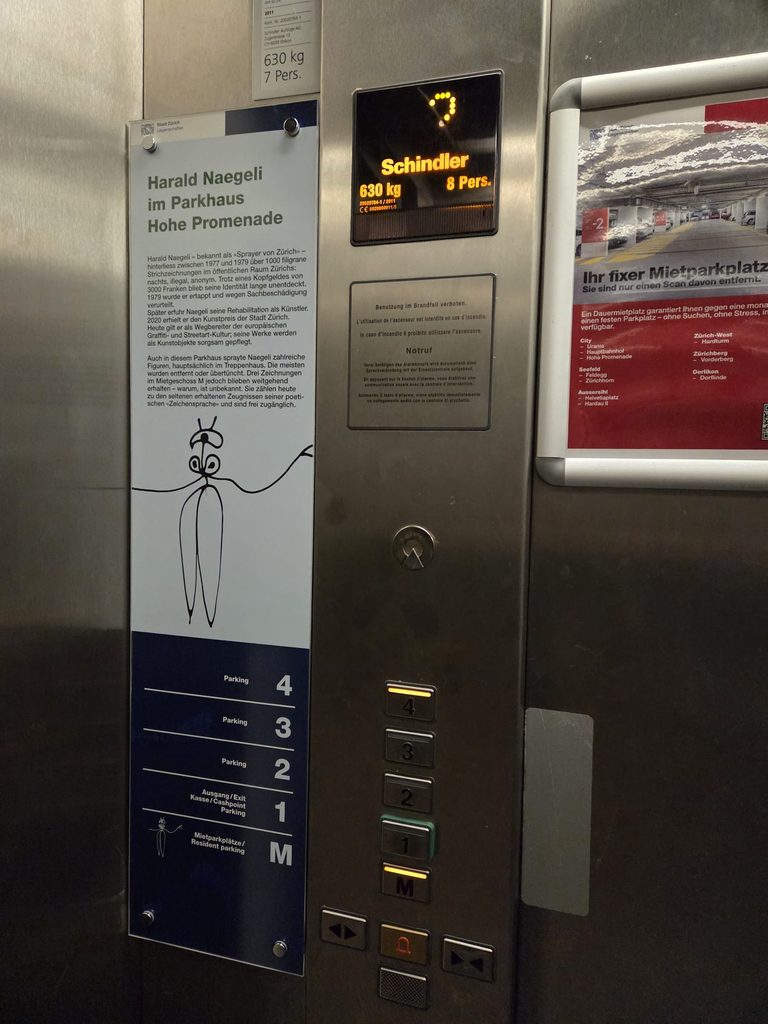
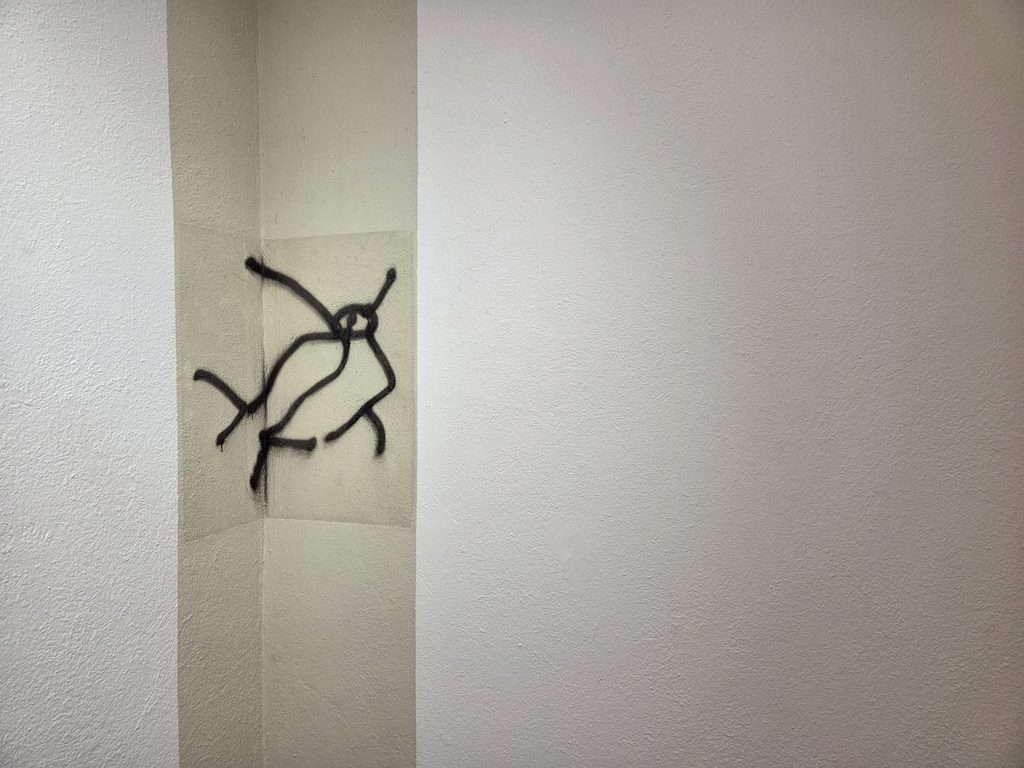
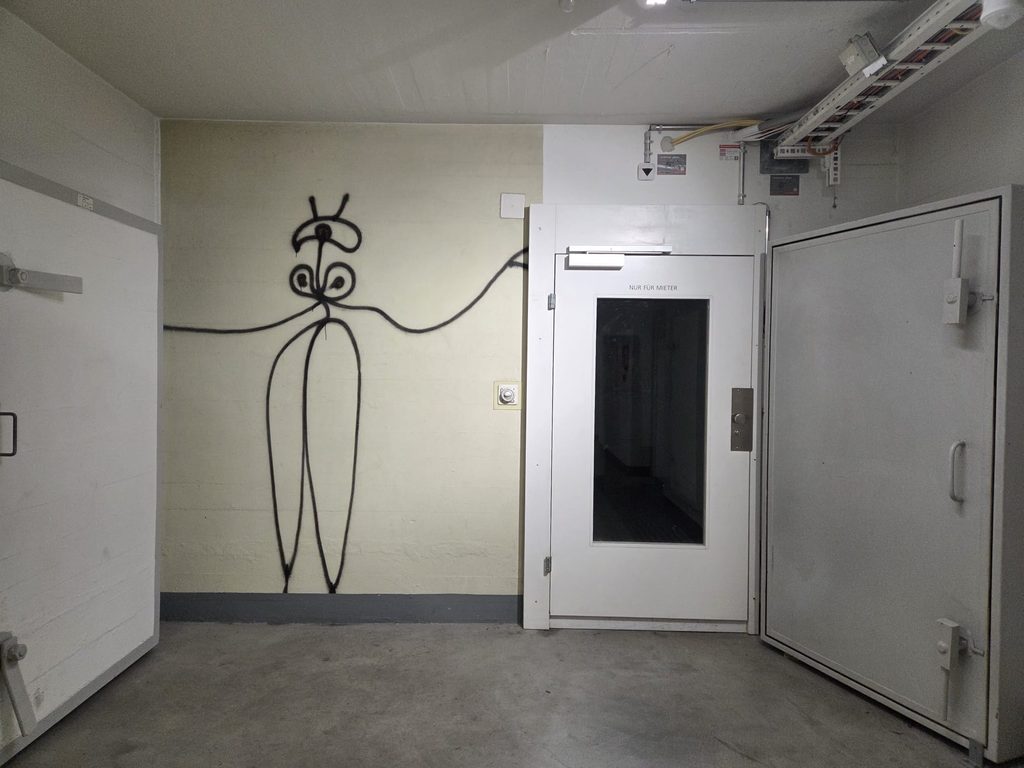
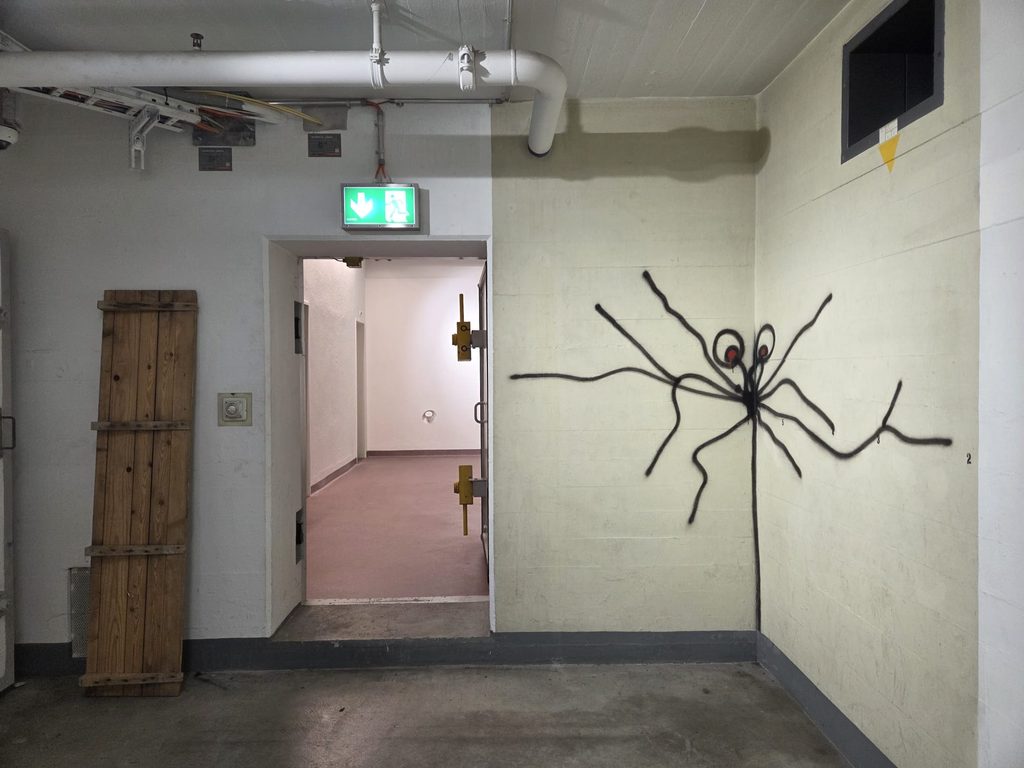
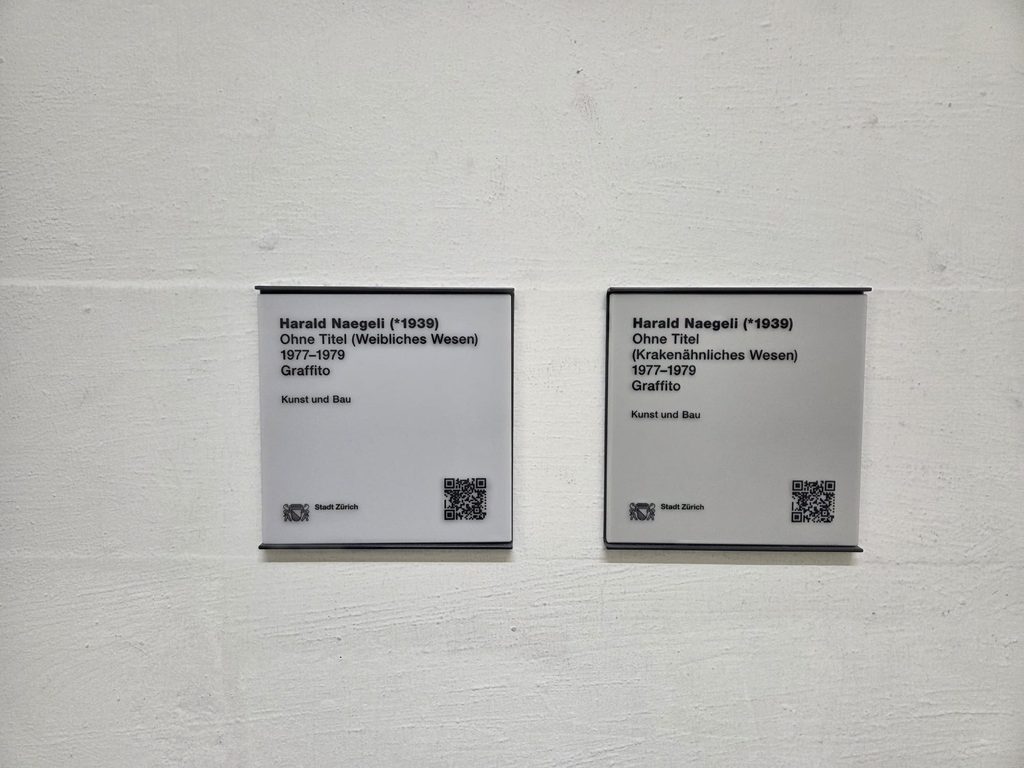
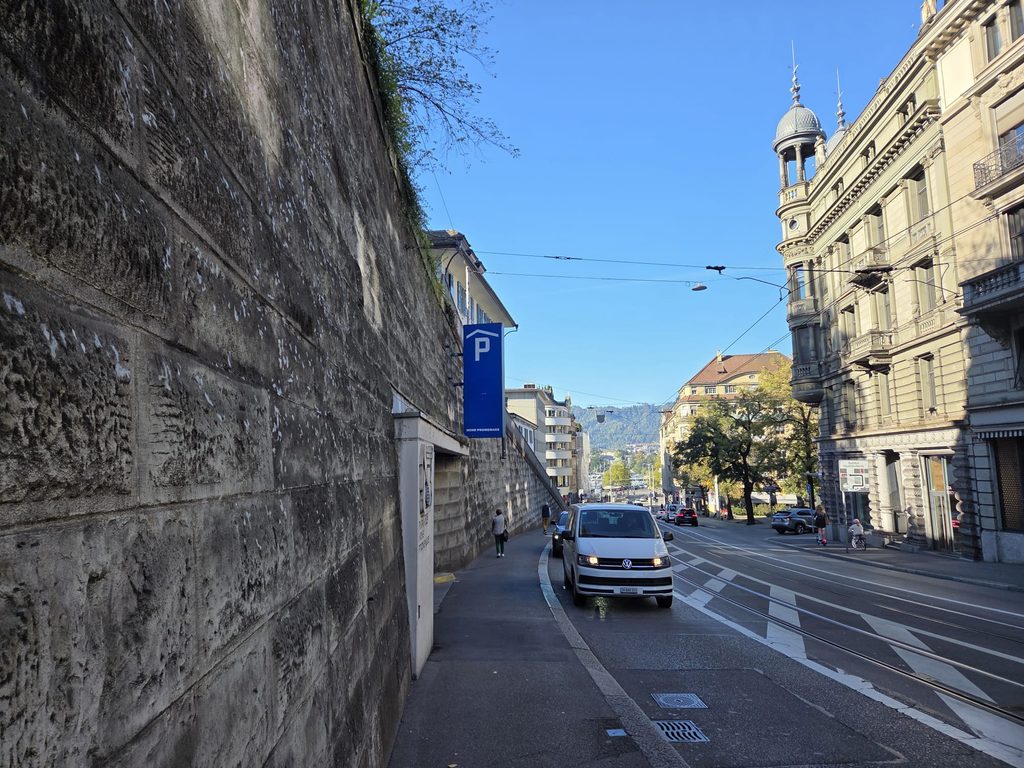
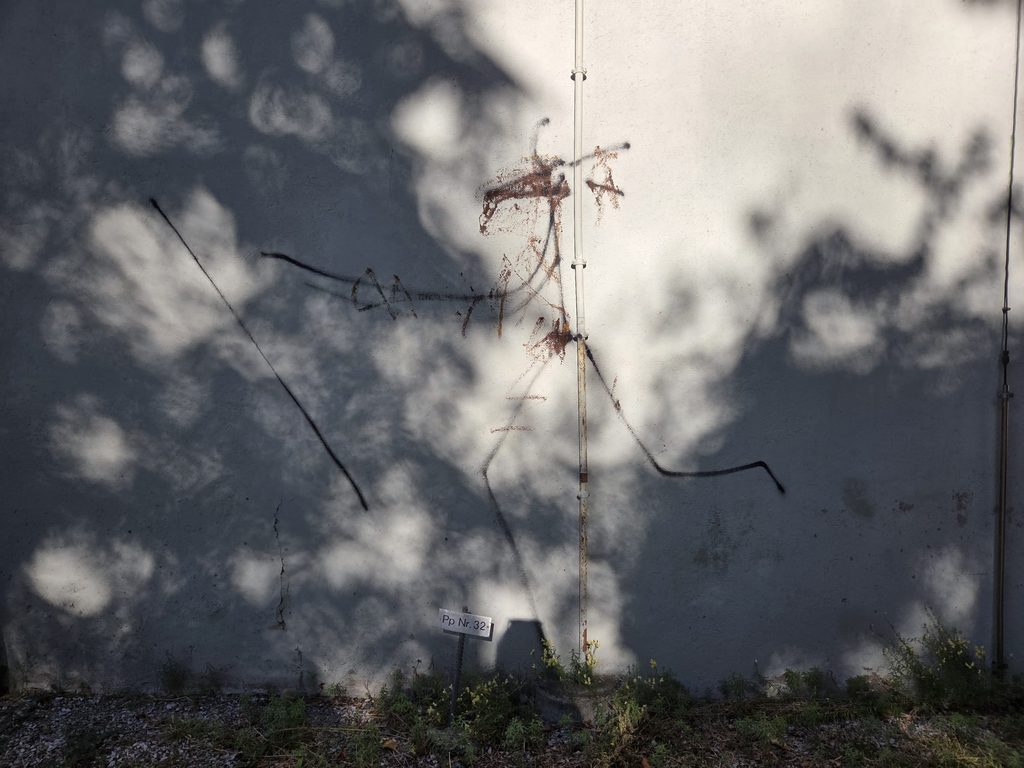
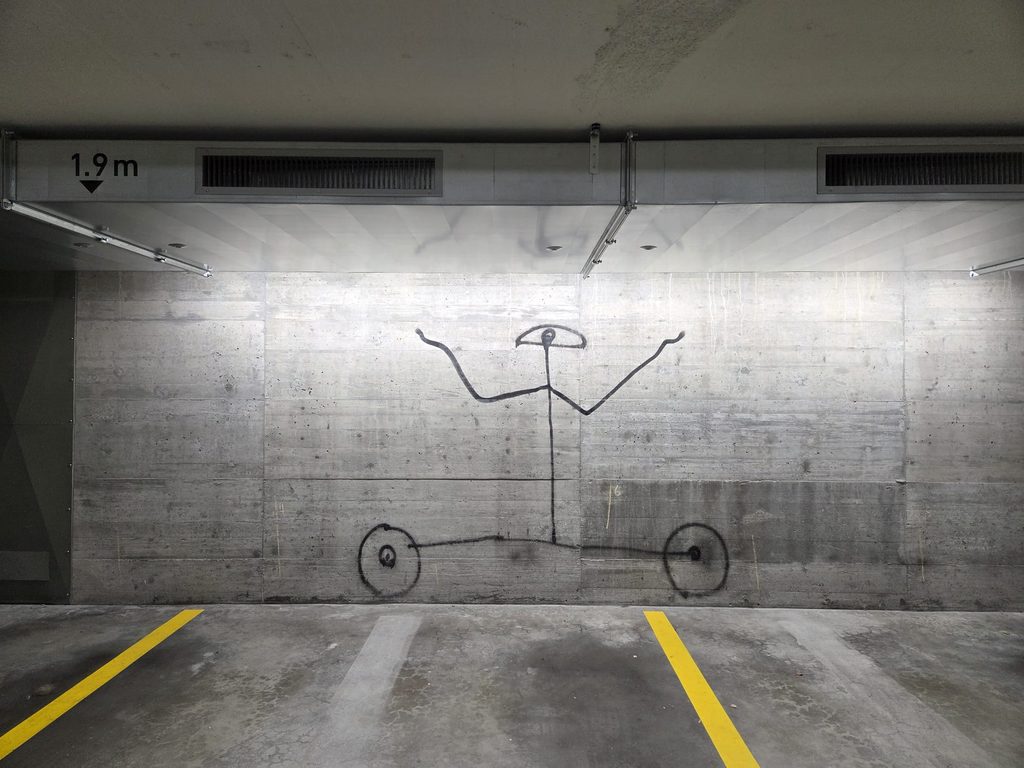
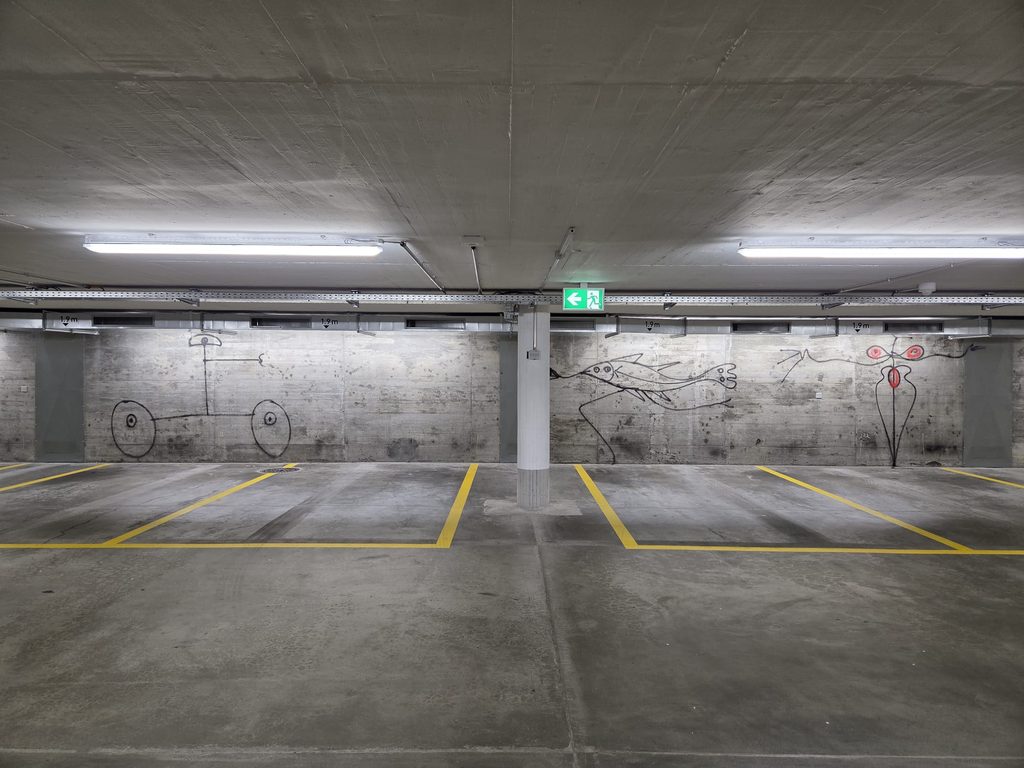
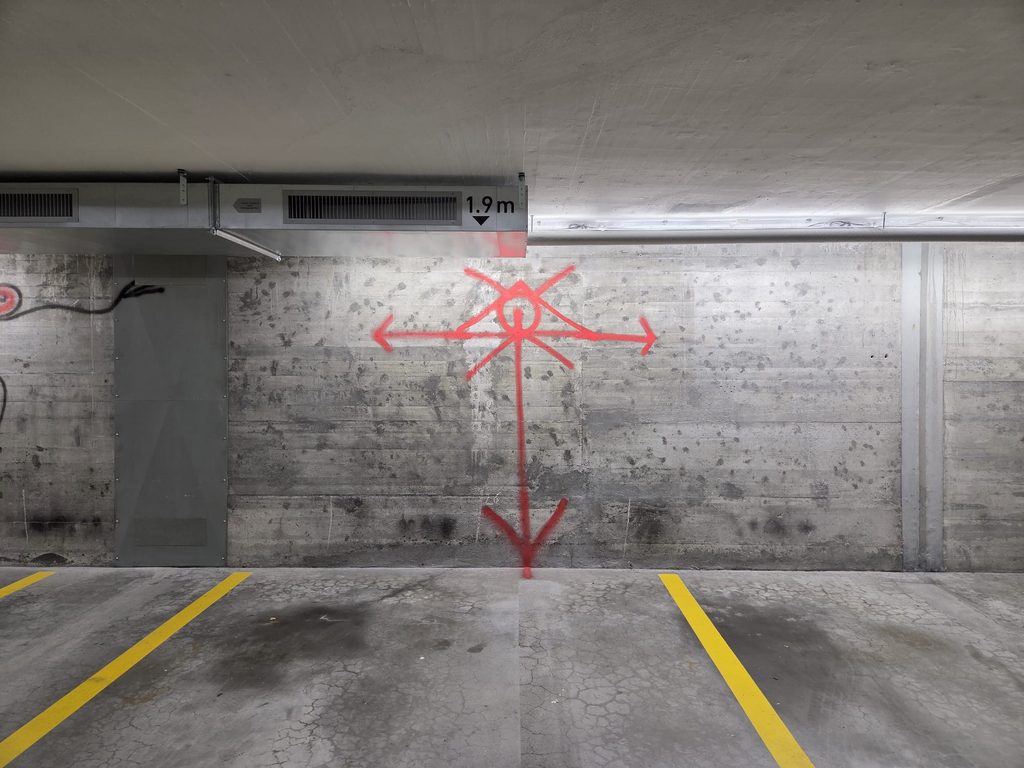
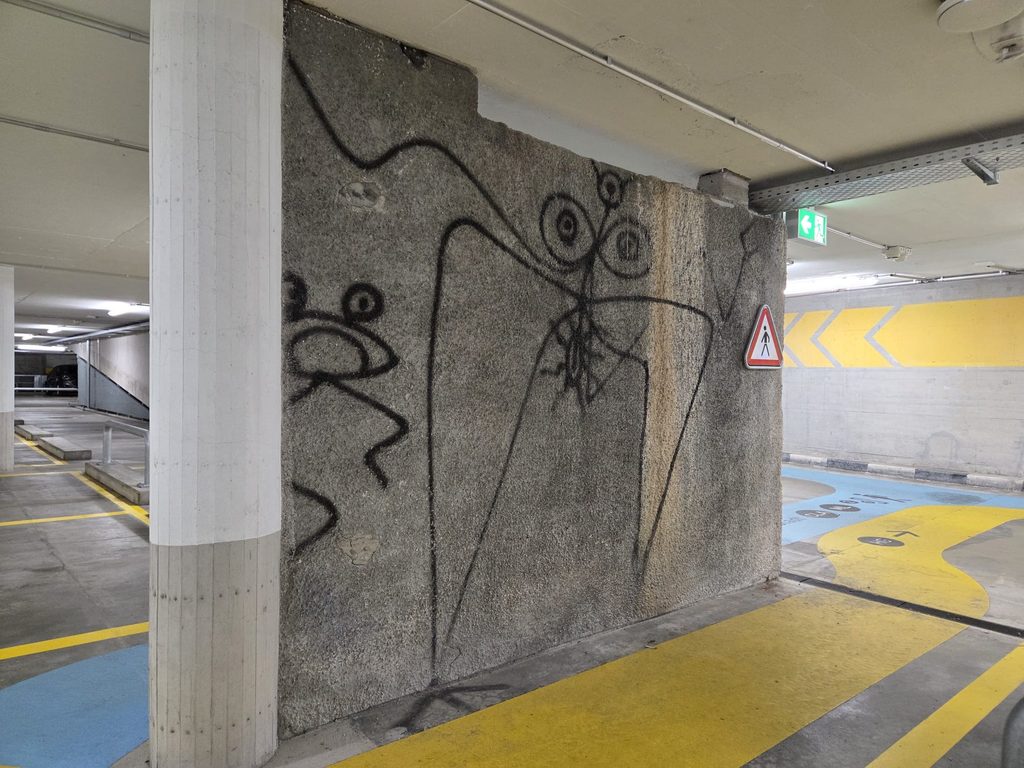
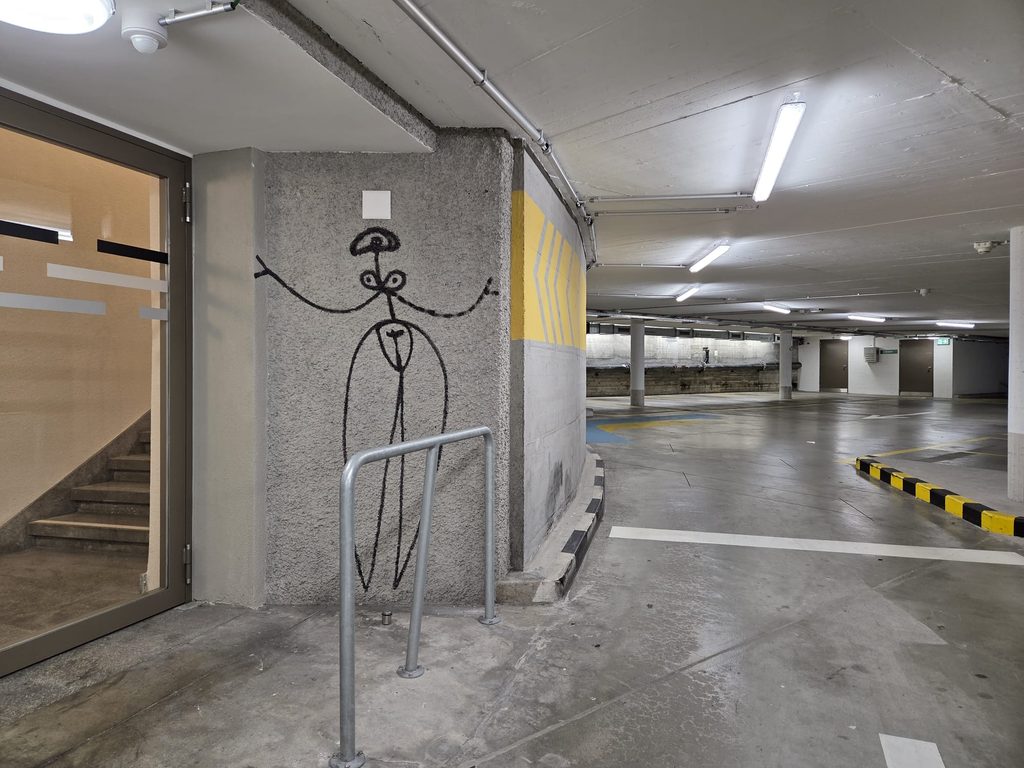
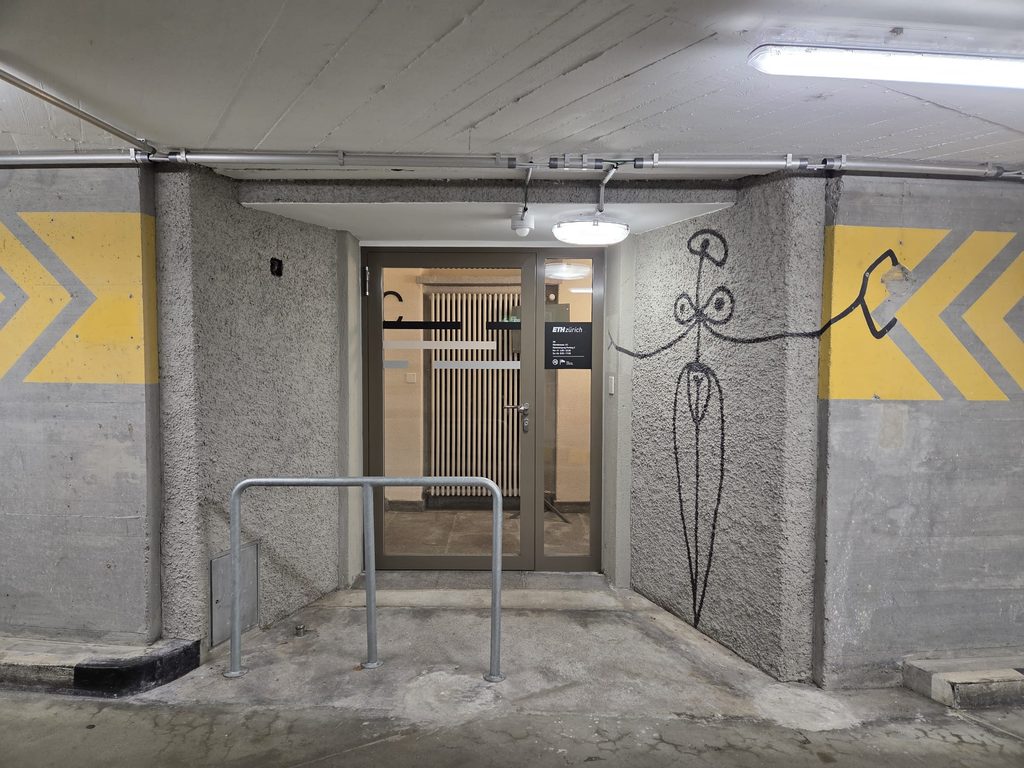
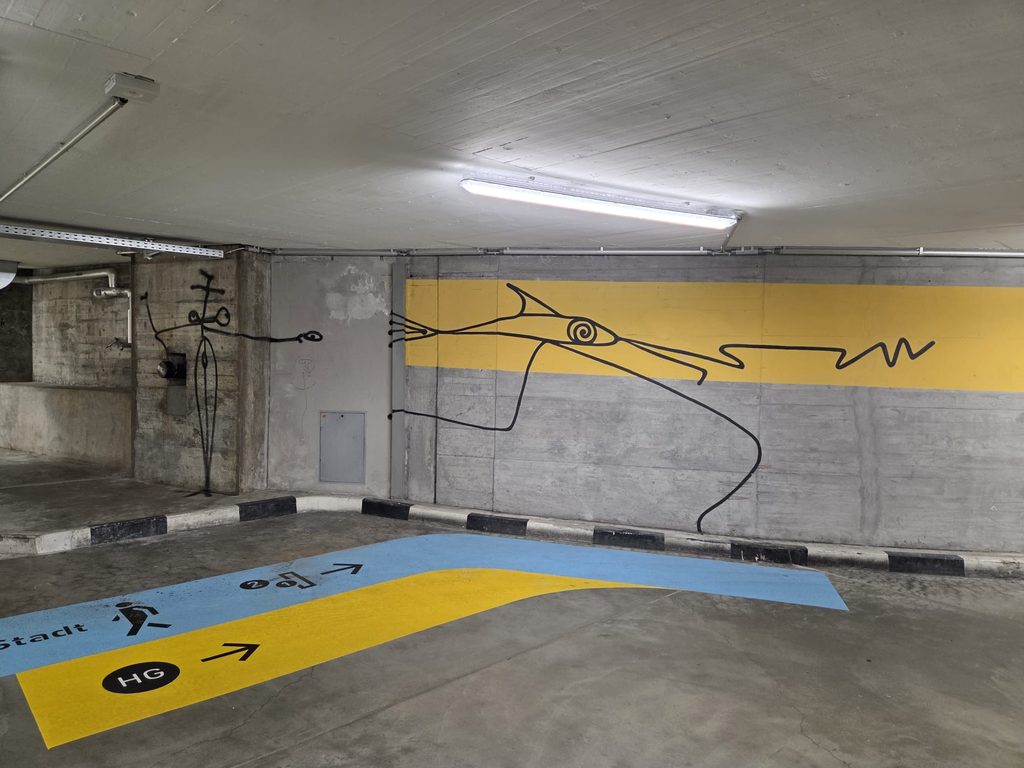
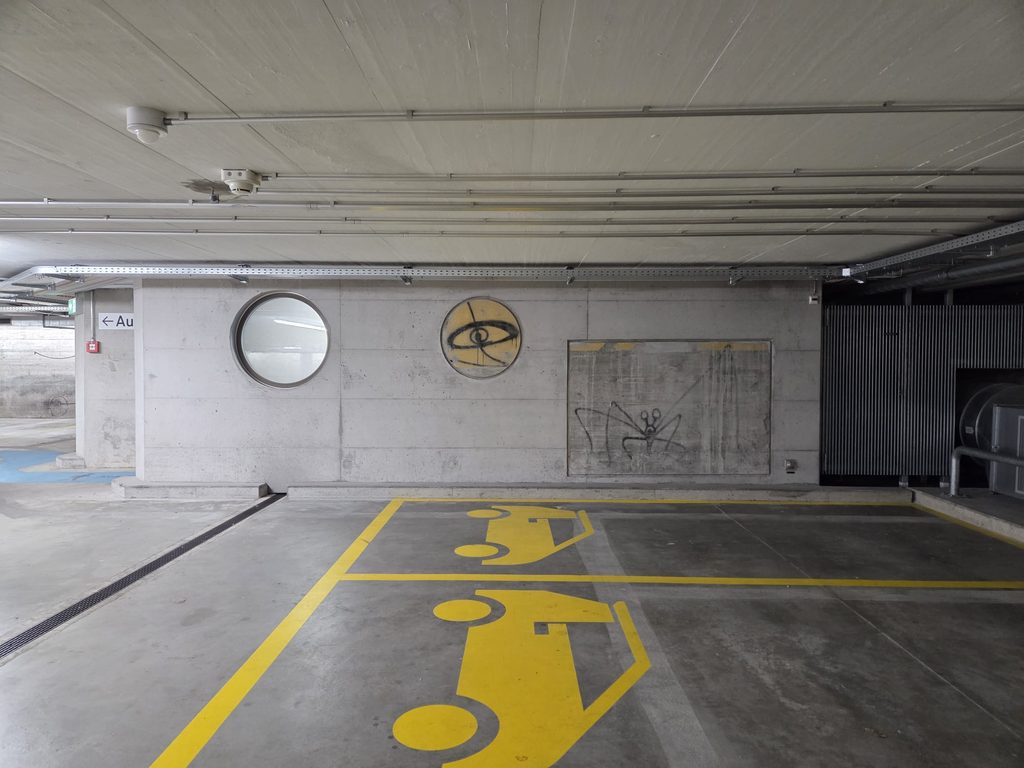
Right, then. Up the hill for two more stops in quick succession, both from the walking tour.Here’s the first, another flamingo. This one seems to point to the posters from the Kunsthaus, perhaps questioning the confinement of art within institutions vs. the freedom of art for all on the streets.And the second is another skeleton, looking much the worse for wear compared to the image in the audio tour. It’s another Totentanz, or Dance of Death, from 2020. I’d actually walked right past this spray art the day before and not noticed it. Again this speaks to the ephemerality of the medium, but also I think to some sort of value hierarchy that exists within it. I walked all around Zurich looking for examples of Naegeli’s art because he is established as An Artist, and therefore worthy of this investment of time and attention. I have been known to seek out street art by more anonymous artists, but mostly I’ve become immune to it as part of the urban landscape and walk right on by.Then I went off on a little detour, because I’d seen on the map that there were more artworks to find in a nearby parking lot. Technically access was by parking ticket so I wasn’t supposed to be in there, but I managed to enter as someone was exiting and set about trying to find where the spray art might be.After deciding it wasn’t on the ground floor I entered the lift, and found this helpful sign. To the Resident Parking level!And this is where I discovered that, given the right conditions, spray art can survive long enough to be musealised! These examples, carefully painted around over the years, were the only ones I saw on my journey that had proper labels. Curious, given that the actual parking garage environment isn’t particularly welcoming.
The Sprayer von Zürich Takes Us Off the Beaten Track
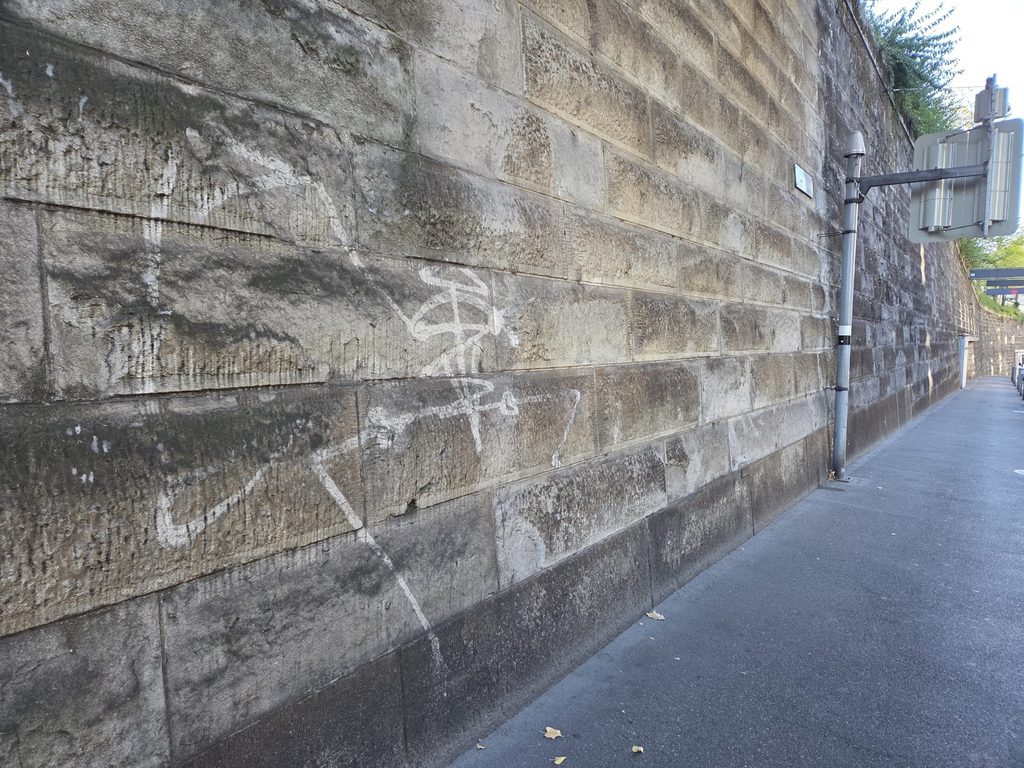
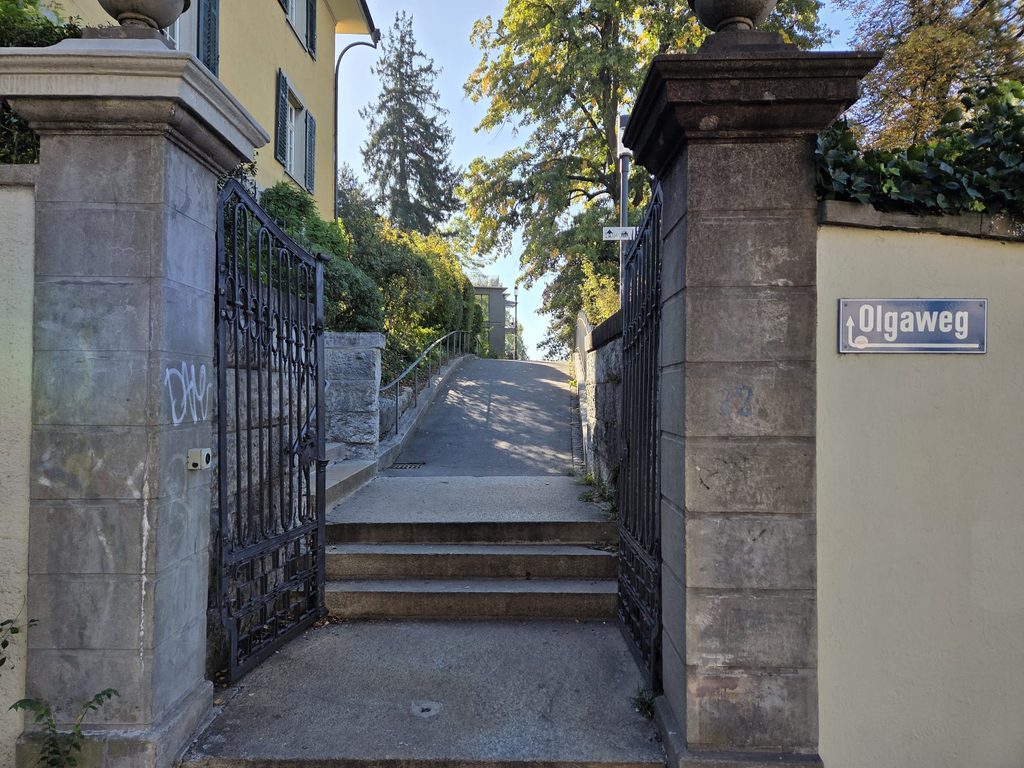
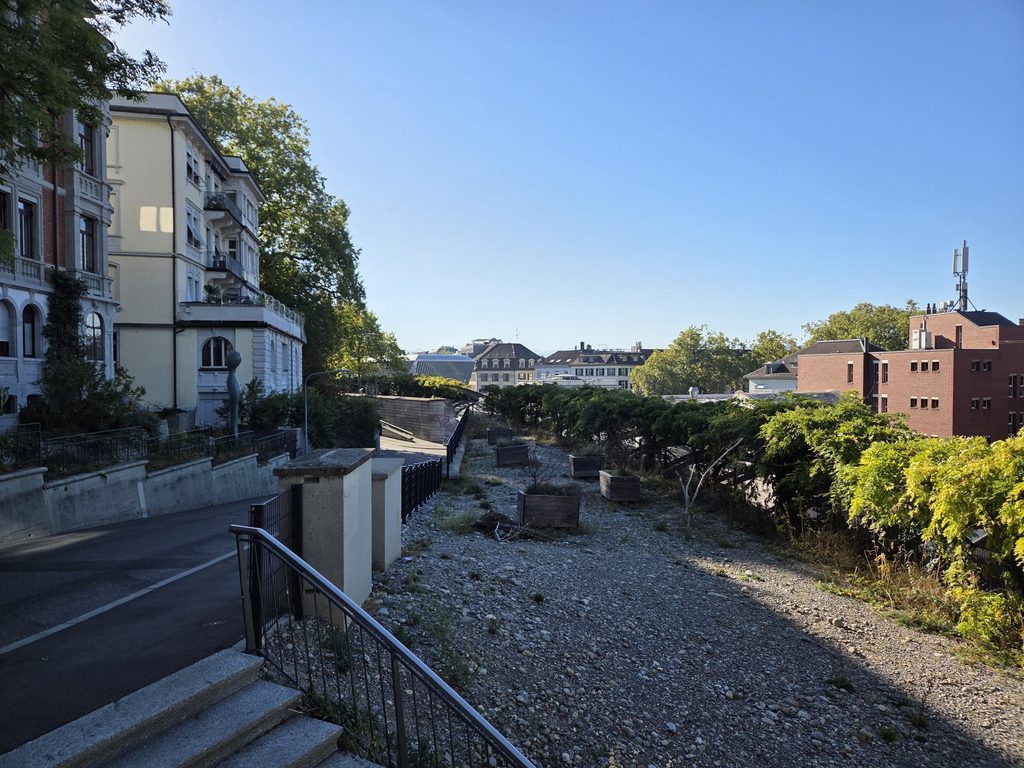
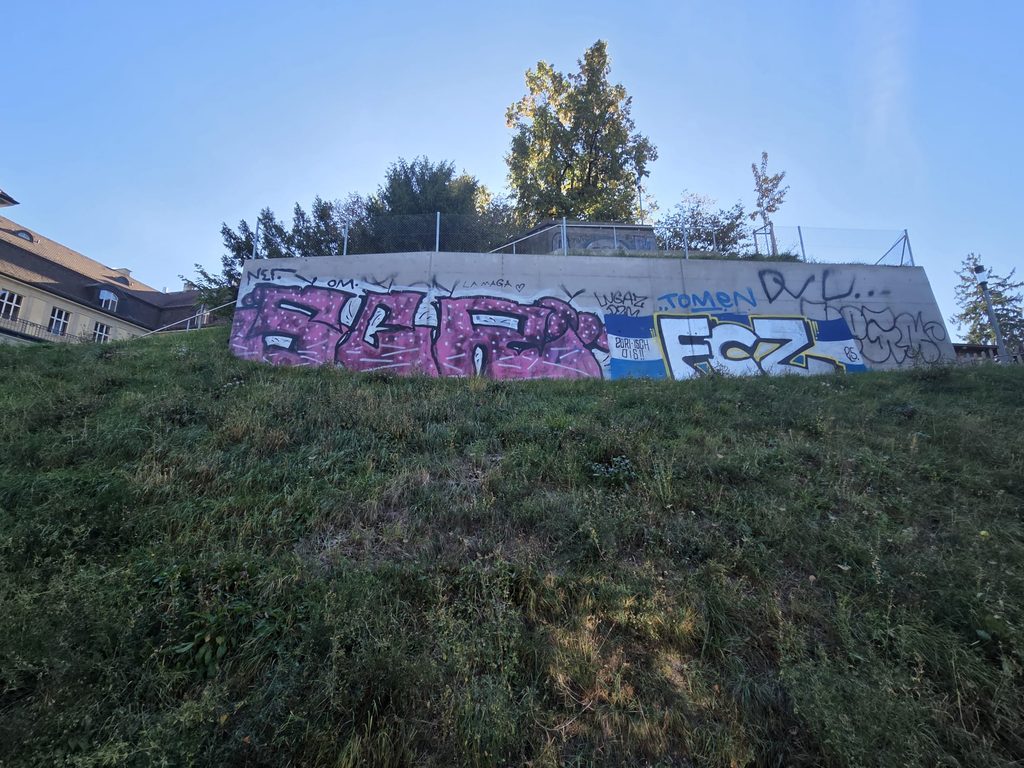
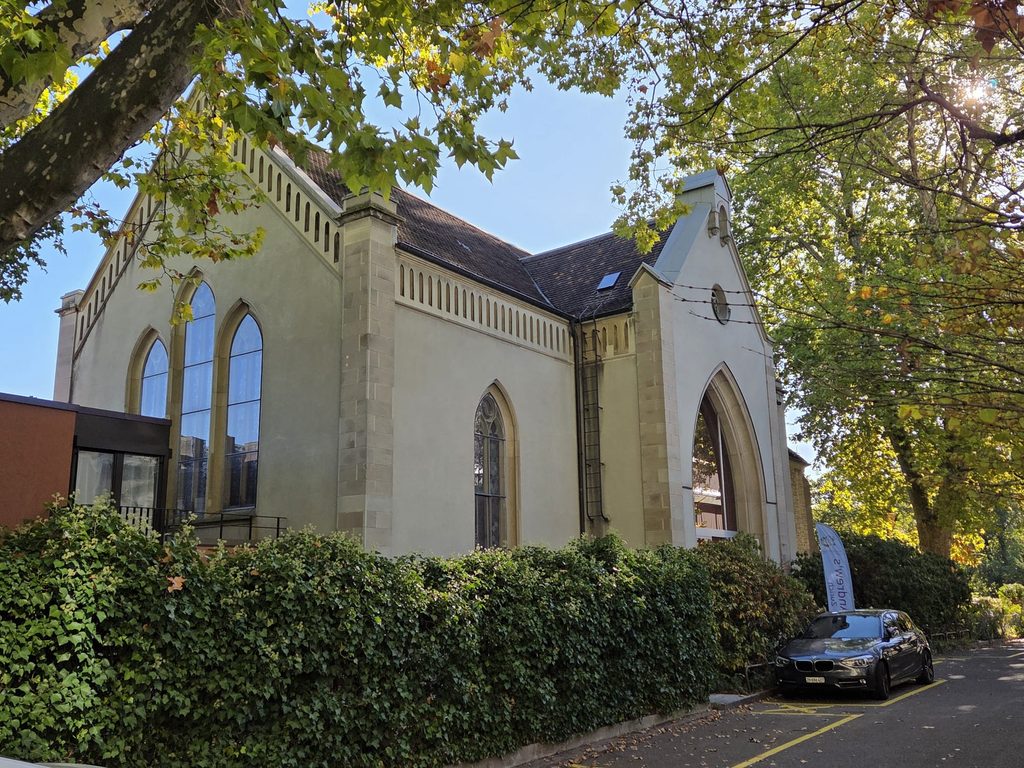
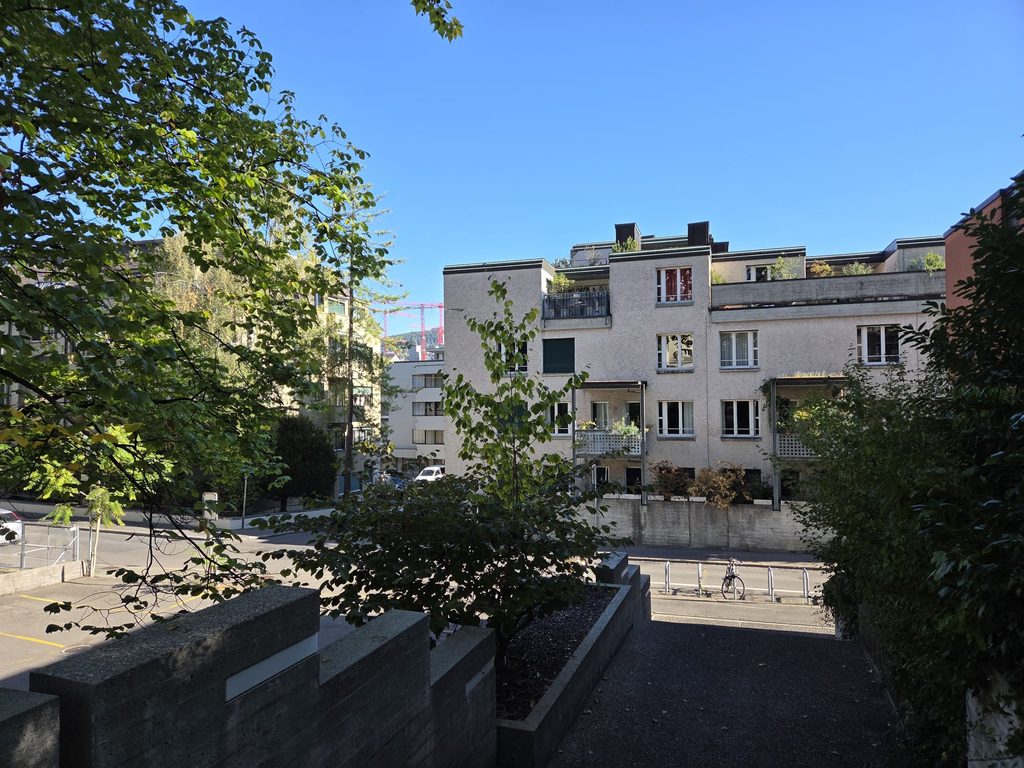
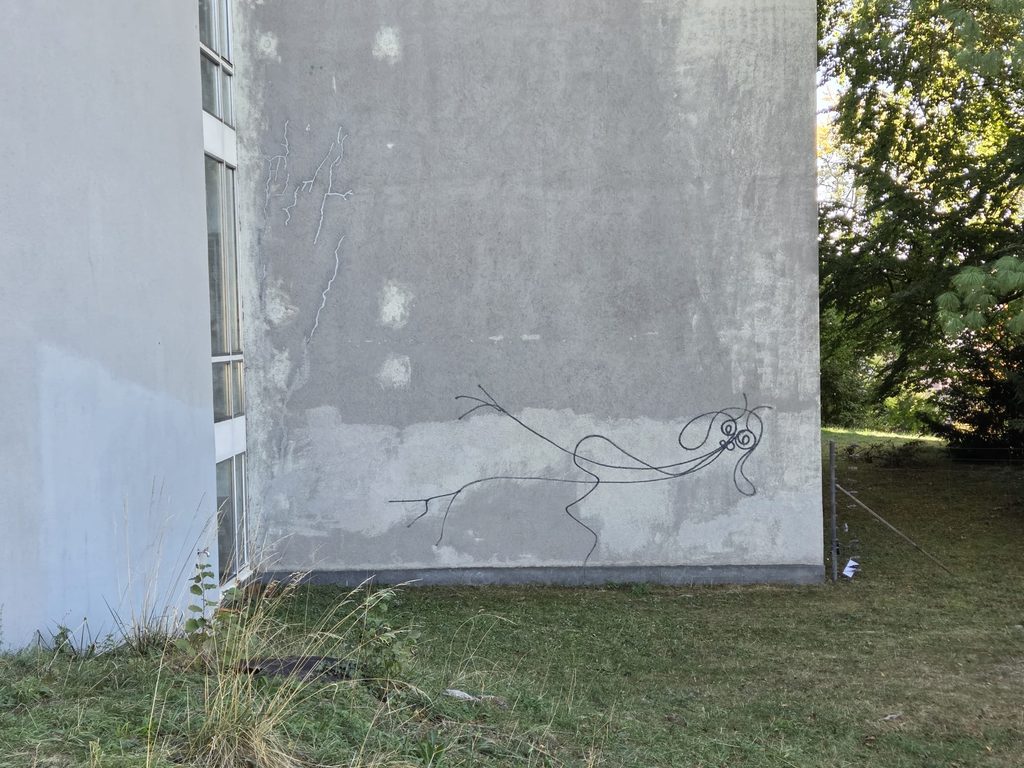
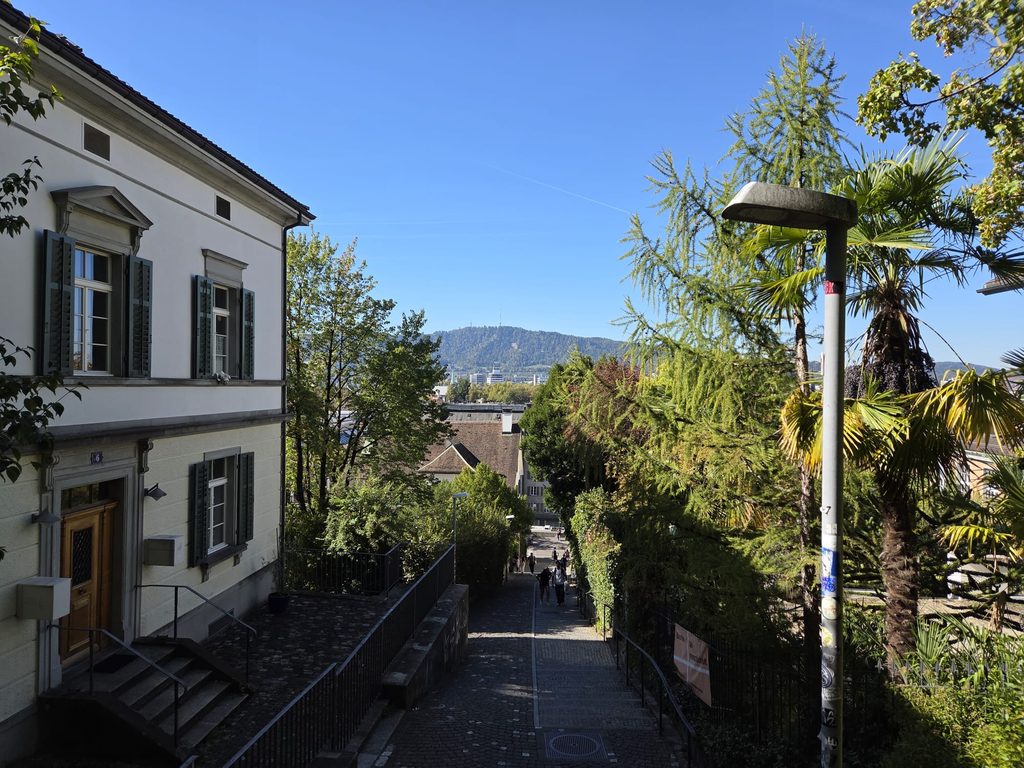
Next we’re heading back down the hill a bit so we can head up this path.Look, there’s Waldmanstrasse, where we saw our first flamingo.I took a small but reasonably scenic wrong way along Olgaweg.And then got back on track. I took a photo of this wall because by this point I was thinking about this idea of an artistic hierarchy I mentioned earlier. The reason this walking tour captured my interest was partly the novelty of a spray artist of advanced years continuing to contribute to the urban landscape. But it was also that I have a mental image of Switzerland as being very nice and clean and pleasant, and not somewhere that would have a lot of graffiti. But here it is. Do I just mentally edit it out as I walk around Swiss cities, because it doesn’t fit my preconceived ideas? I think probably yes. So what I’m saying really is that any hierarchy is at least partly my own construction, and something I should work on.Here’s the one I was looking for. The map has a tag of “Augenfüssler” for this artwork, which translates as something like ‘Eye-footed Creatures‘. This is another motif in Naegeli’s work, we will see more of these later.Just across the street is St Andrew’s Anglican Church. I thought it looked quite modern, but it might actually be a refurbished late 19th century one.Through the streets of Zurich we go! This is definitely not a usual tourist activity, one of the main reasons I love doing walking tours from time to time. Not that we’re on the walking tour right now, we’re off to see another point on the map.
Towards the Kunsthaus and the Last Stop of the Audio Tour
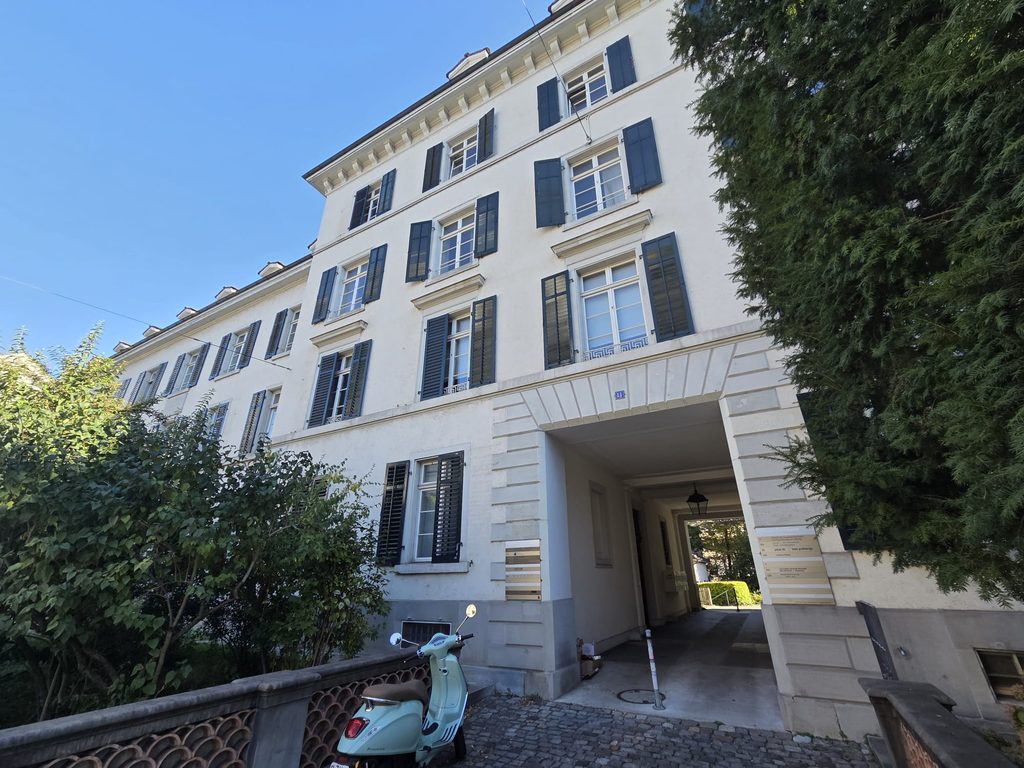
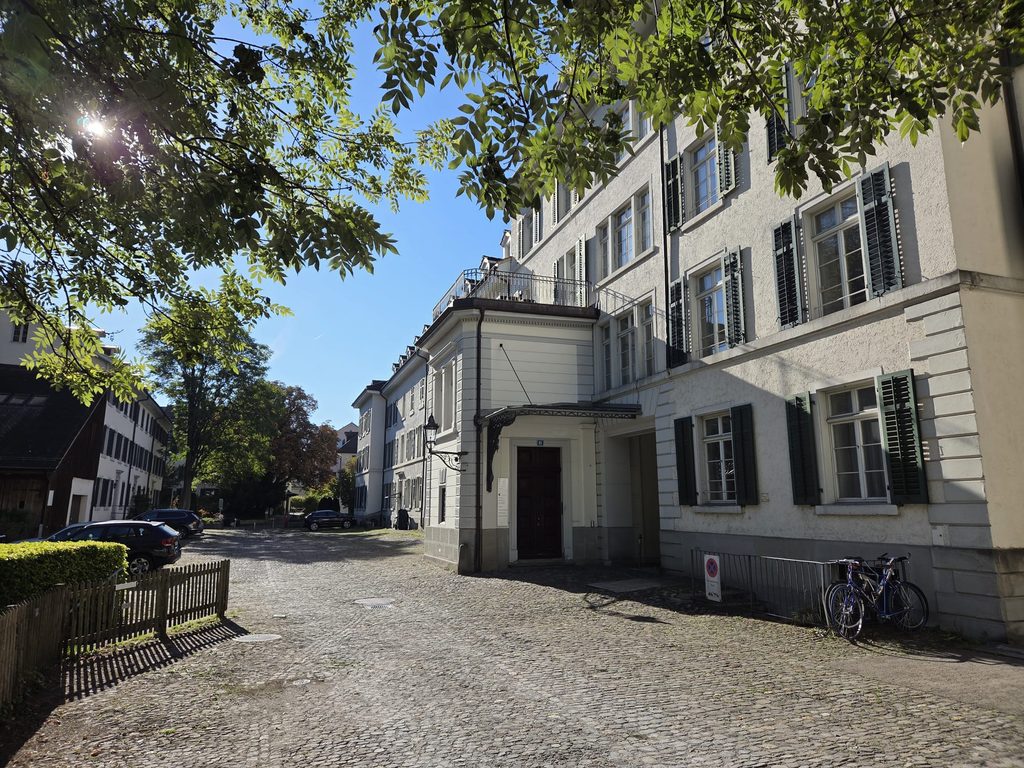
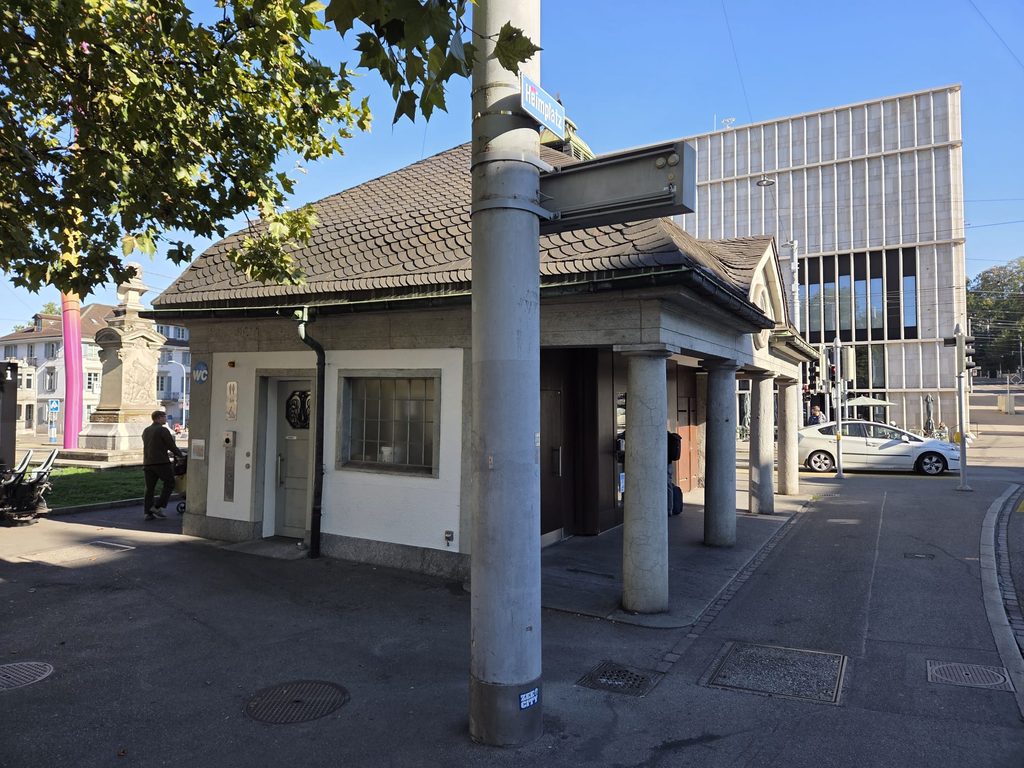
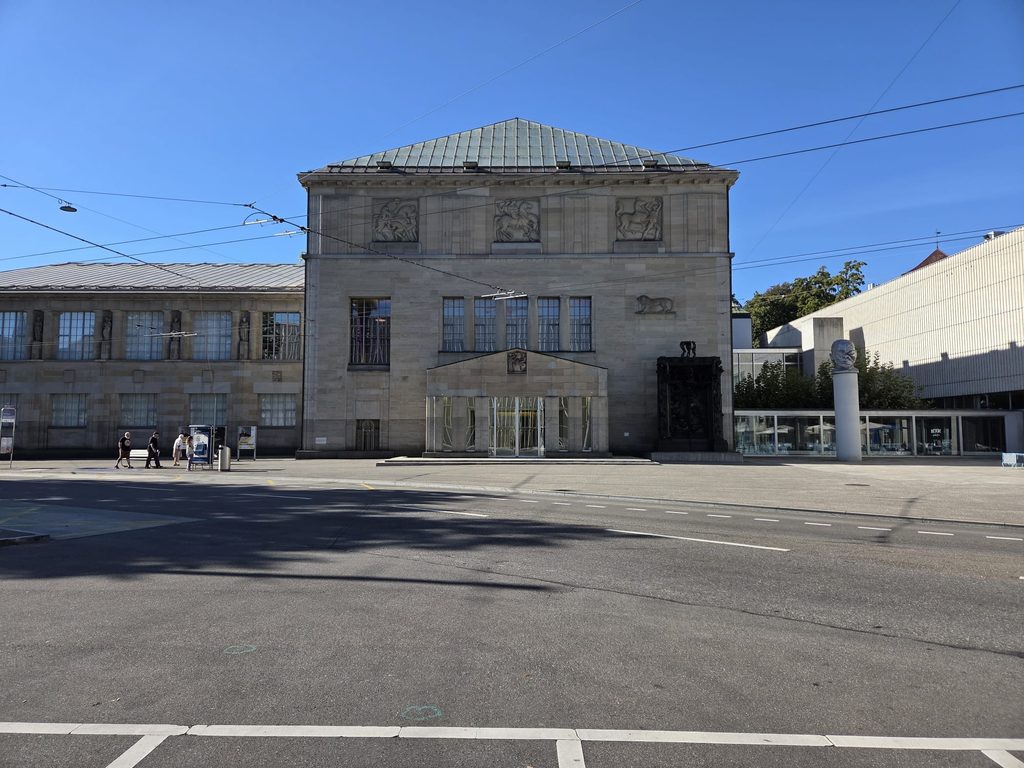
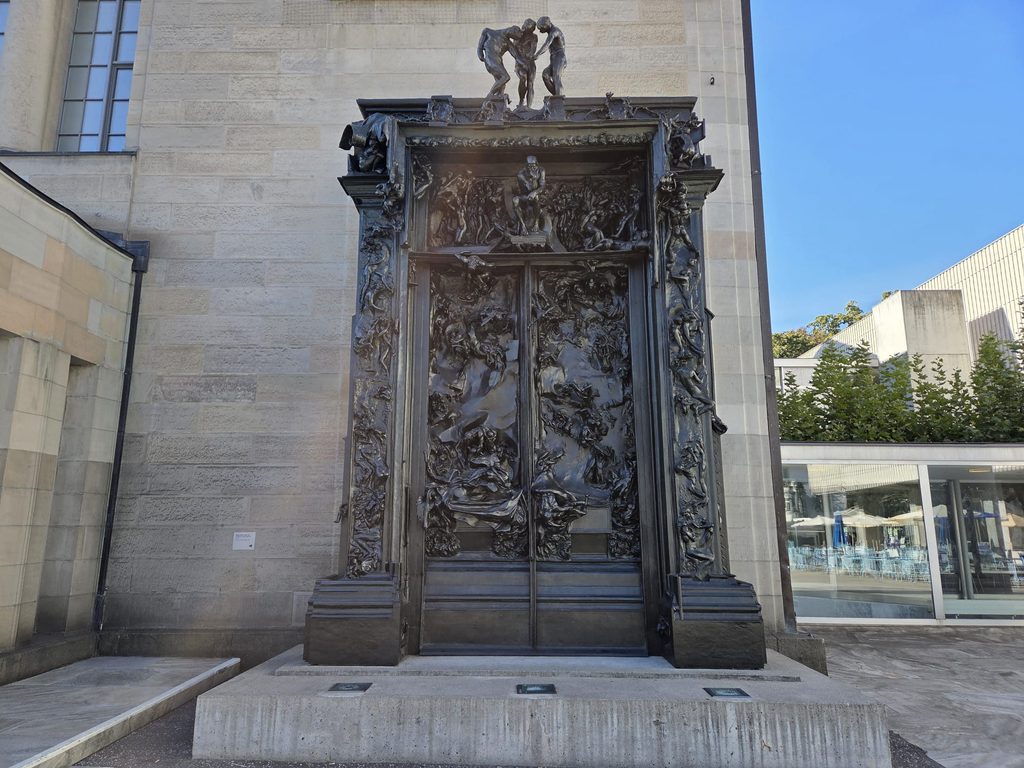
I need to be a little daring now and go through to the courtyard of this residential building. I’ve already got into a parking garage I shouldn’t have been in, so what’s one more surreptitious art sighting?Here it is, a bit hard to see in the bright sun, but we’ve found our Hofläufer. It seems someone’s painted over this in brown, I’m not sure whether to preserve or erase it.Back out of the courtyard.And we’re almost at the Kunsthaus, which is the final stop on the audio tour. Before getting there, though, I’m stopping at MOPS Cafe, in a historic kiosk. A Salterton Arts Review recommendation to keep your strength up on the walk – both the coffees and pastries are good.And here we are, back at the Kunsthaus. We’re heading for Rodin’s Gates of Hell, just in front of the building at the right.What I like about this final stop on the audio tour is that it subverts these ideas I’ve been having about an artistic hierarchy. Harald Naegeli is a well-established artist. He’s had a decades-long career. People have literally written songs about him. And yet, when Naegeli sprayed another Dance of Death on the museum’s exterior just behind the Gates of Hell in April 2020, he found himself facing criminal charges once more. The artwork itself was removed in June 2020. Naegeli received the Art Prize of the City of Zurich the same year. Art in the public sphere is a complex thing – Zurich has plenty of it, but it still seems to matter whether you are invited to contribute or not, meaning an element of control and exclusivity. Sometimes it takes a tenacious octogenarian artist to point out some of these contradictions.
Around the Universität Zürich
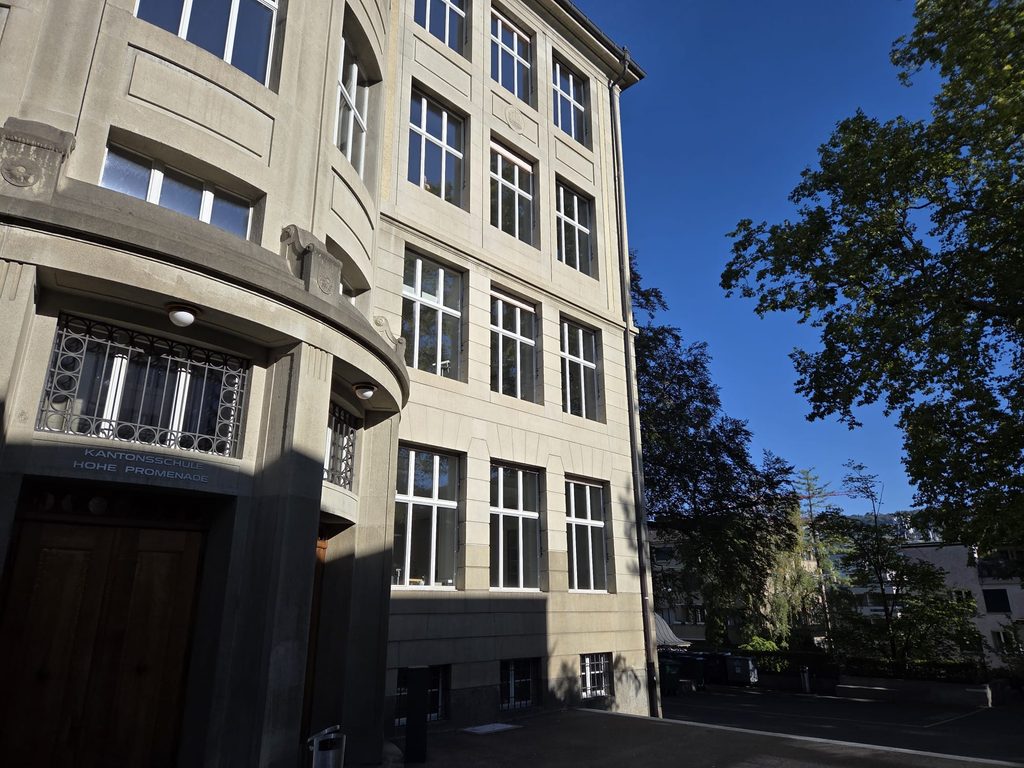
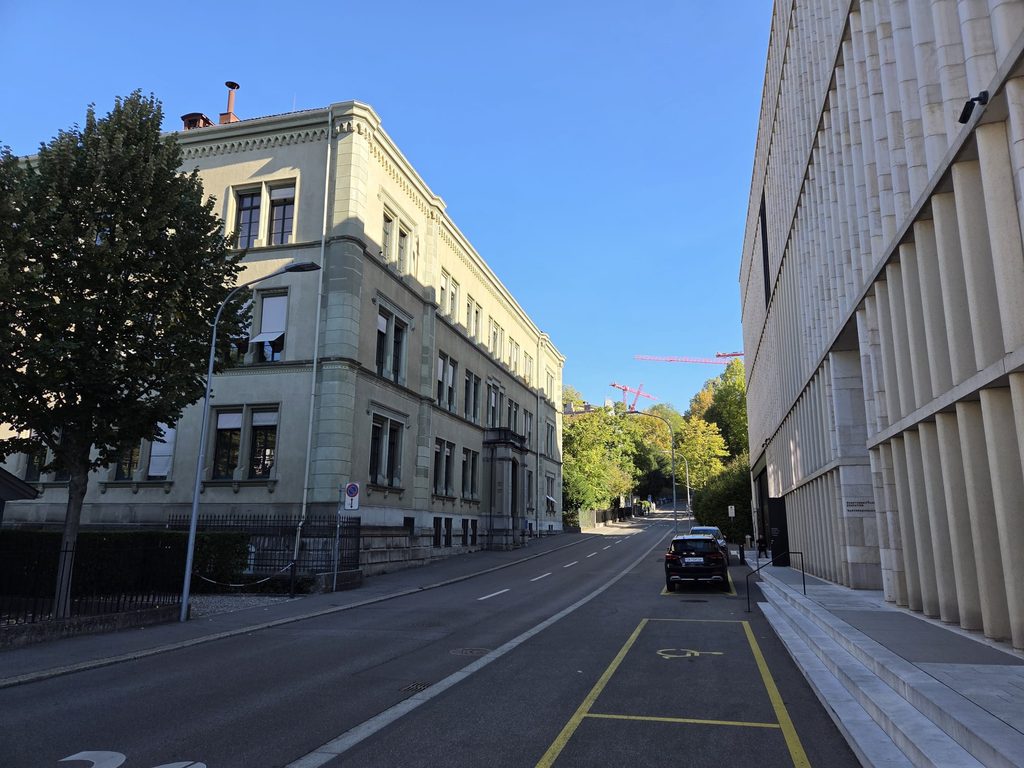
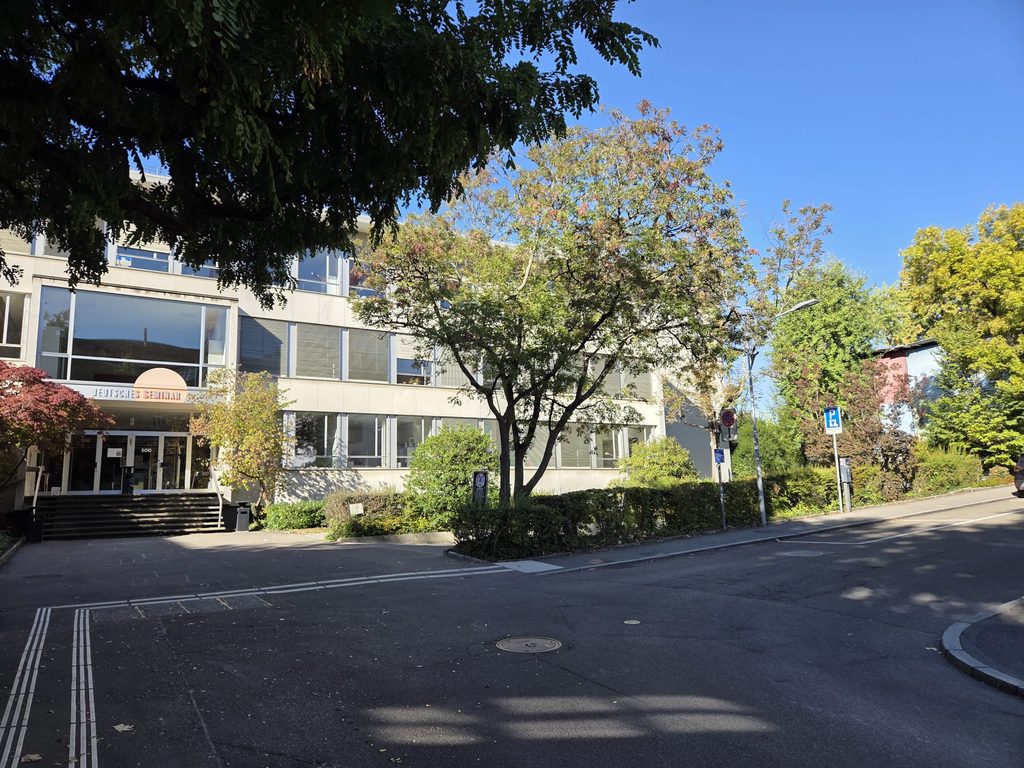
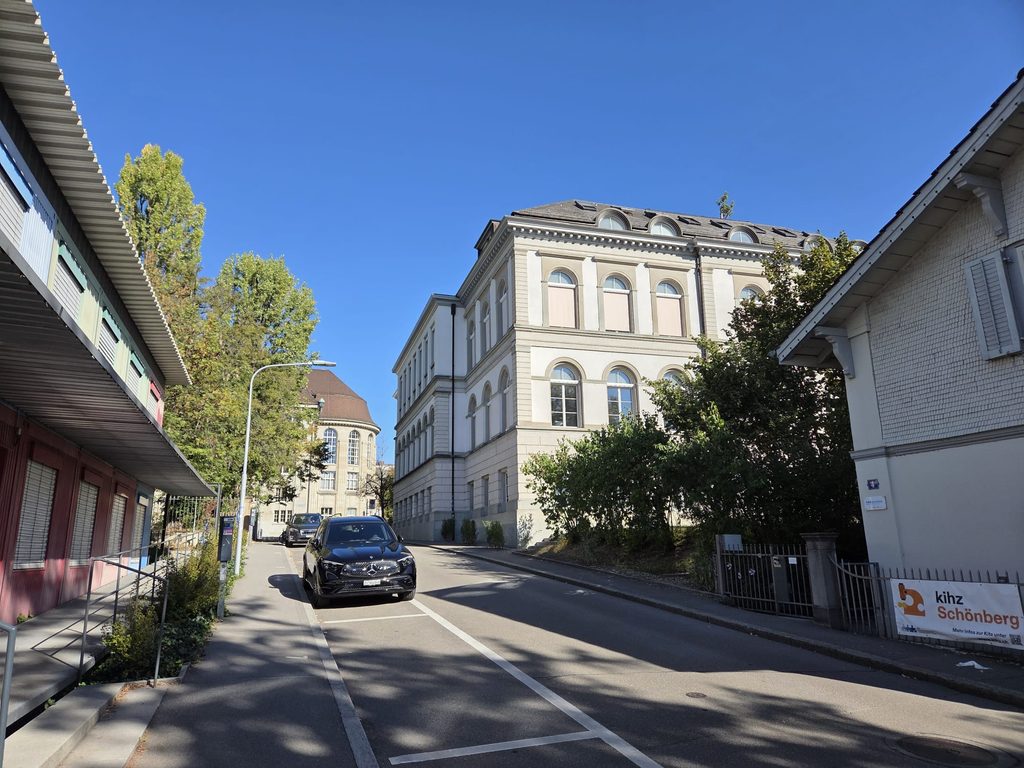
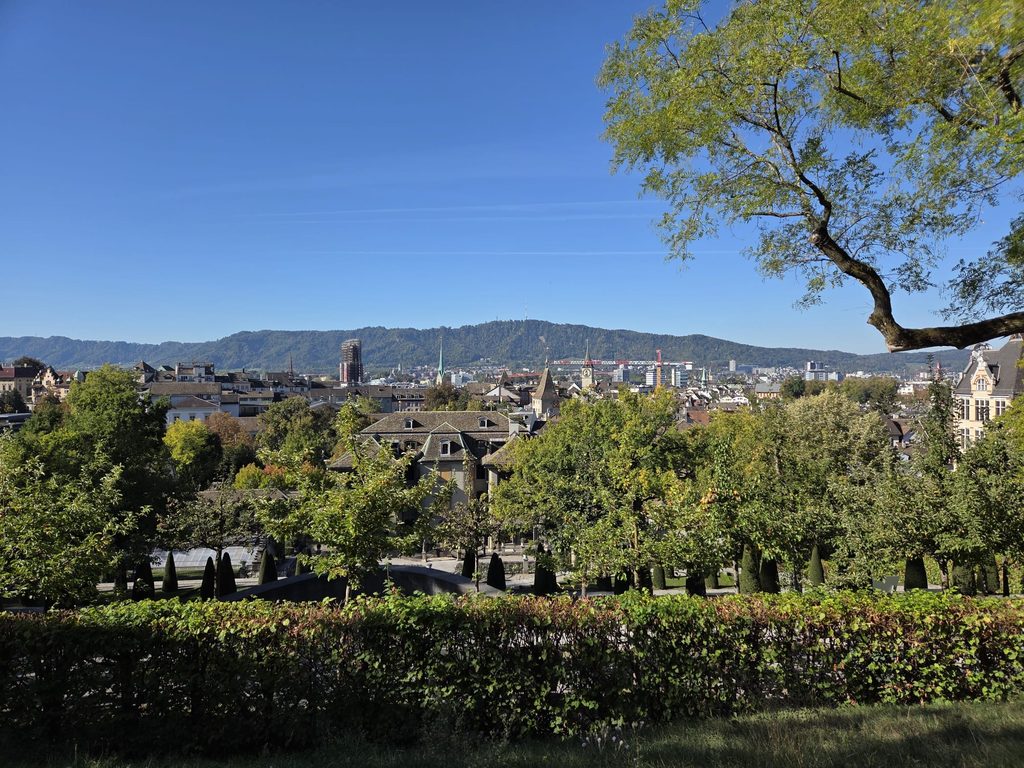
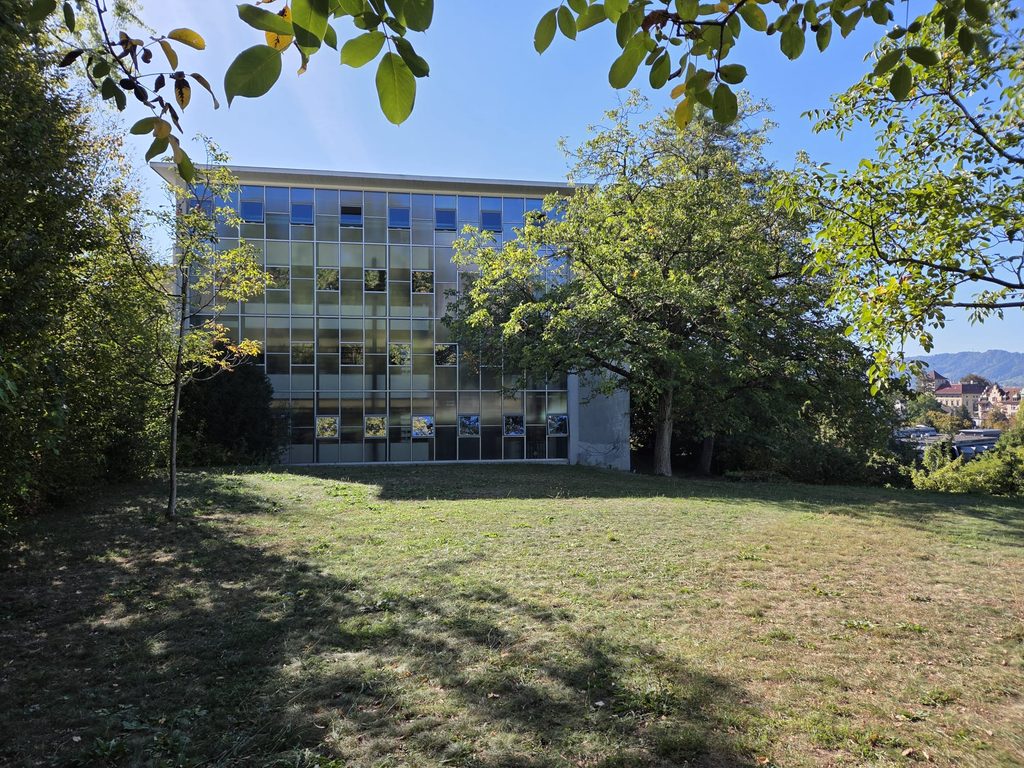
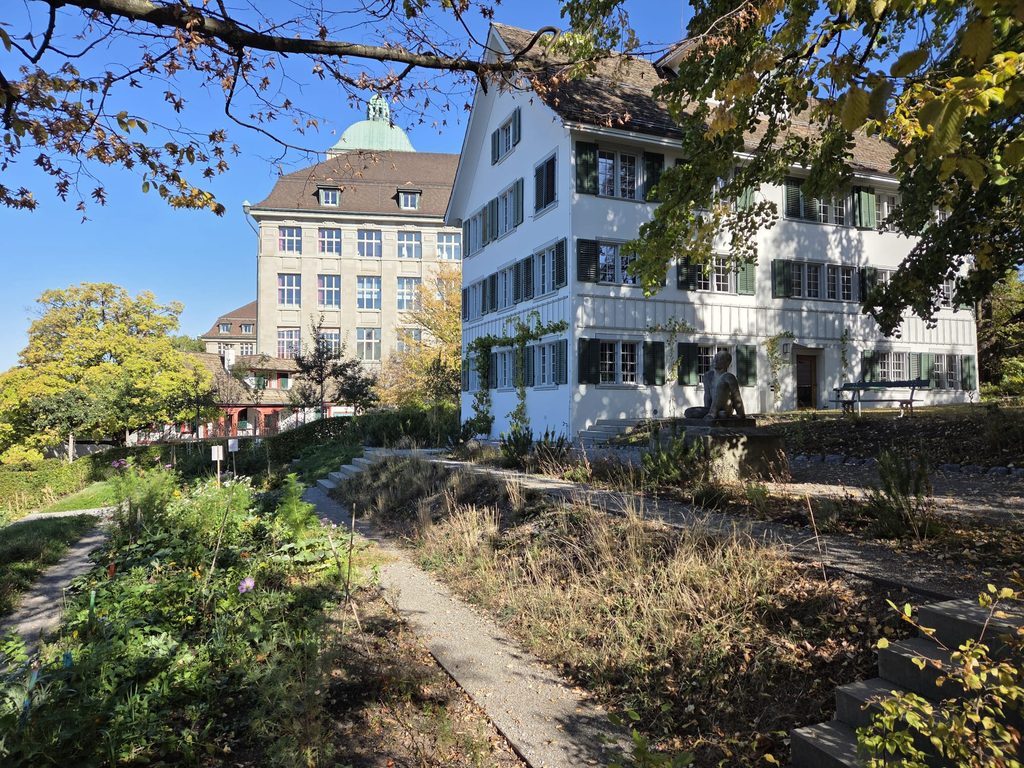
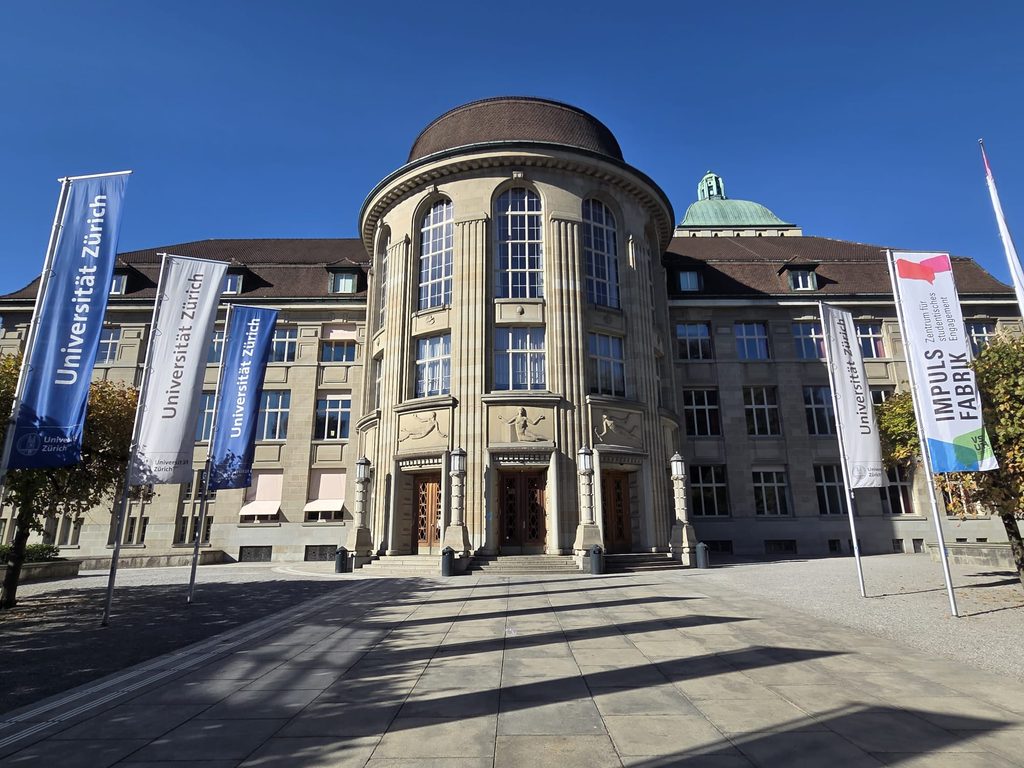
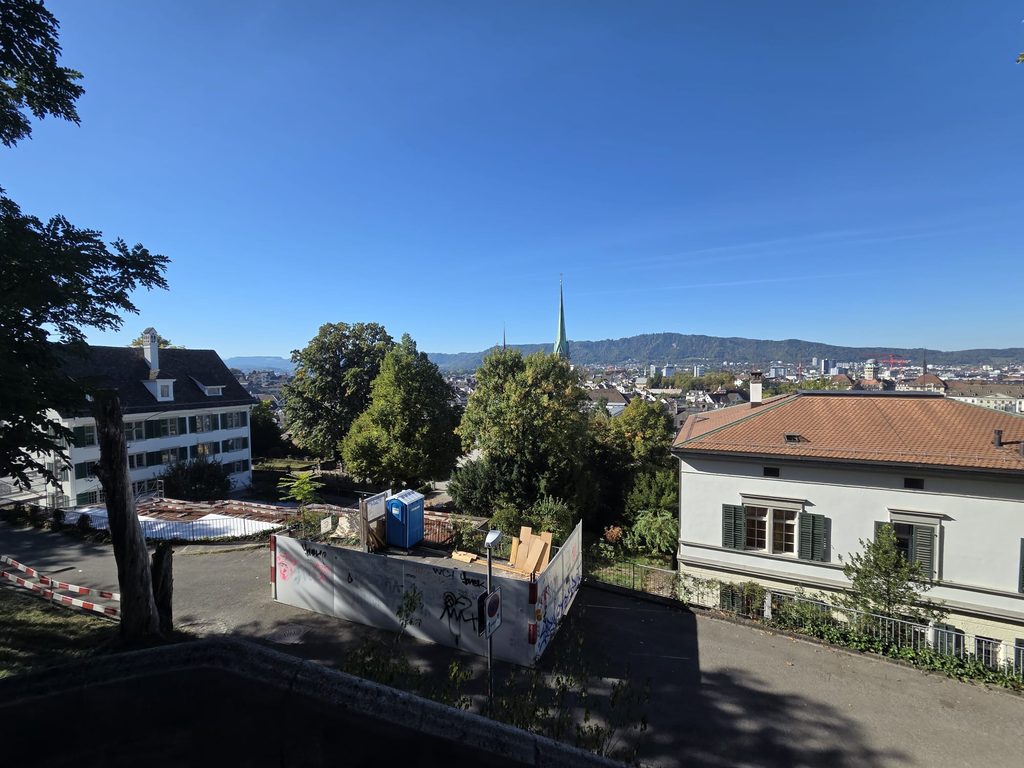
The audio tour may have finished, but we know from the map that there is more to see. I decided to do an extended loop back towards my hotel, looking for a few more artworks on the way. We’re heading up towards the Universität Zürich now, first passing the Chipperfield extension of the Kunsthaus.Past what looks like a seminary, and what I presume are other university buildings. The Universität Zürich was founded in 1833, merging colleges of theology, law and medicine (with roots as far back as 1525) with a new faculty of philosophy.Lovely views from up here! You can get an inclined railway part of the way – we will see that in a bit.Ah, here is the building we were looking for, in order to find this Undine, which apparently is a type of mythological female water spirit. I don’t know if that’s an association Naegeli has given to some of his artworks, or a shorthand to group works together on the map.On our way back up we walk past the Bodmerhaus, what is left of a Baroque country estate. It’s almost possible to imagine a country landscape spreading out between this house and the city. Almost. It underwent extensive renovation in the last few years, but a few original interior features remain from what I’ve seen online.The weekend I was in Zurich, they were having their version of Open House. Having participated in London and in Paris, it took immense restraint when I realised it was on in Zurich not to start looking up listings and planning a busy day. But, although it would have been interesting, it wasn’t why I was there, I hadn’t booked any of the things that needed booking, and I was looking for a more relaxing time. I mention it now because this handsome university building was participating.
A Car Park Becomes A Museum
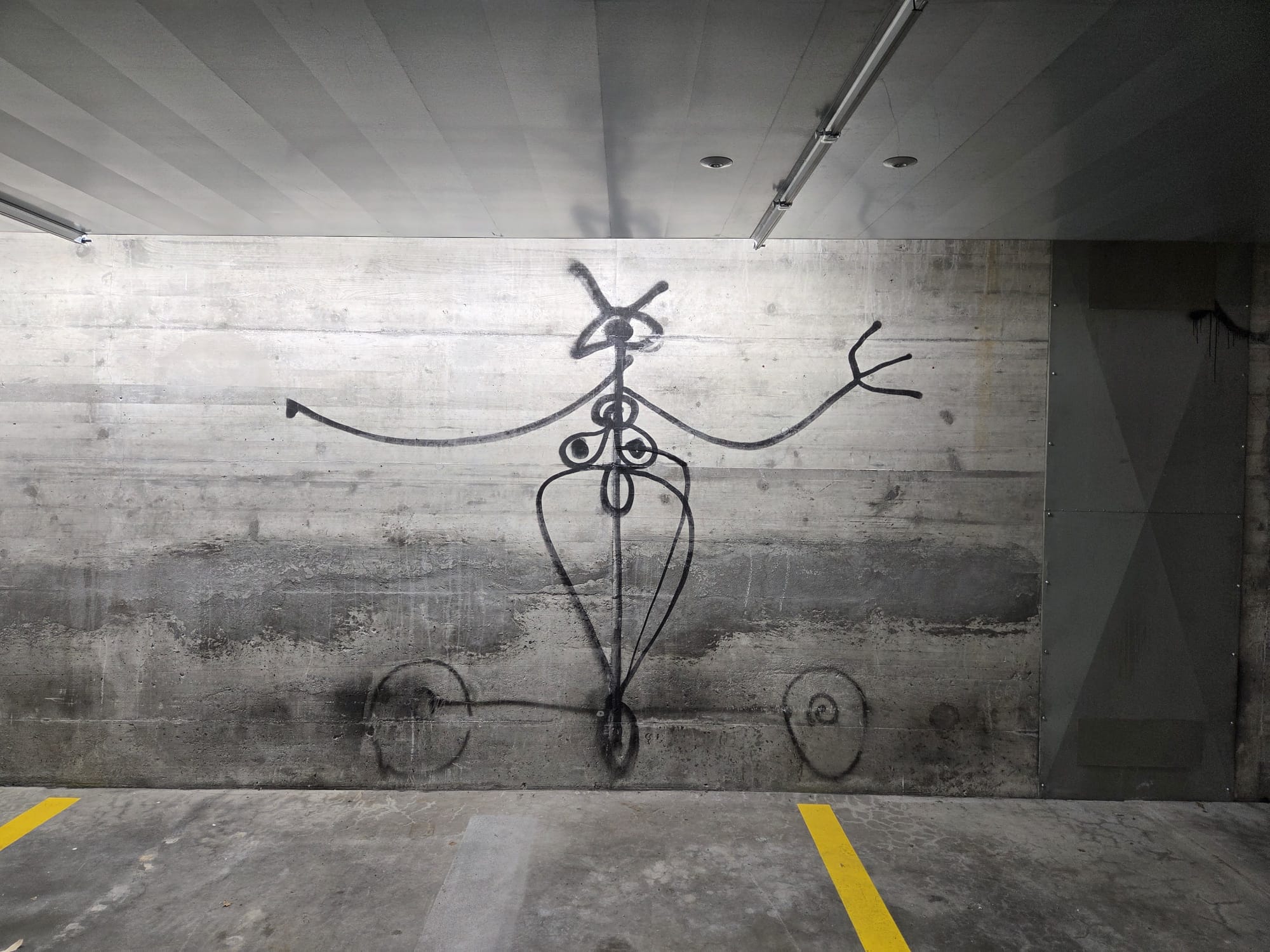
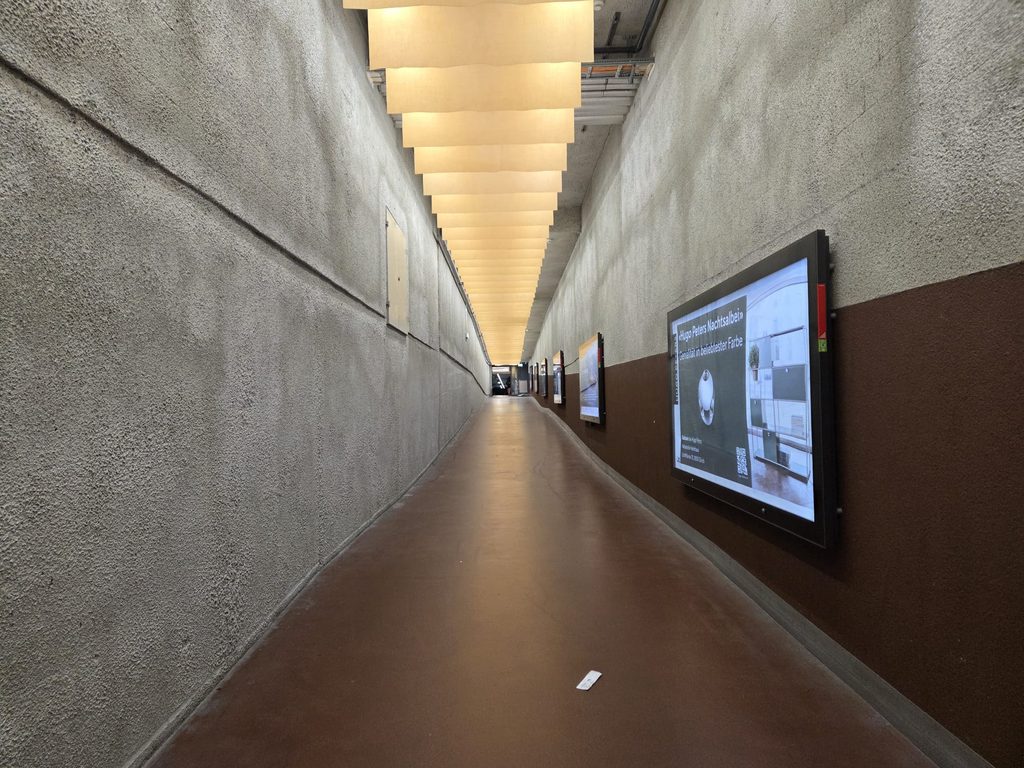
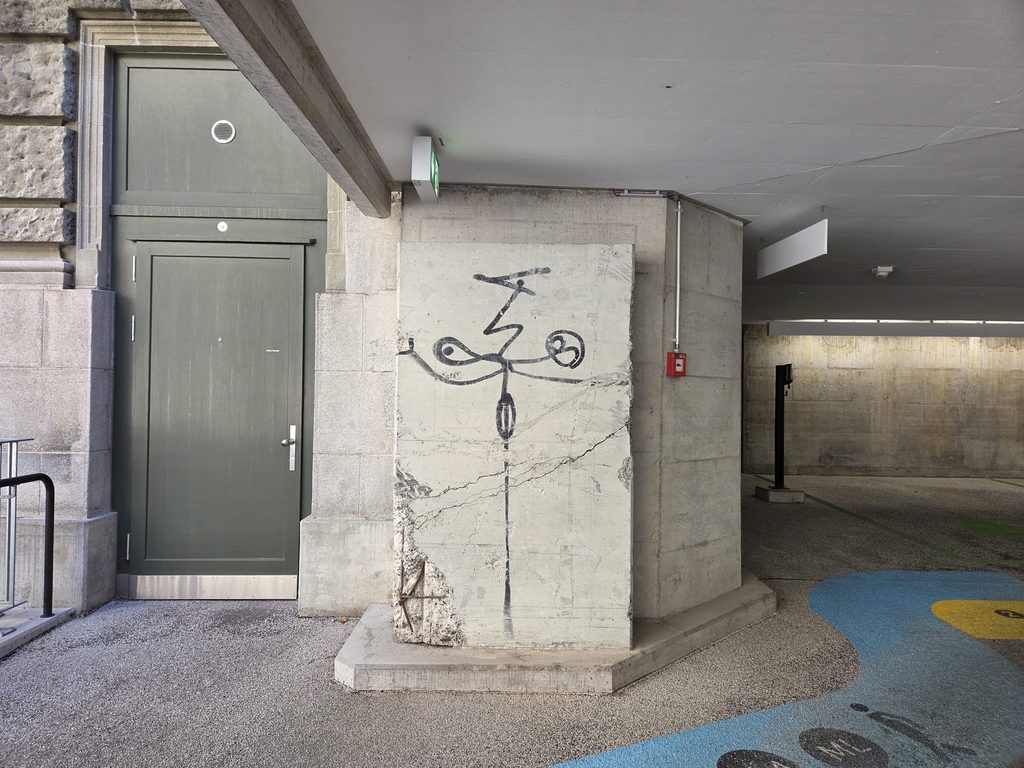
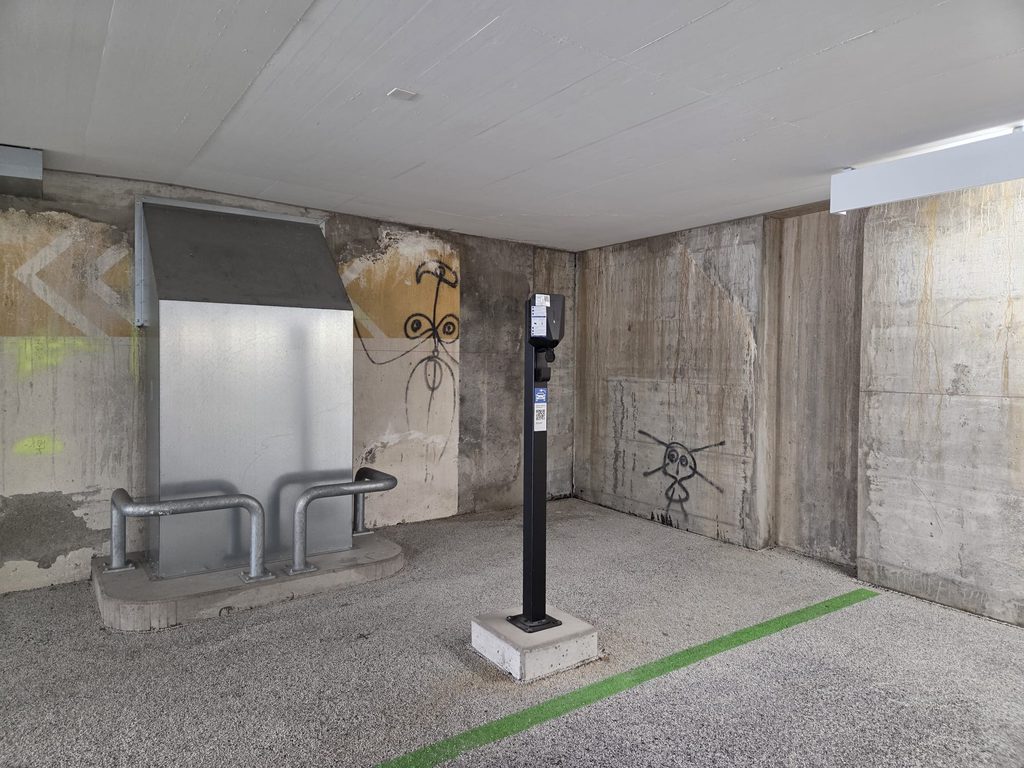
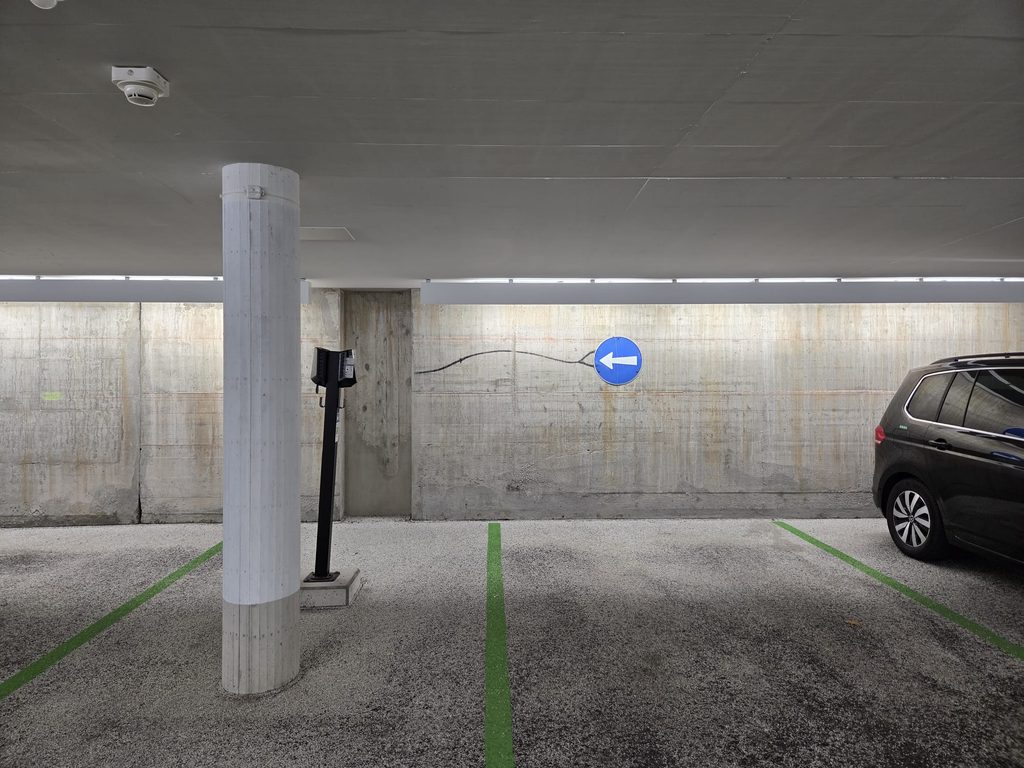
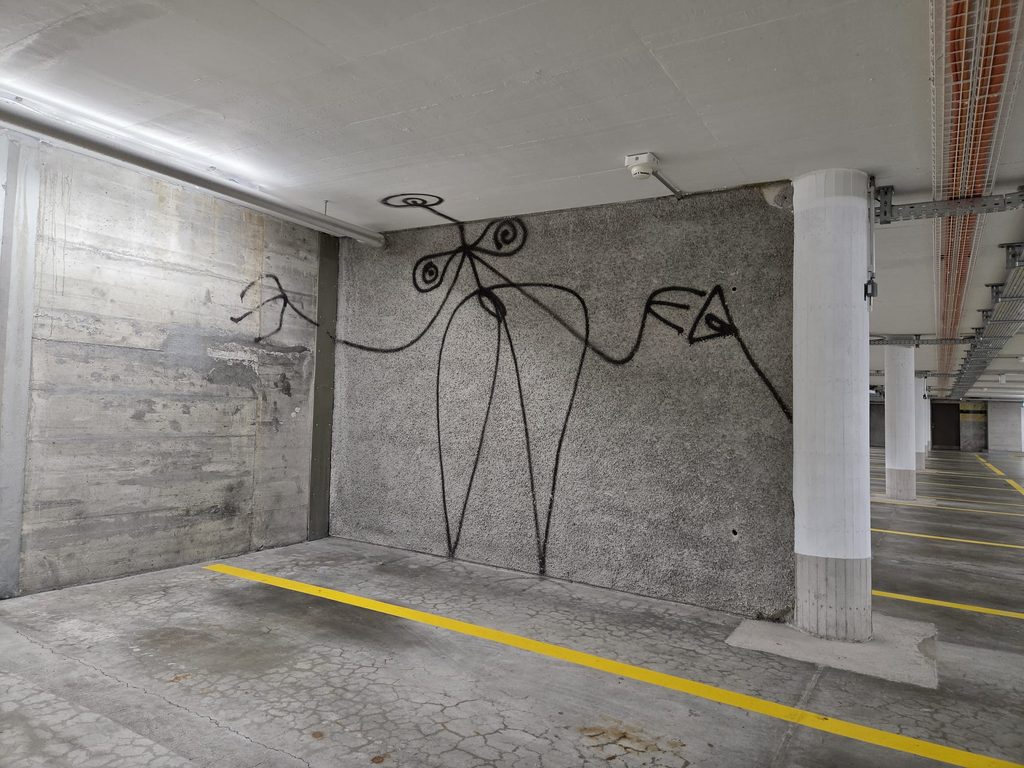
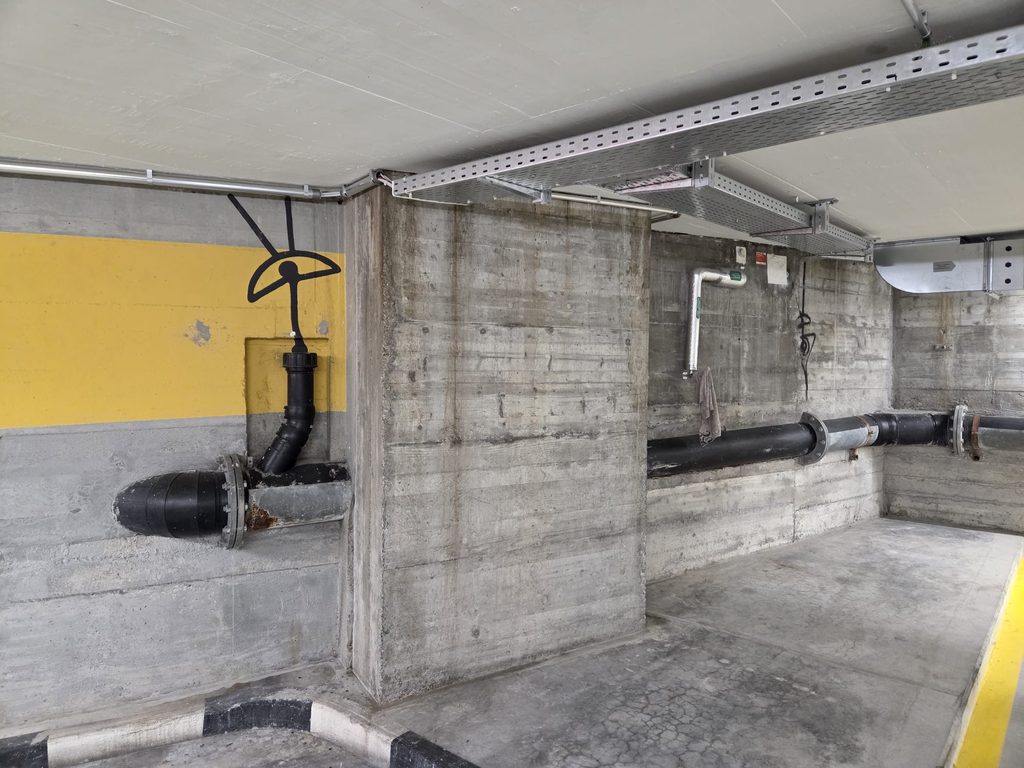
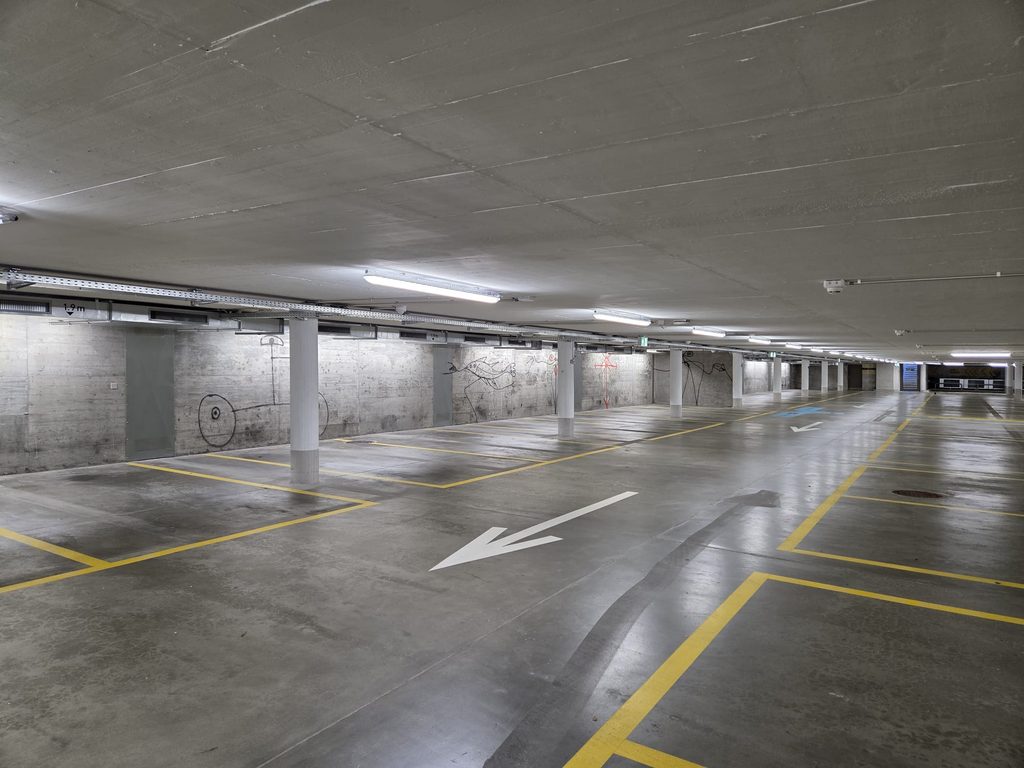
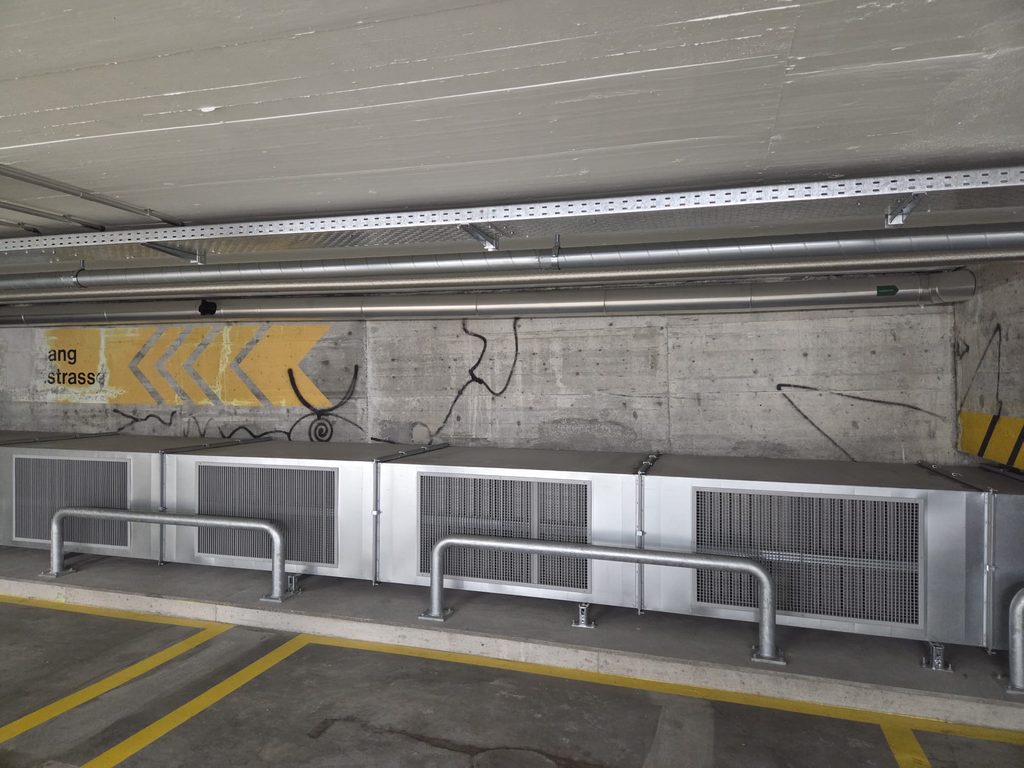
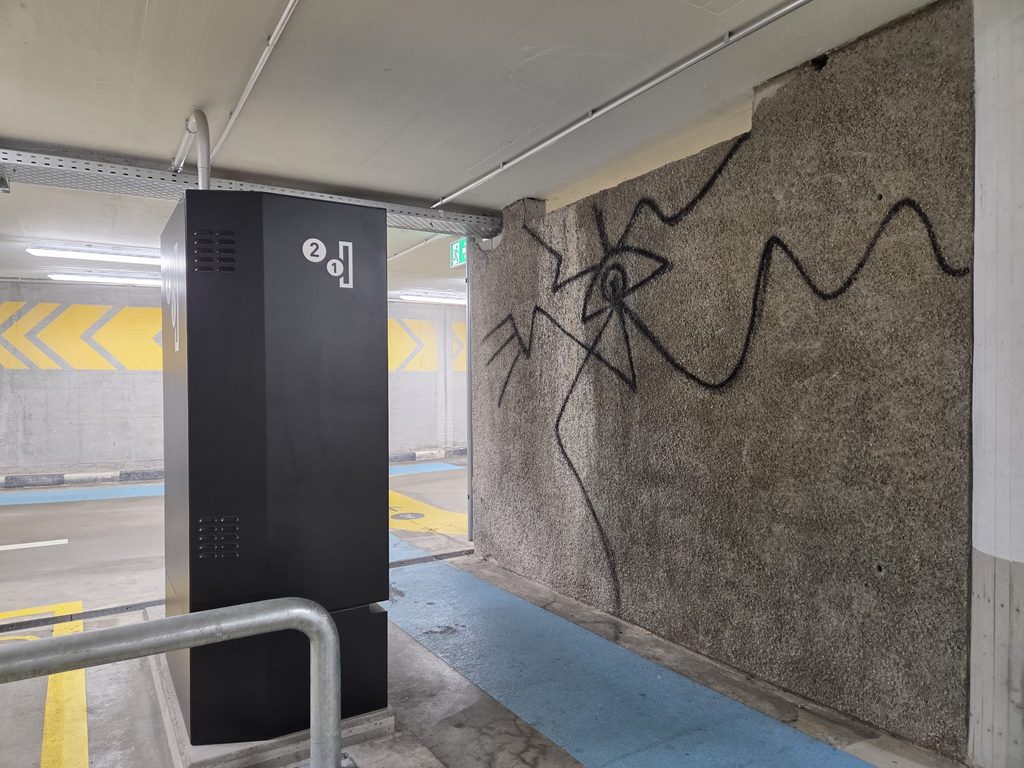
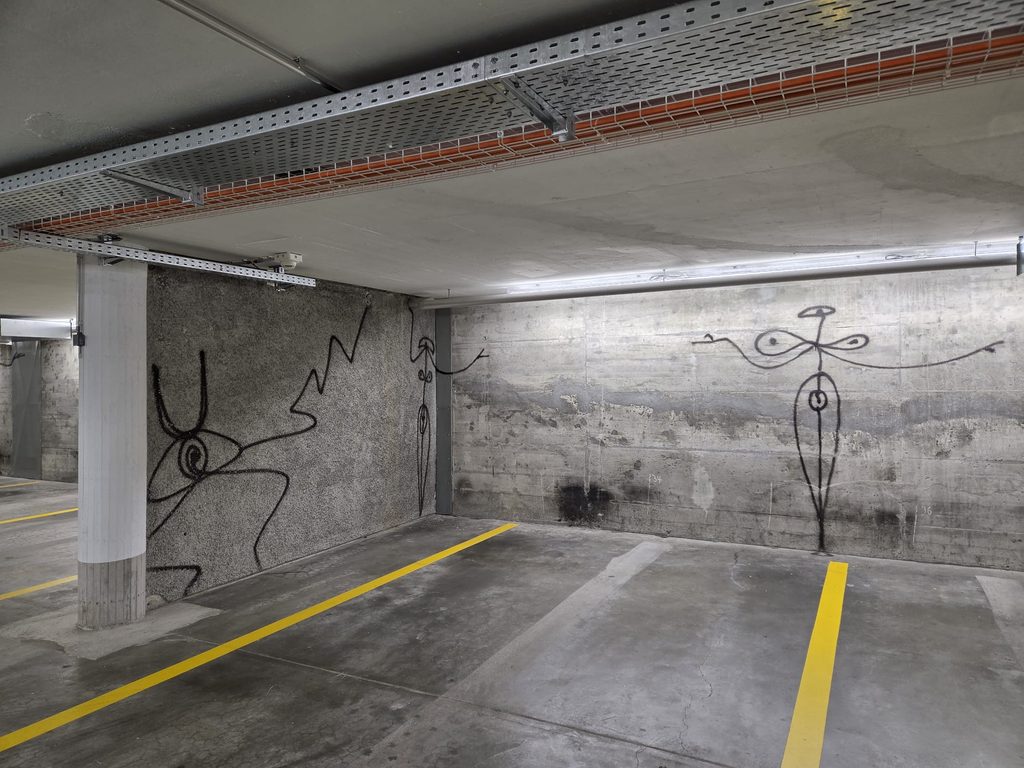
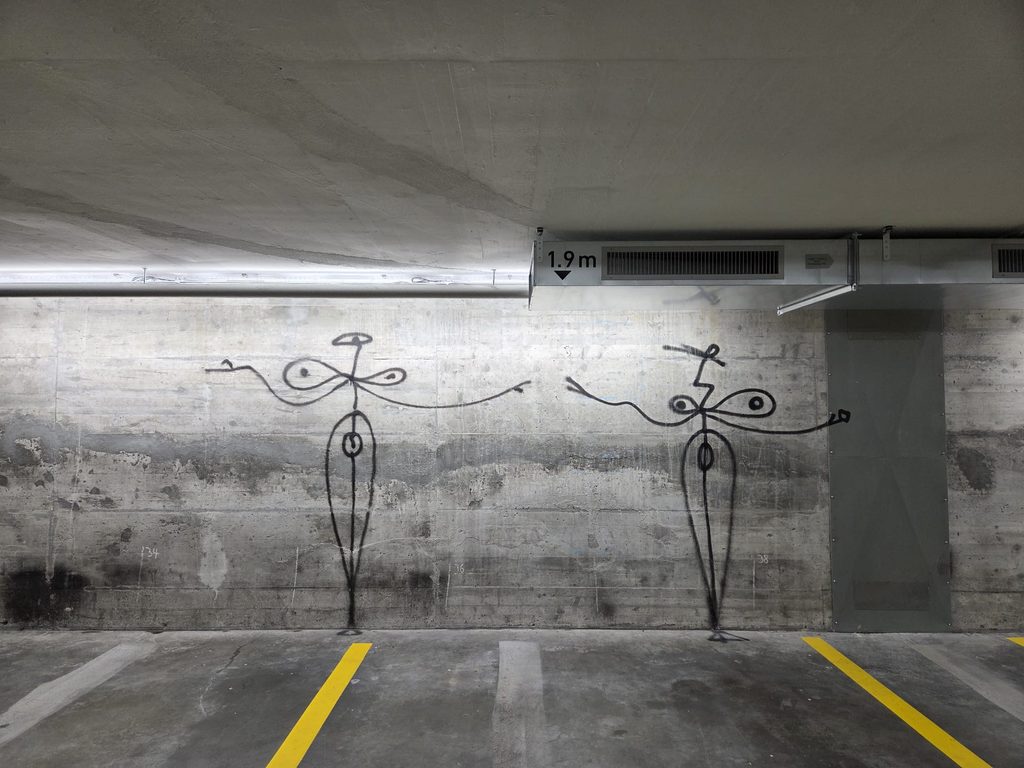
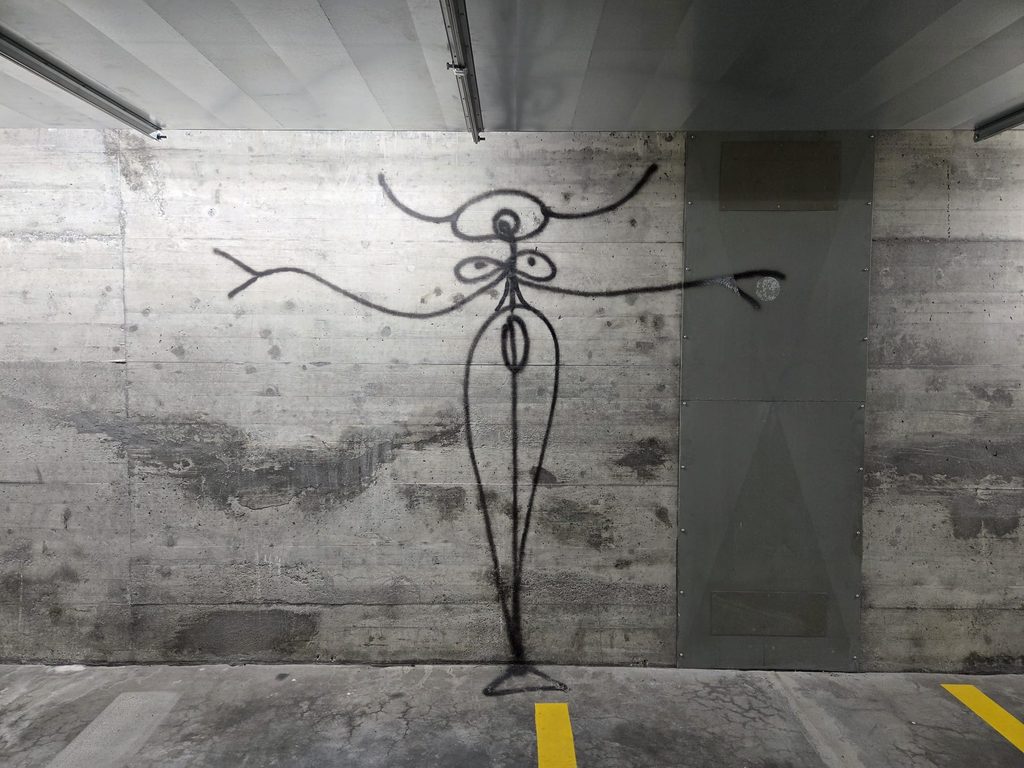
Rounding the corner from that university building, it took me a moment to figure out how to get into the car park which was my next stop.I wonder why this wasn’t part of the audio tour, as I saw far more works by Naegeli here as I did in all the stops on the tour combined! I bet it’s something to do with private/public space and where an audio tour can recommend people go. But anyway, I started to document the artworks around every cornerBy seeing so many in quick succession, you start to get a good feel for how Naegeli’s art hangs together. An article I read states that “He used his spray can to denounce the inhospitality of cities, the concreting over of natural habitats and the disregard for animals and plants.” Looking at his sinuous forms in this car park, the ultimate urban blight and privileging of human comfort over nature, I can see that. Naegeli has reclaimed this one car park, at least, as a museum of more organic forms, a reminder that we don’t have to silently acquiesce to things we don’t like in our environments.Honestly, there are just so many in here, more wherever you turn your head.I wish we all had this much energy in our 80s. Like so many artists, though, for Naegeli his work is urgent, a spotlight on political corruption and disappointment, and the creation of a more beautiful world. A question for me remains, though: if I didn’t know that an established art world figure made these images – if I’d just parked here – what would I have made of them? I honestly don’t know. They provoke a sort of nostalgic feeling in me: they remind me of styles of street art I used to see in the 90s. They have a mastery of line that many newer spray artists haven’t yet conquered. Would I have recognised that the car park had become a gallery? I don’t know.
Wrapping Up: Back to the Hotel
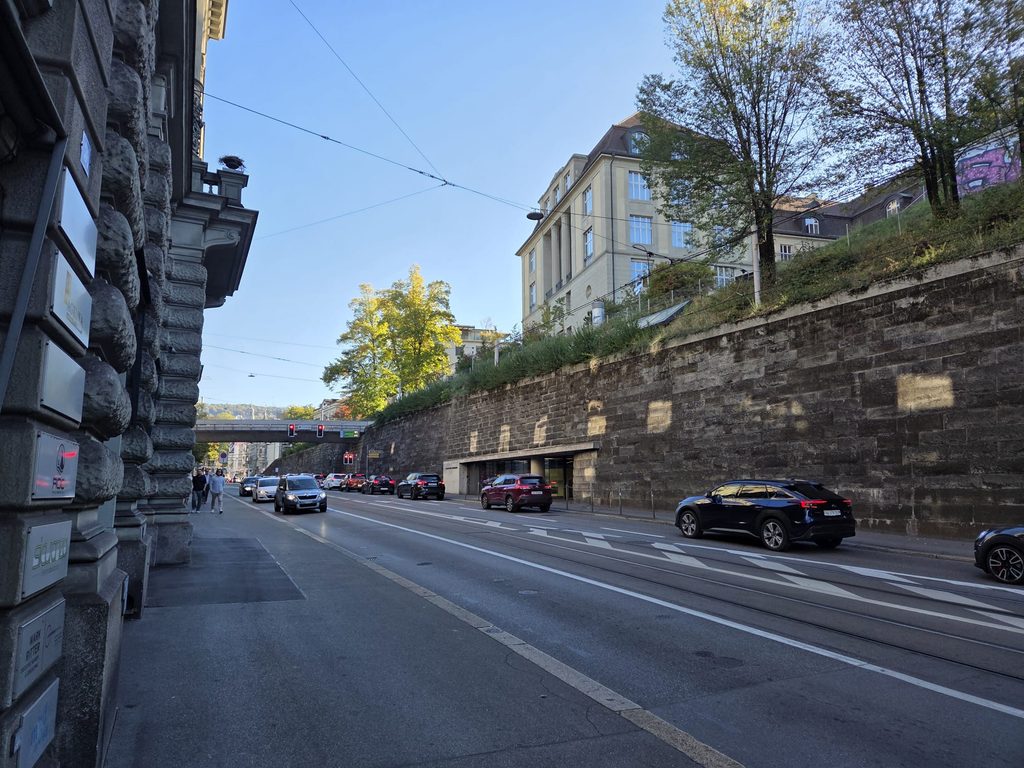
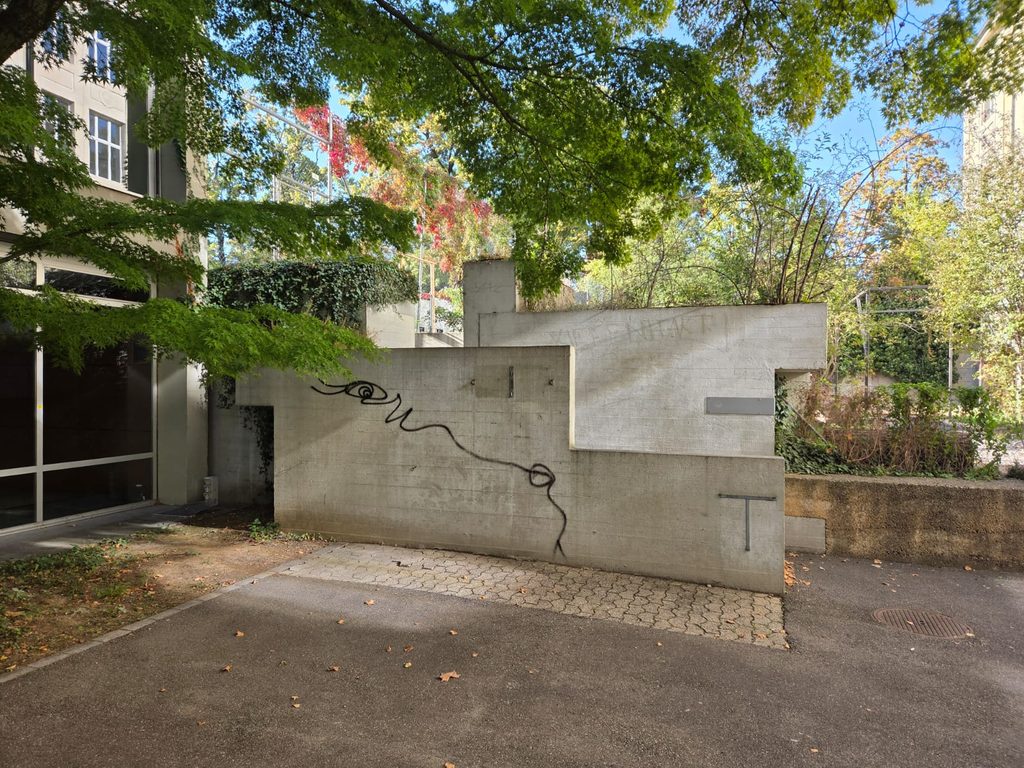
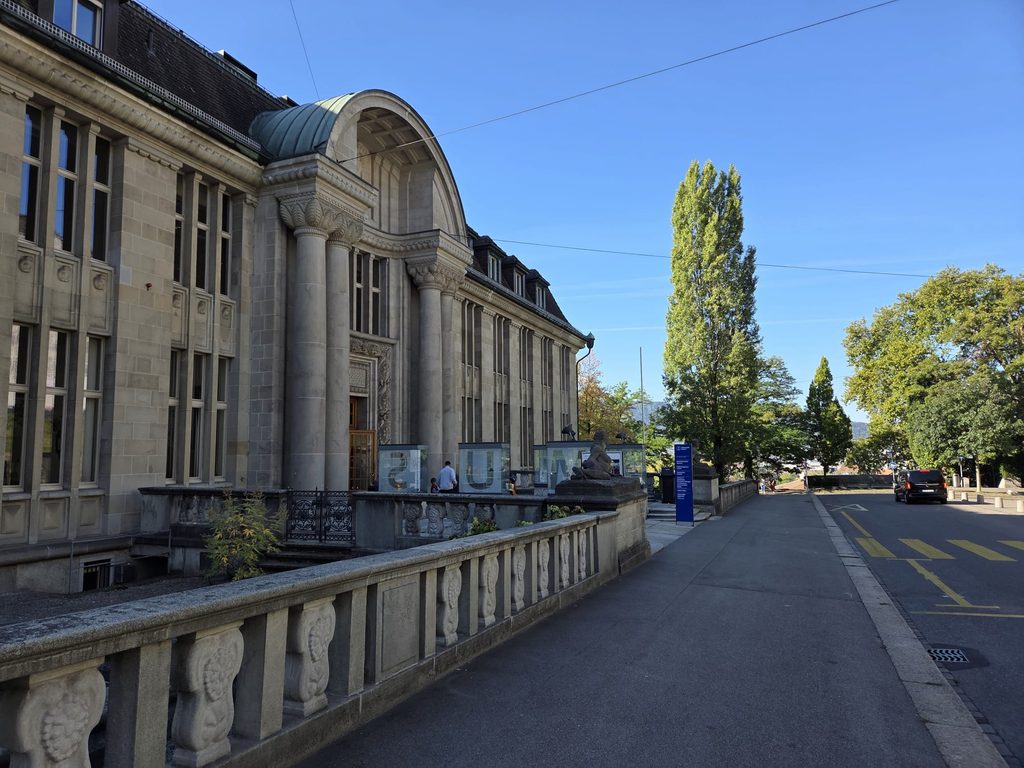
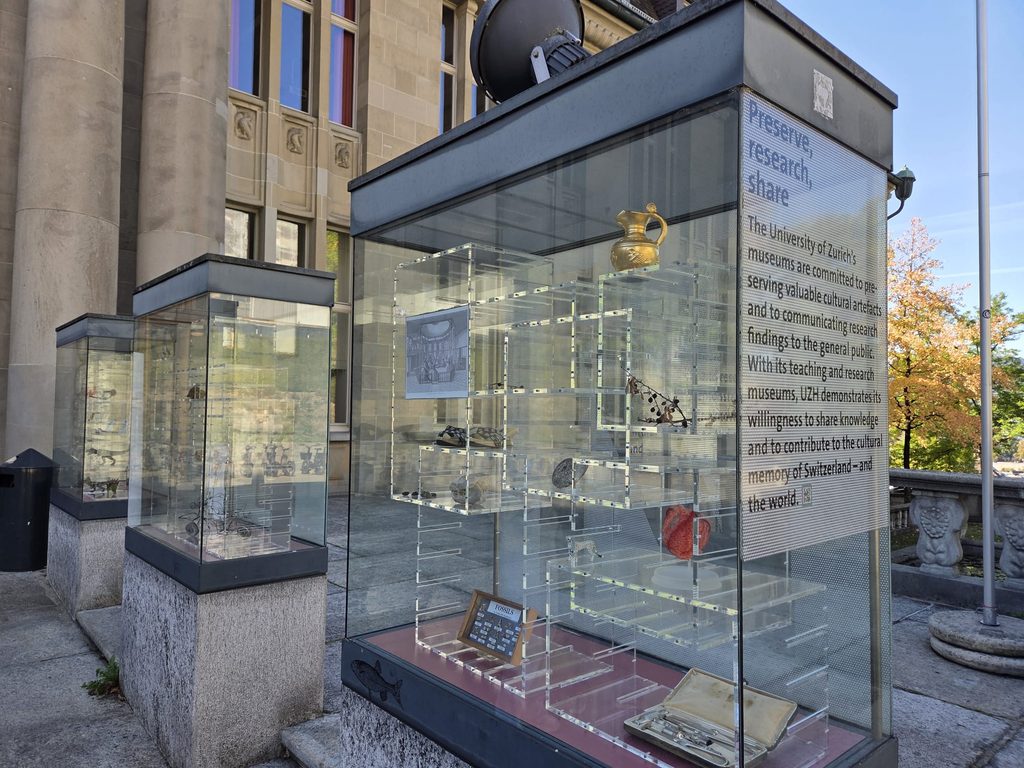
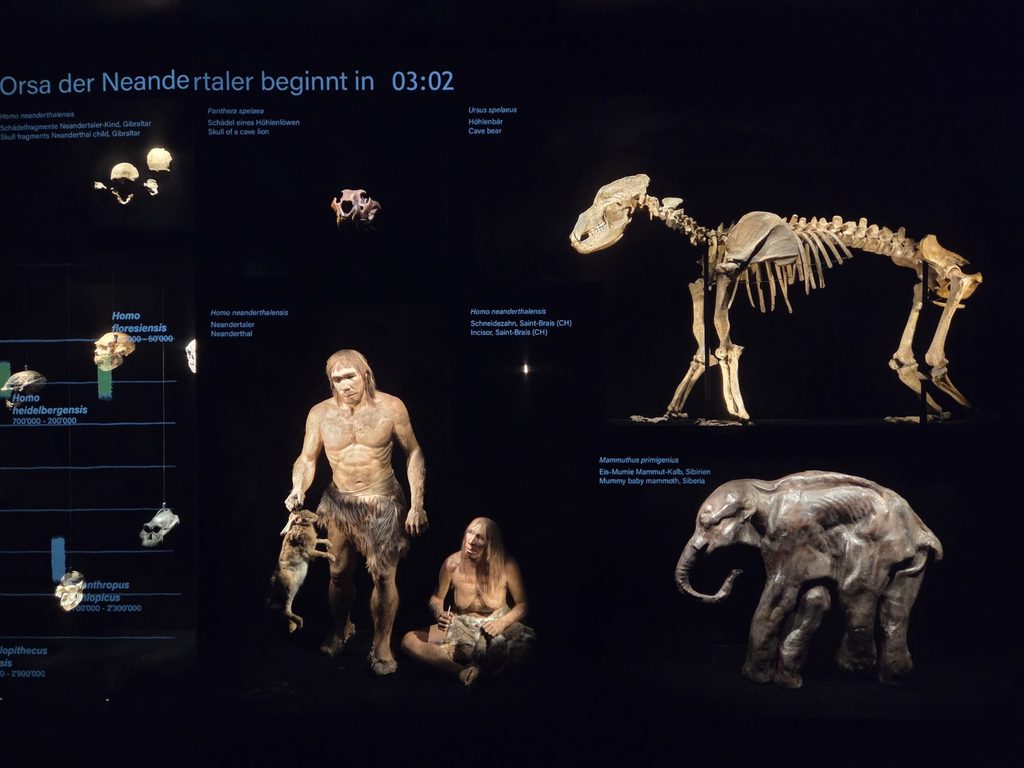
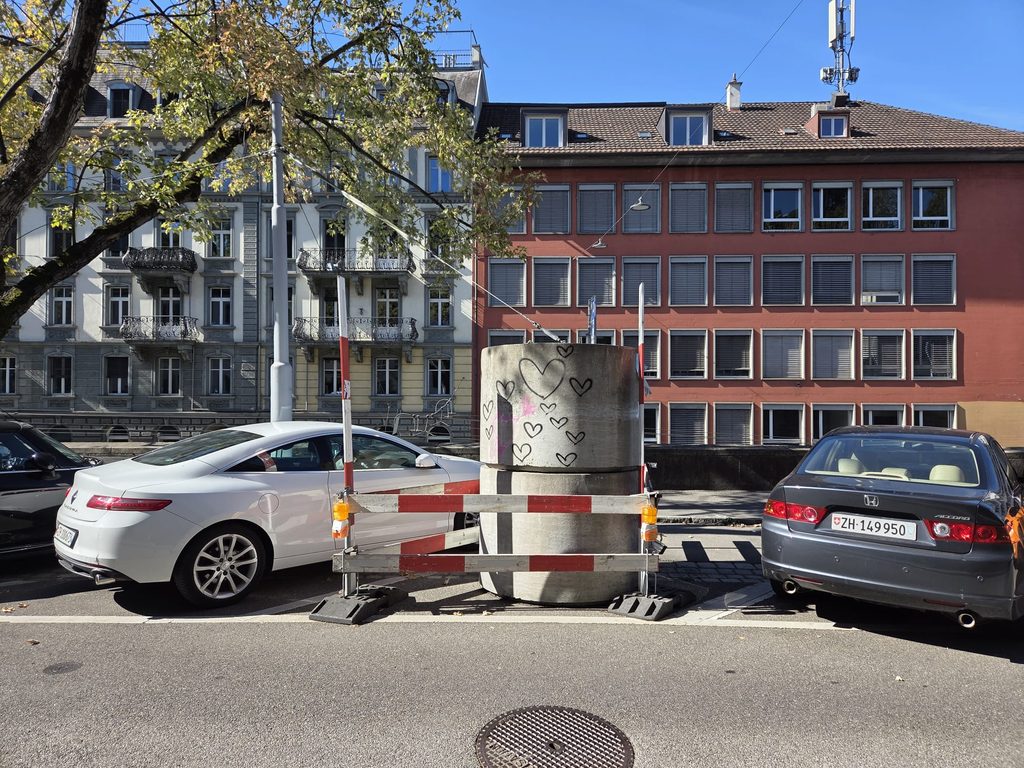
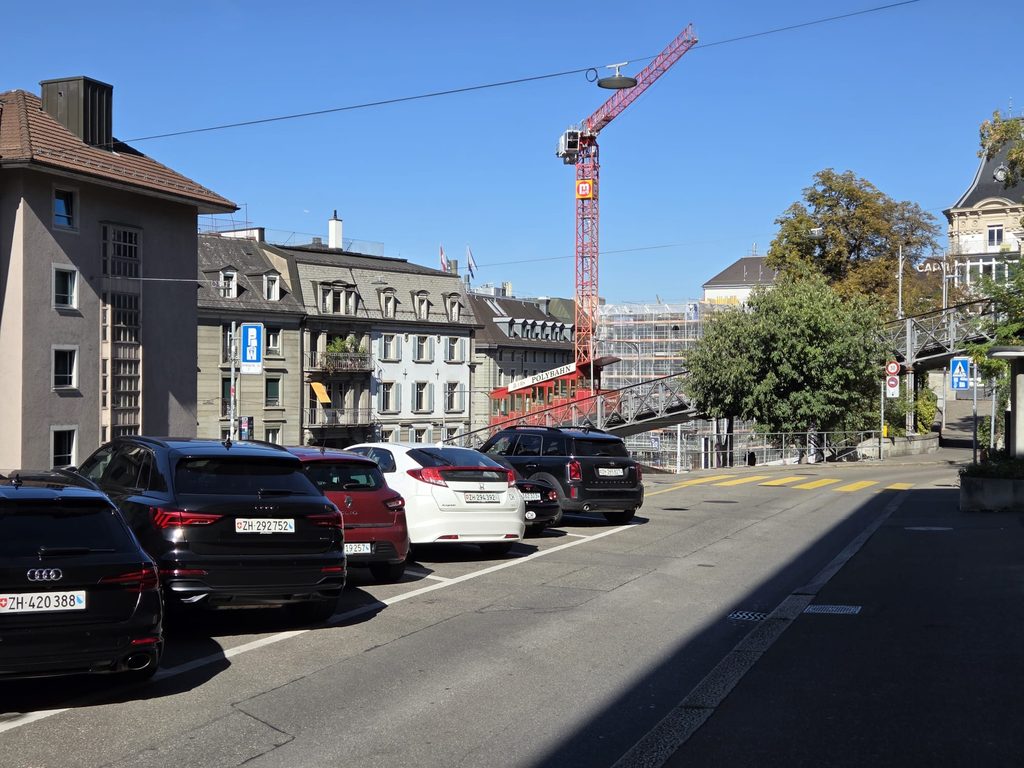
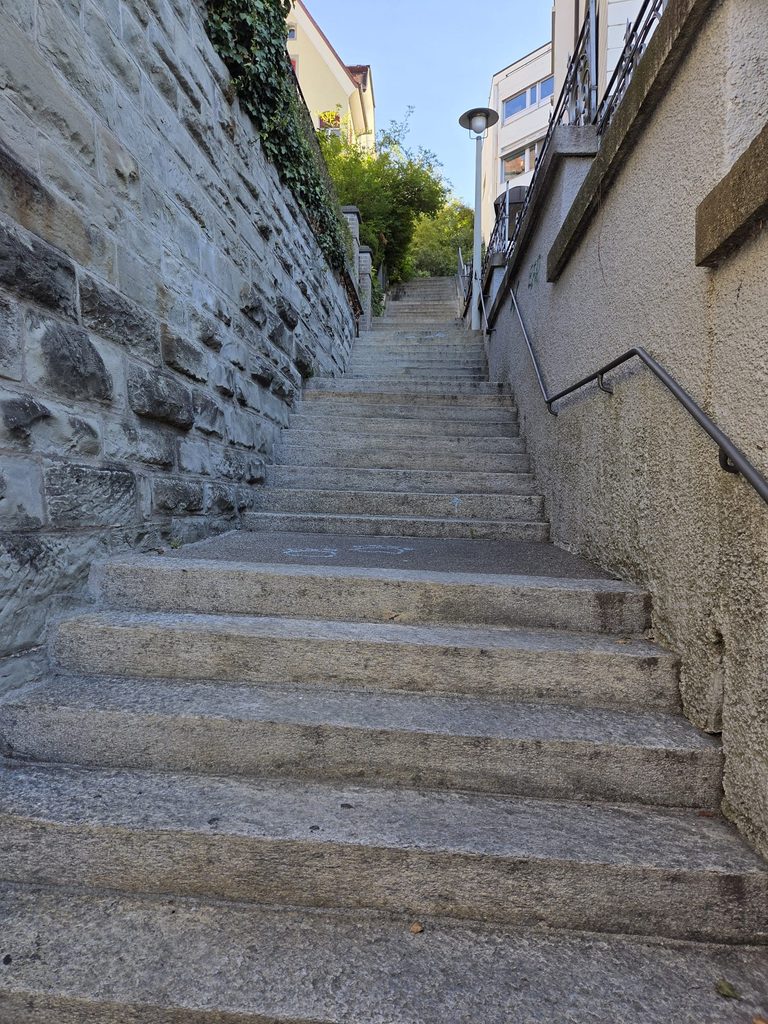
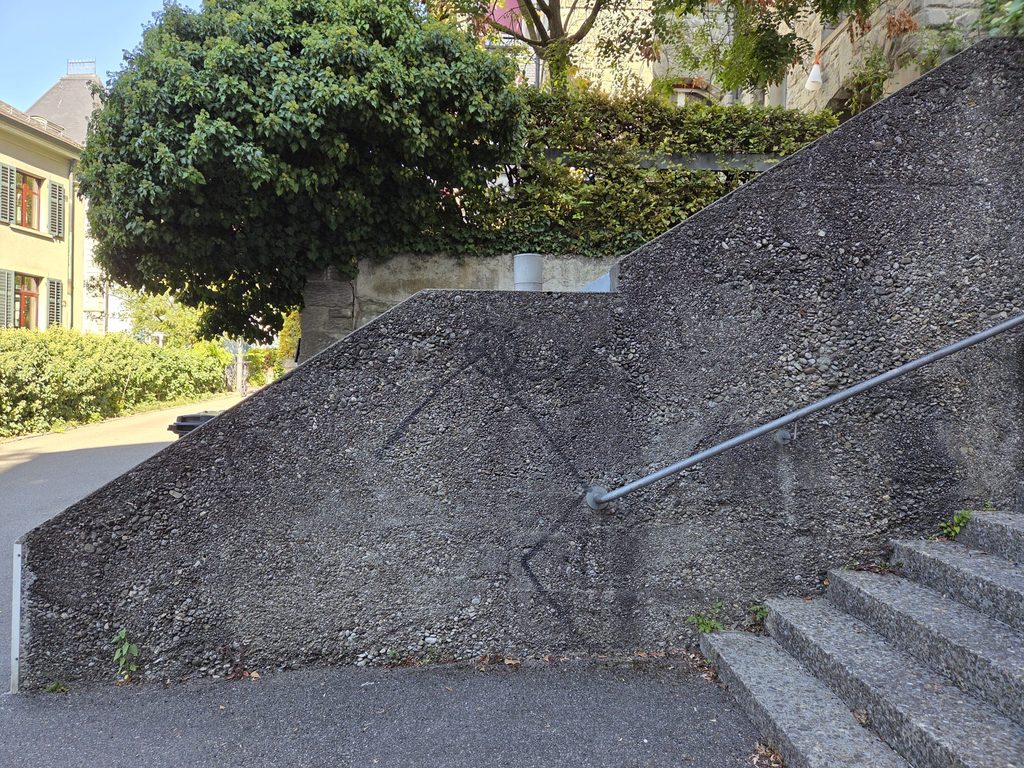
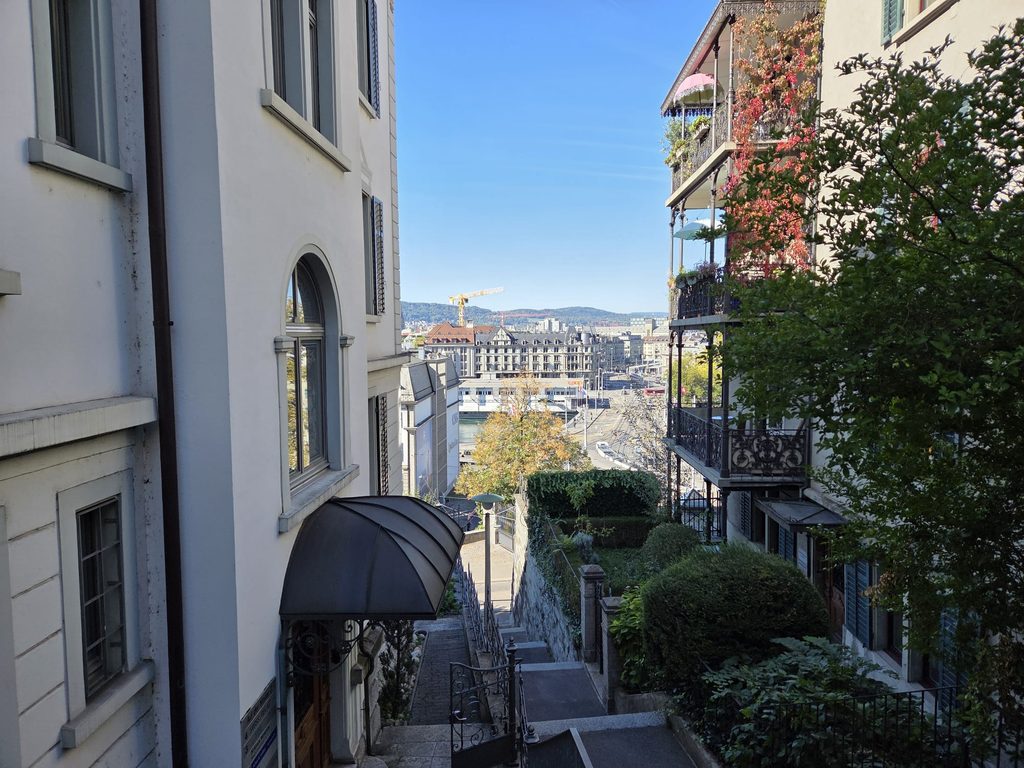
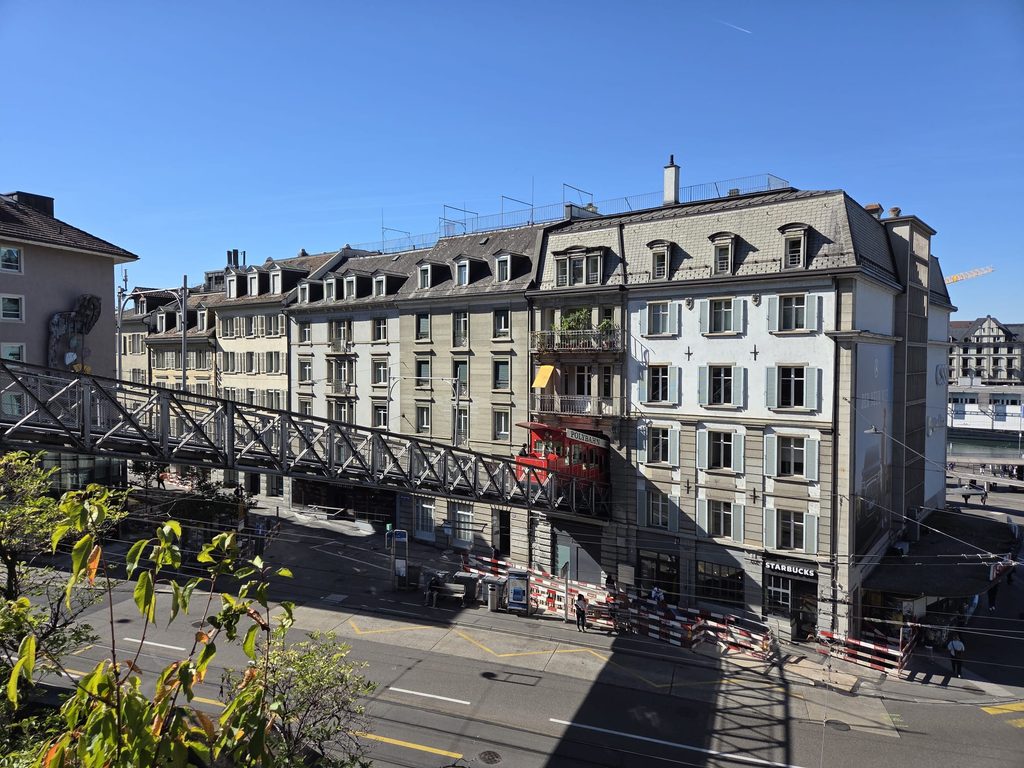
Emerging from the car park, I stood opposite the Naturhistorisches Museum der Universität Zürich (the university’s natural history museum). My internal dialogue started on what it knows is a very effective argument. But you like museums! And you may never be back here again, even if you came back to Zurich! So why not go have a look around? I am weak when it comes to this particular line of argument, so you’ll see a post on this museum in the coming days.Quite a good little museum, and I learned a fair bit about who and what has lived in this area. But time to get back on track.We’re heading down the hill now.On the way, I spot this. Is that by the Sprayer von Zürich? Or someone else? It could be – it seems to match what we saw on the side of the theatre earlier. But again that’s something I like about these sorts of walks. They get you noticing things in a different way.Onwards we go, and look, there’s the inclined railway! Or the Polybähnli as it’s known locally. It’s been going since 1889 and is one of the oldest funiculars in Switzerland.There should be one final artwork up these stairs.OK, I’m not going to lie, this is a rather underwhelming end point. But overall, it’s been a great walk. I did what I set out to achieve. I did something different than the usual tourist activities. Got out and about and saw new parts of the city. Enjoyed one of the last nice weekends of the year. And learned all about a very interesting artist, and his complex relationship with the city of Zurich. Thanks ChatGPT for the recommendation! And thanks to le Musée Visionnaire and those who have put that map together for their helpful resources.OK, back to the hotel now.Which takes us past the funicular once more. I like how it disappears into this building, it must be very strange to live in those apartments!I seem to have slightly overshot my hotel, and ended up at le Musée Visionnaire. It would be rude not to visit, having availed myself of their audio tour. I’ll leave you here – again look out for a post on the museum in the coming days.
Trending
Travelers' Map is loading... If you see this after your page is loaded completely, leafletJS files are missing.