
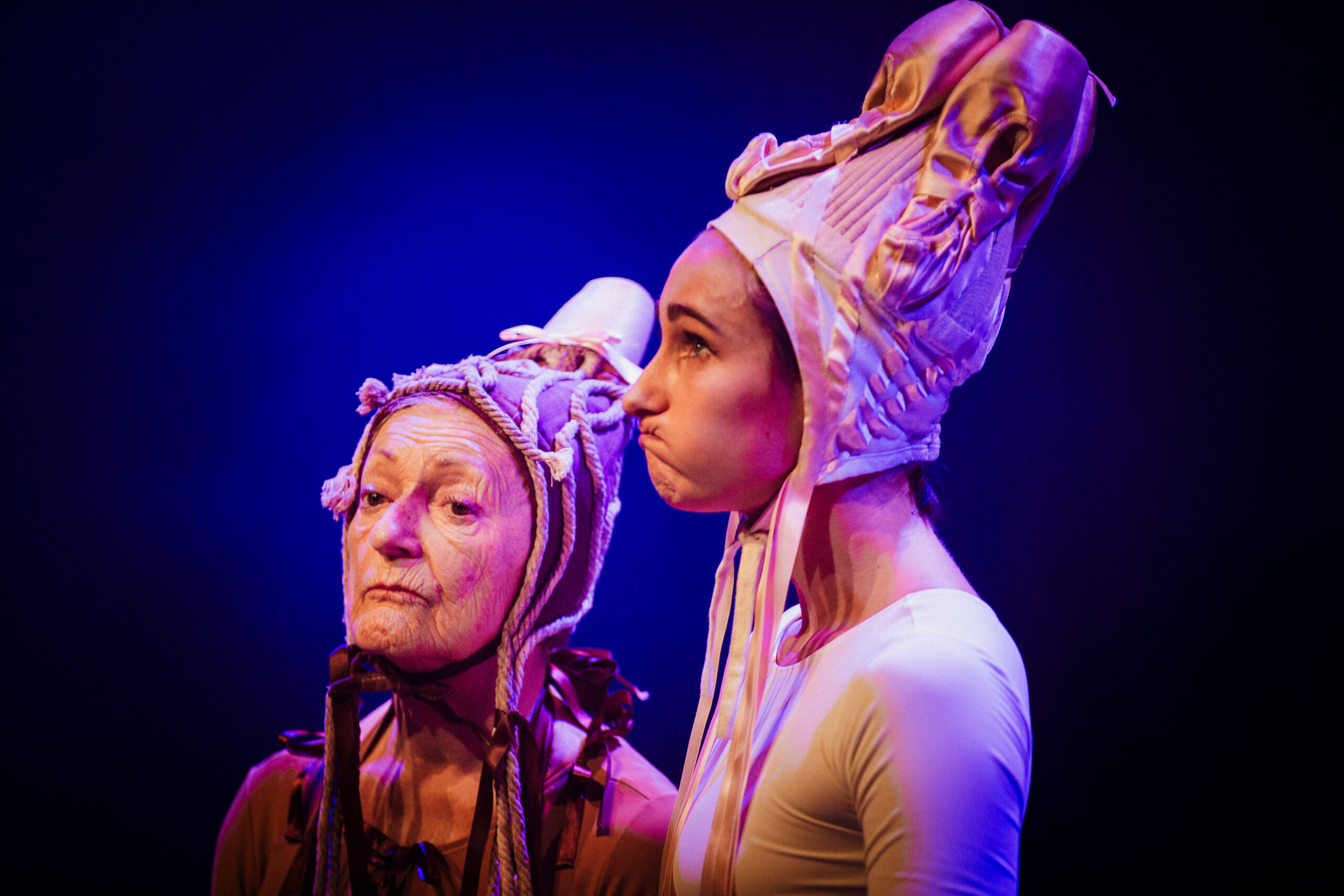
White Gold – Camden People’s Theatre, London
Larisa Faber’s White Gold explores much more than seasonal asparagus, touching upon migrant workers’ efforts to provide a better life for their children, and the longing and uncertainty of those who wait to be picked.
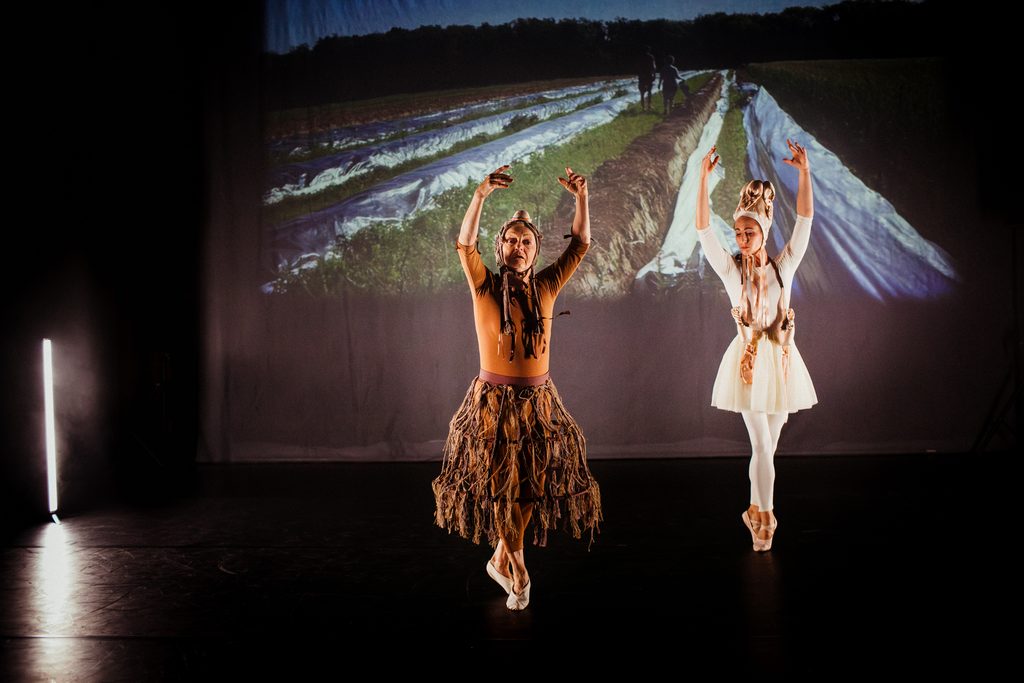
White Gold
The concept of a ballet dancing spear of asparagus was absurdist enough that I was hooked. Here at the Salterton Arts Review we love physical theatre, multi-disciplinary works, and a touch of the surreal. I also love the phenomenon of ‘Spargelzeit’, or ‘Asparagus Season’. Every spring, Germans (and people in surrounding countries, but my experience of it is in Germany) go mad for asparagus. The fat, white kind. They buy it from supermarkets and roadside stalls, or look for restaurants proclaiming “Hier gibt es Spargel.” They eat it boiled, with hollandaise sauce and potatoes with parsley. It’s the sort of geographically-specific mania I really delight in.
What I had not given much thought to, I have to say, is the human cost of all that asparagus. Or of any crop picked by hand.* White Gold, by Larisa Faber, brings together two stories into something of a full picture. There is the Last Spear of the season (Kristen Winters), in dialogue with her Roots (Christiane Eiffes) as she waits to be picked, hoping it’s not too late. And there is a young girl in Romania being brought up by her grandmother as her mother endures season after back-breaking season of manual labour in order to send home funds. Funds that might just help her daughter to realise her dreams as a ballerina. But it’s an economic system that separates the mother from that same daughter for months at a time.
*Which is funny, really, because I did seasonal work on orchards myself as a university student. A long time ago.
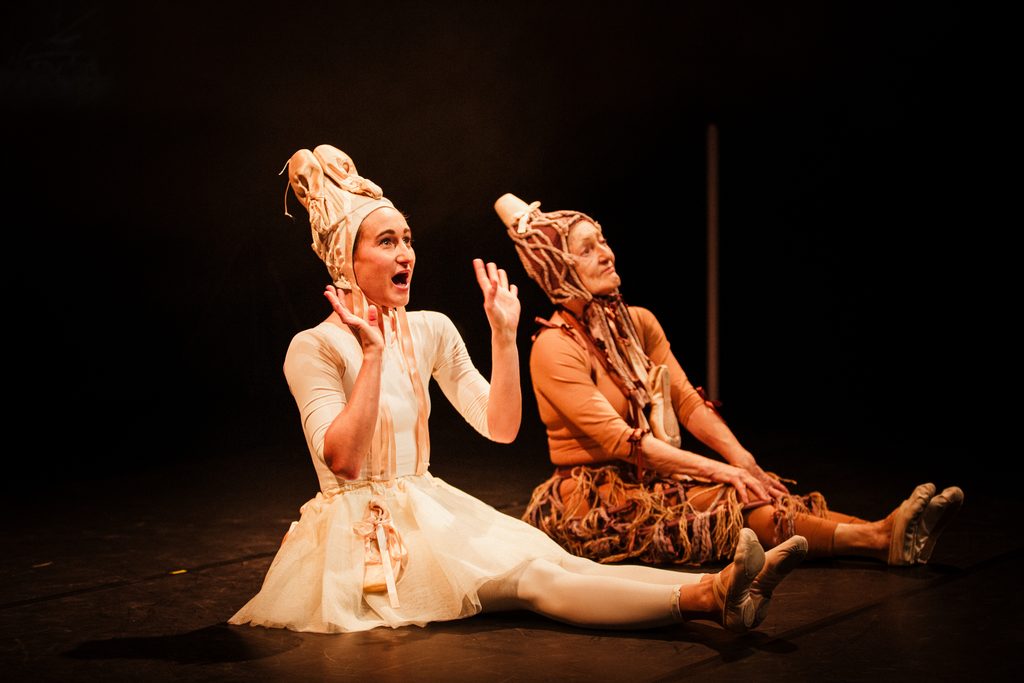
An Engaging Work
I’m always a little wary of works that need a lot of exposition. And White Gold imparts an awful lot of asparagus knowledge in a running time of under an hour. I now know quite a lot about the lifecycle of an asparagus plant, how to grow and pick white asparagus, and a lot more than I did before about Spargelzeit. It’s perhaps on the verge of being too much, when you consider the dual strands of plot to boot. But the clowning and physical theatre techniques counter the expositional nature of some of the dialogue, and the end result remains engaging.
The production is fortunate, it seems, to have the collaboration of Christine Eiffes, a pioneer of physical and dance theatre in her native Luxembourg (Faber, born in Romania like the play’s would-be ballerina, lives and works there). The use of recorded dialogue for the Roots and spoken for the Last Spear takes a little getting used to, but presumably overcomes any linguistic difficulties. The physical scenes (choreographed by Simone Mousset) work well, and bring out the work’s humour and charm. And I must take a moment to highlight the genius of Sarah Munro’s costumes. I would never in a million years have been able to so perfectly combine the themes of ballet and asparagus.
Winters, as the Last Spear, balances the different narrative threads effectively. We feel, through her performance, the child’s longing to grow up, but then the fear of moving into the unknown. This is the heart of the work, and for me its most impactful message. I wonder if peeling away a few of the other bits (even the pandemic angle, I think), might bring it into even stronger relief.
Salterton Arts Review’s rating: 3.5/5
White Gold on until 28 November 2026. More info and tickets here.
Trending
If you see this after your page is loaded completely, leafletJS files are missing.