
Vanbrugh: The Drama of Architecture – Sir John Soane’s Museum, London
A very nice little exhibition at Sir John Soane’s Museum, Vanbrugh: The Drama of Architecture introduces the “starchitect” to new audiences, and shows off the museum’s wonderful collection of drawings.
An Architects’ Architect
I really like the way this exhibition opens. Sir John Soane’s Museum isn’t a big space. And if you’ve been there you’ll know that many rooms are packed to the gunnels with art and artefacts. So the temporary exhibition space on this occasion consists of a small room downstairs, and a couple of adjoining rooms upstairs. I started downstairs, and recommend you do too.
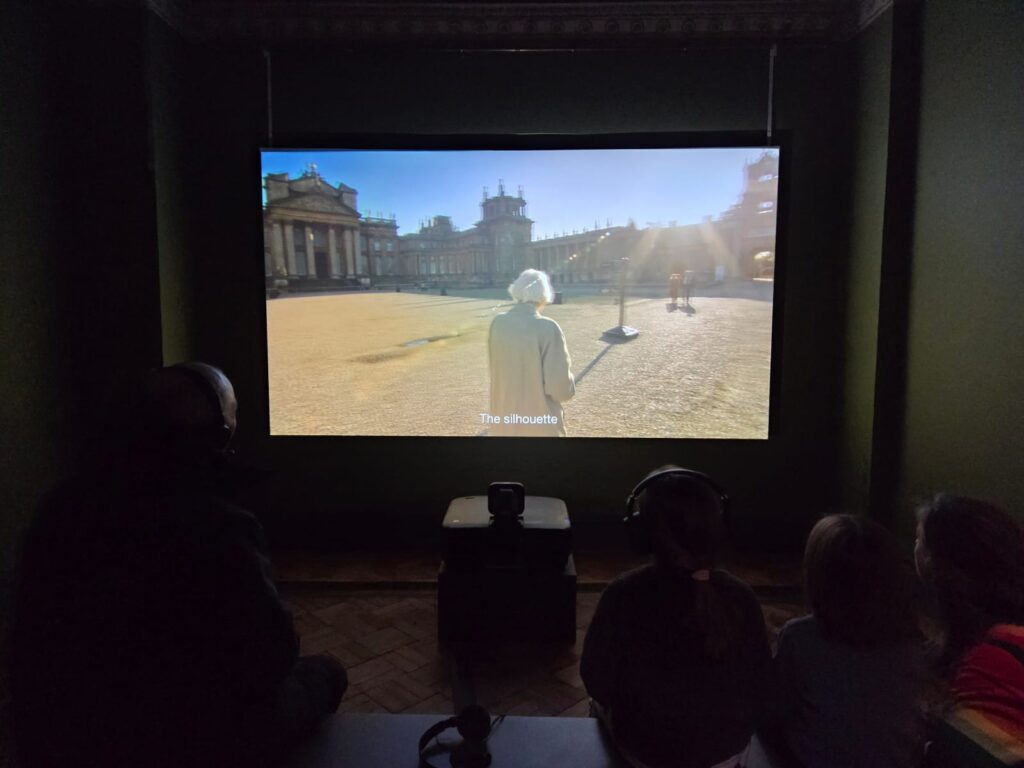
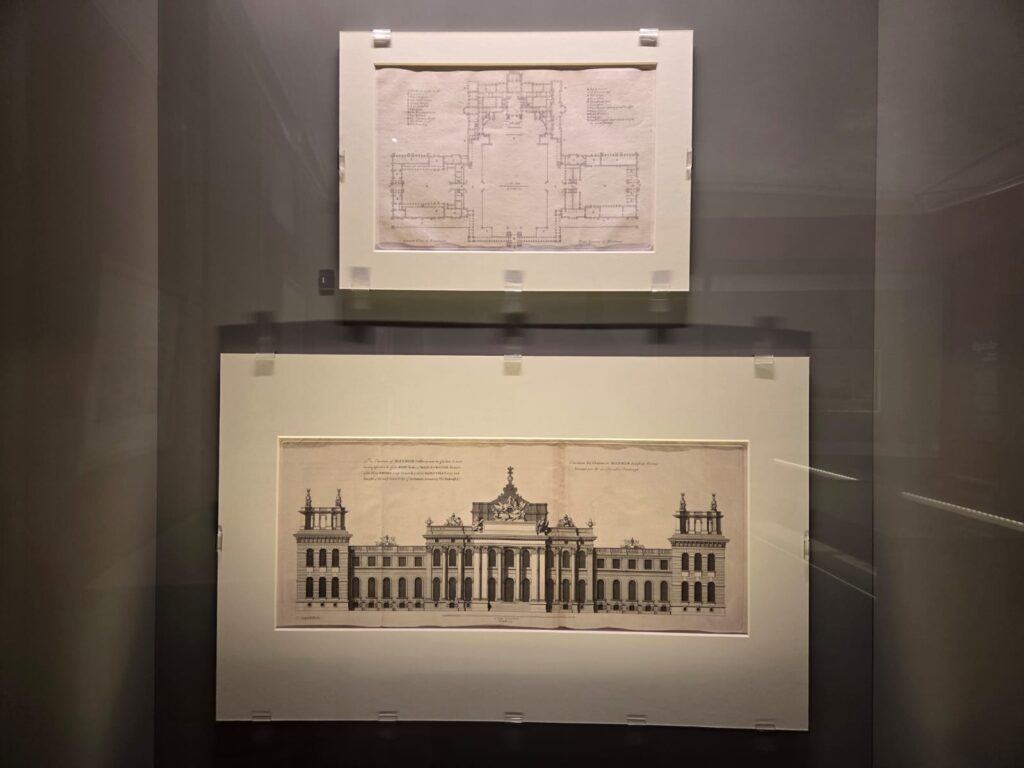
All that is in this room is a video on a loop, showing architect couple Robert Venturi and Denise Scott Brown (of the National Gallery’s Postmodern Sainsbury Wing extension) outside Blenheim Palace. The film was shot by the couple’s son Jim so has a comfortable feel, and is unstructured. Venturi and Scott Brown discuss the building in front of them, their connection to it, and their thoughts on ugly signs obscuring the architectural views. They notice the sorts of things you need a trained eye for. How Vanbrugh broke up the façade in interesting ways. How he created a sense of drama and volume, maximising the building’s visual impact.
What is so great about this opening is that you come out of it feeling like you, too, know something about architecture. Like you’re an insider, party to famous architects’ musings and anecdotes. And you understand that, even if it’s sometimes been fashionable to think of Vanbrugh as not a “proper” architect, his works have stood the test of time.
Armed with this newly-acquired knowledge, however superficial, I headed upstairs to learn more.
Introducing Vanbrugh
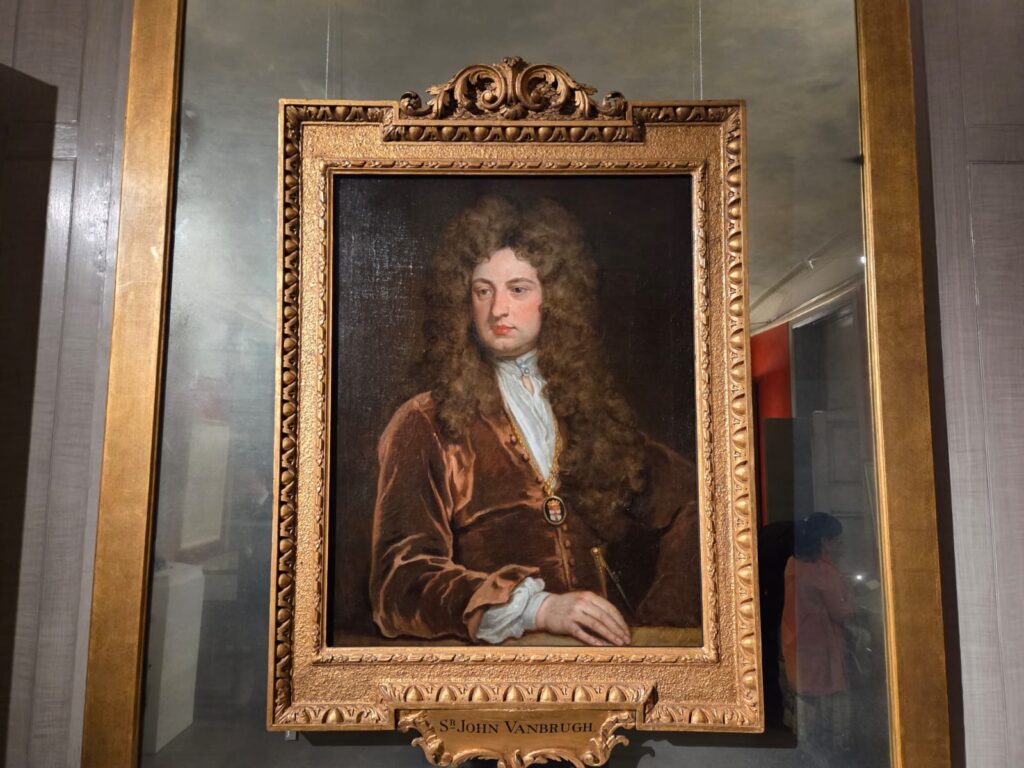
So who was this “starchitect”, anyway? Well, he was a character – I’ll say that much! John Vanbrugh was born in London in 1664 (or baptised then, anyway), to Giles Vanbrugh, a cloth merchant of Flemish descent, and his wife Elizabeth. He grew up mostly in Chester, the family having moved out of London either because of the plague or because of the Great Fire. His early life is quite obscure. We’re not quite sure where he went to school. At some point a rumour began that he was of fairly humble origins, but this seems false. And it’s only relatively recently that we learned he spent time in India.
Vanbrugh had various wealthy relatives, but never seems to have had the capital to undertake projects without loans or backers. This might be because he had absolutely loads of siblings – his mother had 20 children in total. He spent a few months as a soldier, and then took up undercover work, plotting to overthrow James II. Between the ages of 24 and 29 he was in prison in France on apparently trumped-up espionage charges, even spending time in the Bastille. He returned to England in 1693. He joined the navy for a bit, before moving to London in the mid 1690s.
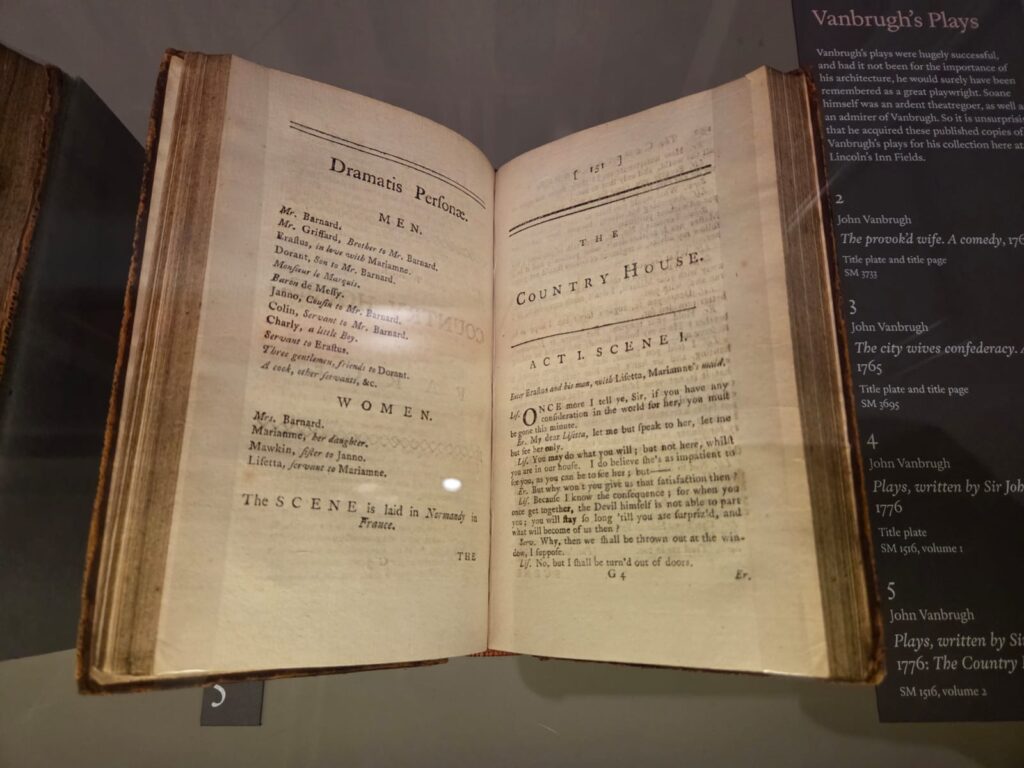
With that wealth of life experience, Vanbrugh turned his hand to both playwriting and architecture. He was a member of the Kit-Cat Club so well connected. In 1703, Vanbrugh started gathering land and backers for a new theatre on Haymarket. He designed it himself and intended to manage as an actors’ cooperative. But he had no experience managing a theatre, and quickly ran out of money paying the actors’ salaries. He sold it in 1708. In the interim, he was off working on architectural projects, including Blenheim Palace from 1705.
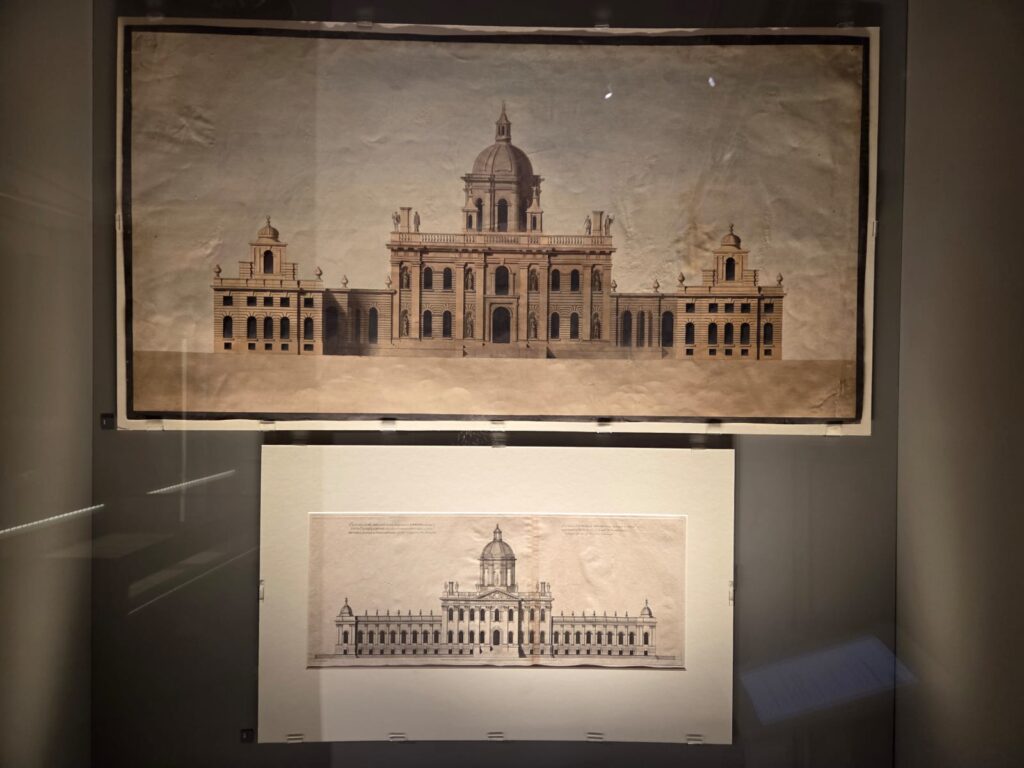
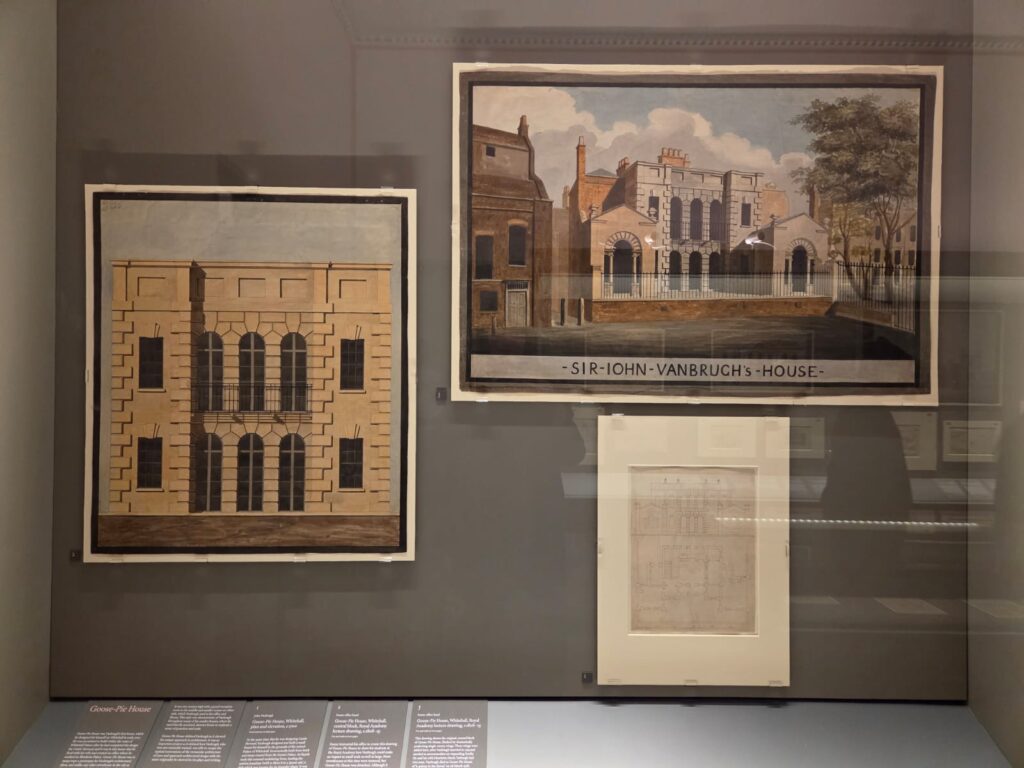
Vanbrugh continued to work on plays and architecture, and be good at both*. As well as Blenheim Palace, his other architectural works included Castle Howard, and some innovative homes for himself. One was built in and of the ruins of Whitehall Palace. Many of his architectural patrons were friends from the Kit-Cat Club. In terms of plays, he apparently wrote the greatest example of a Restoration fop, appropriately named Lord Foppington. He had to turn away from playwriting, however, when tastes turned from the sexually explicit Restoration style.
Vanbrugh died in 1726 “of an asthma”, having been happily married since age 55 and now with two children. He’s buried in the family vault in St Stephen Walbrook in the City of London.
*Oh I just now got one of the meanings of the exhibition title – the drama of architecture. Took me a while!
Vanbrugh as a Serious Architect
Van’s genius, without thought or lecture,
Jonathan Swift in The History of Vanbrugh’s House: https://www.online-literature.com/swift/poems-of-swift/21/
Is hugely turn’d to architecture.
What I gleaned from visiting this exhibition is that, to some people, Vanbrugh’s apparent lack of formal training in architecture meant he wasn’t to be taken seriously as an architect. Despite being the leading architect of country houses in England for 25 years, his assistant Nicholas Hawksmoor (who also famously worked with Wren) got a lot of credit for the designs. Swift seems to have been of this camp.
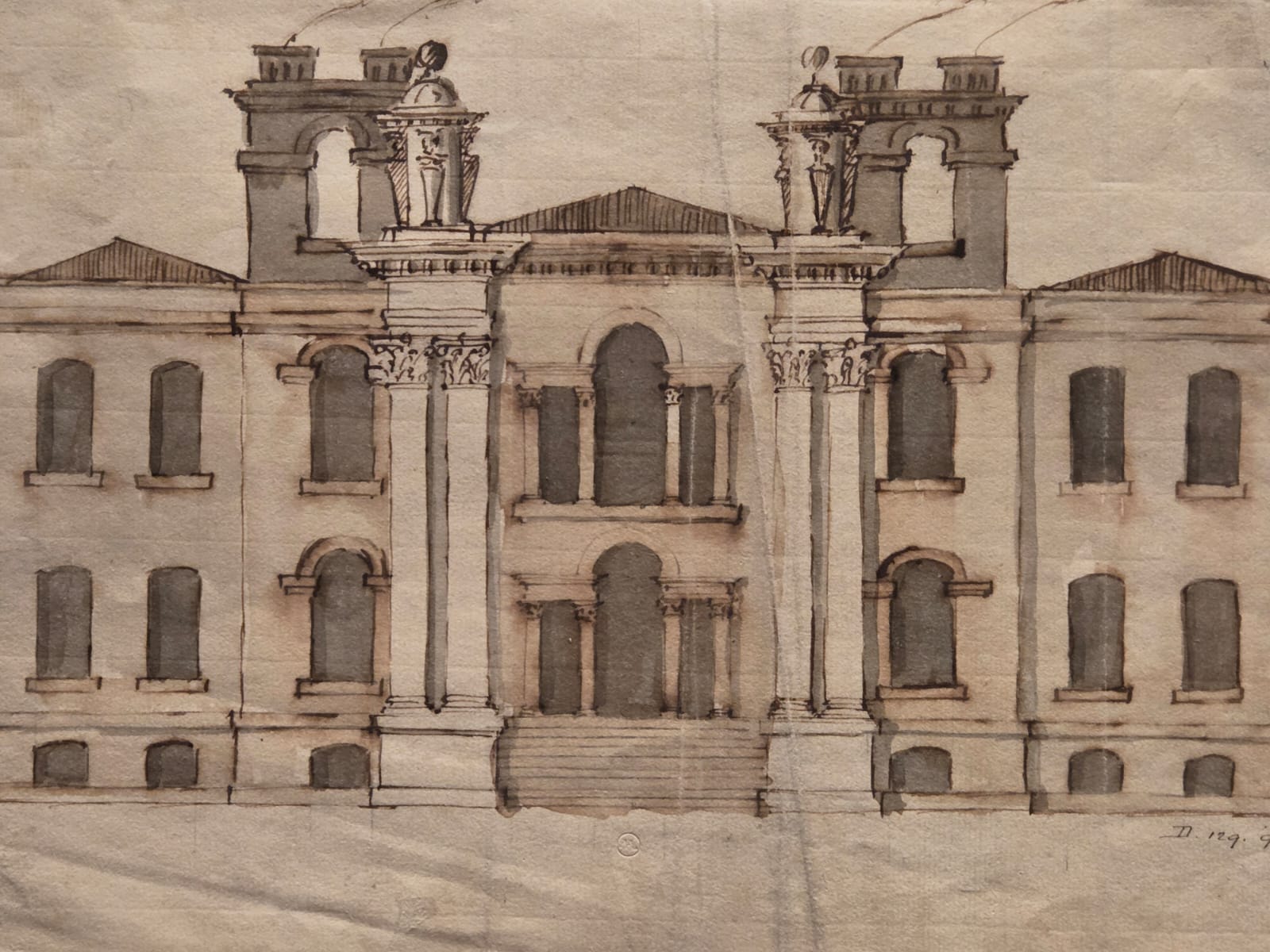
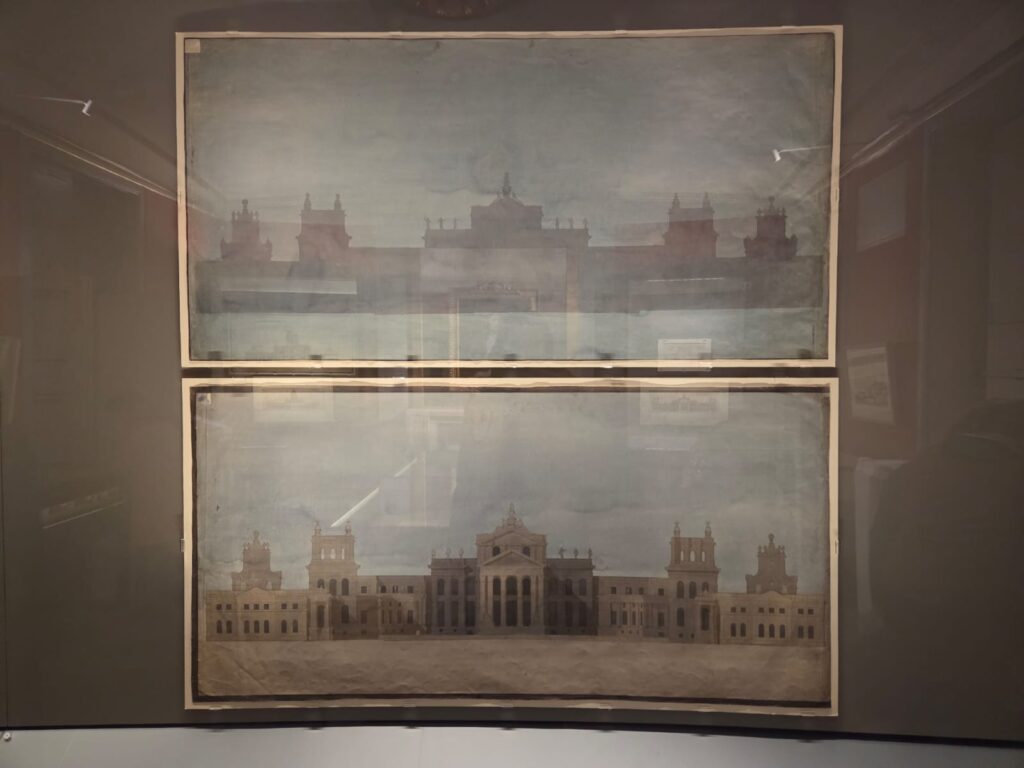
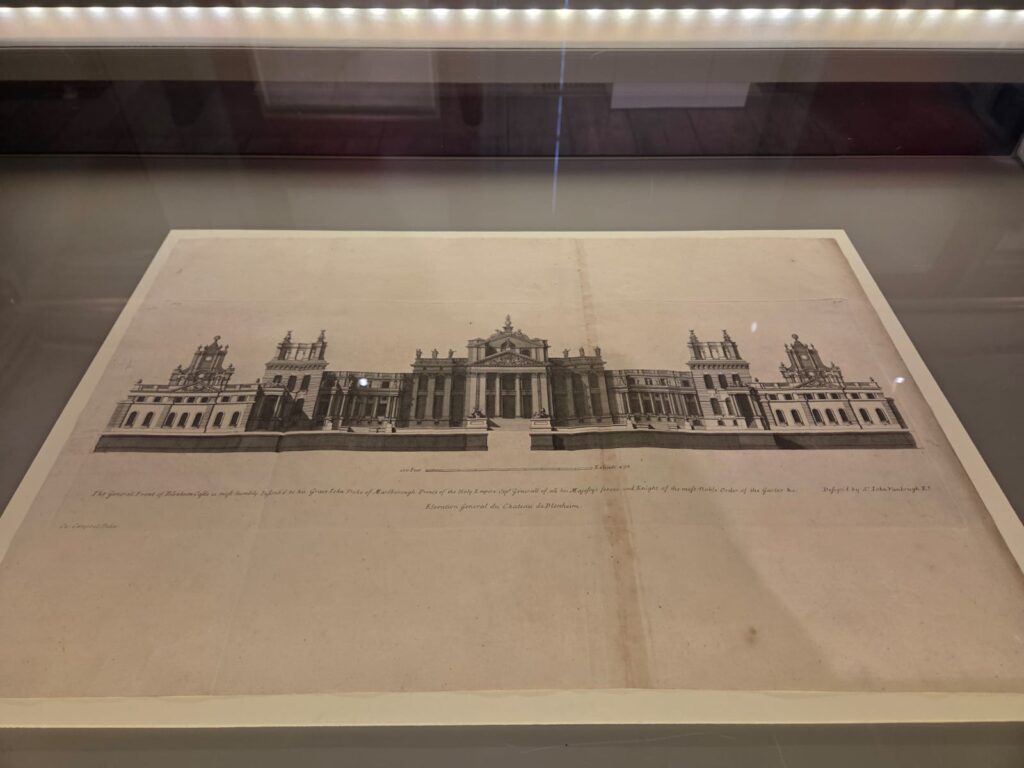
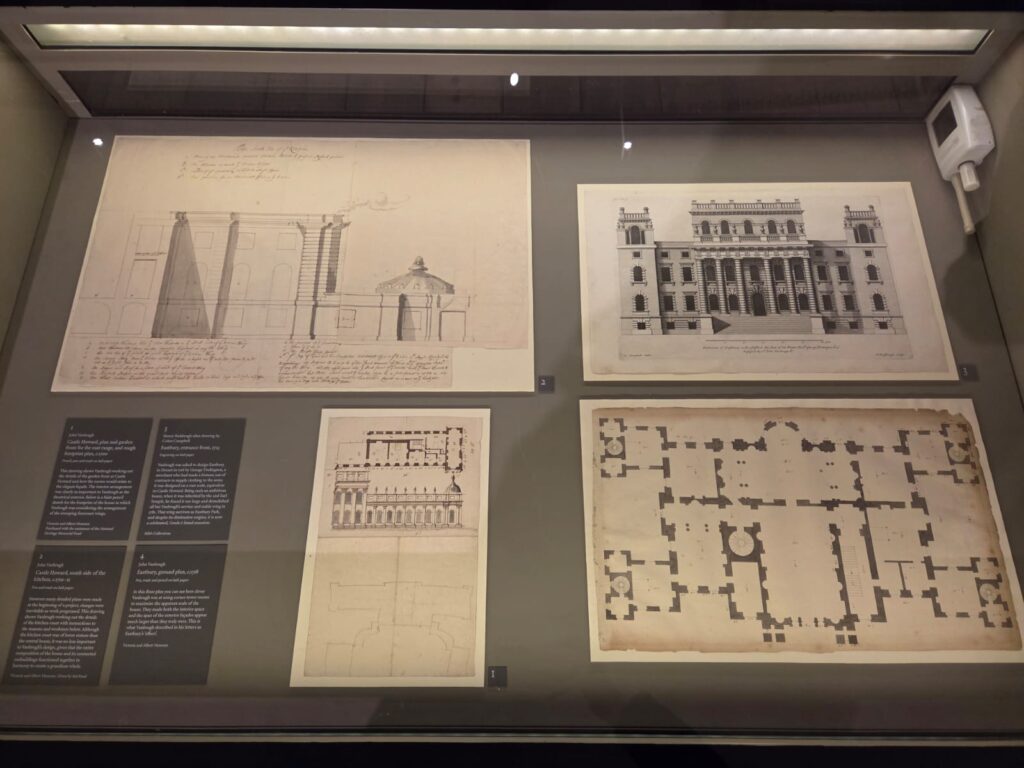
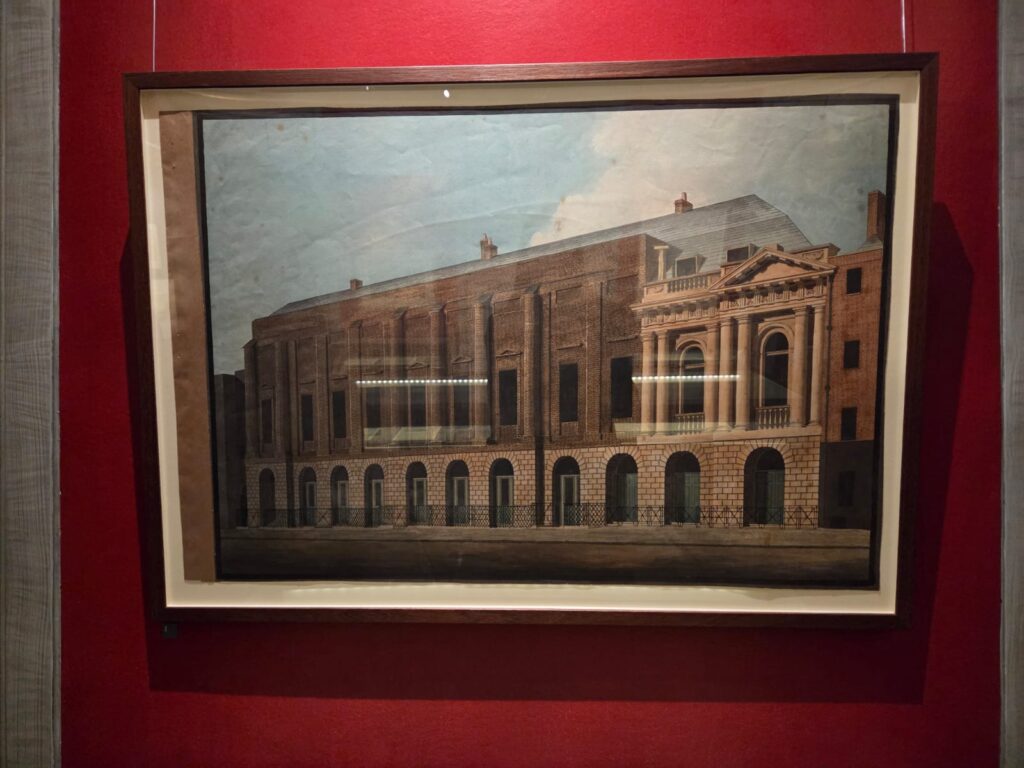
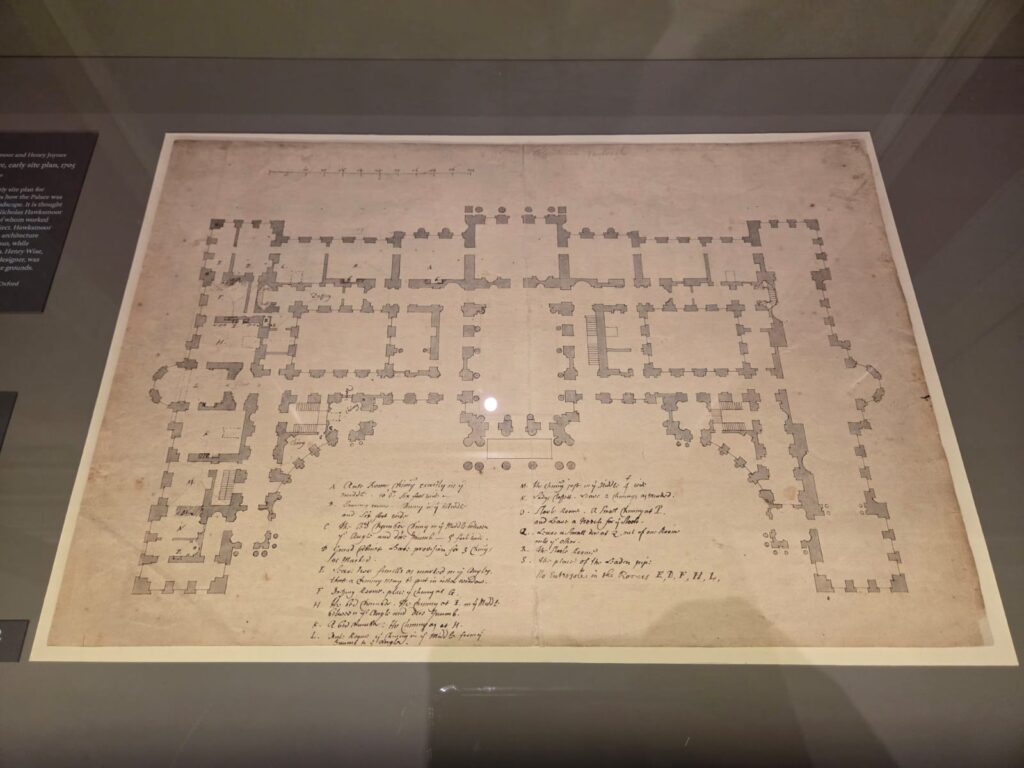
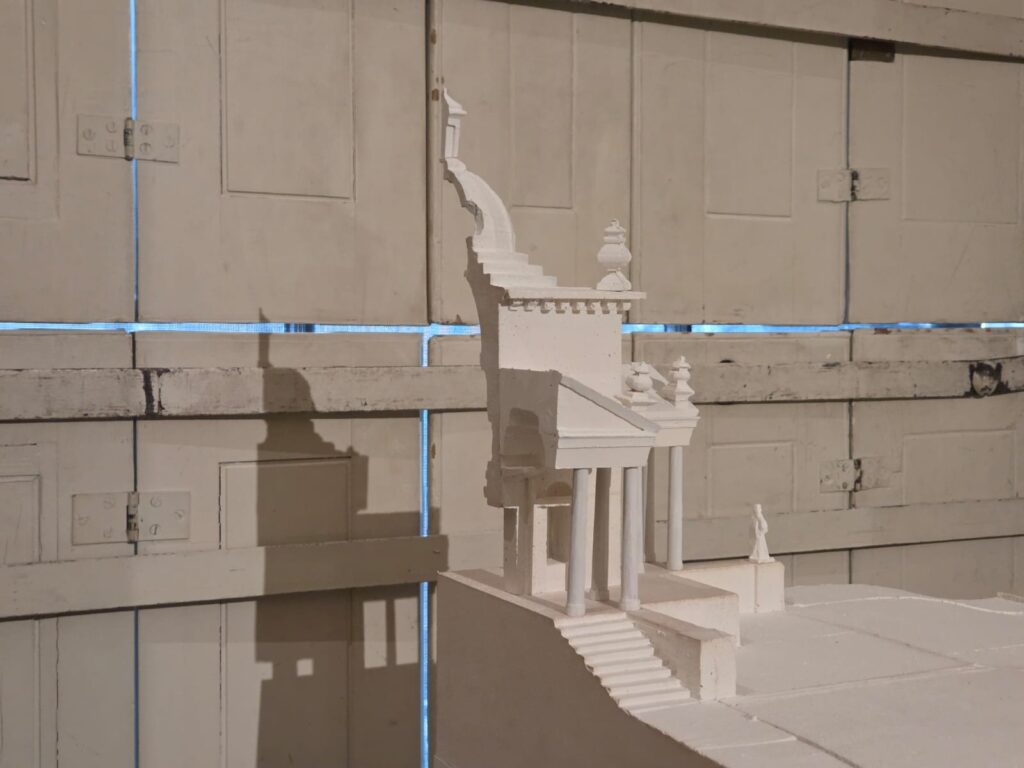
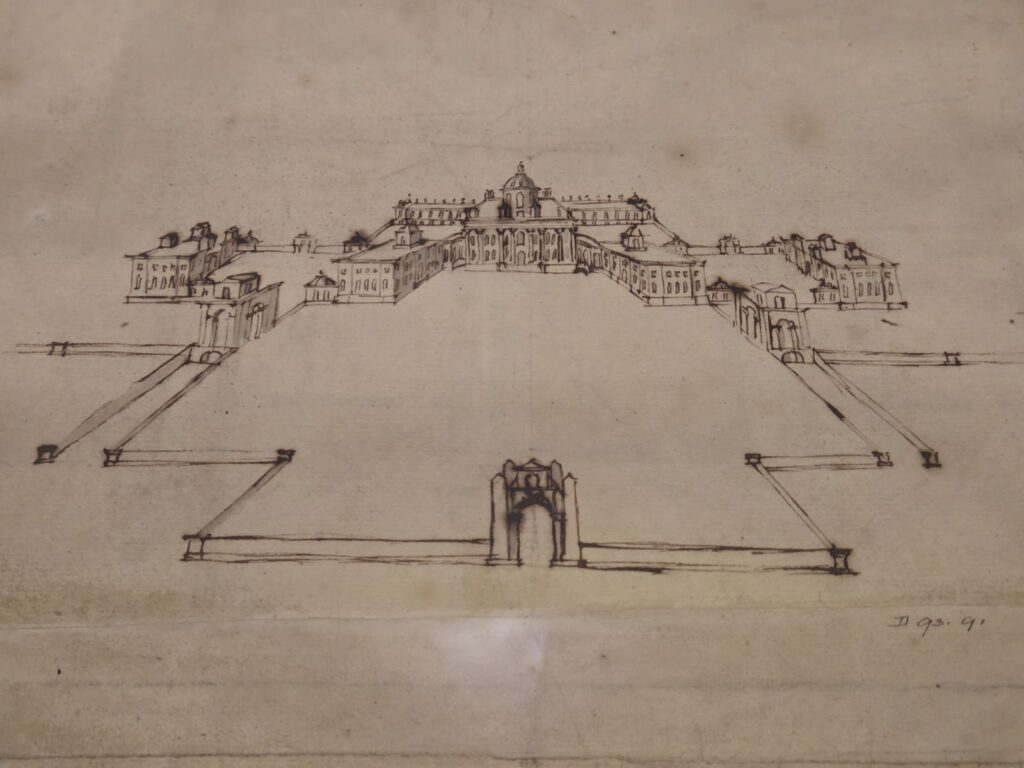
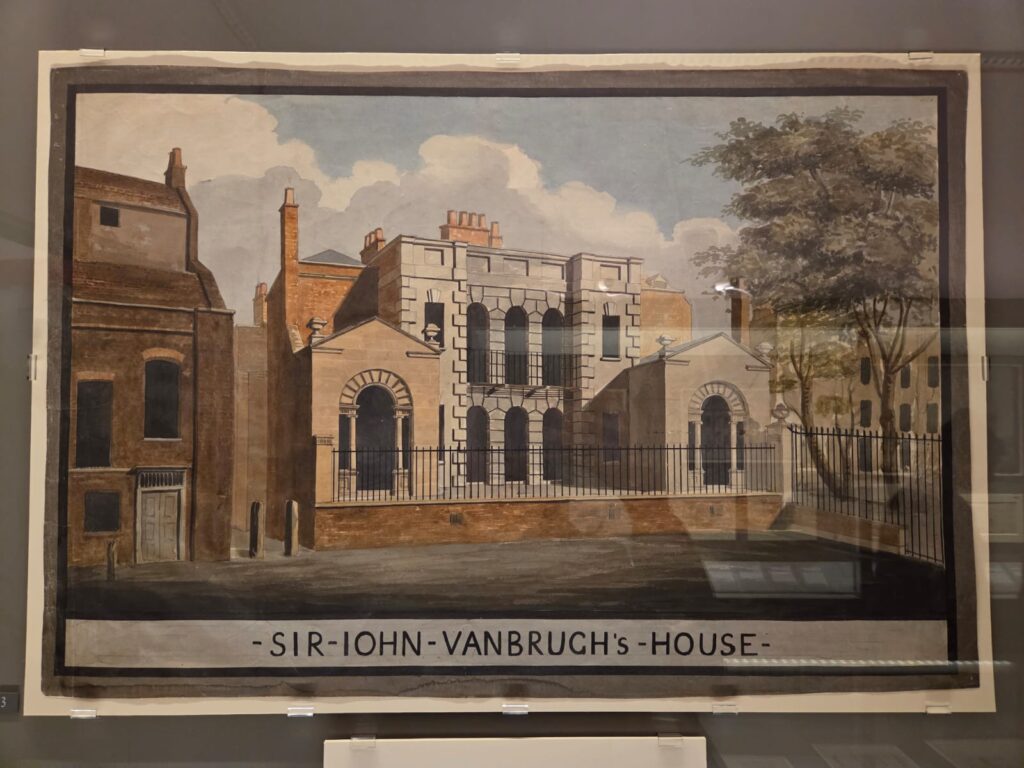
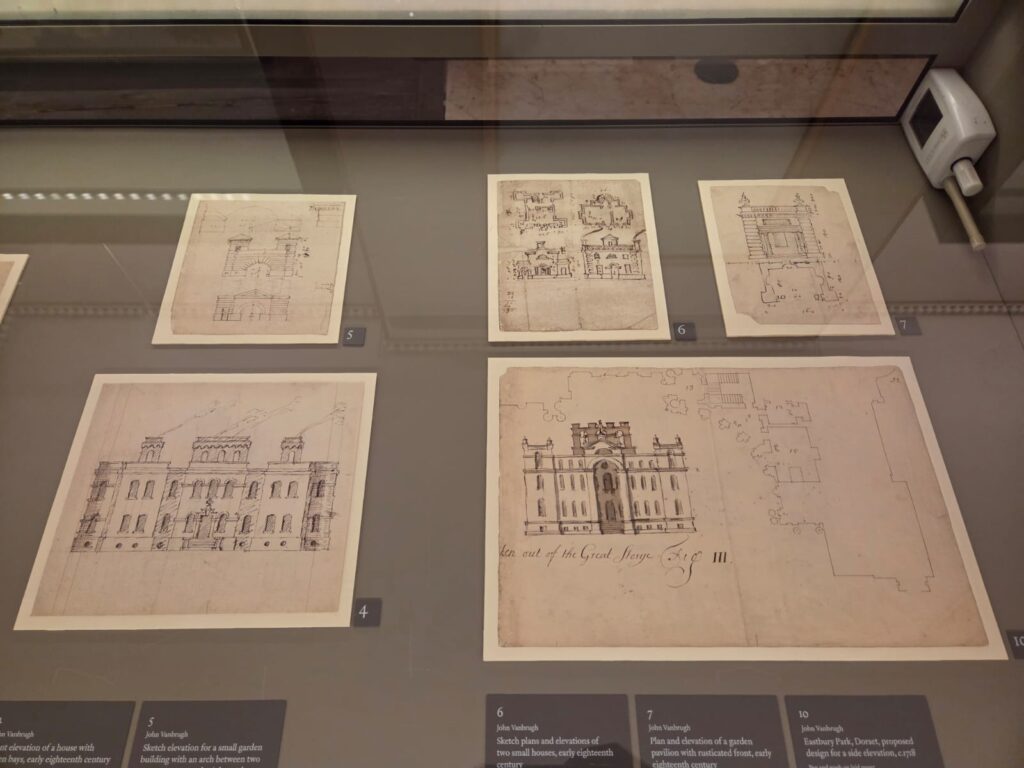
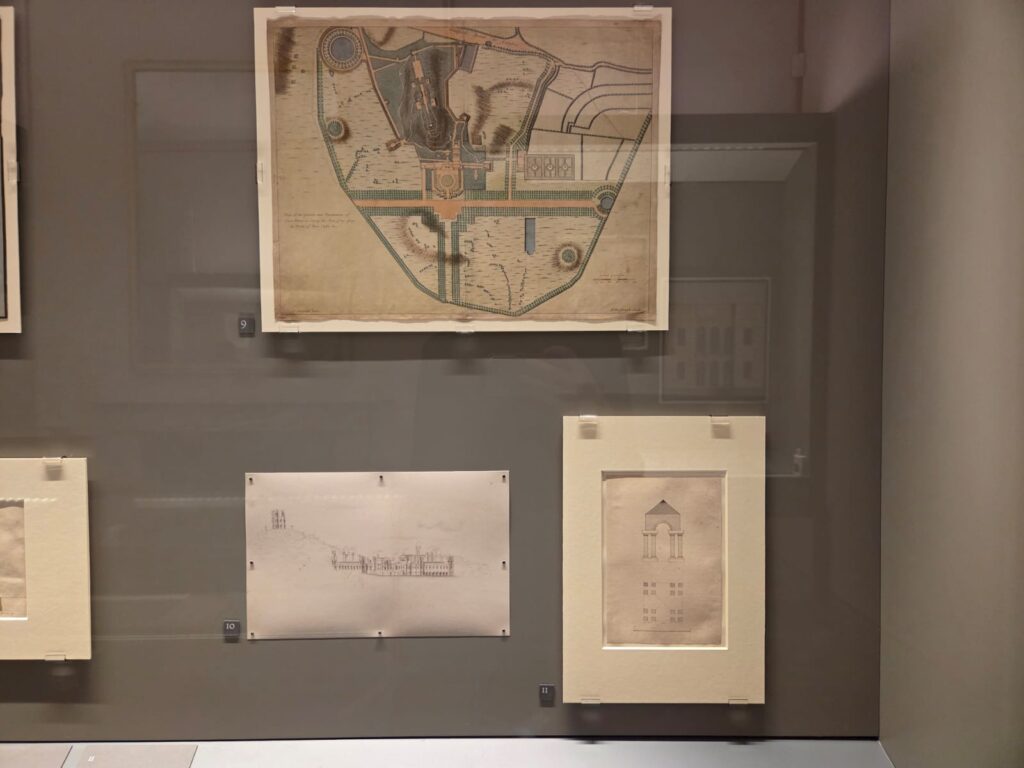
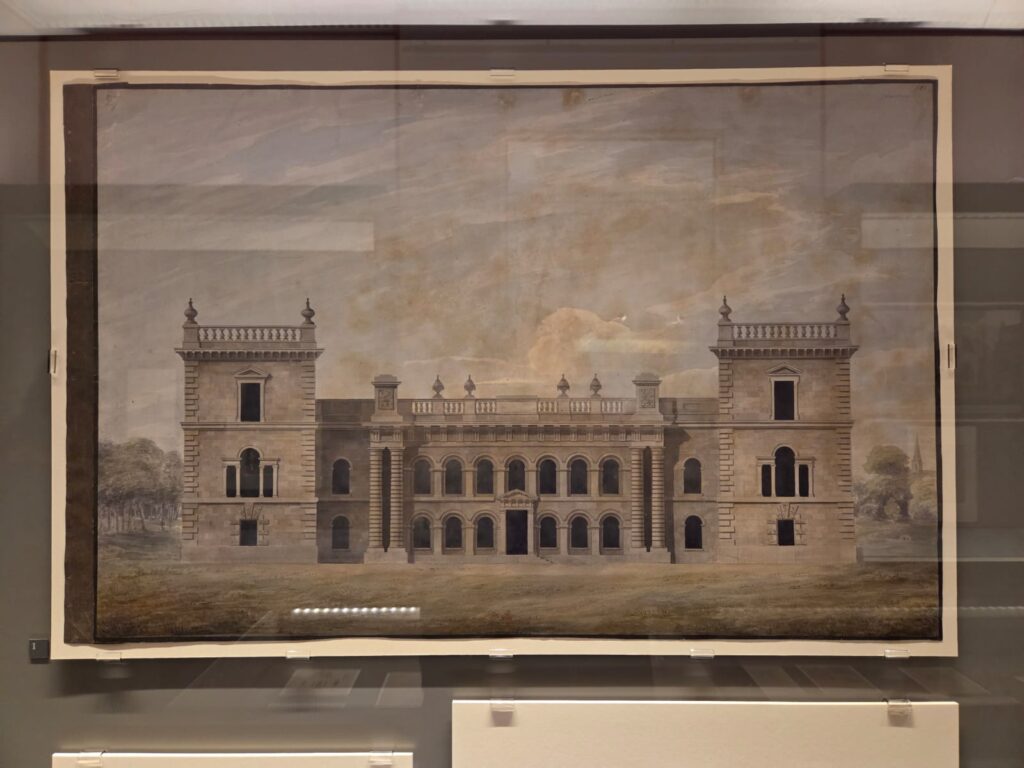
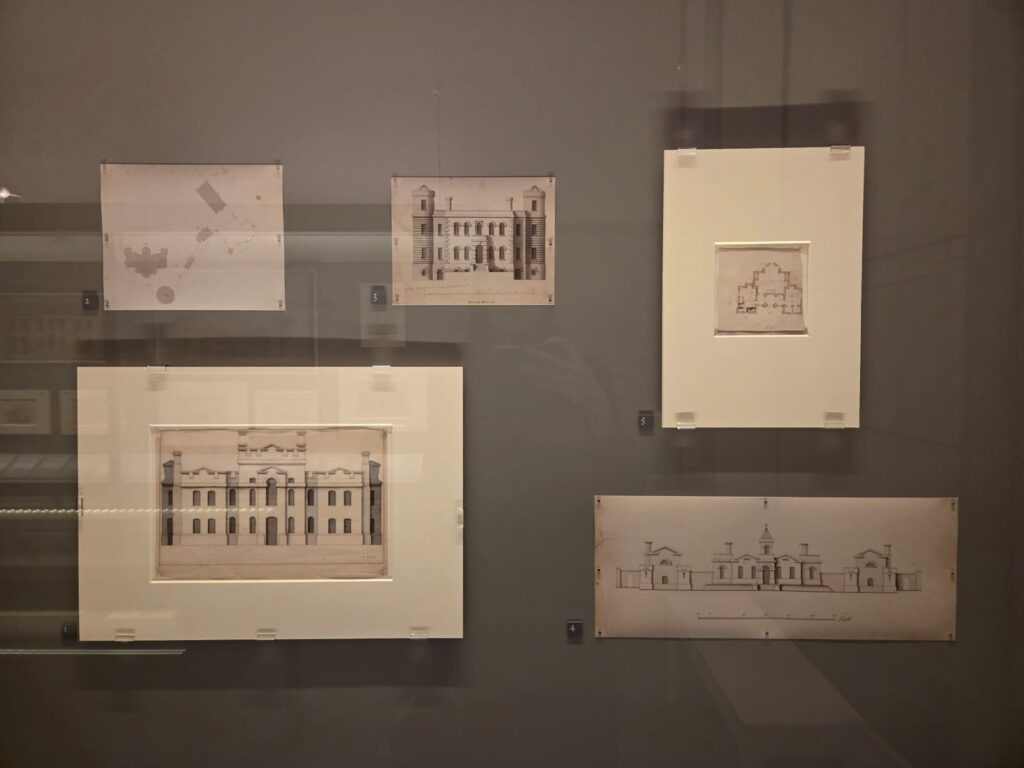
The exhibition, however, successfully makes the case that this is not so. Wherever Vanbrugh learned architecture, he had a good eye for detail and a tendency towards the dramatic. This is what Venturi and Scott Brown picked up on in that opening video. The exhibition includes various architectural plans and drawings, grouped by project. In these we see the final effects: country homes that were grandiose, cleverly maximised their footprints to seem bigger than they were, and played with scale and Palladian forms. We also see drawings in Vanbrugh’s own hand as he works out details and plans and replans particular elements.
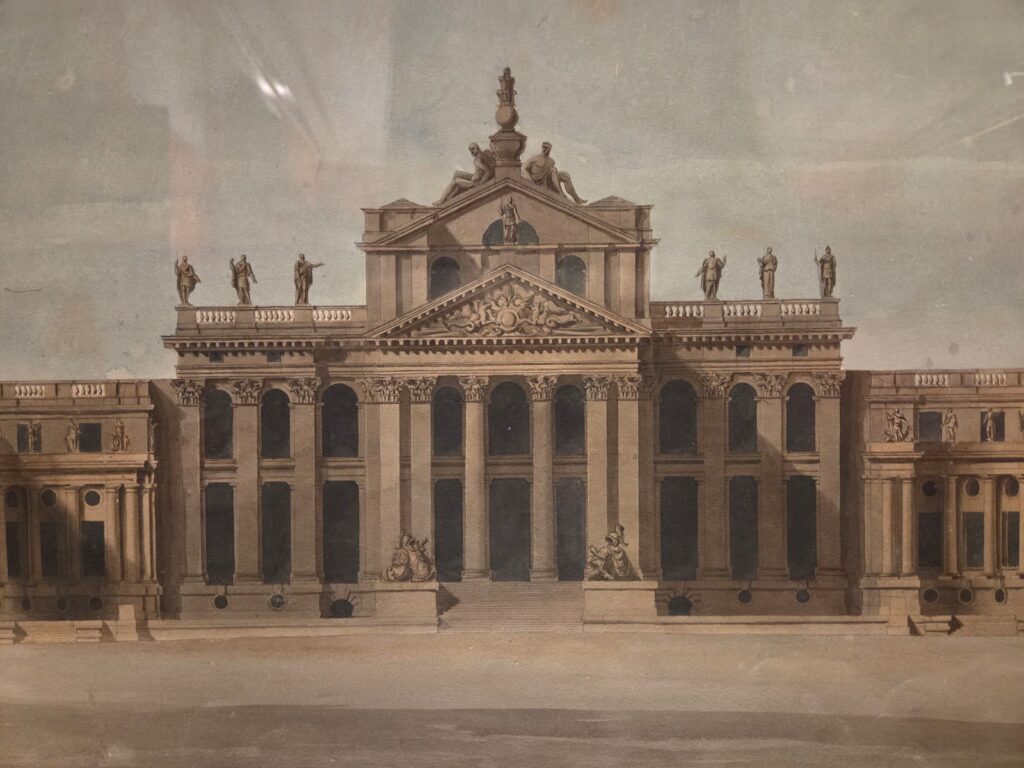
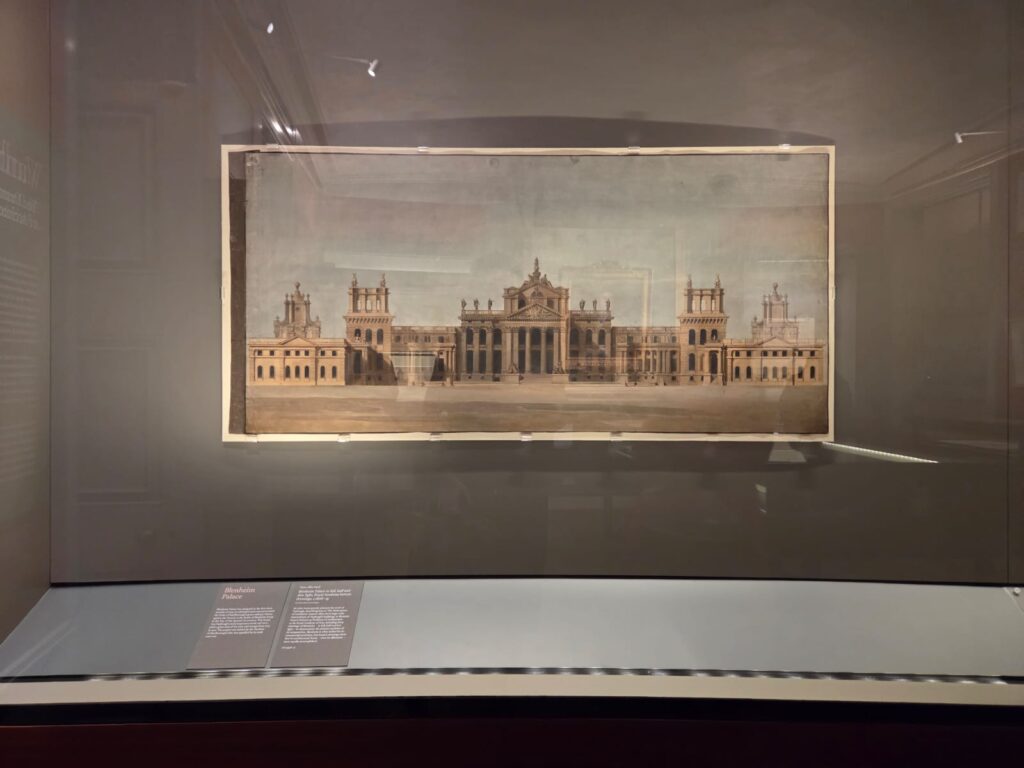
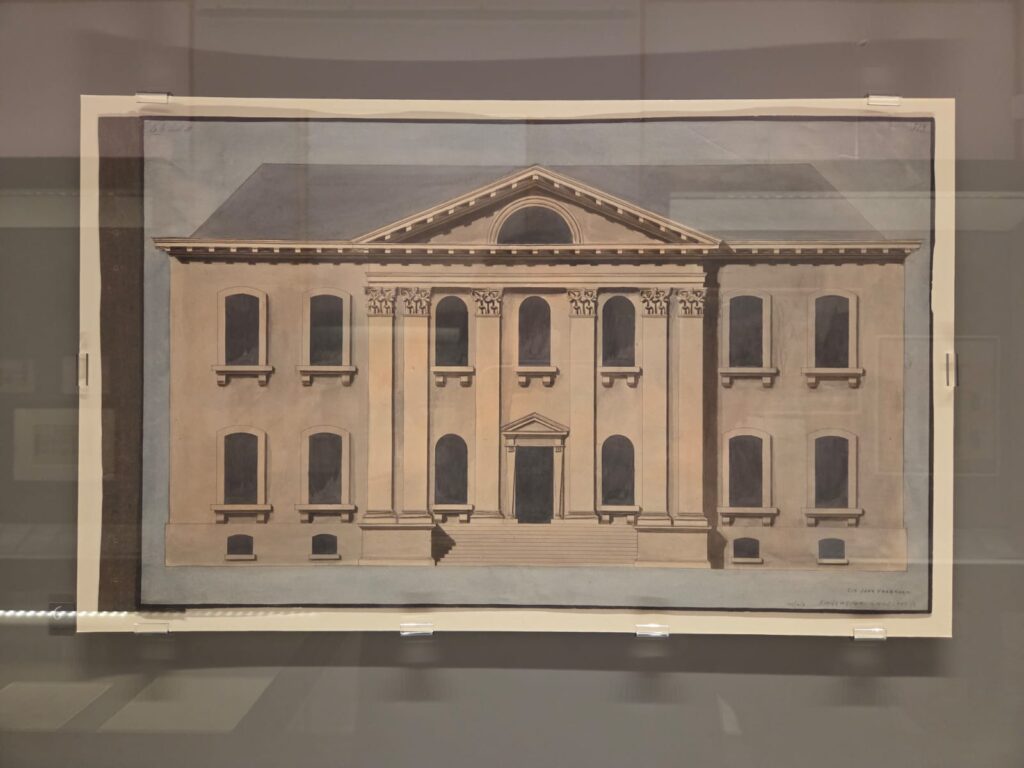
For me, the stars of the show are the pen and wash drawings in ‘Soane office hand’. Soane was a lecturer in architecture at the Royal Academy between 1806 and 1837. His employees created illustrations for these lectures: the pen and wash drawings. I’ve seen some before, for example in this exhibition. They are much more engaging than typical architectural plans. For instance, one set on view here show Blenheim Palace in full, half and dim light, demonstrating the abstract qualities of its design. Soane apparently much admired Vanbrugh, calling him the ‘Shakespeare of Architects’. There are also Soane office drawings of the Queen’s Theatre, Haymarket, Goose-Pie House in Whitehall, and King’s Weston, among other Vanbrugh buildings. For me, they really brought Vanbrugh’s designs to life.
Final Thoughts on Vanbrugh: The Drama of Architecture
I very much enjoy this sort of exhibition: showing up at a museum to learn about a specific, relatively unchallenging topic, and coming away with a head full of new facts. It engages the right parts of my brain, getting me thinking and making connections. In this exhibition, as I mentioned, I particularly liked the drawings prepared for Sir John Soane’s RA lectures. These, for me, painted a literal picture of Vanbrugh as an architect. I also liked the video with commentary on Blenheim Palace by Venturi and Scott Brown.
Taken together, these records from different periods show how architects have continued to recognise and value the work of John Vanbrugh. A very interesting character with a sideline in theatre and playwriting, he built some of the grand country houses that are still popular today for their grandeur and sense of drama. Seeing how Soane appreciated the silhouettes and details of different buildings, or how Venturi and Scott Brown appreciated their historic continuity and rupture, added to my knowledge of, and appreciation for, Vanbrugh’s work.
I visited Blenheim Palace without much knowledge of its architect. Should I have the opportunity to visit Castle Howard or other places designed by Vanbrugh, I think my experience will be the richer for what I’ve now learned. And I will look forward to visiting more exhibitions at Sir John Soane’s Museum which make use of their rich archive and build connections between architects old and new.
Salterton Arts Review’s rating: 4/5
Vanbrugh: The Drama of Architecture on until 28 June 2026
Trending
If you see this after your page is loaded completely, leafletJS files are missing.