
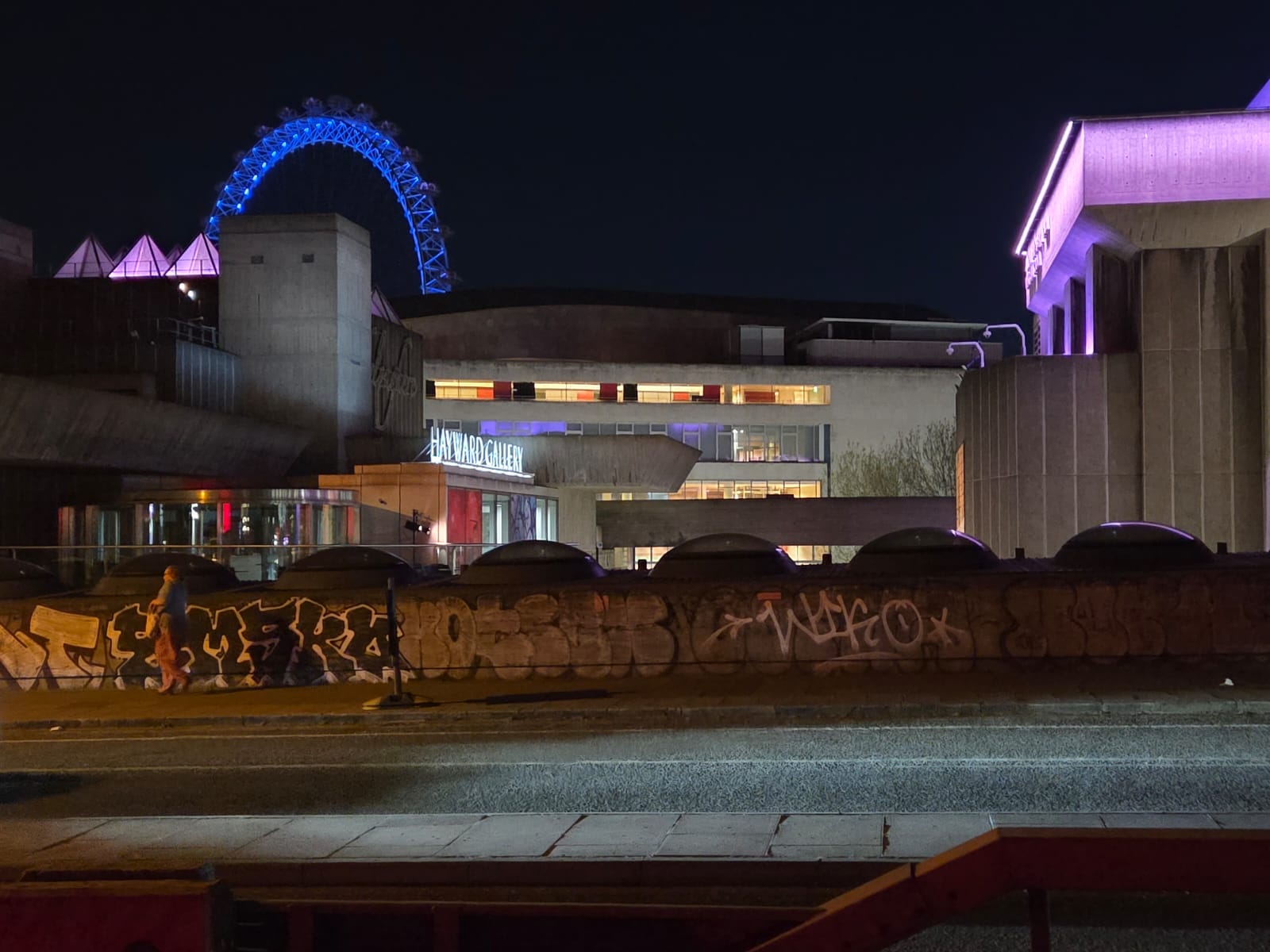
Turangalîla: Infinite Love – Southbank Centre, London
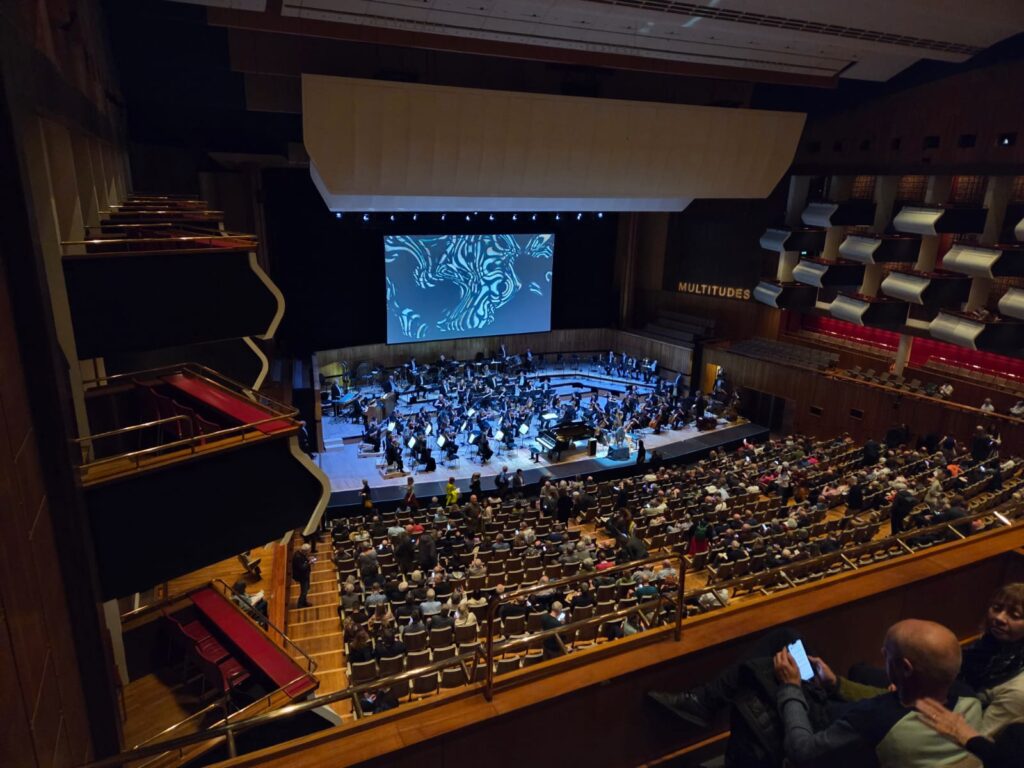
A piece of music that still sounds shockingly modern, Turangalîla: Infinite Love at the Southbank Centre combined Messaien’s music played by the Royal Philharmonic Orchestra with projections by 1927 Studios inspired by the era of silent film.
Turangalîla: Infinite Love
For me, the draw for Turangalîla: Infinite Love was not actually the music, intially, but the animations by 1927 Studios. I’ve been a fan of their work since I saw Golem at the Young Vic many years ago. I like how creative they are, and the blend of live action and animation common to many of their works.
In the end, however, it was the music itself which wowed me. Turangalîla-symphonie is the only symphony by French composer Olivier Messaien. He wrote it at the request of Serge Koussevitzky, music director of the Boston Symphony Orchestra. What was initially going to be a 6-12 month piece of work took three years, in the end. Depending on how you look at it, what we learn from this is either that it’s good to give composers at least some guardrails when commissioning work, or that it’s not, and complete freedom results in inspiring/inspired outcomes. Koussevitsky was unwell by the time the work premiered in 1949, so a young Leonard Bernstein conducted instead.
Messaien took inspiration for the work from the story of ill-fated lovers Tristan and Isolde. The name, however, is an invented portmanteau of two Sanskrit words, turaṅga (तुरङ्ग) and līlā (लीला). Turaṅga means time, movement and rhythm. Līlā means play, in the sense of the play of the gods upon the cosmos: the play of life and death. 1927 have managed to weave these threads together, creating a film that screens alongside the music, with a Knight (Jake Cecil), a Bride (Esme Appleton), a king, henchmen, an alchemist, a vicar and some villagers. Scenes from a medieval romance intersperse with scenes of magical or divine inspiration. The only slight downside was that I felt they’d gone overboard with recreating the shakiness of early film – it made me vaguely nauseous in the way the jerkiness of an electric car sometimes does.
Relatively Rarely-Played, But Well-Regarded.
The Turangalîla-symphonie is a notoriously tricky piece of music. Messaien’s composition demands additional musicians in most or all sections of the orchestra. The piano part, originally written with Messaien’s future wife Yvonne Loriod in mind, is very demanding. It was a demonstration of Steven Osborne’s skill for this performance. There are unusual instruments, too, namely the ondes Martenot, played here by Cécile Lartigau. This early electronic instrument can be played using a wire or a keyboard, and sounds a bit like a theramin. I wasn’t sure what to expect from it, but it added a nice counterpoint to the piano, and a richness overall.
Individual instruments aside, the Turangalîla-symphonie is a fascinating onslaught of sound. Not being very well-versed in music, I appreciated that the film helped bring to life a story I might otherwise have missed. There are clear moments of love, and gods, happiness and sadness. Other moments are thrillingly strange, in the way that Stravinsky managed to achieve, too. Even with such variety, you can hear how the music is stitched together, the melodies or echoes which make it a cohesive whole. I can see why it’s relatively rarely-played, but I can also see why it’s well-regarded.
Turangalîla: Infinite Love is part of the Southbank Centre’s Multitudes festival, which aims to reimagine orchestral music, particularly by making it multi-sensory. Last year we saw a film by William Kentridge paired with Shostakovich, as part of Multitudes. I like the festival – I’m not even a particularly new audience for the Southbank Centre, but these unexpected pairings and collaborations make orchestral music more accessible to me, for one.
Salterton Arts Review’s rating: 4/5
Turangalîla: Infinite Love was on 23 April 2026 only. Multitudes festival continues until 30 April 2026.
Trending
If you see this after your page is loaded completely, leafletJS files are missing.