
Rose Wylie: The Picture Comes First – Royal Academy, London
A very long overdue exhibition at the Royal Academy, as Rose Wylie becomes the first female painter to have a solo retrospective with The Picture Comes First.
A Surprisingly Late Milestone
I didn’t actually realise while I was visiting the exhibition. It was only later when I was doing a bit of reading in preparation for writing this post. At first I didn’t believe it. All those exhibitions I’ve been to at the Royal Academy over the years. Were all the solo shows men? When I dug a bit further, it wasn’t quite as bad as I thought. The exhibition we will discuss today is the first time a female painter has been given a full retrospective in these hallowed galleries. But, looking back through my own archives was a little shocking. Women included in group exhibitions, one on Angelica Kauffman and another on four female German modernists. Tracey Emin with Edvard Munch. I did just miss an exhibition that looked at South Asian sculptor Mrinalini Mukherjee and her circle. But the fact remains: women are few and far between.
I guess what I’m saying is, sometimes, as women, we contribute to our own oppression. I hadn’t even noticed the gender bias in one of the galleries I visit most frequently. When I celebrated the Royal Academy’s introspection into its role in colonialism and enslavement, this other gap didn’t occur to me. And that’s despite knowing that Kauffman was one of two original academicians at the RA’s founding. She and Mary Moser were included as artworks in this famous painting, because they weren’t allowed in life drawing classes.
So anyway, I guess I must do better at noticing and calling out institutional and societal bias. Luckily, today’s artist is someone who has bucked trends and defied expectations, consistently plowing her own furrow. We can take some inspiration from that, I’m sure.
Introducing Rose Wylie
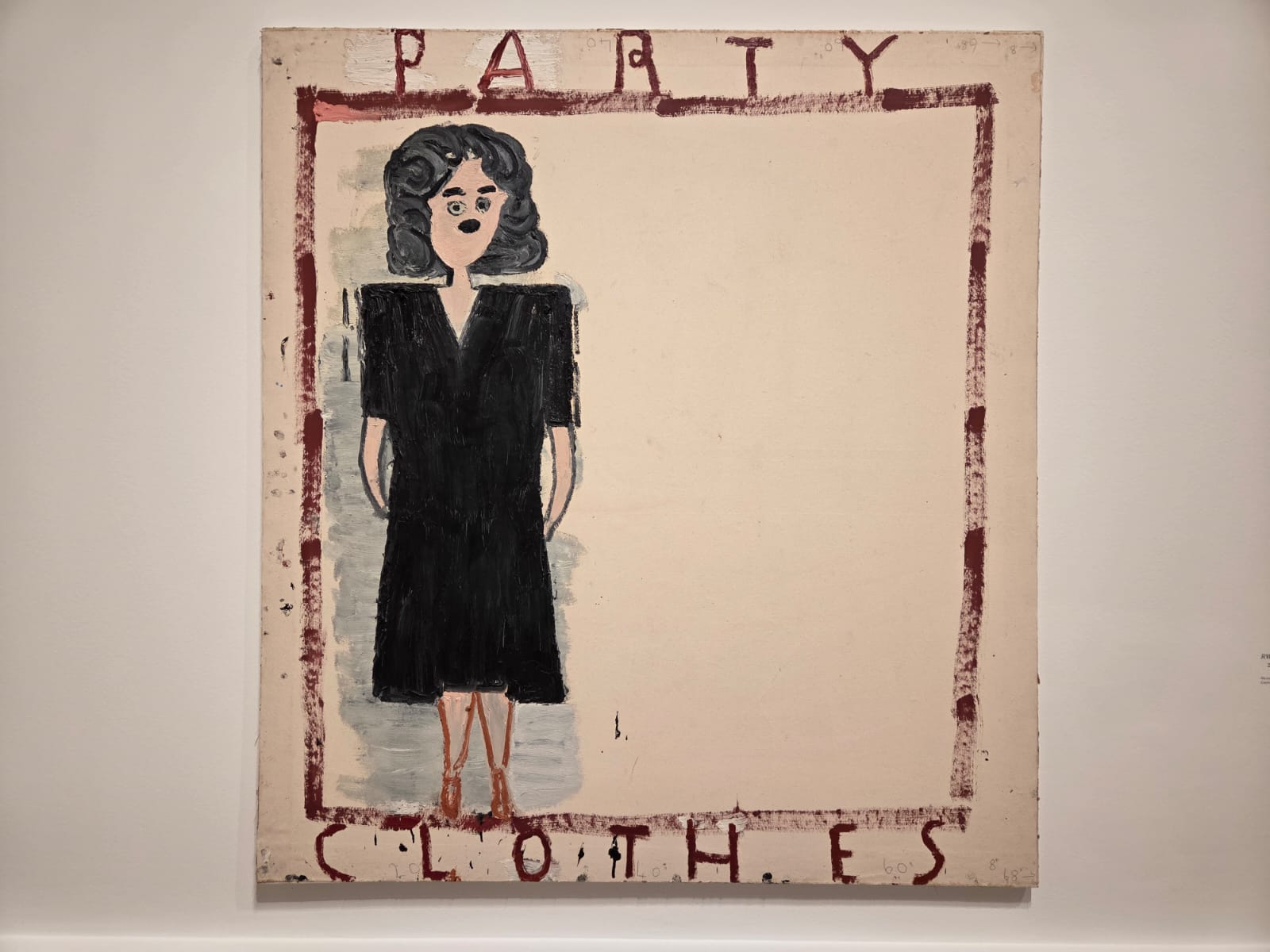
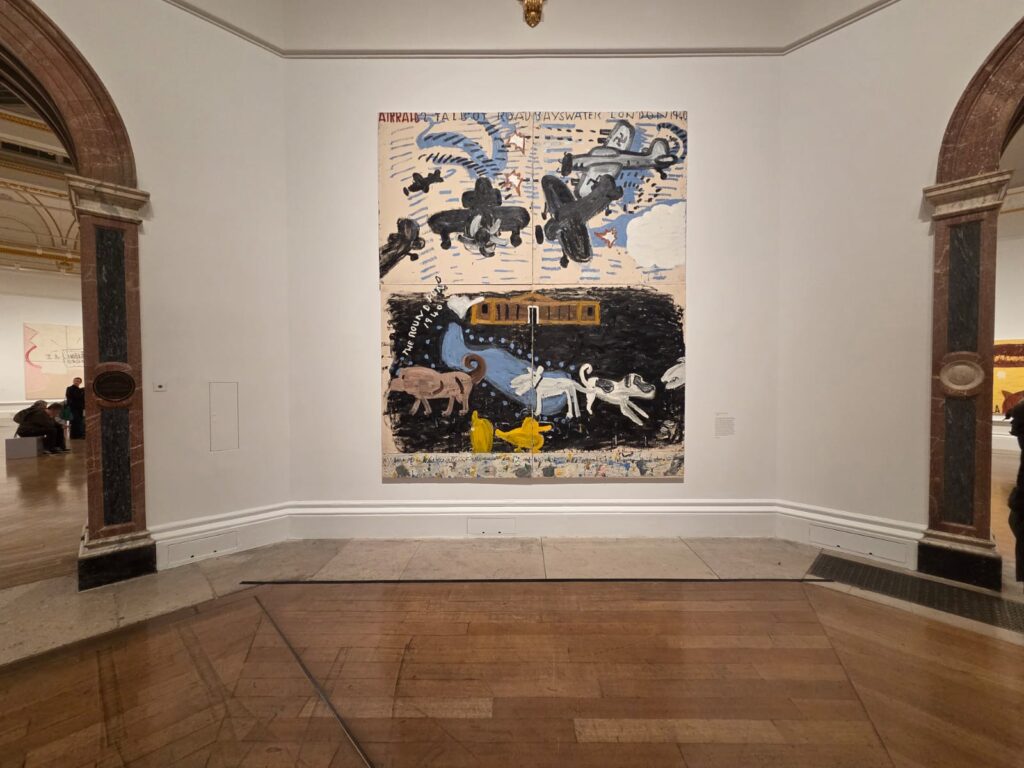
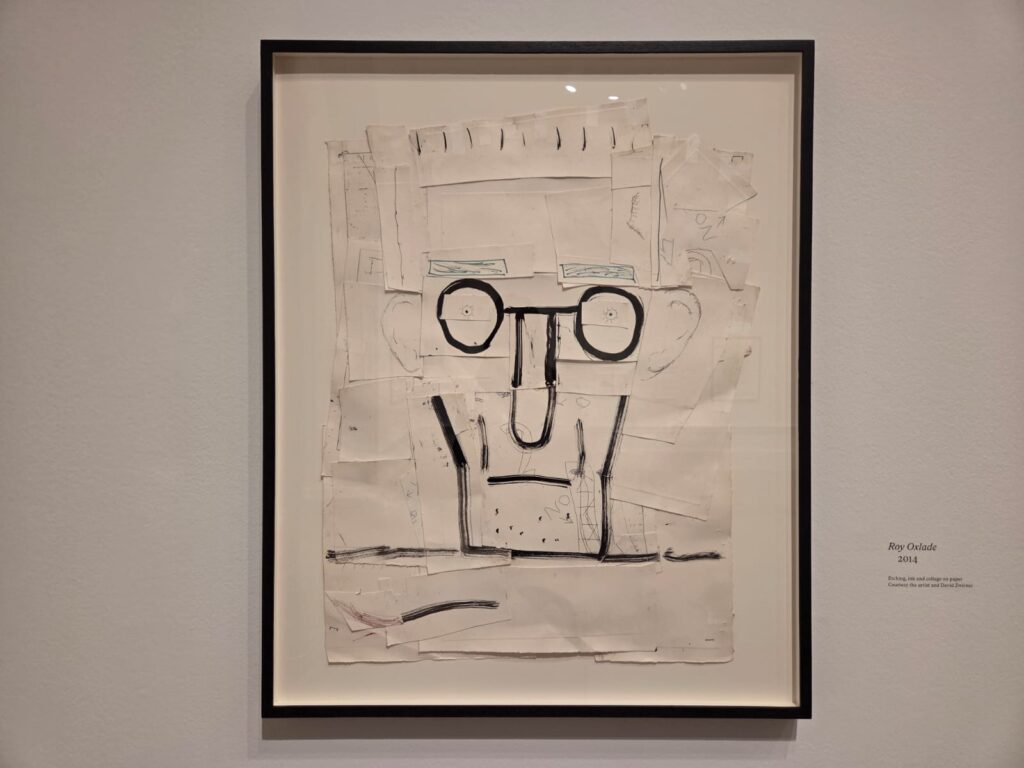
So who is the artist taking centre stage at the Royal Academy, a moment that is overdue both institutionally and professionally? Rose Wylie was born in Hythe in Kent in 1934. She has childhood memories of living through the Blitz – the family home took a direct hit at one point – and has revisited this in her art. In the 1950s she studied at the Folkestone and Dover School of Art. She then embarked upon a teacher training programme at Goldsmiths, where she met fellow painter Roy Oxlade. The two married in 1957.
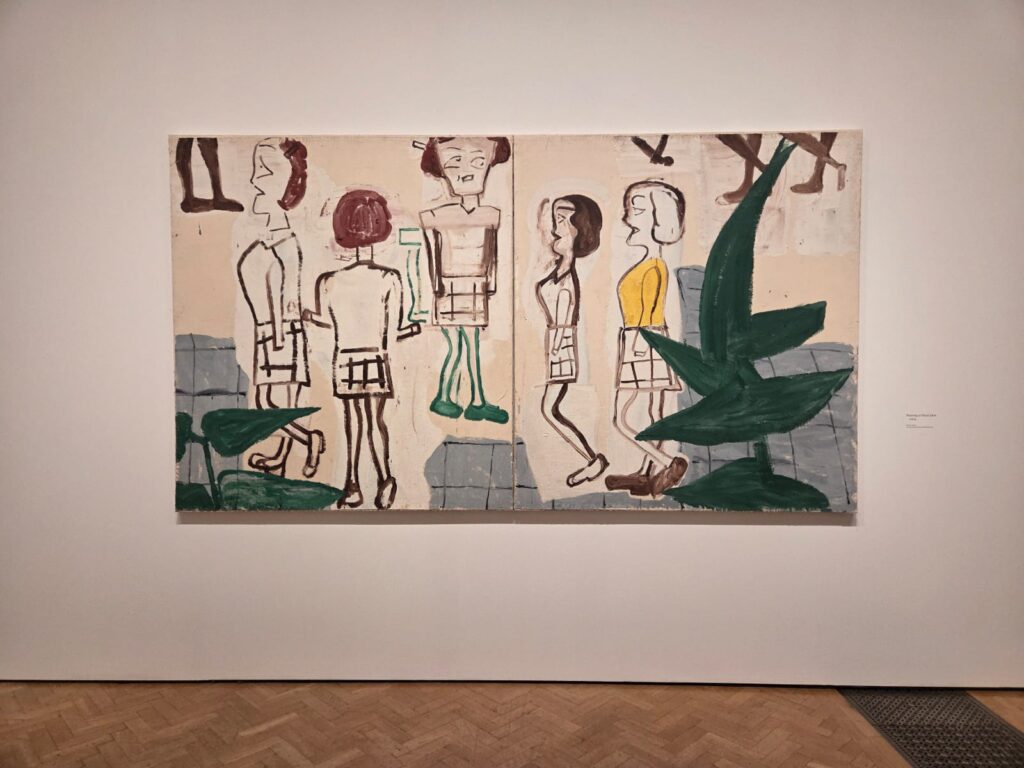
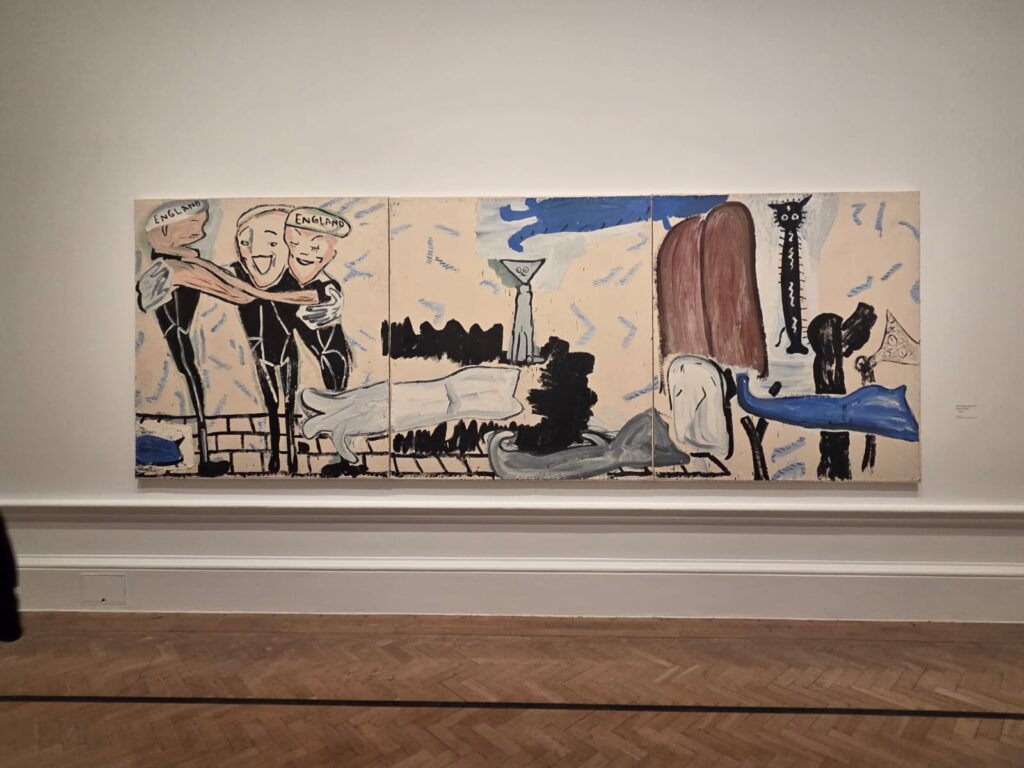
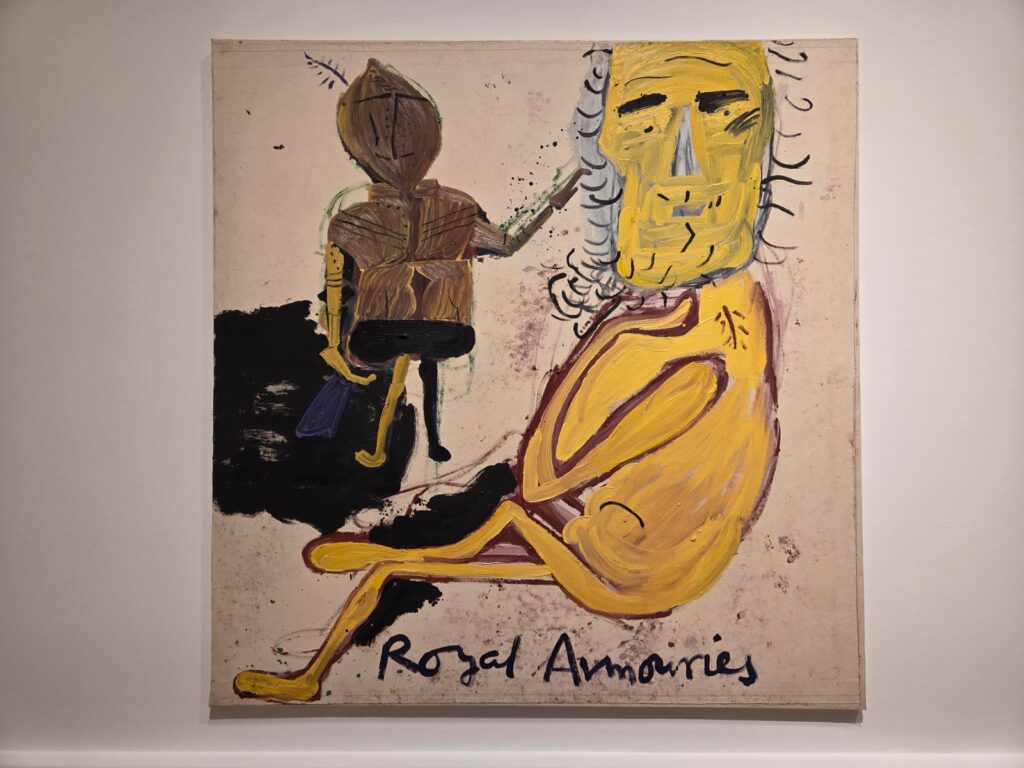
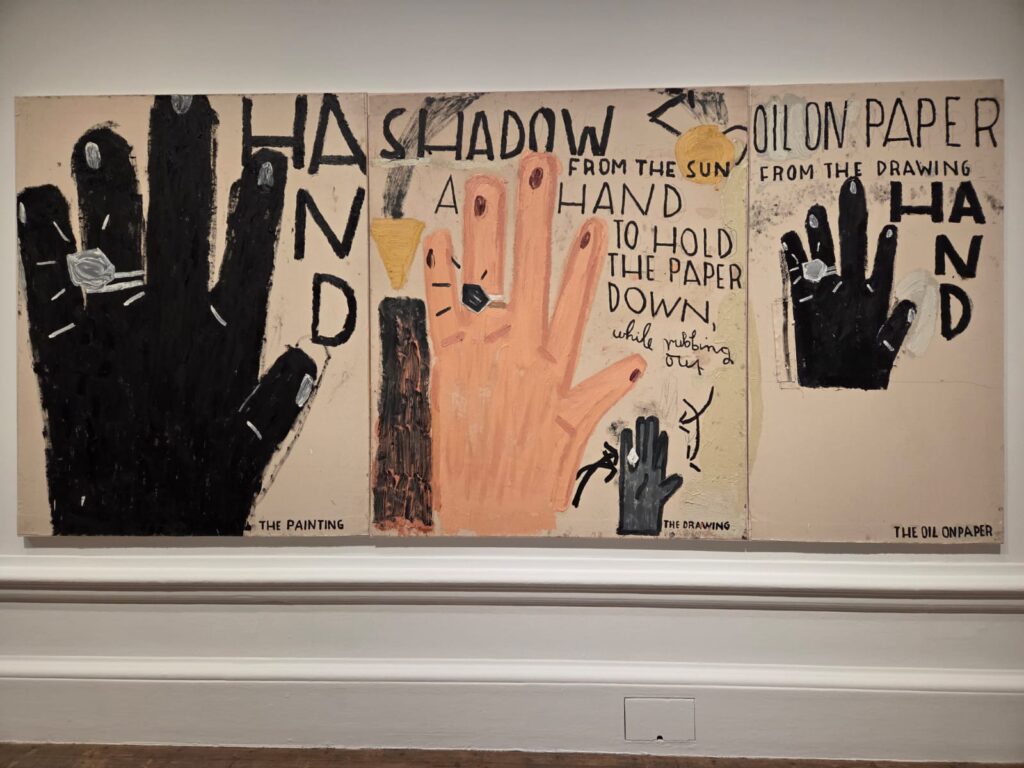
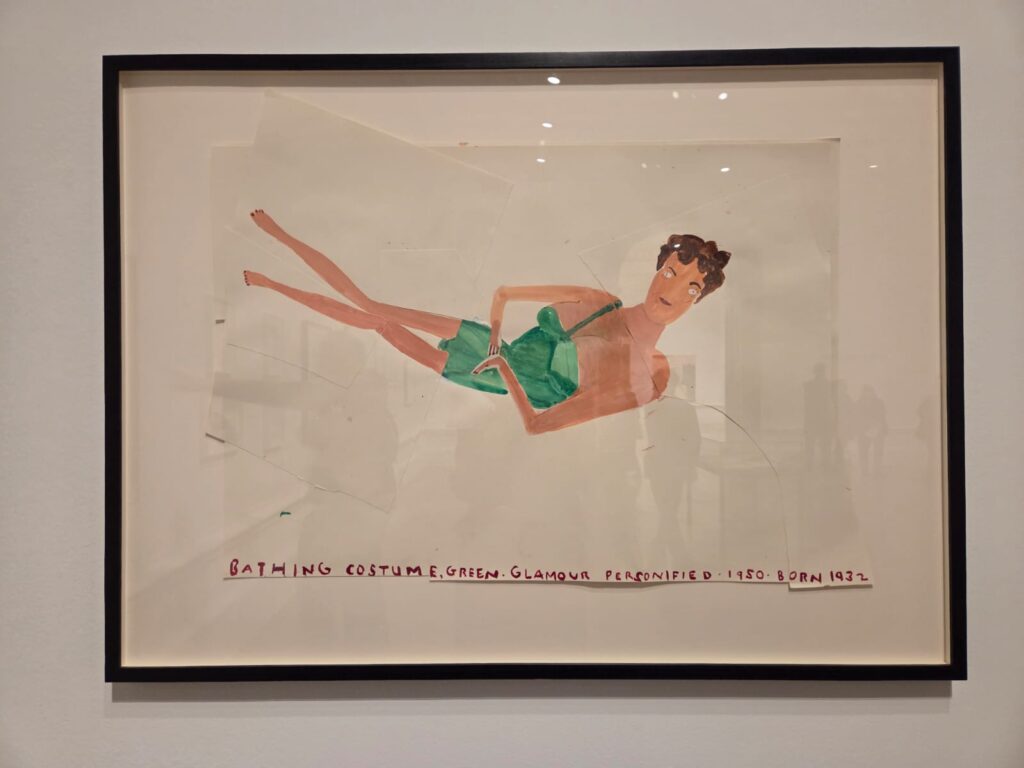
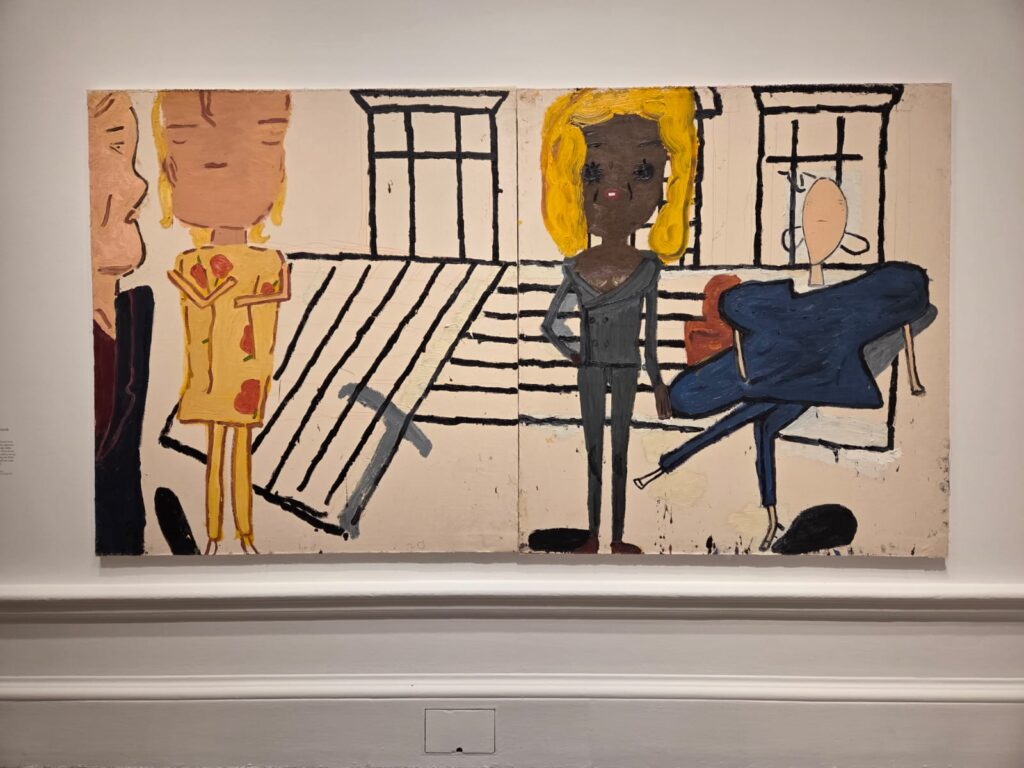
Wylie and Oxlade had three children, and Wylie took a break in her professional career to raise them. In 1981 she graduated with an MA from the Royal College of Art. It was around 2002 that the art world started to take notice of Wylie, particularly her series Room Project, which is on view as part of this exhibition. The series is emblematic of the artist’s style, with a sense of playfulness, unique compositions, and big, bold figures.
In 2009, Wylie was shortlisted for the Threadneedle Prize. In 2010, she was the only non-American artist included in Women to Watch, an exhibition at the National Museum of Women in the Arts in Washington, D.C. This was something of a breakthrough. She won a couple of prizes in the following years, and had solo exhibitions including one at Tate Modern. Wylie became a Royal Academician in 2014, at the age of 80. And is now the first woman to fill the RA’s main galleries with a retrospective. Still painting at 91, Wylie is living proof that you can tread your own path, and achieve major milestones at any time of life. To be honest it sounds like she has more energy than I do – she frequently works into the night, painting from memory on large, unprimed canvases.
The Picture Comes First
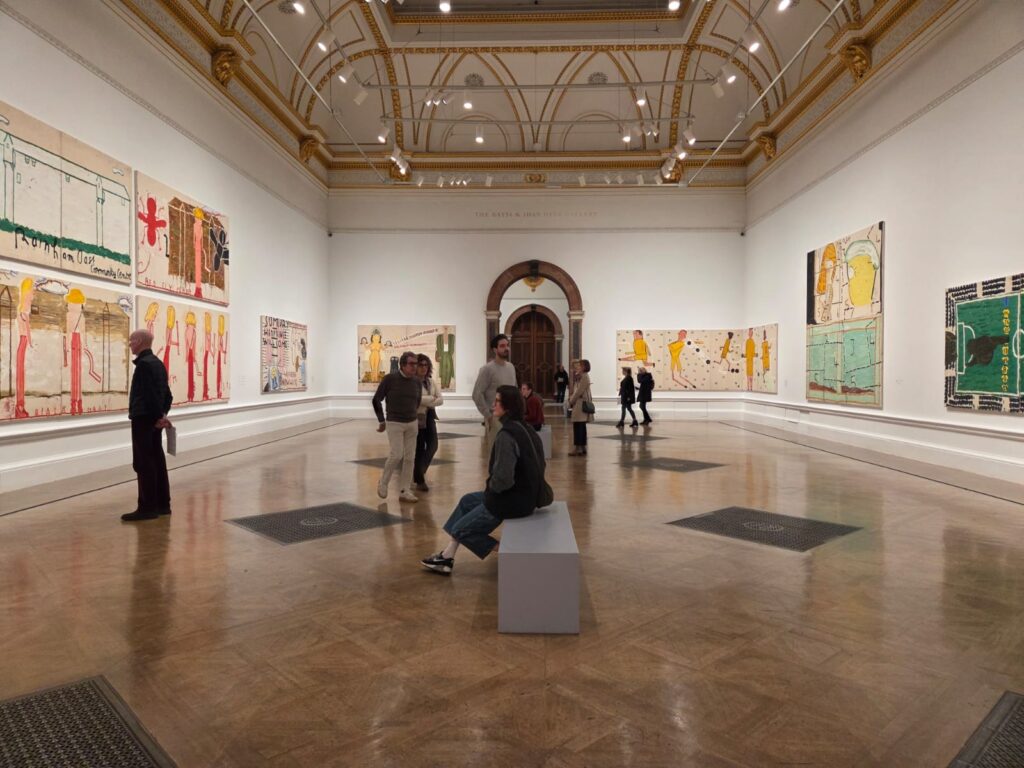
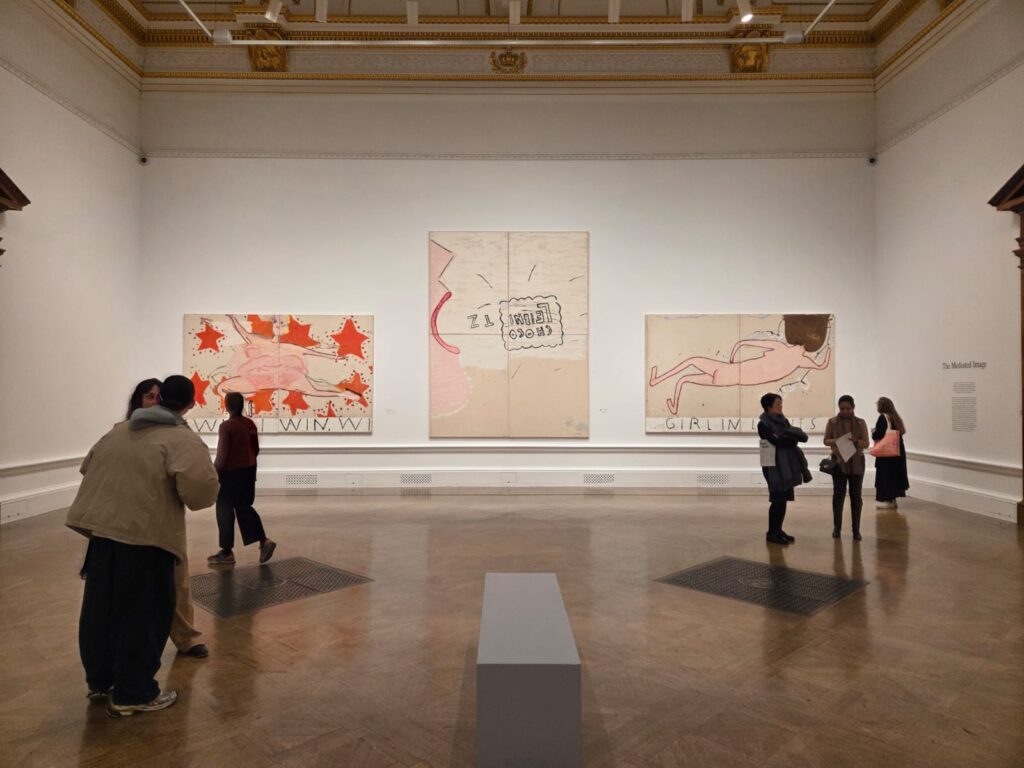
I have to admit that, when first viewing the exhibition, I wasn’t immediately impressed. I think it was partly that the RA have come up with an unusual layout for The Picture Comes First, which involves entering through the main doors into the central, circular space, then heading off in one direction, before backtracking and following the rooms around in the other direction. It’s not clearly signposted. I looked confused enough that an attendant asked me if I needed help and pointed me in the right direction.
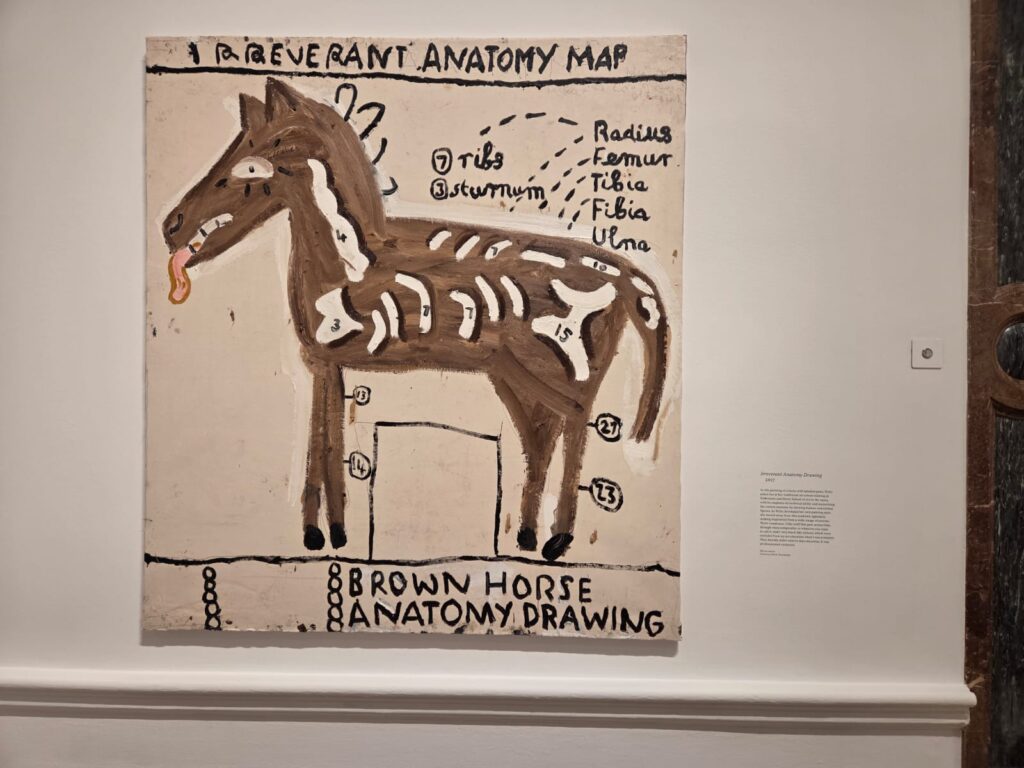
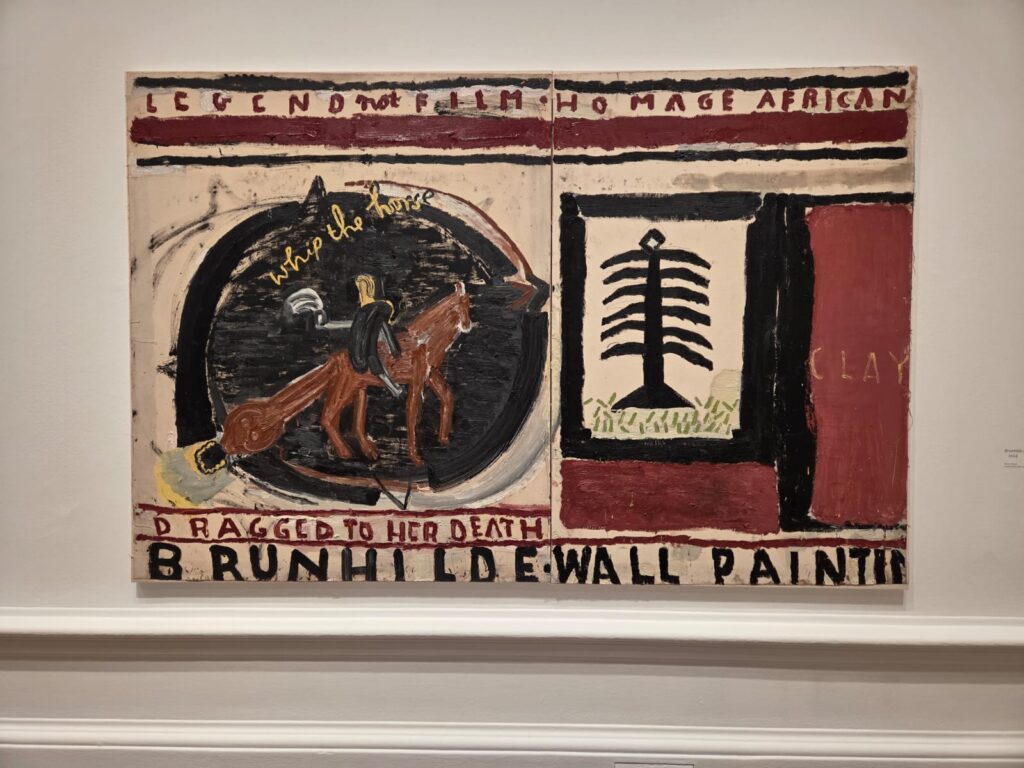
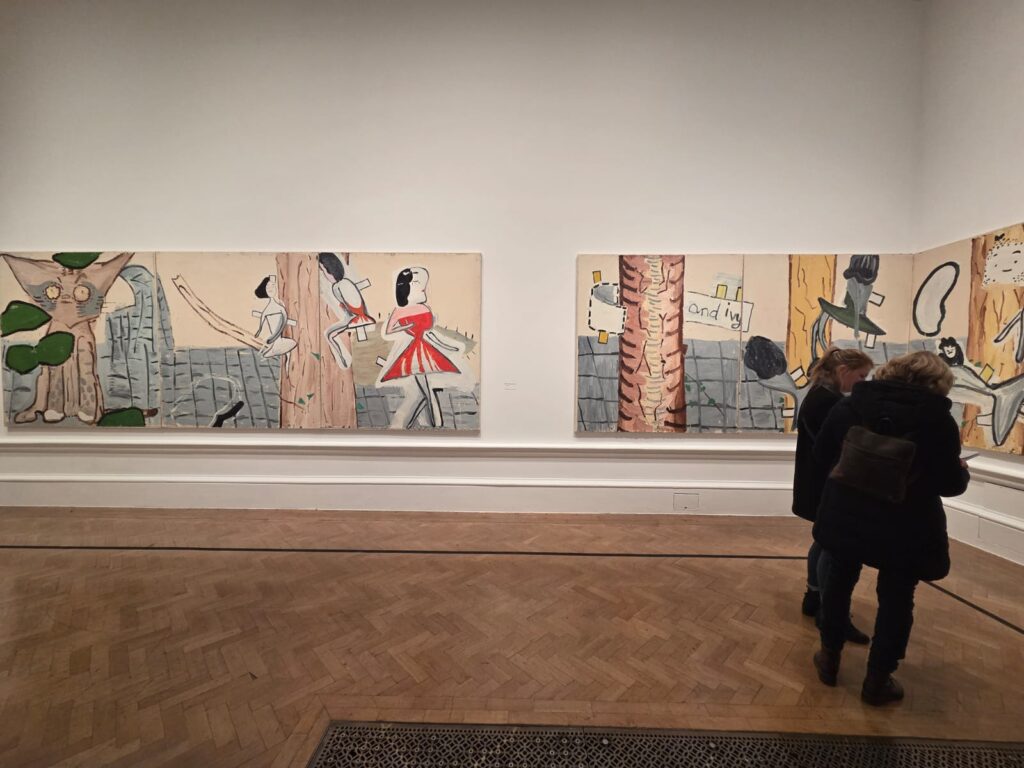
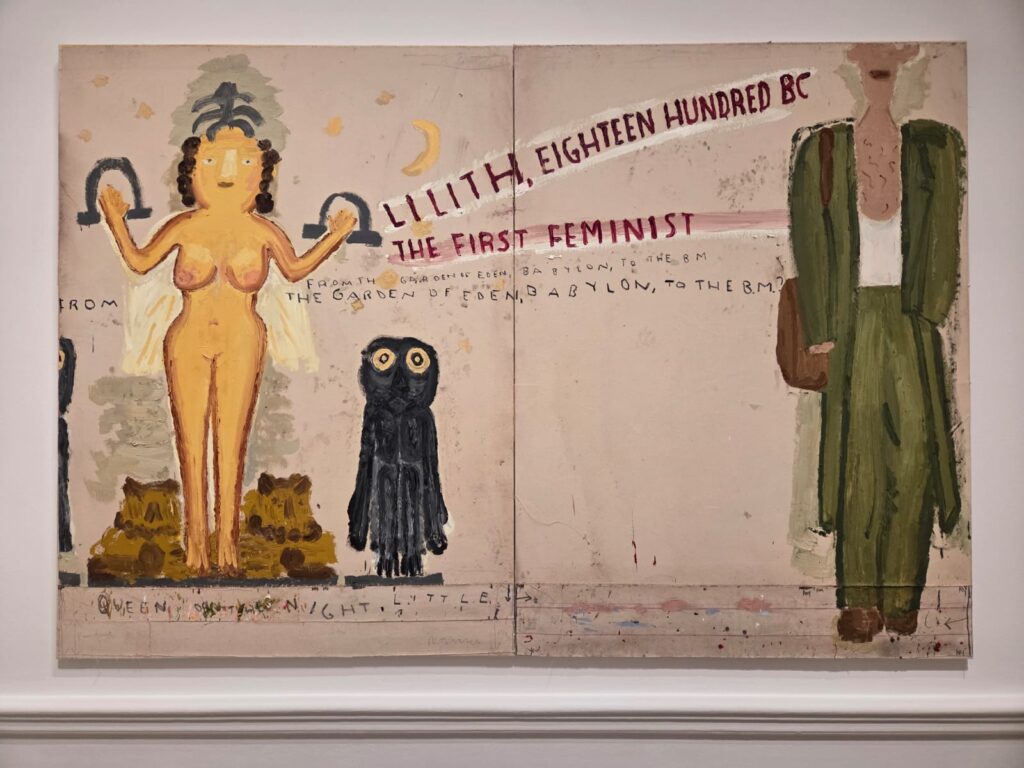
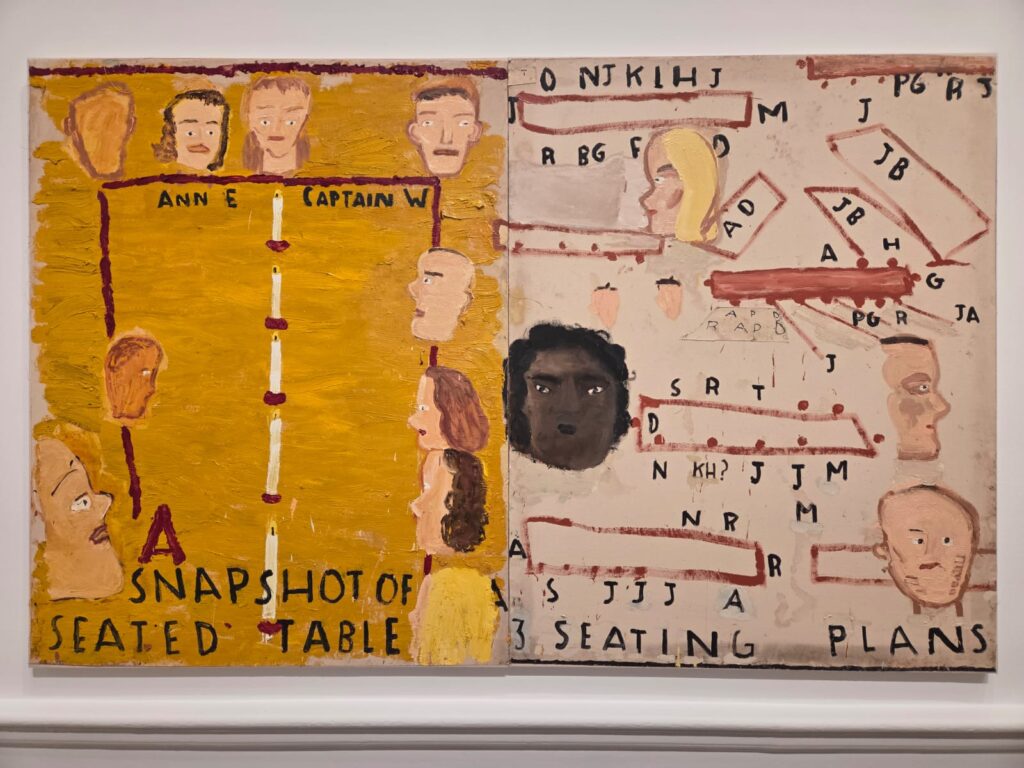
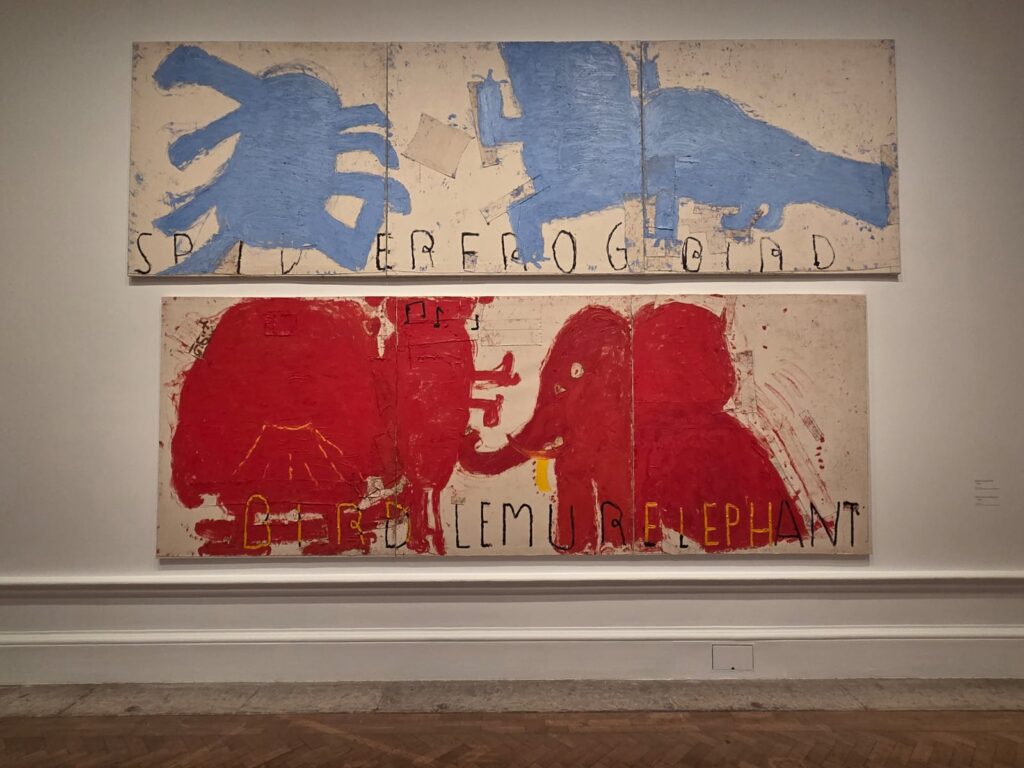
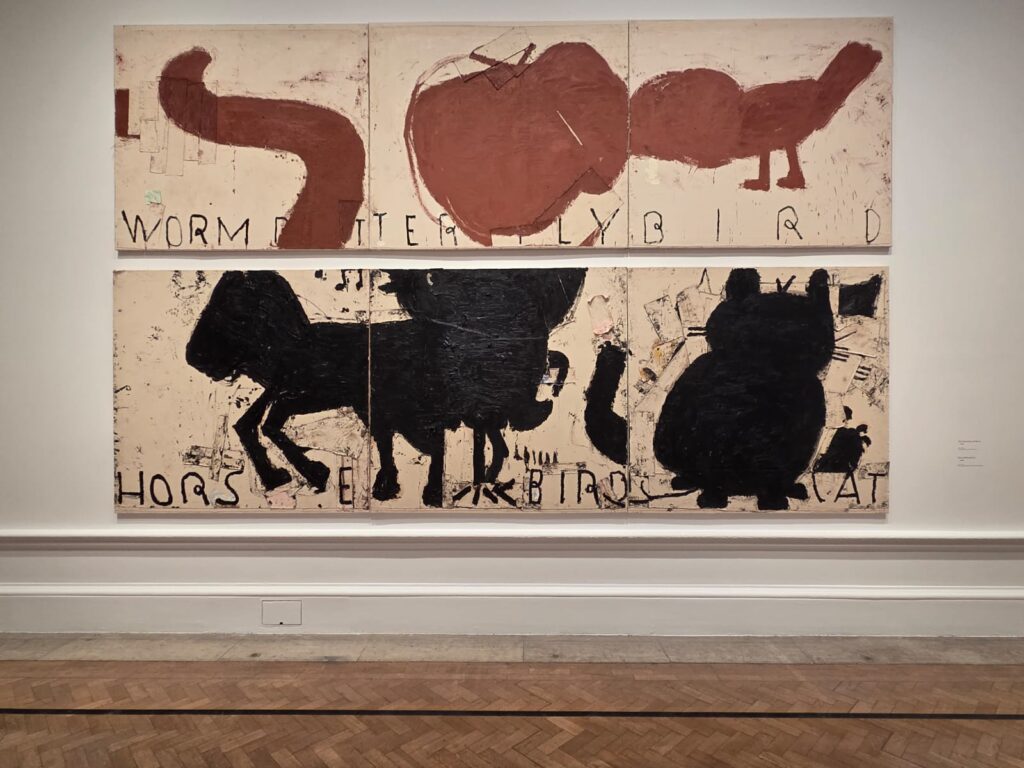
The other thing that defied my expectations was that the information appeared to be quite… matter of fact, maybe? Not too much interpretation of Wylie’s work, other than noting the sources and a bit of helpful context. Is it that Wylie’s paintings are accessible enough that you don’t need dense art historical write ups? Perhaps. Although don’t be fooled by the fact that she uses the visual language of children’s art. There’s a lot more going on besides. Maybe it’s also that a retrospective is best when it presents key works from across an artist’s career, and lets them speak for themselves.
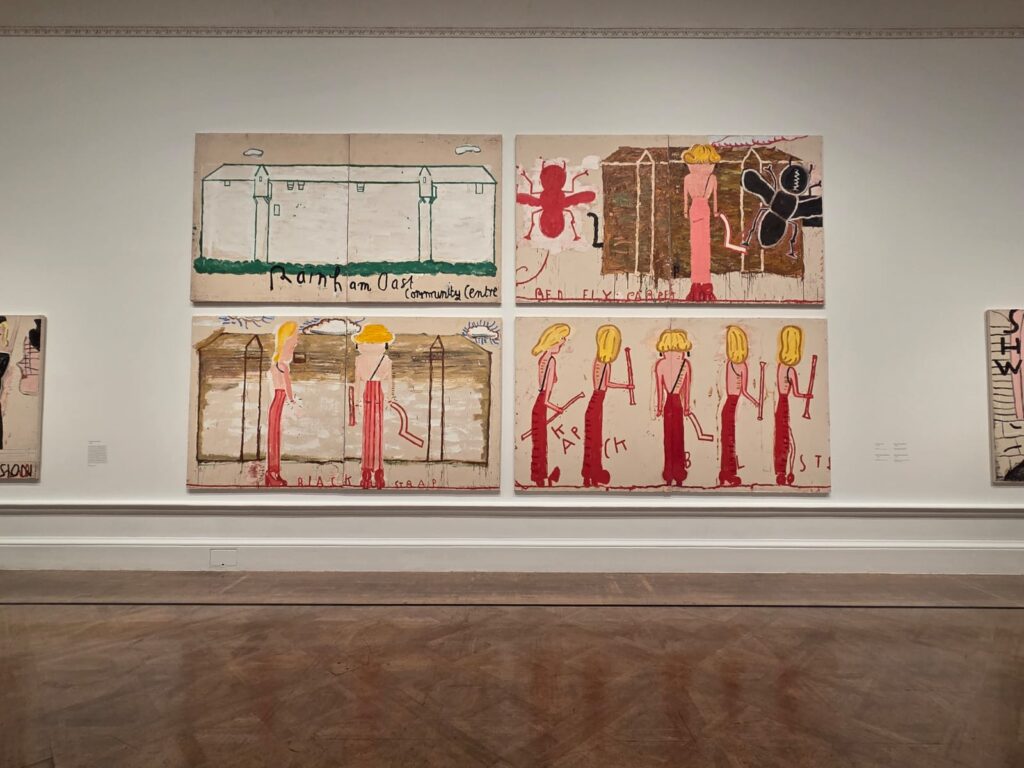
And I think that’s largely what the Royal Academy achieve here. Once you figure out the flow of galleries, there is a sense to the presentation. That first space contains paintings imbued with memories of those wartime bombings. The intersection of Rose Wylie the child and Rose Wylie who accesses memory, emotion and commentary through ‘childlike’ imagery. Then we see Room Project, the series that saw Wylie achieve new levels of renown. The works show the hand of an already confident artist, with her own vision and style.
A Magpie’s Eye
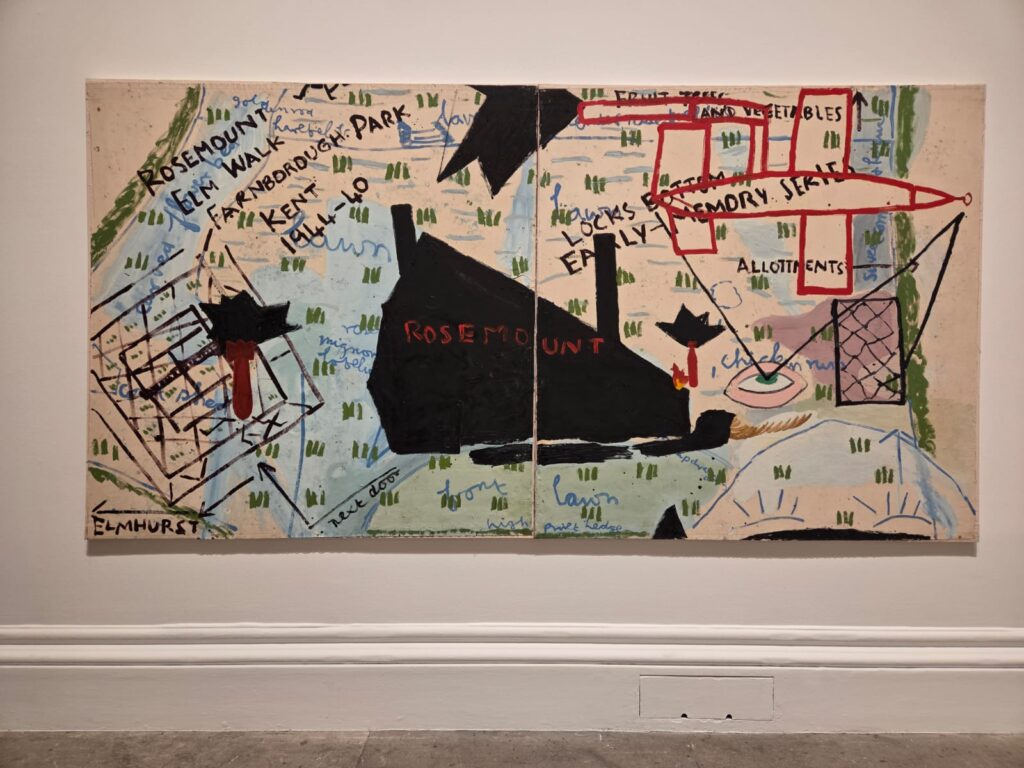
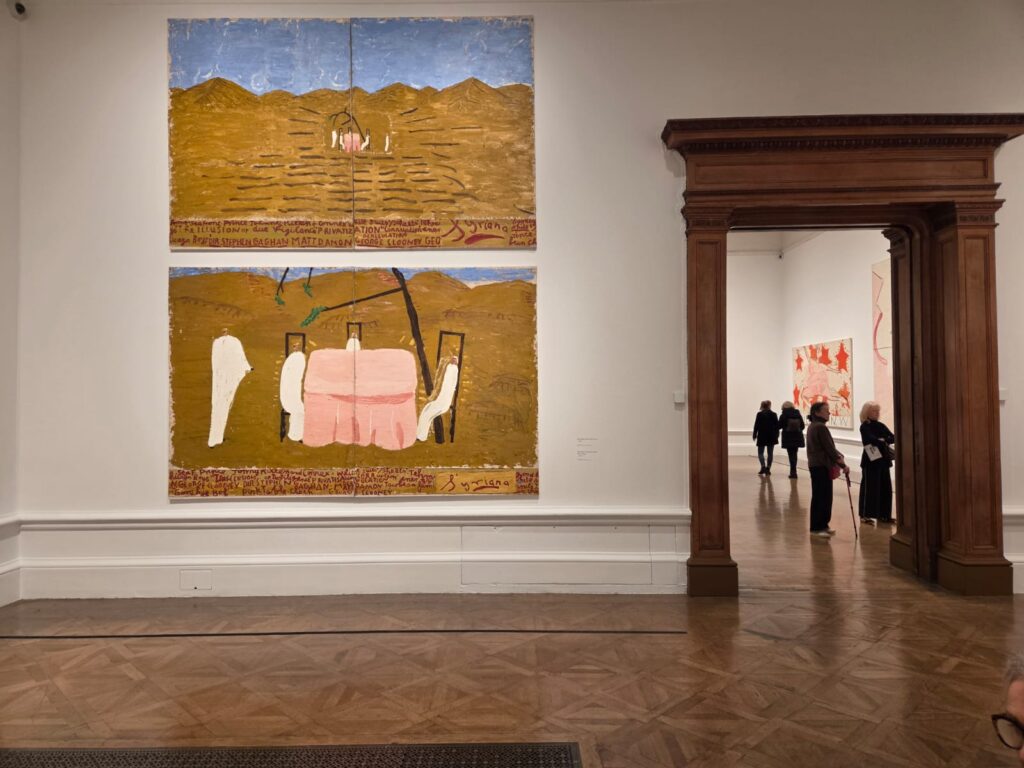
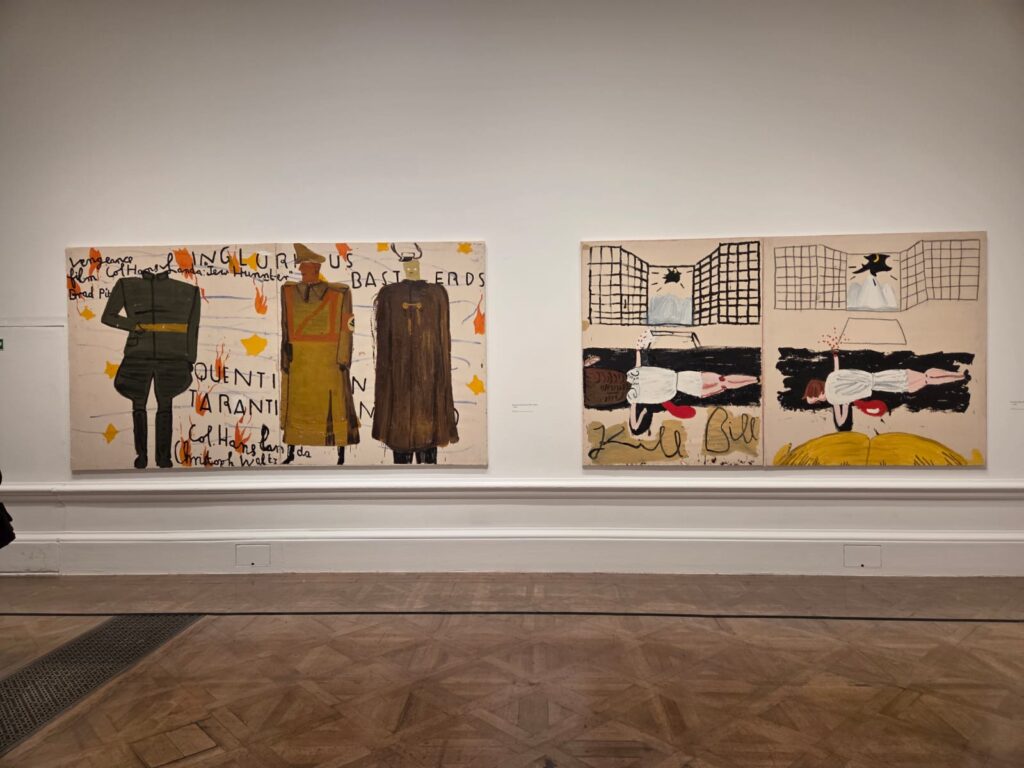
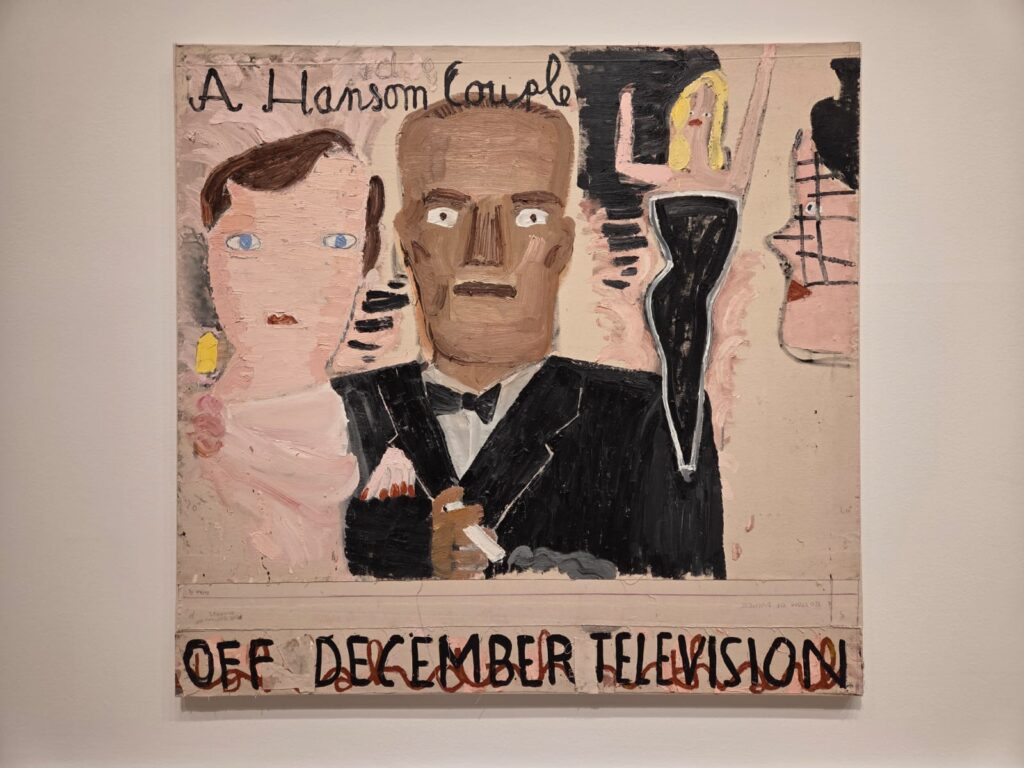
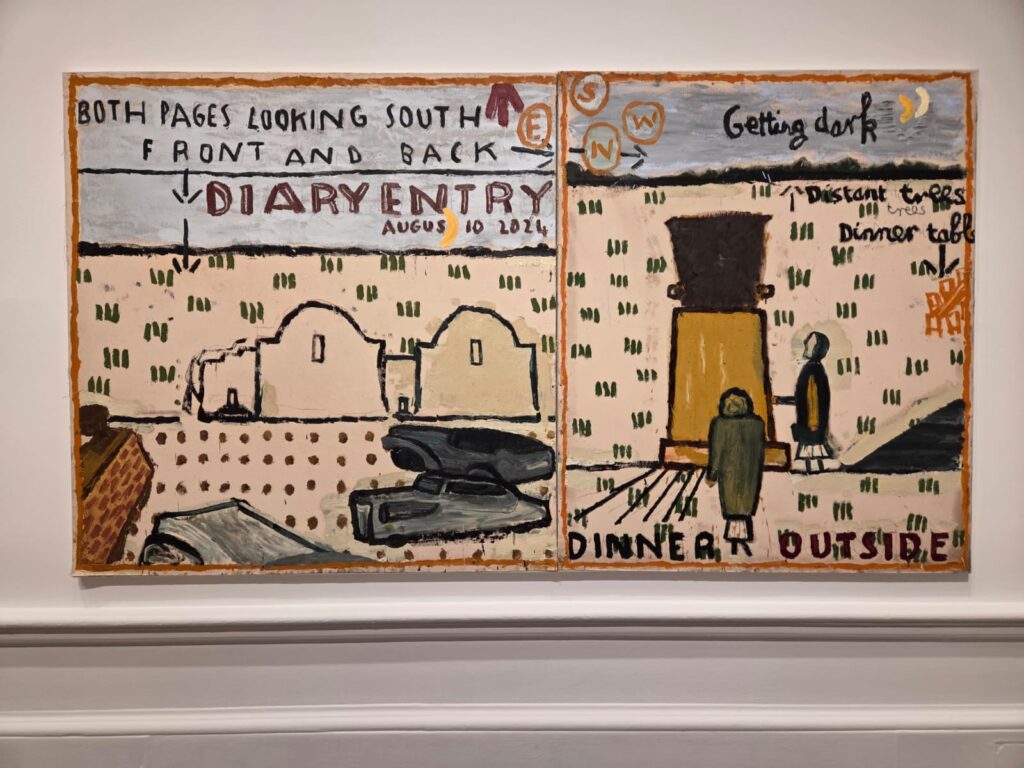
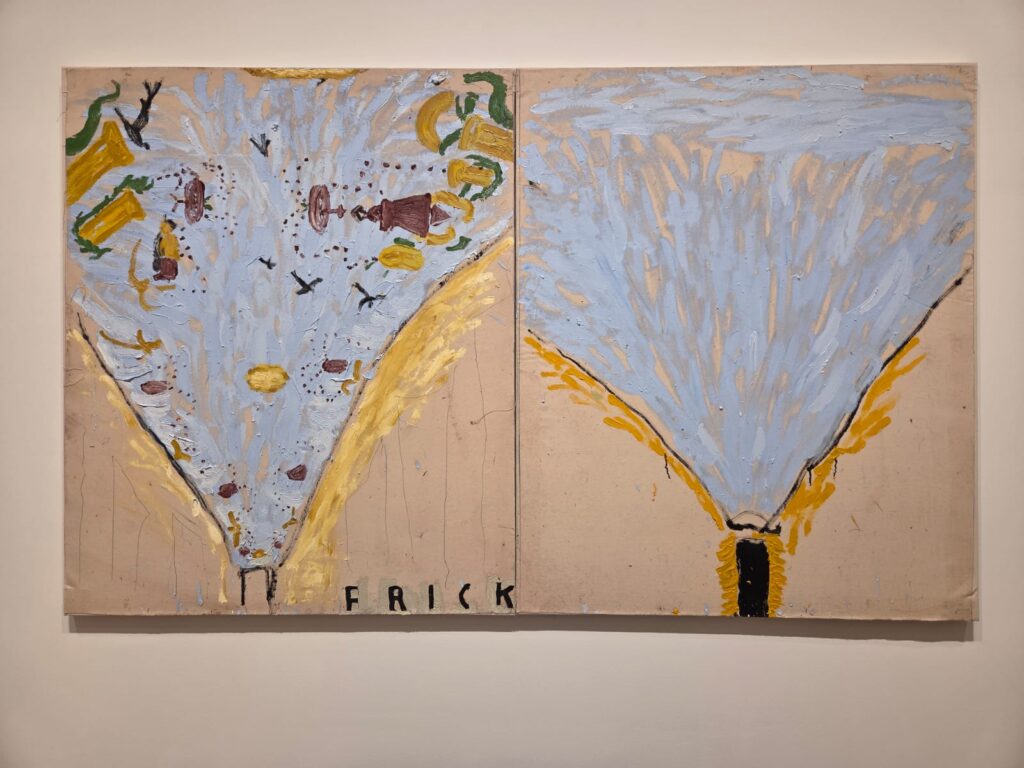
Subsequent galleries continue to be arranged mostly by series. Often, what distinguishes them seems to be their inspiration, more than differences in their style. Although there are stylistic differences, too – particularly sparser and denser compositions. Wylie is something of a magpie, finding subjects for her paintings in newspapers, films, diaries, and other sources. It brings to mind Francis Bacon: Man and Beast, which I saw in these same galleries. You don’t need detective work to find Wylie’s sources, however. She often writes them directly onto the canvas, such as the paintings depicting scenes from Inglourious Basterds or Syriana. The films in this series are somehow recognisible yet distinctly Wylie’s.
Reflecting on the exhibition, I feel like I got a good overview of Wylie’s work. I saw lots of major series and paintings, and could talk cogently about them. I don’t feel like I got far beneath the surface, however. Perhaps this is because the types of exhibitions I really like are actually the smaller ones, that take an idea and explore it in depth. That’s not what a retrospective is for. Or perhaps I needed just a little bit more from the curators to make the most of my experience.
Either way, this is a good start for the Royal Academy in terms of retrospectives of female painters in the main galleries. Wylie’s large-scale canvases look great in these rooms, and it’s heartening that her late-career success is continuing. For me, it has been a reminder to step back and think about what an institution’s programming tells us: who is included and who is absent. May many more exhibitions follow in this ilk.
Salterton Arts Review’s rating: 3.5/5
Rose Wylie: The Picture Comes First on until 19 April 2026
Trending
If you see this after your page is loaded completely, leafletJS files are missing.