
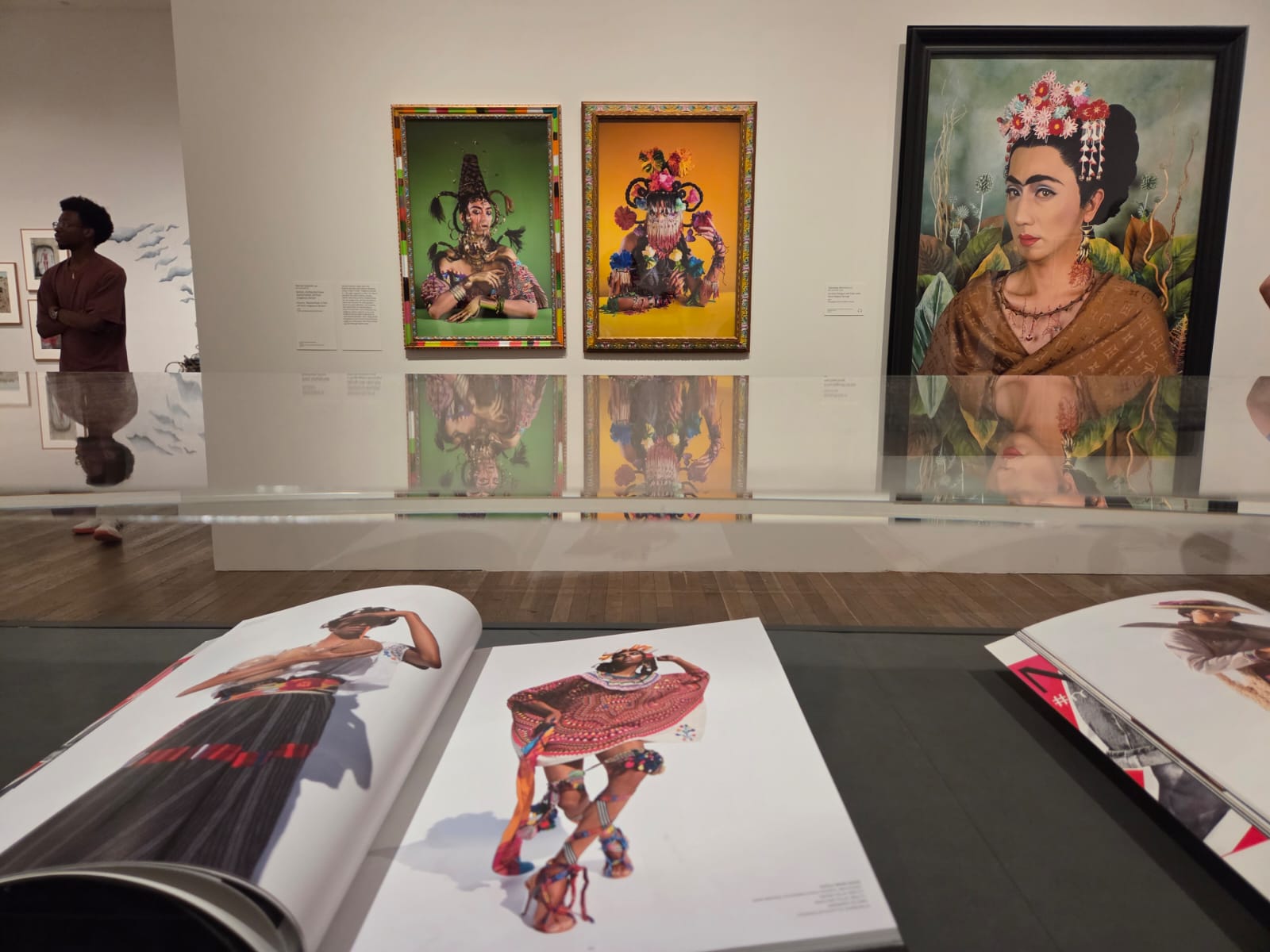
Frida: The Making of an Icon – Tate Modern, London
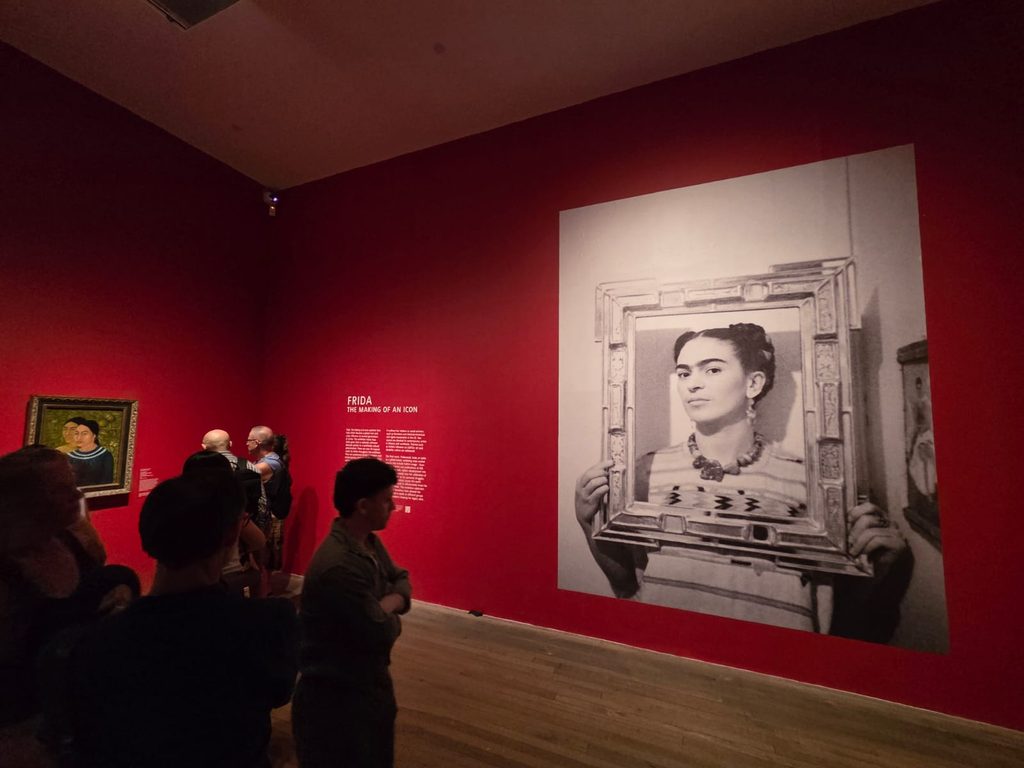
The Tate exhibition Frida: The Making of an Icon examines how Frida Kahlo came to be such a phenomenon, looking at her art and image in the context of her contemporaries, and the impact she has had on subsequent generations of artists.
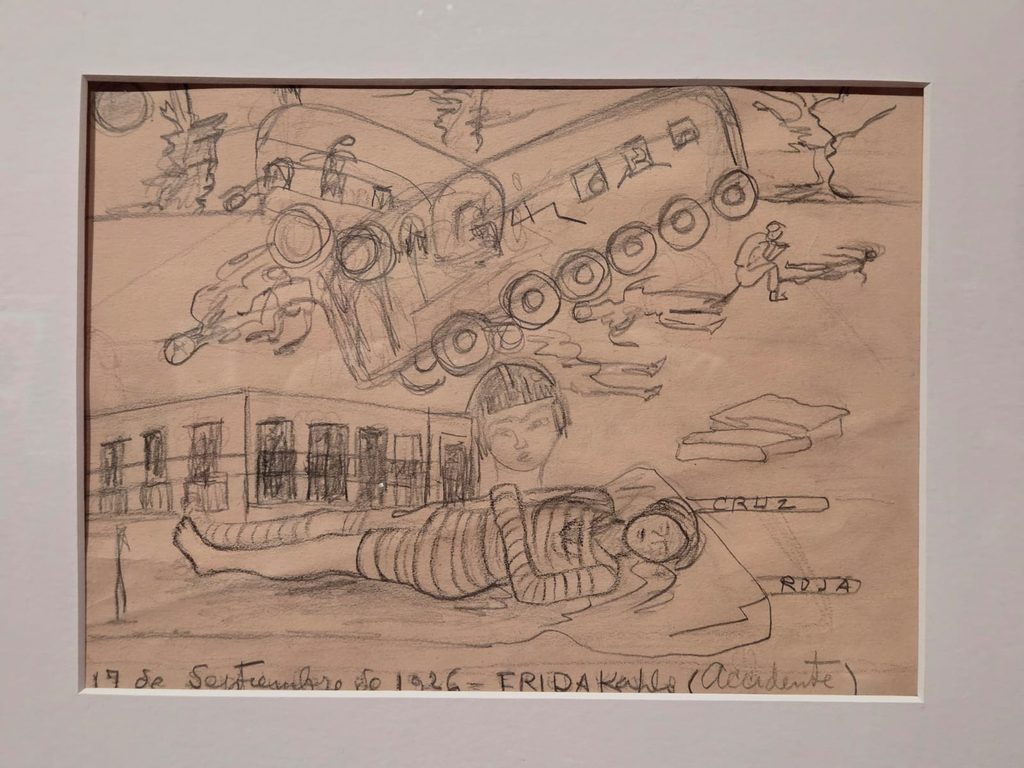
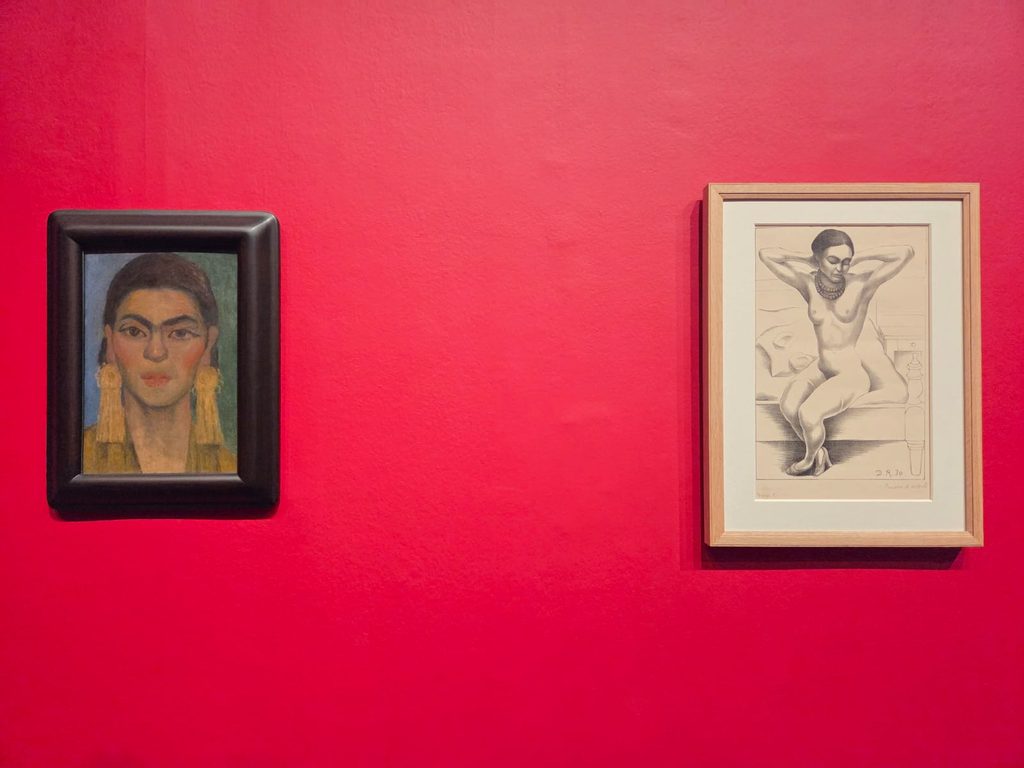
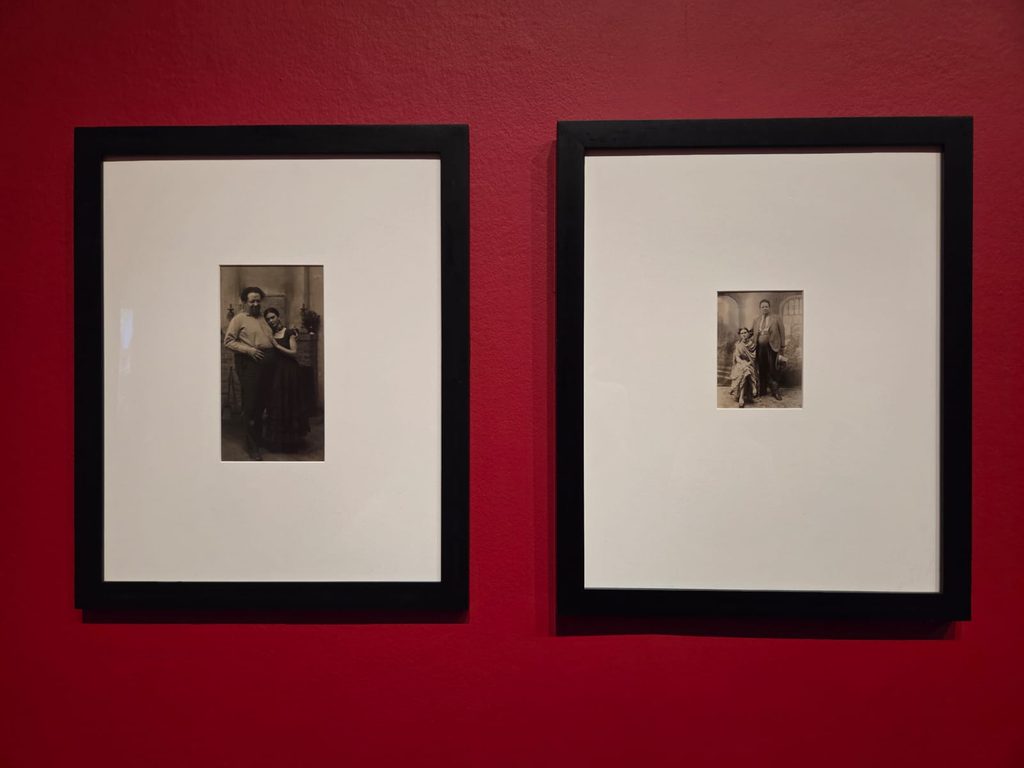
Mixed Reviews for Frida
Before I jump in, I think the moral of this story is that I shouldn’t let social media posts and headlines sway me either way. Because the reason I bought tickets to Frida: The Making of an Icon before the reviews had come out was that I saw a headline somewhere saying that the advance ticket sales were unprecedented. And I’ve at least once before had to buy a membership to a gallery because tickets for an exhibition I wanted to see had sold out. I didn’t want to start that again, so I got tickets. But then the reviews did come out. And I saw that some critics did not like the exhibition. ‘Oh well’, I told myself, ‘I’m going anyway, so I’ll just make my own mind up’. And I did just that. Next time, though, I shouldn’t let a false sense of scarcity dictate my planning.
But I did go. An evening slot, which was busy – but busy with adults. A type of busyness I can better cope with than the more family-friendly hours of the day. Am I becoming grumpy in middle age? Or was I grumpy already? Either way, busy but manageable.
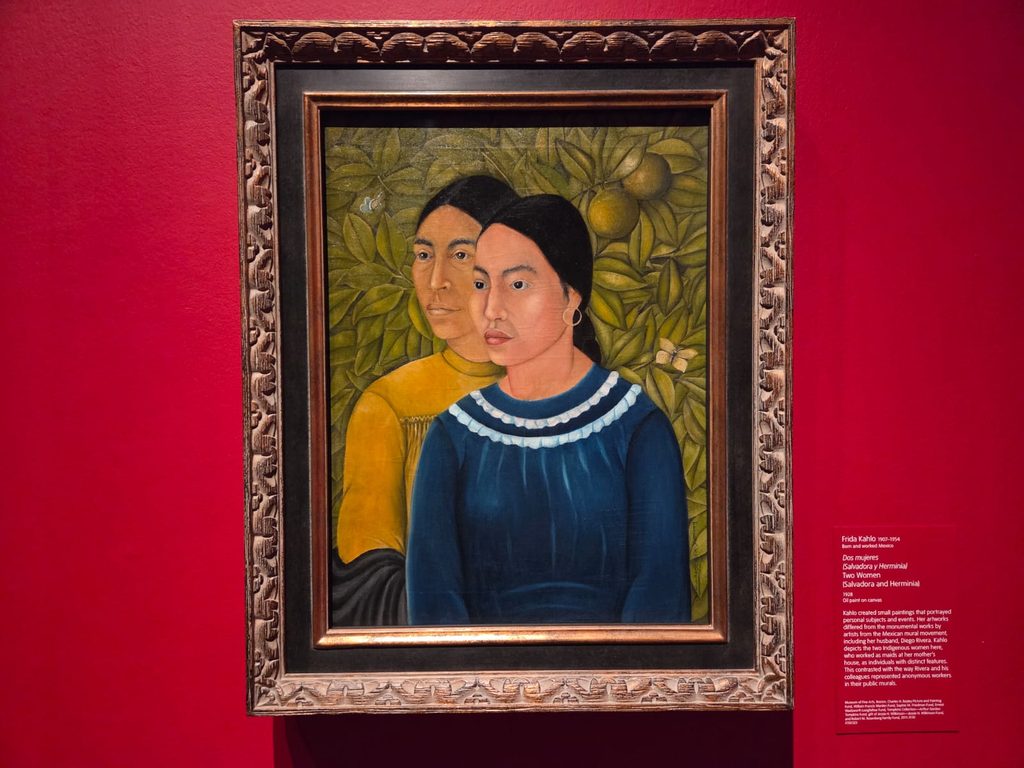
The thesis behind Frida: The Making of an Icon is, as the title suggests, not just about the artist’s work itself. It’s about how she went from being “Diego Rivera’s wife” to a cultural icon in her own right. The subsequent artists she has inspired, and even the commercialisation of her image. An interesting topic, but I can see how if you’re expecting Frida to be an exhibition of Frida Kahlo alone, you might be a little curmudgeonly about it.
In the end (spoiler alert), I mostly liked it. There are a good number of works by Kahlo, especially considering her output was small – around 150 paintings. Some of the additional aspects of the exhibition I liked, and others I wasn’t as interested in. But I’m going to come onto one of my more controversial opinions now, so let’s get to it.
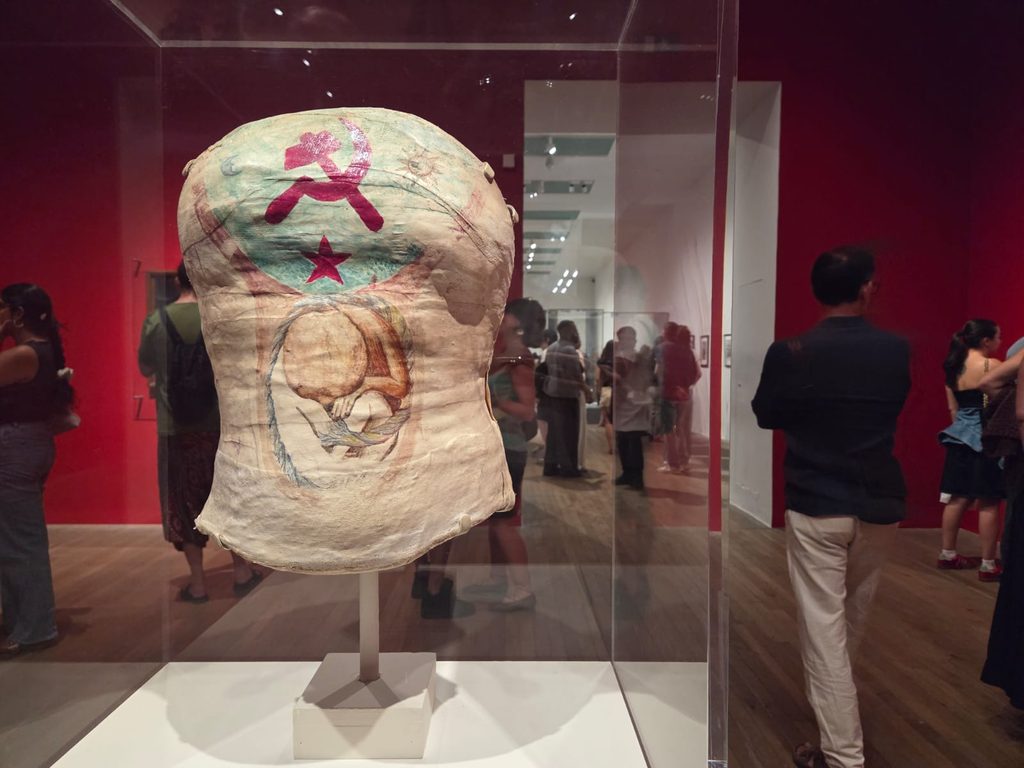
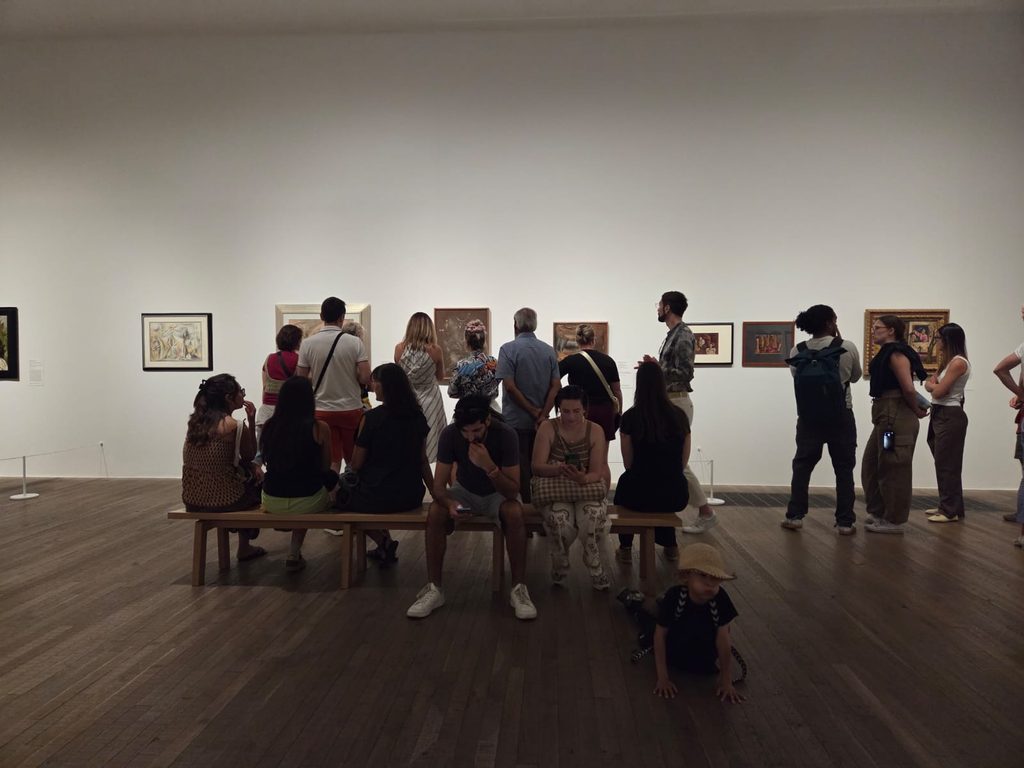
The Case For and Against Frida Kahlo
So I know I complain with regularity about the size of some of the Tate’s exhibitions. Too big, too busy. They’ve got quite a space to fill here. And one of the challenges, as we’ve already established, is that there just aren’t that many paintings by Frida Kahlo. Natural, then, to combine it with something else. But an ungenerous thought I had as I perused the exhibition is that she is also not a very good painter, technically speaking, and that this would be more apparent if it was only her work in the exhibition.
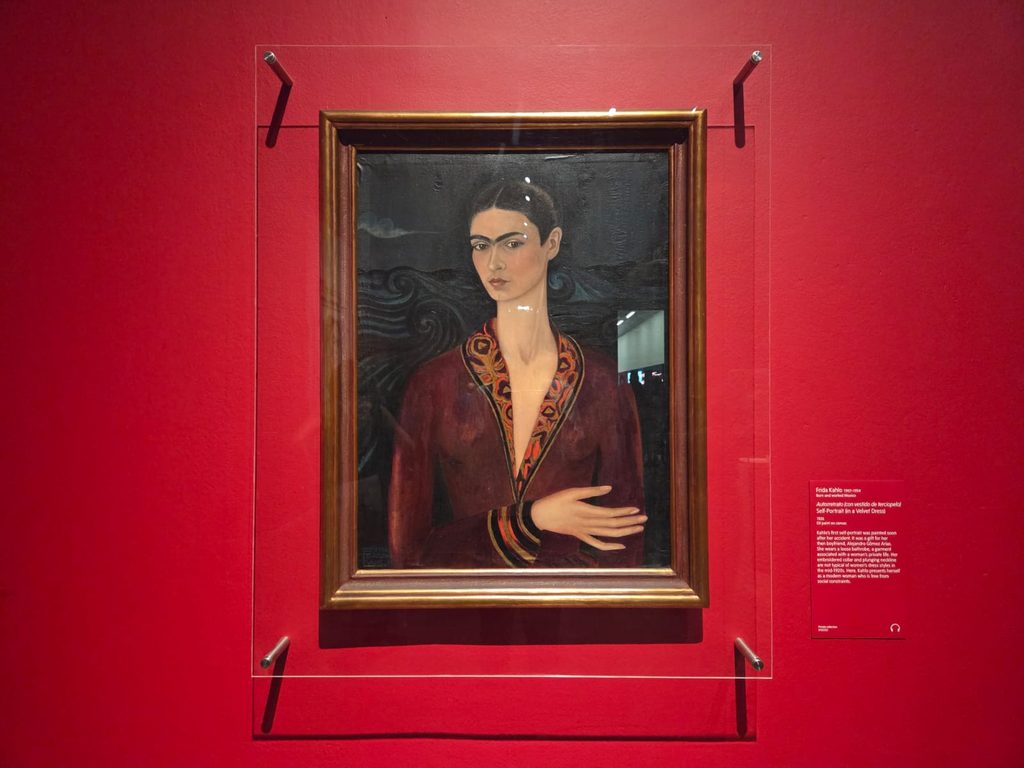
Hear me out! I think that the ideas, compositions, emotions in her paintings are absolutely top-notch. I prefer her work to Rivera’s in this regard. But what I mean is their rather flat aspect and sometimes awkward figures. There’s an argument that this was a choice – leaning towards Mexican folk art rather than Western academic painting. But it’s also just a fact that she had less formal training than many other famous artists. We know for a fact that Picasso was making a choice to skew spatial depth and proportions, for instance, because we can see paintings where he chose not to do that. With Kahlo, it’s less clear.
This feels pretty mean-spirited. I’m sorry, Frida. But it aligns with one of the criticisms levelled against Kahlo by her detractors – that the interest is more in her life and identity than her as an artist. Looked at another way, that’s kind of what this exhibition is about.
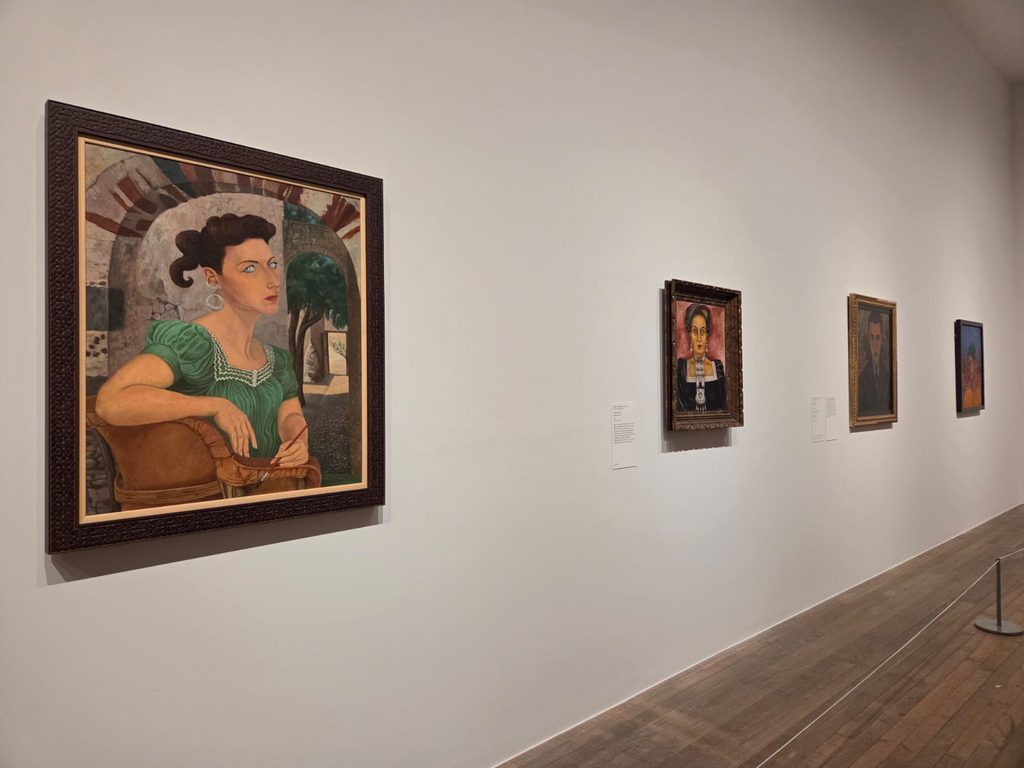
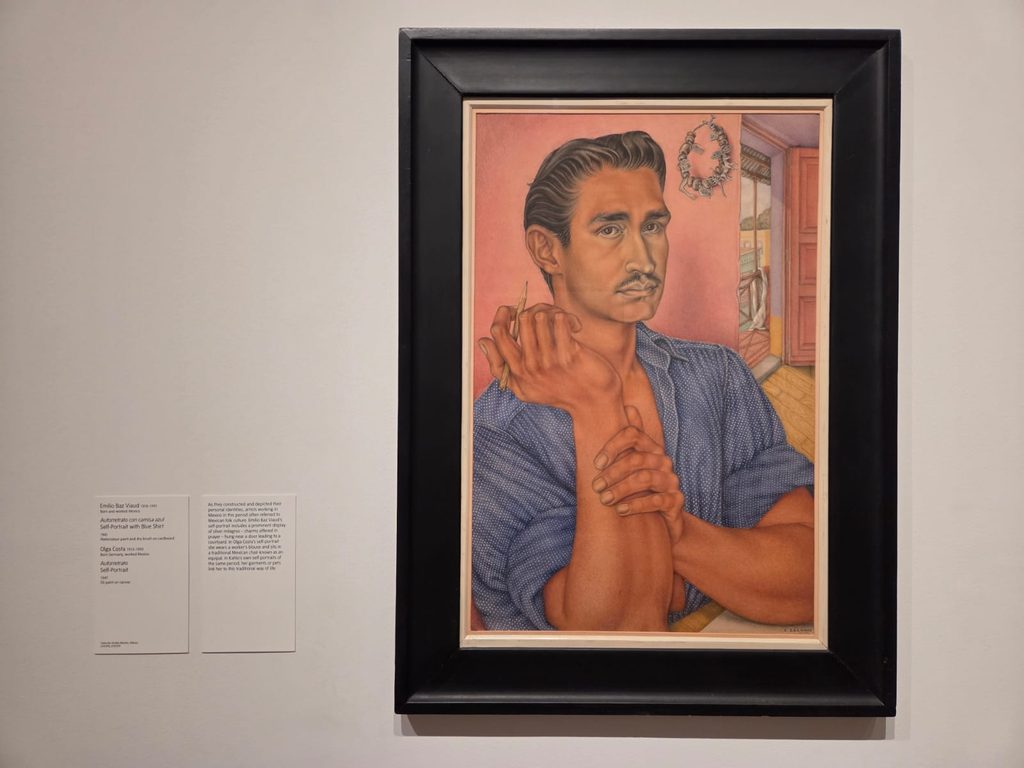
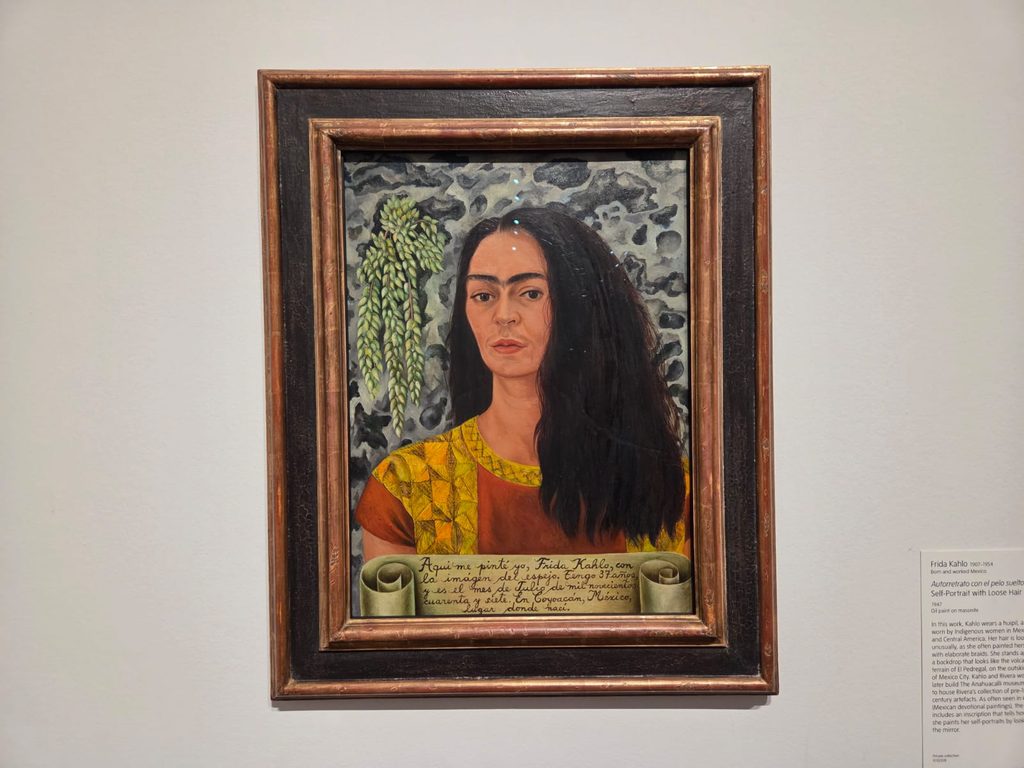
And while seeing her work within the context of her circle didn’t entirely change my mind, it was interesting to see a certain alignment of approach but idiosyncrasy of technique within the work of her contemporaries. What do I mean by that? Lots of searing self-portraits, artists gazing directly into their own souls. But a very varied way of achieving that, using simplicity as Kahlo did, or colour choices, or something else entirely. There’s an excellent watercolour by Emilio Baz Viaud, for instance, and an extraordinarily vibrant work by Abraham Ángel. These are juxtaposed with Kahlo’s Autoretrato con el pelo suelto (Self-Portrait with Loose Hair), 1947.
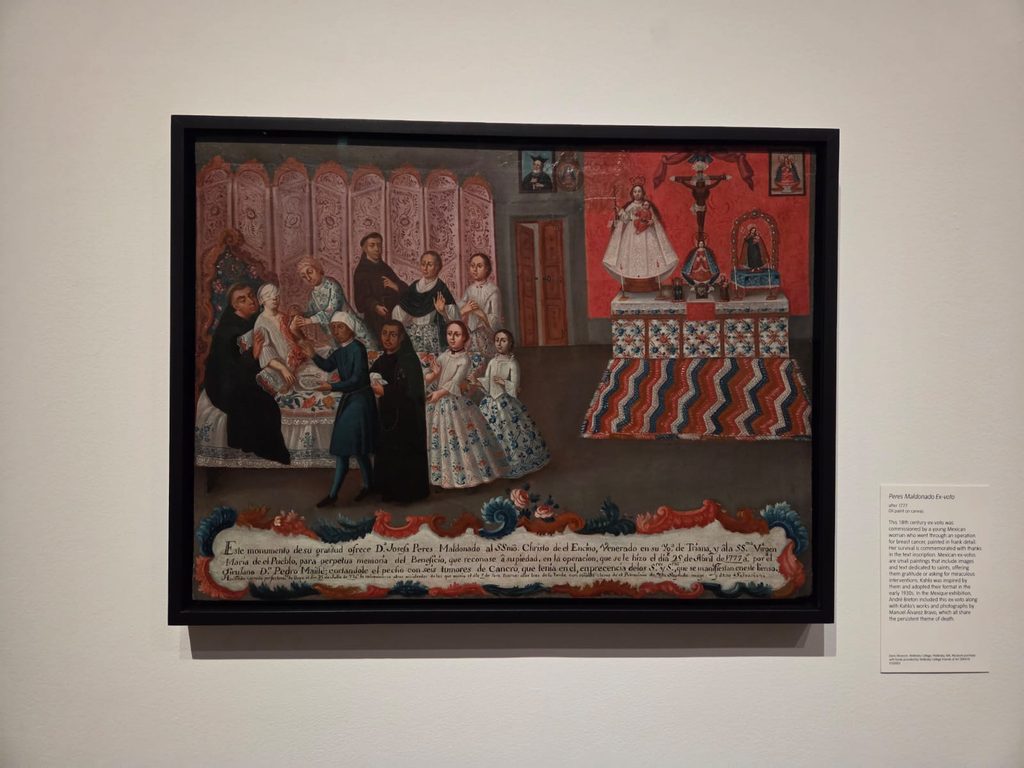
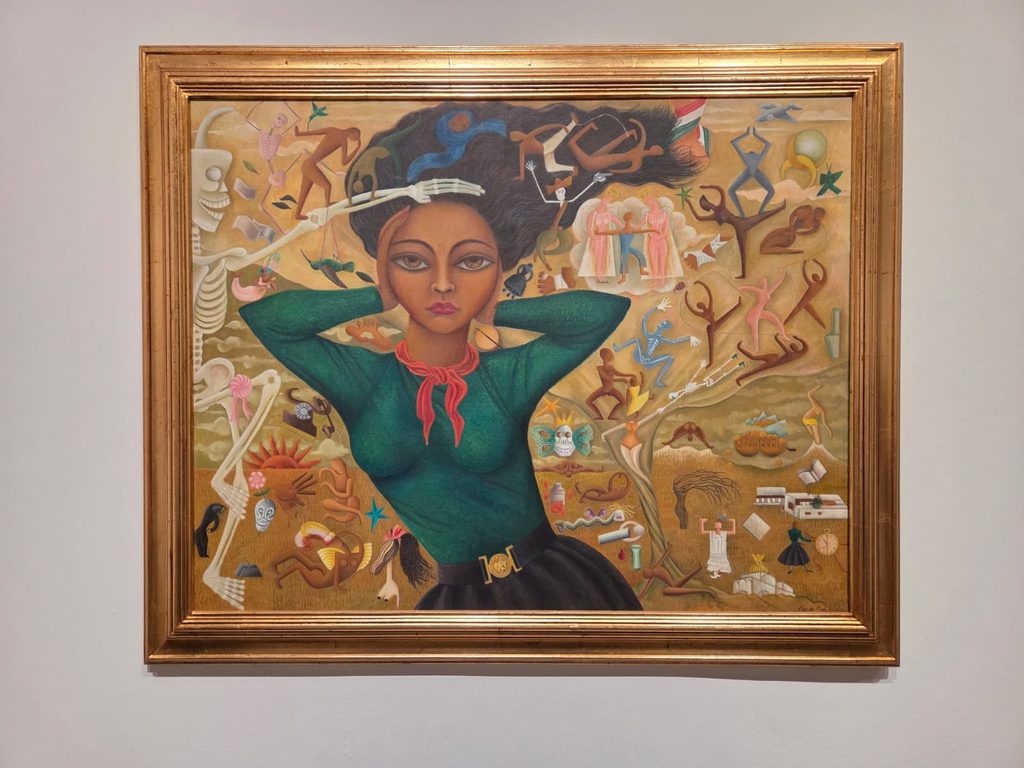
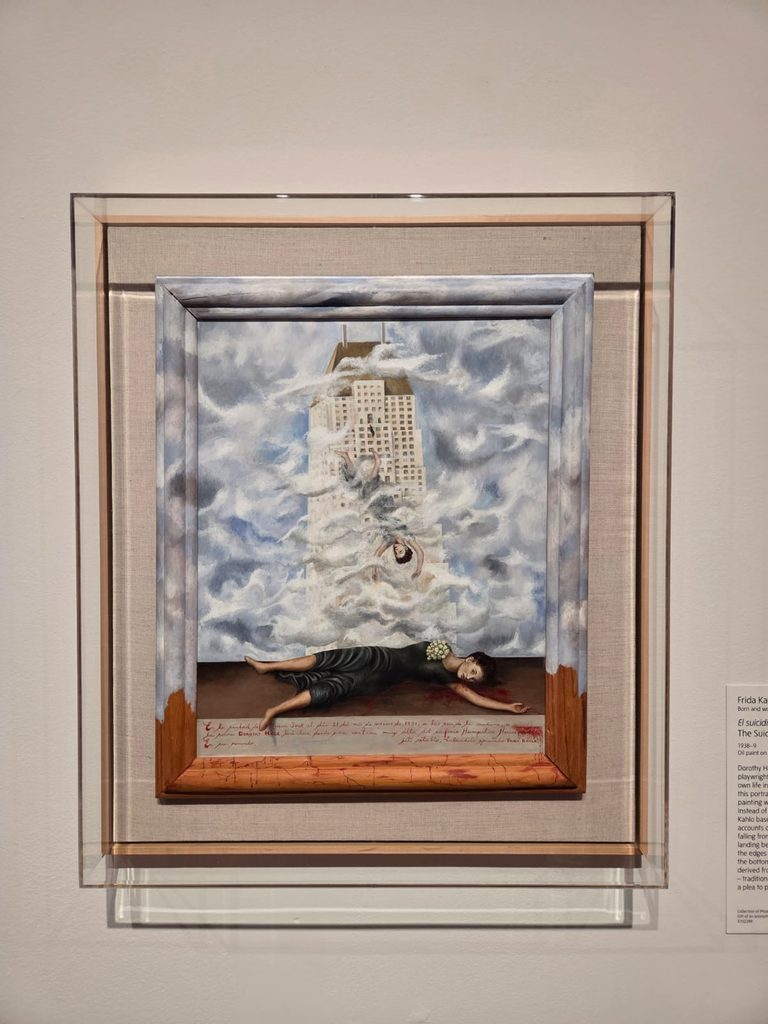
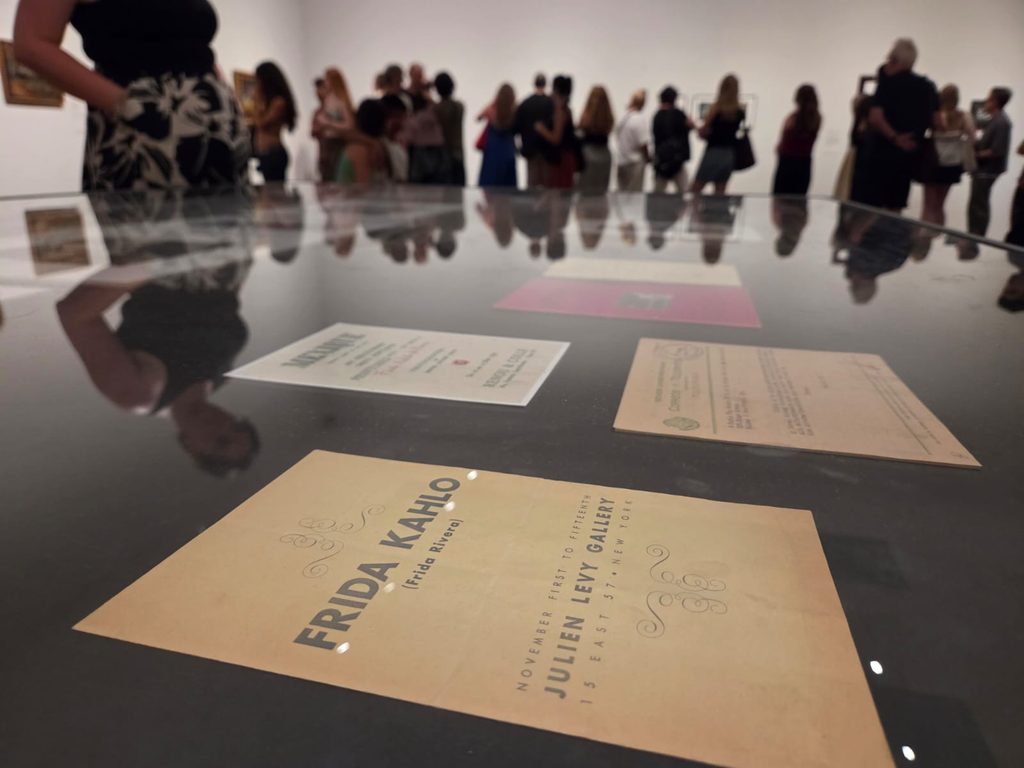
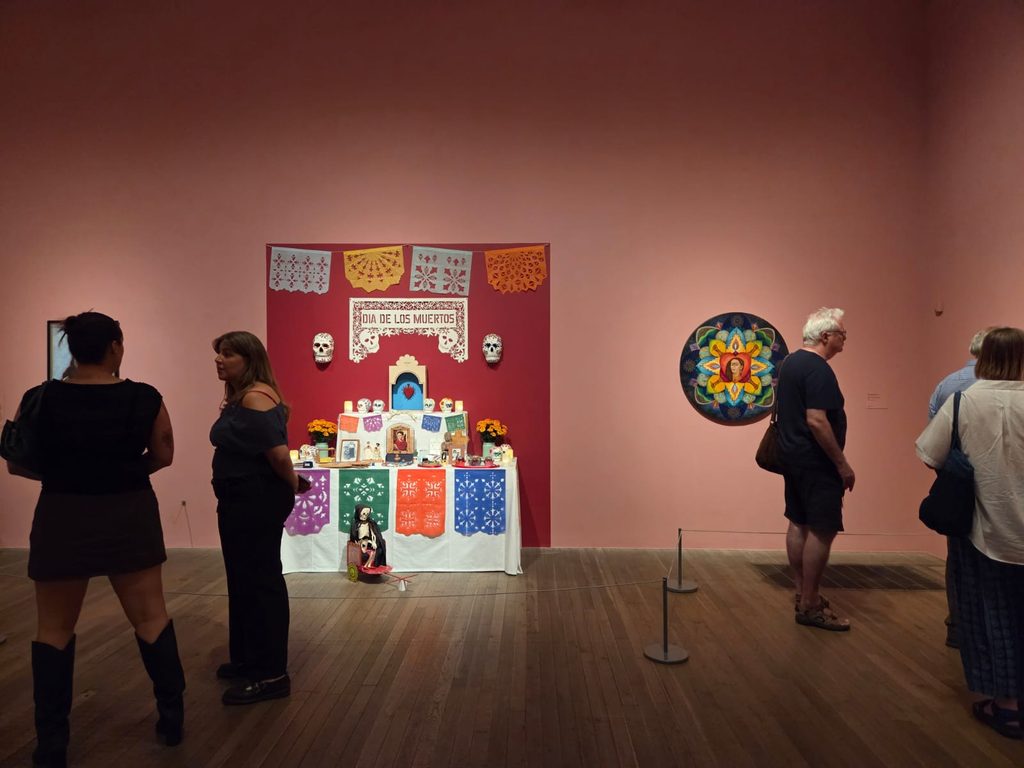
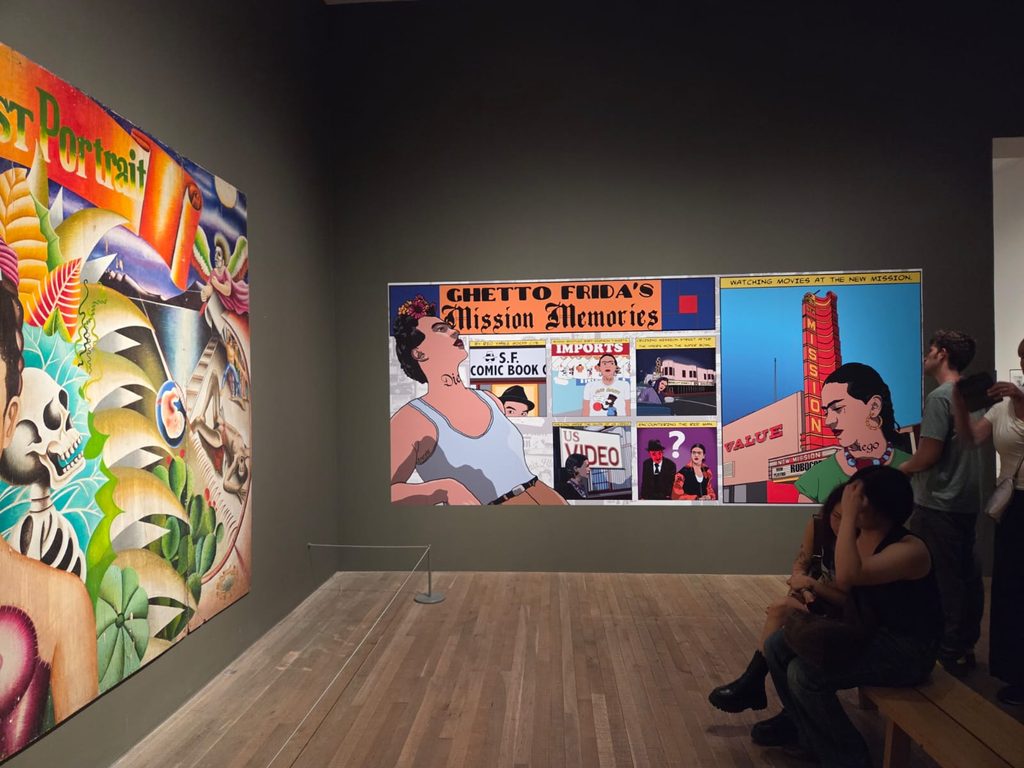
Let’s Continue Along This Line of Thought
One thing I think the Tate could have gone a little deeper into is this question of style over substance. Of the artists who took inspiration from Kahlo’s work, which are responding to her life story or her image, and which are responding to something more inherent in her art?
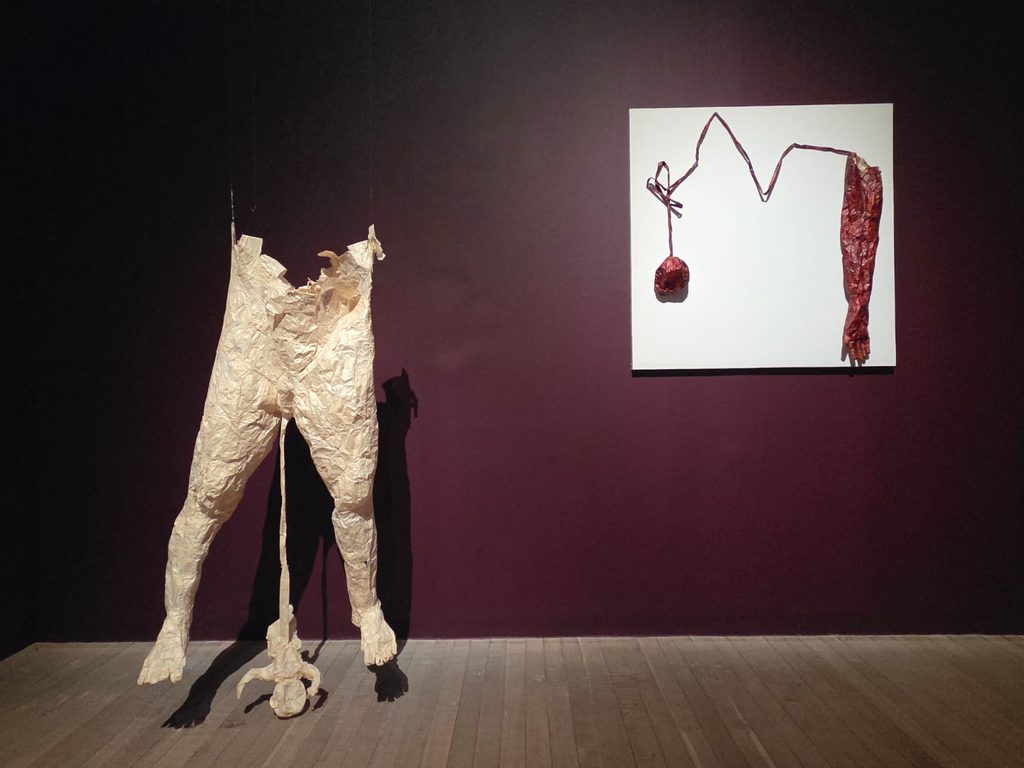
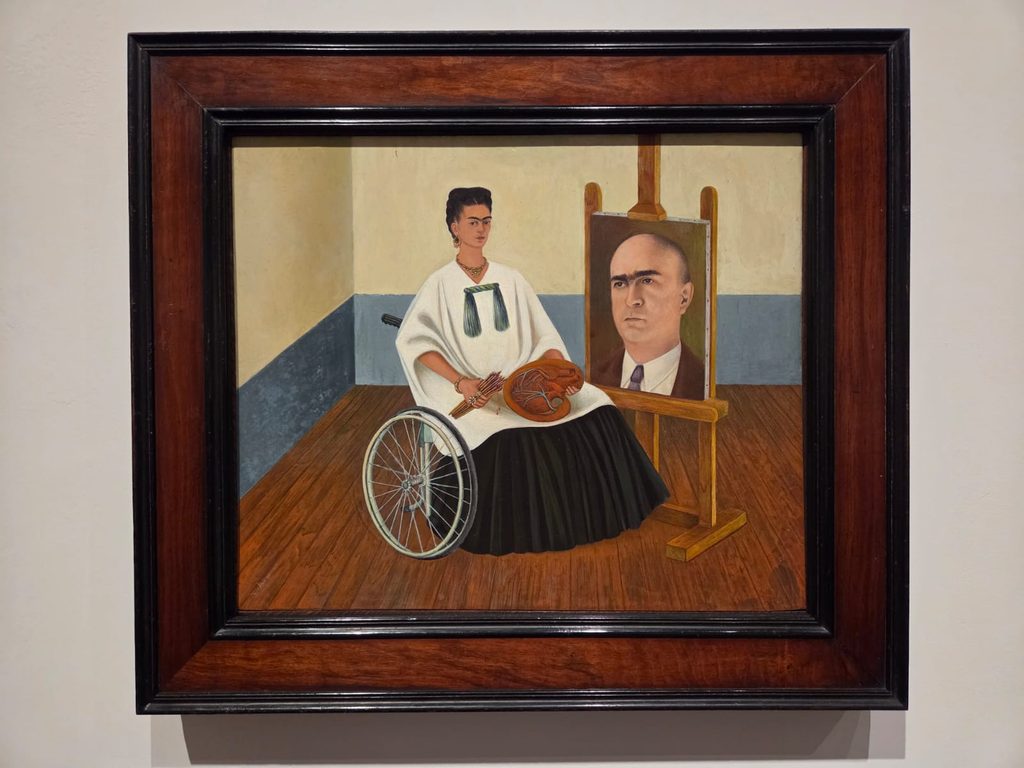
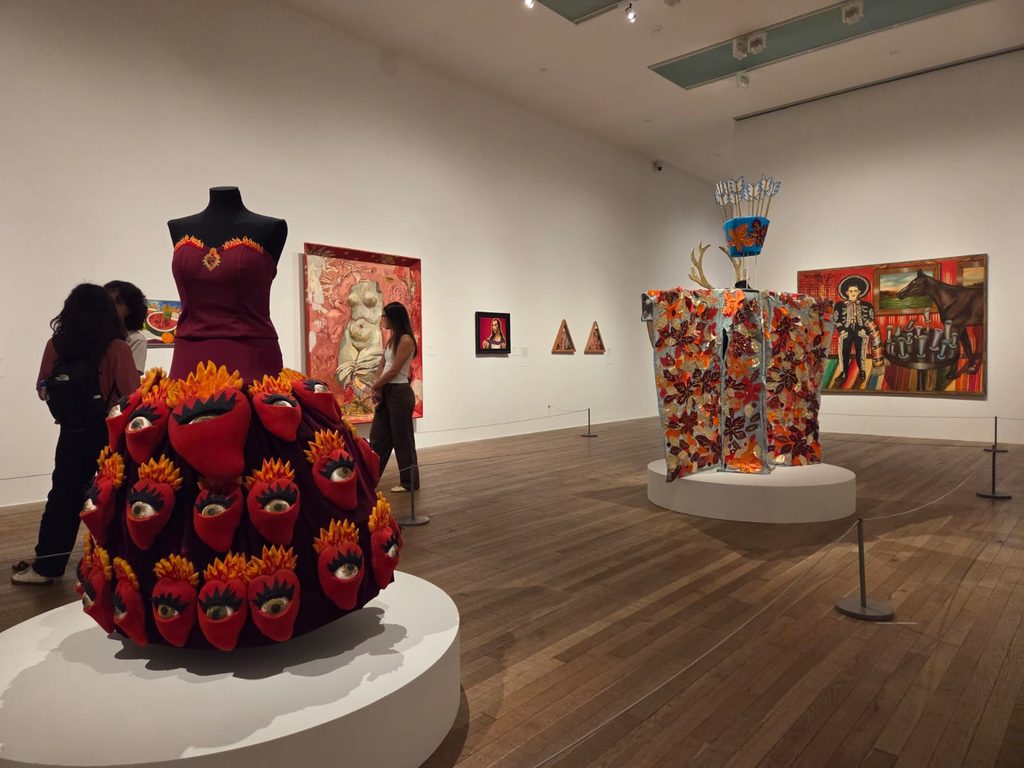
Actually, you know what? I’m changing my mind as I write this. The separation isn’t that simple. There are works that very much focus on disability, for instance, which is an aspect of her life story. But so did Kahlo explore disability in her work, for example in La Columna Rota (The Broken Column), 1944. And sections of the exhibition do look at how each group of artists responded to Kahlo. The first exhibition that paid homage to her at Galería de la Raza in 1978. The artists campaigning for the rights of Mexican Americans. Those who responded to her gender expression and sexuality. Or her activism. Arguably the alignments feel a little more tenuous as you go through the exhibition. But the understanding of what Frida Kahlo meant to each is there.
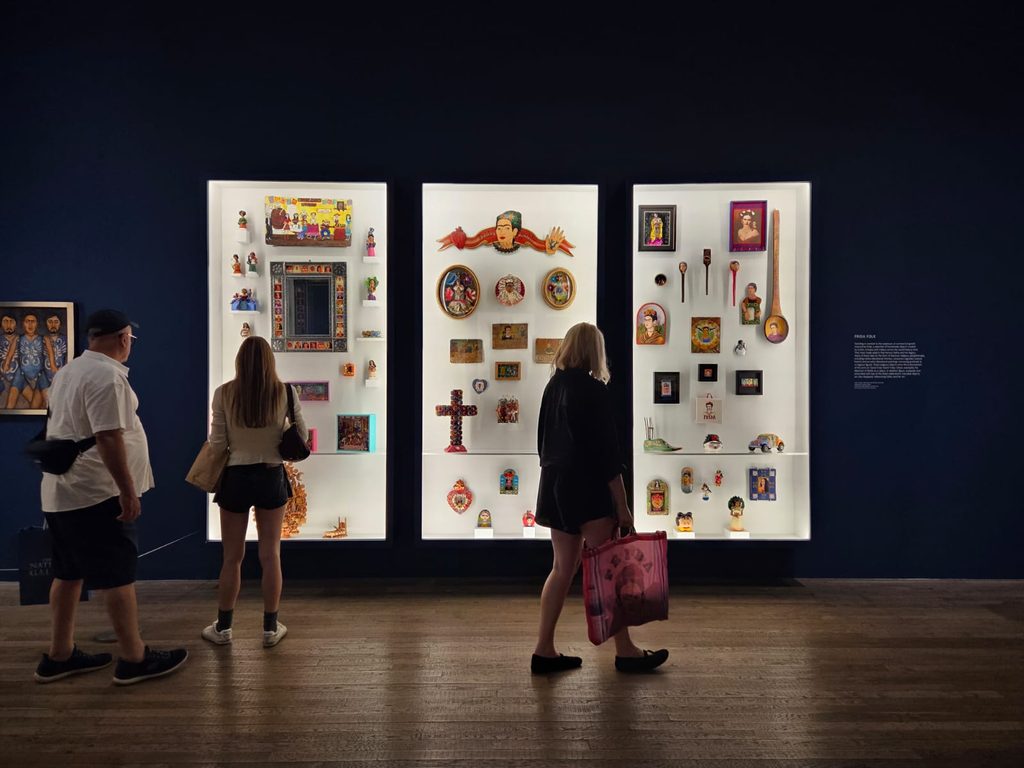
What I think undermined it a little, for me, was the final stretch of the exhibition. Here, the focus is on the commercial use of Kahlo’s image. Her commodification, in other words. By this point, the visitor has already made it through a lot of exhibition. This section, with decreasing artistic merit, starts to feel a bit like the curators are keen to show you every version of Kahlo there has ever been. Children’s books. Wooden spoons. Dolls. Anything to which a monobrow and some bright colours can be applied. There are a couple of paintings here as a nod towards legitimacy. But I don’t think shaving this section off the exhibition would harm it much. When I first walked into this room, I thought it was the shop.
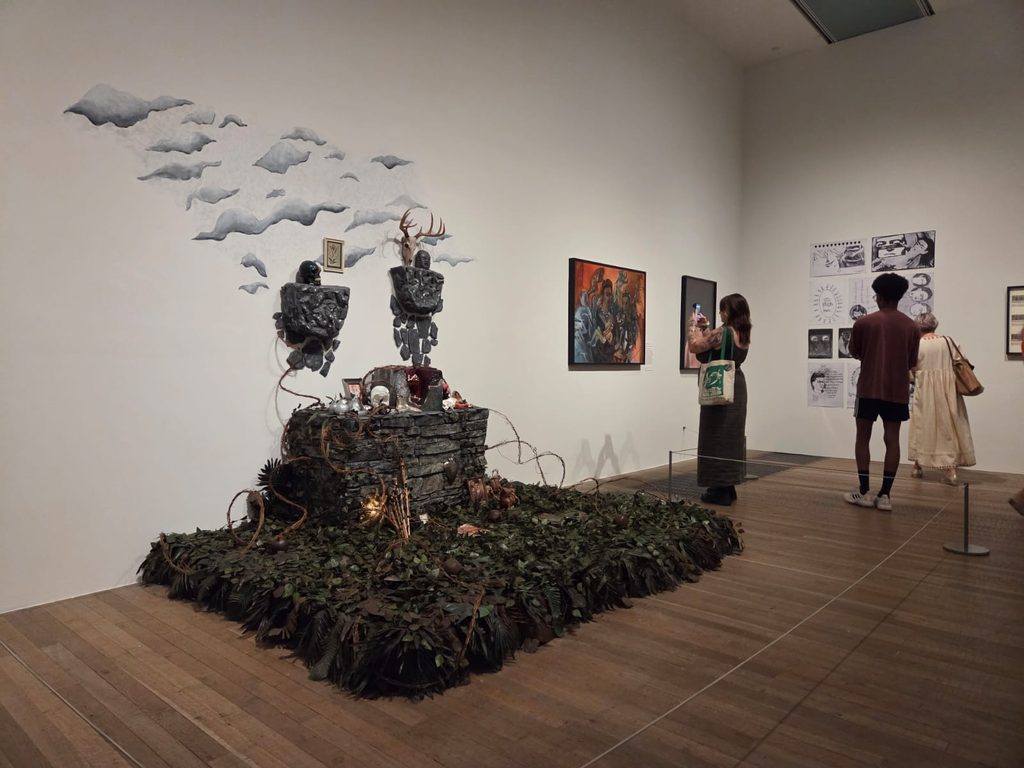
And Then Let’s Finish on a High Note
I said at the outset that I mostly liked the exhibition. Then I complained a lot. Or to put a better spin on it, this was definitely an exhibition that got me thinking. But what were those aspects I really liked, that offset some of the ones I didn’t?
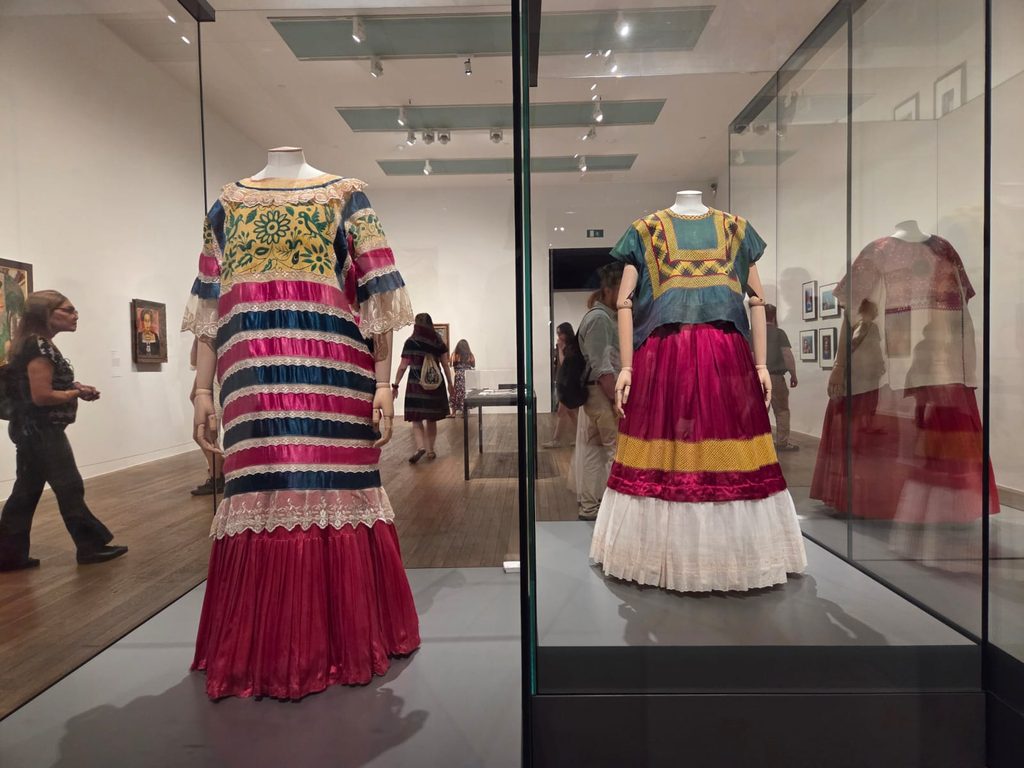
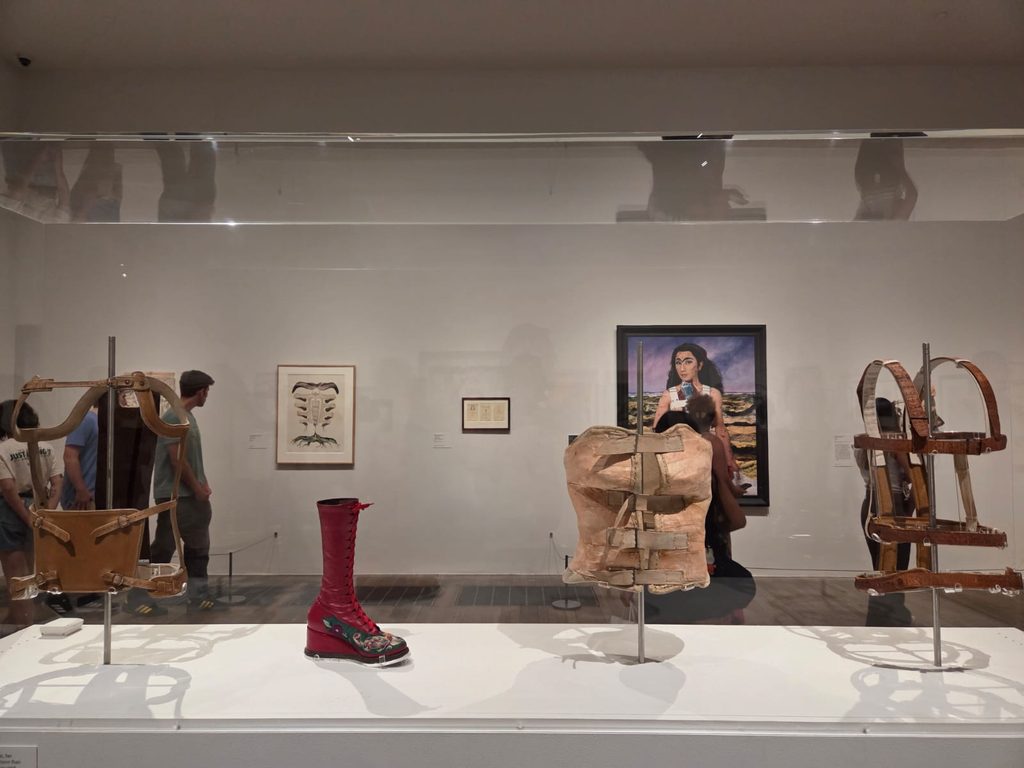
Firstly, I thought the section on Frida deliberately forming her image was very good. Several of her outfits are here, and I found them beautiful. I loved the colours and the detailing. Likewise a selection of her jewellery. It was also interesting to see how Kahlo was not unique in embracing aspects of traditional Mexican culture. I think there is the germ of a very solid exhibition there looking at the Modernists and Surrealists in Mexico, their motivations in adopting regional Mexican dress, and something around politics, appropriation, the privilege to choose such a style, etc. But this cultivation of image is a fascinating aspect of Kahlo as a person and an artist.
I also liked the section that commented on Kahlo’s work within Surrealism. It’s a classification Kahlo rejected after André Breton tried ‘discovering’ her. She’d probably just had enough of dogmatic and egotistical men. But she nonetheless painted very Surrealist works, particularly dreamscapes. There are a lot of interesting artists to discover in the larger of the Surrealist rooms in the exhibition. As an aside, don’t miss the absolutely deranged painting Kahlo did as a commission to gift the mother of a woman who had recently died. I’ve never seen anything like it. It’s in one of the images in this post if you want to take a guess.
So there we have it. Not a perfect exhibition, but certainly a thought-provoking one. And despite the criticisms, a fair number of Frida Kahlo’s paintings are here. Enough to get a sense of her, and understand why her art, in combination with her life and image, have made her such an icon.
Salterton Arts Review’s rating: 3/5
Frida: The Making of an Icon on until 3 January 2027
Trending
If you see this after your page is loaded completely, leafletJS files are missing.