
Imperial Crypt (Kaisergruft), Vienna
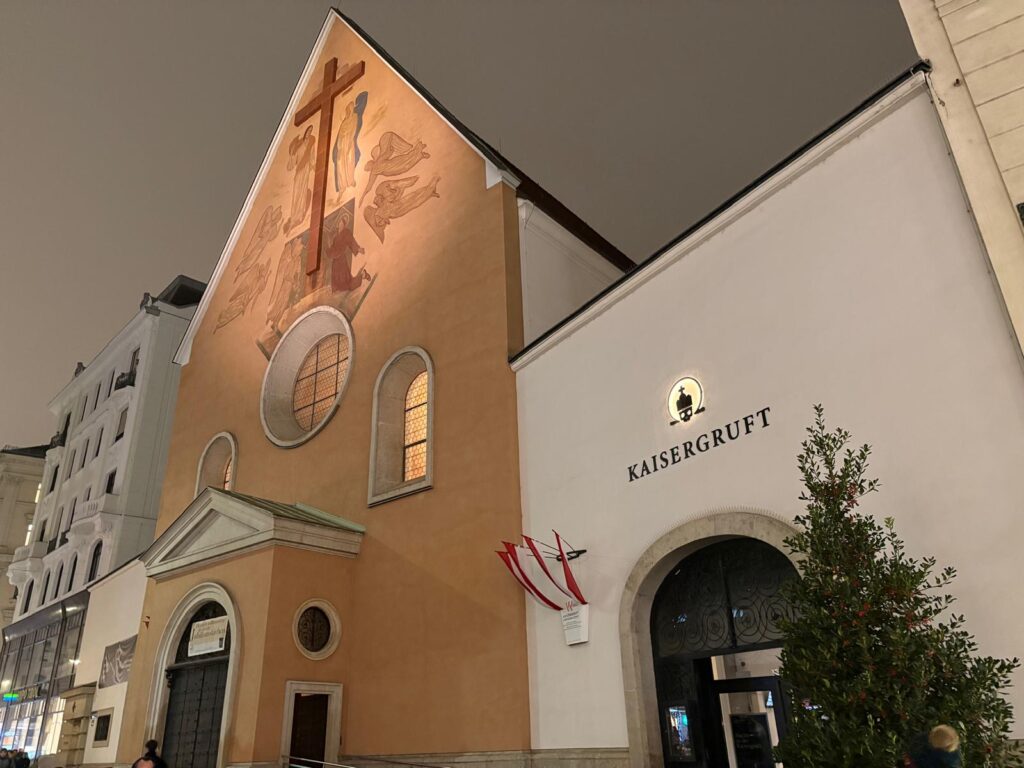
Today we get up close and personal with the Habsburgs at Vienna’s Imperial Crypt, otherwise known as the Kaisergruft or Kapuzinergruft.
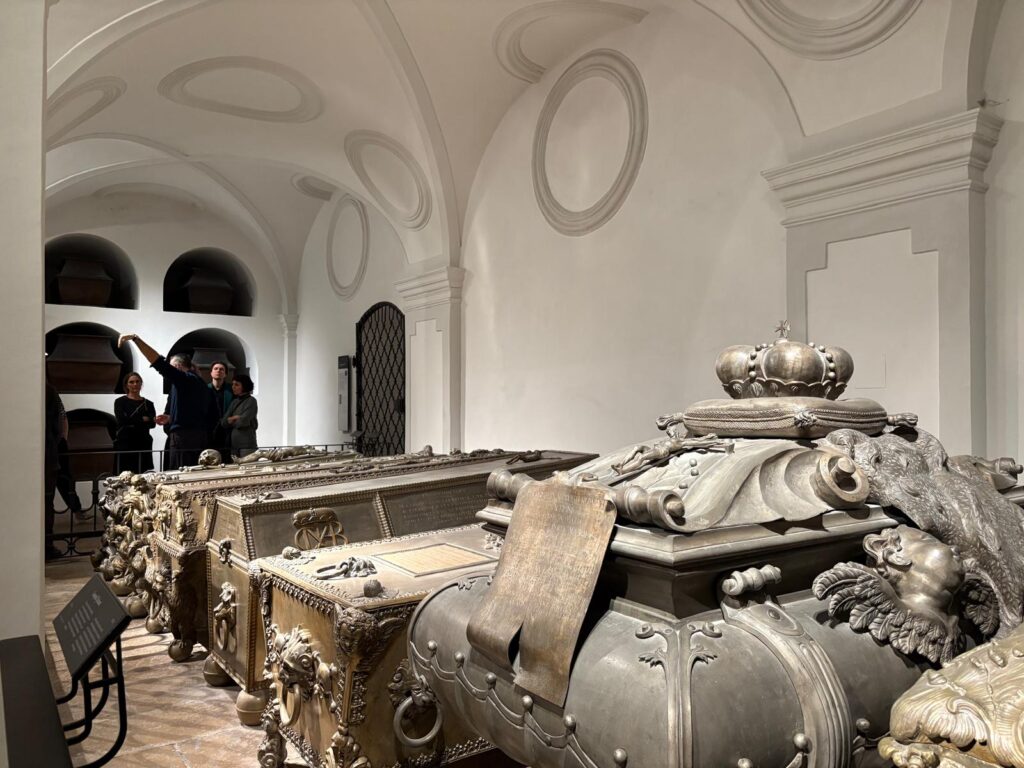
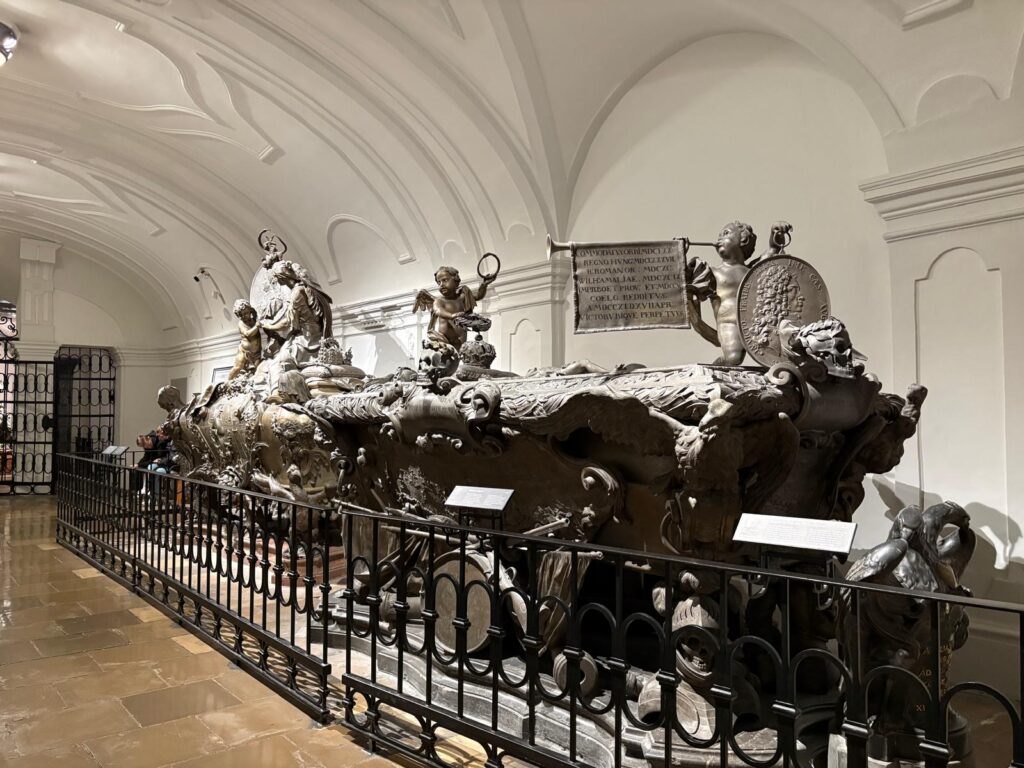
Vienna’s Kaisergruft
One thing about taking a trip in the winter is that, well, it’s cold. Where you might sit in a square in the summertime and watch the world go by, in the winter you sometimes need to undertake what I’m going to call strategic tourism: popping in somewhere to stay warm. I learned this the hard way as a young Salterton Arts Review on one of my first trips to Paris: Père Lachaise Cemetery is great, but not really suited to a sub-zero day in January. This trip to Vienna was in December (Christmas markets!) and so, on an evening when we had finished dinner and still had time to kill before a concert in the Stefansdom (St Stephen’s Cathedral), the Kaisergruft, or Imperial Crypt, looked invitingly warm.
I had read about the Kaisergruft in my guidebook, but hadn’t necessarily intended to visit. You may find this hard to believe, given my track record of visiting stately homes and palaces (and given our first stop in Vienna was the Imperial collections at the Kunsthistorisches Museum), but that sort of royal history isn’t necessarily what I find most interesting in a new place. Because it’s mostly all the same. Riches and splendour, displays of power, and all that.
I am glad, however, that we wandered past the Kaisergruft at just the time we were getting a little too chilly to stay outdoors. I found it unique from a historical, art historical and architectural perspective, and well worth a visit for any of those reasons.
A Brief History of the Kaisergruft
I feel like a short explanation of the ritual surrounding the entry of a new body to the Kaisergruft might give you a flavour of the sort of faux modesty that I think sums up the space. First, you need to know that the crypt is under a Capuchin monastery and church. So the bearers of the newly deceased Habsburg would arrive at the entrance, and knock on the door. “Who’s there?” asks one of the monks. “Archduke So and So” reply the pallbearers. “Don’t know anyone by that name” says the monk. Everyone repeats this a second time before, on the third time knocking, the pallbearers reply with “a poor sinner”. Ah, there we go: entry granted.
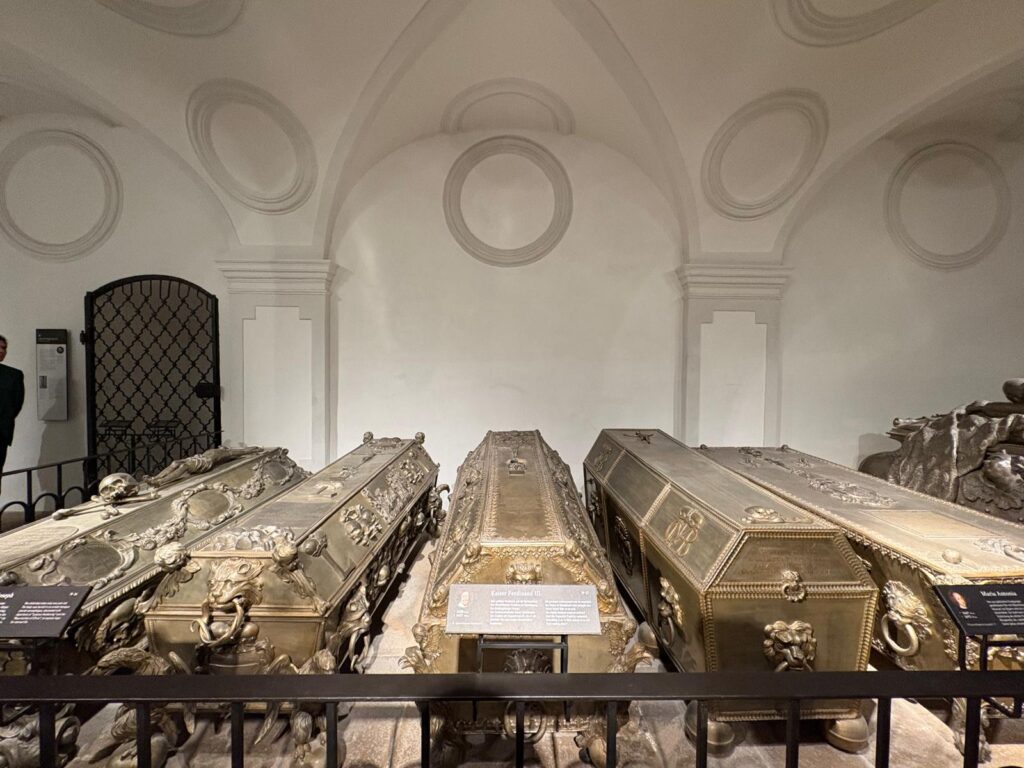
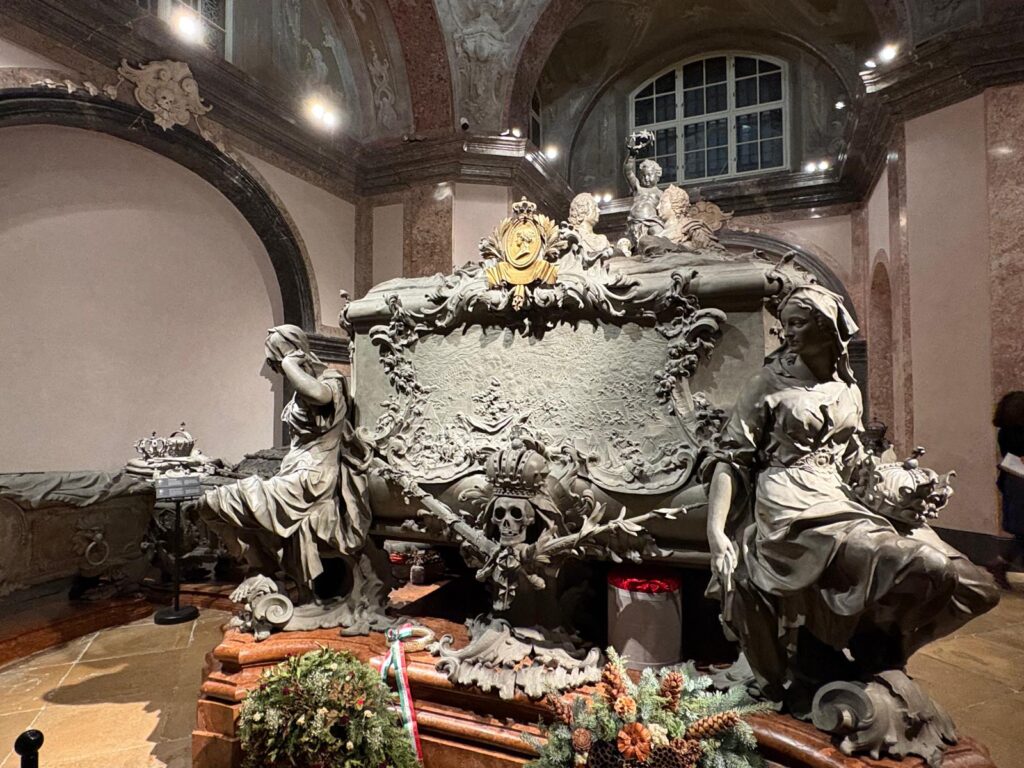
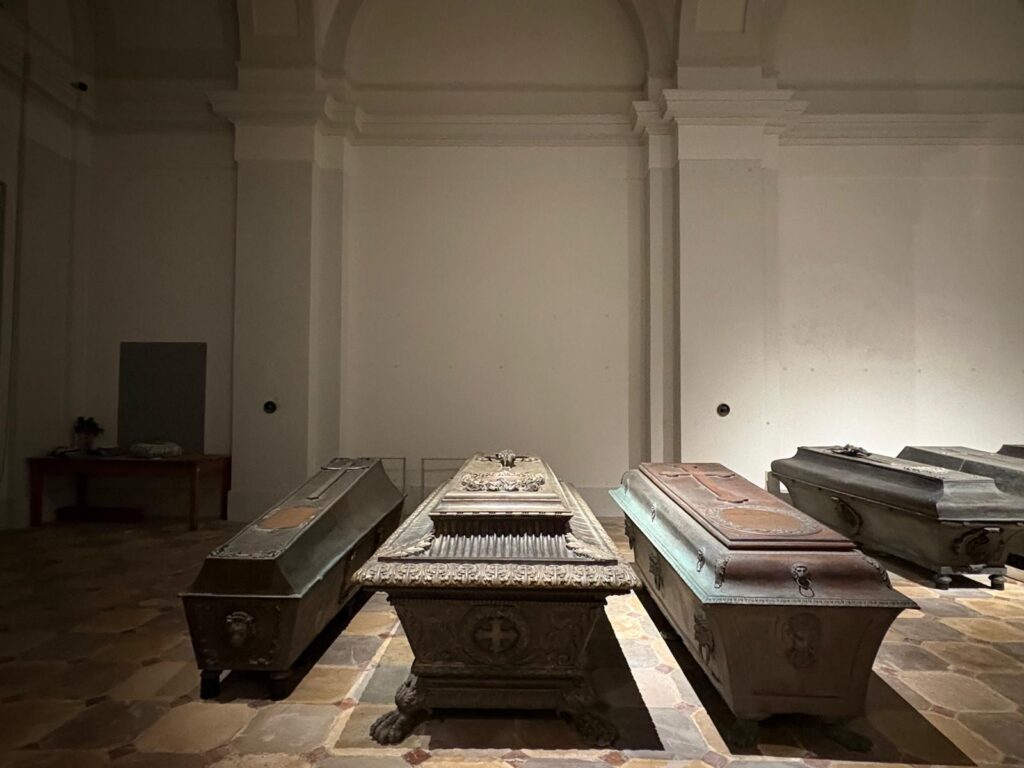
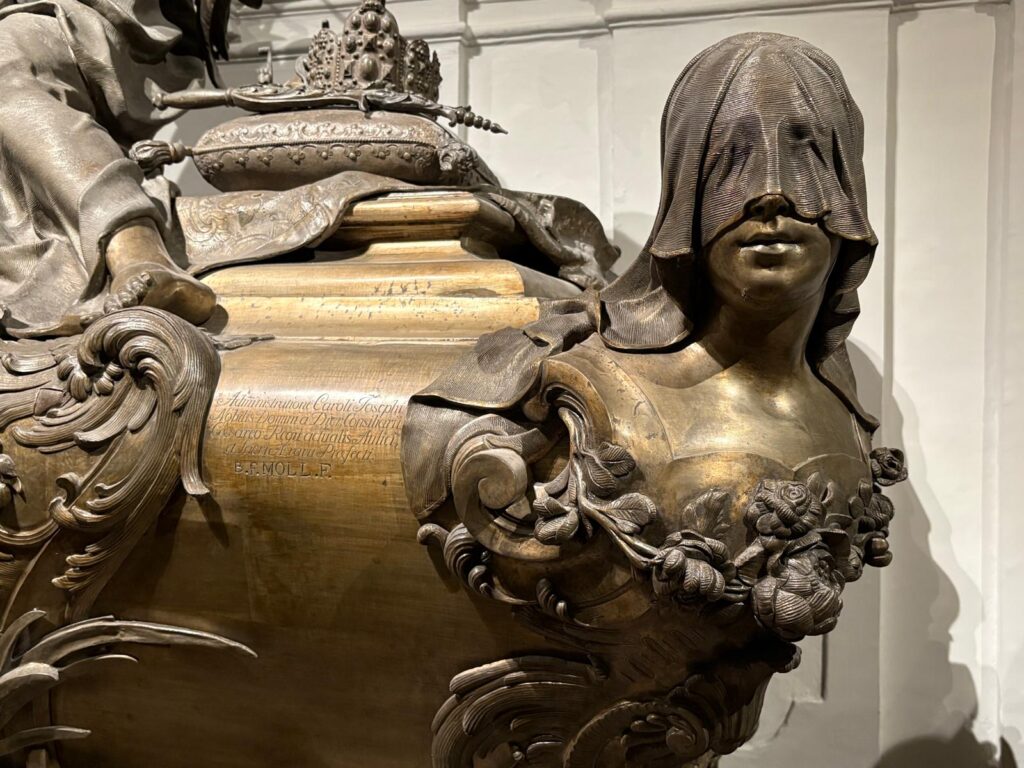
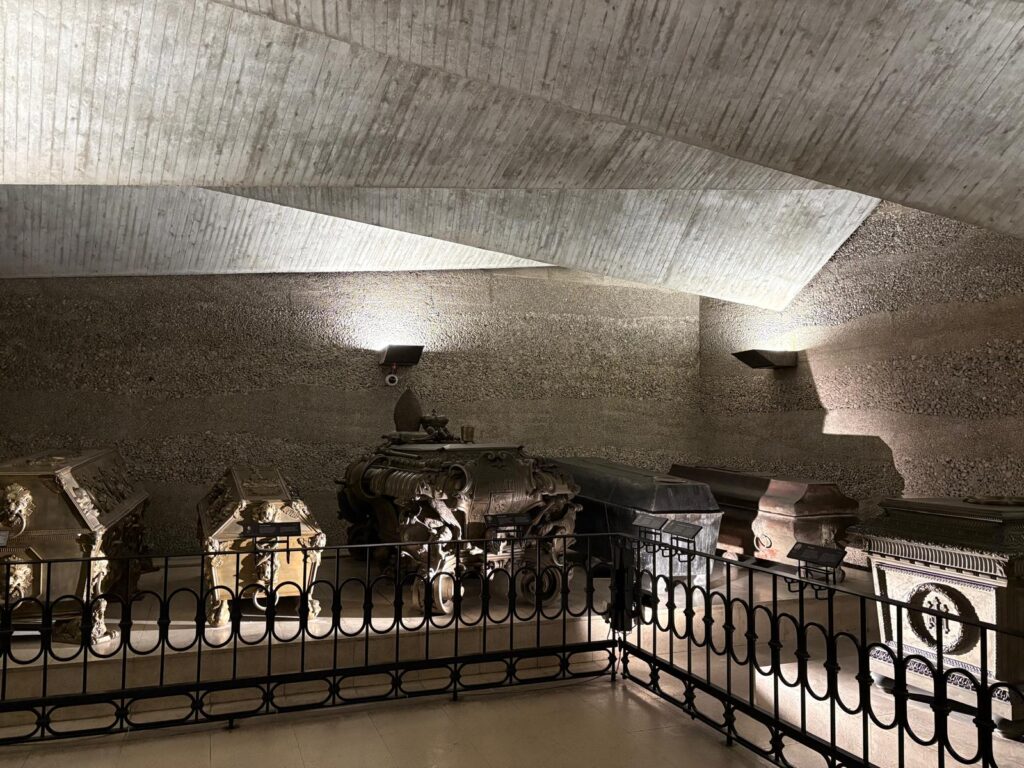
The Baroque and Rococo sarcophagi containing the remains of some of these “poor sinners” rather belie a humble life. But we’re getting a little ahead of ourselves. Let’s start at the beginning. It was Empress Anna of Tyrol who had the idea of endowing a Capuchin cloister and church with a burial crypt for herself and her husband, Emperor Matthias. She left funds for this purpose in her will (she died in 1618), and the church was dedicated in 1632. The Emperor and Empress’s remains were transferred here the following year, and their sarcophagi can still be glimpsed in what is now known as the Founders’ Chapel.
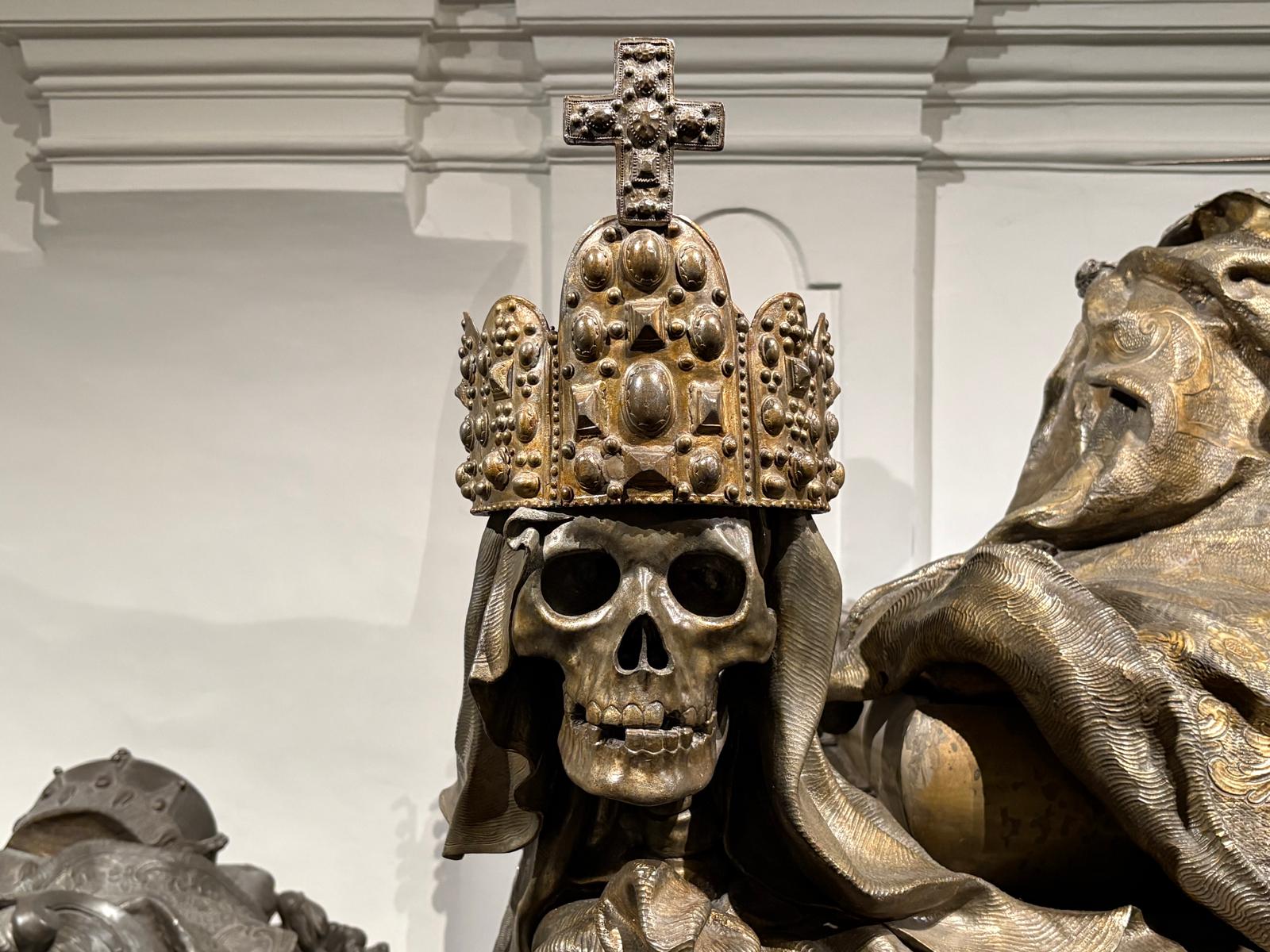
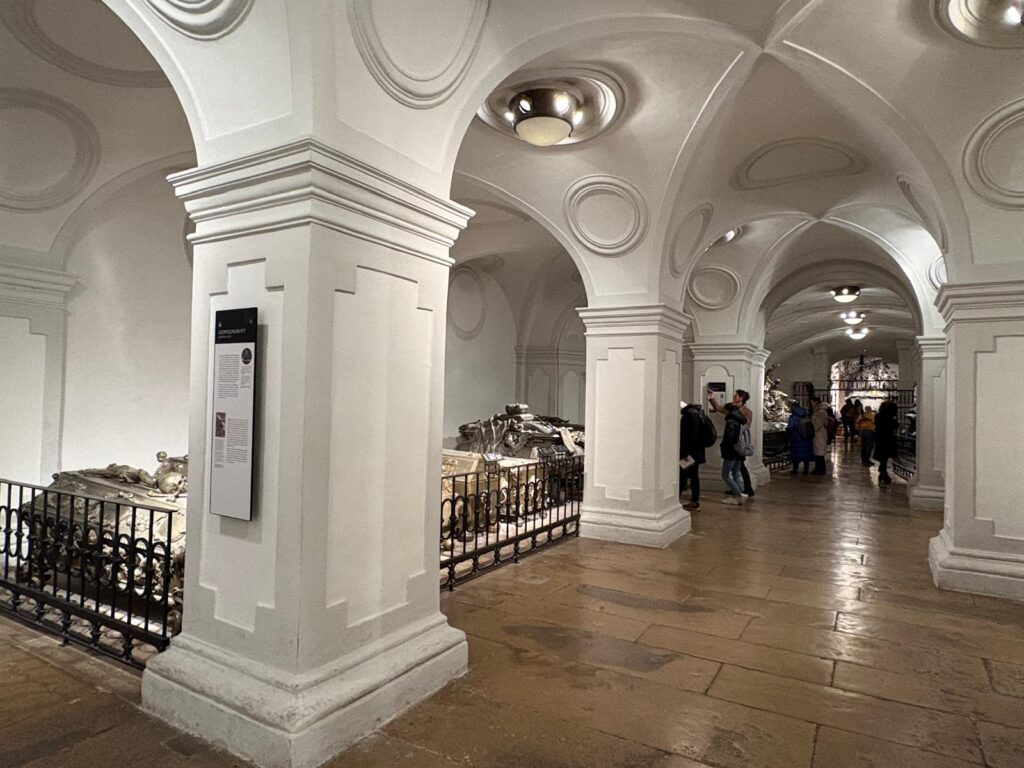
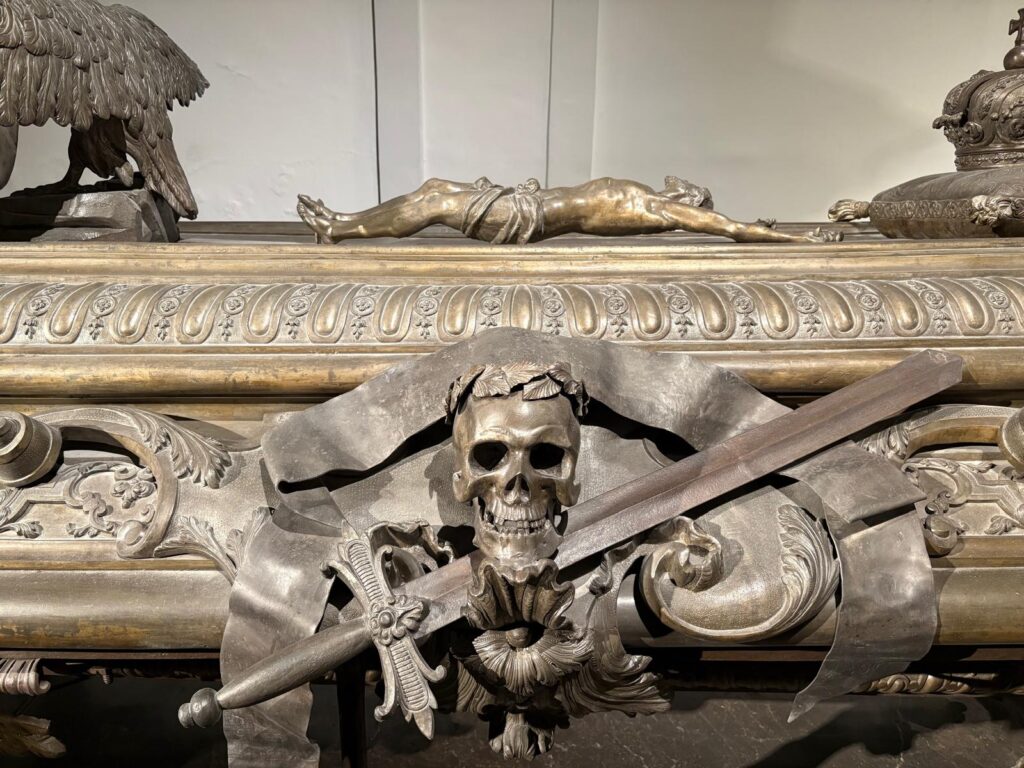
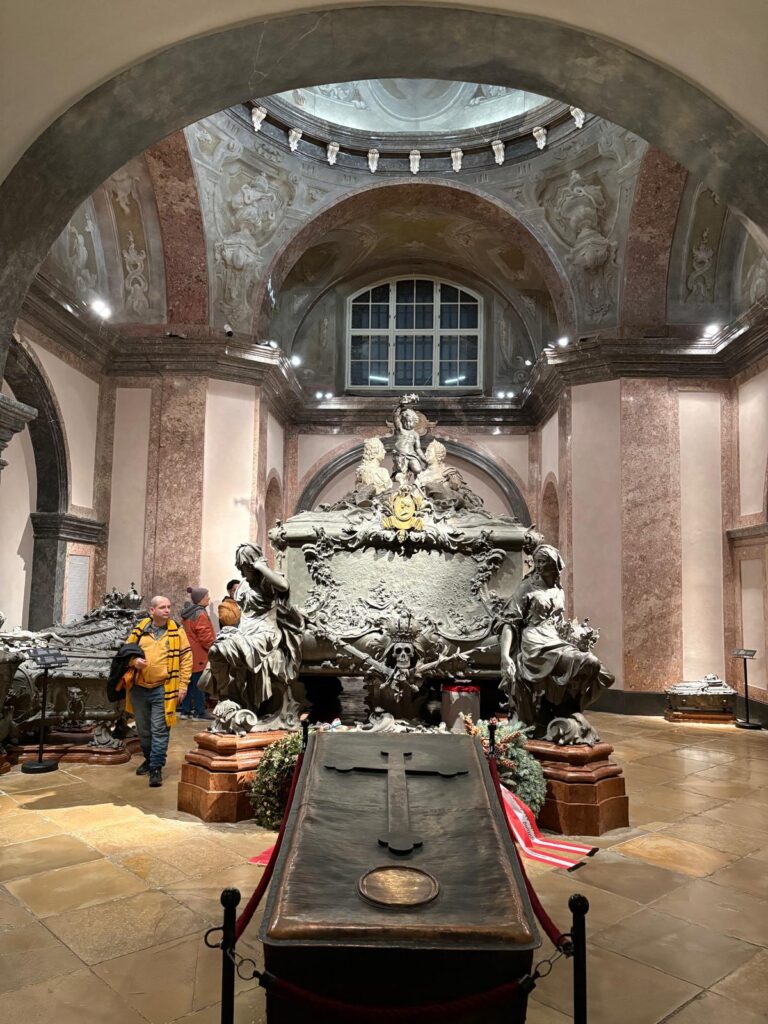
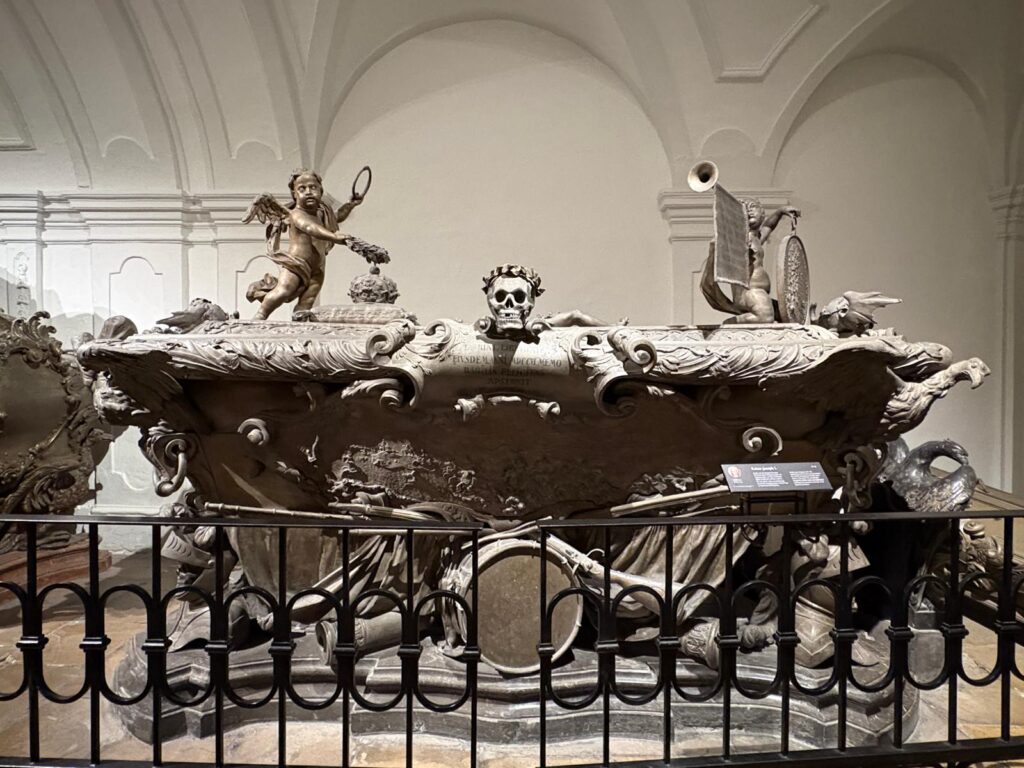
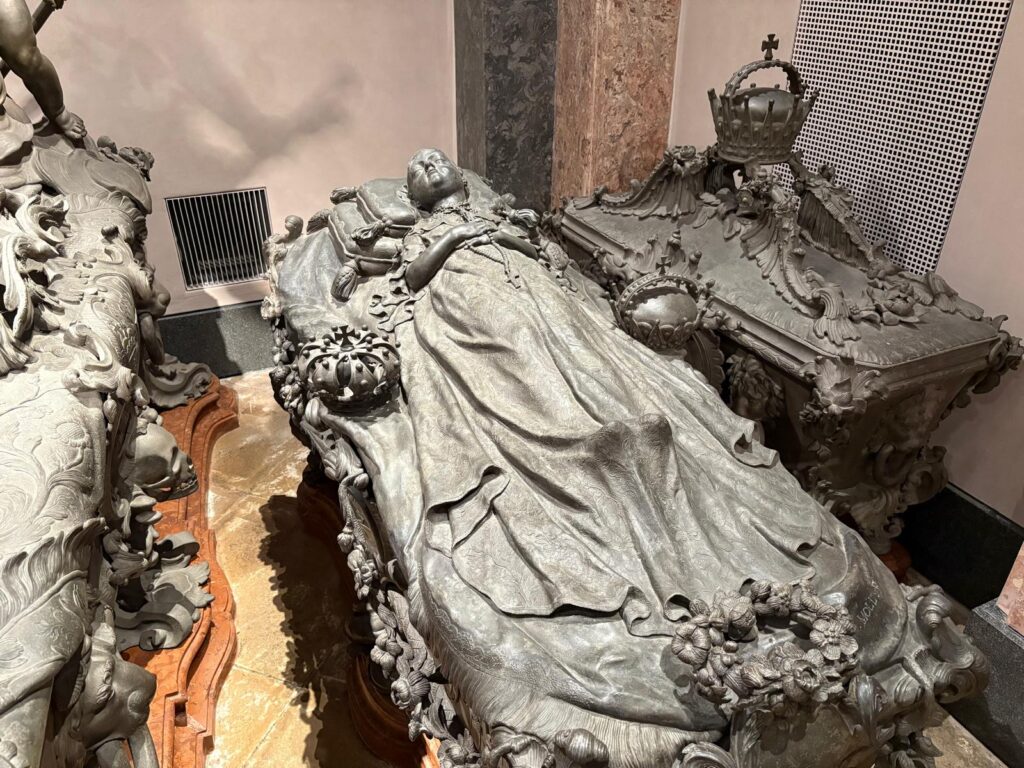
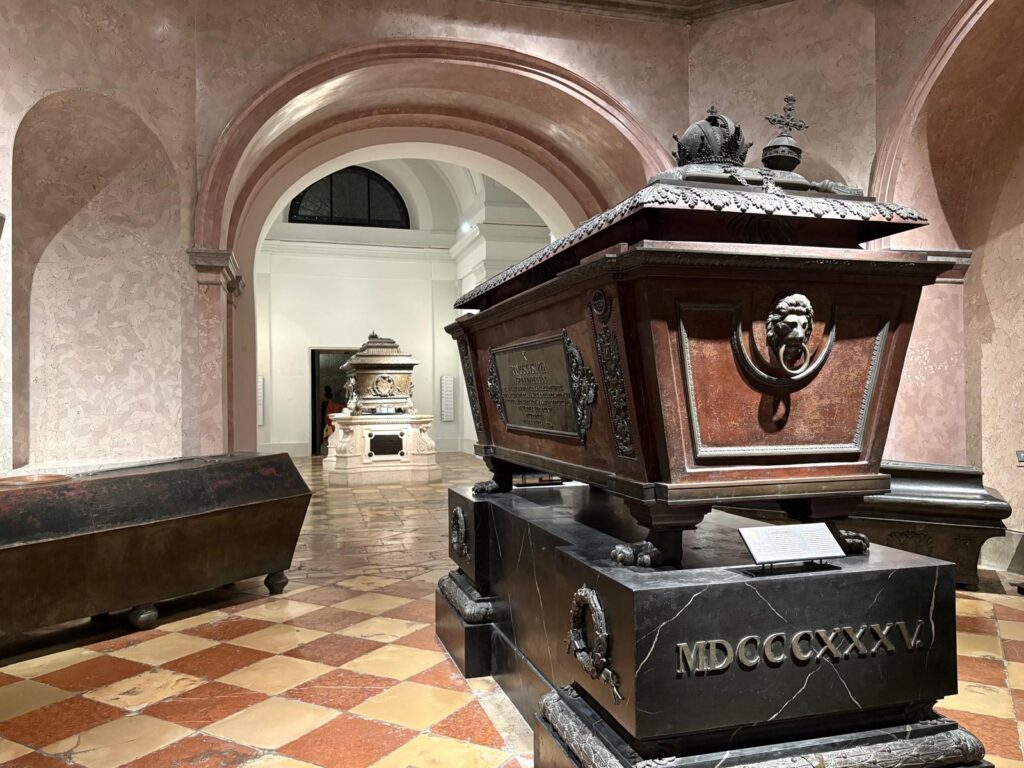
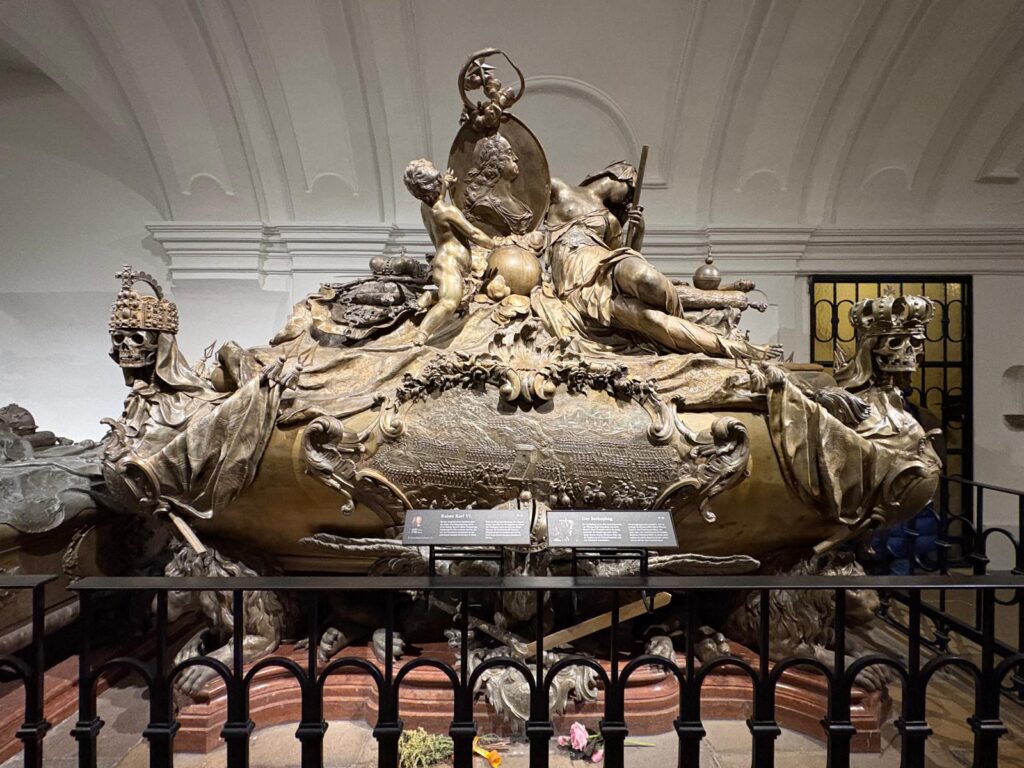
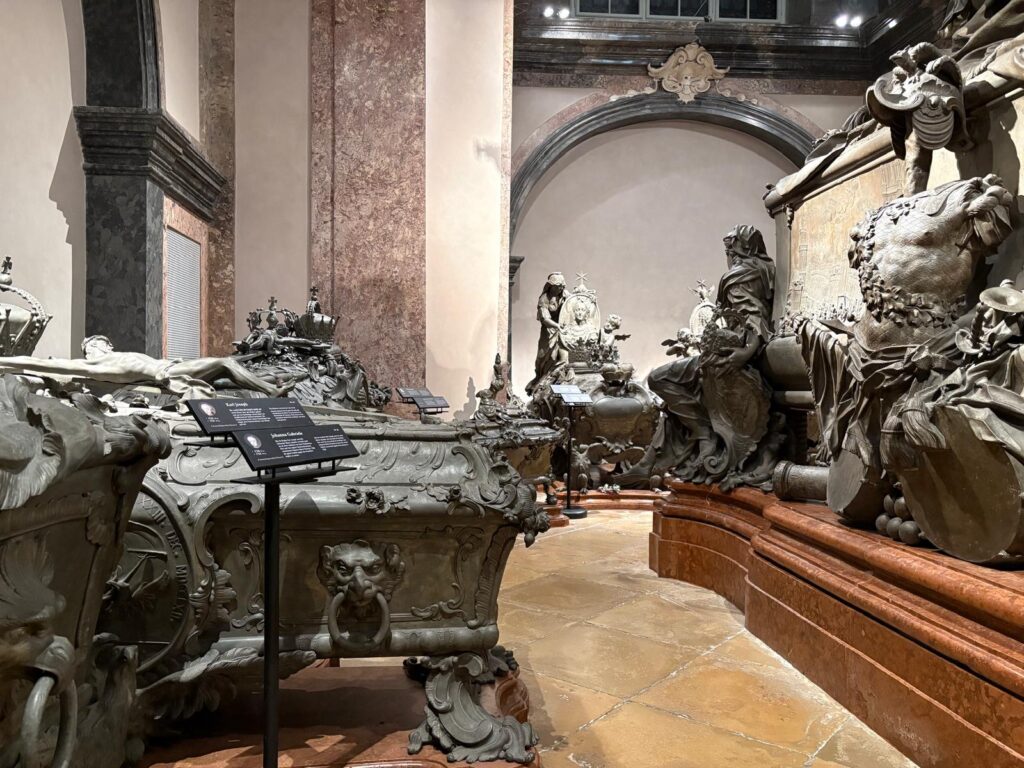
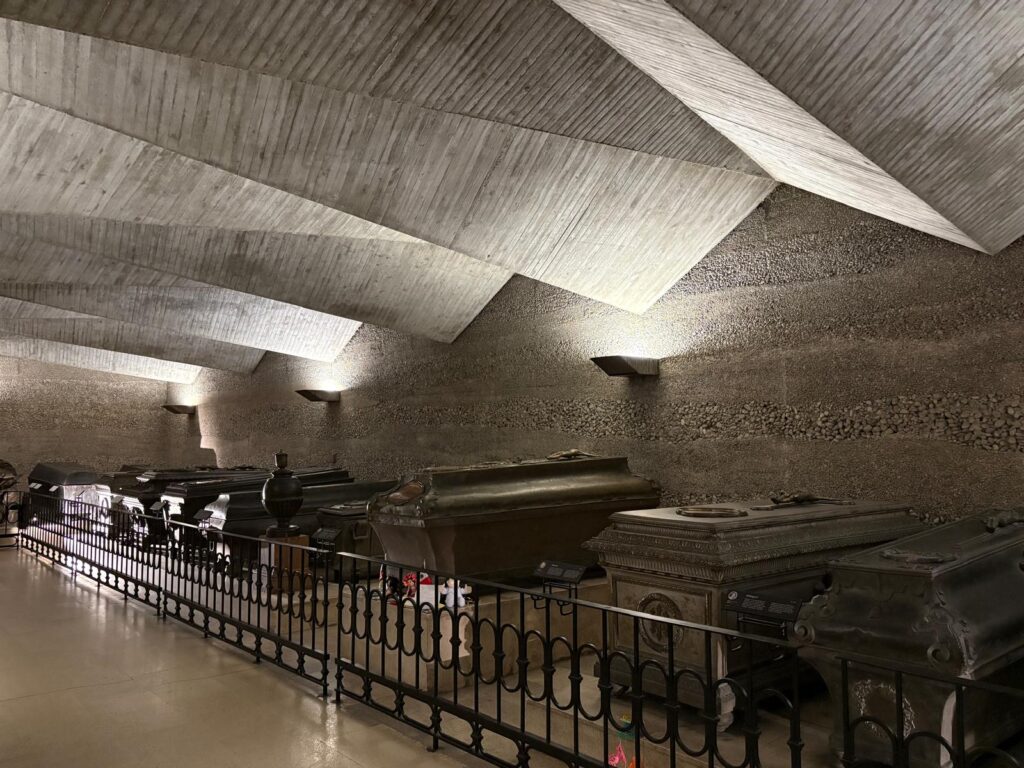
From these beginnings, subsequent generations of Habsburgs spread out under the church and cloister, creating a series of interconnected spaces. The burials kept coming, and now include the bones of 145 family members, and the organs or cremated remains of a couple more. Surprisingly, the most recent burial was in 2023. The Kaisergruft thus reflects fashions in art and architecture over the centuries. I mentioned the splendid Baroque and Rococo sarchopagi, adorned with angels and momento mori. There’s also a particularly sumptuous dome and crypt commissioned by Empress Maria Theresa in the 1750s, and even a more recent Brutalist addition.
The Visitor Experience
Being an underground space, the Kaisergruft has suffered considerably from damp over the years. The 1960s addition was part of a massive project to rearrange the vaults and sort out some of these issues, and more recently the Kaisergruft has has air conditioning installed throughout. During this more recent renovation the crypt was also made more accessible, and now benefits from a visitor flow that doesn’t suffer from a single entry and exit point.
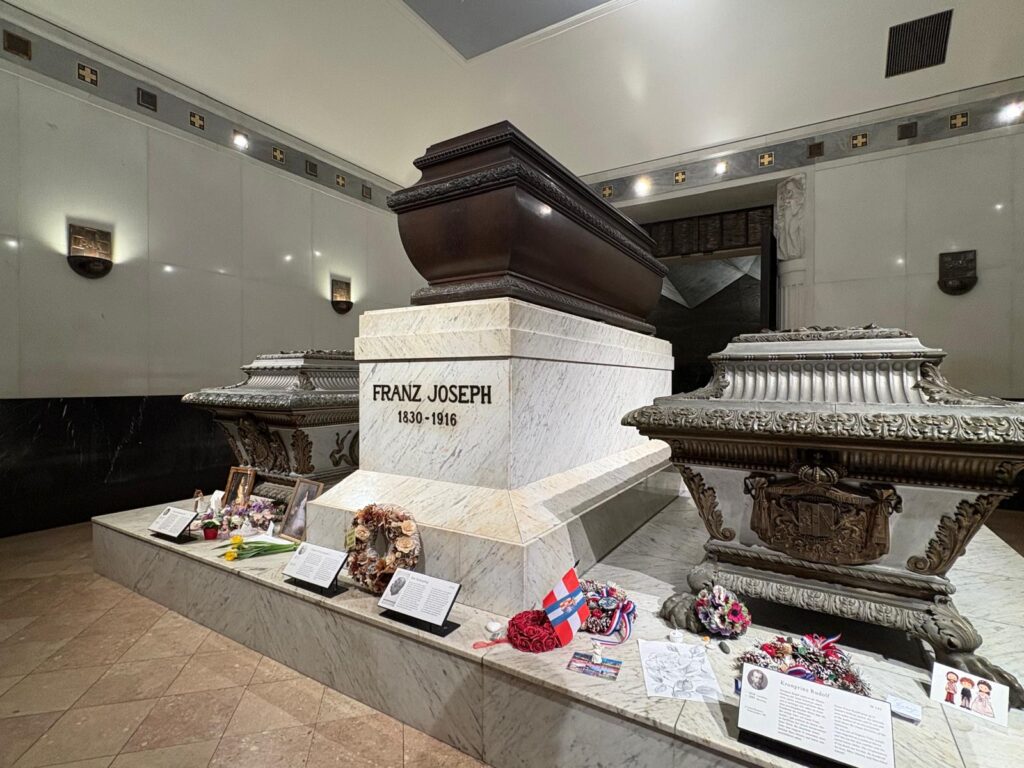
The visitor experience today in the Kaisergruft is thus very comfortable. There are placards explaining who’s who, and you can spend as much time as you wish wandering the vaults. The handout also helps to situate visitors.
Nonetheless, for those not particularly familiar with the Habsburg lineage (which I would venture to guess includes most visitors), the Kaisergruft comes across as a big jumble of royals. Their very interwoven family tree may have something to do with it. But I think it’s probably also a result of all the extensions and rearrangings over the years. There were very few people I was familiar with. Crown Prince Rudolph was one of them, immortalised in the ballet Mayerling. Others I’d learned about at the Kunsthistorisches Museum, but wasn’t necessarily familiar with before coming to Vienna.
All in all, as I said at the beginning, I’m glad I visited the Kaisergruft. If nothing else, it’s an impressive showcase of metalworking skills. And another part of the Habsburg story which is so intertwined with that of Vienna.
Trending
If you see this after your page is loaded completely, leafletJS files are missing.