
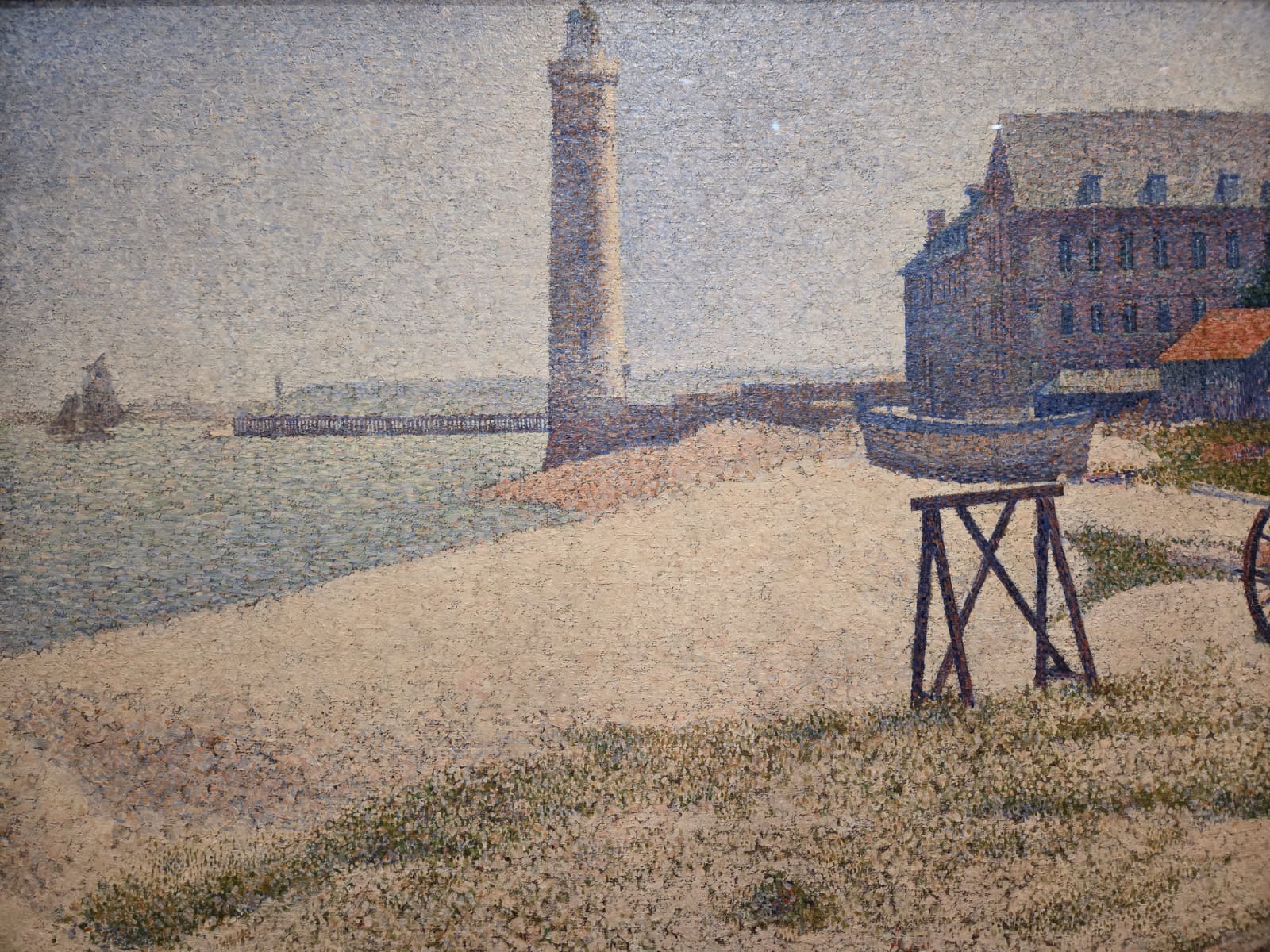
Seurat and the Sea – The Courtauld Gallery, London
Another popular exhibition at the Courtauld Gallery, this time focusing on Seurat and the Sea.
More From the Neo-Impressionists
I’m not sure I’ve been in the position before of seeing two exhibitions in quick succession which had such commonalities they even featured some of the same paintings. Or at least one of the same paintings: I can’t find my original photos from when I visited Radical Harmony: Helene Kröller-Müller’s Neo-Impressionists so I can’t confirm more than that. But at least one familiar friend in the second exhibition. Did the painting stay in London between exhibitions, or go back to the Netherlands? These are the sorts of questions I can imagine only interest me, so I won’t bore you further with them.
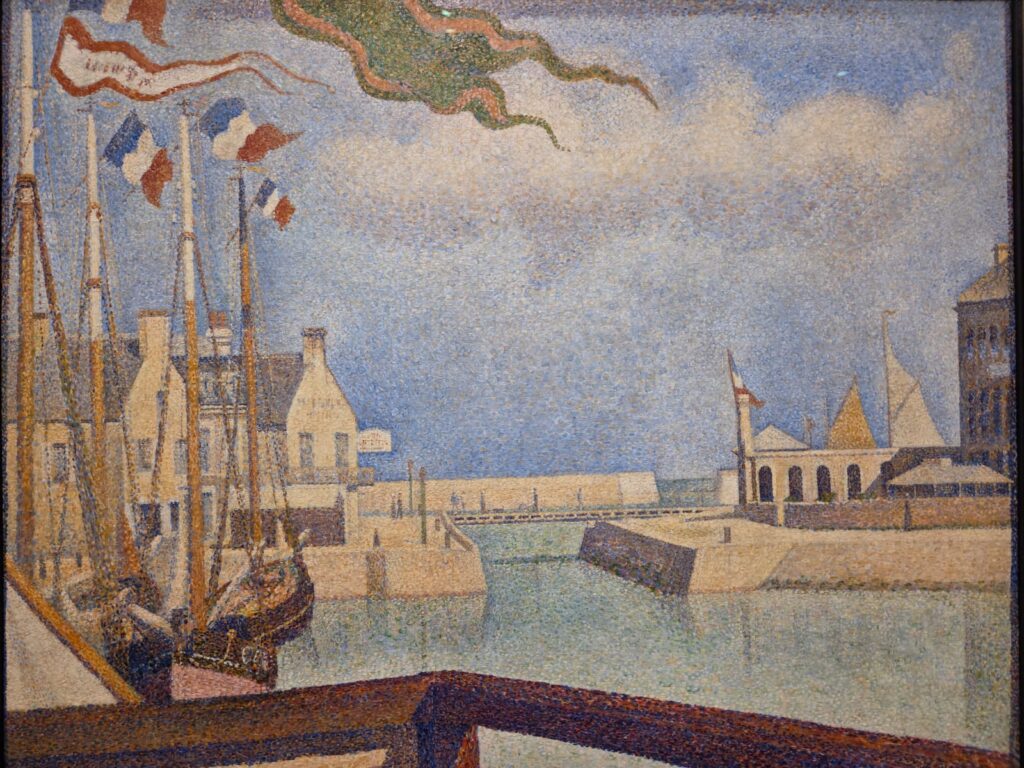
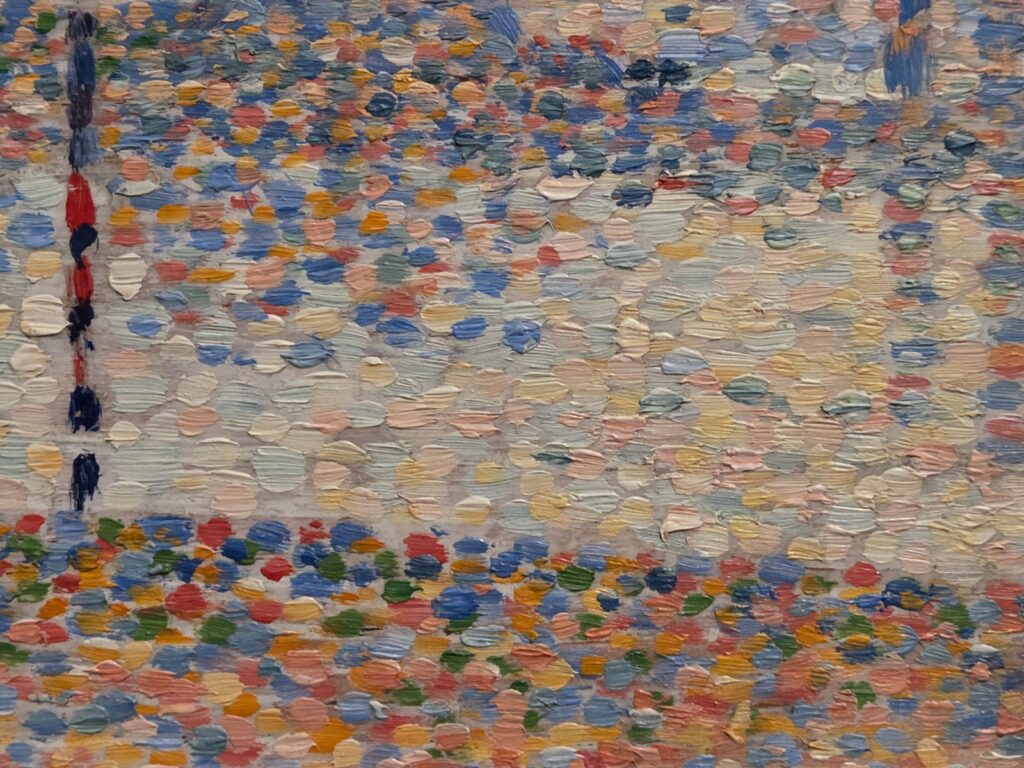
The point is, London is having a Neo-Impressionist moment. The earlier exhibition focused on a collection, that of Helene Kröller-Müller. Today’s exhibition focuses on an artist, Georges Seurat. Do we recall from my earlier post exactly what a Neo-Impressionist is? You might know them as Pointillists. Artists who followed colour theory, placing small amounts of unmixed pigment on their canvases rather than blending shades, and placing opposite colours (eg. blue and orange) together to make the overall effect more vibrant. They apparently didn’t like the term Pointillist, which is why the National Gallery avoided it. The Courtauld didn’t seem as worried, and referenced both.
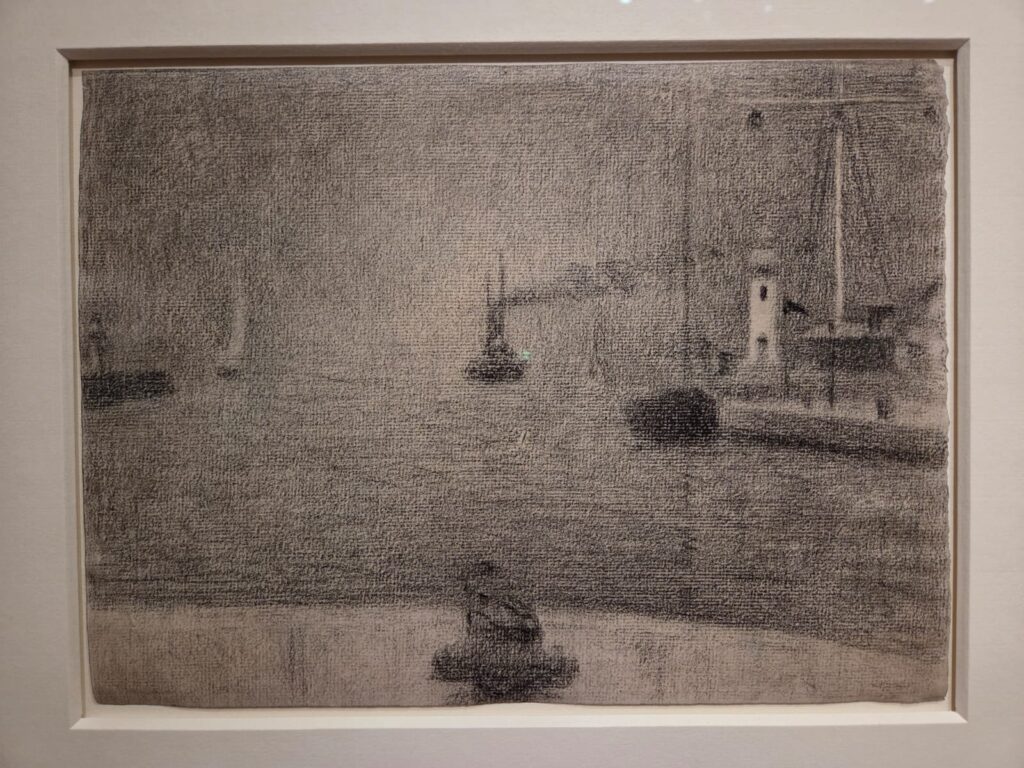
Georges Seurat, along with Paul Signac, is one of the pre-eminent Pointillists, or Neo-Impressionists. Actually, he founded the style, which he preferred to call Chromoluminarism. Born in Paris in 1859, Seurat studied art first at the École Municipale de Sculpture et Dessin, and then the École des Beaux-Arts, both in Paris. The latter is the school of the French equivalent of the Royal Academy, so provided very traditional instruction. After this study, and a brief stint of military training, the budding artist shared a studio with a friend and focused first on mastering drawing in Conté crayon. A few examples of this medium are included in the exhibition.
Seurat and the Sea
Seurat wasn’t immediately a radical sort of artist: he exhibited at the Salon (of the Académie des Beaux-Arts). But he had already started to develop theories of contrasts while at art school. These were reflected in his first major painting in 1883, Bathers at Asnières. Still fairly Neo-Classical, but in an Impressionist or Post-Impressionist sort of way (although Seurat did a lot of pre-work for the painting, so it was not in any way painted spontaneously). That work was rejected by the Salon, and shown instead at the Groupe des Artistes Indépendants. This latter group were not particularly inspiring, so Seurat and friends (including Paul Signac) founded the Société des Artistes Indépendants.
Sadly, however, our reading of Seurat’s art today is largely shaped by his early death, in 1891 at the age of 31. He didn’t have time to move through different styles like, say, a Picasso. His cause of death is uncertain, but was an illness: perhaps meningitis, diphtheria, or pneumonia. His son Pierre-Georges (by mistress Madeleine Knobloch, or Knoblok), died of the same thing two weeks later. The couple’s second child, with whom Madeleine was pregnant at the time of Seurat’s death, died at birth or shortly after. A sad story all around.
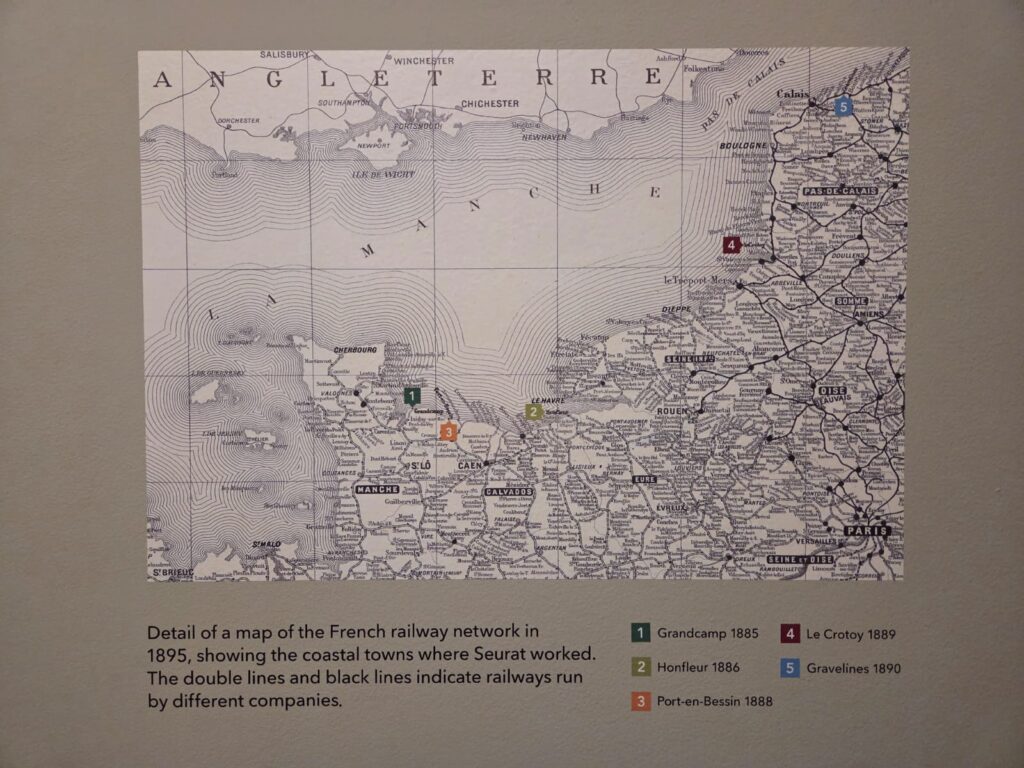
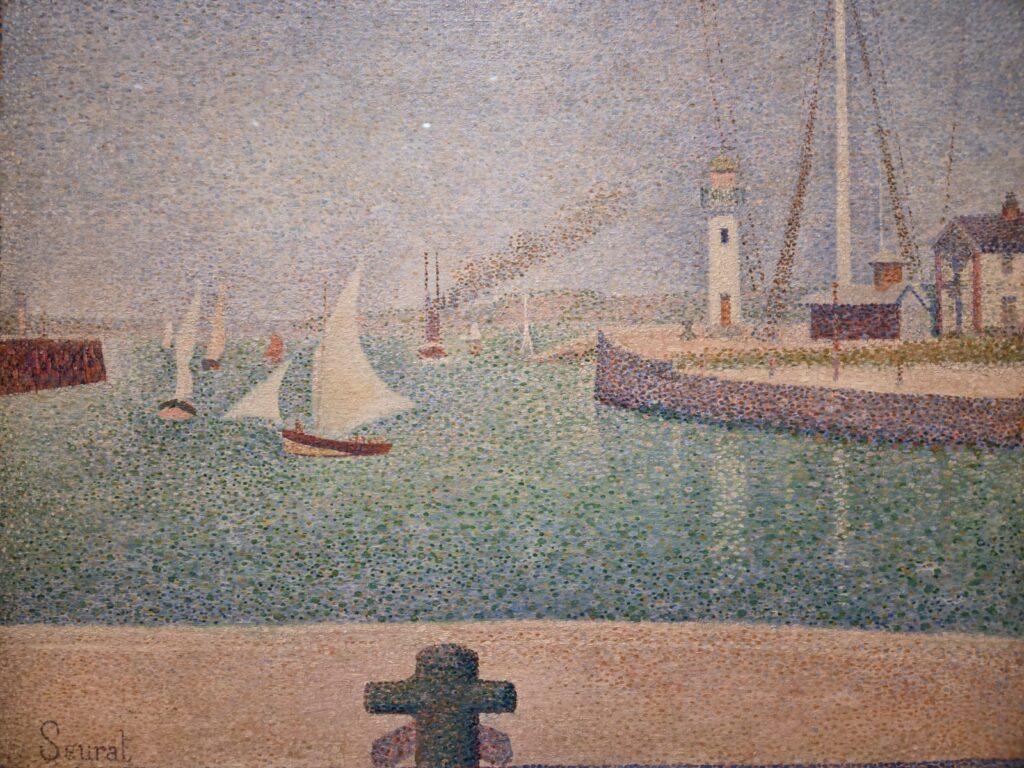
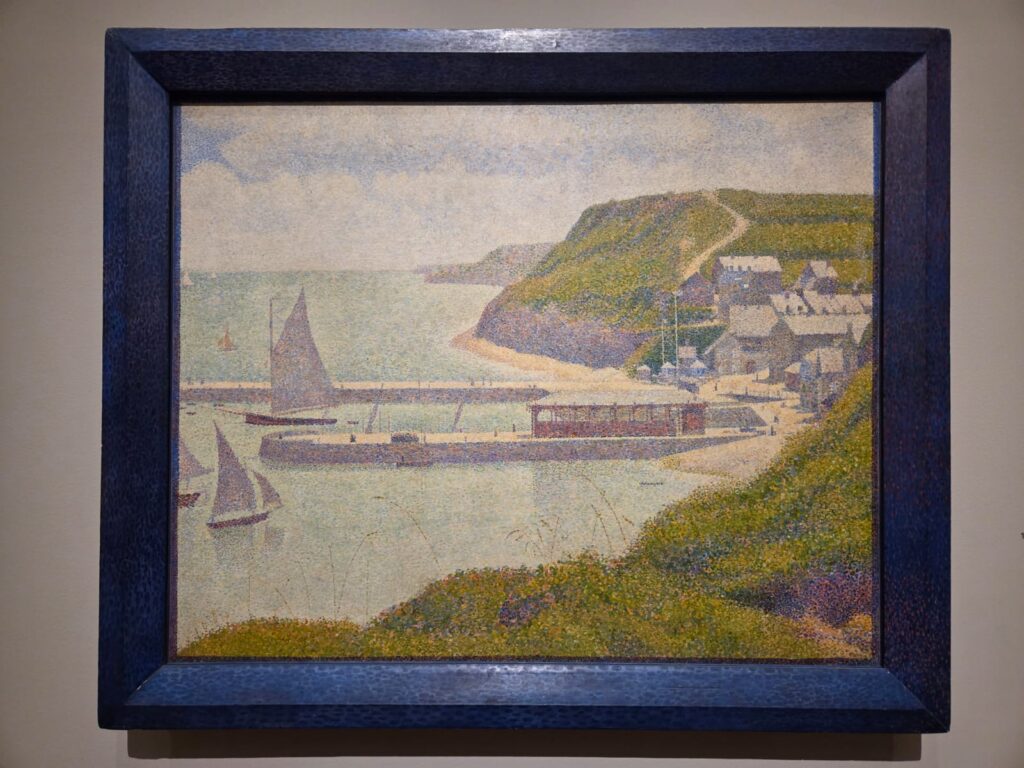
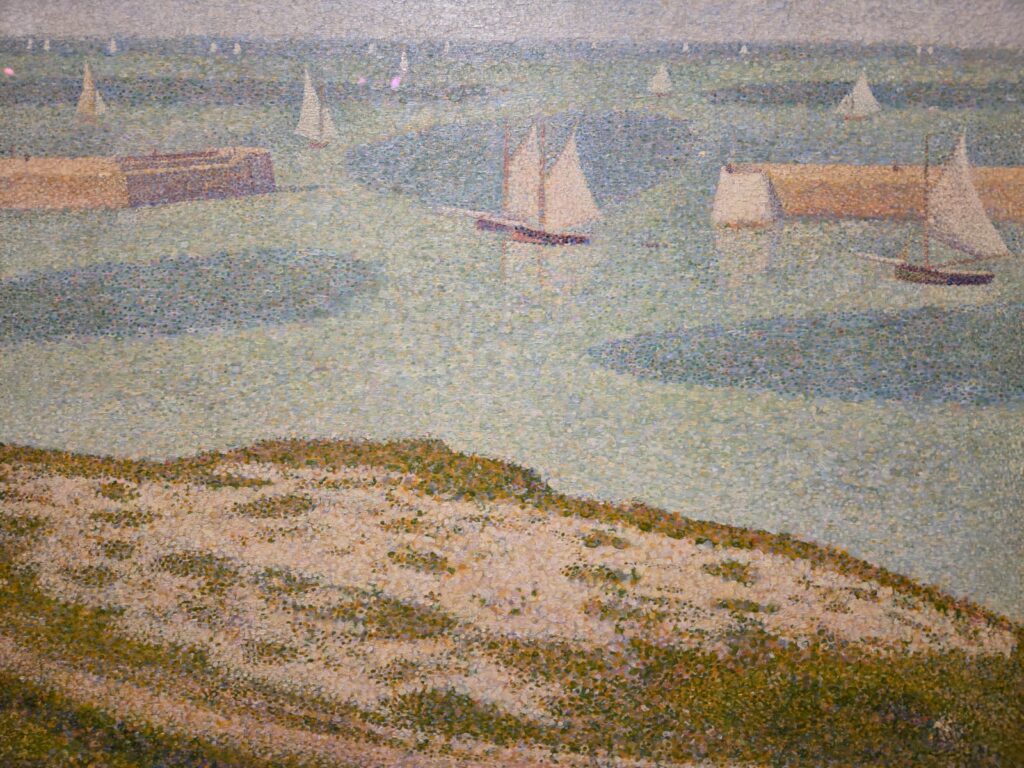
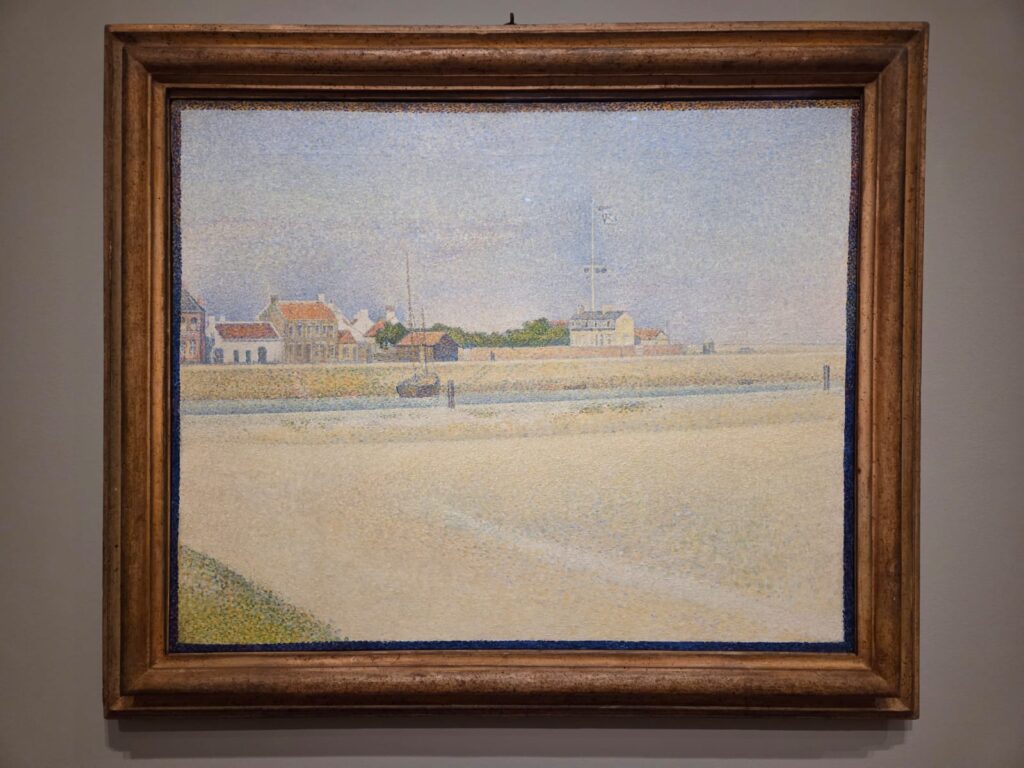
But I must focus us back on the art. Seurat left behind about 45 finished paintings. Of these, around half (or a little more) are seascapes. From 1885 to 1890, Seurat spent some time each summer on the Northern coast of France. This ranged from Grandcamp, near Honfleur, in the West, to Gravelines, near Calais, in the East. This meant that Seurat’s seascapes spanned landscapes ranging from fashionable resorts to working towns to wilder locales.
A Well-Structured Exhibition
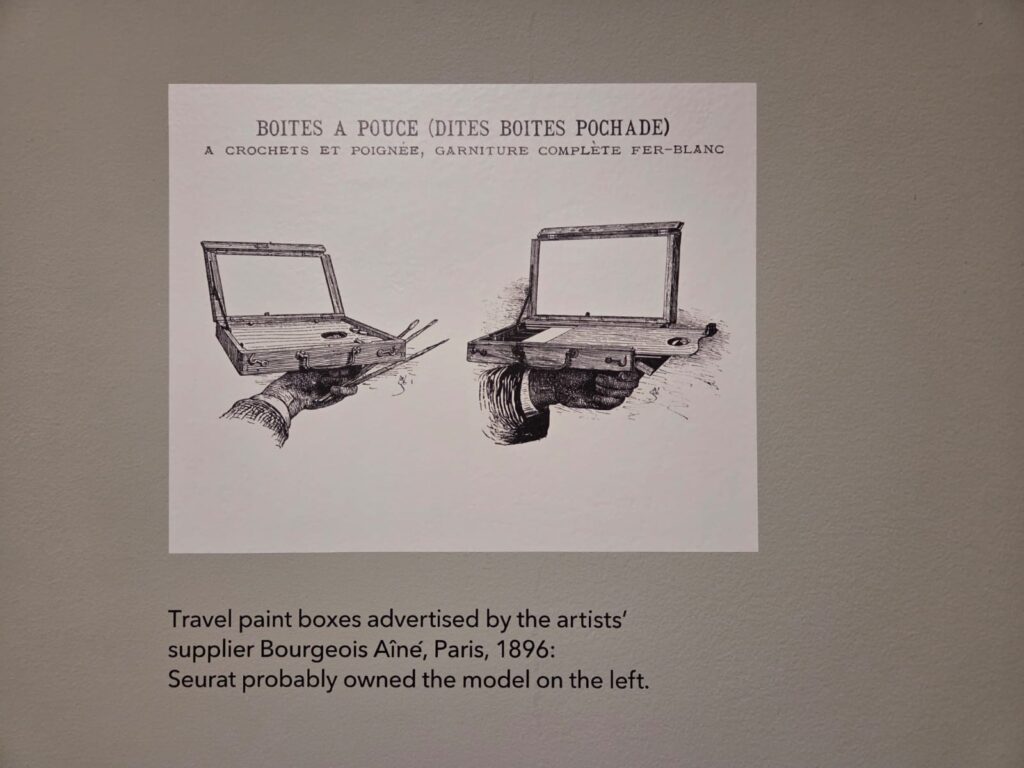
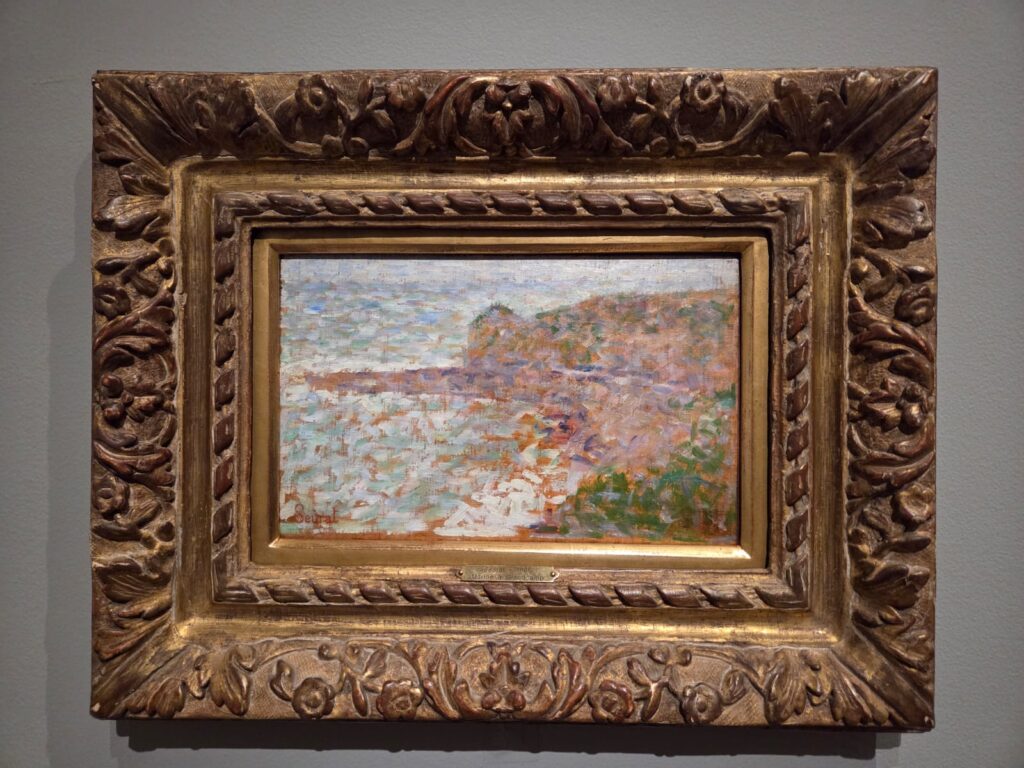
Regular readers will already know I’m basically the Courtauld Gallery‘s exhibition fan club. On occasion I’m a little underwhelmed, but in general I love their small-scale, tightly-focused, and well-curated exhibitions. Seurat and the Sea is at the top end of the scale. The first exhibition dedicated to this subject in Seurat’s work, it first sets out said subject very well. There’s an overview of Seurat’s life and work, a map of the locations where he painted his seascapes, and also an image of a travel paint box Seurat owned. Or the period advertisement for the model of travel paint box he owned. This last one is a great inclusion – it really brings to life the oil sketches that form a decent part of the exhibition. You can imagine the boards propped in the lid of the paint box while Seurat worked on them.
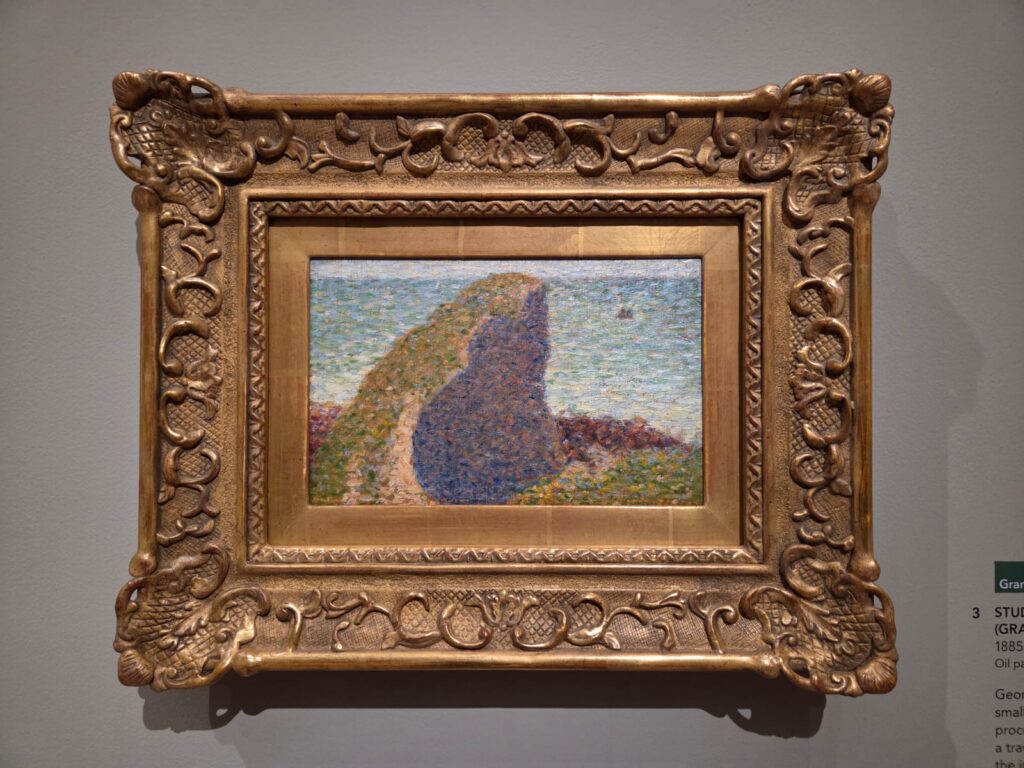
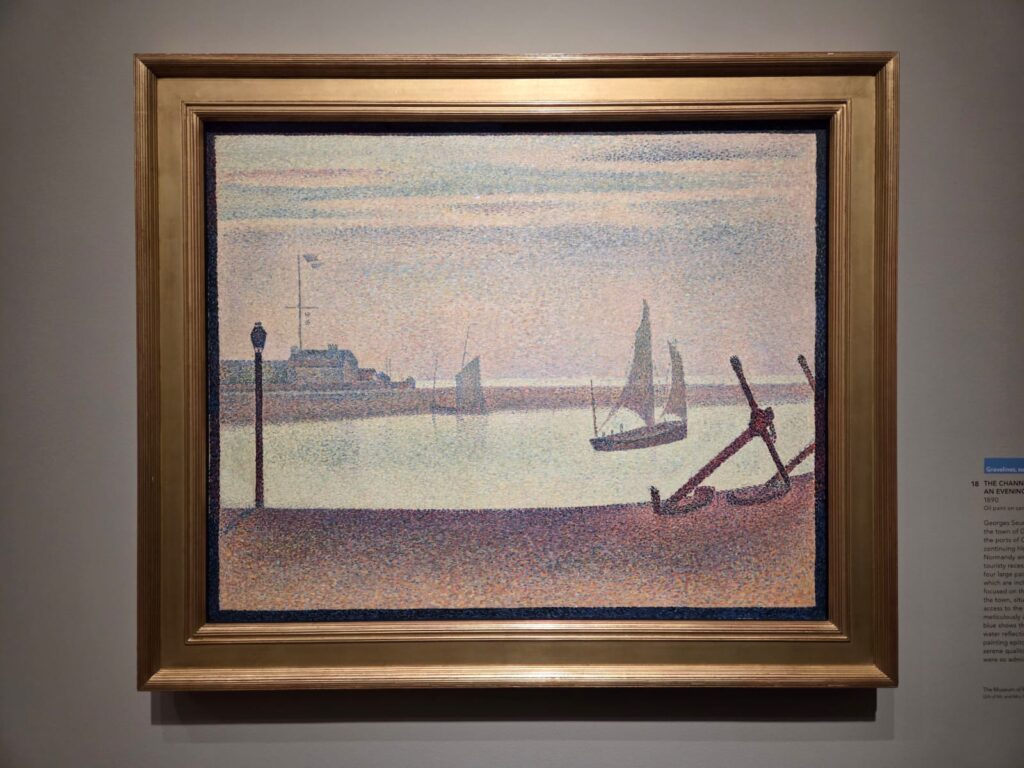
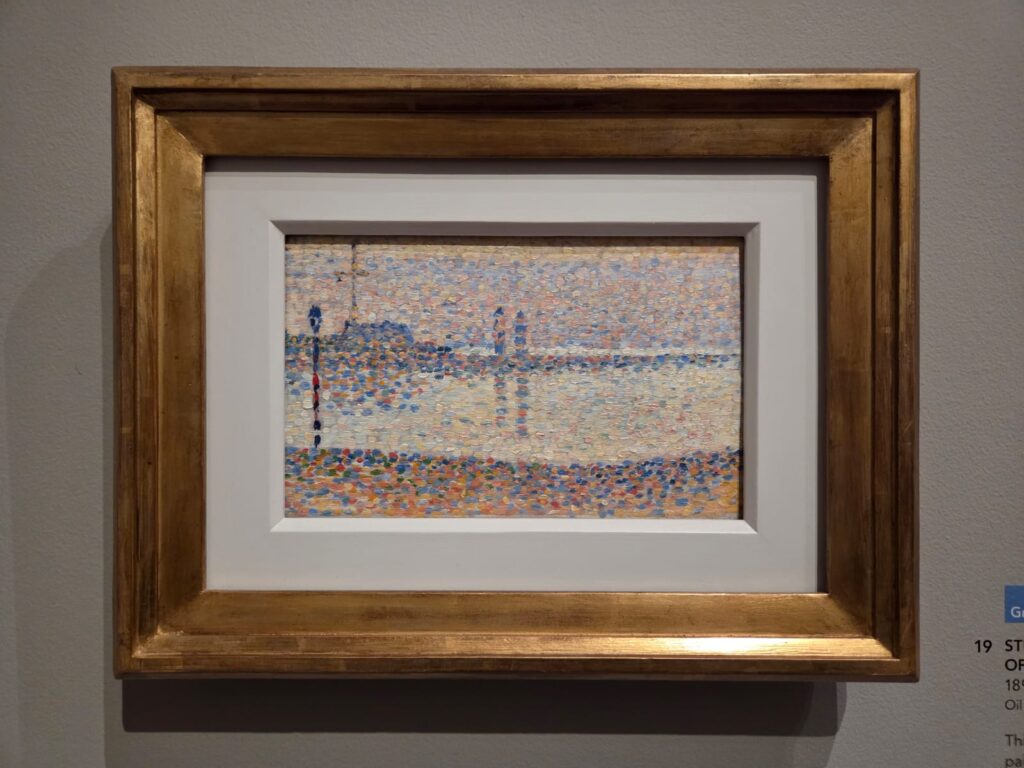
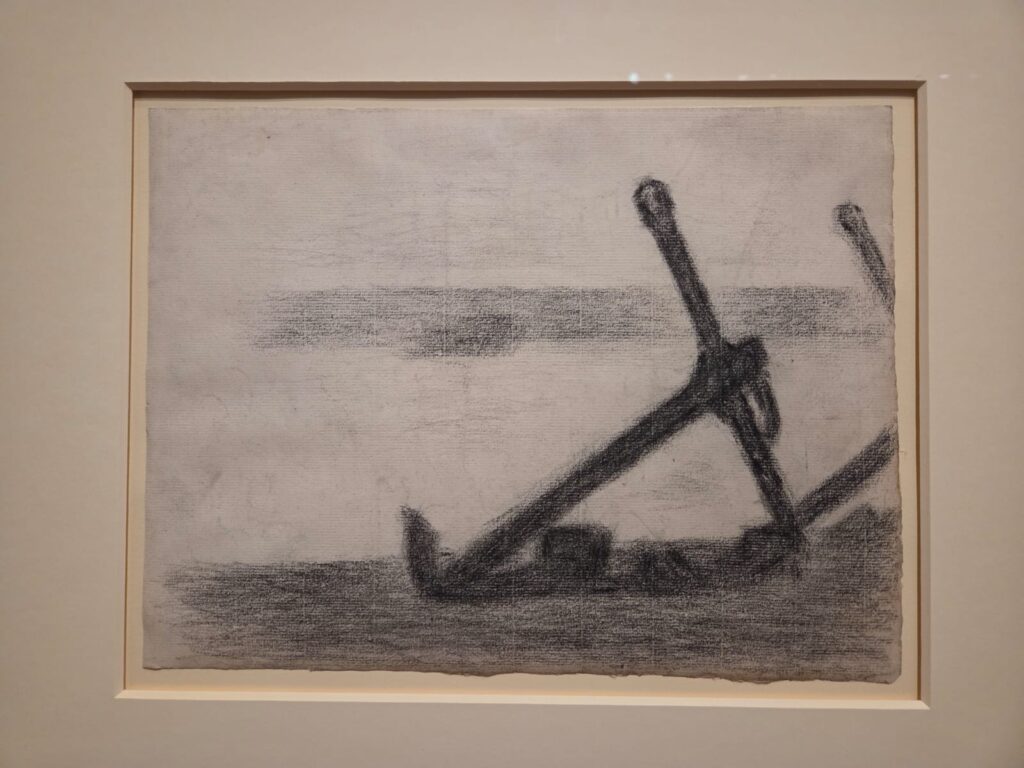
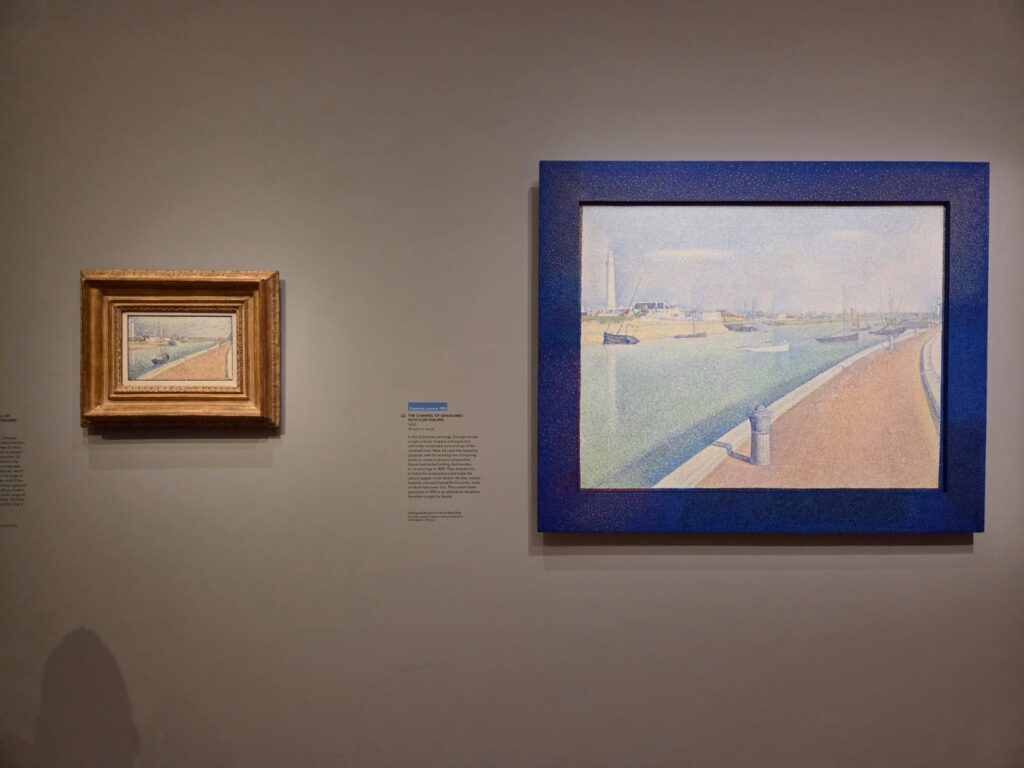
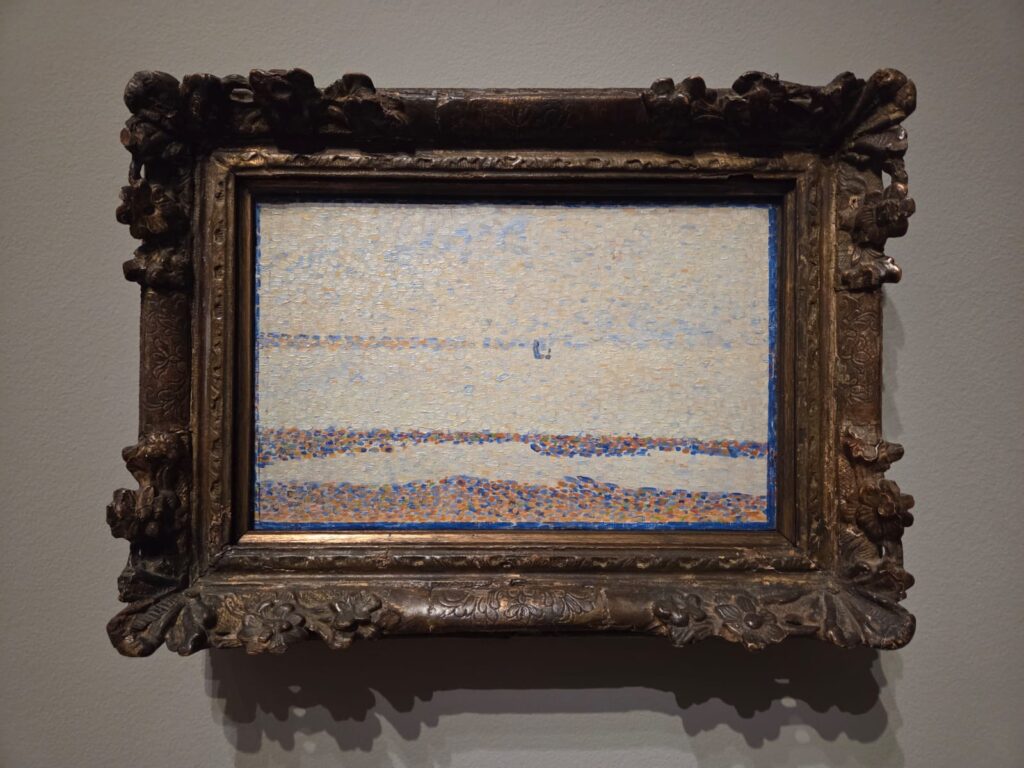
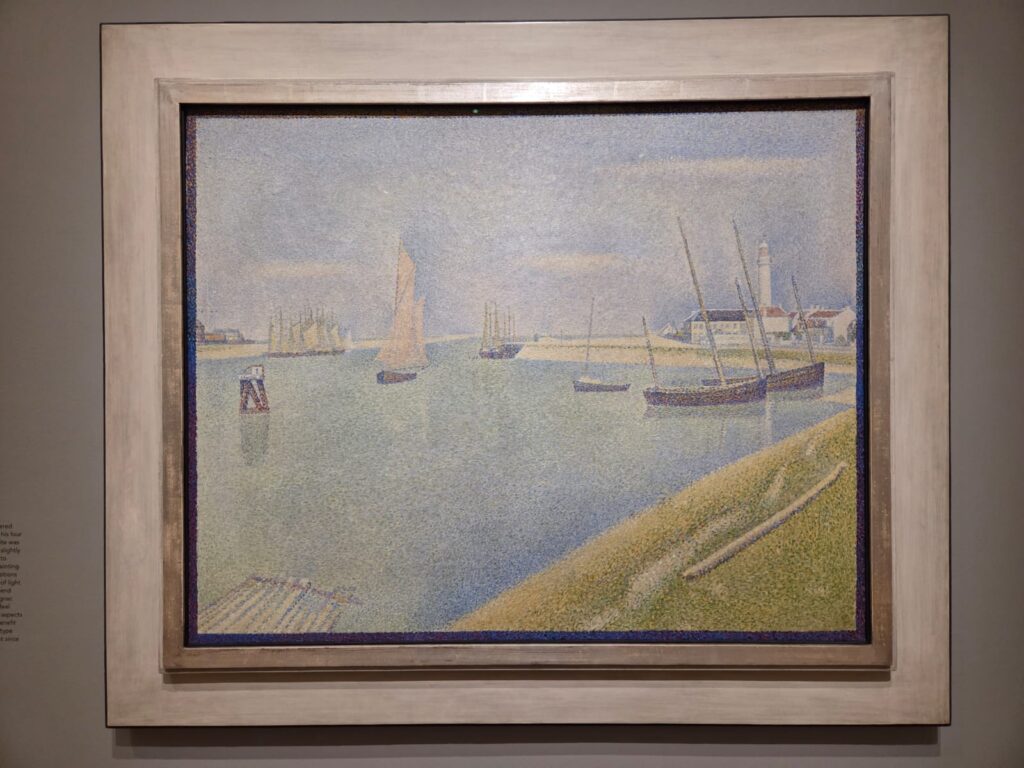
Moving through the exhibition, then, the works are arranged by year. That earlier map was colour-coded, so you have an understanding of where Seurat was each year. Where possible, the exhibition puts sketches and finished works side by side, showing the artist’s process. This is particularly interesting in an example from 1890, The Channel of Gravelines: An Evening. You can see Seurat’s initial oil sketch (from the Centre Pompidou collection but on long-term loan to a museum in Saint-Tropez). The view depicted in the final work (here from MoMA) is largely the same. But Seurat has balanced the composition with a pair of large anchors. We see his sketch of the anchors, in Conté crayon (from the V&A collection).
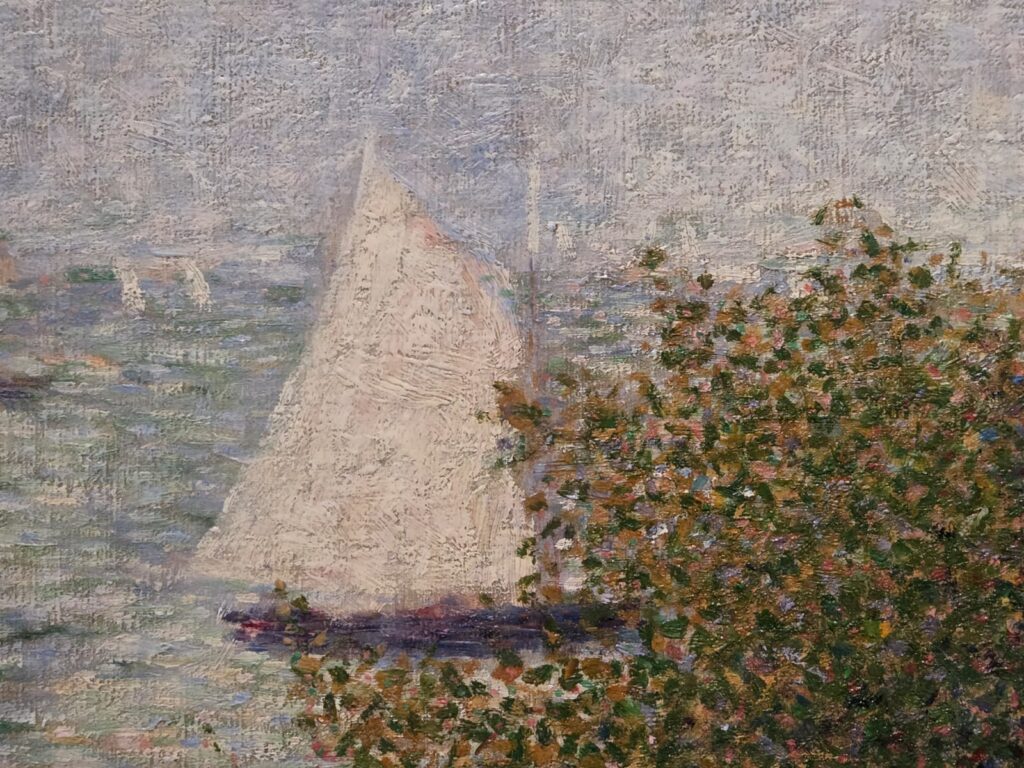
It’s such a clear example of an artist’s way of working and thinking that it makes me think the term Neo-Impressionist doesn’t actually work. Seurat planned and executed all of his works very carefully, thinking about the best compositions as well as how to recreate effects of light and shadow in pure colour. Really, when you think about it, by the time you’re applying little dots of pigment everywhere, there isn’t really time to capture a passing effect of the elements.
A Meeting of Old Friends
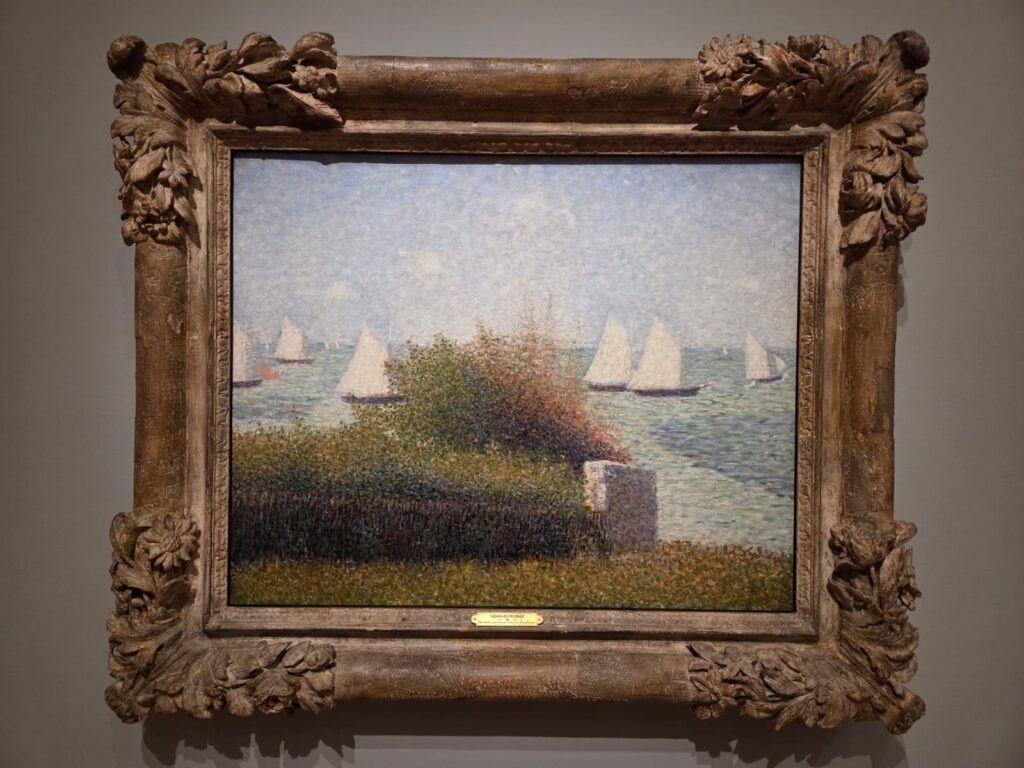
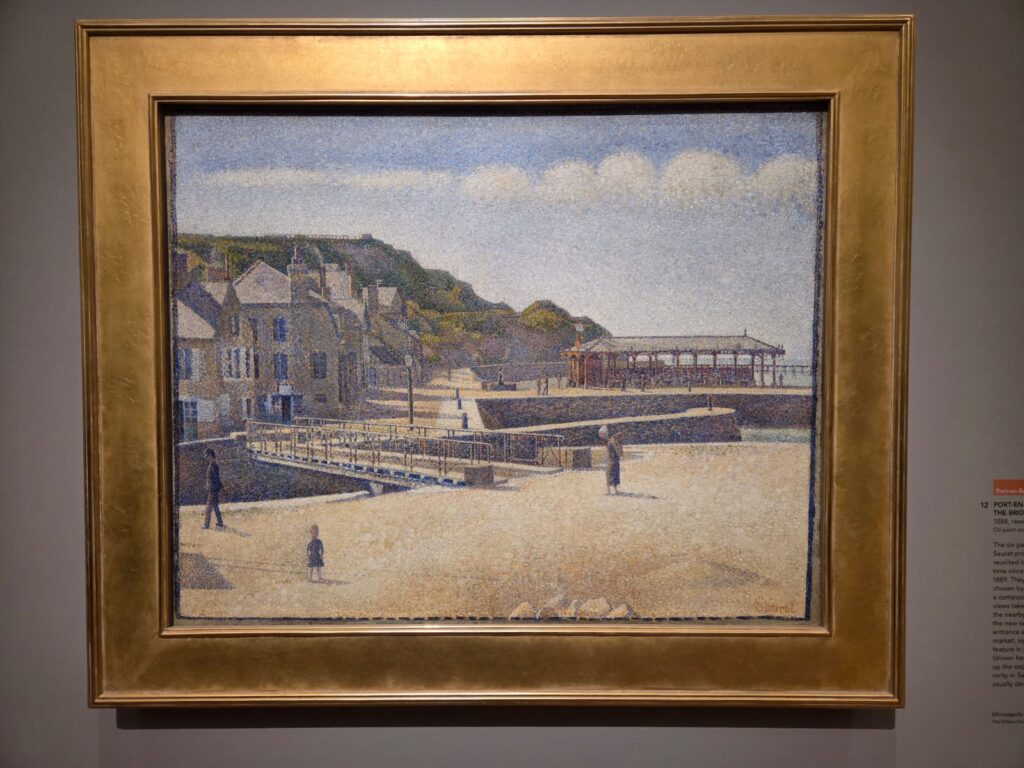
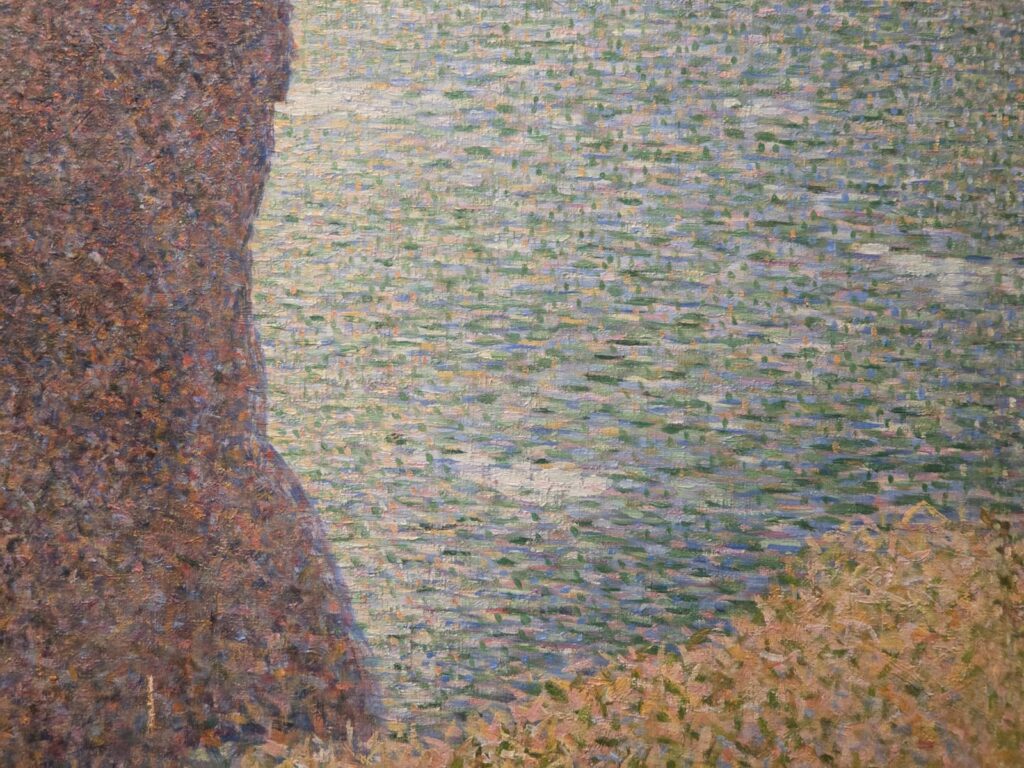
The other thing I really enjoyed about this exhibition I have already hinted at. That is the Courtauld Gallery’s ability to get excellent loans from major and minor institutions, commercial galleries and private collections. For instance, the six finished seascapes Seurat painted in 1888 are back together here for the first time since the artist first exhibited them. They reside now in the Kröller-Müller Museum, Minneapolis Institute of Art, Saint Louis Art Museum, Musée d’Orsay, Museum of Modern Art in New York, and National Gallery of Art in Washington, D.C. How wonderful to have them all come to me so I could see them side by side.
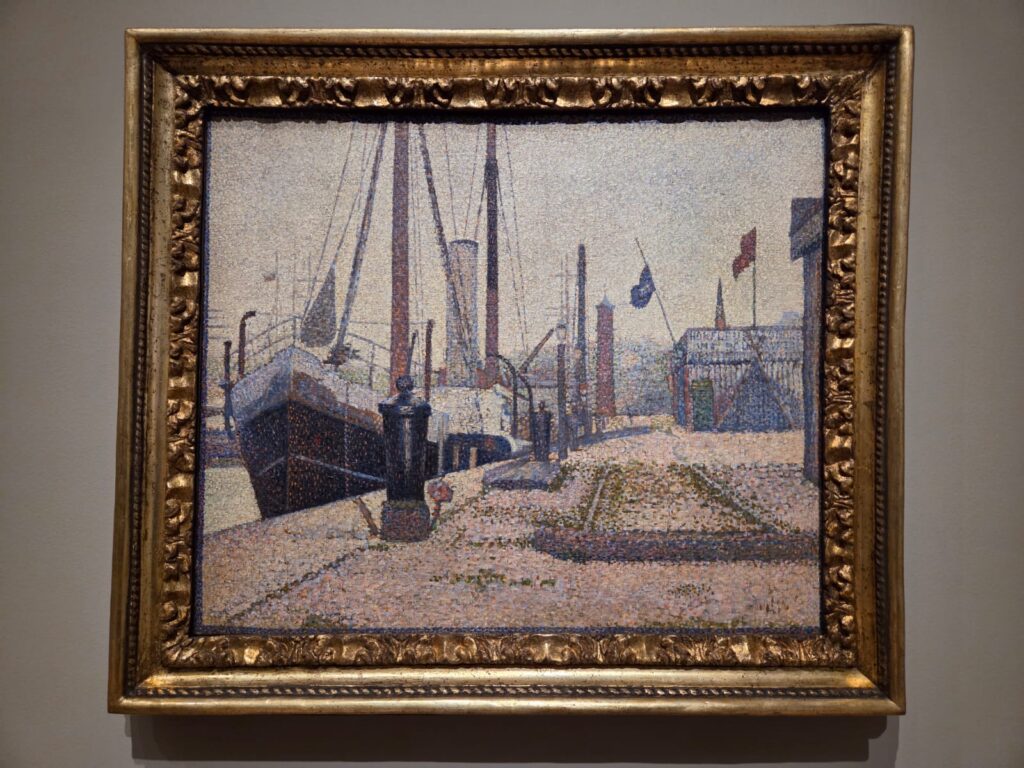
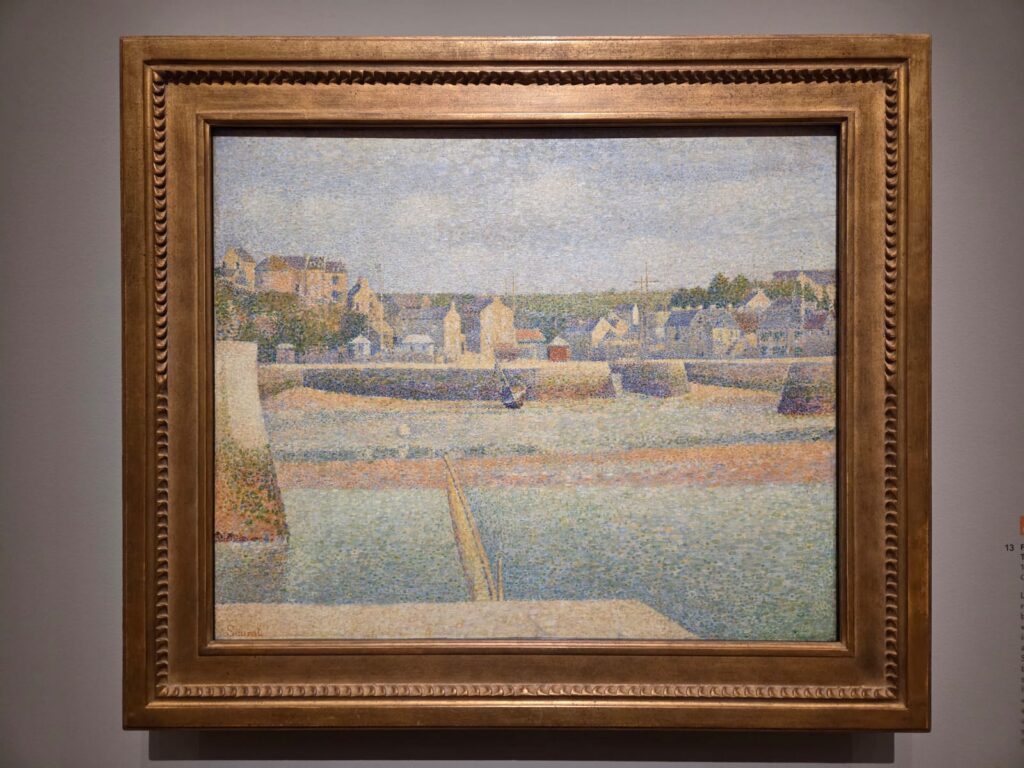
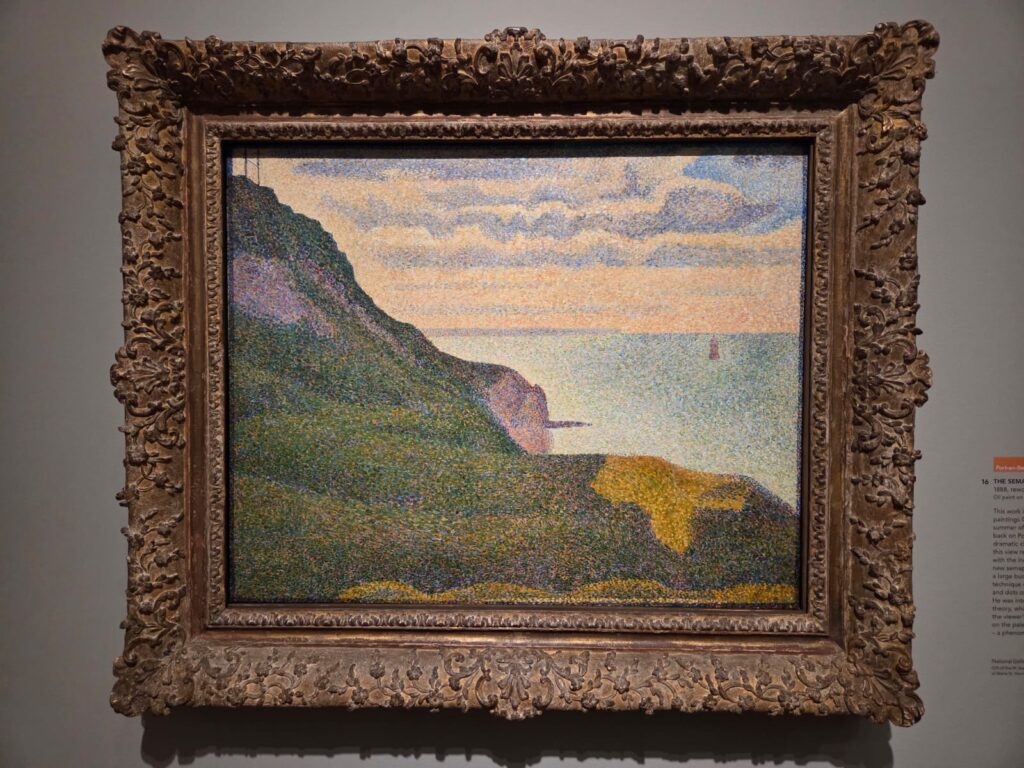
And finally, did I actually like the paintings themselves? I did. I’ve probably had enough of Neo-Impressionists for one year at this point. But I like Seurat’s bold compositions, and the meditative quality of all those dots. I particularly liked the rich sunset colours of The Semaphores and the Cliff (1888, reworked 1889), and the juxtaposition of tradition and modernity in Port-en-Bessin – the Bridge and the Quays (same dates). This location was one of the more Westerly ones Seurat visited, not far from Caen.
I look forward to seeing what else the Courtauld Gallery have on this year. This exhibition is already a stark contrast from the last one we saw here, Wayne Thiebaud: American Still Life. This time around, at Seurat and the Sea, we learned about a painter who leveraged modern ideas, rail networks and commercial innovations for artists to create seascapes that still captivate more than a century on. An interesting and rewarding experience indeed.
Salterton Arts Review’s rating: 4/5
Seurat and the Sea on until 17 May 2026
Trending
If you see this after your page is loaded completely, leafletJS files are missing.
This is such a well-written and informative survey of the exhibition (I went to it the other day, and was reading some reviews afterwards: this is the best one out there, and the photos are particularly good to have). Many thanks for this!
Thank you so much for the kind words, I’m glad you enjoyed the review!