
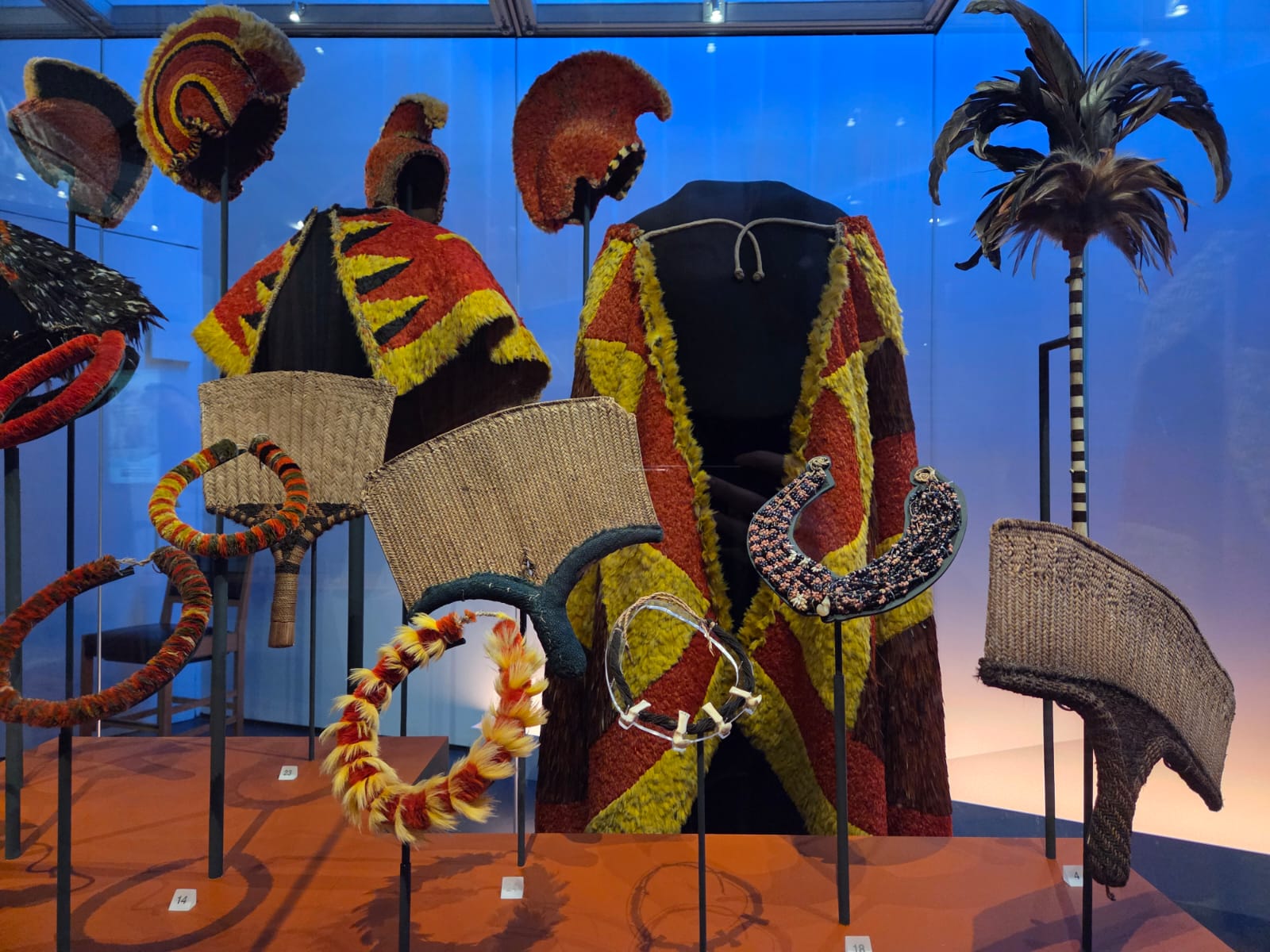
Hawai’i: A Kingdom Crossing Oceans – British Museum, London
For once I found myself wishing a British Museum was a little busier, as I want a lot of people to see Hawai’i: A Kingdom Crossing Oceans.
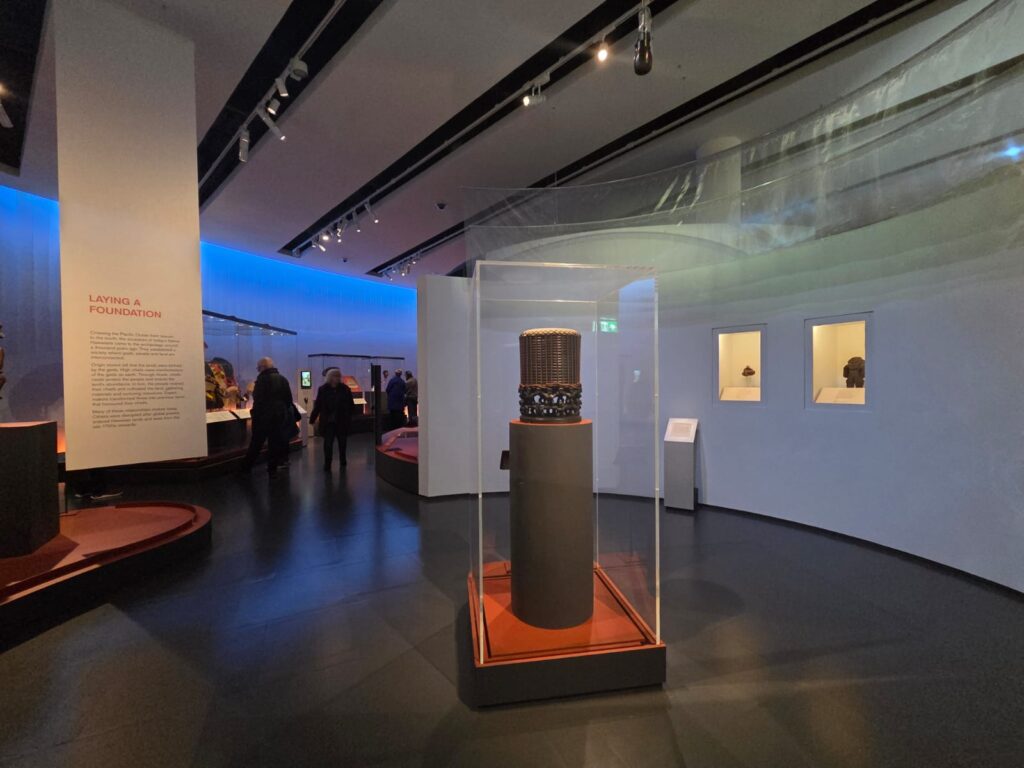
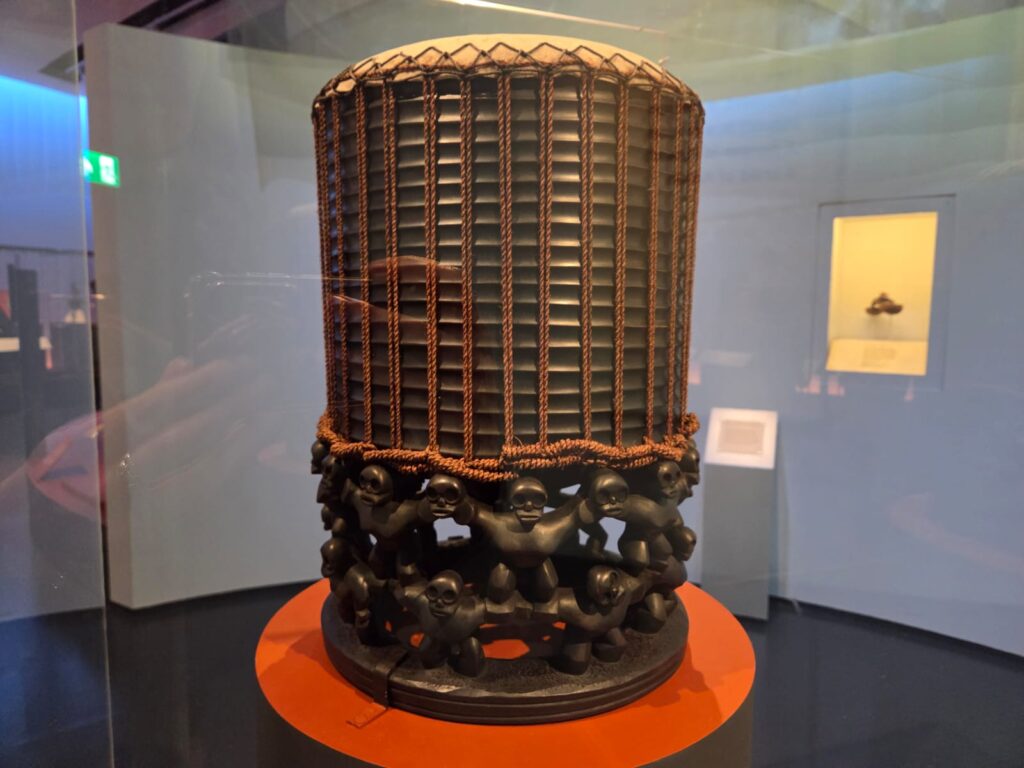
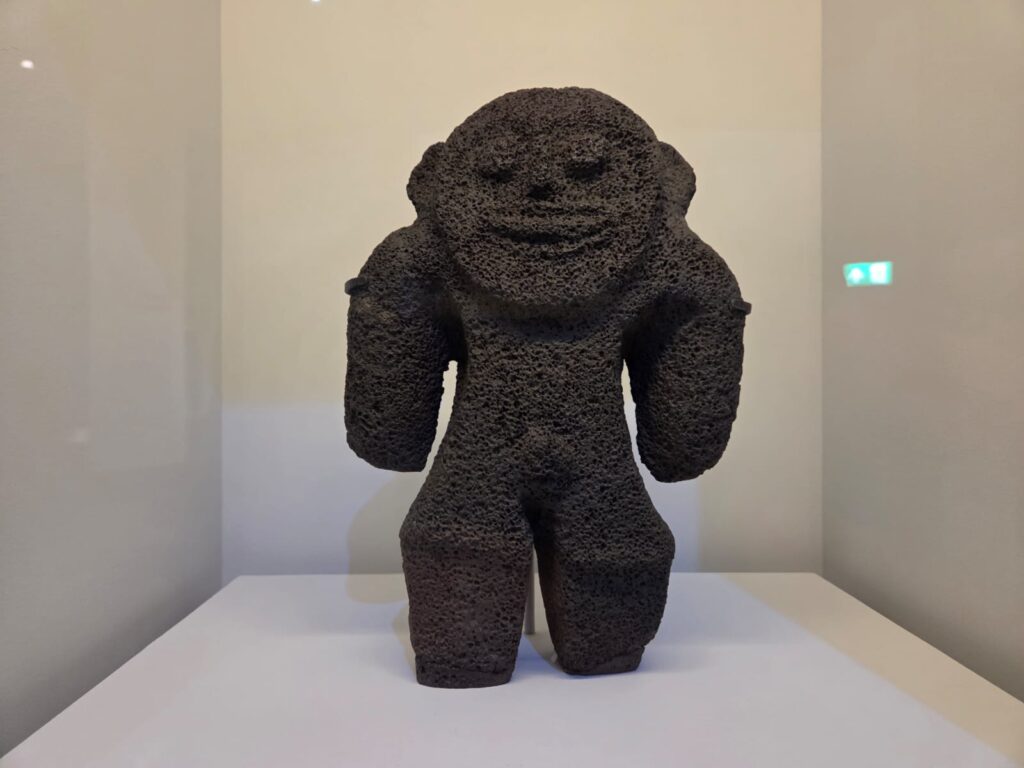
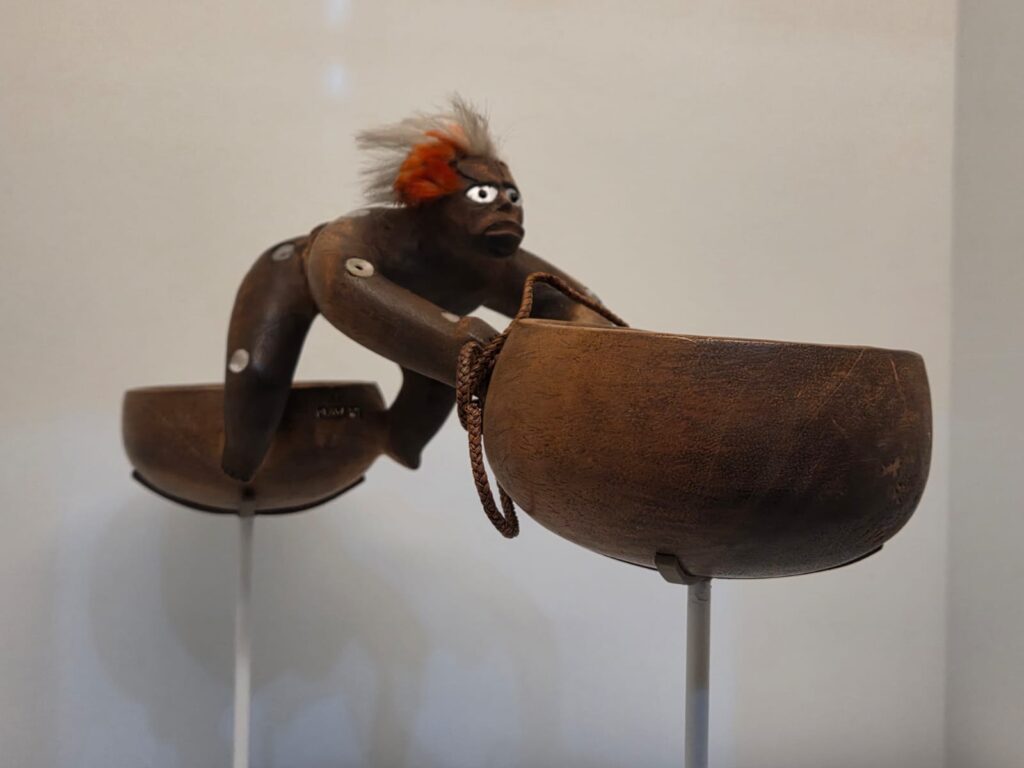
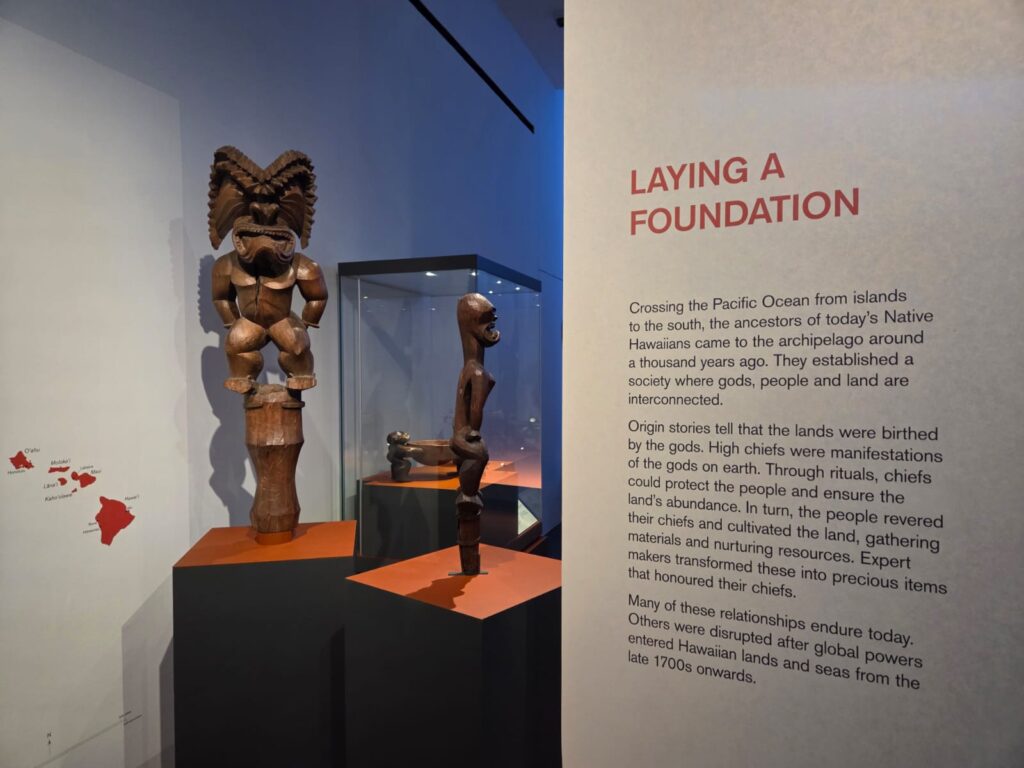
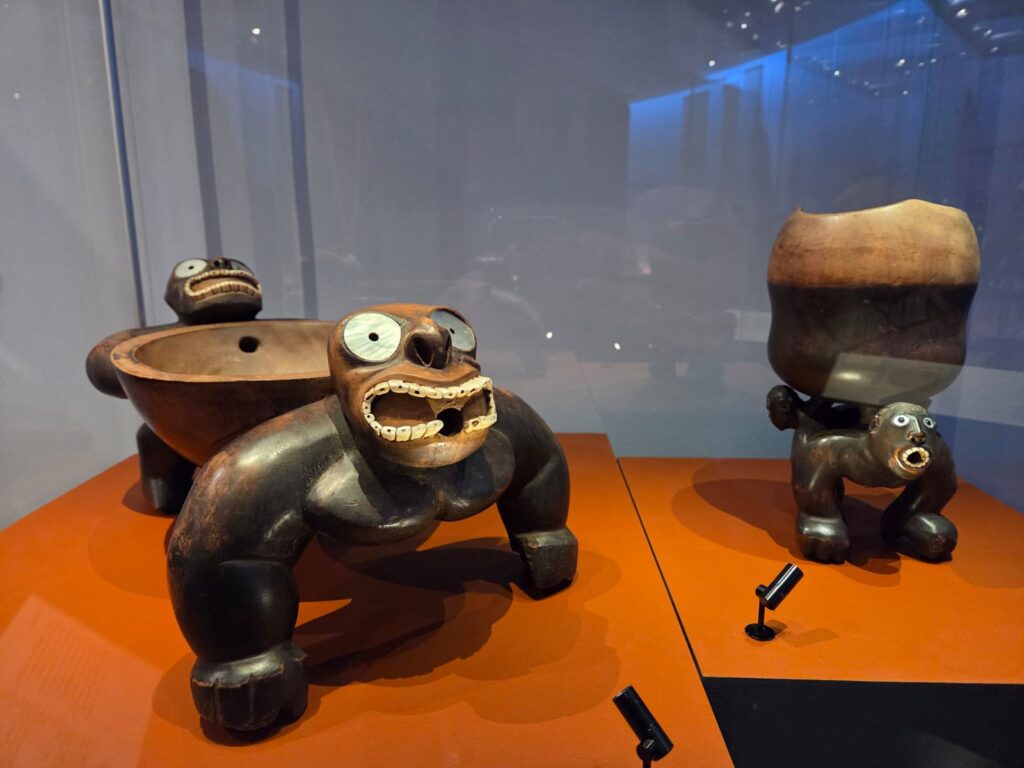
The British Museum Showcases Hawaiian Culture and History
Can you believe it? When I write about exhibitions at the British Museum, it’s almost always to complain uncharitably that I think they’ve oversold tickets and the whole thing is an unpleasant crush of people. I can’t even anticipate what their Bayeux Tapestry exhibition is going to be like… But on this singular occasion, I was actually wishing there were more people there to experience what I was experiencing. Now, perhaps this was down to the time of day I visited. I’ve been doing more late exhibition slots recently. At the National Gallery this was recently a revelation. Likewise at Tate Britain. At the Courtauld Gallery, it was busier than usual. You can’t win them all. I guess.
But whatever the reason, Hawai’i: A Kingdom Crossing Oceans was pleasantly quiet. I could take my time looking at all the exhibits, and watching the interesting videos. Hopefully this was just a fluke of timing, and doesn’t represent a need for more patronage of the exhibition. I would love the British Museum to do more exhibitions exactly like this.
What was it I liked so much about this exhibition? The answer, as is often the case with me, is manifold. Firstly, I love discovering new areas of knowledge, and my prior knowledge of Hawai’i was not huge. Secondly, I thought the curation was very interesting. And thirdly, it got me thinking about museums in a different light. Without further ado, let’s take a look at each of these points of interest below.
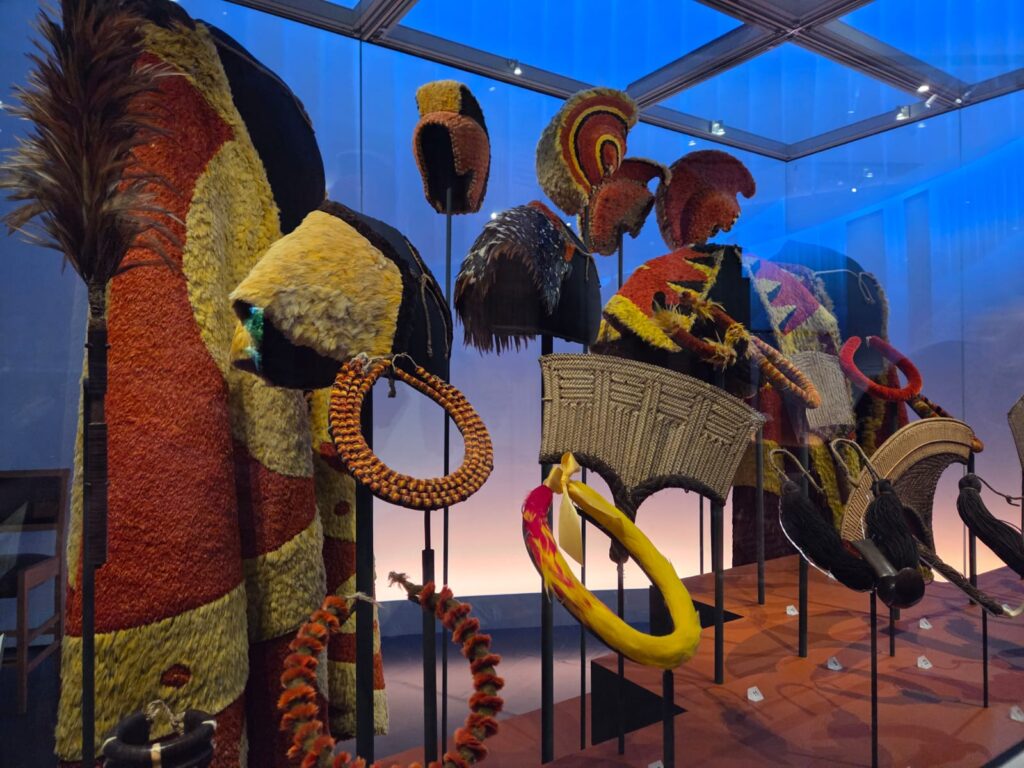
Hawai’i at a Time of Great Change
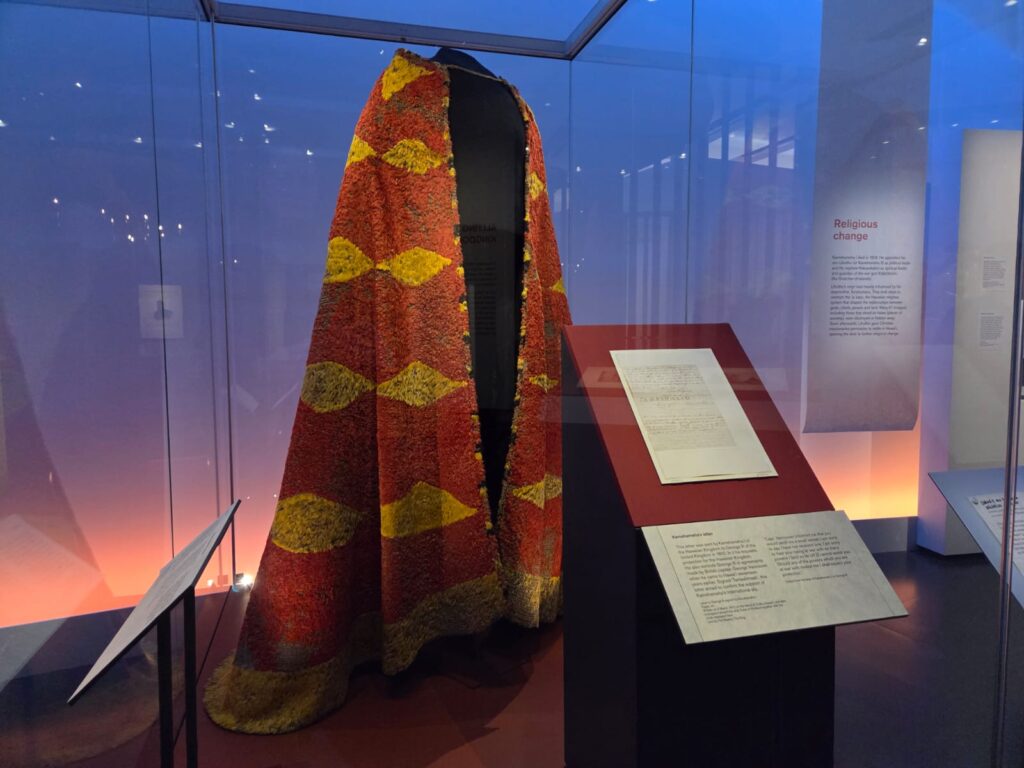
Hawai’i: A Kingdom Crossing Oceans looks at a very specific, and interesting, time in the history of the islands. And the chosen moment tells us something interesting about the curatorial approach, which we will come onto in a second. Because it is specifically not the period of James Cook’s “discovery” of Hawai’i in 1778, or that first contact between cultures. Instead, it looks at the period some decades later, when Hawai’i attempted to negotiate a place for itself in the world power structures it had come to know in the interim.
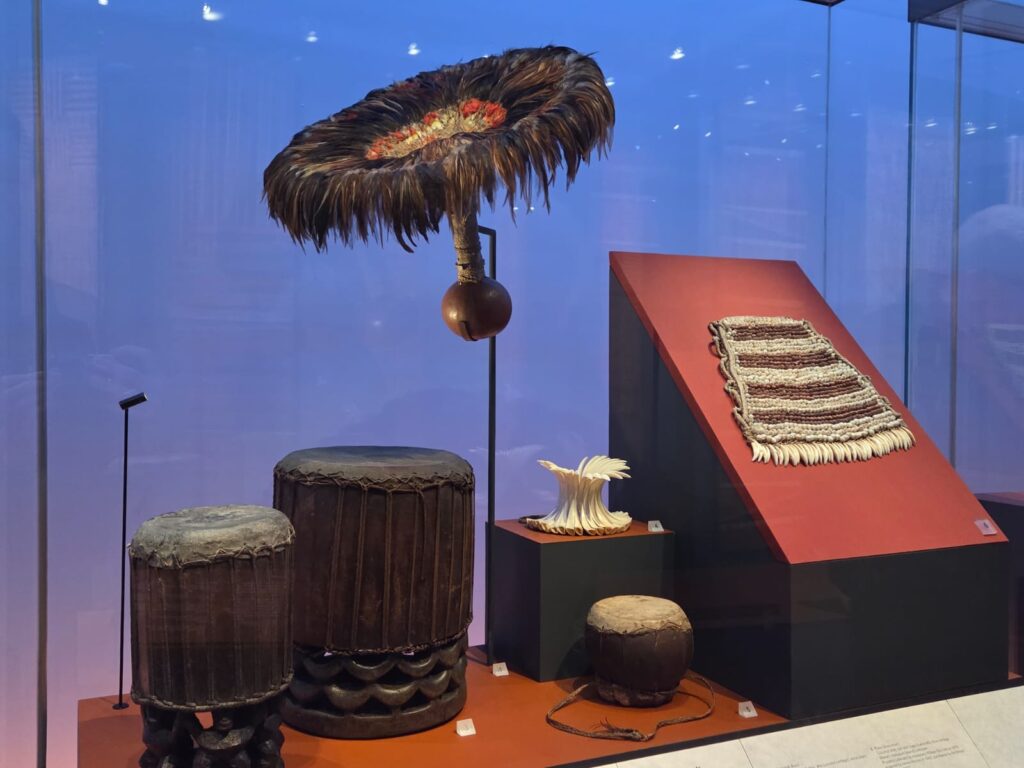
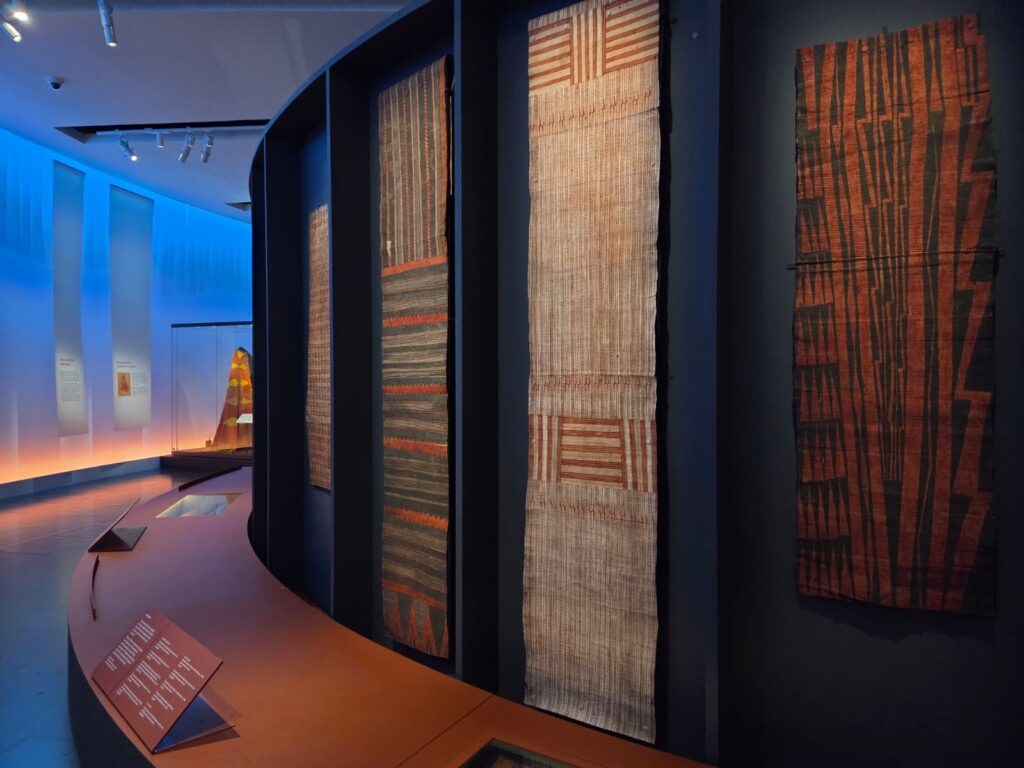
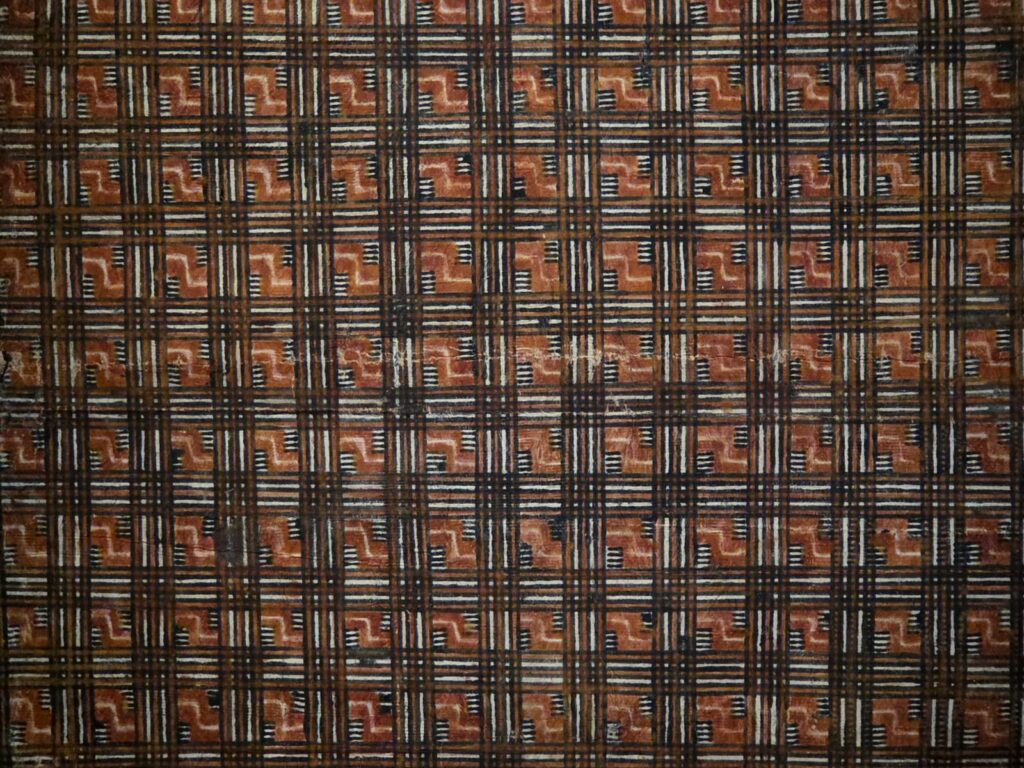
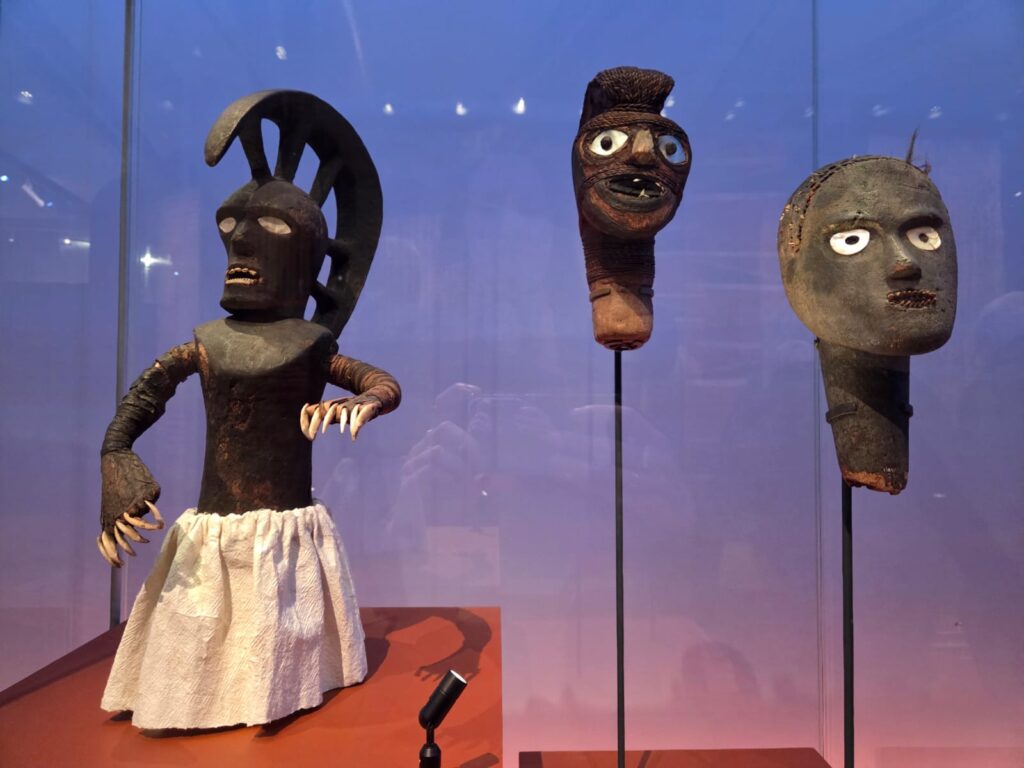
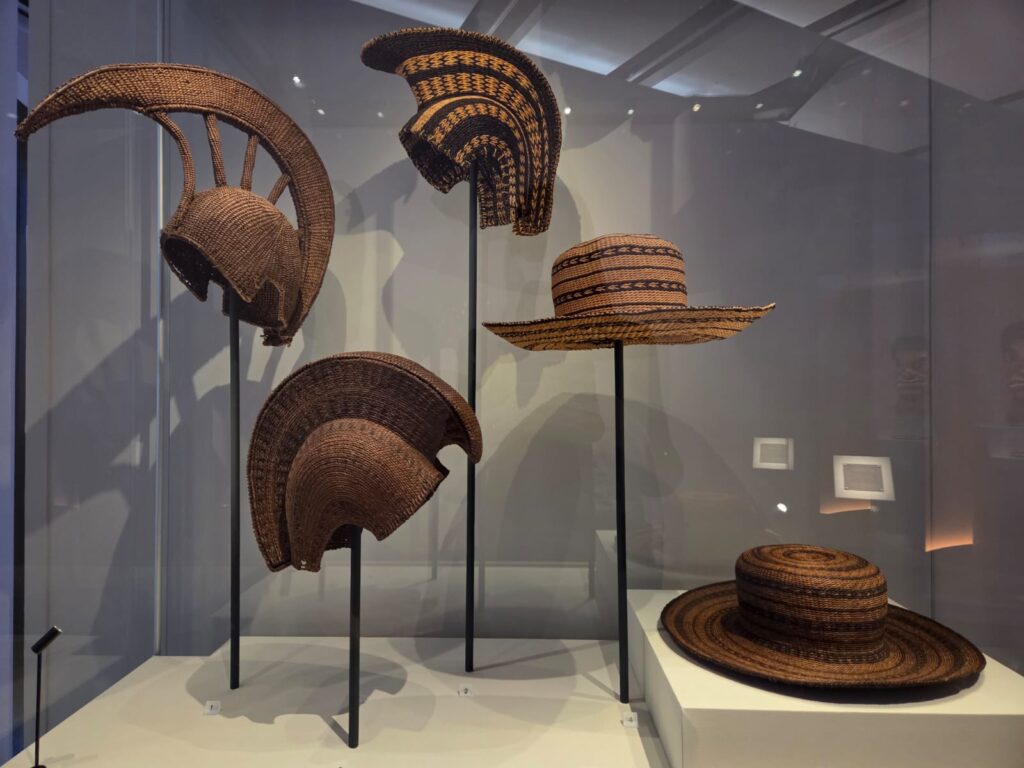
I’ve already mentioned James Cook more than the exhibition does, I think. The exhibition opens with a survey of typical types of traditional Hawaiian objects – tending towards the ritual – in materials including wood, shell, barkcloth and feather. Videos in a few places explain how Hawaiians today have rediscovered and reclaimed this heritage, learning from museum artefacts and other Polynesian cultures. We understand from the outset that there has been something of a rupture in Hawaiian culture, but have yet to learn what that rupture was.
It’s then time to get into politics. We learn that Kamehameha I, also known as Kamehameha the Great, was the first King of Hawai’i, transforming more of a traditional chieftain role into a monarchy from the late 18th century, and bringing the Hawaiian islands together into one kingdom from 1810. As a New Zealander, this is reminiscent of the Māori King movement, which attempted to unify Māori, and protect land and cultural identity. A way that Polynesian peoples mirrored European power structures to create something Europeans would recognise and hopefully interact with on equal or (more) favourable terms.
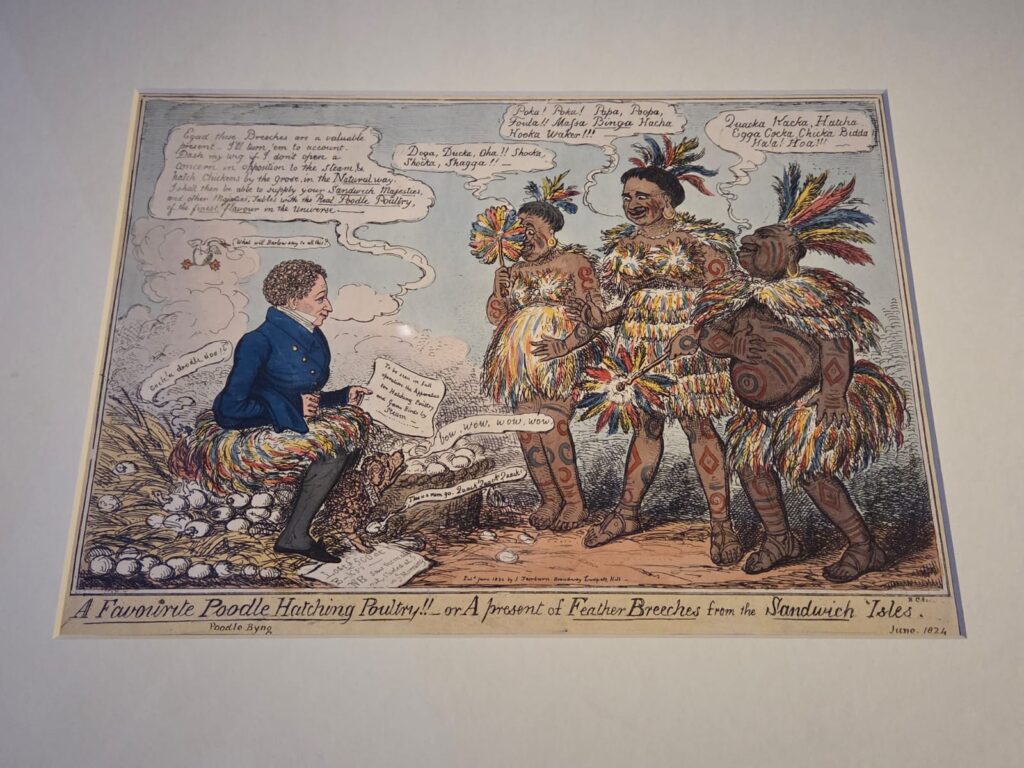
In Hawai’i, this worked for a time. It came to an unfortunate end in 1824, however, right here in London. King Kamehameha II and Queen Kamāmalu had travelled to Britain to form an alliance with the British Crown. While waiting for an audience with King George IV, they contracted measles and unfortunately died. King George had their bodies transported back to Hawai’i, but an unfortunate series of events had begun. Much of the population similarly died of newly-introduced diseases, and the power vacuum that followed allowed for foreign intervention of exactly the type that Kamehameha II had been trying to prevent. The Hawaiian islands came under American control in 1893 with the overthrow of Queen Lili’uokalani.
As the exhibition demonstrates, however, Hawaiian culture flourishes despite these historic reversals of fortune, with many artisans today preserving traditional skills on their own, contemporary, terms.
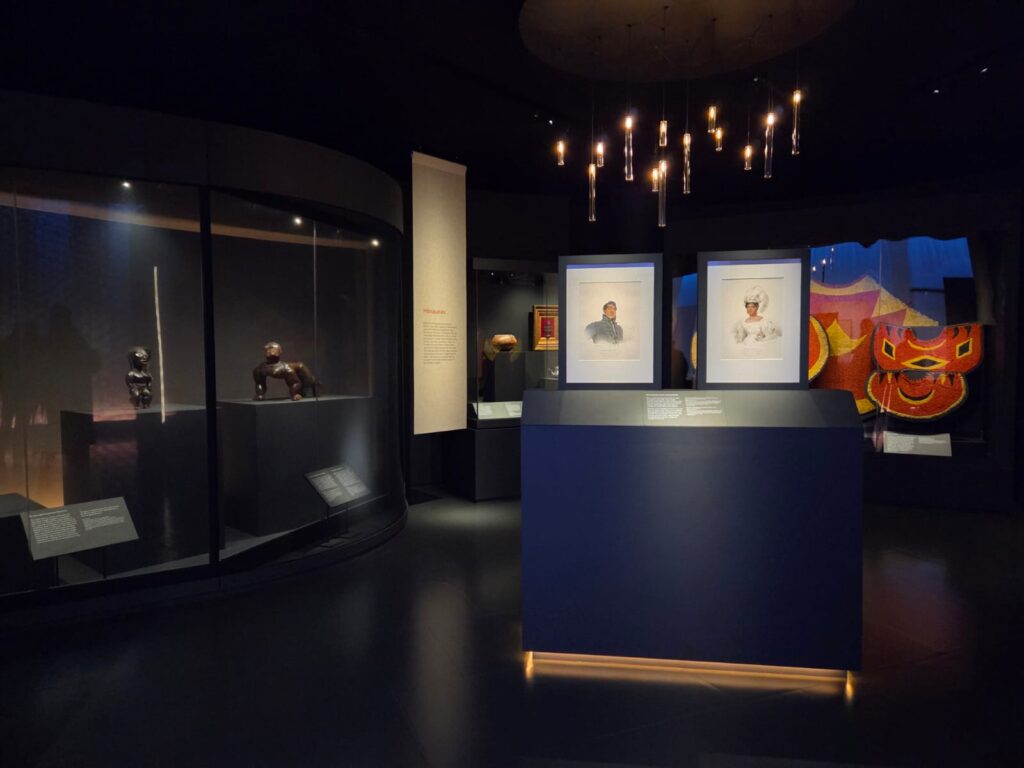
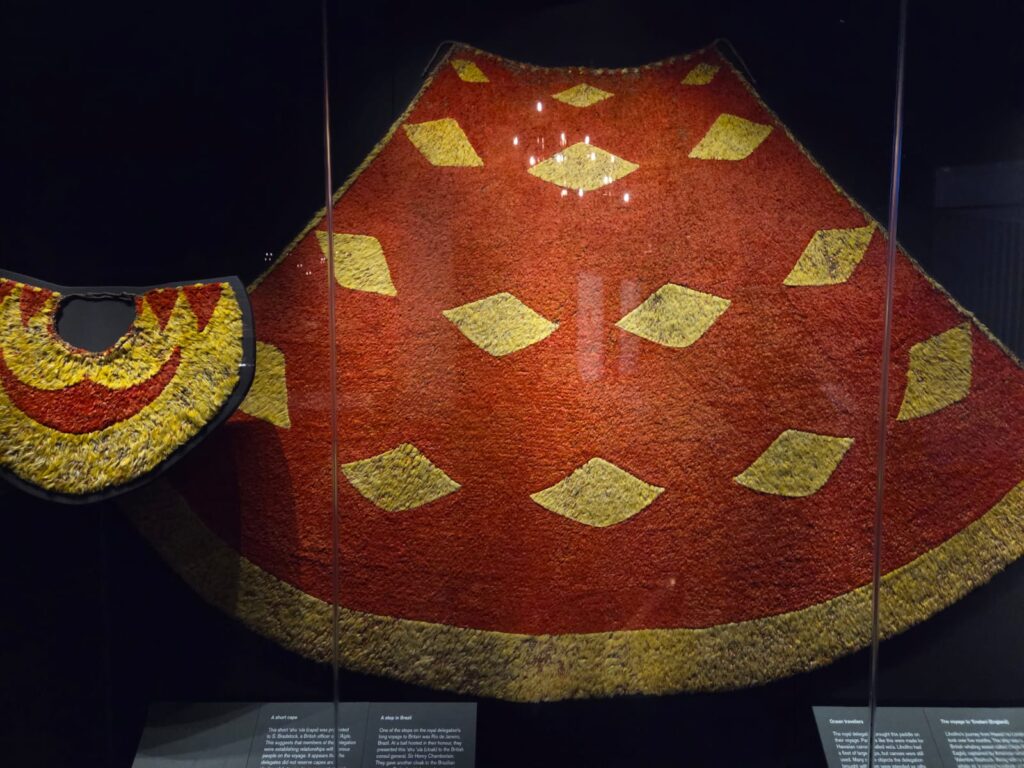
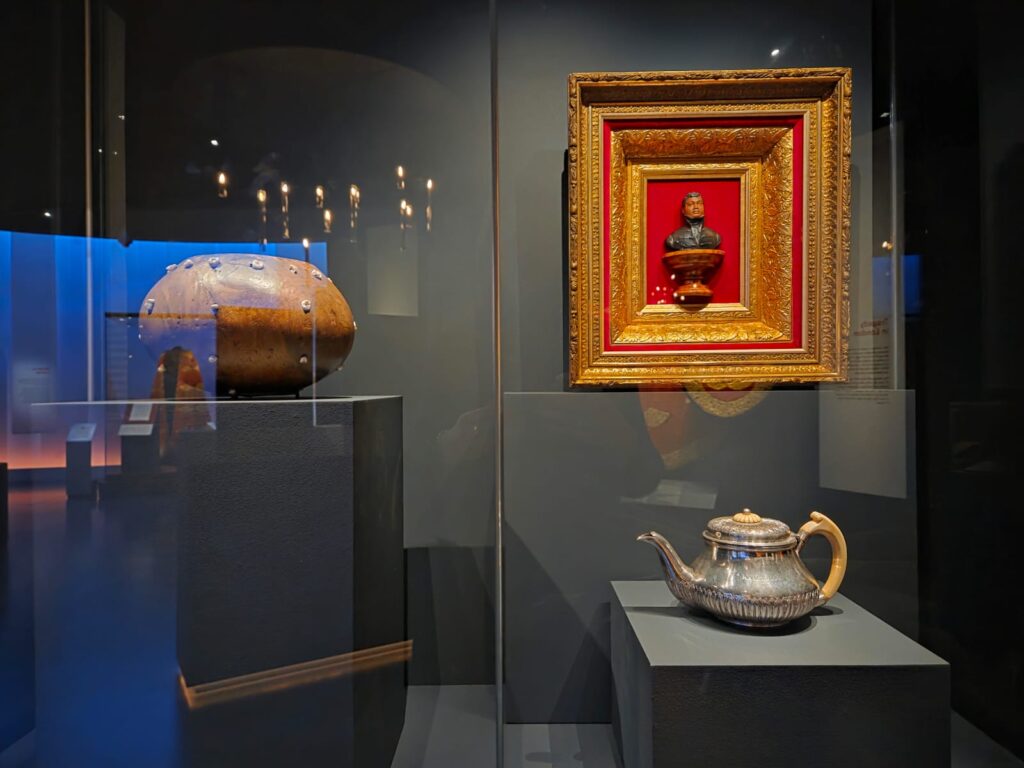
Co-Curation at the British Museum
The British Museum is often seen (or positioned, for various purposes) as being at one end of a museum spectrum. At the far end would be, I suppose, very grass-roots organisations. Something like the People’s Museum Somers Town, which exists as a memory store, gathering space, and activism hub for its community. Or maybe something that goes even further and deconstructs the idea of museums entirely. But the British Museum is most definitely, at the other end of the spectrum, an institution. It is a quintessential museum with a long lineage, prestigious collections, and millions of visitors annually. It is also, under British law, unable to deaccession anything from its collection (without an act of Parliament, at least).
My point, here, is that the British Museum most definitely leans towards a certain conservative outlook. They don’t need to do anything special to get visitors through the door. They have highly-qualified experts for almost every imaginable facet of the collection. And so I found it very interesting indeed to see how far they had gone in bringing non-British Museum voices into Hawai’i: A Kingdom Crossing Oceans.
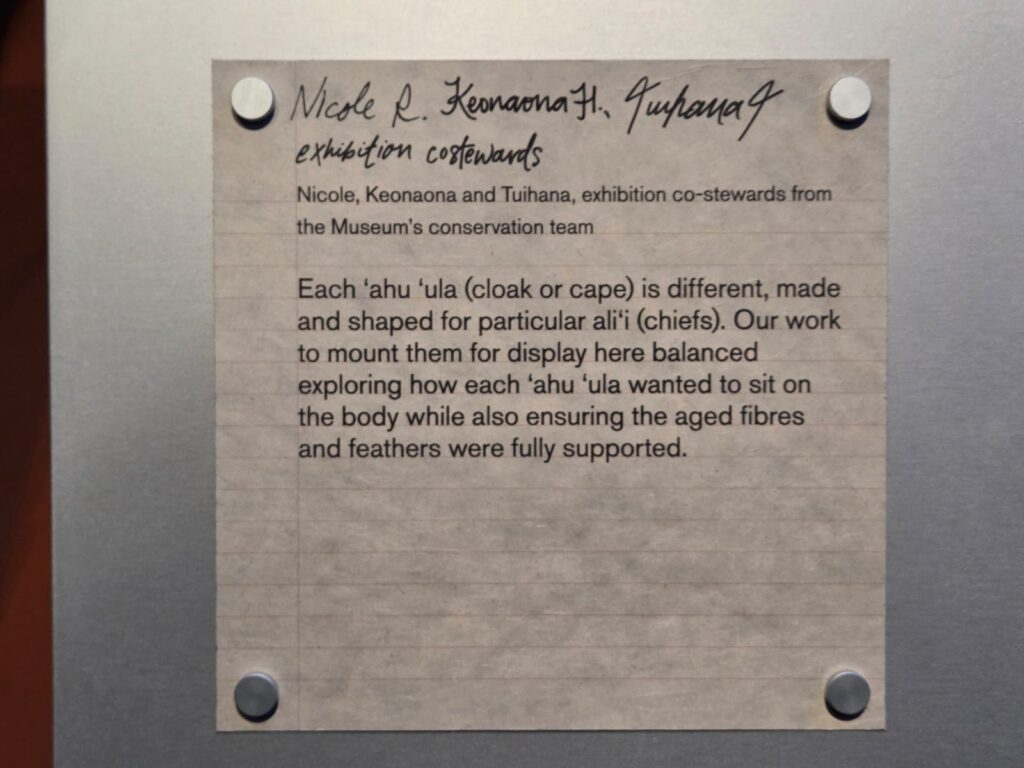
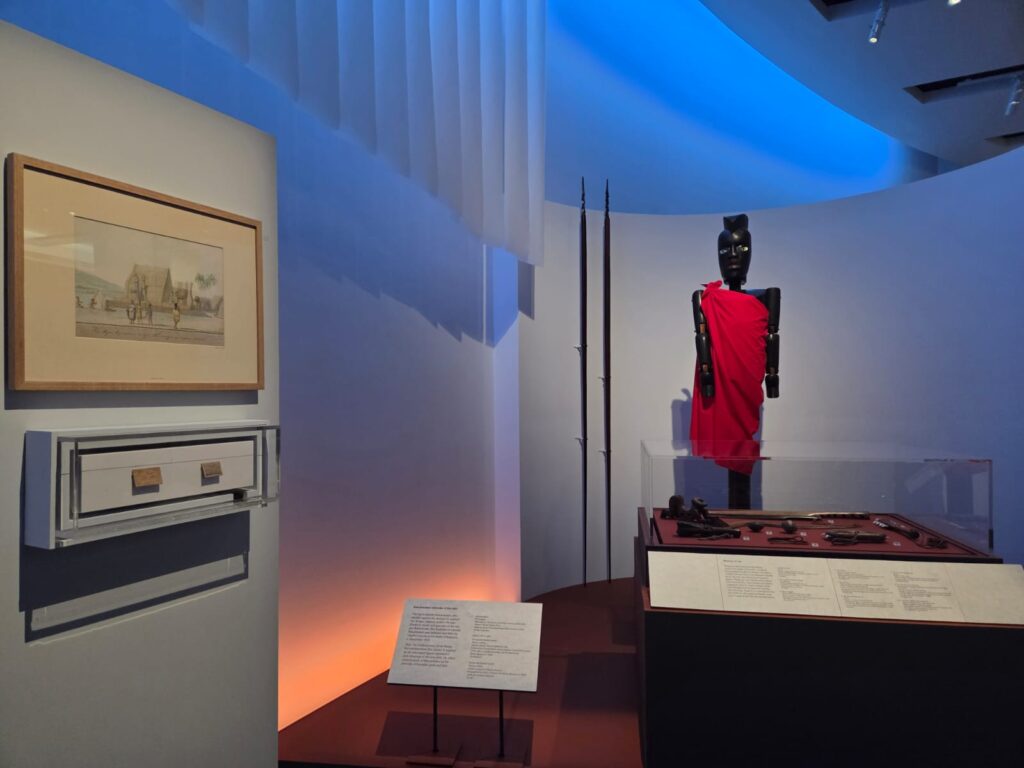
It starts before you even enter the exhibition. A wooden figure of Kū wears a barkcloth loincloth made for him in 2017, with offerings, including leaves, in front of him.* Once inside, one of the first texts reads “The making of this exhibition has been shaped by members of the Hawaiian community, who work closely with the British Museum. Their many contributions are acknowledged here and across the gallery, where these exhibition makers have also contributed short texts sharing their process.” It goes on to explain the exhibition’s approach to Hawaiian language, and to ancestral treasures containing human remains.
I liked these texts: each one gives the direct perspective of those who helped shape the exhibition. There’s an example in the second set of images above, where members of the curation team talk about a cloak. But, importantly, community voices are not relegated to a secondary set of texts. A label for a bowl, for instance, talks about how it was loaned back to Hawai’i in 2024, where “community members reconsidered its function, suggesting that it was probably used to serve small amounts of food or medicine to ali’i (chiefs).”
*I thought this looked familiar: the loincloth was made when Kū was loaned to the Royal Academy for an exhibition, Oceania, back in 2018.
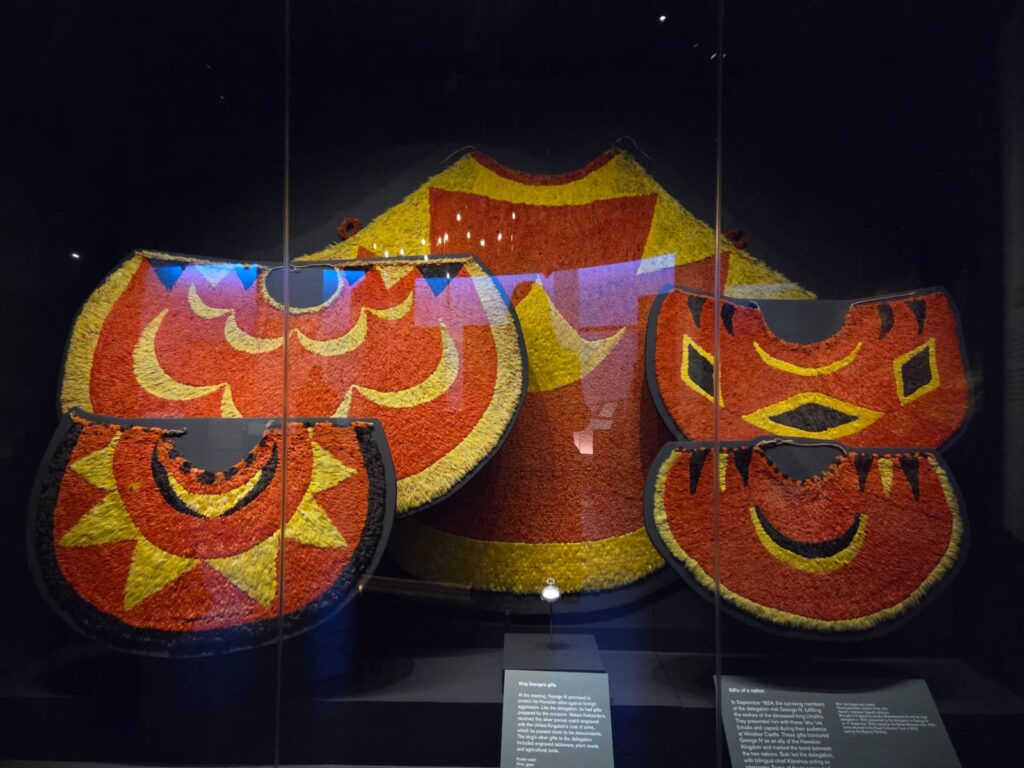
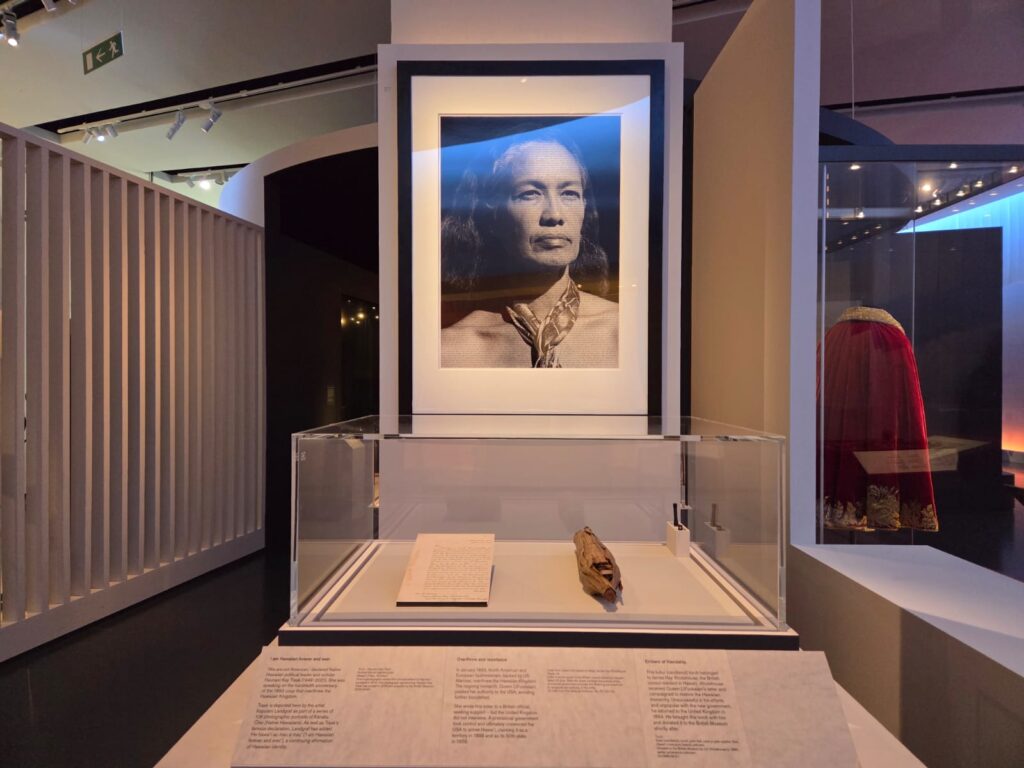
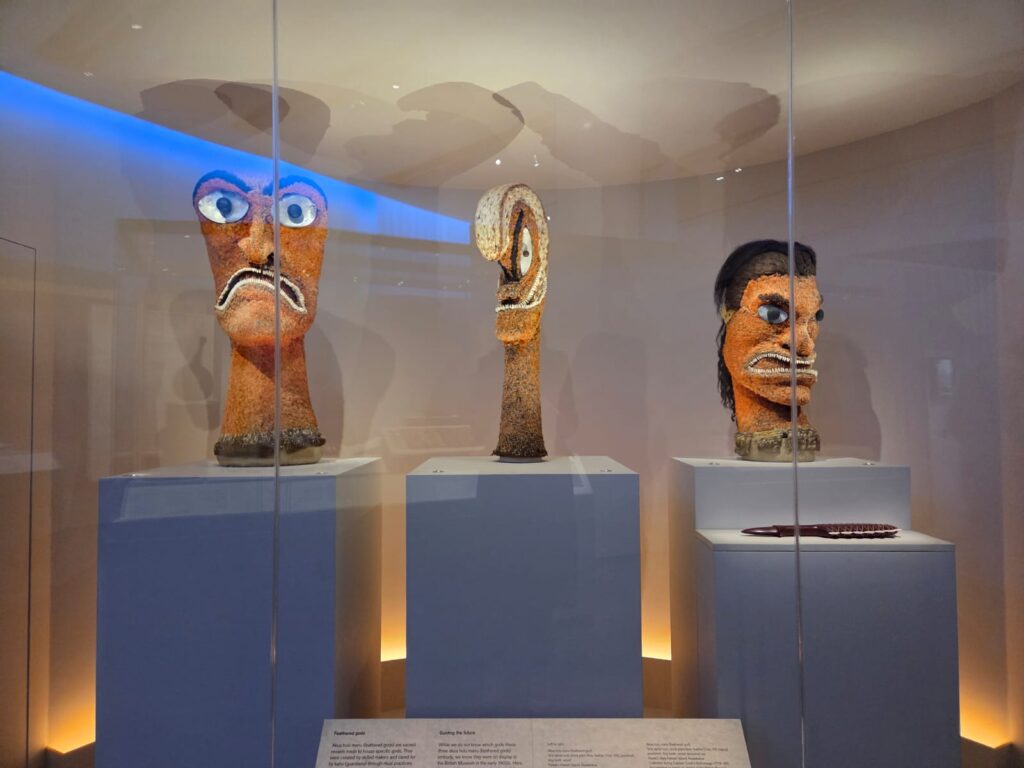
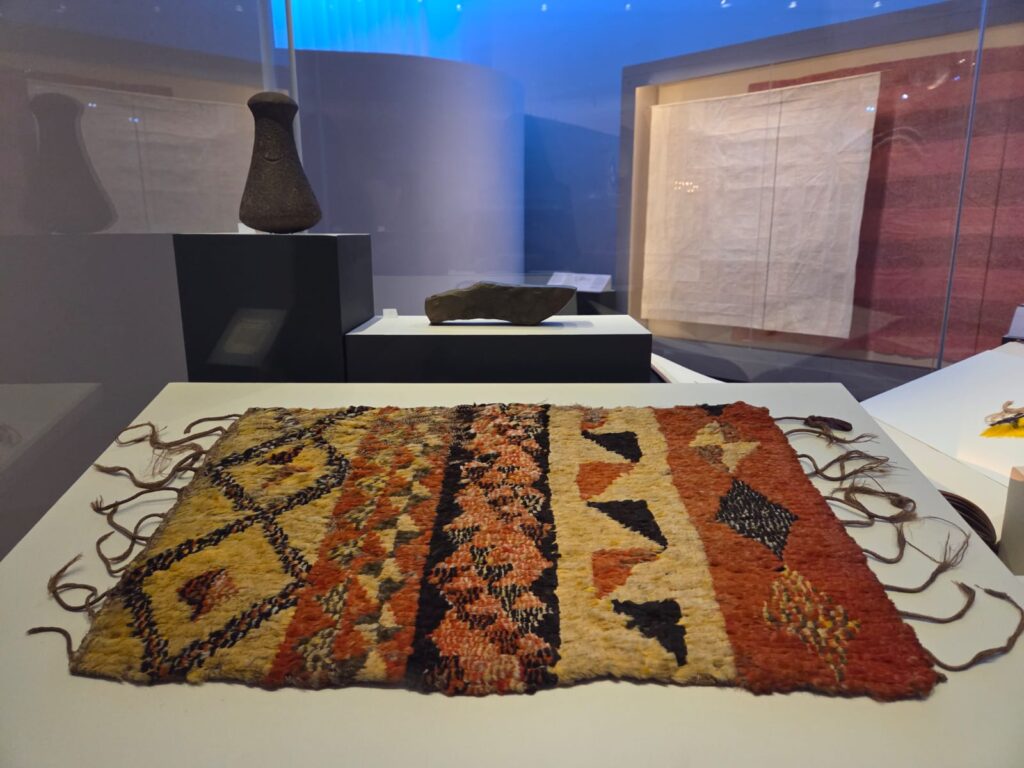
The Museum as Violence, Nonetheless
All of this is really interesting, from a museological point of view. It shows ways that big institutions can do meaningful work with communities through loans, listening, and providing a platform. That’s not even taking into consideration the value of the contemporary interventions which form part of the exhibition.
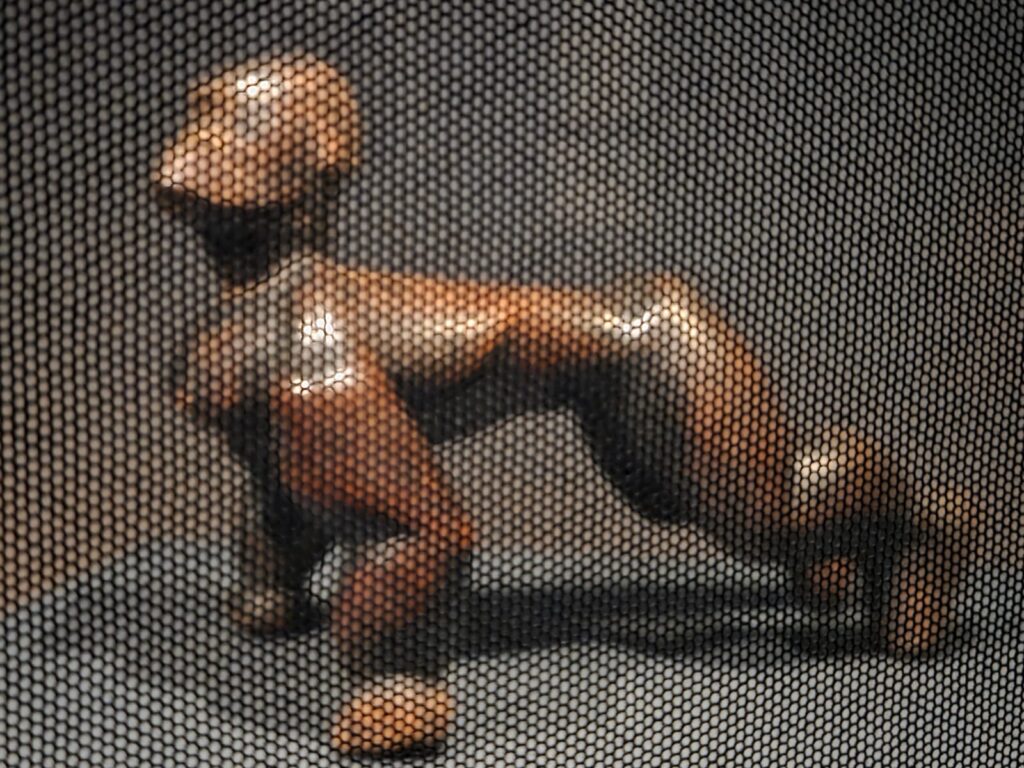
However. And it’s a big however. This exhibition was maybe the first time, in all of my museum-going, that I have really experienced the museum as violence. It’s generally easy for me, despite my museological training, to take museums mostly at face value. I come from the community who are the museum’s historic audience: the observer rather than the observed. But there was something about walking through this exhibition, reading the transparent notes about when and how these objects were collected (which in some cases was just ransacking of sacred spaces), and also reading about how contemporary Hawaiians are having to piece together, in some instances, the uses and meanings of different object types, I understood properly that this severing of people from their cultural heritage is a violence. I’m not the main character here, but I did feel sad about it.
That was a small paragraph from which there is a lot to unpack. Luckily my readership is small and I don’t anticipate much drama in the comments section. Importantly, I don’t have answers. How do we continue to learn about each other, without perpetuating the violence inherent in the formation of (some) collections? I don’t know. I do think that some of the means already discussed, like loans and listening, do something. They’re not perfect, but they are better than museums continuing to rely on their relative authority as protection against difficult conversations.
The upshot of this is that, whether you want to see some really impressive objects, learn about historic and contemporary Hawai’i, see an interesting approach to co-curation, or get all deep and museological, this is a great exhibition in which do to it. I do hope it gets plenty of visitors, and that I see more exhibitions like this from the British Museum!
Salterton Arts Review’s rating: 4.5/5
Hawai’i: A Kingdom Crossing Oceans on until 25 May 2026
Trending
If you see this after your page is loaded completely, leafletJS files are missing.