Long-time London resident and avid museum and theatre-goer. I started this blog in 2014, and got serious about it in 2020 when I realised how much I missed arts and culture during lockdowns. I go to a lot more events than anyone would think is sensible, and love sharing my thoughts in the forms of reviews, the occasional thought piece, and travel recommendations when I leave my London HQ.
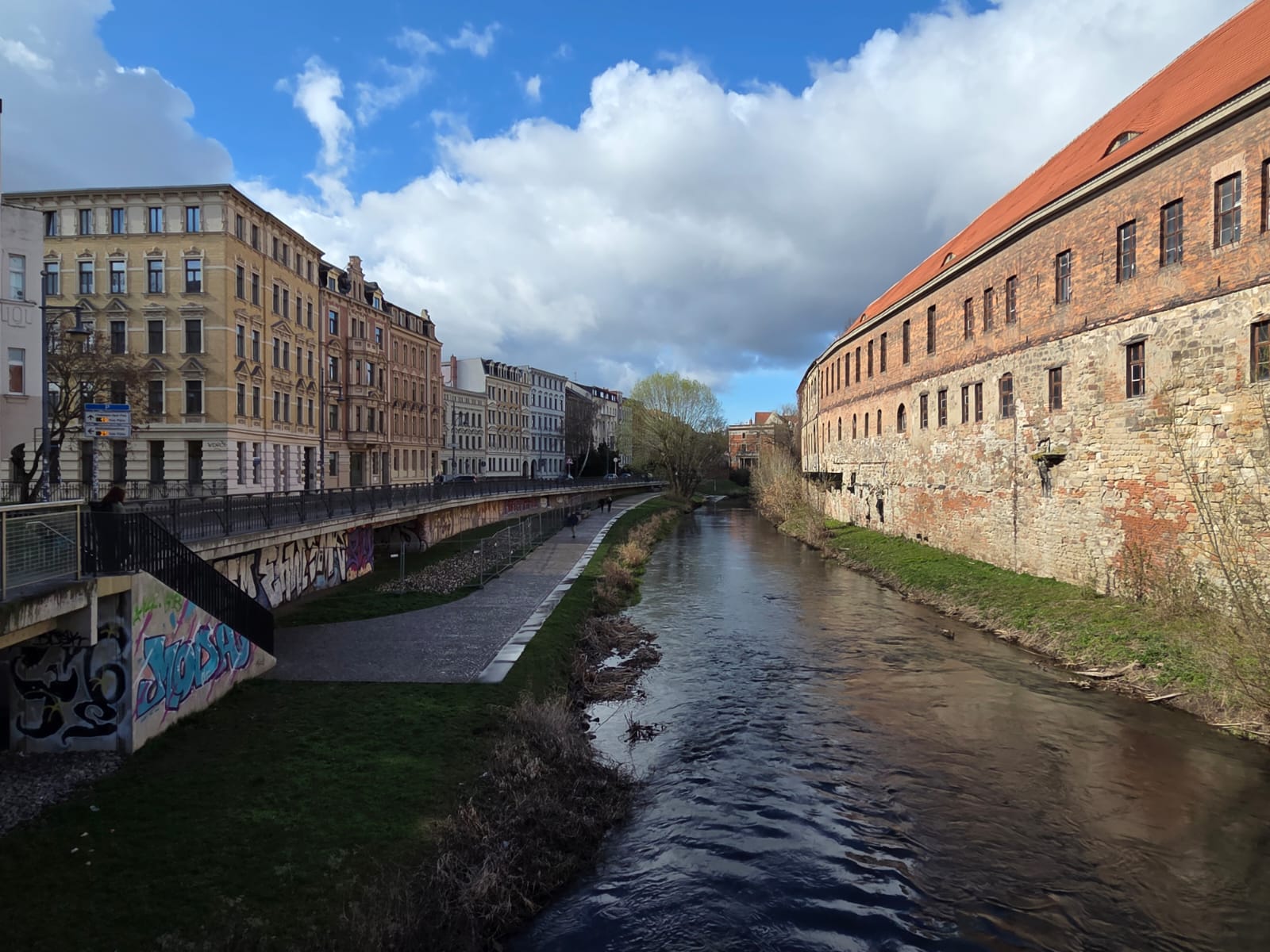
The Salterton Arts Review turns lemons into lemonade or, in this case, turns an extended train delay into a walking tour around the German city of Halle.
Hello, Halle!
If my recent trip to Germany had all gone according to plan, this post would not exist! I started in Berlin, ostensibly for a race but with enough time to visit the German Museum of Technology (Deutsches Technikmuseum). After that we were off to Stuttgart. Because of said race, we decided to take the slightly longer train that didn’t involve changing – it was going to take us there via Frankfurt and a few other places I hadn’t really heard of.
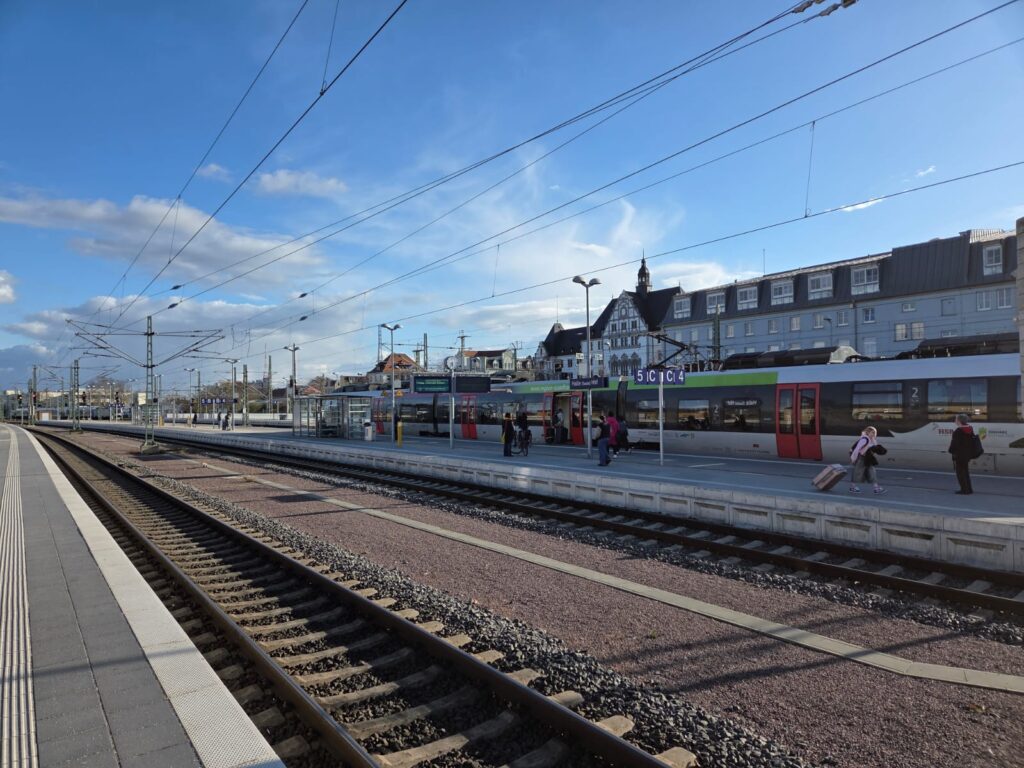
One of those places I hadn’t heard of was Halle. Or Halle (Saale) as it is on Deutsche Bahn. I assume there’s another Halle somewhere. We passed through Halle, and then… came to a halt on a bridge. For around two hours. And then headed back to Halle, where the train terminated. There was not, unfortunately, another train we could reserve seats on for several hours. We found a bar-cum-waiting room where we could get refreshments. And then, since the Urban Geographer is sometimes very kind (and also had some work to do), he said he didn’t mind if I went off to look around the city for a while.
And so I had a quick look for a guide to Halle. I found this one, produced originally by the local authority. It ties in with an app which I didn’t download – given the time I had available I just wanted to get a sense of where to visit and what to see in a hurry. Along the way I found a few other points of interest which I will share with you. And so, without further ado, let’s get going!
Oh, I almost forgot to tell you this. Our unexpected stop in Halle happened on a Monday, which many will know is the day almost all European museums are closed. When we were stuck on the bridge and didn’t know what would happen, we briefly thought about staying overnight in Halle and carrying on the next day. So, being the Salterton Arts Review, I had a quick look online to see what was in the area. My absolute top pick was the State Museum of Prehistory. Not just because I really love prehistory, but because, at the time of writing (April 2026), the first image on their website is an inexplicably seductively-posed Neanderthal. If you happen to visit and it’s not a Monday, please could you check the museum out and report back?
From the Train Station Towards the City
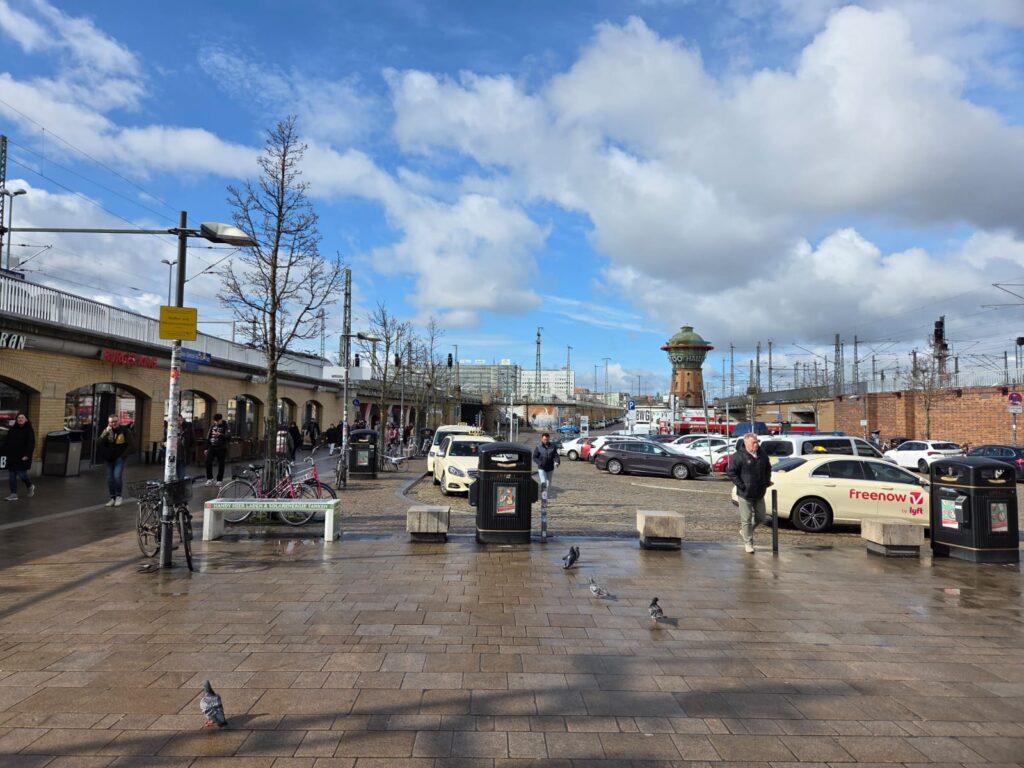
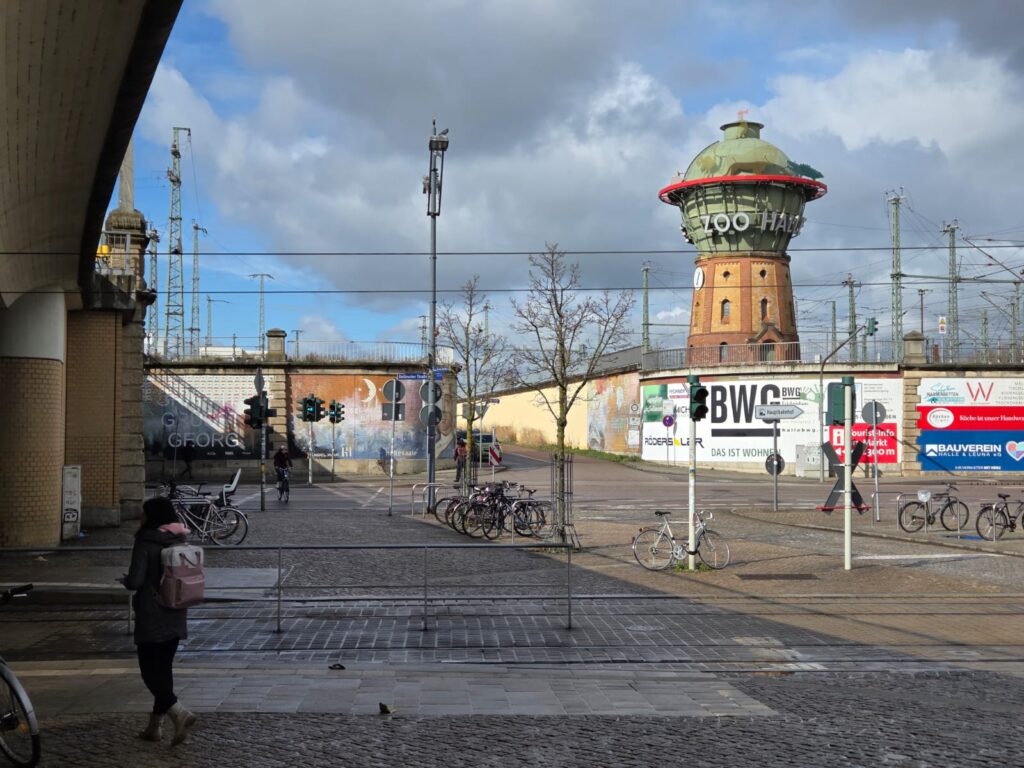
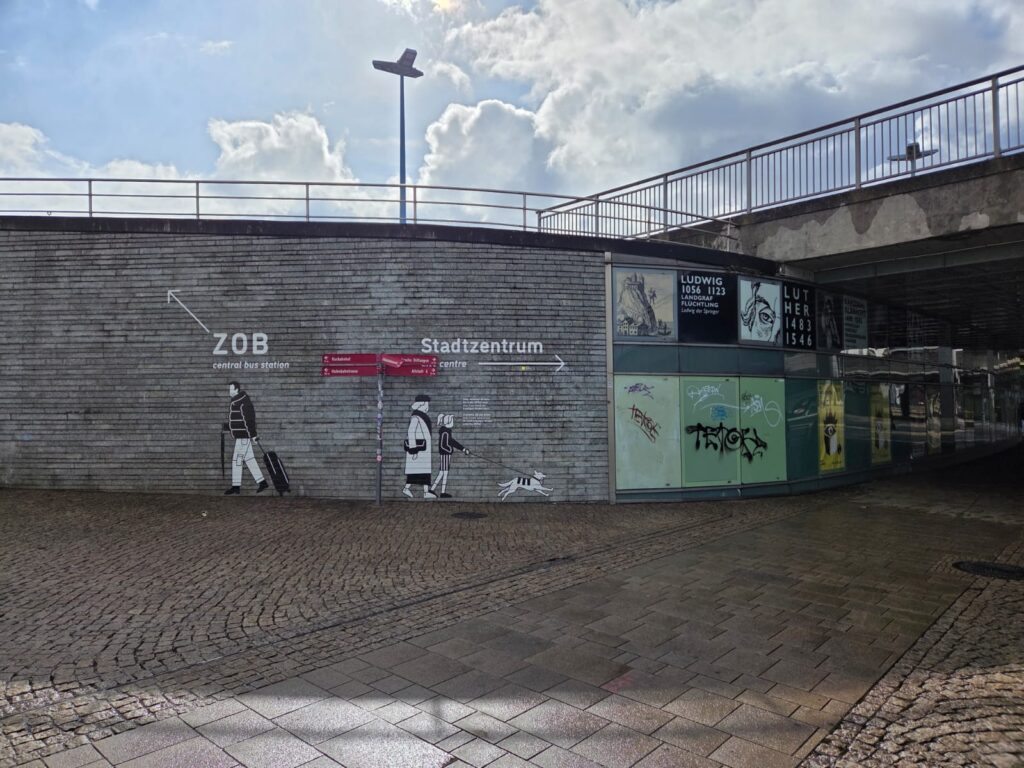
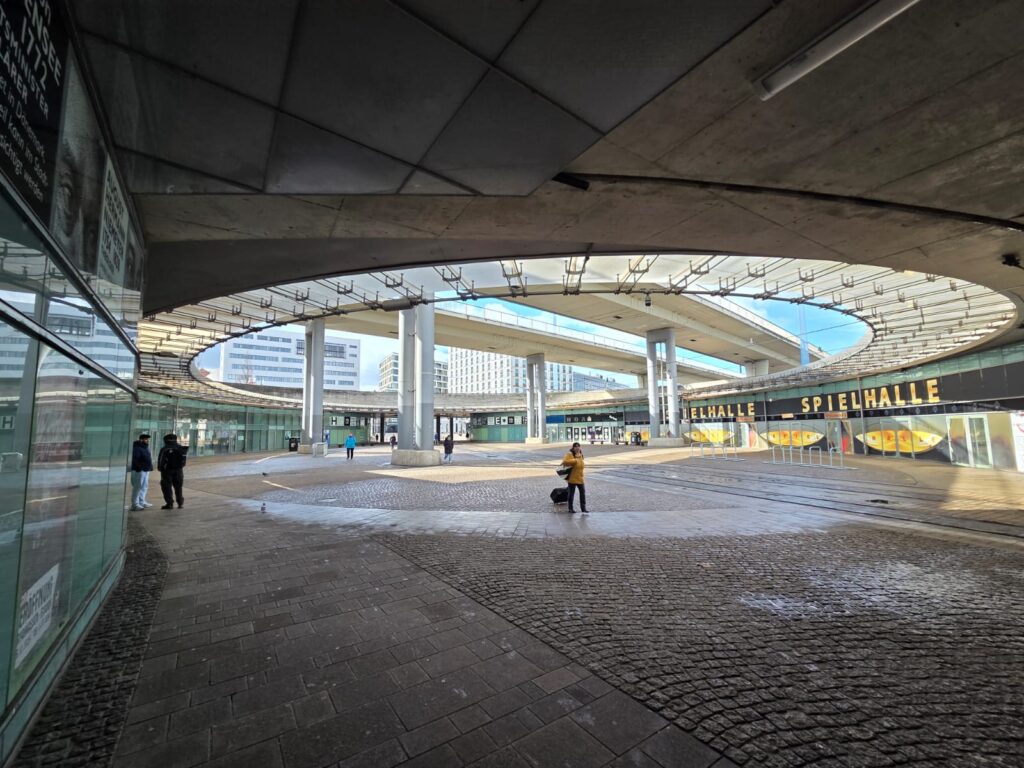
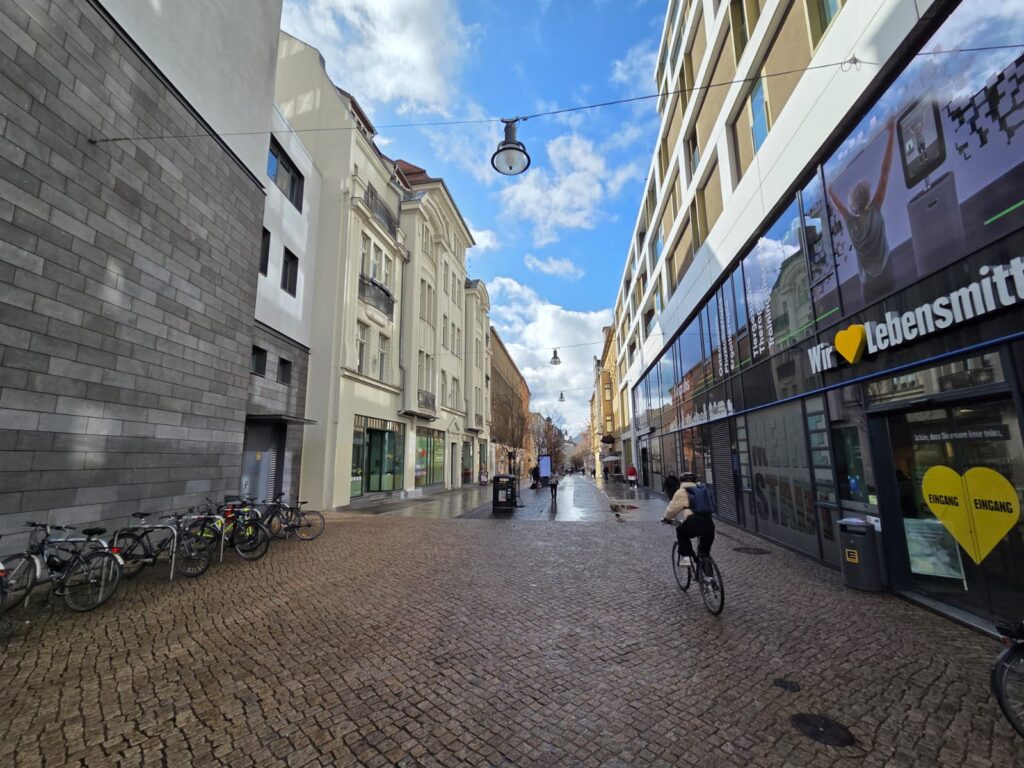
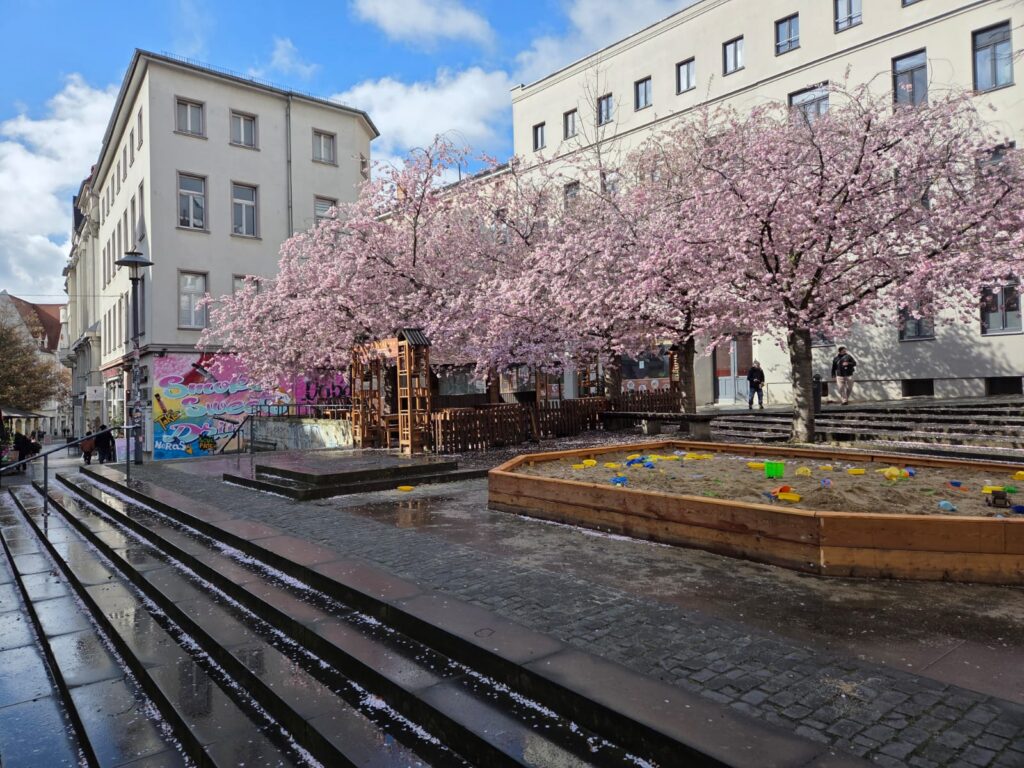
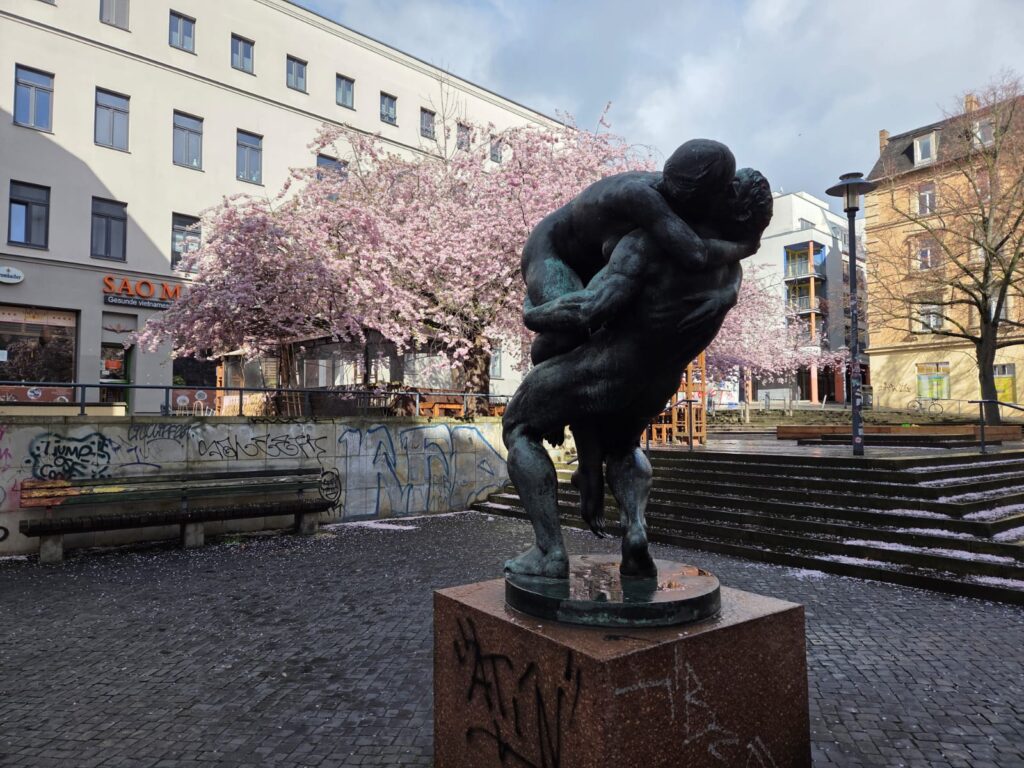
Luckily some earlier rain had cleared up by the time I headed off for my adventure. Like a lot of cities, the area immediately around the station wasn’t much to look at. To situate us a bit, Halle is a city in the Saxony-Anhalt region, and the sixth-largest city in what was East Germany, with about 226,000 inhabitants. It’s Germany’s 31st largest city. Per the station name above, it’s on the Saale, which flows from Bavaria to the Elbe.Did you spot this interesting-looking tower in the image above? It sports the name Zoo Halle, but the zoo is over on the other side of town, so I guess that’s just an advertisement. The shape gives it away: this is a water tower, formerly used to fill steam trains. It dates to 1910.Turning away from the water tower, we head towards the city centre. This attractive municipal signage ensures we don’t get lost.This is Riebeckplatz, recently renovated so pedestrians can move comfortably under a busy traffic junction. It doesn’t seem particularly vibrant, so might need renovating again in a few years. The architecture is striking though. The original Riebeckplatz didn’t survive WWII.Ah this is more like it, we’re getting close to the Old Town.A nice bit of blossom as we walk along Leipziger Strasse. And then, just a little further along, is Großes Paar (Large Couple) by Bernd Göbel. Göbel is the creator of several artworks in Halle’s public spaces.
We Arrive in the Old Town
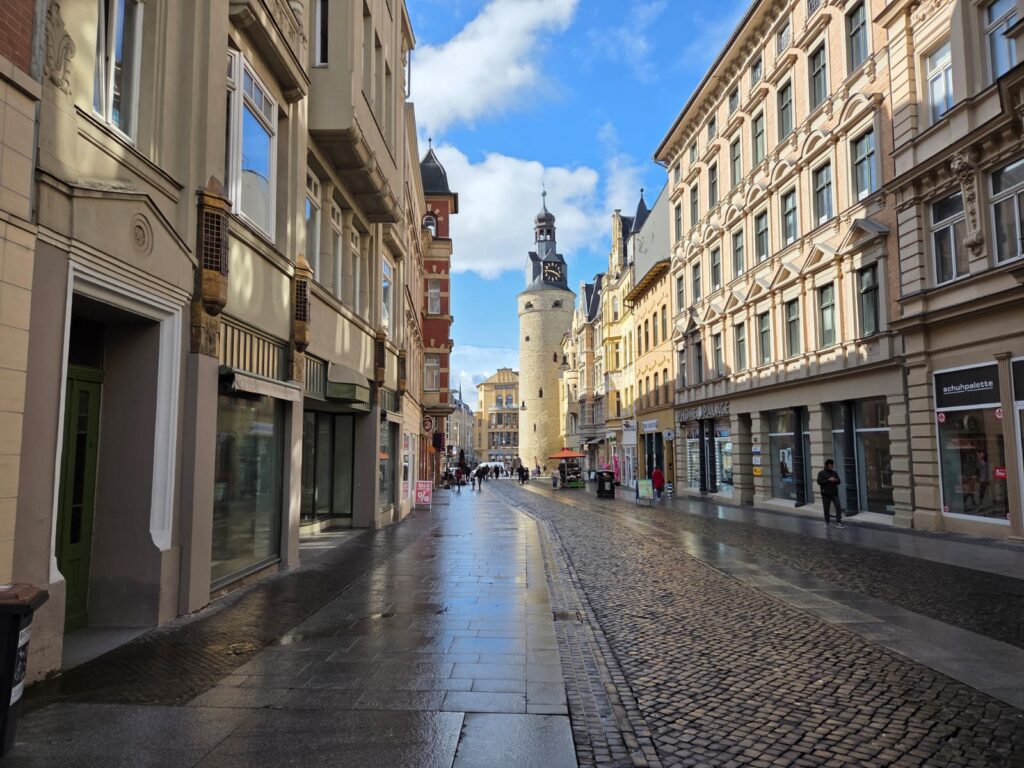
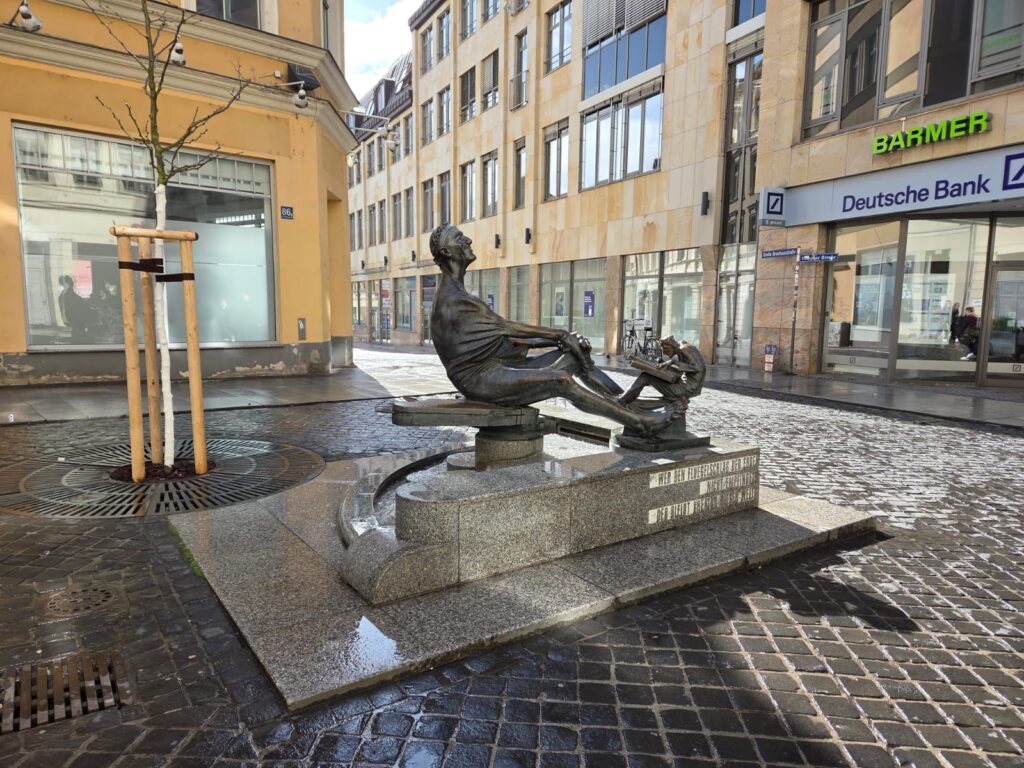
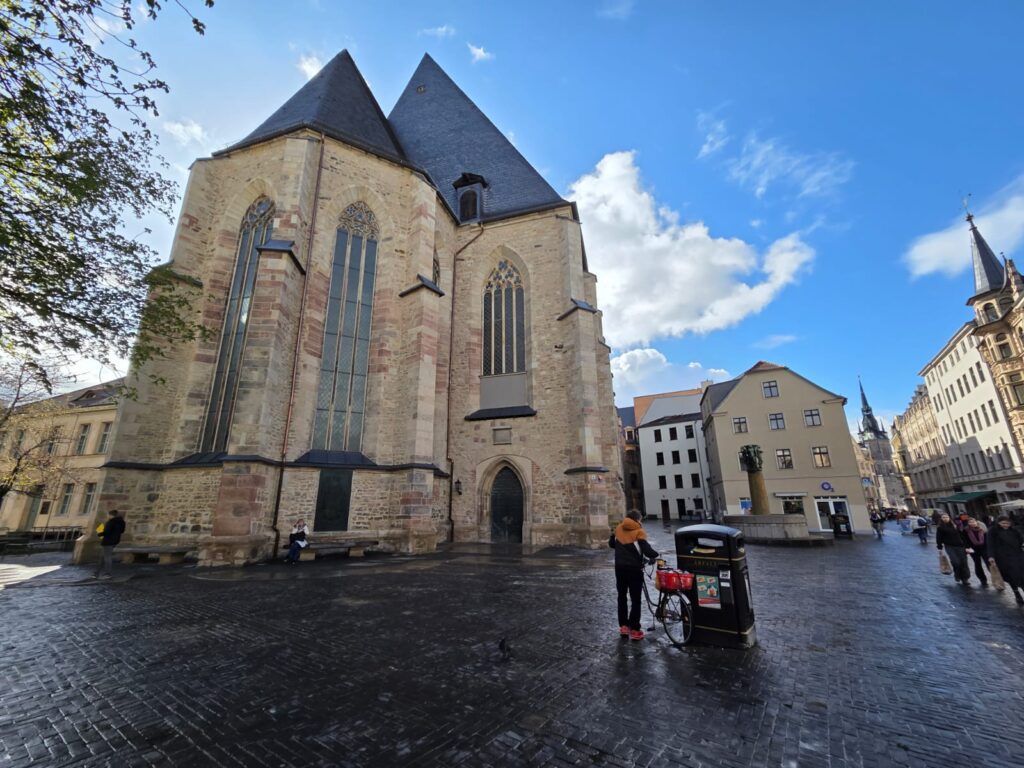
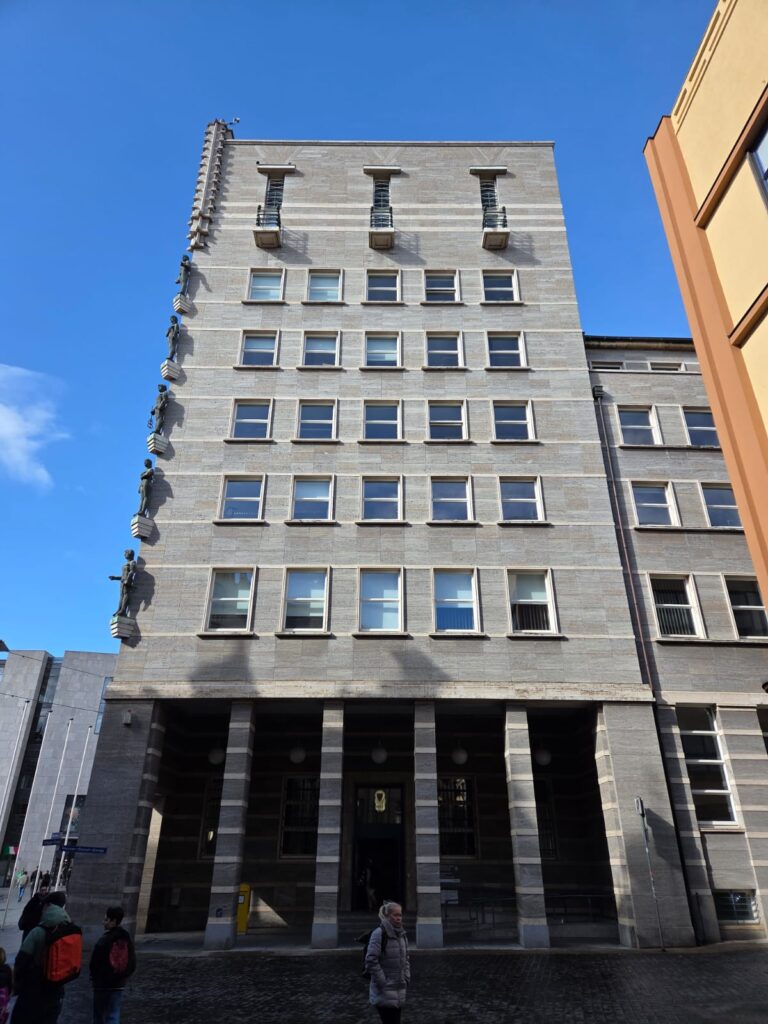
Hmmm, I spy a tower down there. The Leipziger Turm (Tower) is for some reason not part of the walking tour I found. This 15th century watchtower once formed part of the city’s defences. Like Vienna, which we visited recently, Halle now has a ‘Ringstrasse’ where the city walls used to be. I can’t find out online exactly when the city walls disappeared – I’ve seen 19th century or post-WWII. I think the former more likely.Just past the tower is another bit of public art. This is Zither-Reinhold by Wolfgang Dreysse. Zither-Reinhold, or Reinhold Lohse, was a fixture in Halle for decades. Disabled in childhood by typhus, he played his zither on Halle’s streets for pennies from passers-by. He died in an accident in 1964, but lived on in the city’s memory: this sculpture dates to about 40 years later. The artist, Wolfgang Dreysse, had a disagreement with the people of Halle about the design. His original concept was more like the figure on the left, but Halle remembered him more like the figure on the right. In the end, both coexist.This is the Ulrichskirche, a 14th century monastic church of the Servite order. Not long after its completion, the Reformation transformed it into a parish church. The congregation merged with another in 1971, leaving the church to the council to use for cultural purposes. It’s been a 500-seat concert hall since 1976.We’re almost at the start of the tour proper, but first I just wanted to point this building out to you. It’s the side of the Ratshof, or Town Hall. It was built next to the Old Town Hall in the late 1920s, as an additional administrative building. The bronze sculptures up the side are replicas by Johannes Baumgärtner of originals by Gustav Weidanz which were destroyed during WWII. Although the building did sustain damage it was salvageable, unlike the Old Town Hall, and thus took over the latter’s function in the post-war period.
We Start Our Tour From the Marktplatz
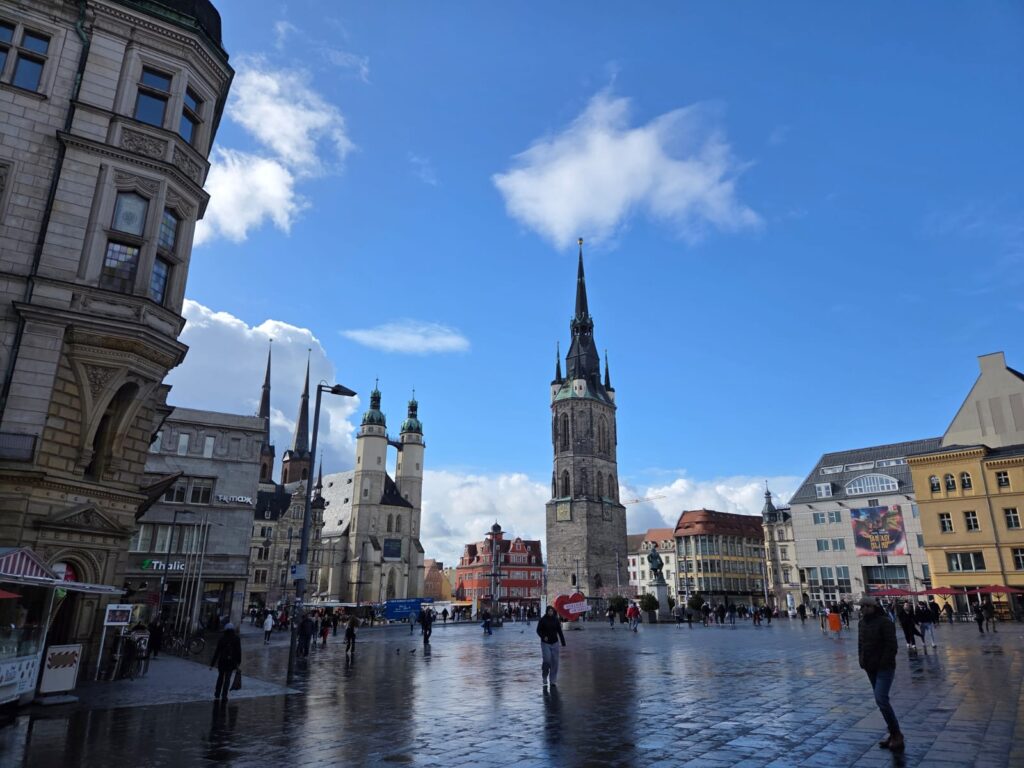
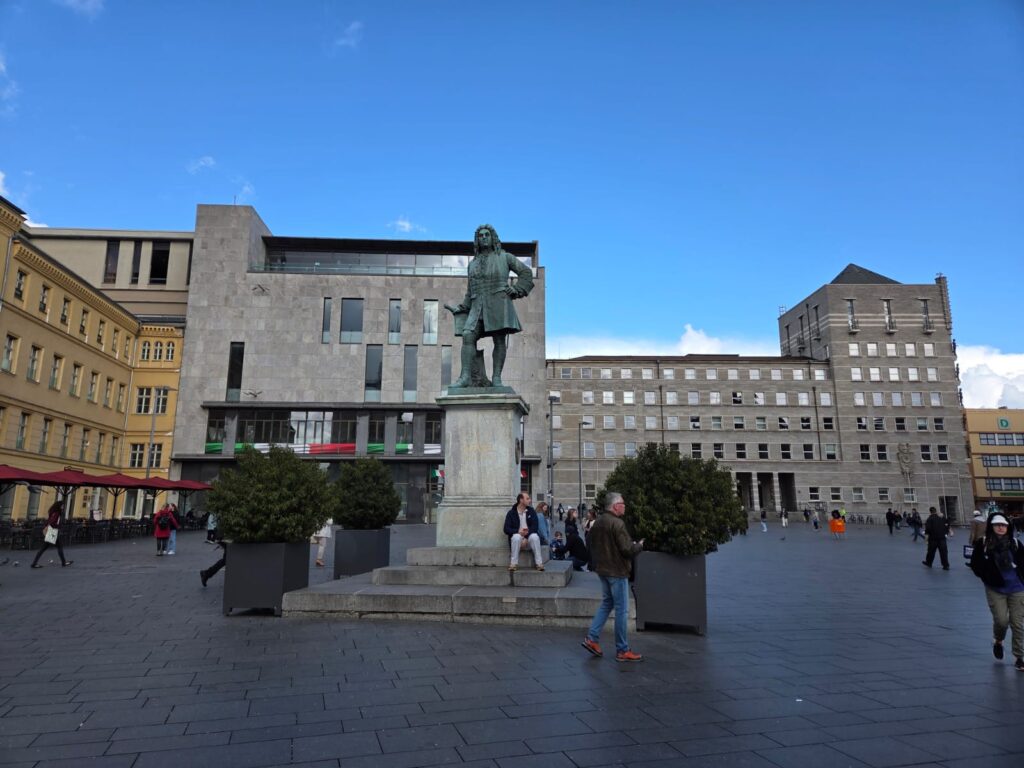
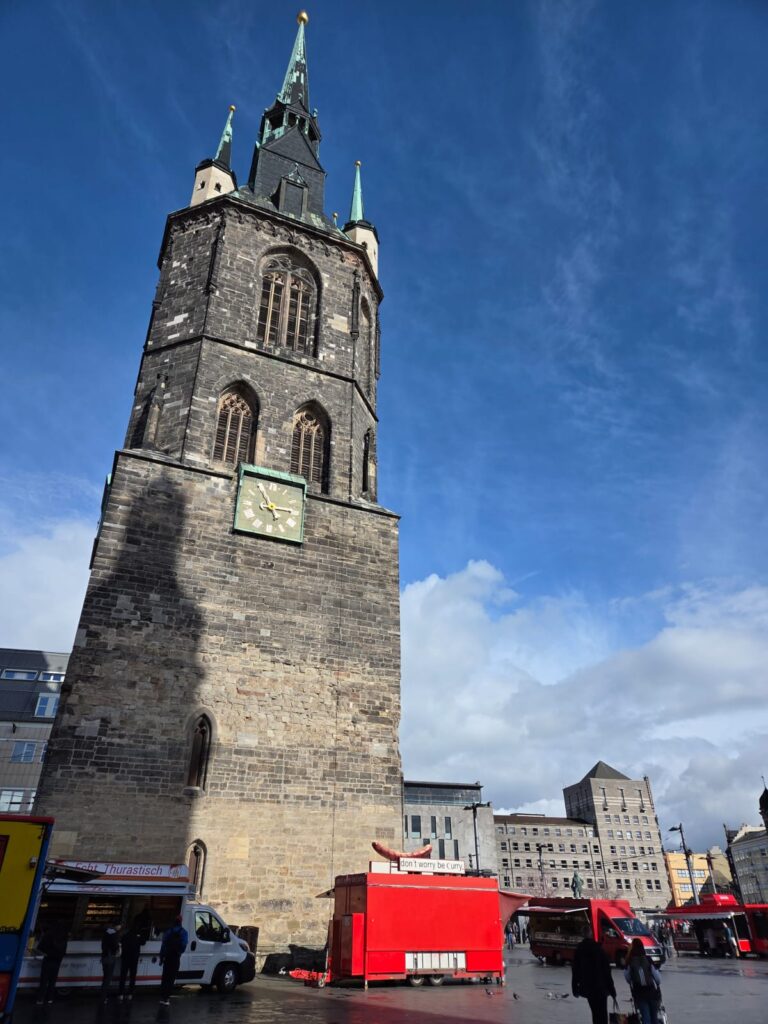
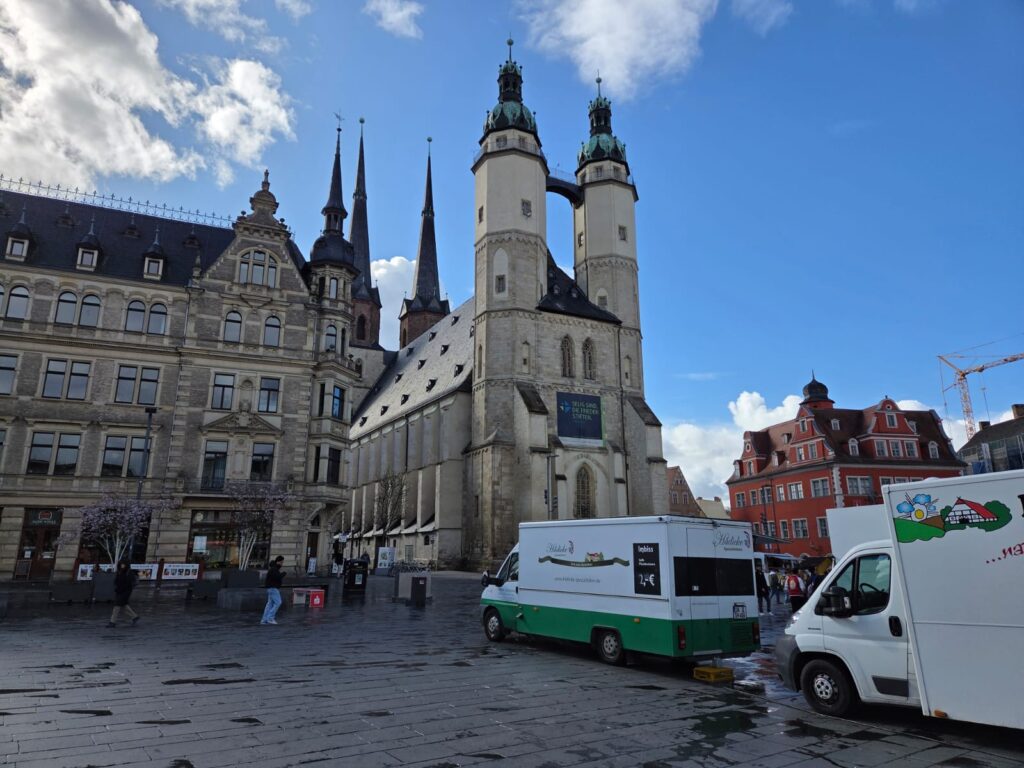
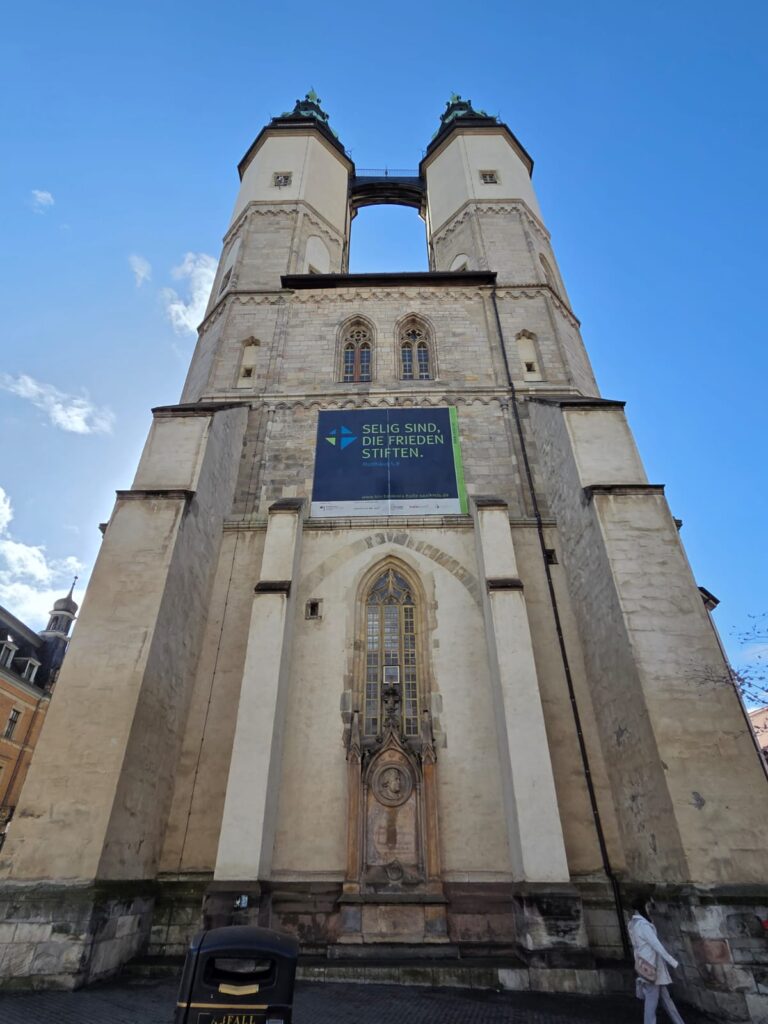
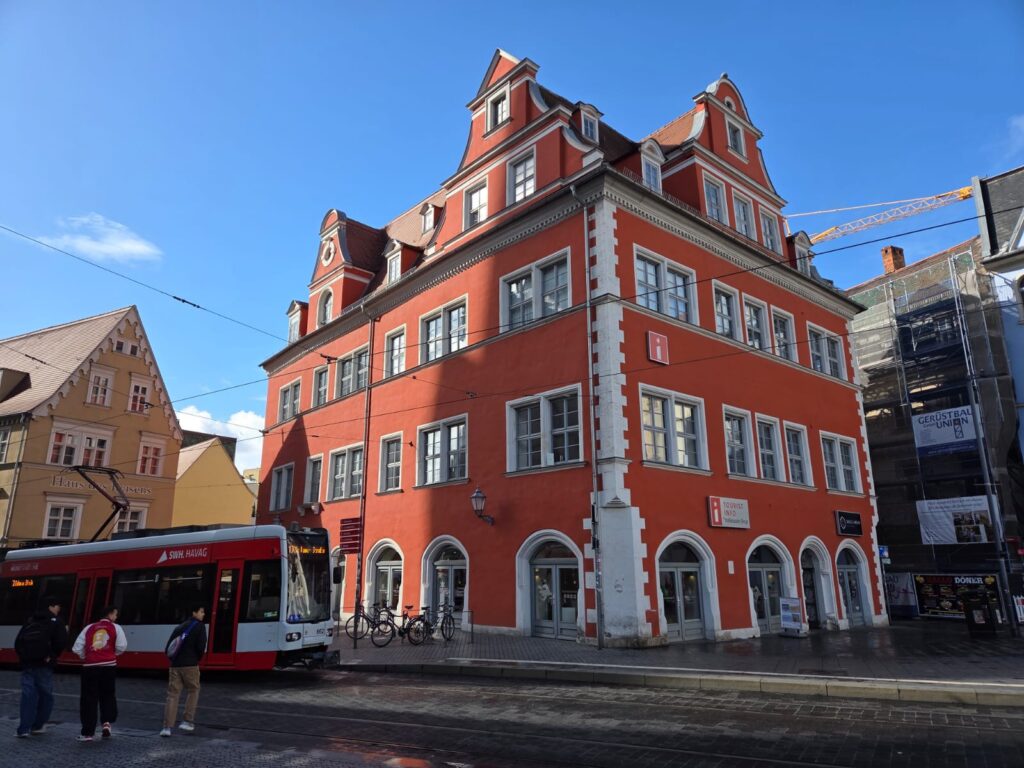
Hooray, we’ve made it to the Marktplatz, or Market Square. It is here that we find the first of the sights on our official guide to the city (reminder: link here). This is one of the largest market squares in Germany. Somewhere here, which I missed but you might like to look out for, is the “Geoskop”, a view down under the square to see a tectonic fault beneath!Let’s take a look back across the square, where we see the Ratshof, and also a statue to Halle’s most famous son. That is one Georg Fried[e]rich Händel, AKA George Frideric (or Frederick) Handel. Handel was born in Halle, then in the Holy Roman Empire, in 1685. He was educated here, was for a time the organist at Halle’s Calvinist Cathedral, but ultimately left for Hamburg, Italy, and finally London by 1712.Halle’s Roter Turm (Red Tower) is a key landmark. It also houses the largest carillon in Europe, apparently, although I didn’t hear it during my visit. It was built between 1418 and 1506, gutted by fire in 1945, and only reconstructed in 1975. Between this and the church we’re about to see, Halle is sometimes called the City of the Five Towers.The other four spires belong to the Marktkirche Unser Lieben Frauen (Market Church of Our Dear Lady). Bizarrely, this is not part of the official tour. Its construction was between 1529 and 1544, replacing two other churches in the market area. It’s one of the most important late-Gothic buildings in Central Germany. Martin Luther preached here, and it was also the site of Handel’s baptism.We’re going to walk down the side of the church, which takes us past the Marktschlößchen, or Little Market Castle. The origins of the name are a bit obscure, but this was once a typical townhouse for the region. It’s now the tourist information centre, with a Martin Luther University shop and a café to boot.
Onwards, Towards the Saale
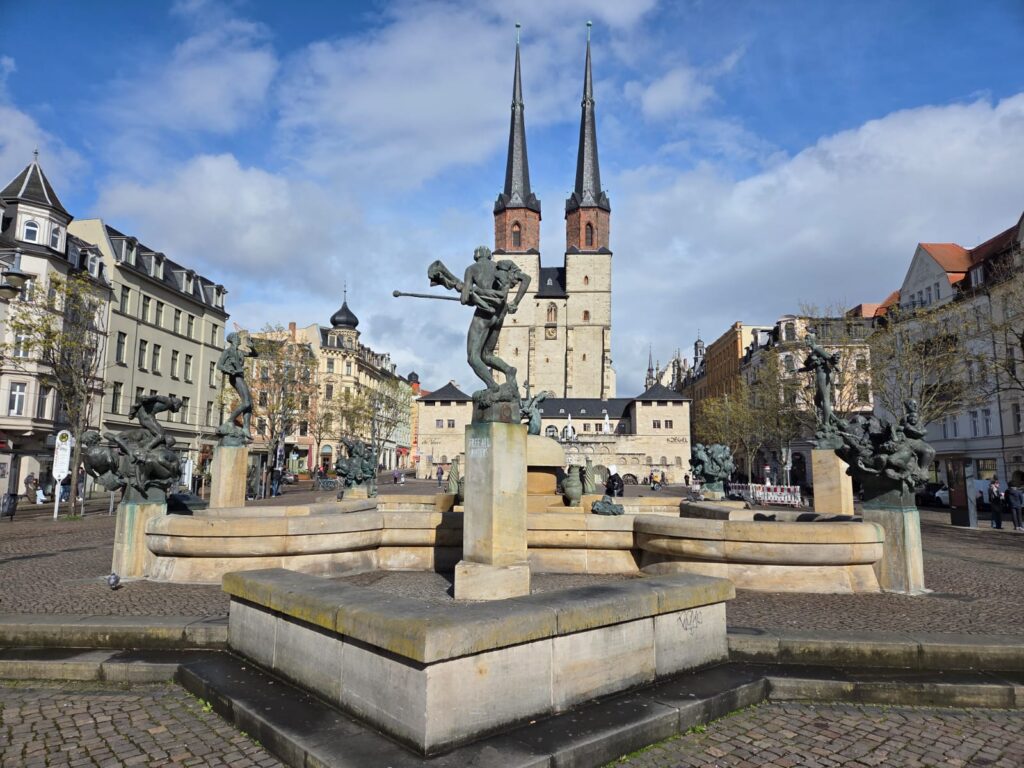
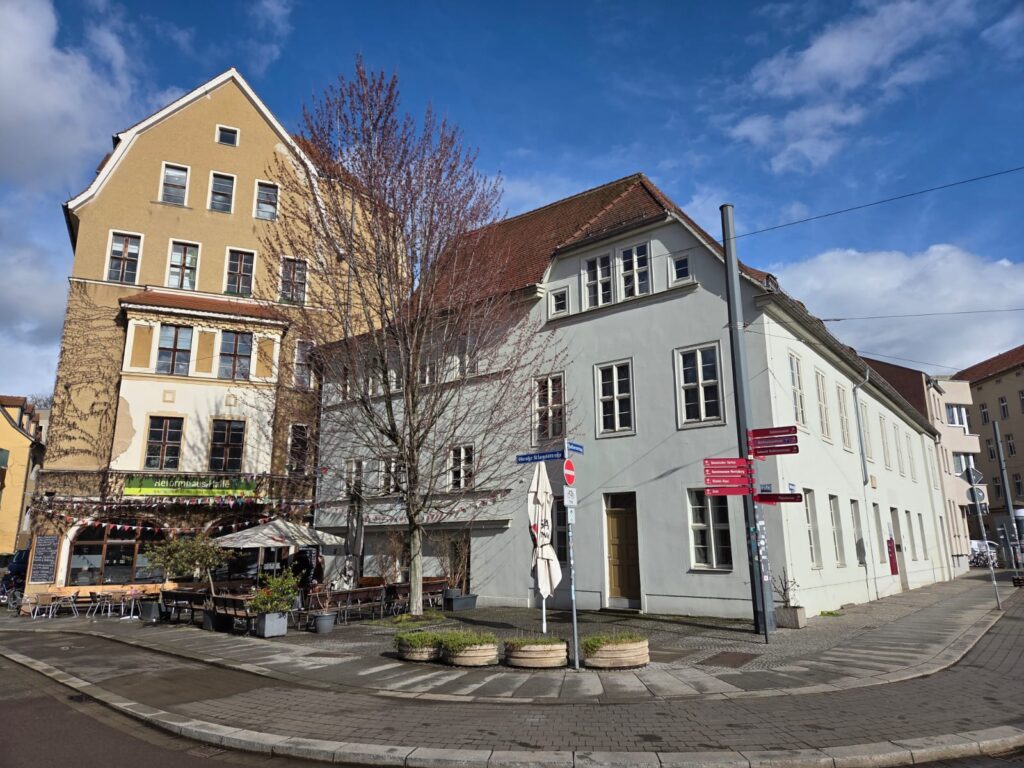
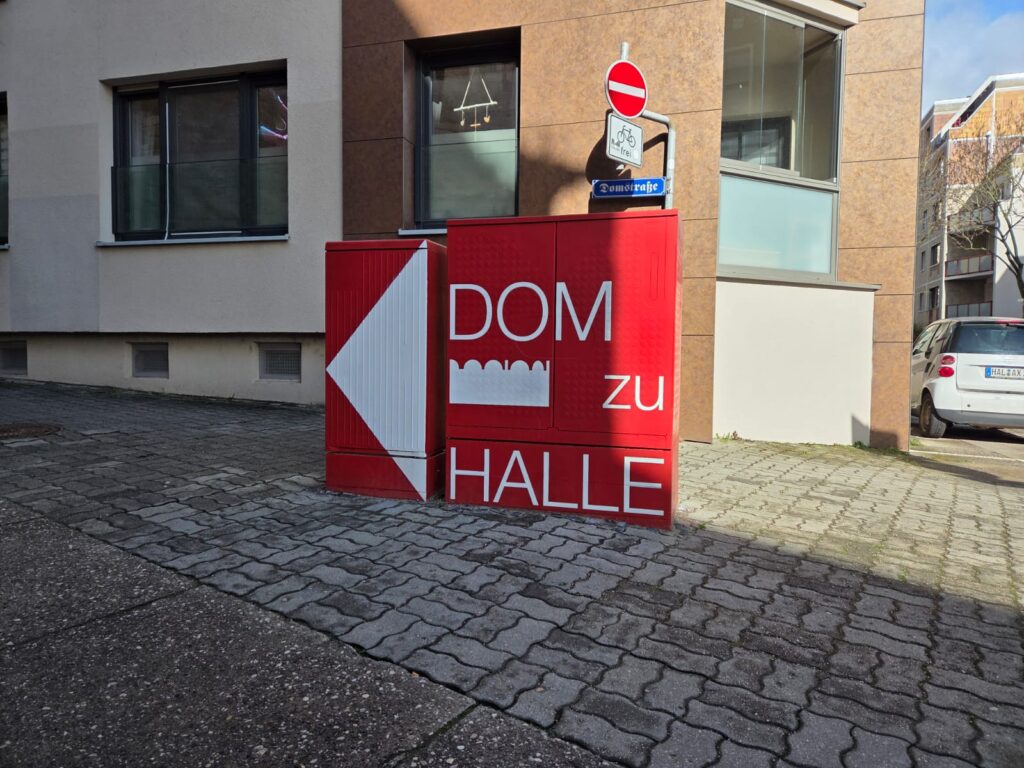
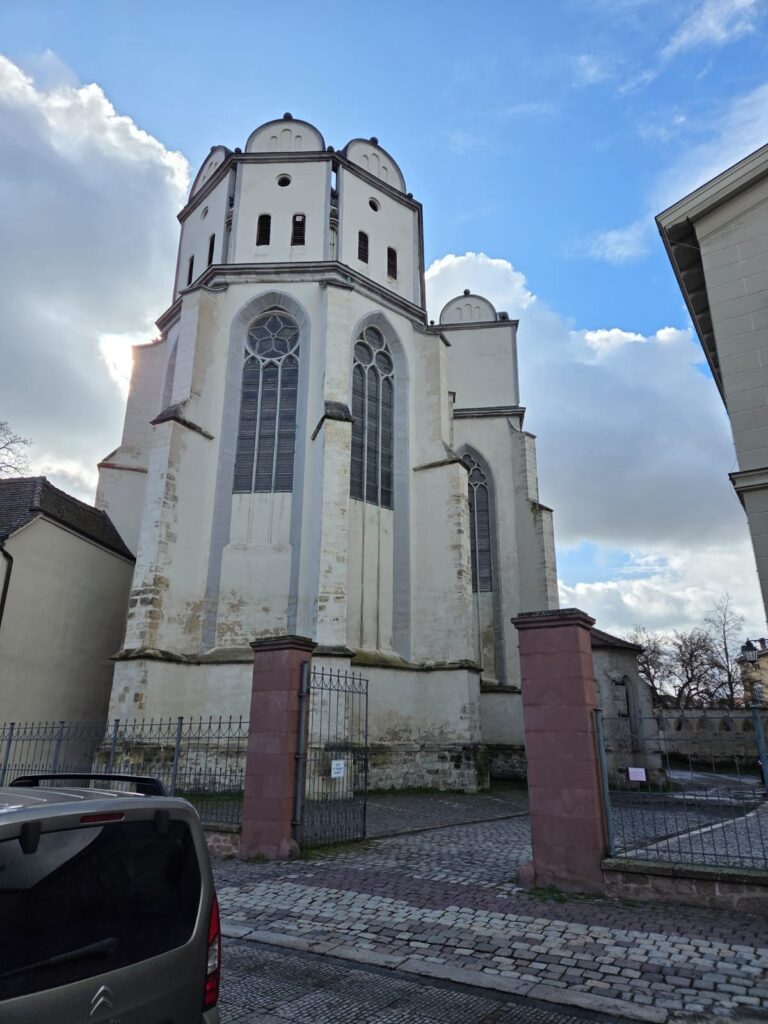
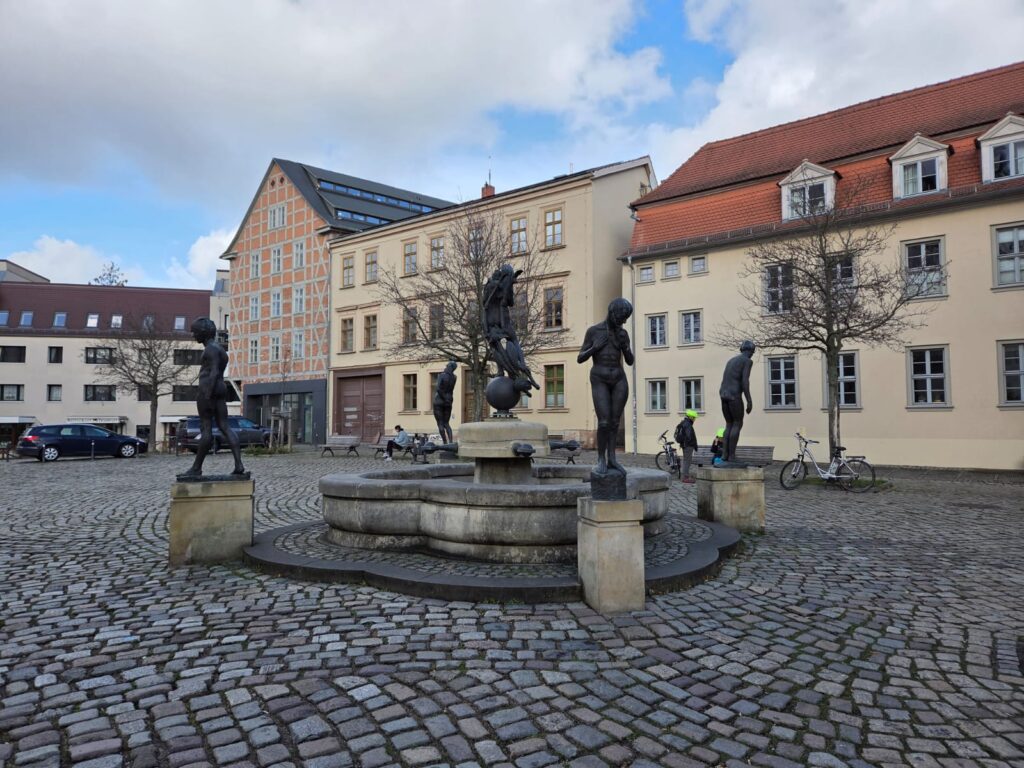
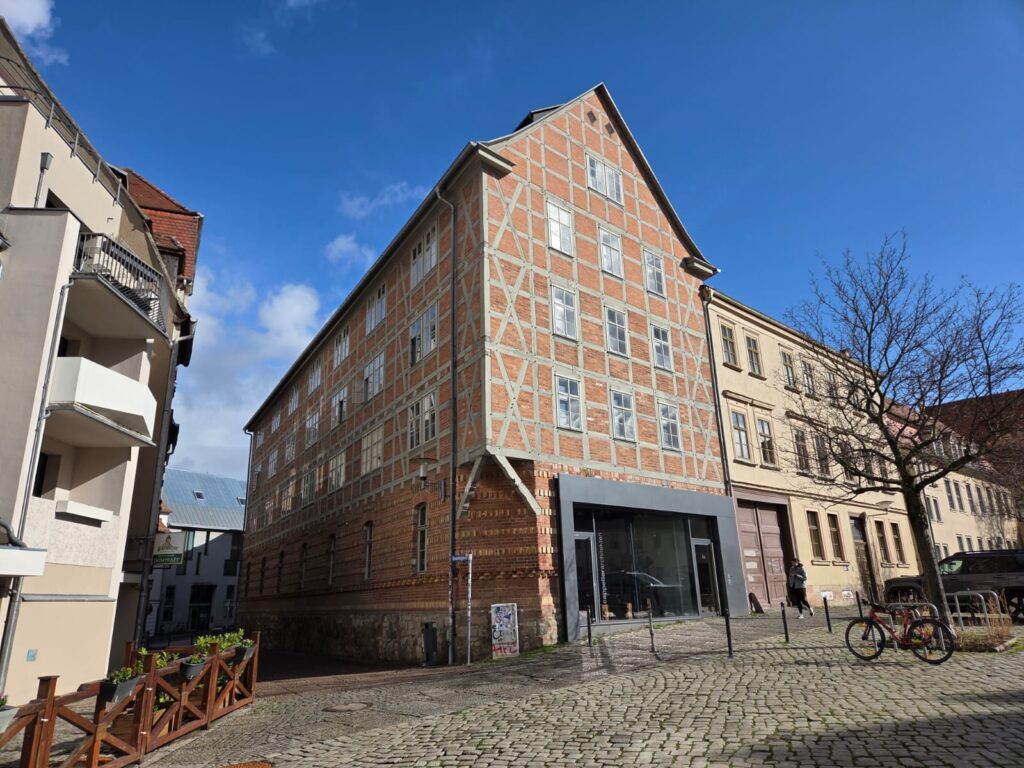
This is the back of the Market Church. The building between the church and square bears a plaque commemorating an anti-Fascist protest in 1933. The square itself is the Hallmarkt, the centre of the salt industry which brought great wealth to Halle. Salt production here goes back to the Bronze Age, with four wells used to produce salt in its heyday. There is a Salt Museum if you’d like to learn more. The 1999 fountain, again by Bernd Göbel, commemorates this history.Next up is the house of a composer named Bach. Not Johann Sebastian, though, but rather Friedemann Bach. Johann Sebastian’s second child and eldest son. This Bach was for a time the organist at the Market Church we saw earlier. The house is now a museum.This magnificent early Renaissance building is the Neue Residentz, or New Residence. Cardinal Albrecht of Brandenburg began construction of a four-wing palace in 1531 perhaps, but not definitively, as the site of a new Catholic university. It has indeed housed Catholic university faculties, but has also been an archbishop’s residence, early opera venue, and then a site for a Protestant university from 1694. Its university use ended only in 2003.This way to the cathedral (Dom)! This is the oldest church in Halle, completed in 1330 and extended by the same Cardinal Albrecht in 1523 to create a collegiate church. I didn’t manage to get a good angle for a picture. But then again neither did Lyonel Feininger, at least in this painting. I found out about this painting from a panel in the Domplatz, part of a series entitled ‘The Halle Pictures – A City Tour’. So if you’re a fan of Feininger’s work that is another option to see the city: link here.Other points of interest on the Domplatz include this nice building on the corner, and the fountain. The latter features Lebenskreis, or Circle of Life, by artist Horst Brühmann.
Around Moritzburg Castle
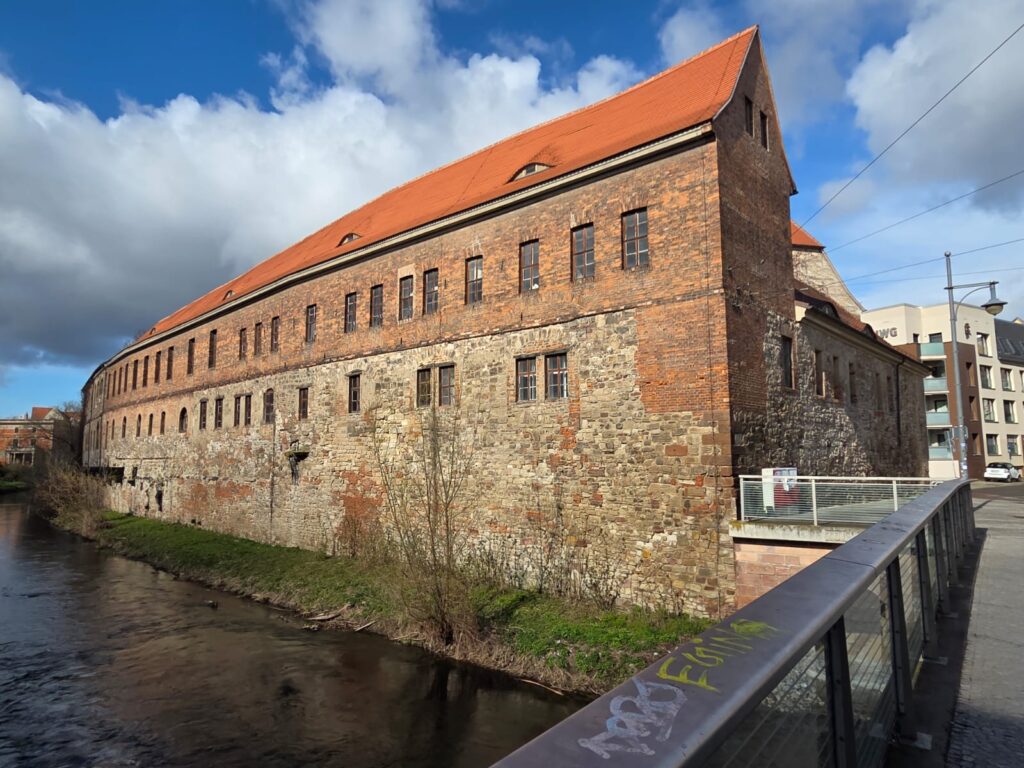
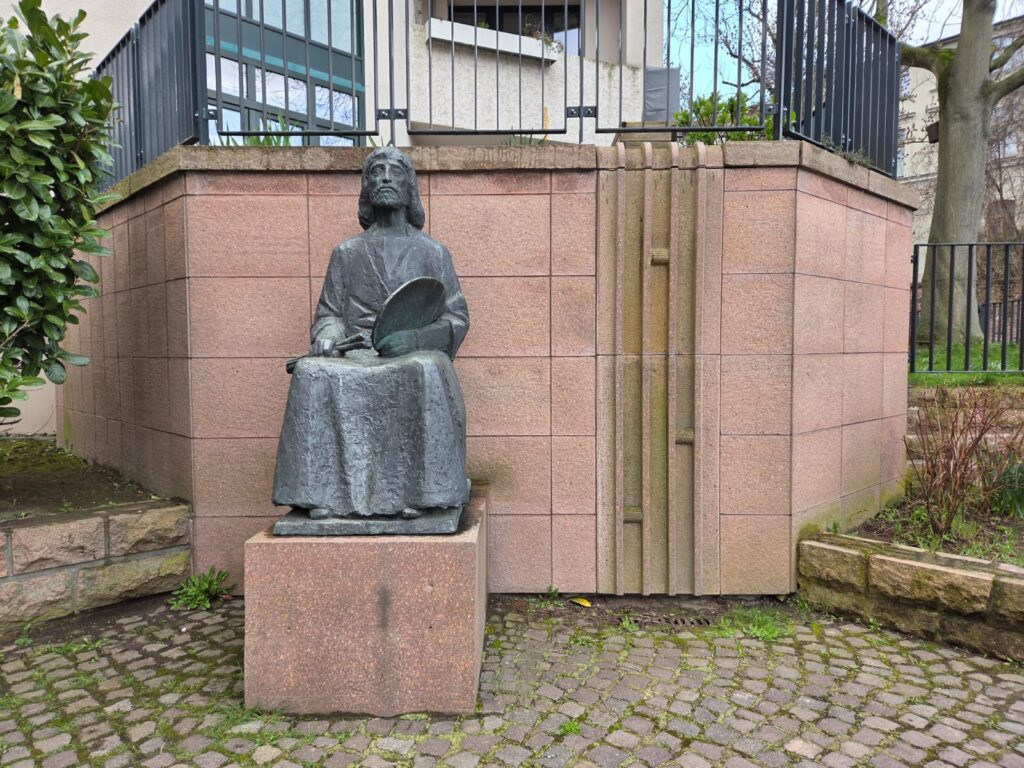
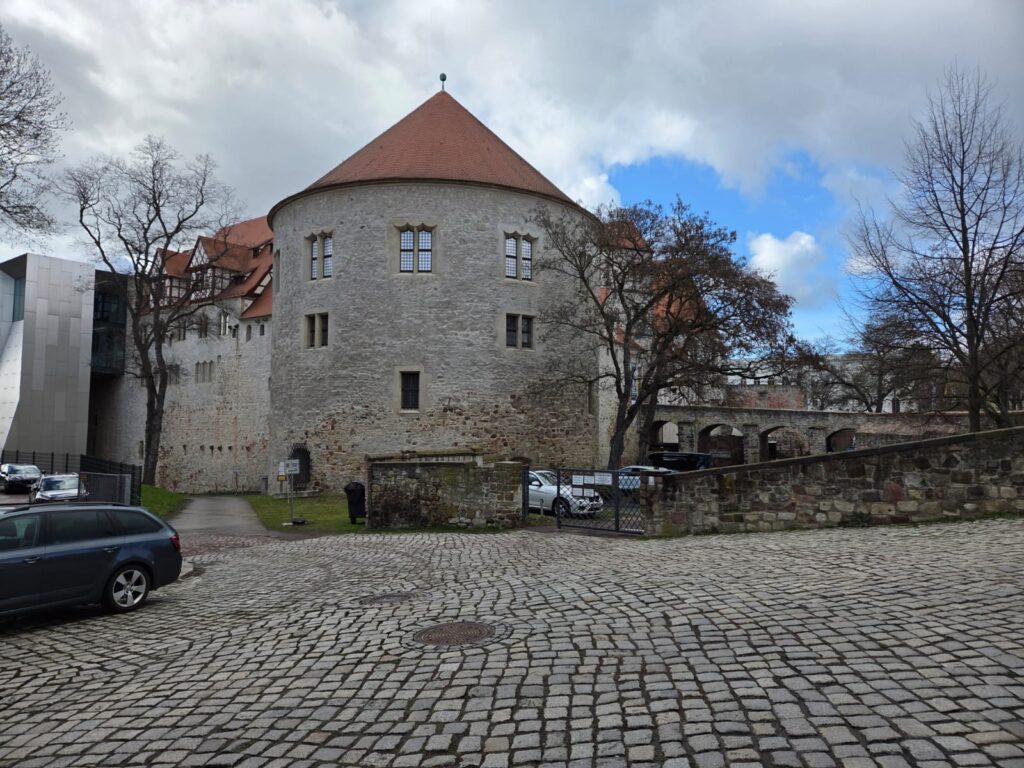
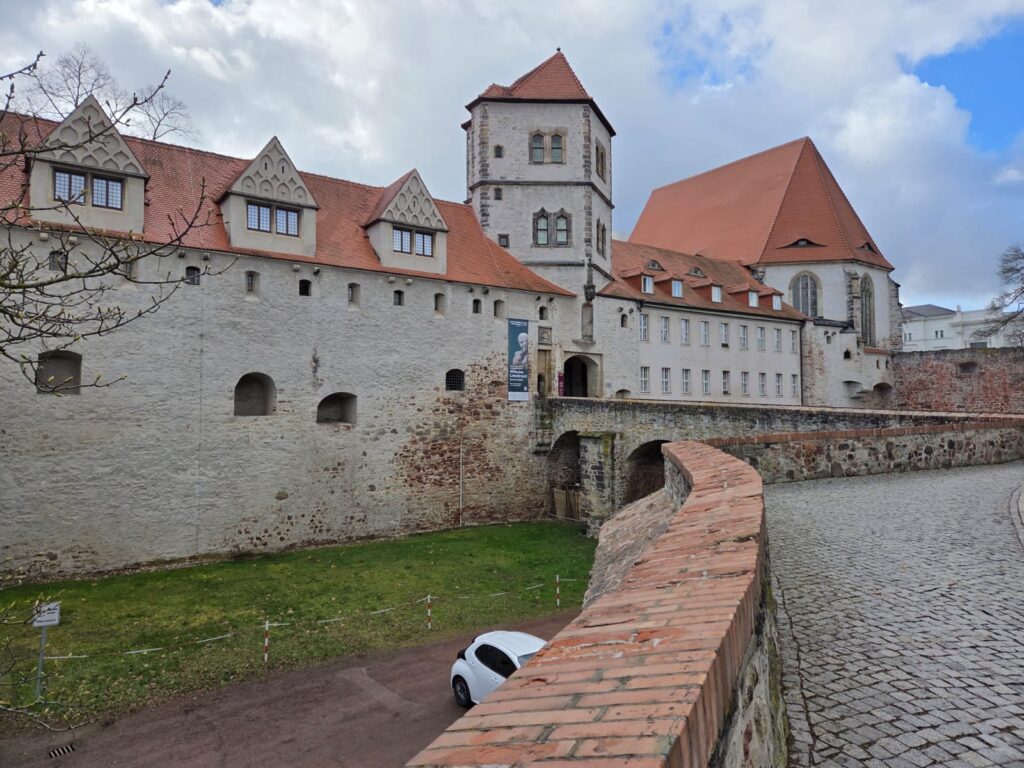
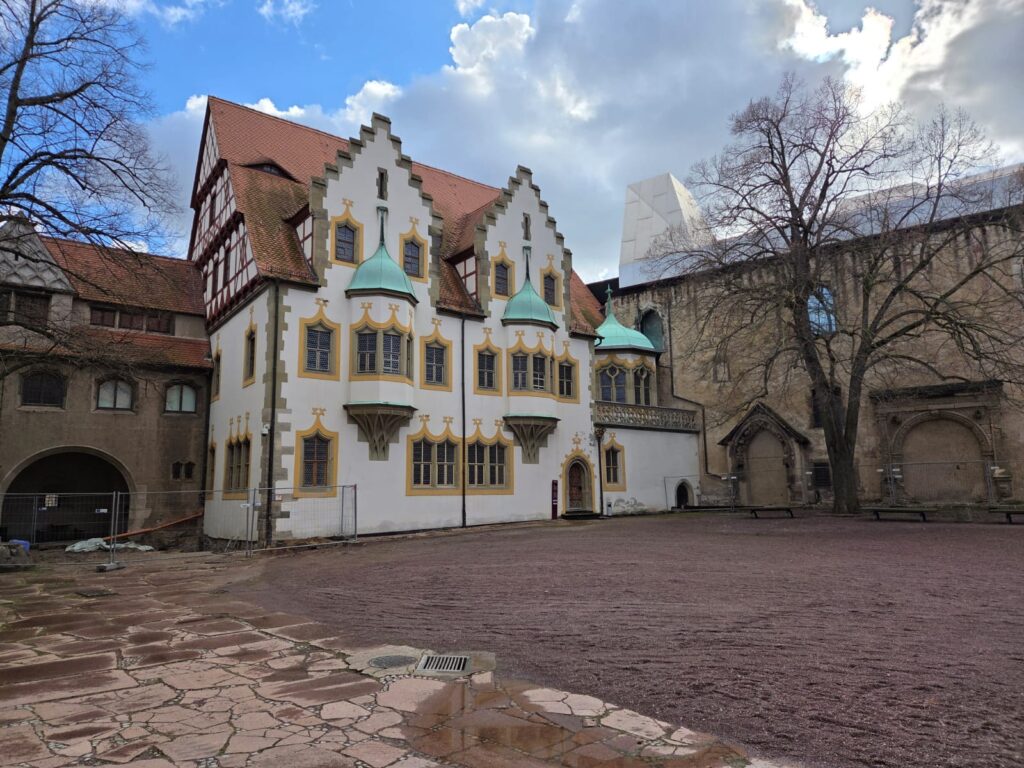
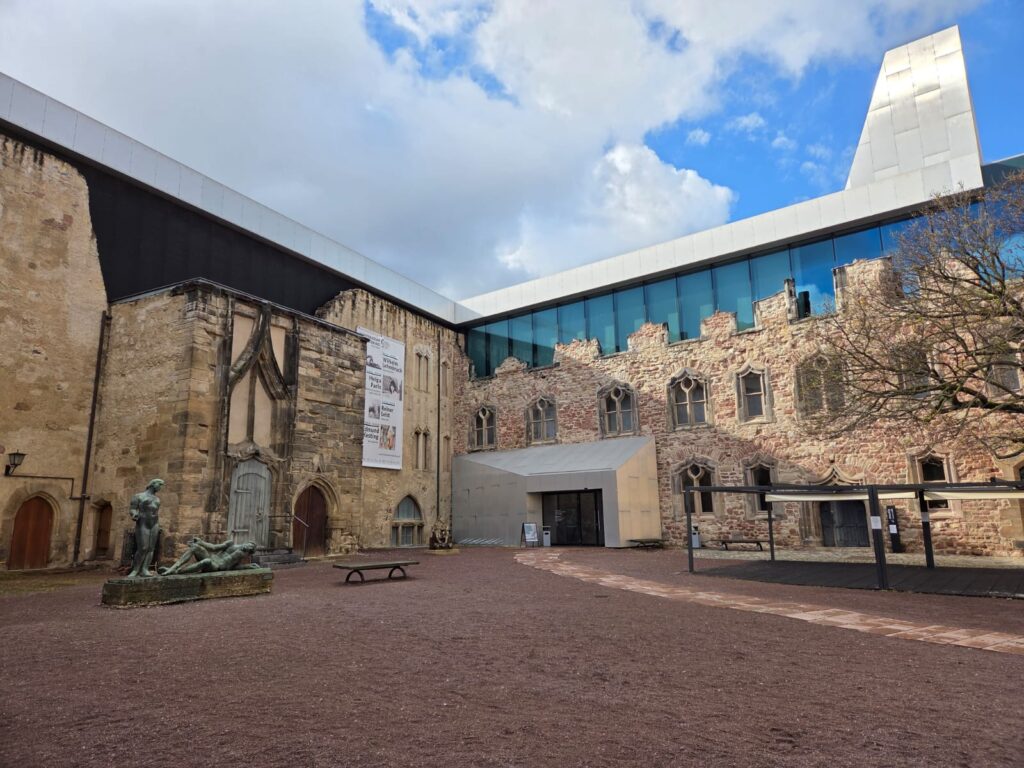
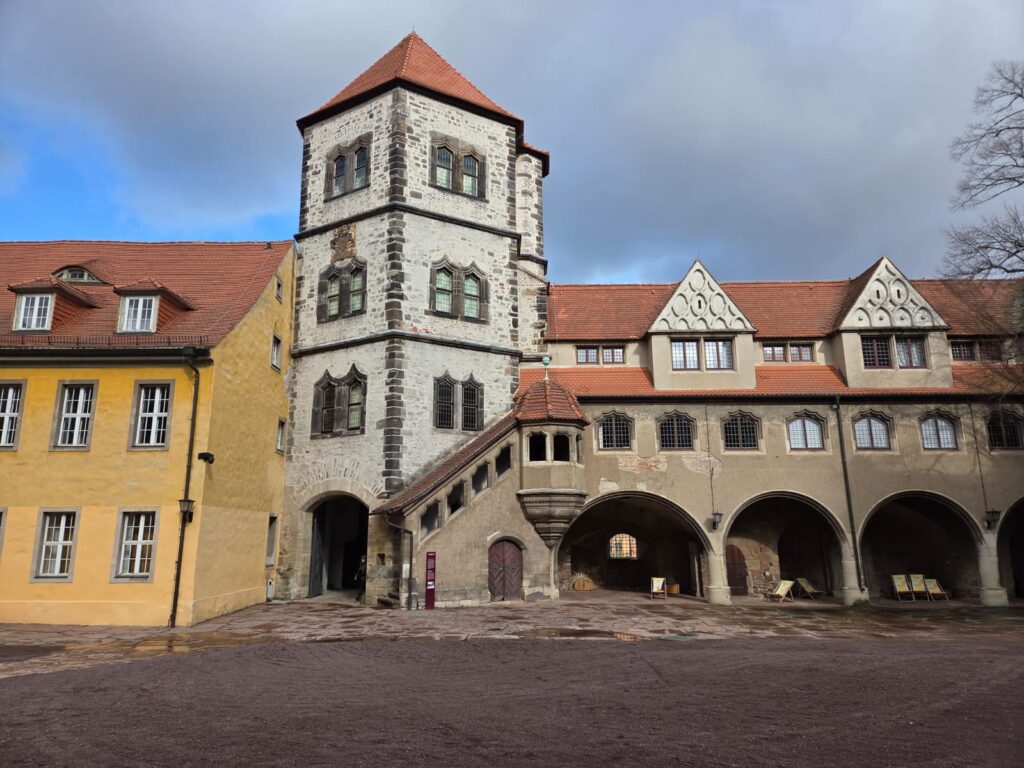
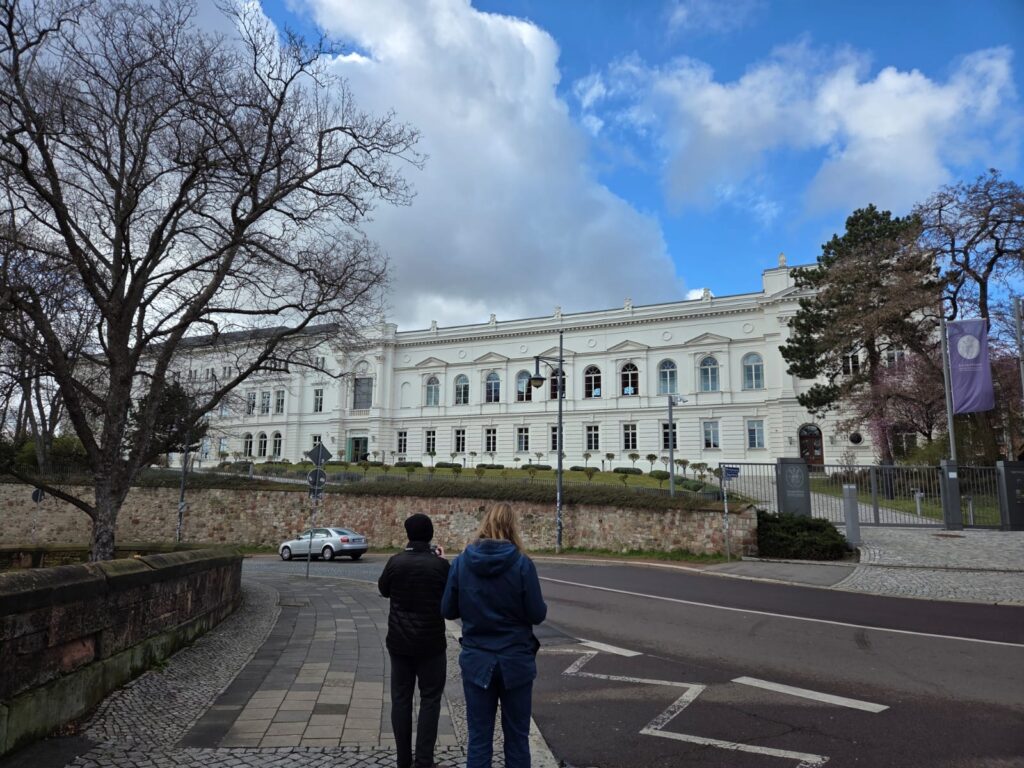
On our way to Moritzburg Castle, I noticed this sculpture of Renaissance artist Matthias Grünewald. Cardinal Albrecht commissioned Grünewald to work on the interior of Halle’s Cathedral. His panel painting depicting saints Mauritius and Erasmus is today in the Alte Pinakothek in Munich. Artist Gerhard Geyer depicts Grünewald in the pose of a king, but with brushes and easel in lieu of orb and sceptre.And here is Moritzburg Castle. Another early Renaissance gem, the origins of the site as a castle go back earlier than this 1484 incarnation. Moritzburg was long a residence of the Archbishops of Magdeburg. You’ll remember Albrecht of Brandenburg, who has popped up a couple of times already in our tour. He sold an almost endless series of indulgences (reduction of punishment for sin) from Moritzburg, buying a huge collection of saints’ relics with the proceeds. He gave up Halle entirely during the Reformation, and Moritzburg served various purposes over the years including military hospital, brewery, and barracks. In 1897 the East, West and South wings were sold to the city to serve as a new museum.The Kunstmuseum Moritzburg Halle (Saale) is a nationally-important art museum. It is also open on Mondays (it’s closed on Wednesdays instead), but unfortunately I didn’t have time to visit. I did have time to pop my head in and see the lovely buildings around the central courtyard.And this is now the farthest point of our tour. The Leopoldina, Germany’s National Academy of Sciences, dates back to 1652. That makes it one of the oldest scientific academies in the world. Holy Roman Emperor Leopold I made it an academy and named it after himself in 1687: prior to that it was the Academia Naturae Curiosorum. It started out in Schweinfurt in Bavaria, and then moved to Nuremberg, Augsburg, Altdorf, Erfurt, Halle, Nuremberg, Erlangen, Bonn, Breslau (now Wrocław, Poland), Jena, Dresden, and Halle once more. I’m guessing this building dates to the definitive move to Halle in 1878.
Martin Luther University and Its Environs
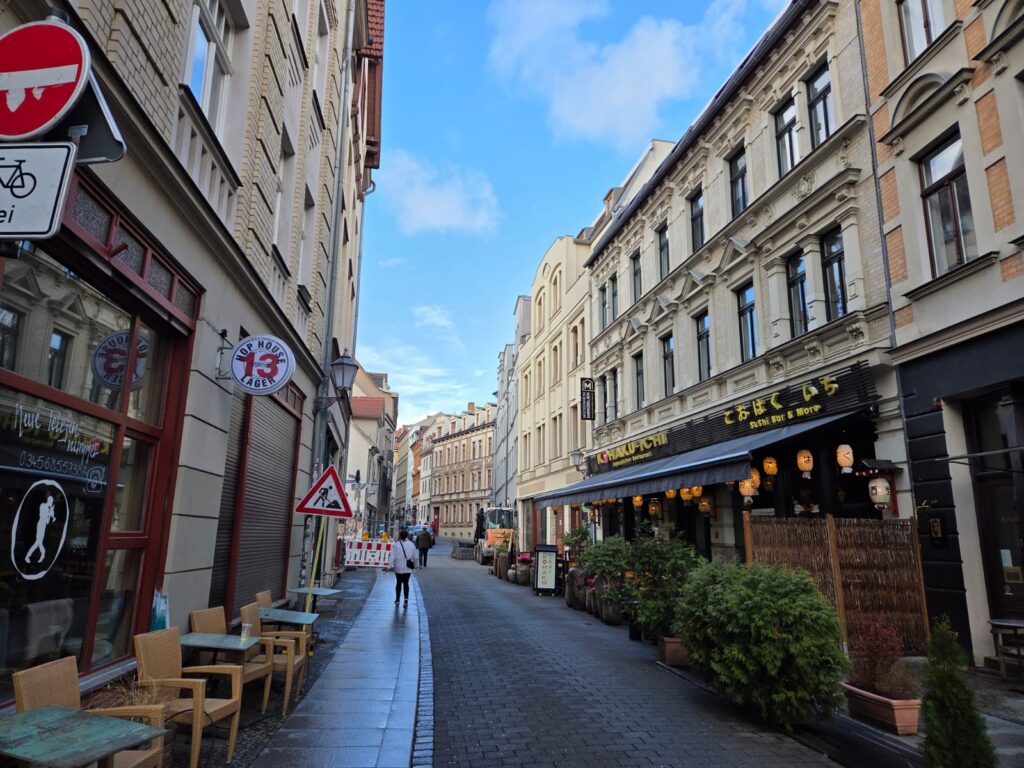
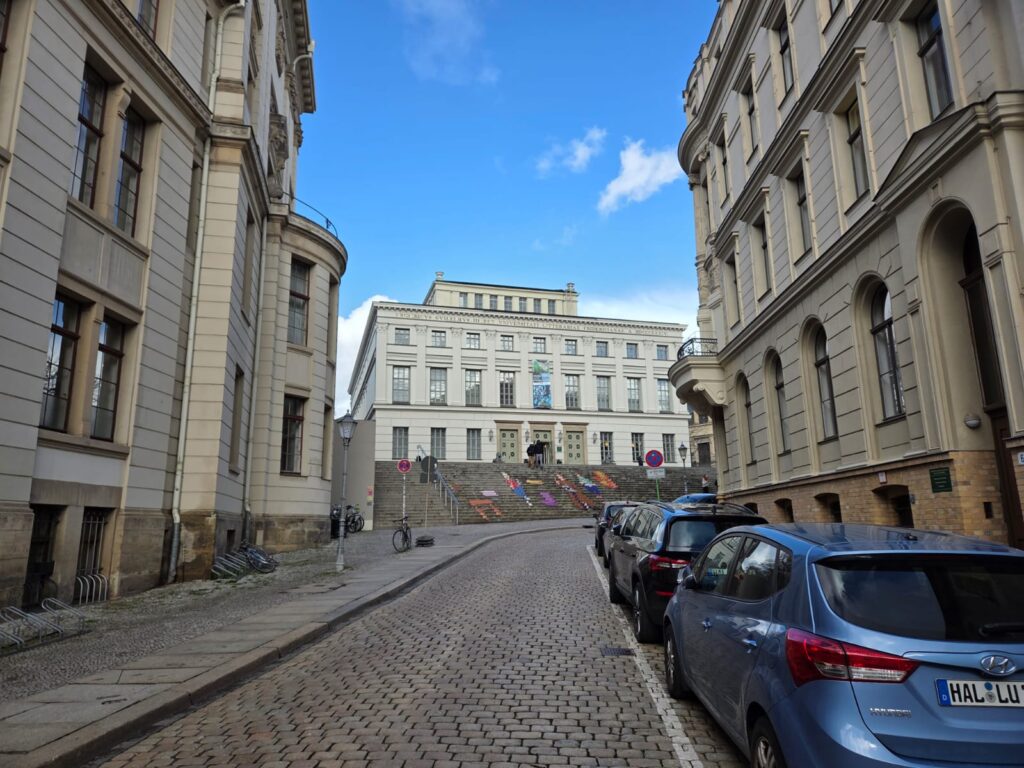
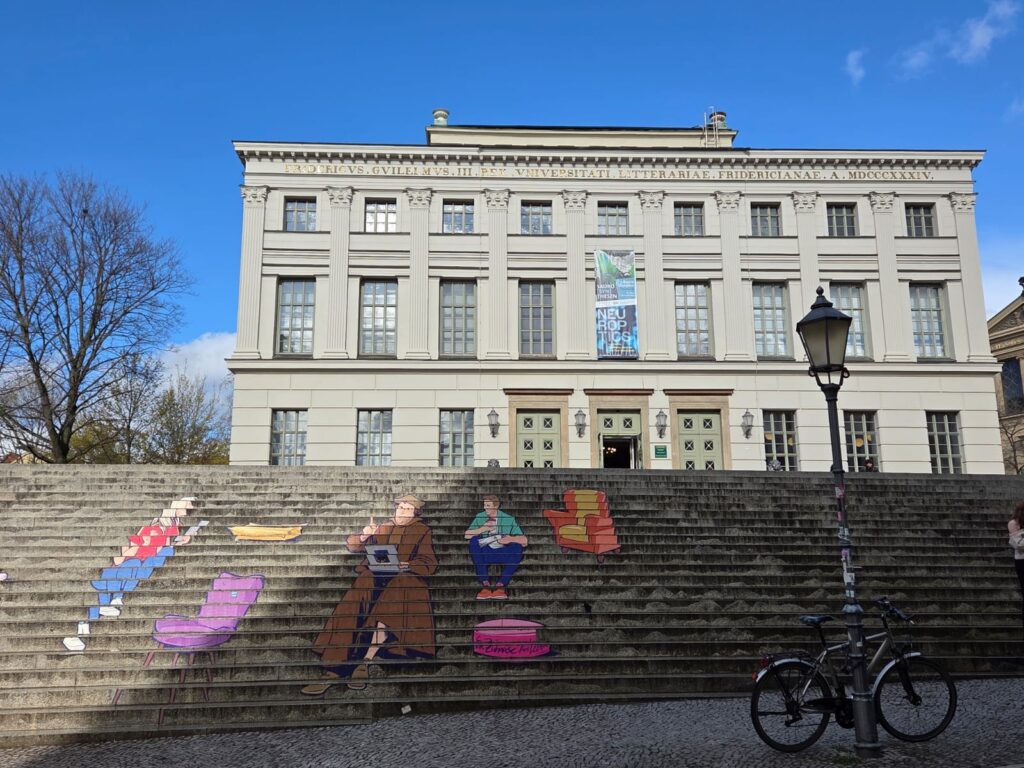
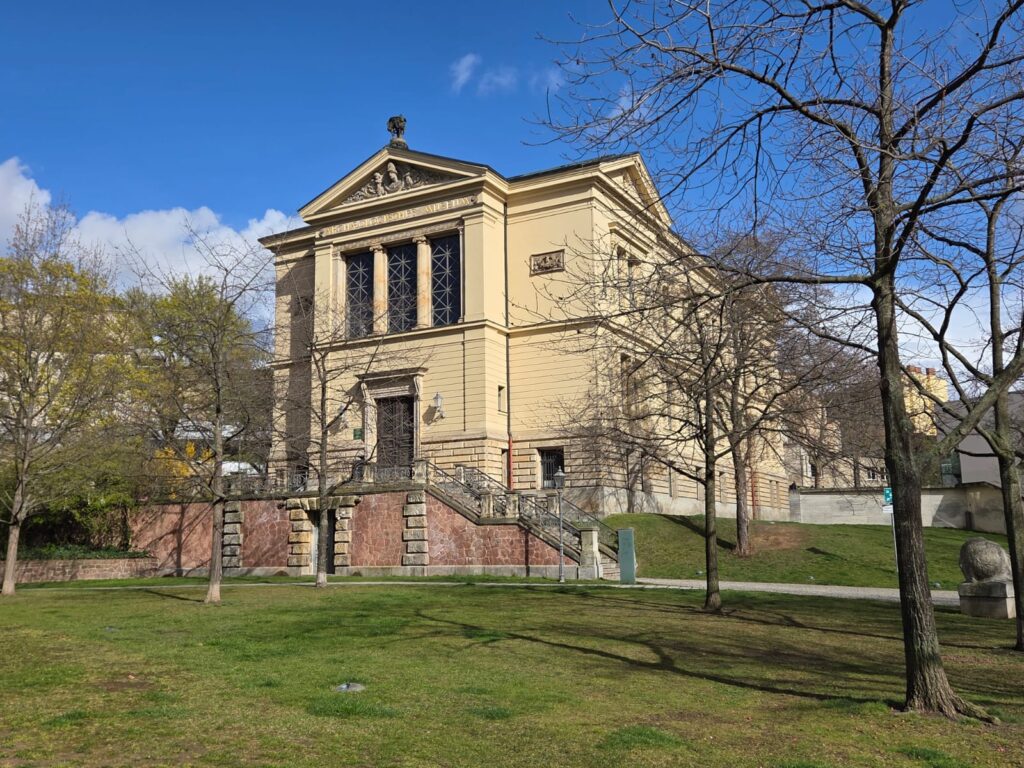
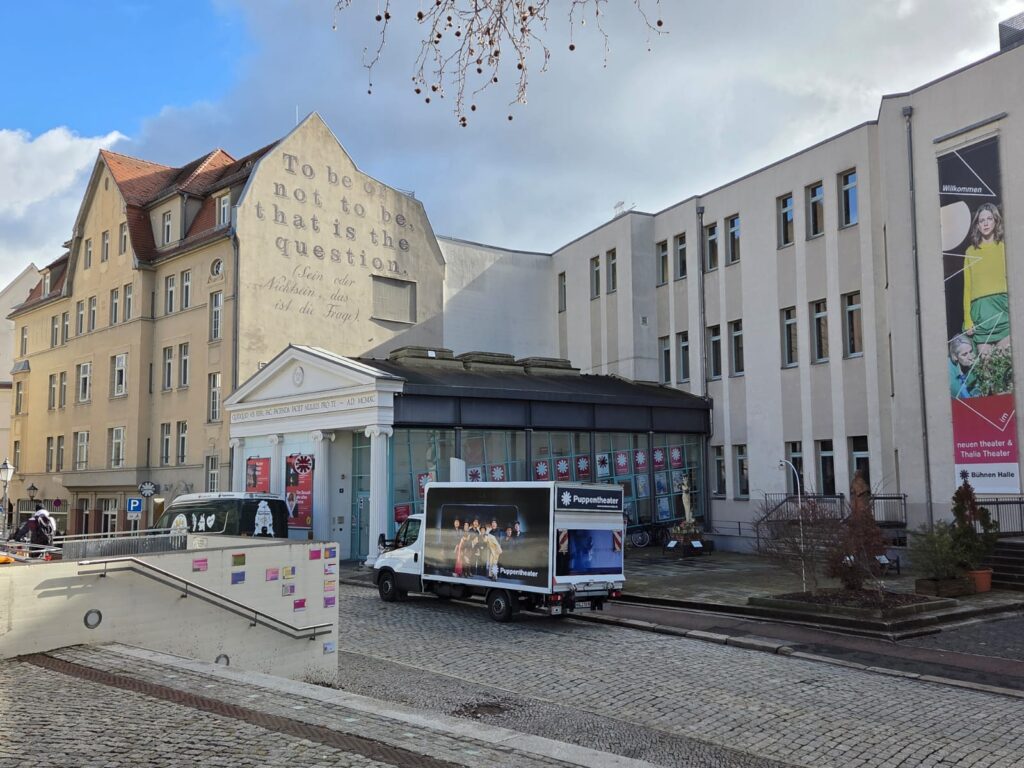
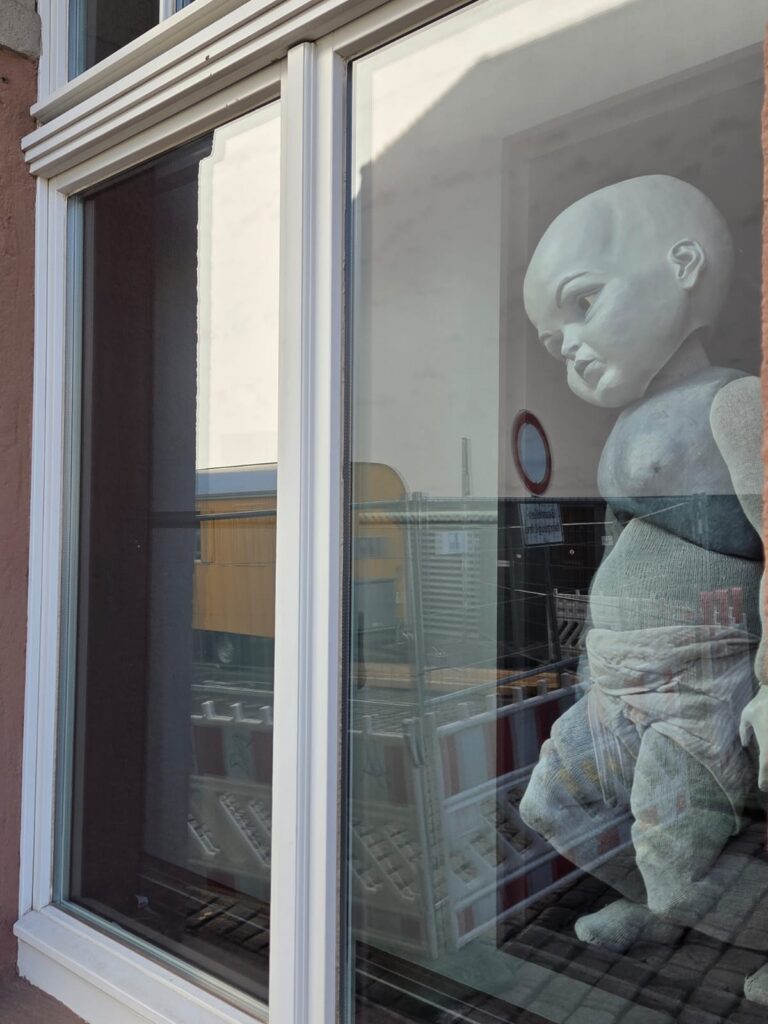
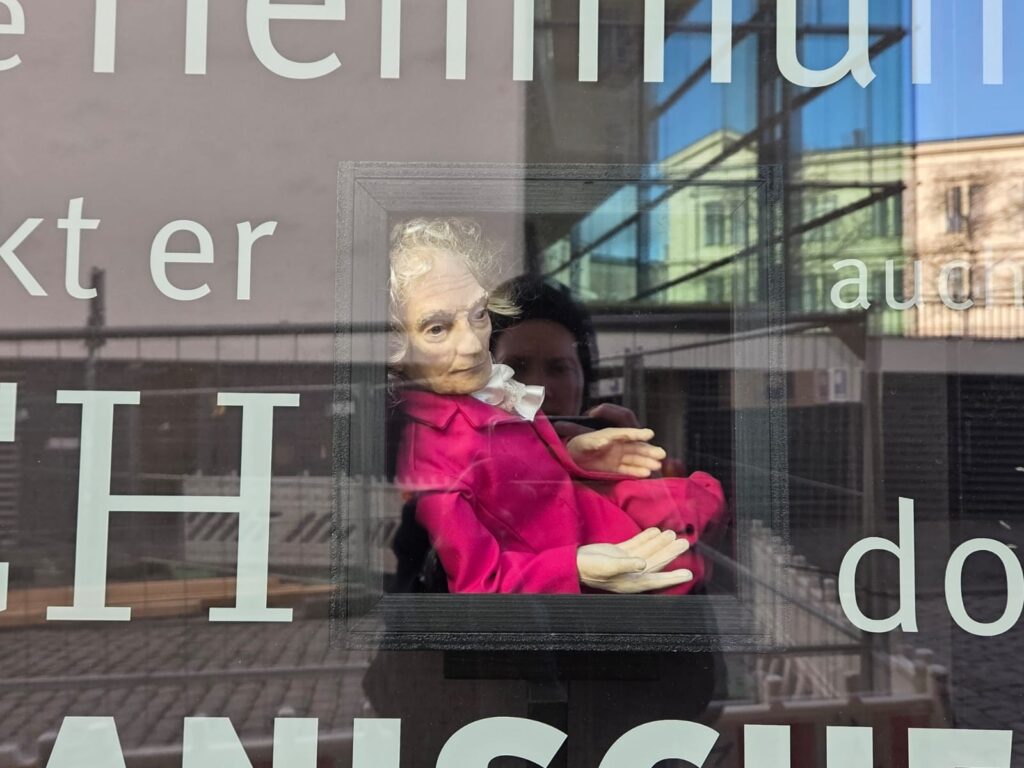
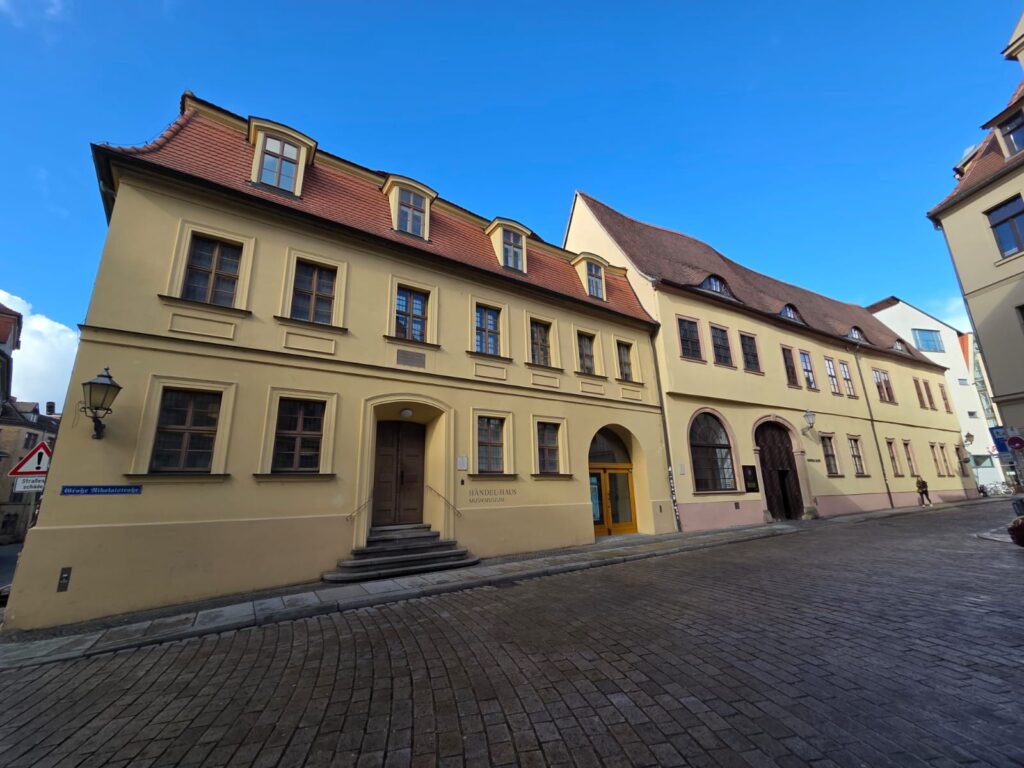
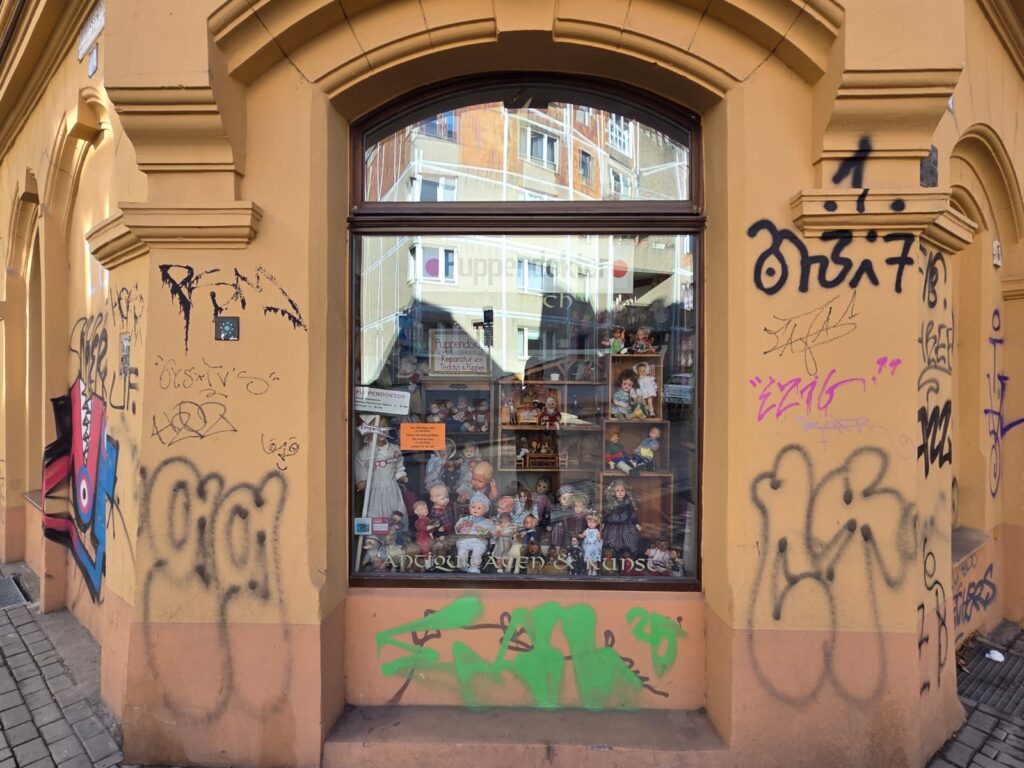
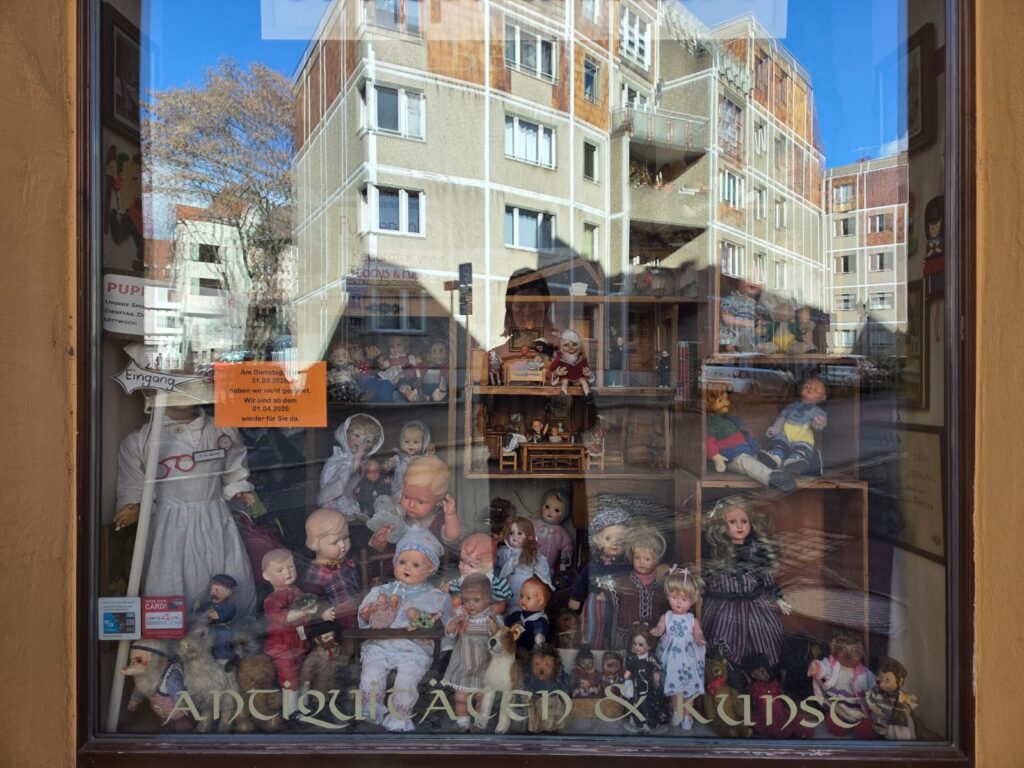
We’re now heading back, slowly, towards the train station. On the way, our guide points out that Kleine Ulrichstrasse is a popular place with lots of cosy cafés and restaurants. That certainly seemed to be the case as I passed by!Our next stop is Martin Luther University. Or, properly, Martin Luther University Halle-Wittenberg, formed from a merger of universities in those cities in 1817. The Halle side of that merger dated back to 1694. This is the university’s main campus, and this particular building is the Löwengebäude, or Lion Building, named for some sculptures of lions guarding the doors. It’s also Halle’s most important Neo-Classical building.Next door is the Robertinum. Purpose-built in 1891, it houses the university’s Archaeology Museum, and is named for former director Carl Robert. What a lovely example of classicising museum architecture: almost enough for me to make plans to return some time.The university district is also Halle’s theatre district. The top image shows a couple of them. The bottom two images show there’s no missing the Puppentheater, or Puppet Theatre.And from some slightly alarming puppets, we come back to safer territory with the Händel-Haus museum, in the famous composer’s birthplace. Again I was able to pop my head in, but couldn’t visit as it was Monday. As well as an exhibition about Handel’s life and work, the museum has a large archive and collection of musical instruments.
Now For Those Last Few Sights
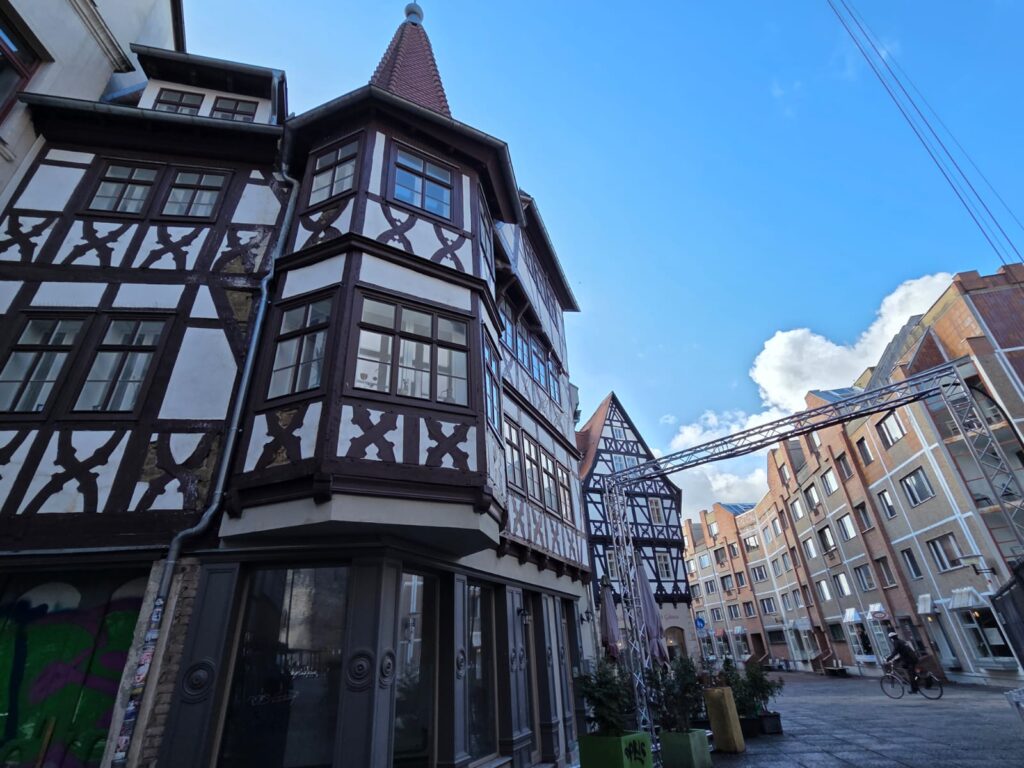
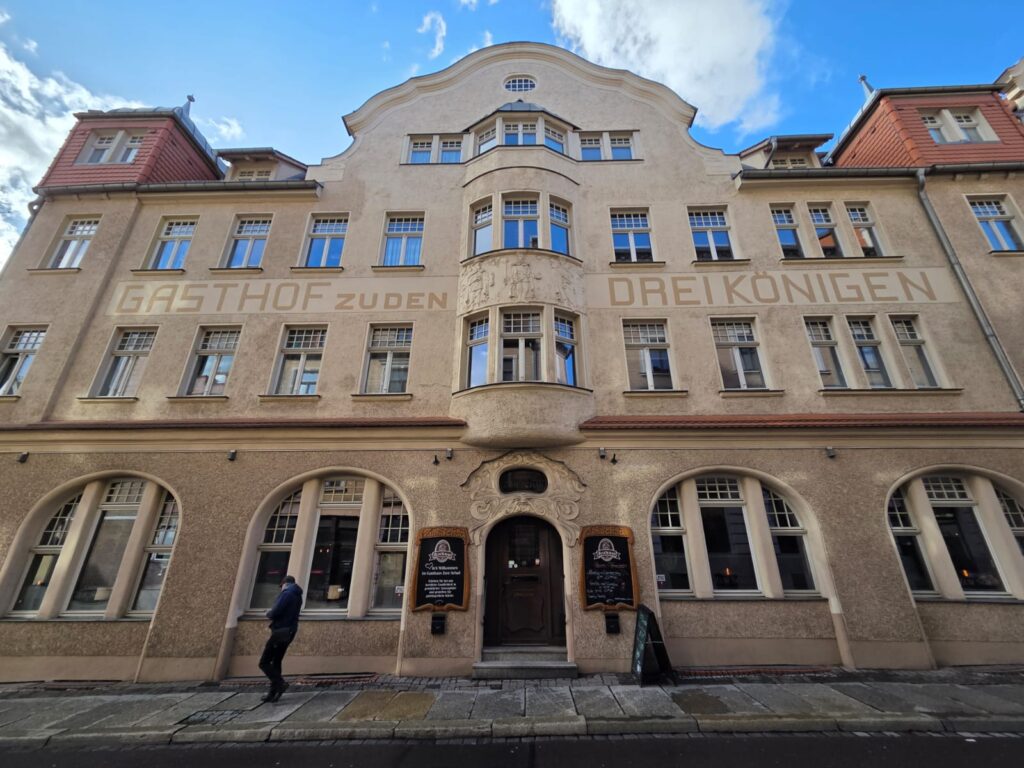
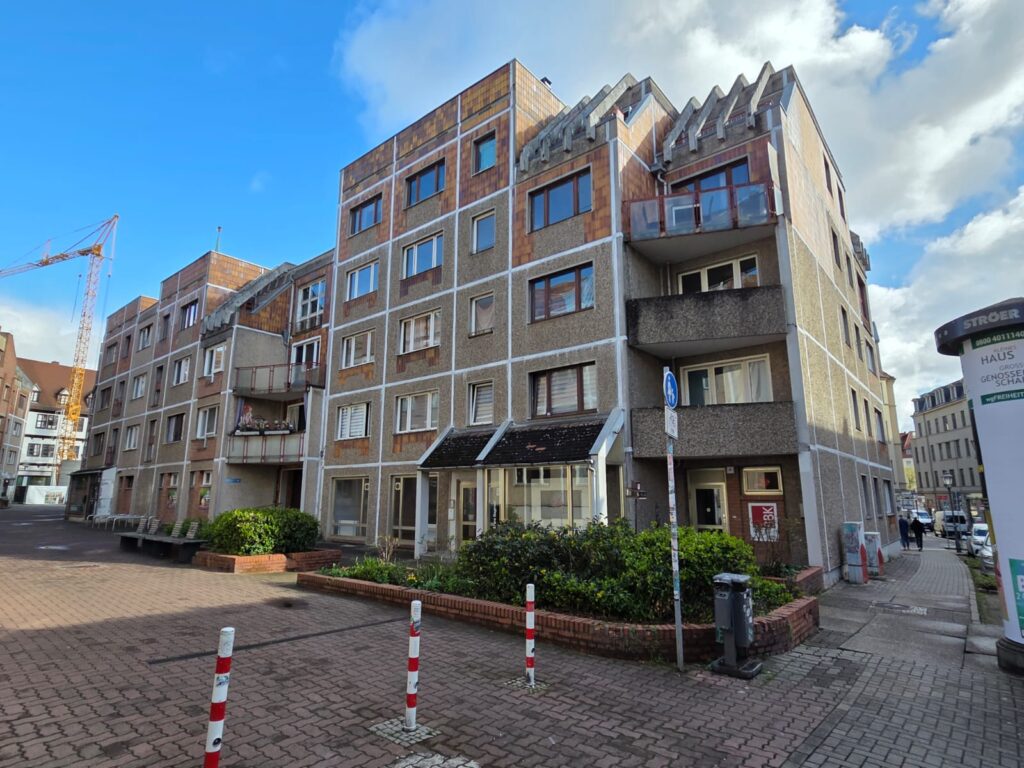
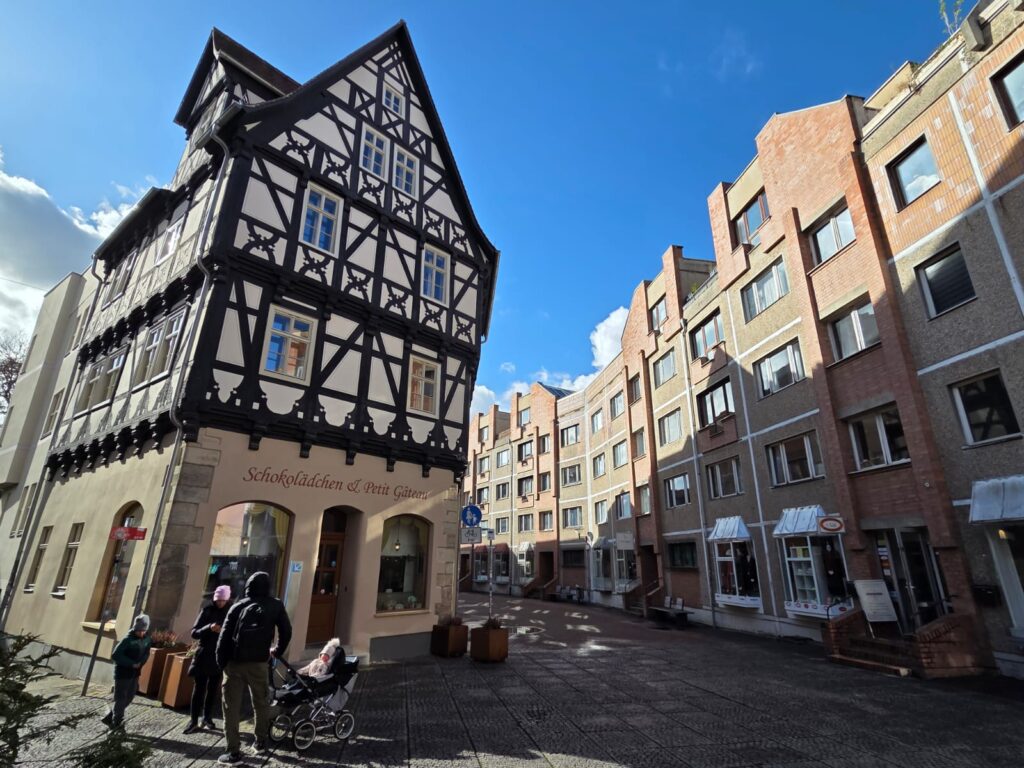
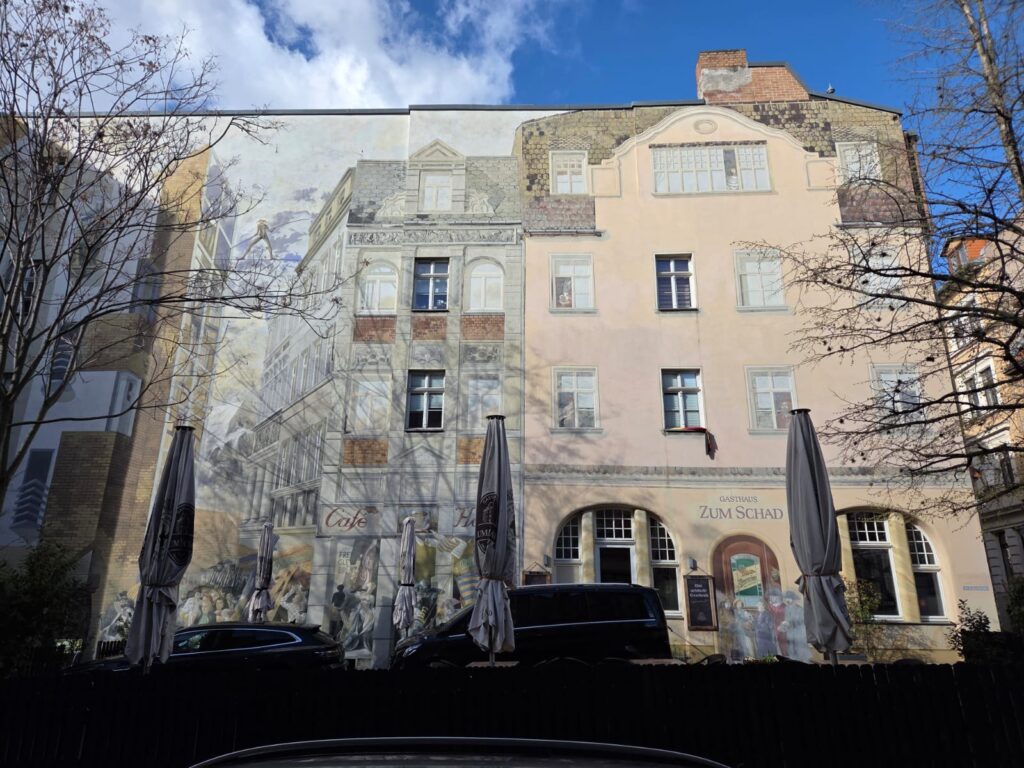
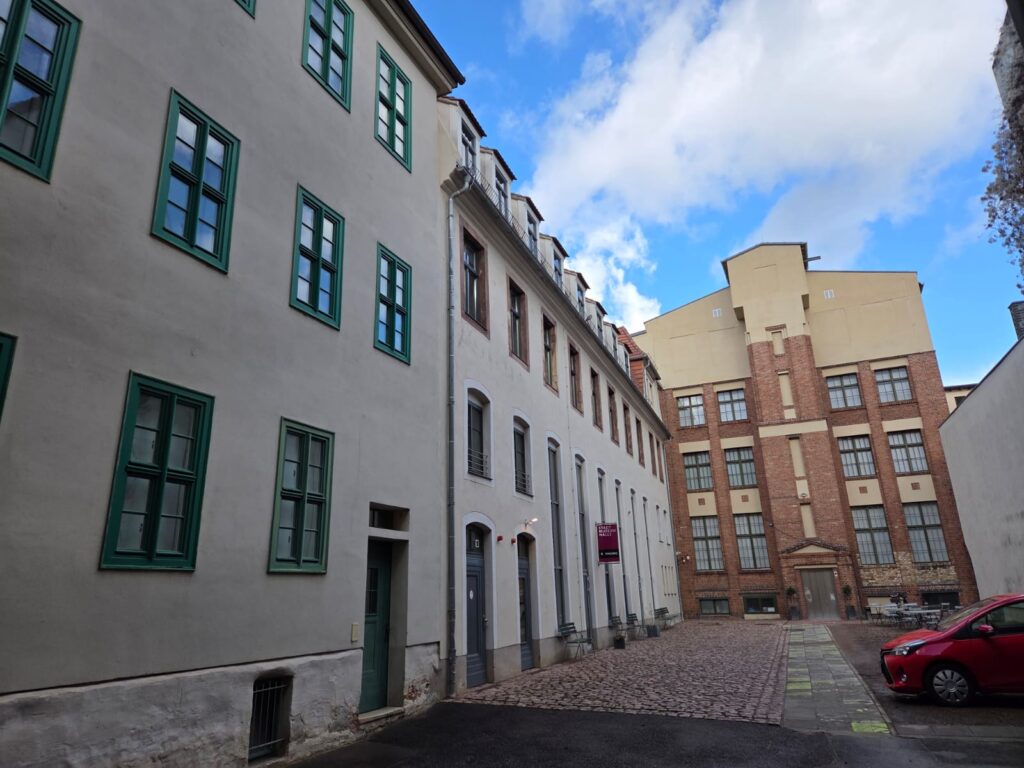
I thought this was a building that I’d noticed, but wasn’t part of the tour. I’ve only now realised, in writing this post, that one of the sights I was looking for is on the side of the building. We’re going to see it in a bit. Zu den drei Königen is a historic Halle inn, which moved to these expanded premises in 1903. I like the design, by architects Lehmann und Wolff.This one is definitely not on the tour: I just really liked the architecture of this block of flats. I’m getting distracted now – I liked the guide I found but the ordering of sights was a little odd from time to time, so I ended up with a few stragglers to find at the end.Yes, definitely distracted…OK, here’s another one of the things we were looking for! Not a very cheery history, though. This is 6 Graseweg. During the Black Death, the citizens of Halle walled up infected victims in Graseweg. When they pulled the wall down 10 years later, they found their neighbours’ skeletons. Can I just note, while being respectful of this sad story, that I like the juxtaposition with those apartments I saw earlier?And, after much difficulty, I find the mural described in my walking guide, located on Grosse Klausstrasse. And, as we just established, on the side of a building I’d already seen… Anyway, a nice trompe-l’oeil. Worth the effort? You be the judge.
And Back Towards the Station
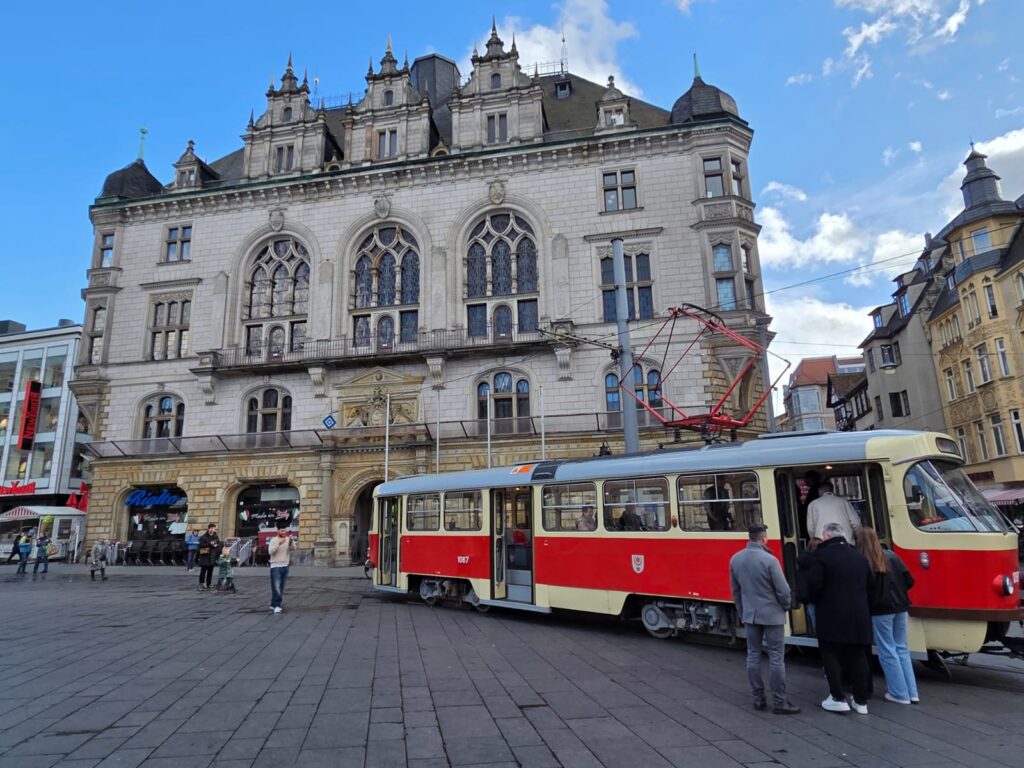
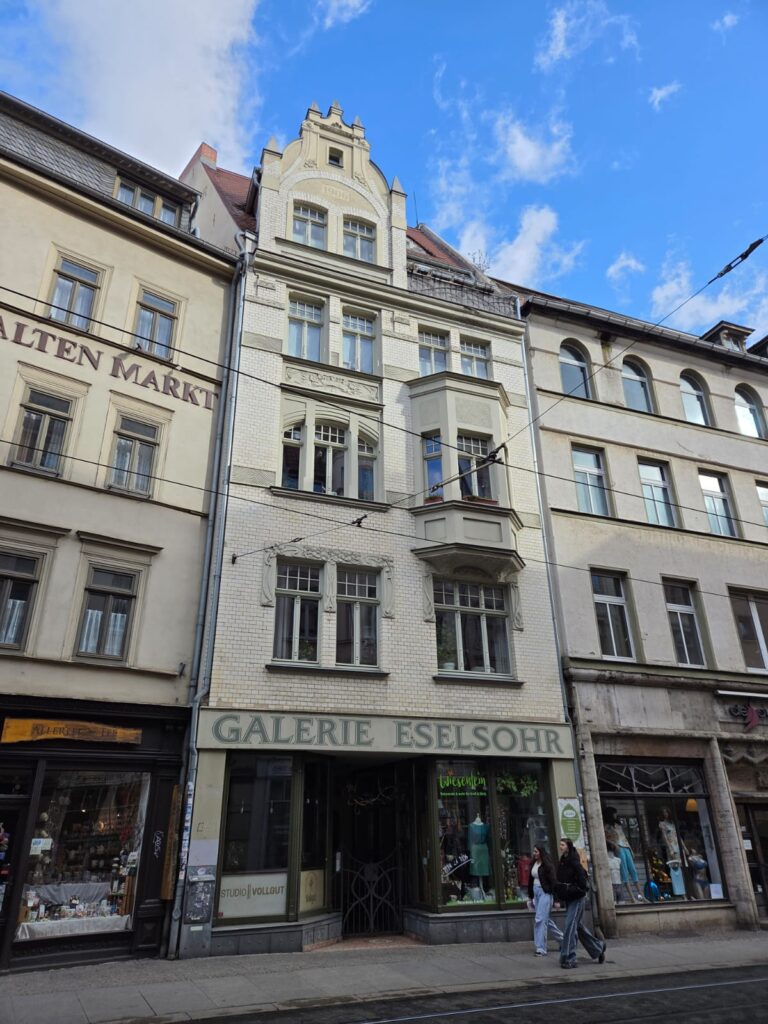
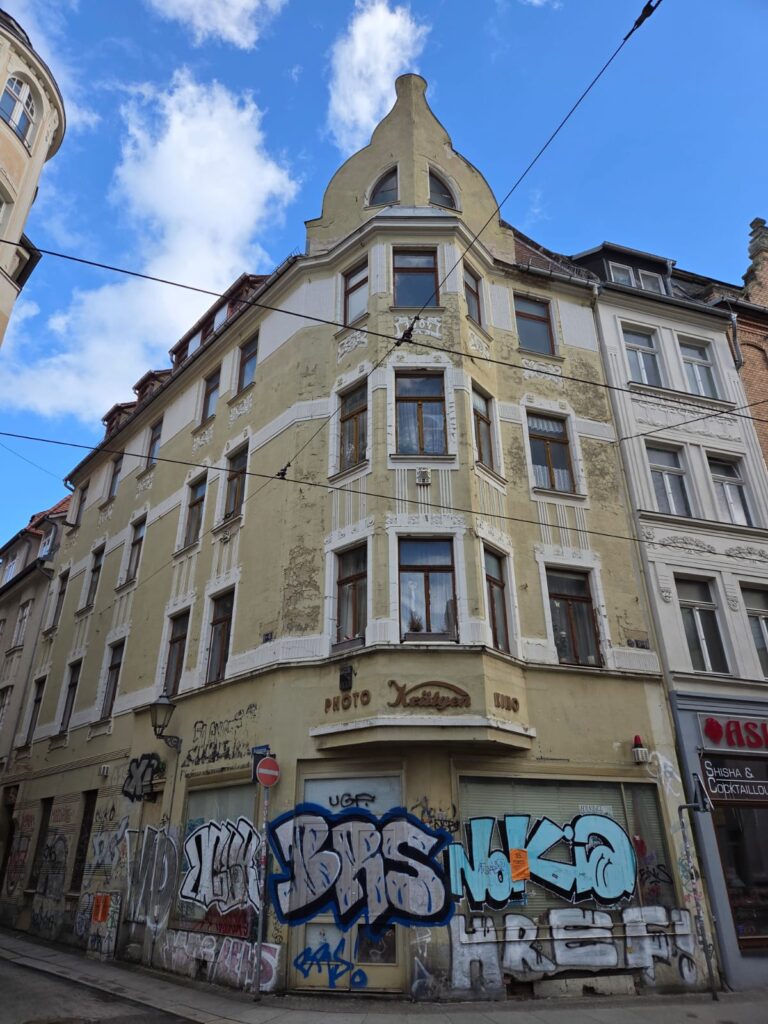
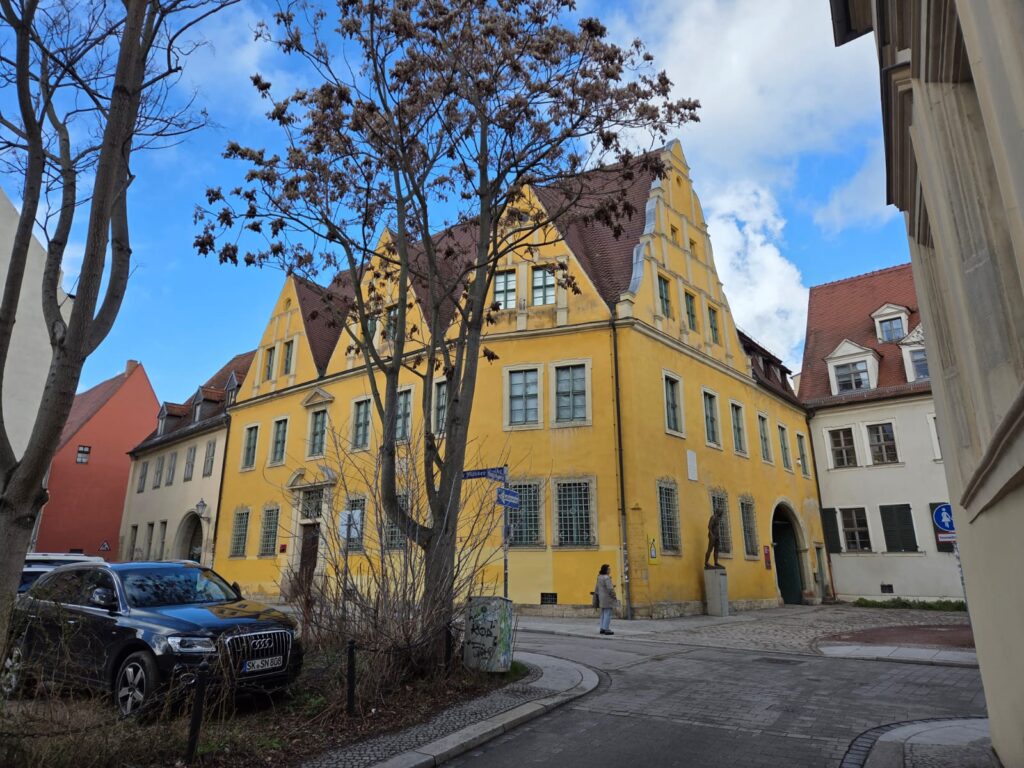
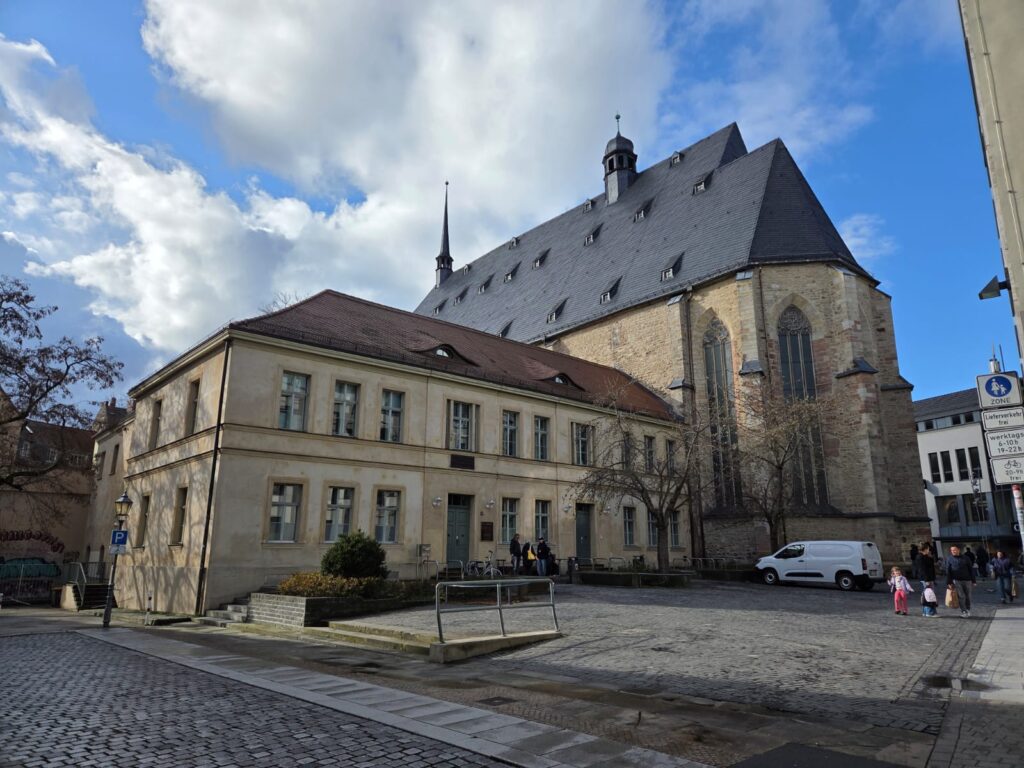
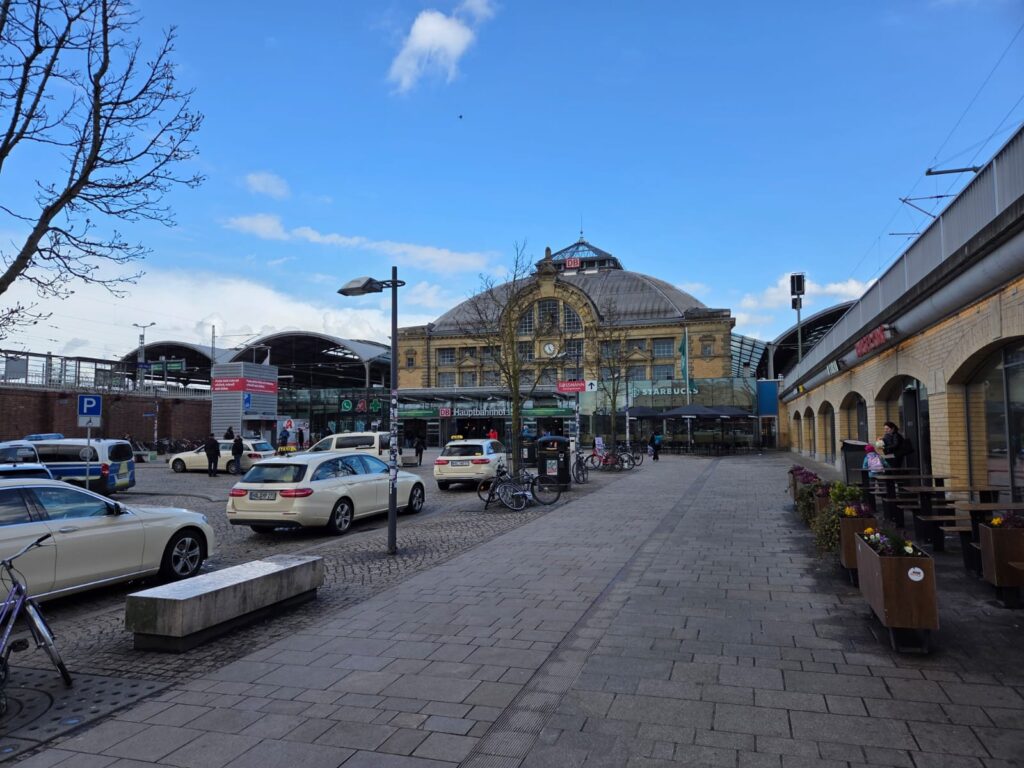
We’re back on Marktplatz now, but a historic tram has appeared. It was a special trip for enthusiasts of such things. Halle has a very extensive tram network, which perhaps I should have taken advantage of rather than rushing around on foot.There’s one final spot we’re looking for. But on the way, I enjoyed looking at various historic buildings. These two, along Schmeerstrasse, are nice examples of Jugendstil.And here is that final stop on the walking tour! Halle’s City Museum is located in this bright yellow building, Christian Wolff House, on Große Märkerstraße. Note the Renaissance gables. Philosopher, mathematician and Enlightenment thinker Christian Wolff, a lecturer at the University, moved in here in 1741.A final look at the back of the Ulrichskirche as we rejoin the pedestrianised path we took to get here.And look, we’re back at the station and ready to rejoin the Urban Geographer and catch our train. This is a late-19th century station building, for a railway that started out around 1845.Goodbye, Halle! Or I should really say thank you, Deutsche Bahn, for failing so spectacularly to get us to Stuttgart on time that I had time for all that sightseeing! Halle is somewhere I might never had seen were it not for that series of misadventures, and a tolerant partner who knows it’s better to let me go off on a hare-brained adventure once I’ve got it in my head. But now that I’ve got a taste for it, I wouldn’t mind coming back some time and visiting some of those museums and historic spots at my leisure.
Trending
Travelers' Map is loading... If you see this after your page is loaded completely, leafletJS files are missing.