
Le Parc Oriental de Maulévrier
Europe’s largest Japanese garden is an unexpected discovery in this corner of France. Summer is not the best time to see it from a botanical point of view, but a cosplay-themed day is a great way to welcome new visitors to the park.
A Japanese Garden in the Maine-et-Loire
In recent days, you’ve come on a trip to Nantes with me. We had a very quick look at the city, before visiting les Machines de l’île, and le Musée d’arts de Nantes. Our actual aim in France was to visit friends in the Deux-Sèvres region of France. There is a remarkable cultural offering in and around their rural community. I’ve actually already published two exhibition reviews (here and here) from local contemporary art galleries we visited on this trip.
Our friends always have a list of activities up their sleeve for any time of year. Given I’ve been coming here since I was 16 (which is some time ago now), I’m amazed that there’s always somewhere new to visit. On a previous occasion, we spent a few days seeing various troglodytic sites. Our next post has a nod to the region’s cave dwellers. But today’s post is something a little bit different.
I was surprised to hear that there was an Oriental Park, or Japanese garden, in nearby Maulévrier. Particularly such a long-standing one. In my experience, Chinese or Japanese gardens (like this one) tend to be a bit more recent. Often they are gifts to a city, signs of a valued relationship. I wanted to find out more about the origins of le Parc Oriental de Maulévrier. And, indeed, whether it fit into this tradition.
Introducing Alexandre Marcel
The short answer to my question above is: no. This isn’t an oriental garden gifted as a show of friendship. It’s the work of one man, Alexandre Marcel. Born in 1860 in Paris, Marcel studied architecture at l’École des Beaux-Arts* from 1877, as well as in the workshop of Louis-Jules André. His style was eclectic, with a bent towards Orientalism and Japonisme, the 19th century craze for all things Japanese. Marcel didn’t personally travel to Asia until a trip to Japan in 1913 when he was working on the French Embassy in Tokyo.
Nonetheless, he seems to have made quite a name for himself with his Japanese-inspired architecture. He completed a function room with Japanese decoration for the director of the Bon Marché department store in 1899. But his major work was the Cambodian Pavilion for l’Exposition universelle, which took place in Paris in 1900 and for which he won the Grand Prix. After that he got a position as the architect for the Belgian royal family, and worked on residences and parks. He was later made architect for civil buildings and national palaces in France, working on the Panthéon and various WWI memorials amongst other projects. He died in Paris in 1928.
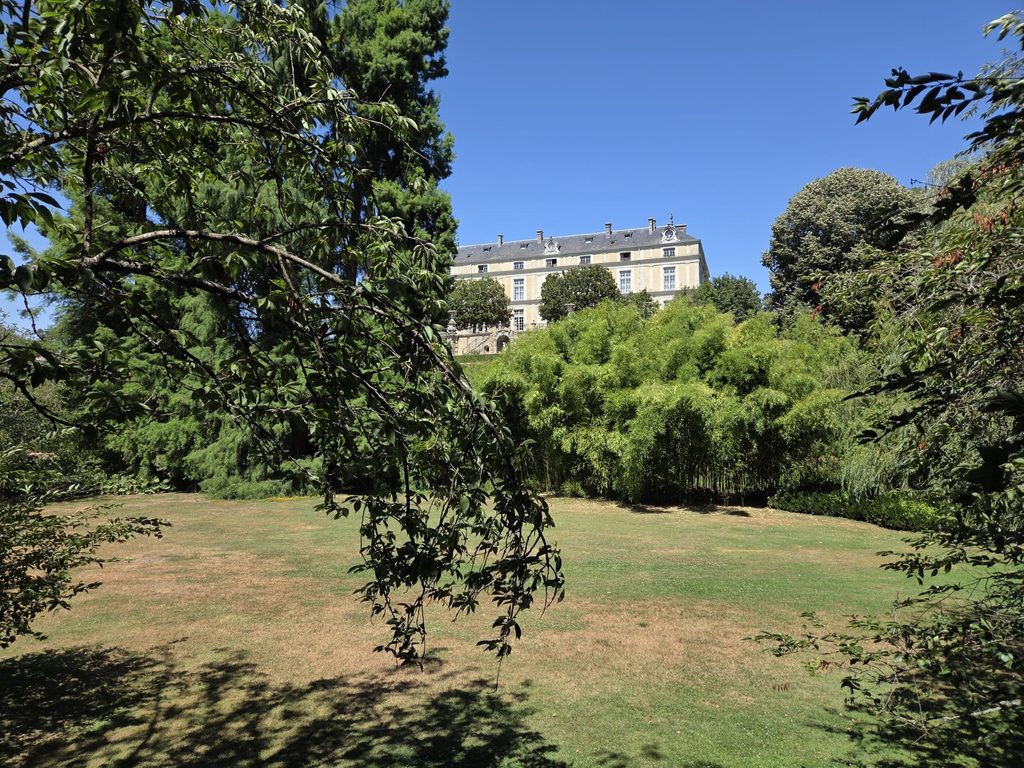
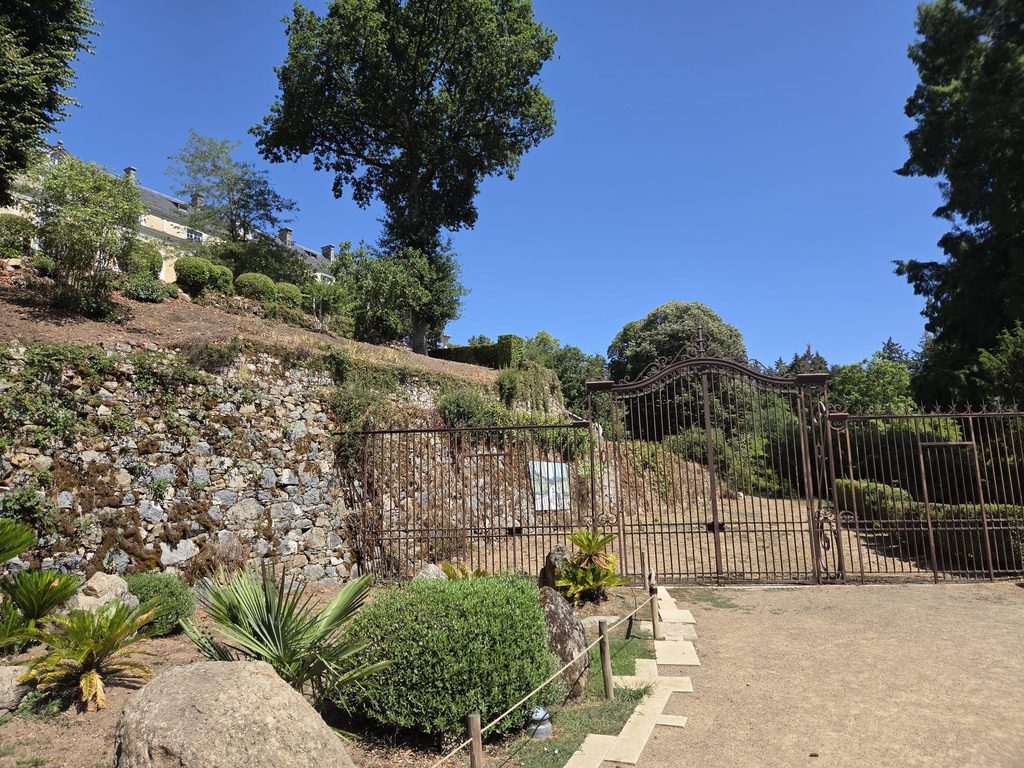
So what is the connection to Maulévrier? Well, his wife’s family owned le château Colbert (or château des Colbert) in that town. There had been a fortress on the site since probably the 11th century. Édouard-François Colbert, Count and later Marquis of Maulévrier acquired and rebuilt it in the 17th century. It was rebuilt again twice by the early 19th century: the latter time the architect was François Viller, who designed it in the contemporary style, with an English-style wooded park. Marcel redecorated it for his in-laws in the late 19th century.
*I’ve only just this moment twigged that the Beaux-Arts style is what was taught here – a strong classical foundation with modern materials like iron, glass and steel, and ornate and eclectic details. I had thought it was just a name, a ‘Fine-Arts’ style.
The Ups and Downs of le Parc Oriental
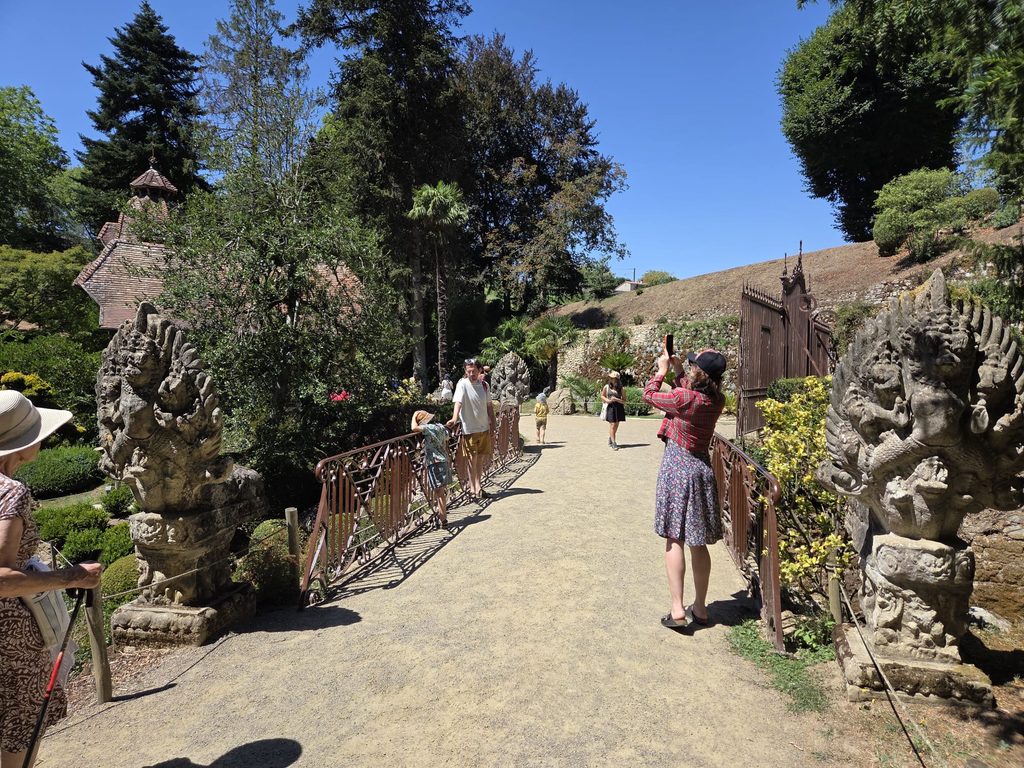
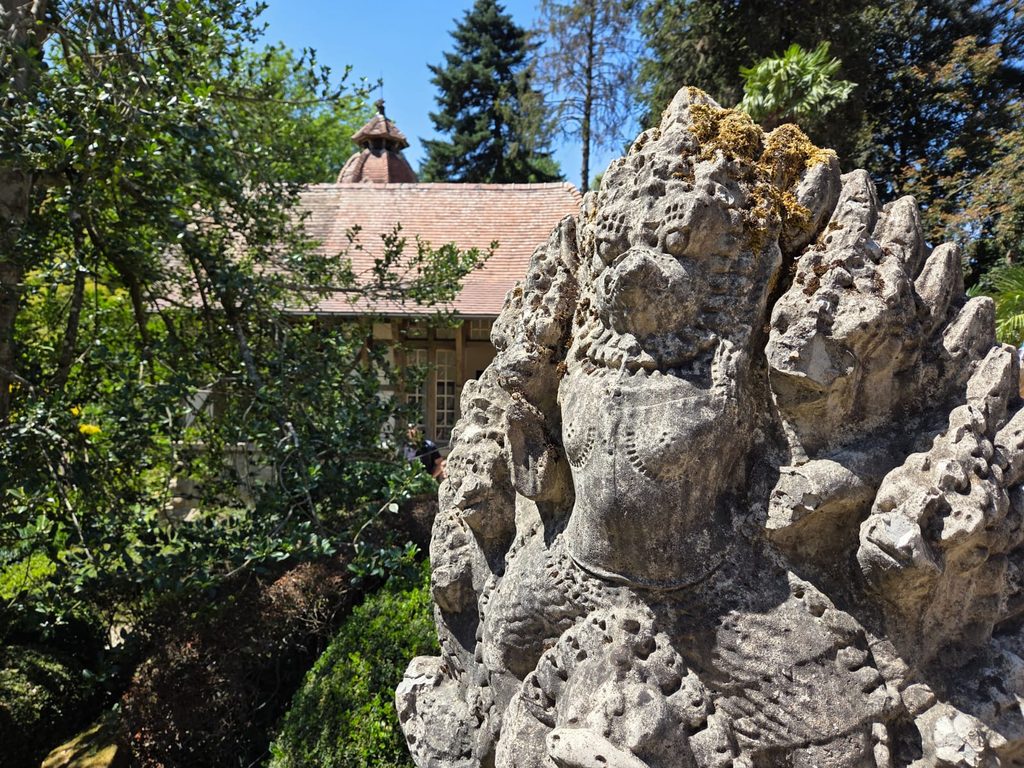
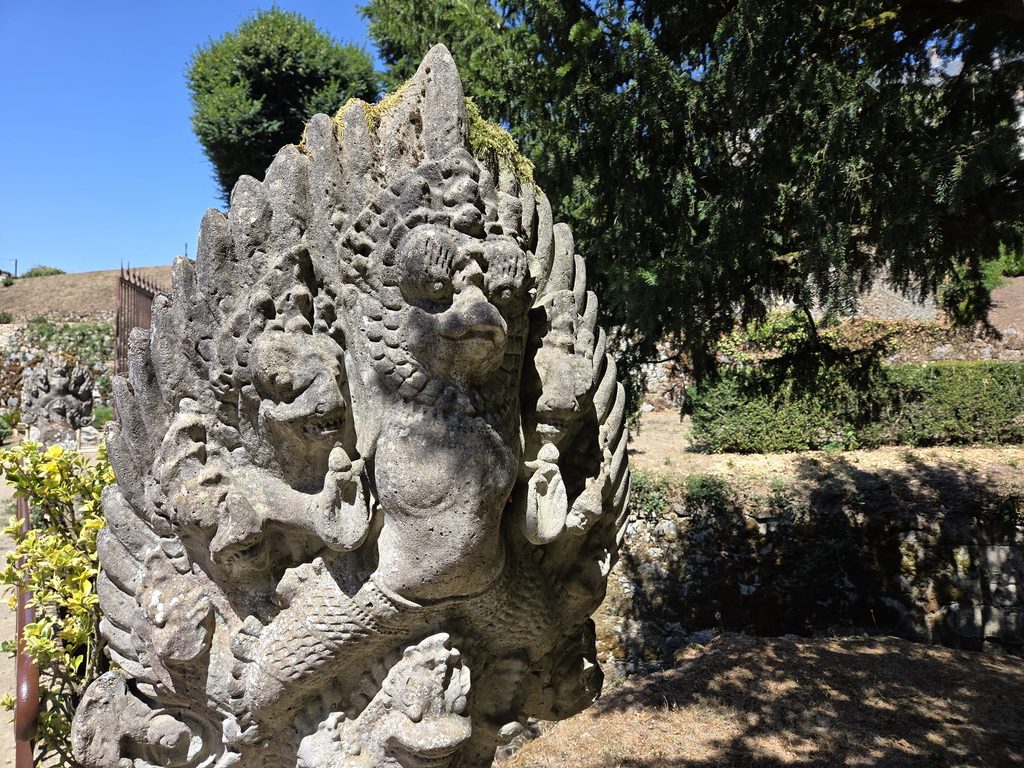
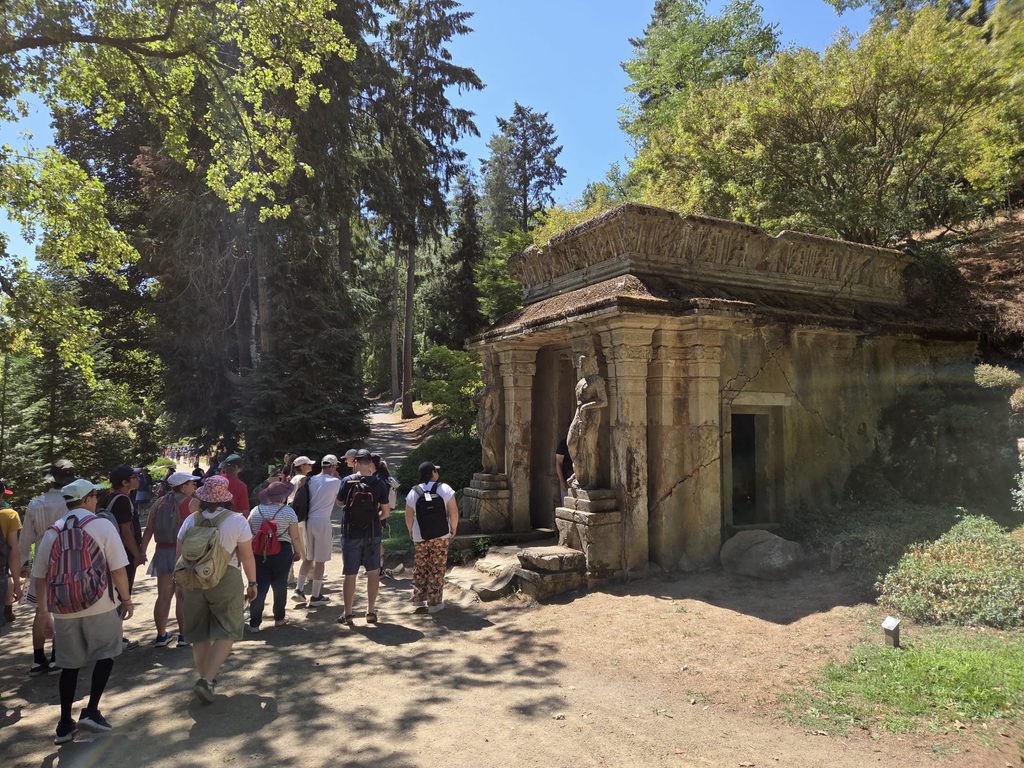
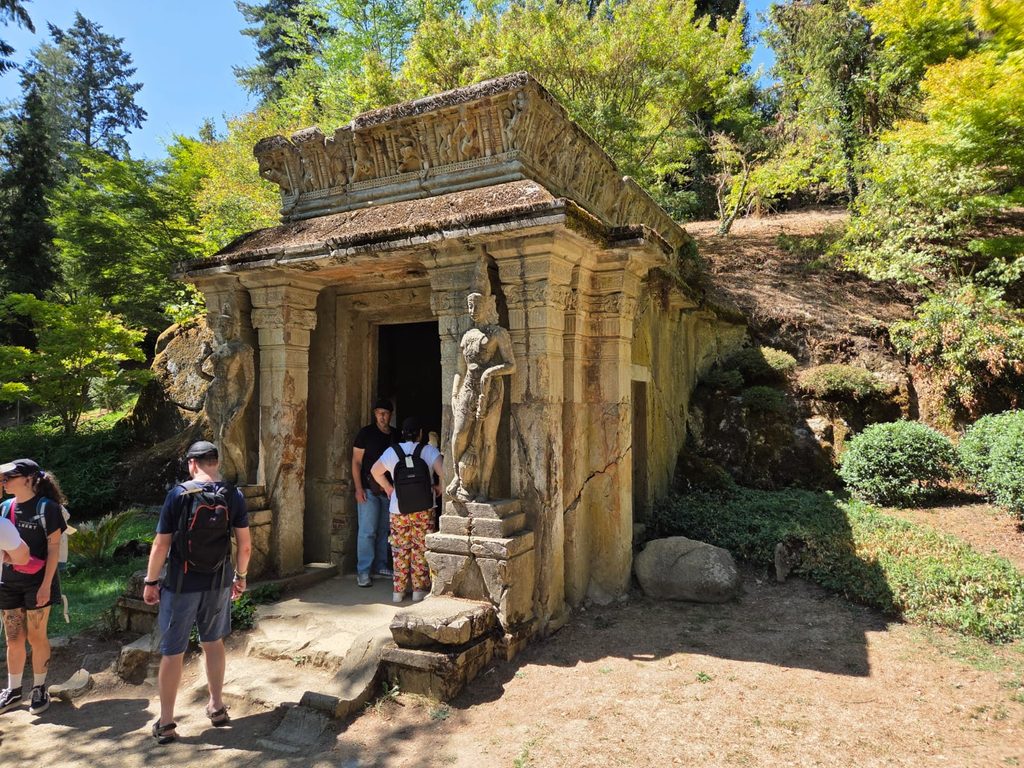
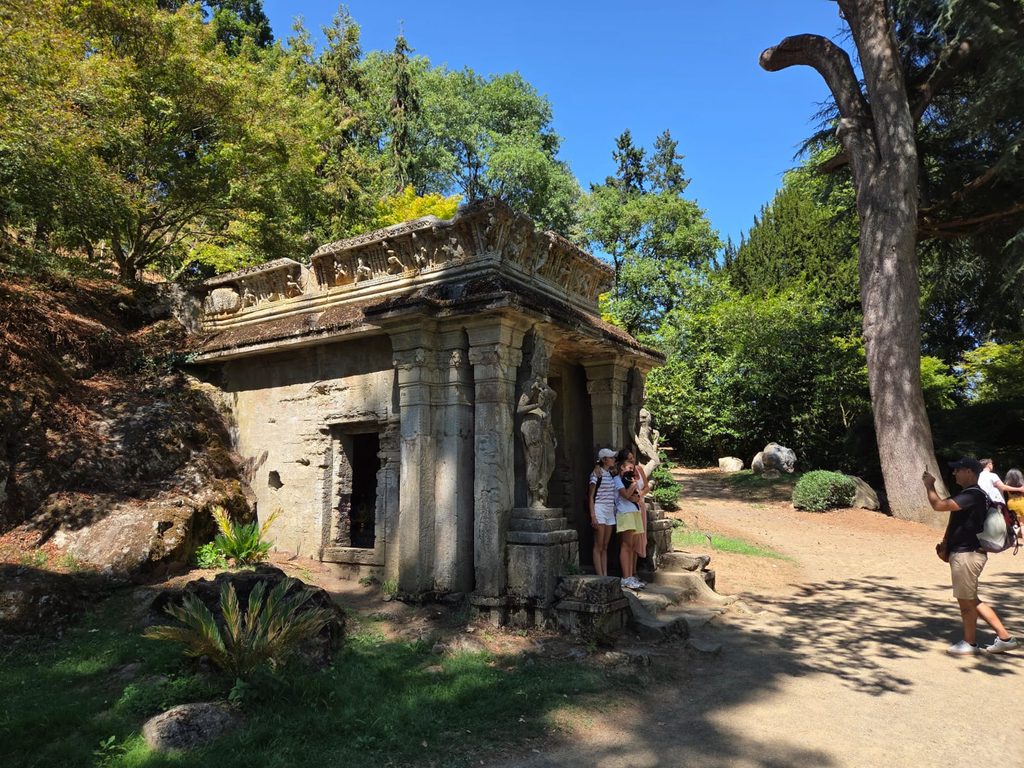
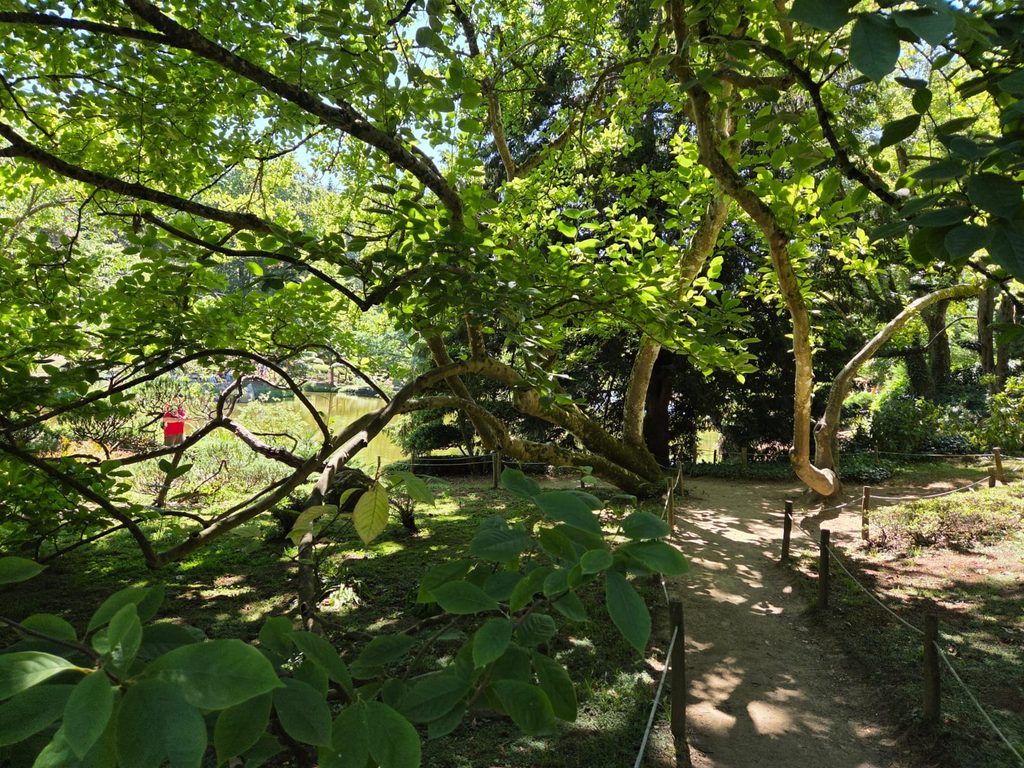
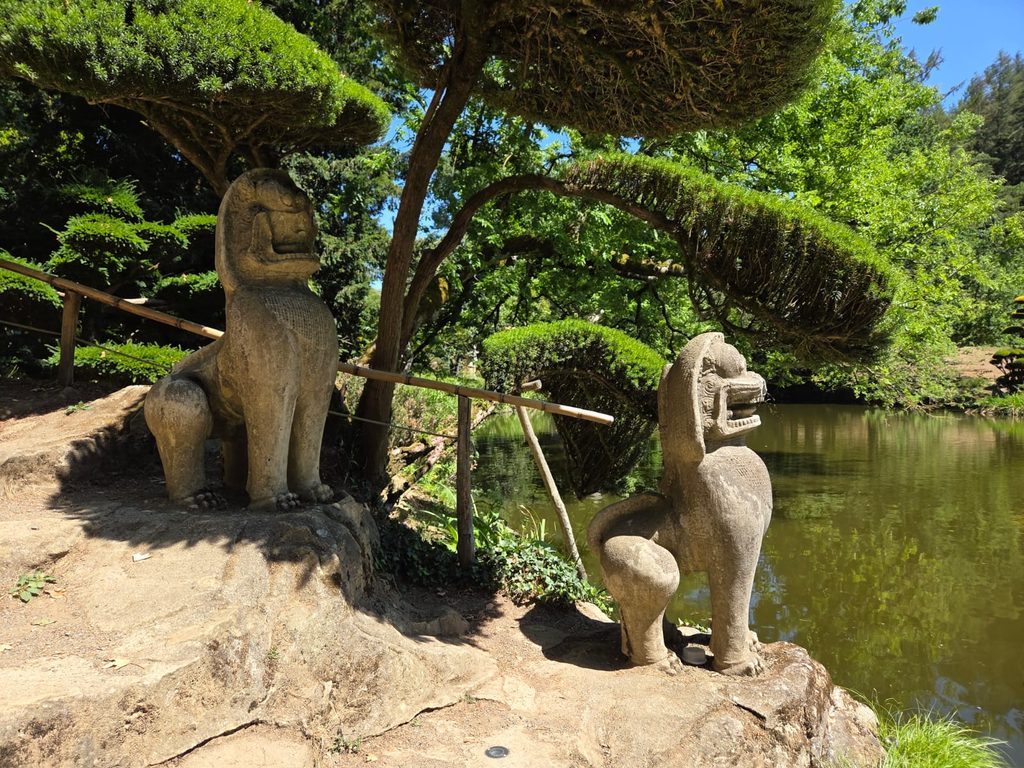
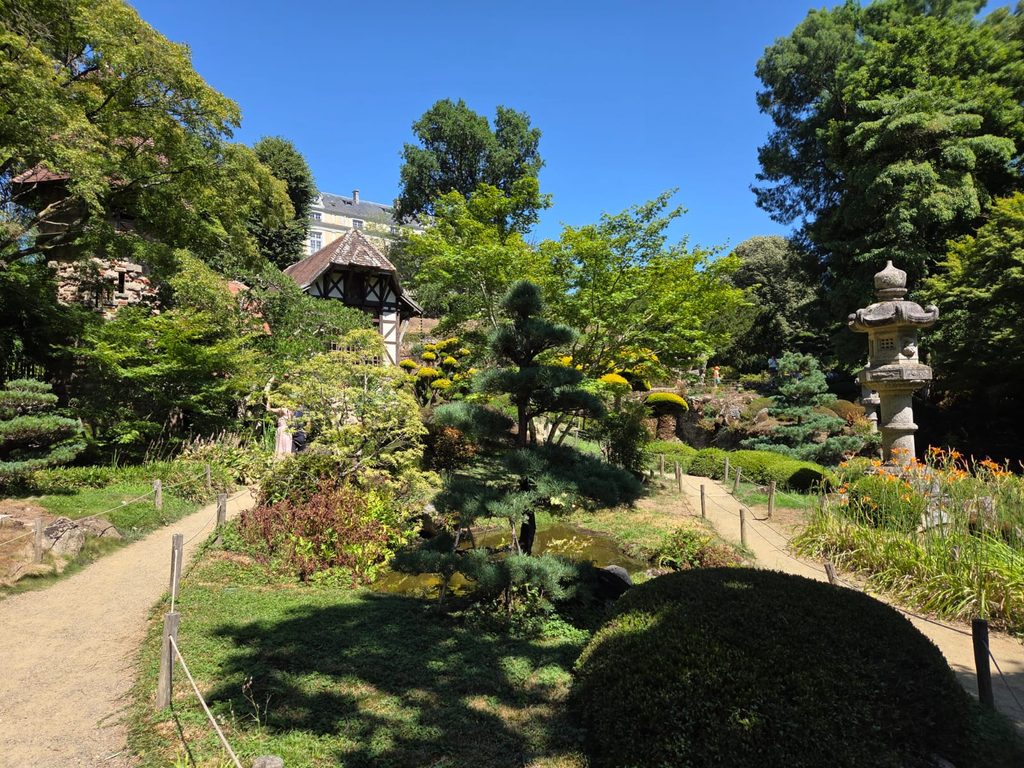
So the point of that previous section was to set the scene that le Parc Oriental didn’t start out with the intention of being a public park, but was the private garden of the château Colbert, to which Marcel had a personal connection. He worked on it between 1899 and 1913, overseeing progress during frequent visits to the château. Given his interest in all things Asian and Japanese, it’s perhaps unsurprising that his designs for the garden went in the same direction. Marcel even reproduced and salvaged elements of his award-winning design for the Cambodian Pavilion. Visitors today can see a small Khmer temple, and stone lions.
After Marcel’s death, his wife resided at the château Colbert until her own death in 1945. The park fell into a period of neglect that lasted for decades. The property was left to the order of the Pères du St-Esprit, and the château and its grounds were divided into three and sold off in 1976. The municipality of Maulévrier purchased that which contains the Parc Oriental in 1980. They began reconstructing the garden in 1987, based on photographs and accounts of its original state. By 2004 the garden was named a Jardin Remarquable (Remarkable Garden) by the French Ministry of Culture. The former kitchen garden (potager) of the château reached the same status in 2020. It can also be visited for a small fee. The château Colbert itself it today a luxury hotel.
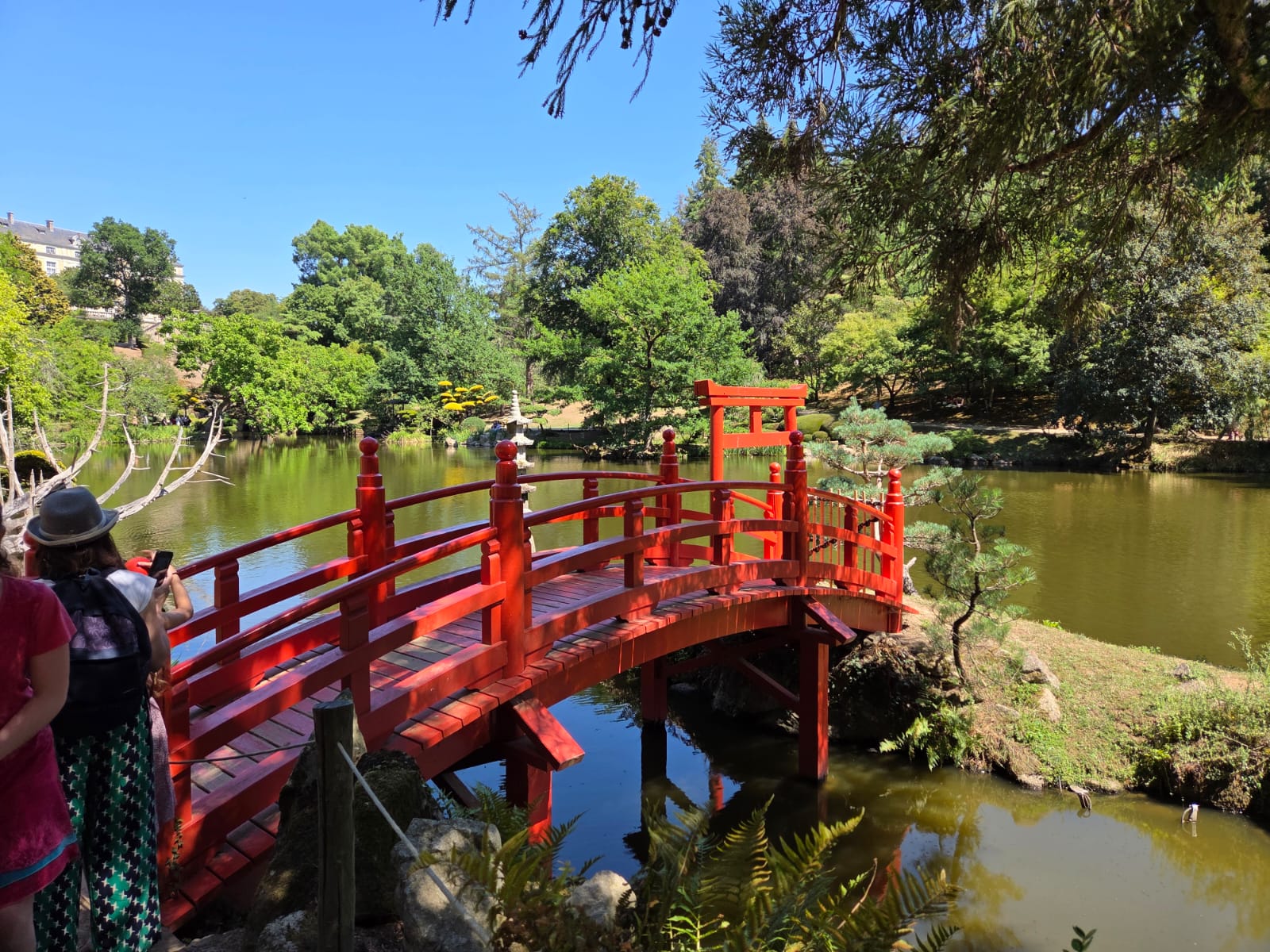
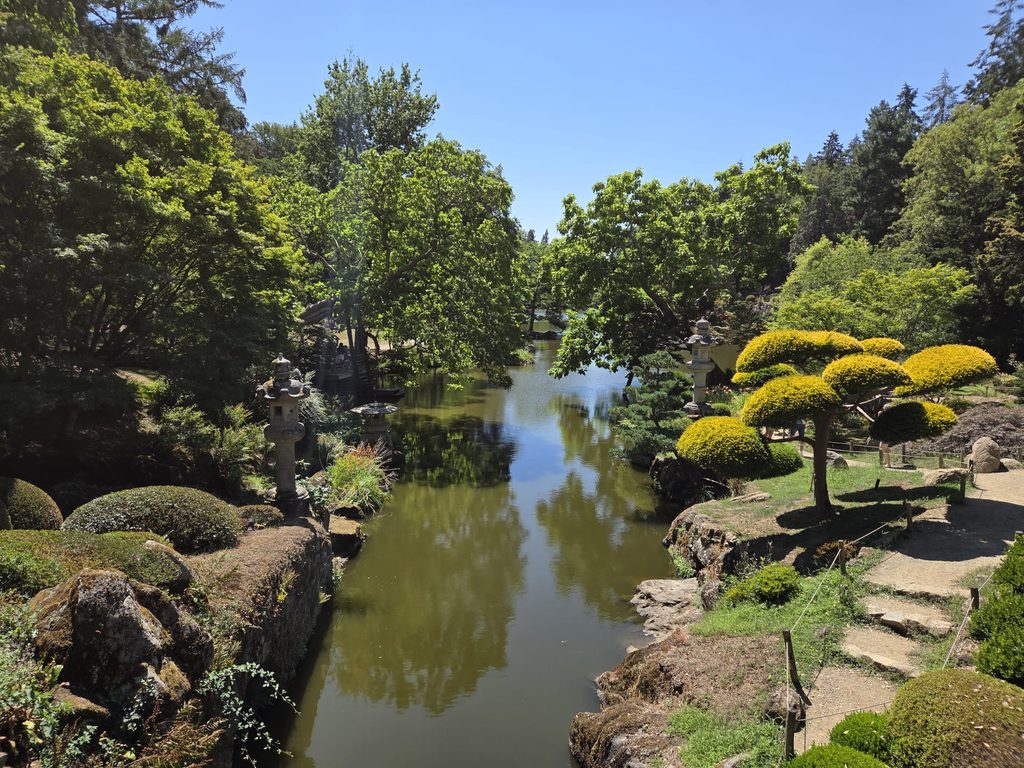
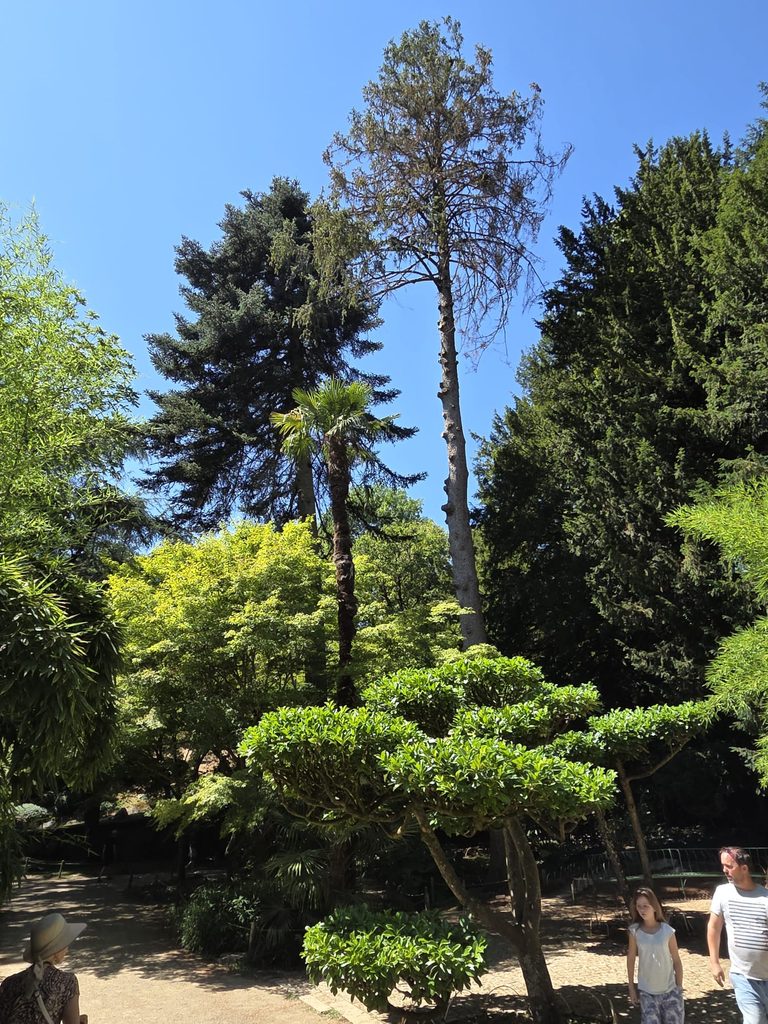
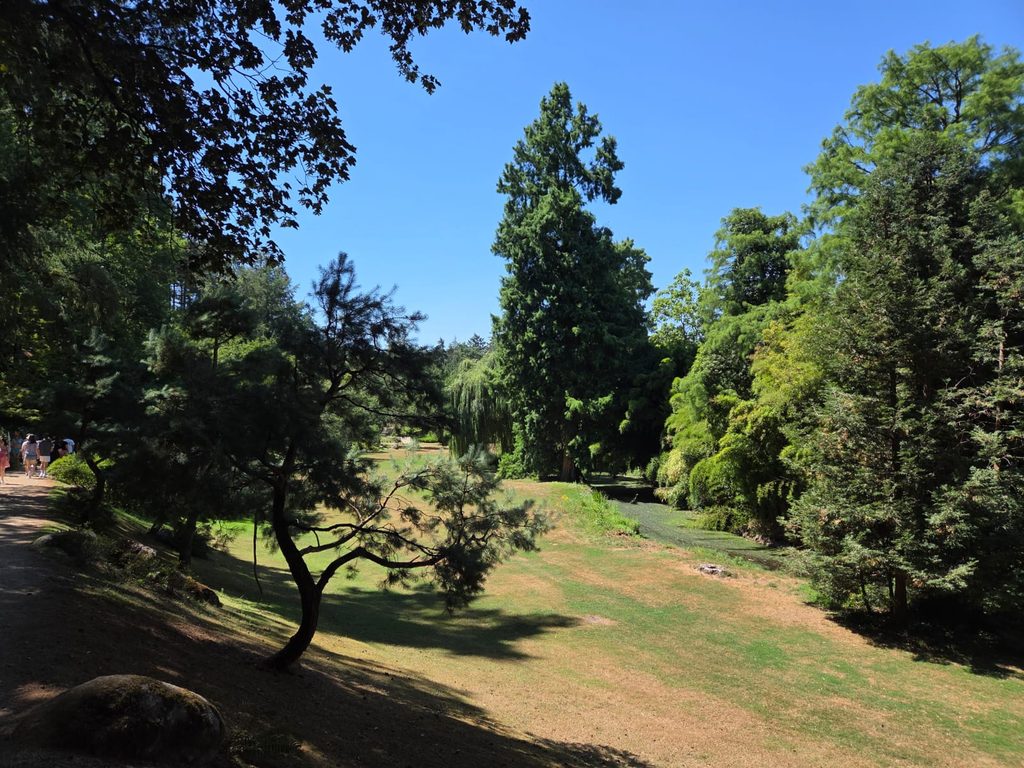
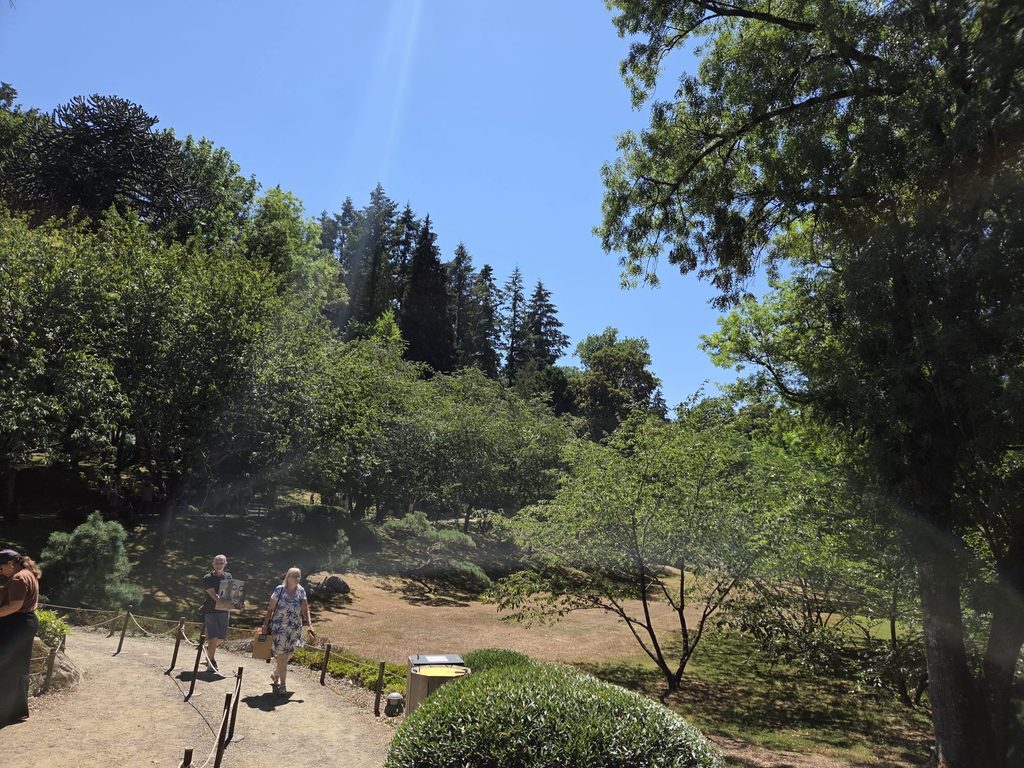
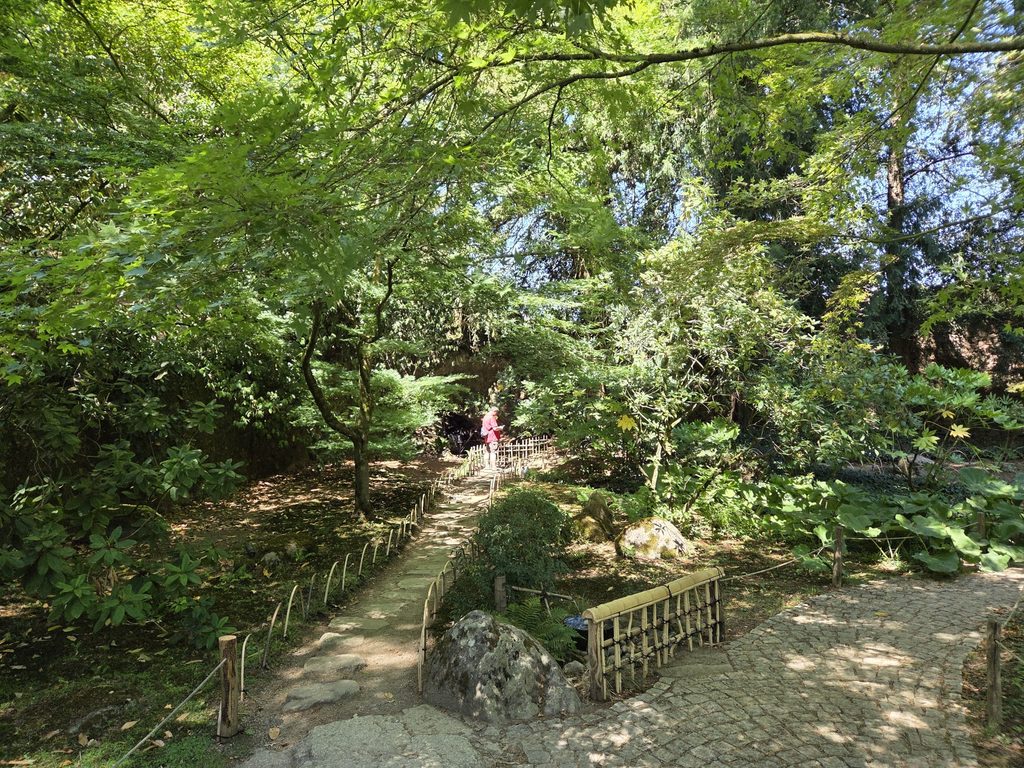
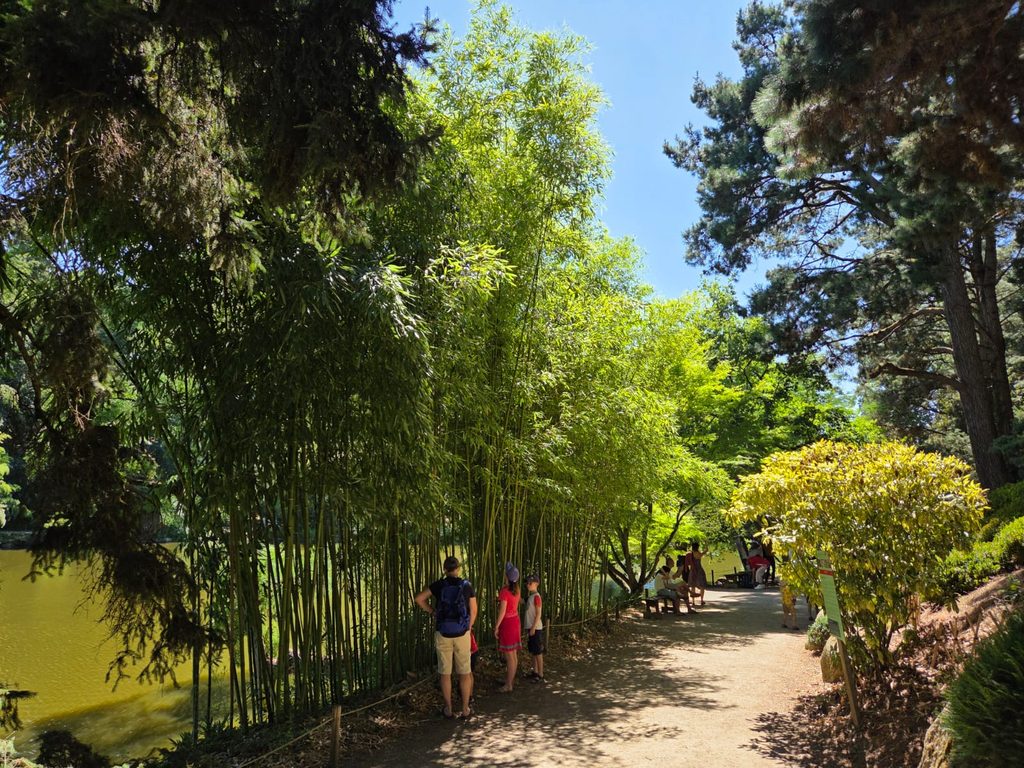
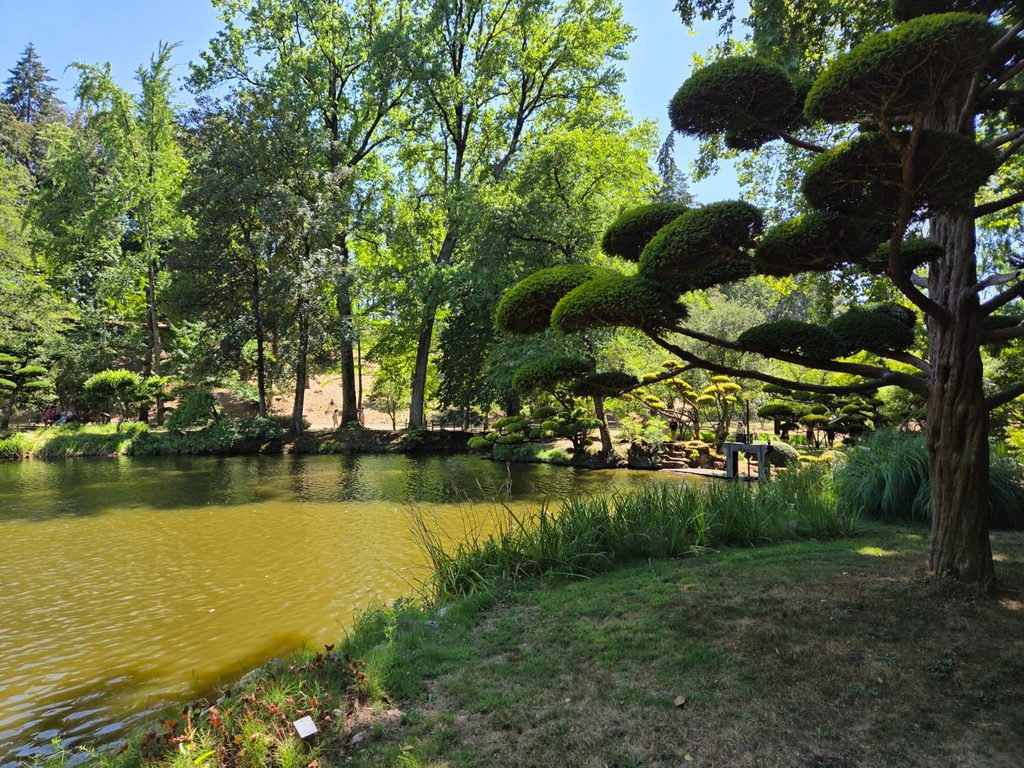
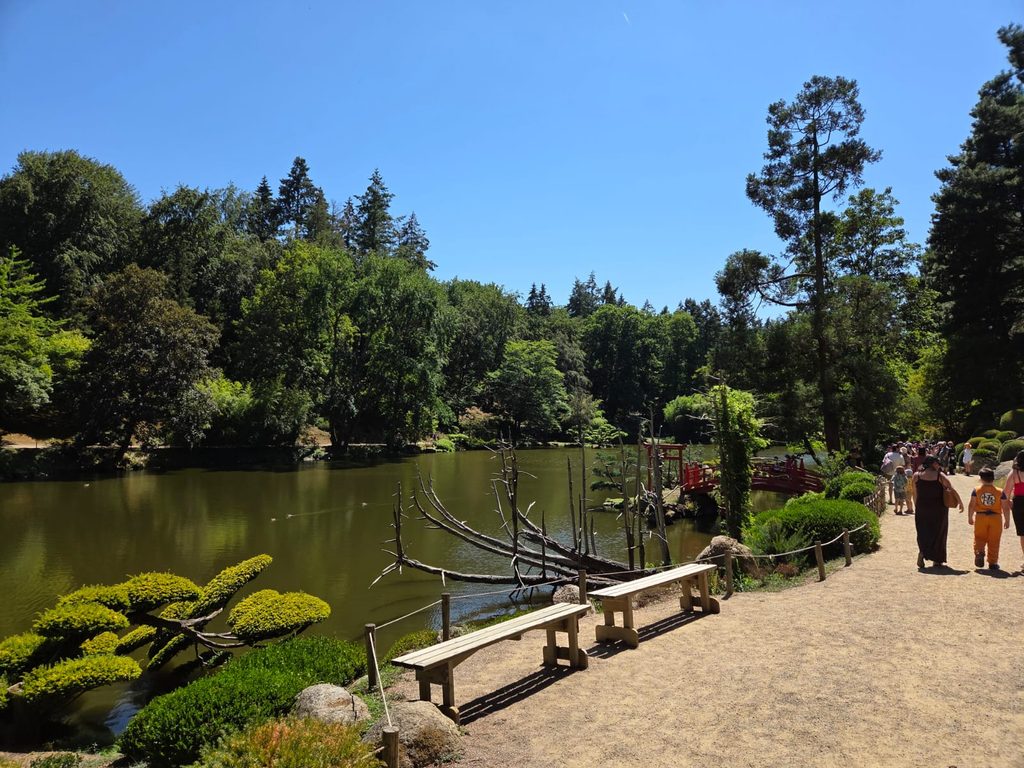
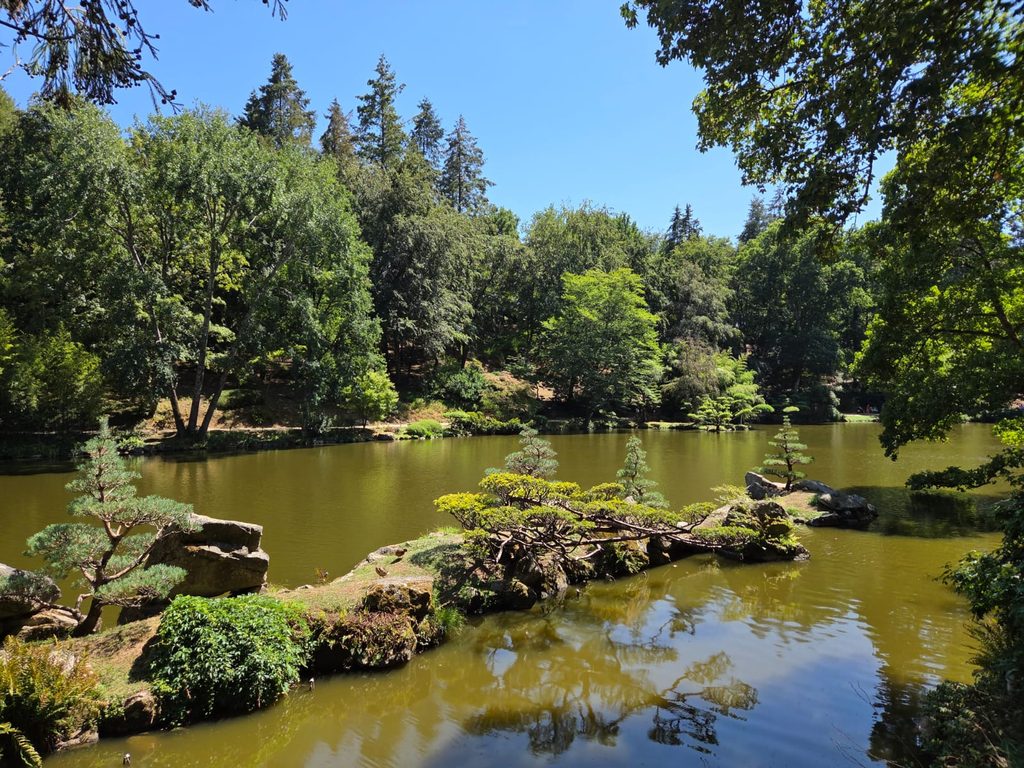
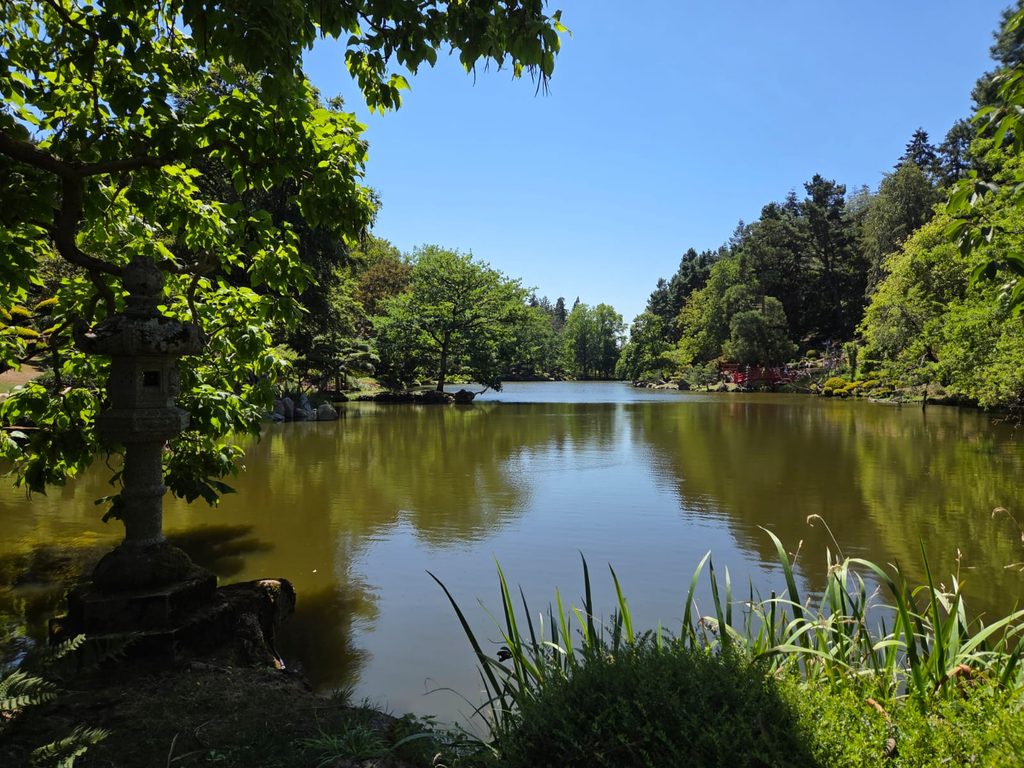
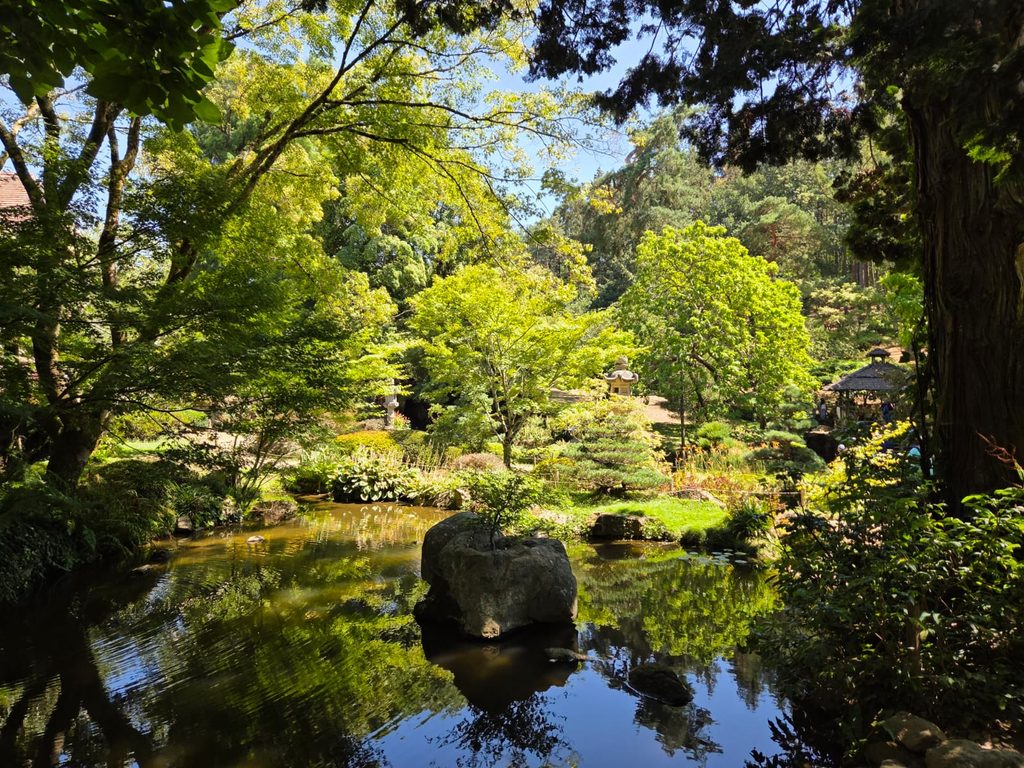
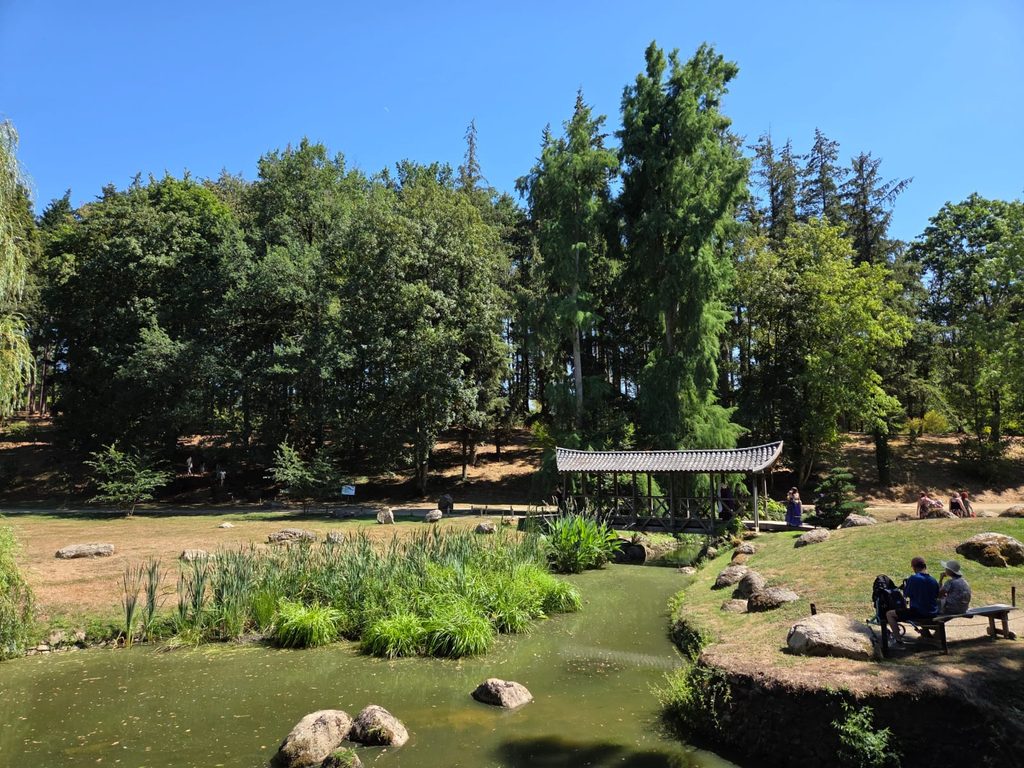
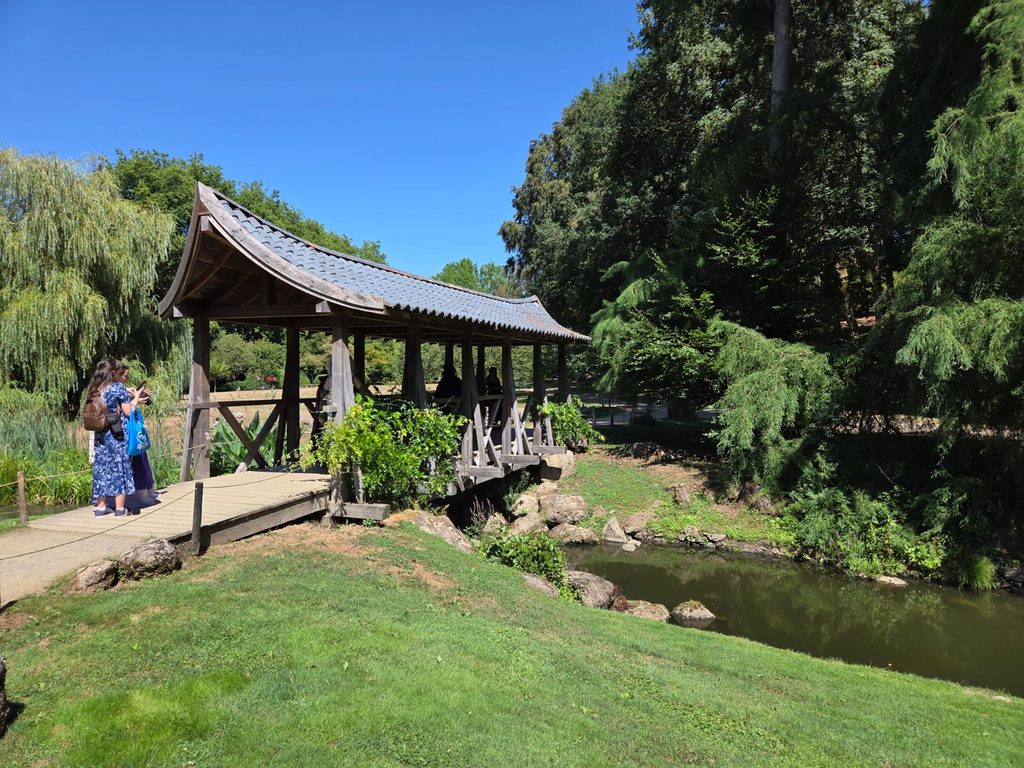
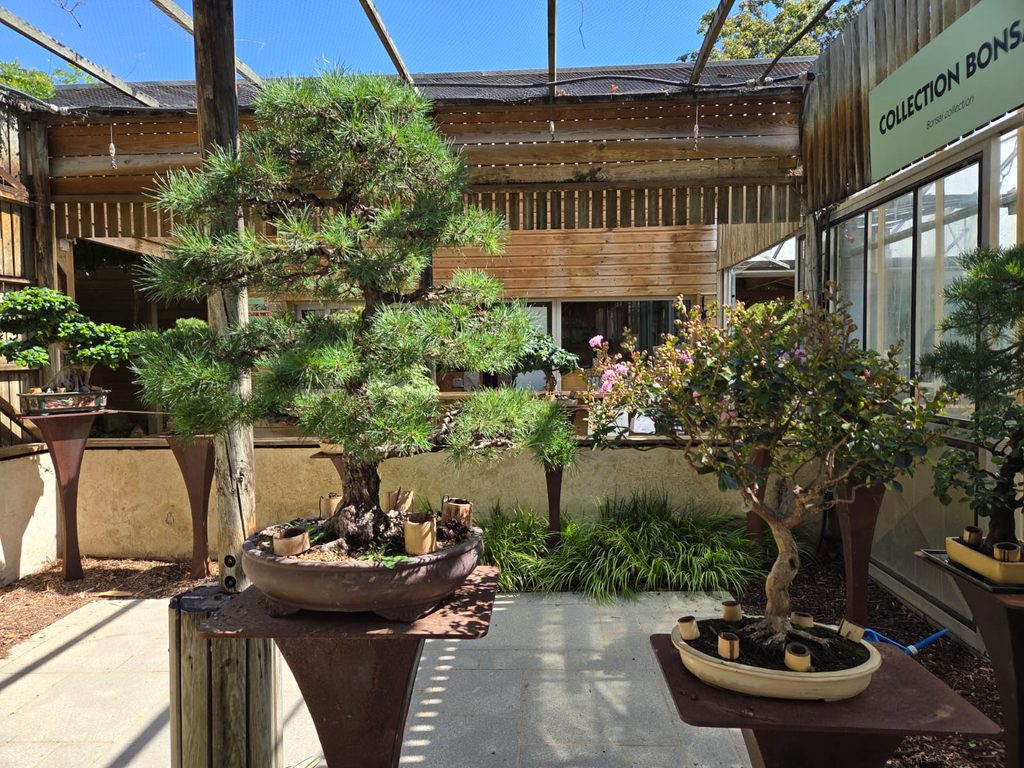
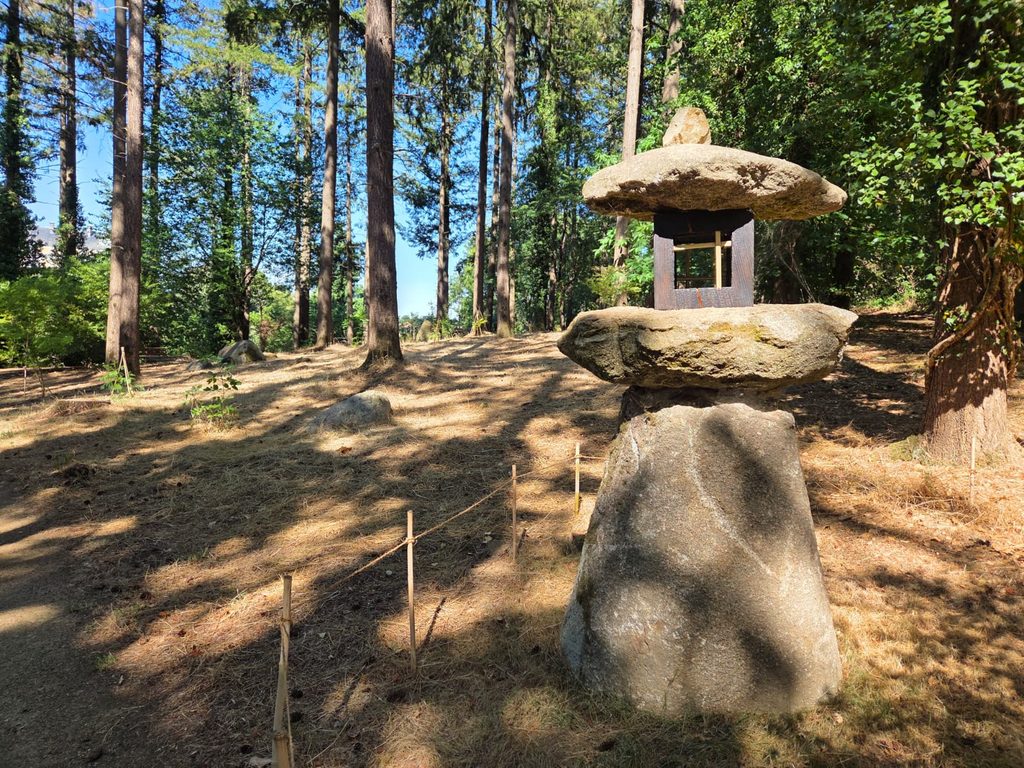
As for the Parc Oriental, it opened its doors as a public garden in 1985. Today it’s the largest Japanese garden in Europe, and in 1987 was deemed by three experts in such things as being the closest match on the continent to the traditional Edo style of garden. Open from mid-March to mid-November, visitors can see about 300 plant species, water features, a bridge, and a pagoda. There are collections of rhododendrons, camellias, Japanese maples, and bonsai. And, as we are about to discover, there are special events, as well.
Kamiplay at the Parc Oriental de Maulévrier
“‘Kami’ refers to the divine spirit that inhabits the hill of meditations. Kamis are also very present in manga culture. ‘Play’ refers to the interpretation: the principle of cosplay is to dress up and interpret one’s favorite character. The objectives of this event are to introduce the Park to an unusual audience and to bring together cosplayers, photographers and visitors in the largest Japanese garden in Europe.”
https://www.parc-oriental.com/en/events/kamiplay-2/
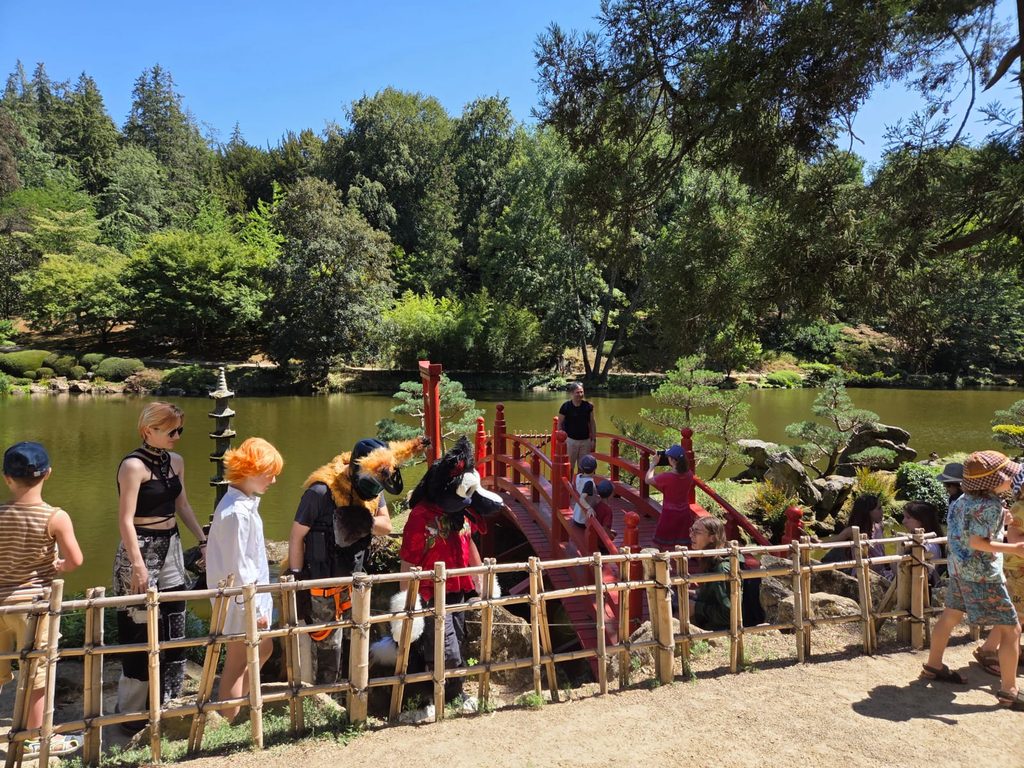
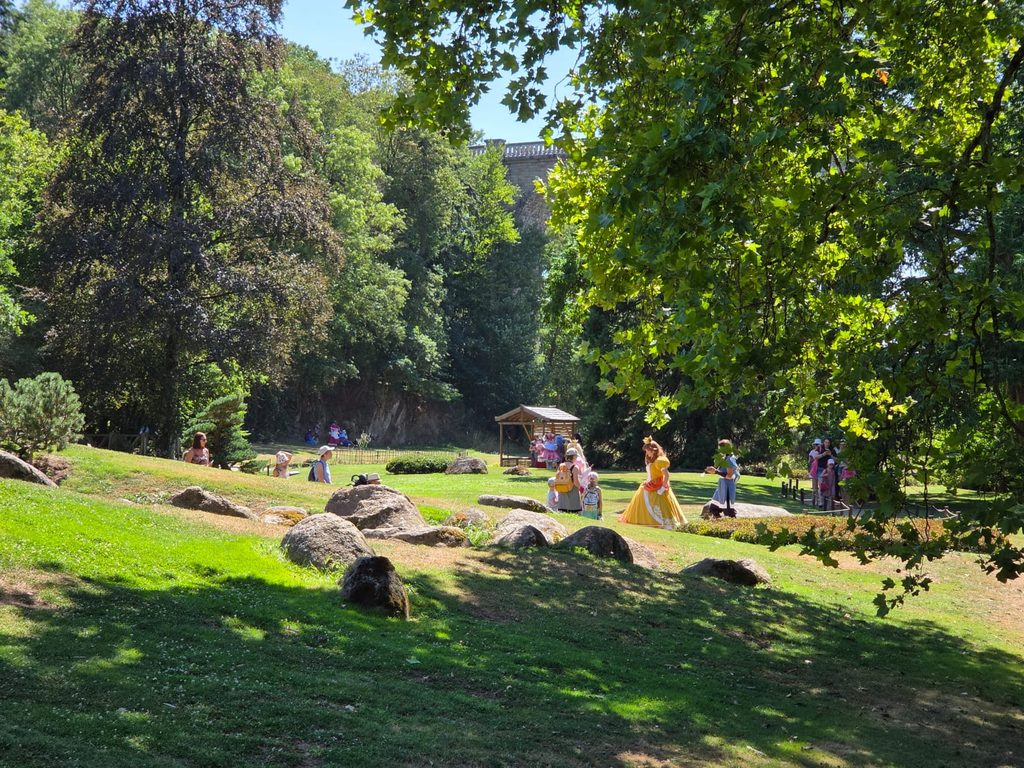
This was not by design, but our weekend in France happened to be the weekend of the Parc Oriental’s Kamiplay event. The description above tells you what it’s all about – essentially a day where cosplay is encouraged, and cosplayers and photographers make the most of the setting to take unique photographs.
I didn’t know quite what to expect from all this, but in the end it just made for an additional point of interest rather than taking anything away from the garden itself. There were plenty of cosplayers, and photographers lugging equipment around in trolleys. But likewise there were a lot of non-cosplaying visitors such as ourselves. The garden is a large one, so there was room for all. And younger visitors certainly seemed to enjoy making the acquaintance of some of the cosplayers.
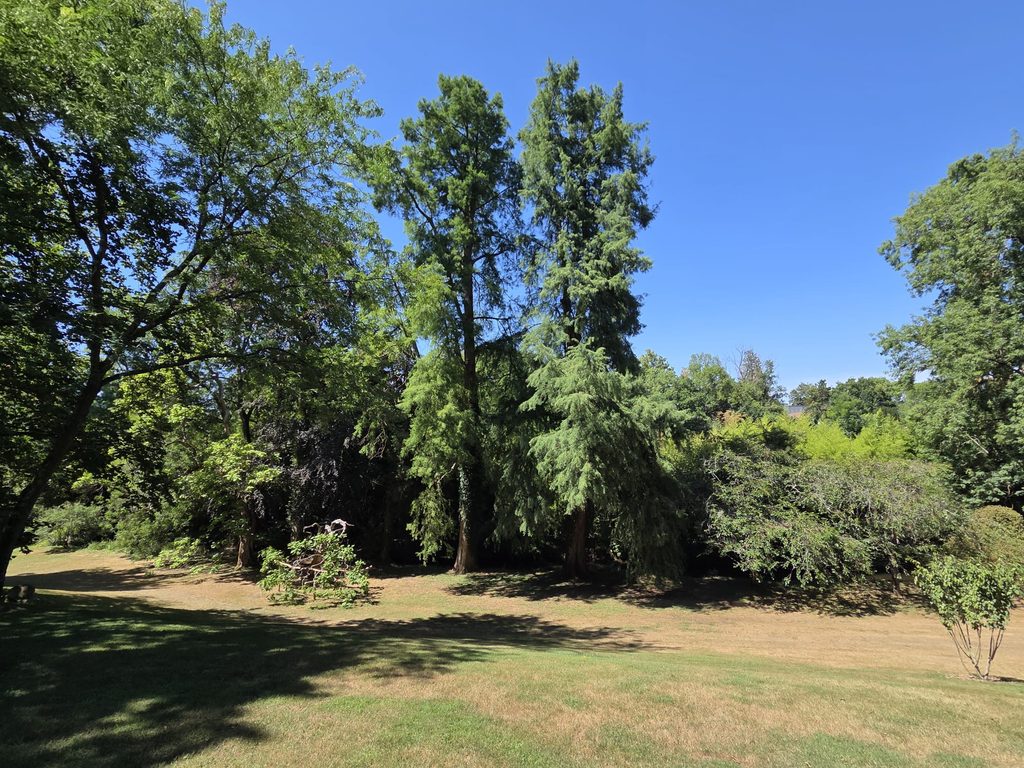
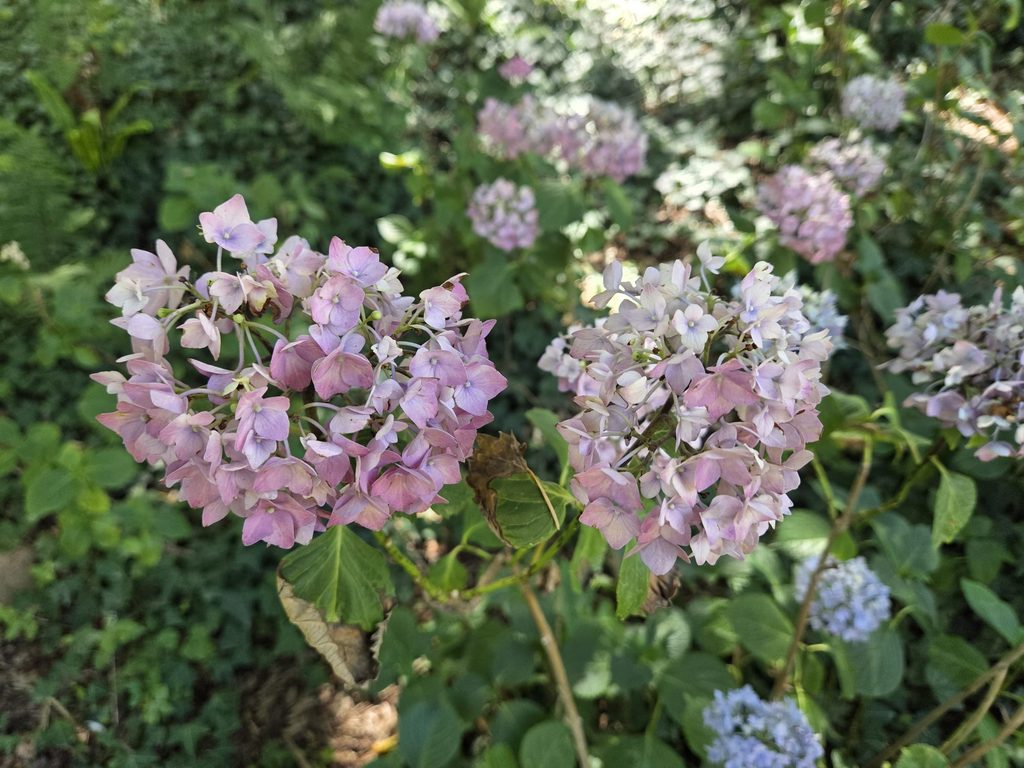
As we walked around exploring the garden, we did our best not to intrude on the photo shoots. We still found we were able to get up close to all the unique features of the Parc Oriental. And in terms of vegetation, mid-July was not the best of times to visit, anyway. About the only thing that was flowering were the hydrangeas, and those a little pitifully. Like all gardens of this type, the Parc Oriental must now be grappling with the impacts of the Climate Emergency.
Final Thoughts on le Parc Oriental de Maulévrier
Despite the garden being busy, and despite the added colour and bustle of Kamiplay, I very much enjoyed le Parc Oriental de Maulévrier. The transition of the garden from private to public is an interesting one, as is the afterlife of the sections of the original property. The story of a garden neglected and then restored has a little magic to it, like The Secret Garden. And, even if summer is a little underwhelming botanically, the garden is still a lovely and peaceful oasis.
I wonder if these sorts of places are rarer in France than they are in the UK? In the UK, preservation of a garden has long been sufficient reason for a property to enter the National Trust. And this gives a certain uniformity to the management of restoration, protection and public access. There isn’t an equivalent of the National Trust in France. And so, whenever I’ve visited a garden there in the last couple of years, it’s had this sort of story of needing to revive something abandoned, rather than maintaining something. Not that I’ve visited gardens that often in France. I’m mainly thinking about the similarities between this and le Potager des Princes in Chantilly. Interesting to compare the different approaches to heritage in different countries, anyway.
In any event, I’m happy that I keep coming back to this part of France and finding new places to visit. I have such a desire to see as much as I can of the world that I often race through places, seeing a few highlights but not getting under their skin. Nantes is an example of that, actually. But there are a few places I keep returning to, that I have the luxury of seeing in different seasons and different aspects. Long may it last.
Trending
If you see this after your page is loaded completely, leafletJS files are missing.