
Edgar A. Poe’s Last Call – Camden Fringe / Camden People’s Theatre, London
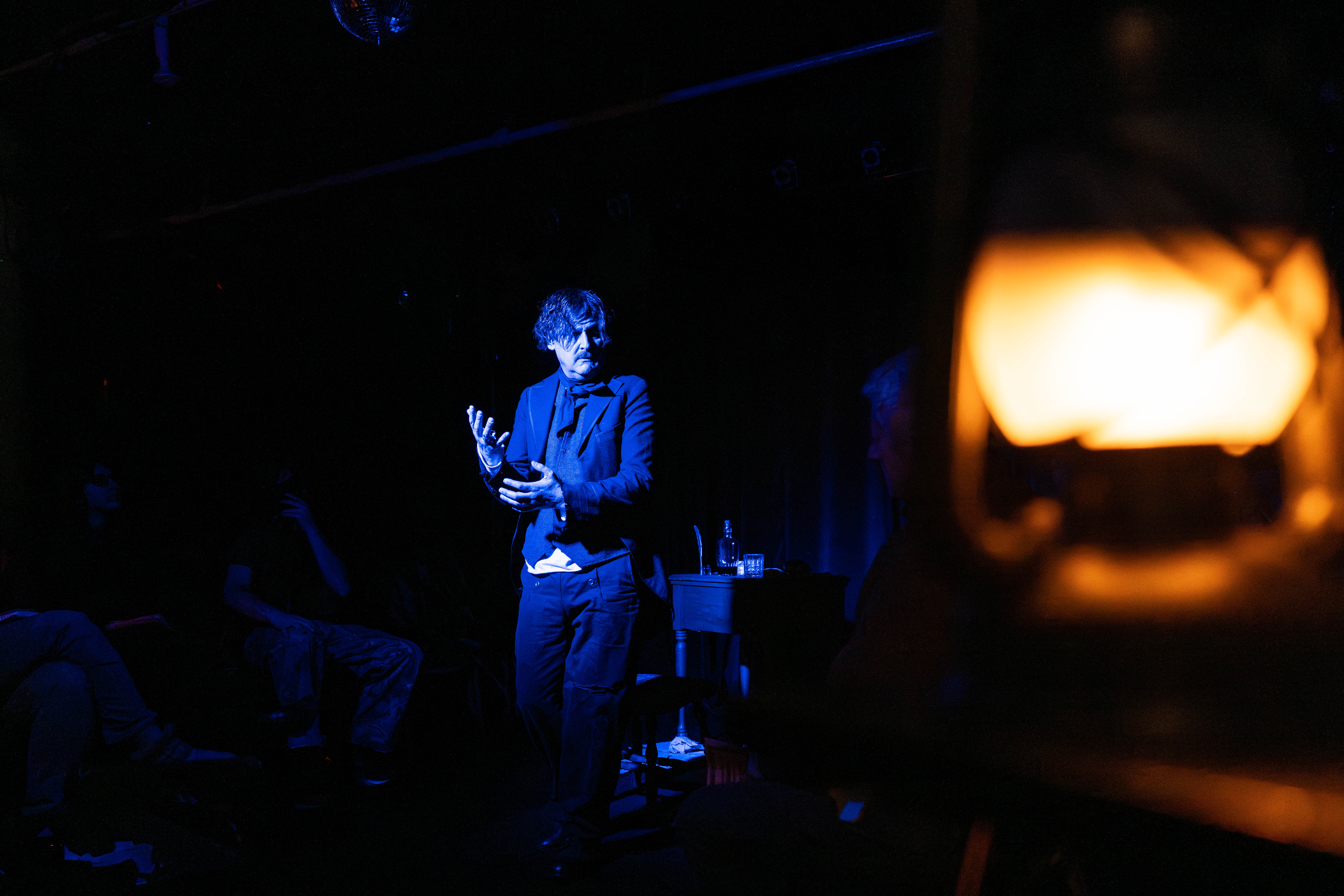
A speculative insight into the mind of one of America’s most famous writers in Edgar A. Poe’s Last Call, written and performed by Scott Robinson.
Caution: spoilers ahead. But spoilers for real events in the life of Edgar Allen Poe – can you have spoilers for things that happened more than 150 years ago?
Poe’s Final Hour
I have a fondness for Edgar Allen Poe. Firstly I rather like horror as a genre – the creeping dread kind rather than the gory kind. But it also goes back to my childhood. We had sessions of Uninterrupted Sustained Silent Reading (USSR – great acronym) once or twice a week. And for some reason, amongst the book choices were illustrated versions of Poe’s tales. A strange choice for primary school children, but I have distinct memories of the thrill of reading The Fall of the House of Usher and The Masque of the Red Death. Catch them young, I guess!
Anyway, this affinity for Poe is partly what attracted me to Edgar A. Poe’s Last Call as my first pick of this year’s Camden Fringe. Written and performed by Scott Robinson, the work looks at the final hour of Poe’s life. And a fairly eventful life it was, as we quickly learn. His mother Eliza, an actress, died at only 24, his father already having abandoned the family. He entered the army under an assumed name in 1827, but was later discharged. He married his cousin Virginia Clemm in 1836, when he was 27 and she was 13. “Don’t judge me” says our Poe. But I did. Virginia also died aged 24, of tuberculosis.
Poe found success (literary if not financial) as a writer. We know him for his work in the horror/Gothic/Romantic space, but he also influenced the development of detective fiction and science fiction. The reason he didn’t make much money from his writing was that there was no international system for copyright back then, so publications were free to take his work without remuneration. Poe, and Charles Dickens, campaigned to rectify this.
In 1849, Poe was on the verge of a marriage to a wealthy widow, Sarah Elmira Shelton. Through some series of unfortunate decisions, surely influenced by his alcoholism, he was instead found semi-conscious, in great distress, and in someone else’s clothes, in Baltimore on 3 October. He died on 7 October, and his exact cause of death remains unclear.

Quoth the Raven…
Robinson thus has rich source material for his theatrical work imagining Poe’s thoughts over his last hour of life. This Camden Fringe run is Edgar A. Poe’s Last Call’s UK debut, after workshop productions in the US. I suspect that some of the more interesting choices come from this workshopping. I loved, for instance, the way the play begins outside the theatre. Poe stepping in off the street, ordering a drink at the bar and chatting with fellow patrons establishes both his character and a rapport with the audience. I couldn’t quite hear everything, and was a little distracted by the eclipse outside, but I loved it.
Once in the theatre, Robinson makes use of era-appropriate costume and props, and well-crafted sound design (Allison Casey), to conjure up Poe’s world. Some additional characters, including ones from Poe’s stories, are voiced offstage as recordings. The timing isn’t always perfect here, but it’s interesting to think about how Poe might have thought about some of those characters, and his responsibility for their fates.
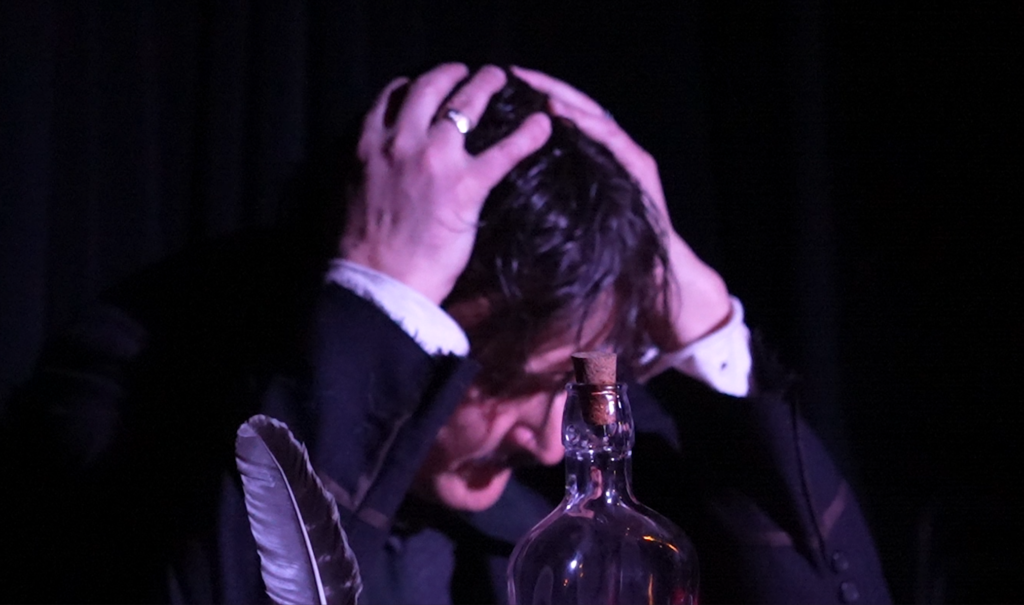
The highlight of the hour-long show is a dramatic reading of The Raven, Poe’s famous 1845 poem. Robinson really brings the work to life, lifting it out of the rhymes and repetitions that can be a bit heavy in the wrong hands. All of the knowledge of Poe’s life and loves that we have gained in the expository section of the play enrich our understanding of the text. I can’t think of a better way to hear it performed.
And so my Camden Fringe exploration for 2026 is off to a strong start. For those who don’t attend the Edinburgh Fringe it’s a great alternative, with hundreds of shows across 39 venues in the month of August. I love that productions travel from far afield so that we as audiences can, for instance, get an insight into the inner workings of one of America’s most influential 19th century writers.
Salterton Arts Review’s rating: 4/5
Edgar A. Poe’s Last Call on until 15 August 2026. More info and tickets here.
Trending
If you see this after your page is loaded completely, leafletJS files are missing.