Flare-Up – Goldsmiths CCA, London
In my second trip to the Goldsmiths Centre for Contemporary Art we see Flare-Up, a group exhibition of artists whose work “engages with the poetics and aesthetics of illness, disability, neurodivergence and Deafness”.
Flare-Up
Once more, I have had good intentions that have not come to pass. When I first came to Goldsmiths CCA in late 2024 I said I hoped to keep coming back, given that this is my closest art gallery. And yet it’s been a good 18 months. Oh well, no point in regretting the past – let’s make up for lost time now!
On my last visit, Goldsmiths CCA was hosting a monographic exhibition by Congolese artist Sammy Baloji. This time around I was here to see a group show, Flare-Up. The word ‘flare’ is used in multiple senses here – a flare of light, energy or sound, a warning signal – but primarily in reference to illness, where a flare-up is an intensification of symptoms of a chronic condition. There’s one more term I want to discuss with you to set the scene, and that is the word ‘crip’. It features heavily in some of the artworks and in the materials and descriptions by curators Natasha Hoare and Mariana Lemos. In fact, I think it’s best if I quote directly here:
“In this exhibition, crip is used to hold diverse and intersecting experiences of illness and disability, not as a fixed identity, but as a shifting framework for thinking and making. Crip is a reclaimed political, cultural and aesthetic term used within disability communities, activism and the arts. Like the word queer, it has been reappropriated to generate pride, solidarity and collective identity.”
Flare-Up Exhibition Guide, Goldsmiths CCA, 2026. Exhibition curated by Natasha Hoare and Mariana Lemos.
So there we have the conceptual basis for the exhibition – artists whose work touches on illness and disability, but from a perspective that understands disability as a societal construct and critiques normative thinking. Let us proceed onwards and see what that entails.
Art Underground (Literally)
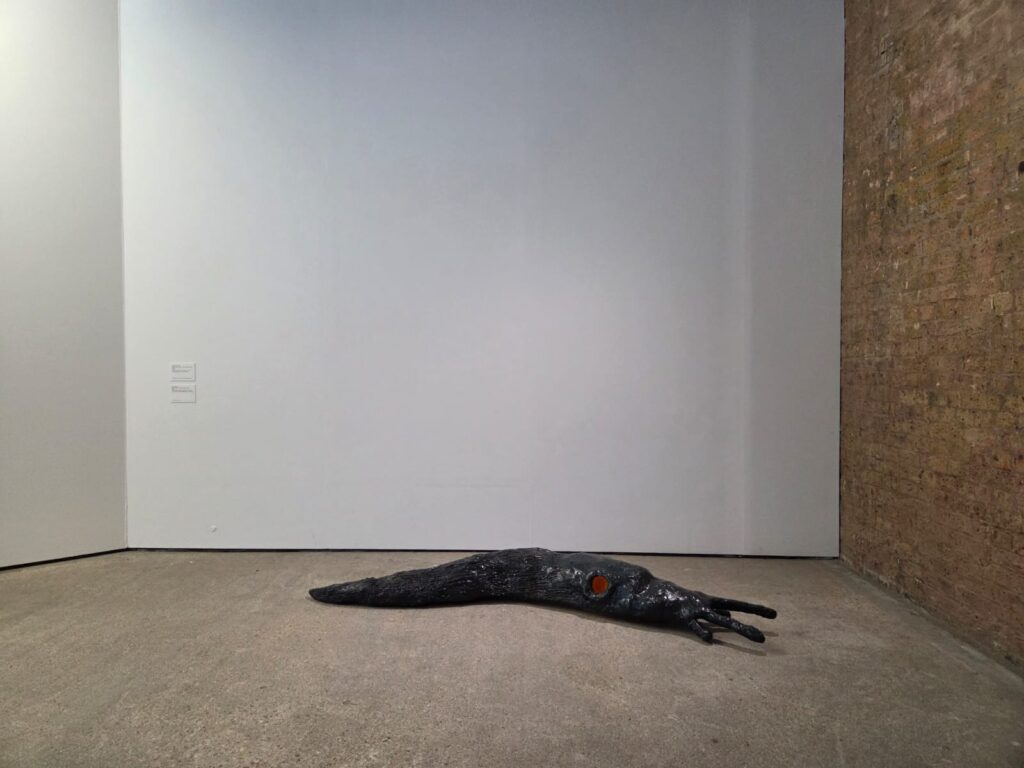
Was I a little surprised that the first artwork I encountered from this exhibition, hanging above the reception desk, was one of Abi Palmer’s giant slugs? Perhaps. But Chic Slug (2024) makes sense once you’ve seen more of the exhibition. It transforms and elevates something abject (definitely to me, I can’t bear slugs or snails) into something to be celebrated. There’s another one downstairs, Arion After (2024), and together they bring a sense of slowness, slickness, and fluidity. The wide-ranging interpretations of the central theme are already apparent.
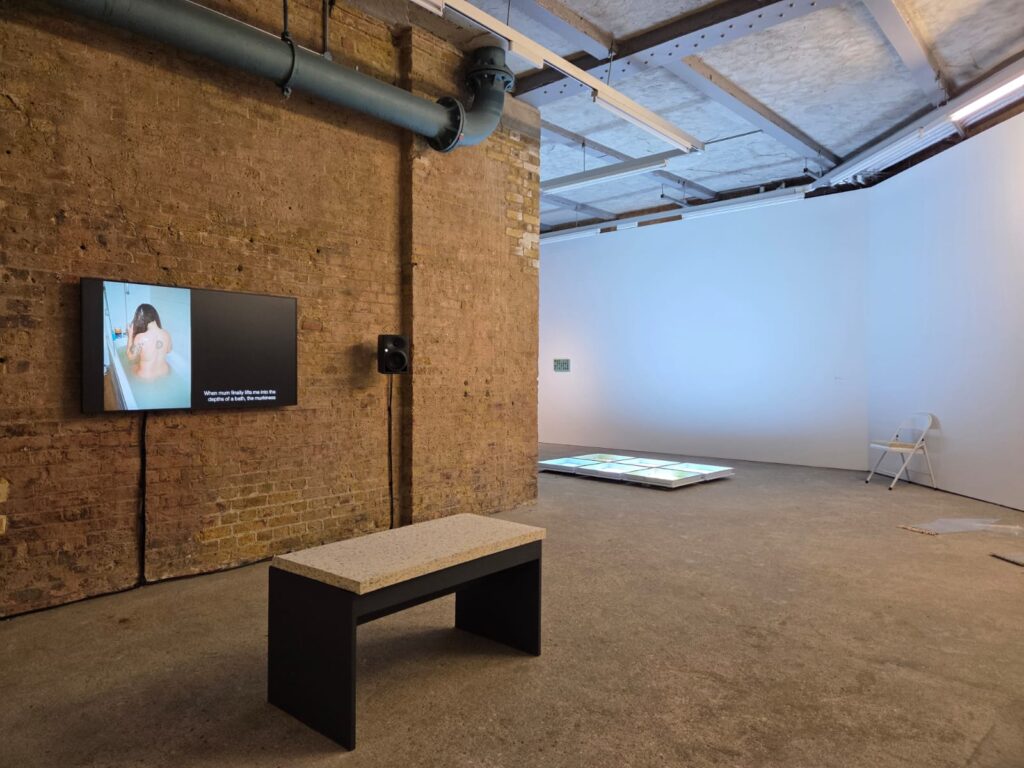
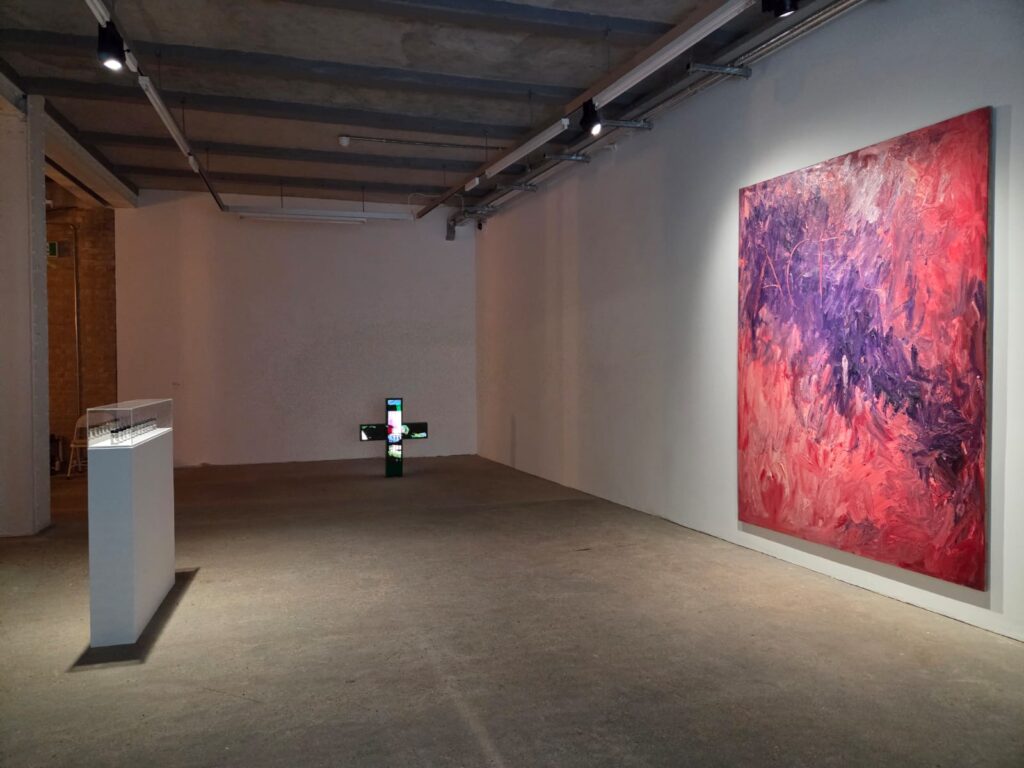
And it’s downstairs we head, after grabbing an exhibition guide. The exhibition doesn’t have one route to follow – that would be too authoritative and hierarchical for such a topic. But I find it easiest to follow the texts in order, so that’s what I do. They are also available as audio descriptions. This is one of many accessibility measures, alongside lift access to all floors, portable stools, and comfortable seating. I would expect no less, but it’s nice to see. And, given that I have acquired a disability myself in the last couple of years, a chance to sit down while I read and look at the artworks is welcome.
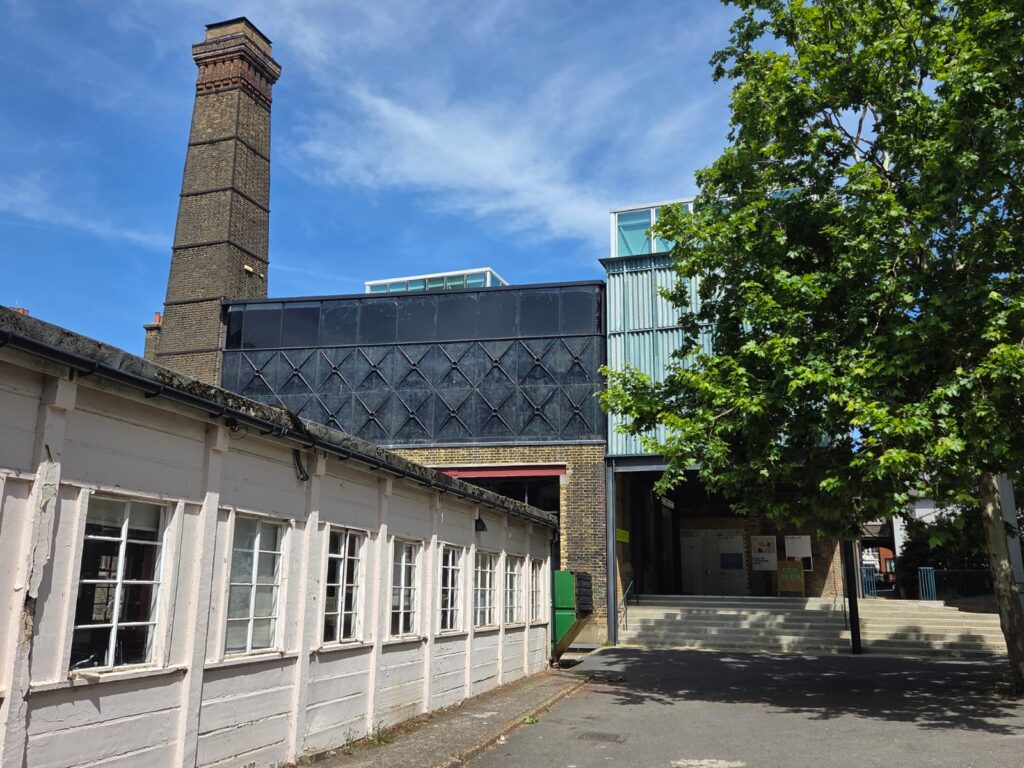
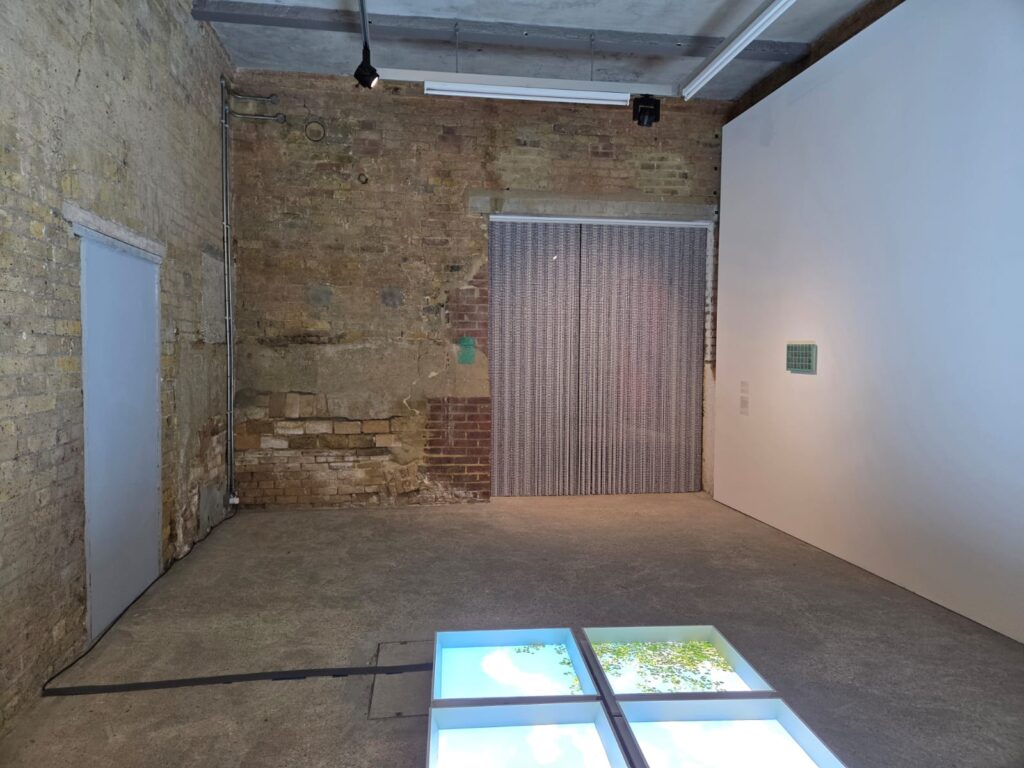
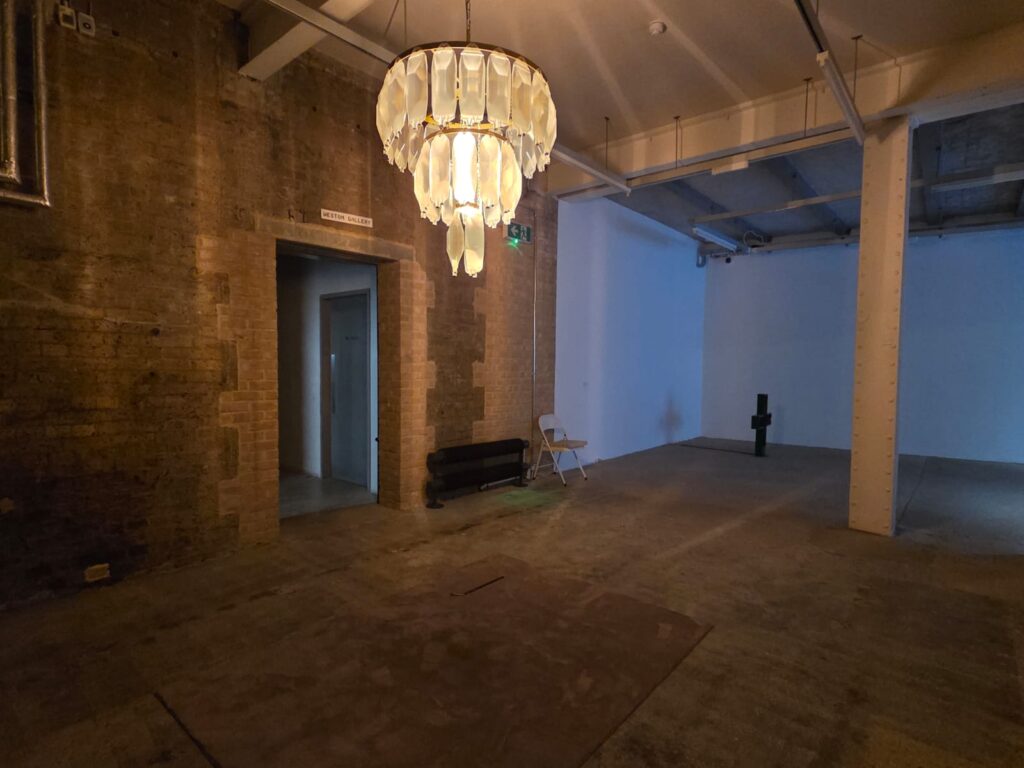
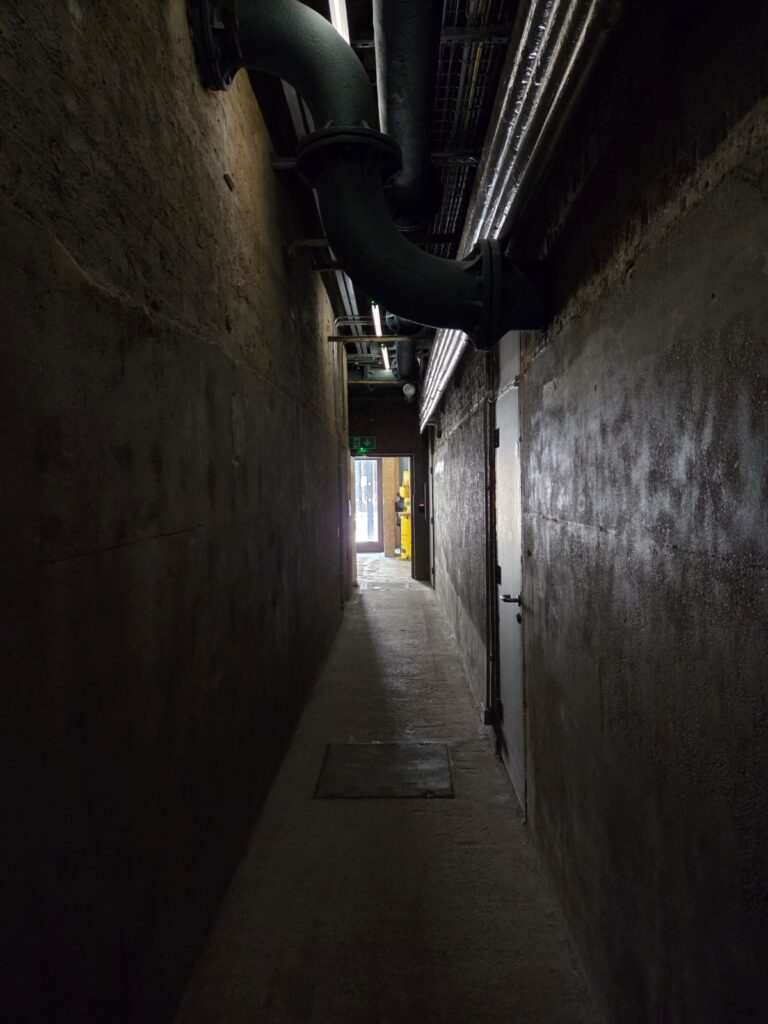
The measures I’ve described show that historic buildings are no excuse not to put accessibility at the forefront. If a Grade II-listed former boiler house and laundry for public baths can do it, surely anyone can? The varied surfaces and industrial textures are once again a great backdrop for the art. In the downstairs gallery we find artworks from the 1990s to now, familiar names like Derek Jarman, and lots of new names, too.
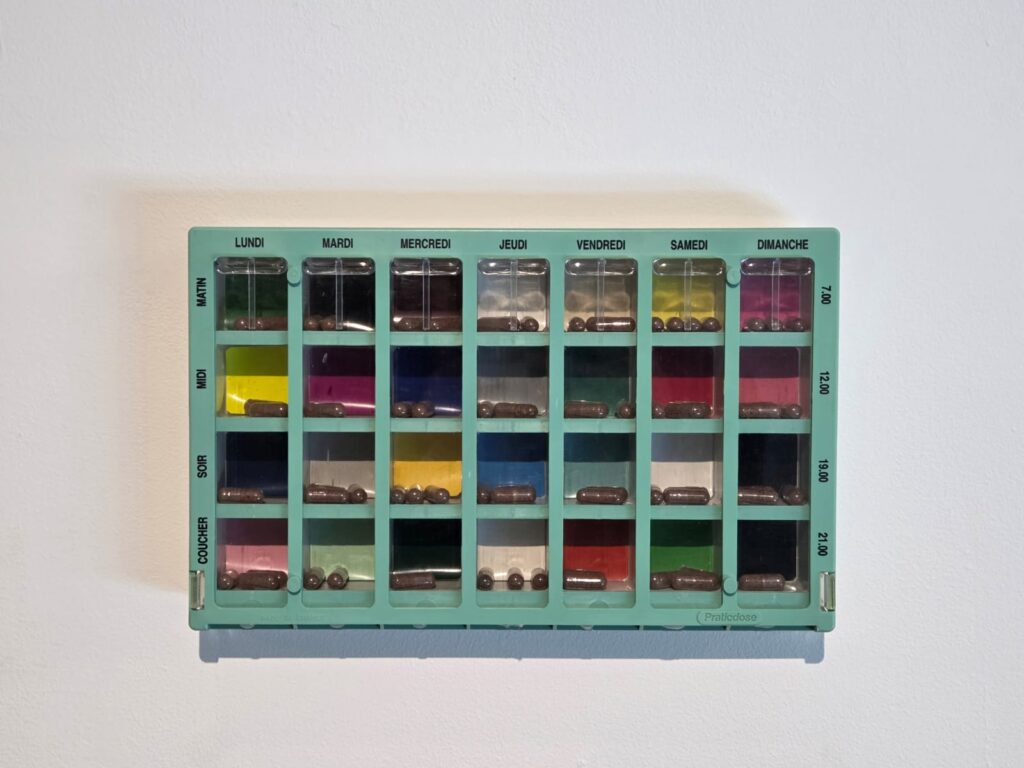
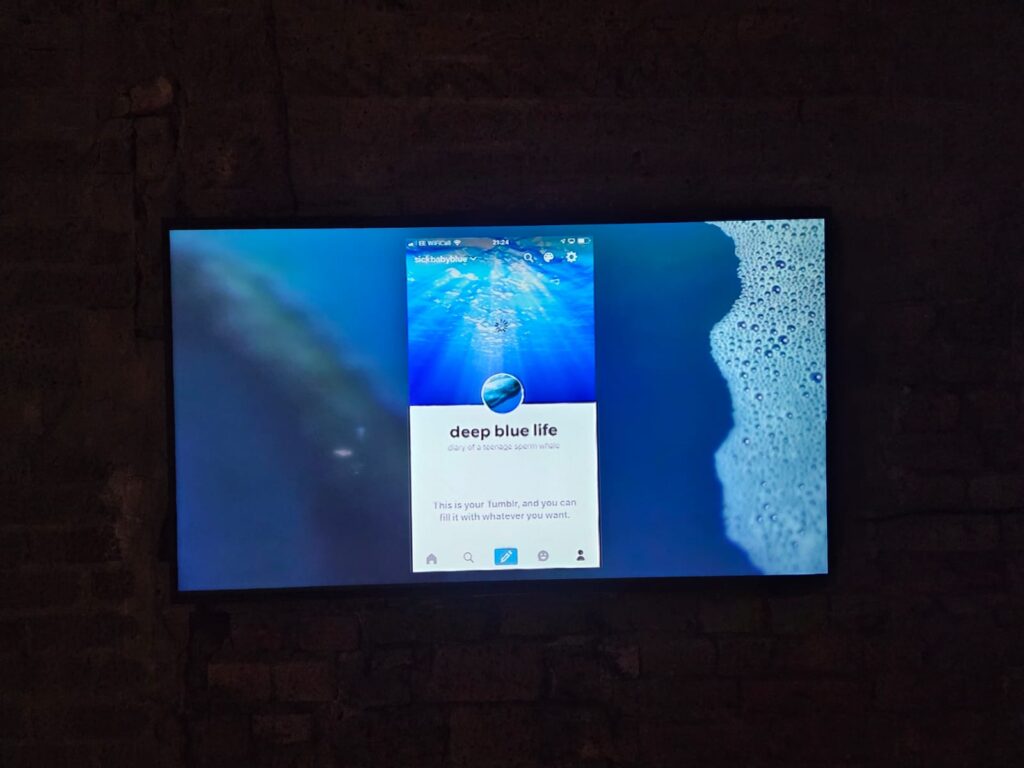
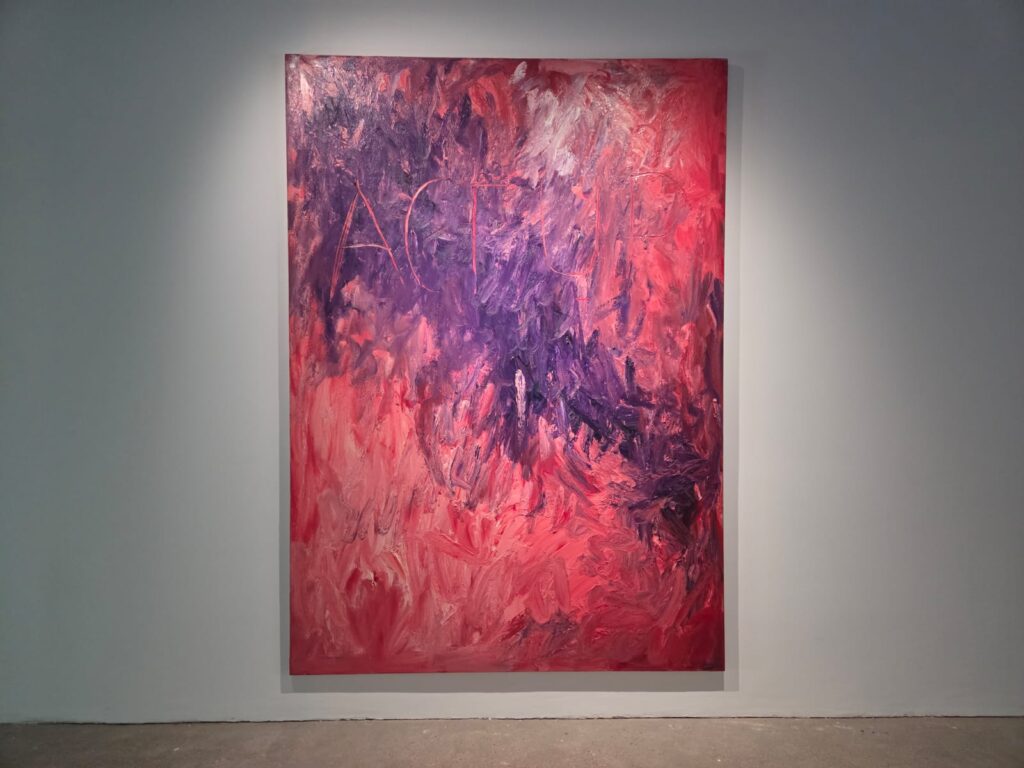
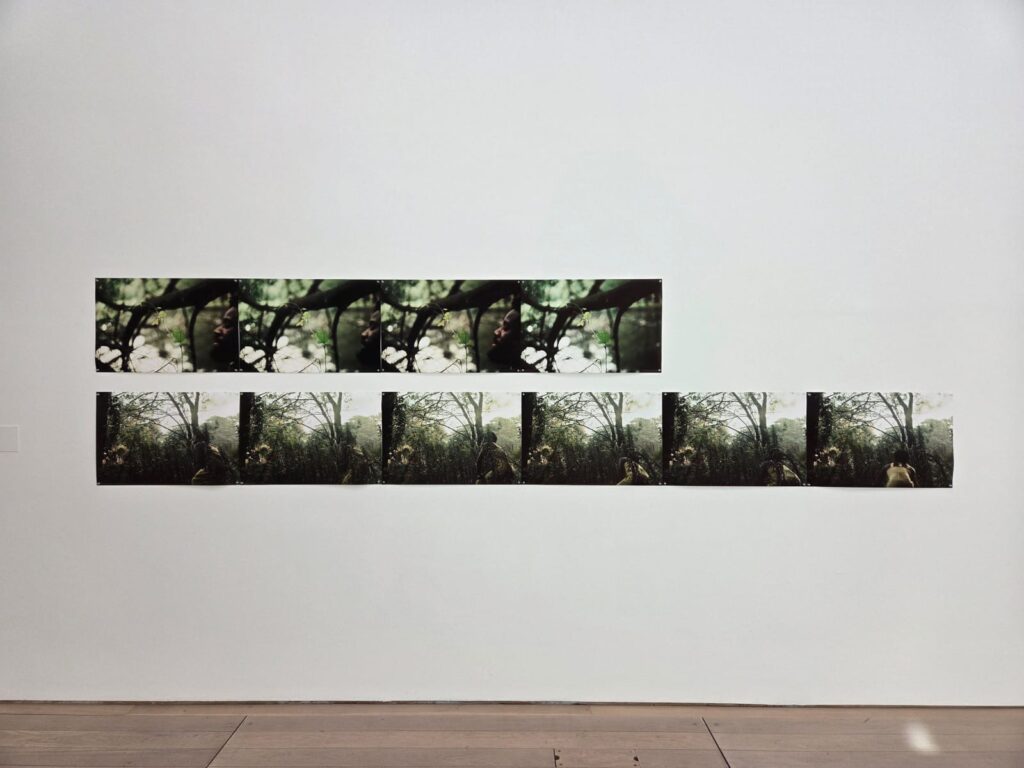
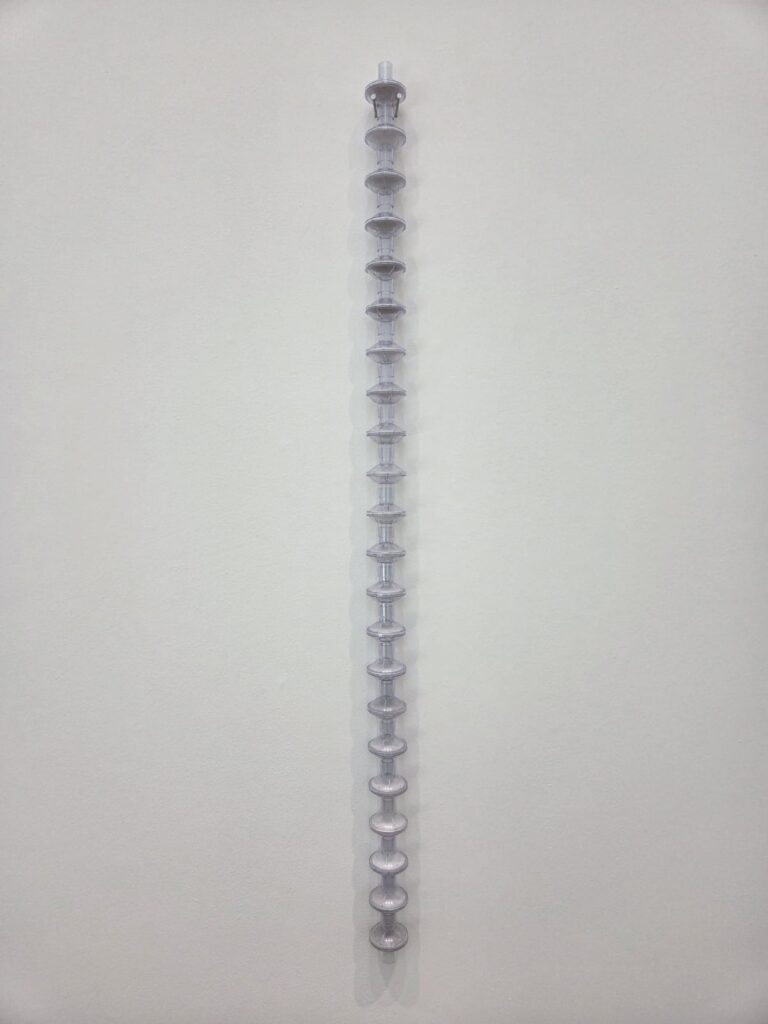
The media vary widely. Jarman’s is a painting, Act Up (1992), which references the AIDS activist organisation of the same name. He’s also referenced in Benoît Piéron’s Pillbox of Dungeness Seed Bombs (2018), which organises seeds from Jarman’s garden into capsules and a pillbox. Lizzy Rose’s Sick, blue sea (2018) is curious – a sperm whale’s Tumblr blog. At the same time it explores environmental concerns, and the importance of virtual connection for disabled and chronically ill people. A last artwork I’d like to point out from the gallery’s lower levels is Avril Corroon’s Sublet Glory (2026) which examines substandard housing and landlord neglect. It takes the form of a chandelier of IV bags filled with water from a dehumidifier, slowly dripping onto a carpet below. The artist draws an indelible line between health, poverty, and housing.
A Variety of Experiences, Practices and Perspectives
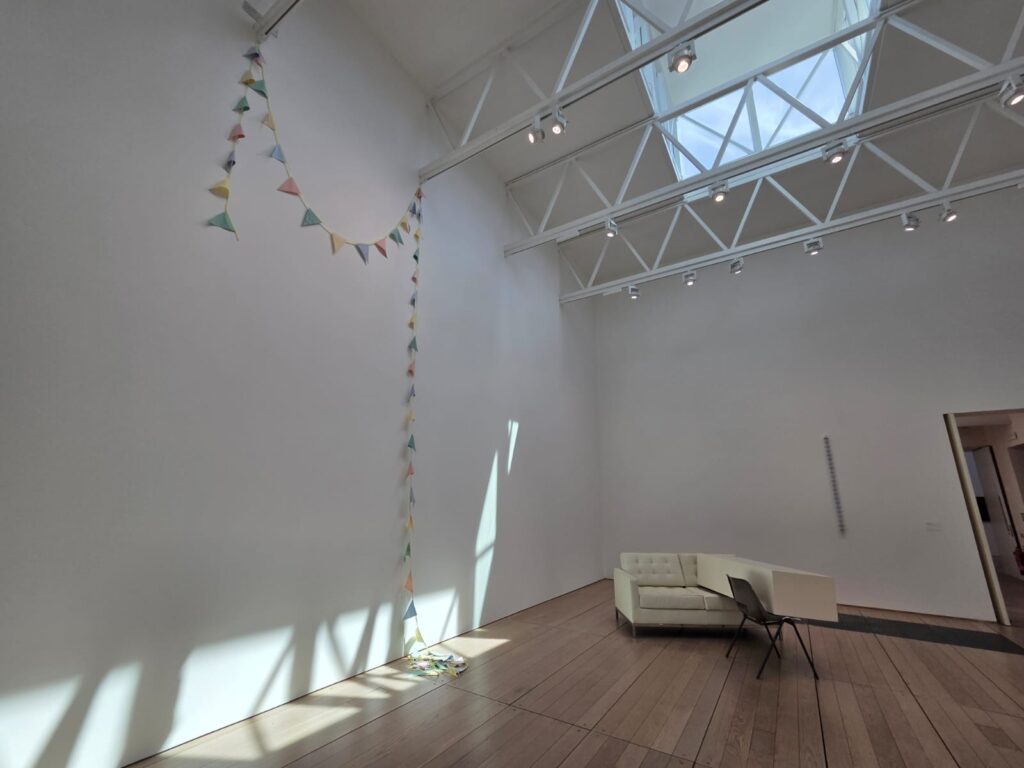
We then head upstairs, where more artists, concepts, and perspectives on illness and disability await us. Piéron is back, first of all, with three sets of bunting made from old hospital sheets. Each is dedicated to someone important to the artist, from friends lost to AIDS to disabled people from history. The soft colours are perhaps a little swamped in this light, airy space. In the same room, I liked Transfer (Ivory) (2011) by Angela de la Cruz. A modernist sofa and plastic chair are connected by a white box. Is it a coffin? A plinth? A stand-in for a disabled person transferring between the two? De la Cruz manages to give a sense of movement and physicality without and human presence.
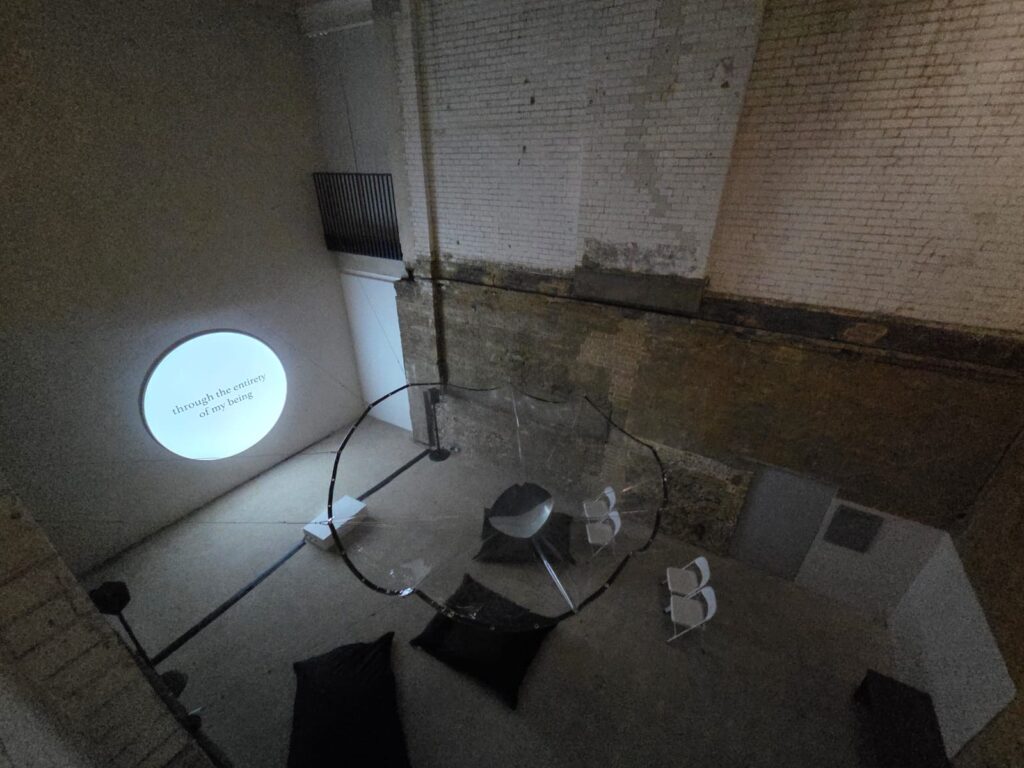
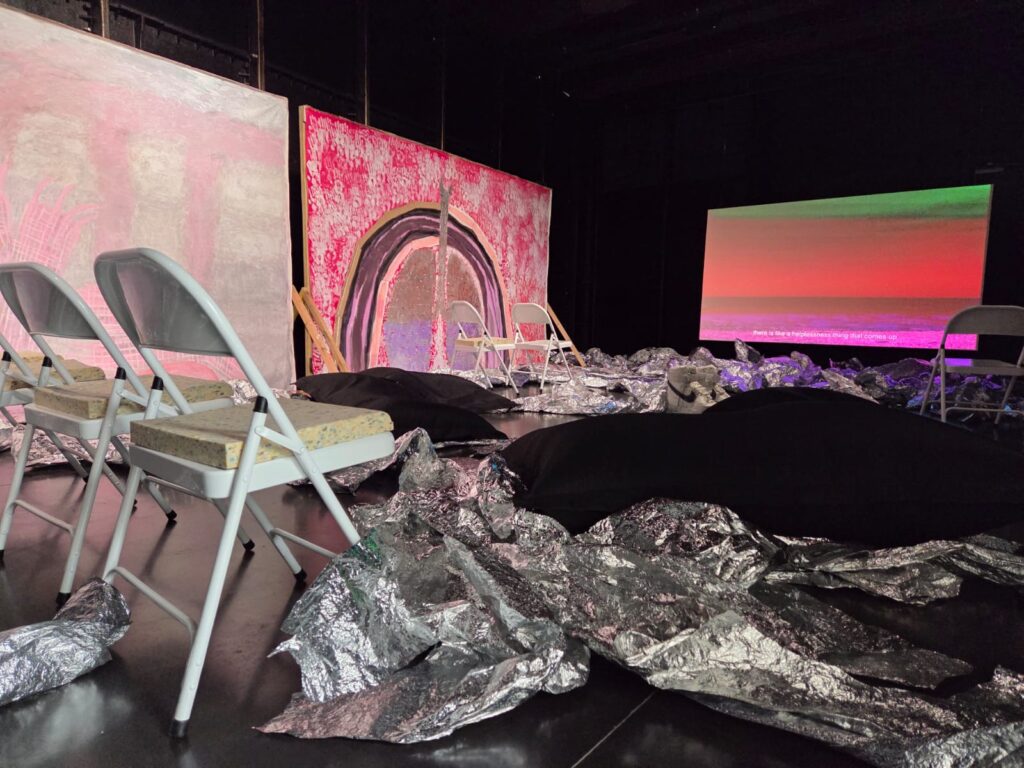
I spent a lot of time in the Tank Gallery. Firstly, I love this space – the most atmospheric of the lot. But The Freestylers’ immersive space also drew me in. It’s very sensory, with crinkly emergency blankets on the floor, a variety of seating, and even shoes to try on. But the think that kept me here was You Are Art (2024). In this film, members of the collective talk about ableism, trauma, and how their participation is a means of survival. If you time your visit right (evenings of 30 June or 15 August), you can see them at one of two live sessions.
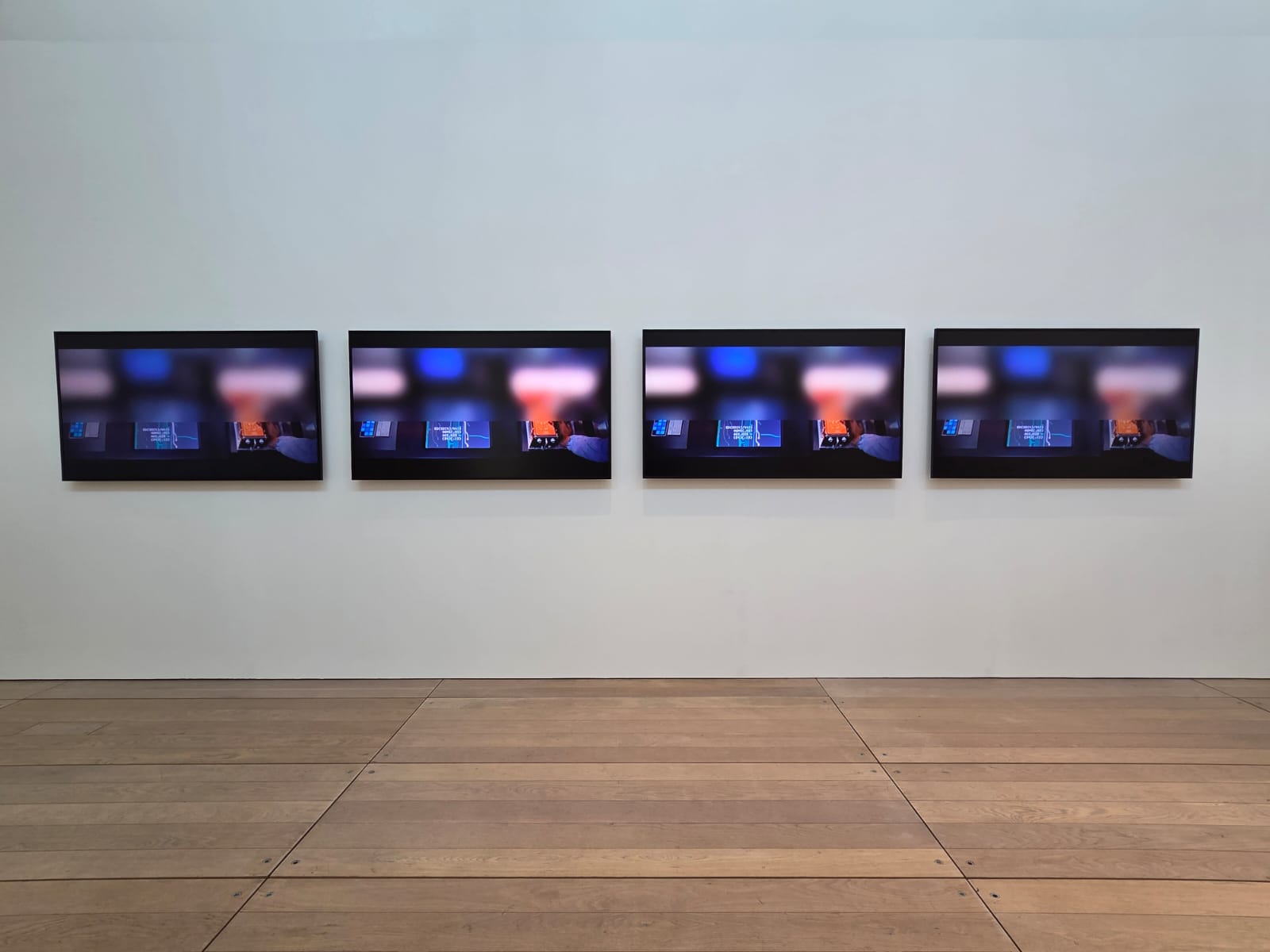
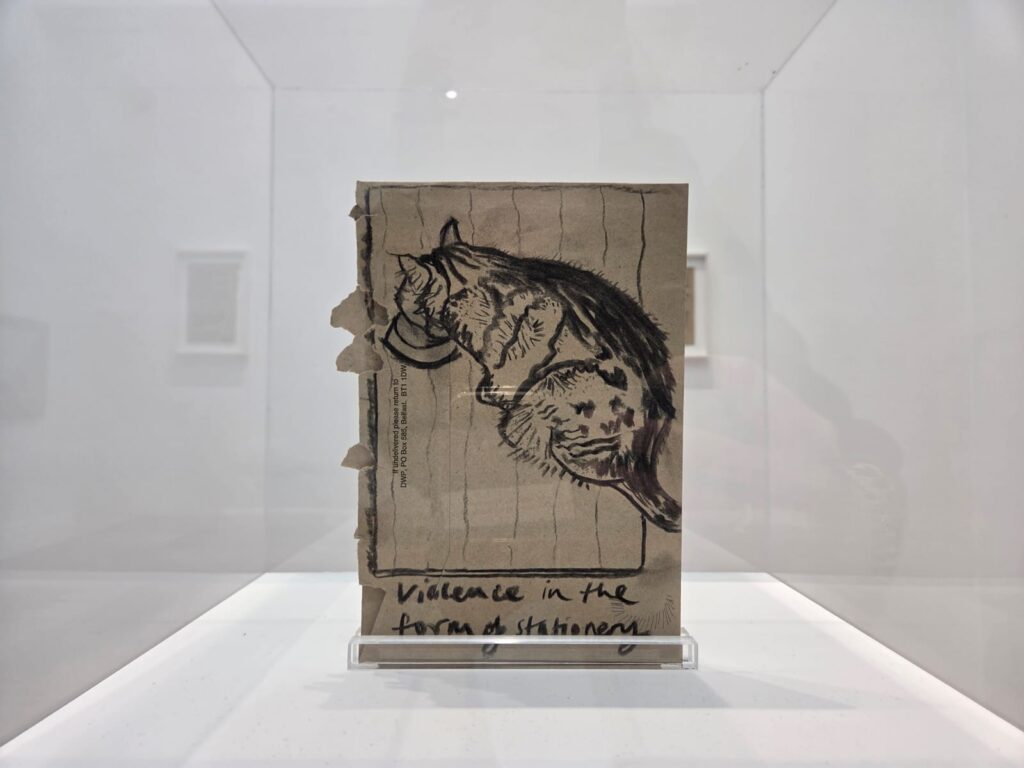
The final room (for me) had a couple more things to share. I liked Bella Milroy’s drawings and texts on repurposed DWP envelopes. By turning them into artworks, Milroy takes back some control from a system rife with institutional violence, which erodes safety and privacy. The four screens of Christine Sun Kim’s Close Readings (2015) show how captions are not neutral or merely functional but a creative process that can create or obstruct meaning.
Our tour of the exhibition is at an end! I enjoyed what I saw – both the exposure to new artists, and the curatorial vision to bring together creatives with such different experiences, practices and perspectives, without trying to tie them all neatly together. This time I mean it – I must come back again soon.
Salterton Arts Review’s rating: 3.5/5
Flare-Up on until 16 August 2026
Trending
If you see this after your page is loaded completely, leafletJS files are missing.