
Currency Exchange – The Gallery of Everything, London
The Gallery of Everything’s latest exhibition, Currency Exchange, encourages us to think about the meaning(s) of physical currency at a time when it is in decline.
Currency Exchange
The Gallery of Everything, like Goldsmiths CCA, is a place I always intend to visit much more frequently than I do. Looking back at previous posts in preparation for writing this one, I was a little astonished that it’s been about two years since I was last here.
But there was something about their latest exhibition, Currency Exchange, which tempted me back. Perhaps it was the number of touchpoints with subjects I’ve previously learned about. Currency Exchange features work by four artists with a vision for their own currencies, medallions, or uses of numismatic imagery. As ever with the Gallery of Everything, their art is what you might call… well, many things,* but I am currently calling spontaneous art.
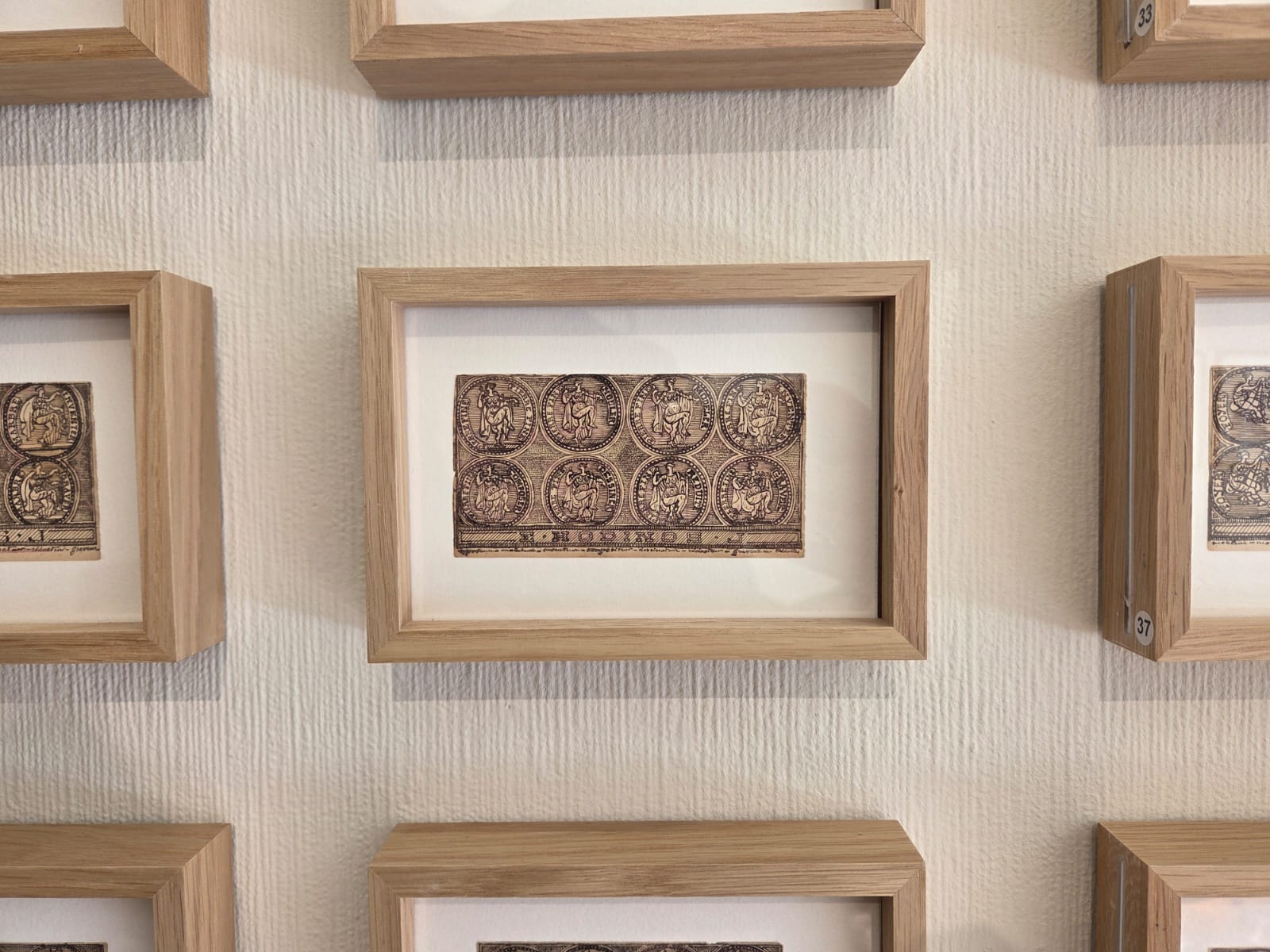
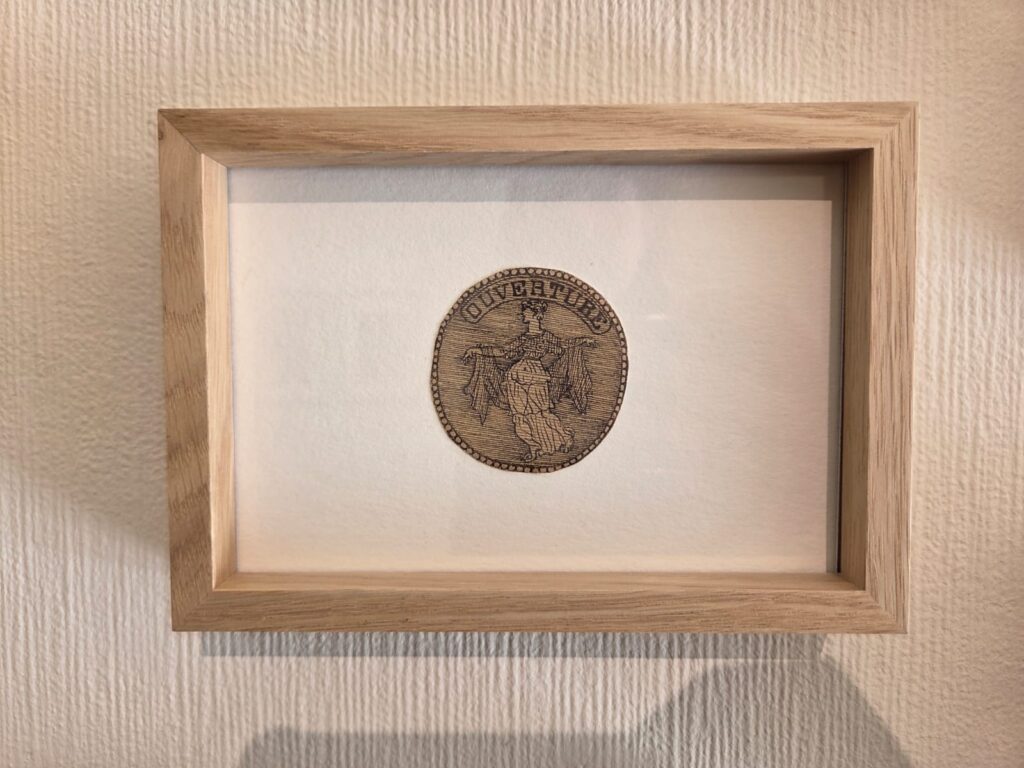
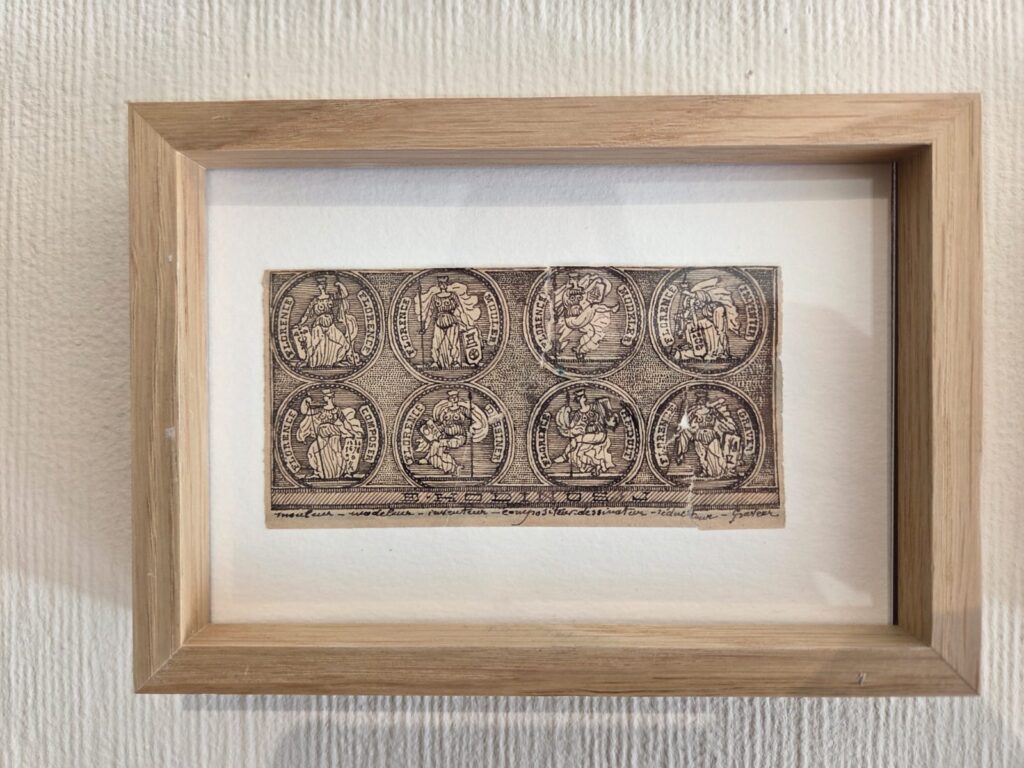
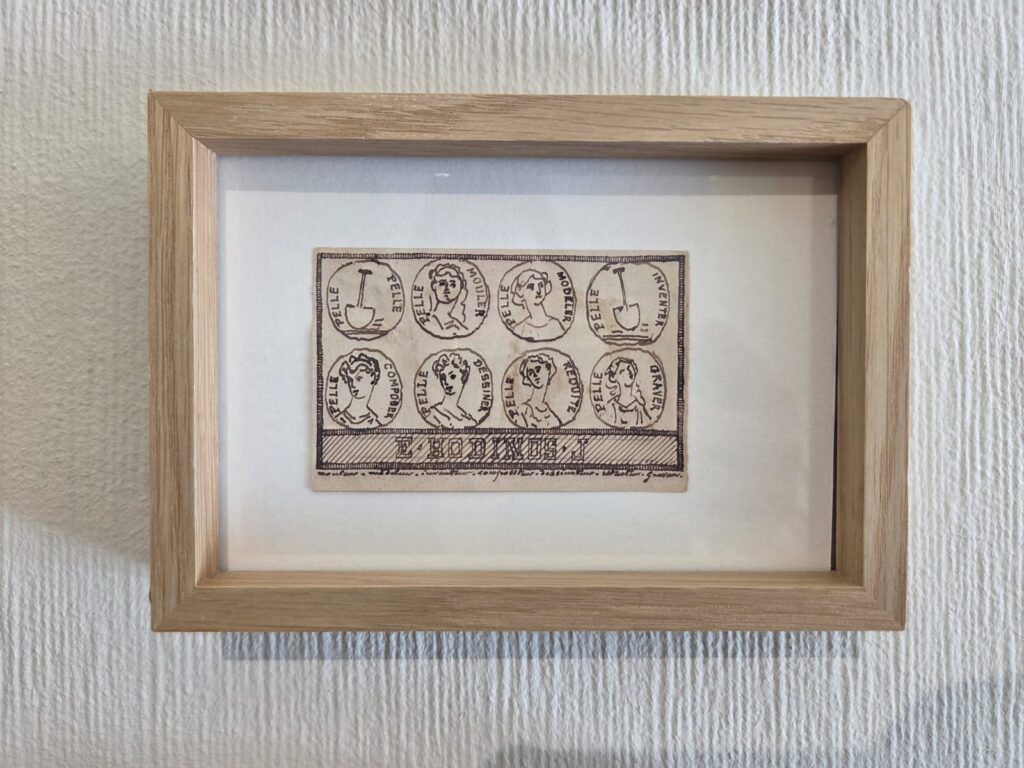
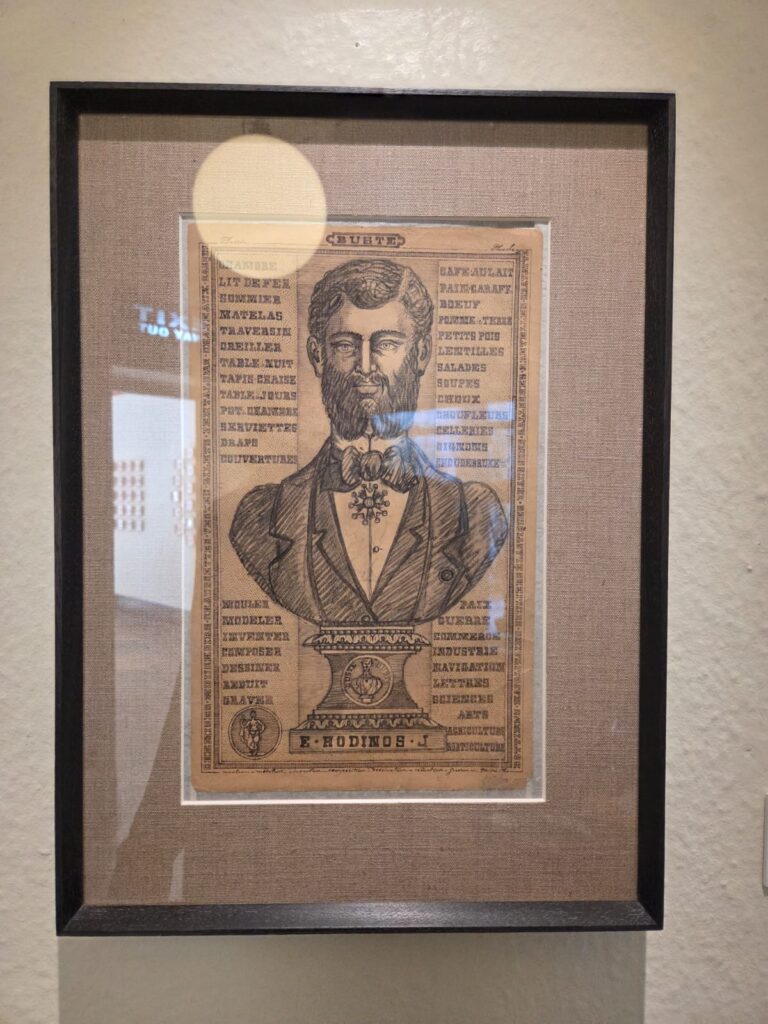
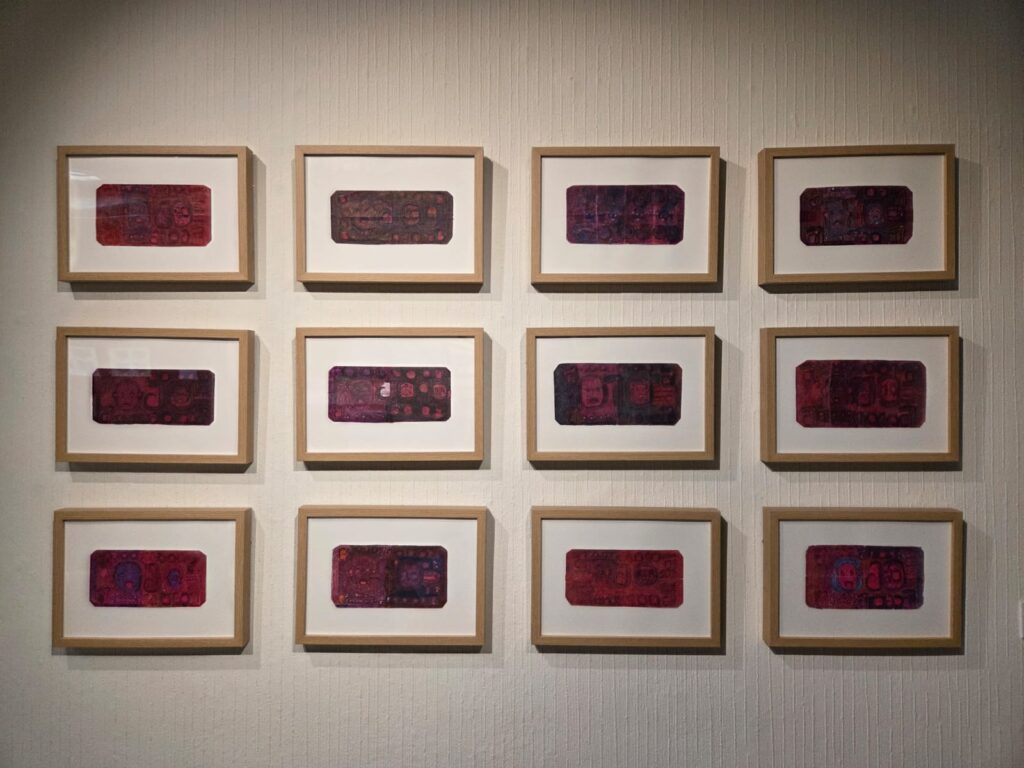
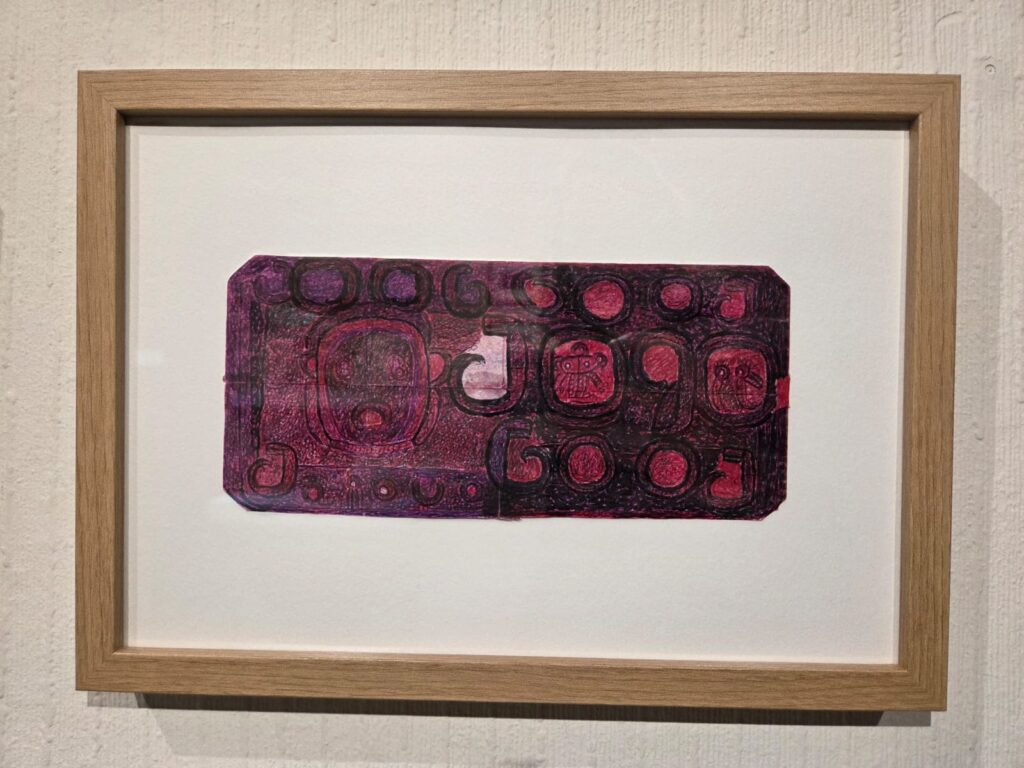
The focus of the exhibition are works by Emile Josome Hodinos, the adopted name of Joseph Ernest Ménétrier. Hodinos was born to baker parents in Paris in 1853, but lost his father young and was sent to boarding school before being apprenticed to medallist Paulin Tasset. At the age of 23 he became a patient at Ville-Évrard, a psychiatric hospital near Paris. He would remain there for about three decades. During his internment he drew innumerable coins, currencies and medals on scraps of paper, using the visual language of his apprenticeship: classical and allegorical motifs, decorative borders, mottos, and so on.
Hodinos’s work came to the posthumous attention of Auguste Marie, a doctor who had trained under Jean-Marie Charcot, who we’ve encountered before. Marie was influential in bringing attention to the artistic work of psychiatric patients, both through projects to establish a museum (including the 1905 Musée de la Folie), and through exhibitions of his collection in the 1920s. Via this latter route Hodinos’s work was included both in Jean Dubuffet’s collection of art-brut, and in the seminal MoMA exhibition Fantastic Art, Dada, Surrealism in 1936.
*This is a debate I often get into with myself on the blog. Other terms include outsider art, self-taught, art-brut, vernacular, and so on. Art from outside the artistic mainstream.
A Singular Vision
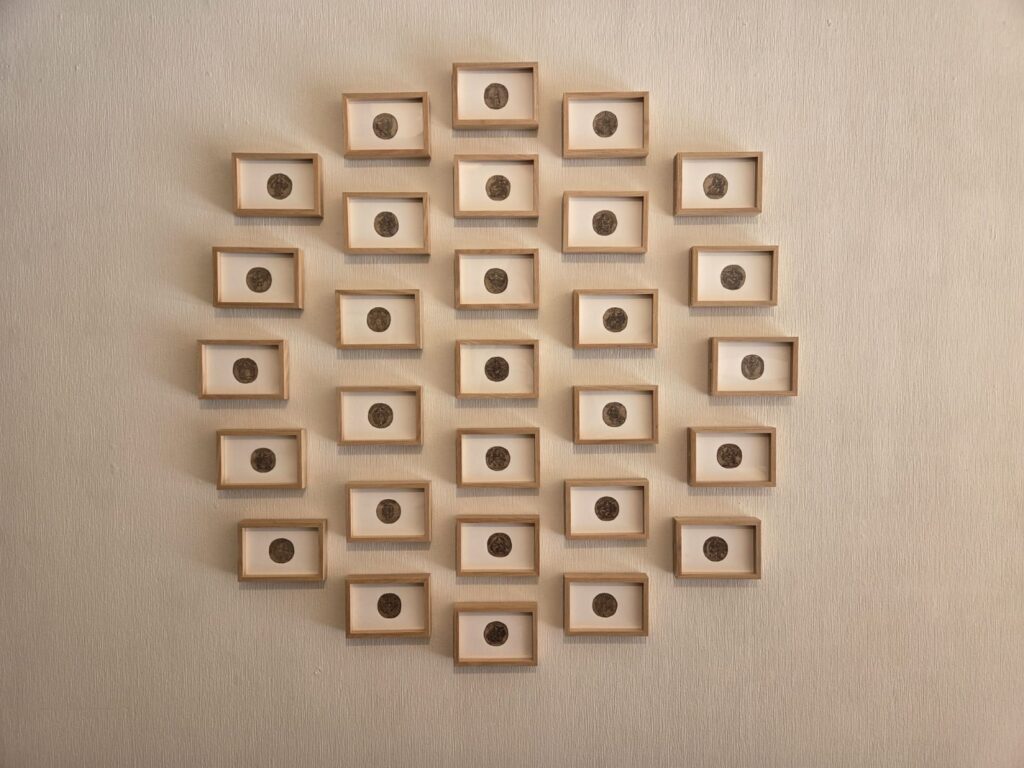
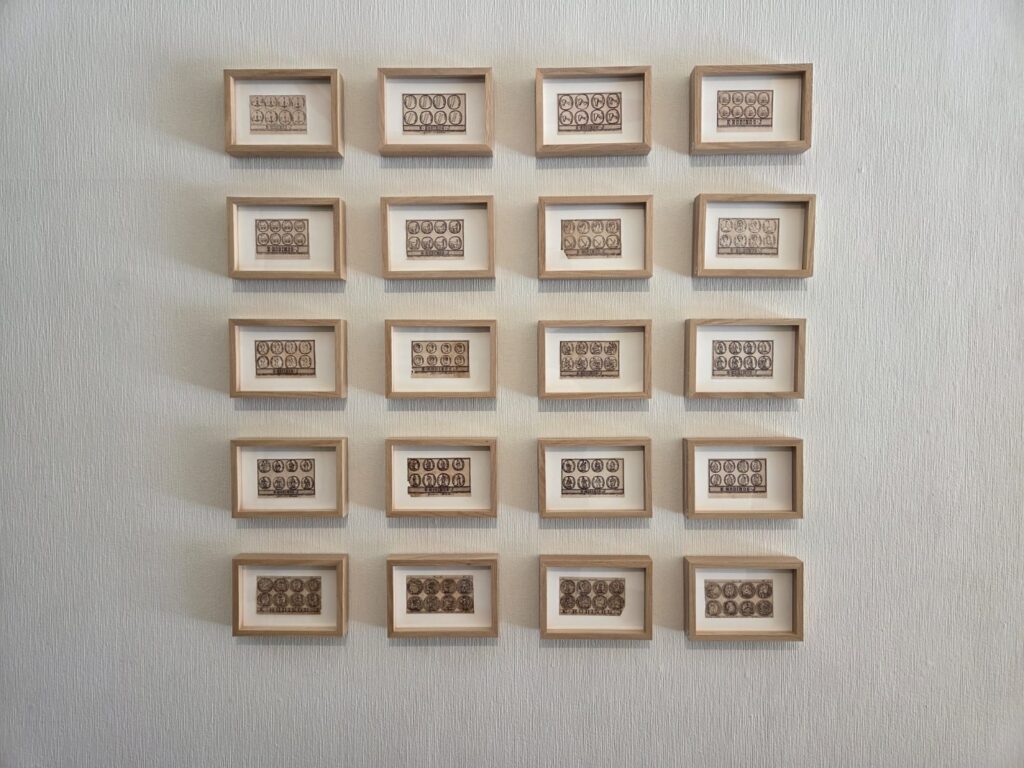
The upstairs rooms of the Gallery of Everything are filled with works by Hodinos. Most are small in scale and intricate in detail. Repetition was clearly important to the artist: a mania in the psychiatric parlance of the day. The visual language is quite typical of its time. It’s only by inspecting some of the details – the words used, for instance – that you understand that these are not drawings for commissions or contests, but something more personal. Each work is carefully laid out, meticulously finished, and signed. It’s a shame they only came to any notice after Hodinos’s death. They carry the hallmarks of an artist who was proud of his work, and wanted to convey its key details to an intended audience.
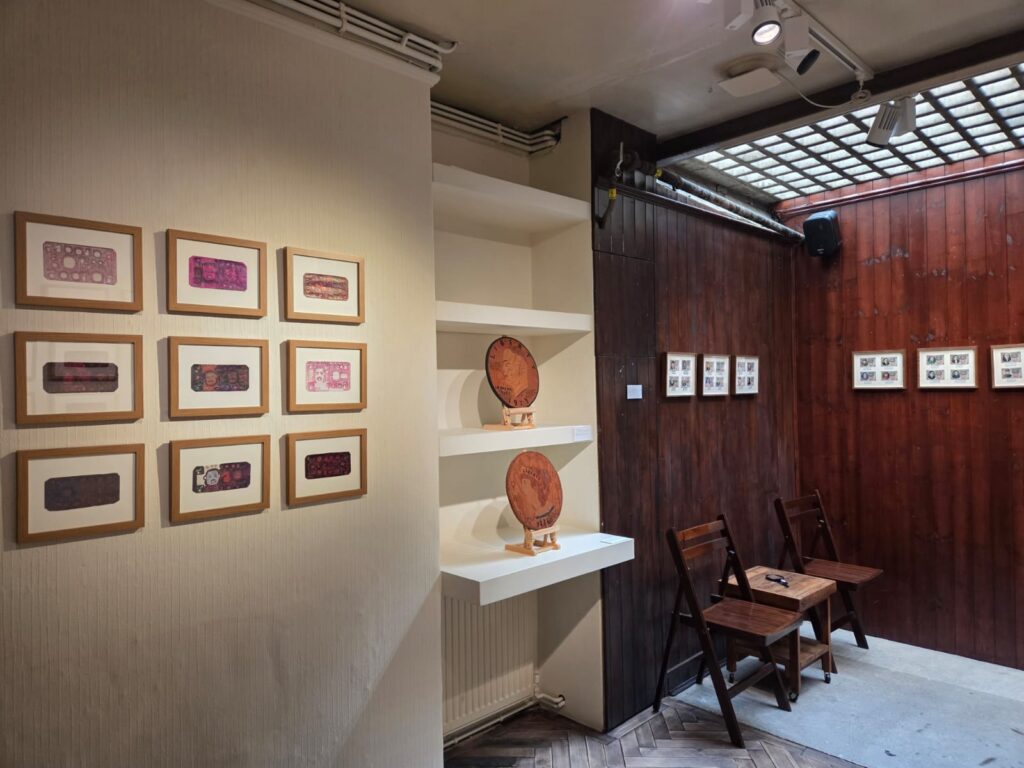
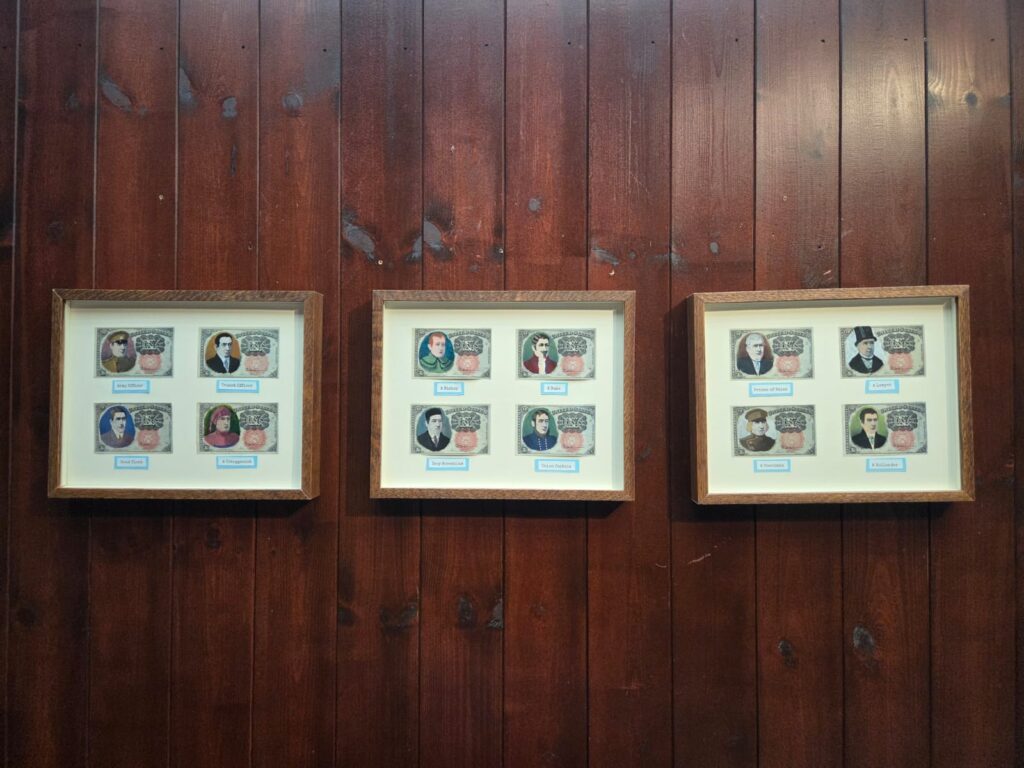
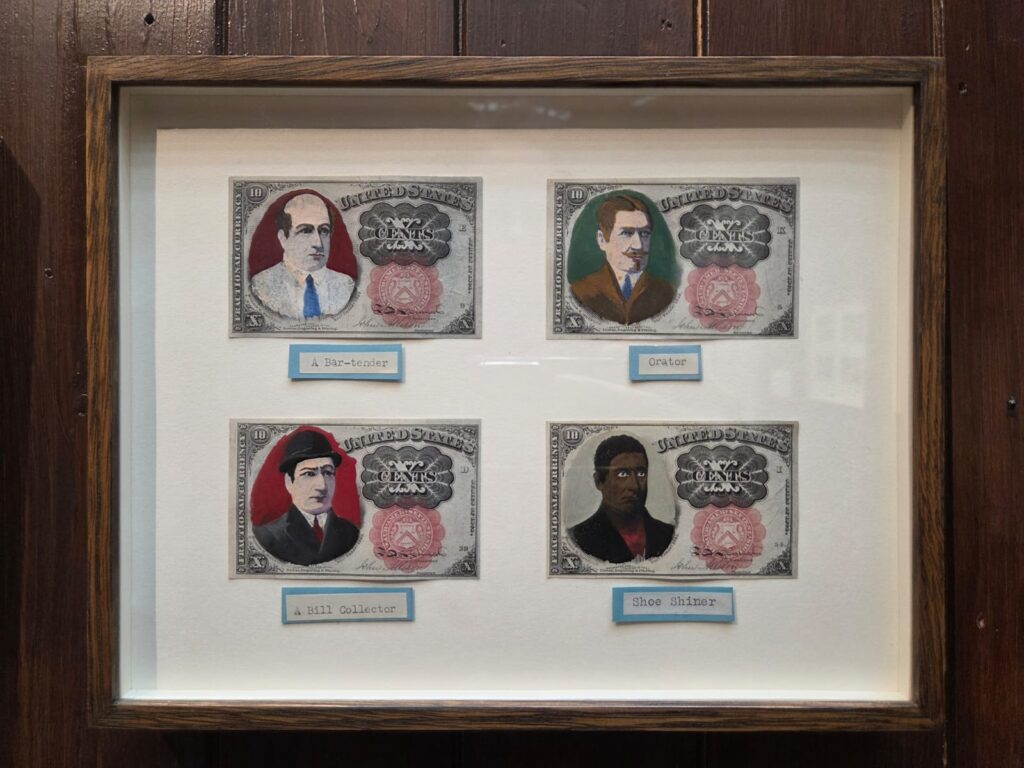
Downstairs are works by three more artists. Firstly there are bank notes by Raimundo Camilo. Camilo executed the drawings in a psychiatric hospital in Brazil. And although the technique is very different, the internal consistency and the creation of value are commonalities with Hodinos. Bank notes are the medium rather than the subject of another series of works by an anonymous artist. She or he has painted onto American Civil War-era ten cent bank notes. Each has an individual character, annotated as ‘A Duke’, ‘A Bishop’, ‘Ikey Rosenblum’ and so on. Again it’s a curious project, taking a lot of time and thought to execute and for an ultimately obscure purpose.
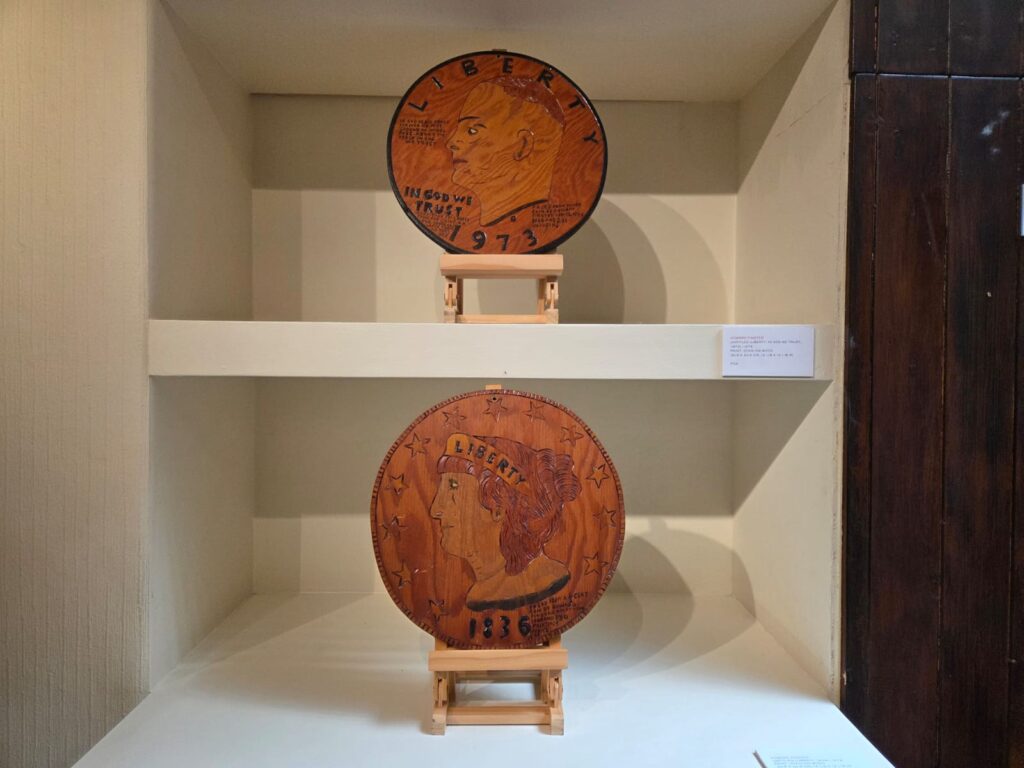
Finally, there are two wooden coins by Howard Finster. Finster was an American preacher and visionary. Both coins have engravings commemorating the circumstances and date of their creation. One has additional engraved commentary on the phrase ‘In God We Trust’. The meaning of currency to Finster is clearly greater than its transactional value.
Taken together, Currency Exchange spotlights the way that spontaneous artists so often question processes that many of us take for granted. For most of us, a coin or a banknote is just money. Something exchanged for goods or services of equal value. But for these artists, it’s not quite so simple. Currency, coins and bank notes are something to design, reinterpret, comment on, or ascribe new meanings to. In each case, a truly singular vision.
Currency Exchange on until 5 July 2026
Trending
If you see this after your page is loaded completely, leafletJS files are missing.