
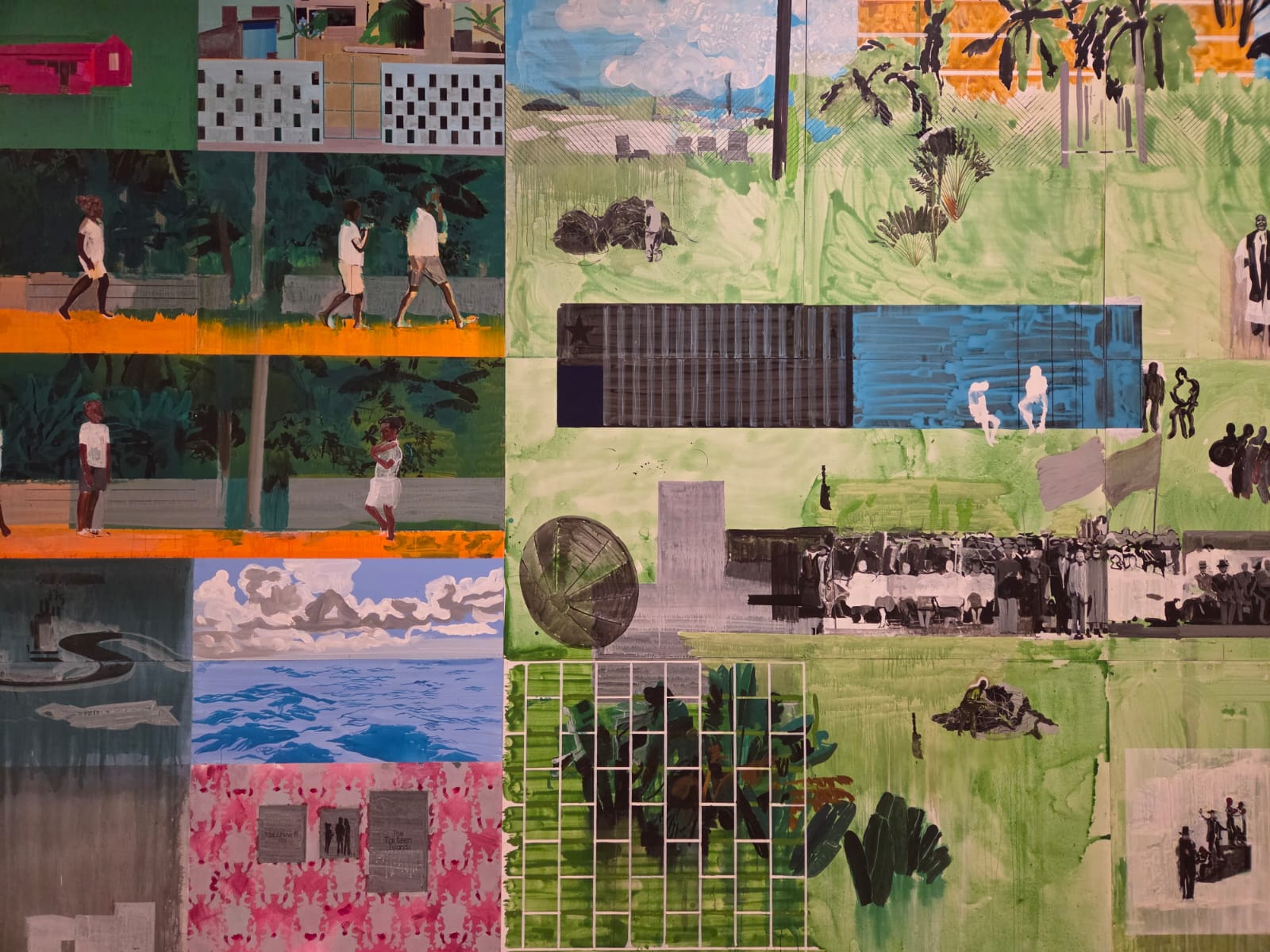
Hurvin Anderson – Tate Britain, London
Hurvin Anderson’s meditative paintings form a powerful exhibition at Tate Britain, exploring memory, cultural heritage, and colonialism.
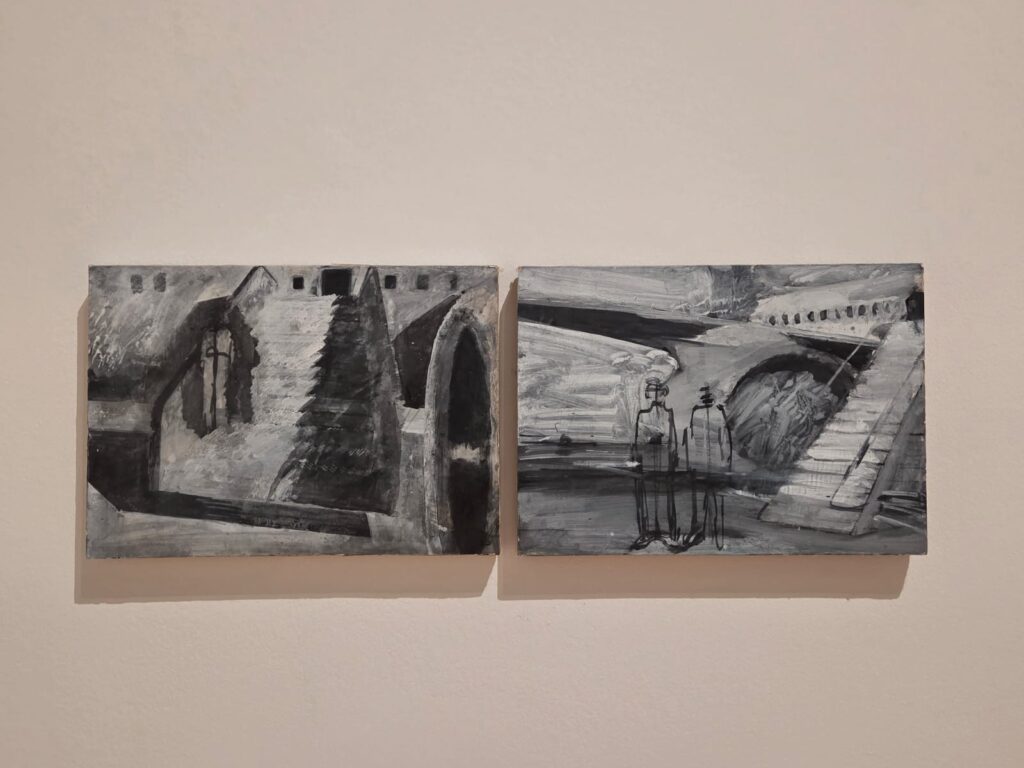
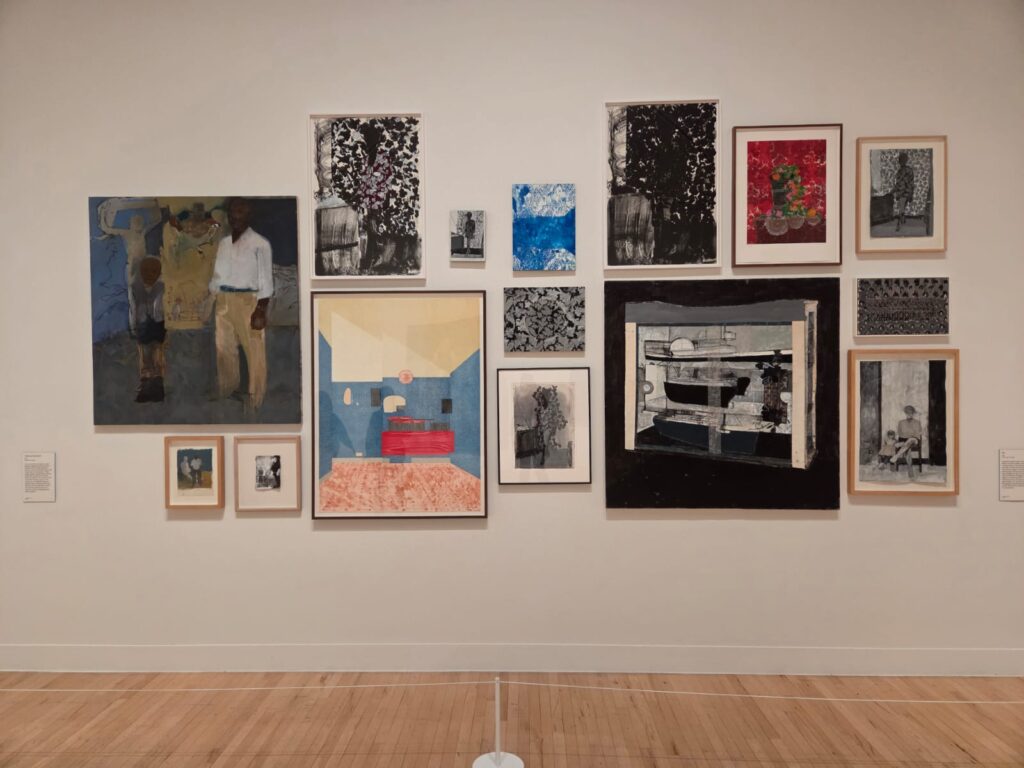
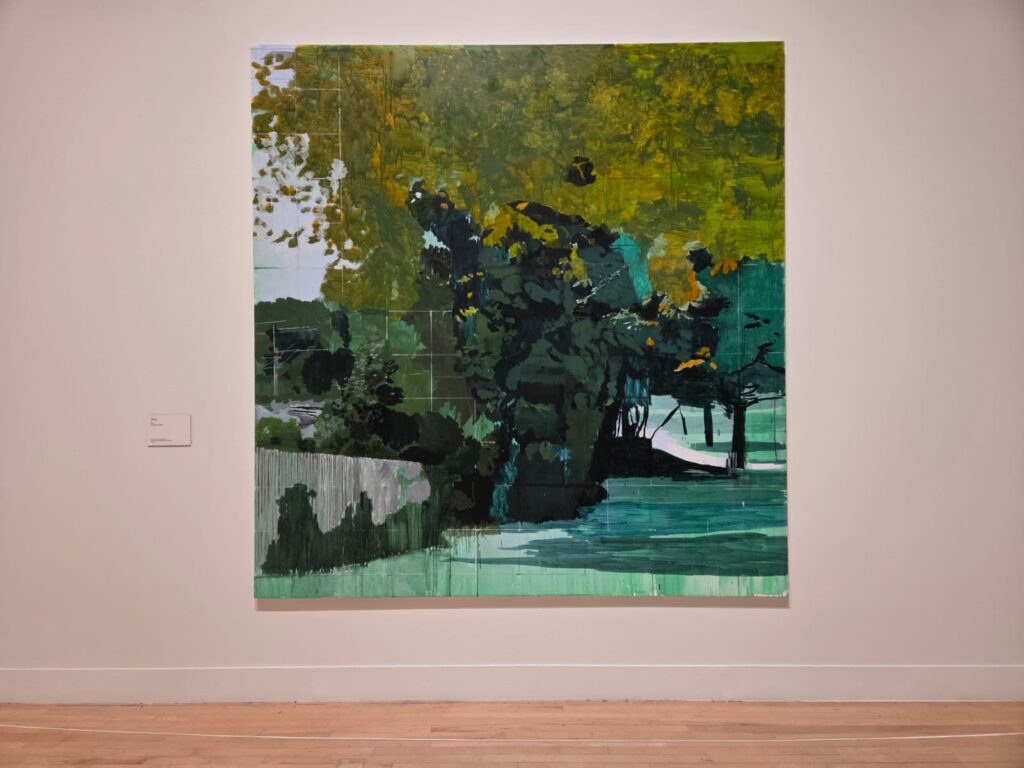
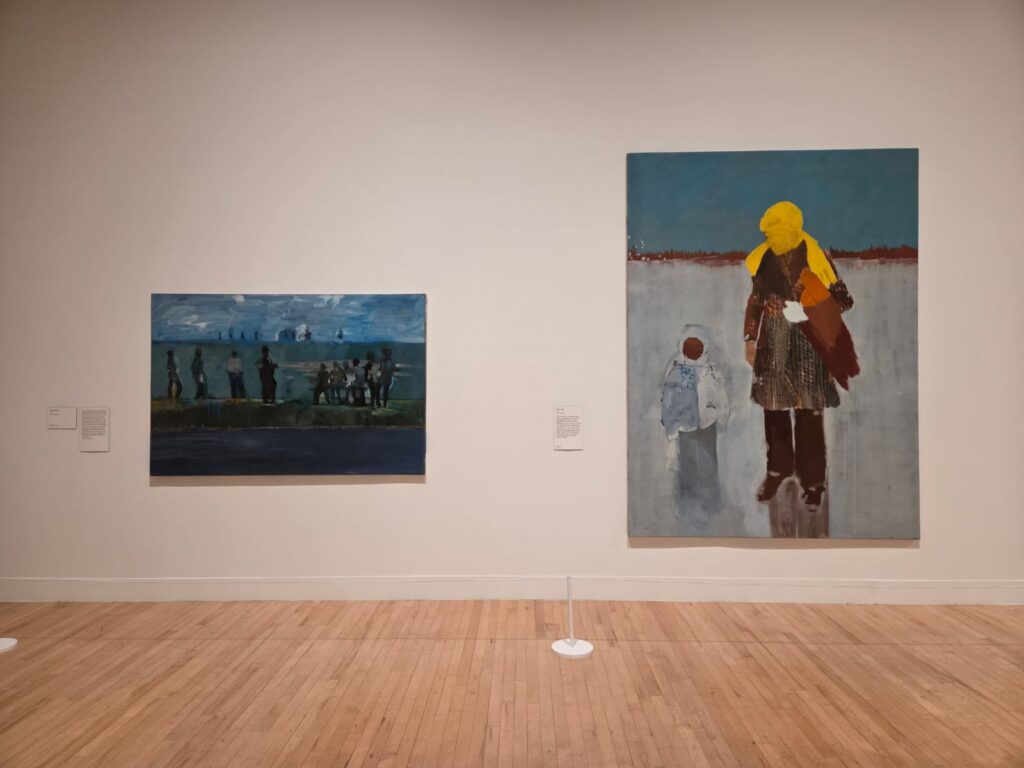
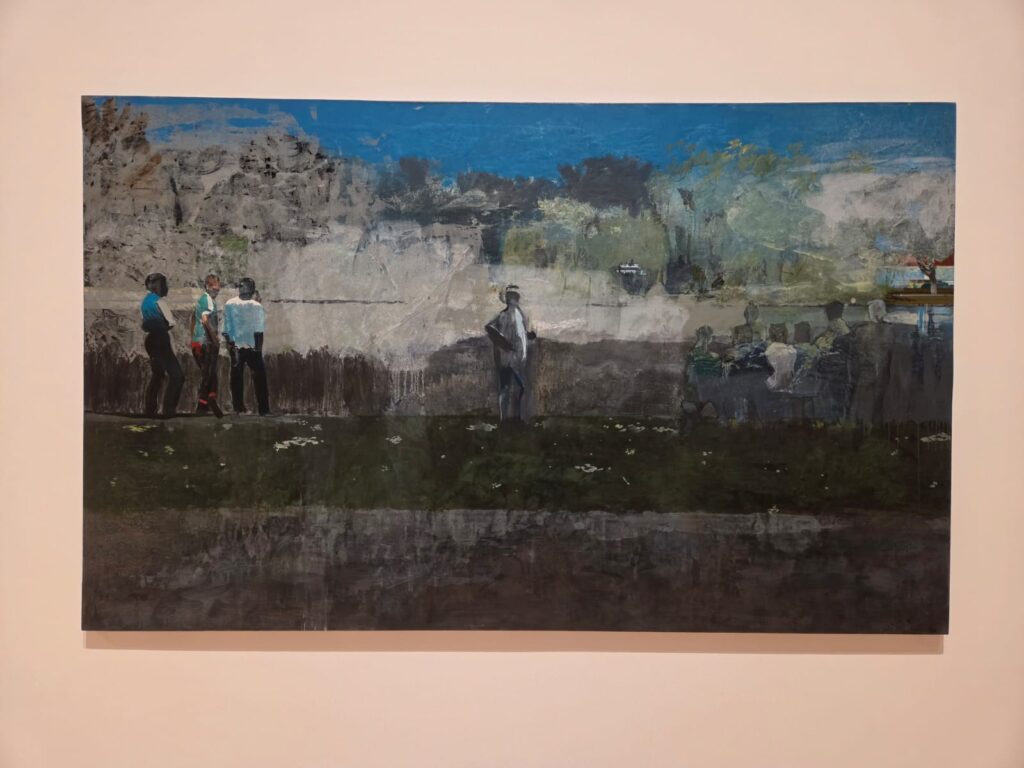
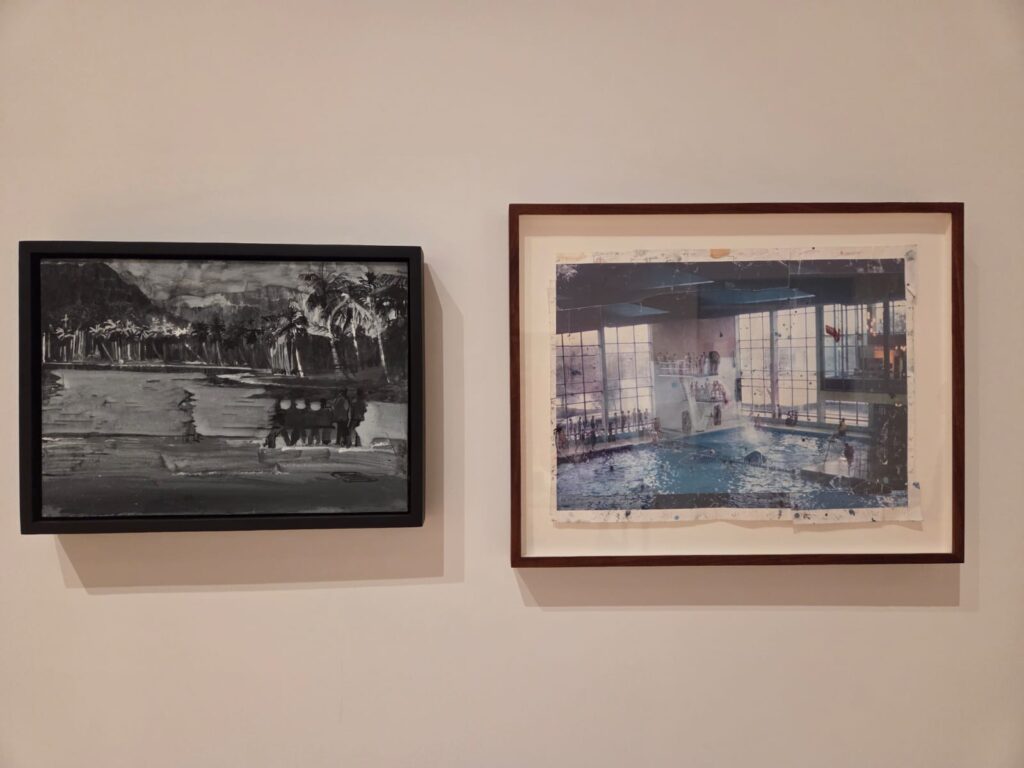
Hurvin Anderson at Tate Britain
This exhibition is quite a contrast to Turner & Constable: Rivals and Originals, which is the last thing I saw at Tate Britain. The Tate do tend to have quite a good mix of things in their exhibition programming, though. Definitely one of the reasons I keep coming back. Hurvin Anderson was one of those exhibitions I come to in order to get to know an artist I’ve only encountered a handful of times before. Given that you might want to get to know Hurvin Anderson a little better before diving in, let’s start there!
Hurvin Anderson was born in Handsworth, Birmingham, in 1965.* He was the youngest of eight children, and the only one to be born in England after his parents Elsade and Stedford emigrated from Jamaica in the early 1960s. Anderson was interested in art from a young age, often carrying around a sketchbook. He pursued an art education across several institutions: Birmingham Polytechnic, Cheltenham & Gloucester College of Higher Education, Wimbledon College, and the Royal College of Art. He graduated from the latter with an MA in Painting in 1998.
Anderson’s early experiences shaped his later artistic practice. An interrogation of what it means to grow up between cultures, for instance – to experience both as an outsider, or to experience a mythologised version of a place. Or exploring the entangled legacies of colonialism in both the colonising and colonised spaces. A lot about identity, community and culture.
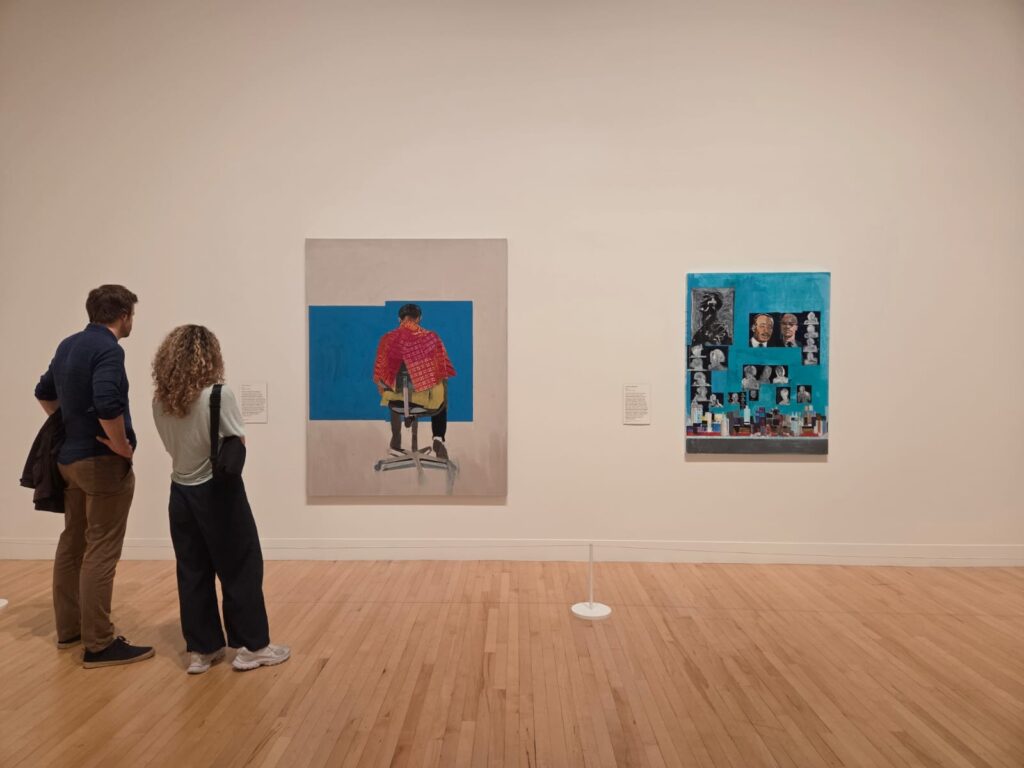
In this, Anderson’s first large-scale solo exhibition, we see works from different series across Anderson’s career which touch on these themes and more.
*Handsworth is a name that has associations for a lot of British visitors, but which I wasn’t familiar with. More on this in a bit.
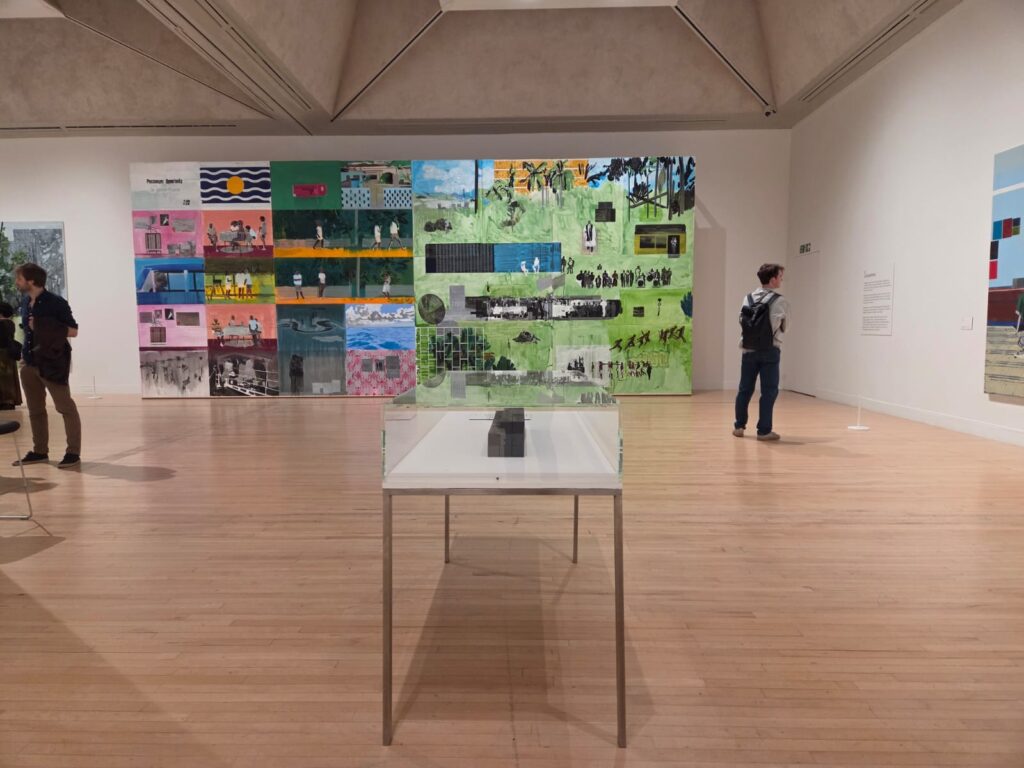
A Quick Overview of the Exhibition
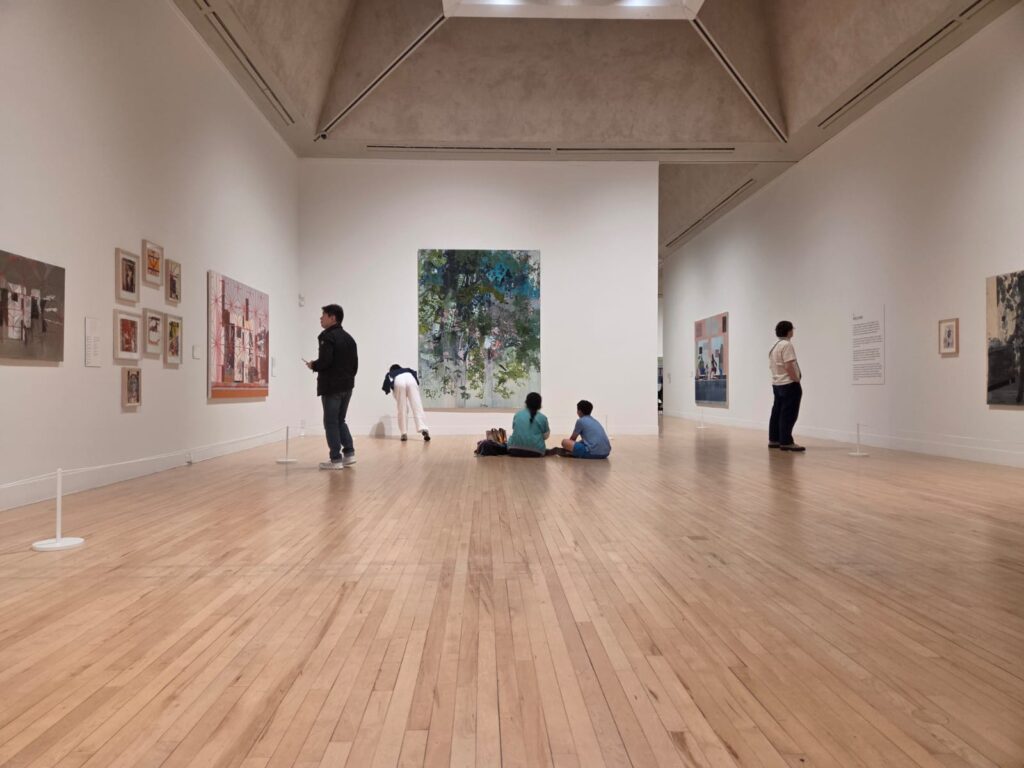
The curators of Hurvin Anderson have gone with a largely chronological approach. Sensible, some might say, for a first major solo exhibition. It’s when there have been umpteen such exhibitions that it becomes more important to think of thematic presentations.
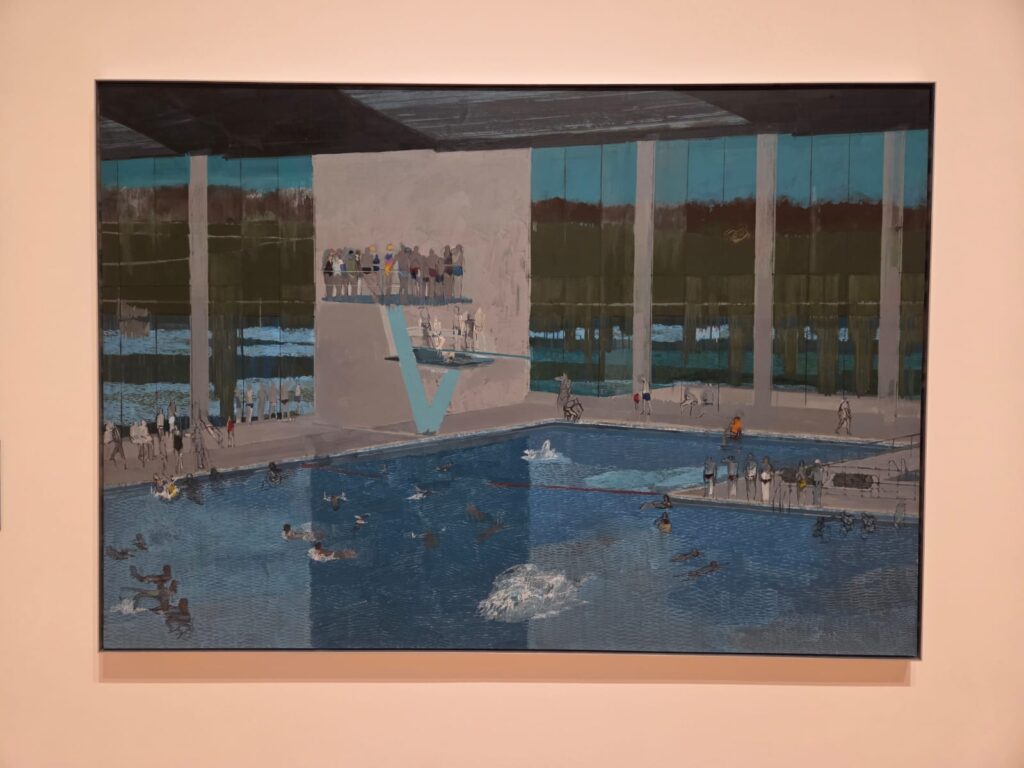
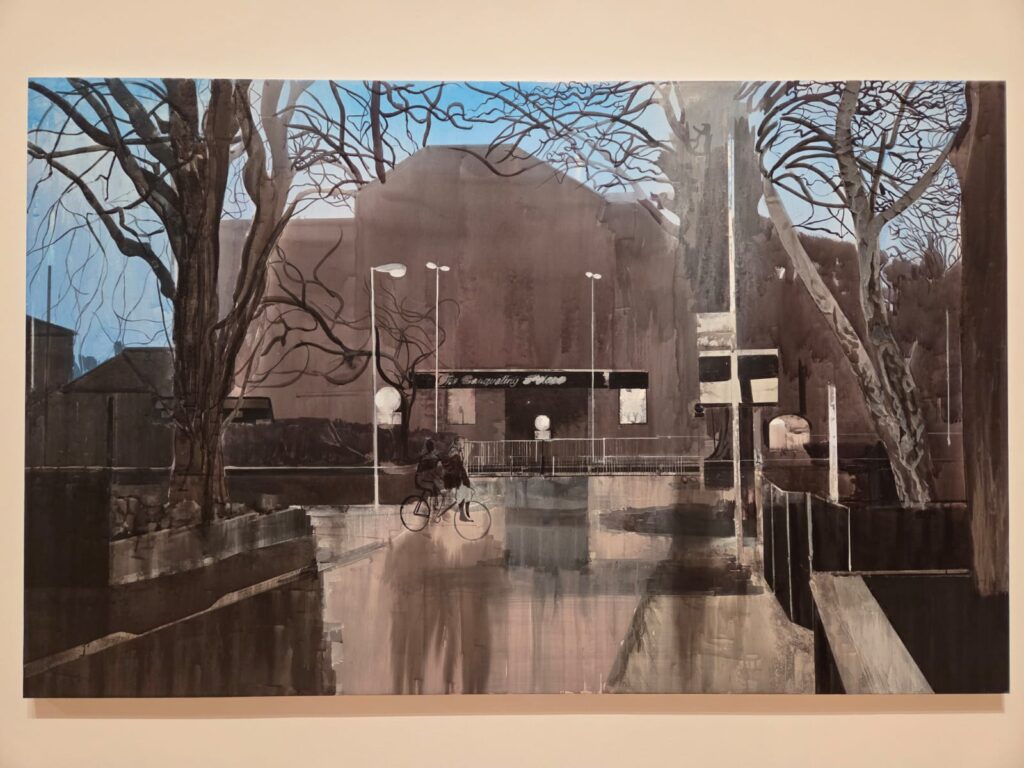
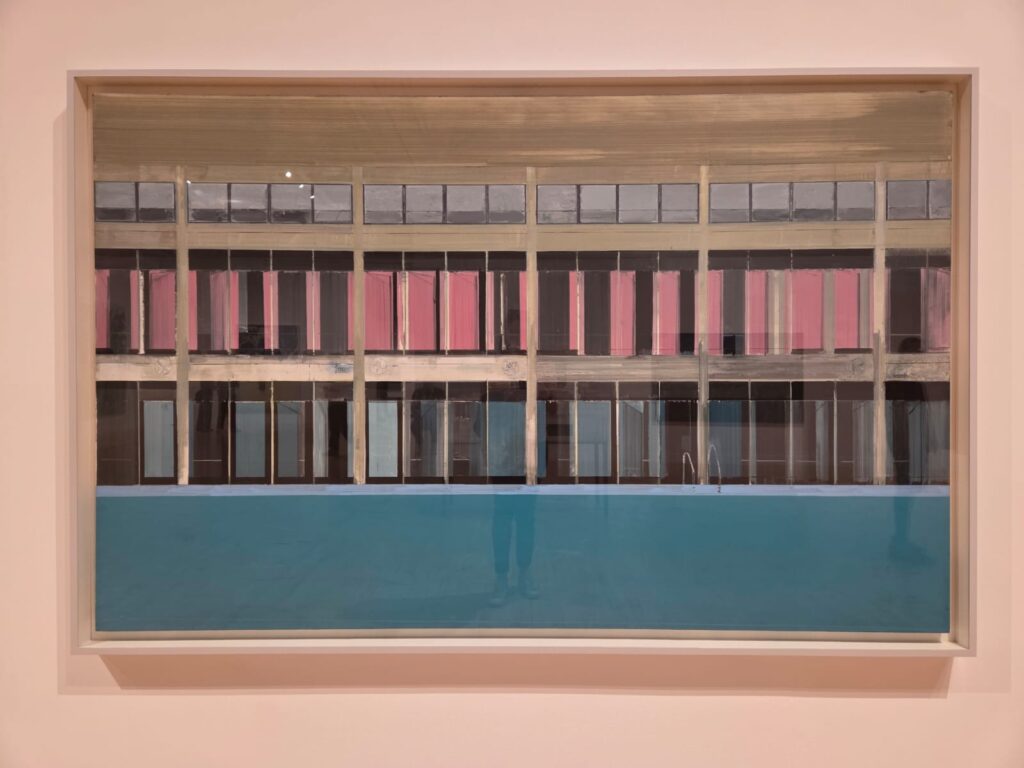
We therefore start in Birmingham, with early works. Some of the threads which tie the exhibition together are already in evidence. Anderson has had a tendency since the early days of his career, for instance, to work from photographs. Not as an exact reference, however. Rather he uses them to introduce uncertainty – to highlight the unreliability of memory. The photographs are jumping off points for ideas about identity, history, and representation. Take Audition (1998), a painting of Wyndley Swimming Pool in Birmingham. Anderson superimposes different moments, pushing the scene almost to abstraction. A photographic collage nearby shows how he constructs such works.
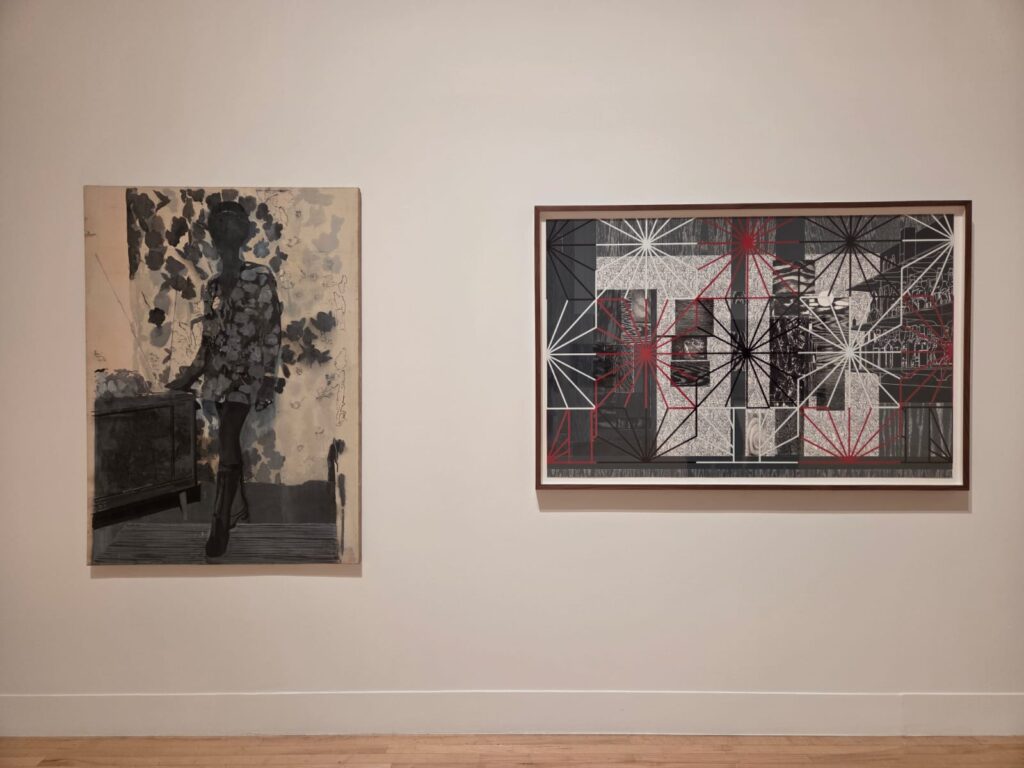
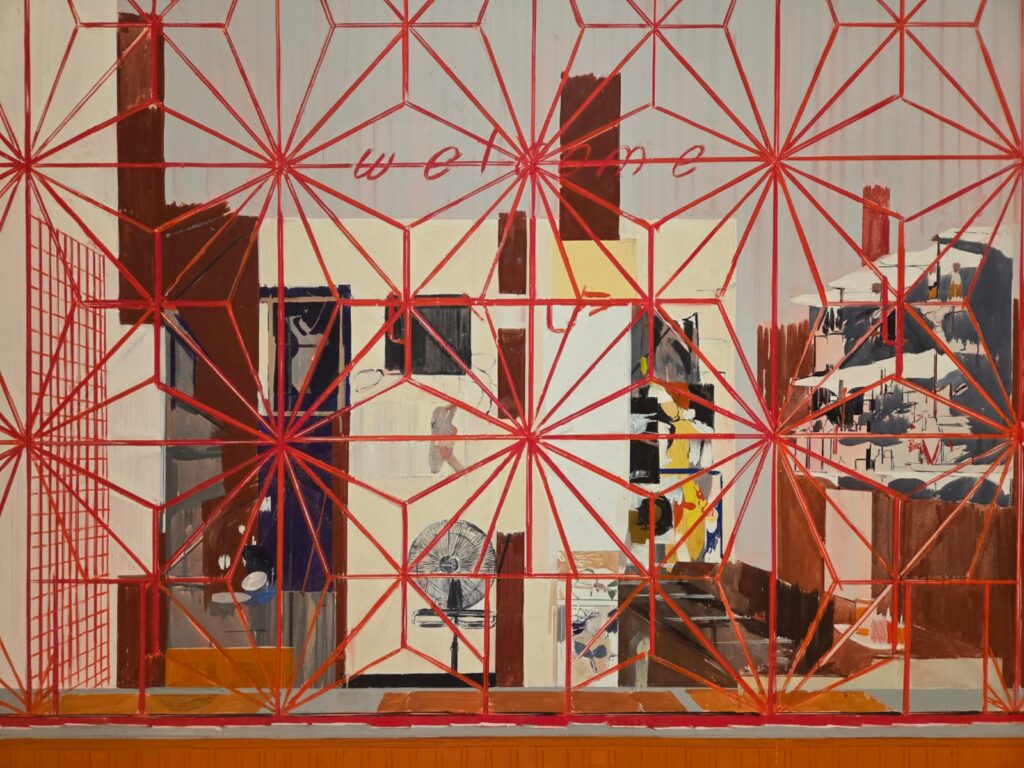
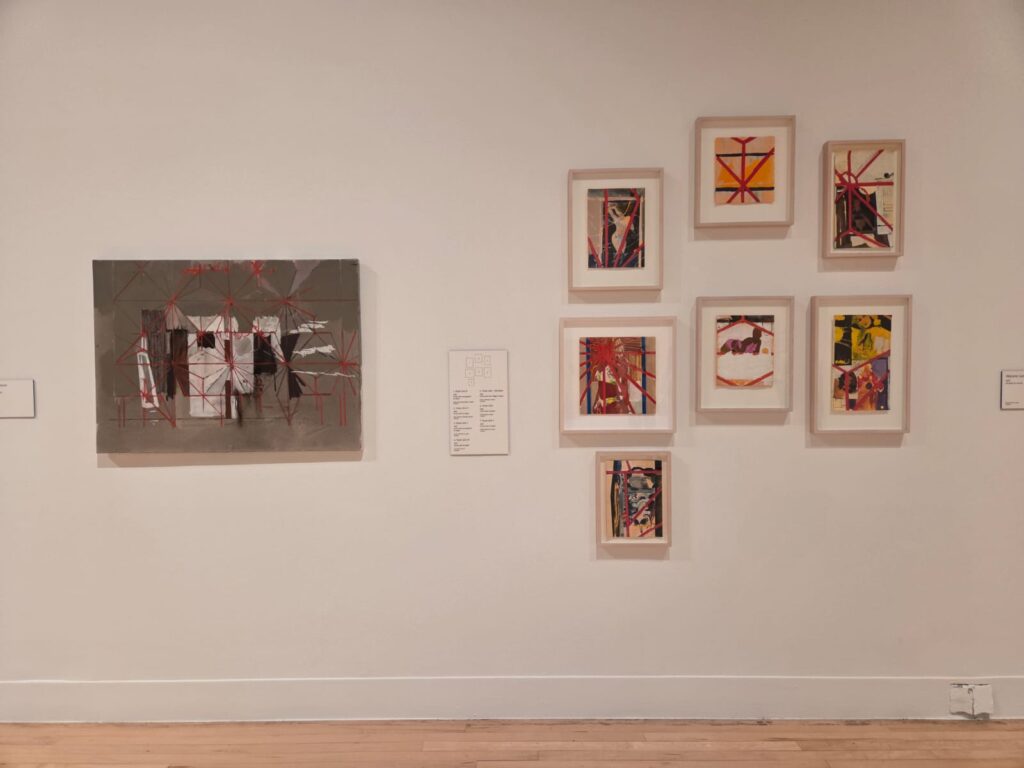
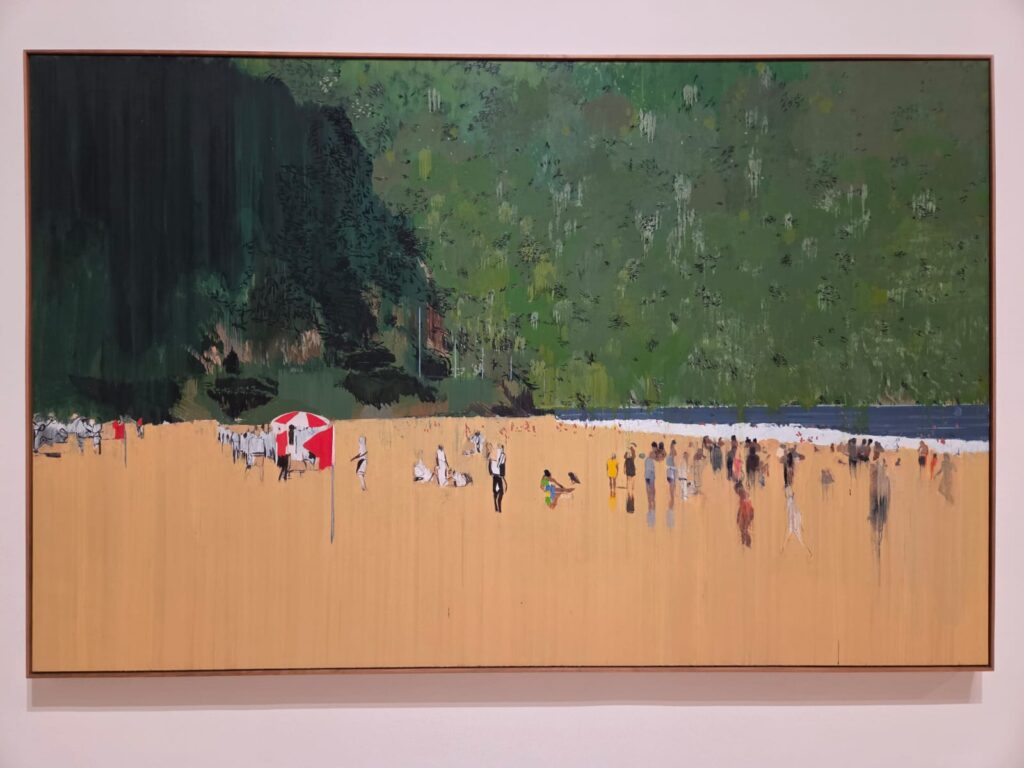
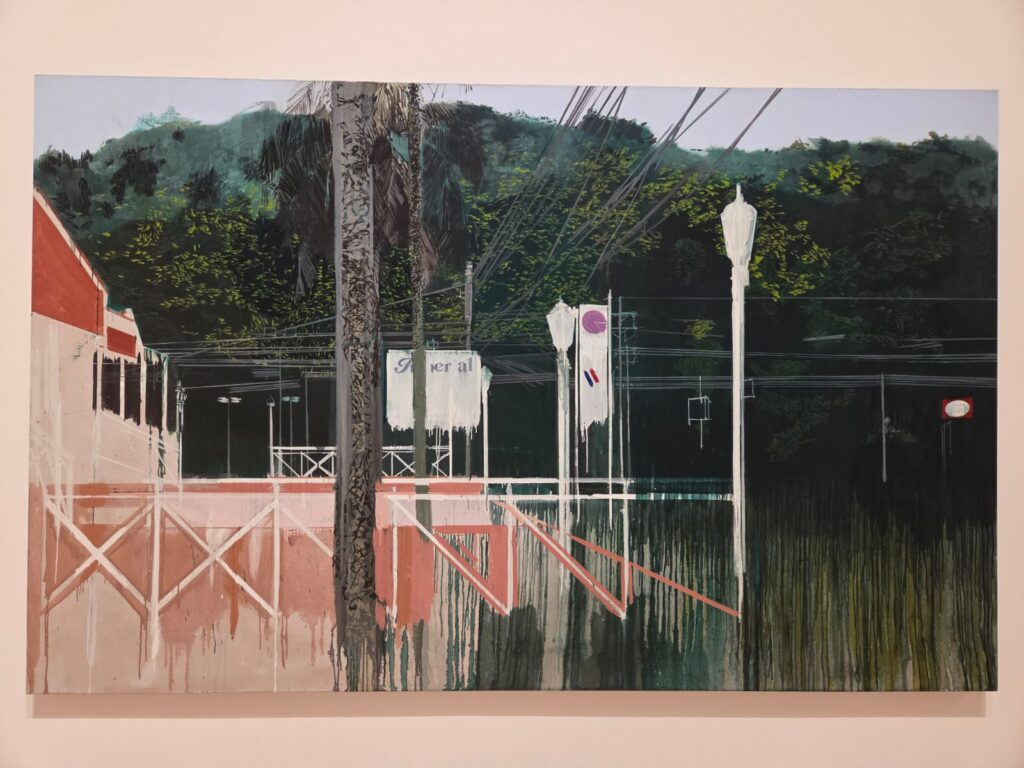
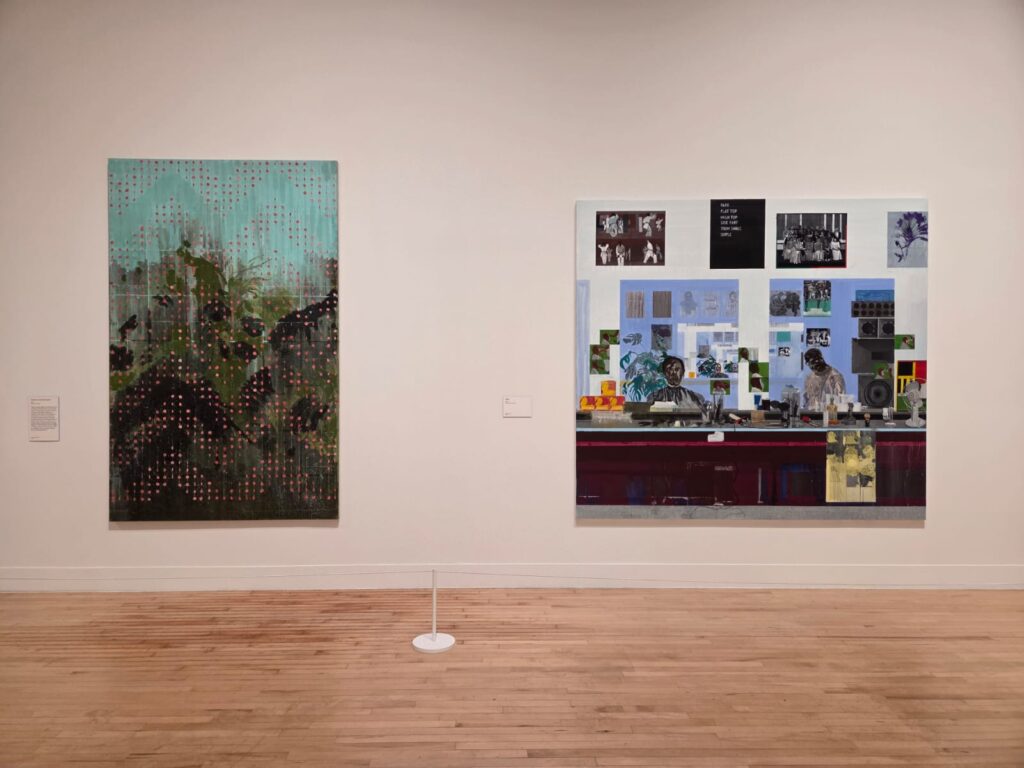
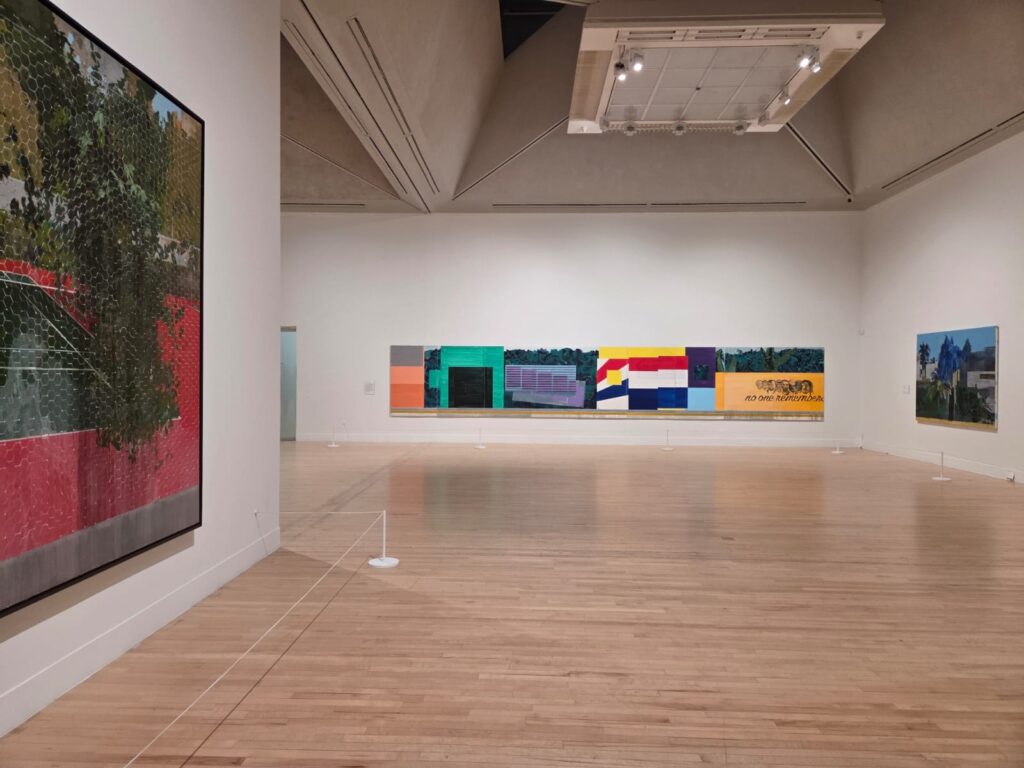
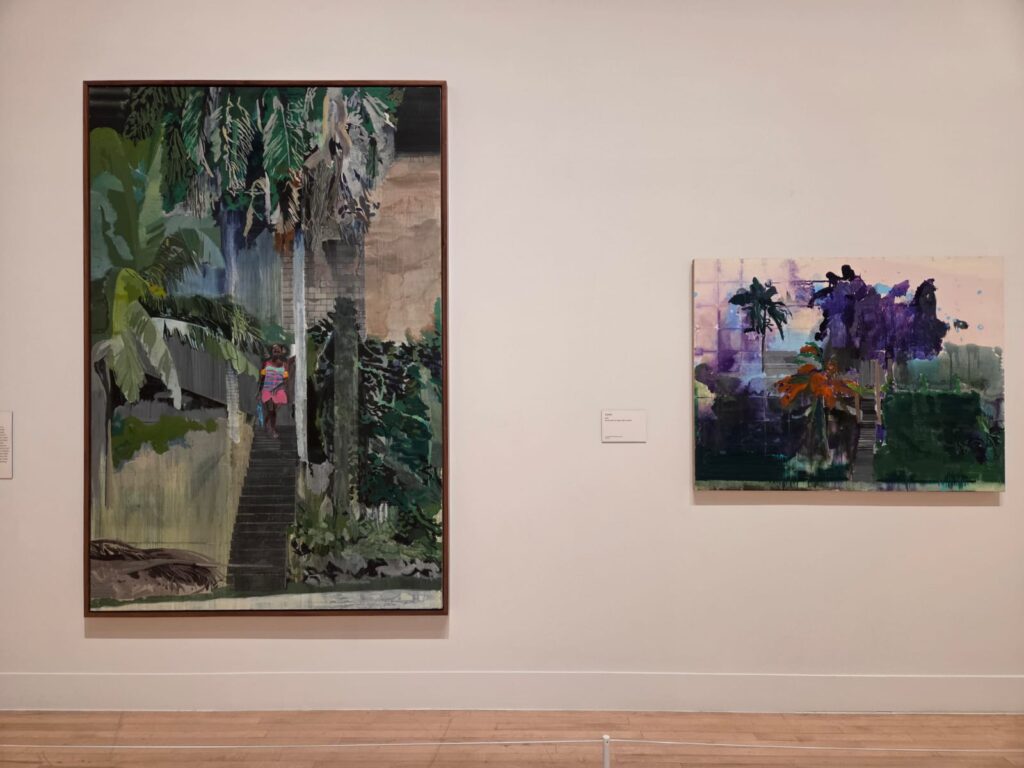
As we move further into the exhibition, Caribbean scenes and landscapes start to take centre stage. For starters there is Passenger Opportunity (2024-5), a massive work made up of multiple panels, which contemplates the history of Caribbean migration from enslavement to the Windrush Generation. Colourful scenes of family life give way to more sombre departures and farewells. It’s really rich and complex. I actually think this work would be worth a visit in its own right, but luckily the exhibition gives us so much more. There’s the Welcome series, for instance, where Caribbean scenes are mediated through decorative wrought-iron security grilles. Their geometric lines pull us in while also keeping us at a distance. I also really liked Untitled (Red Flags) (2004) – a beach scene which feels impersonal, almost menacing, rather than the romanticised vistas we’re used to seeing.
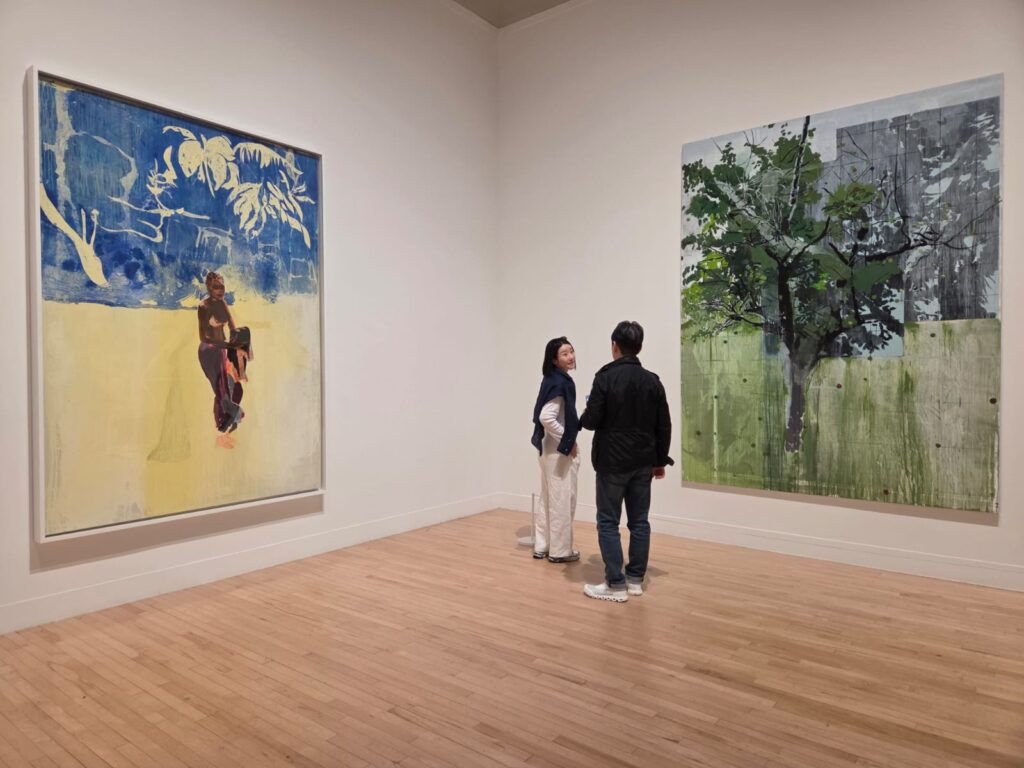
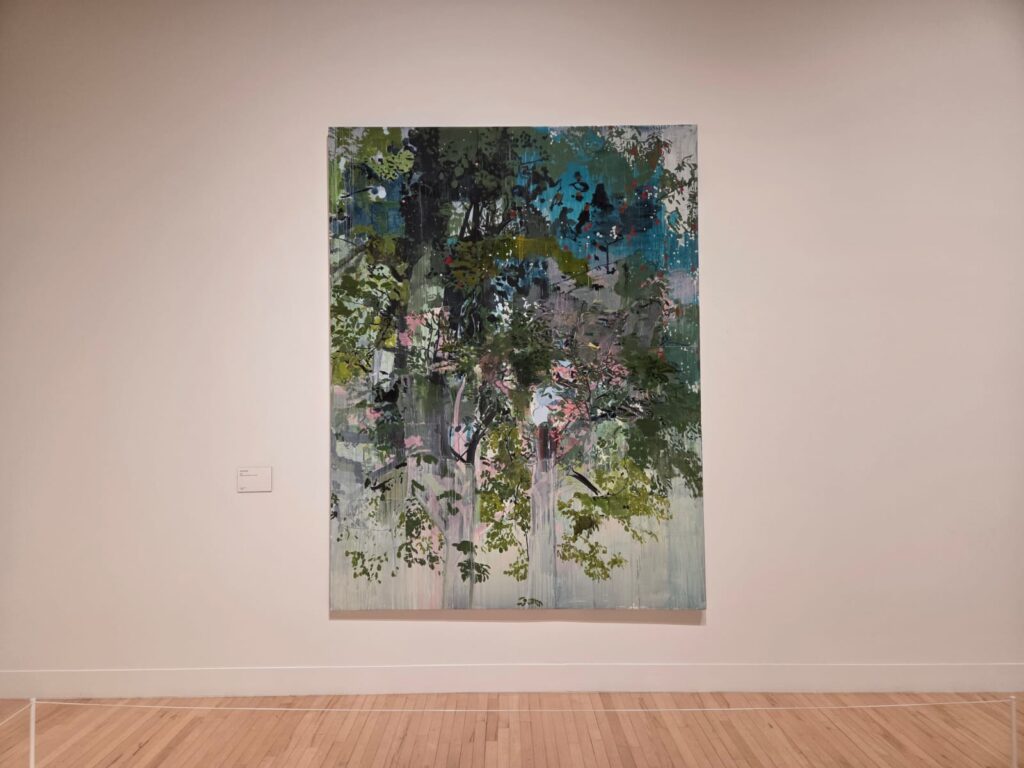
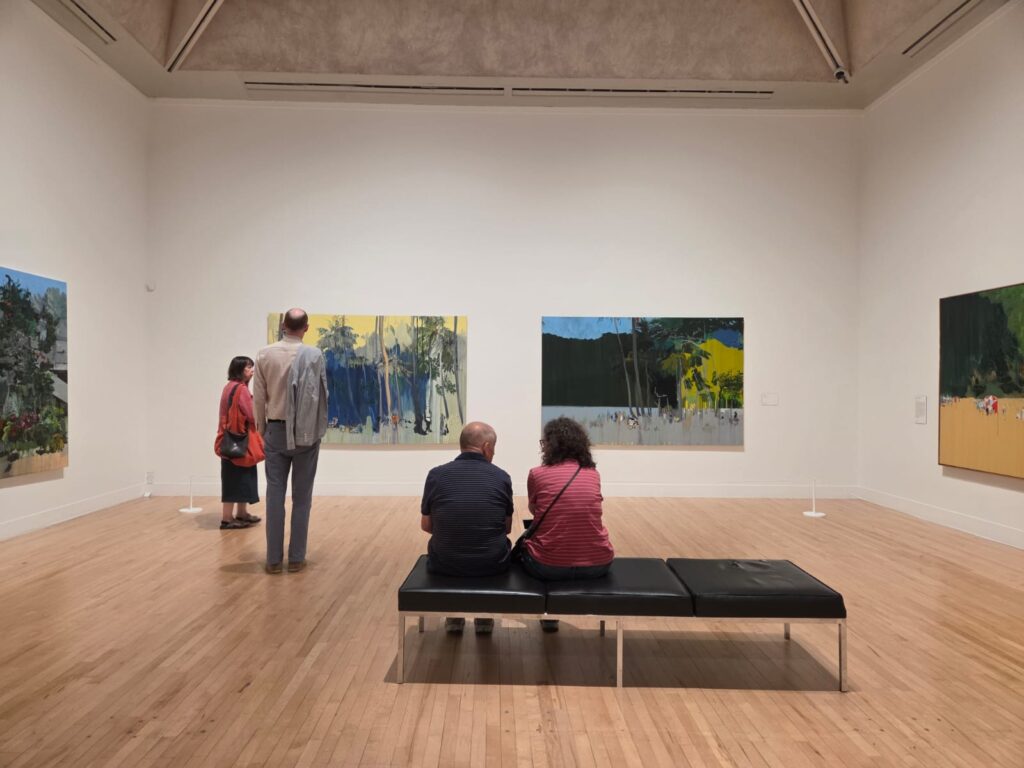
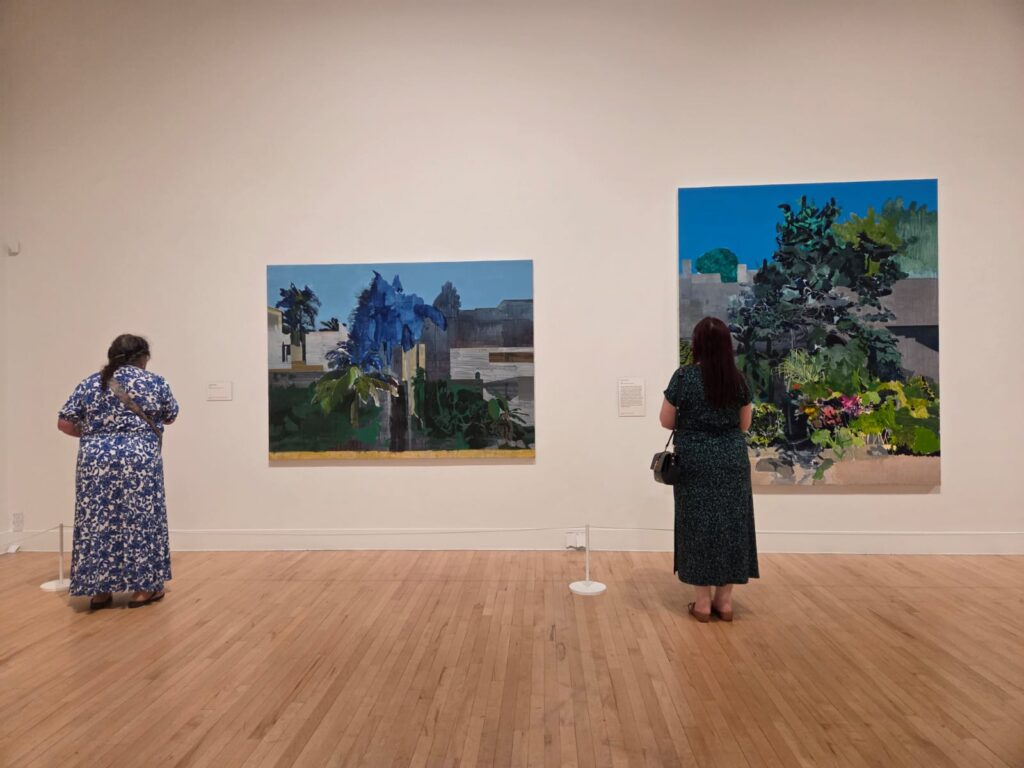
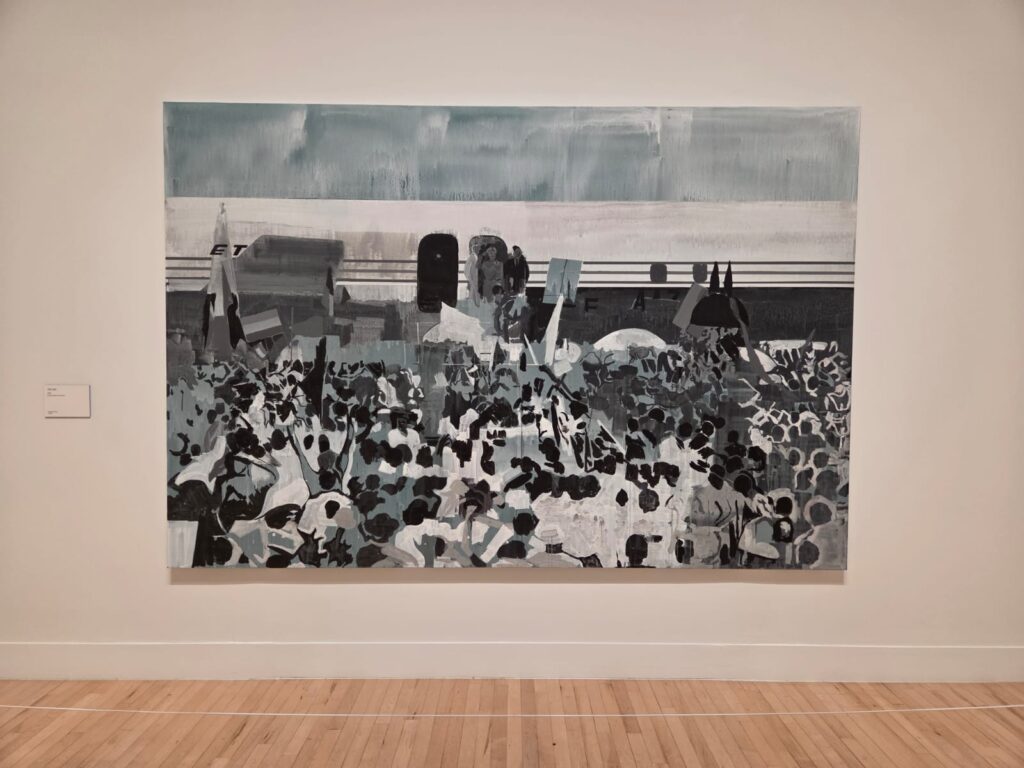
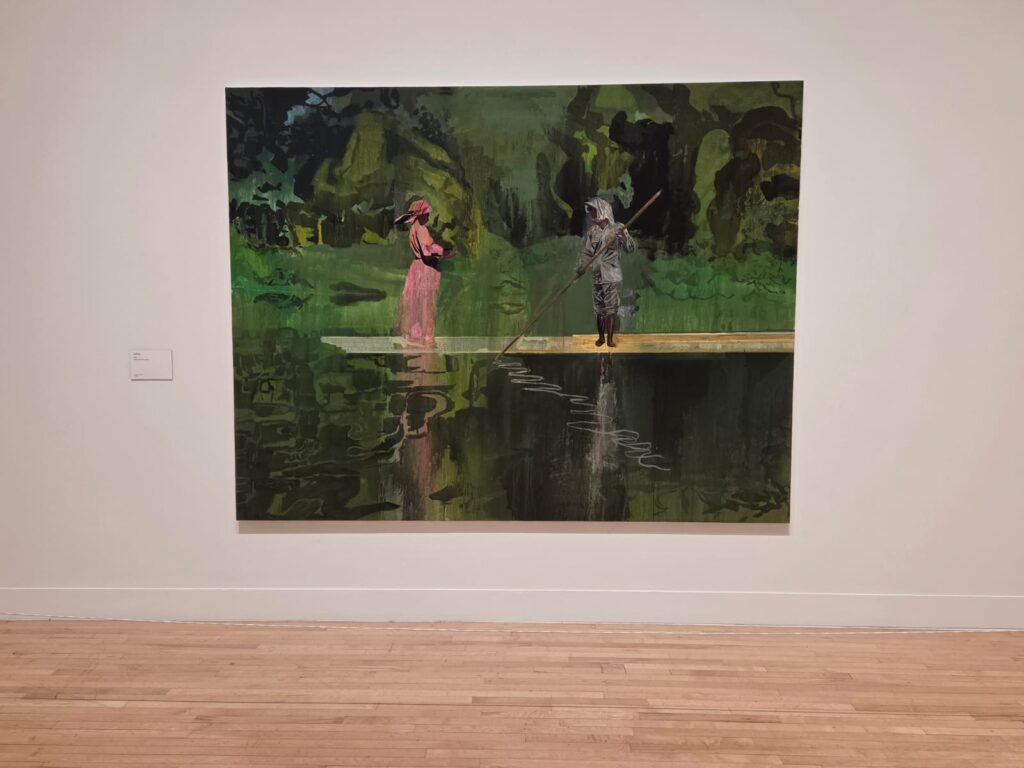
The final rooms continue to expand on elements of Anderson’s practice we are becoming familiar with. Race and identity, for instance, or the tourism industry in the Caribbean through a non-colonising gaze. It culminates in a room with four new paintings Anderson has created for this exhibition. Or two pairs of paintings, really, which stand in dialogue with each other across the room. Children in an apple tree sit opposite a crowd greeting Emperor Haile Selassie on his visit to Jamaica in 1966. Couples raft down rivers in a tropical landscape. We can see how Anderson has refined his visual language over the years – these four works contain multitudes. It’s a nice way to finish.
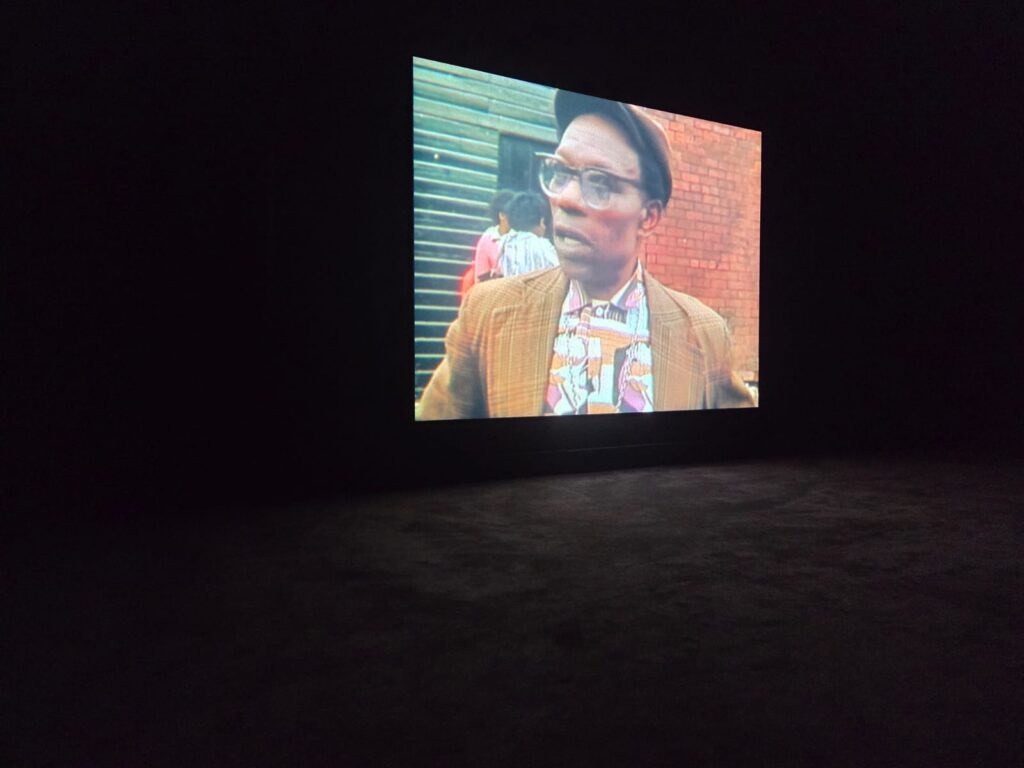
Or almost finish. Because outside the exhibition there is a film playing in a separate room. Handsworth Songs is a 1986 work by the Black Audio Film Collective, and runs for just under an hour. If at all possible I suggest you watch it first rather than last, and see as much of it as you can. Anderson selected it to pair with the exhibition, and it gave me so much more context about his childhood and the socio-political forces that shaped it. National Front marches and resulting disturbances, tension between communities and with police – all are shaped into a cohesive narrative using a variety of sources and experimental film-making techniques.
A Few Further Thoughts Part I
It’s always interesting, when getting to know an artist, to see what associations and connections emerge. These can be quite personal, depending on other exhibitions you’ve seen, for instance. In the case of Hurvin Anderson, there were three main thoughts that bubbled to the surface in my little brain.
The first connection I drew, and probably the most obvious, was to Peter Doig. There are similarities and differences between the two artists, but also a personal connection. The similarities, to start with, cover subject matter as well as stylistic choices. Both artists frequently depict the Caribbean in their work, and both choose an atmospheric palette – sometimes sombre, sometimes picked out in neon highlights – to do so.
Then comes a key biographical difference. Anderson, as we’ve established, is an artist of Jamaican heritage who was born and grew up in England. Doig, on the other hand, spent part of his childhood (and adulthood) in Trinidad, but does not trace his heritage to the Caribbean. Although their early lives were almost the inverse of one another, there’s a common thread of looking on from an ambiguous place of insider/outsider. The two artists’ paths also converged at the RCA, where Doig was a tutor while Anderson was a student.
A second connection which sprung to mind was the work of David Hockney. And I don’t think this was because the news of Hockney’s death was so much in the news at the time of my visit. There is, for me, a common ability to paint scenes imbued with the presence of people even when figures are absent. Think A Bigger Splash.
A Few Further Thoughts Part II
I was pondering one further artistic connection as I wandered through the exhibition. And that was Noah Davis. There were a couple of reasons that Hurvin Anderson brought to mind Davis’s work, which I saw a while back at the Barbican. The first was the way that each centres Black subjects and communities in their work, with very intentional framing that decentres a white gaze. Both also seem to have their preoccupations: architect Paul Revere Williams was an echo through Noah Davis’s work, while in this exhibition Marcus Garvey kept cropping up. The Urban Geographer had heard of Garvey before but I had not – his is an interesting story so do have a read about him.
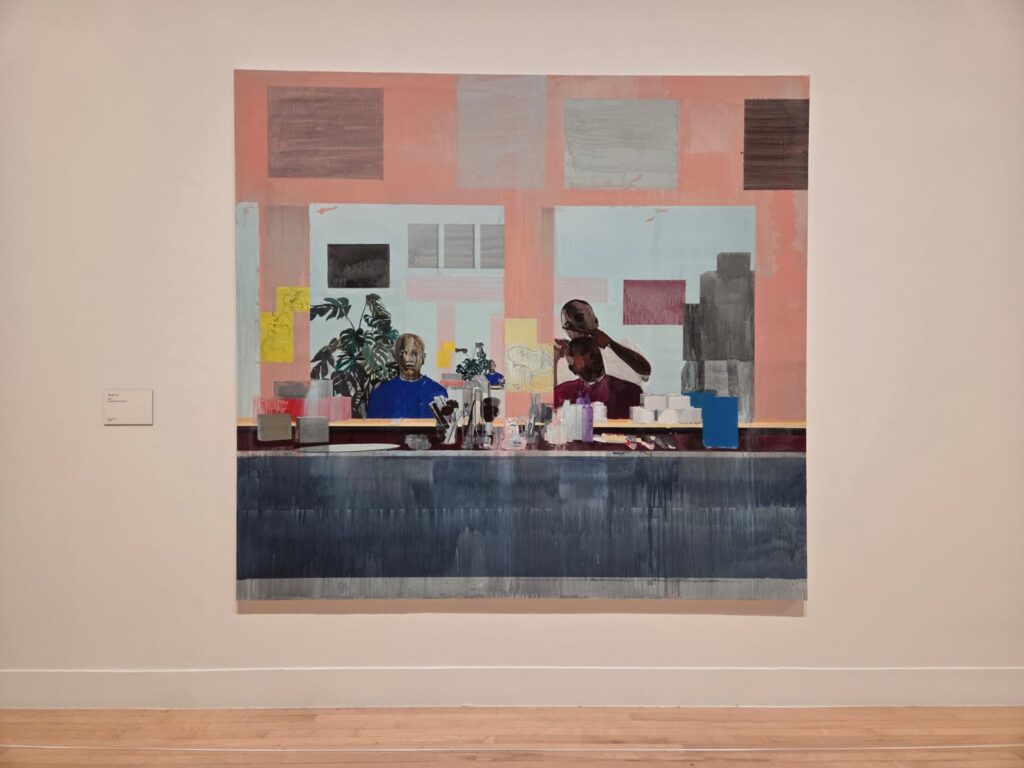
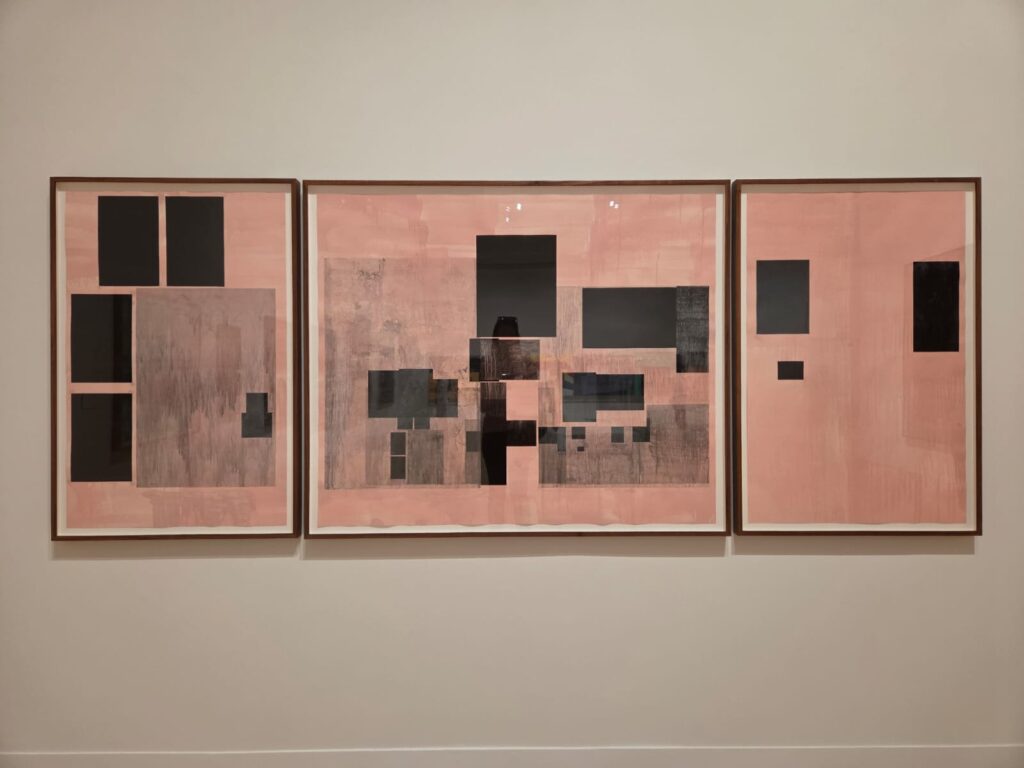
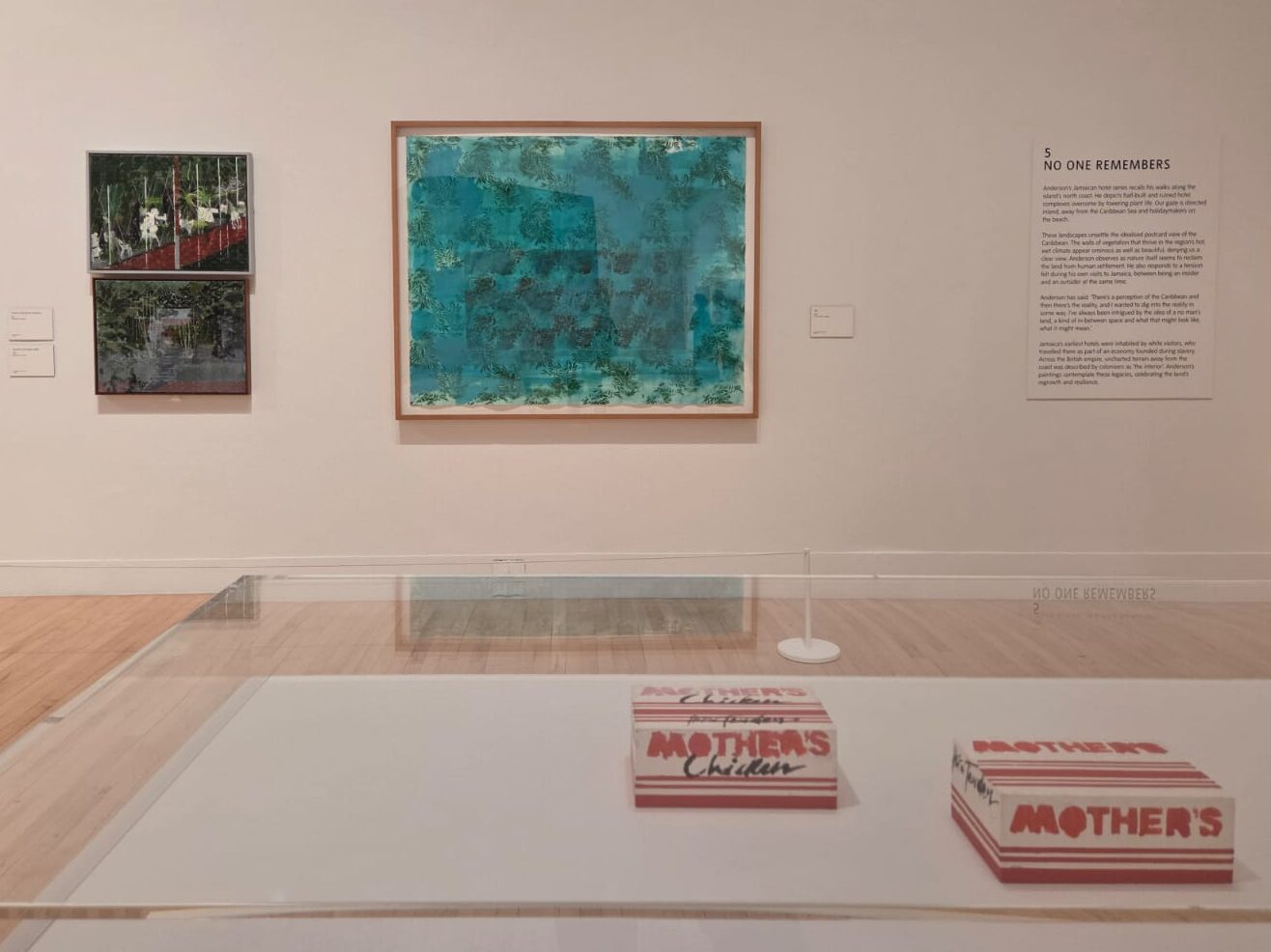
The last connection I found between Noah Davis and Hurvin Anderson was a willingness to experiment. Davis made his own Jeff Koons-style found object sculptures when he couldn’t borrow the originals. Anderson’s wooden boxes of fried chicken bring to mind Andy Warhol. And I remember a series by Davis where he had reduced the voting patterns of different states to abstract squares. The series wasn’t commercially successful, but was a real refusal to be pigeon-holed. I thought of this when I saw Anderson’s Essentials (2017), where the familiar setting of a barbershop interior is abstracted into black squares on a peach background. It’s a departure in the artist’s work but also a continuation.
What do these connections tell us? That nobody exists in a vacuum. That the more art you see, the more of a library your brain builds up to help it fire off connections from obvious to obscure. And that Hurvin Anderson’s artistic practice is rich. This exhibition shows us some of the beauty contained within it, but I would like to see more.
Final Thoughts
So as Tate exhibitions go, I thought this was a good one. Hurvin Anderson’s star is still on the rise, so it’s nice to see a mid-career exhibition like this that brings together different series and themes. It will be interesting to see where he goes from here.
Writing this post a week or so after my visit, what sticks with me are the sensory memories his paintings evoked in me. The reverberating chaos of a municipal swimming pool. The music and banter of small businesses. A wintery London landscape, breath fogging in front of you. Or the lush, deep, damp foliage of tropical climes. Anderson has a way of capturing a moment that is more than just visual.
There is still some time to see the exhibition, which I would encourage you to do. The other temporary exhibition on at Tate Britain currently is a Whistler retrospective. Had I visited the two together I’m not sure what, if any, connections I might have found. Perhaps all that sensory evocation is not that far off a Nocturne, after all. I’ll report back once I’ve made a return visit.
Salterton Arts Review’s rating: 3.5/5
Hurvin Anderson on until 23 August 2026
Trending
If you see this after your page is loaded completely, leafletJS files are missing.