
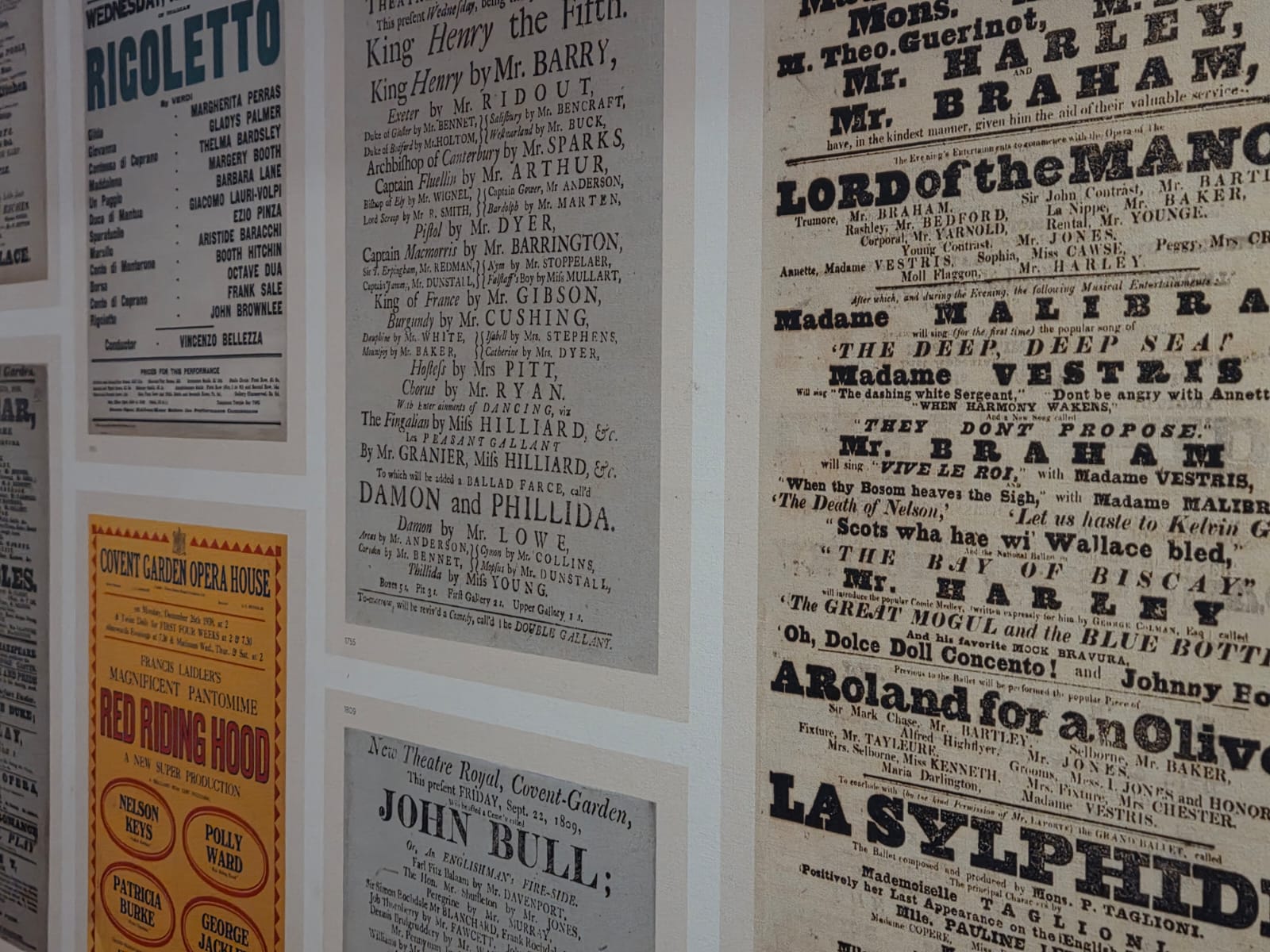
La Bohème – Royal Ballet & Opera, London
I get to know Puccini’s famous love story, La Bohème, at the Royal Ballet and Opera. Why did nobody tell me this was a Christmas story?
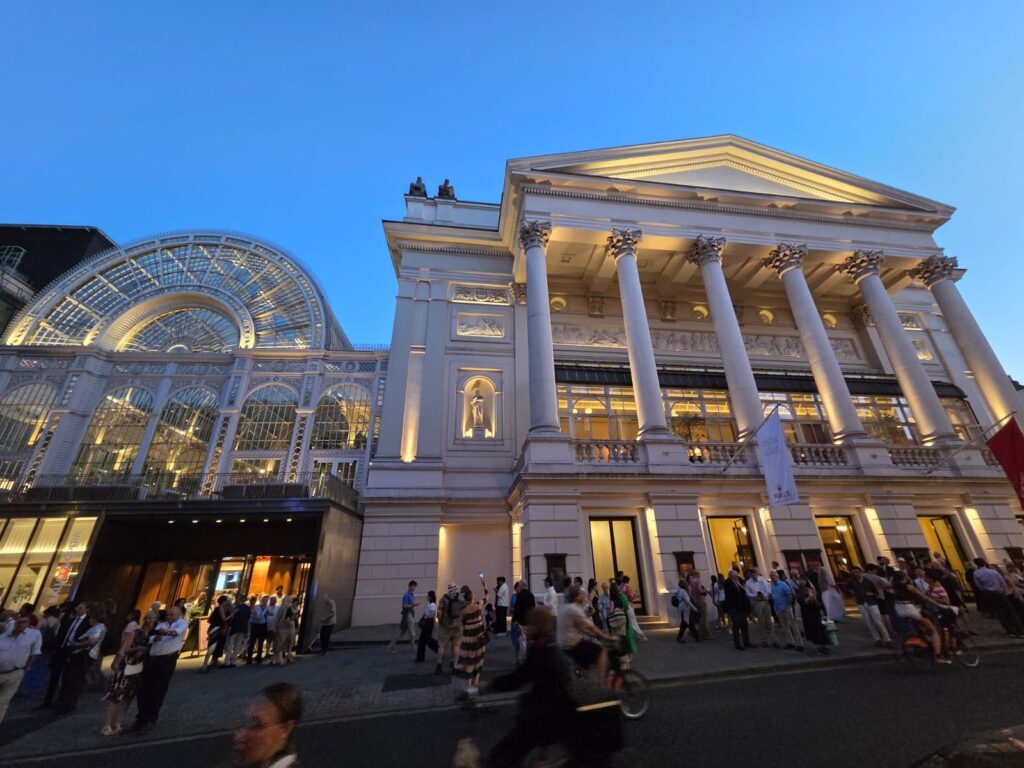
La Bohème
What I previously knew about La Bohème I could have written on the back of a postage stamp (if they weren’t all stickers these days). By Puccini. Presumably something to do with Bohemians. And presumably the louche Parisian type rather than the region-in-Czechia type. Or the Romani type (which I think is mostly a French usage). OK I might have had to write small on that postage stamp. But still…
I now know a lot more about it, having seen it last weekend at the Royal Ballet and Opera. Let me give you a primer, just in case you also have gaps in your opera knowledge. Firstly, La Bohème is indeed by Puccini. Puccini composed it between 1893 and 1895, based on a novel by Henri Murger and then libretto by Luigi Illica and Guiseppe Giacosa. A lot of the libretto is original, as the novel was more episodic and didn’t have a defined plot. The opera had its premiere in Turin in 1896, and has since become one of the most frequently-performed operas worldwide.
The story concerns Bohemians (the artistic type) living in Paris in the 1830s. We first meet friends Marcello, Rodolpho, Colline, and Schaunard on Christmas Eve, as they struggle to conjure up some seasonal cheer much as the Cratchit family might. Rodolpho’s heart is soon warmed when he meets Mimì, a neighbour in some difficulty as her candle has blown out (also, arguably, the fact she clearly has tuberculosis). They flirt for the remainder of Act I, and Act II is them falling in love over Christmas shopping and lunch at a café. Act II is also where we meet Musetta, Marcello’s former lover, who sings a risqué song. It’s all downhill from there as Rodolpho and Mimì (and Marcello and Musetta) air their relationship problems outside a tavern before, in Act IV, Mimì leaves the Viscount she’s taken up with to come back to Rodolpho’s garret and die.
If anyone needs an opera synopsis, come see me – I’m clearly very good at it. No apologies for the spoilers, given this opera is 130 years old.
Great Staging and Great Cast
So, as very flippantly described in the first section of this post, La Bohème is a love story. A story, more specifically, of Rodolpho and Mimì’s doomed love. I was reading recently about how consumption (AKA tuberculosis) was, for a long time, quite a stylish thing to have. It meant you were probably artistic, felt emotions strongly, were fashionably frail, and generally gave off an aura of being a bit otherworldly. This lasted up until tuberculosis was understood to be a bacterial infection, which made it less appealing.
I went off on that tangent primarily because Mimì ticks a lot of those boxes. She’s very good, frail, and prone to fainting. She’s so good, in fact, that she’s encouraged several other characters to be better by the end of Act IV. And the fact that this love story cannot have a happy ending drives a lot of the opera’s pathos.
Pathos is not all that’s going on here, though. La Bohème is also funny, and I would say overall has a fairly masculine energy (by which I mean the female characters don’t have a lot going on outside their relationships, aside from vague employment). On the night I saw it, the performances were excellent. Juliana Grigoryan as Mimì and Marina Monzó as Musetta have beautiful voices, and flesh out the characters through their acting. The four friends (respectively Freddie De Tommaso as Rodolpho, Luca Micheletti as Marcello, Modestas Sedlevičius as Schaunard and Gianluca Buratto as Colline) bring a great energy and humour to the scenes of cameraderie, tempered by the sorrow of the later scenes. La Bohème is a blessedly short opera, but even then it flew by thanks to the quality of the singing and general performances.
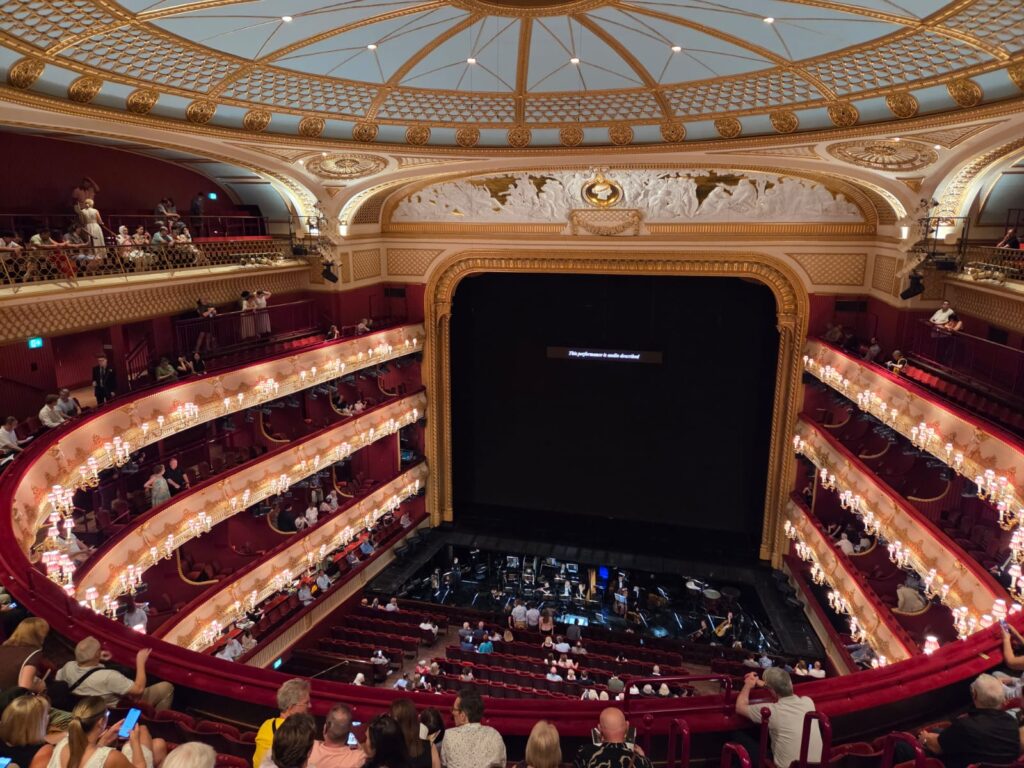
And the final thing that made La Bohème a real pleasure, for me, was the staging. This is Richard Jones’ vision of the opera – about ten years old now but still superb. Simon Iorio directs the revival. Stewart Laing did a wonderful job of the design – separate sets roll in and out to perfectly bring to life each act. The Christmas shopping is a particular delight, with whole crowds of people passing through the fashionable arcades. The only questionable moment, for me, was when the tavern started creeping off the stage like it was embarrassed to witness Marcello and Musetta’s fighting.
But all in all a wonderful night out at the opera. I recommend it as a good foray into opera, as well as for well-established opera lovers.
Salterton Arts Review’s rating: 4/5
La Bohème on until 25 July 2026.
Trending
If you see this after your page is loaded completely, leafletJS files are missing.