
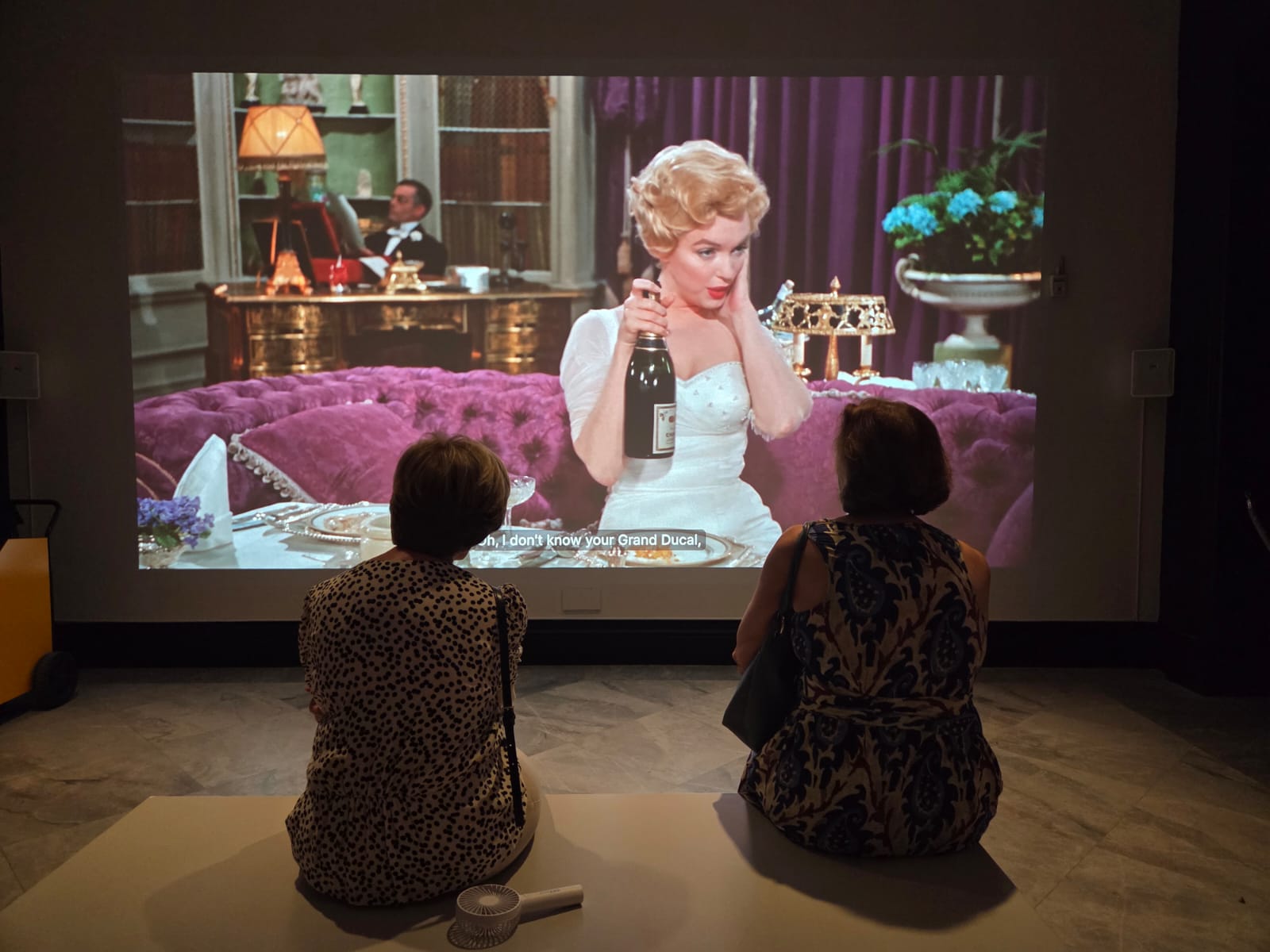
Marilyn Monroe: A Portrait – National Portrait Gallery, London
Monroe’s agency in creating her image is at the forefront in the National Portrait Gallery’s exhibition Marilyn Monroe: A Portrait.
Choosing Which Exhibitions to See in London: A Matter of Snap Decisions
The thing with London is that you can’t see everything. Or maybe you could if seeing exhibitions was your full time job, but even then it would be a stretch. So you have to make choices. I’d seen that Marilyn Monroe: A Portrait was on at the National Portrait Gallery, but had fairly quickly disregarded it. “Marilyn Monroe?”, I thought, “Not really that interested. I’ll give that one a miss.”
And by having that thought, I probably reinforced exactly the sort of stereotypical thinking this exhibition aims to address. It’s easy, faced with Monroe’s “dumb blonde” or “sex symbol” persona, to view her only in these reductive terms. The breathy happy birthday, the famous scene over the subway grate in The Seven Year Itch – it all feeds into the idea of Monroe as an object of the male gaze, and ultimately a tragic figure who remains eternally beautiful (and therefore retains value in our image-obsessed culture) because she died young.
Am I part of the problem? I think so. Because I did know that there were other depths to Marilyn Monroe. I knew, for instance, that she’d used her influence to support Ella Fitzgerald’s career – insisting she be booked at LA’s Mocambo nightclub, or refusing to perform at another club unless both she and Fitzgerald could enter through the main doors – breaking down racial barriers (at least a little) in the process. So if I’m quick to write off an exhibition in her honour, with those famous photographs or perhaps the Andy Warhol screenprints coming to mind, that’s just lazy thinking.
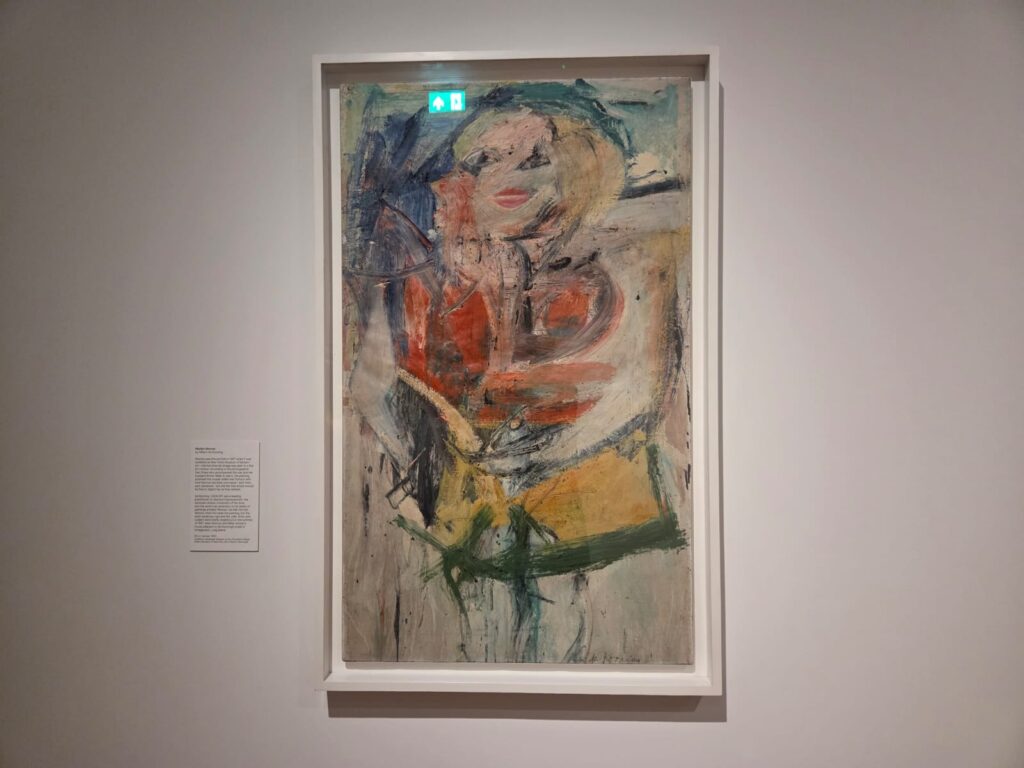
What changed my mind, in the end, was a post on Instagram. I saw the NPG had included a painting by Willem de Kooning that I once saw, at considerable inconvenience, by travelling to the Neuberger Museum of Art at the State University of New York. Hopefully the first and last time I go to White Plains. “OK”, I now said to myself, “that’s interesting. Perhaps this isn’t an exhibition about glamour after all, but something more intriguing.”
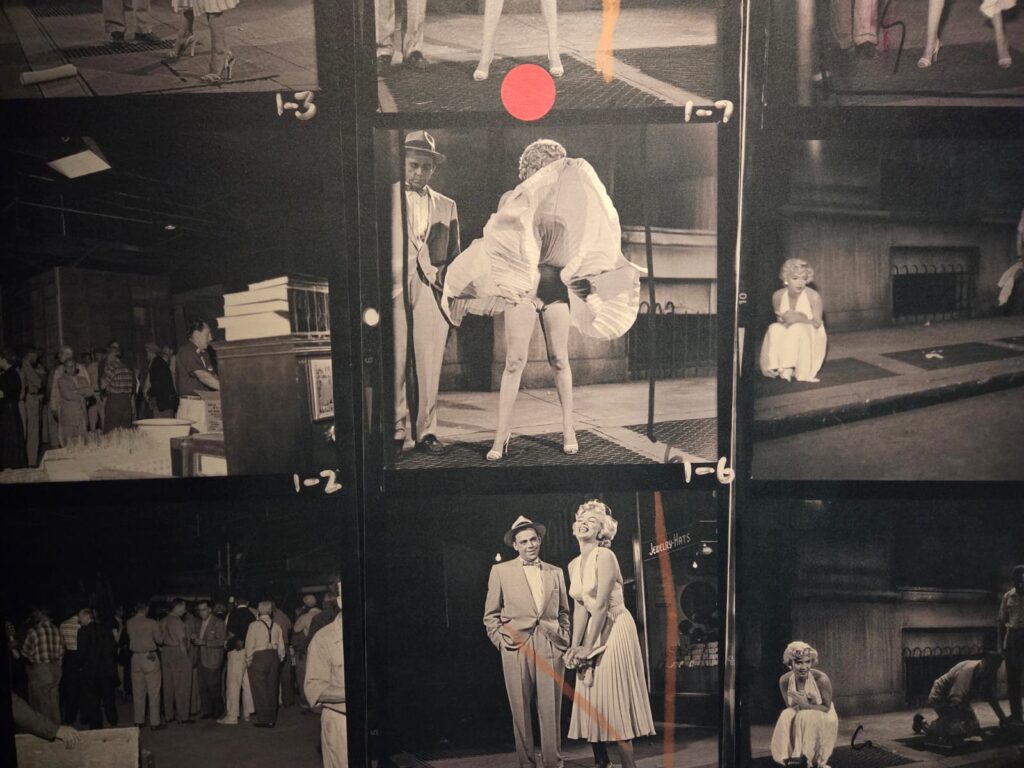
Marilyn Monroe: A Portrait
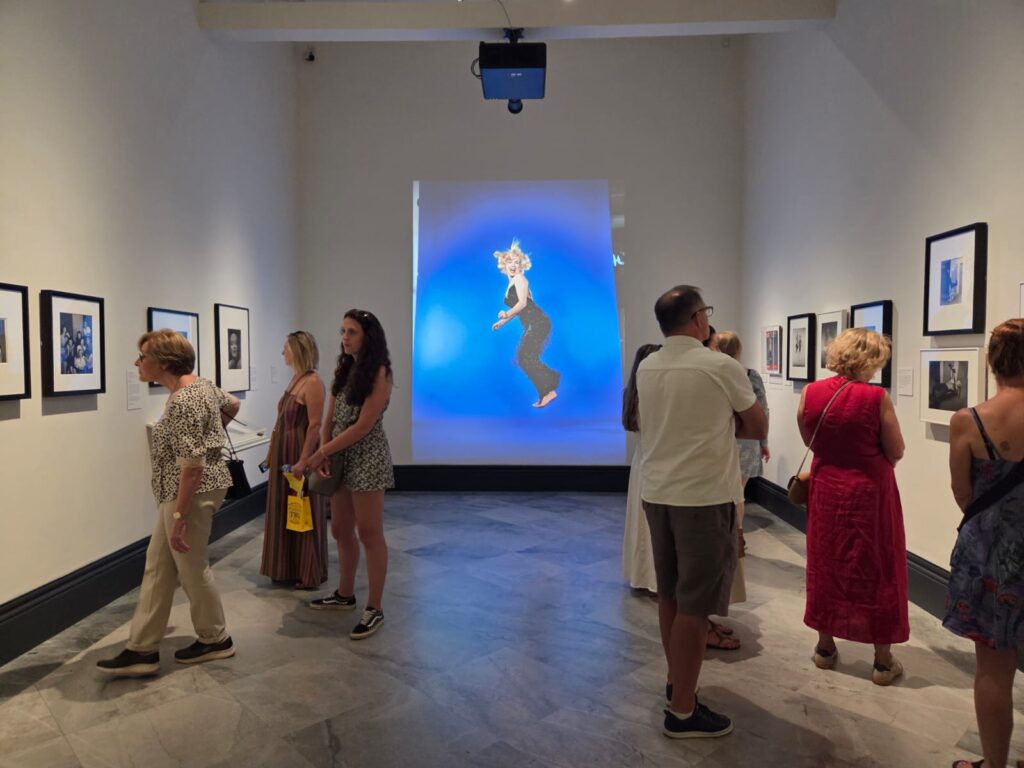
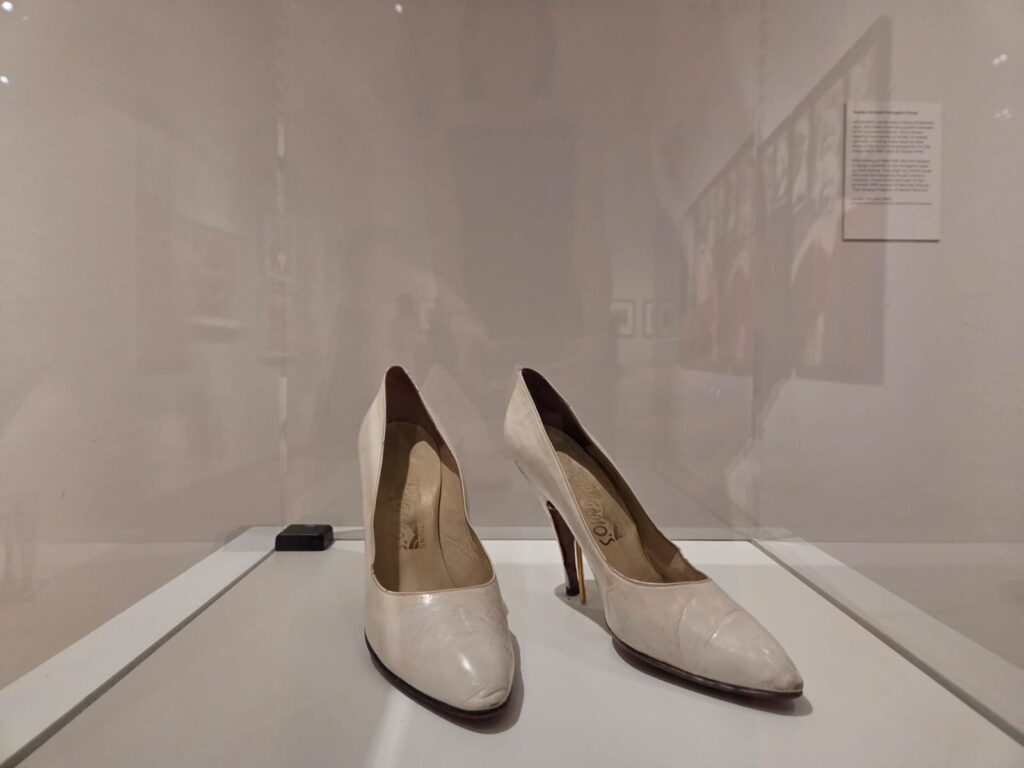
And more intriguing it turned out to be. There are absolutely loads of glamorous photos, to be fair. But also plenty of representations of Monroe by artists who were contemporary to her (more or less), like de Kooning. And the point of all of this, ironically for paintings and photos, is to bring Monroe back into three dimensions.
We start with her early life. Norma-Jean Baker had a difficult childhood. She didn’t know her father, and spent a lot of time in foster care. Both an early marriage and a future as a movie star seemed to be a means to a different life. She married James Dougherty in 1942 at only 16 years of age, but their marriage was impacted by WWII. Towards the end of the war, with James in the Merchant Navy and Norma-Jean working in a munitions factory, photographer David Conover suggested she become a model.
The rest was history, more or less. Norma-Jean divorced James in 1946, and had been signed by a Hollywood studio within a year of becoming a model. Enough time for her to have agreed to a nude photo shoot, which Marilyn, as she became, refused to regret in later years. Her career started to take off in the 1950s, and she completed 29 films and was working on a 30th when she died in 1962.
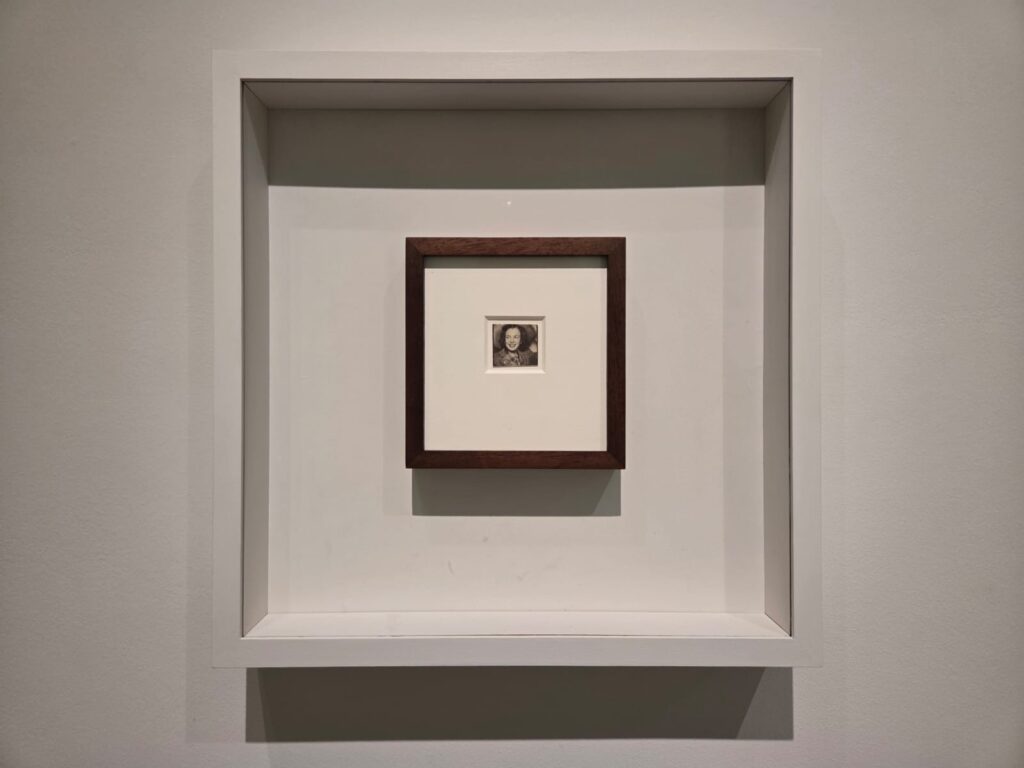
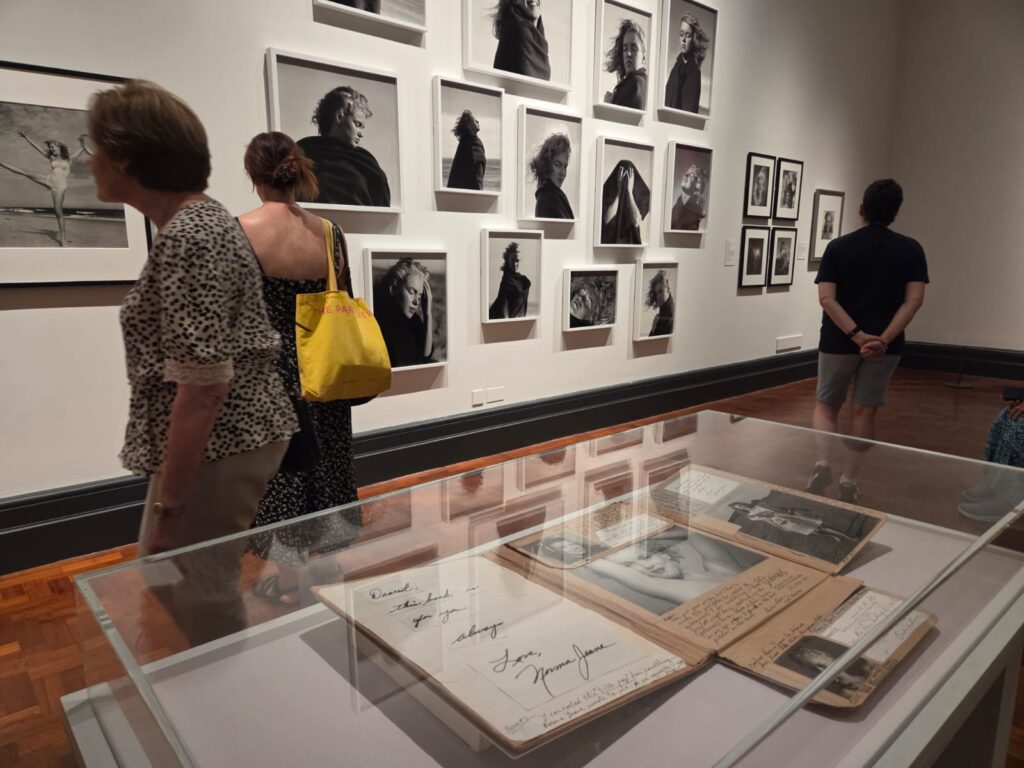
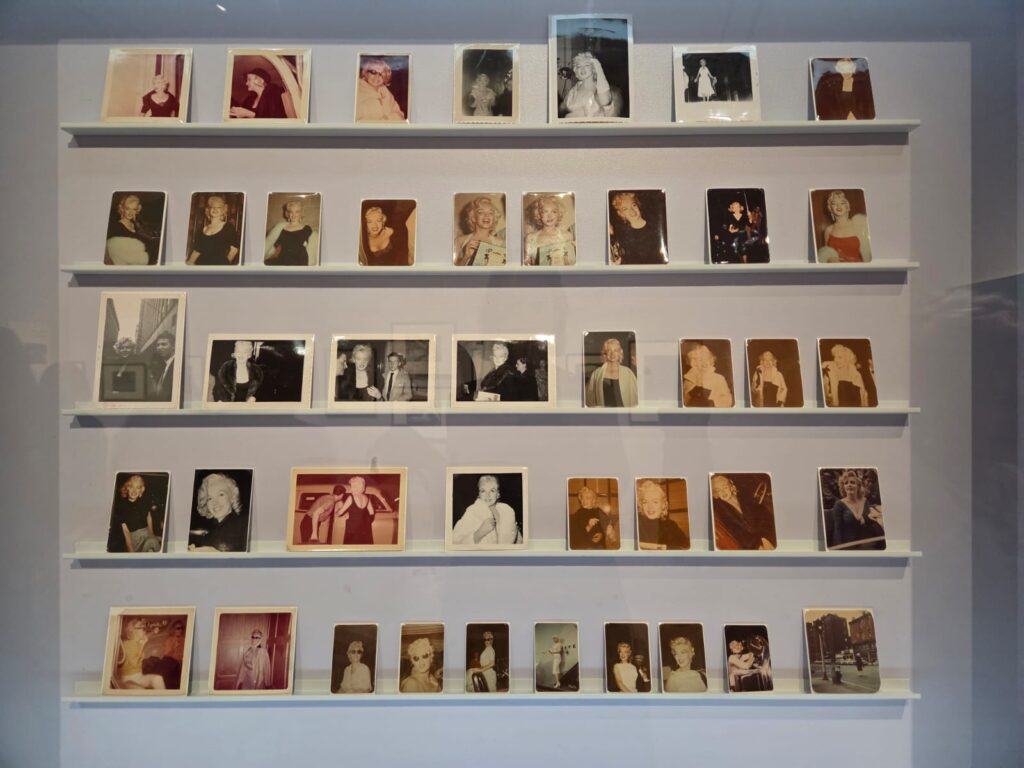
If we add in her two celebrity marriages to Joe DiMaggio and Arthur Miller, and a couple of the more famous anecdotes and incidents, it’s a life we’re familiar with in broad strokes. And the exhibition is organised chronologically, but retelling the same life story is not its focus. Instead, from the outset, the focus – at least of the photographic works – is agency. The earliest work included is thus a small image from a photobooth. Young Norma-Jean choosing how she presented herself to the world, long before she (and her film studio) created the persona of Marilyn Monroe.
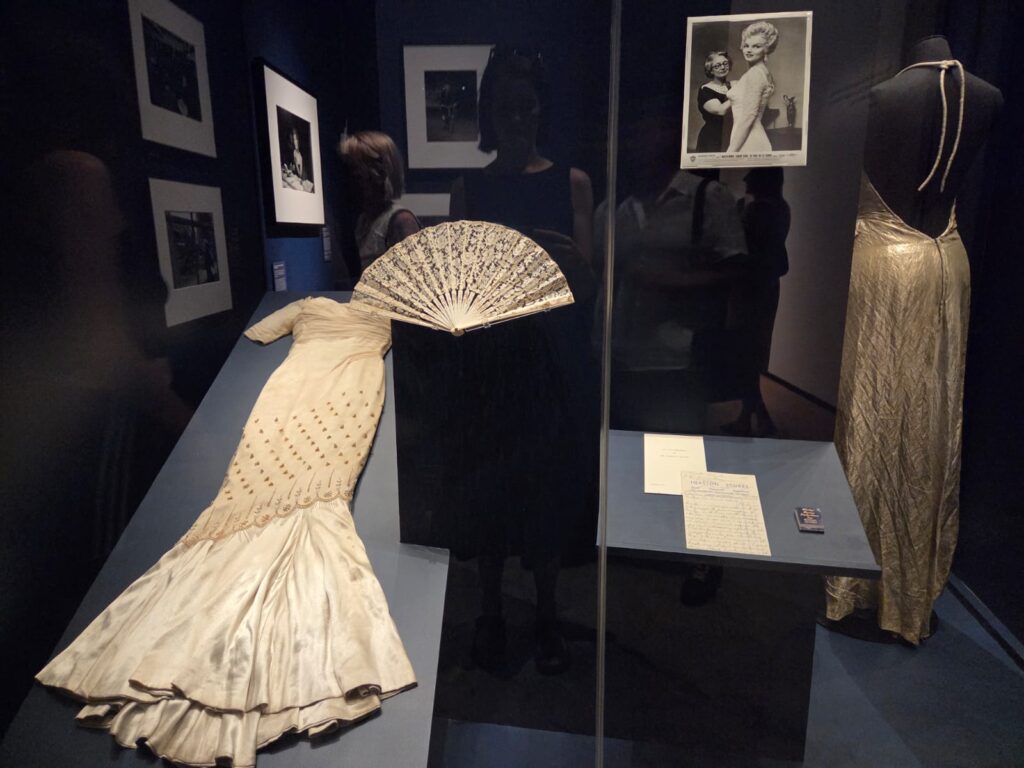
The Photographs
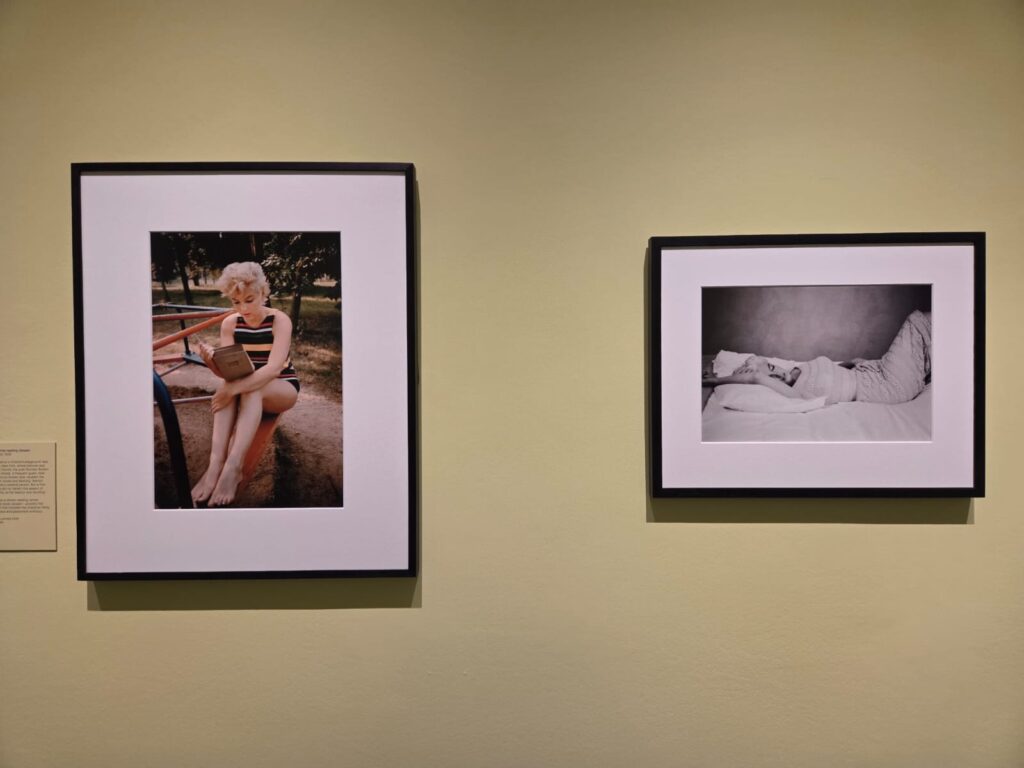
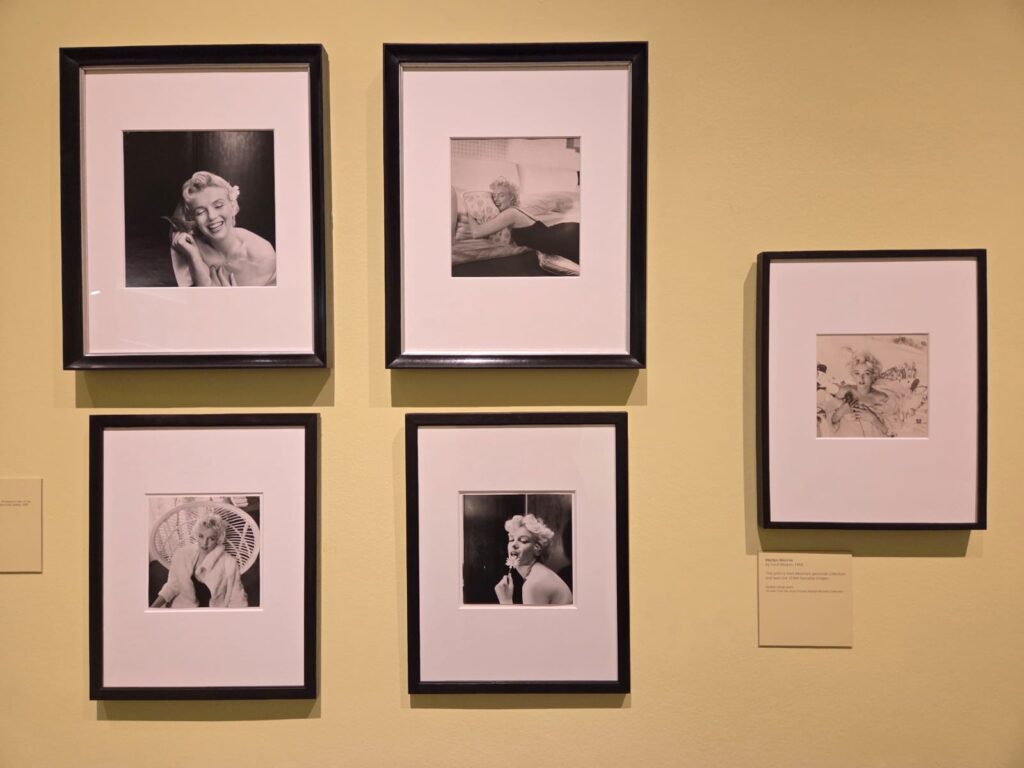
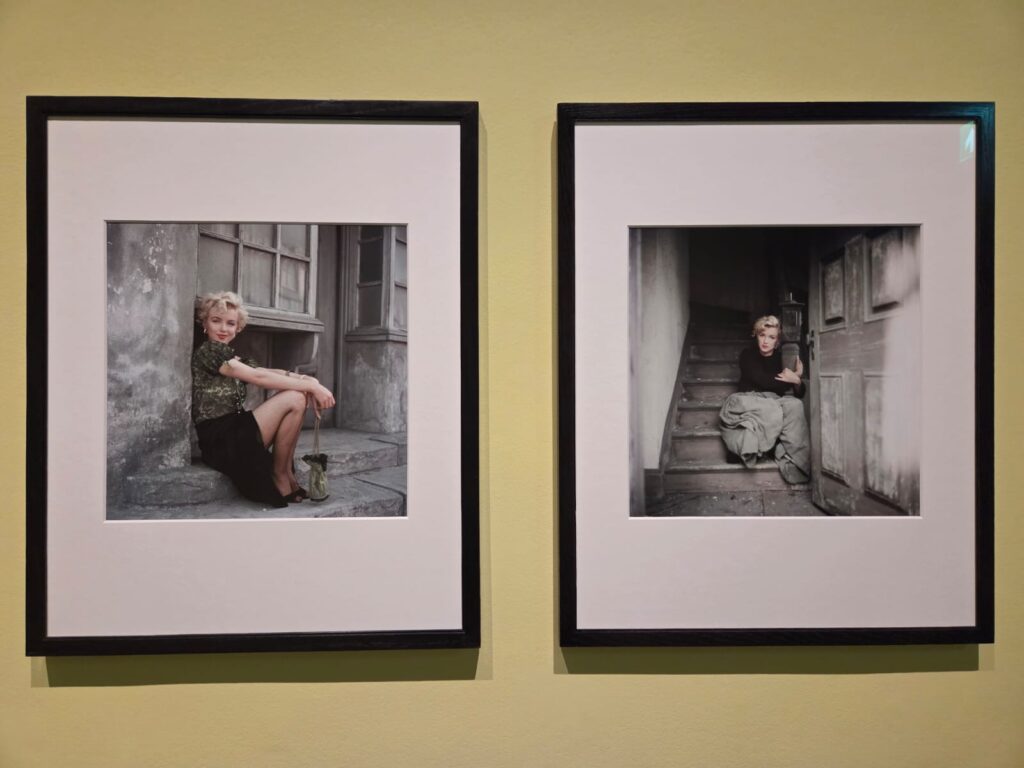
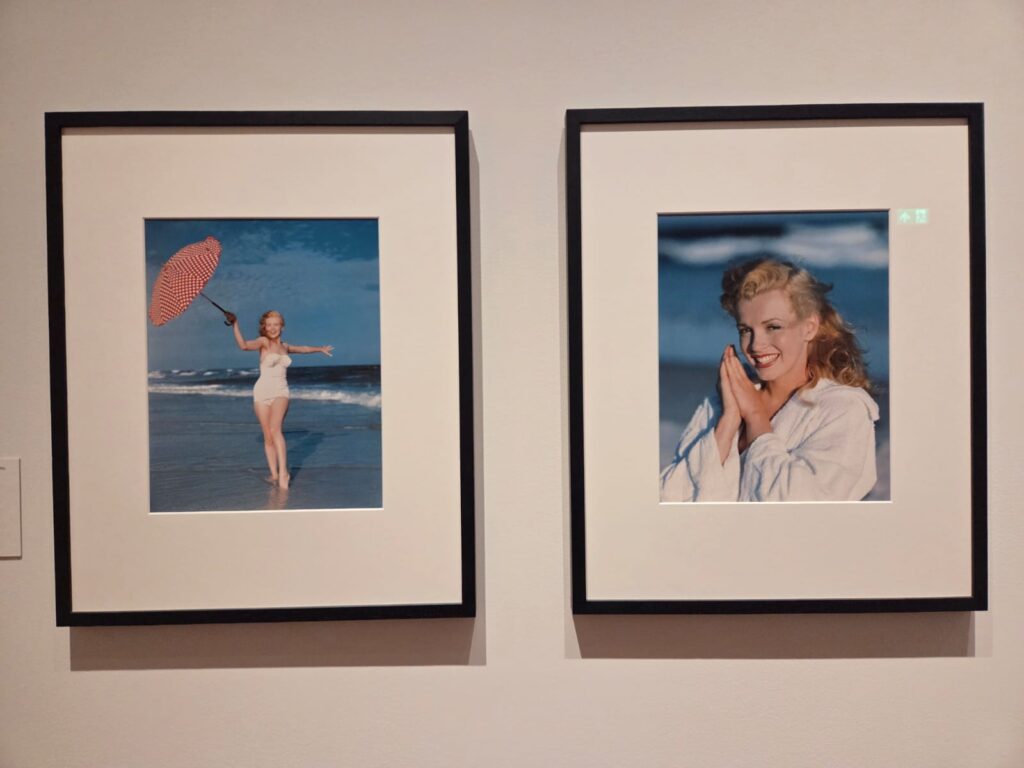
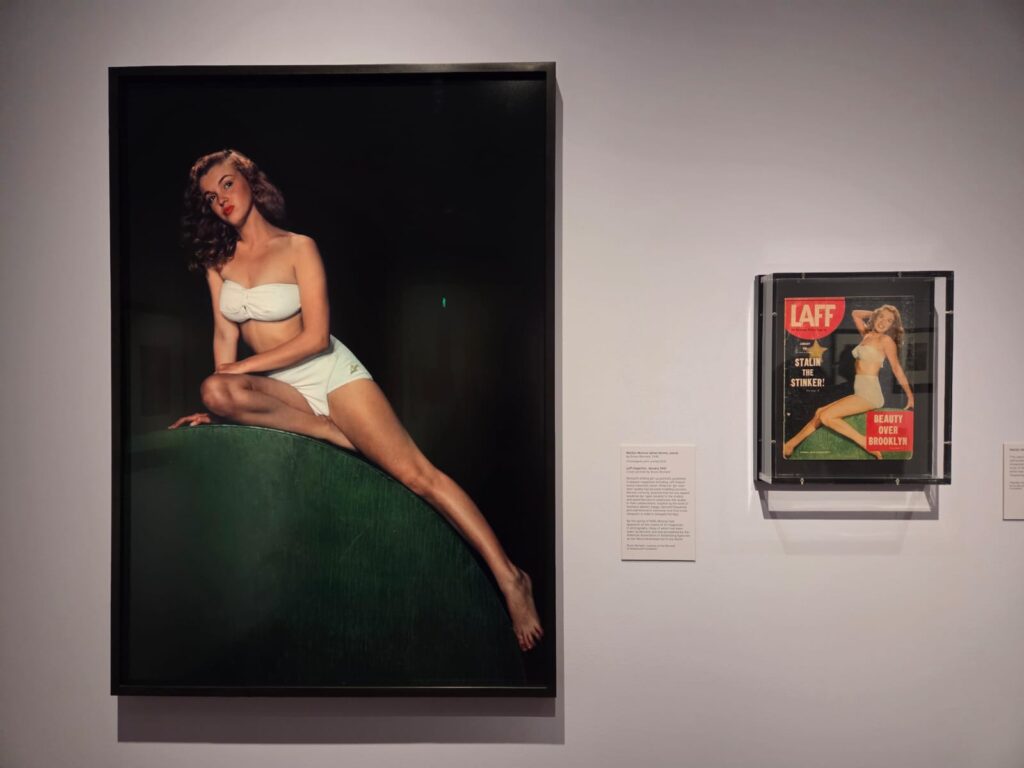
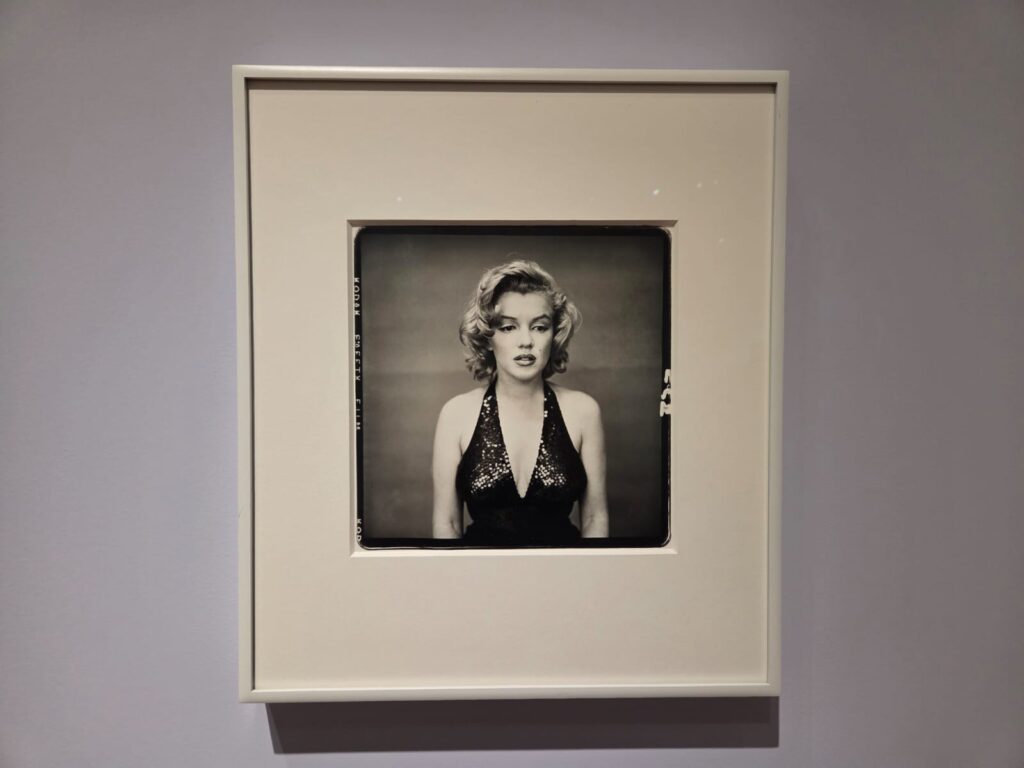
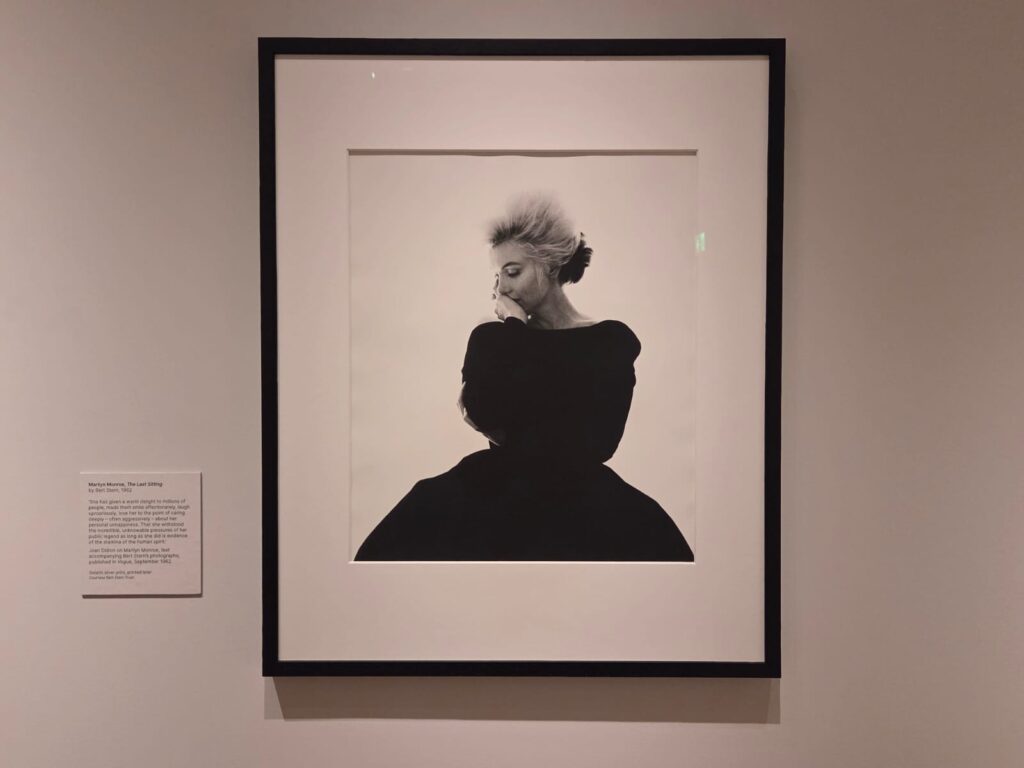
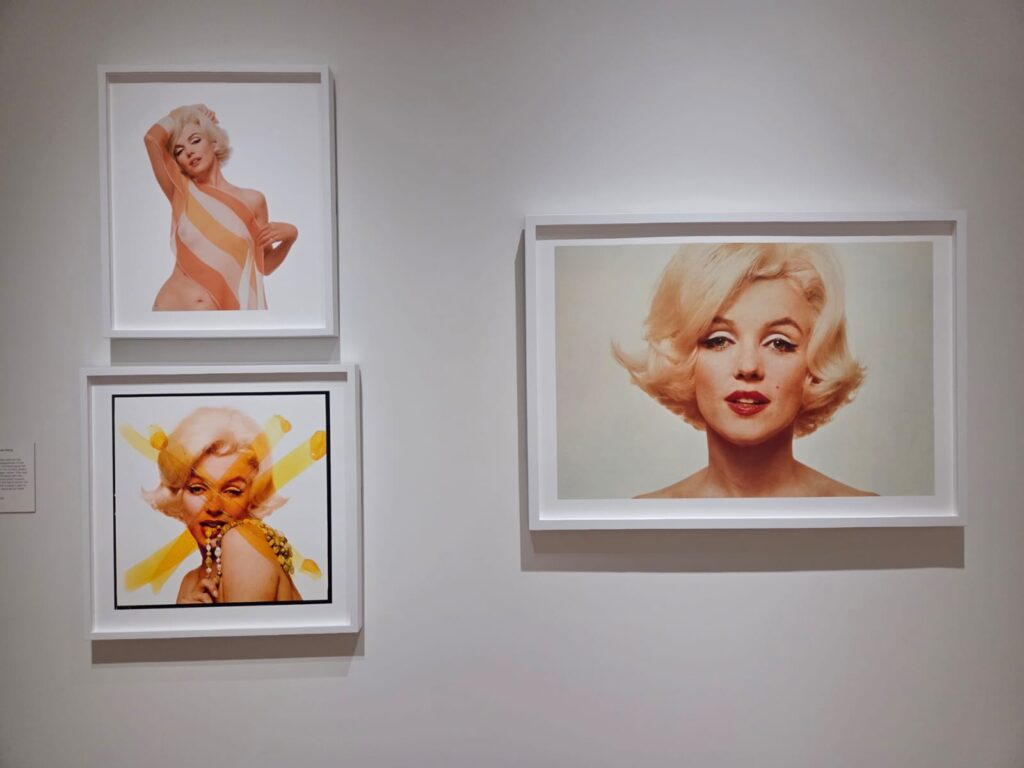
As one of the most photographed people in the world, it’s natural there are a lot of photographs on view. The NPG’s website trumpets the inclusion of the work of more than 20 “era-defining photographers”. The images are organised into sections by photographer, based largely on when in her life/career Monroe first worked with them. The names include ones I knew like Richard Avedon and Cecil Beaton, and ones I didn’t like Bernard of Hollywood, Alfred Eistenstaedt, and Sam Shaw. Eve Arnold and Inge Morath were less common as female photographers of Monroe.
This is the main axis along which the NPG argue for Monroe’s agency in creating her image. Each photographer’s section is headed ‘Working With’ (Working with Philippe Halsman, for instance), and photoshoots are often described as collaborations. Where possible, comments from the photographers about how Monroe had an innate understanding of the camera, or used photography for purposes such as advancing her career or shaping her image, promote this idea that Monroe was not a mere muse, but an active participant. The panel on Milton H. Greene is particularly interesting. They worked together on a photo shoot designed to extend Monroe’s range as an actor, and ultimately co-founded Marilyn Monroe Productions.
The fact remains, nonetheless, that Monroe was a popular muse. The number and quality of photographers on the set of her final completed film, The Misfits, is testimony to this. There were nine in total, including Arnold and Morath, Henri Cartier-Bresson, and Elliott Erwitt. Looking across the work of all the photographers included in the exhibition, we see Monroe’s versatility, beauty, warmth, and vulnerability. In the end, though, I particularly liked the candid shots by the ‘Monroe Six’, a group of teenage New Yorkers and devoted Monroe fans. Monroe apparently appreciated their enthusiasm, and never said no to them taking a picture of her.
The Artworks
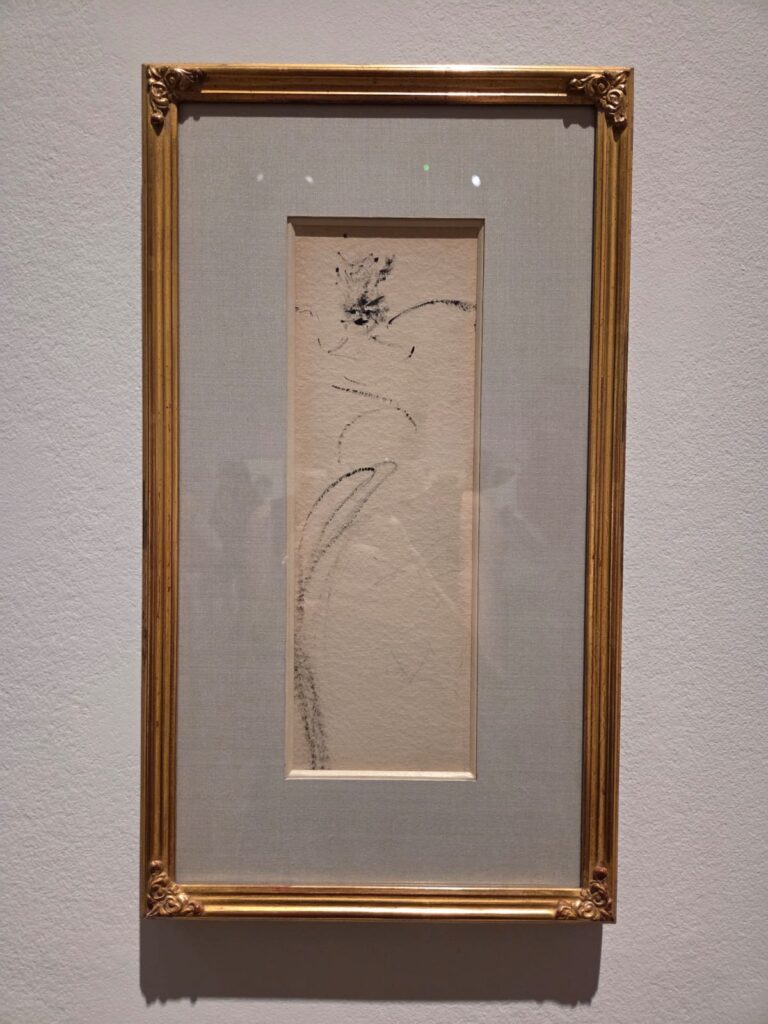
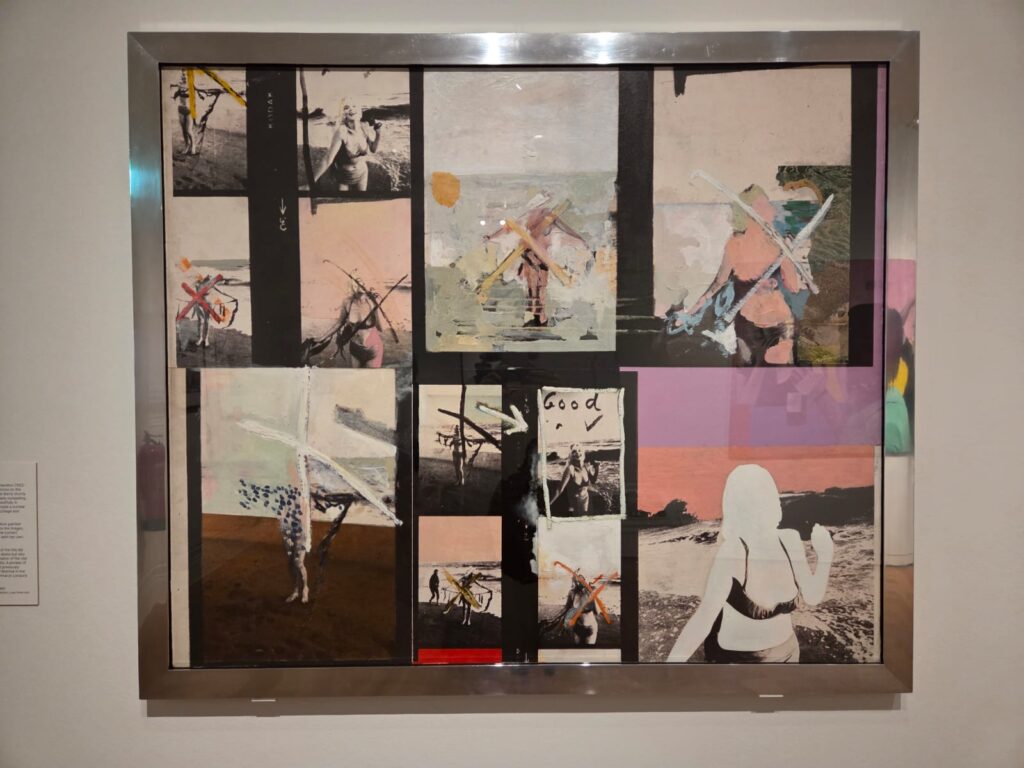
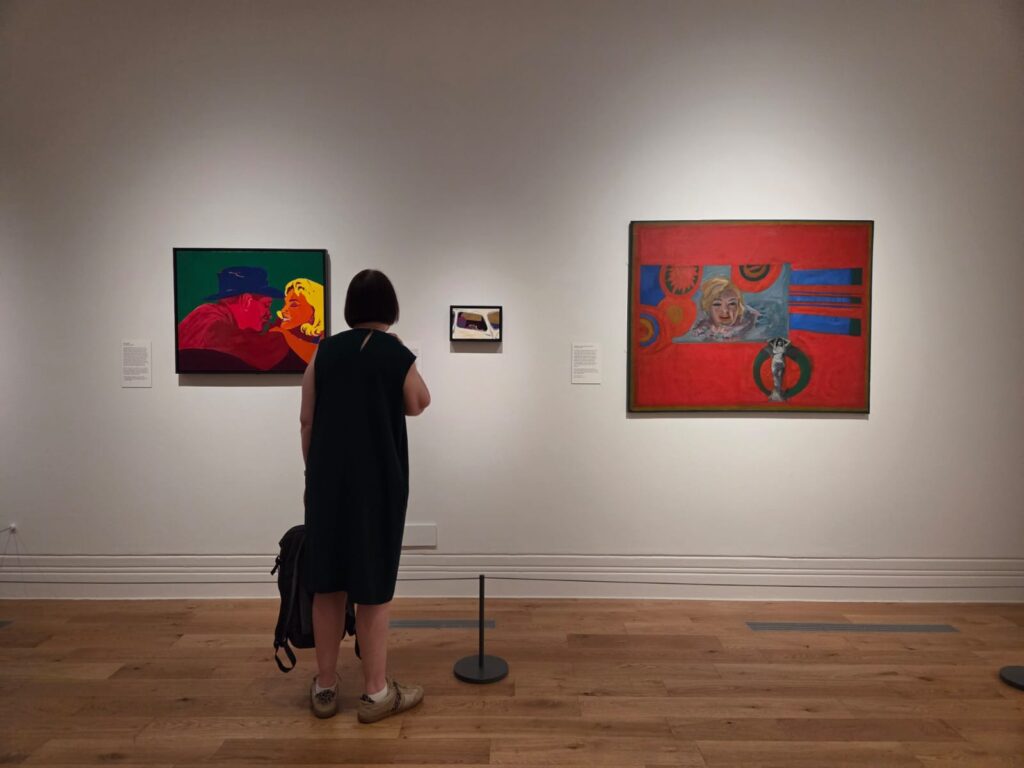
That is not to say that the photographs aren’t artworks, but I need some way of distinguishing the two. This section is about the (mostly) paintings by artists contemporary to Monroe or a little later. I should also perhaps mention that there’s a self-portrait of sorts by Monroe as part of the exhibition. Look out for it: the merest sinuous outline of a feminine form.
But let’s get back to that painting by de Kooning, which I think tells us a lot about Monroe. At the time de Kooning painted Marilyn Monroe (1954), he was working on a series entitled Woman, of which this was an extension. When it was exhibited at MoMA in New York in 1957, it was the first time Monroe’s likeness had reached the status of fine art. Her husband, Arthur Miller, was furious with it. Monroe was more sanguine, believing that artists had the right to depict her as they wished.
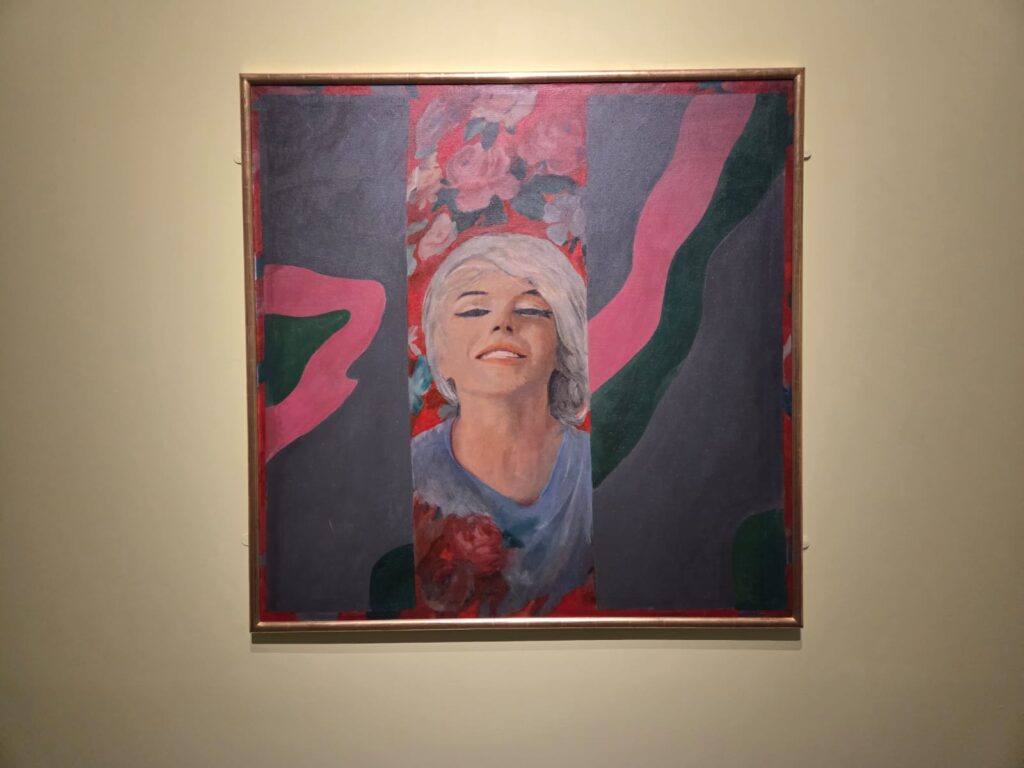
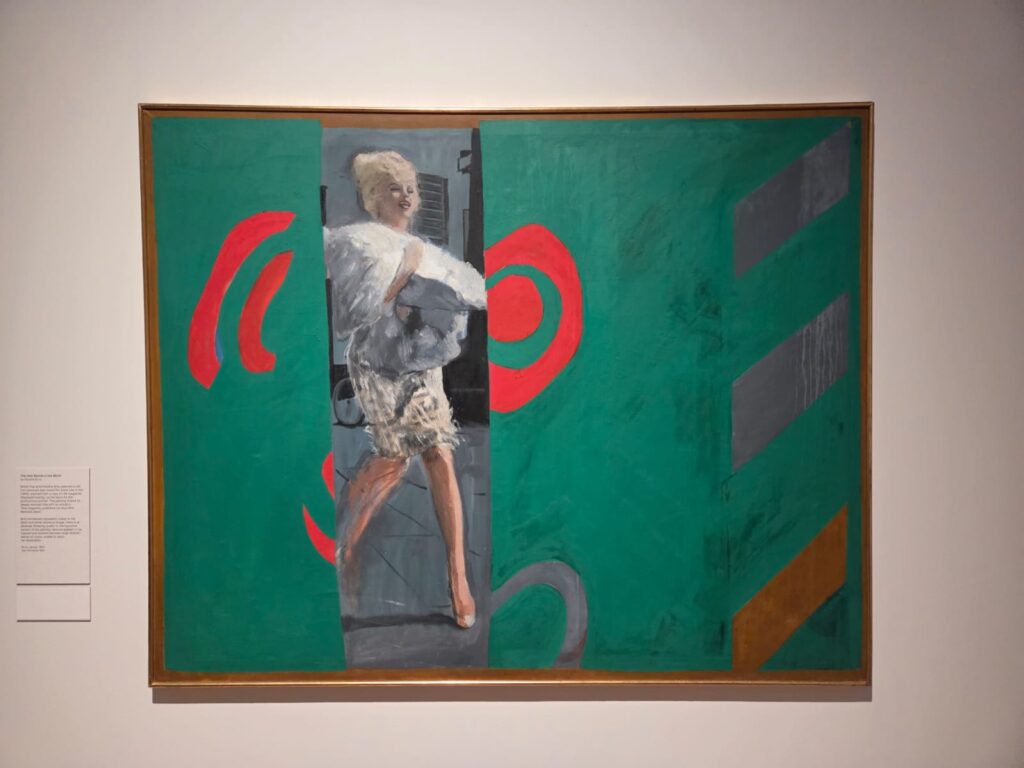
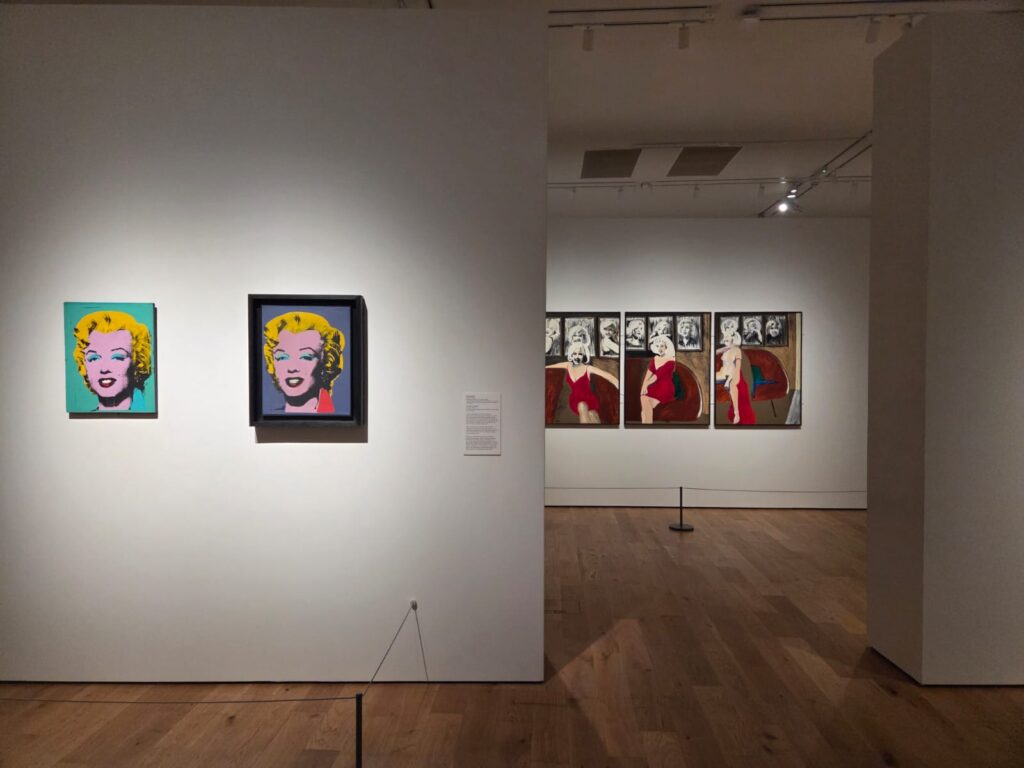
And depict her they did. Monroe seems to have been particularly popular with Pop artists, who often used film stills or other public images as inspiration. Works in this vein include The Only Blonde in the World (1963) by Pauline Boty, Corpse in a Car (1964) by Rosalyn Drexler, and Untitled (Marilyn, Yves and Simone) (1974) by Sue Dunkley. Do you notice something here? We have gone from the photographers – almost always male – to seemingly a lot of female artists interested in Monroe’s public image. Perhaps inevitable, given how perfectly she embodied a certain version of femininity, and can thus be leveraged to critique this and the male gaze.
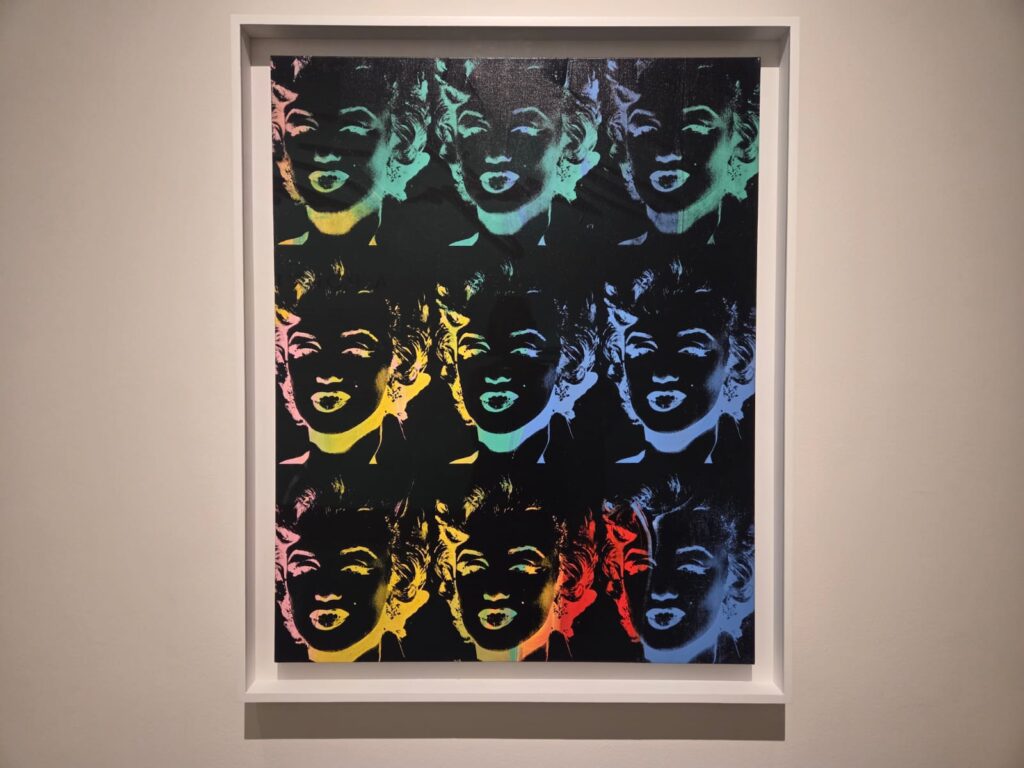
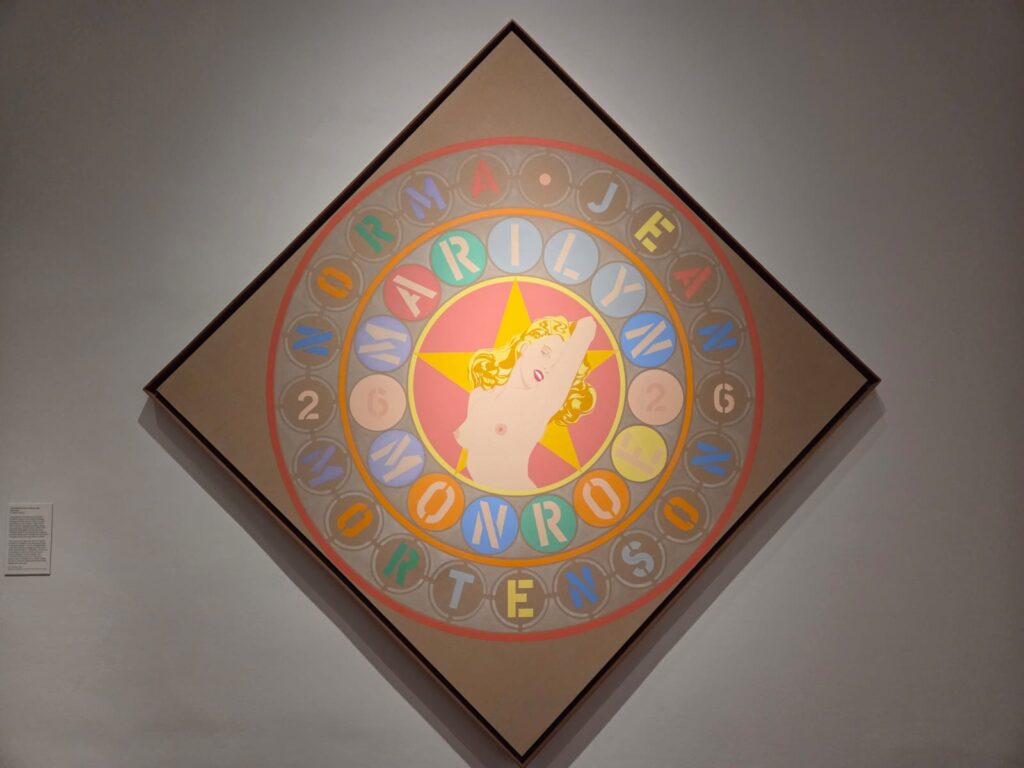
It’s not all female artists and feminism, though. There is a painting by Robert Indiana which uses an image from that early nude photo shoot. And examples of those Warhol screenprints, of course. But I do think the artworks help to elevate the exhibition even further and say something interesting about Monroe’s place in 20th century culture.
And that, along with a few costumes and film clips, is that! Due thanks go to the NPG’s social media team (and Willem de Kooning) for encouraging me to get over myself and come and see it!
Salterton Arts Review’s rating: 3.5/5
Marilyn Monroe: A Portrait on until 6 September 2026.
Trending
If you see this after your page is loaded completely, leafletJS files are missing.