
The Roman Baths, Bath
You can’t come to somewhere named Bath and not see the baths, now can you?
When in Bath…
A recent trip to Bath was not my first. I came once years ago on a ladies’ day trip. We visited the topic of today’s post, went to the Jane Austen Museum, the Fashion Museum, had a walk around the Royal Crescent, and I think some sort of afternoon tea, from memory. A very genteel sort of day. Since then I went back once during the pandemic, sneaking a visit to the Holburne Museum between lockdown rule changes. So this trip was my third. However, it has been such a long time since my first visit that my memories of it were beginning to be a bit hazy.
That, combined with the fact that the Urban Geographer had never been to the Roman Baths, suggested a return visit was in order. I had great trouble convincing him it was not an issue that he had forgotten his swimming trunks, as it was more of a looking than a participating sort of place. But convince him I did, in the end, and after checking into our hotel we set off.
It’s always nice walking around the centre of Bath, with its warm sandstone buildings and general Georgian feel. Where we were staying was a bit more of a nightlife area, but we soon made it towards the more sedate historic buildings, including Bath Abbey, which has roots in the 7th century as a Benedictine Monastery and influences all the way up to Sir George Gilbert Scott in the 19th. The Roman Baths are just next door, tucked in discretely behind a colonnaded façade. After a brief shock at the ticket prices, we bought some and headed inside. I’d better commit this visit to memory so I get my money’s worth! To be fair to the Roman Baths, though, it can’t be a particularly cheap site to maintain.
Aquae Sulis and its Springs
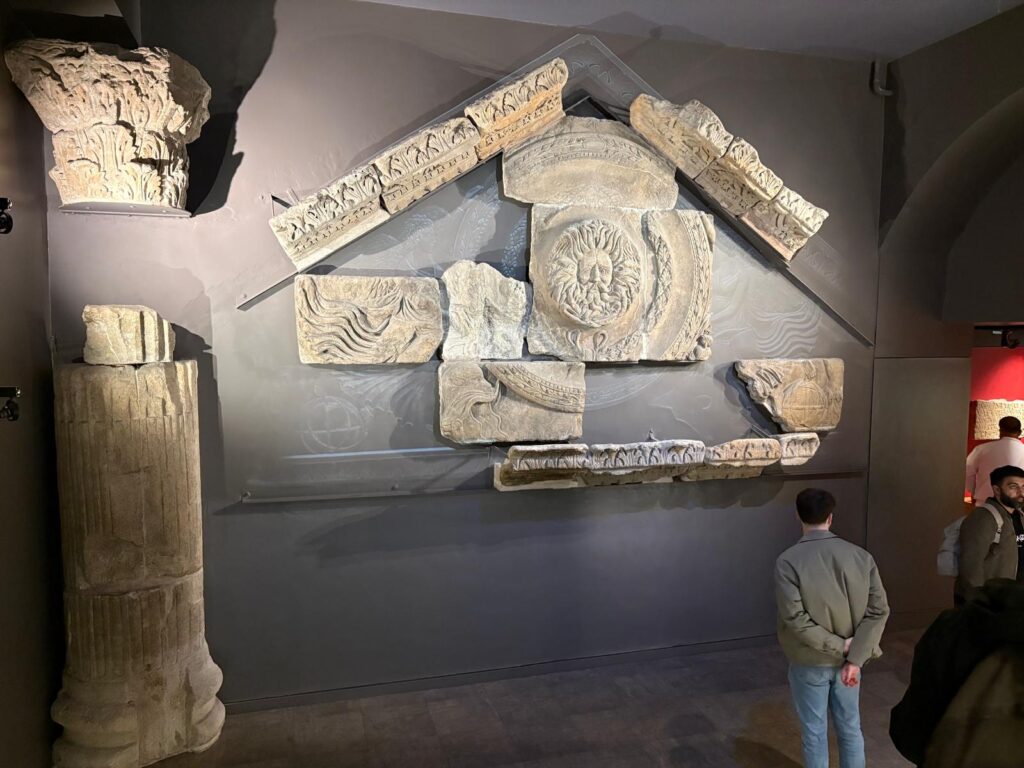
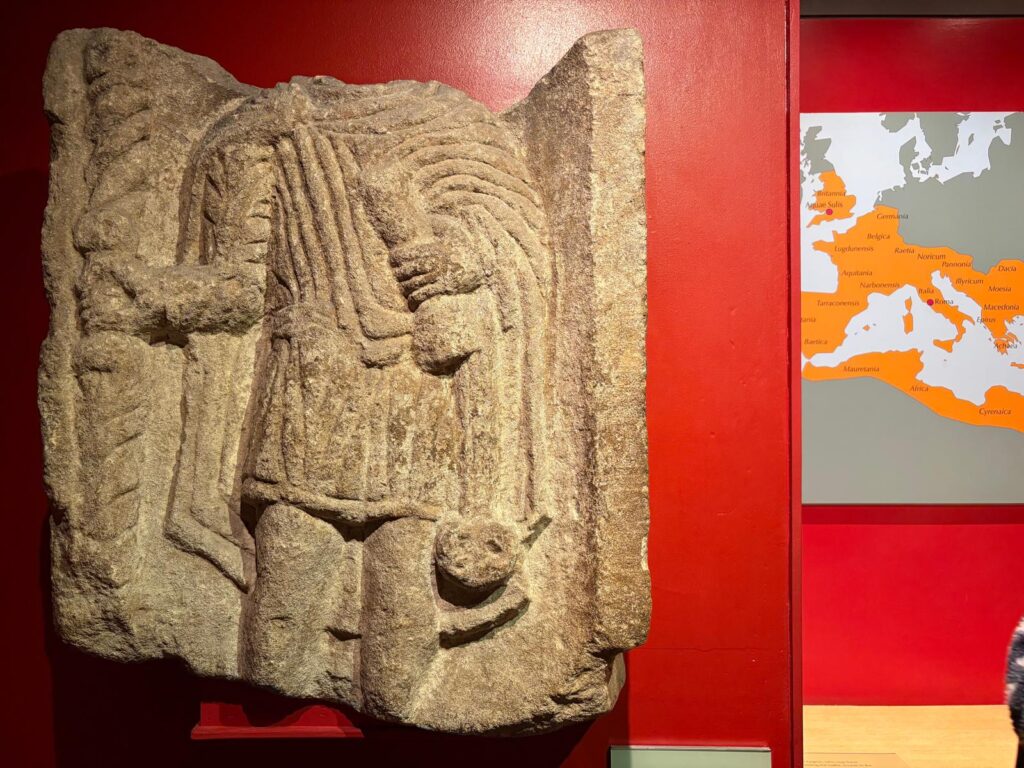
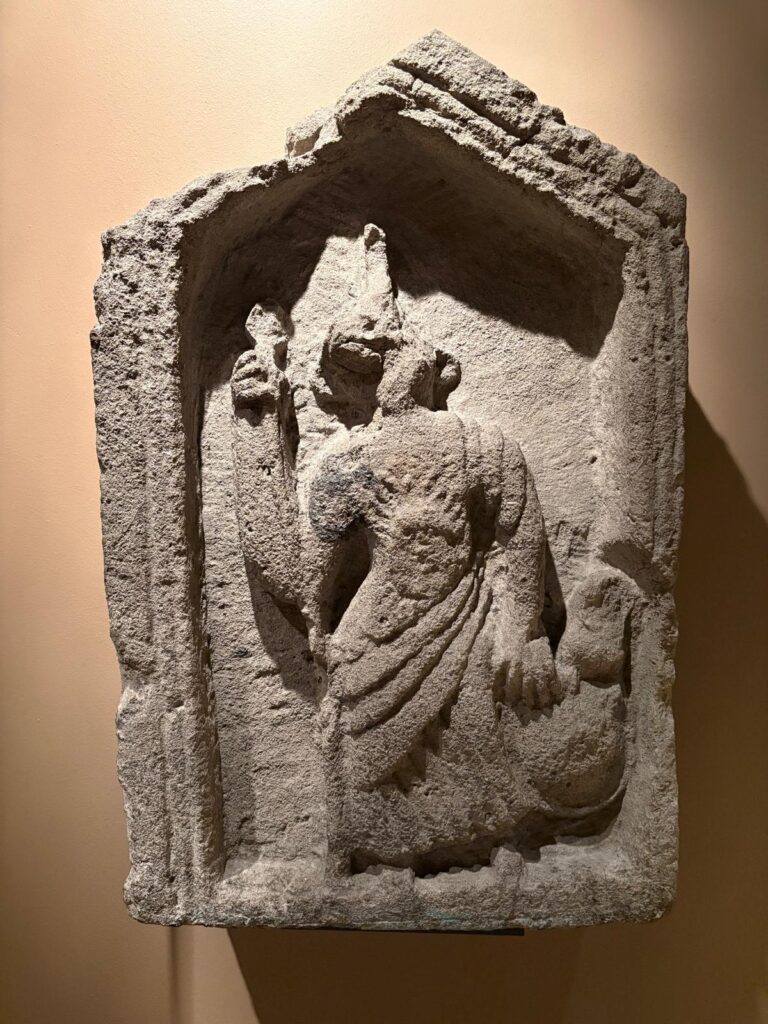
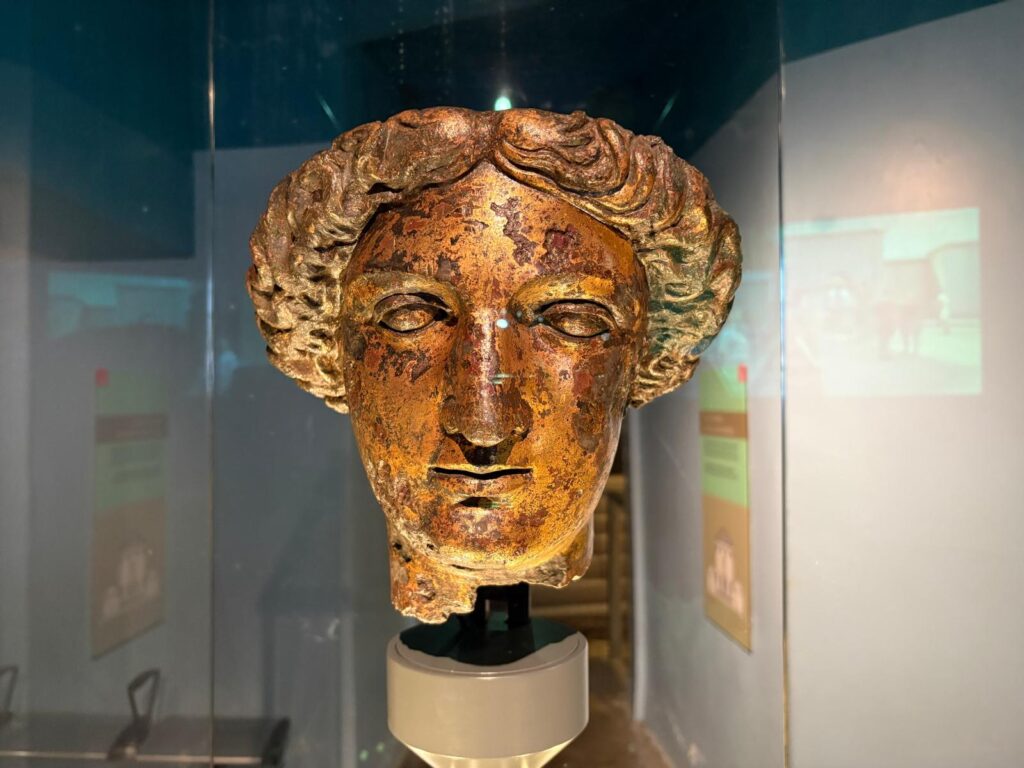
The Romans weren’t the first to notice there were natural hot springs in this area. We don’t know who that honour went to because it was such a long time ago. But there has been human activity in the area since the Mesolithic period. We also know that the Britons had a shrine around where the main spring is. The shrine was dedicated to Sulis (or Sul), a goddess of healing about whom not too much is known. When the Romans arrived in 43 CE they deployed what I always think was one of their canniest tactics. They decided that Sulis could be combined with Minerva and worshipped as Sulis Minerva. Excellent – no need to tell the local people to stop worshipping their old gods (never a popular move). With a bit of flexibility you can get them worshipping a Roman goddess instead!
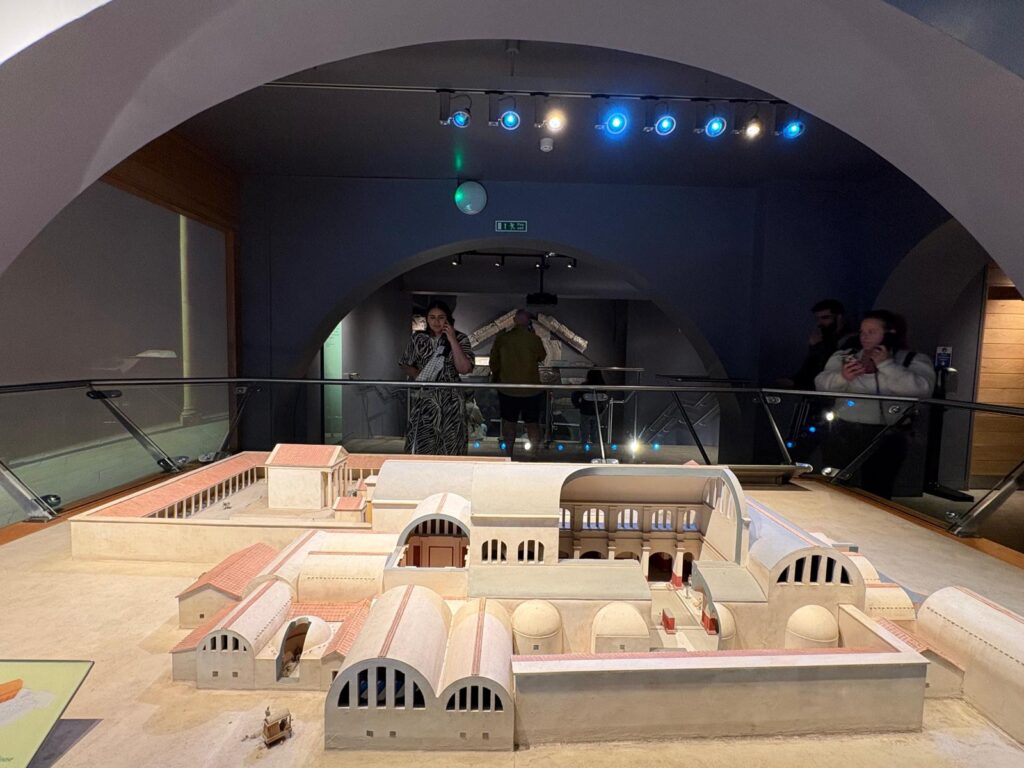
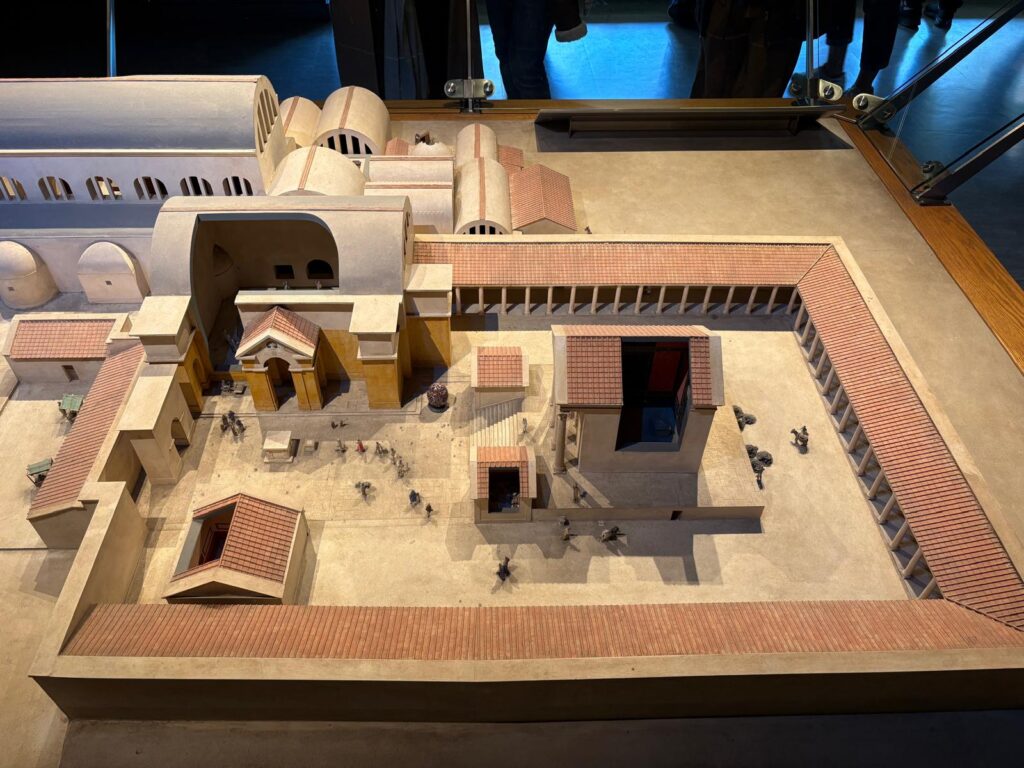
The Roman town established here was thus named Aquae Sulis (‘the waters of Sulis’). That was in around 60 CE. During the Roman period, there were two main activities happening in this area: bathing, and the cult of Sulis Minerva. To cover off bathing firstly, the bathing complex at Aquae Sulis evolved over about 300 years. It was quite a muddy area, which engineers remedied using oak piles to provide a stable foundation. They surrounded the spring with lead-lined stone, and then built enclosed wooden spaces for the usual Roman bathing rituals. That is to say a caldarium (hot bath), tepidarium (warm bath), and frigidarium (cold bath). The Romans loved a bathing complex. We’ve visited others at Saalburg near Bad Homburg, at Billingsgate in London, at the Aquincumi Múzeum in Budapest, and private baths at Chedworth Roman Villa in the Cotswolds. Basically, anywhere you found Romans you found baths.
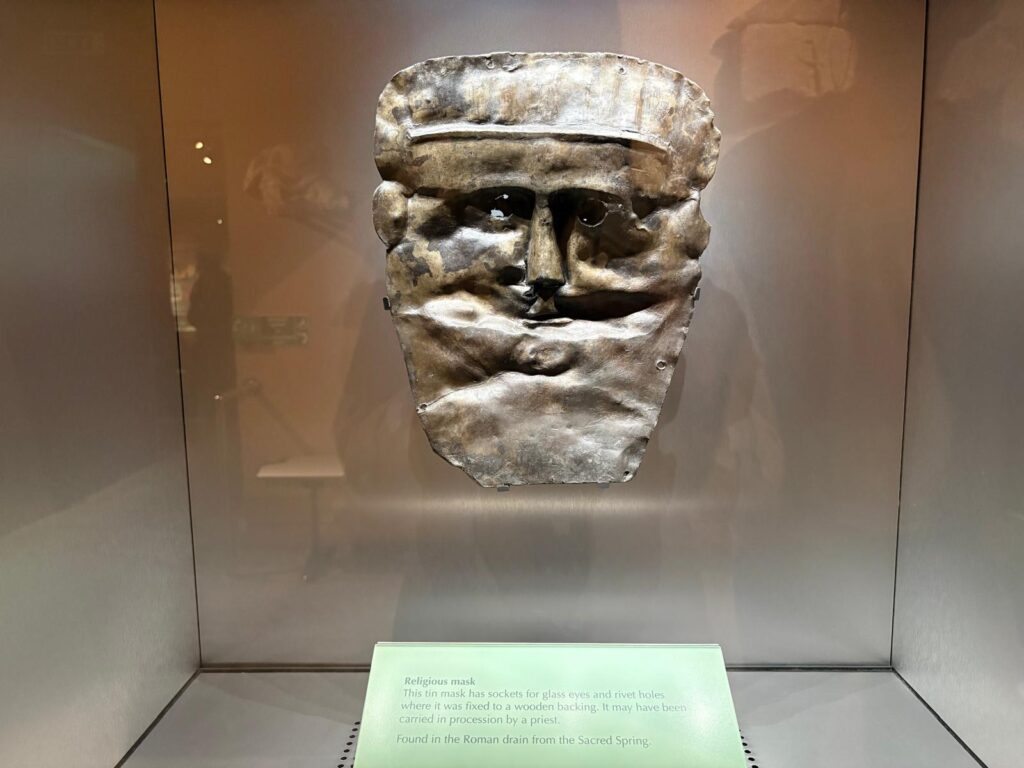
The Romans also built a temple to Sulis Minerva. The cult of Sulis appears to have involved a lot of sacrificing based on archaeological evidence. A sacrifice could just be to honour the goddess, or could come with a catch: a request for the goddess’s intervention. Many curse tablets have been found in the spring. Almost all were ‘prayers for justice’ rolled up and thrown in by the victims of petty theft. Theft from public baths seems to have been a recurrent problem, and victims got very creative in suggesting punishments. Here are some examples:
“Solinus to the goddess Sulis Minerva. I give to your divinity and majesty [my] bathing tunic and cloak. Do not allow sleep or health to him who has done me wrong, whether man or woman or whether slave or free unless he reveals himself and brings those goods to your temple.”
https://en.wikipedia.org/wiki/Bath_curse_tablets
“Docimedis has lost two gloves and asks that the thief responsible should lose their minds and eyes in the goddess’ temple.”
“May he who carried off Vilbia from me become liquid as the water. May she who so obscenely devoured her become dumb.”
The Post-Roman Period
After the collapse of the Roman Empire, Aquae Sulis/Bath seems to have gone through more or less the same pattern of abandonment and repurposing as most Roman settlements. It’s even possible the Anglo-Saxon poem The Ruin is about Bath. Some monks and nuns moved in and built monasteries, perhaps reusing some Roman walls. Bede and another early historian Nennius both mention a ‘hot lake’ in use for bathing. By the time of King Alfred, Bath had lost its Roman layout, and Alfred laid it out afresh. By about this time the town was known as Baðum, Baðan or Baðon, meaning “at the baths”, having had a brief stint under the name Acemannesceastre (‘aching men’s city’)
The baths at Bath continued to be used in the medieval period and early modern periods. In the 12th century John of Tours built a curative bath over the spring (now known as the King’s Spring). The city corporation built a Queen’s Bath to the south of the spring in the 16th century. This was at least partly the result of Queen Anne of Denmark (wife of King James the VI and I) being surprised by a natural gas flame in the King’s Bath.
But it was in the Elizabethan period that Bath began to experience a revival as a spa town. A royal charter from the Queen confirmed Bath as a city in 1590. The aristocracy began to arrive, and the bathing facilities improved. By 1608 it was possible for James Montagu, Bishop of Bath and Wells to say of the baths that the ‘towne liveth wholly by them’. By the time of the English Civil War, Bath was a first class resort. There was then an inevitable lull during the war itself, except for the treatment of wounded soldiers. The first serious enquiry into the curative properties of the waters came from Thomas Guidott in 1676: A discourse of Bathe, and the hot waters there. Also, Some Enquiries into the Nature of the water.
The Roman Baths in a Georgian Context and Beyond
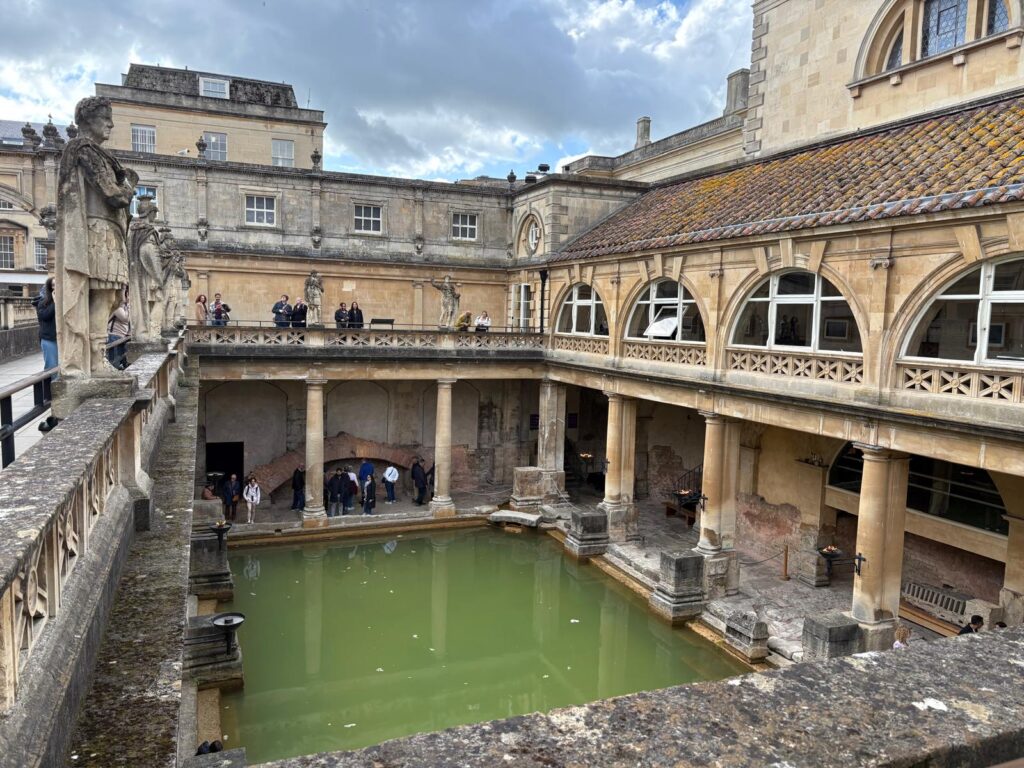
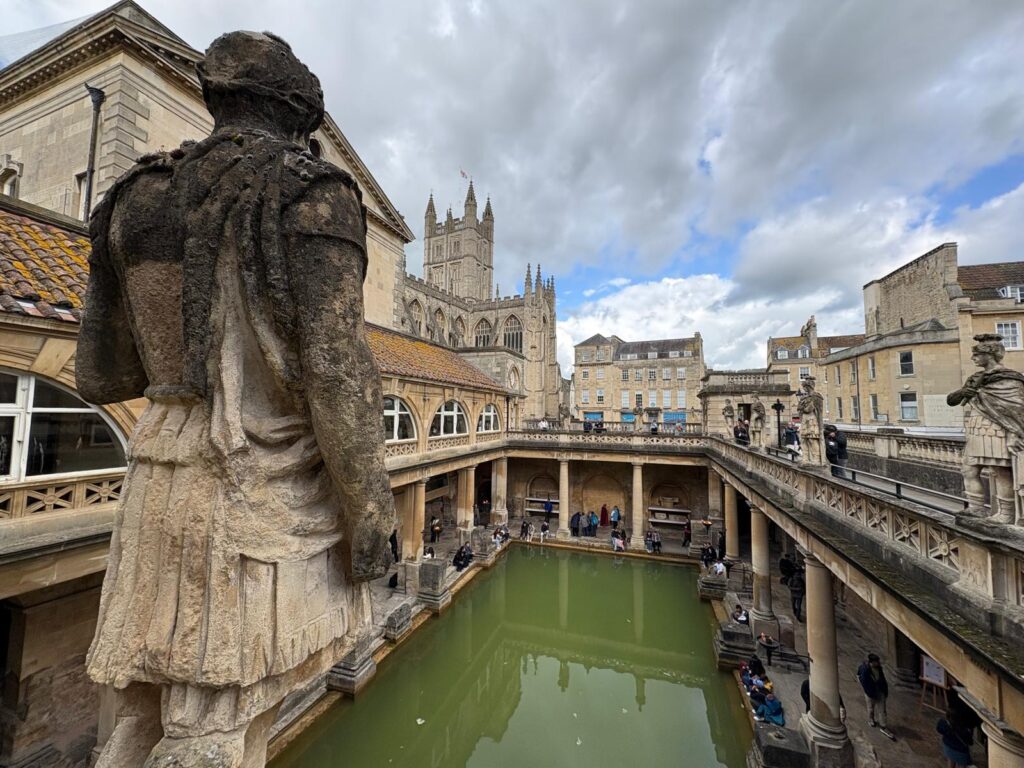
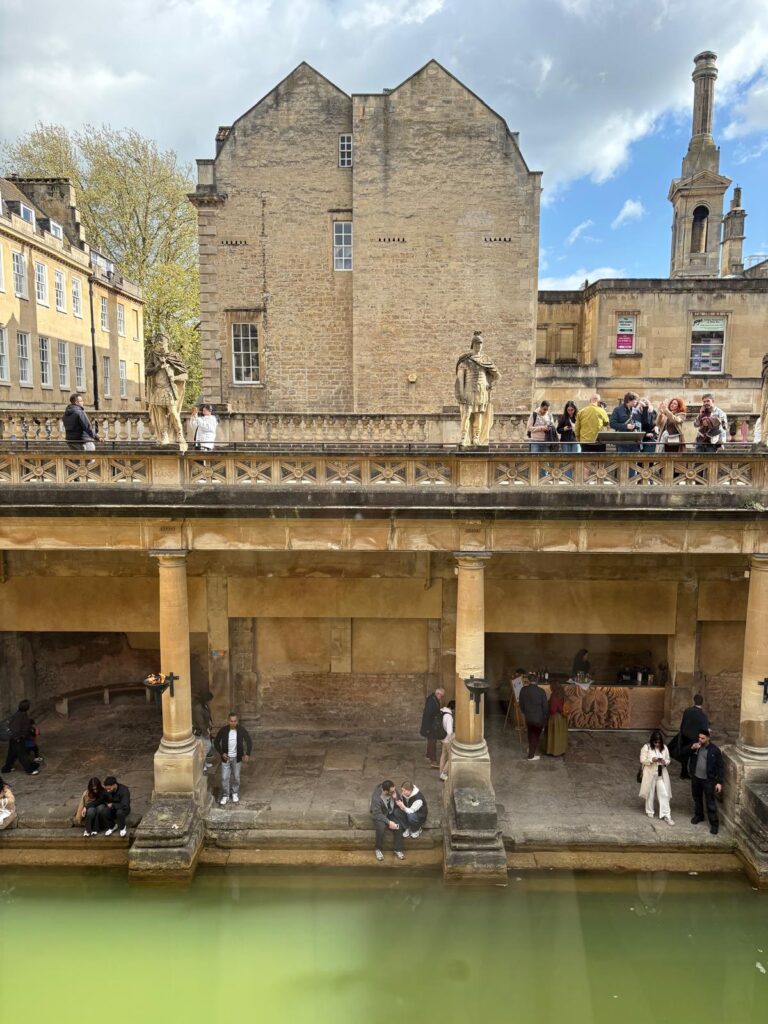
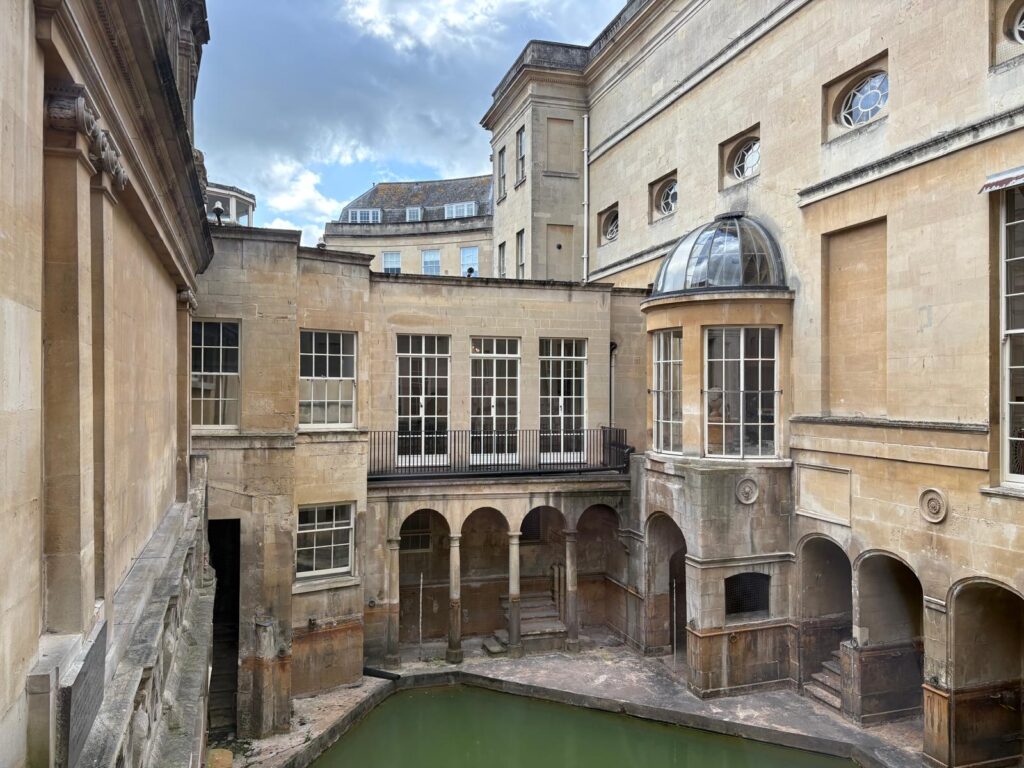
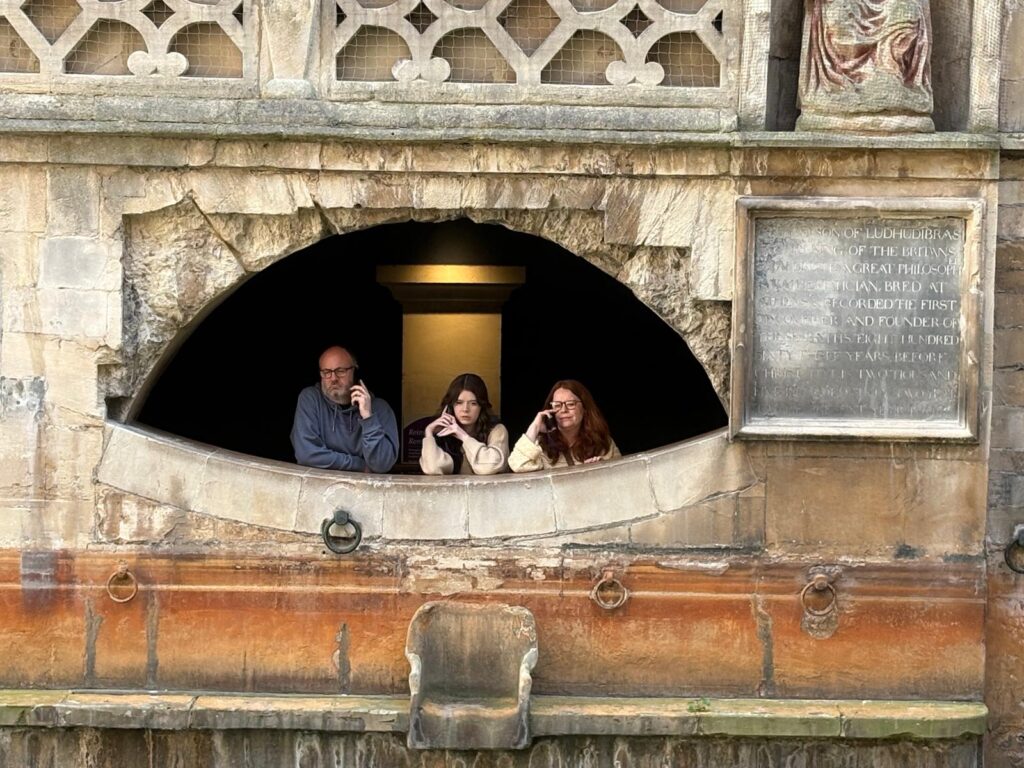
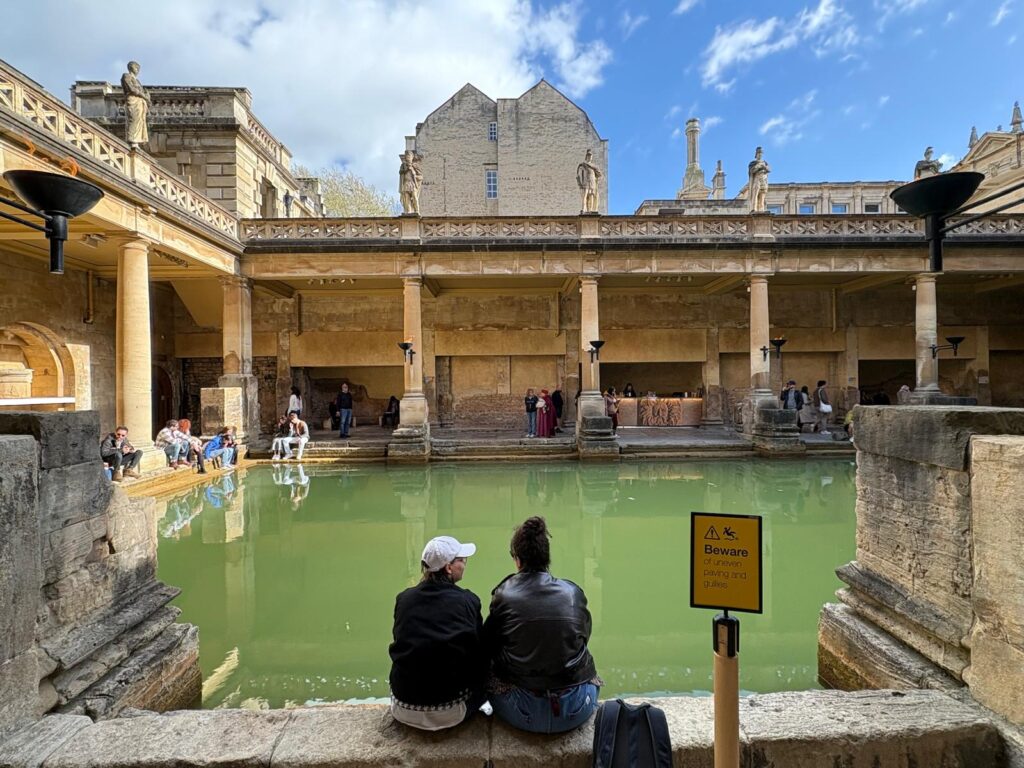
Other than the Roman period, it is the Georgian period we associate most closely with Bath. This was its heyday as a stylish spa town. And this is also the face we see when we visit the Roman Baths today. Because, you see, the Neoclassical buildings are 18th century, while the sculptures of Roman emperors and governors of Roman Britain which line the terrace are 19th century. The buildings housing the spring are the work of father and son architects John Wood the Elder and John Wood the Younger. Thomas Baldwin and later John Palmer designed the Grand Pump Room where visitors ‘took the waters’, starting work in 1789. Baldwin is also responsible for a lot of the colonnades. A museum was added in 1889. And the visitor entrance is via an 1897 concert hall by J. M. Brydon.
The John Wood father/son duo also laid out a lot of the streets and squares in Bath in the 18th century. The increase in visitors required a bigger town to house them. The matching façades still give an impression of grandeur. Bath also started to acquire entertainments other than the baths themselves around this time, like theatres. The most fashionable of Britain’s spa towns, Bath was now a “a seat of amusement and dissipation”. It was also one of the largest settlements in Britain by 1801, with a population of over 40,000.
As heritage and its preservation became more of a concept in the 19th century, visitors began to visit the Roman Baths for their historic as well as their restorative properties. Luckily, despite a 1942 bombing campaign targeting cultural heritage (known as the Baedeker Blitz after the famous guidebooks), the Roman Baths survived. They became a UNESCO World Heritage site in 1987 and were added to a UNESCO World Heritage grouping of the Great Spas of Europe in 2021.
The Visitor Experience
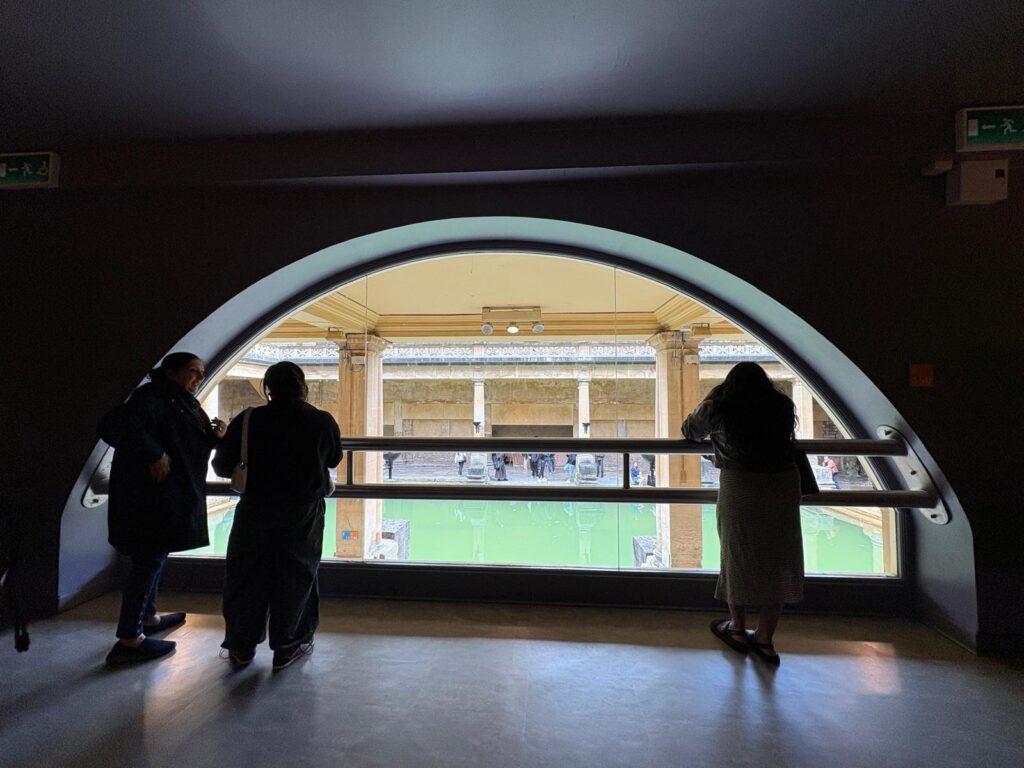
There is quite a lot of ground to cover at the Roman Baths so, arriving in the late afternoon, the Urban Geographer and I had to make quick work of it. After passing the ticket desks, visitors emerge onto the upper level of the terrace before plunging into a museum to get their bearings.
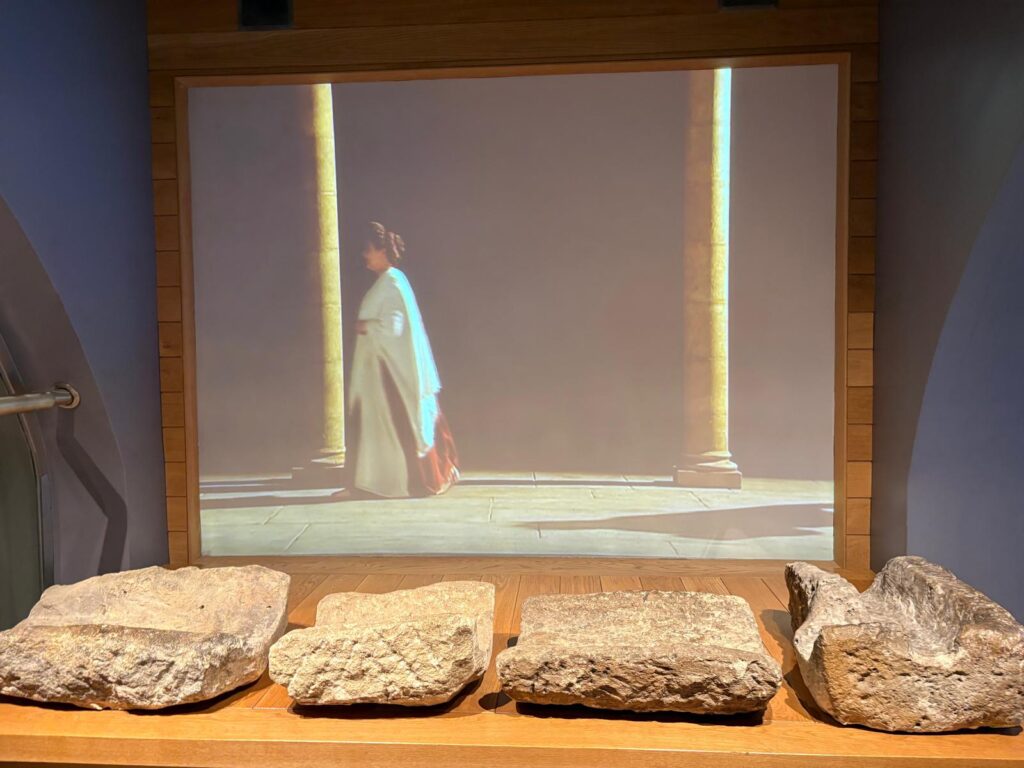
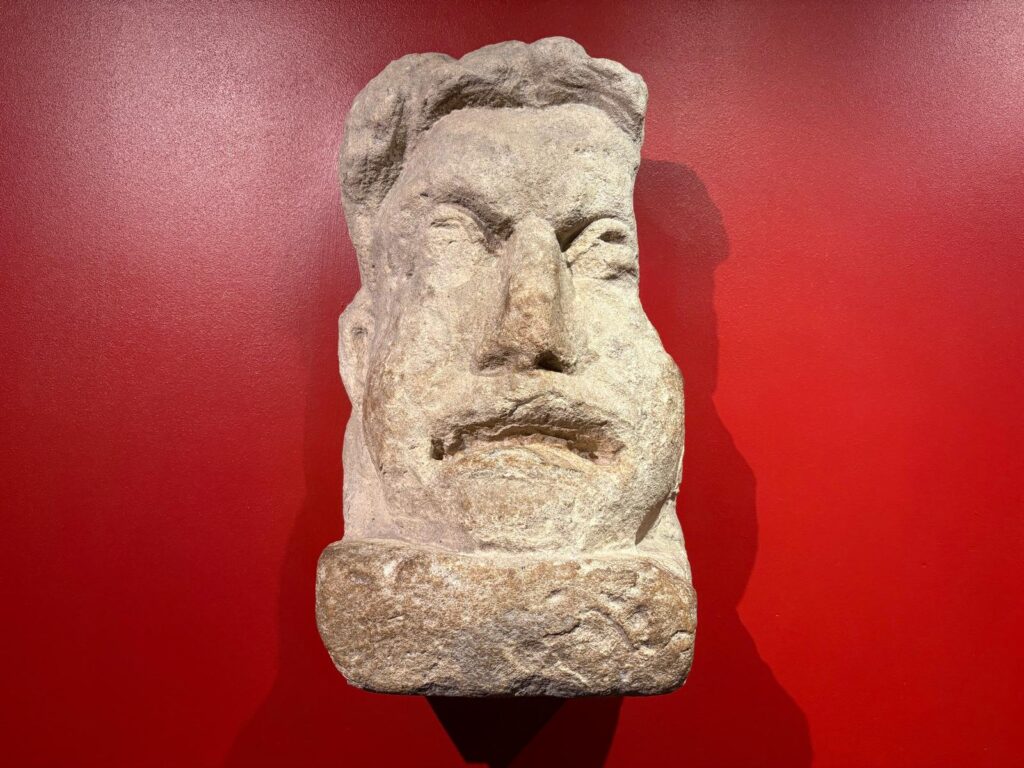
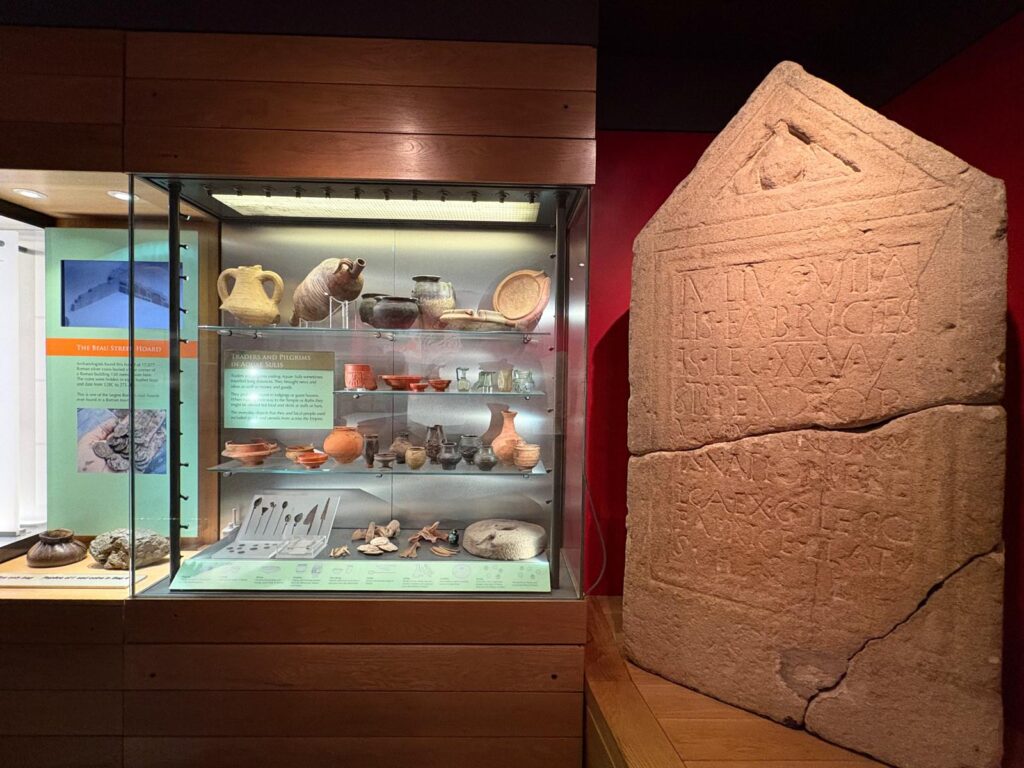
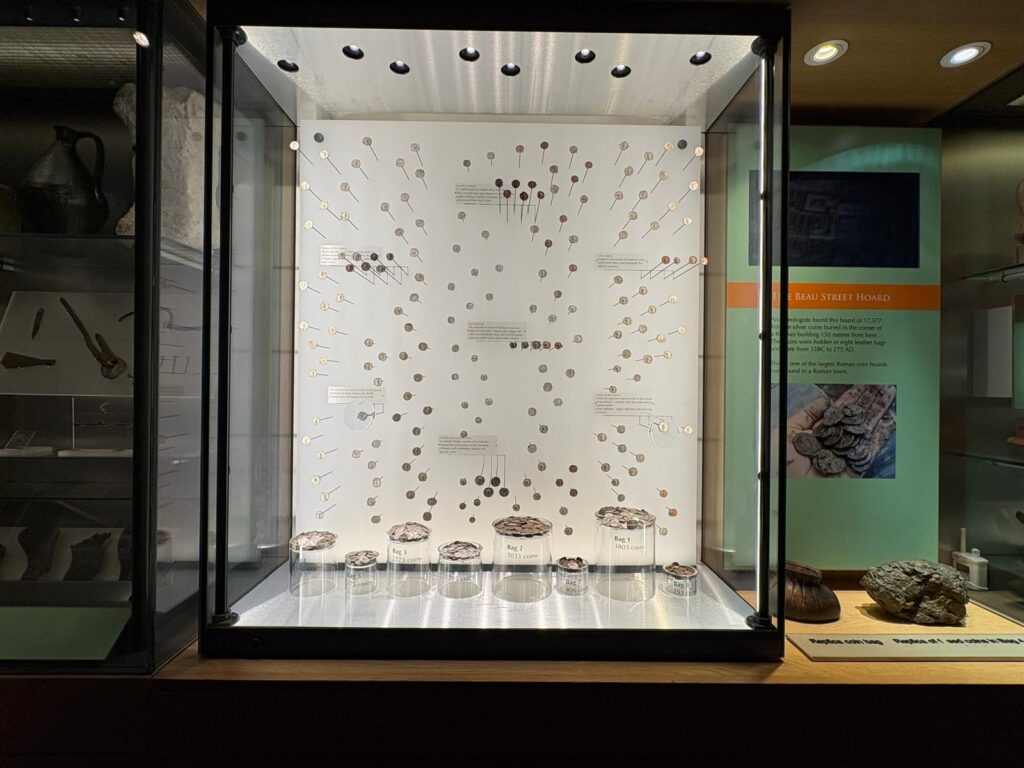
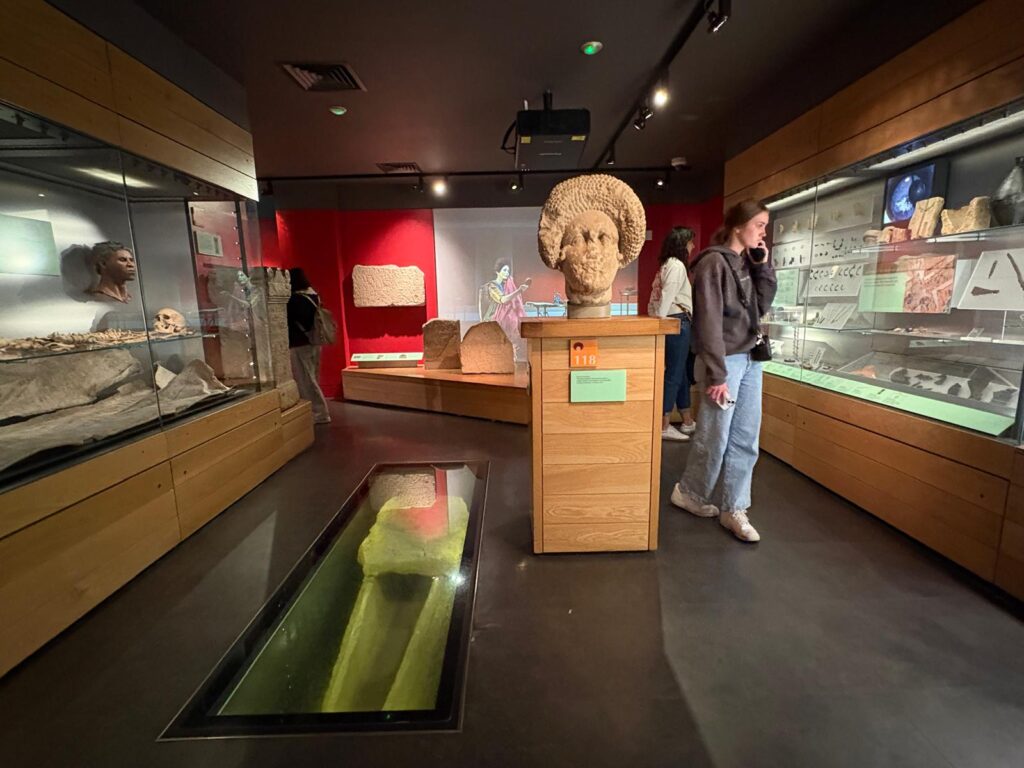
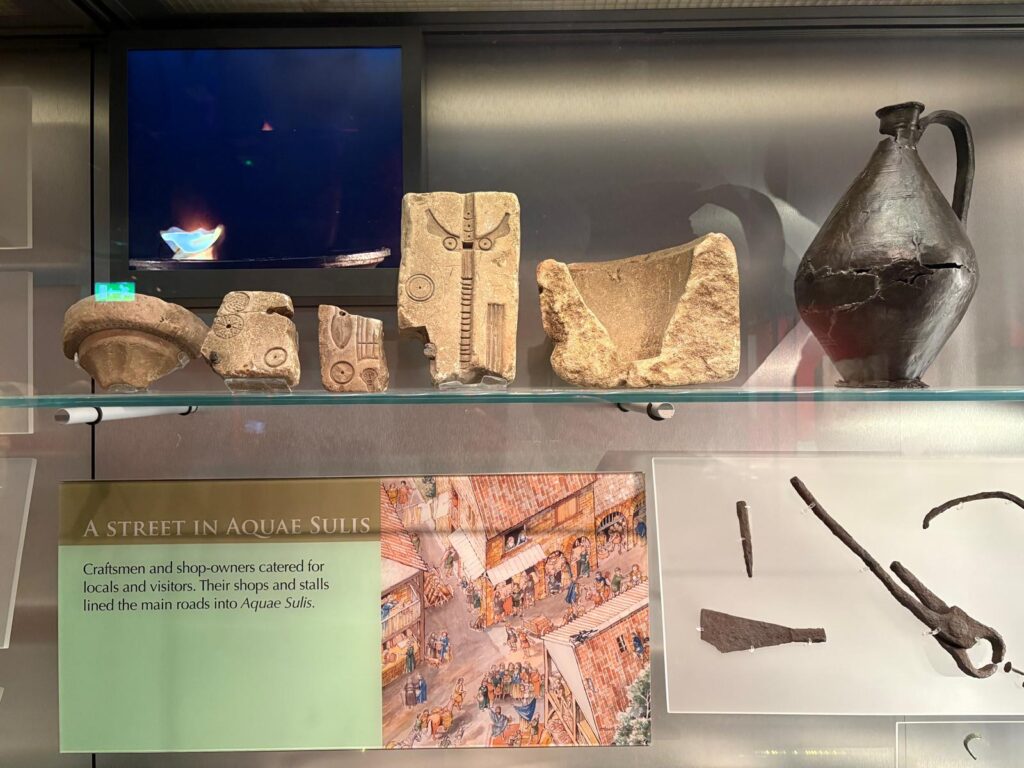
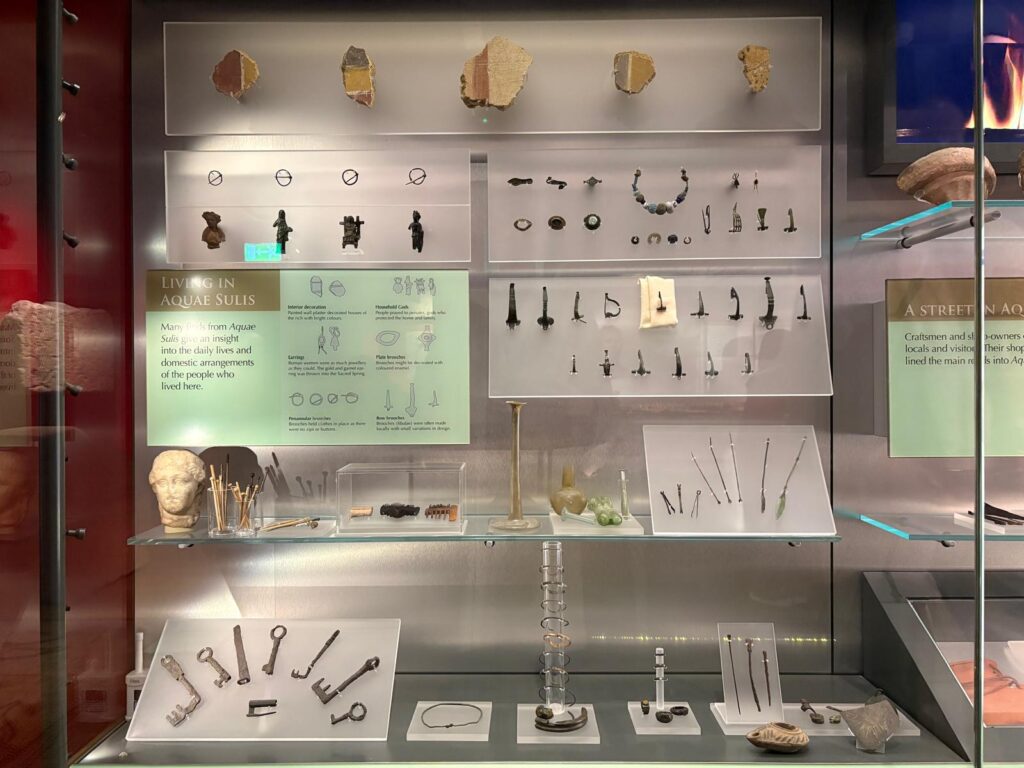
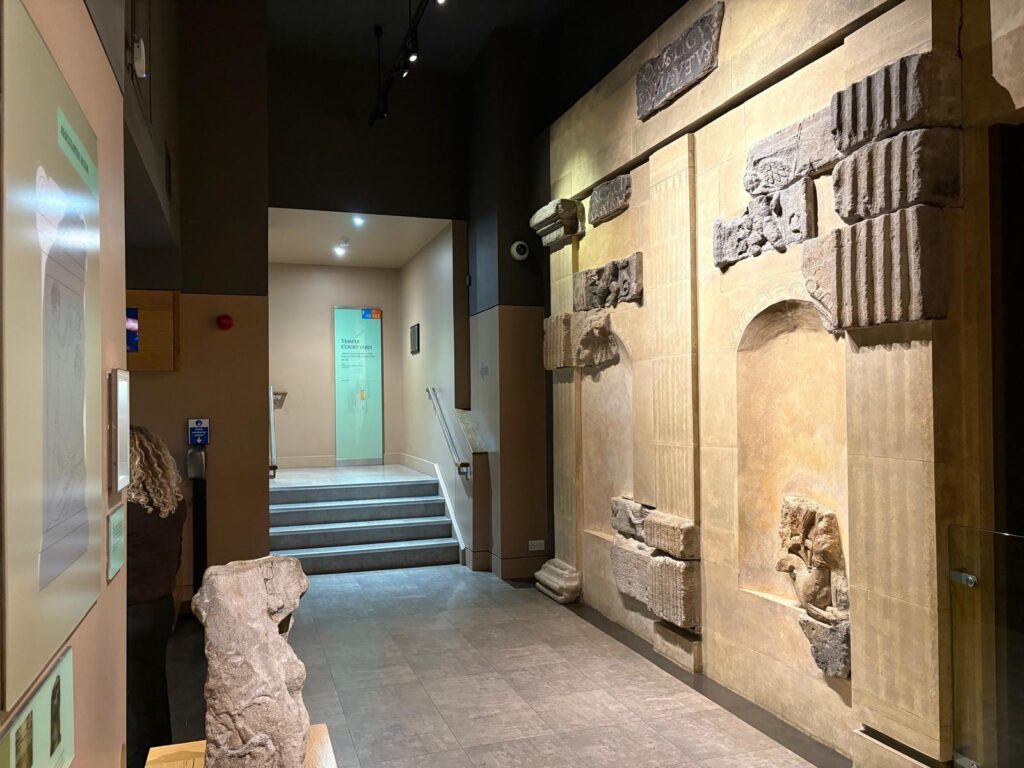
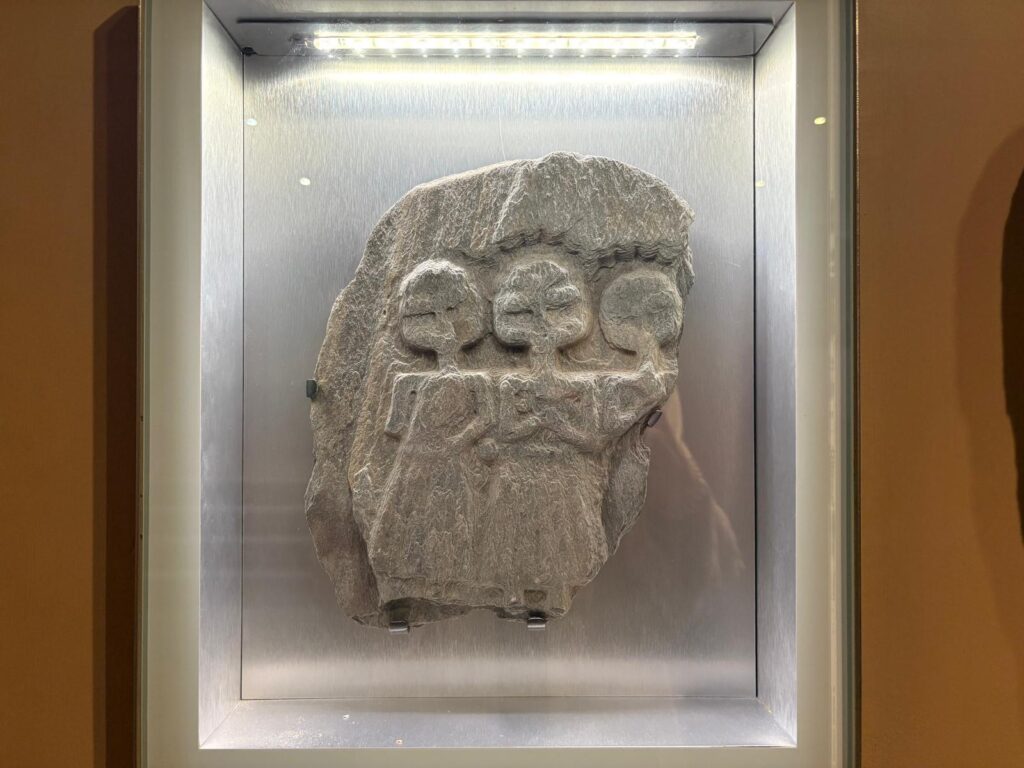
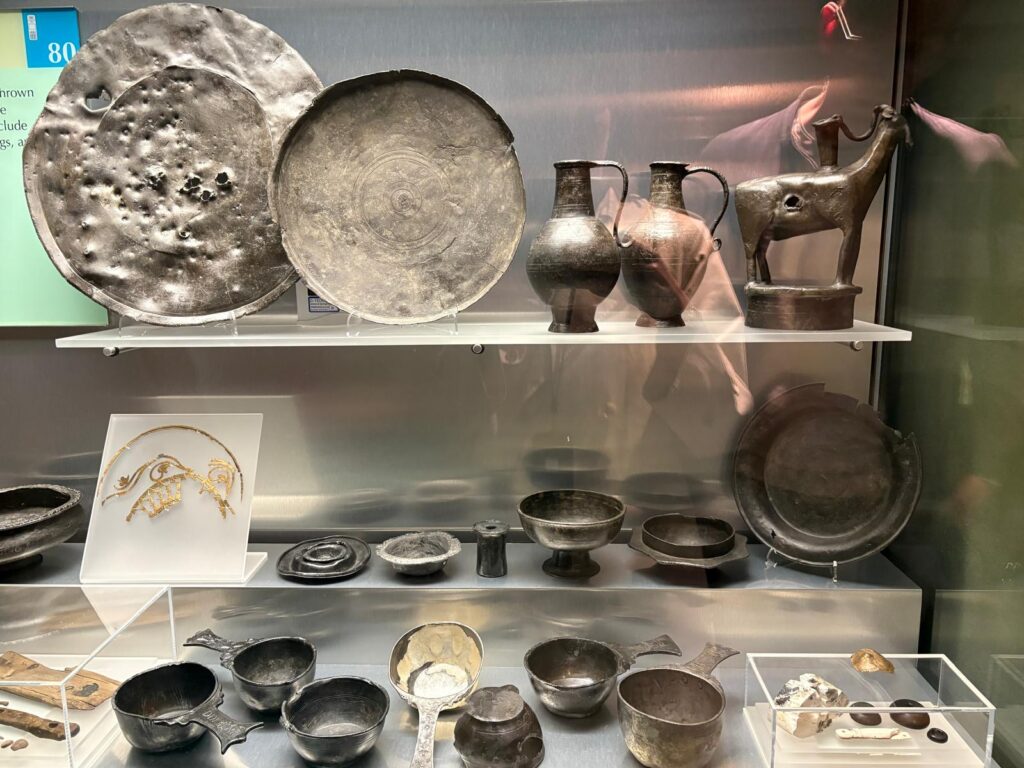
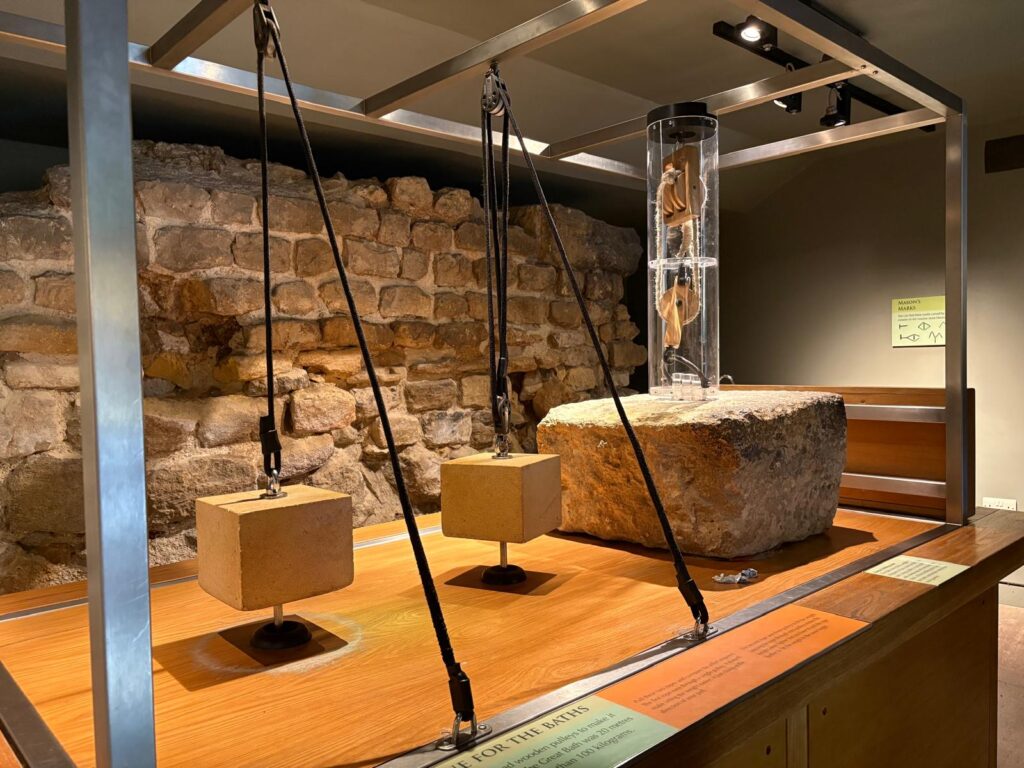
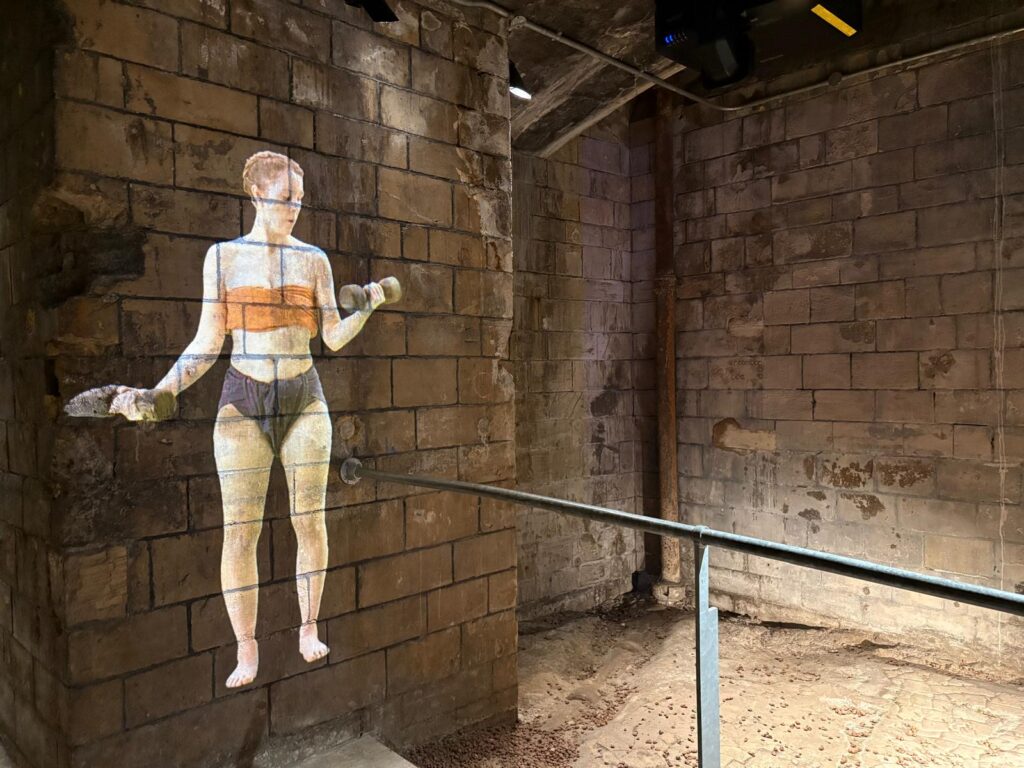
Today’s museum is very different (presumably) from the Victorian one, with really good interpretative materials and a clear one-way system. The museum covers the spring’s pre-Roman and Roman history, the baths and temple, the town of Aquae Sulis, the archeological finds made on site, and a lot about Roman life. I particularly liked the immersive elements, with Romans wandering in the background of various rooms, making it feel as if you’re on your way to the agora or the baths. You can learn about soldiers, the impressive Beau Street Hoard, funerary customs, worship, and those excellent curse tablets.
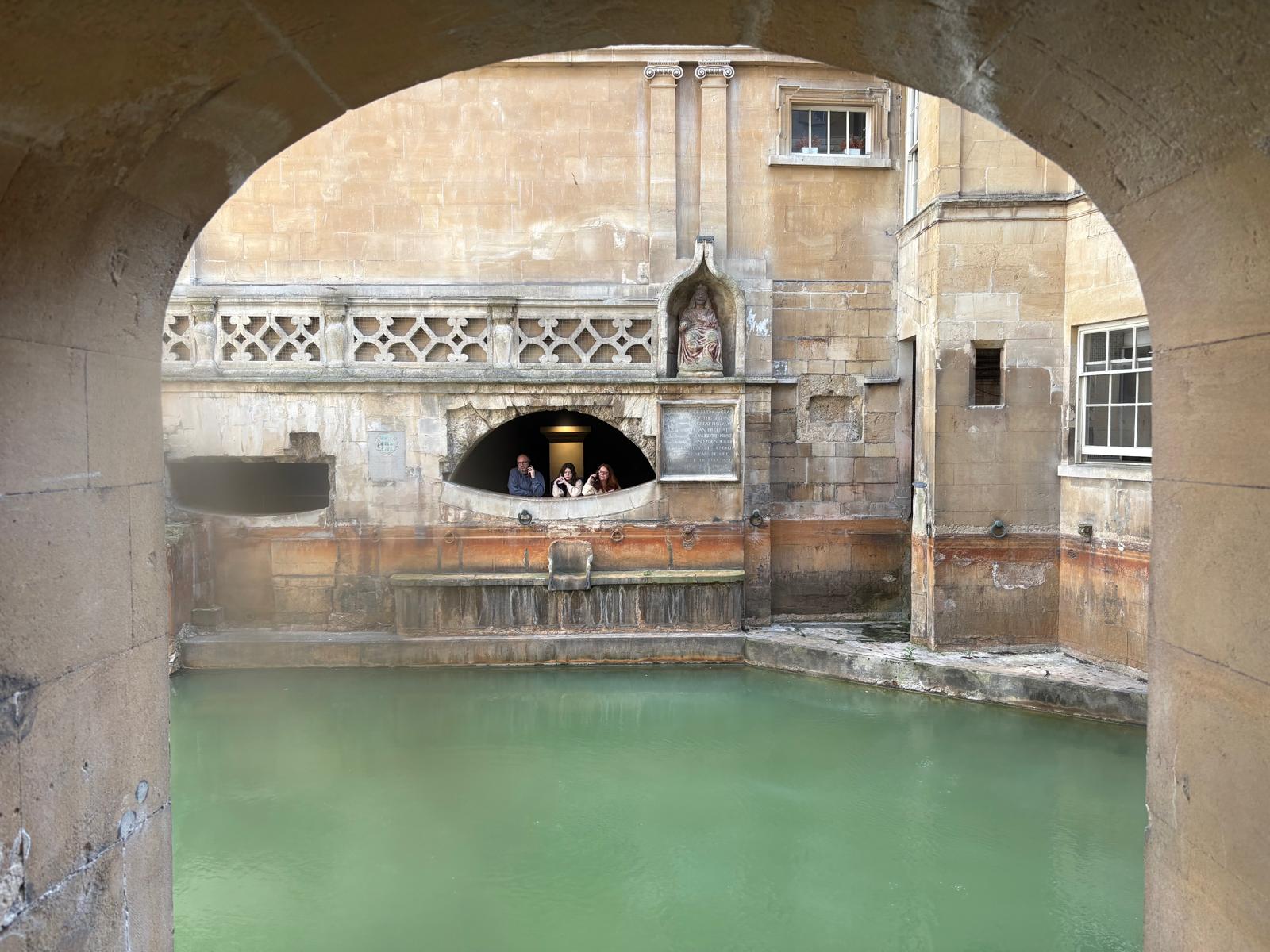
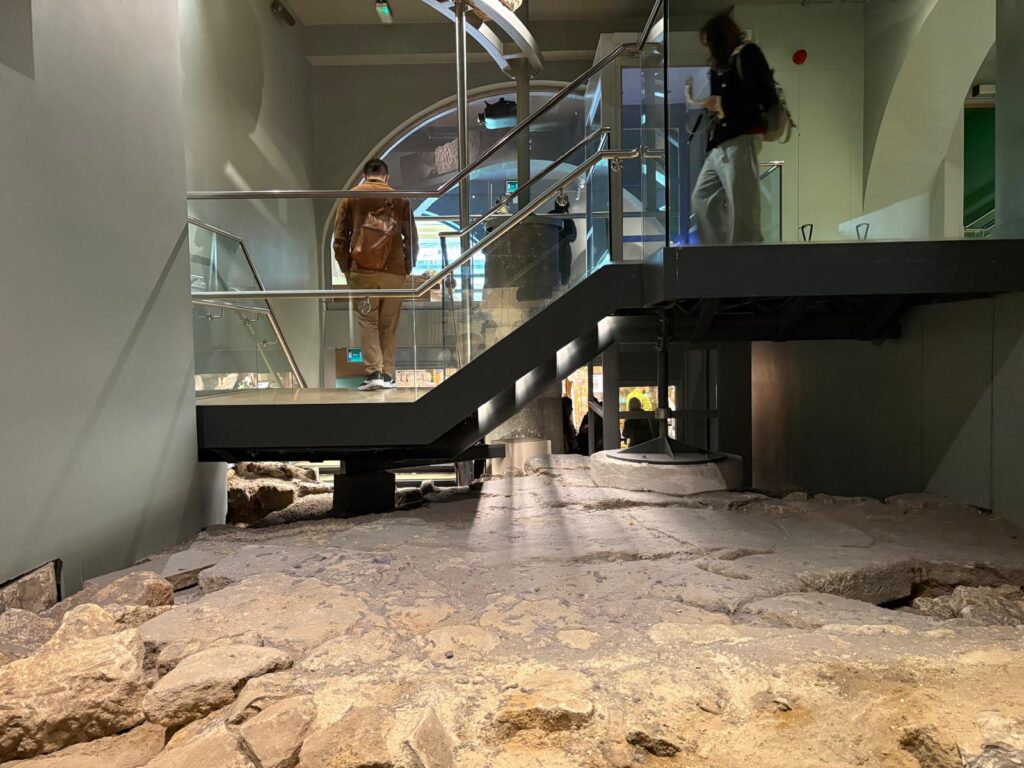
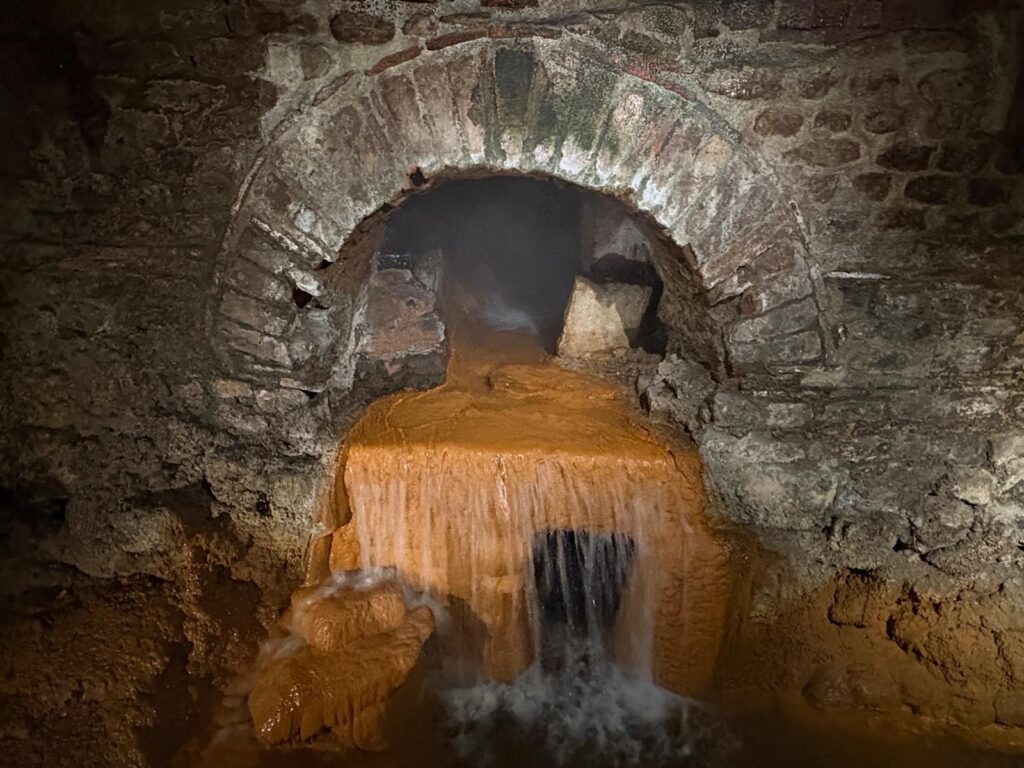
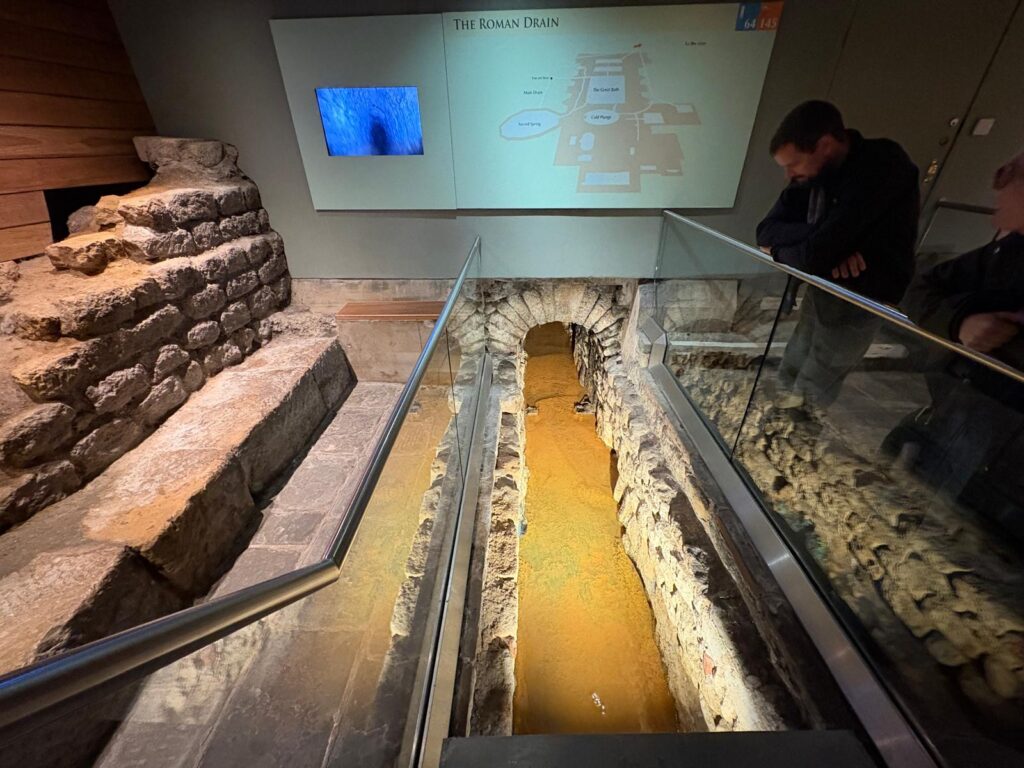
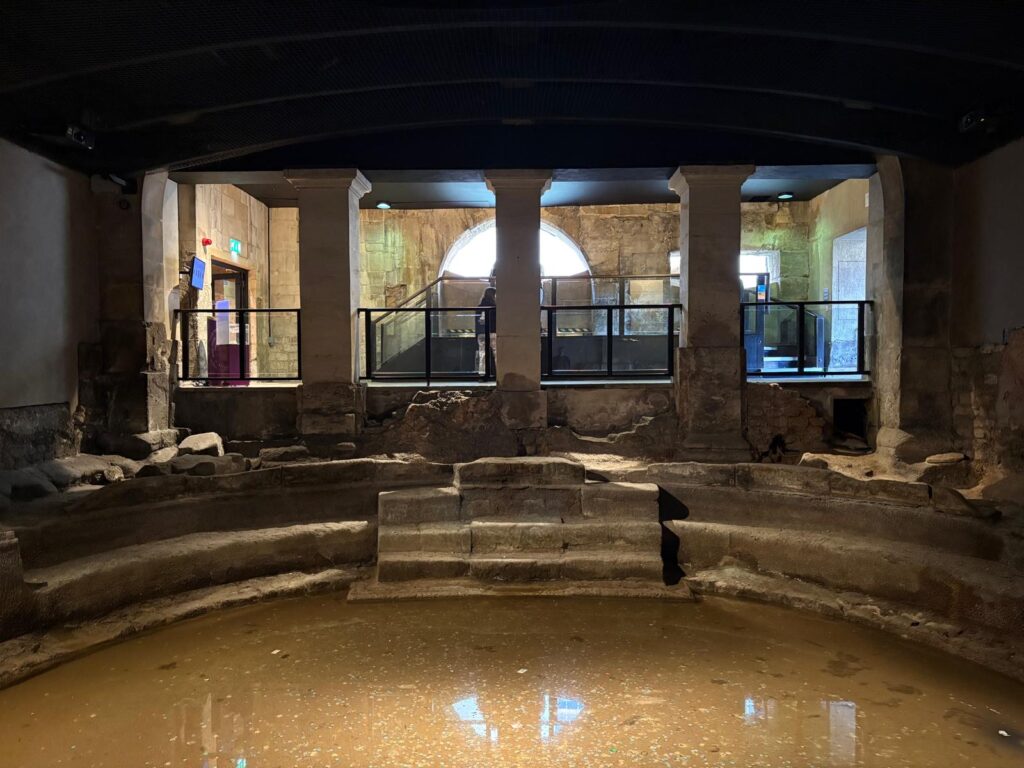
Eventually, after a lot of museum time (interspersed with archaeological sections), you get an atmospheric view of the Sacred Spring overflow and a Roman drain, with steam rising from the hot water. Then it’s out onto the courtyard where you can take a pause if time permits. There is a bar, and you can sit around the edge of the main bath or back against the walls. It was a lovely spot in the late afternoon sunshine. But unfortunately, as closing time was approaching, we had to plow on after a quick stop.
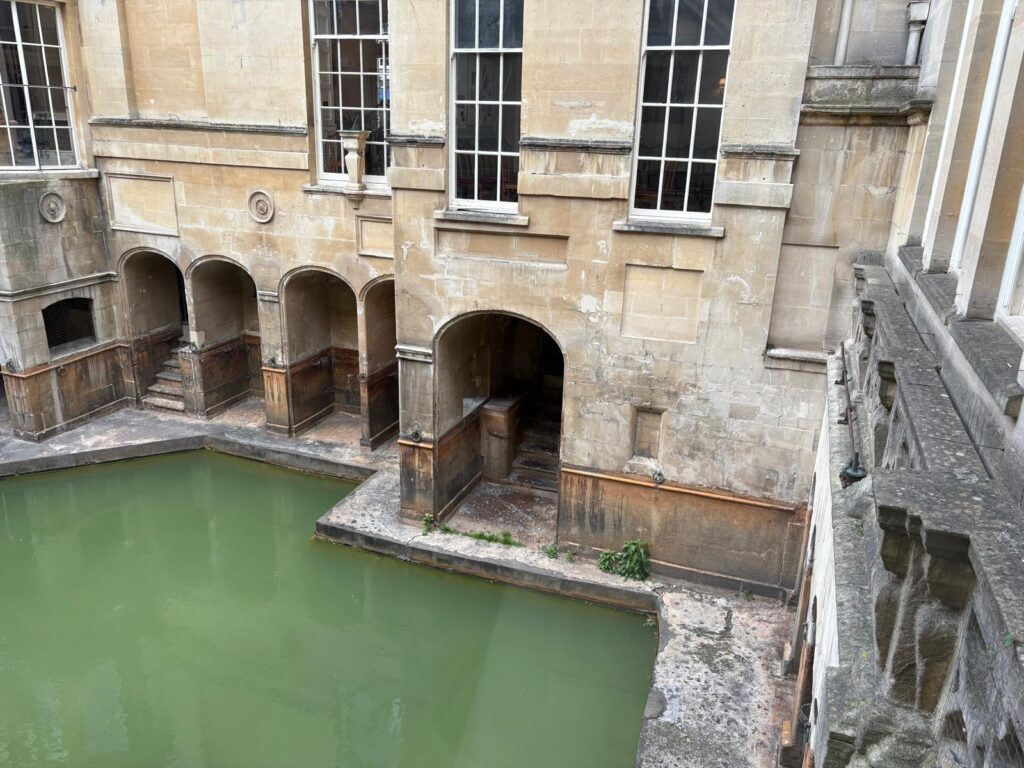
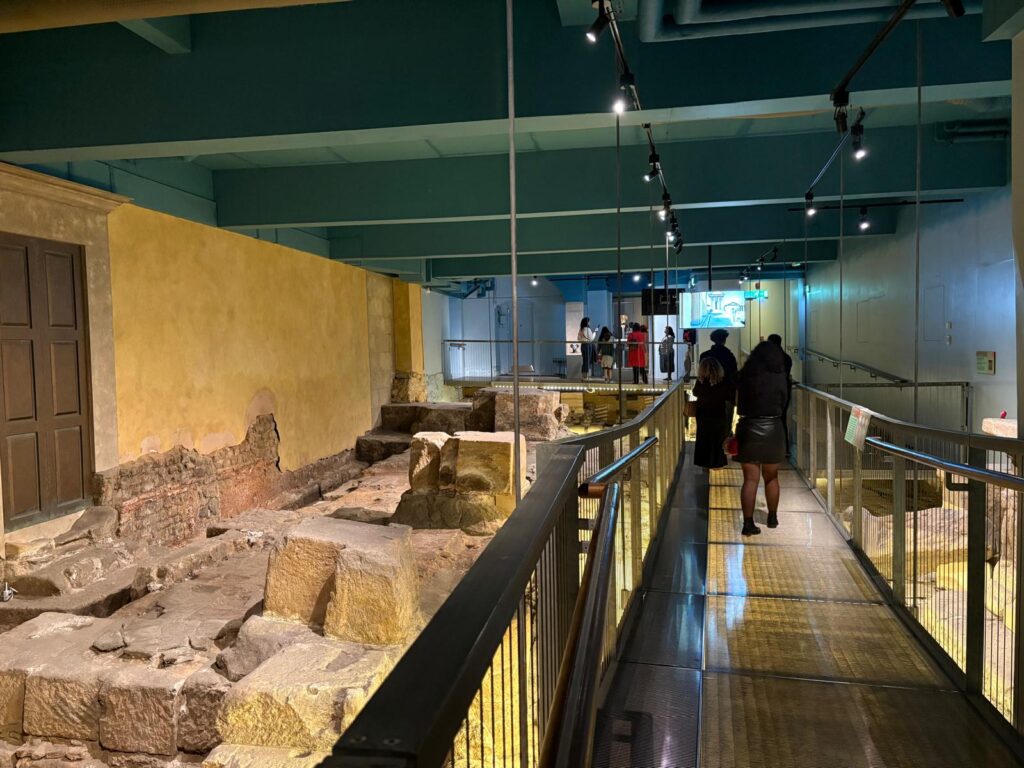
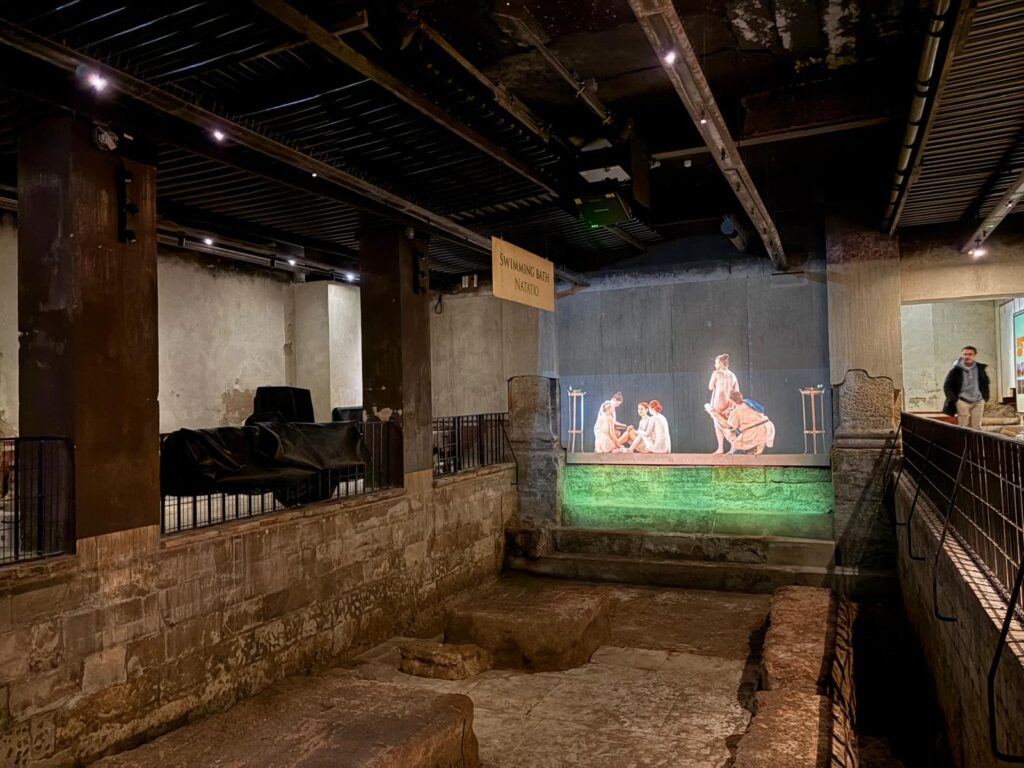
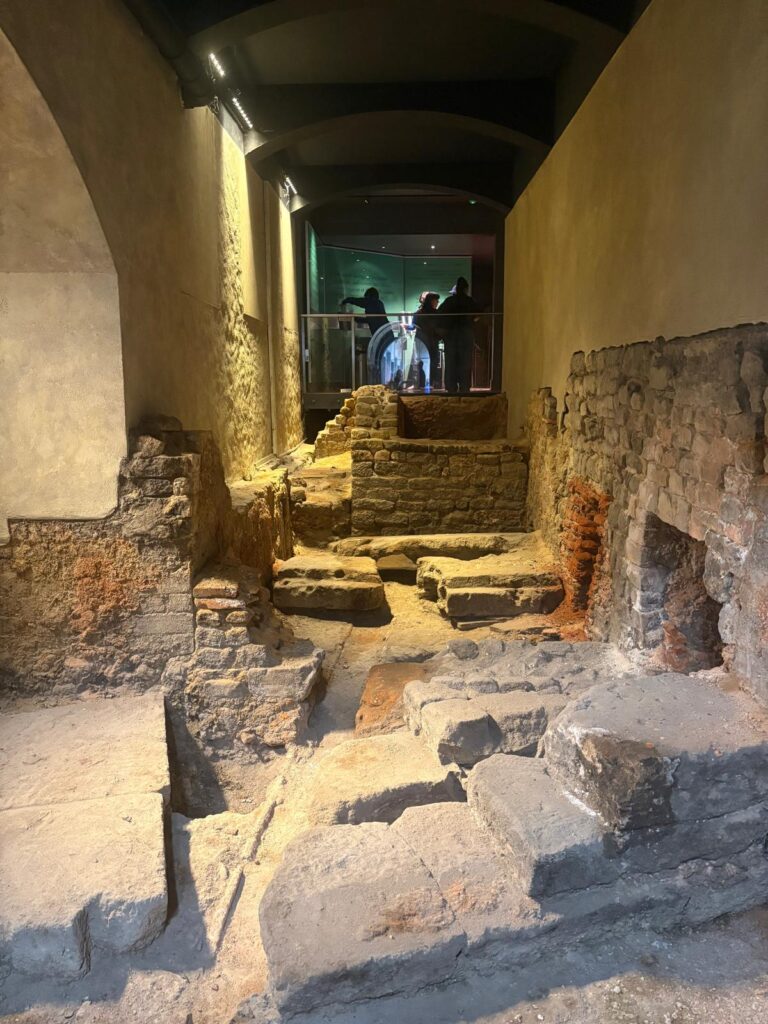
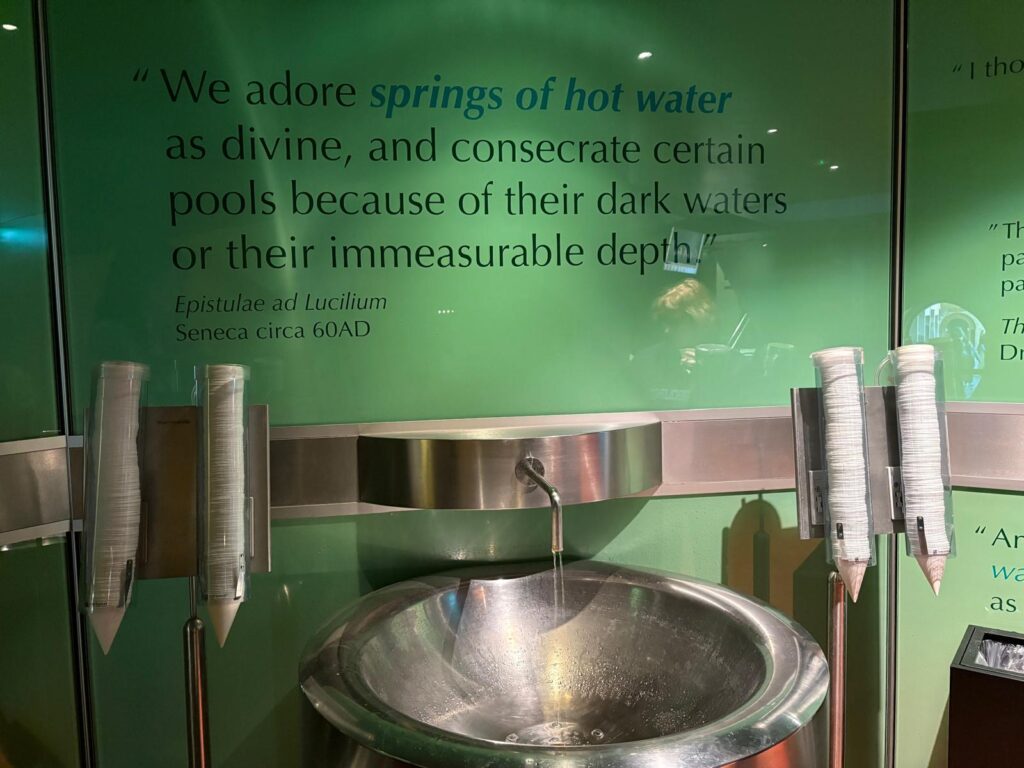
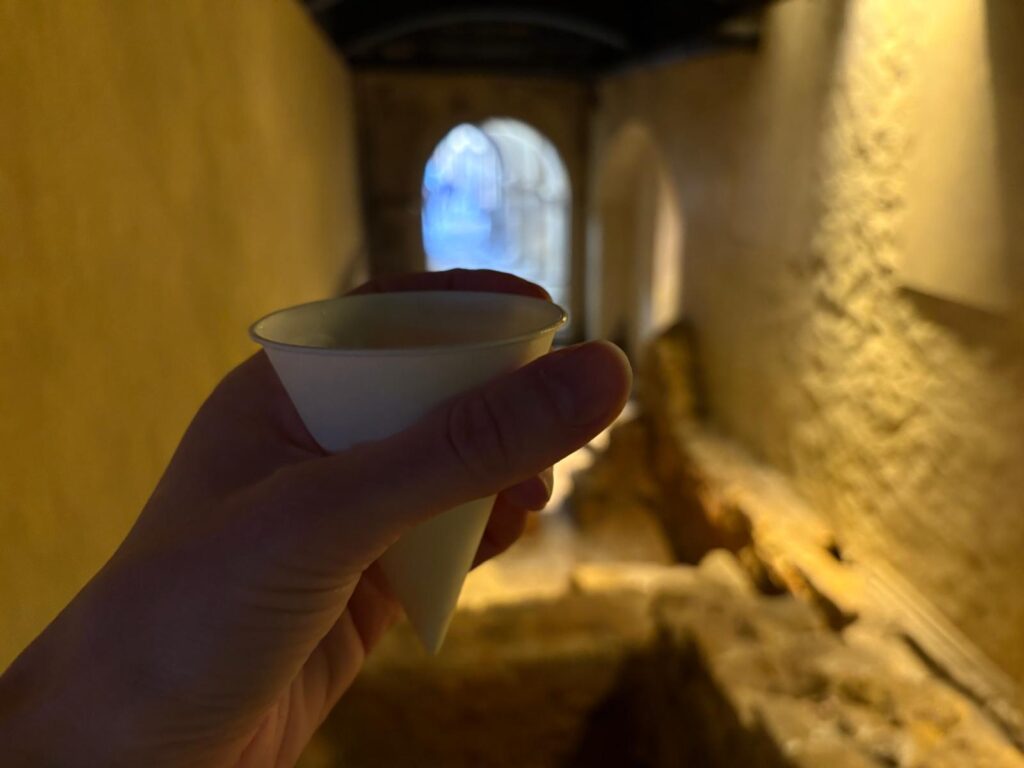
Around the edge of the main bath are the excavations of Roman spaces, separated for the sexes and according to Roman bathing rituals (hot/warm/cold baths as previously mentioned). These are fascinating spaces, again with Romans projected onto a few walls to bring the place to life. Finally, before leaving, you can try the waters for yourself. When I was here in the early 2010s I seem to remember a ticket to the Roman Baths got you entry to the Pump House where you tried the waters, but it seems the set up is different now.
Final Thoughts on the Roman Baths
So, after all that visiting of museum and baths, what are my conclusions? Firstly, that my memory of my first visit was very poor indeed. This is a much bigger site than I had remembered, and needs a good couple of hours to do properly. More if you want to have a break in the outdoor space. Those tickets might be expensive, but you get a lot for them – a much better sense of the space and its history than if you catch a glimpse for free from street level above.
There is too much of a good thing, though, and I don’t really think the included audio guide is necessary. In a smaller place with less written interpretation I do often take an audio guide (if it’s free). But here it slows down an already fairly long visit. I started out listening to each posted number, but quickly gave up and just hung it around my neck for the rest of the visit.
But otherwise I thoroughly enjoyed my time at the Roman Baths. Make sure you leave enough time (and energy) to fully explore the East and West Baths. And linger around both the spring itself and its overflow – while the central bath is the photogenic one, there is something a little magical still about seeing this ancient water source in motion, the water surfacing after its long journey underground. And if you have any trouble while you’re there, don’t forget what a well-written curse can achieve.
Trending
If you see this after your page is loaded completely, leafletJS files are missing.