
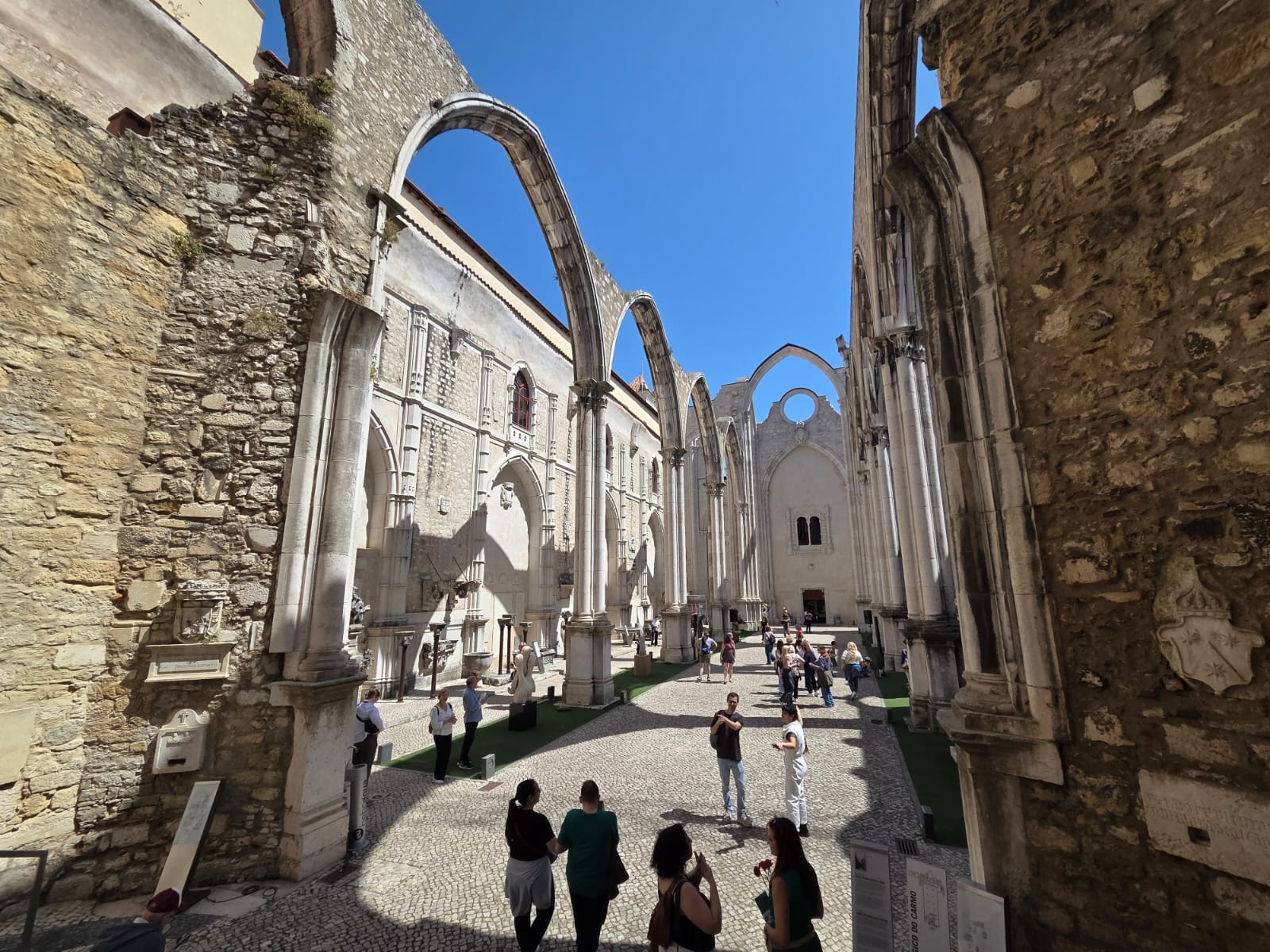
Convento do Carmo & Carmo Archaeological Museum (Museu Arqueológico do Carmo), Lisbon
On a return trip to Lisbon, I am at liberty to queue up for the Convento do Carmo and explore its architecture and archaeological treasures.
Back in Lisbon With a Day to Spare
My first trip to Lisbon was in 2021. It was a bit cold and rainy (it was around Halloween) and a bit pandemic-y. By which I mean that, in hindsight, everything was too stressful for me to fully enjoy it. This April, Lisbon and I had a second chance. I was there for a conference, with a day to spare. I spent that day walking through the city, from my hotel all the way down to the River Tagus. Along the way, I stopped off at a few places I was familiar with, and a few new spots as well.
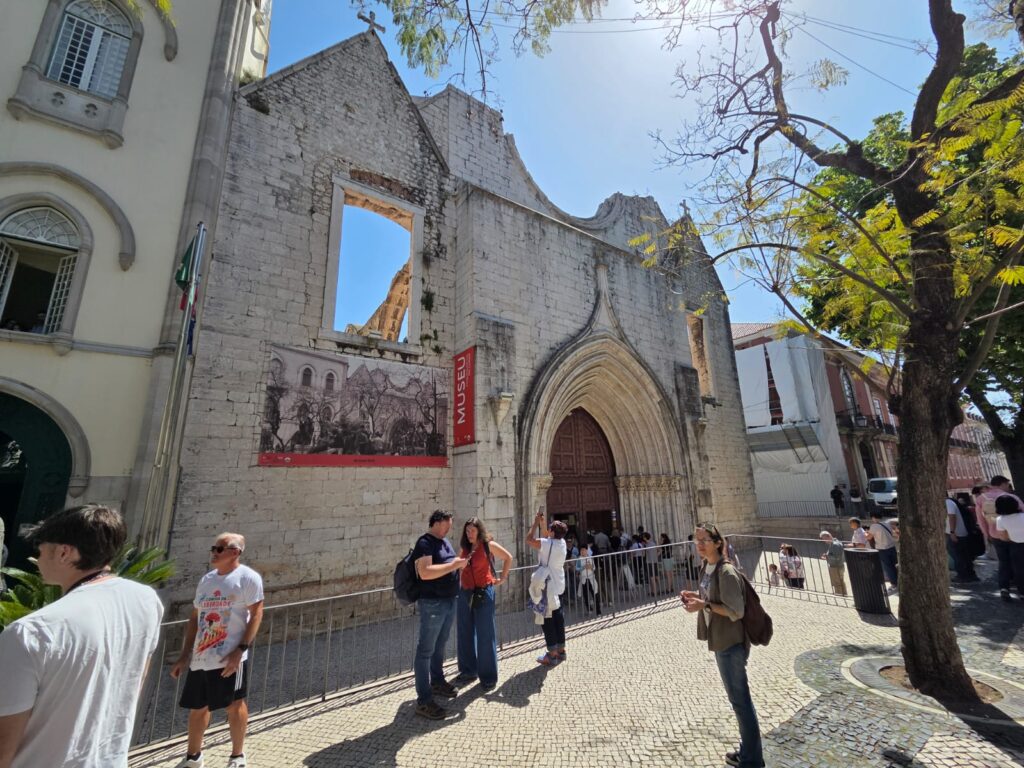
The Convento do Carmo is somewhere between the two. On our first visit, we walked through the Largo do Carmo. I am always one to get excited about an archaeological site, no matter how big or small, and hinted to the Urban Geographer that we might want to pop inside. But there was a queue. It was probably raining. And so I added it to a future ‘Lisbon To Do List’.
That future time has come! With the day to myself to explore Lisbon, I could see as much archaeology and as many museums as my heart desired. It wasn’t a coincidence that I meandered my way to the Largo do Carmo. There was a queue again on my return visit. Possibly even longer, because I was there on 25 April which is a date of significance in Portuguese history with specific relevance to the Largo do Carmo. But the queue moved quickly, and it wasn’t long before I was inside.
The Convento do Carmo
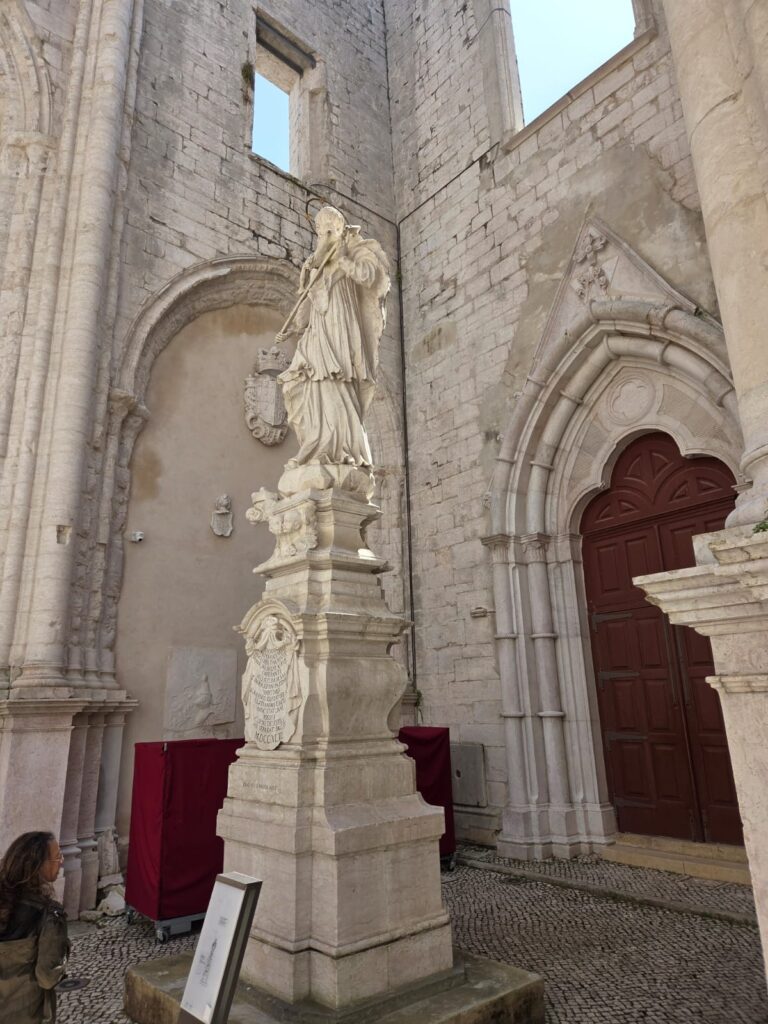
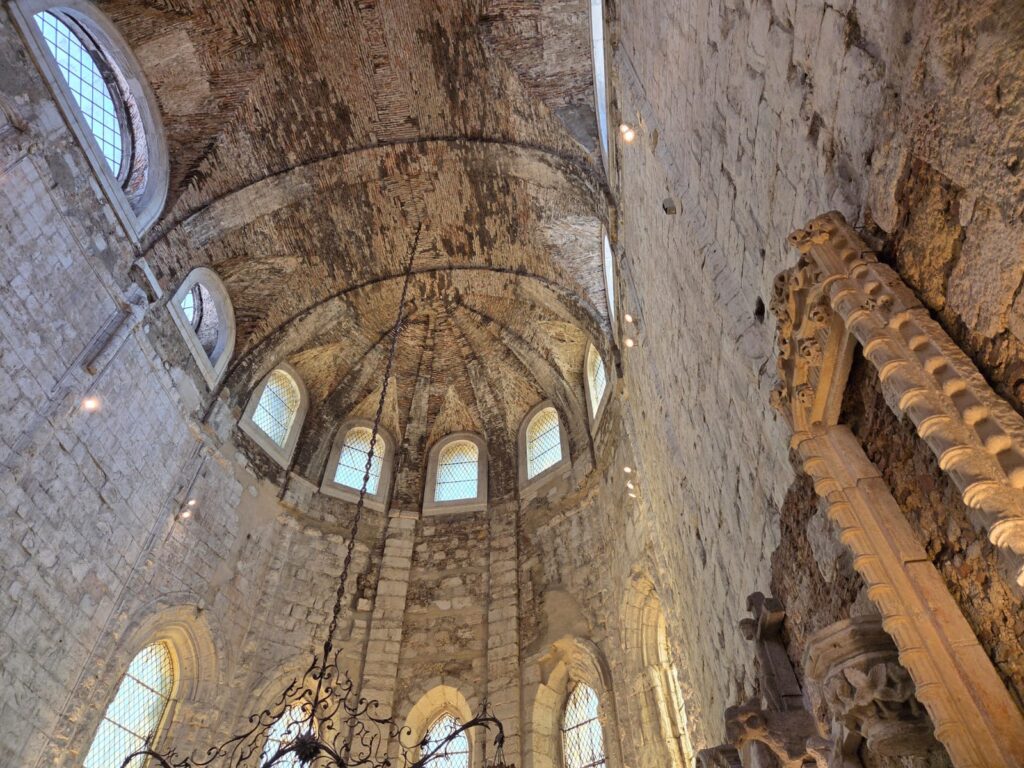
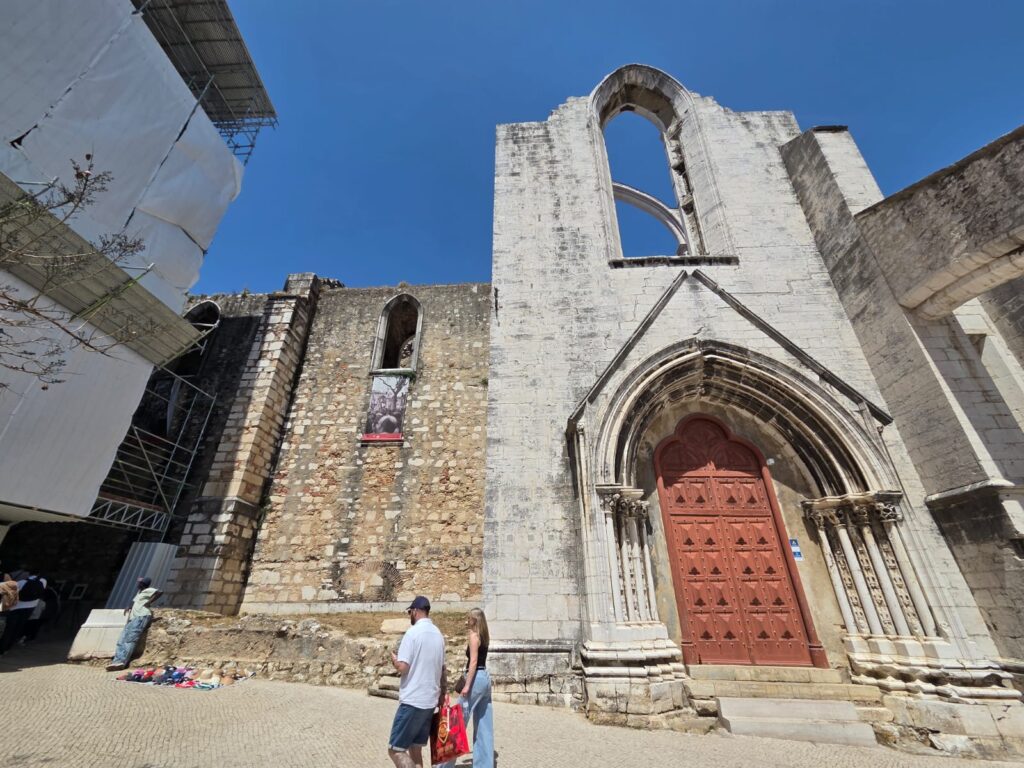
The Convento do Carmo has a long history. It is a former Carmelite convent, founded in 1389 by Dom Nuno Álvares Pereira, a general known as the Constable of Portugal. Álvares Pereira donated his possessions to the convent, and even moved in and took up religious life in later years. Pope Benedict XVI canonised him as Saint Nuno of Santa Maria in 2009.
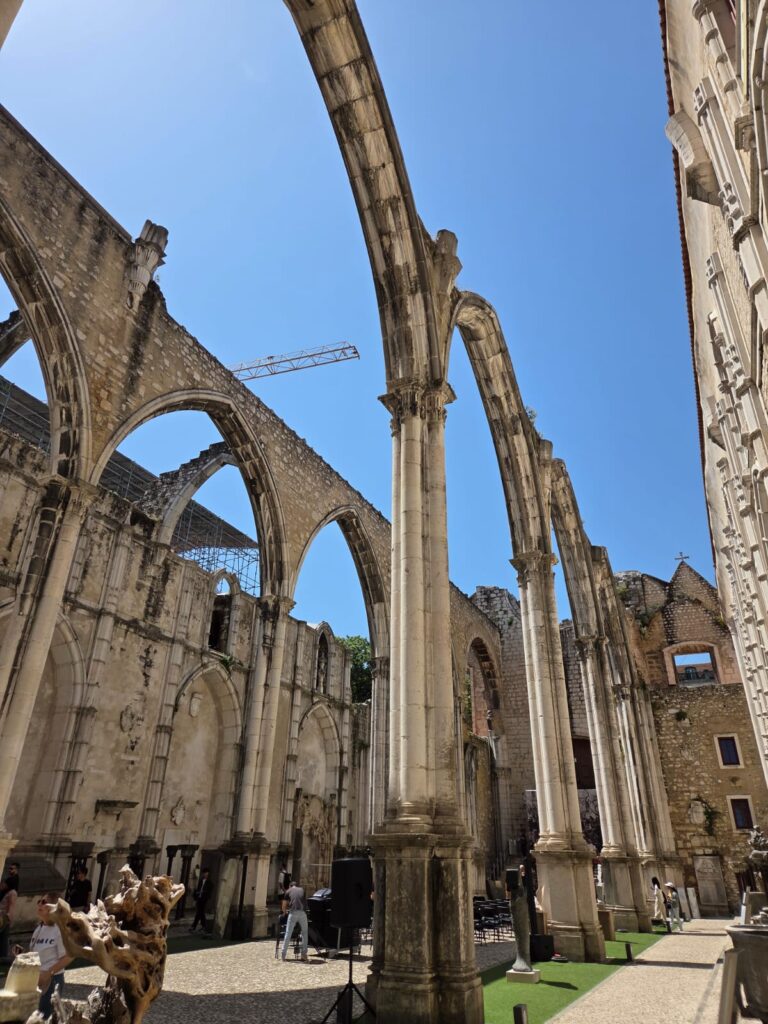
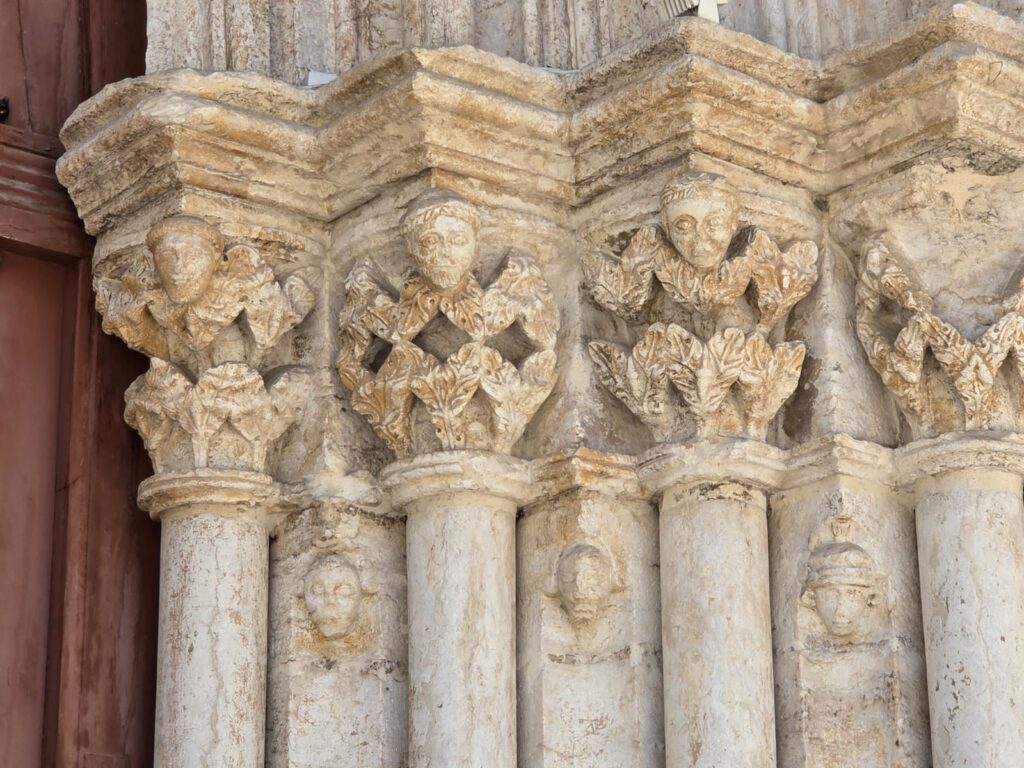
Being that the convent was founded in the 14th century, its style was very firmly Gothic. It was the main Gothic church in Lisbon, and rivalled the Cathedral (which, to be fair, is rather a plain building). But things changed in 1755. This was, of course, the date of a major earthquake in Lisbon. On the one hand, it was the catalyst for rediscovering layers of the city’s history (see here). It also meant the city could be laid out afresh, in a style later called Pombaline after the 1st Marquis of Pombal. On the other hand, though, around 30-40,000 people lost their lives, and it permanently changed the city.
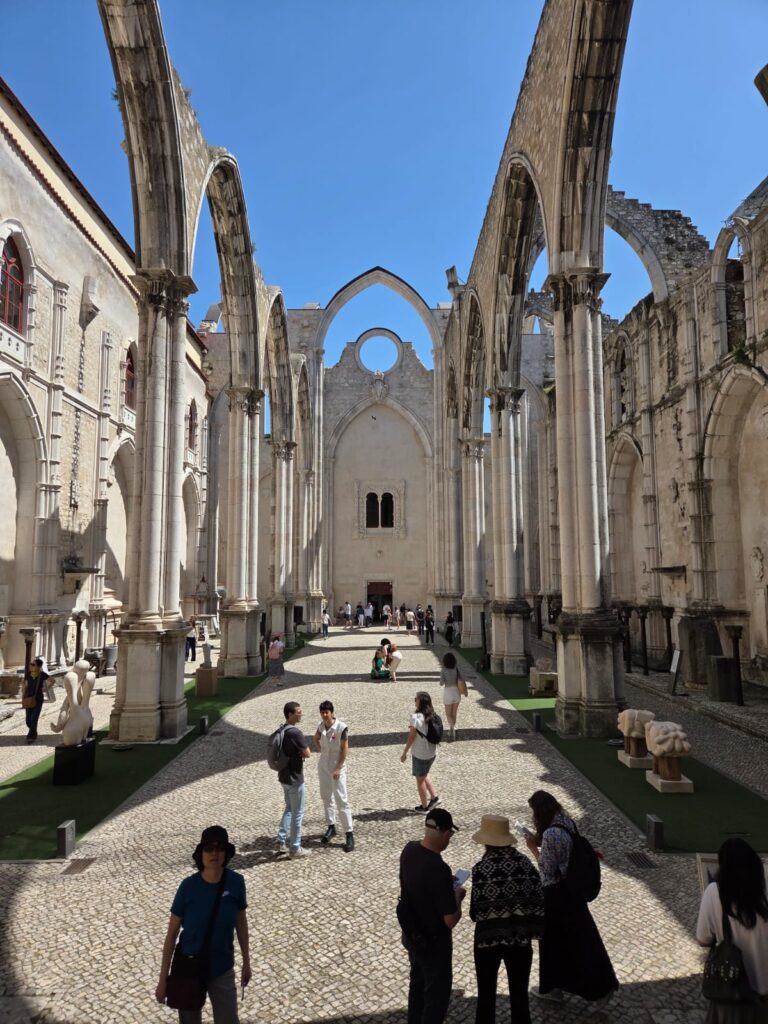
The Convento do Carmo, for instance, never recovered. It lay in ruins for decades after the earthquake. There was some attempt at rebuilding it in Neo-Gothic style in the early 19th century, but religious orders were suppressed before the job was done (in 1834, at the end of a civil war). By then, ruins were considered to be romantic, anyway, so having some in the middle of Lisbon was no bad thing. The focus shifted to the salvageable outbuildings rather than the church: these became military facilities, and were eventually the focal point of the Carnation Revolution.
The church of the Convento do Carmo has been a National Monument since 1907, with separate protections for the remainder of the buildings.
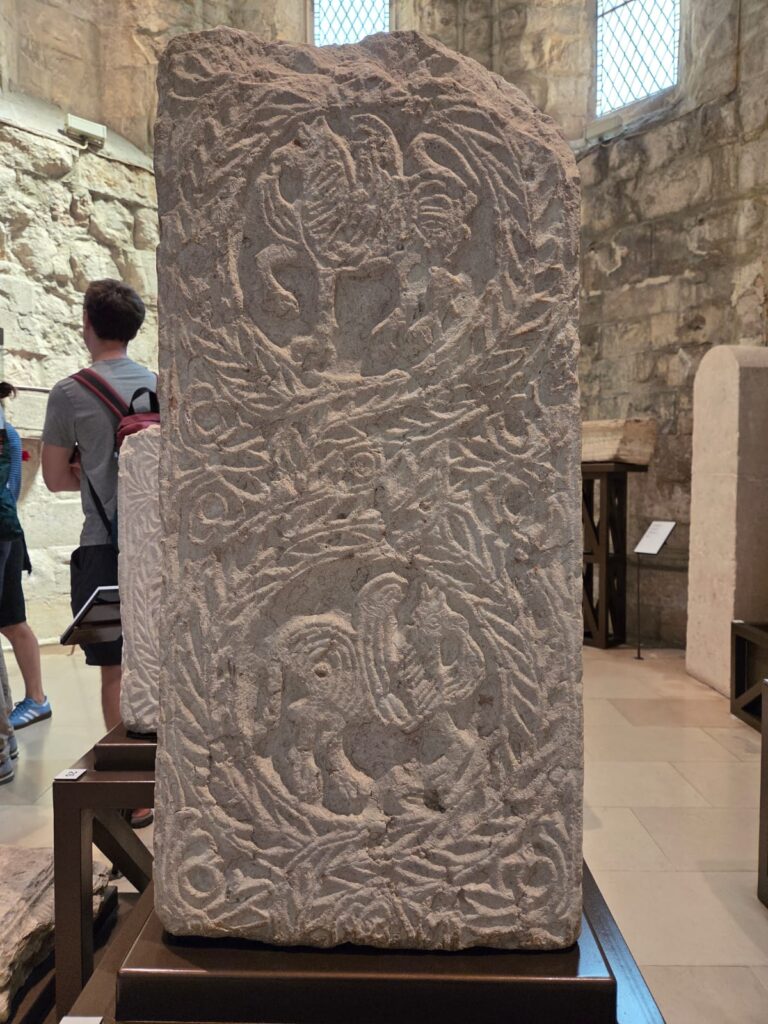
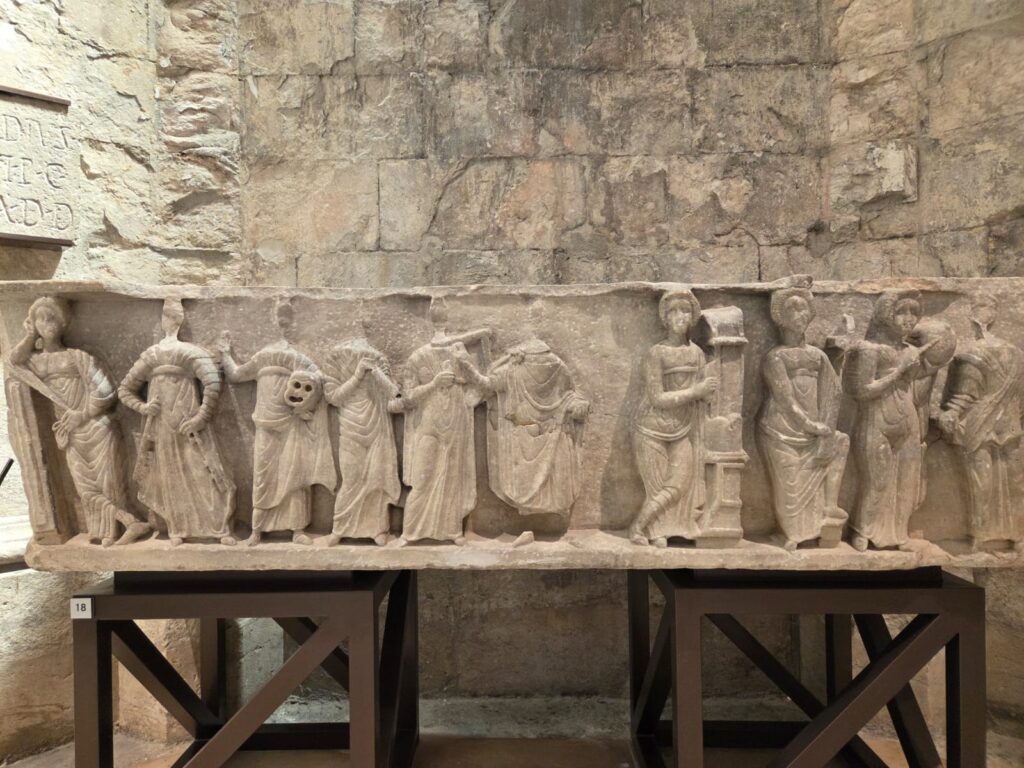
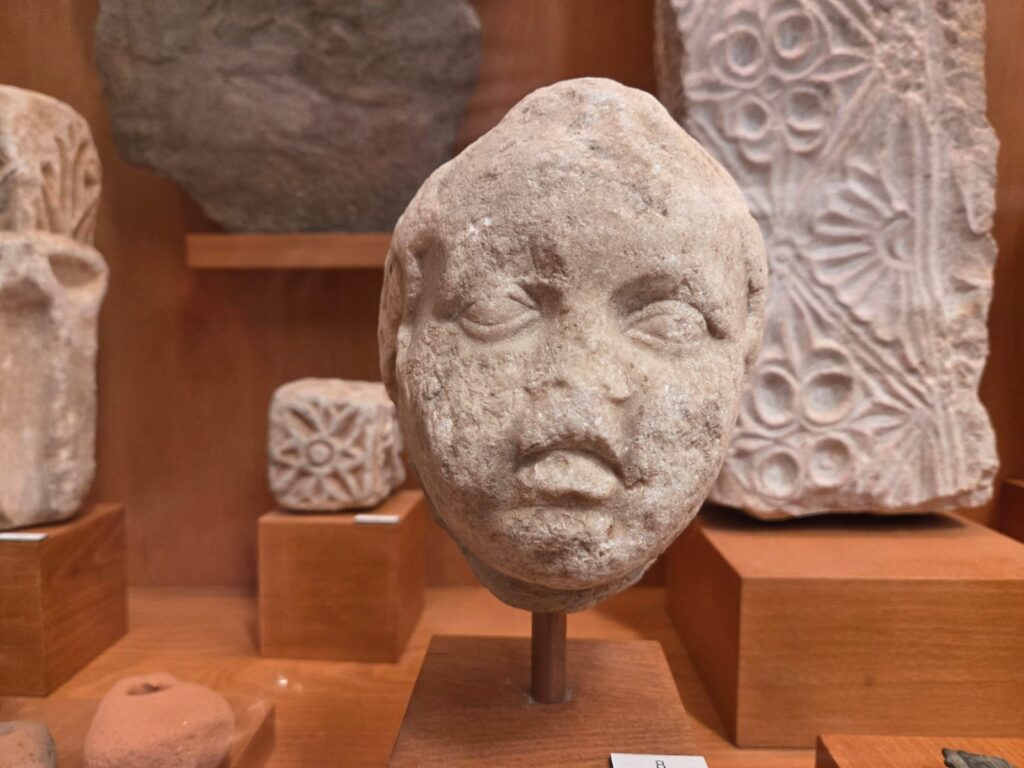
The Carmo Archaeological Museum
When I entered the Convento do Carmo, I expected to visit the site itself. As much as I was aware of a museum, I had assumed it would be of finds from the site, and a little bit of history about the place. What I found was much more than that.
The Carmo Archaeological Museum dates to 1864. It was founded by Joaquim Possidónio Narciso da Silva, first President of the Association of Portuguese Archaeologists. Right in the middle of the shift towards professional archaeology, but before methods became scientific. The main purpose of the museum was to safeguard heritage which had been put at risk by the civil war I mentioned, the expulsion of religious orders, French invasions: basically it was not a good time for heritage.
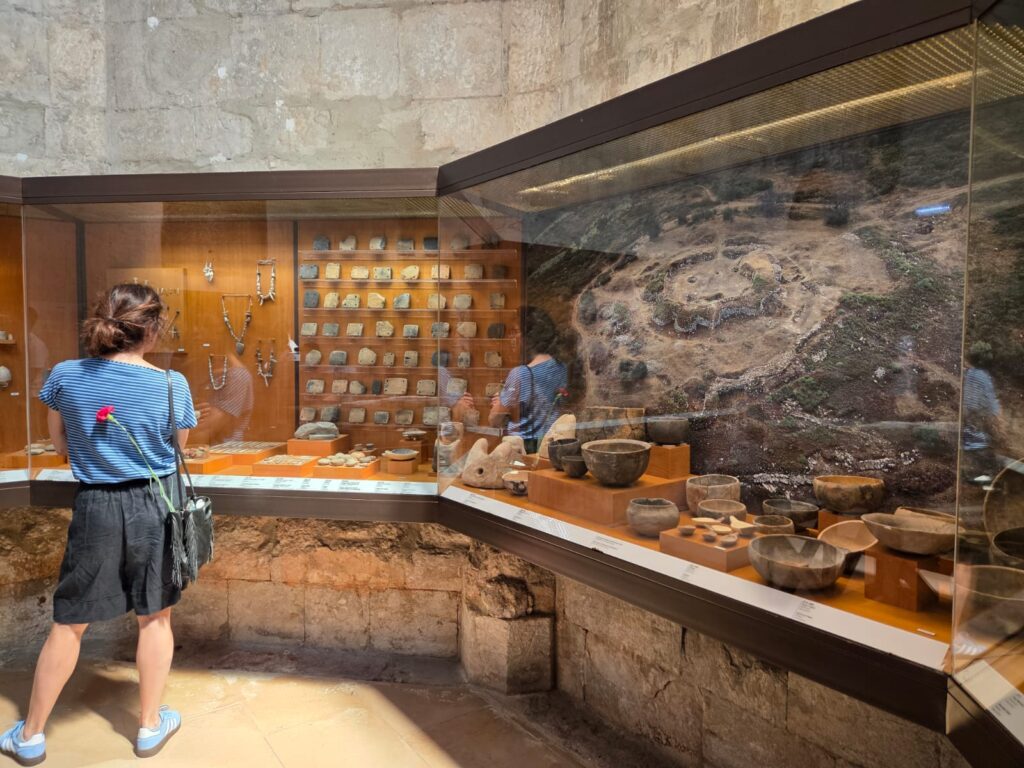
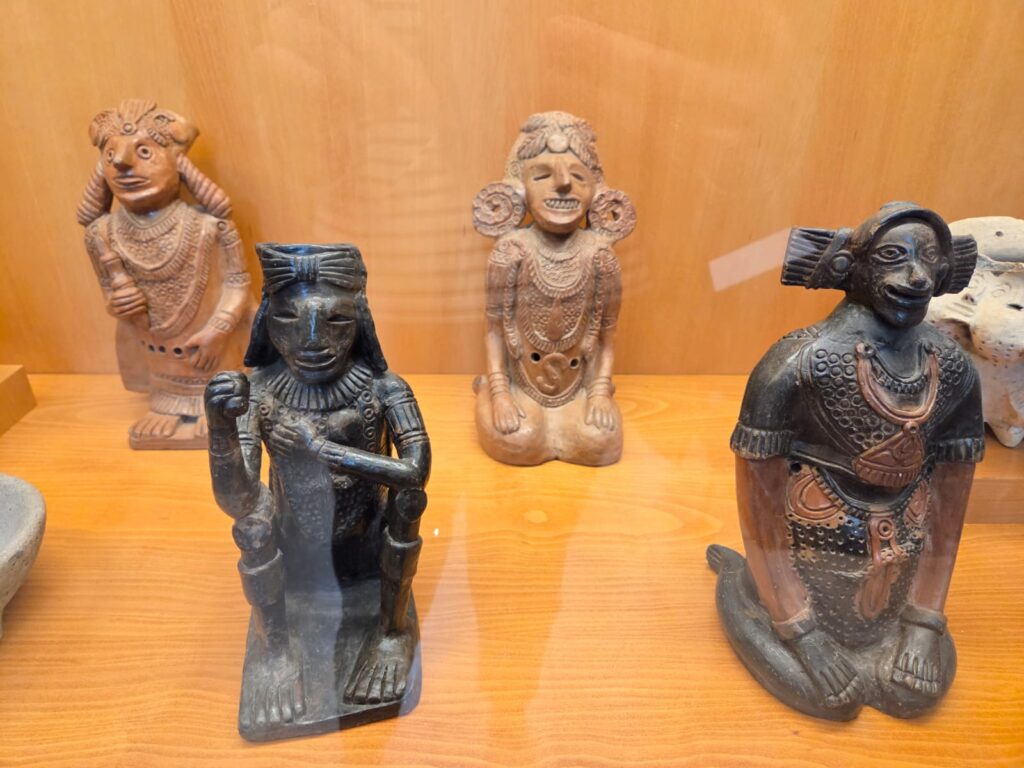
Possidónio da Silva intended the museum as a place of learning as well as discovery, so it included a library from the start. The collection included fragments of sculpture and architecture, funerary monuments, azulejos, and other objects. It was then bolstered (and the scope of the museum widened) by donations from the collection of the Count of São Januário including pre-Columbian ceramics and two Peruvian mummies. These are still on permanent display – more on this shortly.
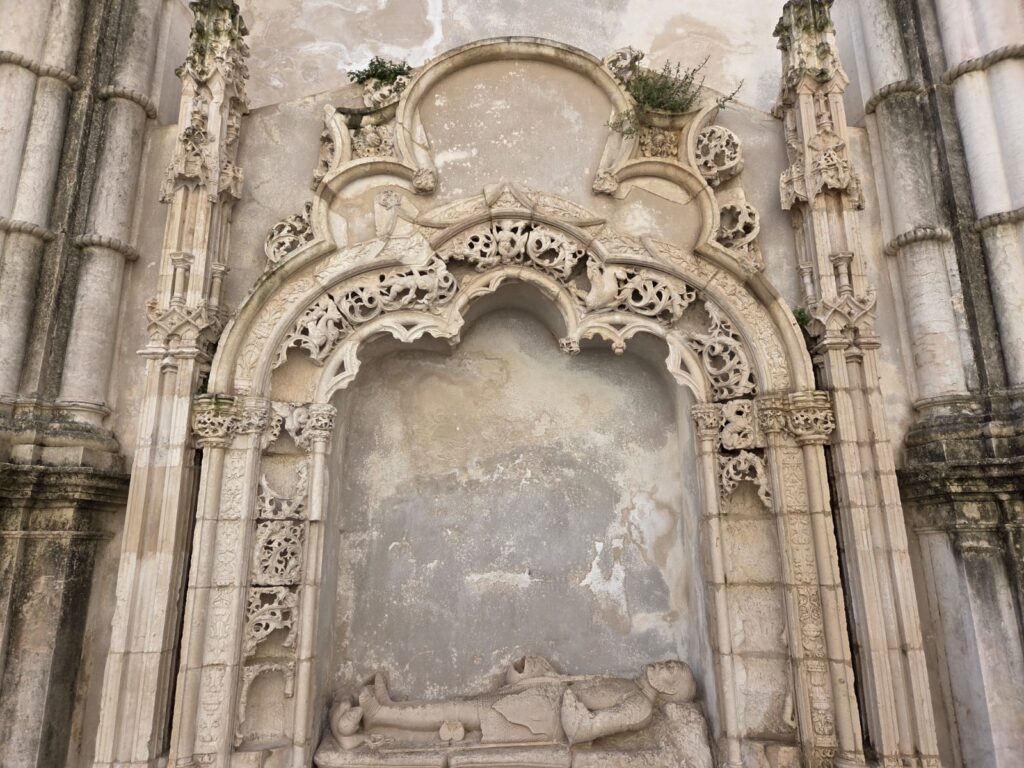
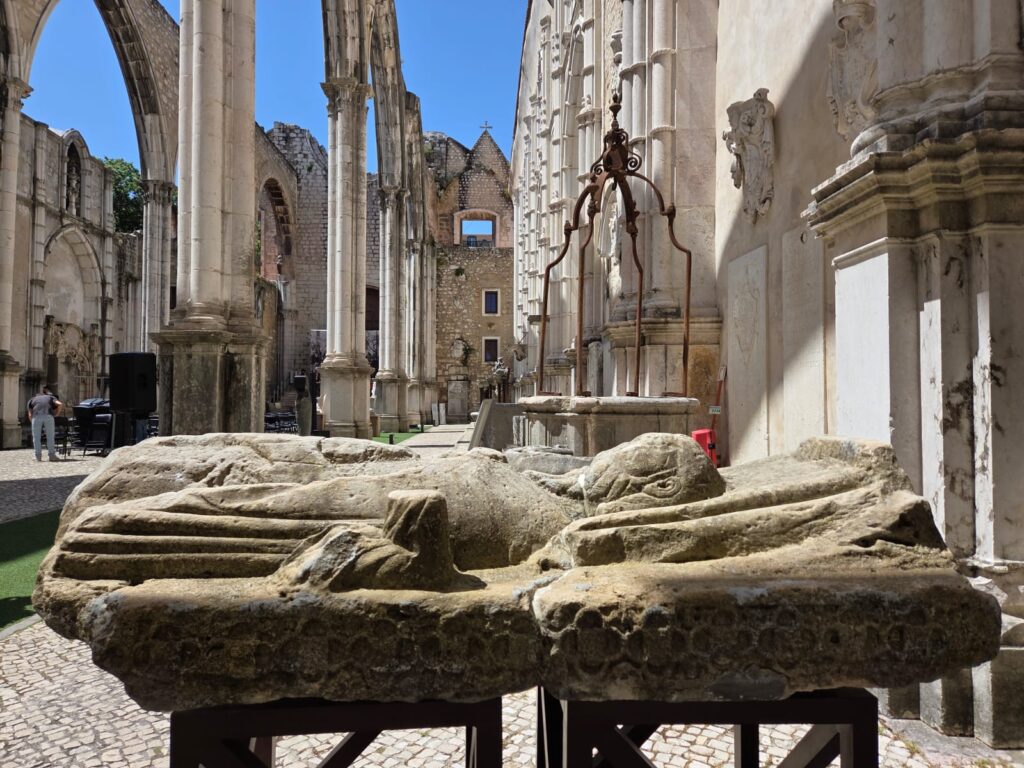
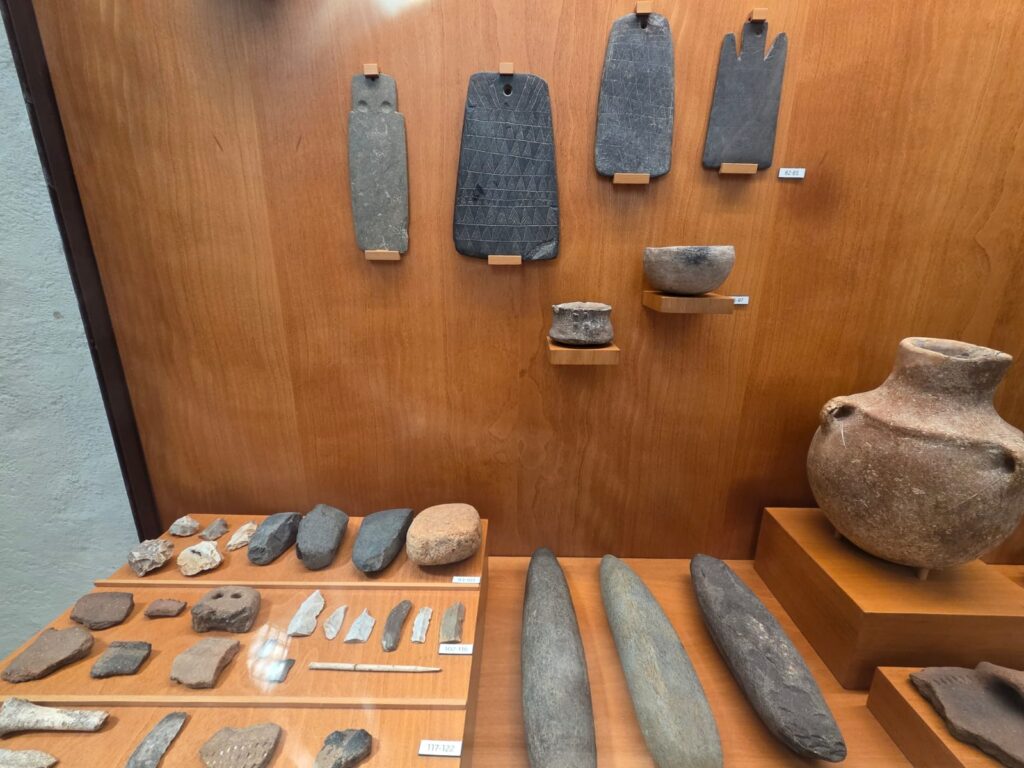
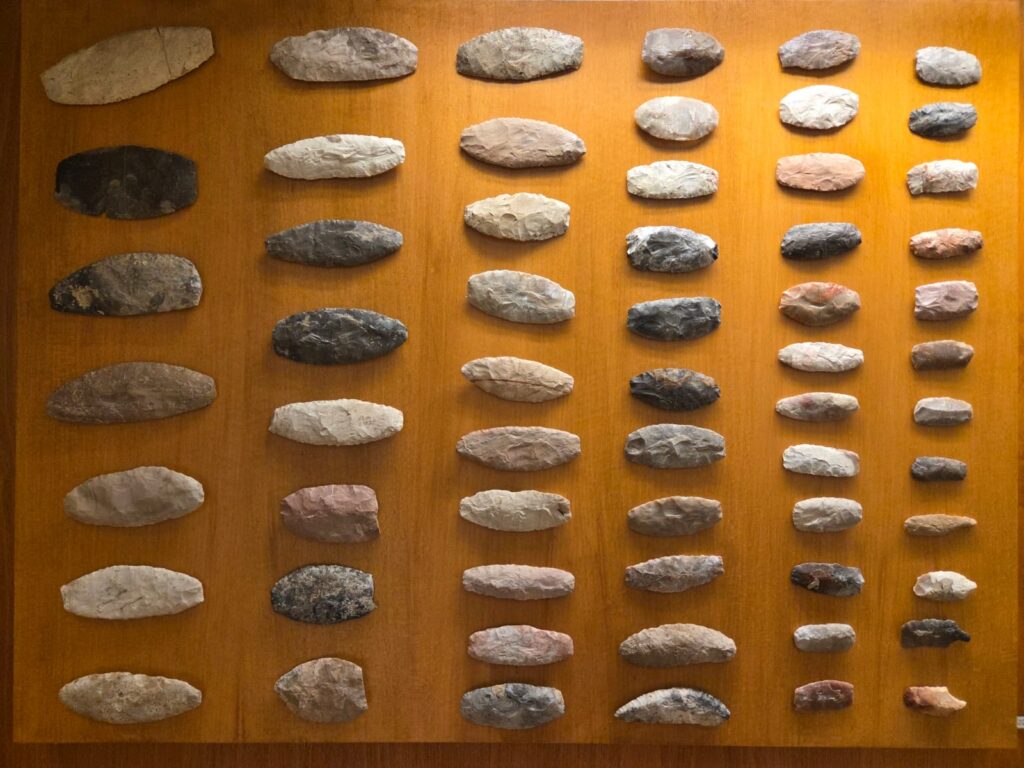
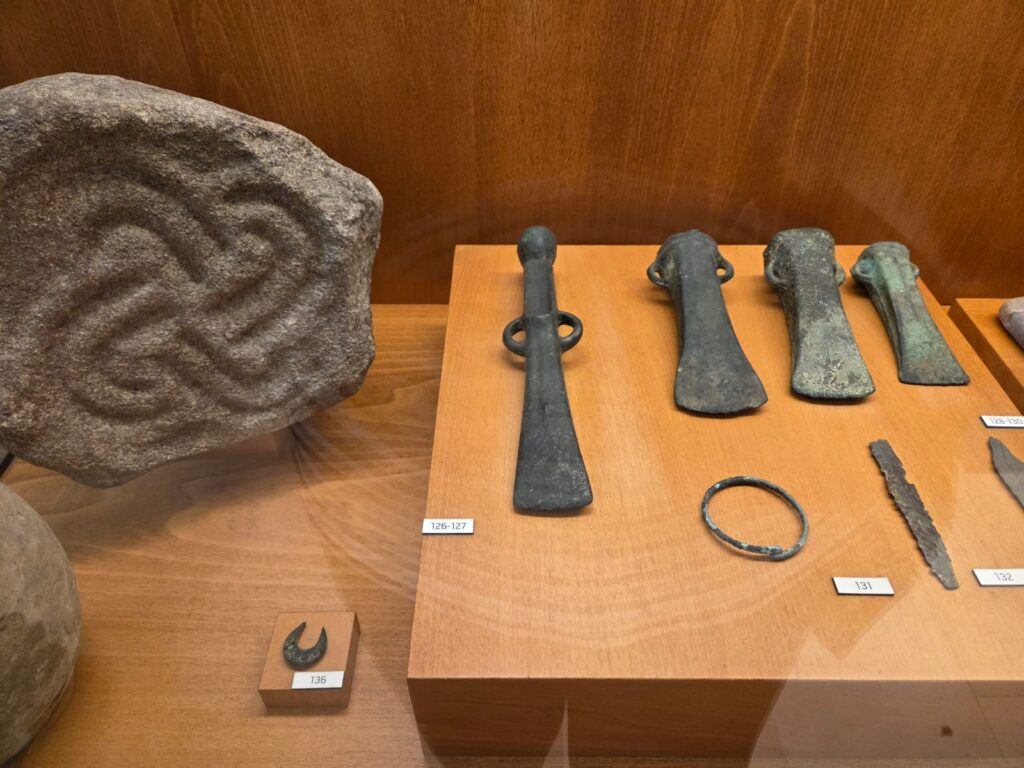
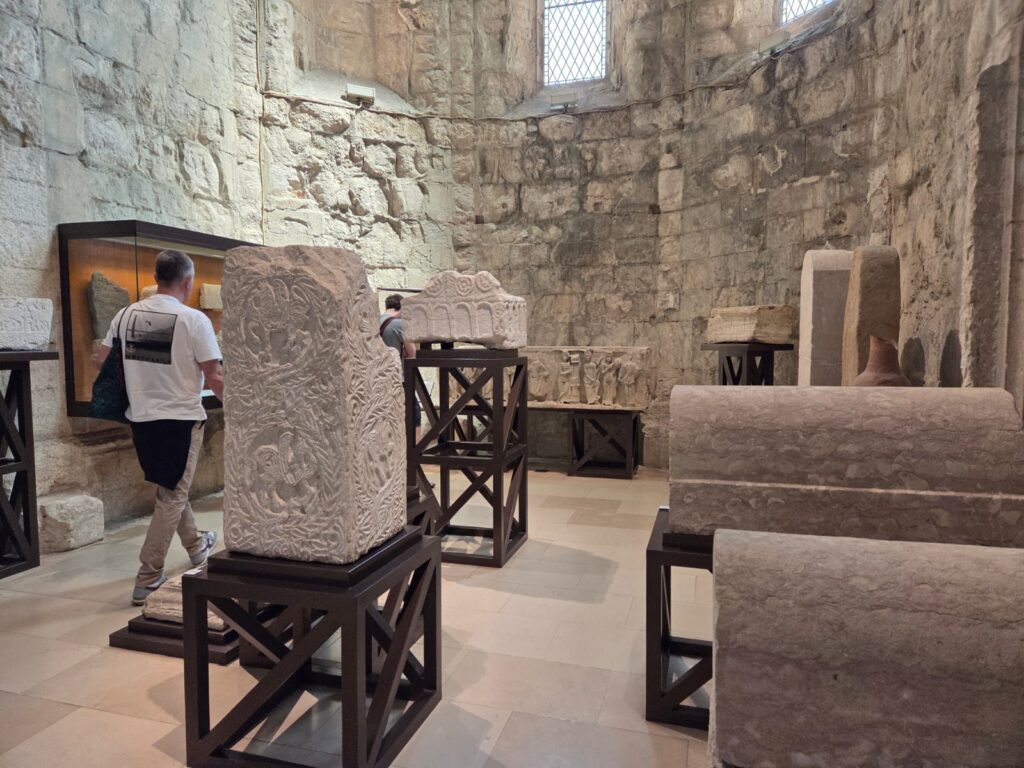
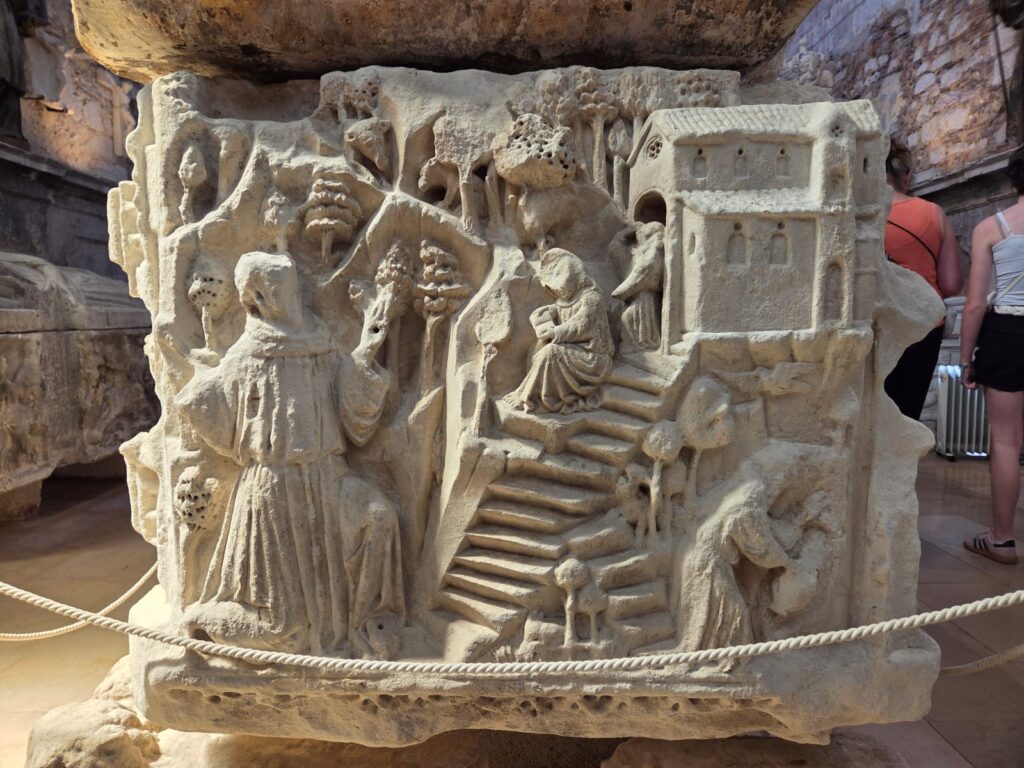
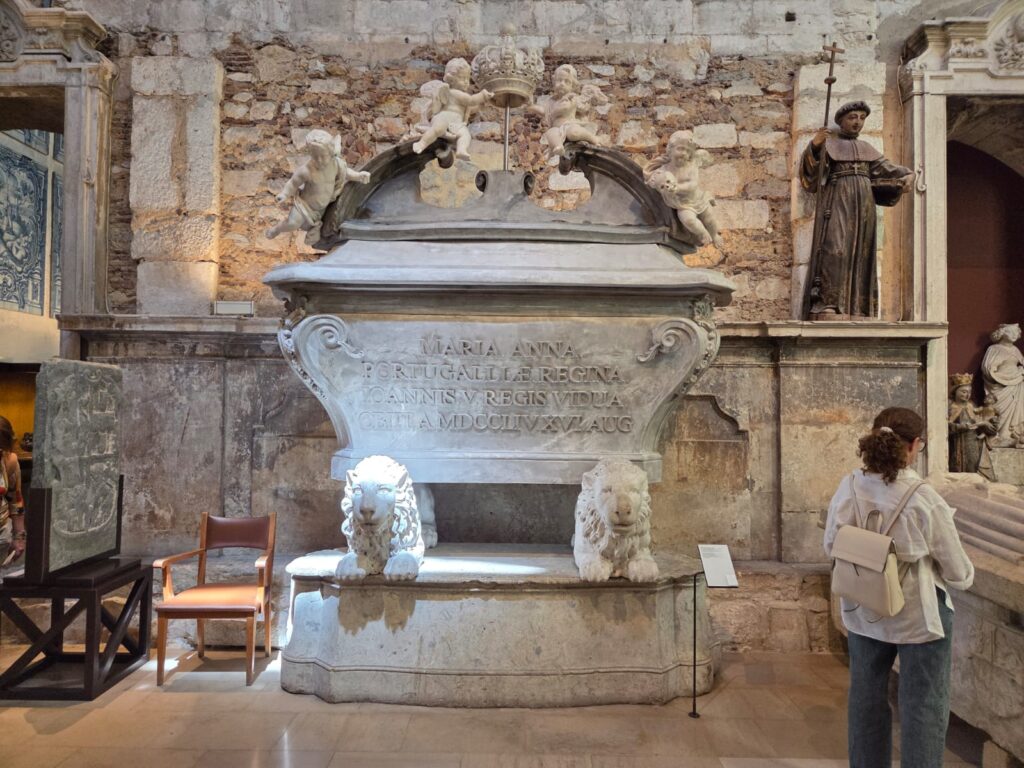
Further shifts in museum scope occurred when the Carmo Archaeological Museum received donations of prehistoric archaeological finds. Other important objects in the collection include a set of medieval alabaster panels from Nottingham (once a key English export before the Reformation), the Baroque tomb of Queen Maria Anna of Austria (who was actually Queen of Portugal), and sculptural fragments which bear witness to Christian worship during Muslim rule in Portugal.
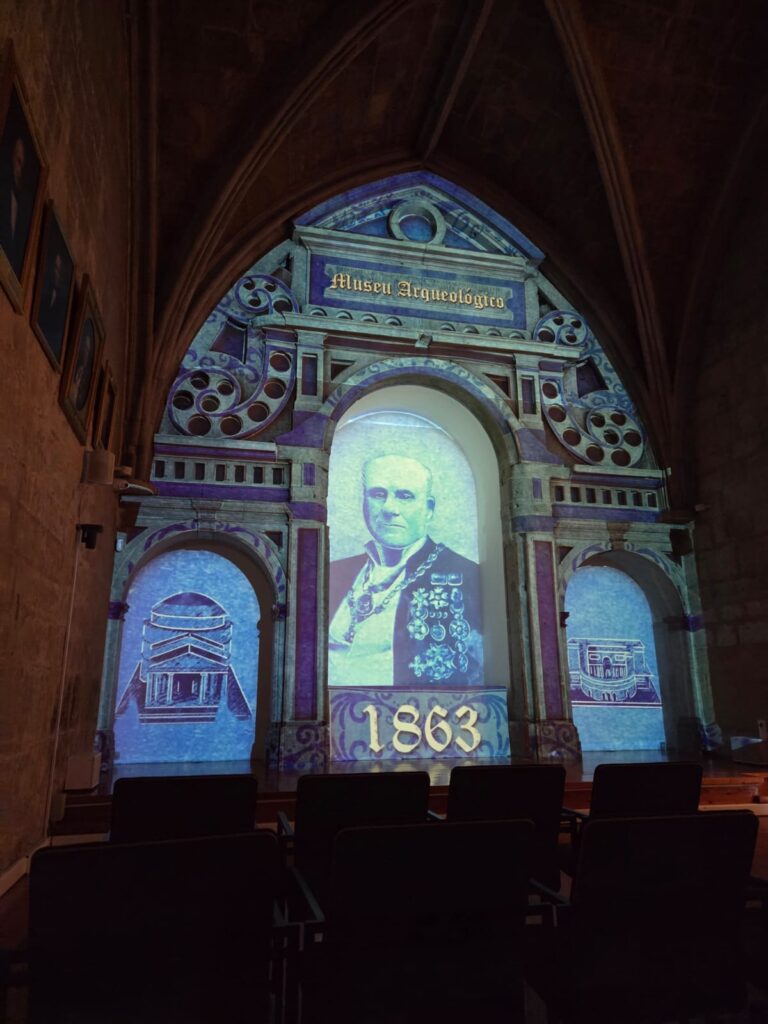
From 1995 to 2001 the museum was closed for restoration, after the extension of subway lines caused damage to the building. Museum staff took the opportunity to redisplay the collection and introduce more modern lighting and showcases. A more recent update is a 3D projection which tells the convent and the museum’s story three times an hour.
The Visitor Experience
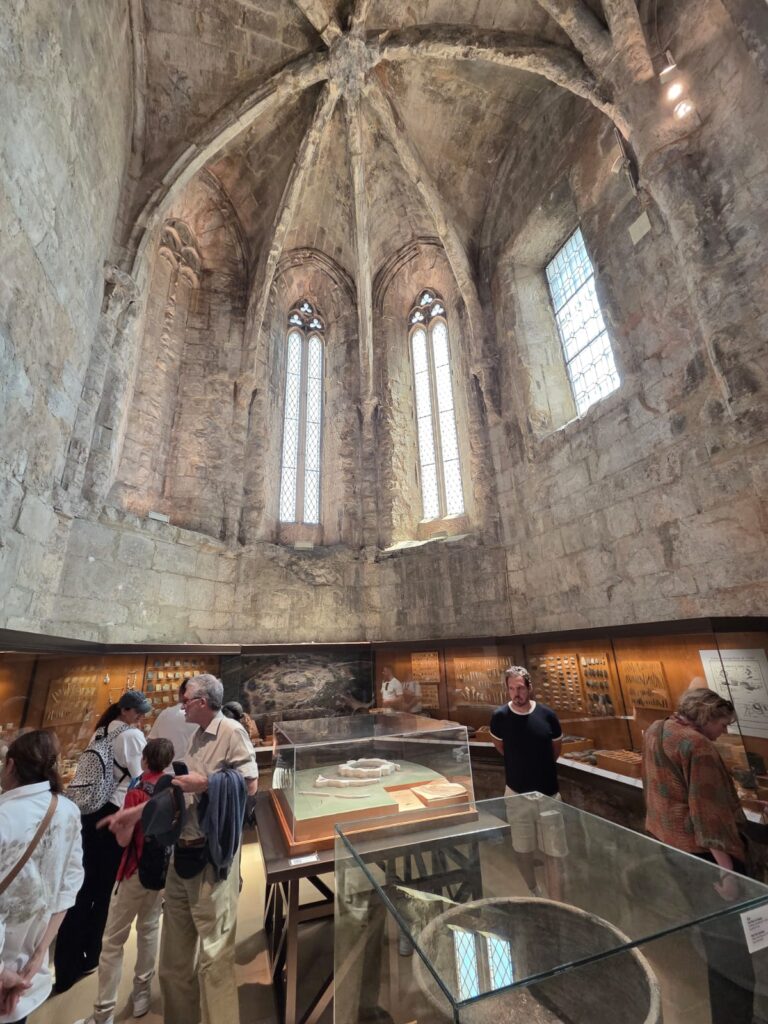
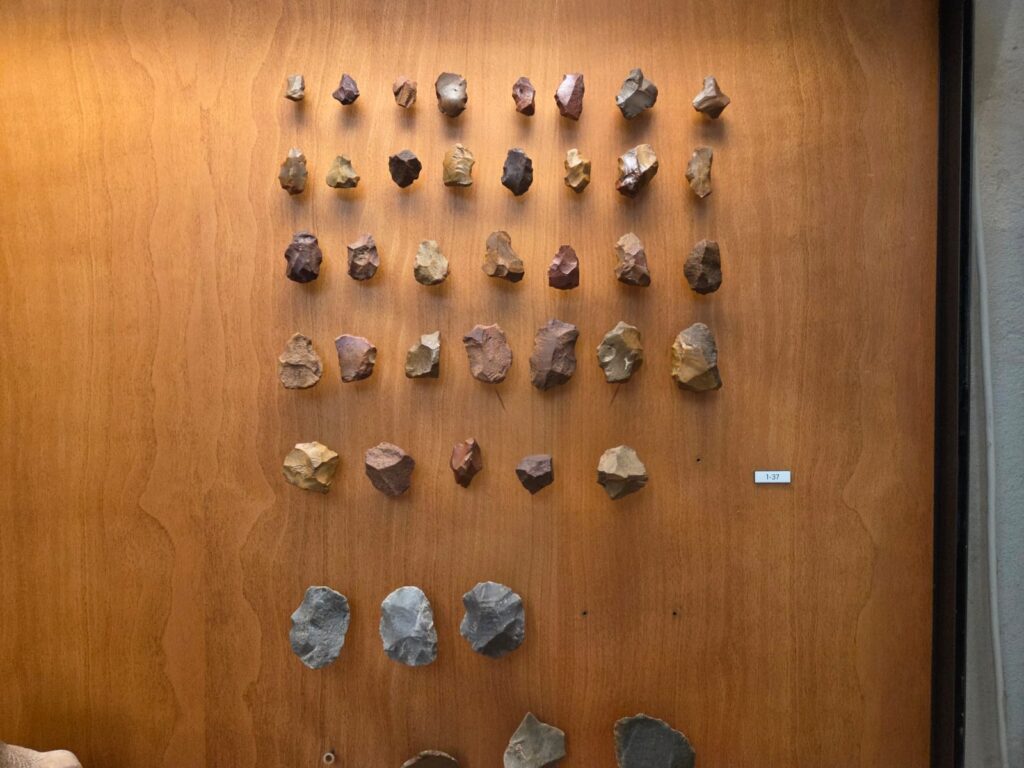
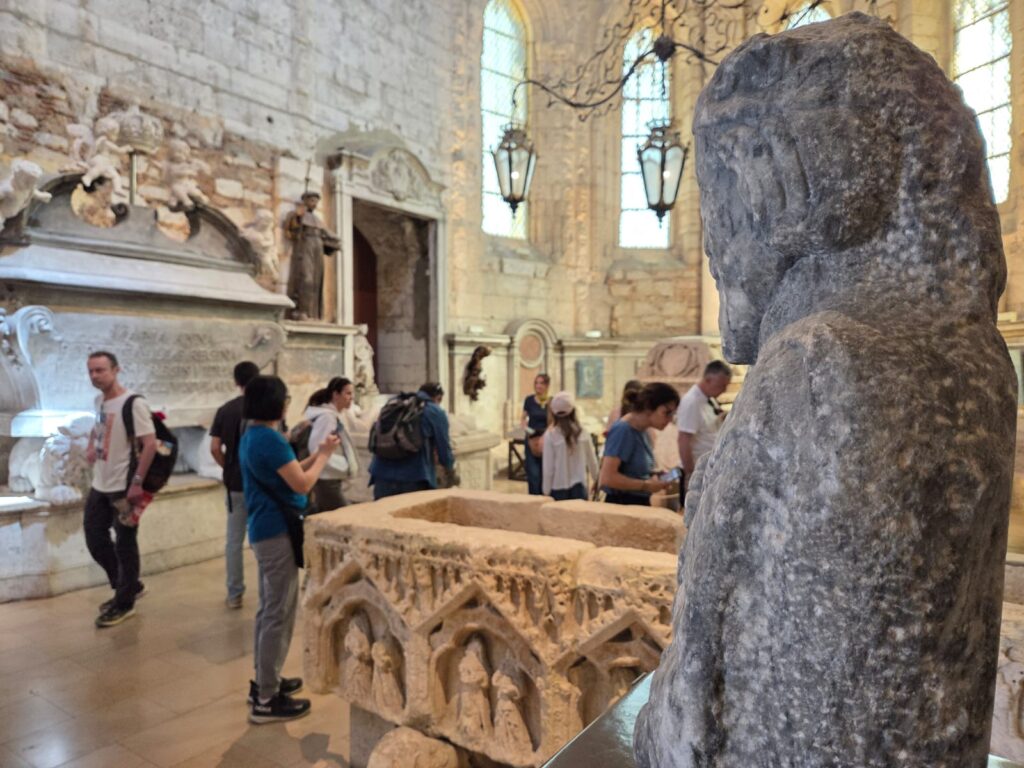
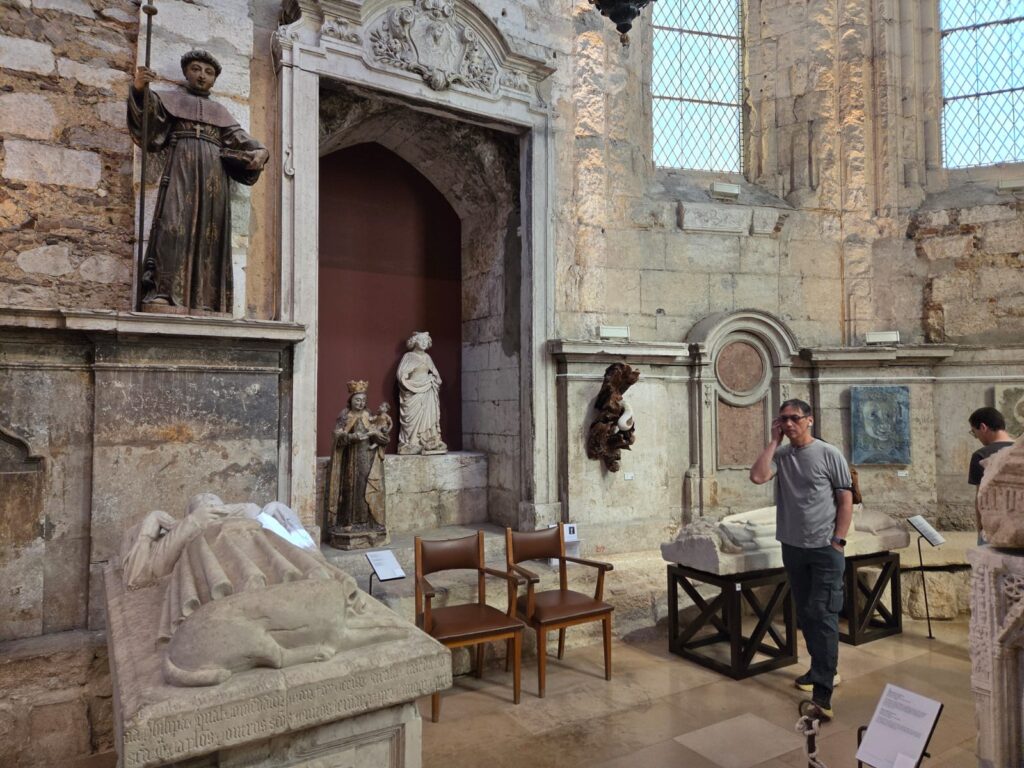
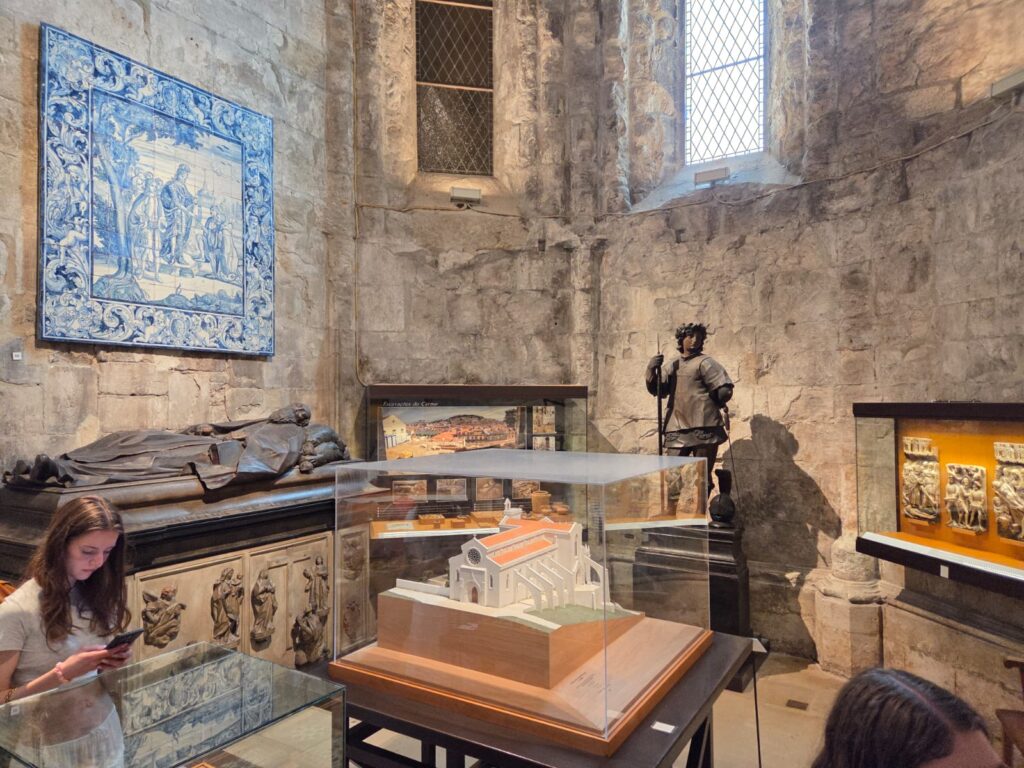
As I was saying above, I hadn’t expected such an extensive museum. But I liked it! The fabric of the museum itself – the rough stone walls and soaring ceilings of the ruined convent – is atmospheric for a start. I also immediately liked the fact that the museum starts at prehistory. The hand axes and prehistoric vessels show just how far back the story of Portugal stretches.
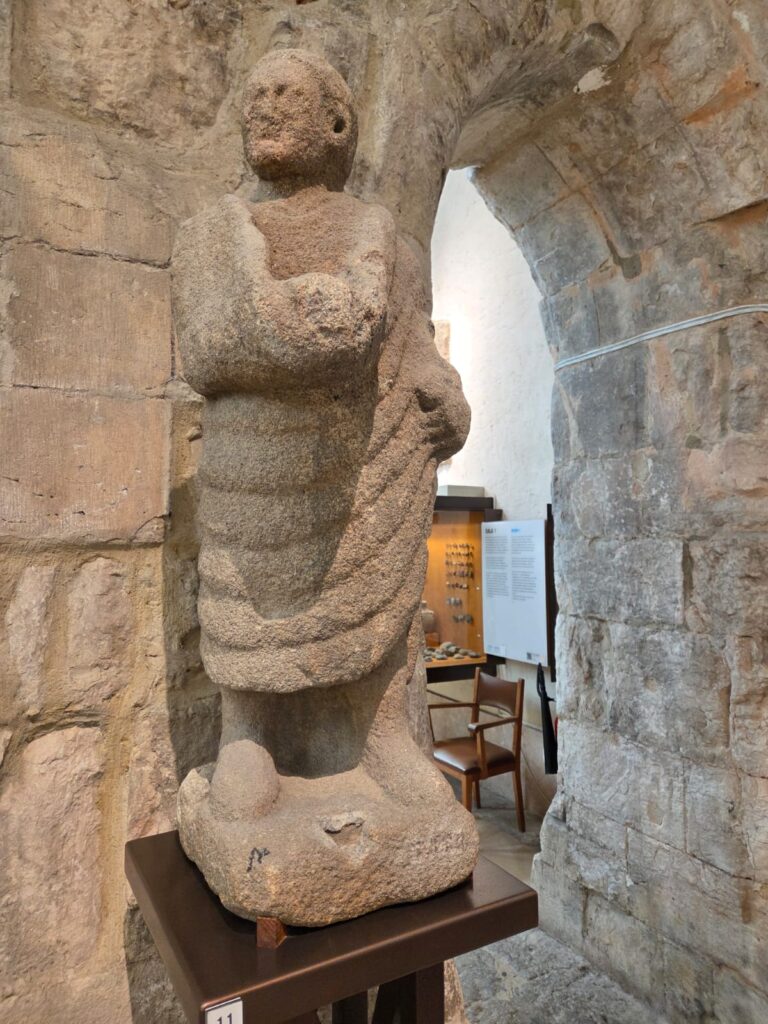
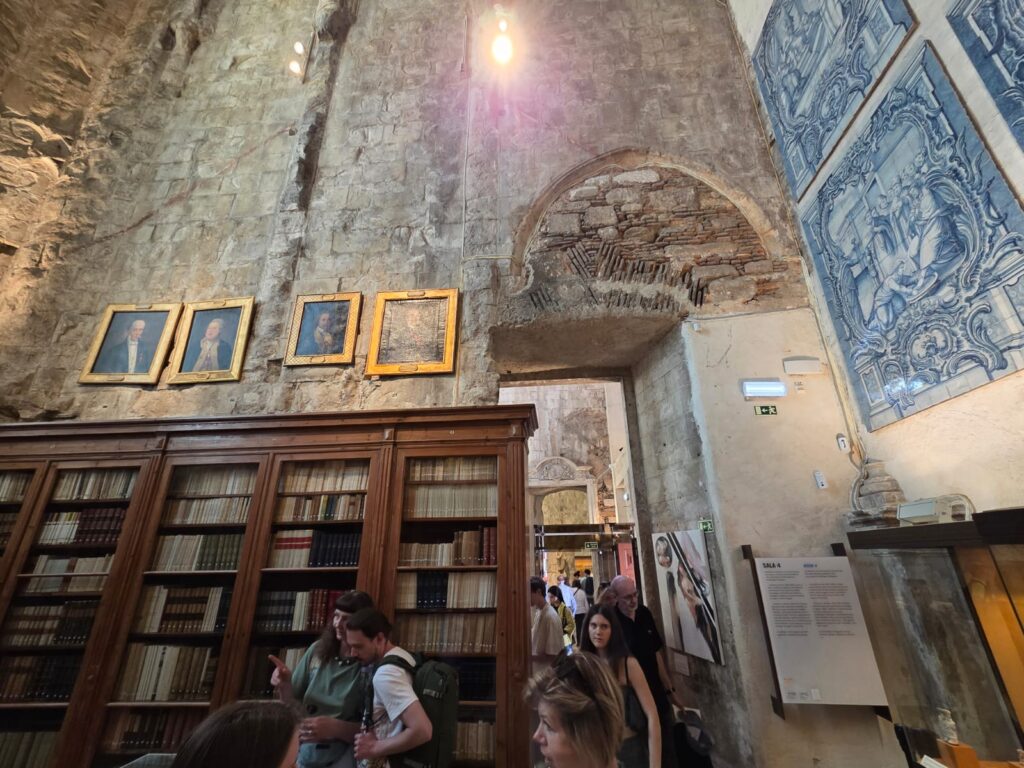
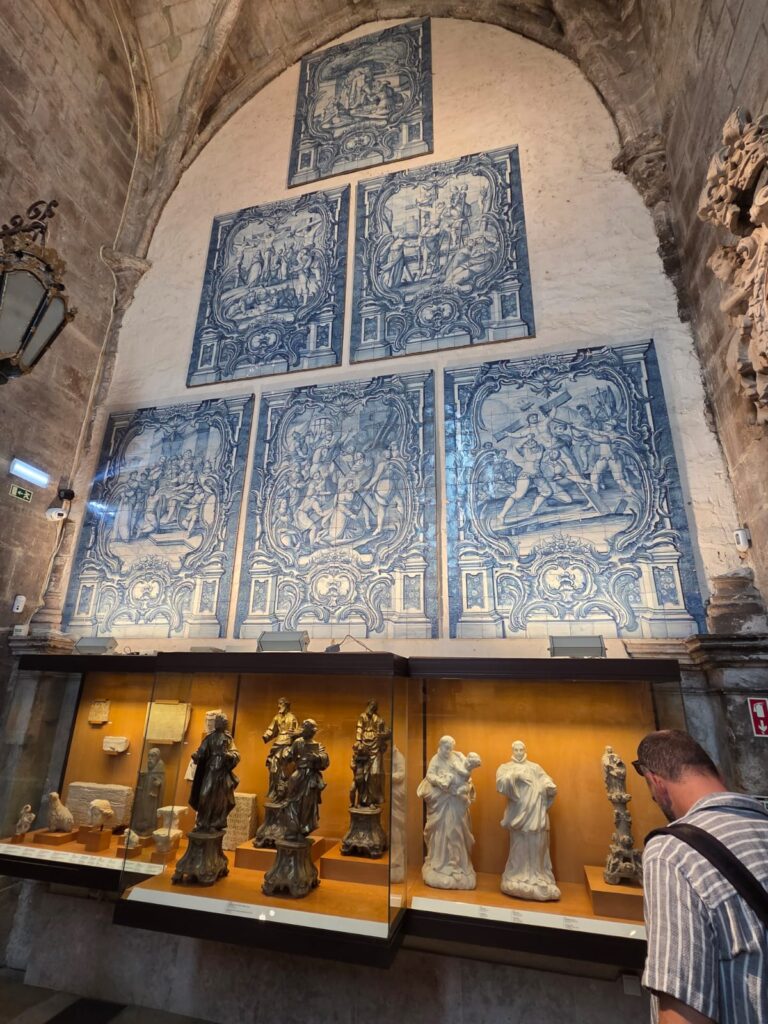
Moving through the rooms, I liked the comfortable jumble of the museum. Tombs jostle for space with models, sculptures and showcases. Sets of tiles hang overhead, next to portraits of old-fashioned sitters. I actually did a double walkthrough to take it all in. You can learn a lot about Portuguese history and archaeology here. But it’s also nice to just soak in the atmosphere. I definitely recommend watching the whole video when you reach the final room. As well as the content, the way it uses the historic building is very clever.
And then you have the outdoor space. That’s all some people are here for: in front of me in the queue for tickets were an influencer of some kind and a local photographer she’d hired. Each to their own – the ruins are definitely photogenic. Either before or after your museum visit, it’s nice to sit somewhere and enjoy your surroundings. I watched the set-up for an event at the convent planned for later that day. That would also be a nice way to experience it.
Back to Those Mummies
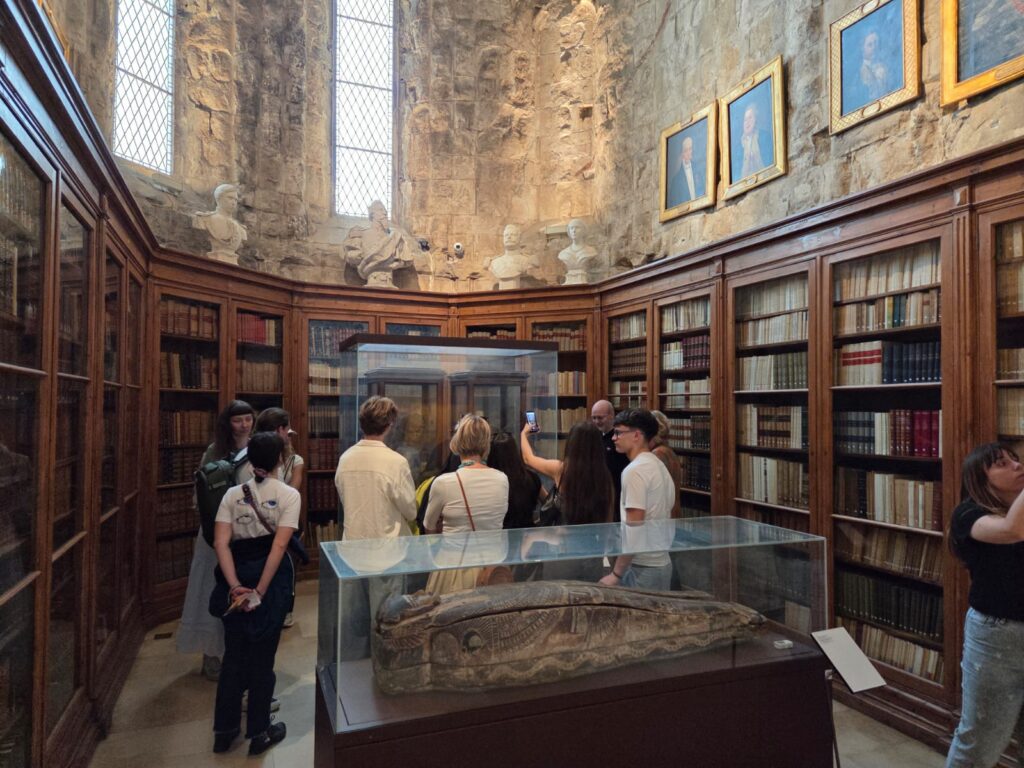
The one thing that sticks out to me as being less positive are those two Peruvian mummies. As I said earlier, they are 19th century donations from the collection of Count of São Januário. They have thus been part of the permanent display for some time. I imagine they are part of the local memory of the place. Much like the singular Egyptian mummy in the Otago Museum in my home town of Dunedin, I imagine generations of Lisboetas (residents of Lisbon) remember seeing these mummies as children and later taking their own children to see them.
But I just didn’t feel comfortable with the display. I didn’t take a close up photo of them, but if you scroll up five photos, they are in the display case in the middle of that room. It’s a tight space, and the case is relatively small. Hardly a restful afterlife. It’s partly that I’m just less comfortable with the display of human remains as time goes on. We are most comfortable with bodies in museums that are ‘other’ than ourselves. The acquisition of these remains is sometimes iffy. And so on. But it’s also the specific way in which these bodies are displayed. Devoid of any wrappings they used to have. Minimal context. The thing they reminded me of most closely was that Tintin book.
That is but one display case within a museum I really enjoyed. I think it’s important to acknowledge these things though. As museum professionals or museum lovers, we’re not going to agree with everything we see. And healthy debate is important. If you happen to visit the Convento do Carmo, or have visited previously, let me know in the comments what you think.
Trending
If you see this after your page is loaded completely, leafletJS files are missing.