
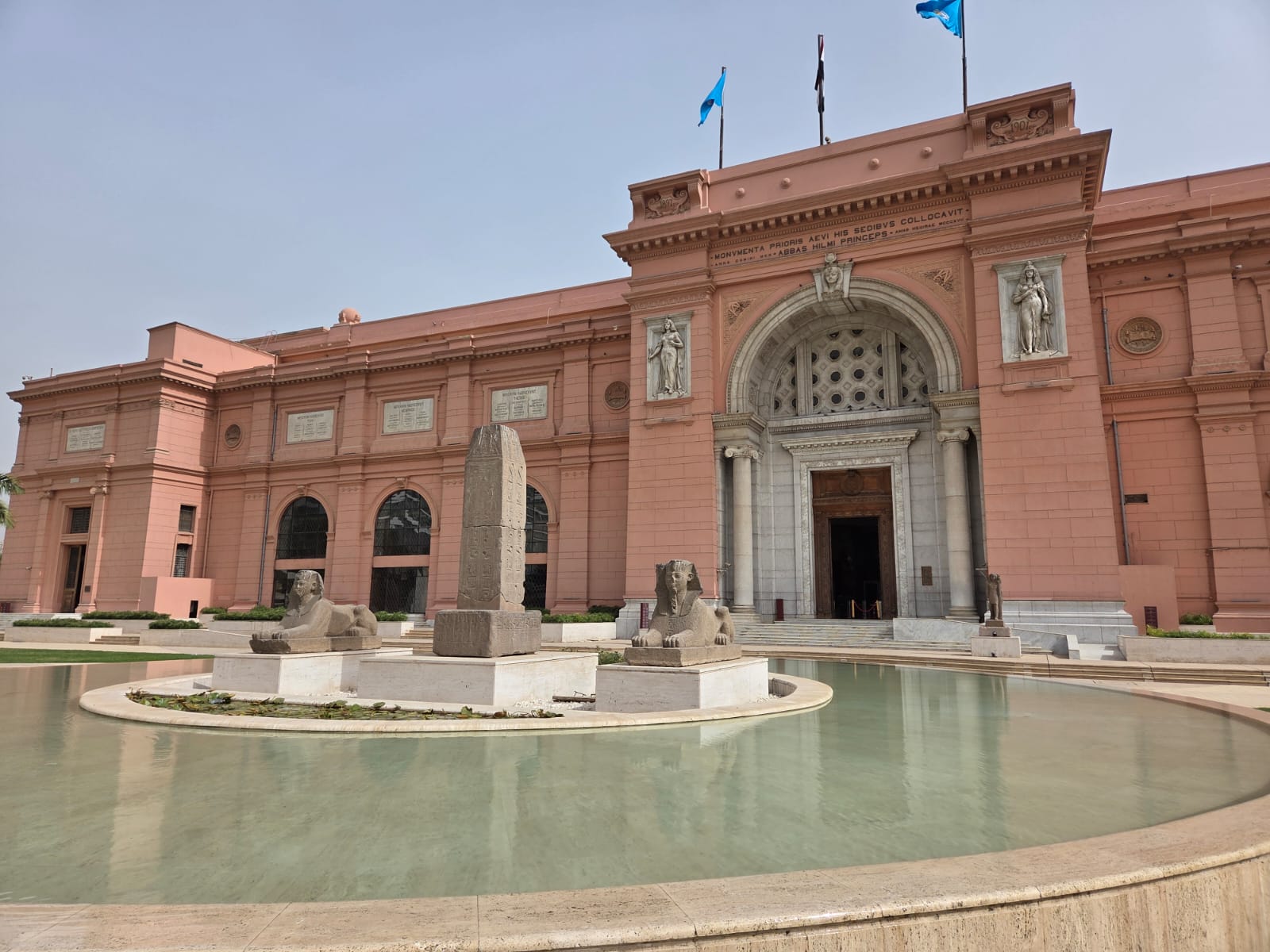
Egyptian Museum in Cairo
Ahead of a visit to the shiny new Grand Egyptian Museum, I decide to check out where it all began – the Egyptian Museum in Cairo.
A Long-Awaited Trip
Today on the blog, we are embarking on a series of posts about Egypt.* I’ve mentioned before that the young Salterton Arts Review wanted to be an archaeologist. Egypt is therefore a place I’ve always dreamed of going. It’s easy, sometimes, to put these big destinations off until later. Not the right time financially. Not the right time politically. Too hard to take time off work at the moment. But that’s how the years pass us by without us having had some of those experiences we really care about.
I decided that 2026 was the time to fix that, at least as far as Egypt is concerned. I also owe myself a trip to Cambodia, and a few other bucket list destinations. But Egypt isn’t even that far away, why procrastinate any longer? I almost found out the answer to that question when war broke out in the Middle East. Egypt, thankfully, was not part of the conflict. And so my plans were still on.
I chose to visit Egypt on a small group tour. This one, to be precise, from G Adventures (who were also my company of choice in Peru). I can’t recommend it highly enough. We saw so many amazing sights in just a week, and our guide Hisham was a storyteller who brought it all to life. I don’t get any incentives for promoting the tour here on the blog, I just think it’s that good.
Generally, though, I have very specific ideas about what I want to see and do in a place. And so, when I do small group tours, I often add a couple of days at the beginning or the end of the trip. Enough time to go to some niche museums, check out churches, eat a specific food I’ve heard about, or whatever it might be. I did that successfully in Peru, and again in Kyrgyzstan and Georgia (posts coming soon). It also takes the pressure off if flights are late, so in my view is extremely sensible.
Anyway, what that meant in Egypt was that we had a day to ourselves in Cairo at the start of our trip, and the same again in Luxor at the end. By the time we got to Luxor we needed a rest and so spent a lot of that day by the pool. But in Cairo we were still fresh and excited and made the most of it. Given that our hotel was right next to Tahrir Square, visiting the Egyptian Museum in Cairo was a no-brainer.
*I actually made so many posts I’ve split it in two – Cairo and Giza posts now and the rest later!
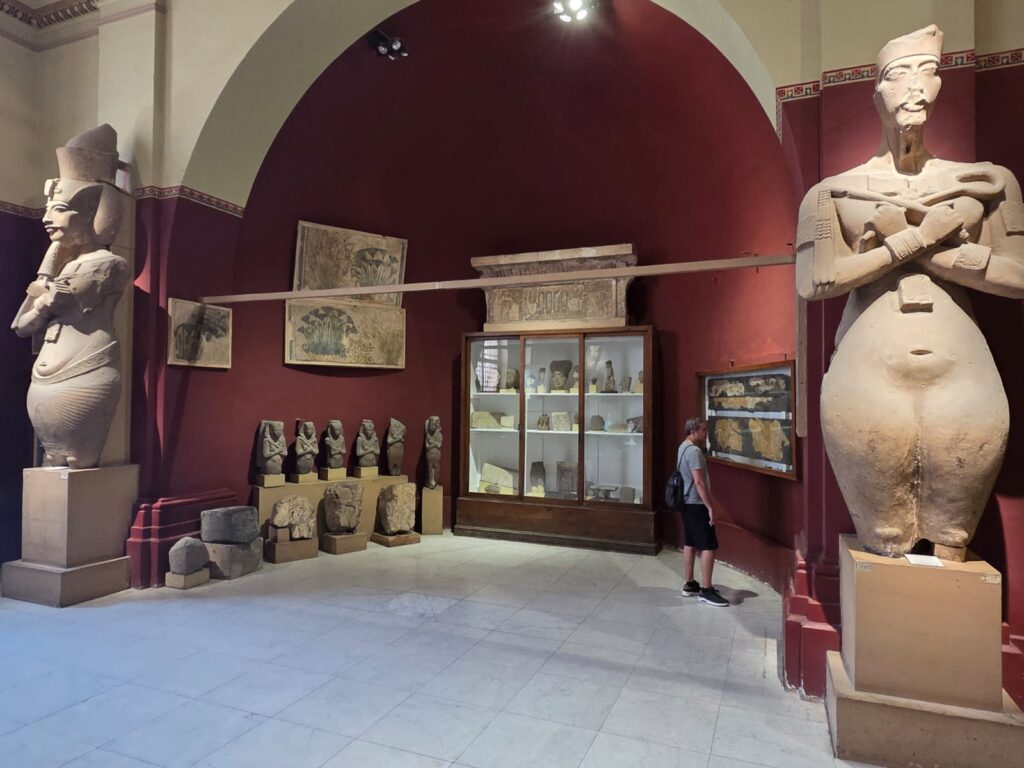
A Brief History of the Egyptian Museum in Cairo
The history of the Egyptian Museum in Cairo (AKA the Egyptian Museum, Cairo Museum, Museum of Egyptian Antiquities, or المتحف المصرى) goes back to 1835. It was in this year that the Egyptian government established a museum near the Ezbekieh (or Asbakeya) Garden. Archaeology was in its infancy at that time, and a lot of finds came from farmers ploughing fields. This early museum effort was not entirely successful – a lot of the finds were sold during a period of instability, and the remainder gifted to Archduke Maximilian of Austria in 1855. They are in fact what we saw in the Egyptian galleries of the Kunsthistorisches Museum).
A(nother) new museum was established in 1858 on the banks of the Nile. Can you guess what problem they had? If you said flooding, well done. After a significant delay, the contents of the museum decamped to Giza in 1889. They moved again to their current location, a custom-built museum building, in 1902.
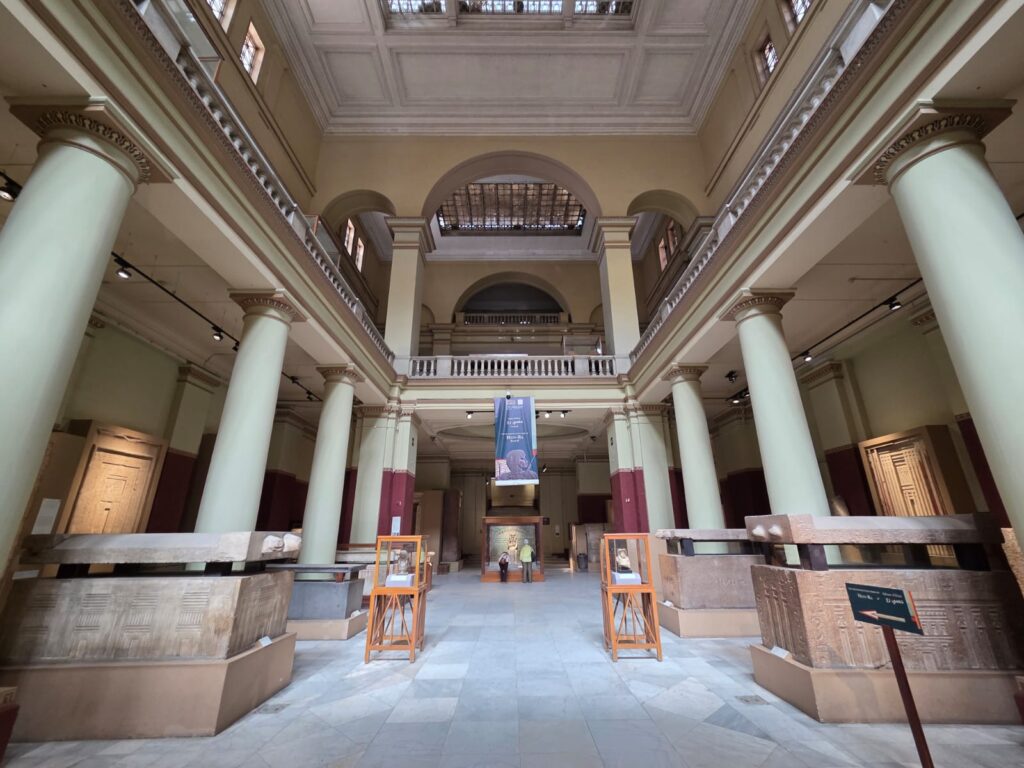
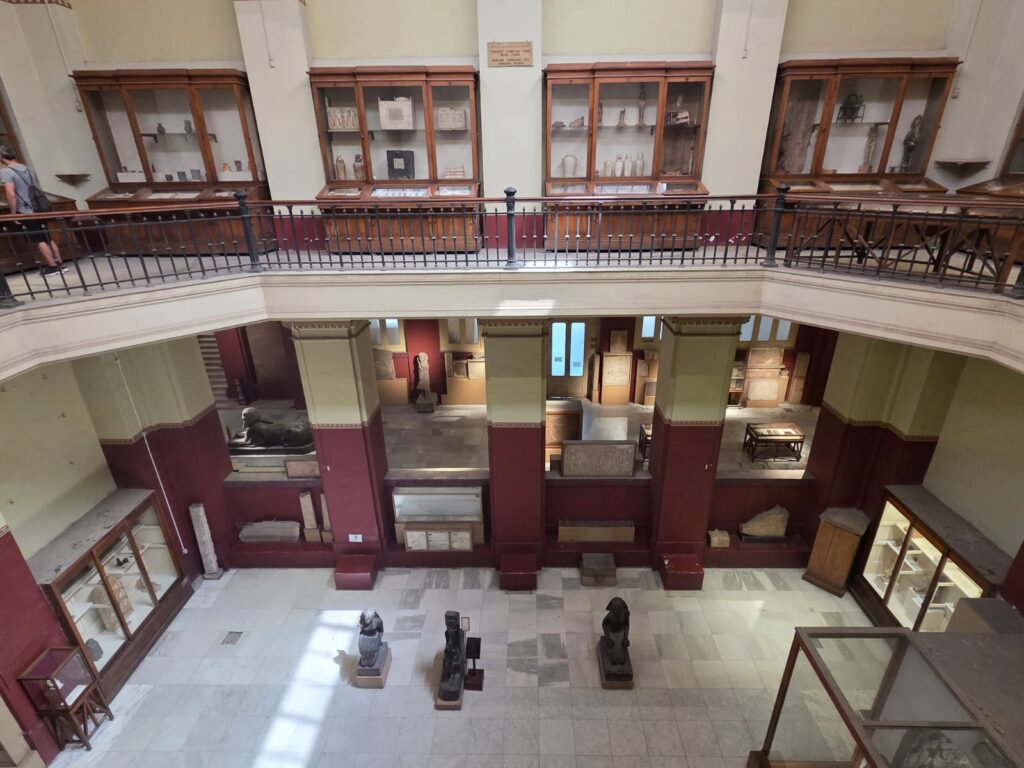
The new museum, on Tahrir Square (formerly Ismailia Square) was designed by French architect Marcel Dournon, built by Giuseppe Garozzo and Francesco Zaffrani, and completed by German architect Hermann Grabe. Quite the European project. Moving the collection required 5,000 wooden carts, and two trains making round trips for the larger items. The artefacts were organised strictly by chronological period, with no intermediate periods allowed to muddy the waters. Larger items were on the ground floor, and smaller ones upstairs. Over time it became extremely crowded.
In 1983 the museum was listed as a heritage site for its architectural value. It underwent a major renovation around 2006, including removing informal settlements from its periphery. Another major project, to remedy damage from traffic and pollution, was completed in 2016. Today, the museum houses the largest collection of Egyptian antiquities in the world – well over 100,000 items. And that’s even with the opening of the Grand Egyptian Museum in 2025. It is also notable as the first national museum in the Middle East.
The Museum in 2011
Given that the Egyptian Museum in Cairo is on Tahrir Square, a natural question is how it fared during the events of 2011. The Egyptian Revolution, part of the Arab Spring, started on 25 January 2011. The mass uprising, which lasted 18 days, ended more than 30 years of rule by President Hosni Mubarak. Sparked by the uprising in Tunisia, millions of people demanded an end to corruption, police brutality, and economic hardship. More than a decade on, with a new president now firmly in place, there’s still a lot to do.
However, the point here is that Tahrir Square was a focal point of the revolution. The focal point, actually, with about 2 million people gathering here. It continued to be a key gathering point over the ensuing months, with crowds gathering in Tahrir Square whenever tensions flared.
What of the museum? The museum was broken into during the protests and, seemingly and unfortunately, used as a site for the detainment and mistreatment of protestors. Compared to this human cost, the museum’s collection fared relatively well. Two mummies were destroyed, dozens of artefacts damaged (including a third mummy) in the search for gold, and more than 50 objects stolen. Around half of these were soon recovered on the museum grounds. A 2013 exhibition, Damaged and Restored, displayed several of the items.
The military eventually cordoned the museum off to protect against further damage and theft. Given the symbolic importance of Tahrir Square in public demonstrations, we must assume it will continue to be a risk to the museum in times to come. It’s fortunate the damage on this occasion wasn’t worse.
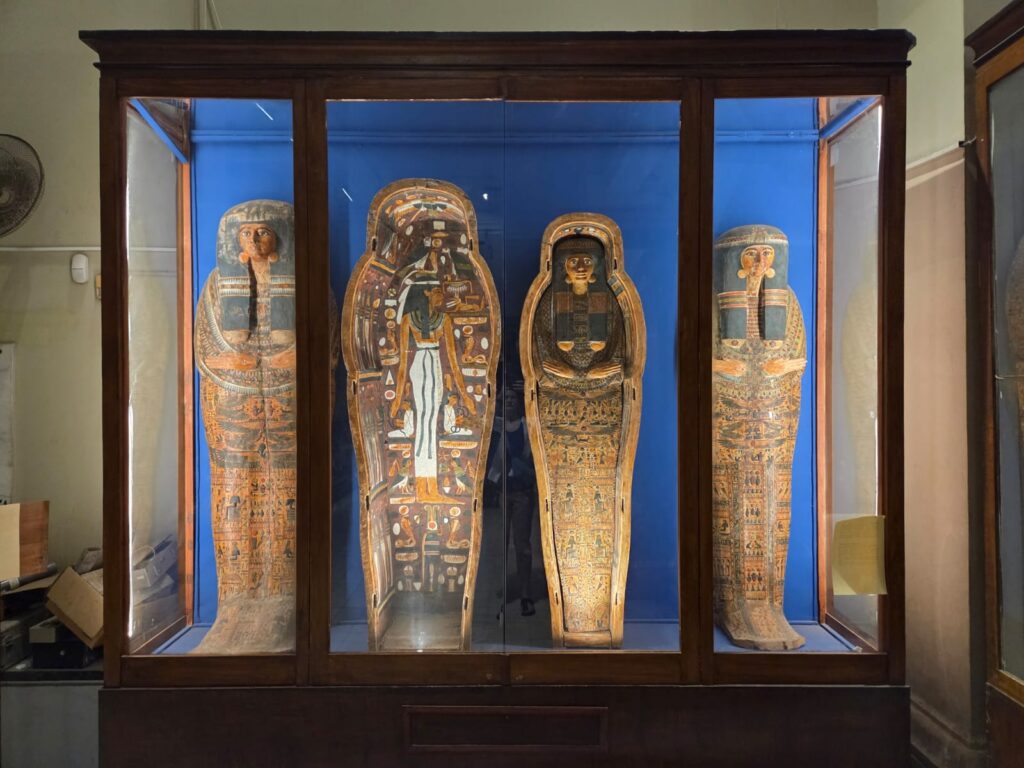
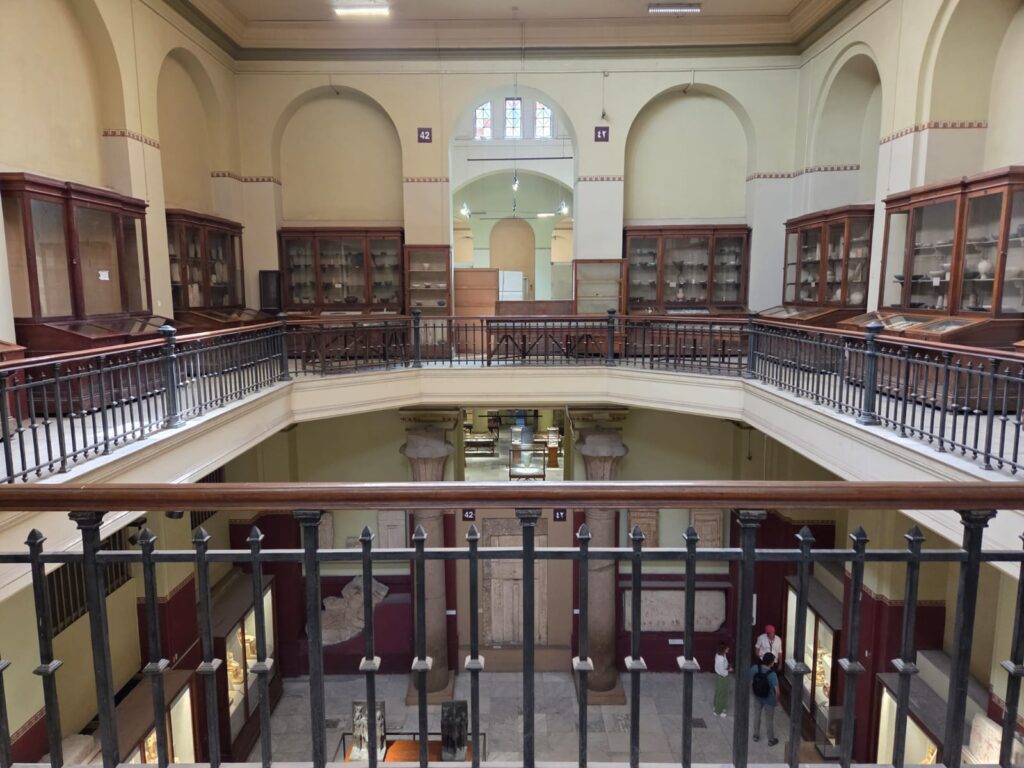
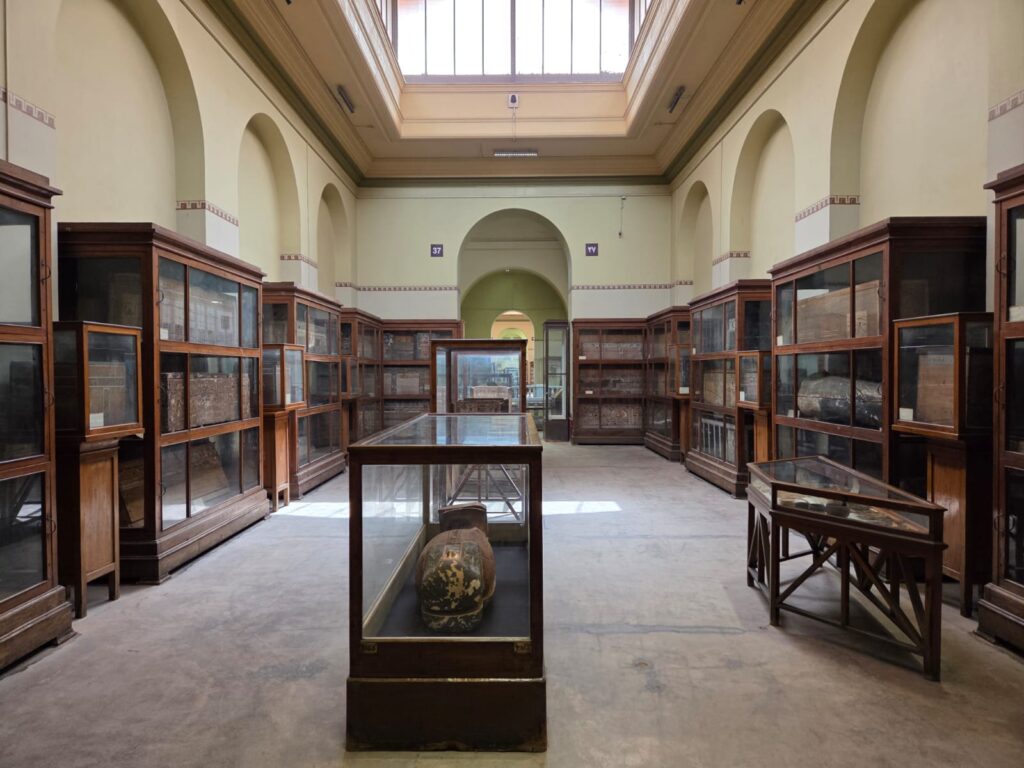
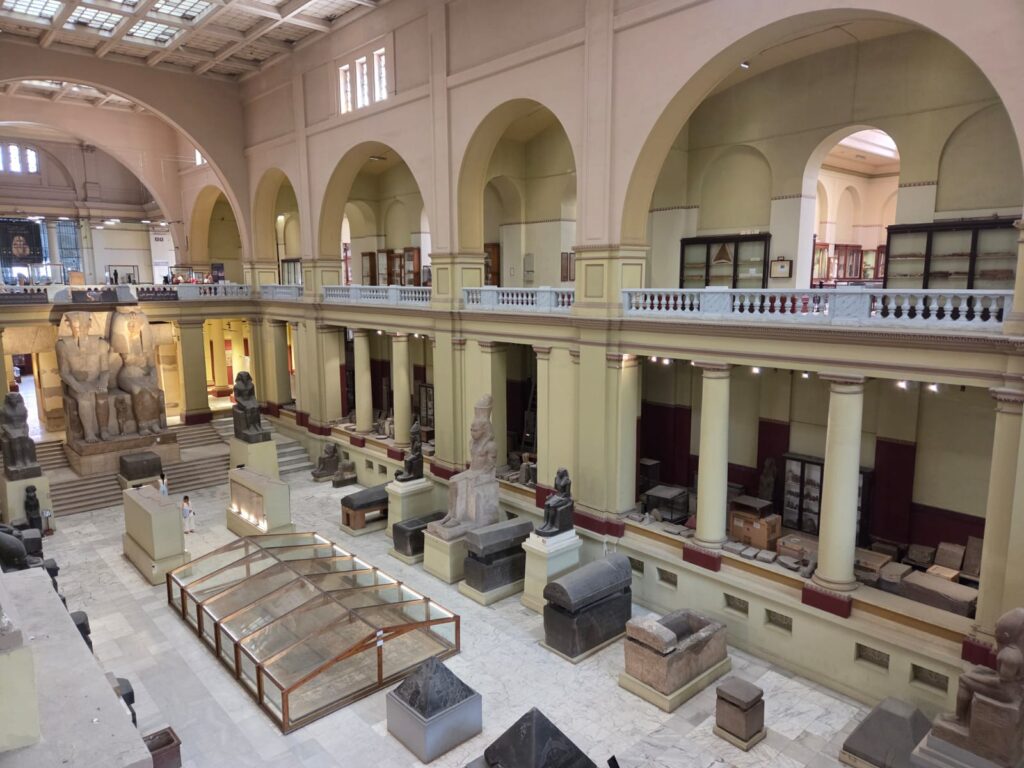
Navigating the Egyptian Museum in Cairo
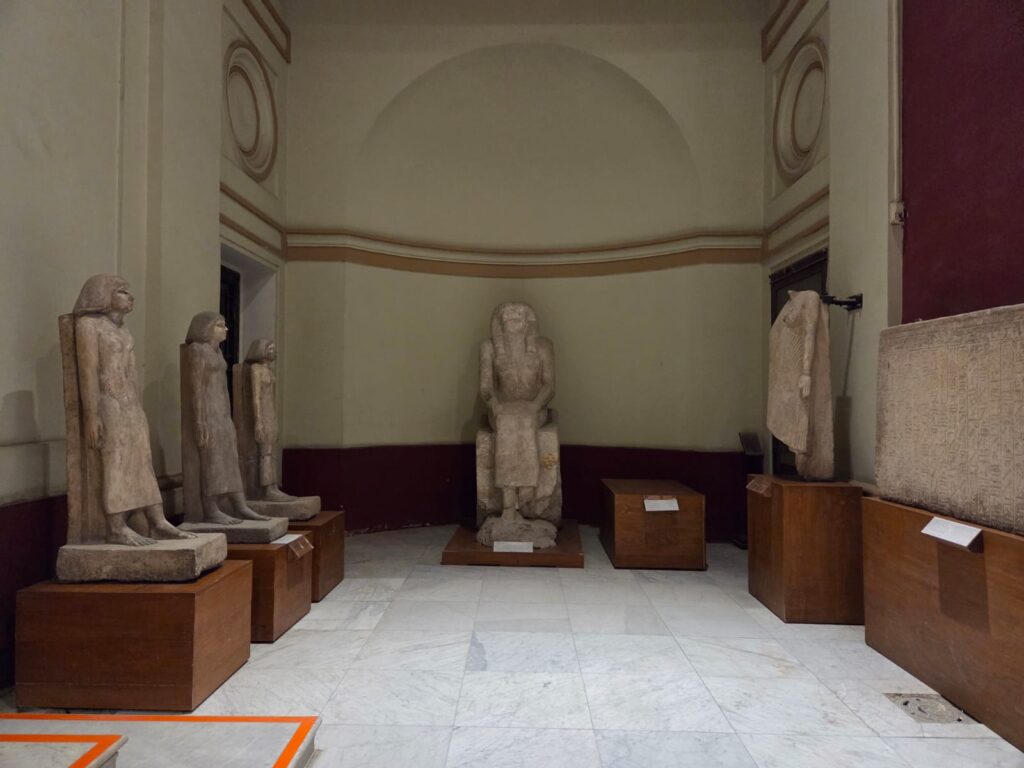
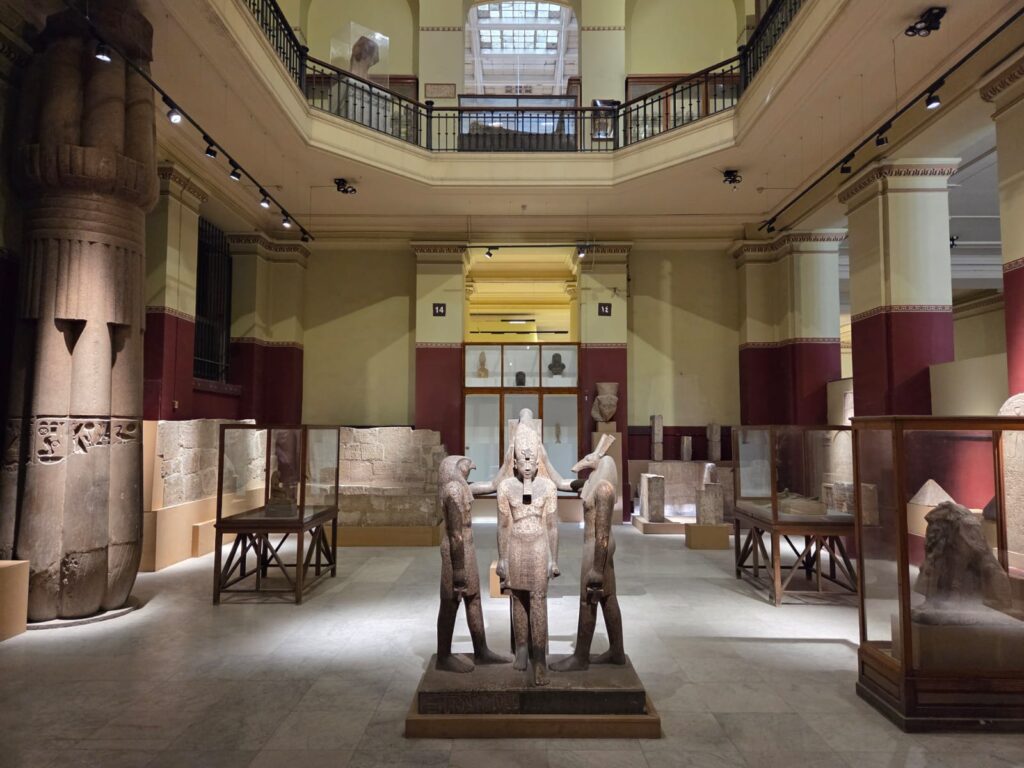
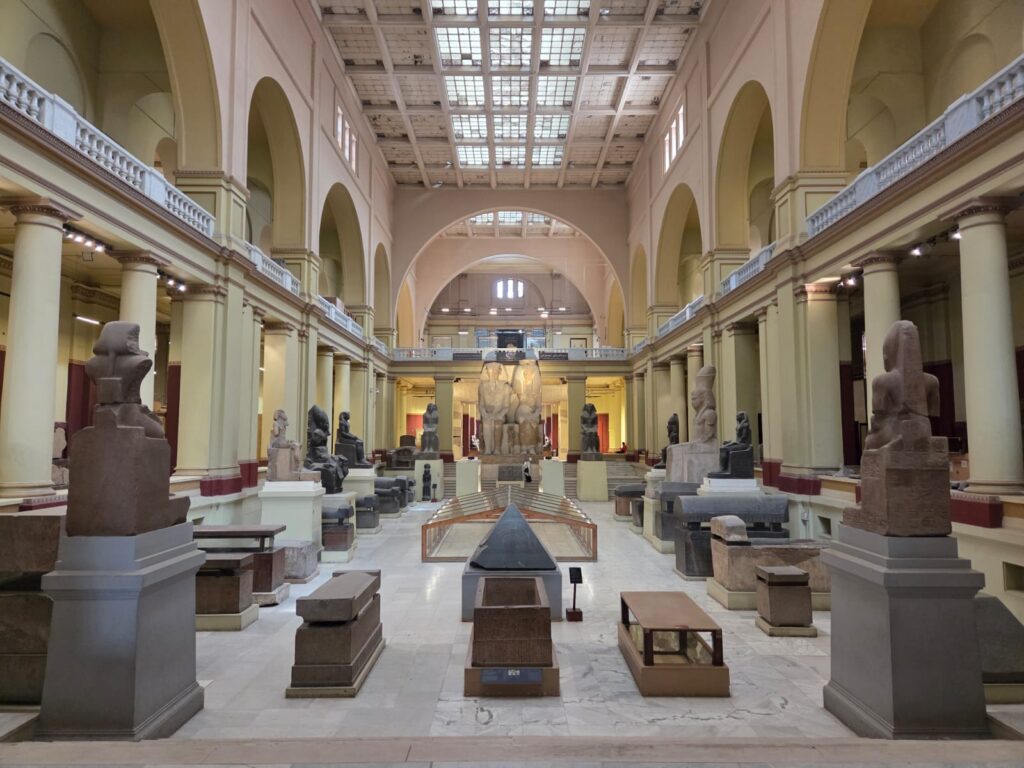
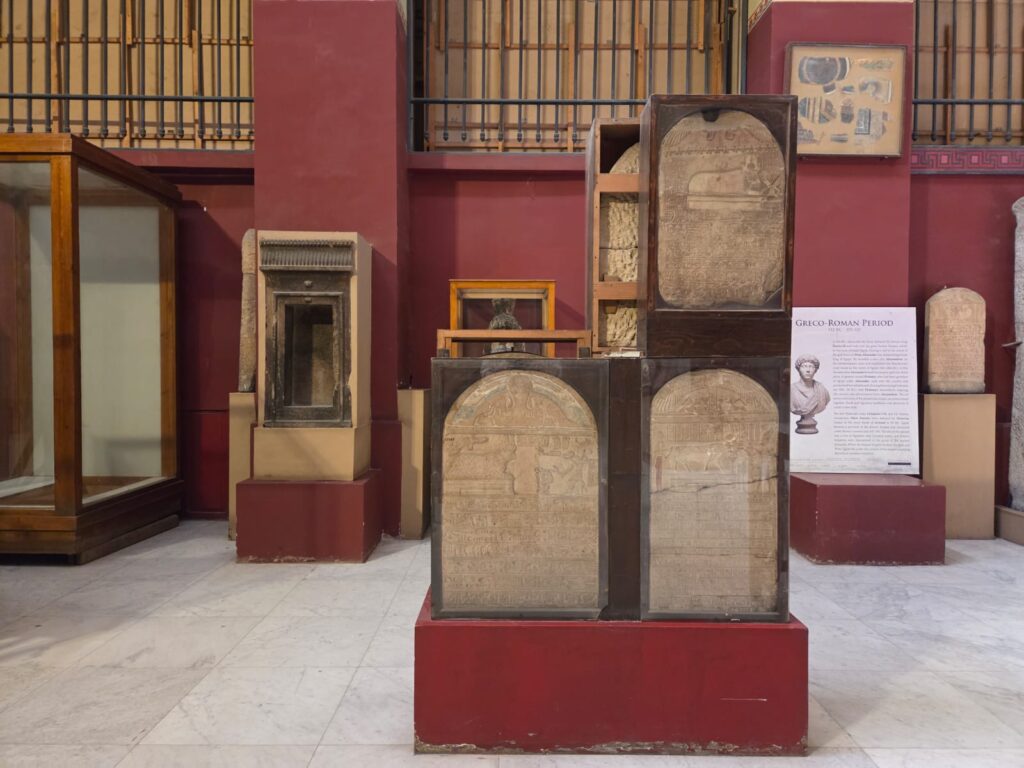
OK, we understand the museum’s early and recent history. It’s time to get exploring! The museum is over two floors. The ground floor, naturally, has all the large-scale works and heavy sculptures. The upper floor showcases smaller works, mostly in mezzanines around the edge of lower floor rooms. Visitors head clockwise around the ground floor, and then the upper floor.
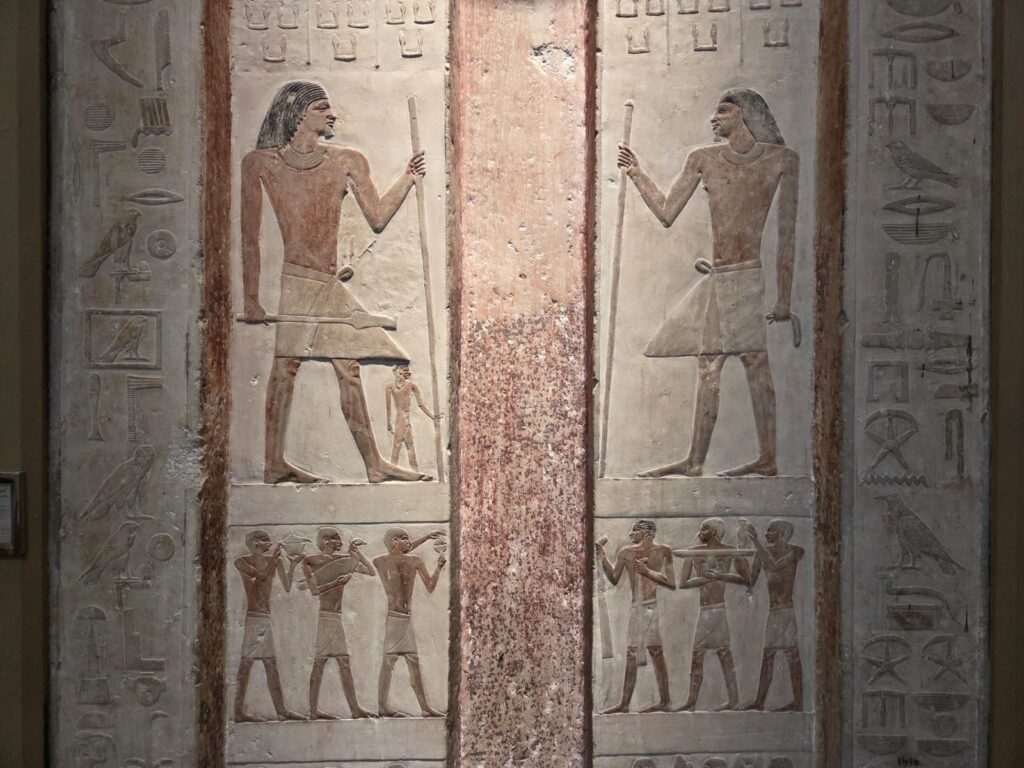
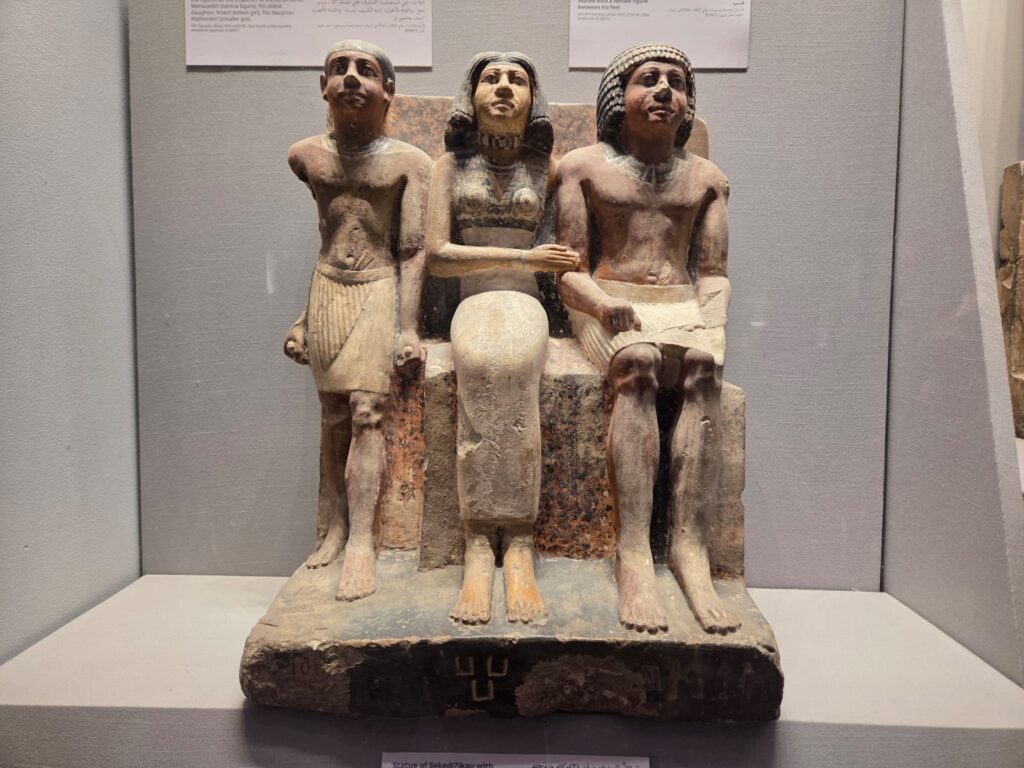
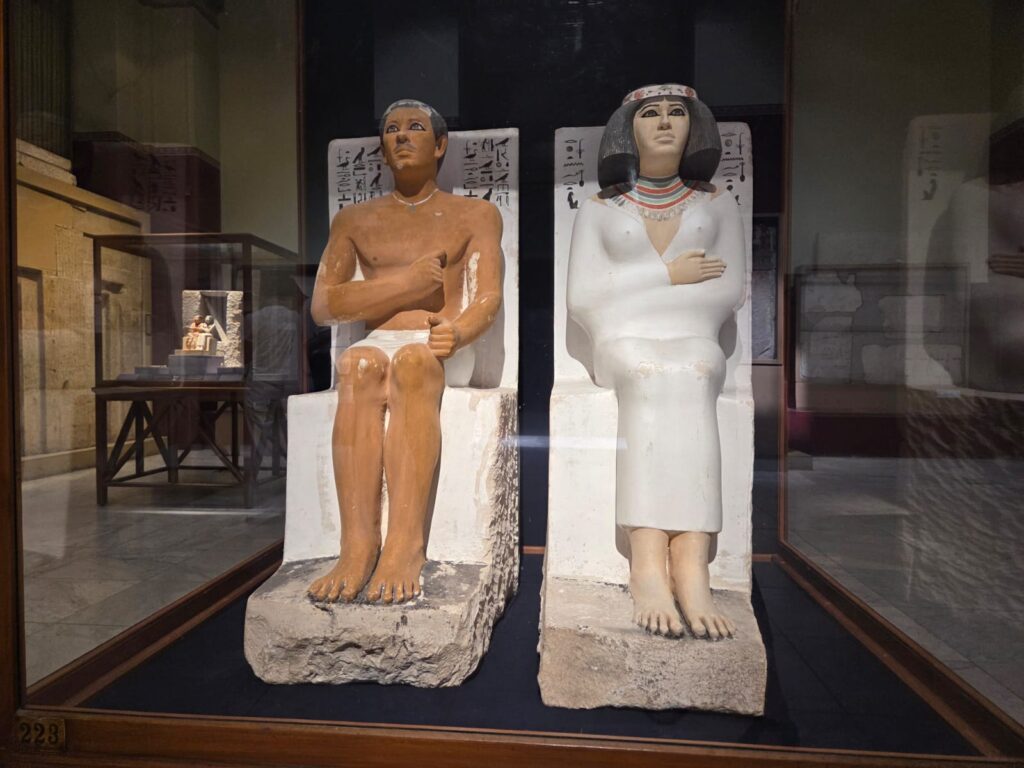
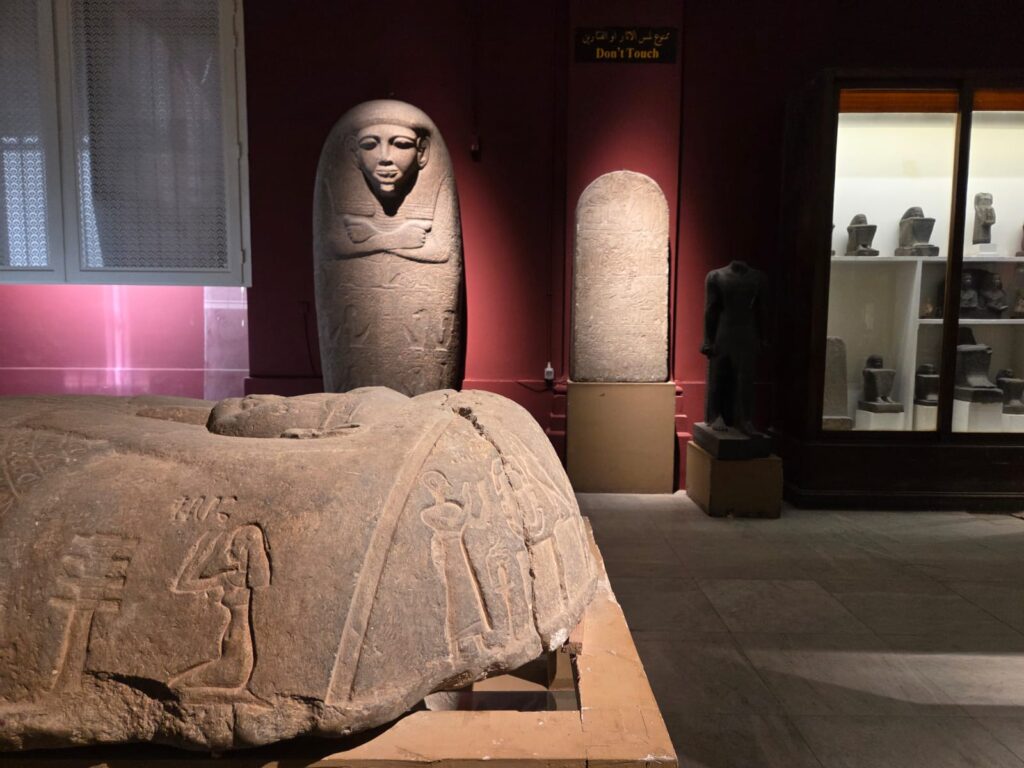
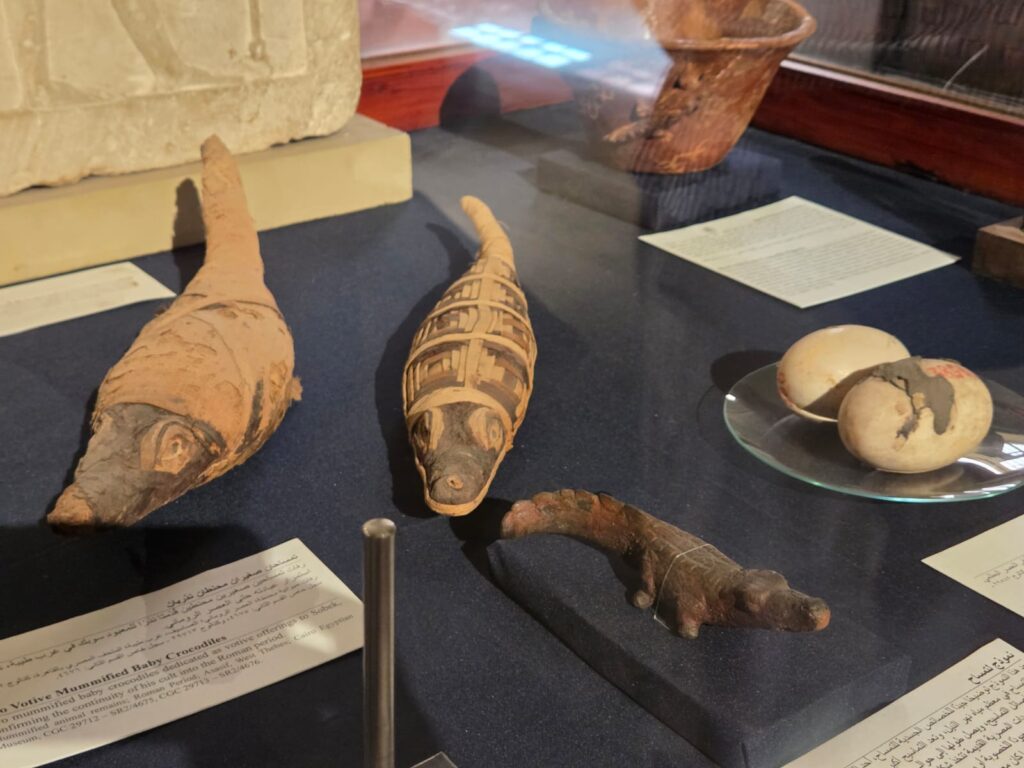
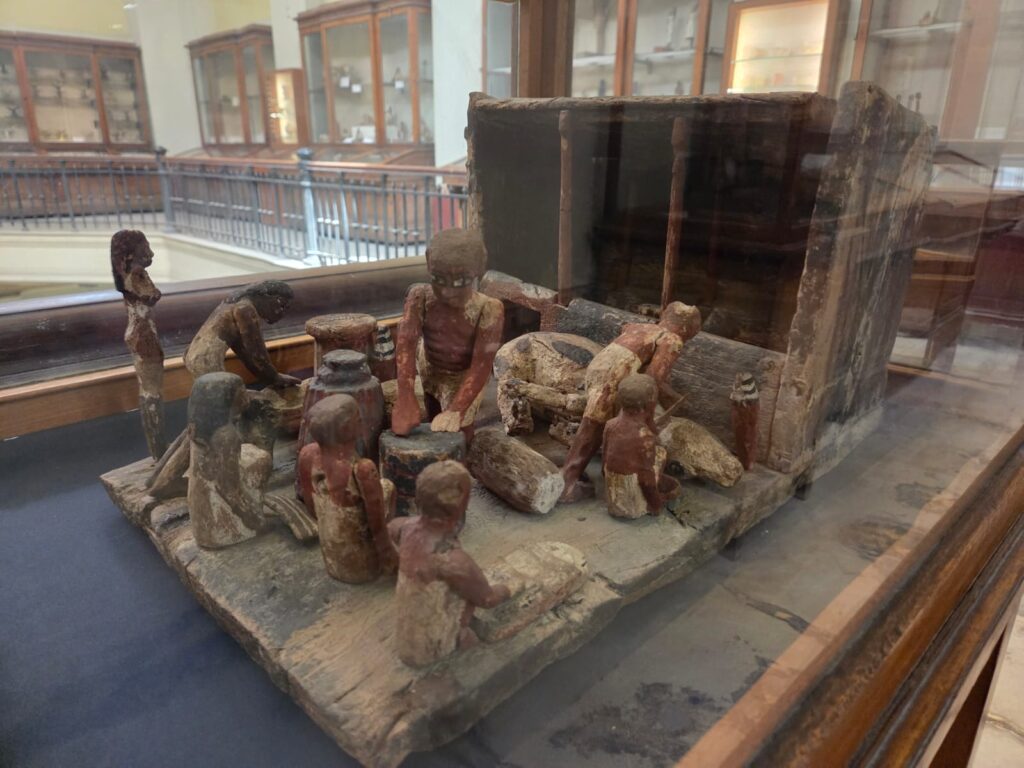
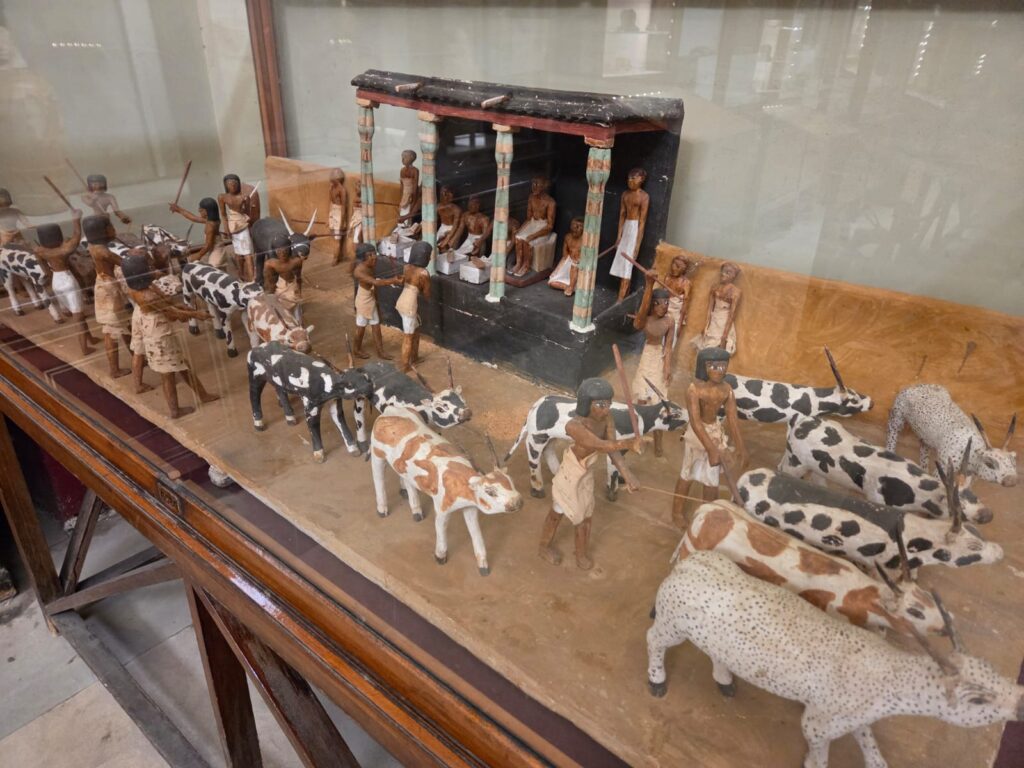
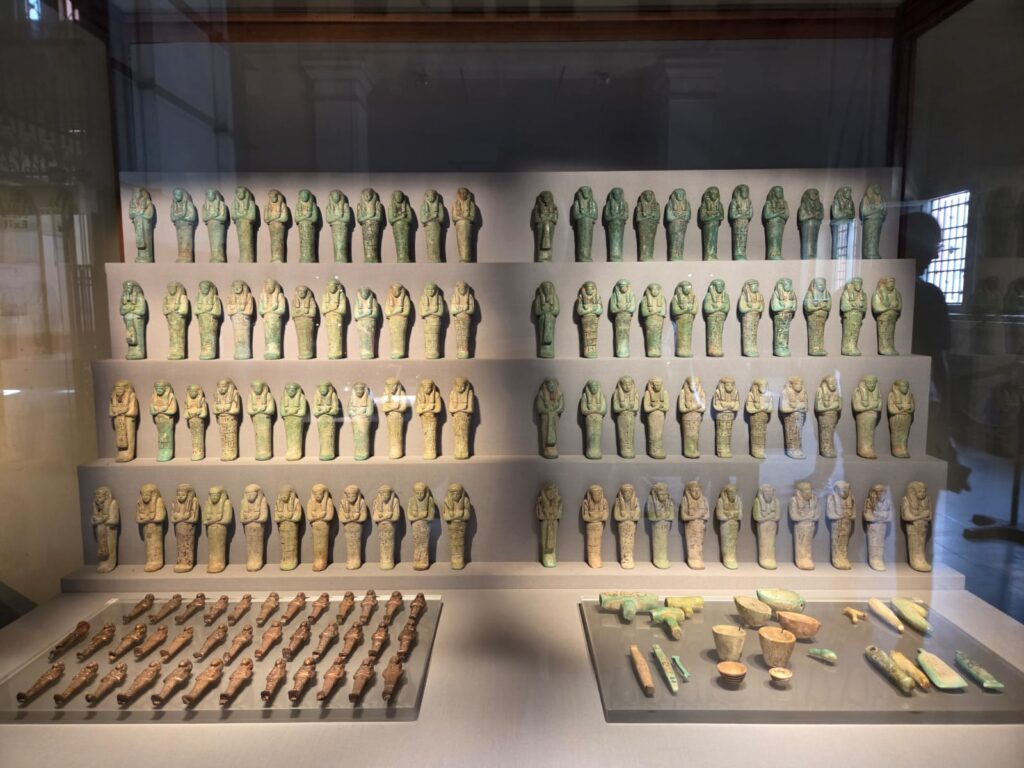
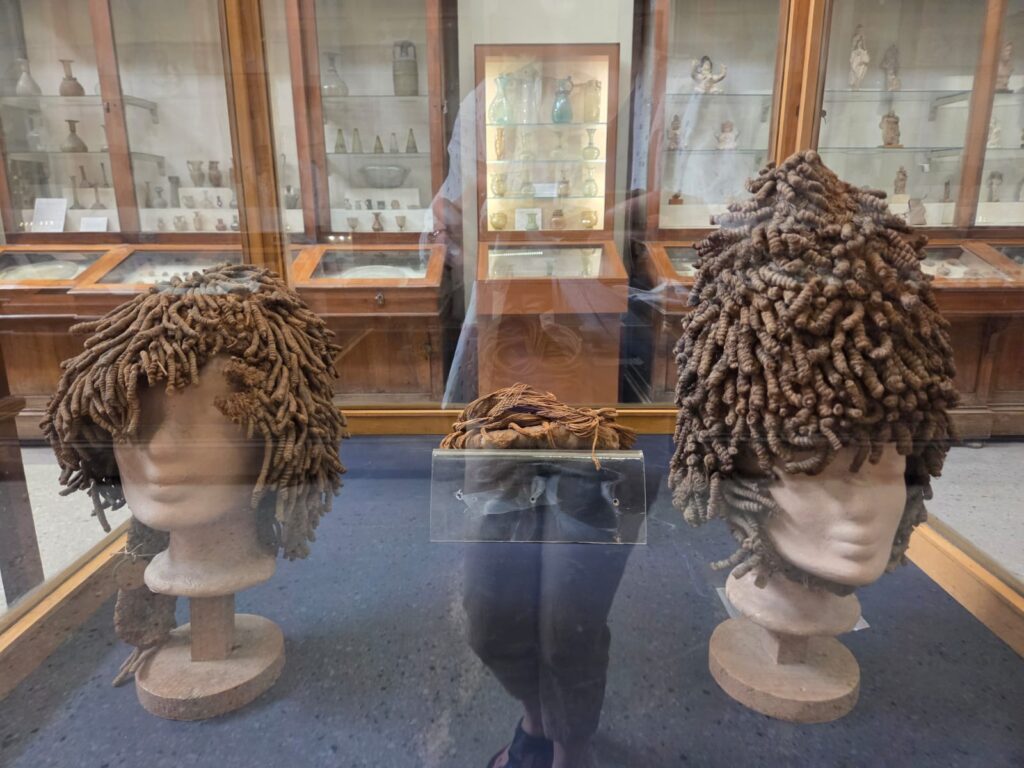
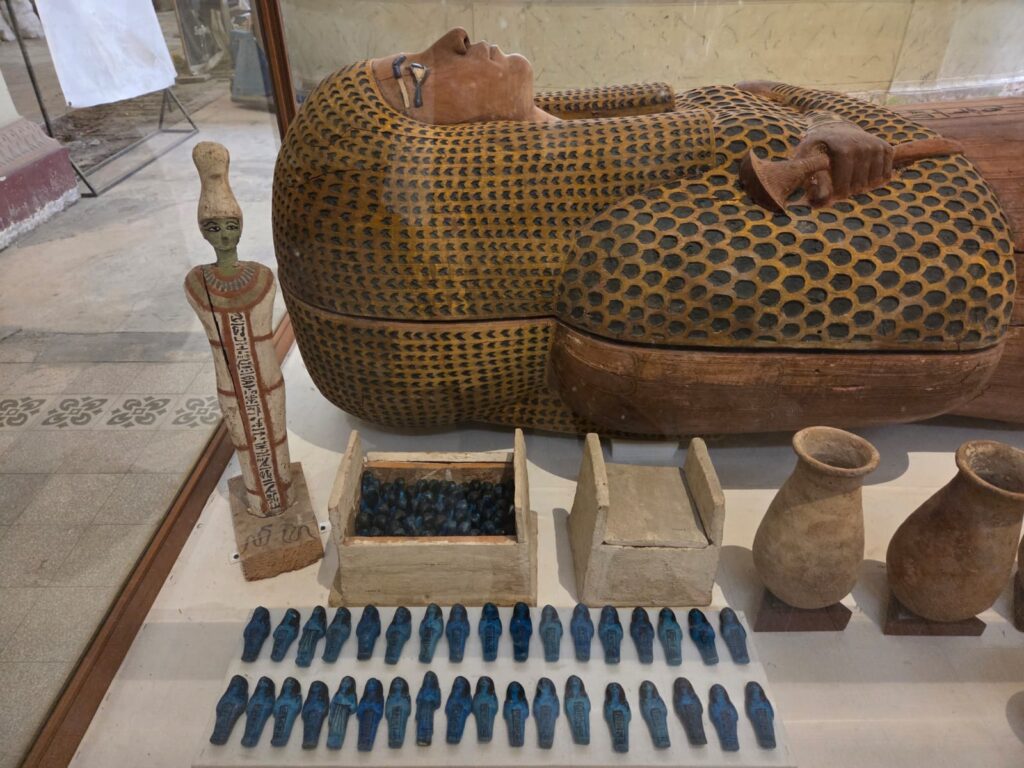
The museum collection covers the Old Kingdom and New Kingdom, and as far as the Graeco-Roman period. The rooms are arranged in mostly chronological fashion, but also thematically. I particularly loved some of the more mundane items – groupings of Ancient Egyptian wigs, or food, or leaves and seeds. Unlike the archaeological records of most civilisations, we have such a richness of organic materials from Ancient Egypt, thanks to their burial practices and the dry, hot climate.
When we visited (May 2026) there was still some evidence of disruption from the moving of collections to the Grand Egyptian Museum. A few areas cordoned off, spaces where objects clearly used to be, that sort of thing. In the grand scheme of things, though, there is surprisingly little impact. Which goes to show just how vast the museum’s collection is, and how much probably still remains in storage.
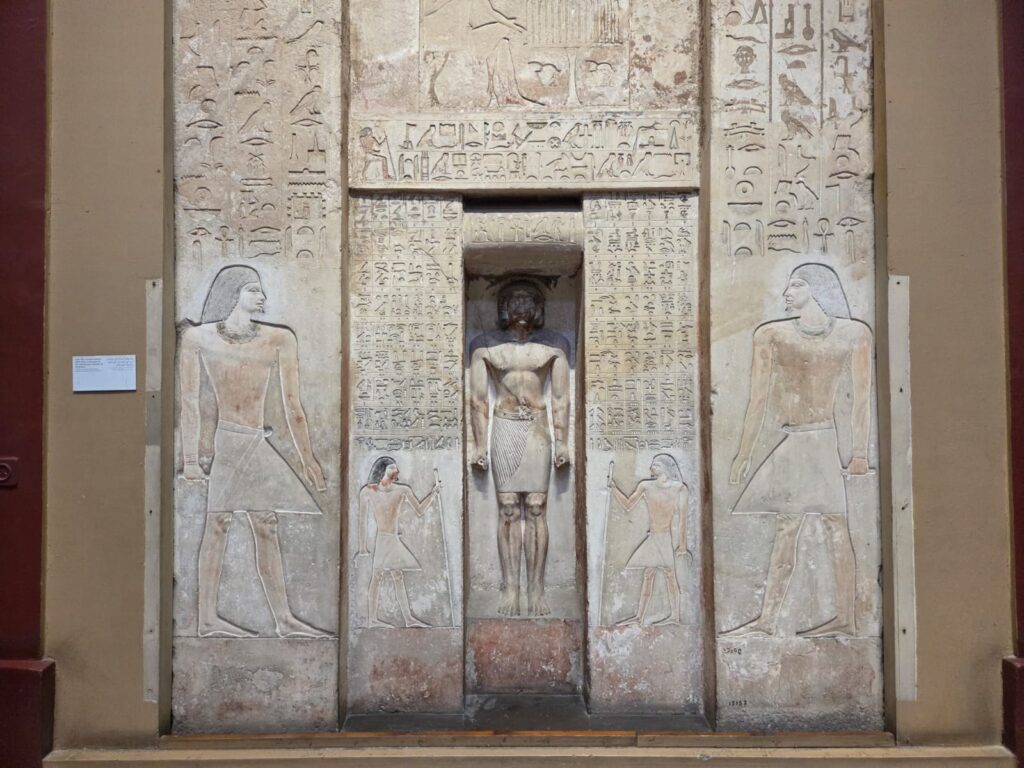
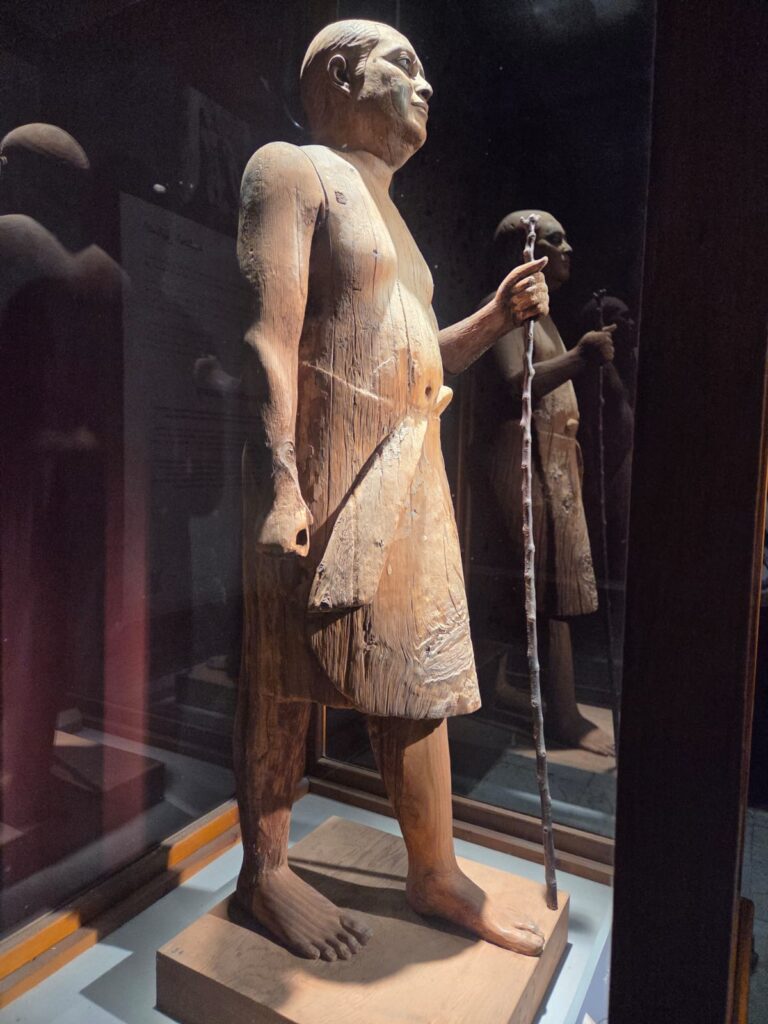
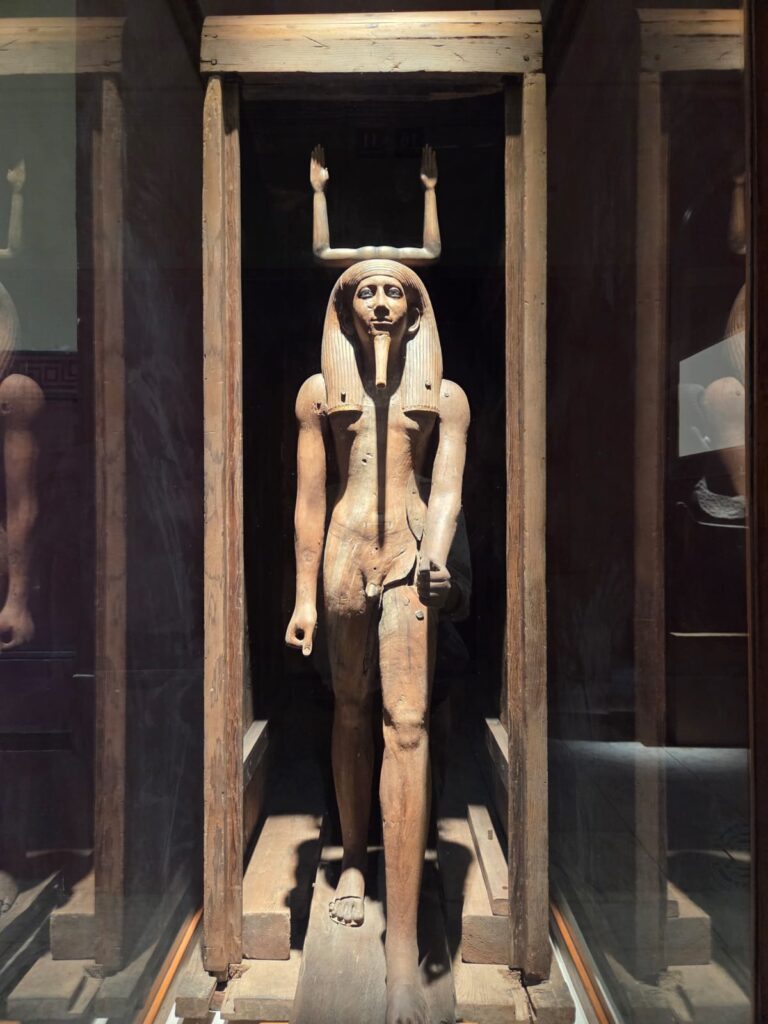
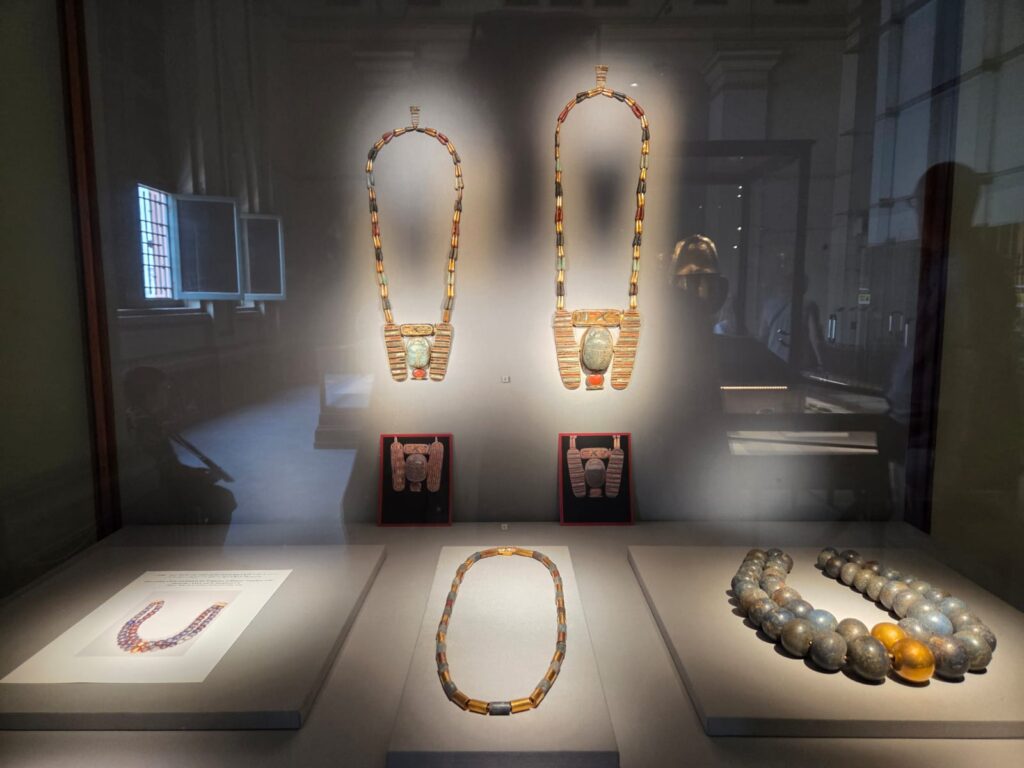
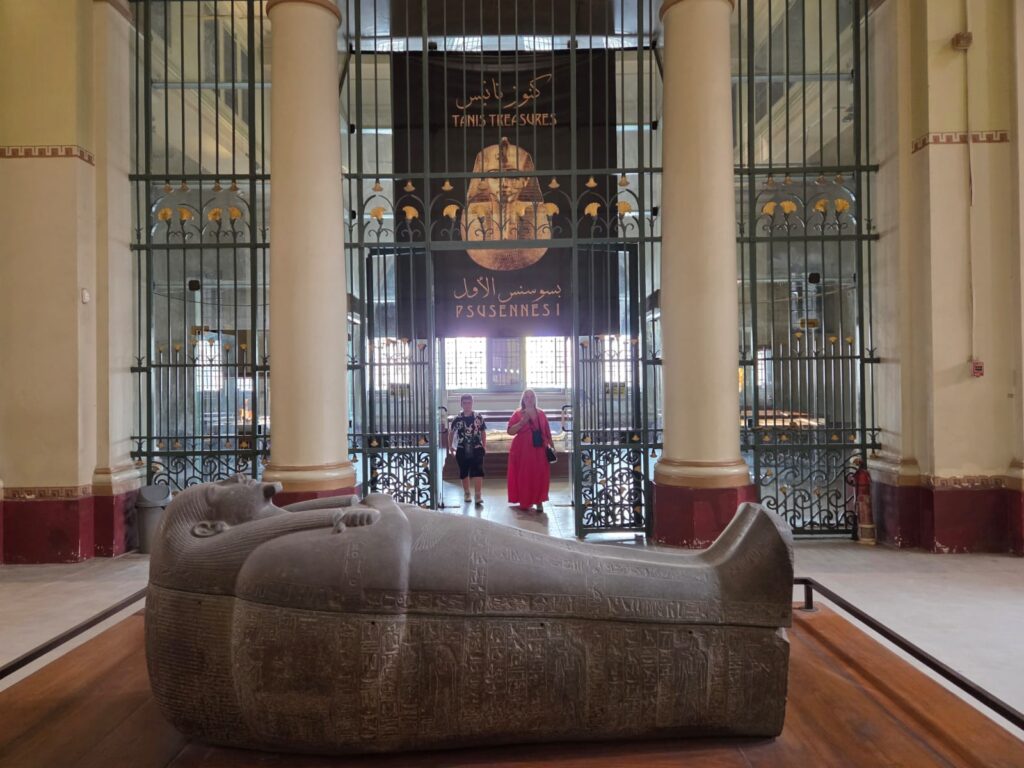
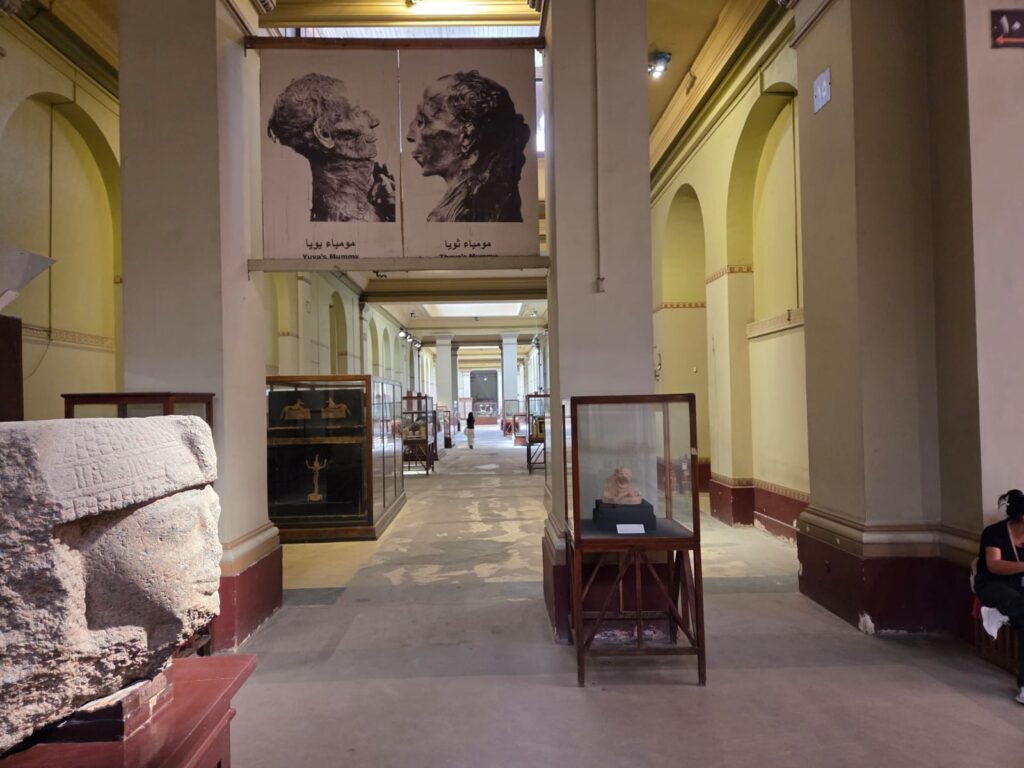
Not even all of the highlights have moved to Giza. Some have: I assume the area behind iron bars upstairs once housed the treasures of Tutankhamun. They are now shown off, to great effect, in the new museum. But Tutankhamun’s great-grandparents, the remarkably preserved Yuya and Tuya, are still here, as well as the Menkaure Triad, lifelike Statue of Ka-aper, treasures from Tanis, mummy portraits from Fayoum, and more.
Museums Old and New
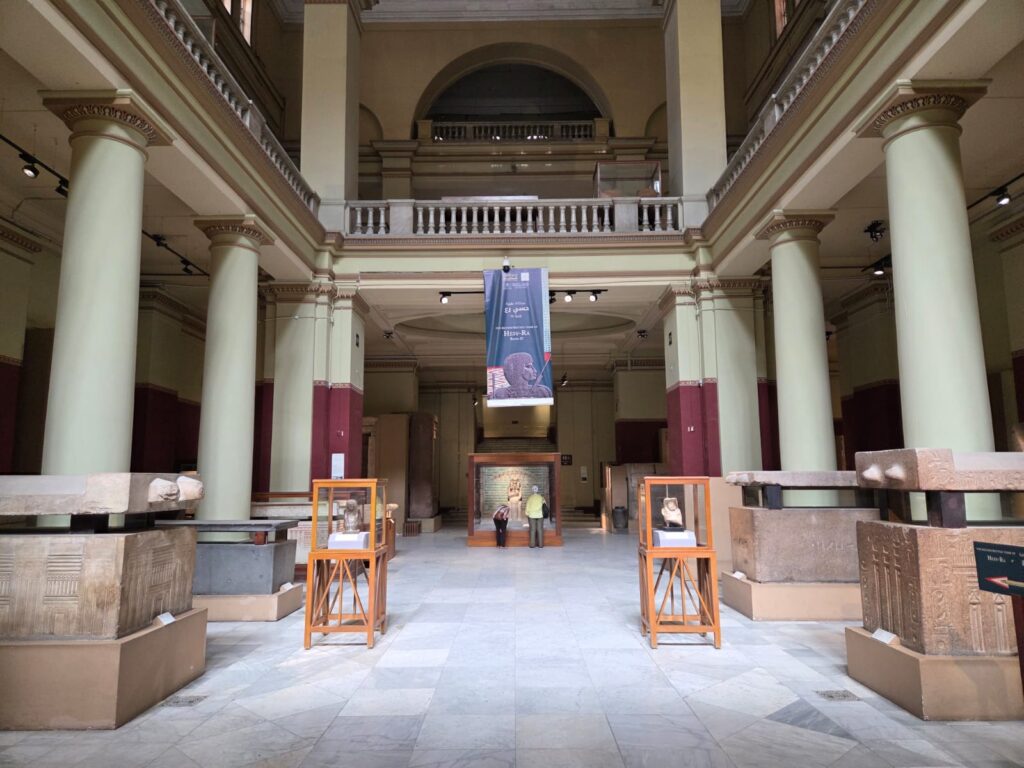
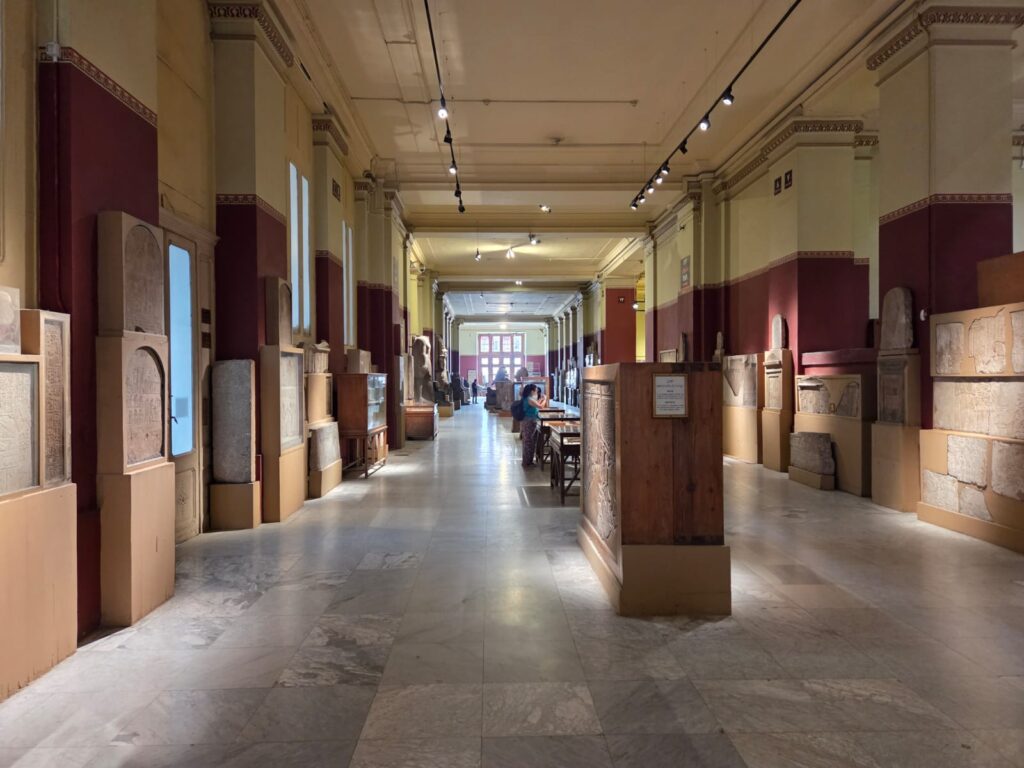
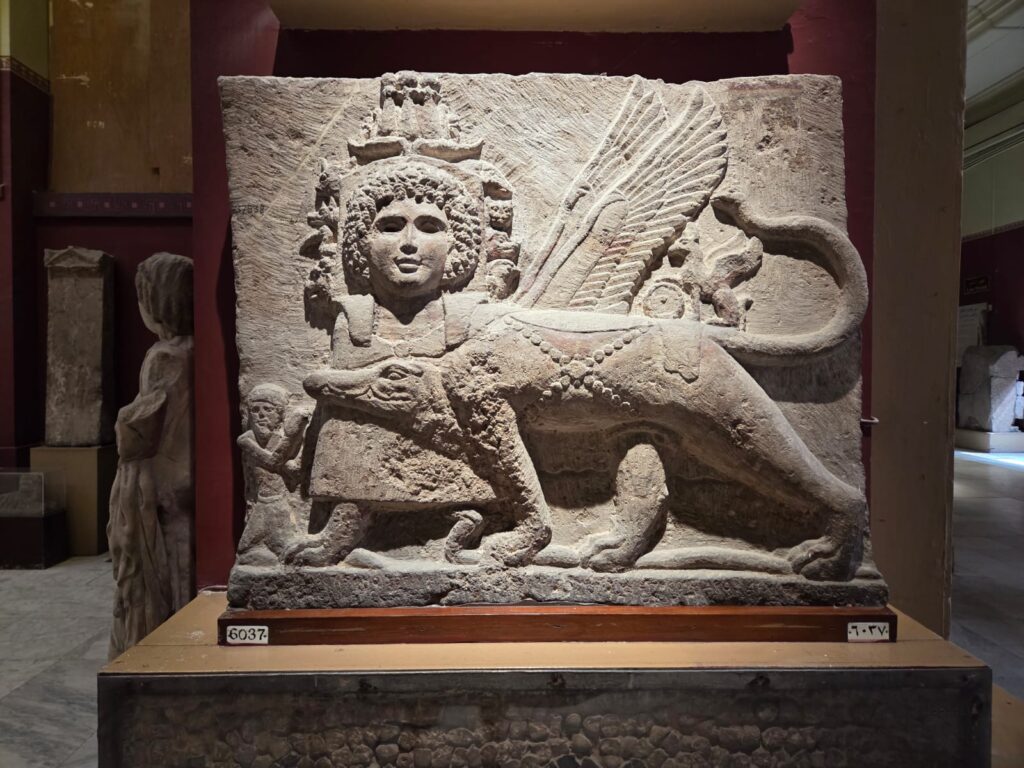
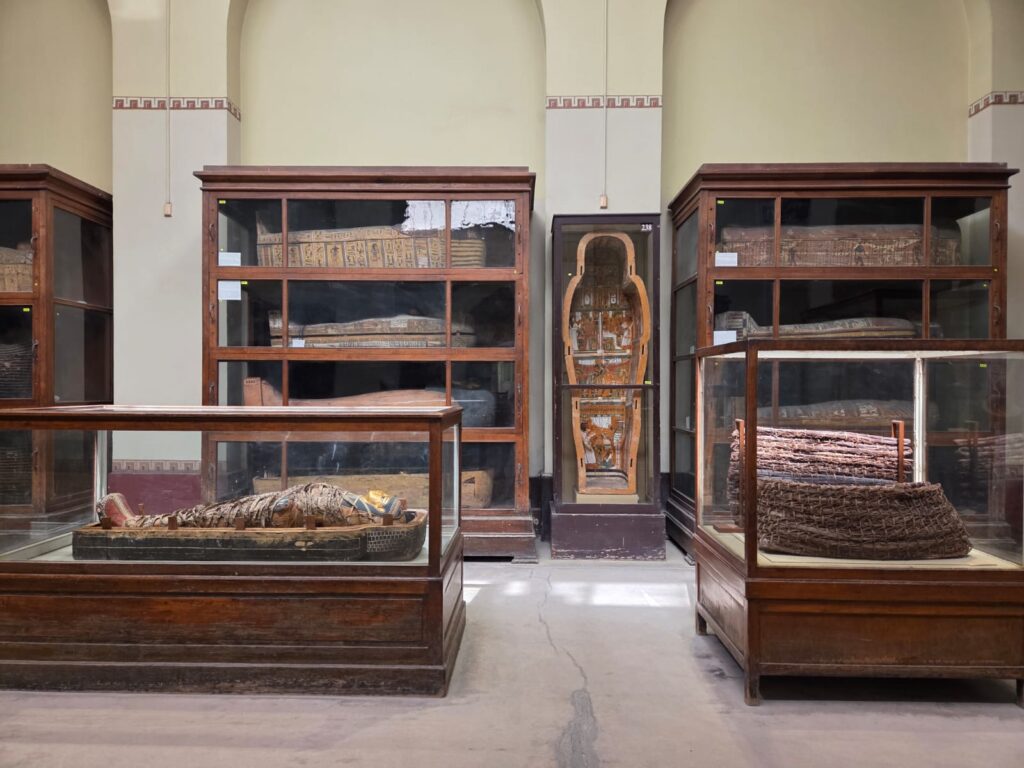
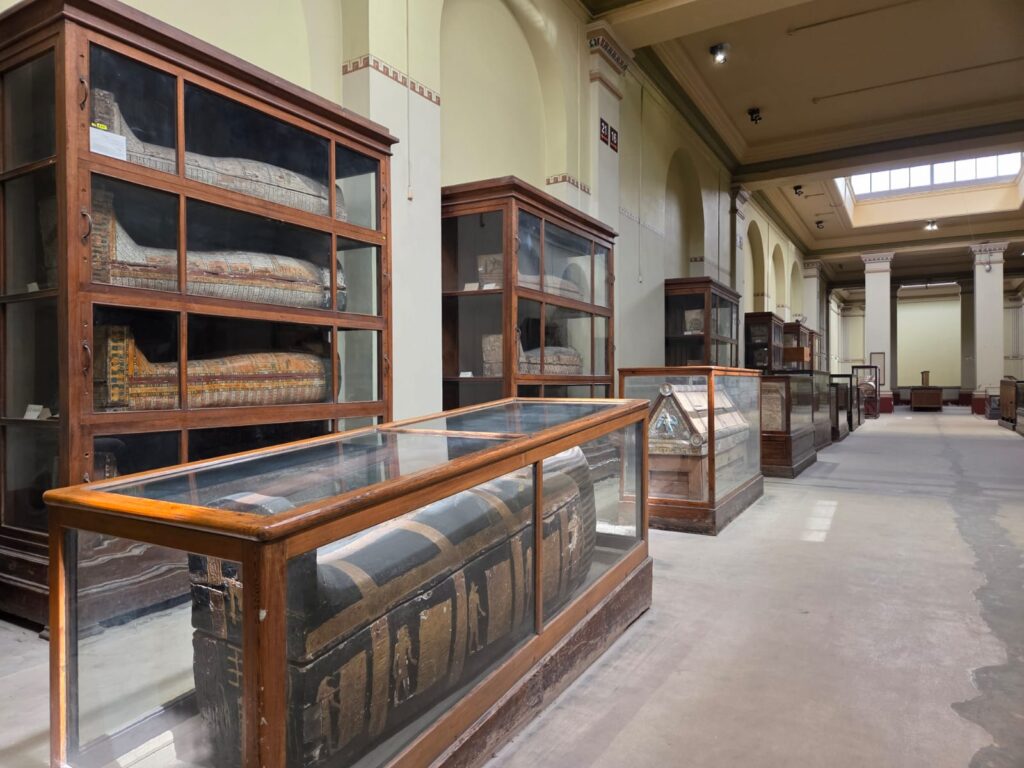
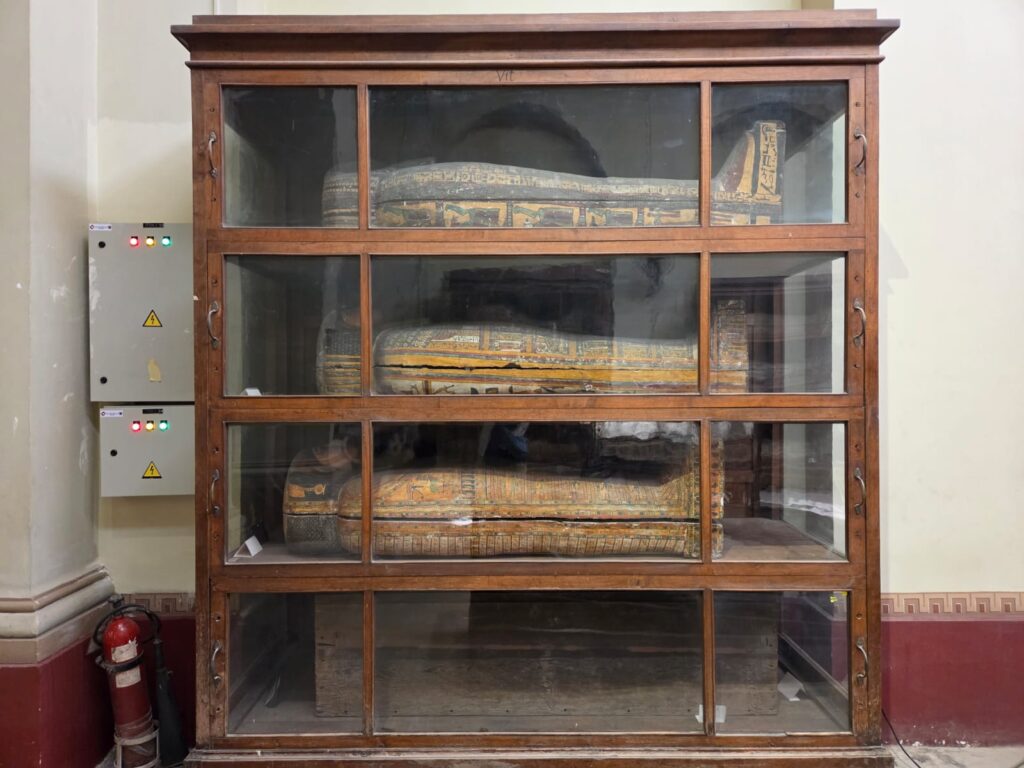
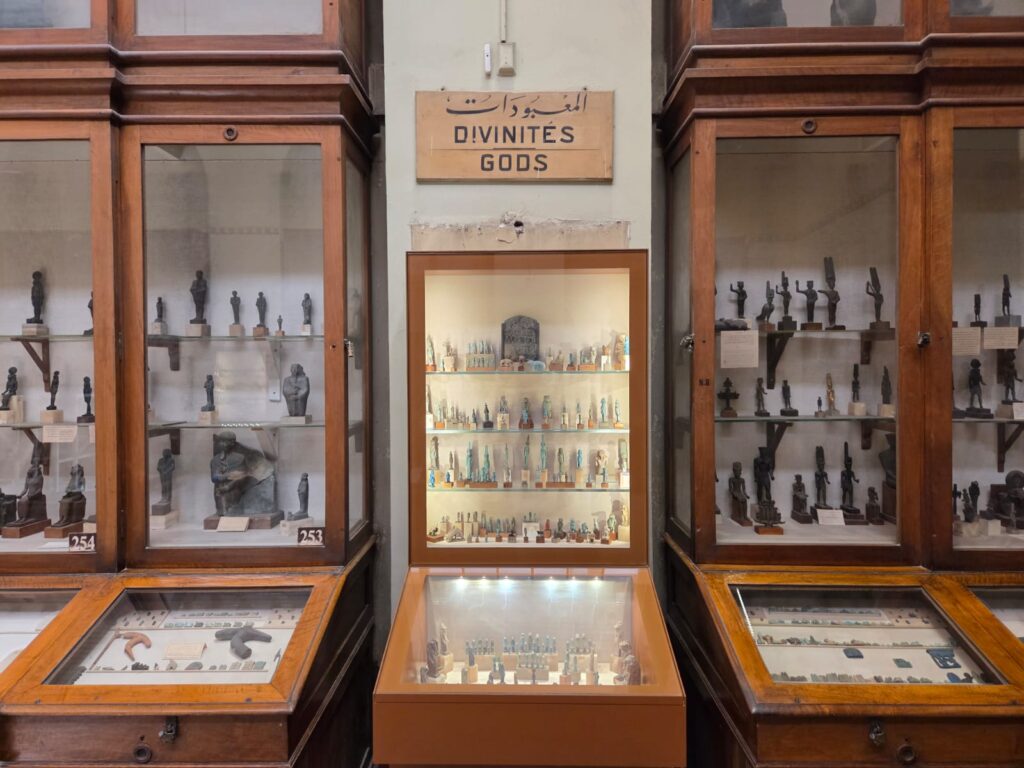
It’s no secret here on the blog that I love an old-fashioned museum. If we put aside thoughts of accessibility, modern conservation methods, etc. (not a privilege all can afford, I know), there’s something wonderful about those old glass cases. Especially when the museum is full of interesting artefacts, as this one is. That’s actually one of the reasons the Grand Egyptian Museum became an idea in the first place – the Egyptian Museum was so full it was impacting the visitor experience. It’s certainly not lacking in exhibits, even now.
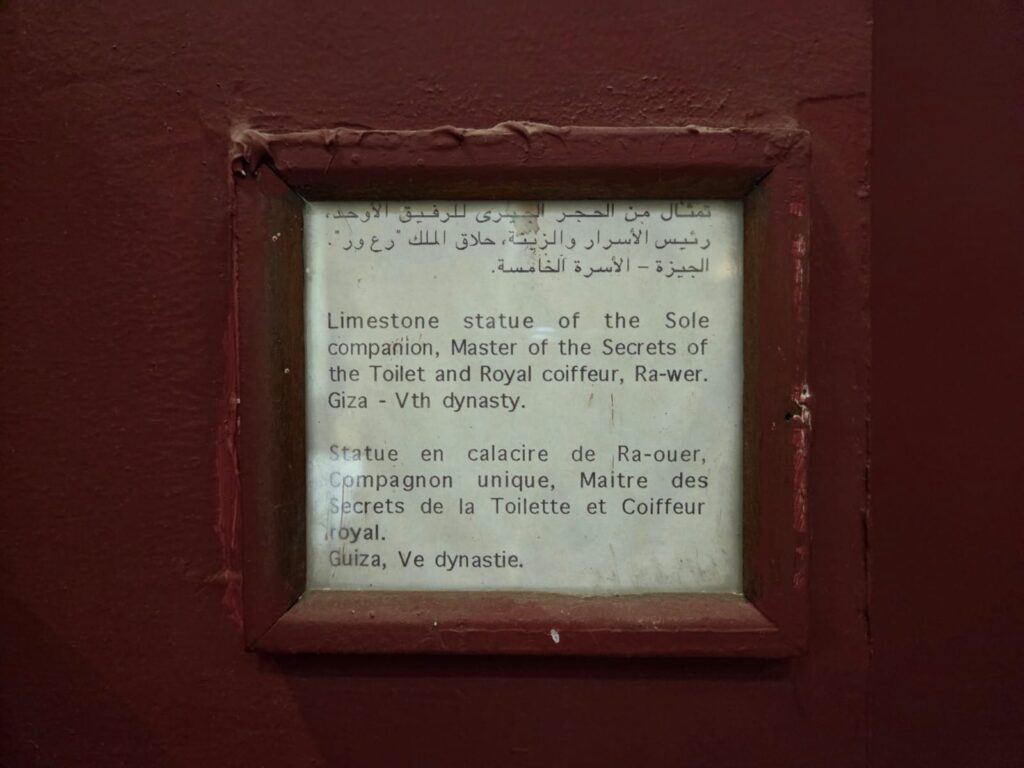
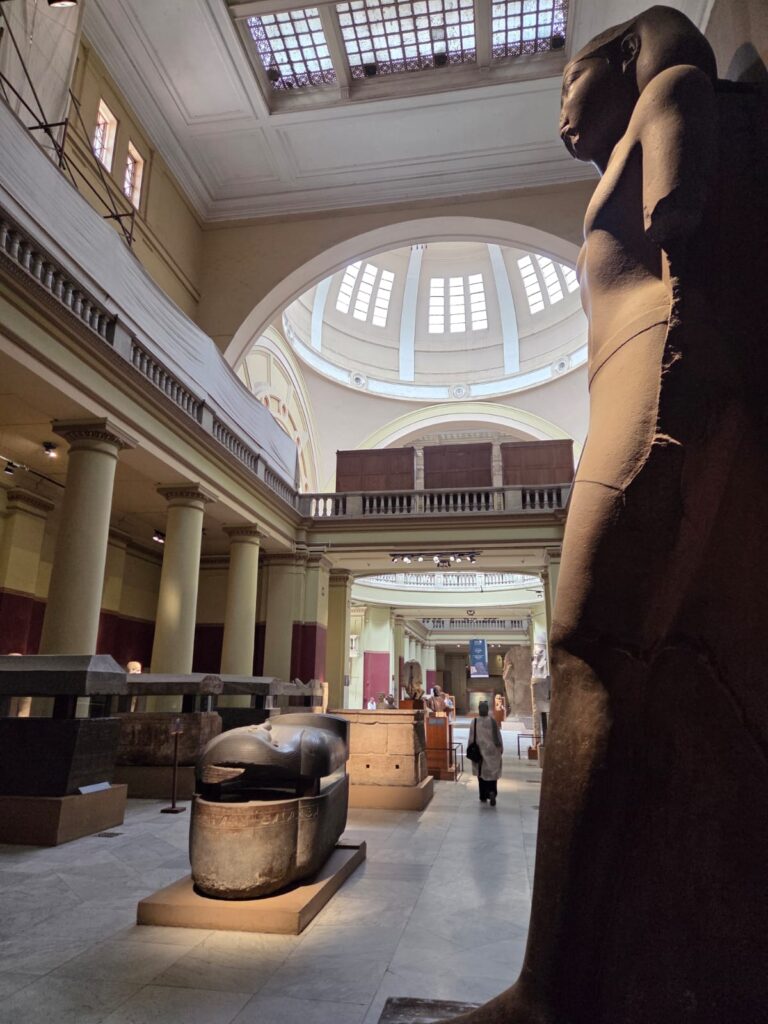
As we learned earlier, the museum building itself is listed heritage. And it really is lovely. The mezzanines allow light to filter down to the lower level, and air to circulate. Mummies line the walls in the external corridor, sometimes three or four high. Even the trilingual labels (Arabic, English and French) are charmingly worse for wear. Egyptology as a field continues to evolve, and new discoveries to be made, but the Western interest in Ancient Egypt, or Egyptomania, has been around since Napoleon’s military expedition in 1798.
And this is an interesting point. Because this first national museum in the Middle East is very much a European project. Designed by French and German architects, and executed by Italians. Egypt’s ruler in 1858, Mohamed Sa’id Pasha, was very much under French influence. This museum appears to be about categorising and organising and protecting and visiting Ancient Egyptian artefacts according to Western systems of knowledge. That is not to say that the Grand Egyptian Museum is a purely Egyptian concept, because it’s not. It’s still a museum in the regular sense, organised along Western academic lines. And statement architecture for museums has become an important way of asserting international standing.
This one, as lovely as I found it, feels more colonial. You get the feeling, visiting it, that Western visitors like the Urban Geographer and I were the intended audience from the outset. It wasn’t until 1941 that the museum got its first Egyptian director, Mahmoud Ali Hamza.
Final Thoughts on the Egyptian Museum in Cairo
Did this ruin my enjoyment of the museum? It did not. I allowed myself a bit of cognitive dissonance for the duration of my visit, while subtly noticing some of the ideas I’ve discussed in this post. Because, after all, this was my first experience of seeing Ancient Egypt in Egypt. A massive scaling up from the singular mummy in the collection of the local museum of my childhood.
As this is rather an old-fashioned museum, a bit of preparation is in order. The places to sit down and take it in are not numerous. There is a fair bit of walking, and stairs to navigate. There are toilet attendants, and they do not pay much heed to the signs saying they can’t solicit tips. You’ll probably want to get some refreshments at some stage, but you’ll be out of luck until you’ve finished your visit and exited into the courtyard past the gift shop.
Nonetheless, I had a wonderful time. The Urban Geographer humoured me, as I told him how important and exciting it was to see Ancient Egyptian food and leaves. We peered in at Yuya and Tuya, amazed to be up close and personal with people who lived thousands of years ago. The museum is a connection to Egypt’s recent history as well as ancient times. And I wouldn’t have got a full picture if I’d gone to the Grand Egyptian Museum alone – the two institutions are different sides of the same coin.
Trending
If you see this after your page is loaded completely, leafletJS files are missing.