
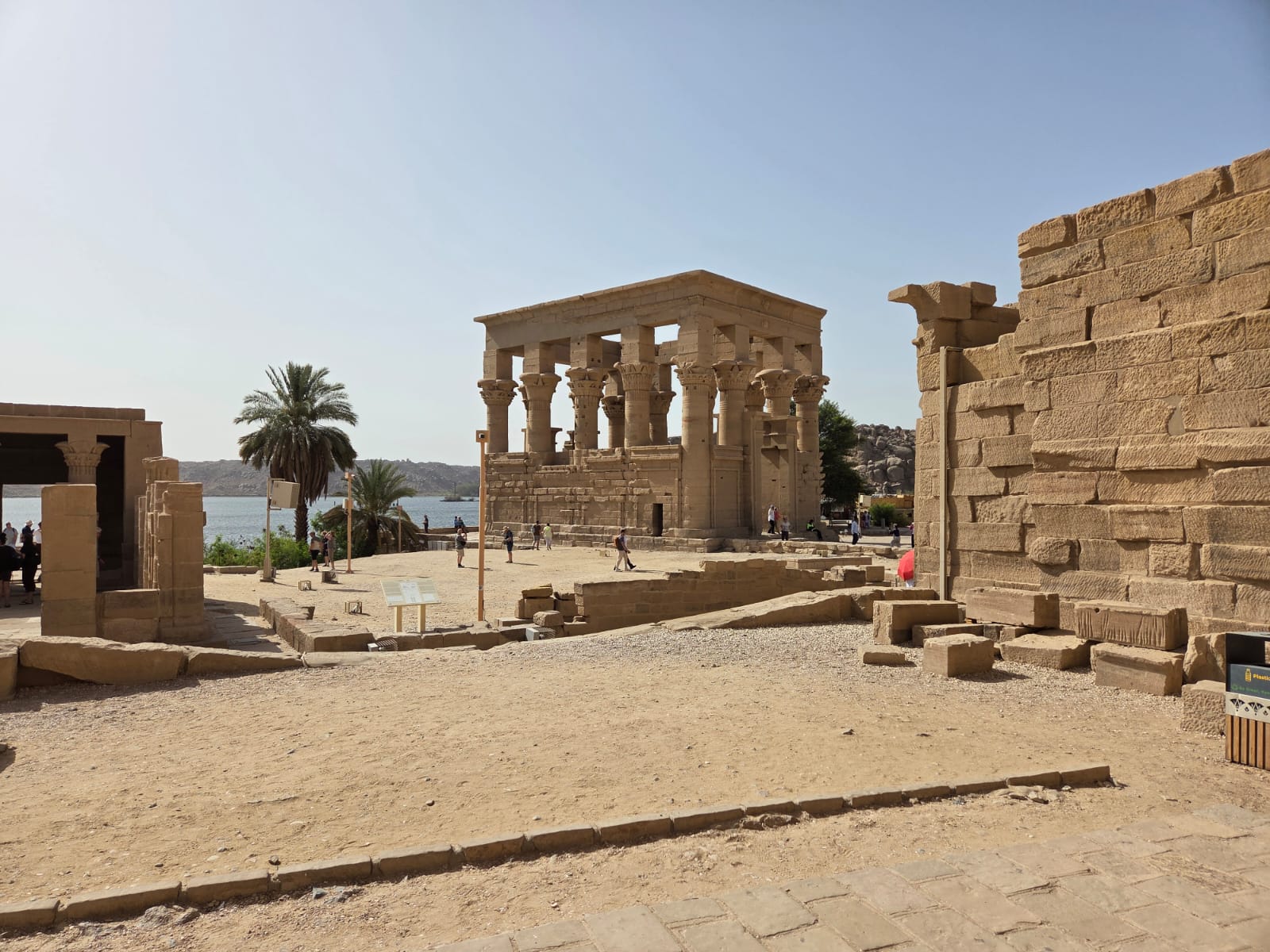
Philae Temple, Aswan
An early morning trip to the Philae Temple complex near Aswan is a real treat, from the first boat ride to the last known Ancient Egyptian heiroglyph.
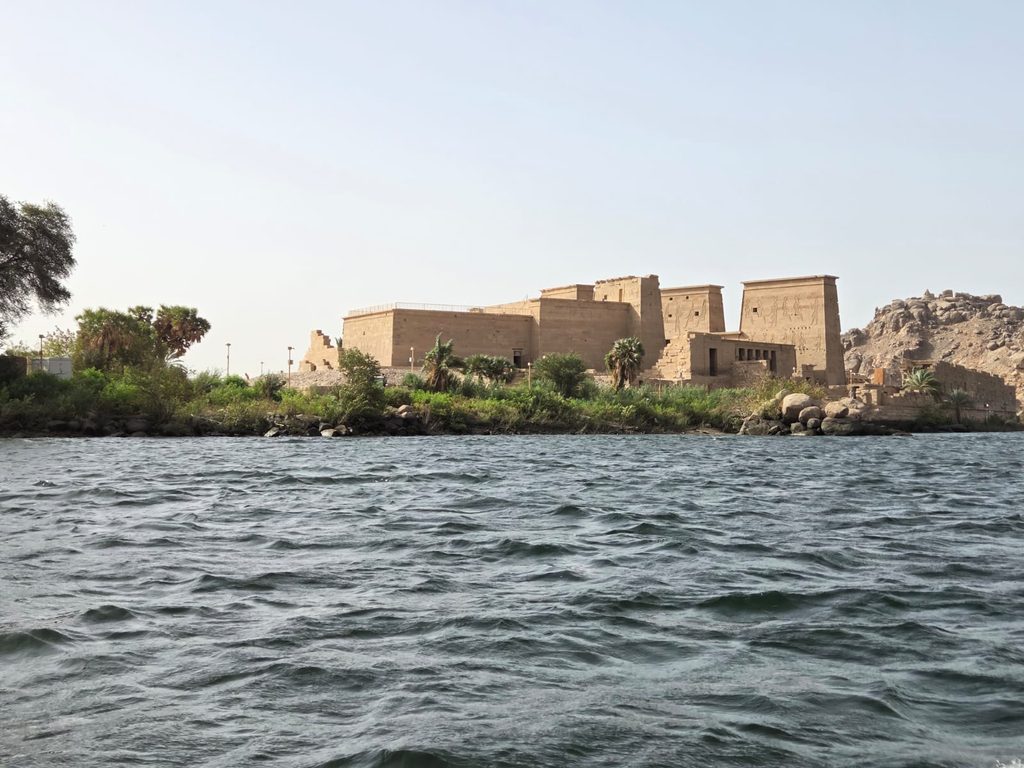
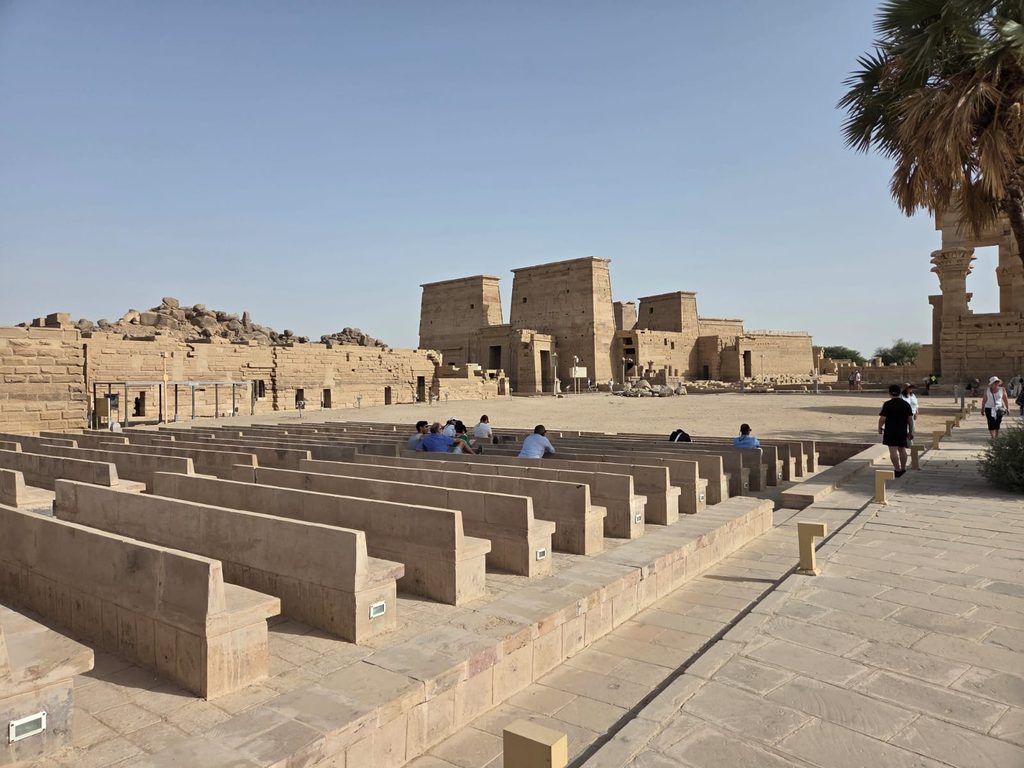
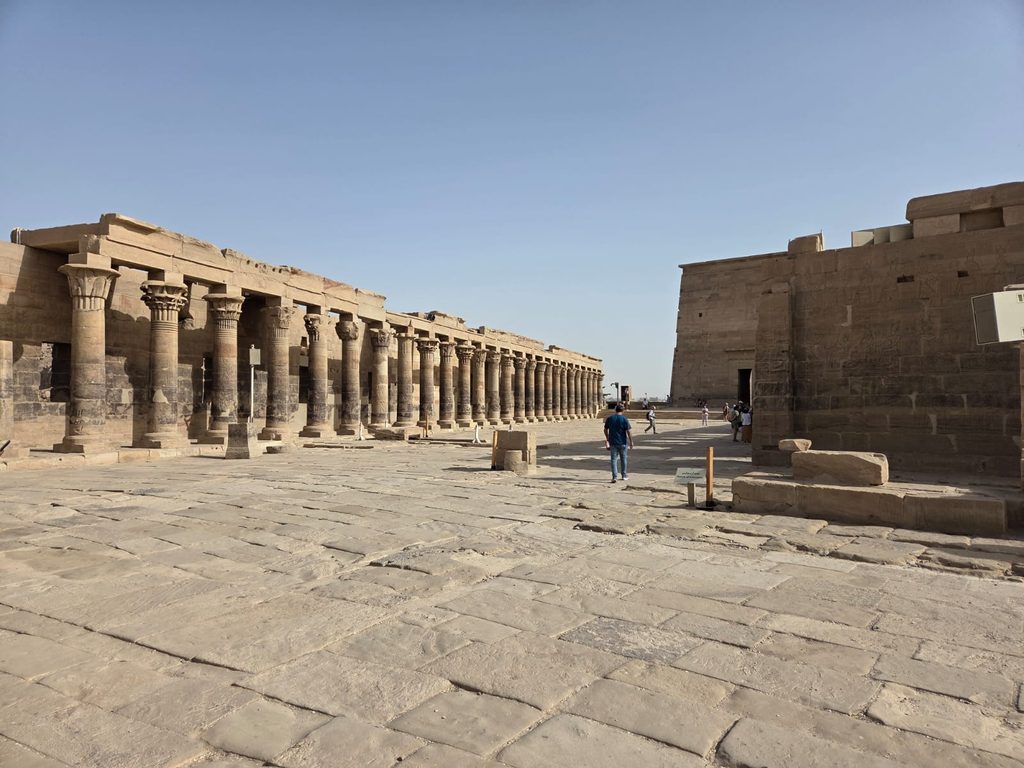
A Journey to Philae
In my last post, I described how the itinerary on our tour of Egypt required a choice early on. To explore Aswan, including Philae, at a leisurely pace. Or to drive all the way down to Abu Simbel so we didn’t miss out on those wonderful temples in the Nubian desert. Given that my last post was about Abu Simbel, you know what I picked.
That meant that the next morning, we headed over to Philae. I knew from our guide’s explanations that this was another monument once at risk from the waters of the Nile. That story is a little more complex though, in a way I will come onto shortly. I’d also watched a documentary that included Philae in the lead up to our trip, so had learned something about it there.
It’s funny how easy it is to become blasé at times. I’d been in Egypt all of three or four days at this point. And yet I anticipated being less excited about Philae because a lot of the complex is Graeco-Roman, as opposed to the Old Kingdom monumentality of the Pyramids or New Kingdom images of Ramses II at Abu Simbel. Any normal time, I would be very excited to be seeing an archaeological site from Ancient Greece or Rome. Luckily, in the end, Philae more than won me over from my newfound ancient history fatigue. I enjoyed it very much indeed.
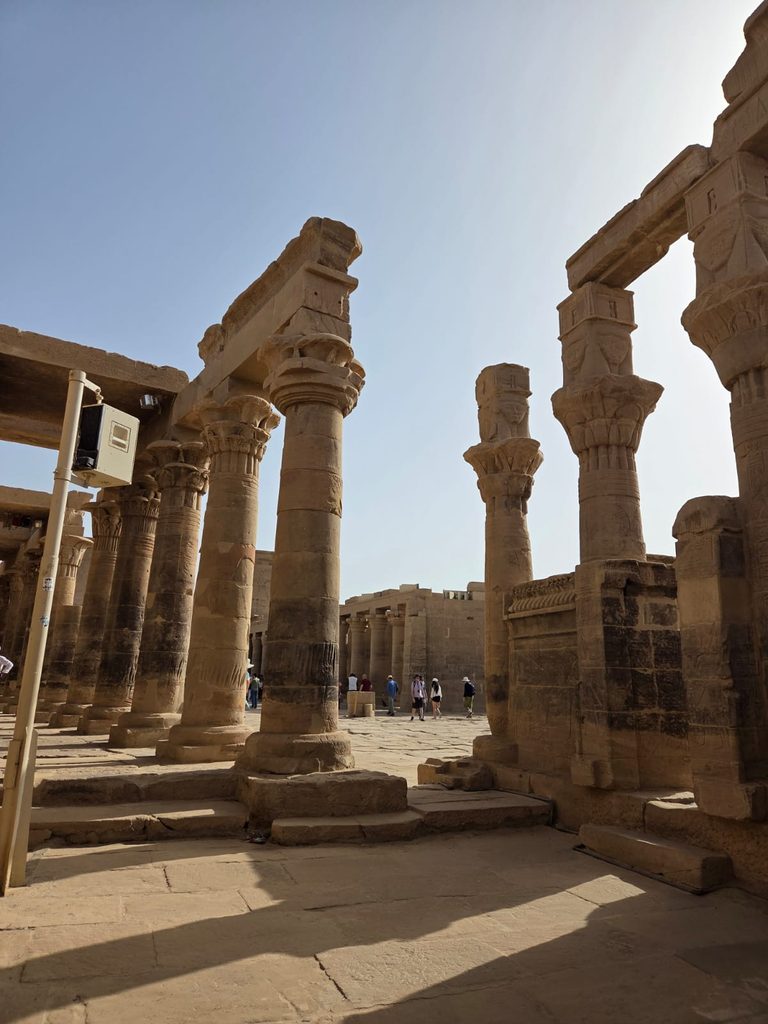
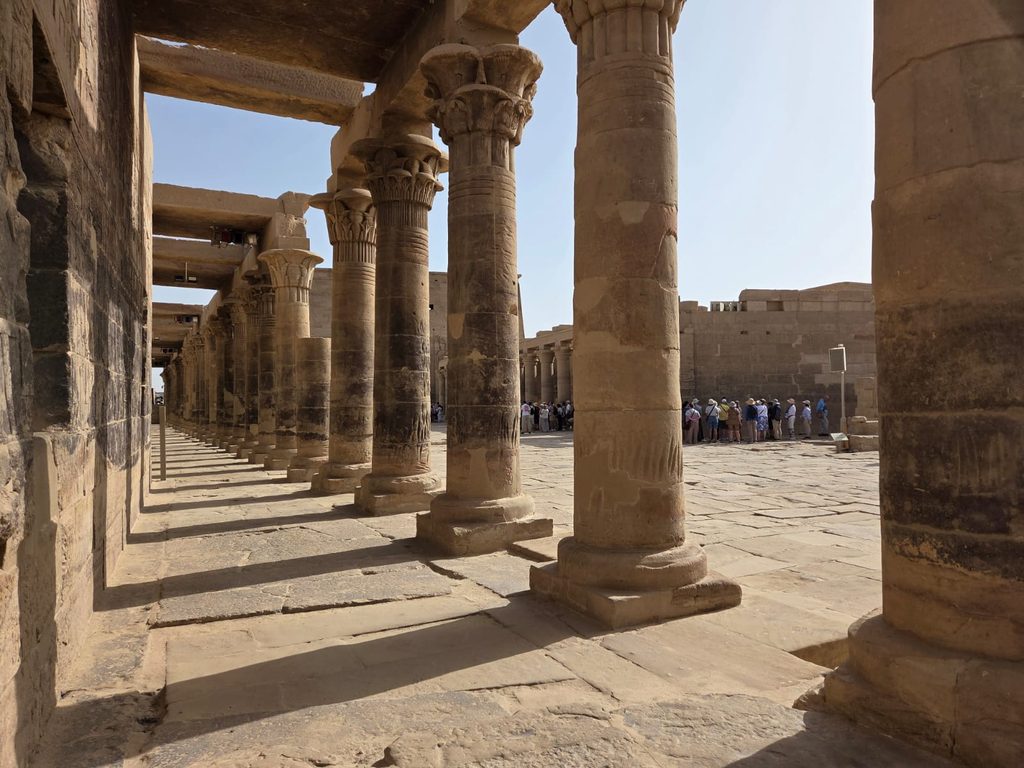
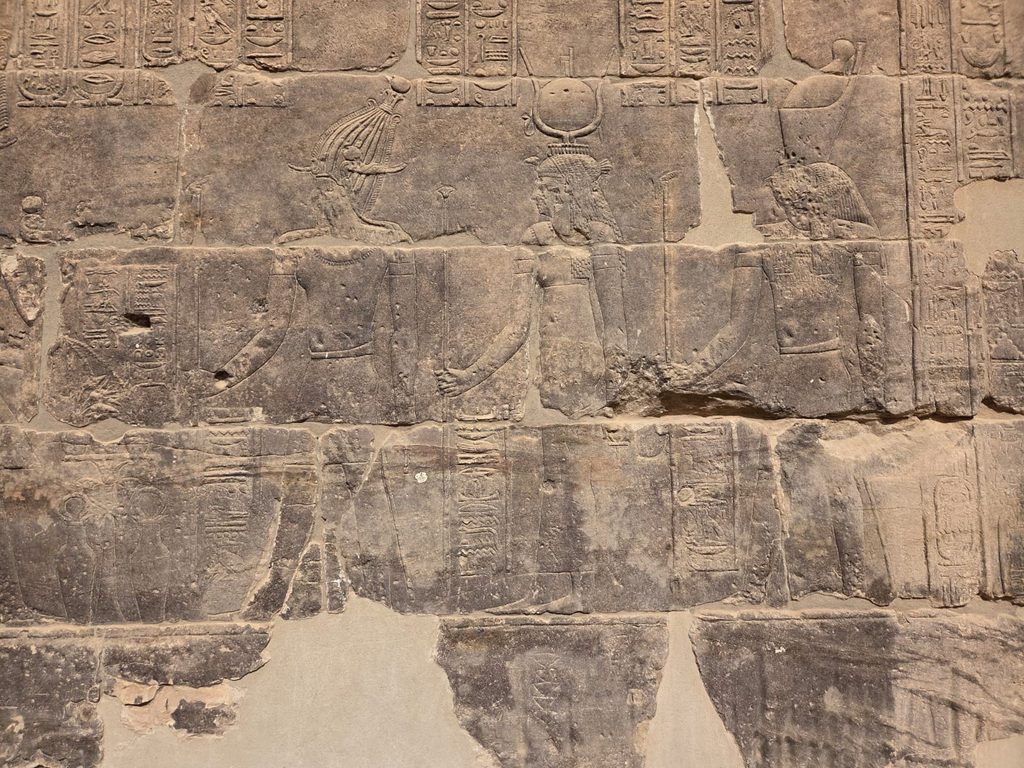
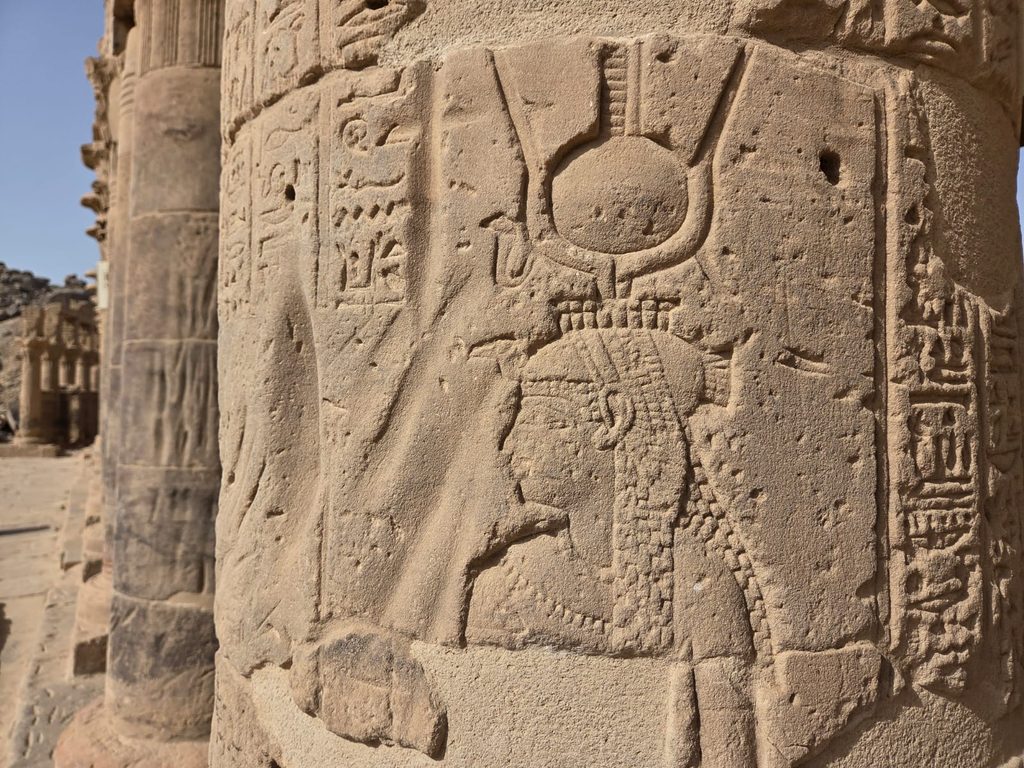
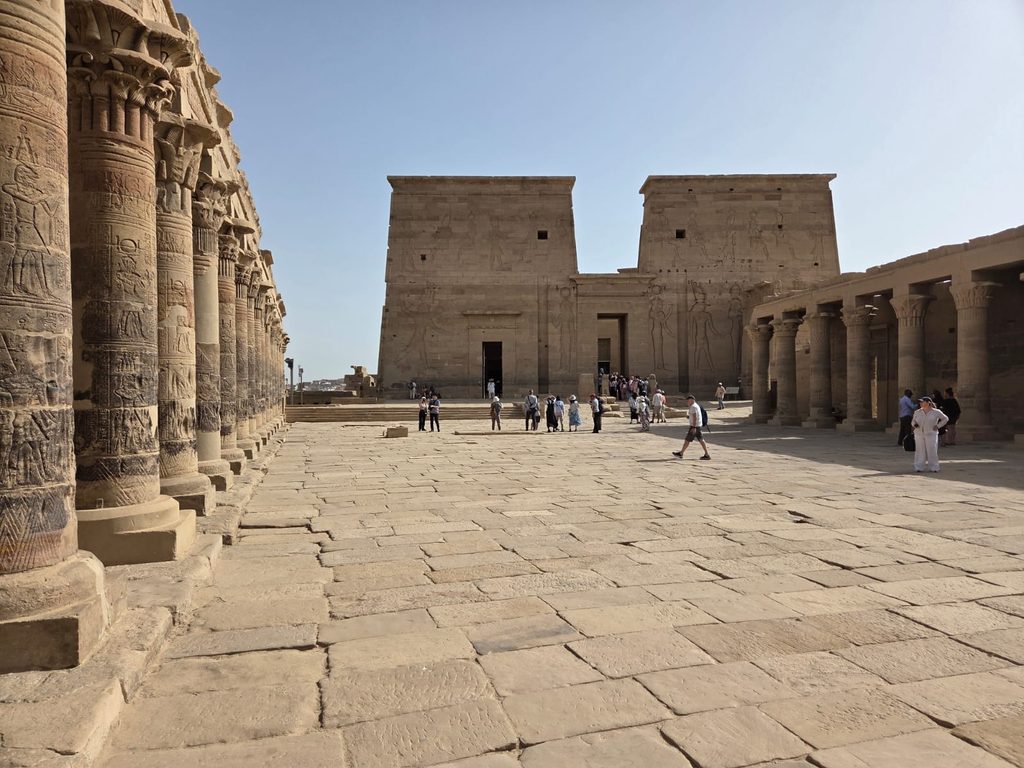
A Brief History of Philae Island(s)
First things first. Does the name Philae sound a little more Greek than Egyptian to you? Good spotting, it is. Or sort of. It comes from a Late Egyptian name meaning ‘Place of Turning’, via Demotic, to Greek. The suffix denoting a plural is definitely Greek, as Philae consisted of two islands. They lay just above the First Cataract, near Aswan.
Of the two original islands (more on this soon), the smaller was the more important. It was about 380 by 120 metres, and contained many important and picturesque ruins. Its position made it an important commercial and political as well as religious place. It was one of the points for landing and re-embarking goods traded between Egypt and Nubia, and also home to a small garrison at times.
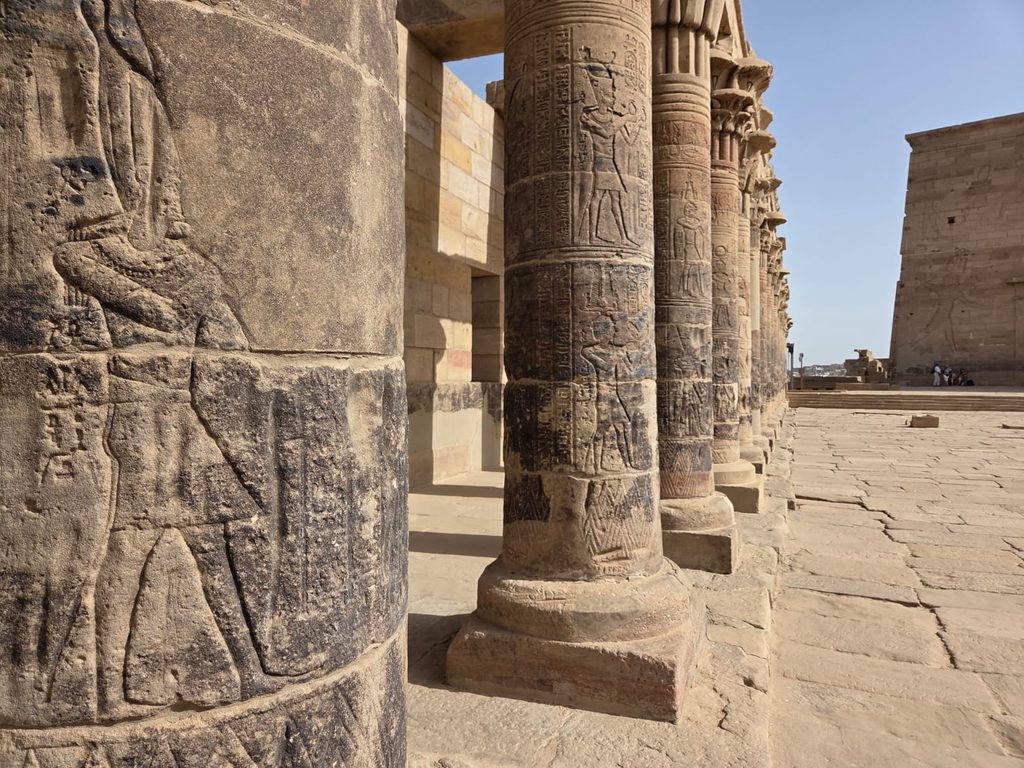
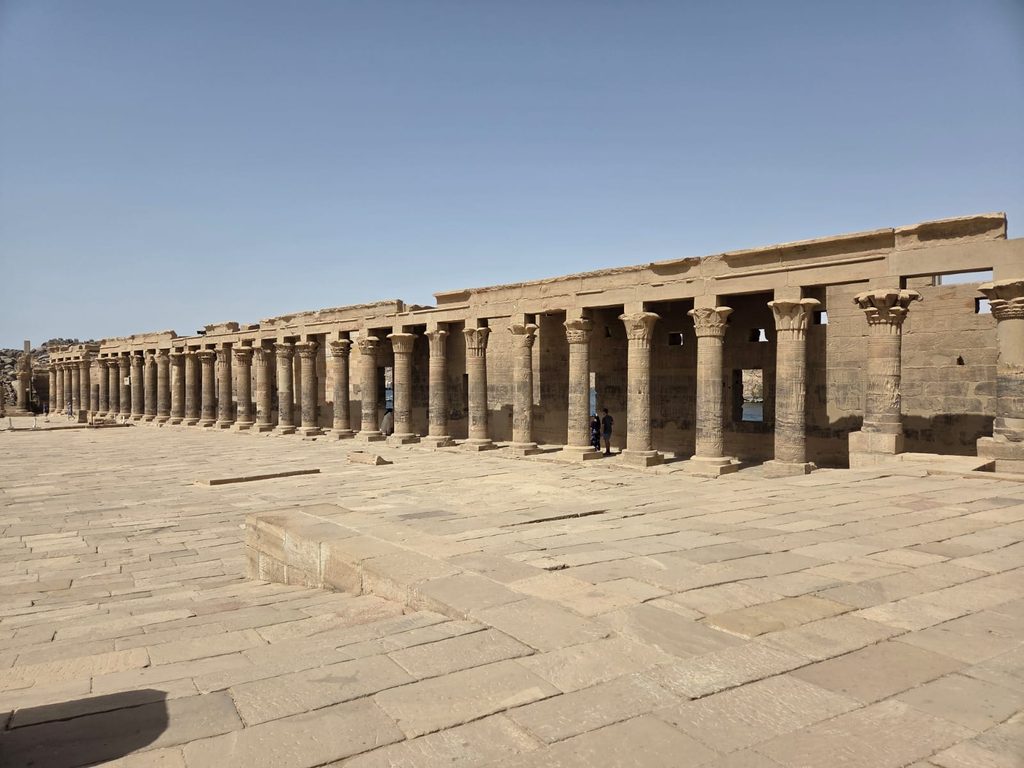
But it’s the religious structures of Philae we want to discuss in this section. Philae’s monuments covered periods from the Pharaohs to the Caesars, occupying most of the two islands but concentrated at the southern end of the smaller one. It’s possible the first structure here was a temple of Amun-Re. A few blocks were arguably reused elsewhere. The main structure surviving today is a temple dedicated to Isis (and containing one of the burial sites of Osiris), dating to the reign of Nectanebo I (380-362 BCE). Nectanebo I founded the last Egyptian dynasty of Ancient Egypt, before the Greeks took over. The temple was approach from the river through a double colonnade.
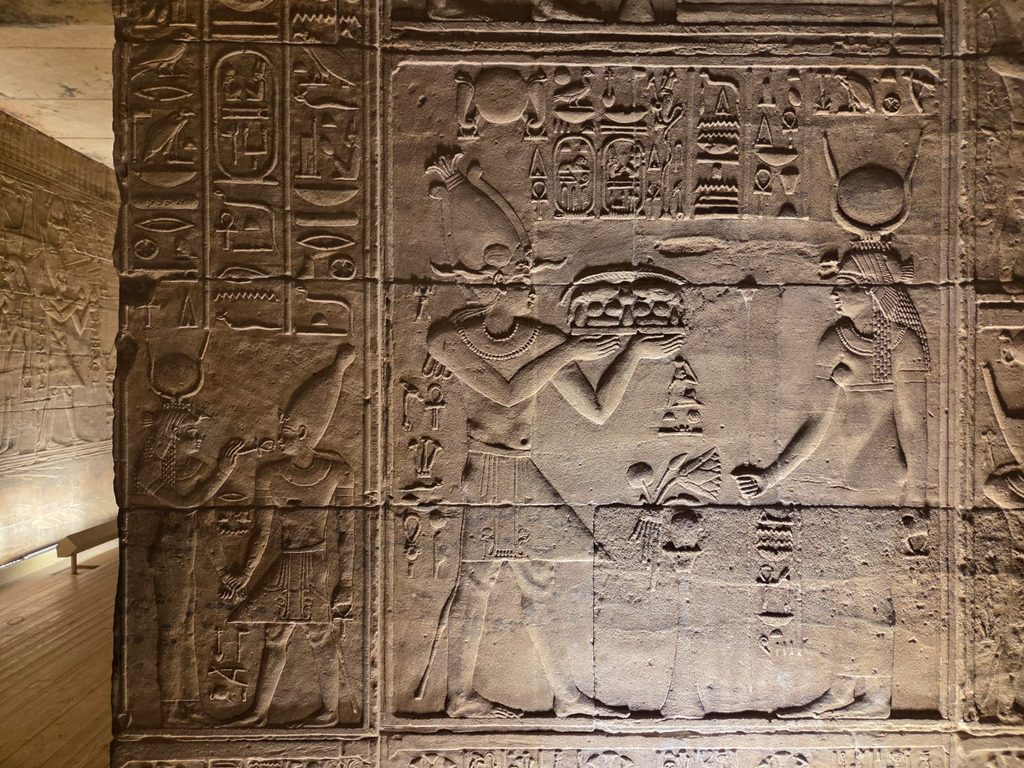
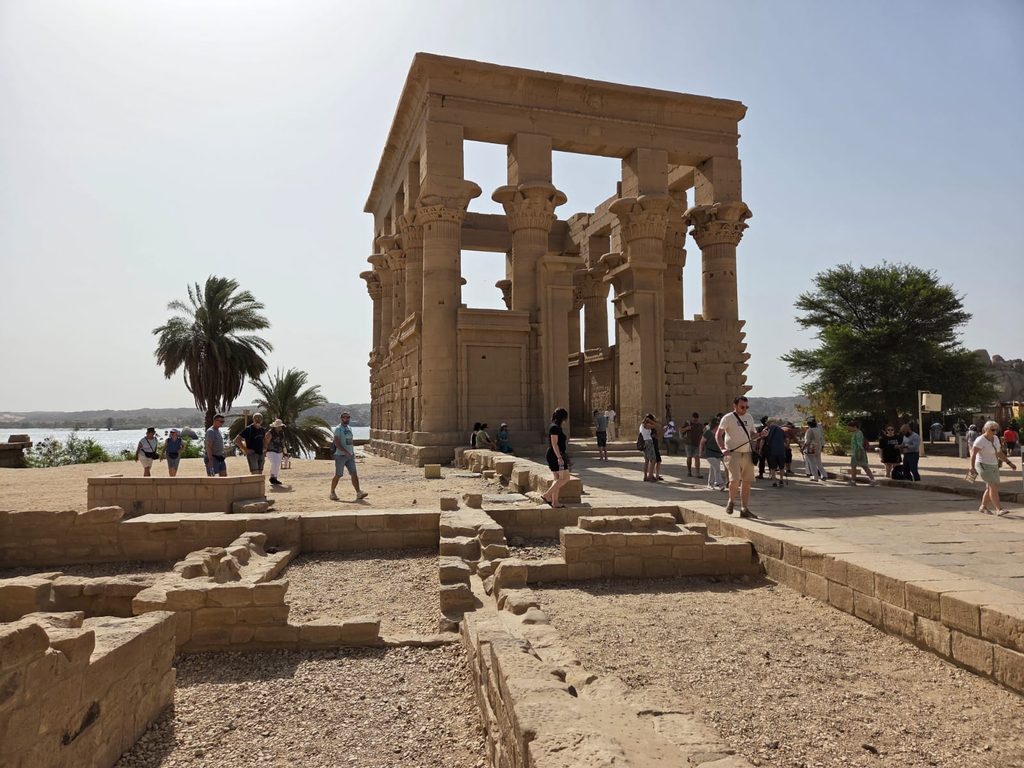
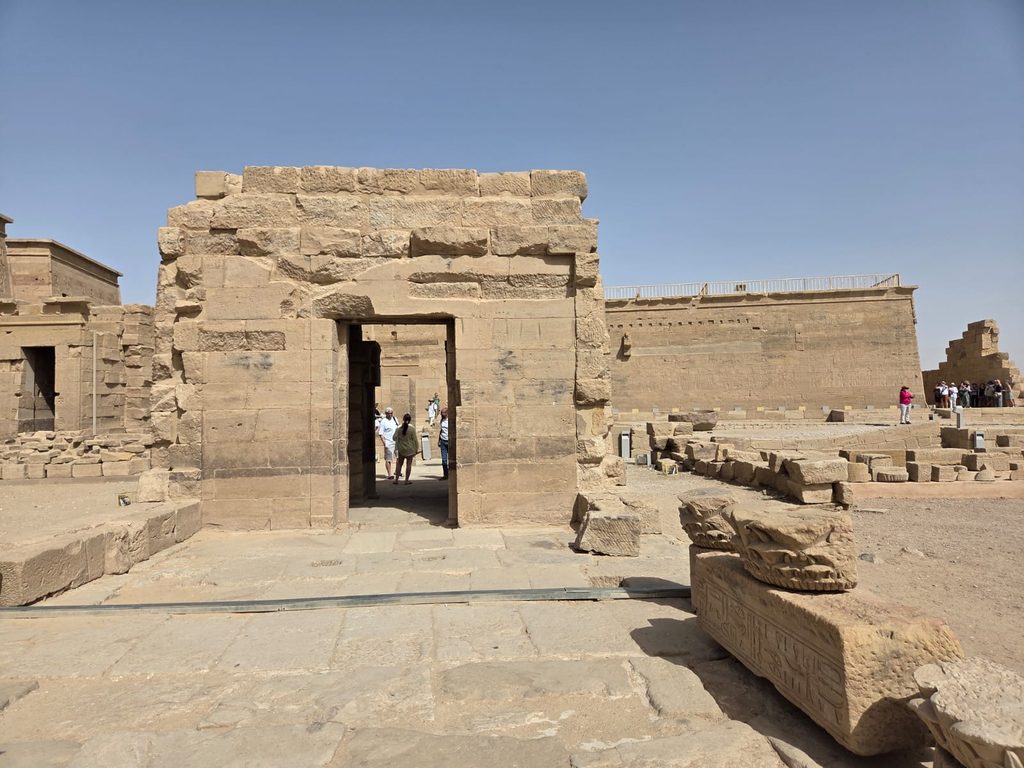
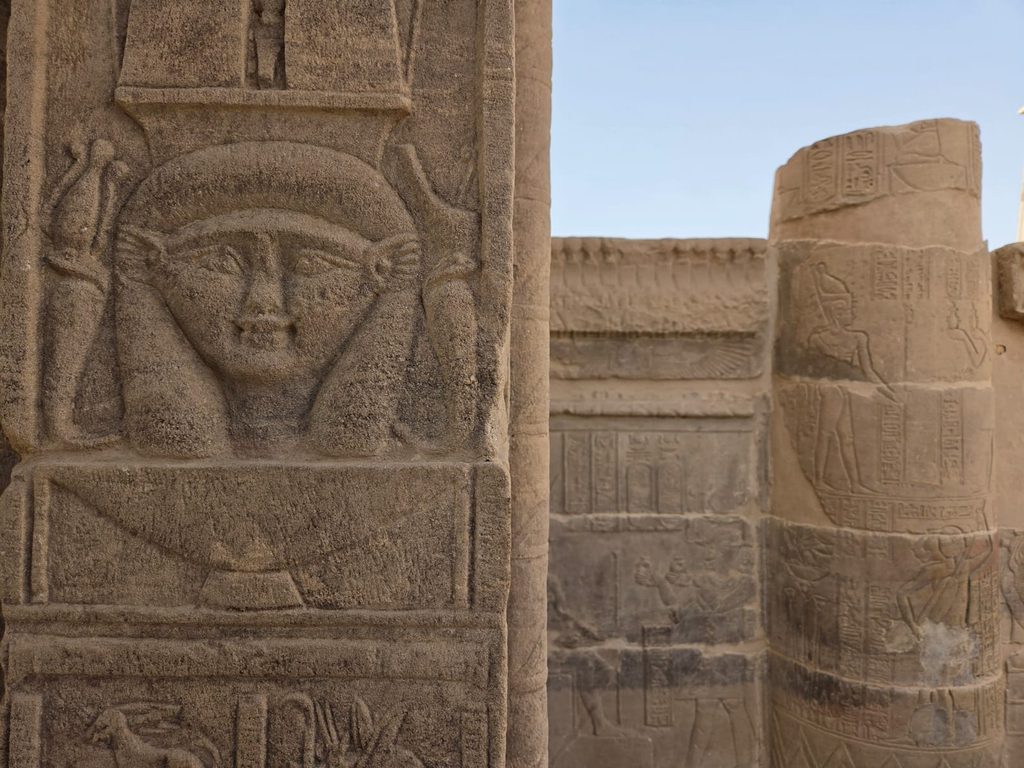
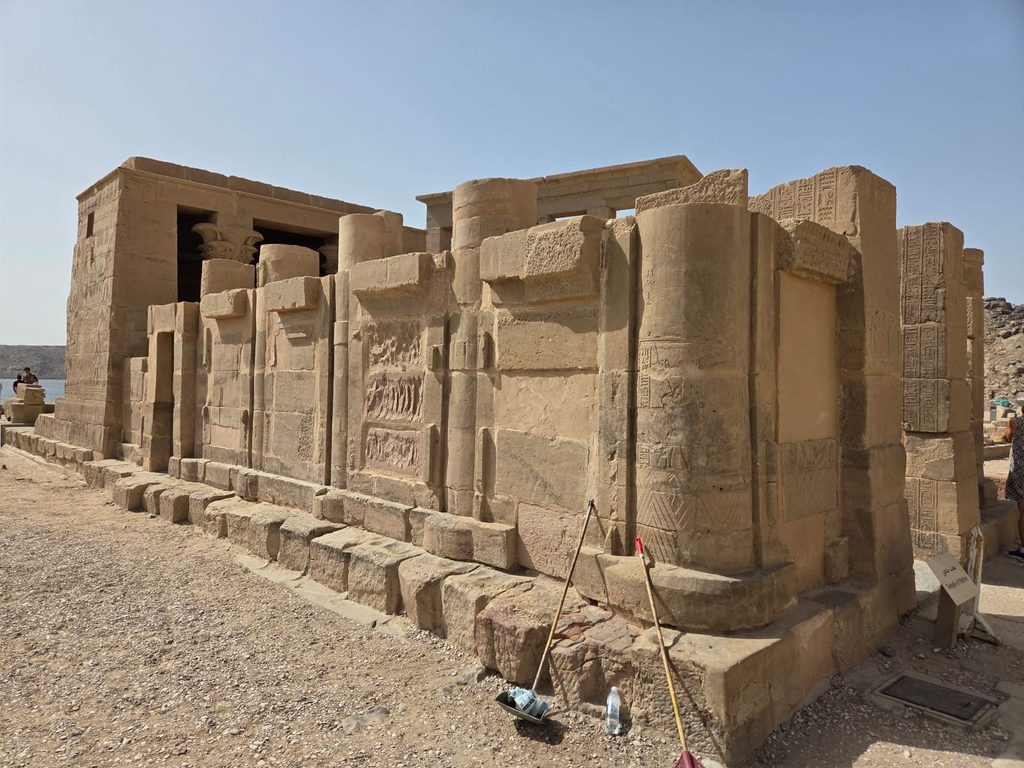
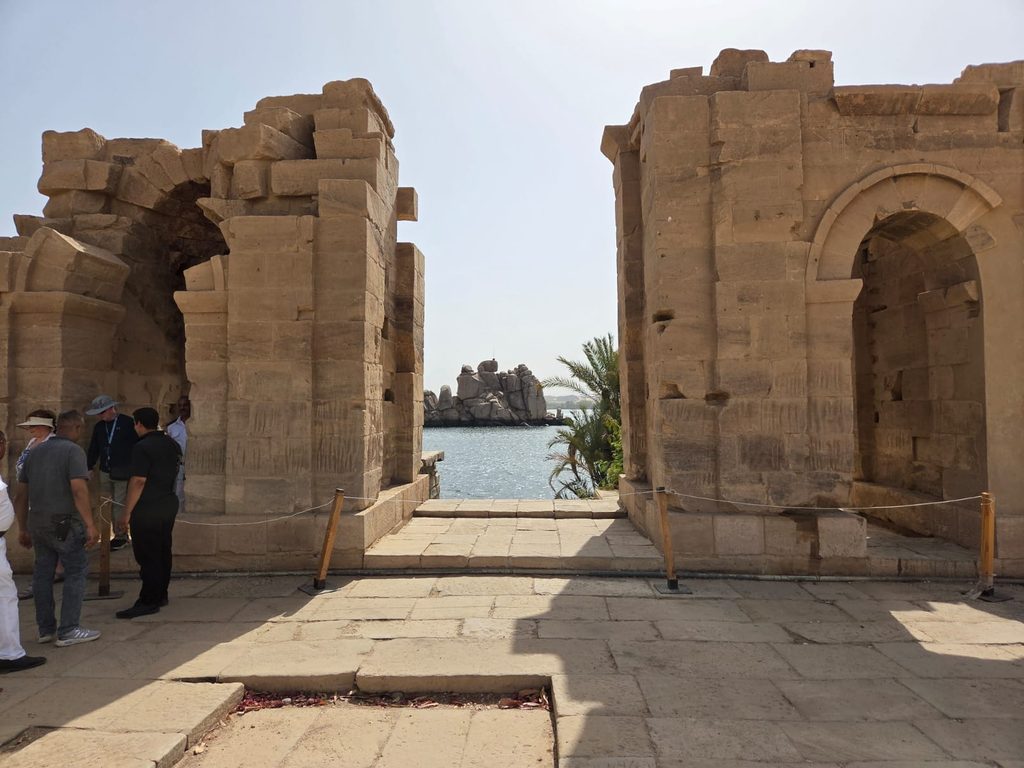
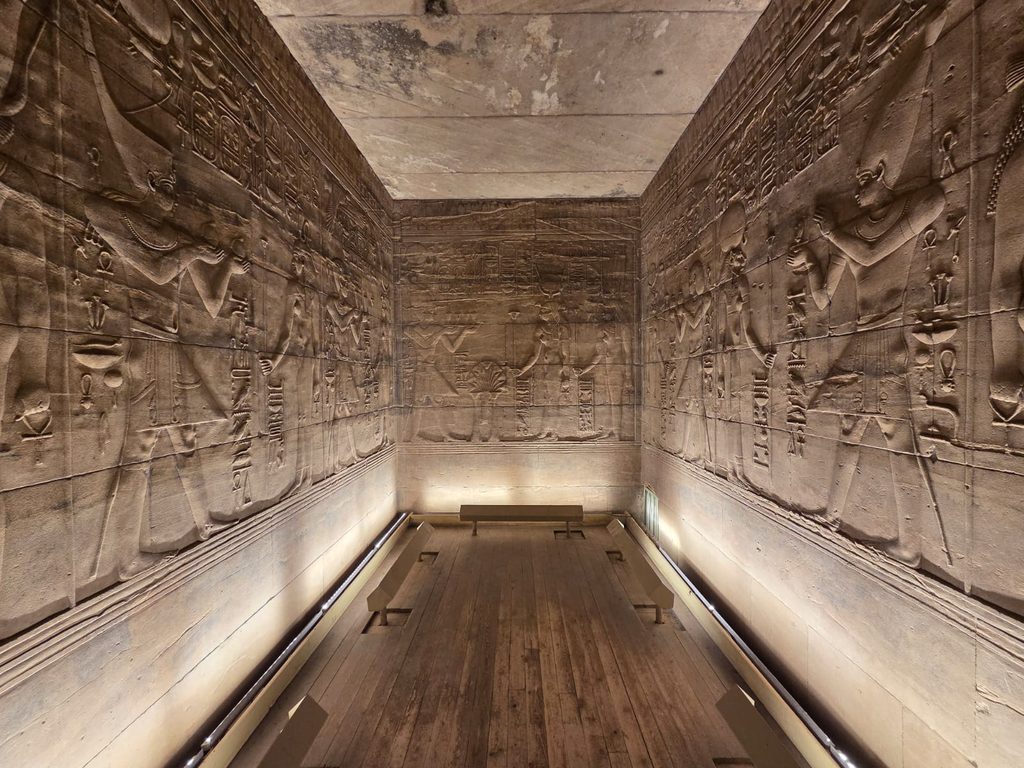
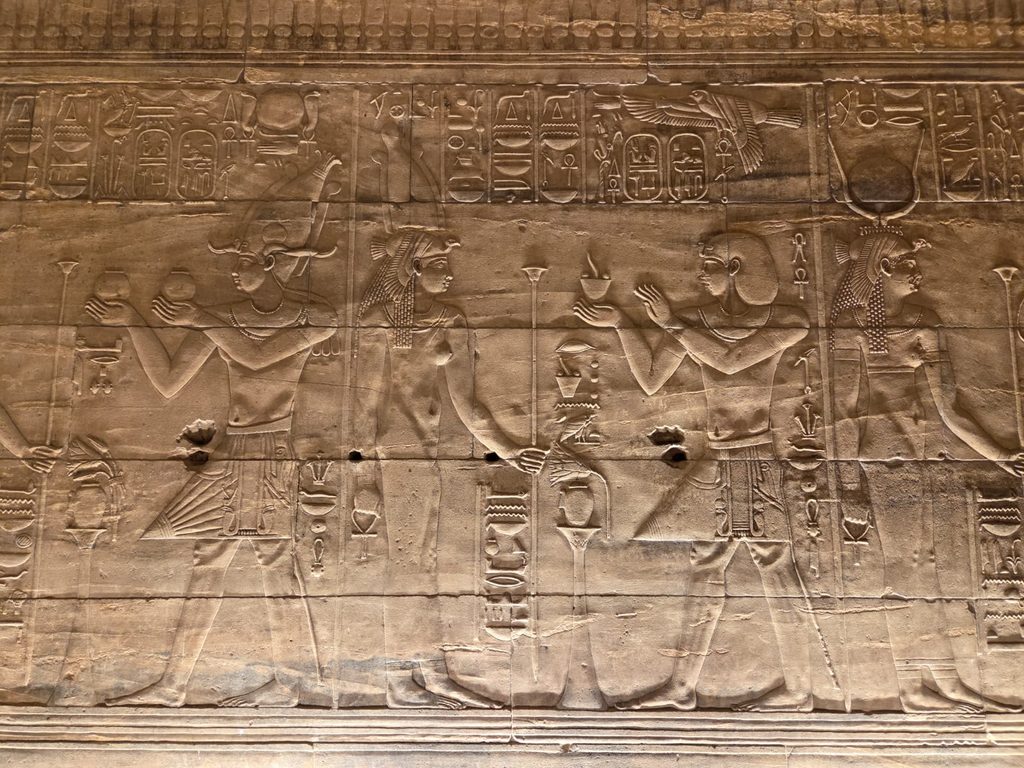
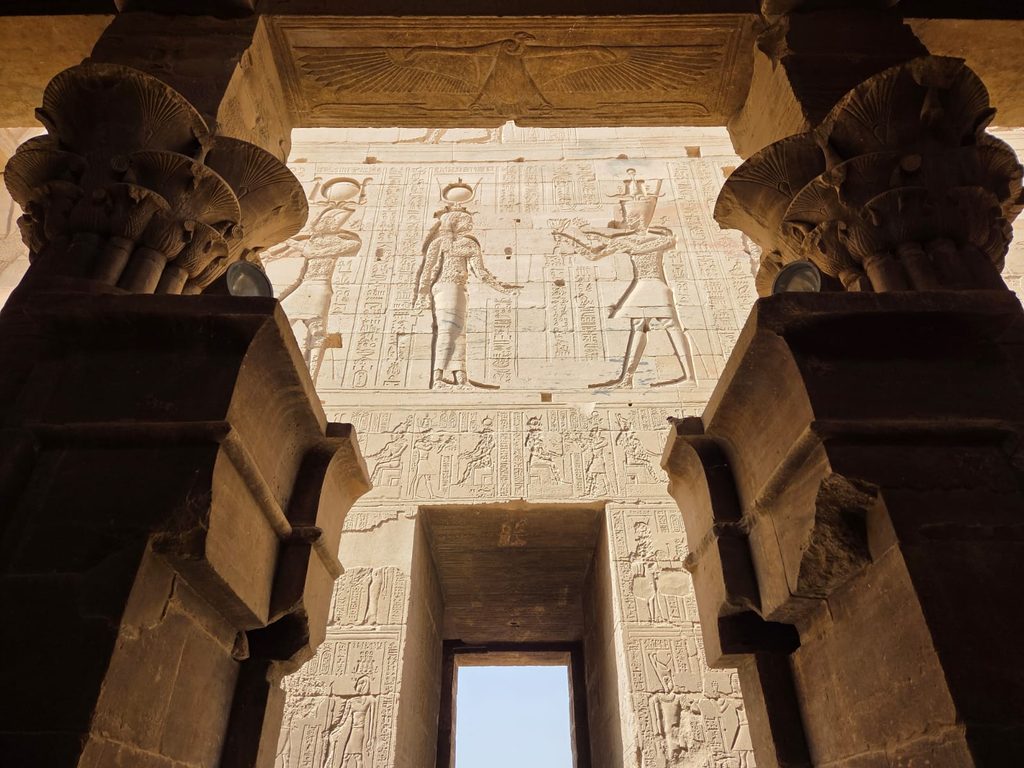
Most of Philae’s other ruins came from the Ptolemaic (AKA Greek) or later Roman periods. Or at least those which survive – around 2/3 of the ruins today are Ptolemaic. The Temple of Hathor is one example – Ptolemaic, with Roman additions. Its sculptures depict the birth of Ptolemy VI Philometor, aligning him with the god Horus. Roman additions include a pavilion known as the Kiosk of Trajan, and the Gate of Hadrian.
Philae thus teaches us a lot about how the Ptolemies integrated into Egyptian society and continued religious and artistic traditions. Traditional worship seems to have survived here until the 5th century CE. This means of course that the Ancient Egyptian religion co-existed for a time with Christianity.
Philae After Ancient Egypt
Depending where we draw the boundary between Ancient Egypt and what followed, we’ve already established that Philae continued to be an important place in Egypt’s religious life in the Ptolemaic and Roman periods. Pilgrimage from further afield did decline in the Roman period, but locally it was still an important sacred site. Previously, people had come here from as far away as Anatolia and Greece.
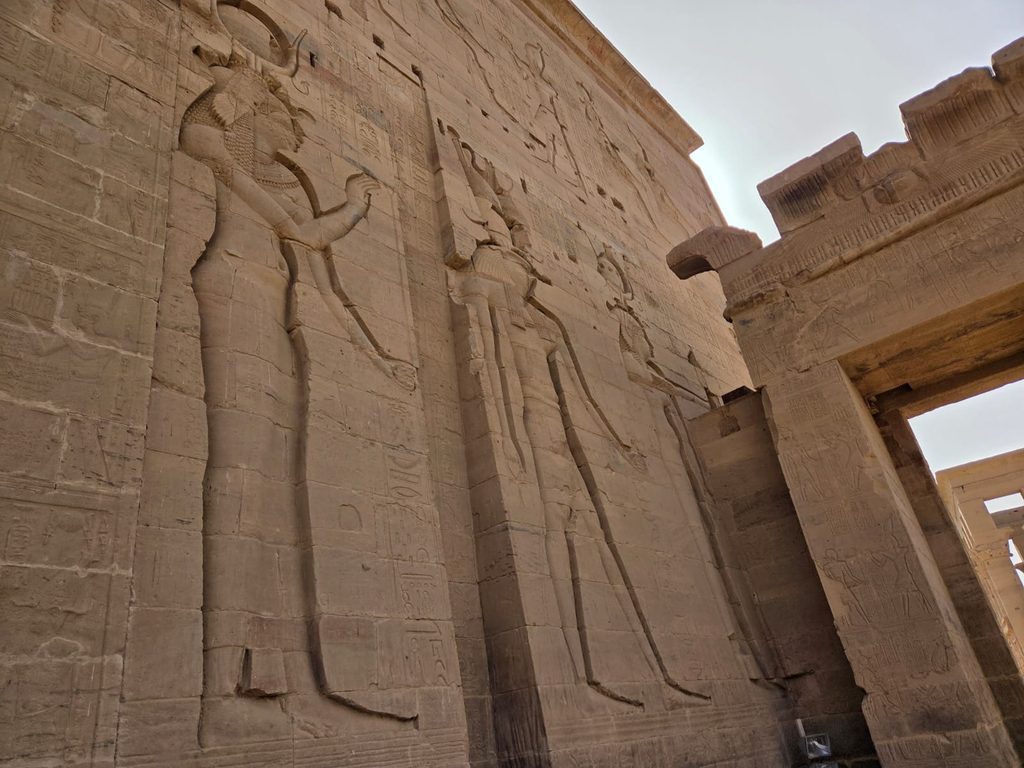
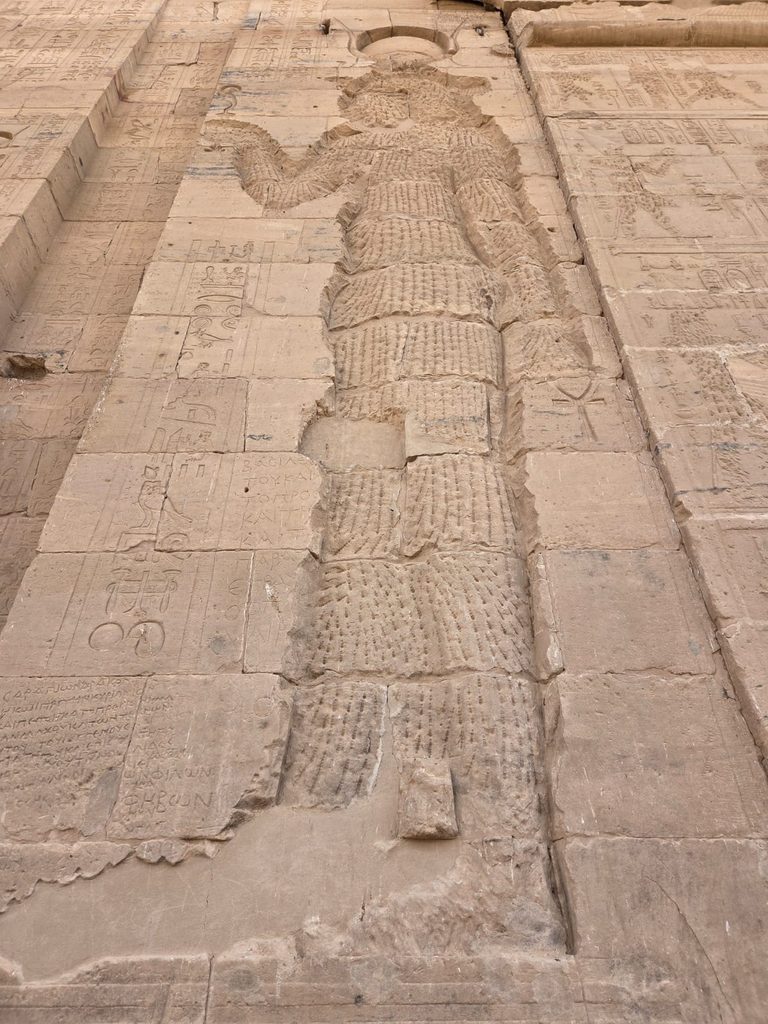
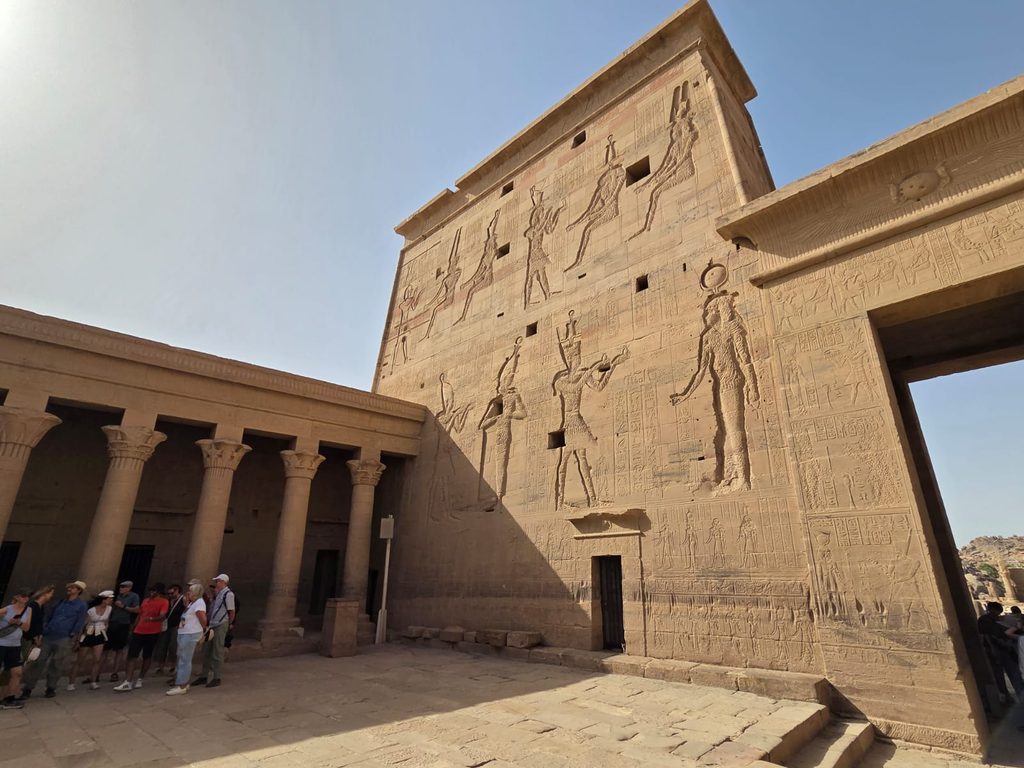
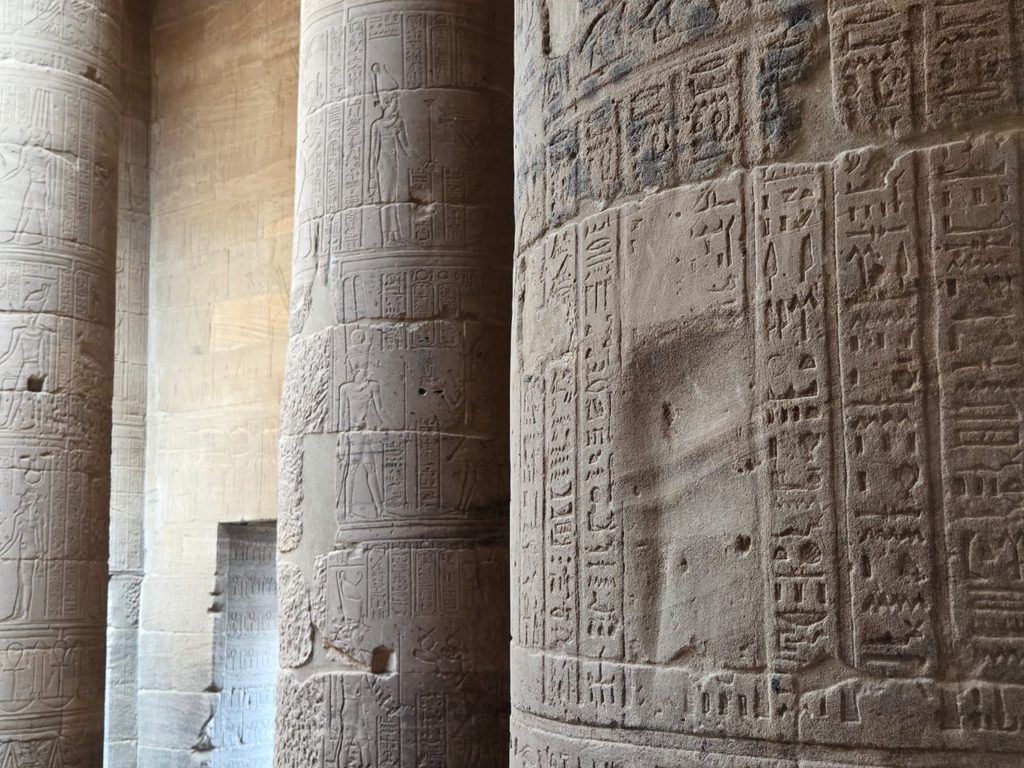
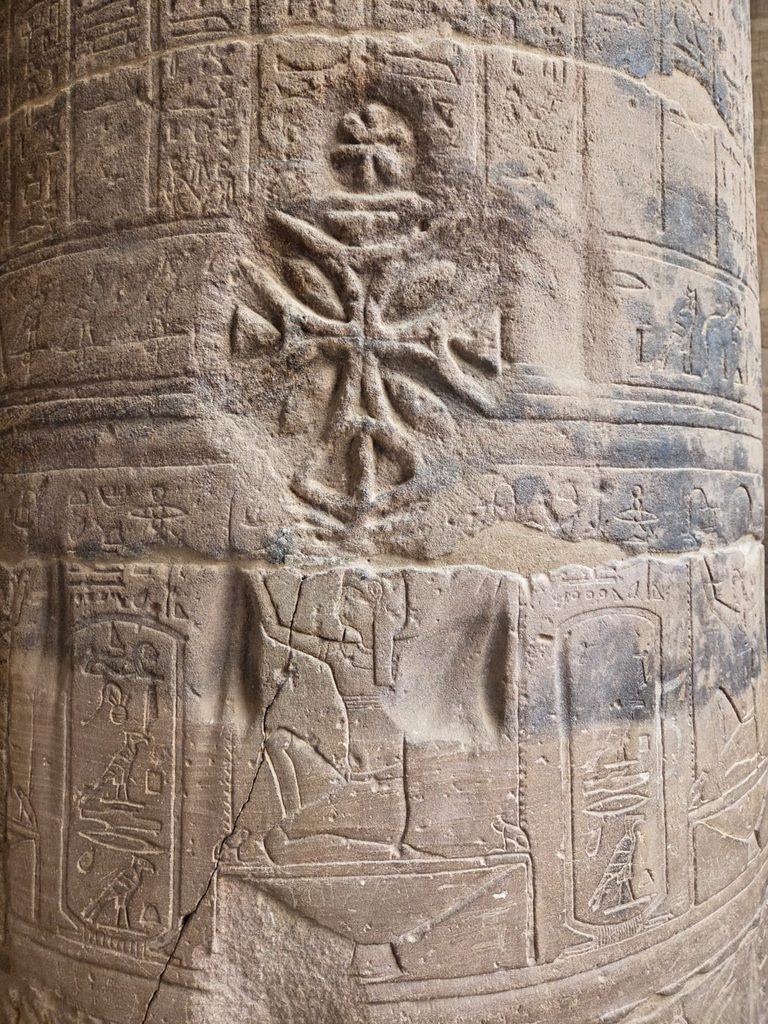
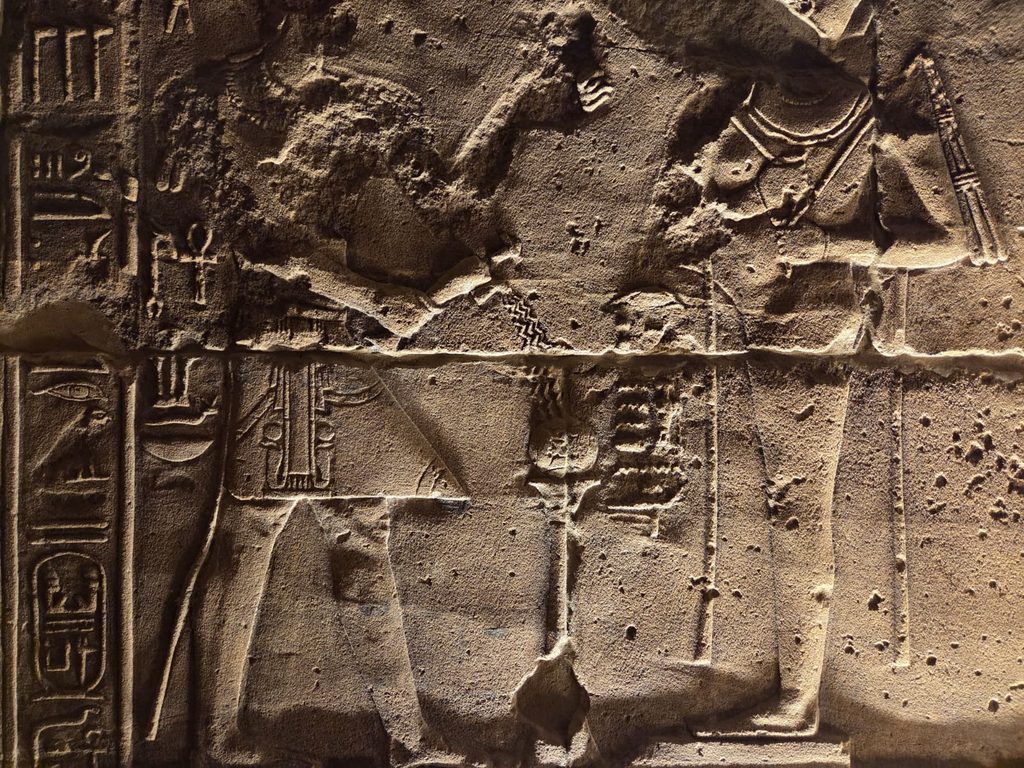
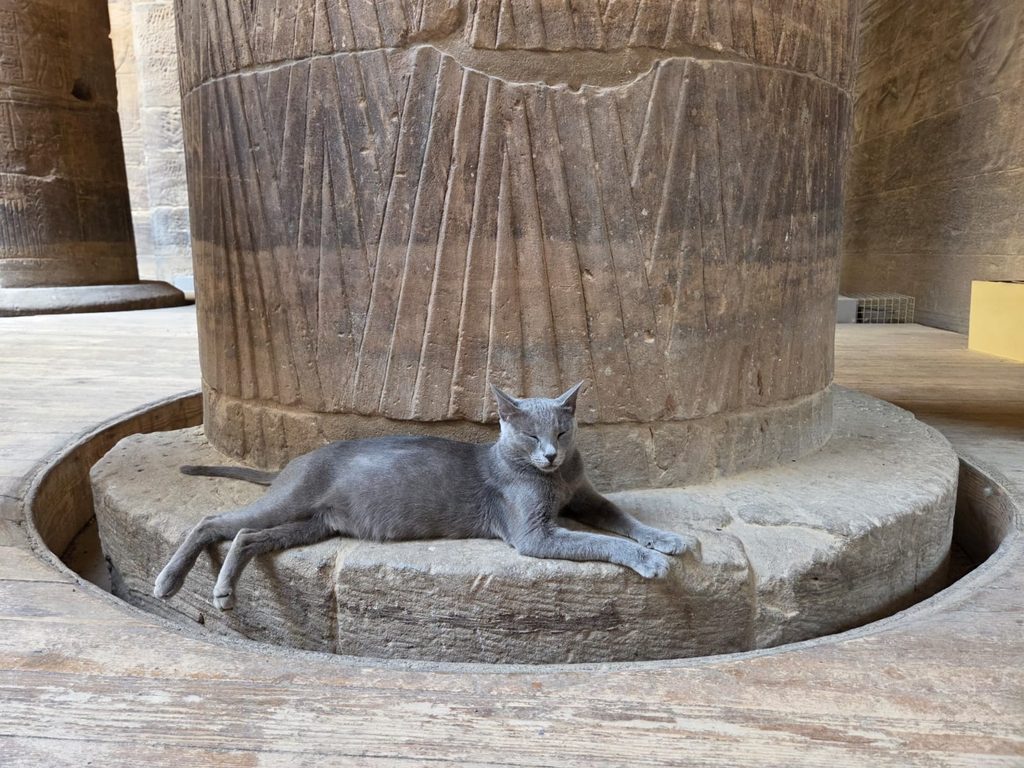
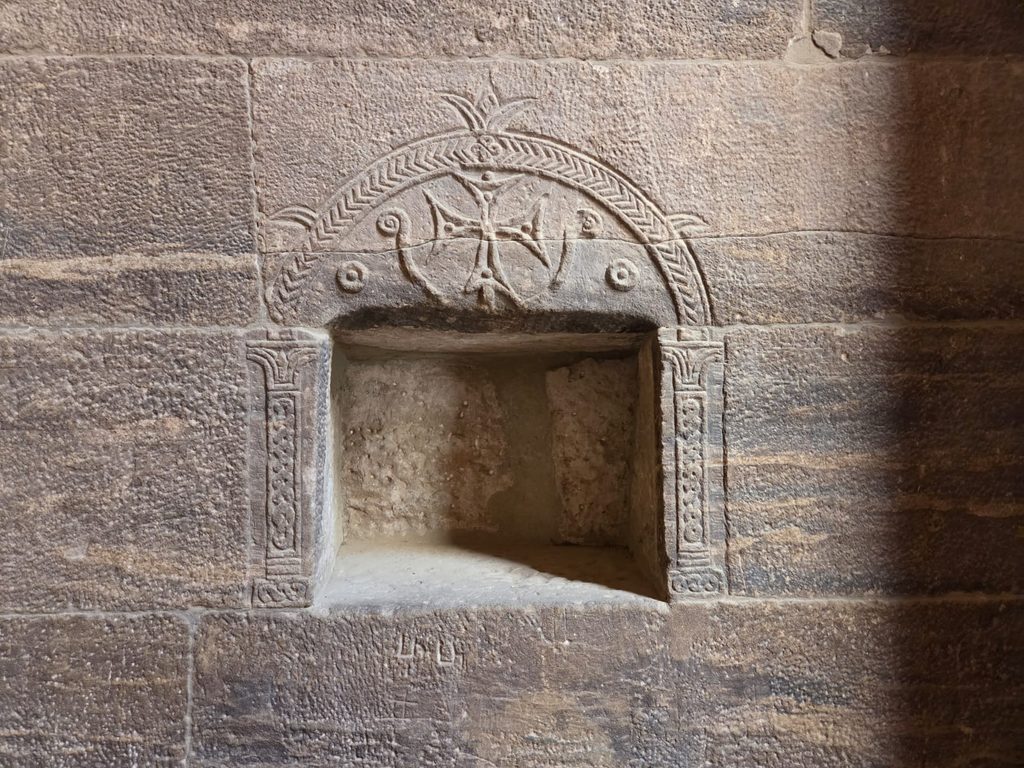
It seems there was some sort of Christian presence here by the 4th century CE, including Philae having its own bishop early on. After Ancient Egyptian religious practices ceased (officially around 537 CE, unofficially perhaps later), some structures on Philae became Christian churches. The Temple of Isis, for instance, became a Church of St Stephen. This necessitated some physical alterations. You can see in the block of images above a cross on top of earlier heiroglyphs, and in other images in this post you can see evidence of deliberately chiseled-out figures. Images of Isis and the infant Horus tended to survive more frequently, perhaps because of the resemblance to Mary and the infant Jesus. Later Iconoclasts hoping to please the Byzantine court did further damage.
Interest in Philae picked up again in the 19th century. British Egyptologist and museum curator Joseph Bonomi the Younger visited in the 1820s. British novelist Amelia Edwards described the islands after her visit in 1873-4. Some of Philae’s monuments disappeared off to European museum collections at this time.
Rescuing Philae from the Nile
In 1902 the British authorities decided on ‘advancement’ over archaeology, just as the Egyptian authorities did in the 1950s. The latter plan, as we’ve learned, was the Aswan High Dam and Lake Nasser. The former plan was the creation of the Aswan Low Dam. Just as with the High Dam, this threatened many archaeological sites.
One of these was Philae, which was nearly always flooded from this point. Particularly when the height of the dam was raised in 1912 and 1934. Rather than relocate the temples at that stage, the choice was to reinforce their foundations instead. That kept them where they were, but compromised a lot of original colour, as well as the islands’ vegetation. Each flooding season made it worse, and by the 1960s the lower third of the buildings was underwater year-round.
Because the issue at Philae was decades older, it wasn’t initially part of the Nubian monument rescue plan. But the memory of what an important and attractive site it had been soon ensured its inclusion. As with Abu Simbel, there were various proposals as to how exactly to rescue it. A plan to create three dams and thus a lake with lower water levels was impractical because of the cost. The answer, as elsewhere in Nubia, was relocation.
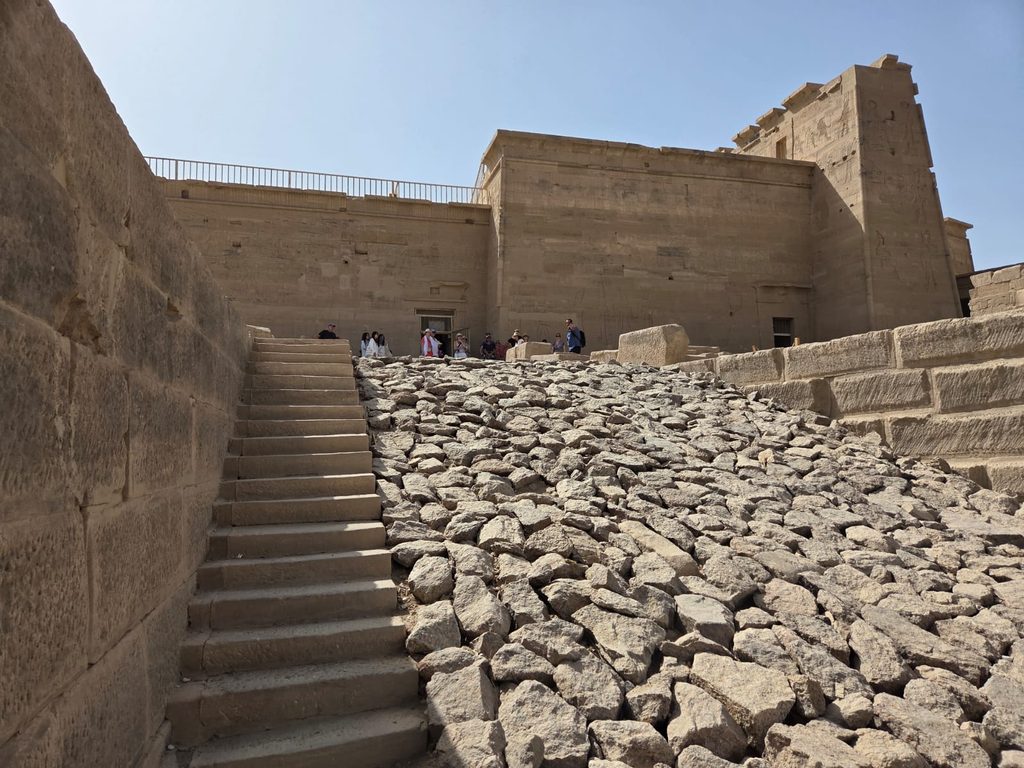
The work started with building a coffer dam to hold the water back. The 95 monuments then had to be cleaned and carefully measured so they could be exactly relocated elsewhere. Then they were dismantled, and moved between 1977-79 to the Island of Agilkia, which was 500 metres away from the original site and 12.4 metres higher. Agilkia was levelled to better match the original contours of Philae. Philae once again emerged from the Nile’s waters and silt.
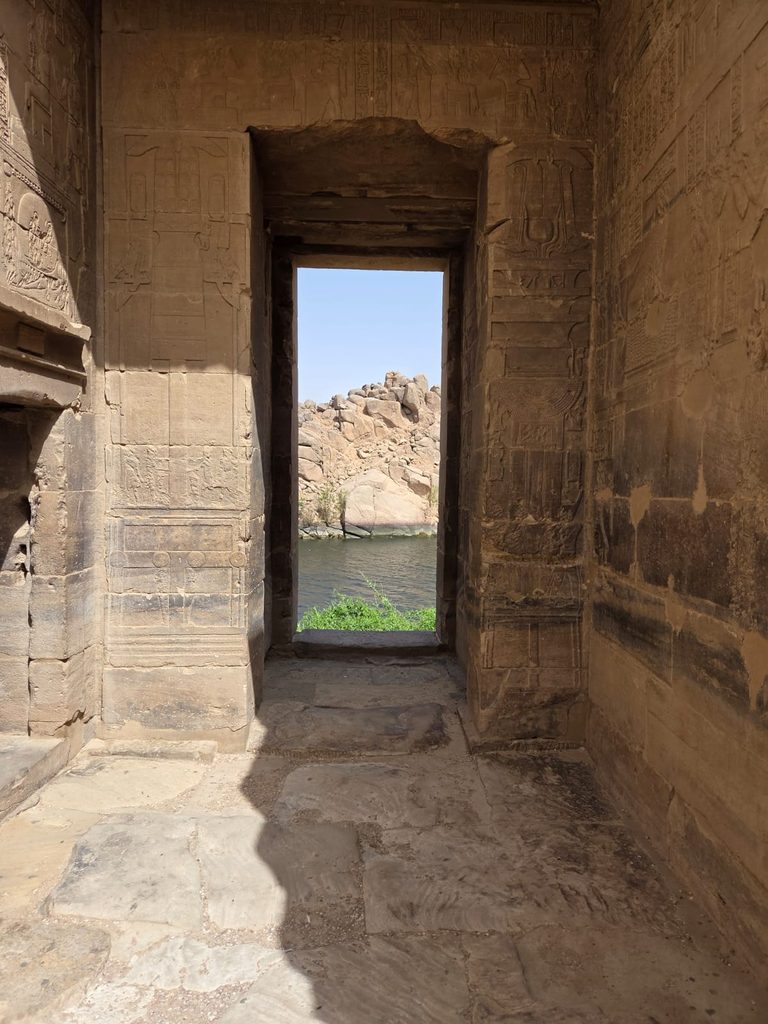
Ancient Egypt’s Very Last Heiroglyph
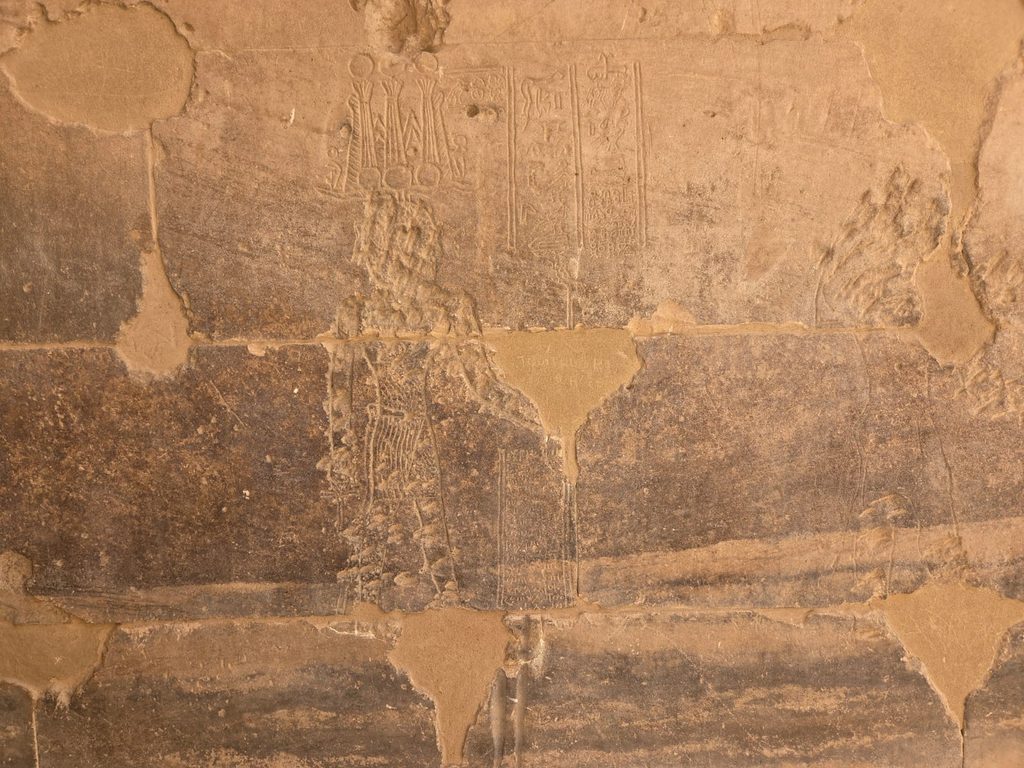
Something I had learned in that documentary I watched is that the complex includes the last known Ancient Egyptian inscription written in hieroglyphs.
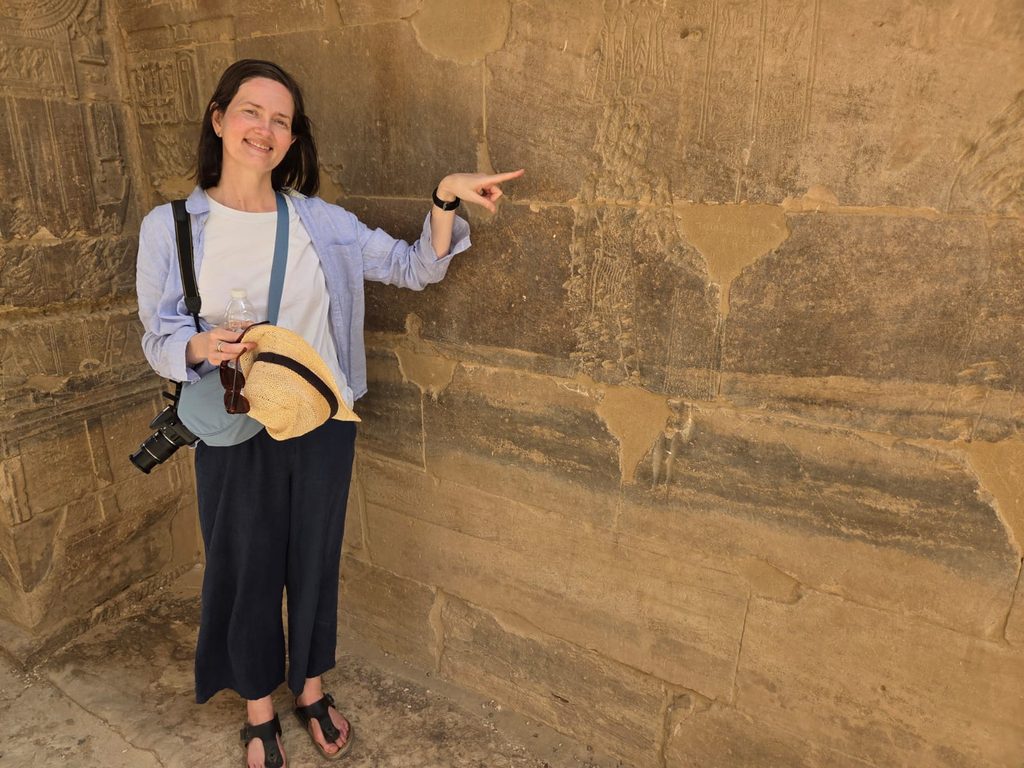
The hieroglyph we are talking about is the Graffito of Esmet-Akhom (or Philae 436 or GPH 436). Esmet-Akhom (or Nesmeterakhem) was a priest, and his inscription, on the gateway Hadrian added to the temple complex, includes a carved figure of the Nubian god Mandulis, and a text hoping his inscription will last “for all time and eternity.”* As well as hieroglyphs, the priest wrote it a second time in Demotic – the cursive script of Ancient Egypt. The figure of Mandulis was chiseled off at some point.
How do we know that this is the last hieroglyph? Firstly, Nesmeterakhem included the date (helpful). He wrote his inscription on the ‘birthday of Osiris, year 110 [of the reign of Diocletian]’.** That was 24 August 394 CE, 40 years after the second-oldest-known inscription. By that time, Christianity existed side by side with the worship of the old gods. It was not winning the battle, though: Theodosius I had closed pagan temples across the Roman Empire a couple of years earlier. Philae held on for a while longer because it was right at the edge of the Empire, staffed by a single priestly family of which Nesmeterakhem was a member.
It wouldn’t be long before there was nobody alive who understood or could write in hieroglyphs. Any later inscriptions were in Demotic or Greek, but this is also the last writing by a priest in Demotic to mention Osiris. The last known inscription in Demotic is also at Philae, a very faint one reading “the feet of Panakhetet the lesser” on the roof of the porch.
There is absolutely nothing at Philae to tell you that you can see Ancient Egypt’s last hieroglyph. That is within the context of not having any information panels at all, so fair enough. Generally, around Egypt, I recommend a combination of being on a guided tour, and tipping attendants if ever you feel like finding out a bit more or seeing ‘behind the scenes’. I had actually forgotten what I’d learned in that documentary, until I heard two Australian tourists discussing it. Luckily that was right by Hadrian’s Gate, and a quick Google search helped me find an image of the hieroglyph so I could locate it. A lucky bit of serendipity and a nice moment during my visit to Philae.
*So far so good!
**Diocletian didn’t live to 100+. Because later emperors tended to be Christian and suppress the old gods, the priests here kept their calendar by Diocletian’s reign.
Visiting Philae Temple
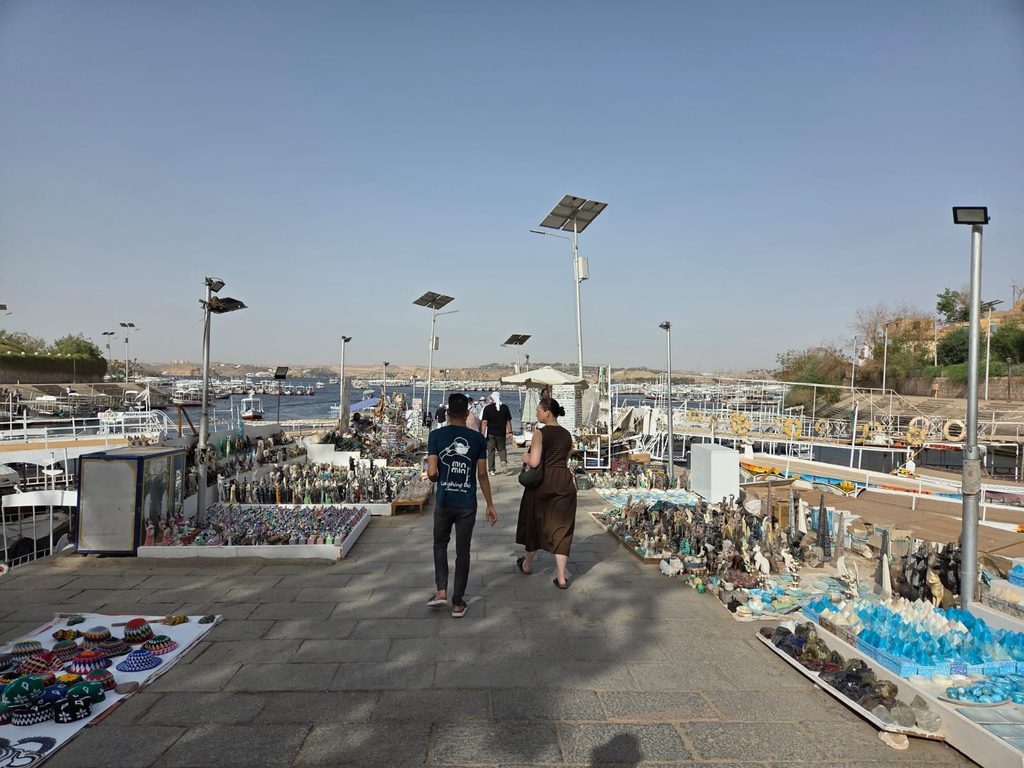
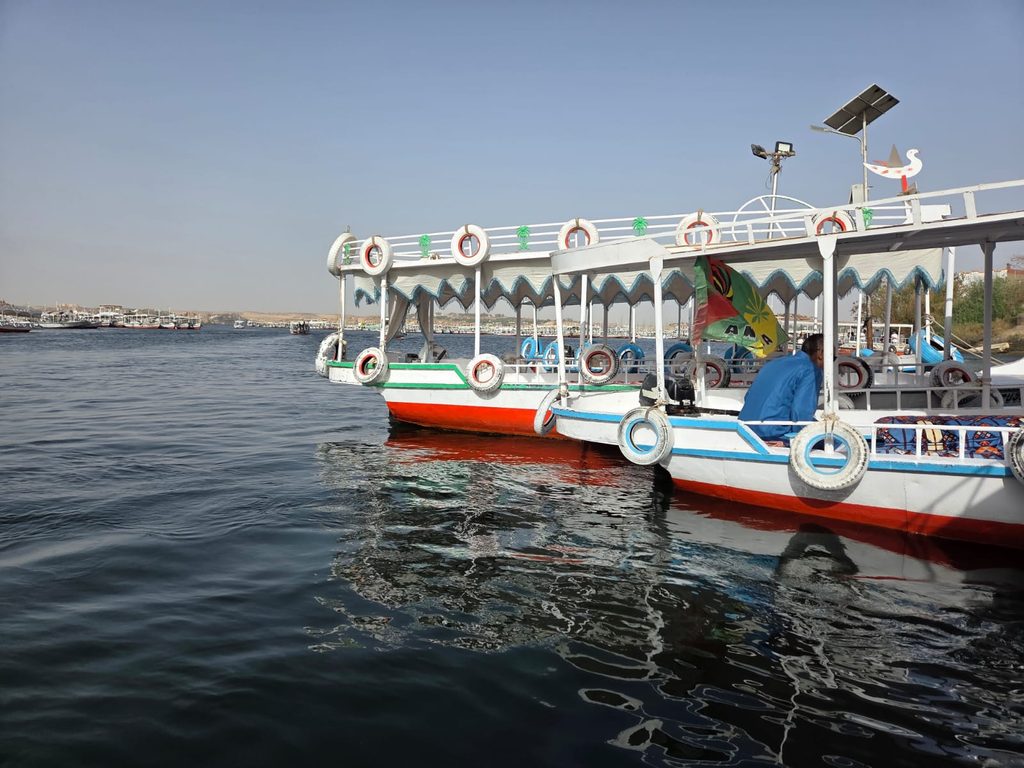
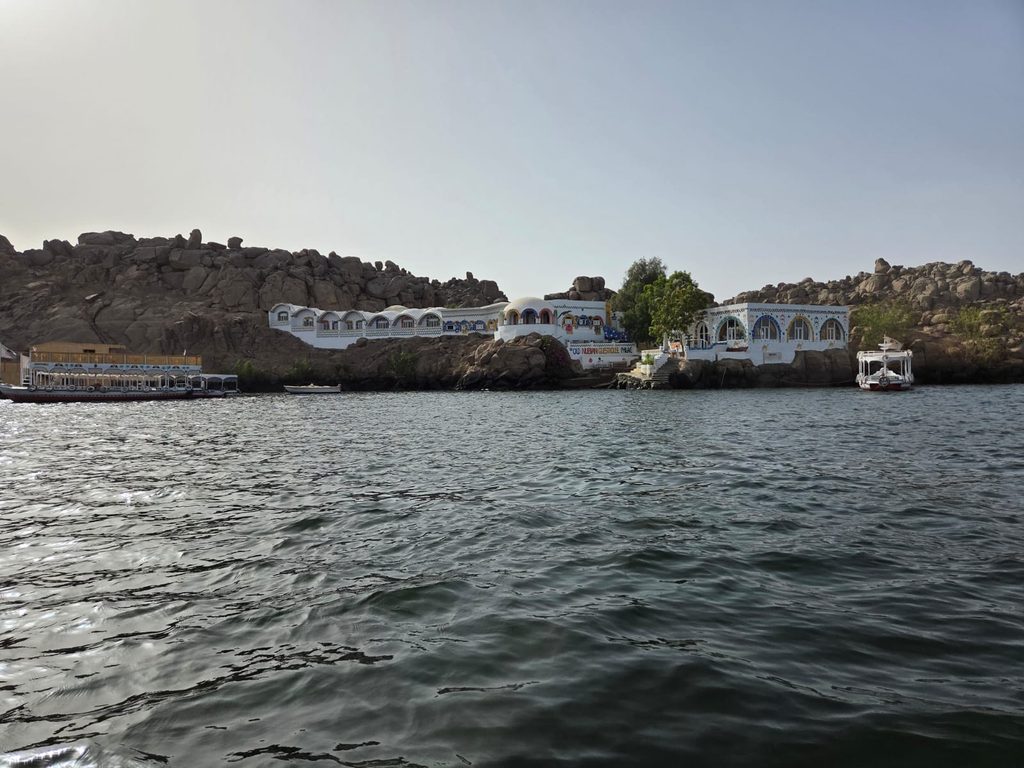
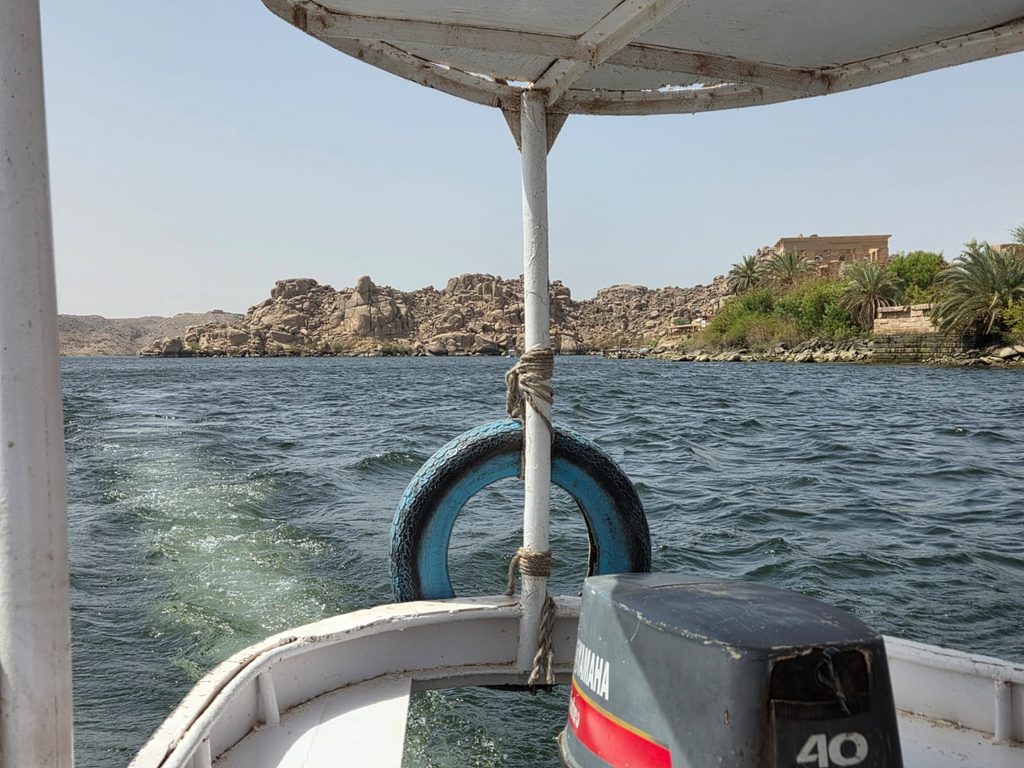
I found the experience of visiting Philae to be a lovely one. I think being on a group tour did help – the Urban Geographer and I didn’t have to figure out how to purchase tickets, or negotiate a fare for the crossing by boat. We just stepped onto a boat and headed across the water, past the souvenir stalls and later the Nubian village-style buildings across the water. Approaching Philae by boat, although it’s no longer actually the same island, is nonetheless a connection with how people have visited this place for millennia.
As I mentioned, there’s very little information onsite. Our guide, Hisham, was a consummate storyteller, so we heard all about it before going to explore. I nonetheless would have missed the last hieroglyph if not for a chance bit of eavesdropping. So having some sense of anything you particularly want to see is important at Philae and most Egyptian archaeological sites. Another option, as always, is to let an attendant explain things in exchange for a small tip. This was the method the Urban Geographer preferred.
In the end, I was so charmed by Philae that any thoughts of its relative youth compared to other places on our itinerary soon vanished from my mind. The style is a bit more Graeco-Roman than Old Kingdom, certainly. But not to the extent that it feels vastly different from other places you might visit.
The choice to go all the way to Abu Simbel on the day of our arrival in Aswan and visit Philae the following morning was thus a good one.* They are very different sites, but each wonderful in their own right. And the chance to see not one, but two of the Nubian monuments rescued by an international effort from the waters of the Nile should not be missed.
*If we exclude the fact that the Urban Geographer was very ill on the Abu Simbel day…
Trending
If you see this after your page is loaded completely, leafletJS files are missing.