
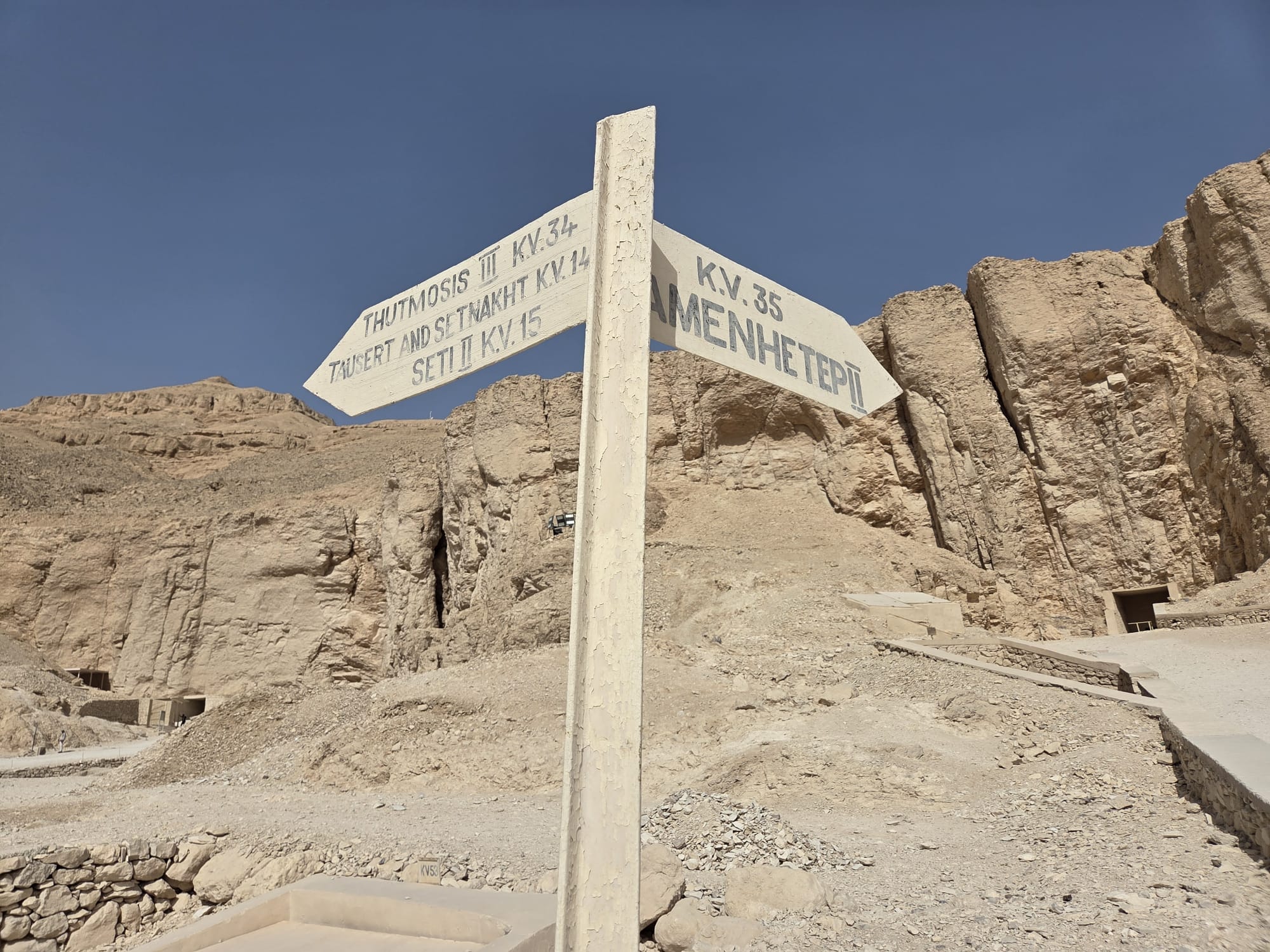
The Valley of the Kings and Mortuary Temple of Hatshepsut, Luxor
You could easily spend a week at the Valley of the Kings to see everything. But getting a taste of it, and the surrounding monuments, in a morning, is still a very special experience.
Another Childhood Dream Fulfilled
Now, when I wanted to be an archaeologist as a child, I think it was Howard Carter-style adventures I was imagining. The Indiana Jones type of archaeology is pushing it a bit far, but discovering untouched ancient tombs I could get on board with. Plus I remember the Reader’s Digest Book of Strange Stories, Amazing Facts – a reliable source of childhood thrills – had a bit about the supposed curse of Tutanhkamun’s tomb,giving the whole thing a frisson of danger.
All this to say that I was very much looking forward to my visit to the Valley of the Kings. This was another early morning start on our tour, the first activity after disembarking our dahabiya at Luxor. We had a mammoth day ahead, actually – spending the morning on the West Bank at the Valley of the Kings and Mortuary Temple of Hatshepsut, before returning to the East Bank and visiting Karnak and Luxor temples. After a couple of days’ relative relaxation on our Nile cruise, it was truly time to test our stamina under the Egyptian sun on the last full day of our itinerary.
Another thing I was looking forward to was seeing some history and art from Ancient Egypt’s New Kingdom. I’ve written in a couple of my posts on Egypt about the slightly unexpected response I had to the late date of many temples. I tended to doubt my enthusiasm for the Ptolemaic and Roman sites, then surprise myself by loving them. The late dates shouldn’t have been a surprise to me – Ancient Egyptian civilisation lasted so long that of course a lot of the current temples date to the end of that time. If you think about it, it’s just like St Paul’s Cathedral – a historic church on the site of an older church, on the site of an older church, etc., going back probably to Roman times. But nonetheless, tombs don’t get updated in the same way, so I was looking forward to going back further in history.
The Valley of the Kings: A Brief History
We learned a bit about the Ancient Egyptian religion in my post on the Pyramids and the Sphinx. We learned, for instance, that spirits reached the afterlife by following the path of the sun to the West, and undergoing various tests (famously including weighing their heart against a feather). For any spirit to live out its afterlife, the body had to remain intact as a kind of anchor. And it was particularly important for pharaohs, the living embodiment of Ma’at, or cosmic balance, to make it to the afterlife. The Pyramids helped guide souls by mimicking the sun’s rays. But they were a big old invitation to tomb robbers, and so were less good on the body preservation side of things. You also need your kingdom to be going pretty well to support pyramid-building.
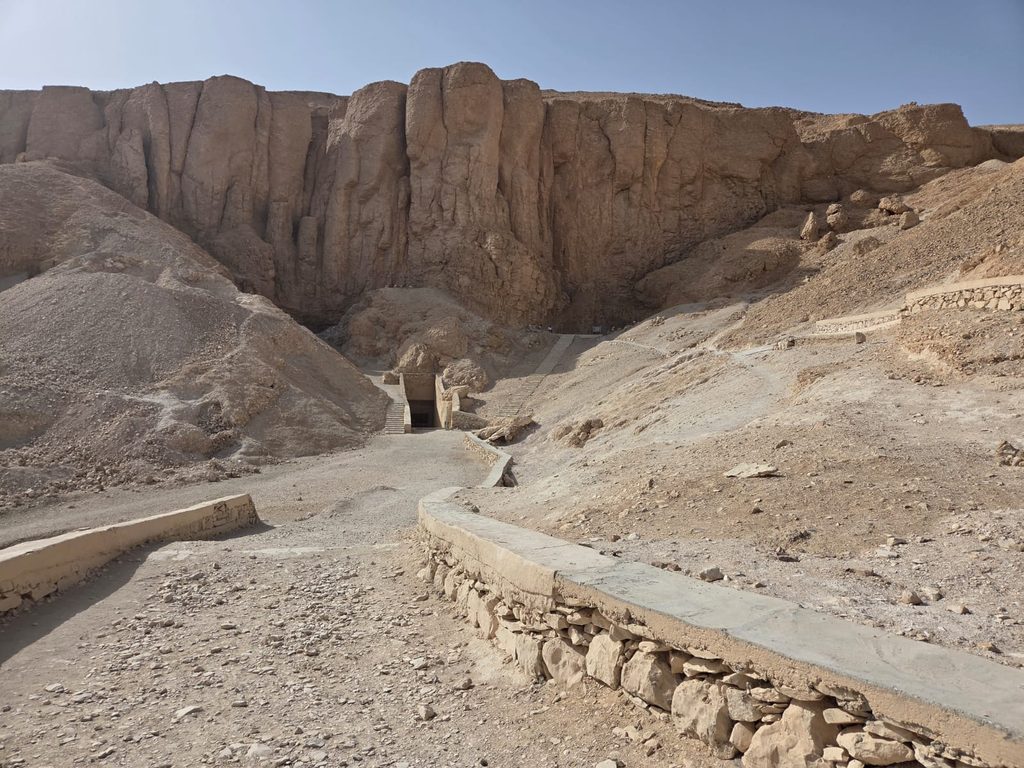
After the pyramid-builders, there was a period when pharaohs’ tombs were either mastabas, or rock-cut.. But when the capital moved to Thebes (now Luxor) in the New Kingdom period, someone had a rather good idea. Over on the West bank of the Nile, which already symbolised death, there was a valley with lots of nooks and crannies. Above it towered al-Qurn, a mountain which looks rather like a pyramid. We could be onto something here.
In total we know of 65 tombs in the Valley of the Kings, dating from approximately 1539-1075 BCE (18th to 20th dynasties). Despite extra security measures (a tomb police and possibly sequestering the artisans living at Deir el-Medina), most were nonetheless looted in antiquity. Tutankhamun’s, discovered by Howard Carter in 1922, was the only near-intact burial amongst them. Despite the modern name, it wasn’t just kings here. There are only around 20 kings, in fact, with the rest being wives, children, and favourite nobles. Use of the necropolis declined during a period of unrest in the 21st dynasty. A lot of royal mummies were removed and buried together nearby to try to protect them. In Coptic times, some tombs became churches, stables, and housing (this area was popular with hermits).
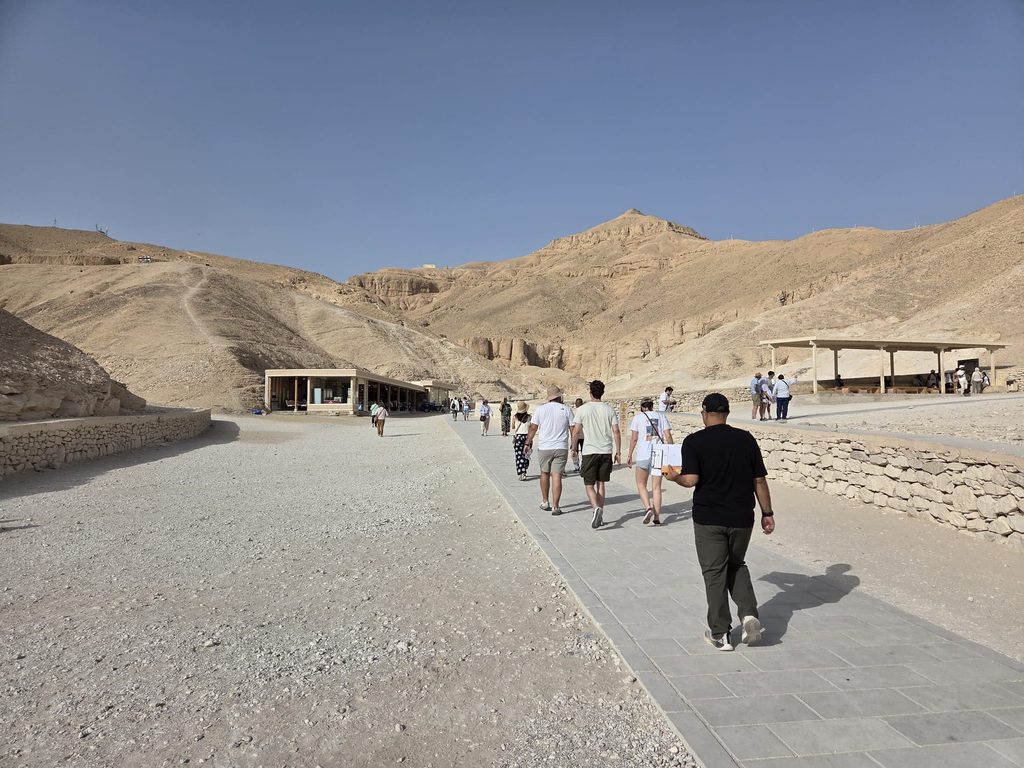
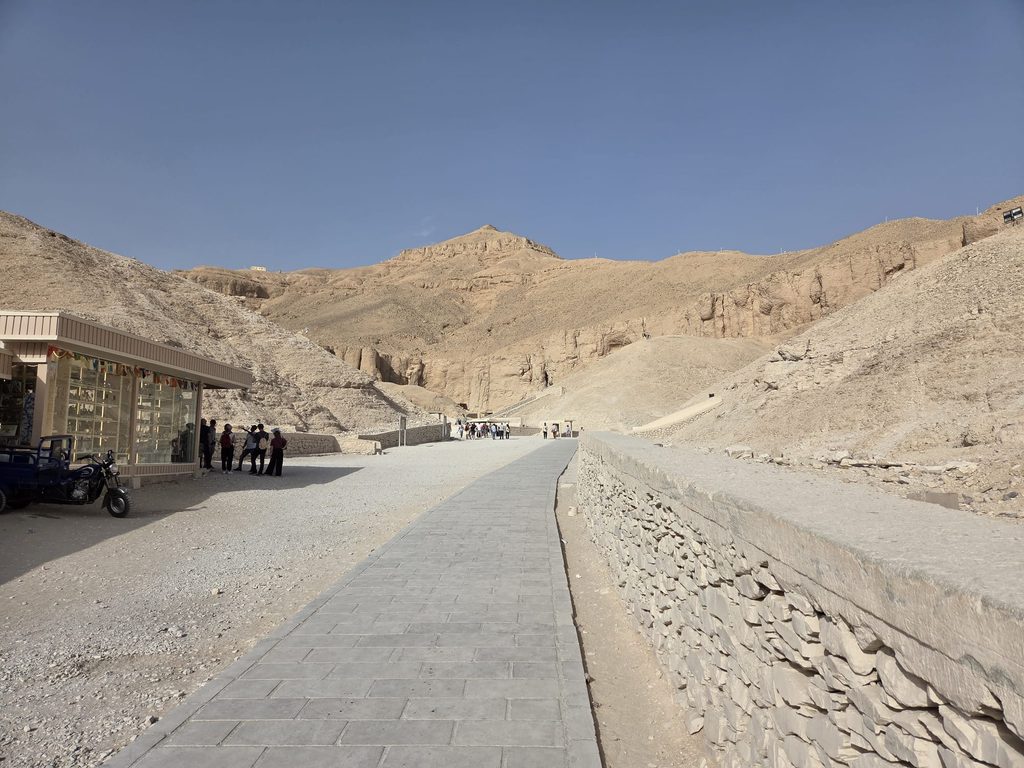
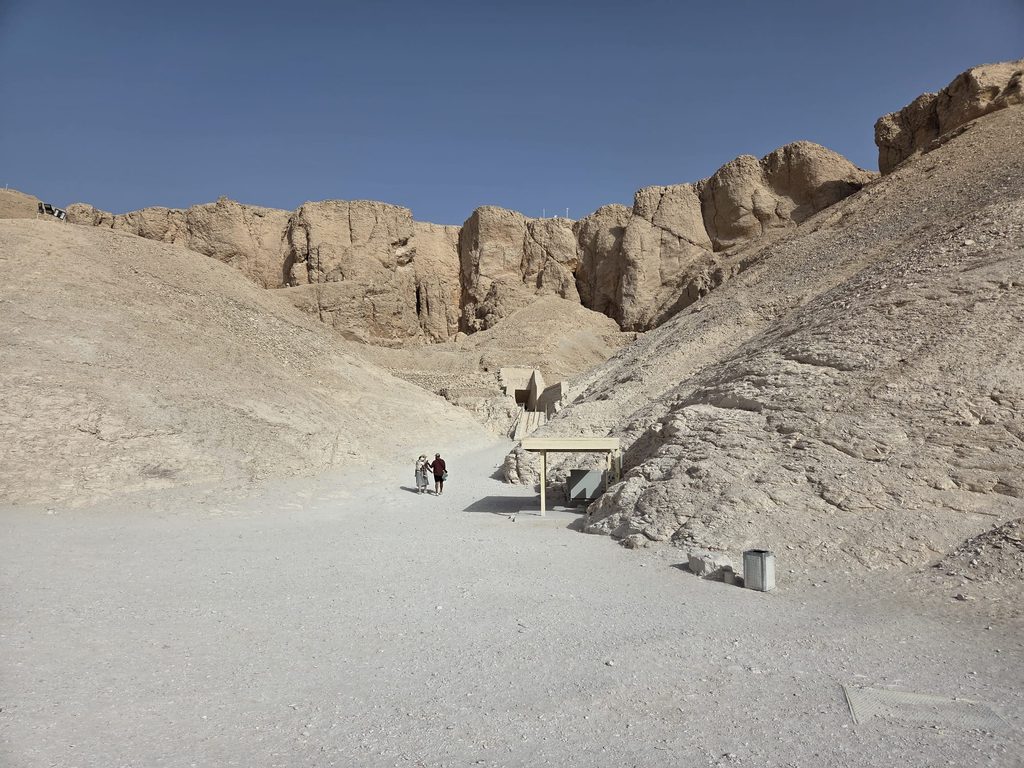
The Visitor Experience
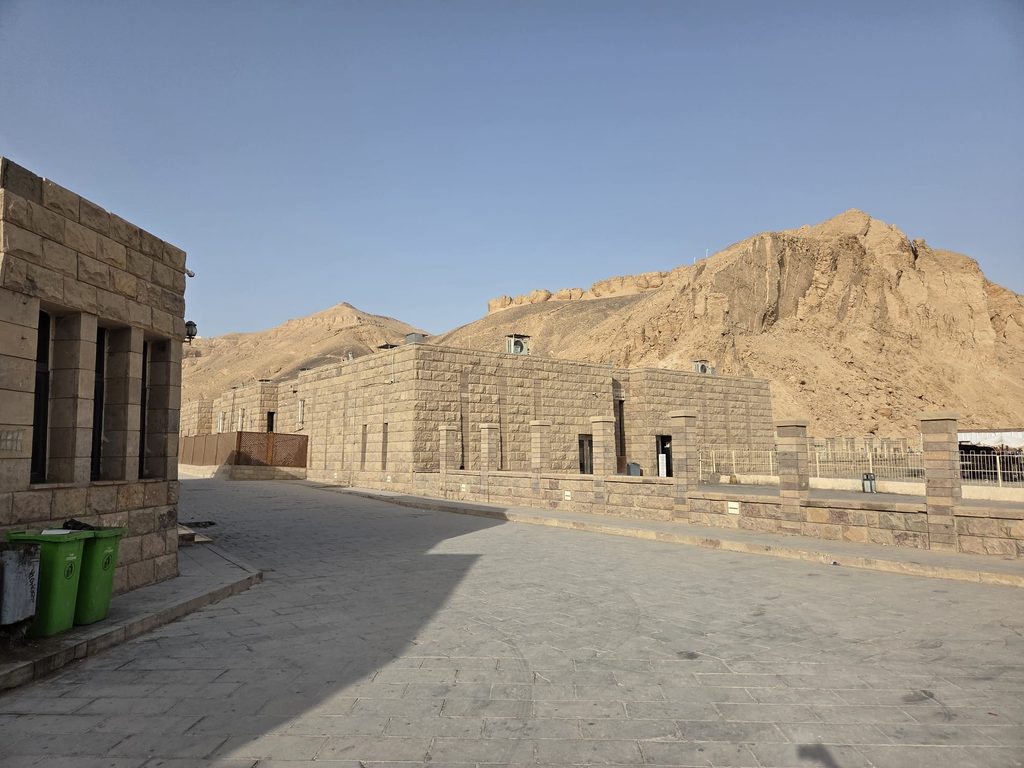
So, you have read my excellent summary, and want to visit the Valley of the Kings for yourself. Let me explain a bit about how it works. Firstly, you need a ticket, of course. A ticket gets you entry to the site, and to three tombs of your choosing. As with all archaeological sites in Egypt, attendants hope to make tip money in exchange for extra information, photos or access, so will want to tempt you inside their tombs. You can select for yourself, or, if you have a guide, they might give you their recommendations. The tombs we will cover in the next sections are those suggested by our guide Hisham.
There are also tombs that require an extra ticket. These are:
- KV9 – Tomb of Ramses V and Ramses VI: noted for its exceptional preservation and artistry. Price at the time of writing EGP 220.
- KV17 – Tomb of Seti I: the longest, deepest, and reputedly most beautiful tomb in the Valley of the Kings. Price at the time of writing EGP 2000.
- KV23 – Tomb of Aye: again remarkable for its exceptional preservation. Price at the time of writing EGP 200.
- KV62 – Tomb of Tutankhamun: famous for obvious reasons. Price at the time of writing EGP 700.
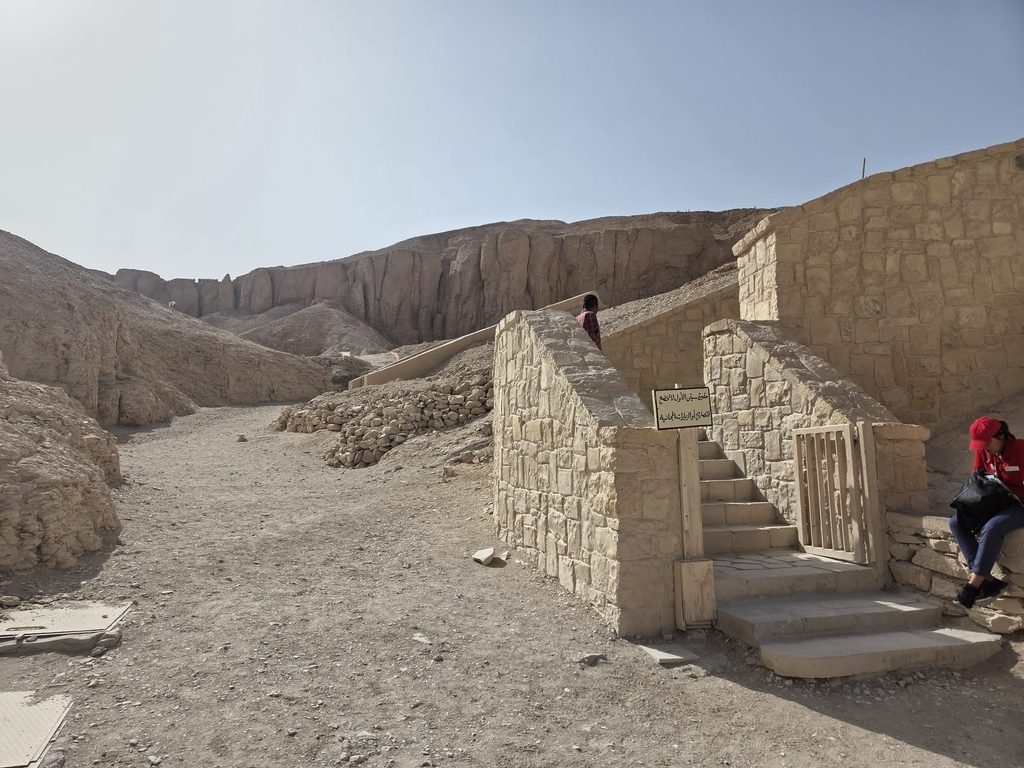
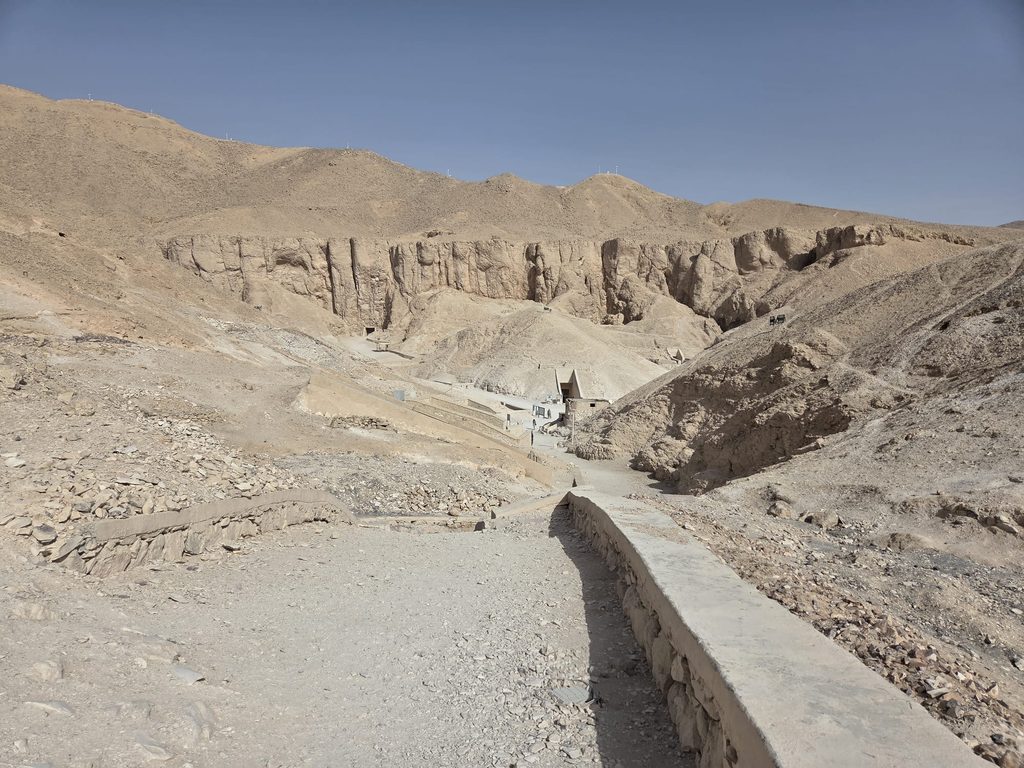
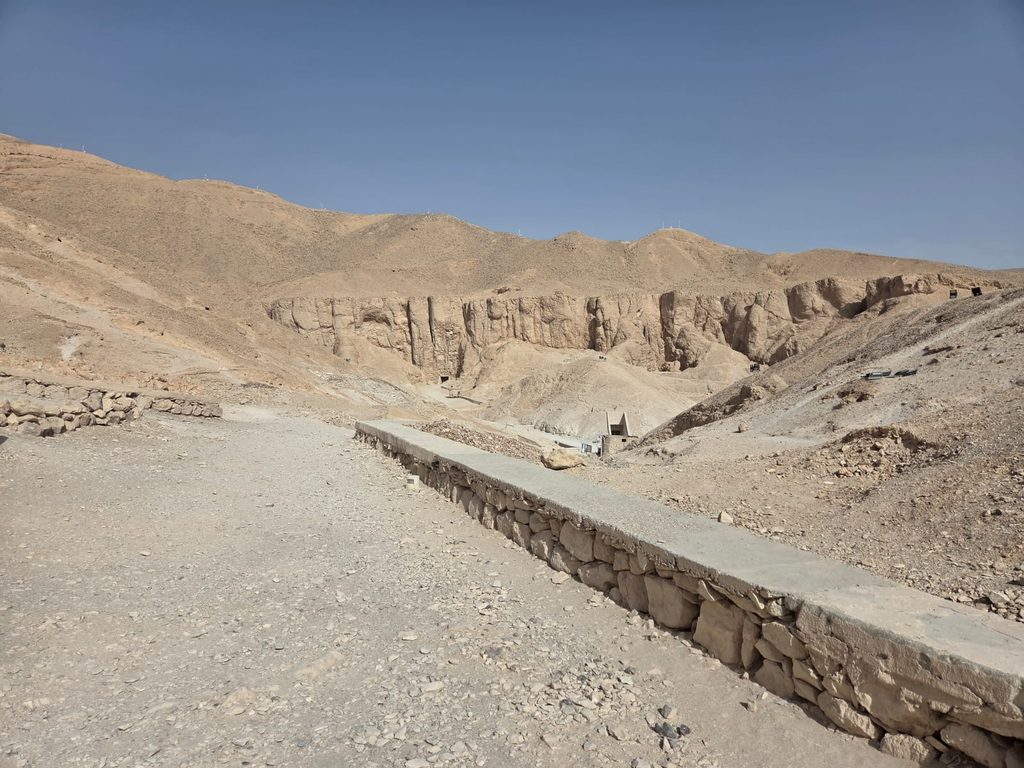
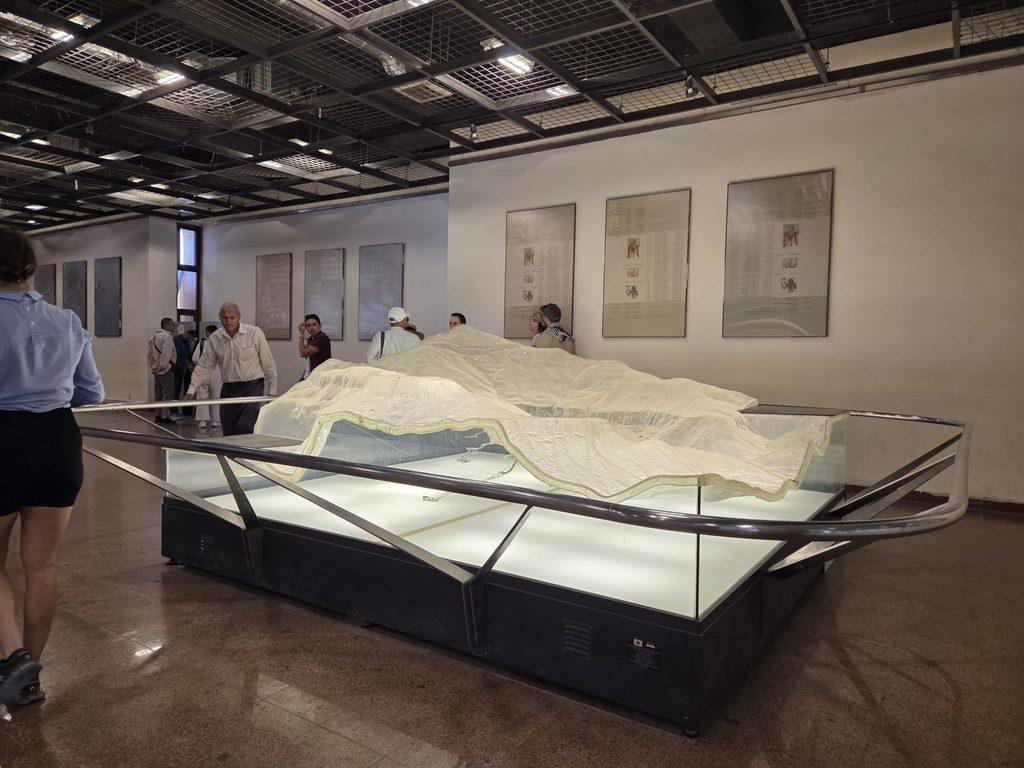
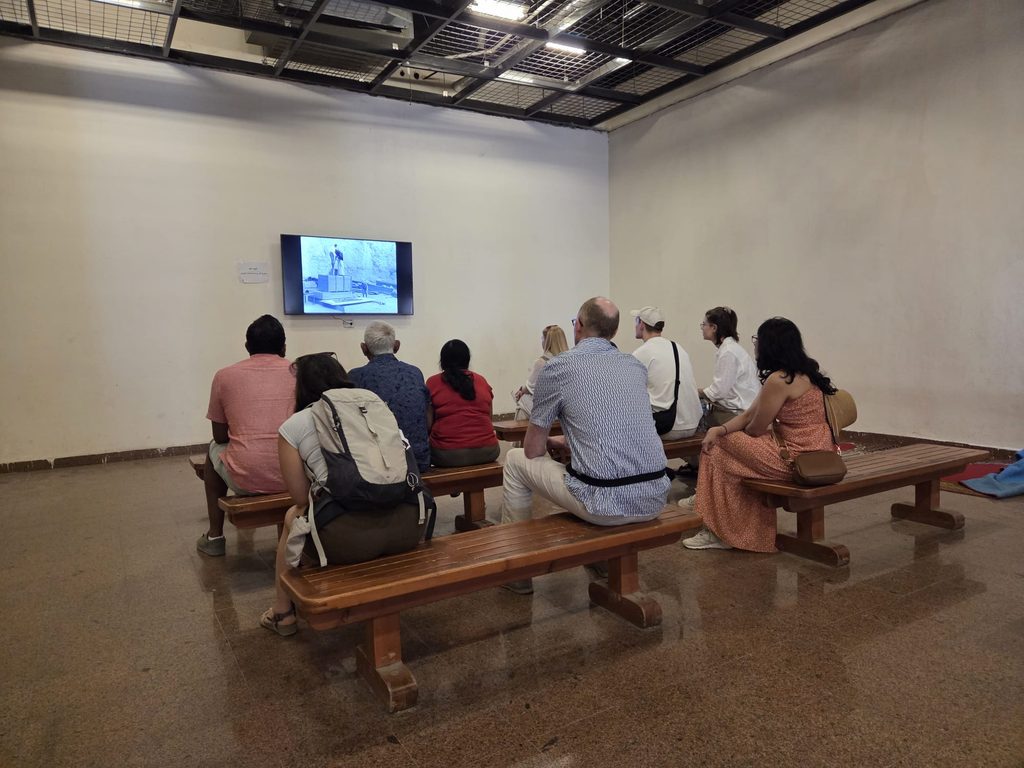
Please note you can’t buy these additional tickets at the tombs so need to decide beforehand. Once you have your tickets, you can explore a small visitor centre. Then it’s time to get a golf cart/shuttle up towards the tombs. The Valley of the Kings is remote and desolate – perfect for pretending there’s nothing to see and concealing royal burials. This does make walking between the tombs a hot and dusty affair. Bring water, and possibly an umbrella/parasol.
And then it’s time to start exploring. If you’re part of a tour group, you’ll likely have a set amount of time. My advice would be to hold a little time back so you can get up into the further branches of the valley. Don’t go crazy, but it’s nice to get away from the crowds and climb up a bit to get a view. Or you could look at your selection of tombs and then meet your group for a cold drink in the cafe. No wrong answers.
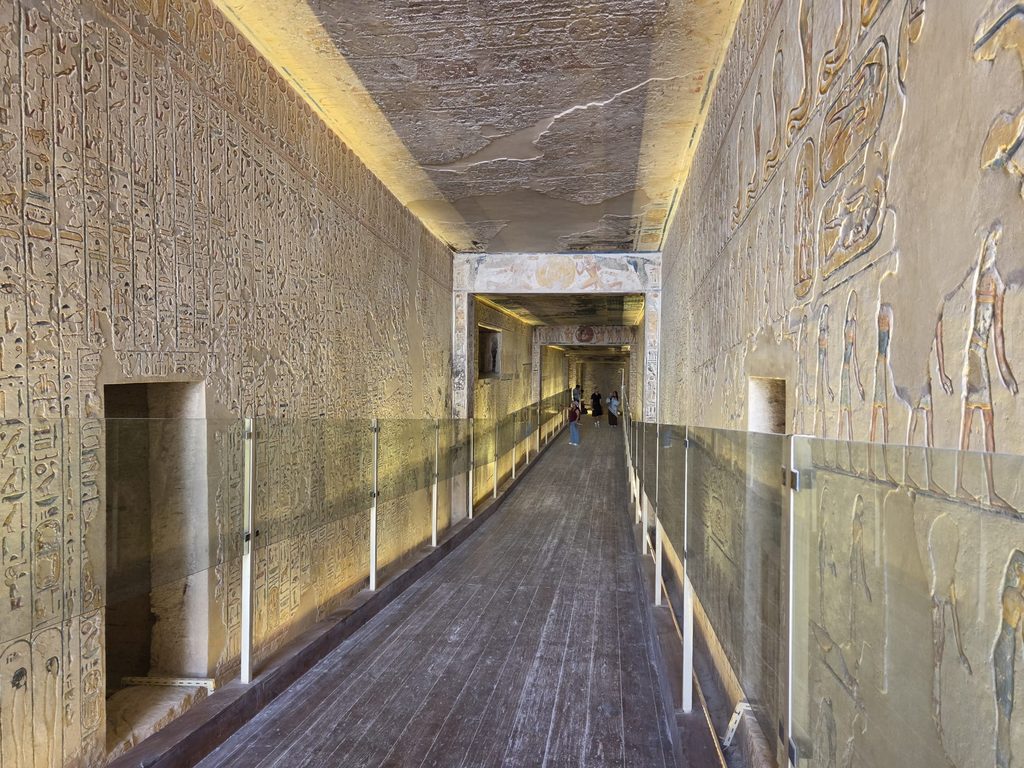
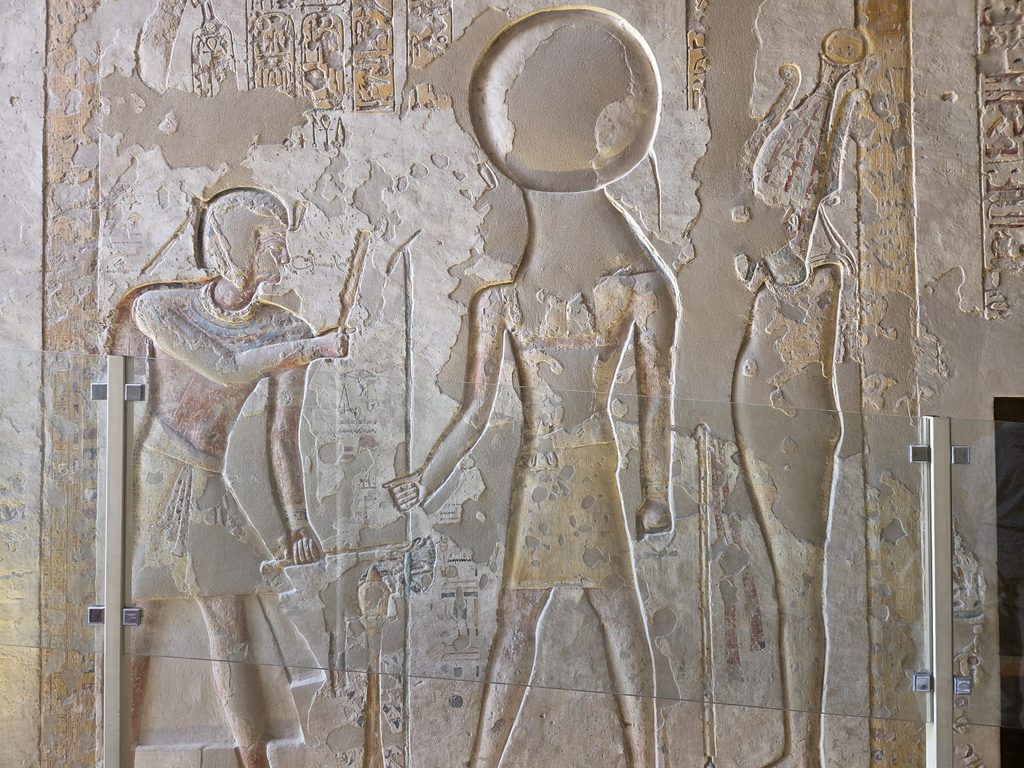
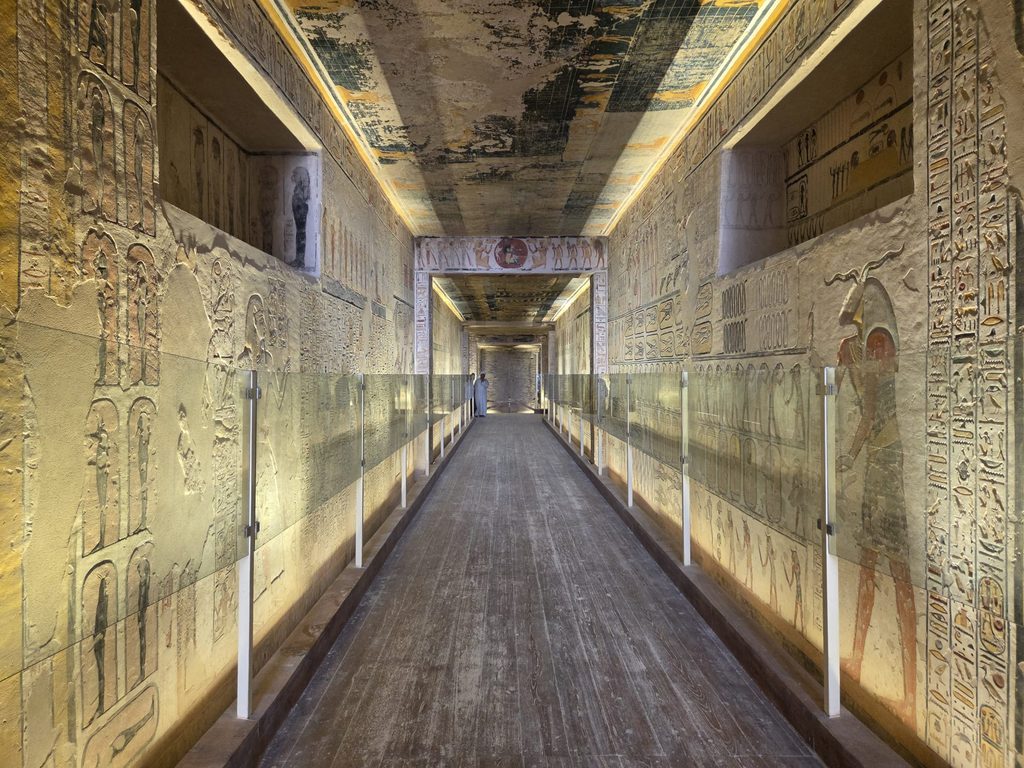
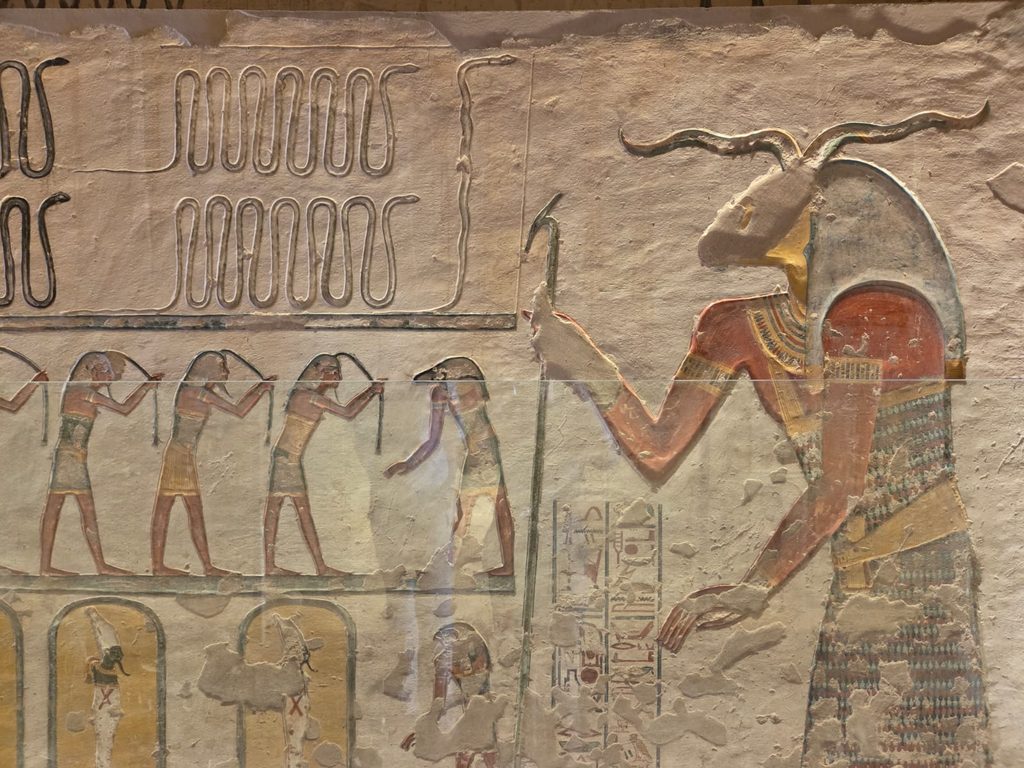
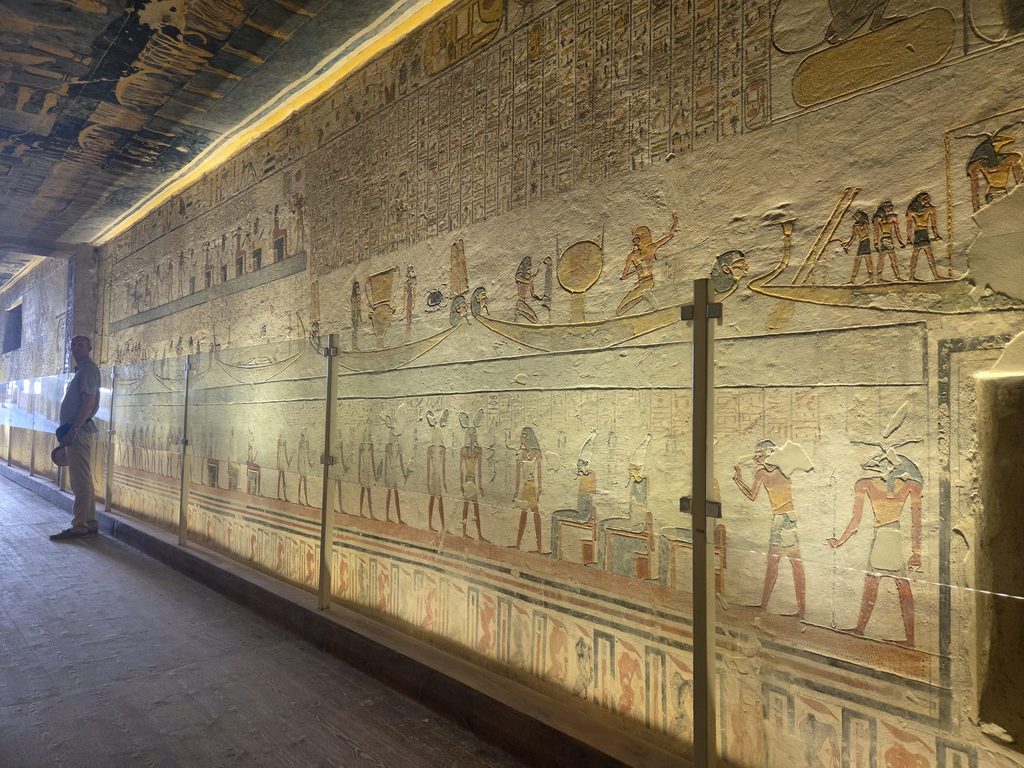
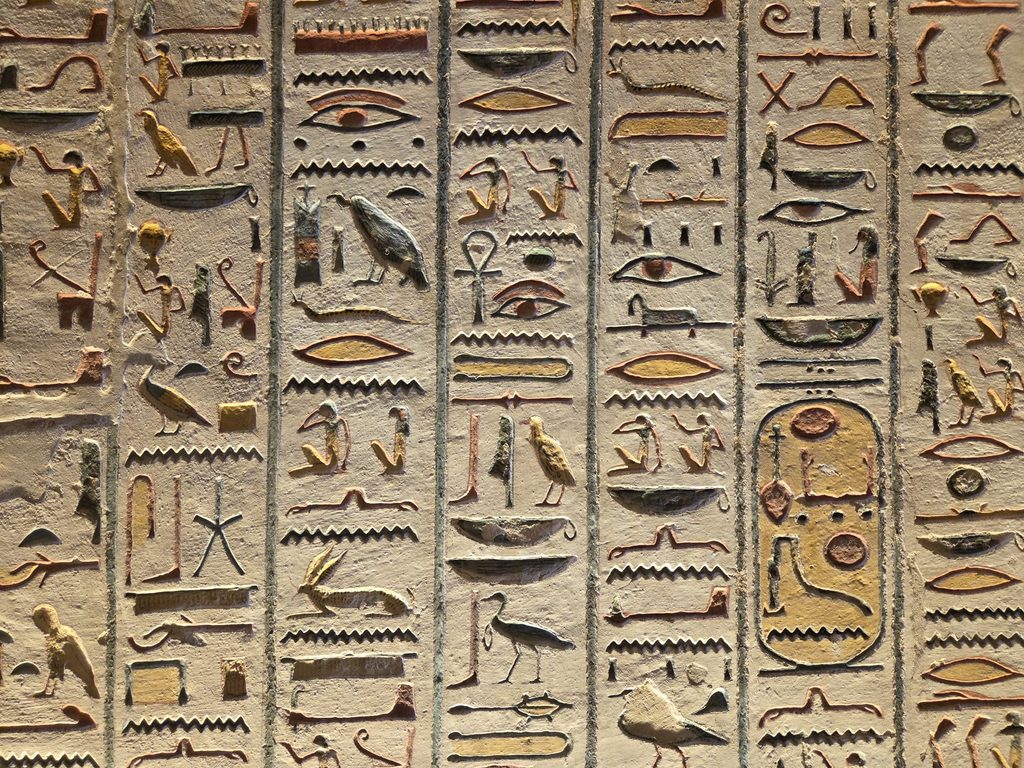
KV6 – Tomb of Ramses IX
We are going to go over the tombs I visited on my trip to the Valley of the Kings, in order. John Gardner Wilkinson, a pioneering Egyptologist who lived in Egypt from 1821 to 1832, initiated the KV numbering system. Wilkinson’s original numbers begin at the valley entrance and move southwards, with later-discovered tombs added on at the end.
Tomb KV6 belonged to Ramses IX, the 8th pharaoh of the 20th dynasty. His 18-year rule made him the third-longest-serving king of that dynasty. His reign is best known for trials of tomb robbers, showing the Theban Necropolis was not safe even while still in use. Ramses IX’s mummy was found in 1881 as part of that cache I mentioned, at Deir el-Bahari, showing signs of earlier damage from tomb raiders.. He seems to have been about 50 years old. He now resides, as do most royal mummies, in the National Museum of Egyptian Civilisation.
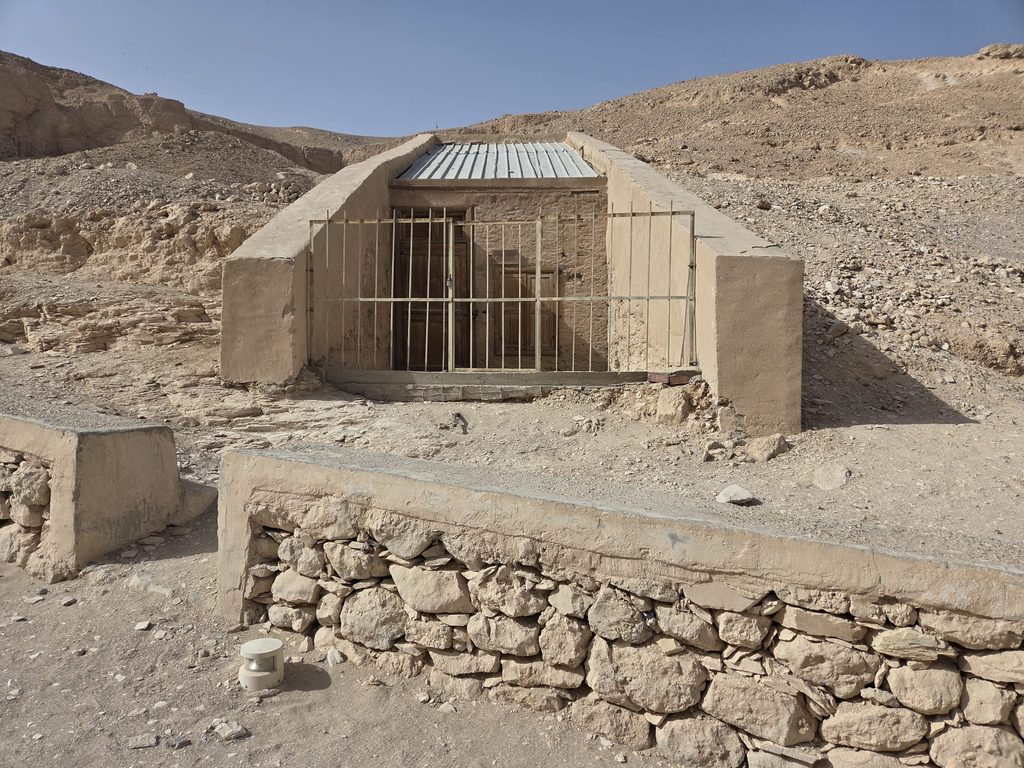
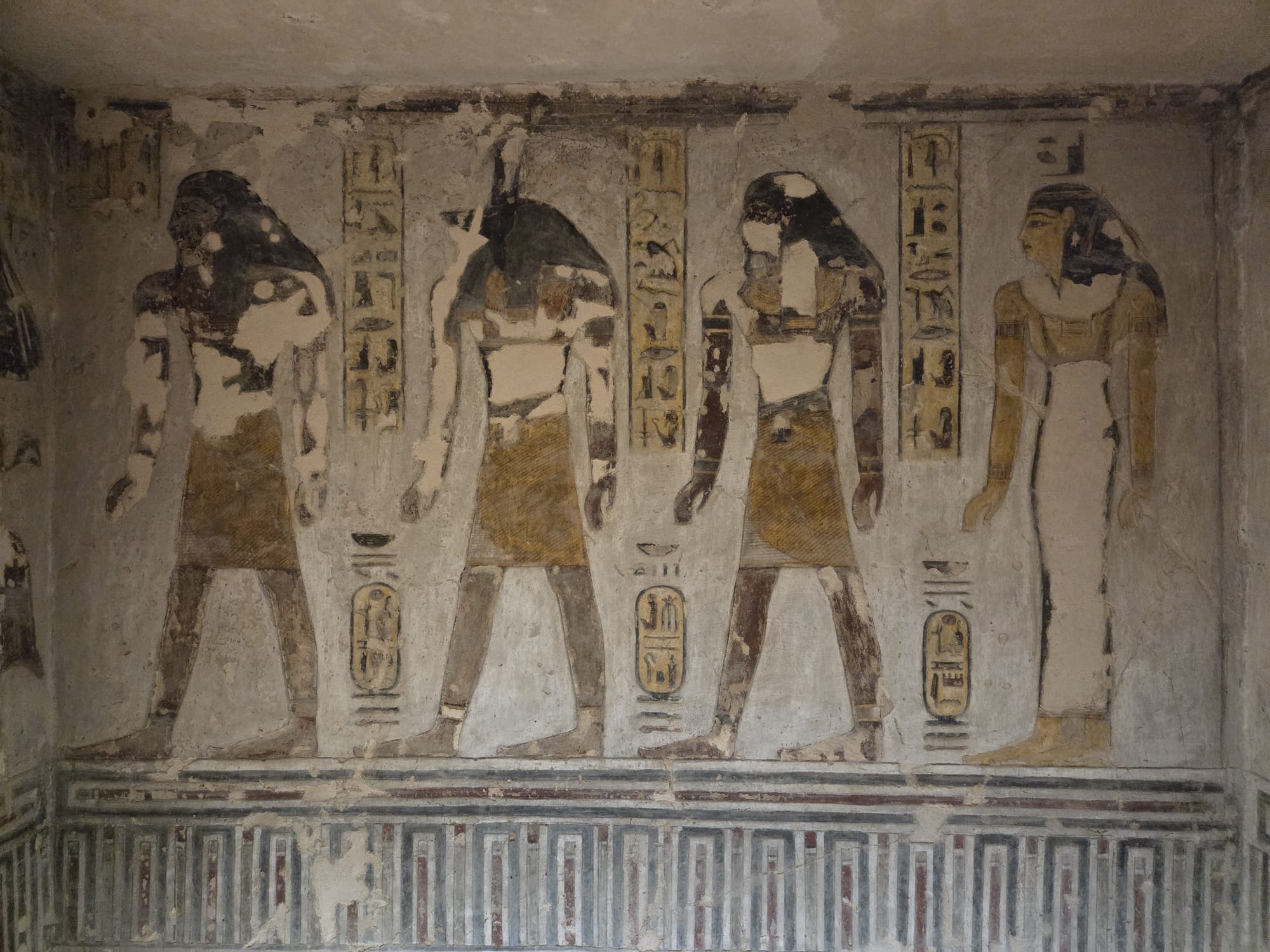
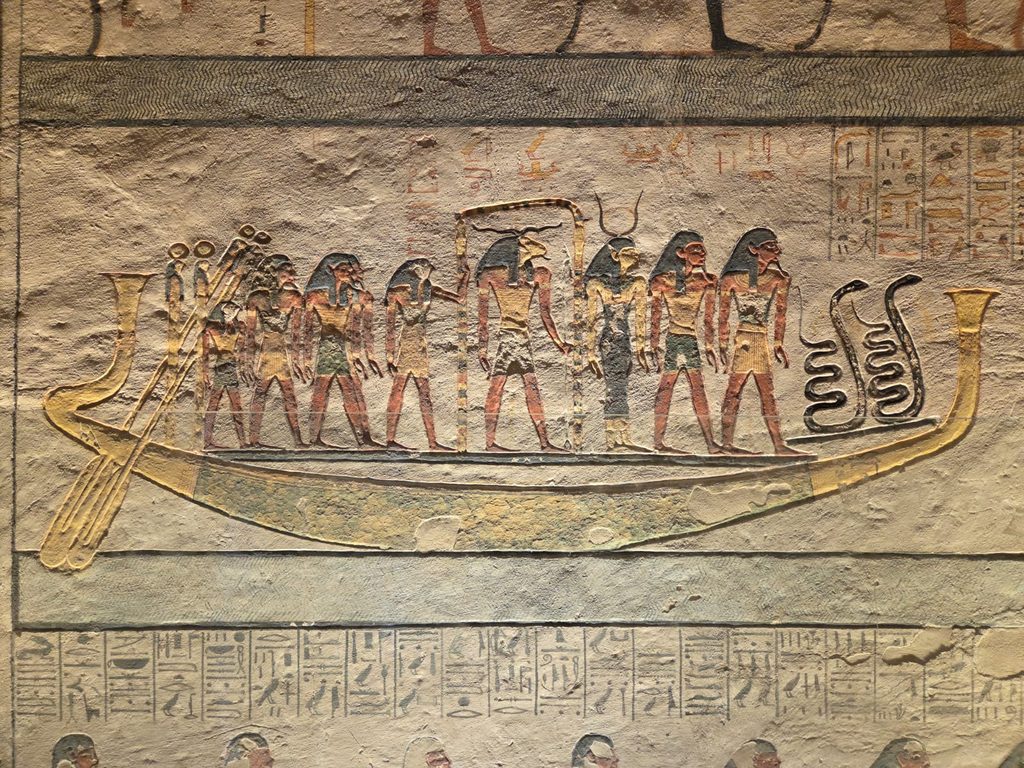
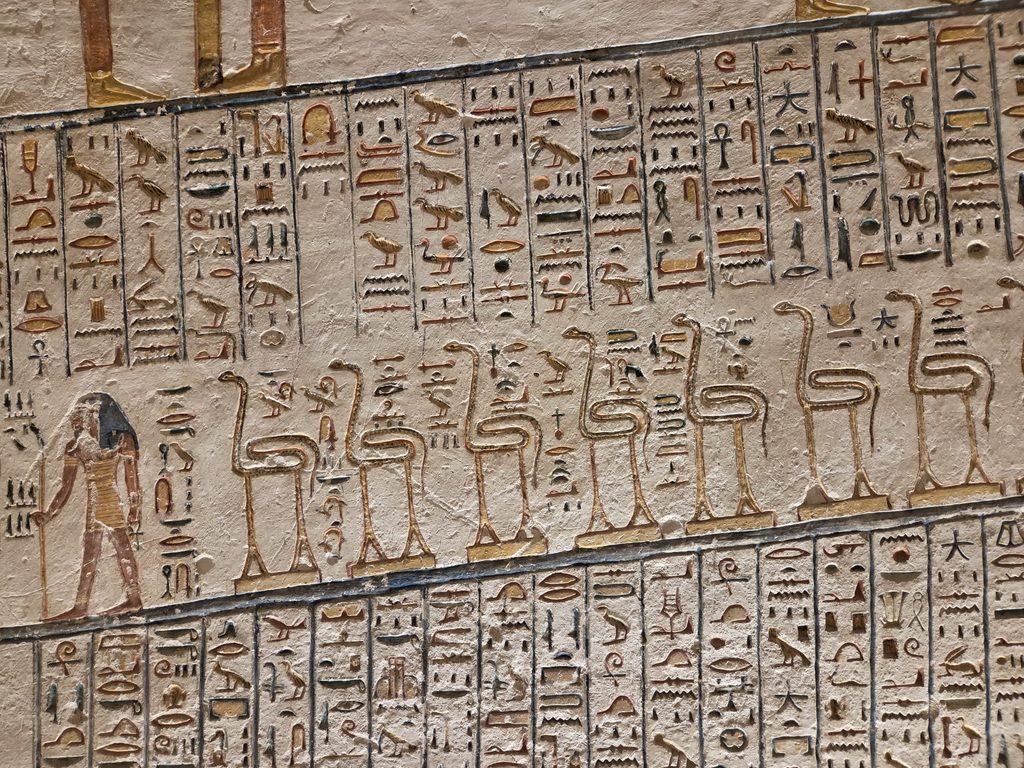
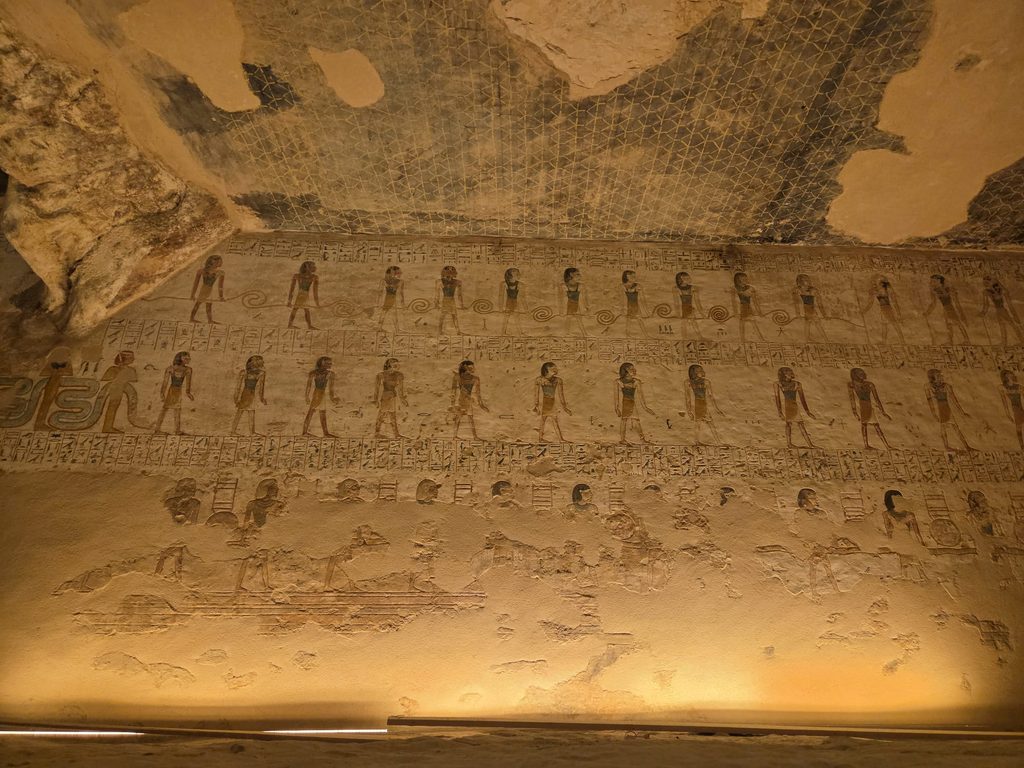
Despite Ramses IX’s respectable(ish) age and length of reign, it seems his tomb was unfinished at his death, and had to be rushed. We learned earlier that burial happened a strict 70 days after death in Ancient Egypt. The tomb runs 105 metres into the hillside, with four unfinished side chambers off the main corridor. The ceiling of the burial chamber has lovely images of the goddess Nut and scenes from the Book of Caverns and the Book of the Earth. The strong colours are striking, and unusual amongst the tombs of the Valley of the Kings. We know the tomb has been open since antiquity from Roman and Coptic graffiti.
KV8 – Tomb of Merenptah
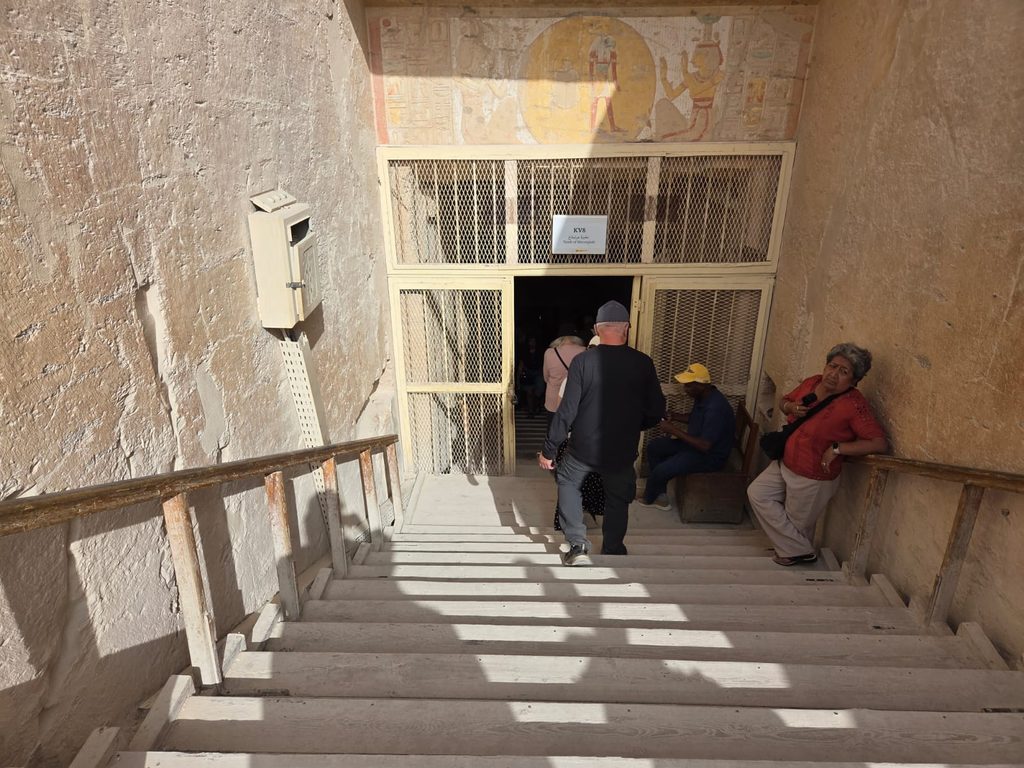
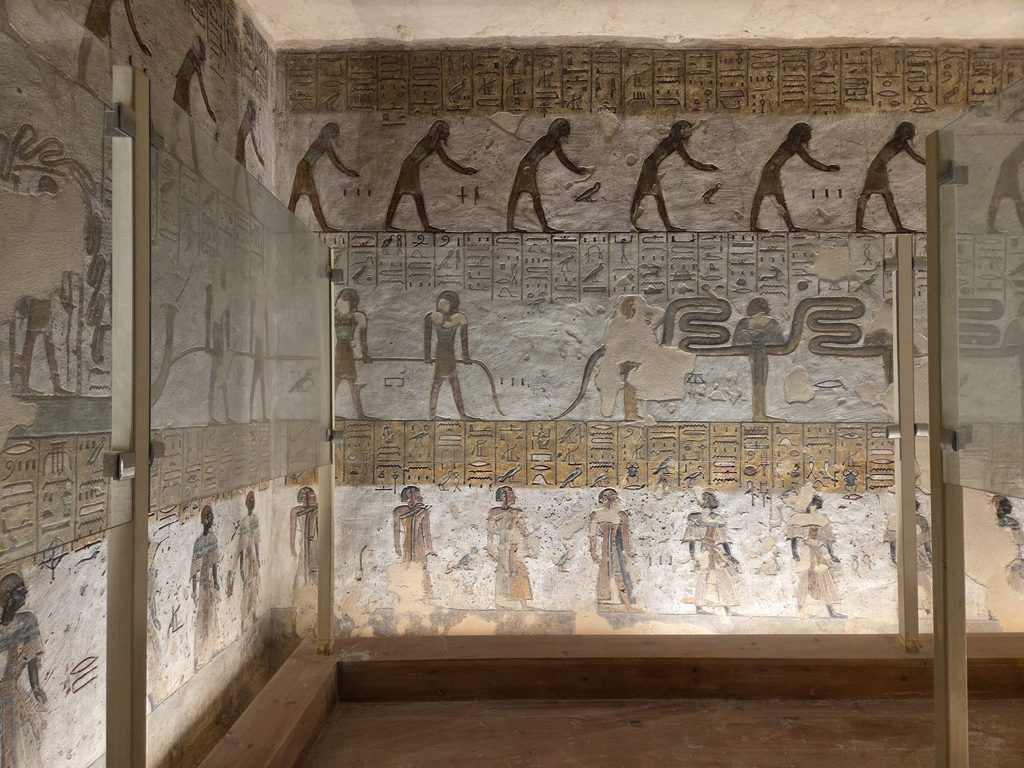
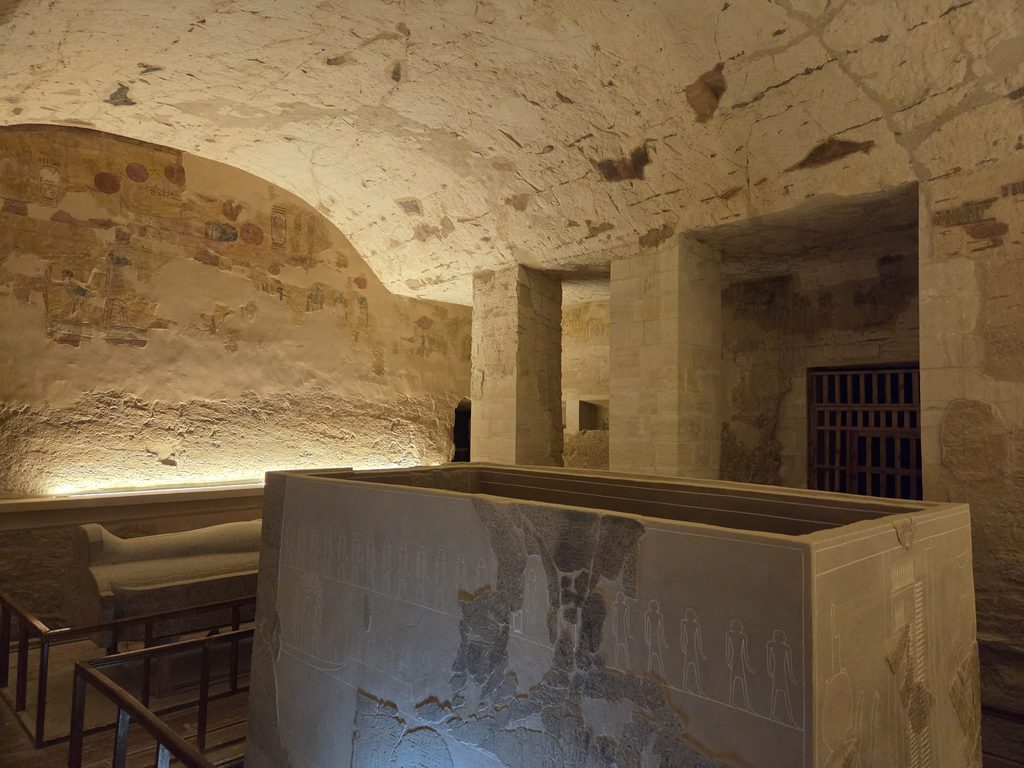
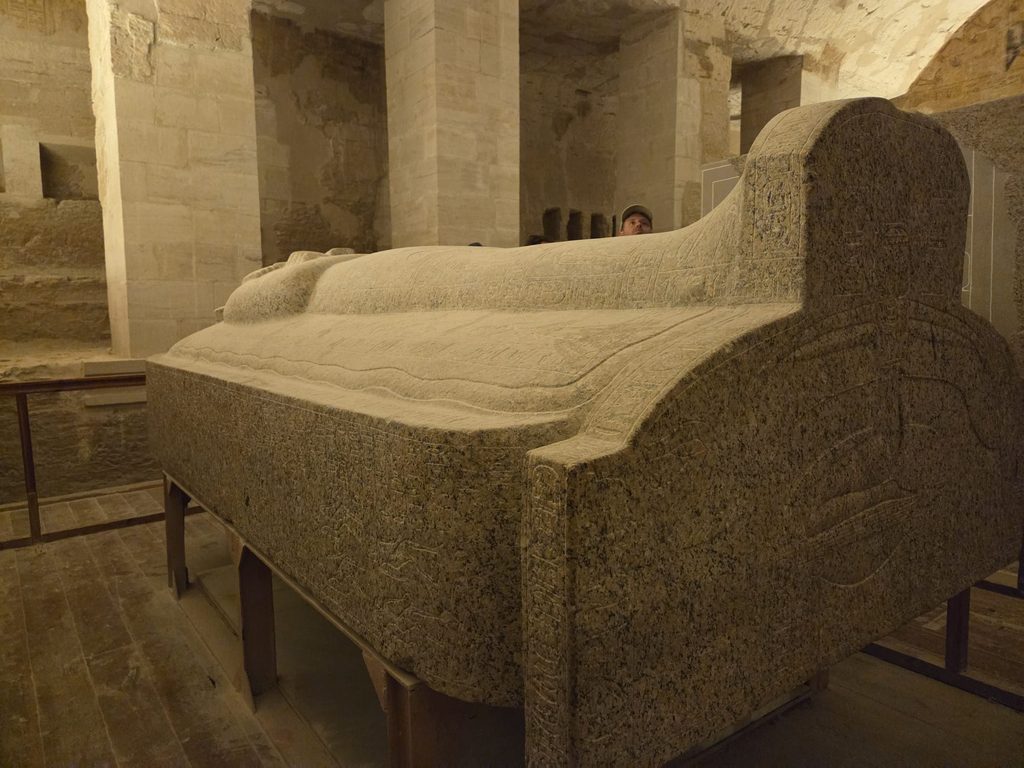
Our next tomb is KV8, that of Merenptah, 4th pharaoh of the 19th dynasty. He ruled for about ten years, until 1203 BCE. Merenptah was the 13th son of Ramses II, and only came to power because his father lived so long all his elder brothers had died. He was around 50 when he ascended the throne. He is perhaps most famous for the Merenptah Stele, which contains the first known mention of the name Israel. Merenptah also moved Egypt’s administrative capital from his father’s city of Pi-Ramesses back to Memphis. Succession was an issue as soon as Merenptah died. One of his sons, Amenmesse, challenged official successor Seti II.
Merenptah’s mummy is another one that ended up in that cache, and therefore survives today. We can tell from investigation of his body that he was about 171CM tall, corpulent to obese, bald, clean-shaven, and suffered from arthritis. All in all, doing OK for a family with so much inbreeding. His mummy is now at the National Museum of Egyptian Civilisation.
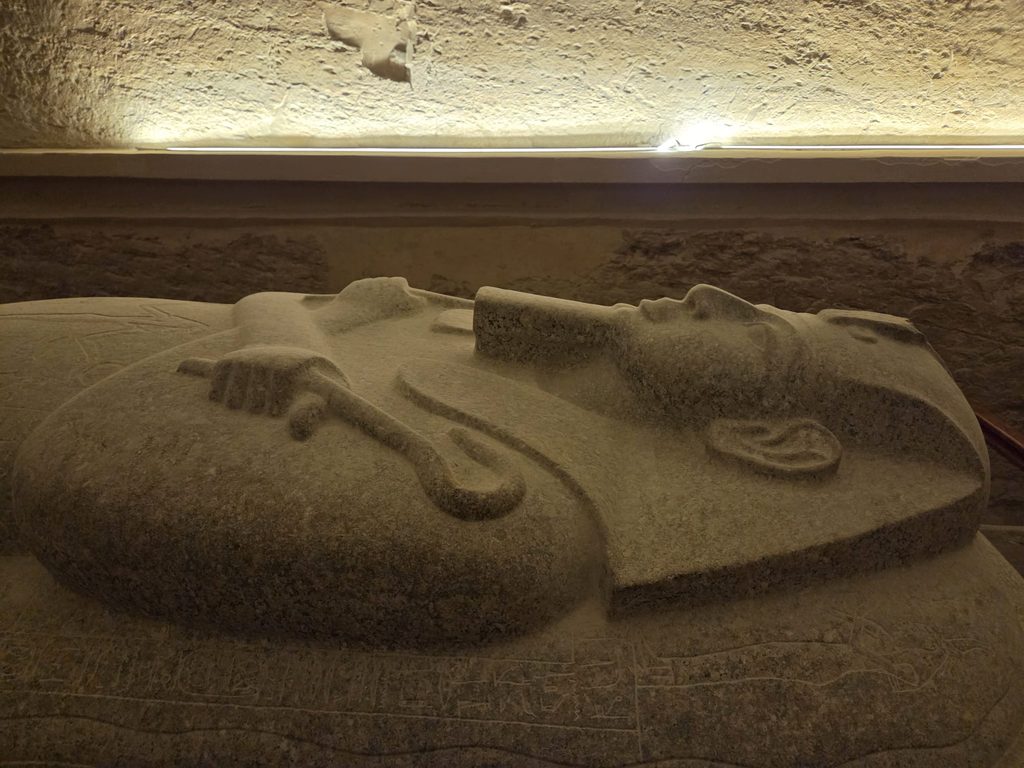
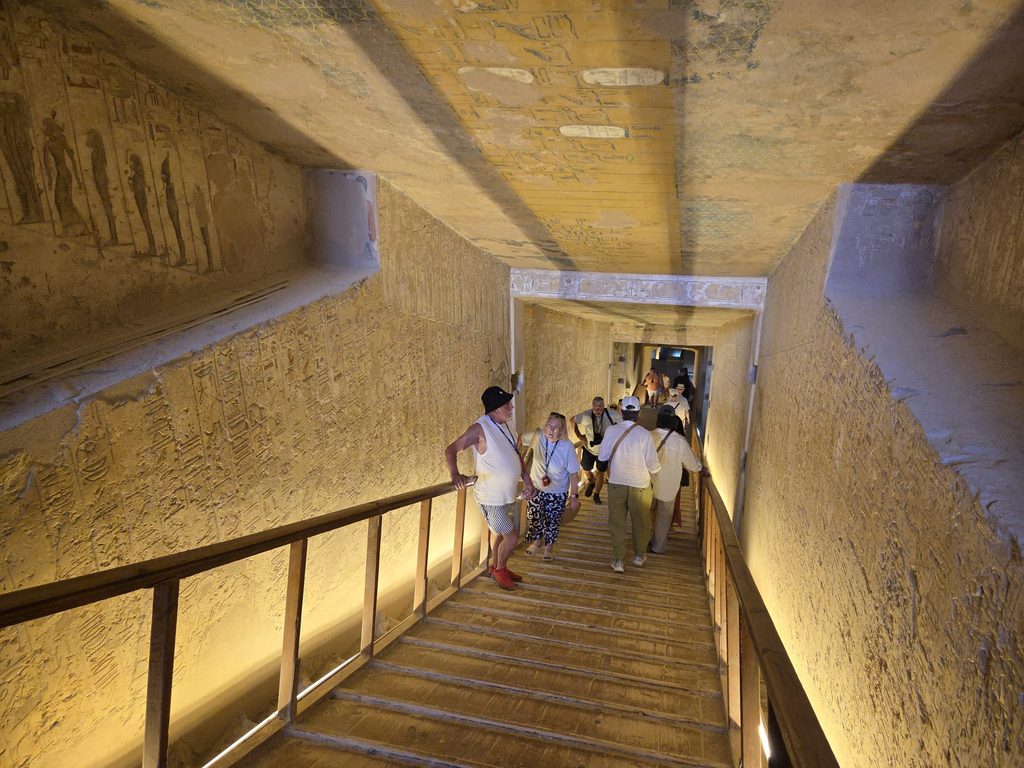
Merenptah’s tomb has 160 metres of corridor. It originally contained four nested sarcophagi, the outer one of which was so big it required the corridor to be partially demolished and rebuilt. It’s possible a worker, Paneb, only replaced two of four pillars as part of this process, and kept the others for his own tomb. Psusennes I later had the outer sarcophagus smashed up so he could reuse the middle one for himself, at Tanis.
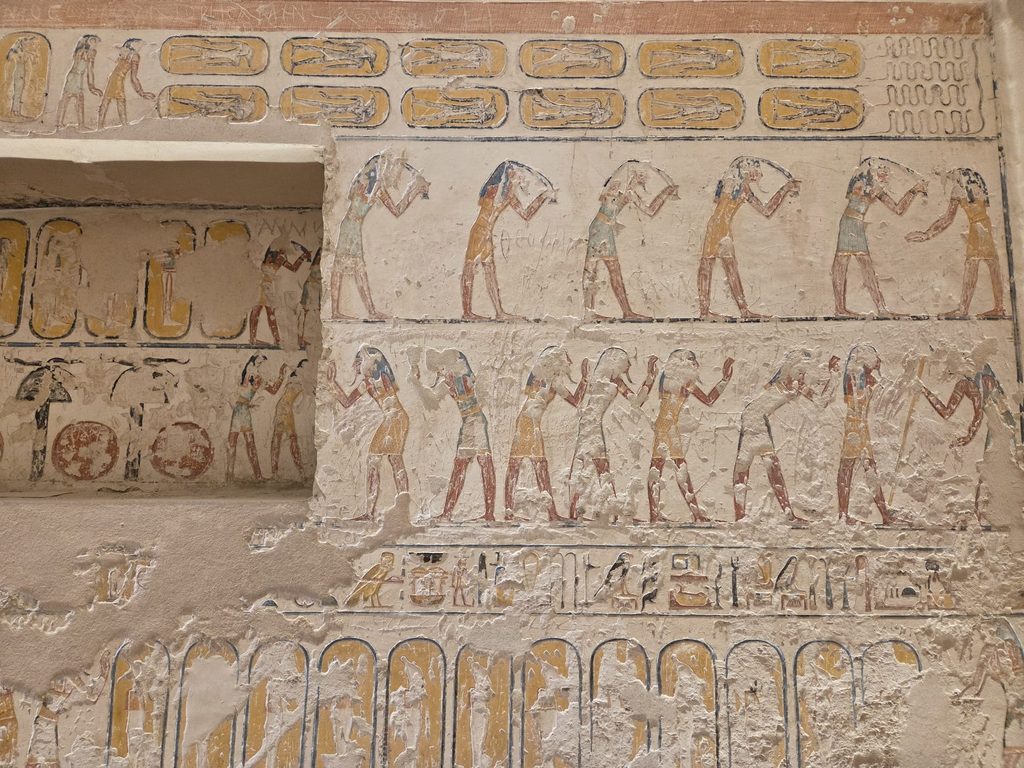
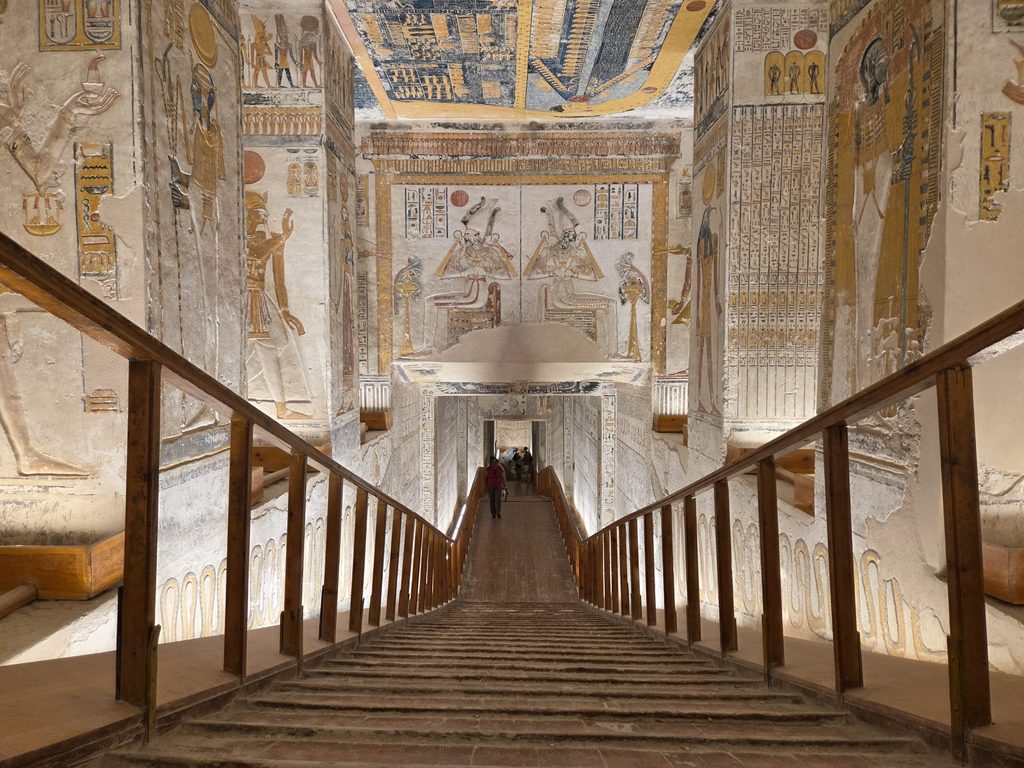
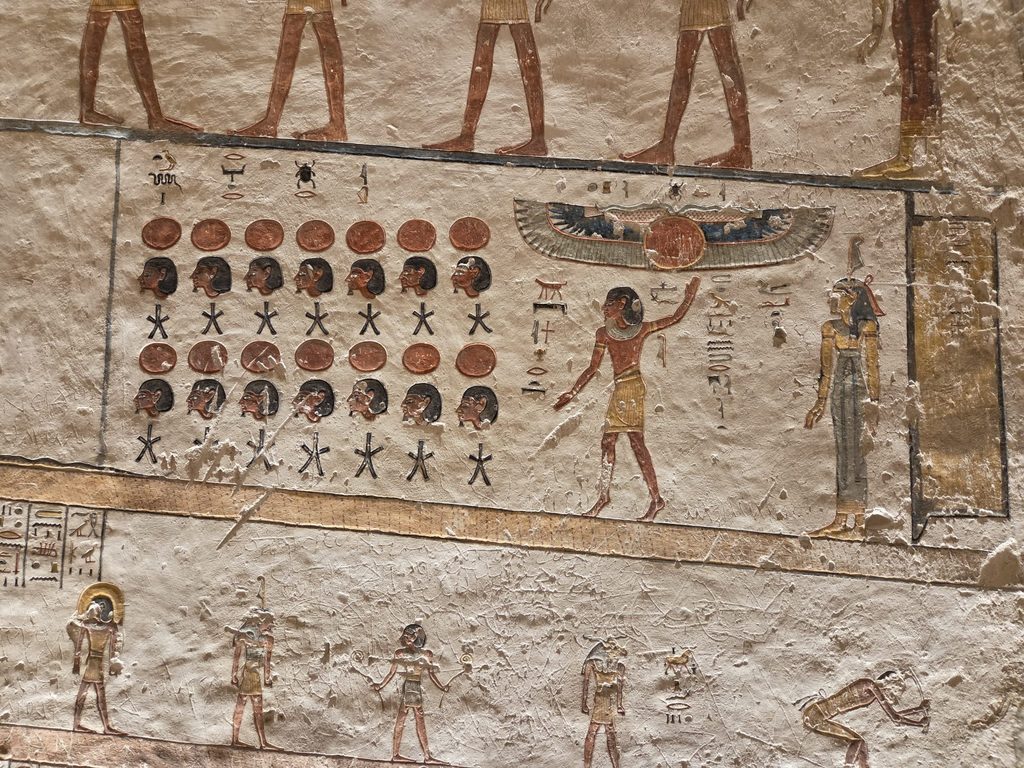
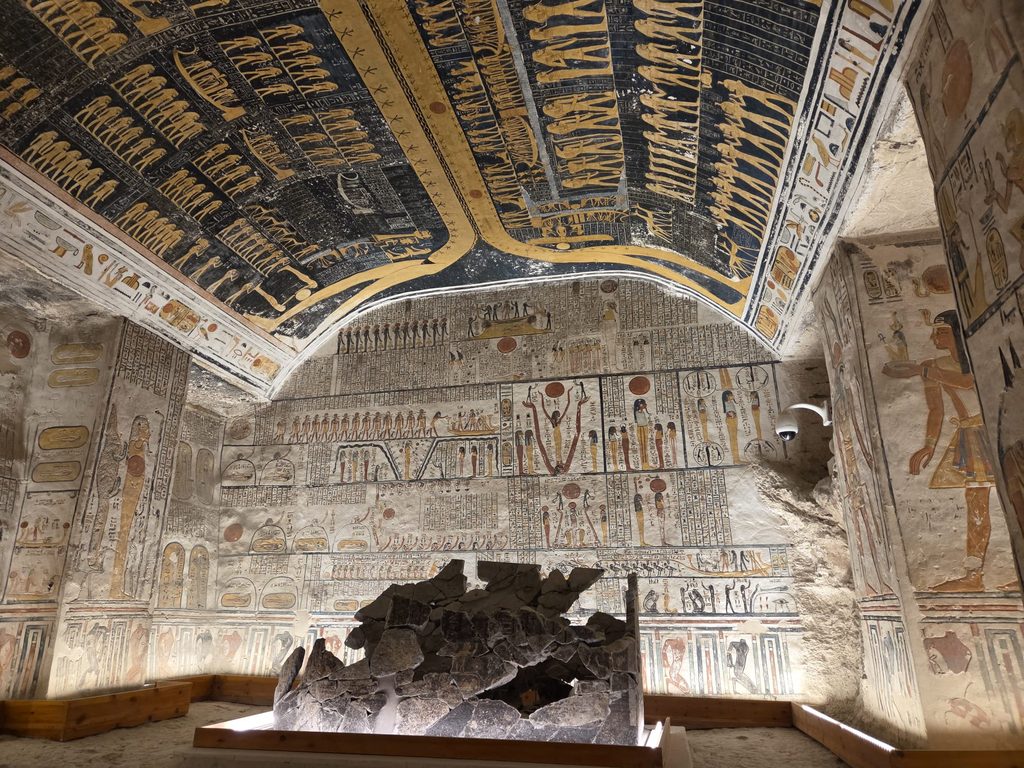
KV9 – Tomb of Ramses V and Ramses VI
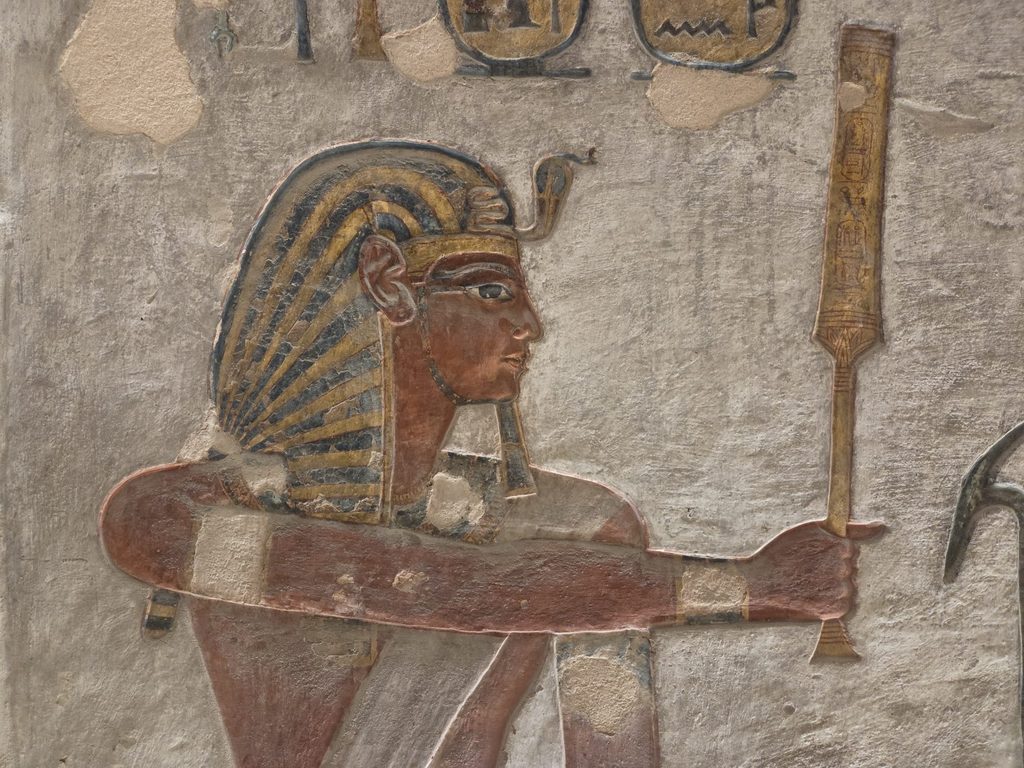
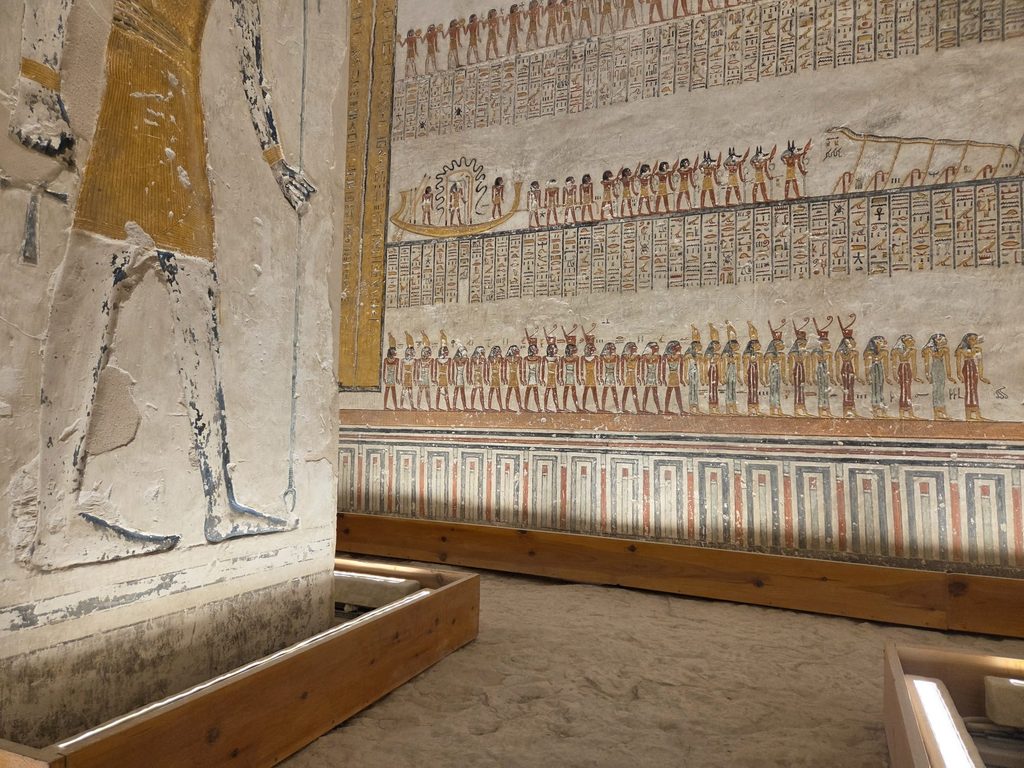
Now we come to the first of two tombs for which I had an additional ticket – KV9, the tomb of Ramses V and Ramses VI. Ramses V, 4th pharaoh of the 20th dynasty, reigned during another period of instability. The priesthood of Amun was gaining power at the expense of the pharaohs, and work on his tomb was slow as the craftsmen kept downing tools through fear of ‘the enemy’, perhaps Libyan raiding parties. He reigned for about four years, and may have died in his 30s from smallpox (which would be a very early outbreak) or bubonic plague. His burial took place about two years into Ramses VI’s reign, very far past the normal 70 day timeline. This might have also been because of the Libyan raiders.
Ramses VI was the uncle of Ramses V. He ruled for about eight years, managing to stop all this business of Libyan raiders. Egypt did, however, lose its last strongholds in Canaan during this period, weakening the economy. Ramses VI saved on the cost of monuments by engraving his cartouche over that of his forefathers. The priests of Amun were also continuing to consolidate their own power.
Ramses VI also, seemingly, made a financially savvy decision to use Ramses V’s tomb for himself. He had Ramses V buried elsewhere in the Valley of the Kings. We’re not quite sure where as his mummy ended up in that cache. Ramses VI had the tomb enlarged and redecorated for himself. The huts of the craftsmen who undertook this job covered up the entrance to Tutankhamun’s tomb, and may have helped preserve it. His mummy only rested in his usurped tomb for about 20 years before tomb robbers came along. It was then moved to KV35, until it was discovered in 1898. It’s now at the National Museum of Egyptian Civilisation, as is Ramses V’s.
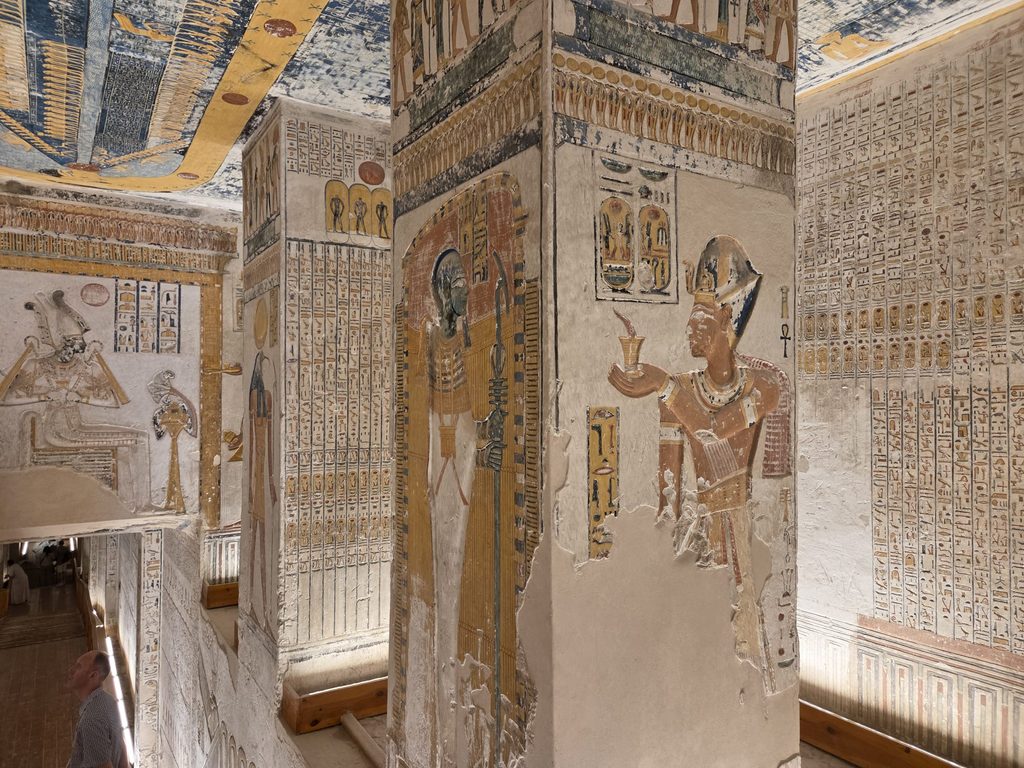
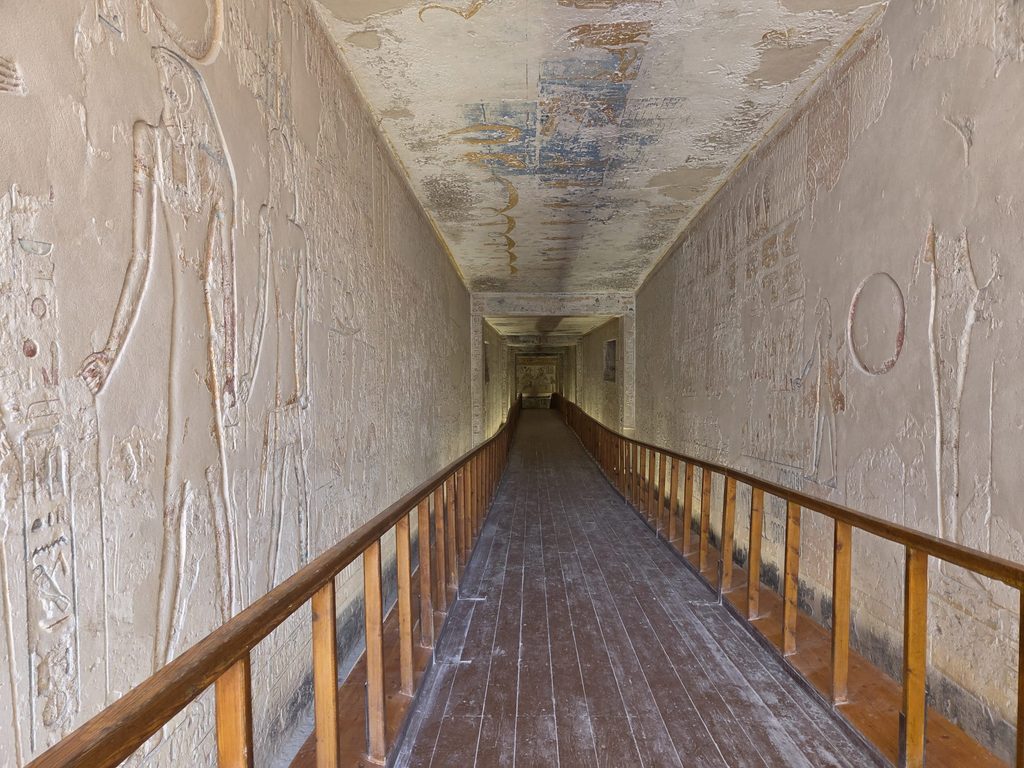
KV9 has some of the most impressive decoration amongst the tombs of the Valley of the Kings. It has a long corridor leading to a pillared hall, then a second long corridor down to the burial chamber. Despite getting a head start by reusing a tomb, the burial chamber is incomplete. The decoration includes a complete Book of Gates and almost complete Book of Caverns. There’s a ceiling of astronomical figures and constellations, and an elongated image of the goddess Nut. In the Graeco-Roman period this tomb was identified as belonging to Memnon, a mythological king of the Ethiopians who fought in the Trojan War. There’s lots of classical graffiti as a result, from Greek and other pilgrims.
KV11 – Tomb of Ramses III
Ramses III was the 2nd pharaoh of the 20th dynasty. He’s considered to be the last New Kingdom ruler to have had any real power. But – surprise surprise – his reign was a time of decline. When wasn’t it? Like some of the other pharaohs we’ve met, Ramses III was dealing with invaders and internal economic issues. His military strategy against the “Sea Peoples” managed to slow the decline somewhat and avoid a collapse of the empire. However, war is costly, and its no coincidence that the first recorded labour strike took place during Ramses III’s reign.
Perhaps the most notable thing to discuss with regards to Ramses III, however, is his death. After about 30 years’ reign, Ramses III was assassinated in a ‘harem conspiracy’ led by his secondary wife Tiye and her son Pentawere. This ultimately caused a succession crisis. Ramses III brought this on himself somewhat by not clearly establishing the order of succession, and not respecting birth order. Many conspirators were tried and executed, and Tiye and Pentawere were so thoroughly erased from the records that we only know they exist from the trial records. Analysis of Ramses III’s body shows a fatal cut to his throat. His mummy is now with the others at the National Museum of Egyptian Civilisation.
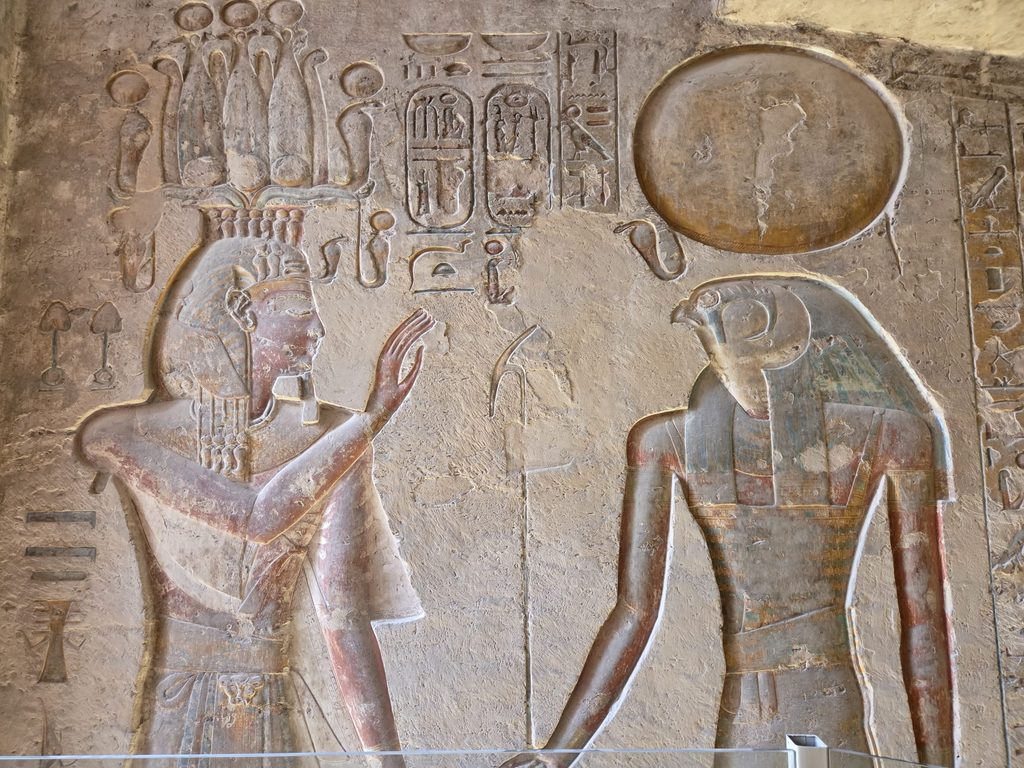
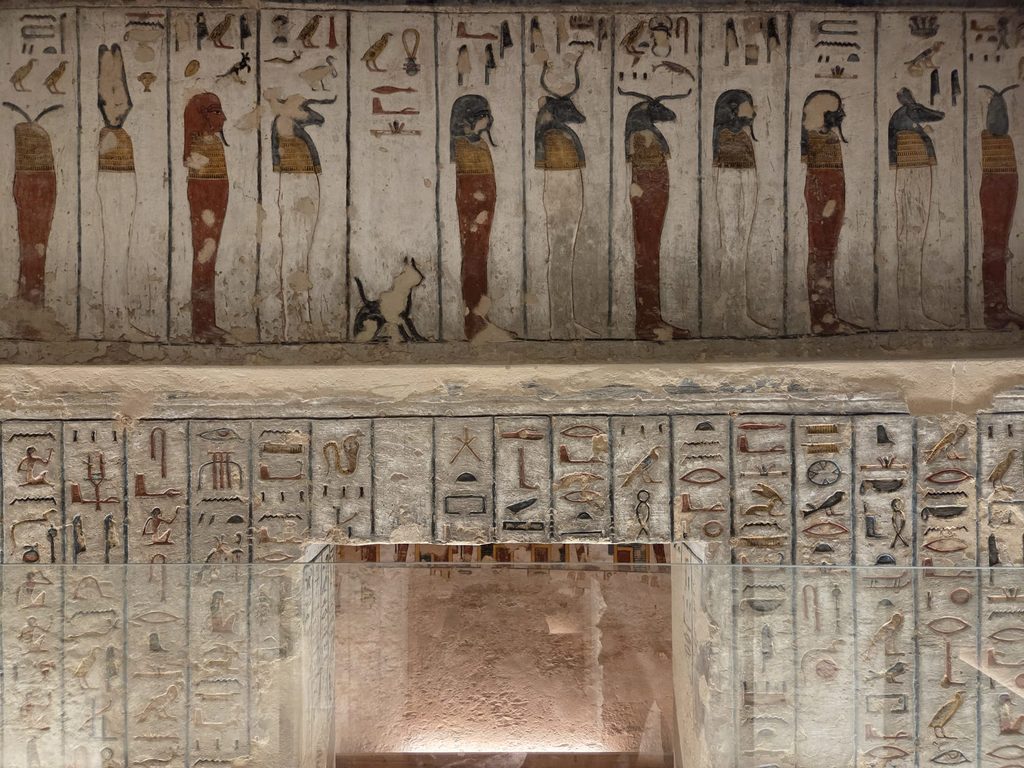
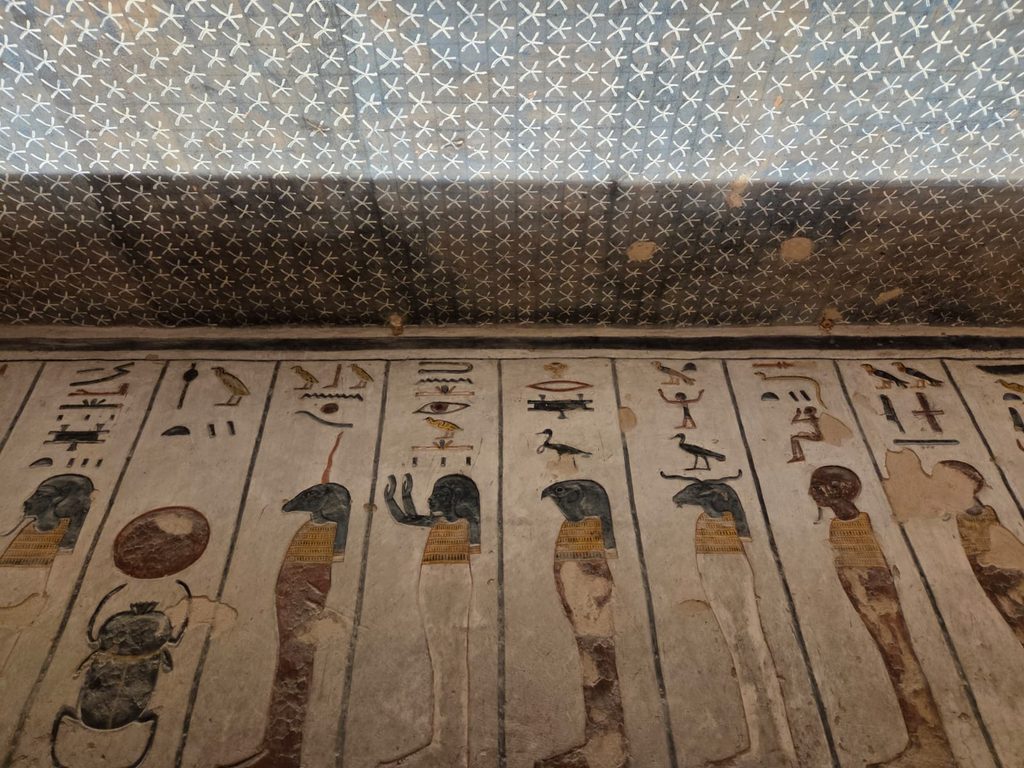
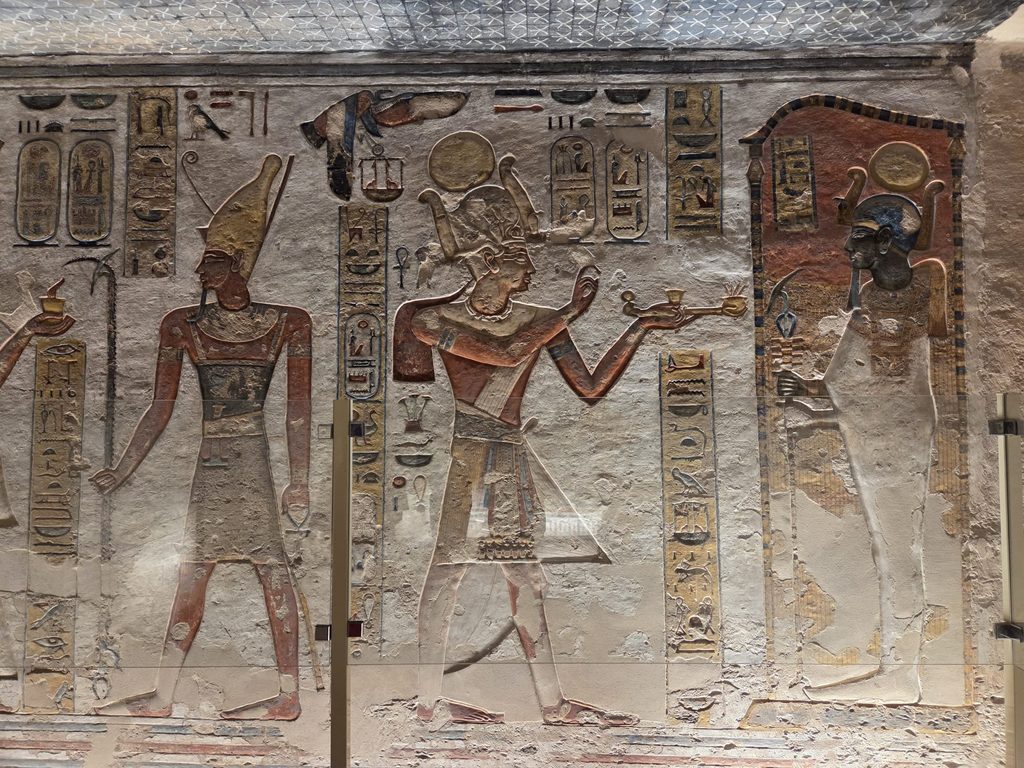
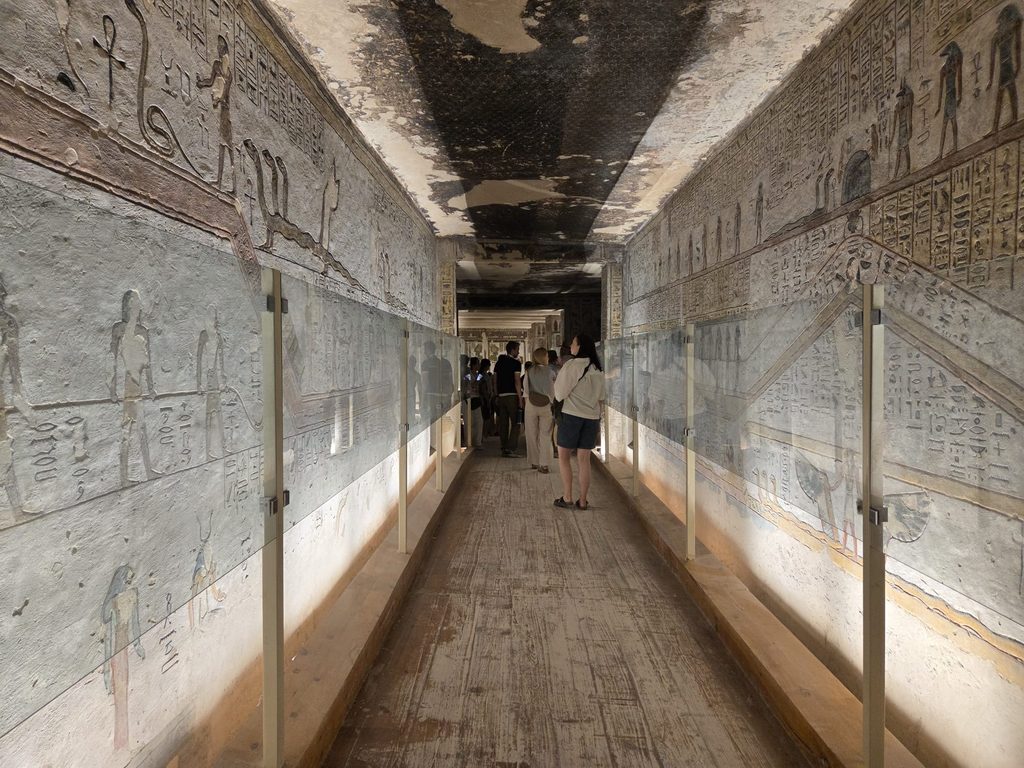
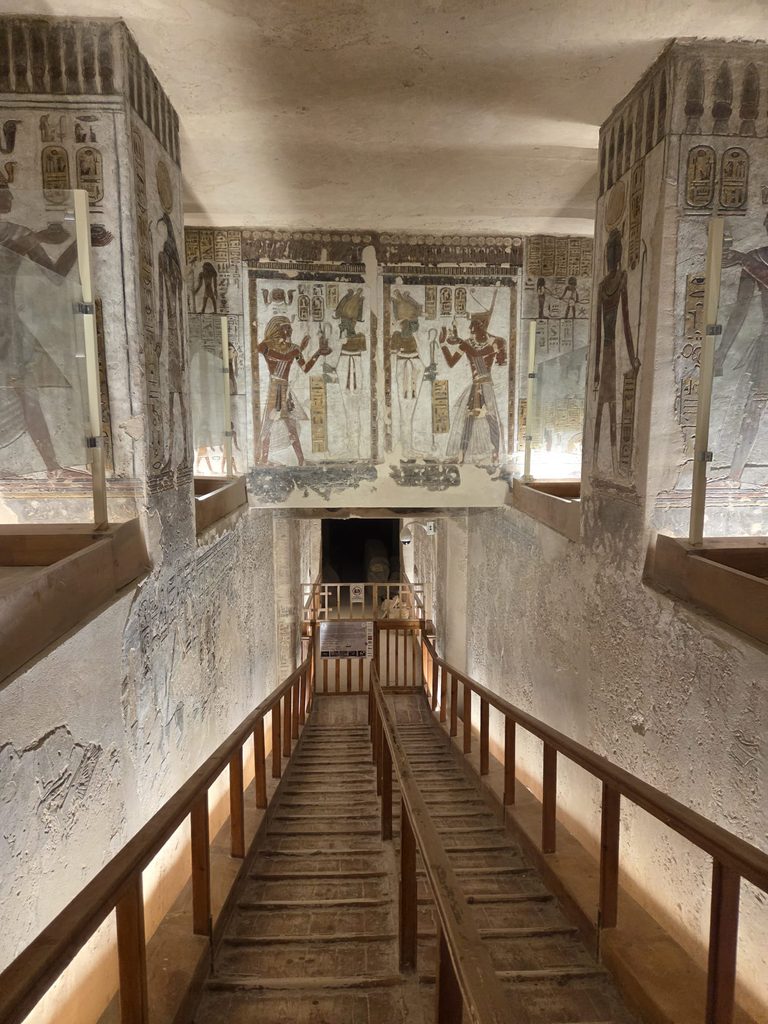
Tomb KV11 is another example of tomb recycling. Setnakhte started it, but accidentally broke through into the tomb of Amenmesse (KV10) and abandoned it. Waste not, want not, so Ramses III restarted it for himself along a different axis. The tomb is beautifully decorated, with the Litany of Re along the original axis, and Book of Gates and Book of Amduat further along. There are scenes of the opening of the mouth ceremony and Book of the Dead before the burial chamber. In total, the tomb is 188 metres long. The pharaoh’s red quartzite sarcophagus is divided between the Louvre (base) and Fitzwilliam Museum (lid). The tomb itself has been open since antiquity.
Ramses III’s funerary temple and administrative complex at Medenit Habu is among the best preserved in Egypt. However, massive fortifications around it attest to the uncertain times. It can be visited separately from the Valley of the Kings.
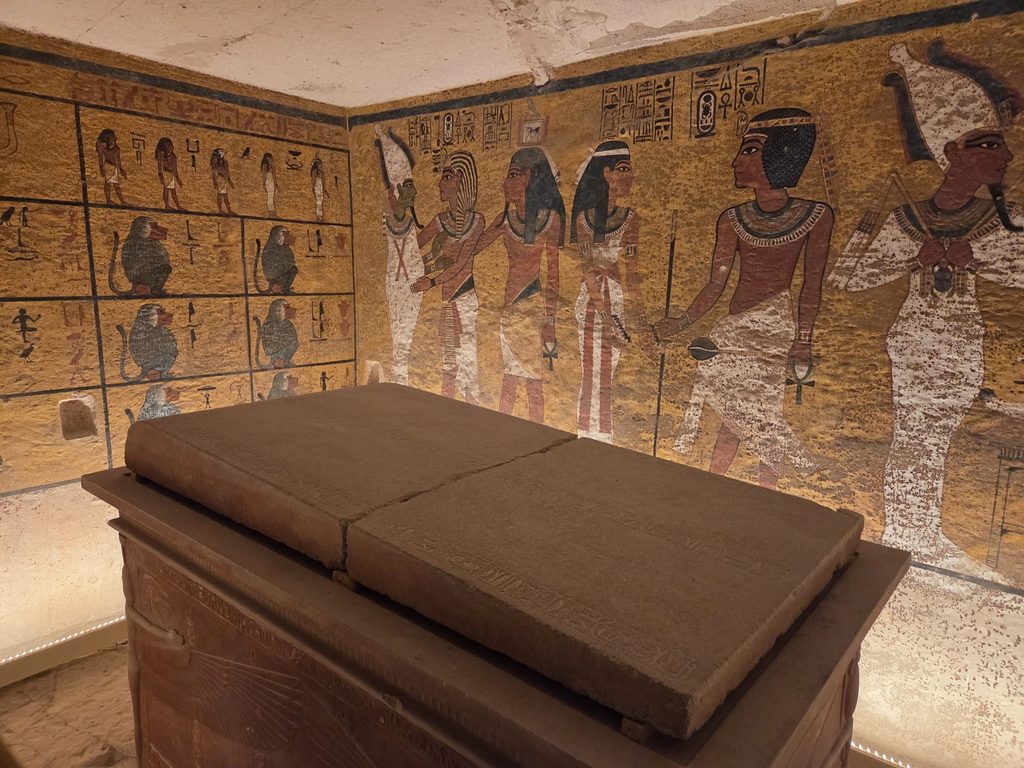
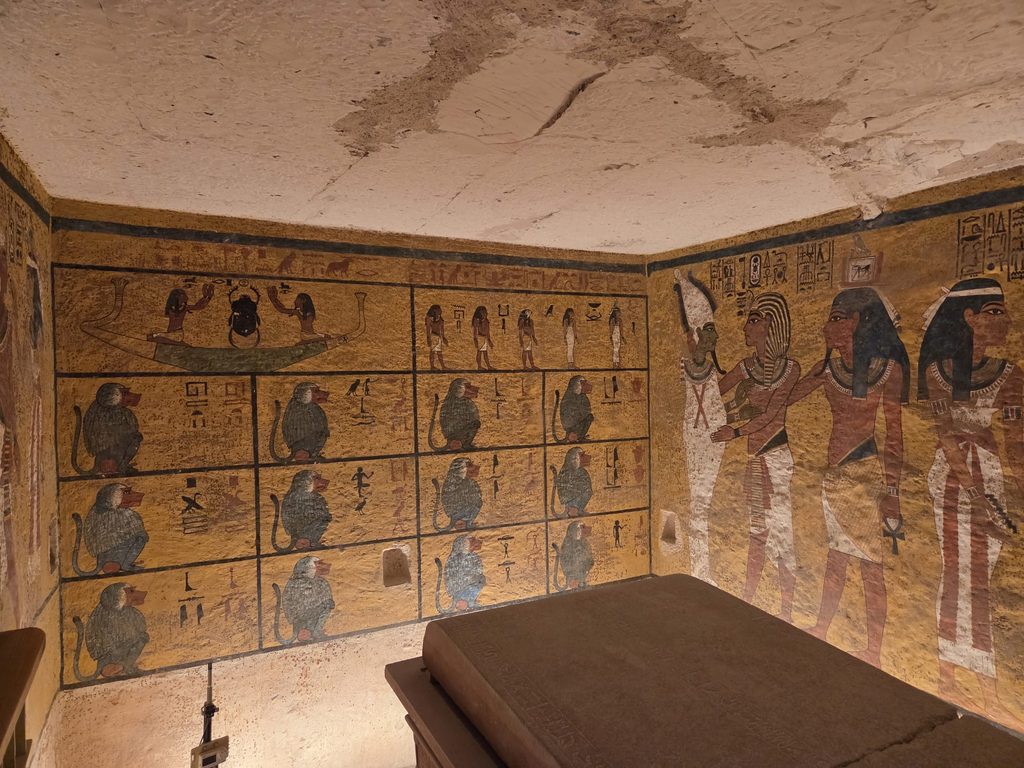
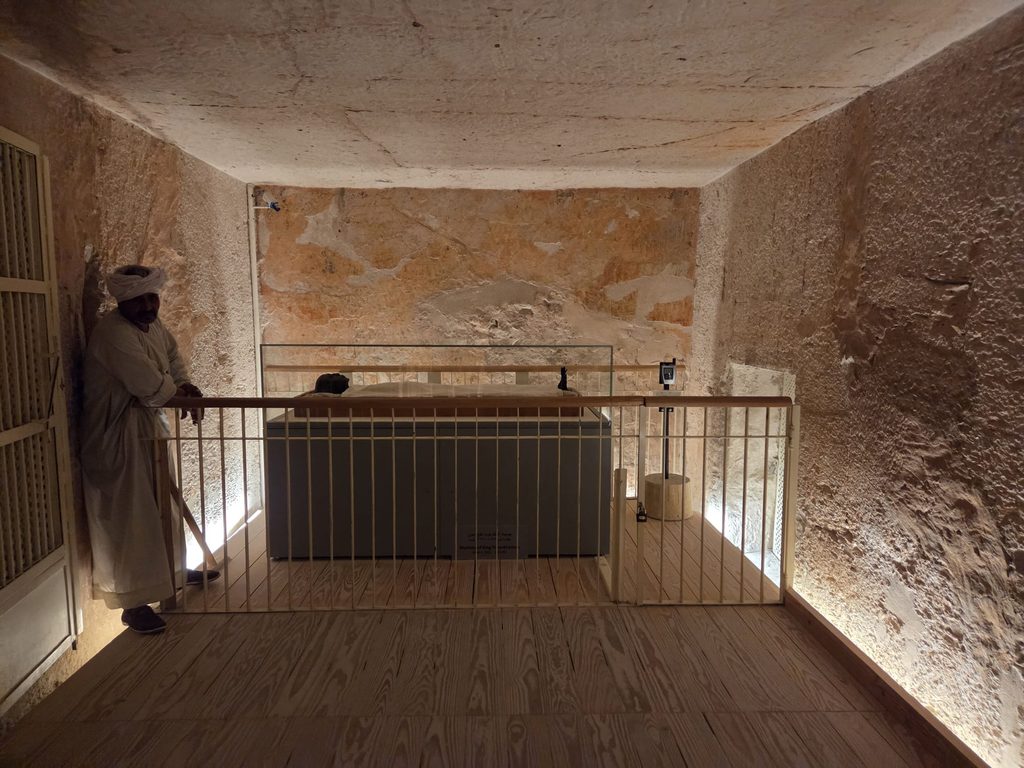
KV62 – Tomb of Tutanhkamun
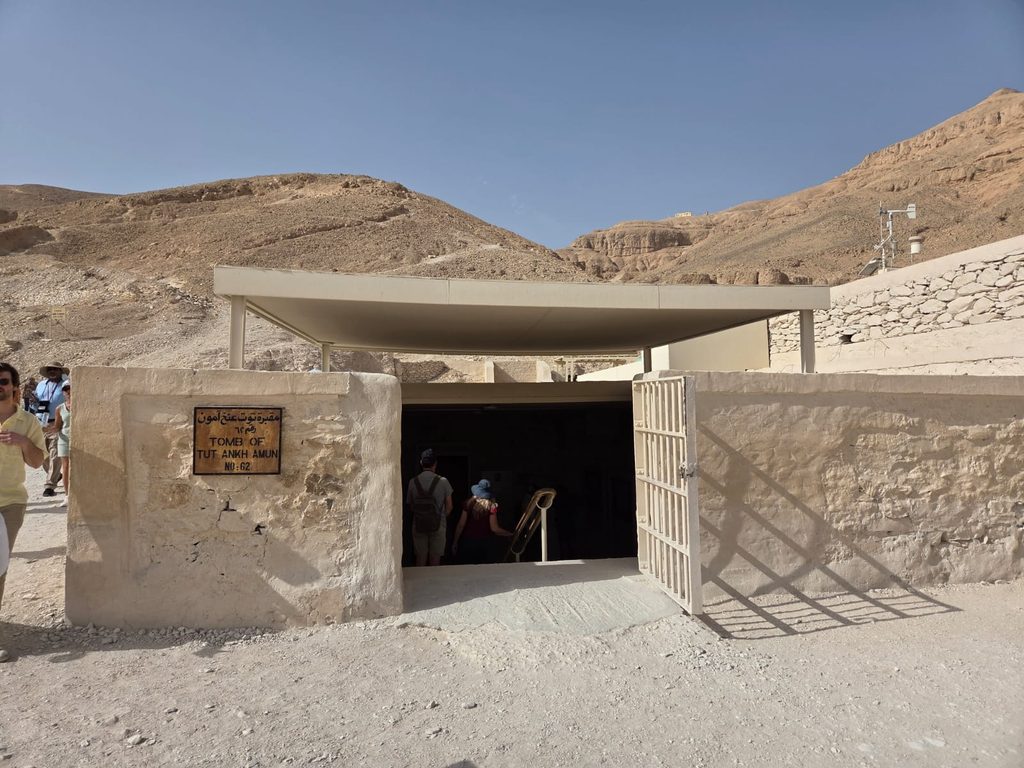
Have we saved the best for last? Culturally, yes. Architecturally or art historically, definitely not. We don’t actually know his order in the 18th dynasty – Tutankhamun had been largely forgotten and wasn’t part of the chronology of pharaohs until objects with his name on them came to light. But came to light they did, and his tomb shed an unparalleled light on Ancient Egypt and on Tutankhamun himself.
What we do know is that he was a son of Akhenaten (probably, at least), and reigned and died young. He was about 18 when he died, and had many chronic health conditions. It’s possible his tomb, smaller and less extensively decorated than other royal tombs of its time, was repurposed from that of a non-royal individual, to meet the 70 day burial timeline. There’s speculation that other pharaohs might have had a similar amount of grave goods, just spaced out more in bigger tombs.
Robbers had entered the tomb twice within a few years of the pharaoh’s burial. However, it remained largely intact until its discovery by Howard Carter in 1922. The discovery caused a media frenzy and the phenomenon known as egyptomania or ‘Tutmania’. Most of the grave goods from the tomb now have pride of place in the Grand Egyptian Museum, while Tutankhamun’s body, in relatively sorry condition, remains in his tomb. Removing the objects as safely as possible required ten digging seasons (ie. ten years).
Inside, the decoration is simpler than the other tombs we’ve visited. For a start, it covers only the burial chamber, not the relatively short corridor. The burial chamber depicts figures on a yellow background. There’s Ay (Tutanhamun’s successor) performing the opening of the mouth, and Tutankhamun greeting Nut and Osiris in the afterlife. The east wall shows the pharaoh’s funerary procession, unique amongst the royal tombs. Carter broke through a figure of Isis on the south wall.
The tomb is the most popular in the Valley of the Kings, receiving up to 1,000 visitors per day. This obviously has an impact on the already fragile interior, hence the additional ticket to help manage numbers. Tutankhamun’s body is now in a climate-controlled glass case to protect it from humidity and mould. There is a life-sized replica of the tomb, which may eventually replace access to the original, like the set up at Lascaux.
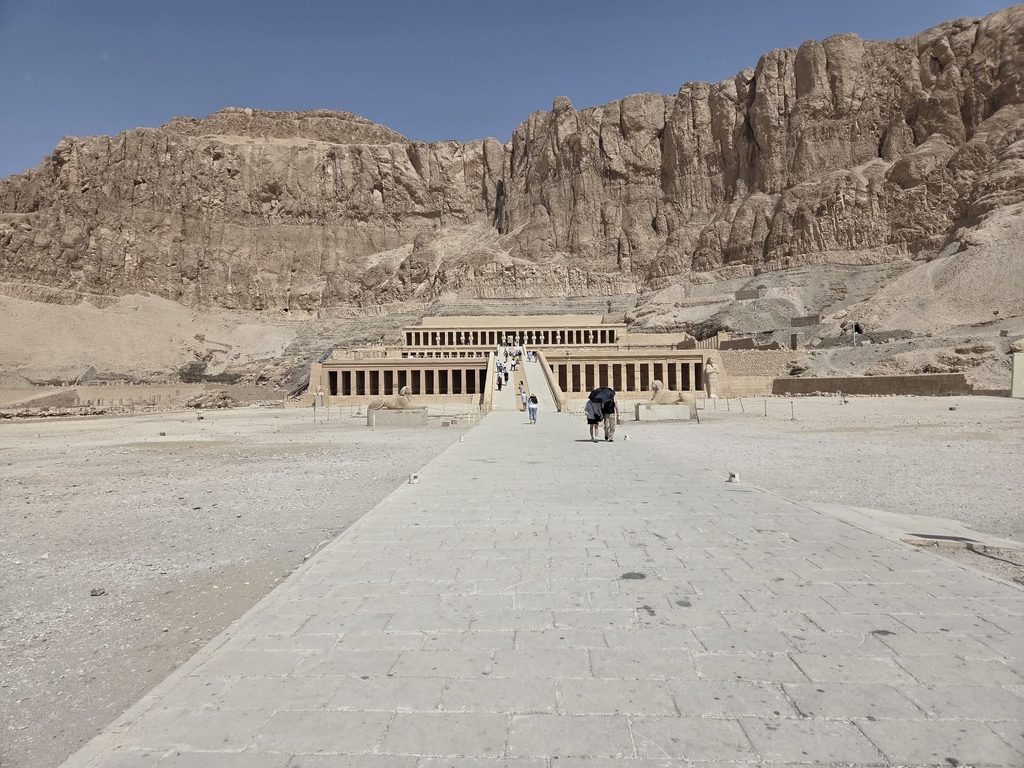
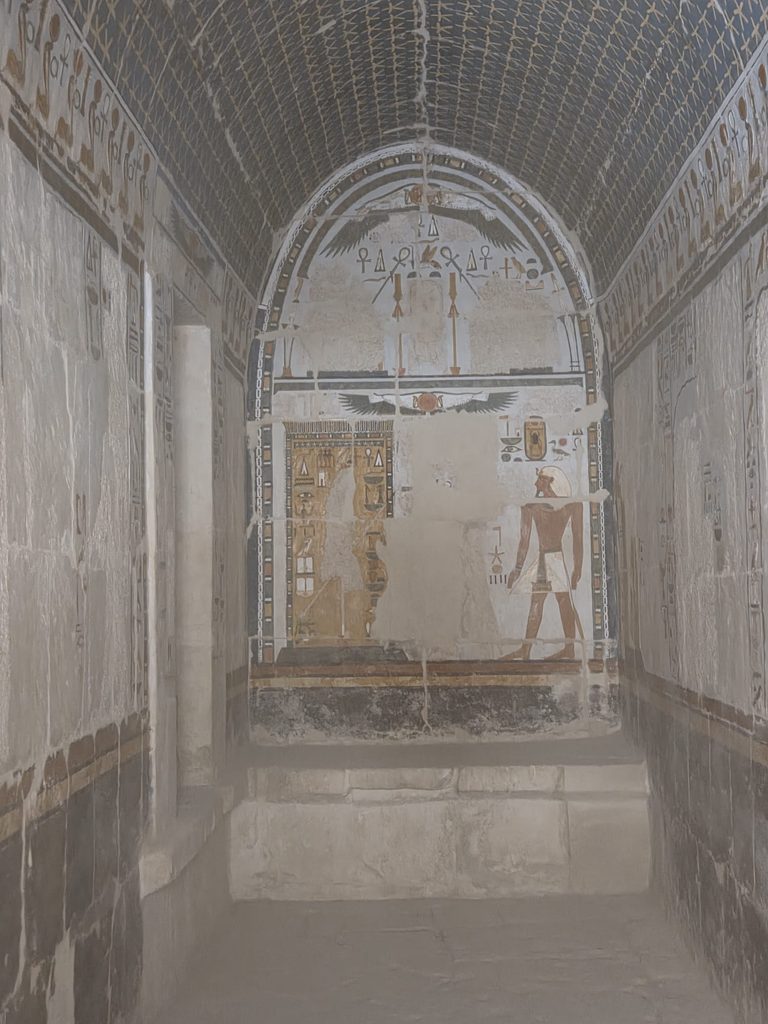
The Mortuary Temple of Hatshepsut Part I
OK, that’s it for the Valley of the Kings, now. At least the tombs that I saw. But we’re not quite ready to head back to Luxor just yet. I mentioned above a mortuary temple. We saw remains of those at the Pyramids, as well. Mortuary temples were necessary for certain parts of the rituals surrounding death. After burial, they also served as permanent cult temple for the worship of the pharaoh, ensuring their continuing success in the afterlife (remember Ma’at). They often had a symmetrical layout, facing the rising sun in the East. They also formed an important part of the annual Beautiful Festival of the Valley.
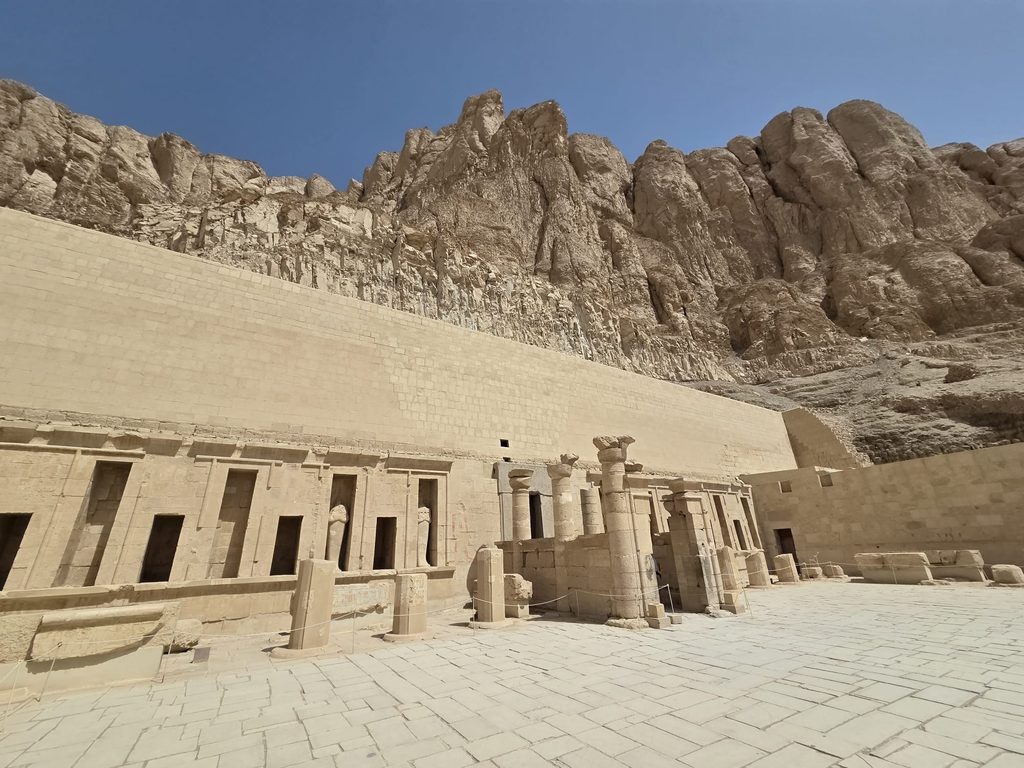
After leaving the Valley of the Kings, we headed around al-Qurn to Deir el-Bahari. This was also once part of the Theban Necropolis – its position directly across the Nile from the Temple of Karnak aligned with ancient processional routes. There were once three mortuary temples at Deir el-Bahari: those of Mentuhotep II (11th dynasty), Hatshepsut, and Thutmose III (both 18th dynasty). You can see at least something of all three, but Hatshepsut’s temple is the main event around these parts.
But who was Hatshepsut? Well that is an interesting story. Hatshepsut was a princess, daughter of Thutmose I and married to her half-brother Thutmose II. They didn’t have a surviving son, so Hatshepsut became regent for Thutmose III, her husband’s child by another woman. She wasn’t really content with that, though. She invented a back story where she was the daughter of Amun, and also her father’s designated heir. Hatshepsut ruled as a king, and not a queen: false beard and all. She reigned for about 20 years, a time of peace and prosperity. When she died, Thutmose III took over. About 20 years later Thutmose III tried erasing Hatshepsut from the record – possibly an attempt to regularise the dynastic line rather than a rash and emotional reaction, given the timeline.
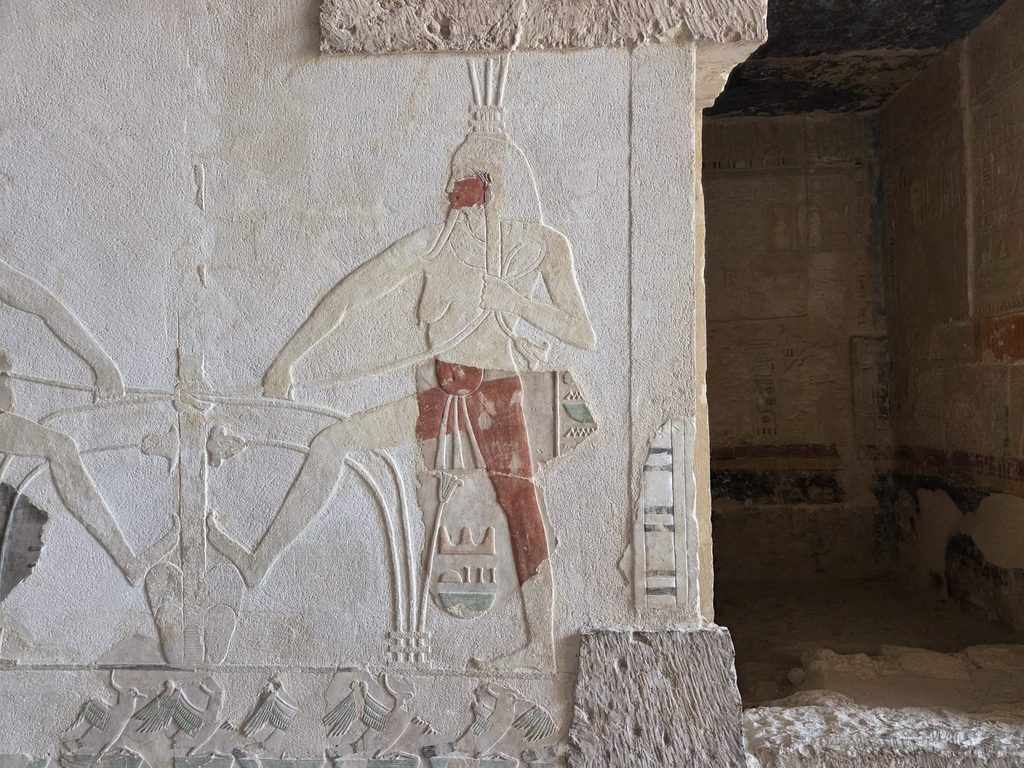
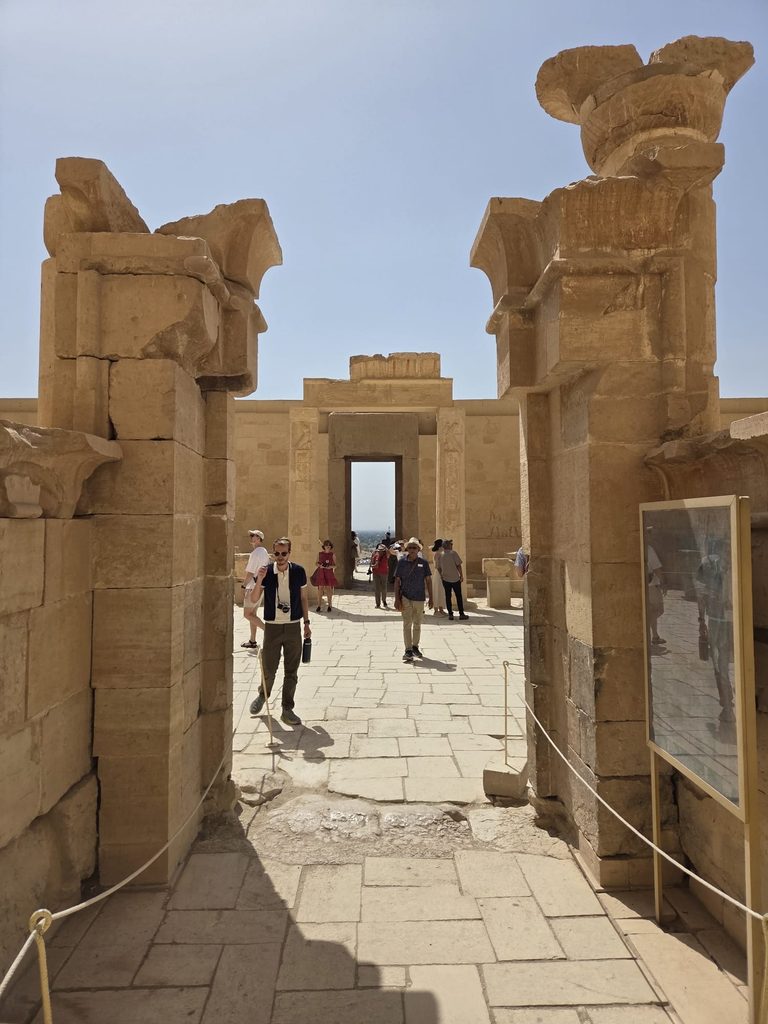
The Mortuary Temple of Hatshepsut suffered as part of this campaign, as well as later religious defacements. Earthquakes didn’t help either. There was a Greek temple to Asklepios added in the Ptolemaic period. Between the 6th and 8th centuries CE, the temple served as a Coptic monastery of Saint Phoibammon. It was first excavated in the 1850s and 60s under Auguste Mariette, and at various times over the following century. Since 1961, it’s been under the care of the Polish Centre of Mediterranean Archaeology, who have carried out extensive restoration work.
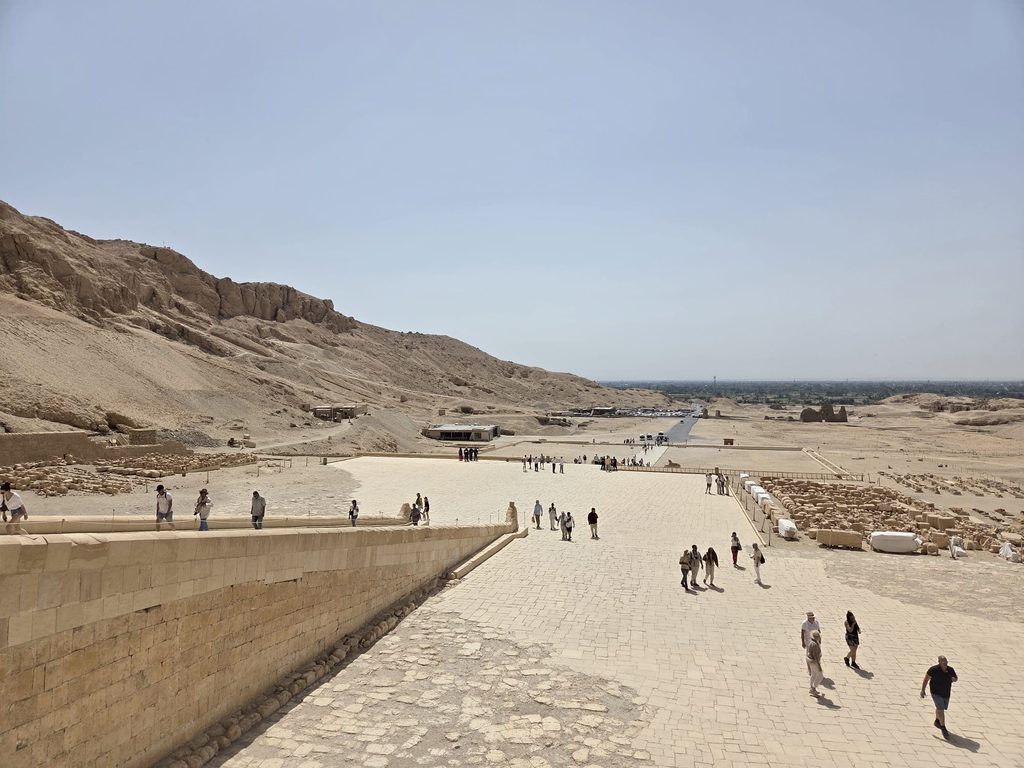
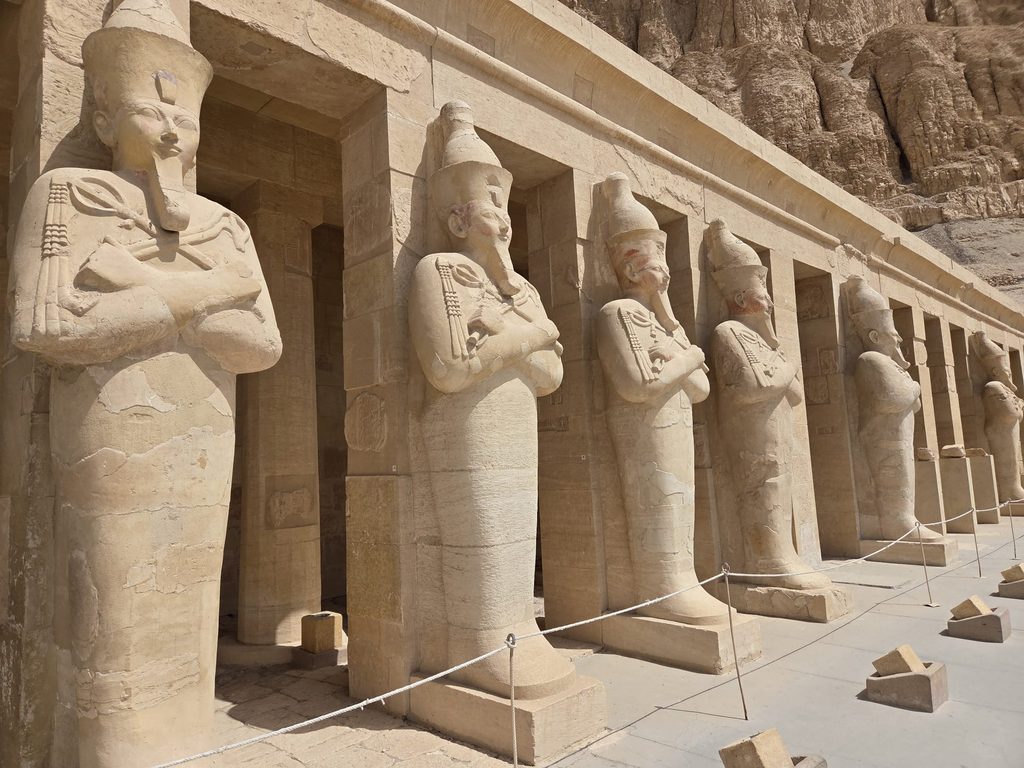
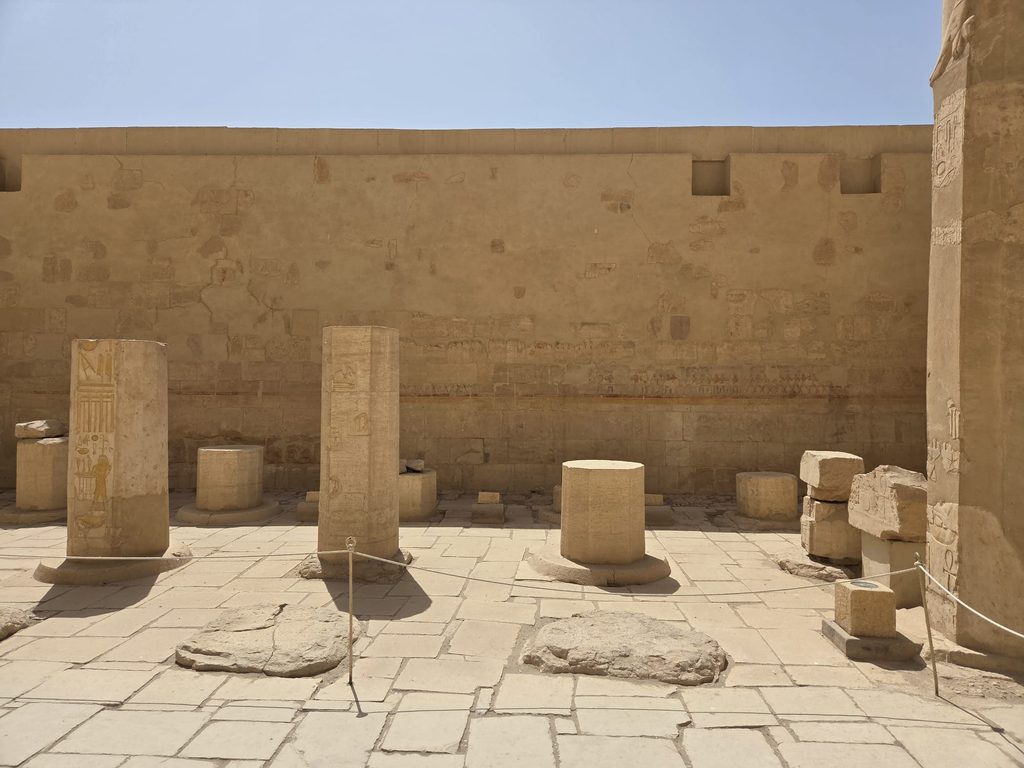
The Mortuary Temple of Hatshepsut Part II
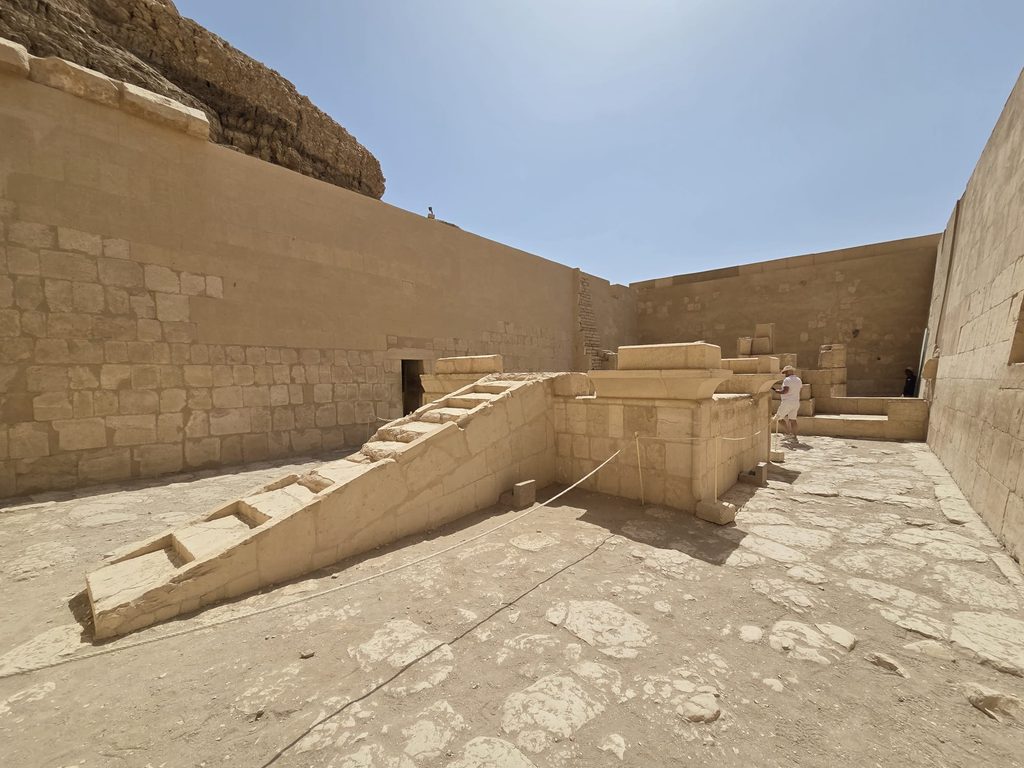
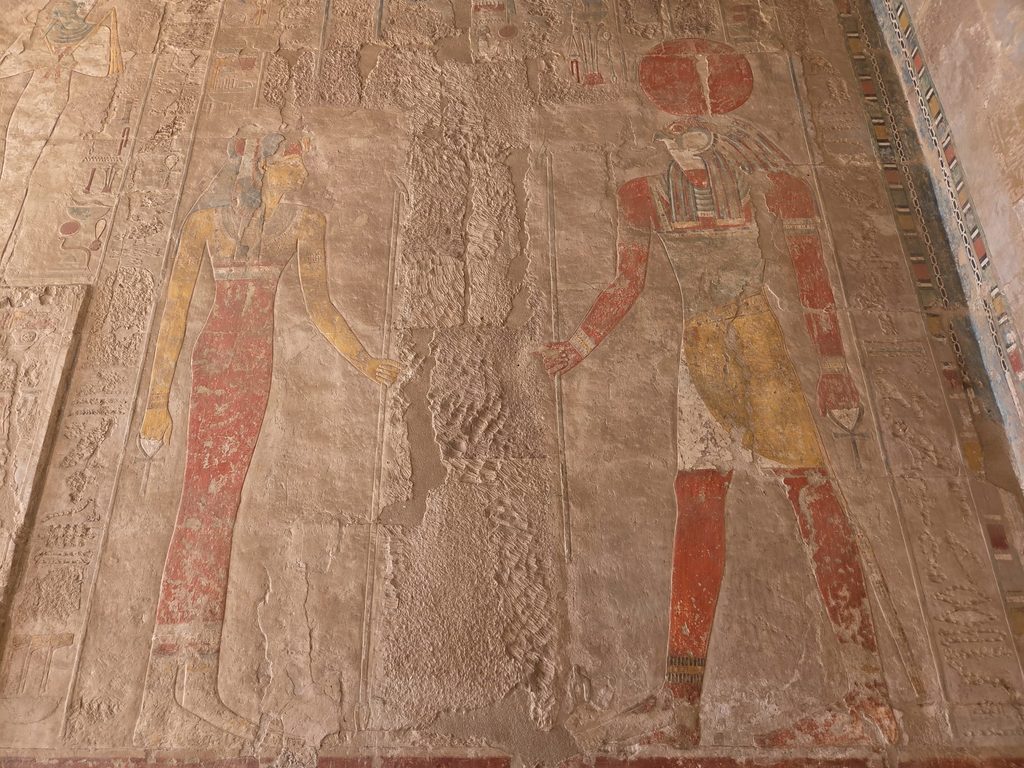
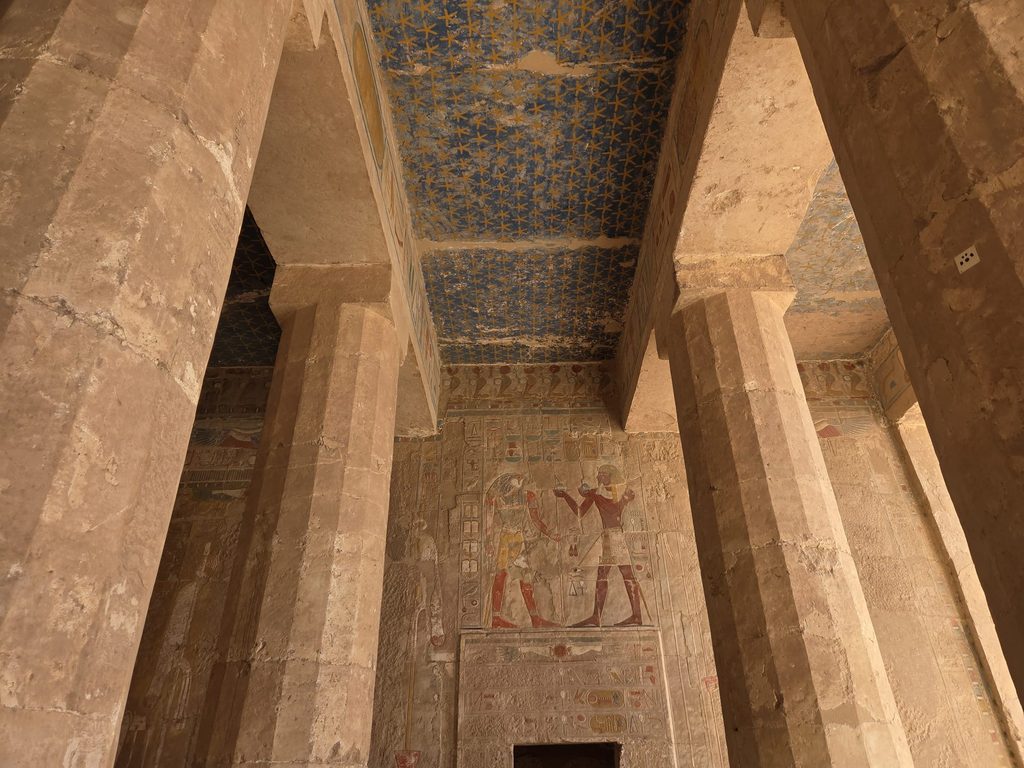
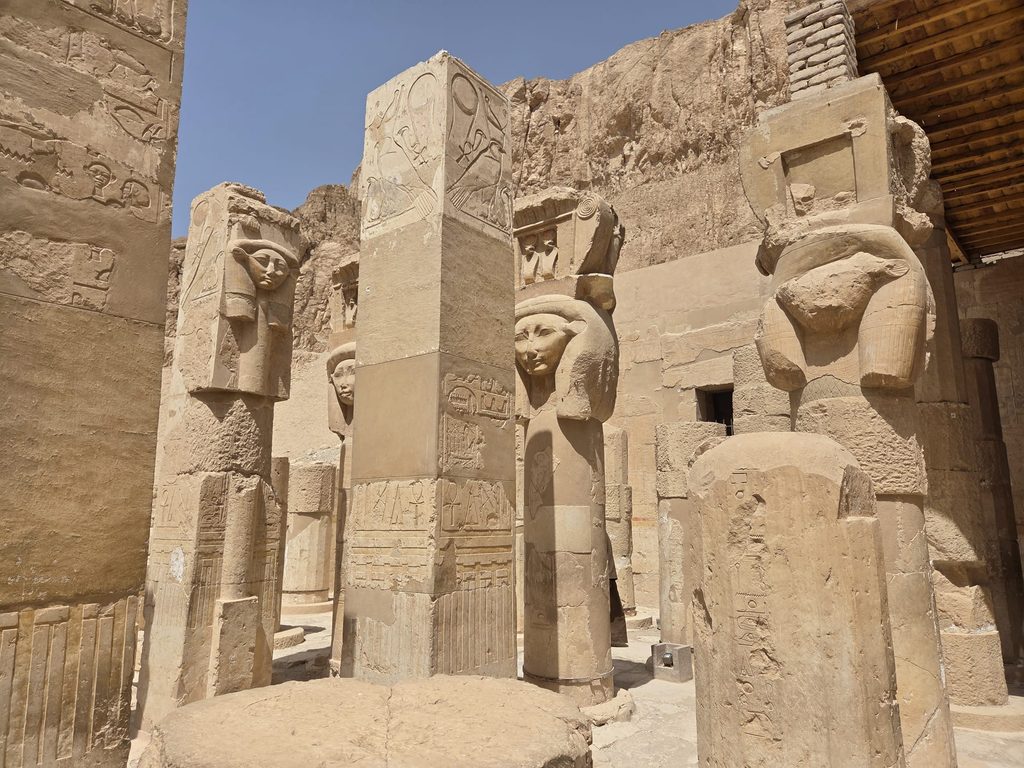
The Mortuary Temple of Hatshepsut is considered one of the great architectural works of the ancient world. Built of limestone, red granite and sandstone, it was influenced by the nearby Mortuary Temple of Mentuhotep II, 600 years its elder. But the arrangement of chambers and sanctuaries is unique. The central axis, where the mortuary complex would normally be, instead held the barque of Amun-Re. A way to promote her divine origins, I guess. There are shrines to Hathor and Anubis on the middle terrace, as well as reliefs depicting the expedition during her reign to the Land of Punt (in Africa), and the pharaoh’s divine birth. In total the temple contained five cult sites.
The daily rituals here were elaborate. Before dawn, two priests collected water for libations from the temple’s well. Others prepared offerings of food and drink for the gods, while the head priest purified himself. Then the space containing the cult image of Amun-Re was purified, before the head priest prostrated himself before it. The shrine was purified, and a statue of Ma’at presented briefly to the god. The statue was cleansed and then repainted and anointed, dressed, and accessorised. And that was all before the god’s breakfast. The priests certainly kept themselves busy.
The ascent to the temple’s upper terraces, after all those enclosed tombs, makes the Temple of Hatshepsut even more impressive. It is again very exposed, though, so bring water and an umbrella or parasol. There is a lot to see here, but do take the time to take it all in. It’s not every day you get to see such an unusual pharaoh creating her own divine image.
Bonus Section: The Colossi of Memnon
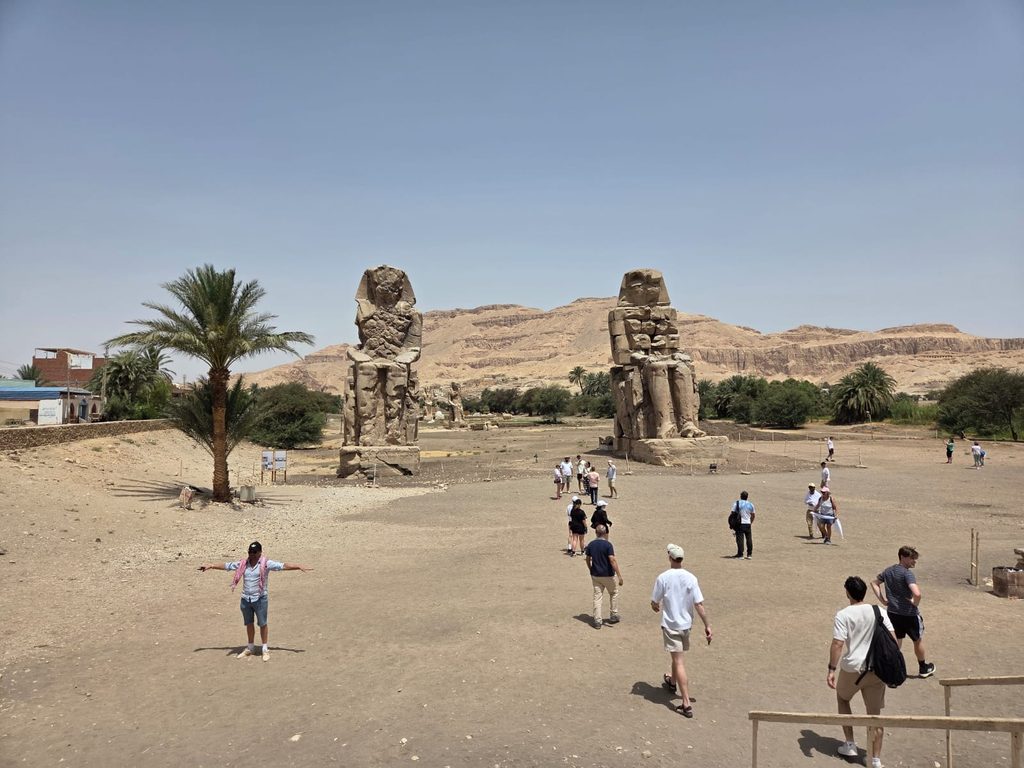
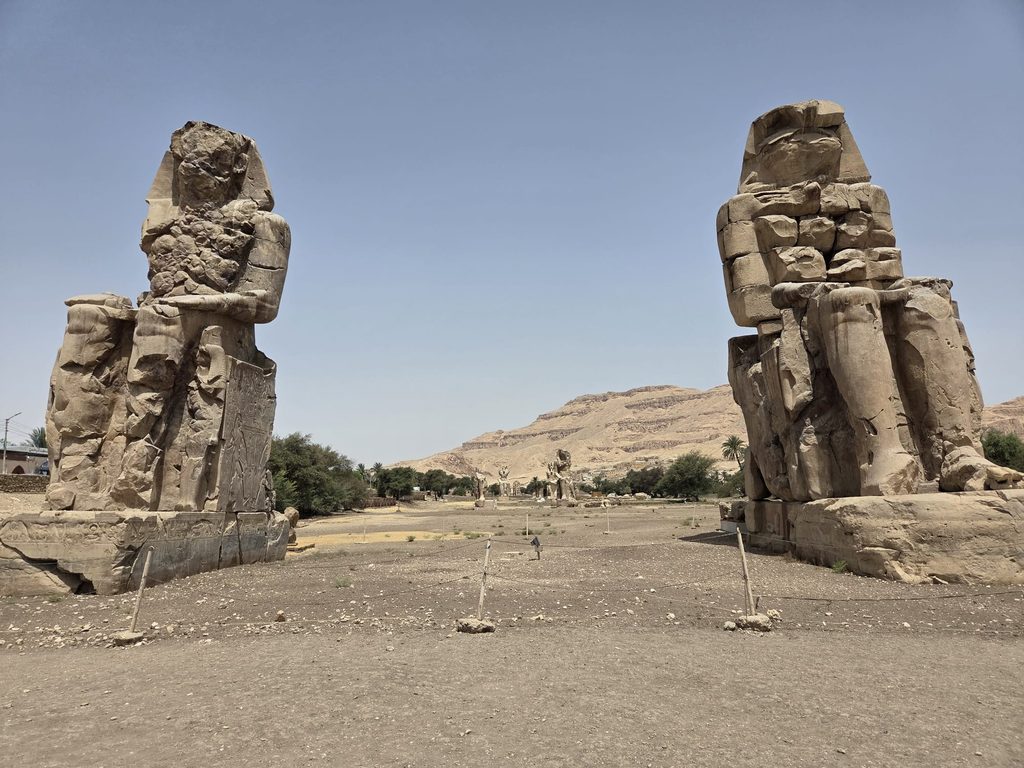
There’s one more thing we stopped to see before returning to Luxor. Like many tours, I suspect, this was a bit of a flying visit. The Colossi of Memnon are two 18-metre tall statues of Amenhotep III, which stand in front of his ruined Mortuary Temple, the largest in the Theban Necropolis. In place since 1850 BCE, they were well-known to ancient travellers as well as modern. In fact, the reason they are the Colossi of Memnon is that they were erroneously thought to be representations of Memnon, the mythological Ethiopian king who supposedly fought at Troy. I mentioned Memnon earlier – it’s really a bit of a strange story, and strange to decide these statues were of him.
The statues are made of quartzite sandstone, transported from near Cairo. They weigh about 720 tons each, and are visible from over 15 KM away. In front of each depiction of the pharaoh are family members – wife, mother, and a daughter. The statues have sustained a lot of damage over the years, and have lost most of their detail from the waist up. The Romans were already attempting repairs. A large earthquake in 27 BCE had an unexpected side effect, cracking one of the statues in a way that caused it to ‘sing’ for a time. It’s mentioned in a lot of the Roman-era graffiti. The phenomenon led, perhaps inevitably, to a belief that it brought luck, or that the statue had oracular powers. Several Roman emperors came to see it, including Hadrian. The last reliable record of the sound dates from 196 CE.
Unless you’ve got time to explore the Mortuary Temple of Amenhotep III, this probably will be a quick visit. We parked up, jumped out of the coach, had a look, took some photos, and jumped back on board. It’s incredible that Egypt has such archaeological riches that we managed to see all the sights above in a single morning, just by scratching the surface. On a return visit I’d love to start with a hot air balloon ride over the Theban Necropolis, see some more tombs and temples, and visit the workers’ village, Deir el-Medina.
Trending
If you see this after your page is loaded completely, leafletJS files are missing.