
Luxor Museum
My very final stop in Egypt is Luxor Museum. An opportunity to review some of the things I’ve learned during my travels and see some highlights in a purpose-built, well-displayed museum setting.
What to Pick For Our Final Day in Egypt?
In my last few posts you’ve had an idea of how wonderful, but jam-packed, our second to last day in Egypt was. We started the day on our dahabiya after a two day Nile cruise. From there we transferred by boat and bus to the Valley of the Kings, and also saw the Mortuary Temple of Hatshepsut and Colossi of Memnon. In the afternoon we saw Karnak Temple, and then Luxor Temple at sunset before a final group dinner.
Many of our group were off to the airport early the next morning. The Urban Geographer and I had tacked on an extra day. This was partly so we could see anything additional we wanted to see that wasn’t part of the tour. But it also meant we could get a direct flight back to London. Win-win!
But what to do on our final day? The first thing was to rest and enjoy our hotel for a bit. Then we had booked ourselves to see the Sound & Light Show at Karnak Temple in the evening. In between, we thought maybe a museum. There aren’t so many in Luxor, given the city’s historic importance. I guess everyone is out seeing the archaeology instead. So it came down to a choice between Luxor Museum or the Mummification Museum. Both would be interesting, I think, but I increasingly have some level of discomfort with human remains in museums. More on this below. But it was one reason behind our selection of Luxor Museum as one of our last Egyptian activities.
A Brief Description of Luxor Museum
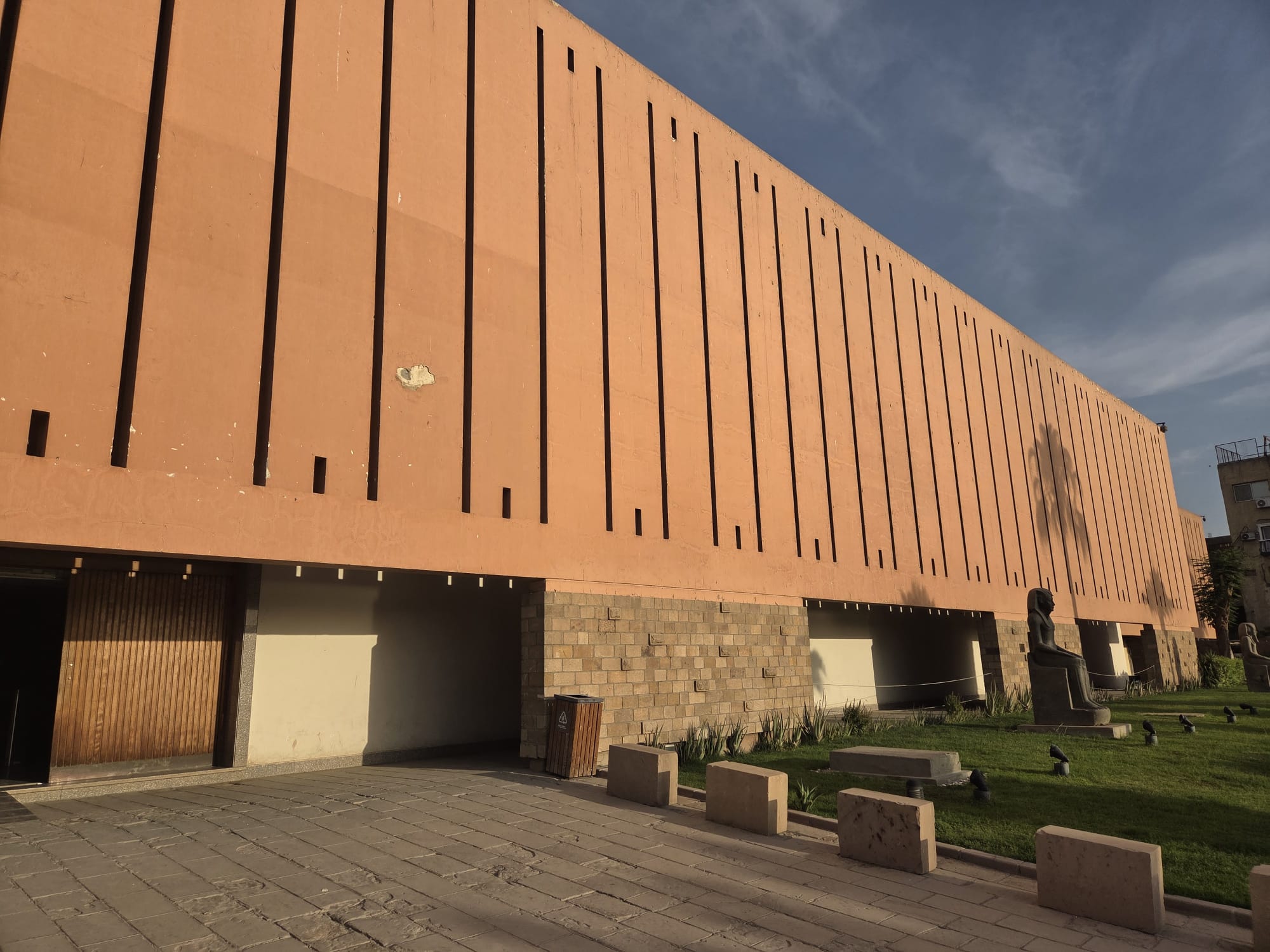
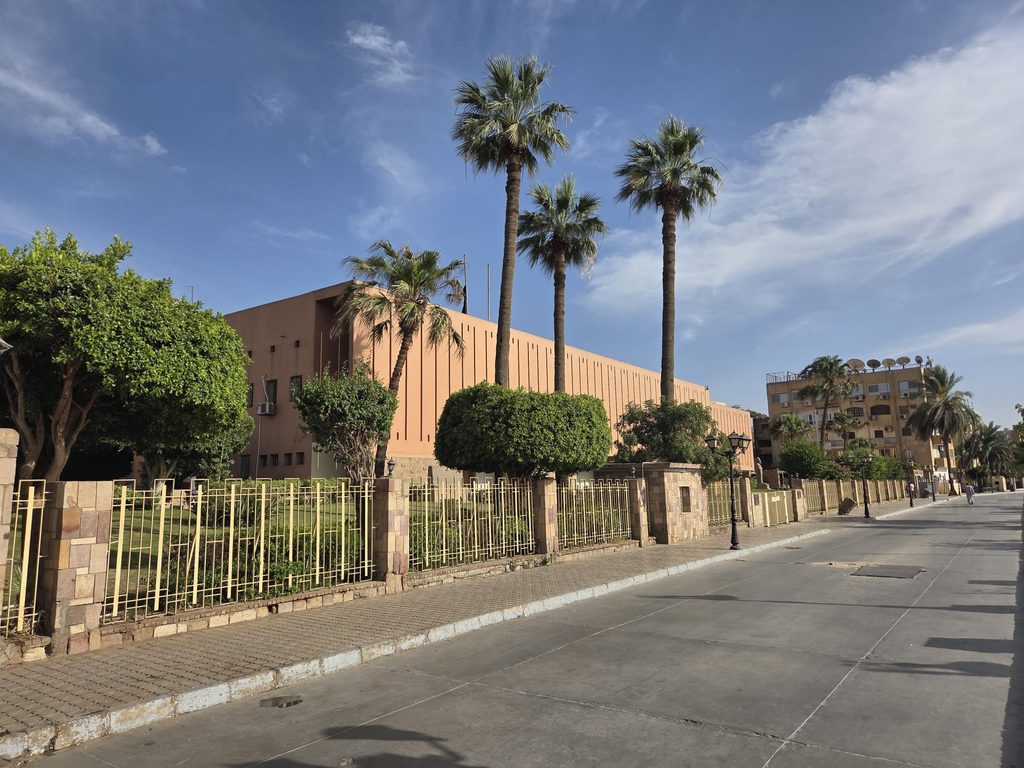
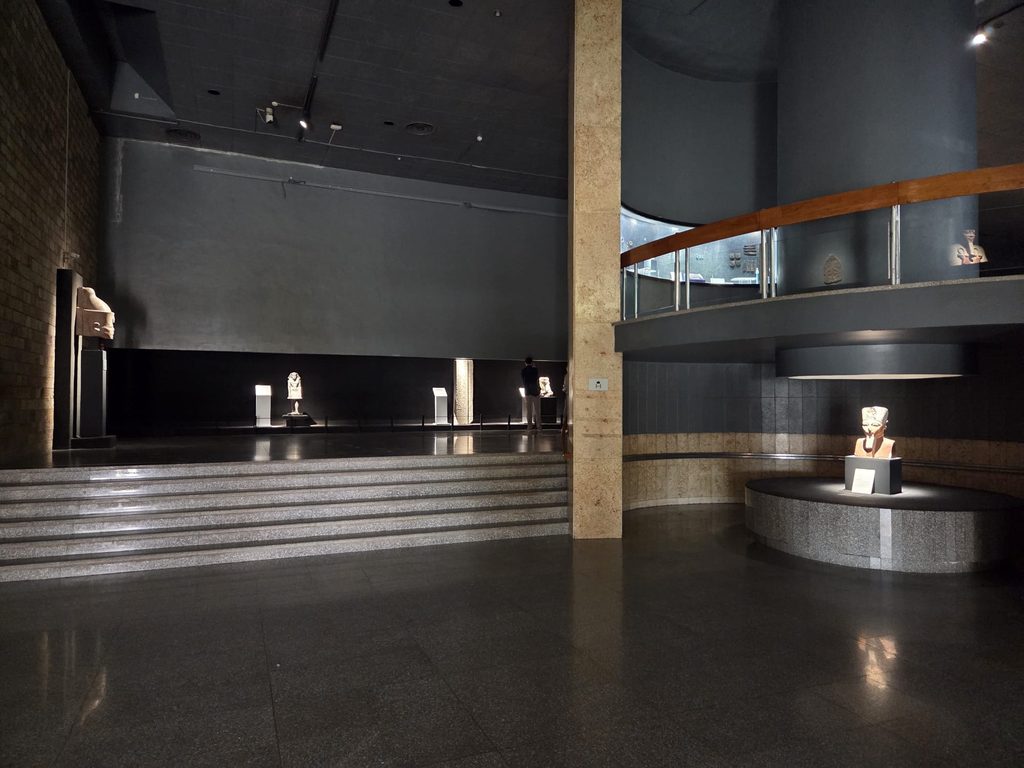
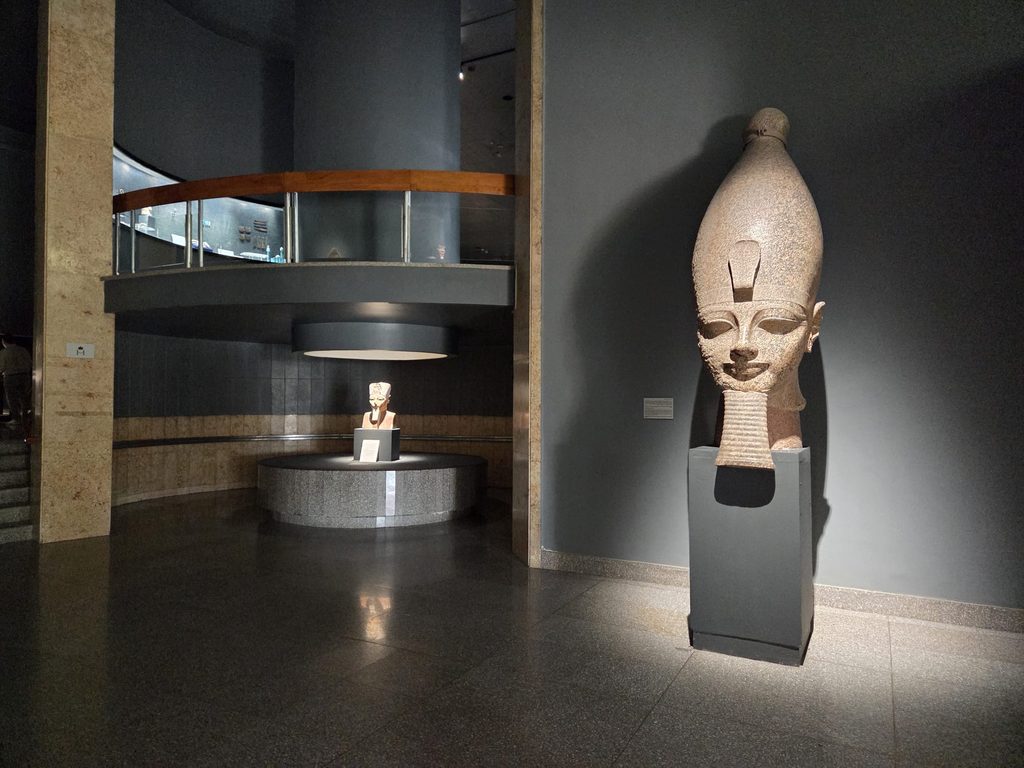
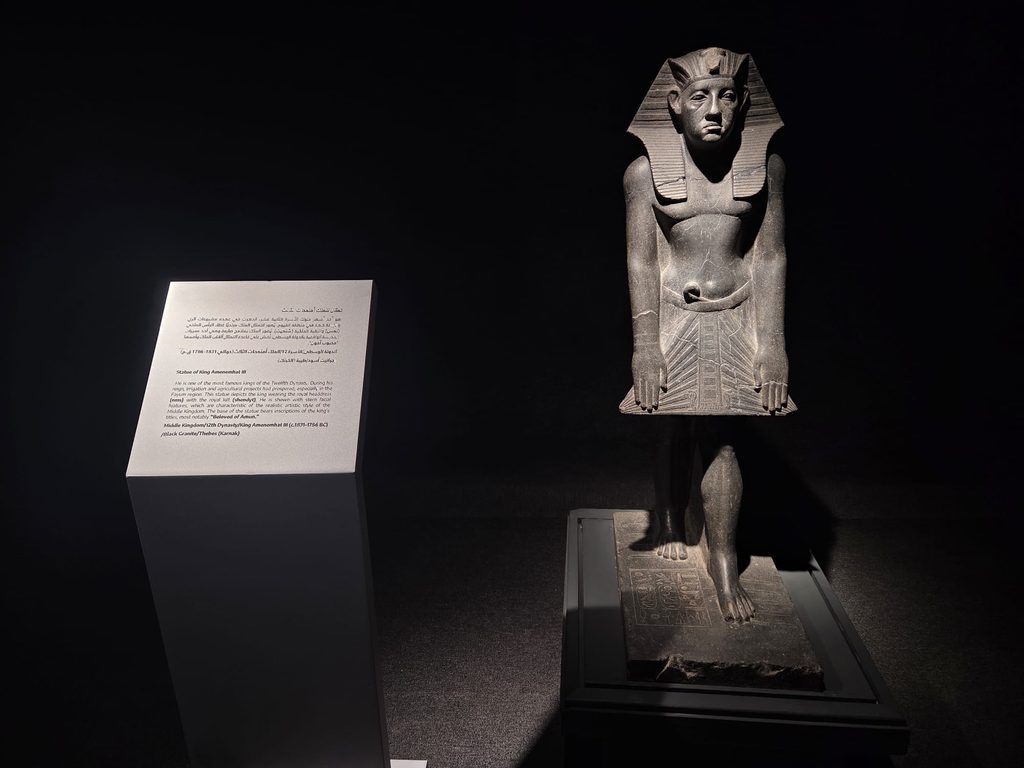
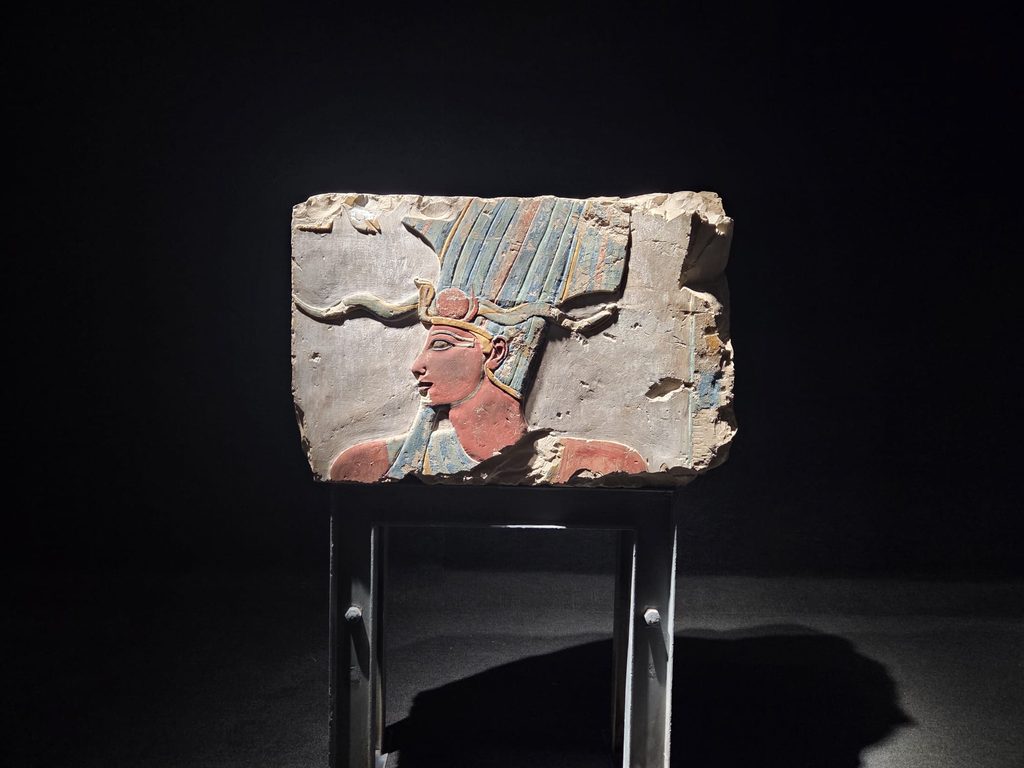
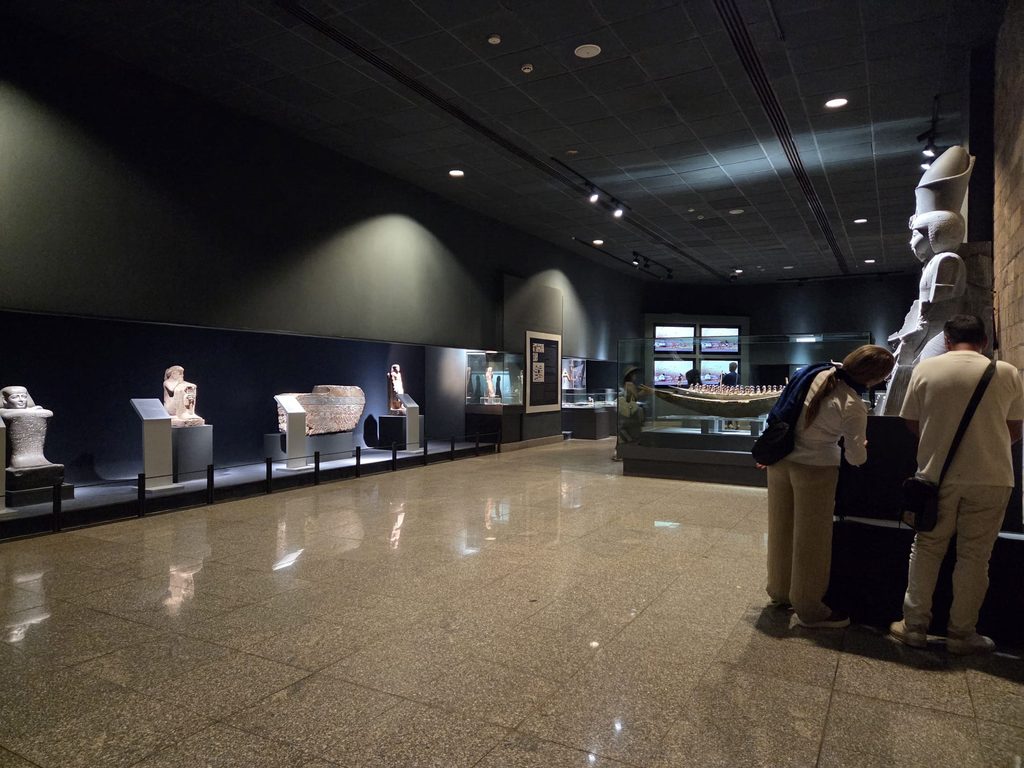
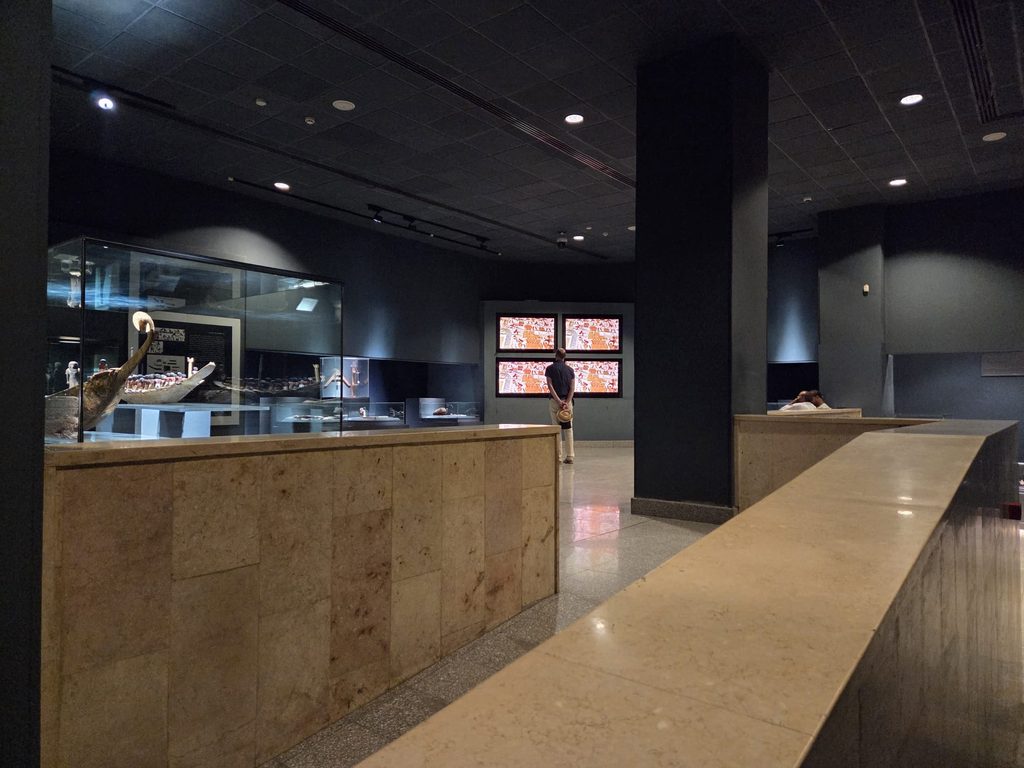
Luxor Museum is a more recent addition to the Egyptian cultural landscape than our starting point for this trip, the Egyptian Museum in Cairo. Opened in 1975, it sits on Luxor’s corniche (or waterfront promenade), on the East Bank of the Nile. Spread over two stories, Luxor Museum deliberately took a different approach than the predecessor I mentioned. Where the Egyptian Museum in Cairo was known for being packed to the gunnels with artefacts (and still is to some extent, even after the arrival of the Grand Egyptian Museum), Luxor Museum was laid out in an uncluttered way, with extensive, multilingual labelling for almost every object.
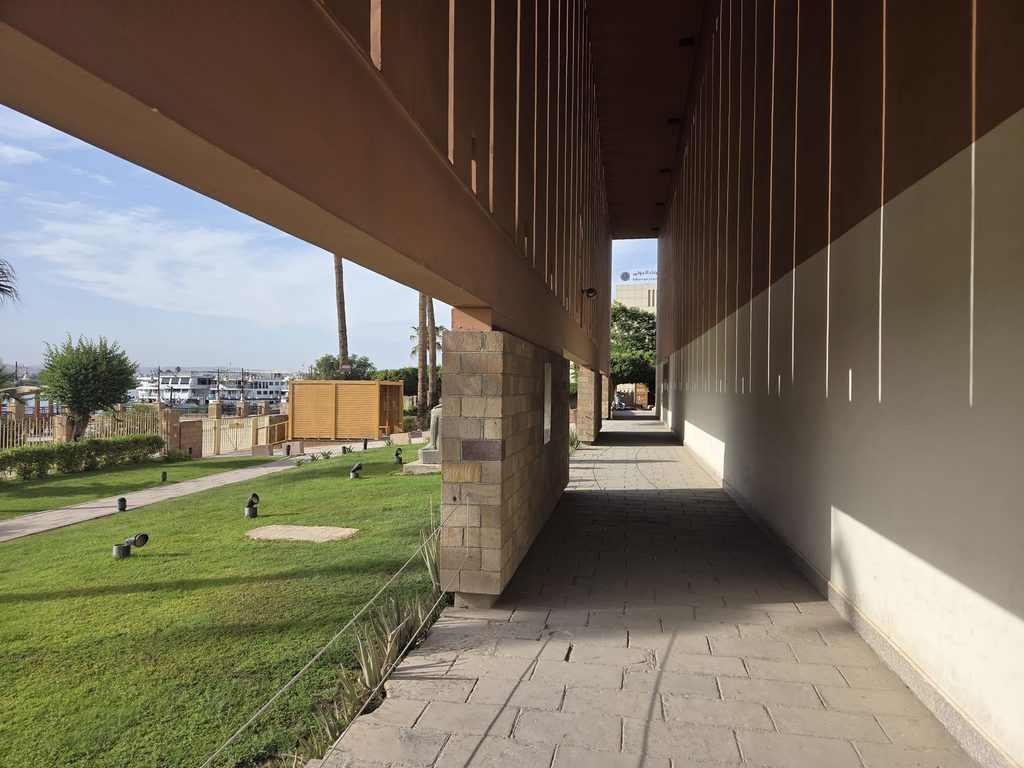
The building is the work of Egyptian architect Dr. Mahmud El Hakim. The Egyptian Ministry of Culture engaged him in 1962 to design the new museum. Construction took place between 1972 and 1975. The museum is 2,500 square metres, with the longer edge running parallel to the river. It has a mix of sandstone and stucco walls, a shaded entrance, and a single floor inside with mezzanines to provide additional display space. There’s a one way circuit through the museum and back out, at which point you can make an optional stop (we did), at a bookshop, cafe and shops. Rather a nice modern museum without being on the same scale as the GEM. A 2004 extension, which provided additional exhibition space and a small visitor centre, is sympathetic.
What’s in the Luxor Museum Collection?
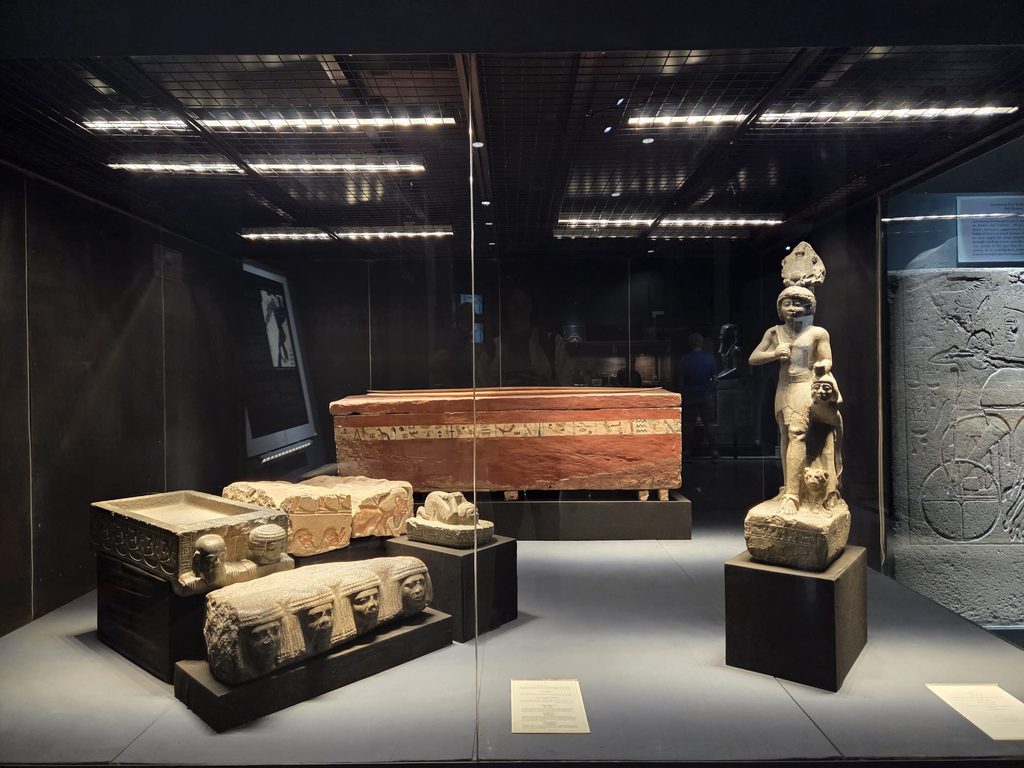
With such a lot of archaeological sites around Luxor, the focus is fairly local rather than spanning Ancient Egypt. And I say Ancient Egypt, but there is a little nod to more recent history – Coptic and Mamluk artefacts. It feels like an afterthought, being that it’s along the ramp as you are preparing to exit, but it’s there.
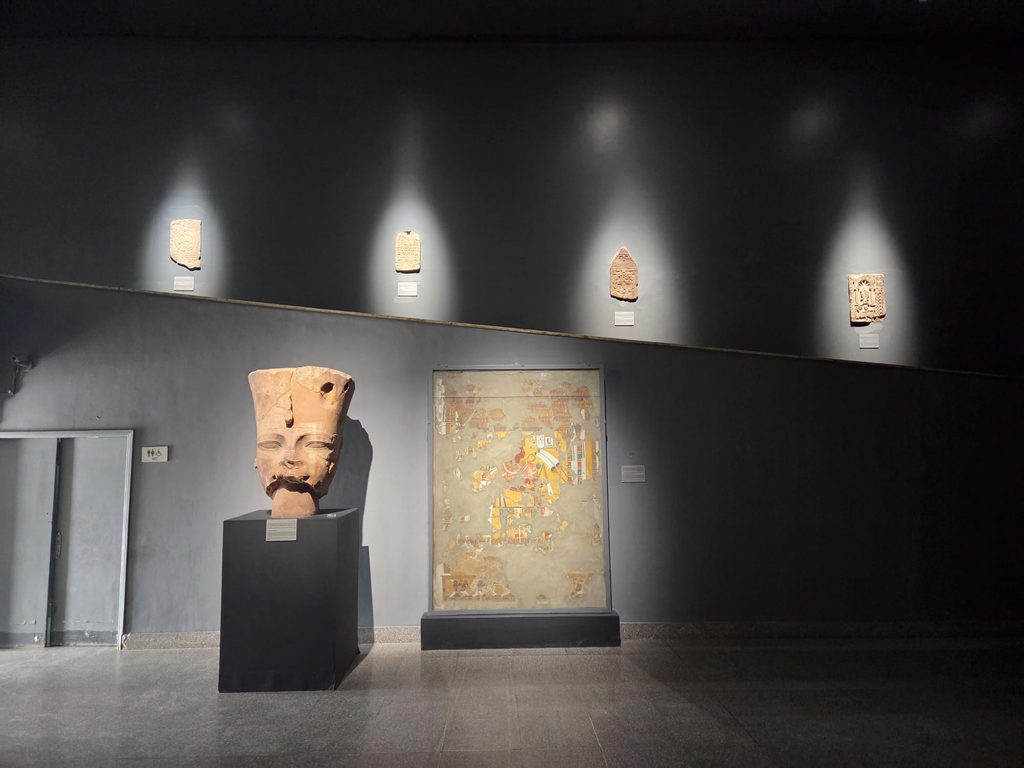
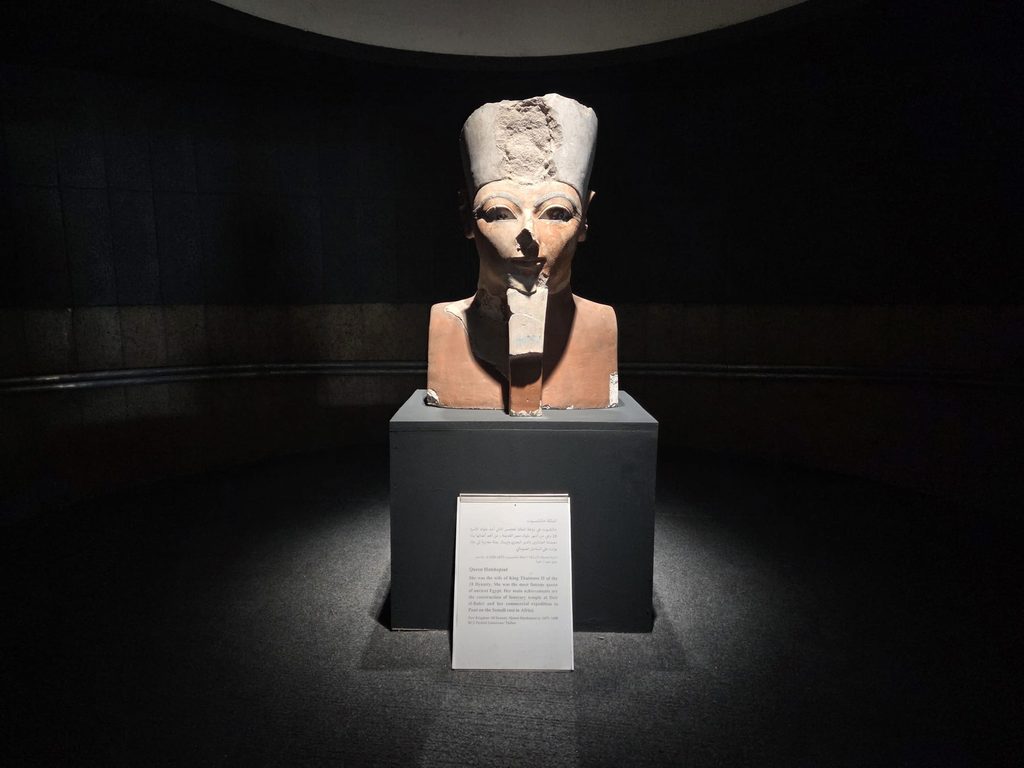
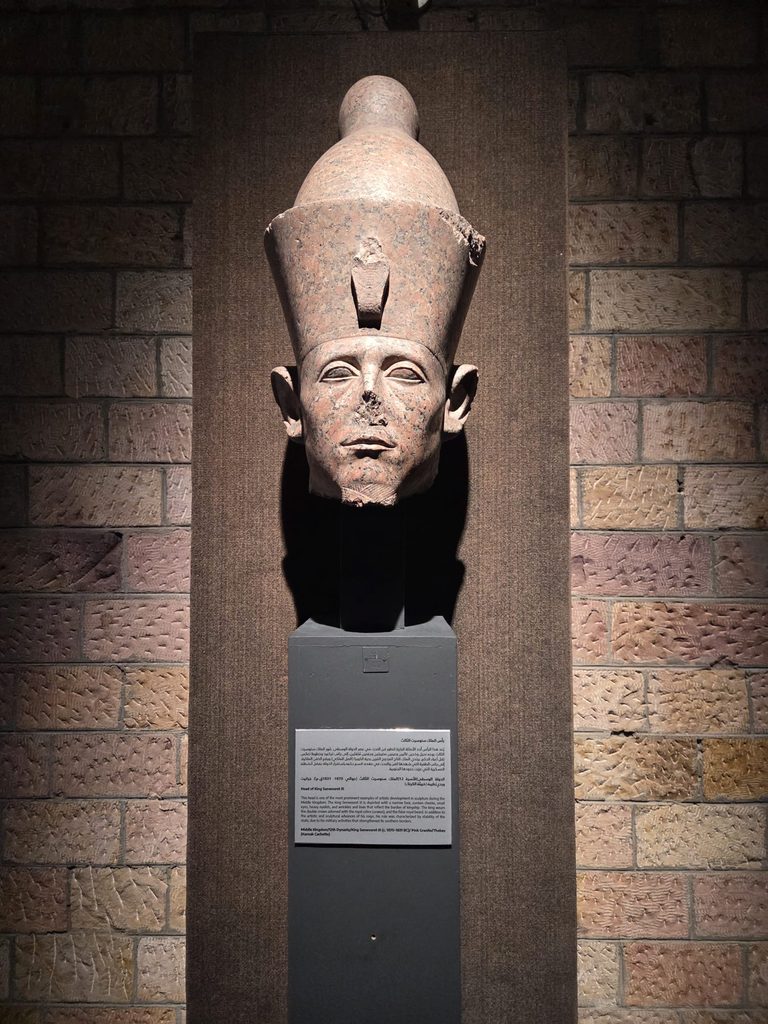
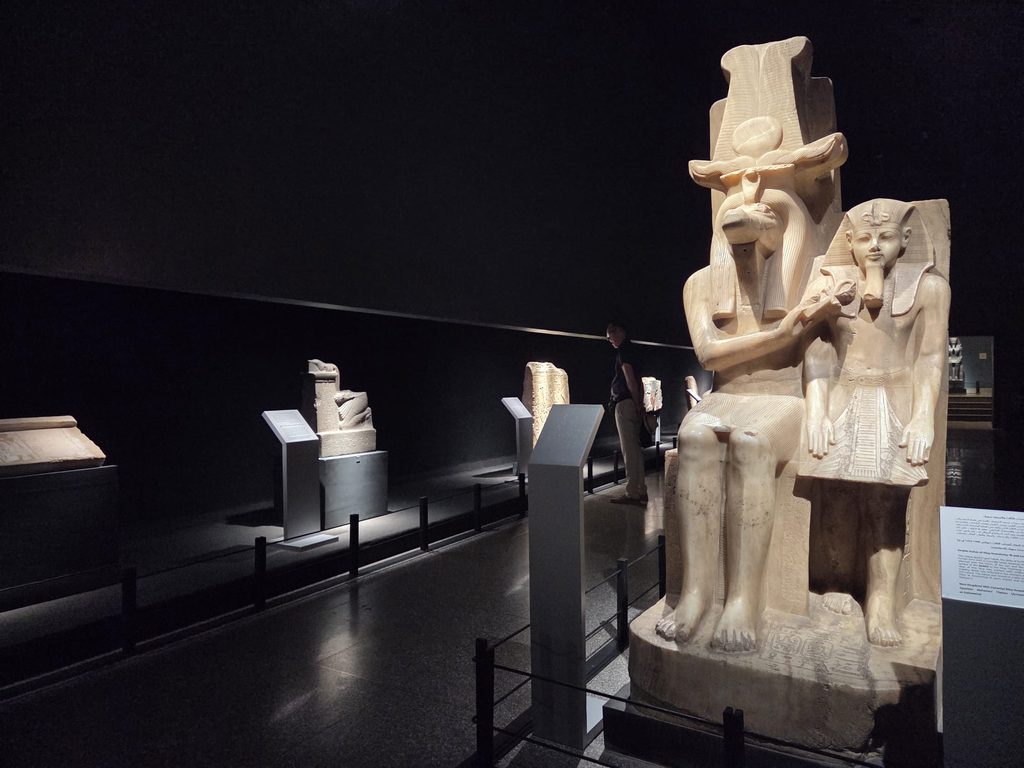
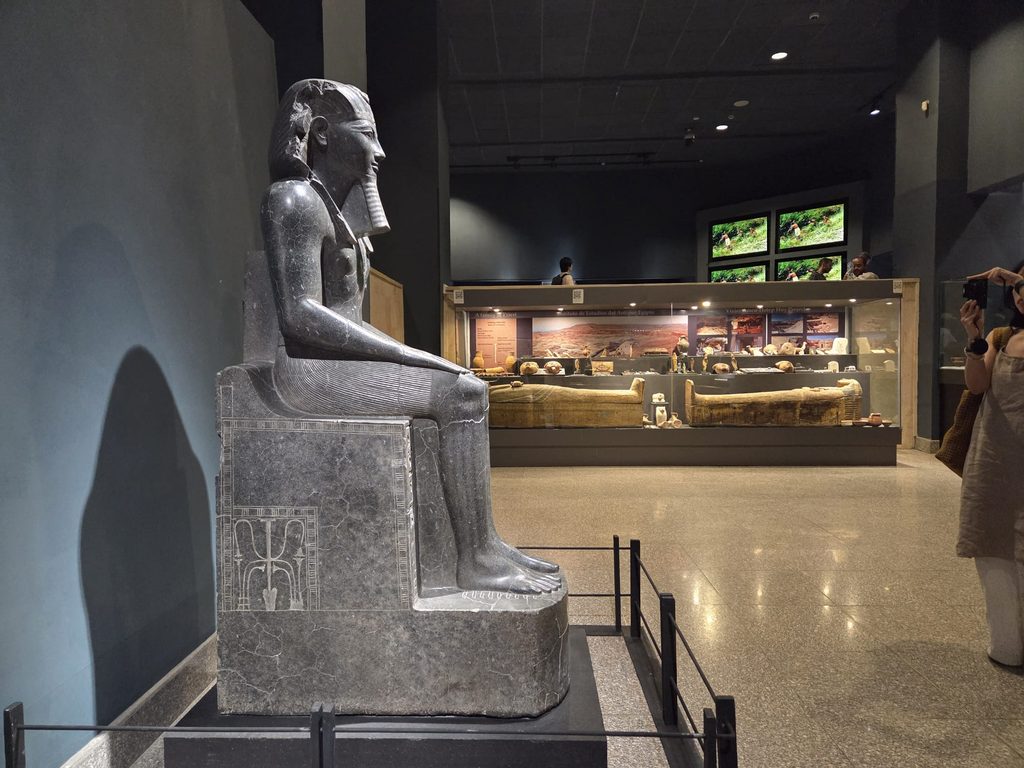
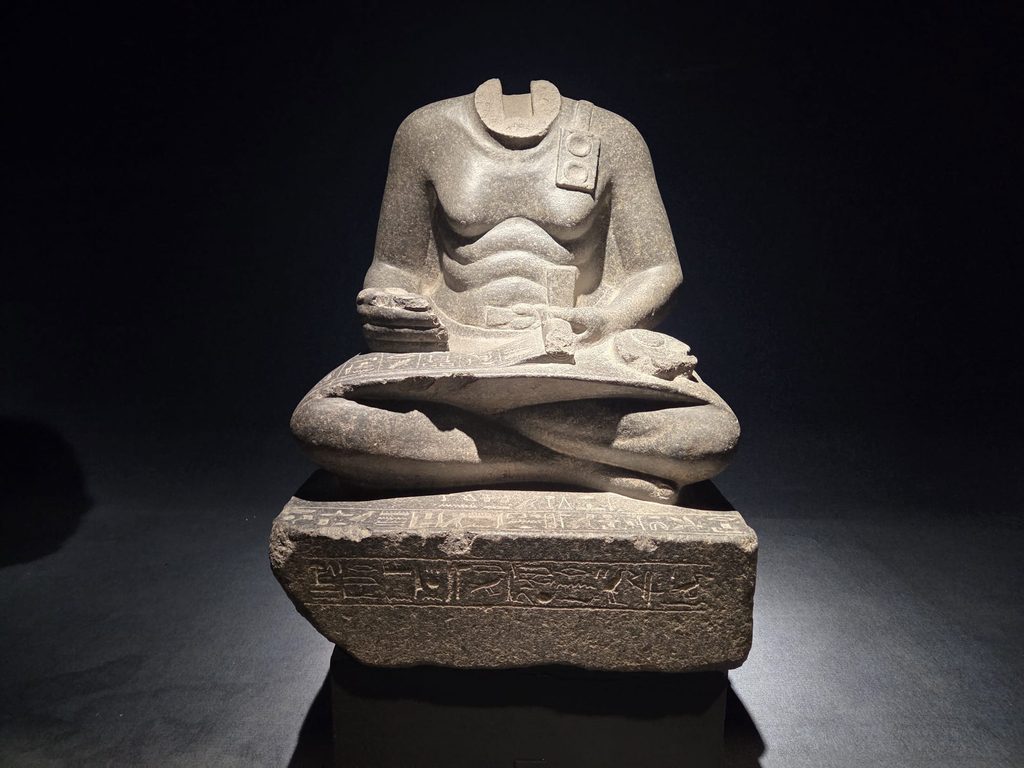
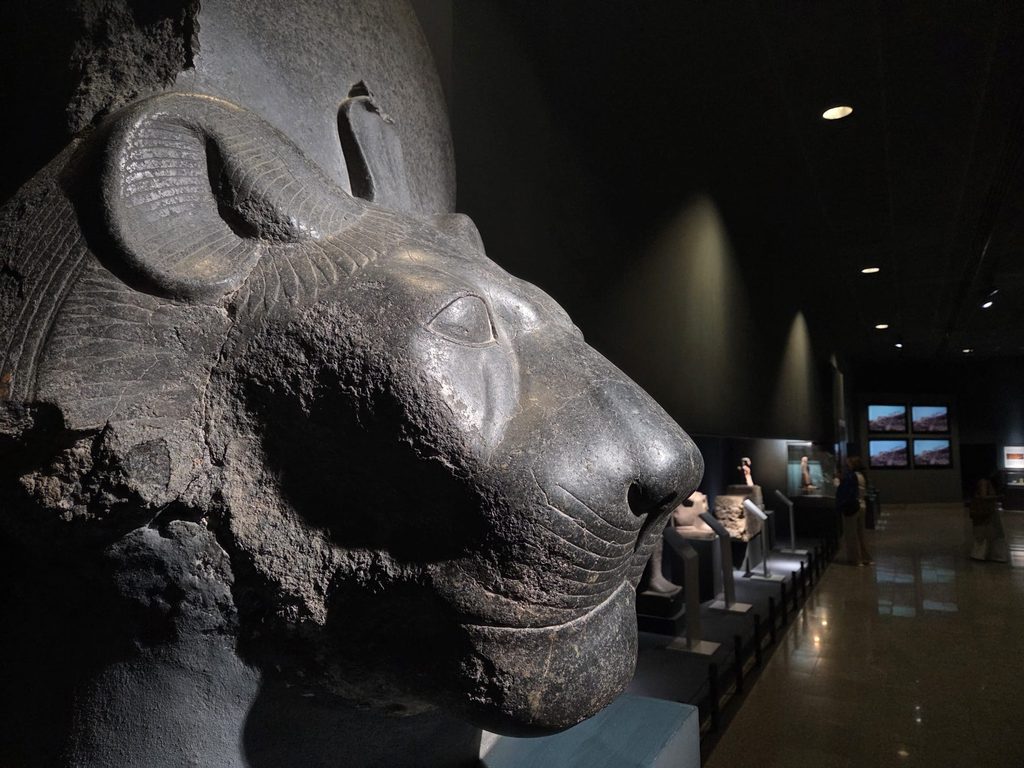
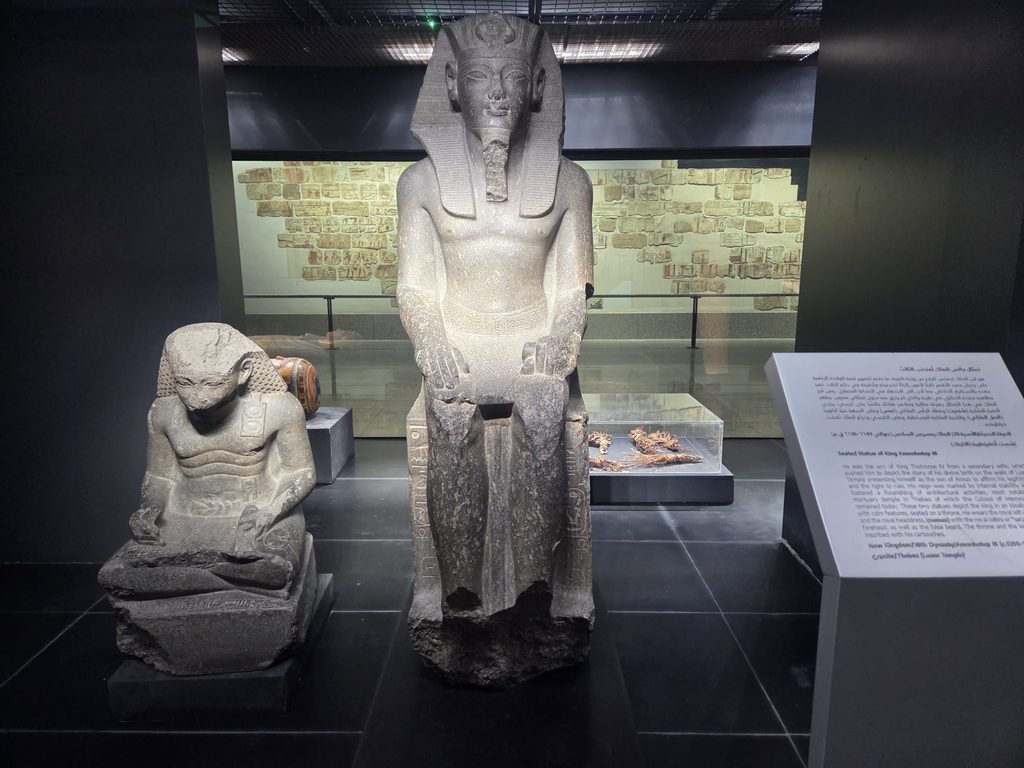
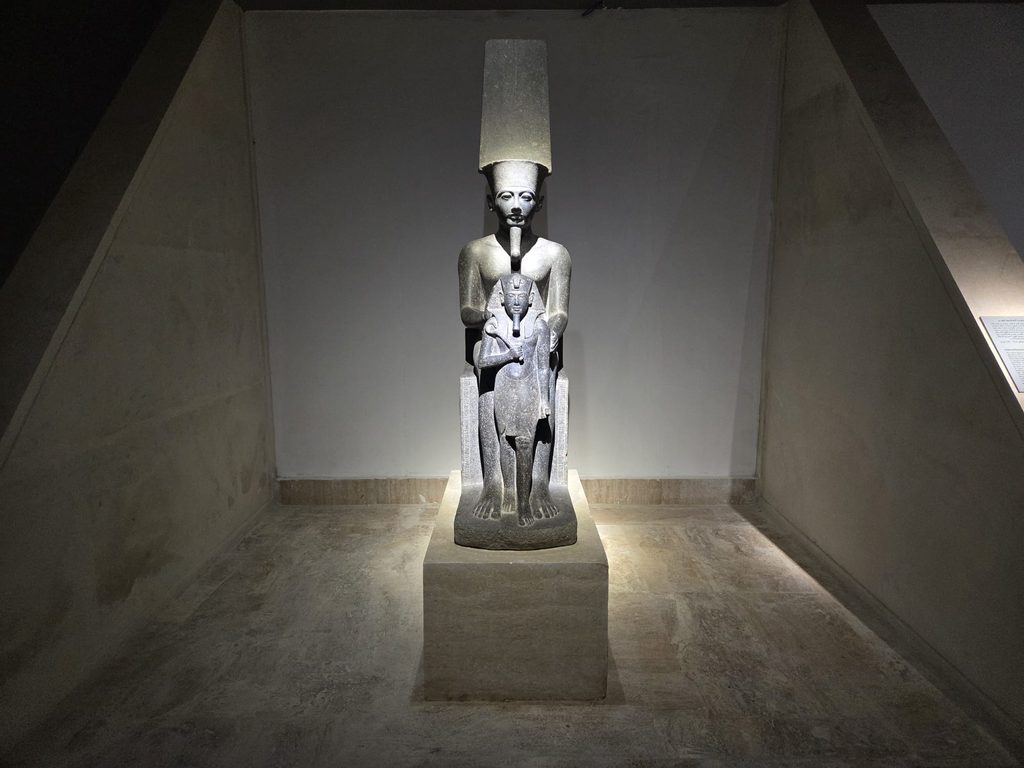
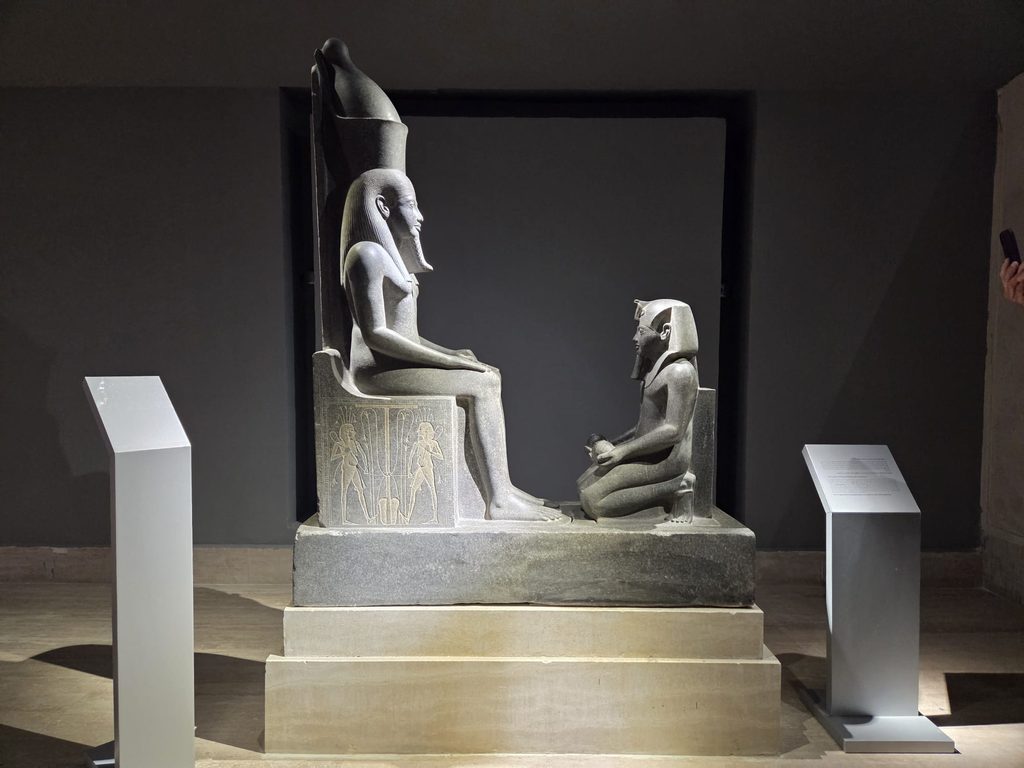
Going back to Ancient Egypt, Luxor Museum has riches. Most come from the Theban Necropolis, including an impressive double statue in alabaster of the crocodile-headed god Sobek with Amenhotep III. Other highlights include what is known as the Luxor statue cache, and a reconstructed wall from Akhenaten’s temple at Karnak, both of which I’ll talk about more below. One of the few examples of Old Kingdom art found at Thebes is here, a relief of Unas-ankh from his tomb. If you recall my earlier posts, Thebes didn’t become Ancient Egypt’s capital until the 11th dynasty, which is the Middle Kingdom. There’s also a nice seated statue of famous scribe Amenhotep, son of Hapu – so good at his job he was later deified.
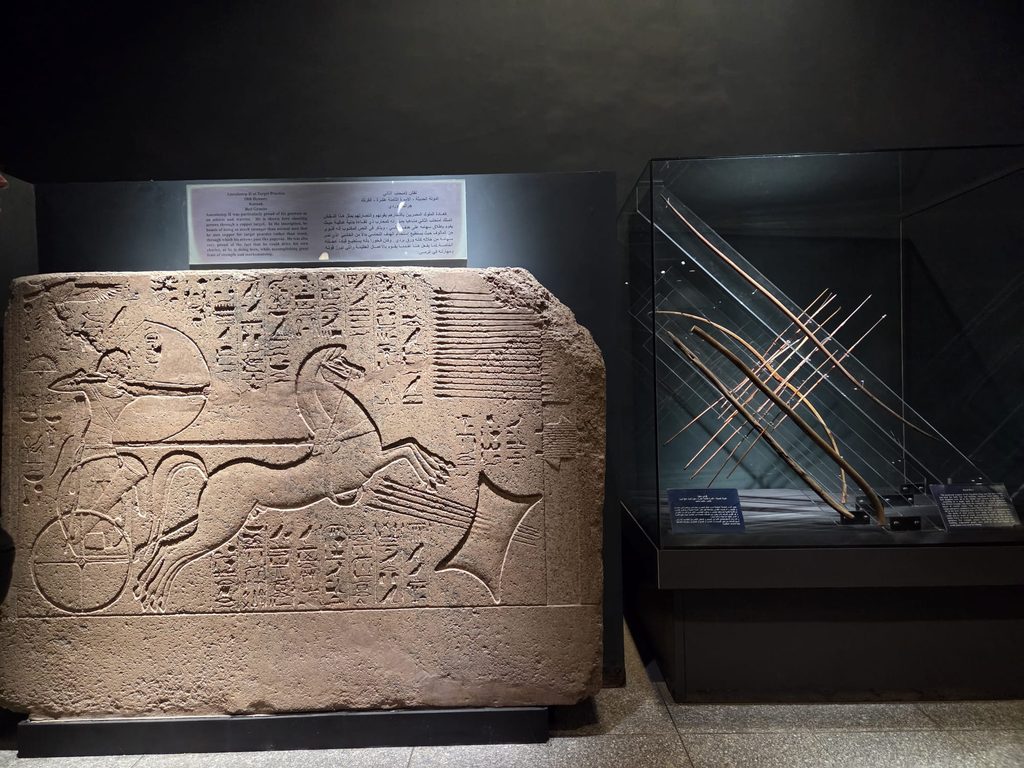
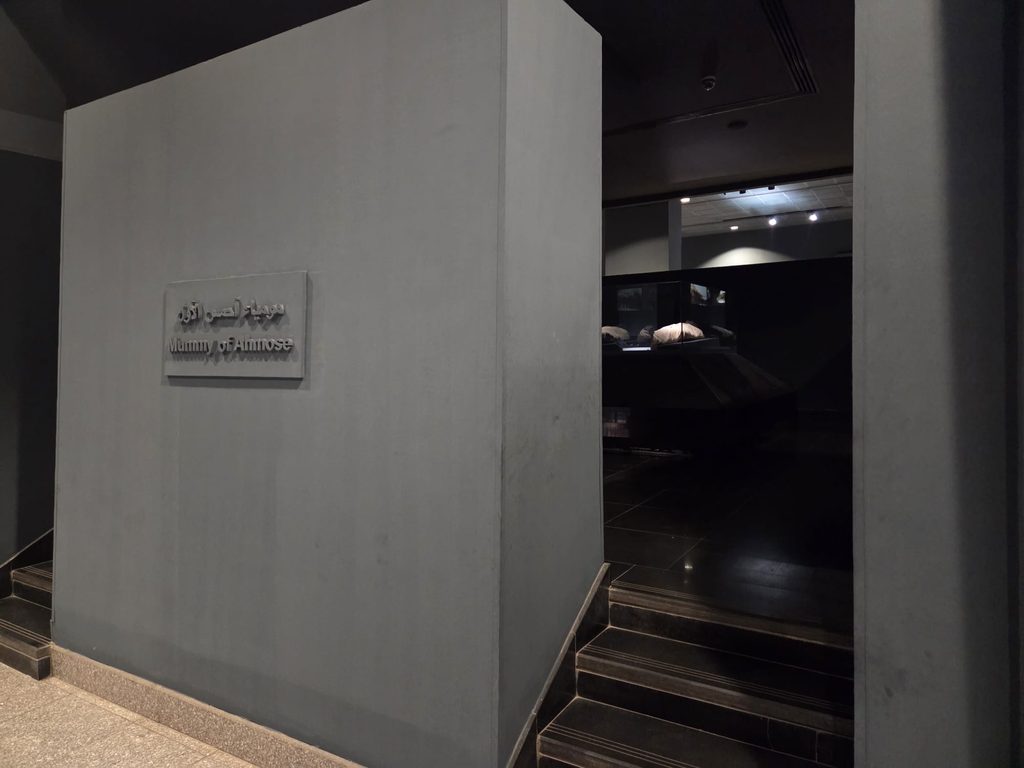
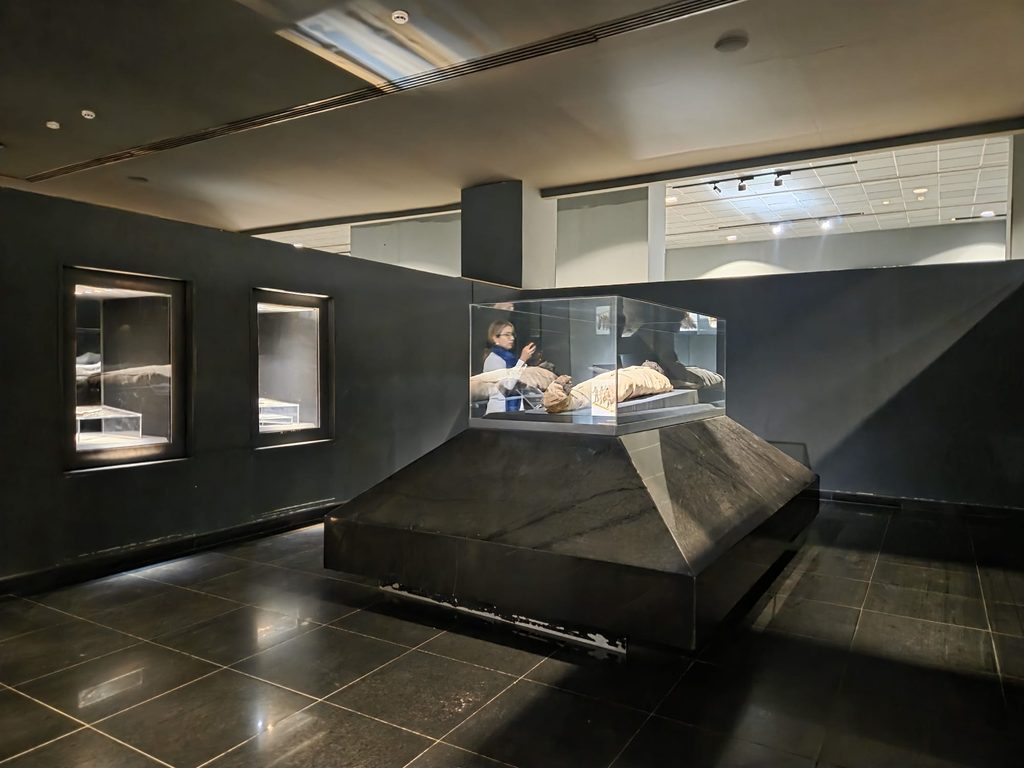
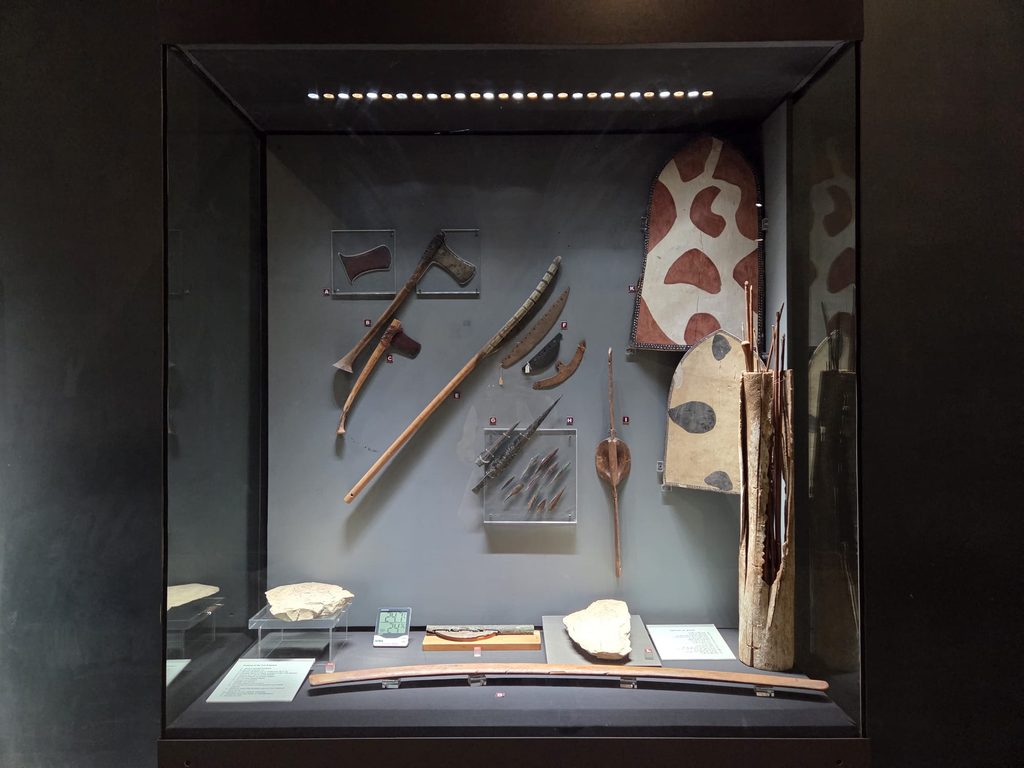
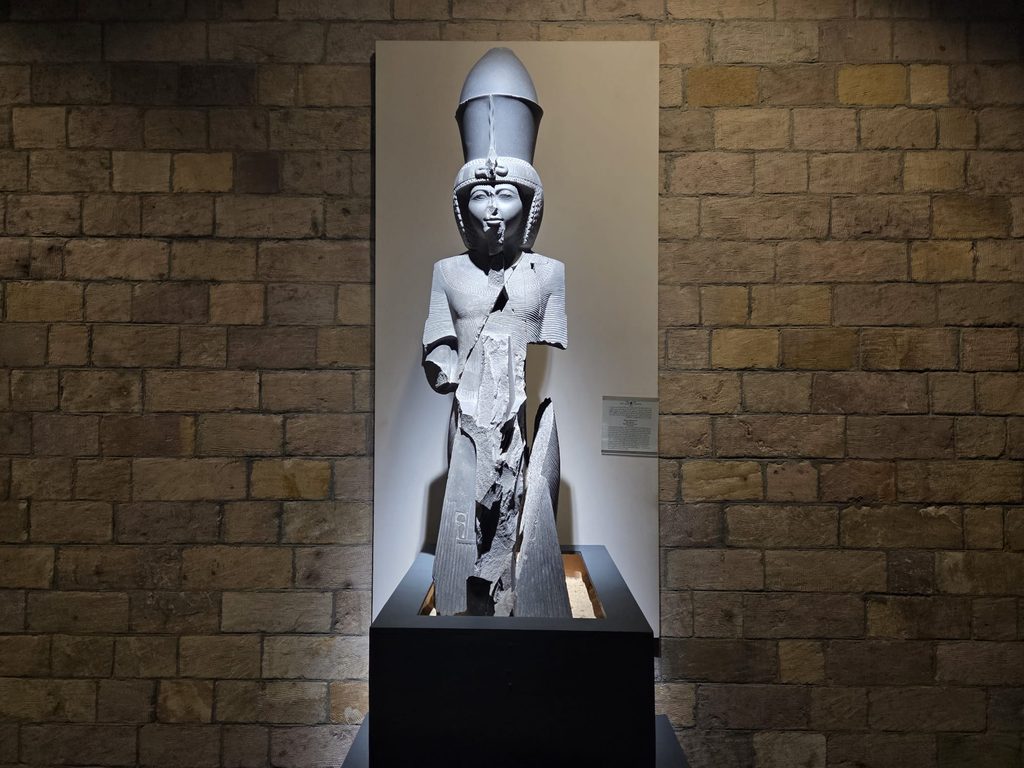
Other things to look out for include a relief and greywacke statue of Thutmose III, Until the opening of the GEM there were a few of Tutankhamun’s grave goods here (shabti, a model boat, sandals, arrows), but one of the aims of the new museum was to have all 5,398 objects displayed in one place for the very first time. The 2004 extension did allow for some new exhibits focusing primarily on the New Kingdom, including the mummies of Ahmose I and Ramses I. Displays here focus on Thebes’ glory years, including looking at military might and empire building.
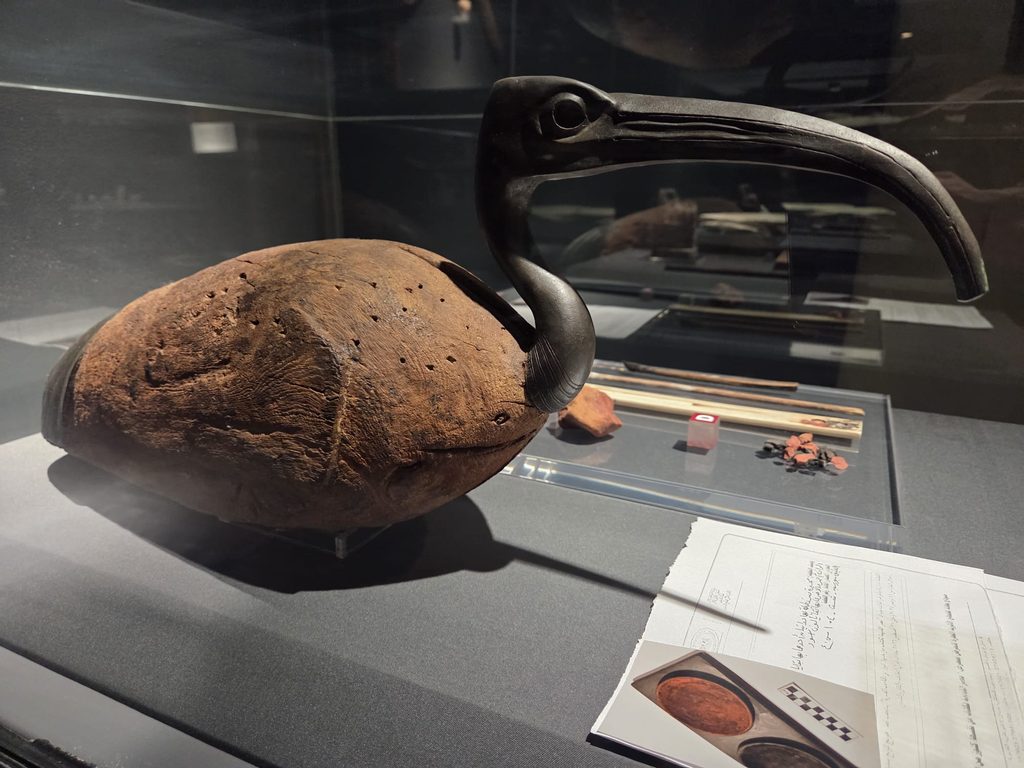
Mummies in Museums
I just want to come back to one point in a bit more detail, and that is the display of those two royal mummies. A very long time ago I wrote a thesis about repatriation and restitution from museum collections, and read a lot about human remains in museums and the ethics surrounding them. It’s a topic I’ve continued to find interesting since.
You will almost undoubtedly come across at least one mummified body during a trip to Egypt. Best case scenario, it’s still in its sarcophagus. Medium case, it still has its wrappings. Worst case, it doesn’t. I’ve written about the discovery of many royal mummies in a cache near the Valley of the Kings in 1881. Many of them are now in the National Museum of Egyptian Civilisation in Cairo. You can see Tutankhamun’s body, under a sheet, in his tomb. I saw the bodies of his great-grandparents Yuya and Tuya at the Egyptian Museum in Cairo. Presumably our other option for today, the Mummification Museum, has more mummies.
But should we be looking at these bodies in a museum setting? The individuals themselves couldn’t have conceived of such a scenario. Do their imagined wishes count? Does the fact that there isn’t a continuous culture in Egypt mean there’s less call to honour these individuals by taking them off display? Or is it the cultural prominence of the concept of Egyptian mummies that normalises it? I’ve raised a lot of ethical questions now and don’t have time to answer them.
But the reason they came to mind as I visited Luxor Museum was the exhibit labelled ‘Mummy of a Pharaoh’. Potentially part of the Deir el-Bahari cache originally, this poor mummy ended up in Niagara Falls Museum – Canada’s oldest museum but actually more of a cabinet of curiosities. Here he remained for 140 years, until the museum closed in 1999. Then he passed through the hands of a treasure hunter and the Michael C. Carlos Museum in Atlanta, Georgia, before finally being repatriated to Egypt in 2003. Given that the mummy has been identified as Ramses I, it’s not a very noble afterlife.
If you happen to visit Luxor Museum maybe you too will give some thought to this tricky ethical conundrum.
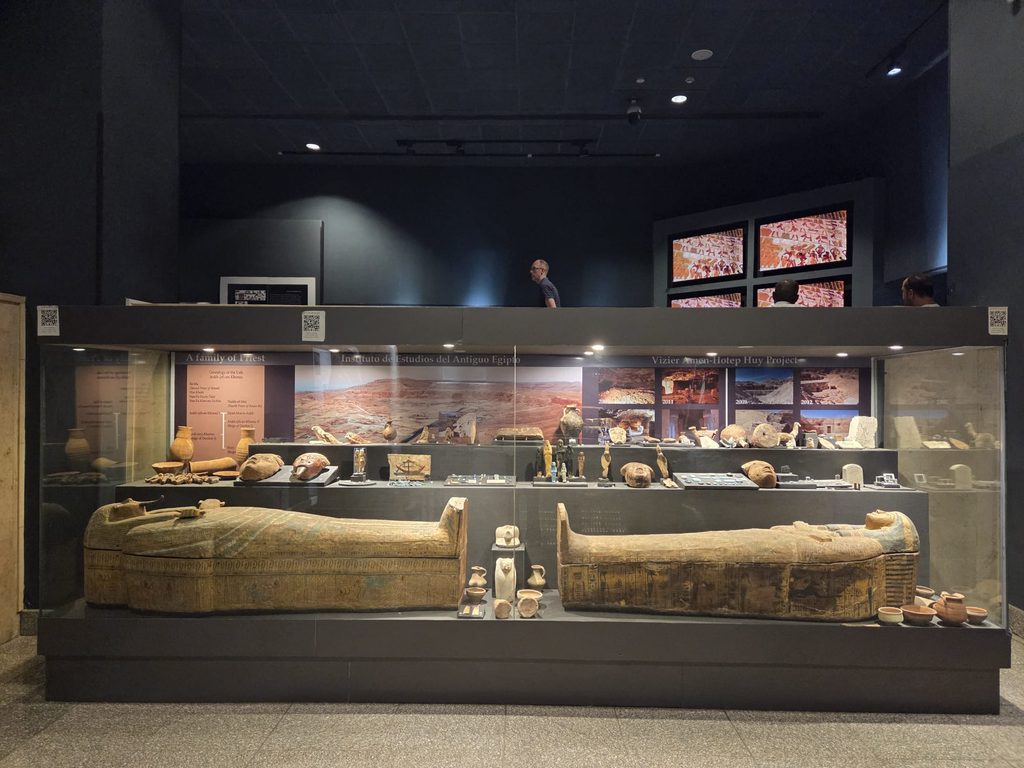
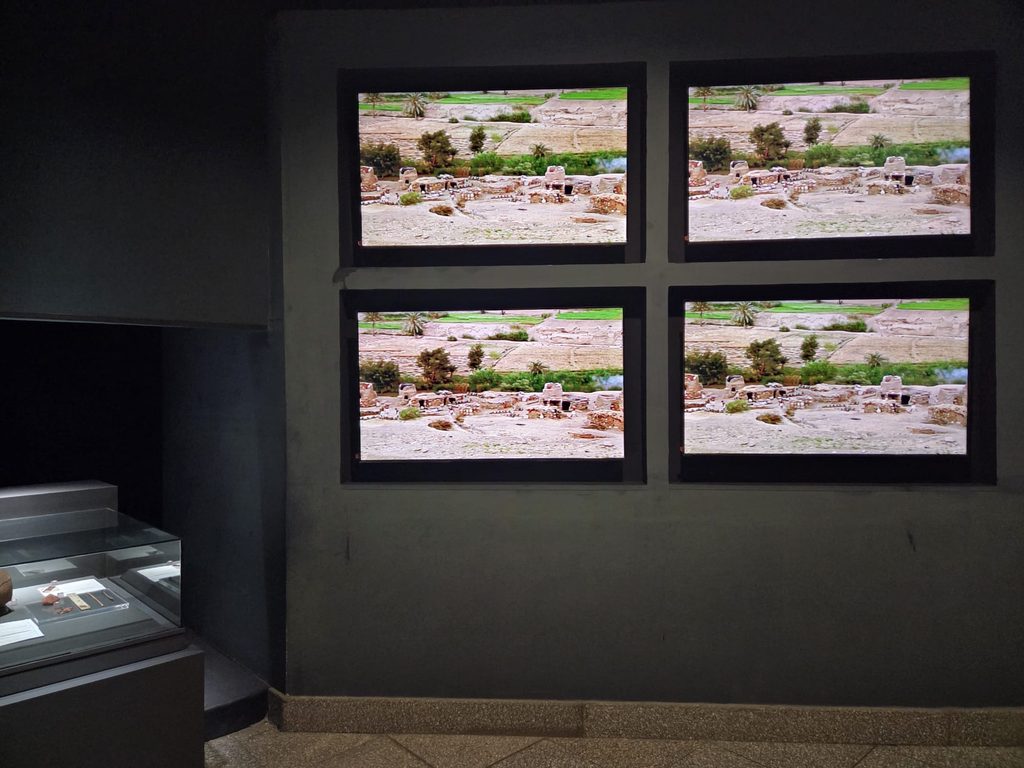
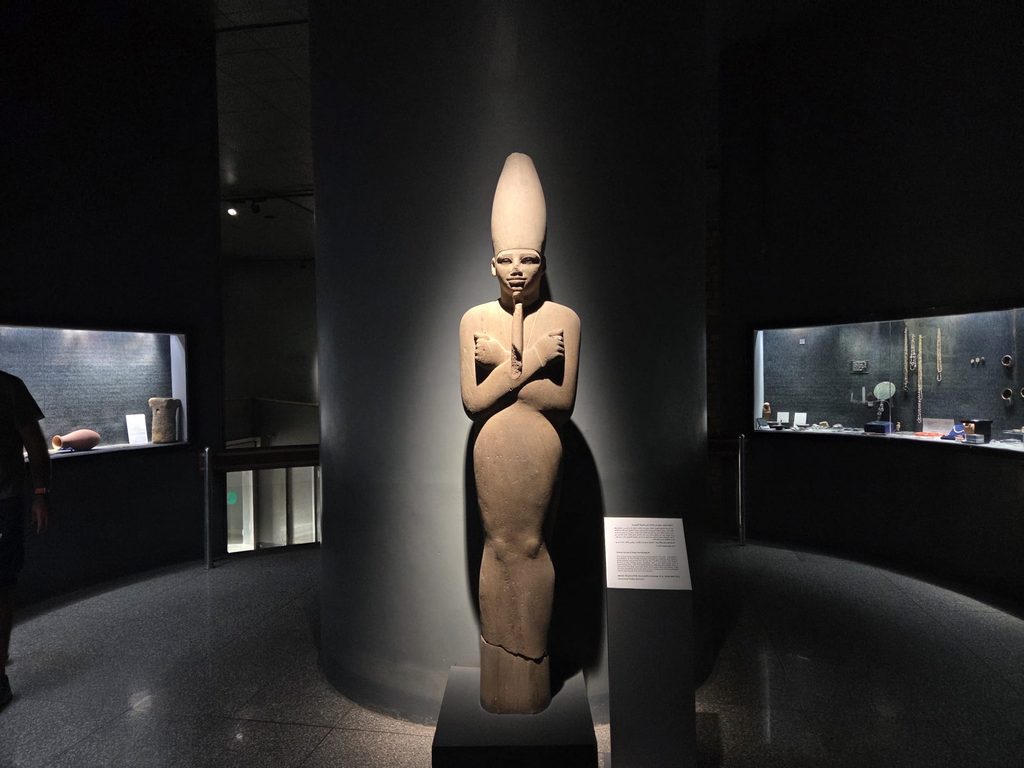
Highlights: the Luxor Cache and Ahkenaten wall
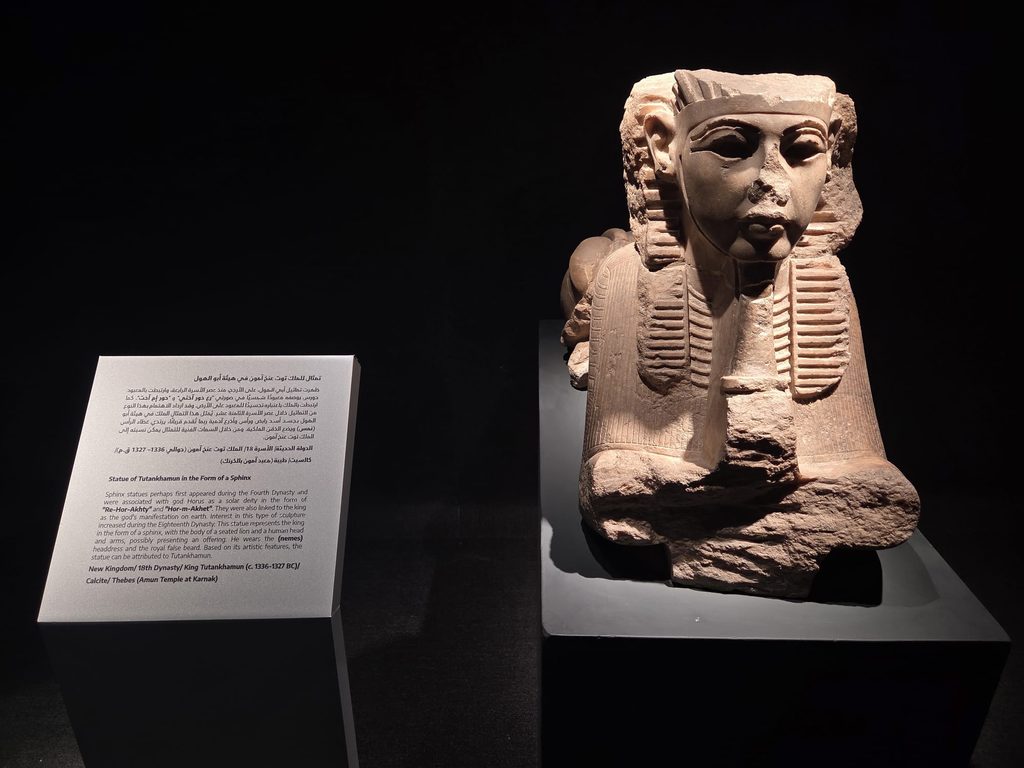
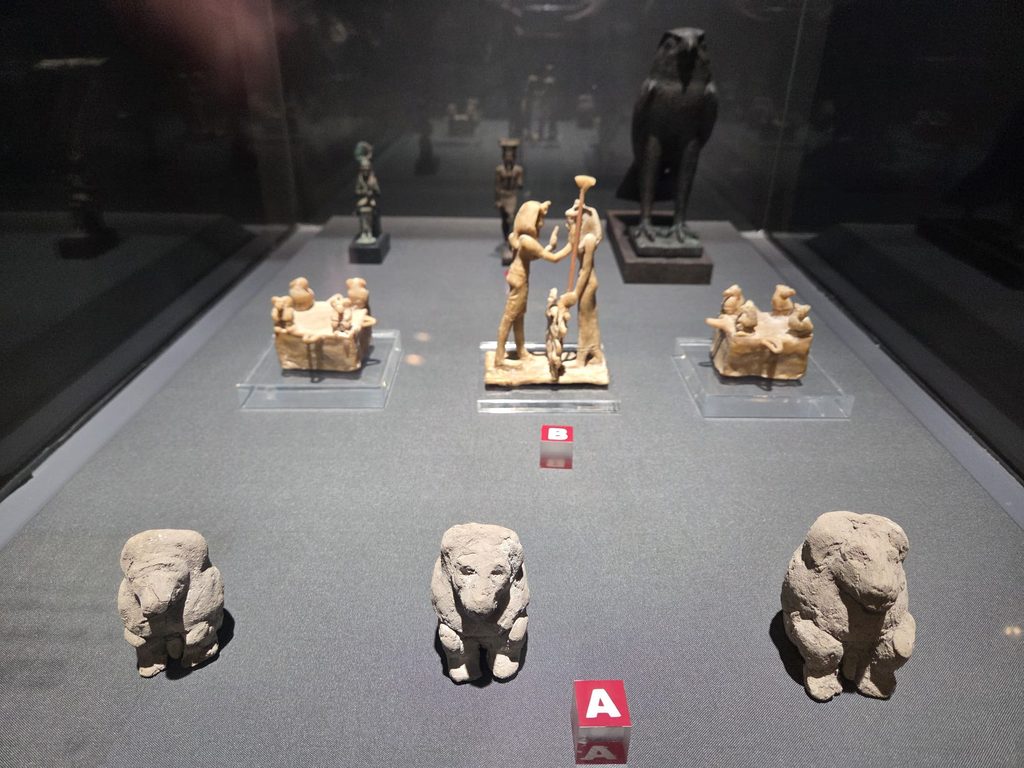
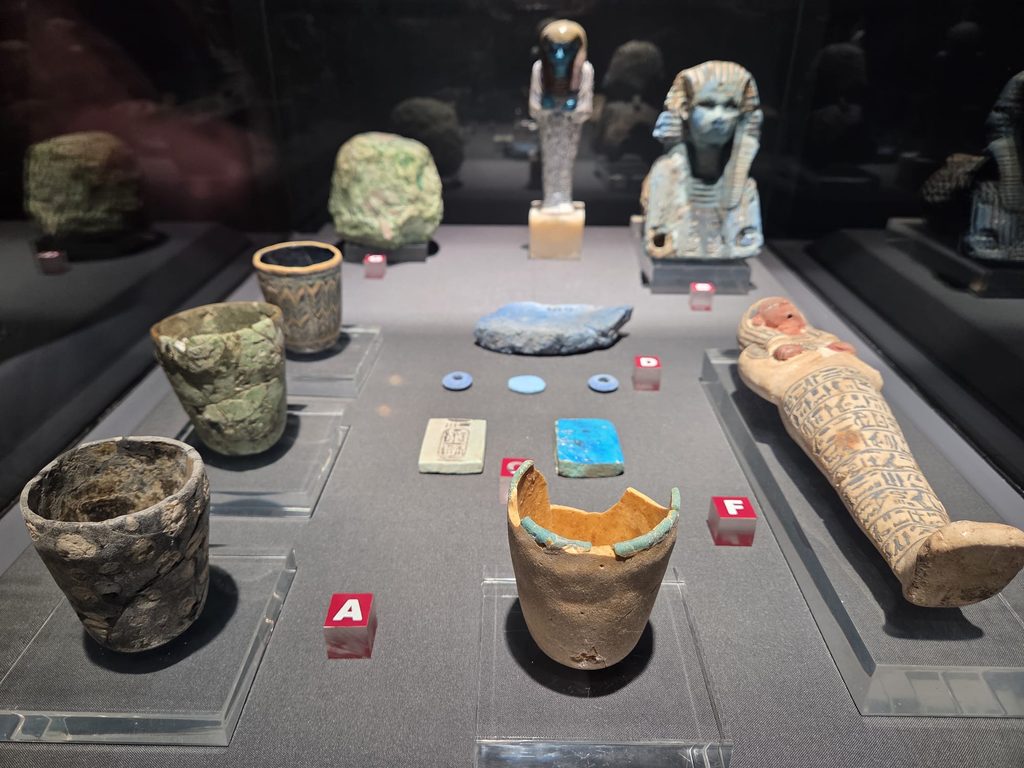
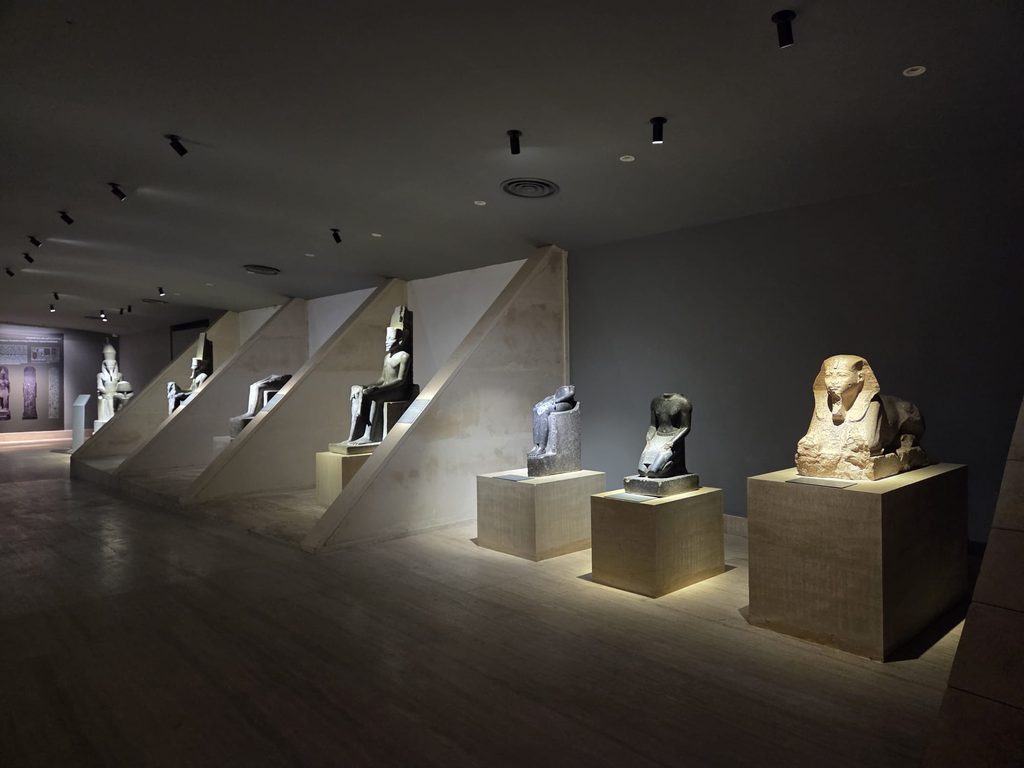
I want to take some time now to tell you about two of the highlights of Luxor Museum. The first is the Luxor Cache. The Urban Geographer and I almost missed it, being as it’s tucked into a room on its own just before the exit. If you’re planning to visit I would recommend going there first, as you want to still have the energy to properly take it in. The Luxor Cache was discovered in 1989 within the grounds of Luxor Temple. It consists of 22-26 statues (I’ve seen varying accounts), buried around the time of the conversion of the temple into a Roman military camp. It’s possible this was the motivation behind the burial – perhaps an attempt to conceal the statues rather than leave them out in the open.
Some of the statues were already damaged in antiquity, while others are almost pristine. Luxor Museum displays 16 of them, with a quartzite statue of Amenhotep III in pride of place. The cache was discovered under his solar court. There are also statues of the goddesses Iunyt and Taweret, and the pharaohs Thutmose III and Tutankhamun as sphinxes. The statues look great and are well-lit, and there is a multimedia display to learn more about them.
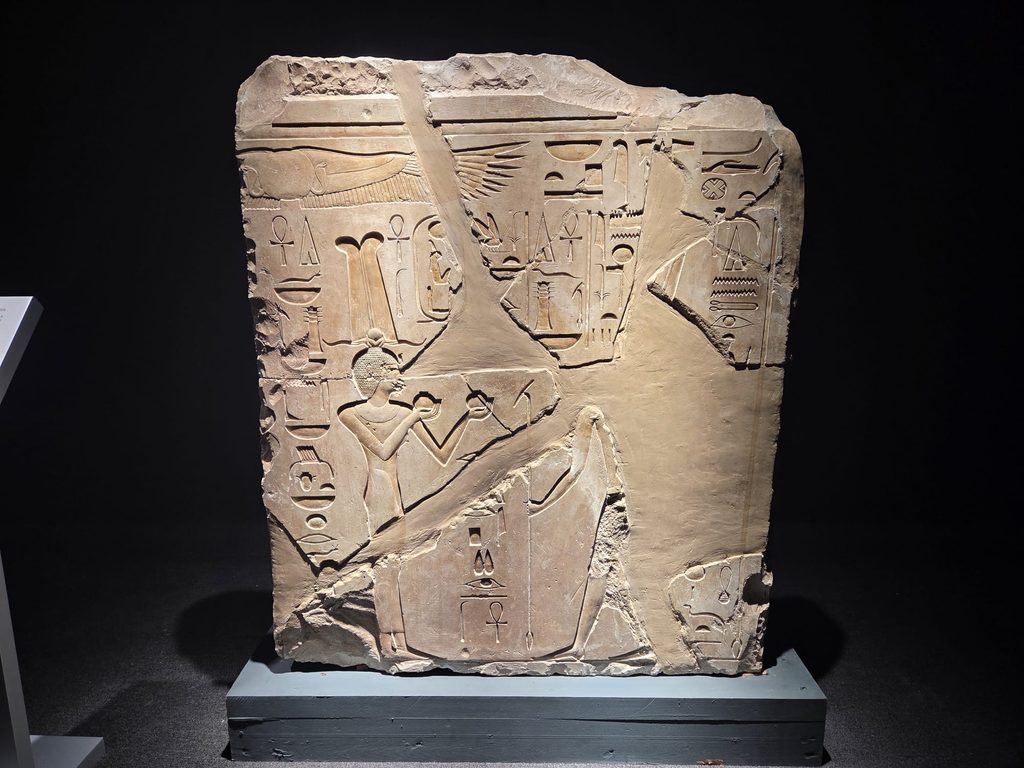
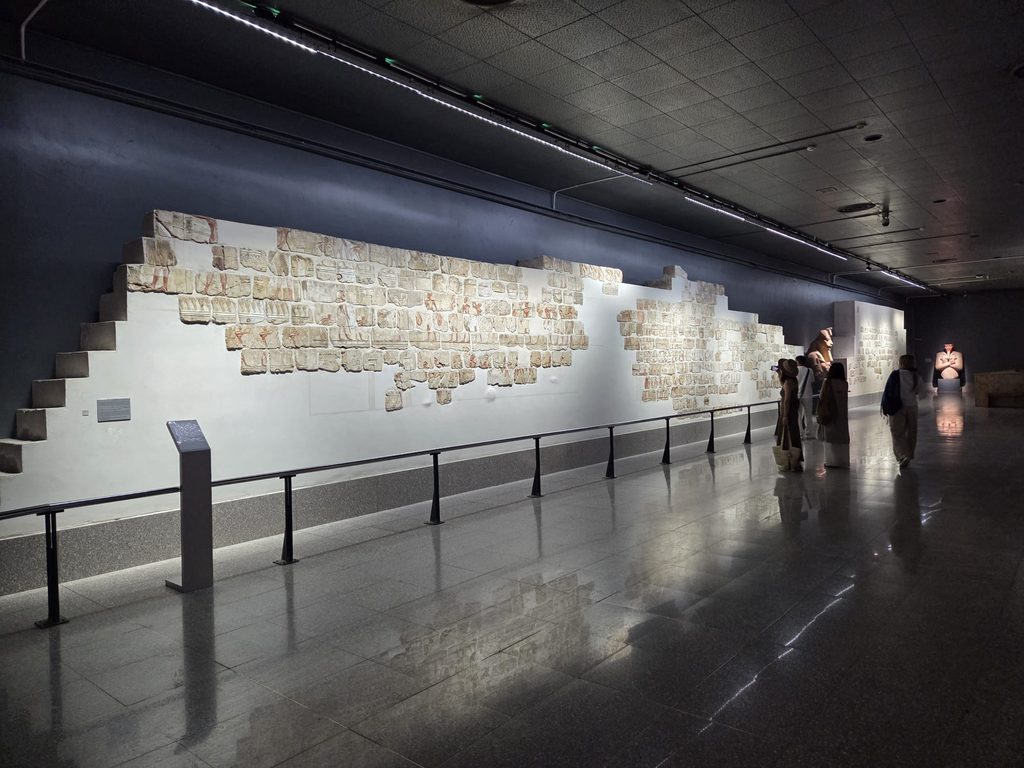
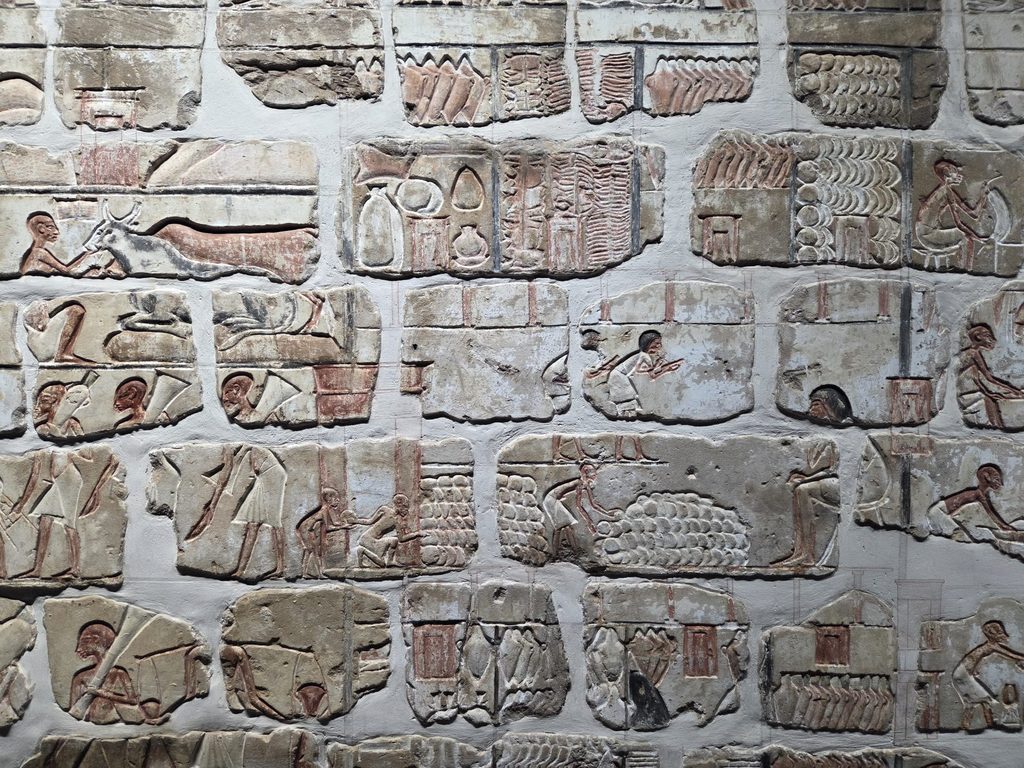
The second highlight I really enjoyed was the Wall of Akhenaten. As the name suggests, this is a wall, or the remains of one. It consists of small sandstone blocks that were originally part of Amenhotep IV’s temple at Karnak. If you remember, Amenhotep IV started his own religion, changed his name to Akhenaten, and moved the royal capital from Luxor. His religion, the monotheistic worship of Aten, didn’t survive his death. His temple at Karnak was destroyed, and these stones used as rubble for later building works. Having heard a lot about Akhenaten during our week in Egypt, it was interesting to see images of him and his wife Nefertiti worshipping their new god.
Goodbye Egypt (For Now)
And with that, we say goodbye to Egypt! For now at least – I would love to return. There is so much I have yet to see and experience, geographically, historically, and archaeologically. Hopefully this is just the first of many trips.
It’s been wonderful, though. Starting out in Cairo, and seeing the last Wonder of the Ancient World, as well as one of the world’s best new museums. Heading all the way down to Abu Simbel, and then to Aswan. Sailing on the Nile, stopping off at Kom Ombo and Esna along the way. And then the riches in and around Luxor.
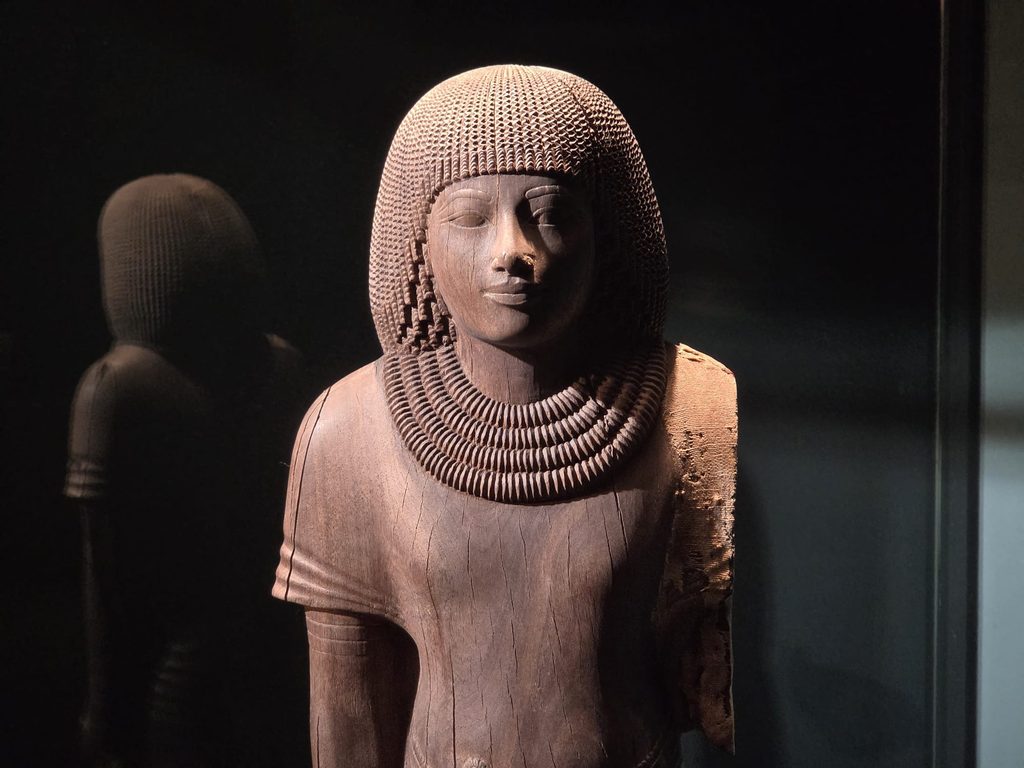
In a way, Luxor Museum was a perfect place to finish. We saw artefacts from many of the periods we had learned about. There was a rich blend of gods, god-like pharaohs, and a few ordinary people, too. There were statues, mummies, grave goods, personal adornments – many of the types of objects that have taught us about the lives of Ancient Egyptians. And the beautiful presentation and careful labelling in Luxor Museum means you can take your time and really enjoy what’s on view. Once we had done this, including a stop to see the Luxor Cache, we got drinks and sat at the museum cafe as the sun went down. We had one final stop, to see the Karnak Sound & Light show. But we were satisfied with our last day in Egypt, and almost ready to go home again.
Thinking ahead to a future visit to Egypt, I’d love to know your thoughts. Is there anything I’ve missed in Luxor? Or should have at the top of my list? Let me know in the comments!
Trending
If you see this after your page is loaded completely, leafletJS files are missing.