
Secession, Vienna
A final Salterton Arts Review stop in Vienna as we visit the hugely influential Secession exhibition building, to see some contemporary art and Klimt’s wonderful Beethoven Frieze.
A Final Stop in Vienna
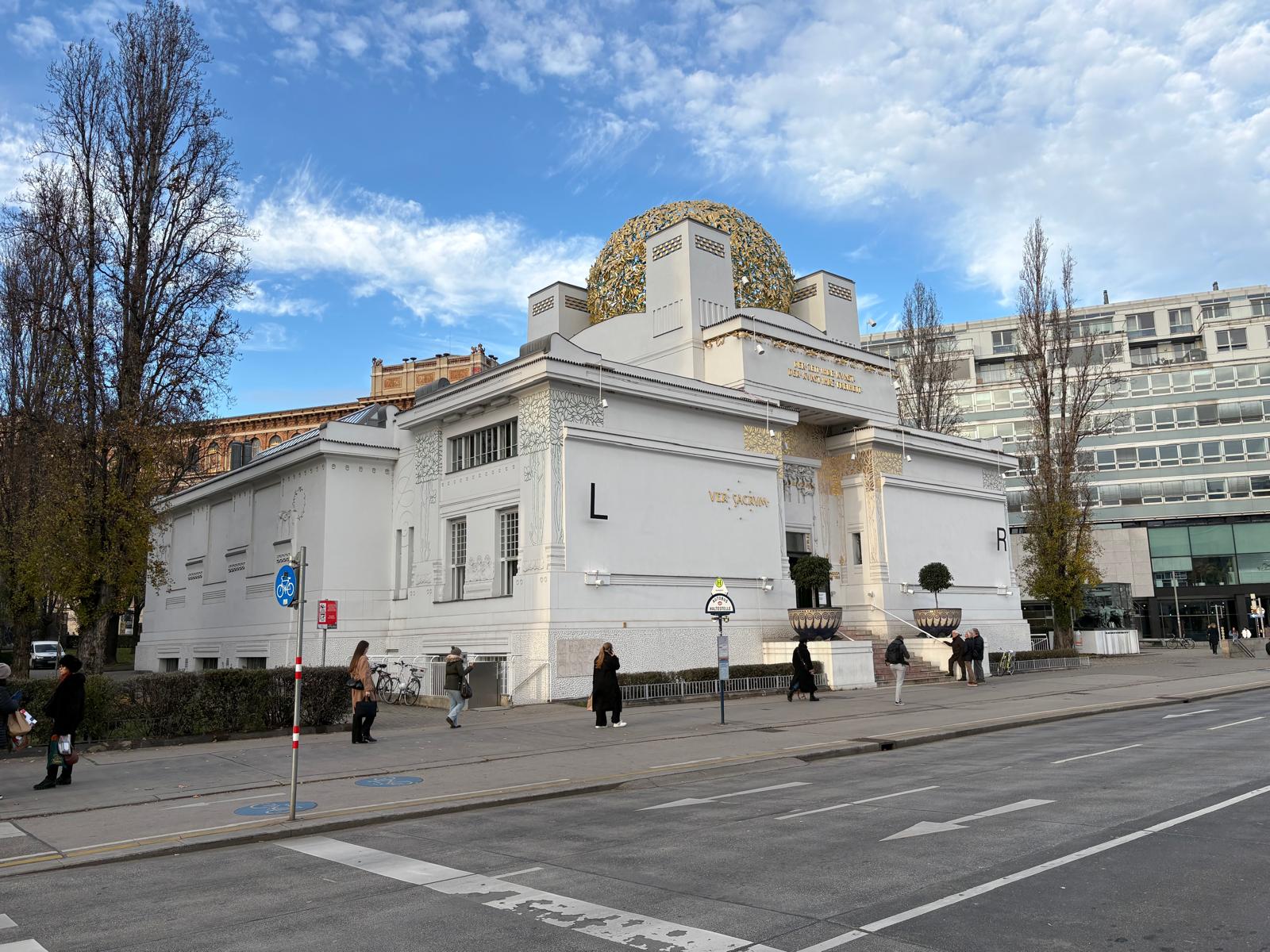
The Secession (or Secession Building, or Secession Museum, or Vienna Secession) is an institution I didn’t quite have on my list to visit while I was in Vienna. But it did exert a pull which saw me dragging the Urban Geographer to visit it on our last afternoon in the city. As is often the case, it was partly happenstance. We walked past it earlier in the weekend, but the Urban Geographer’s lacklustre reaction meant we kept moving. But when we had a late lunch within view of it, my desire to see inside got the better of me. And I’m really glad we visited: I have a bit of a soft spot for the various Art Nouveau-adjacent movements of this era, and enjoying the experience of visiting the famous Beethoven Frieze very much.
But first things first. I’d like to explain the Vienna Secession to you in a nutshell. We’re talking about the movement, to begin with, not the building. As I mentioned, it’s one of several similar movements around this time, on two different axes.
Firstly, there’s the move away from the strict Academy system which regulated who was a real artist and who wasn’t in many European countries. The Royal Academy’s annual exhibition, for instance, and election as an Academician, were markers of success in Britain. But the academies also kept art conservative. The Salon des Refusés was a seminal exhibition for the Impressionists, for that reason, consisting of paintings refused by the exhibition of the Académie des Beaux-Arts. Secondly, there are the various movements in the 19th century which wanted to extend art to every facet of life, and make it accessible to all. Think Arts & Crafts, Art Nouveau, Jugendstil, and so on.
A Continuing Commitment to Contemporary Art
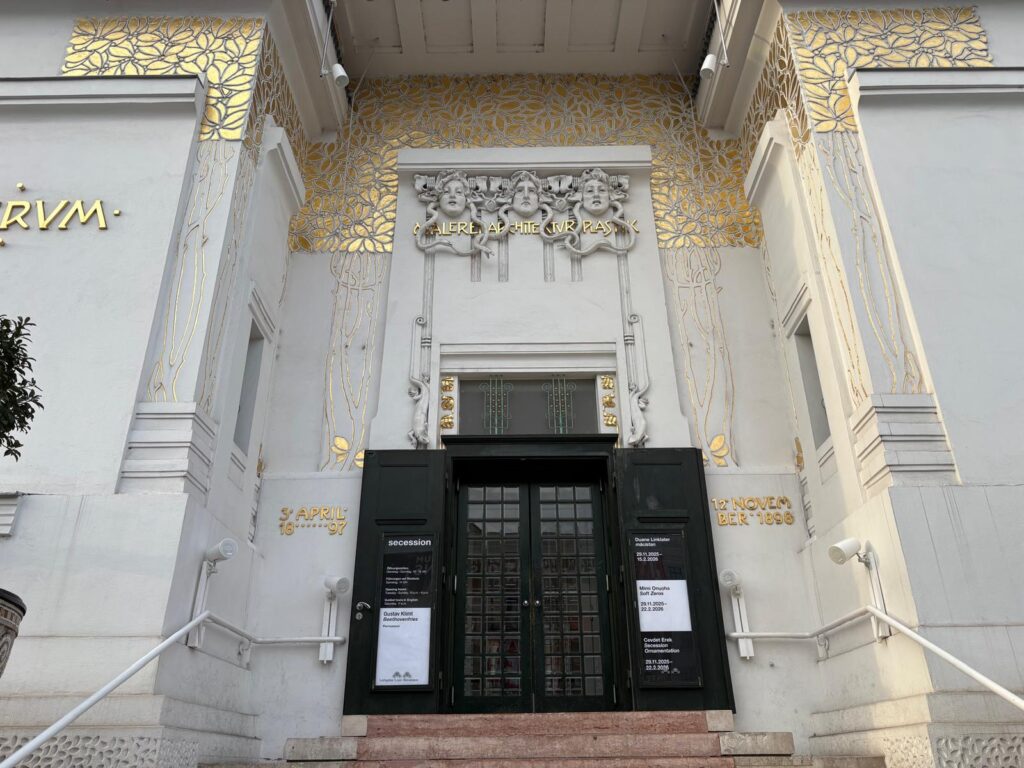
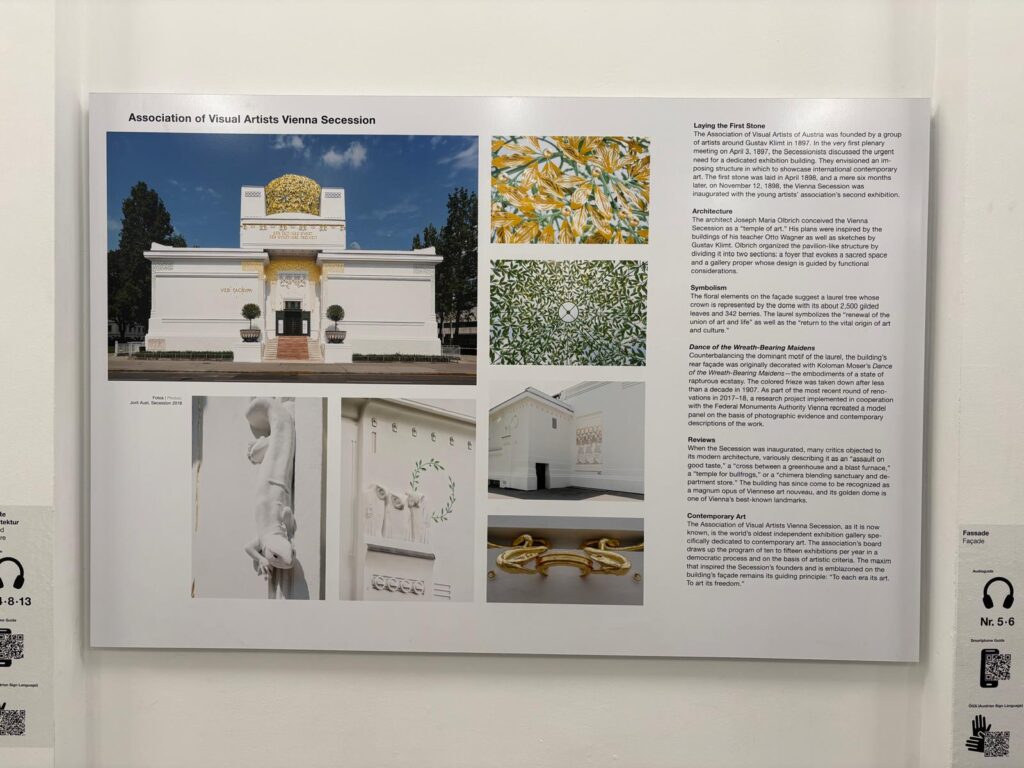
In Vienna, the Secession fulfilled both of these objectives. Artists, designers and architects including Gustav Klimt, Koloman Moser and Josef Hoffman resigned from the Association of Austrian Artists (Künstlerhaus Vereinigung) in 1897. They wanted to bring foreign artistic movements to Vienna in an exchange of ideas, and to elevate decorative arts. They built their own exhibition space to this end, designed by Joseph Maria Olbrich. The group split in 1905 with a number of key members leaving. But it remained hugely influential: the local versions of Art Nouveau are named for the Secession in most former Austro-Hungarian countries.
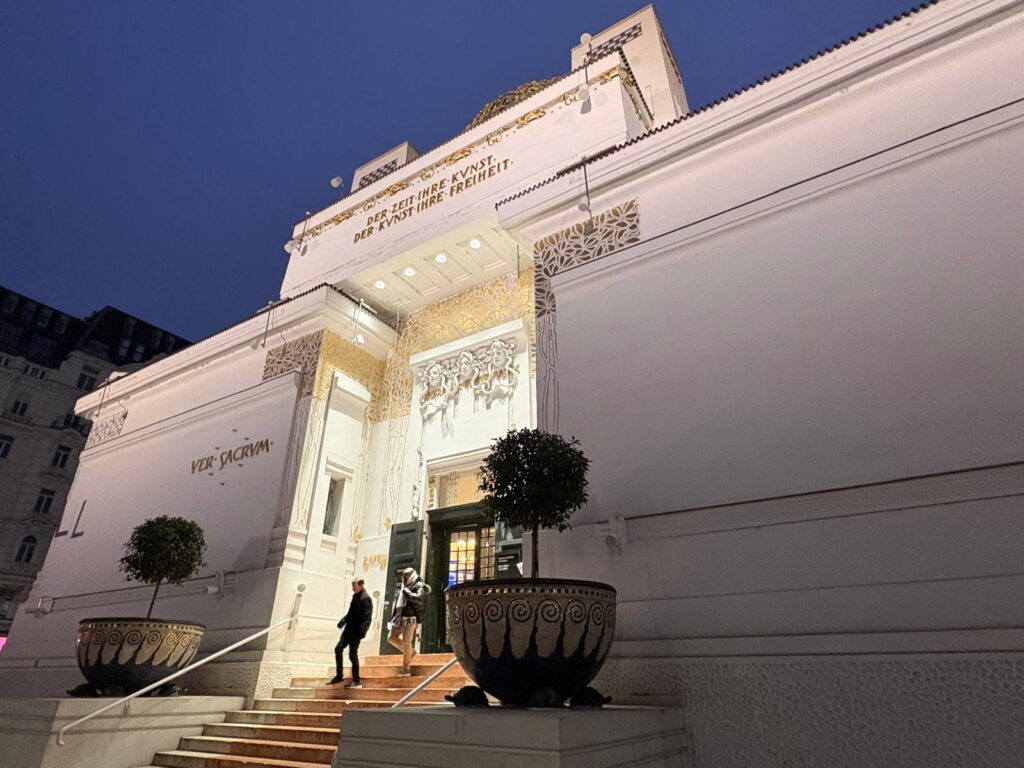
And this commitment to contemporary art and artistic exchange continues today. After a brief interruption, at least. Following the annexation, or Anschluss, of Austria, the Secession was considered ‘Degenerate Art’. The building was destroyed, and the version we see today is a faithful post-war reconstruction. Klimt escaped the ‘degenerate’ title somehow, though, and the Beethoven Frieze survived WWII in the safety of the Altaussee salt mine. More on its history in a moment.
Importantly, the Secession remains artist-run. The Association of Visual Artists Vienna Secession is now the oldest independent exhibition institution dedicated to contemporary art. It wouldn’t be unusual for an institution such as this, which began life as something radical, to soften with age and become part of the establishment. So to continue to be intentionally contemporary and experimental is impressive indeed.
Artistic Exchange in 2025/2026
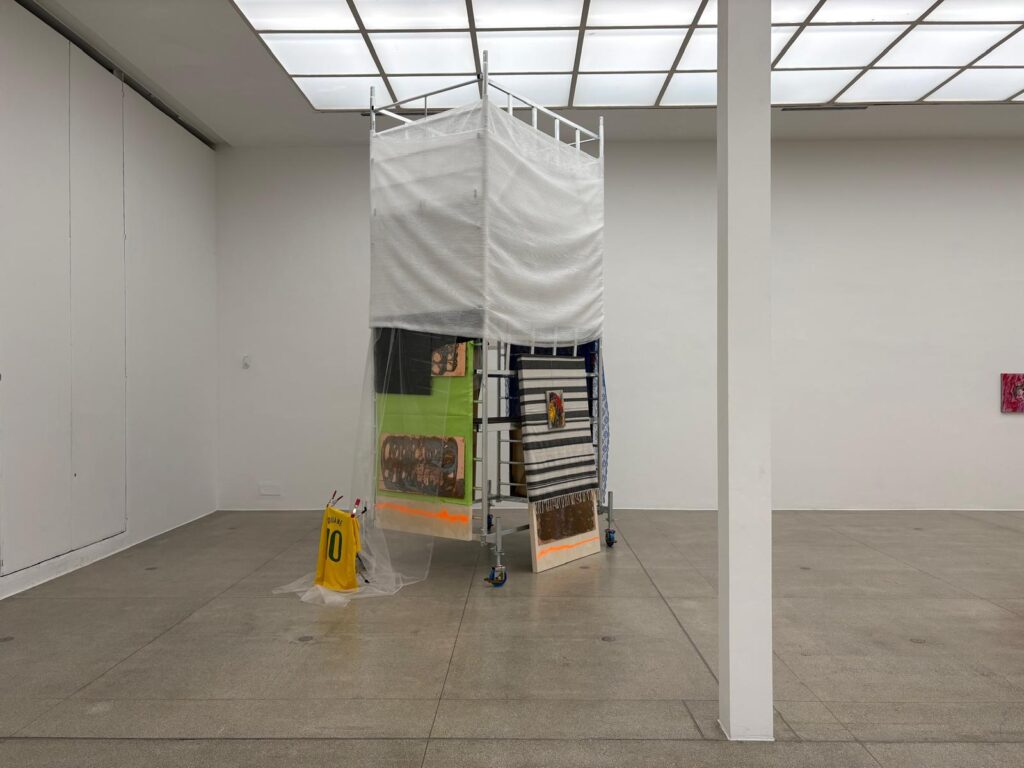
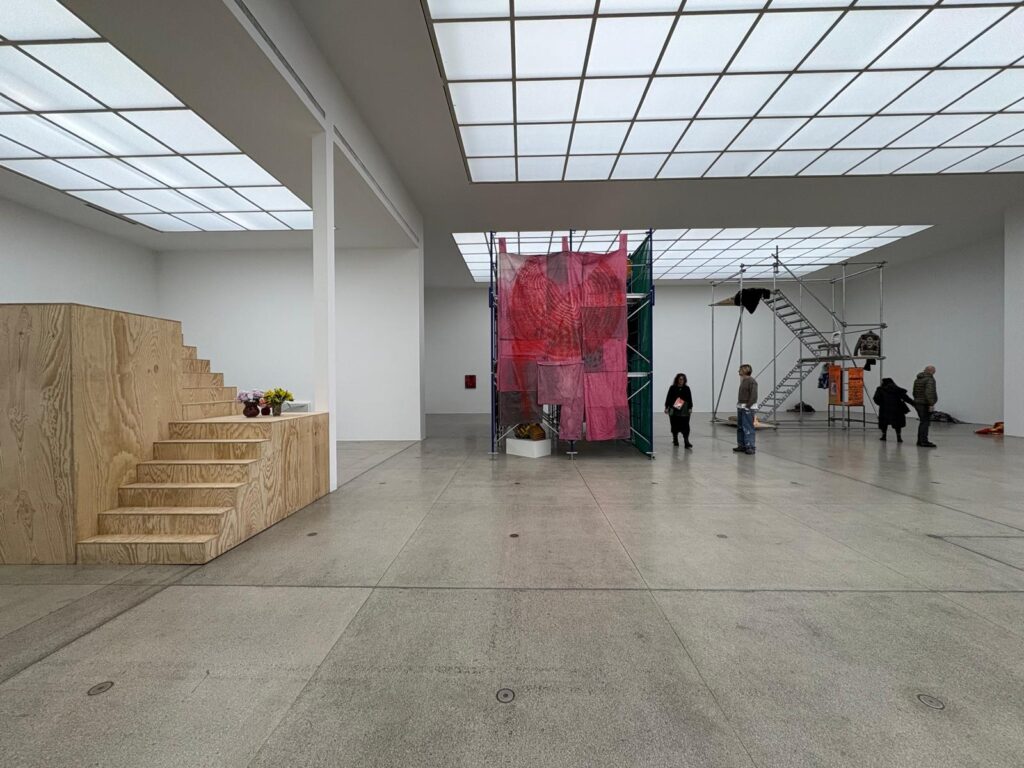
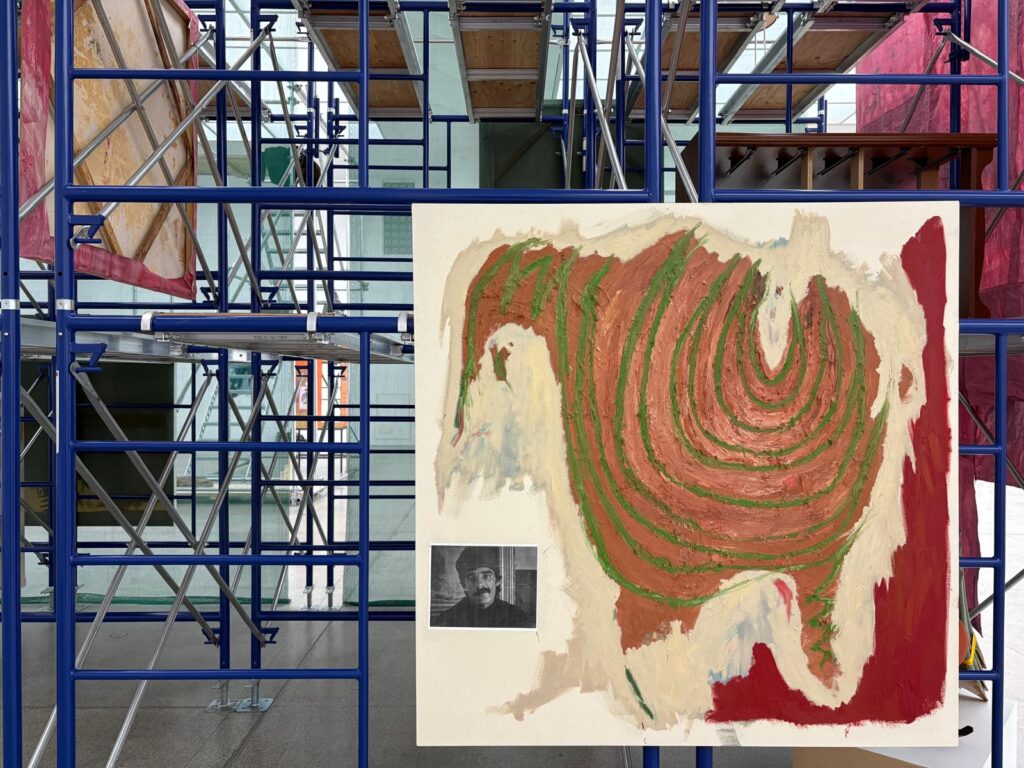
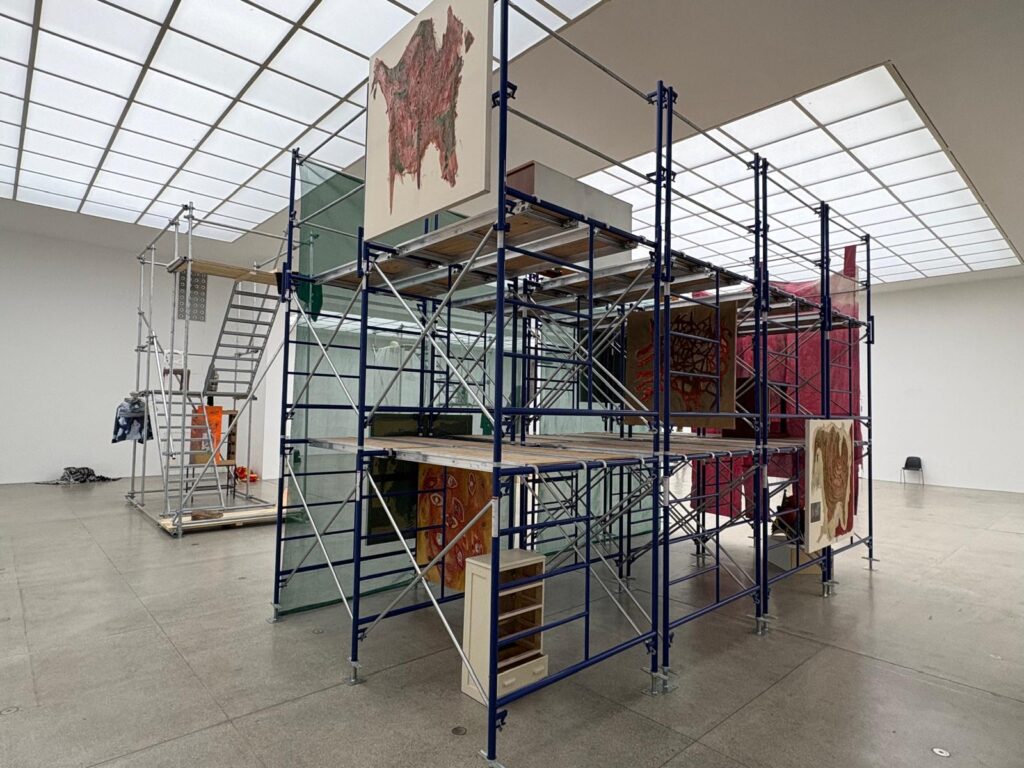
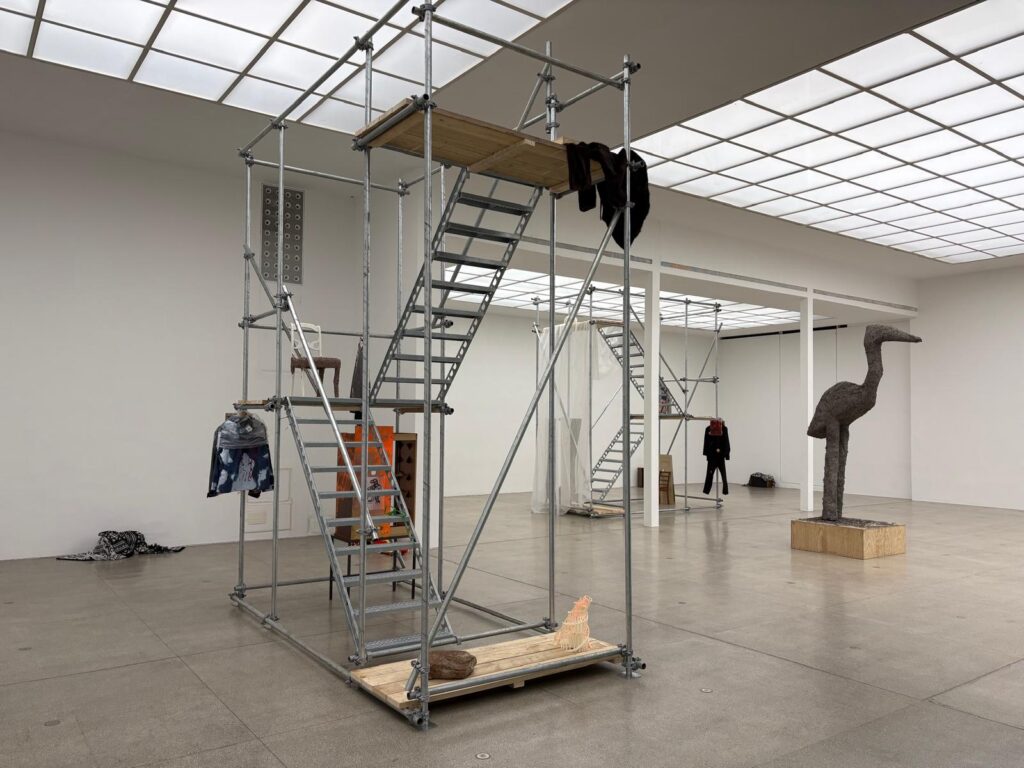
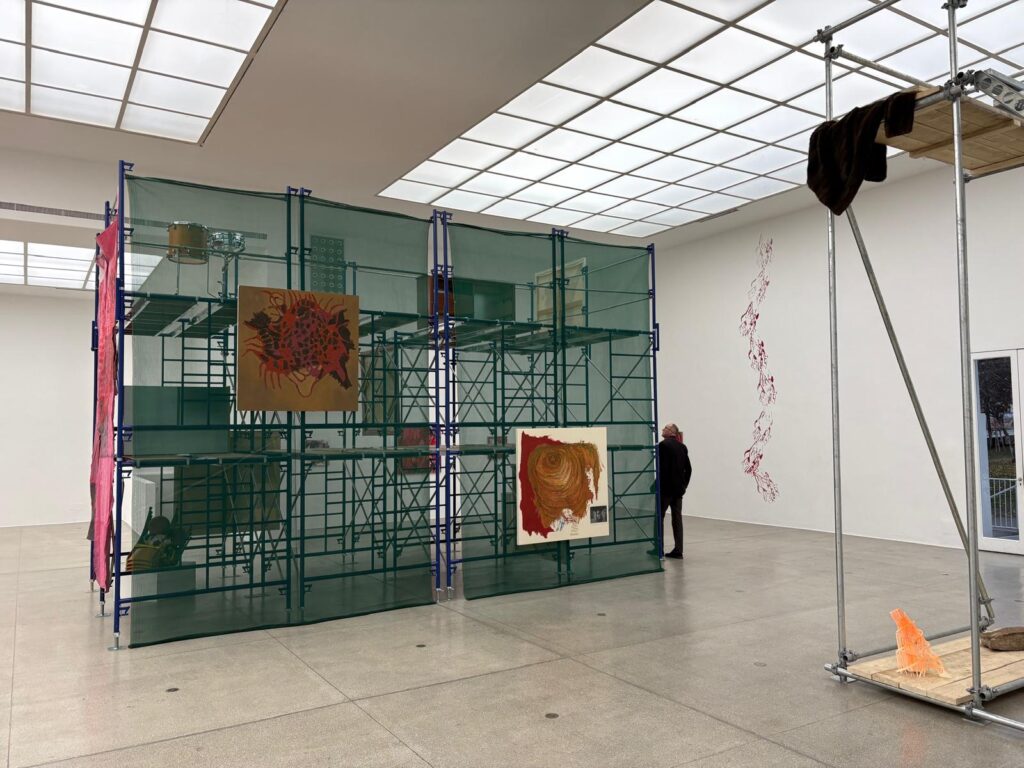
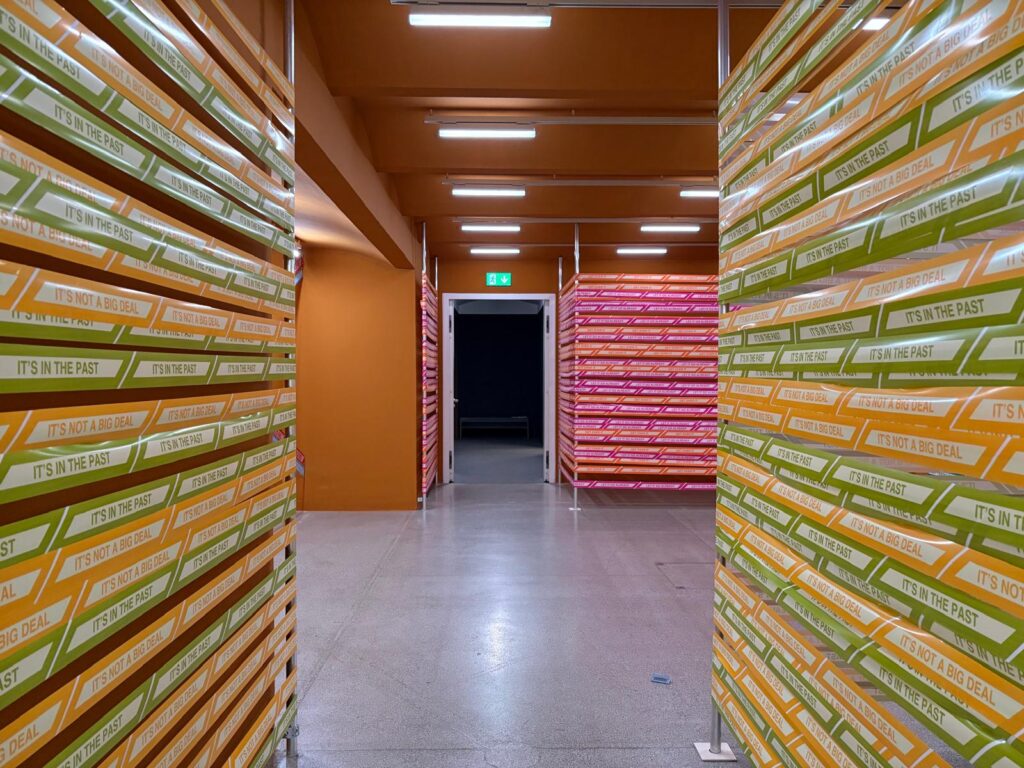
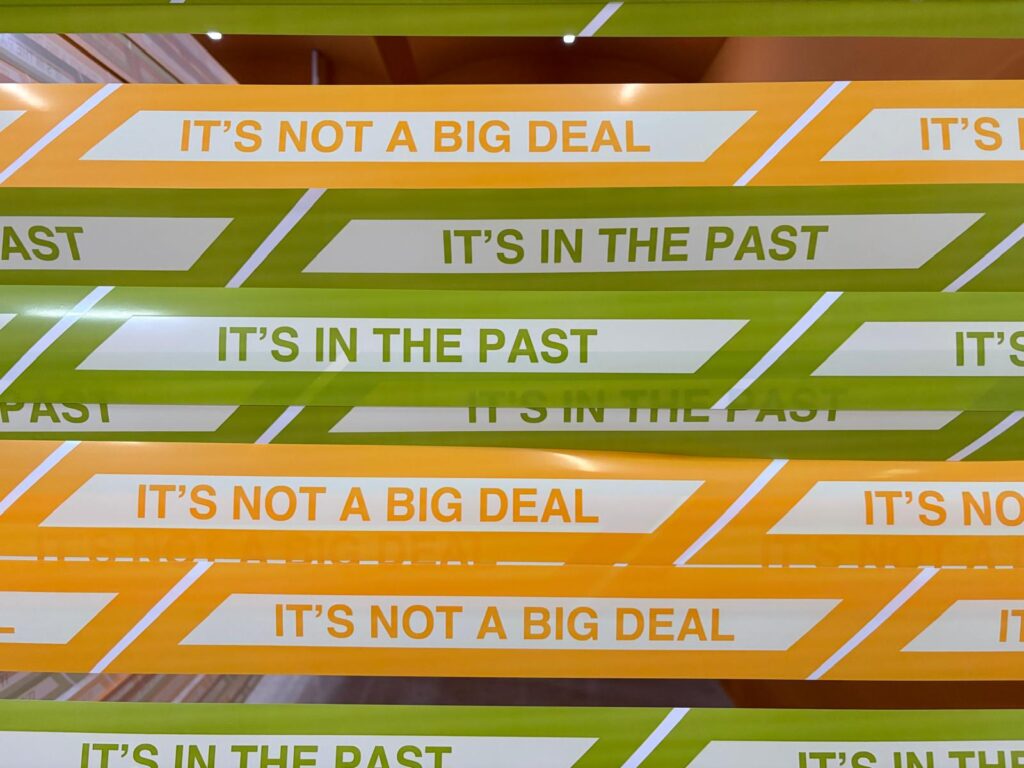
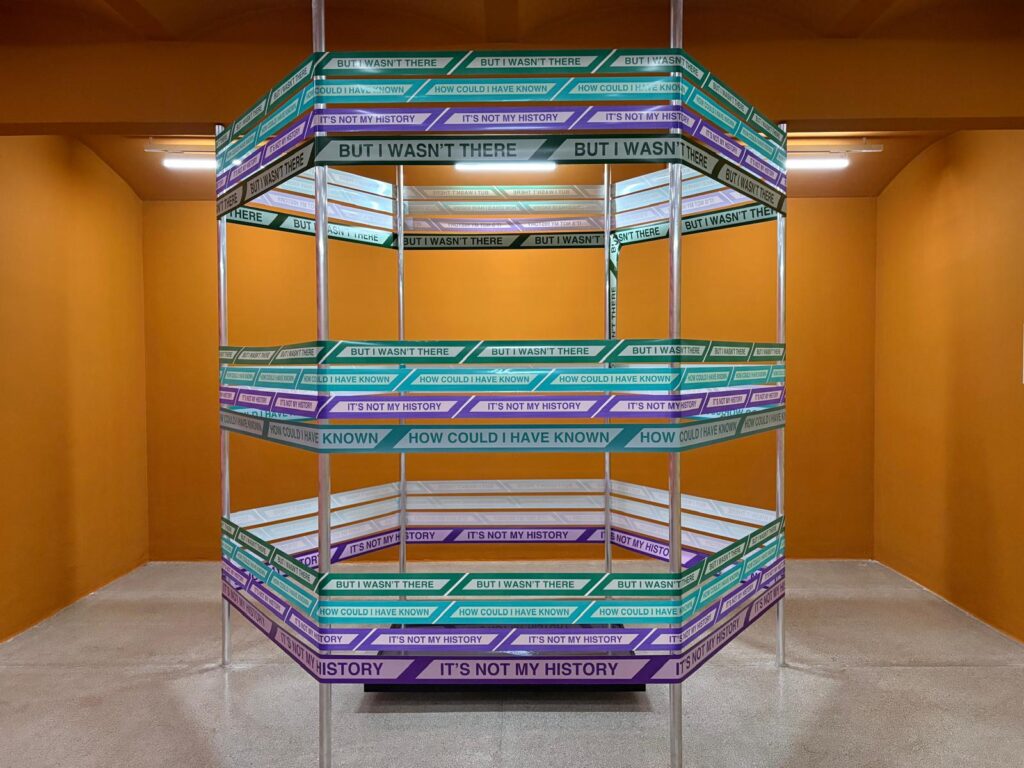
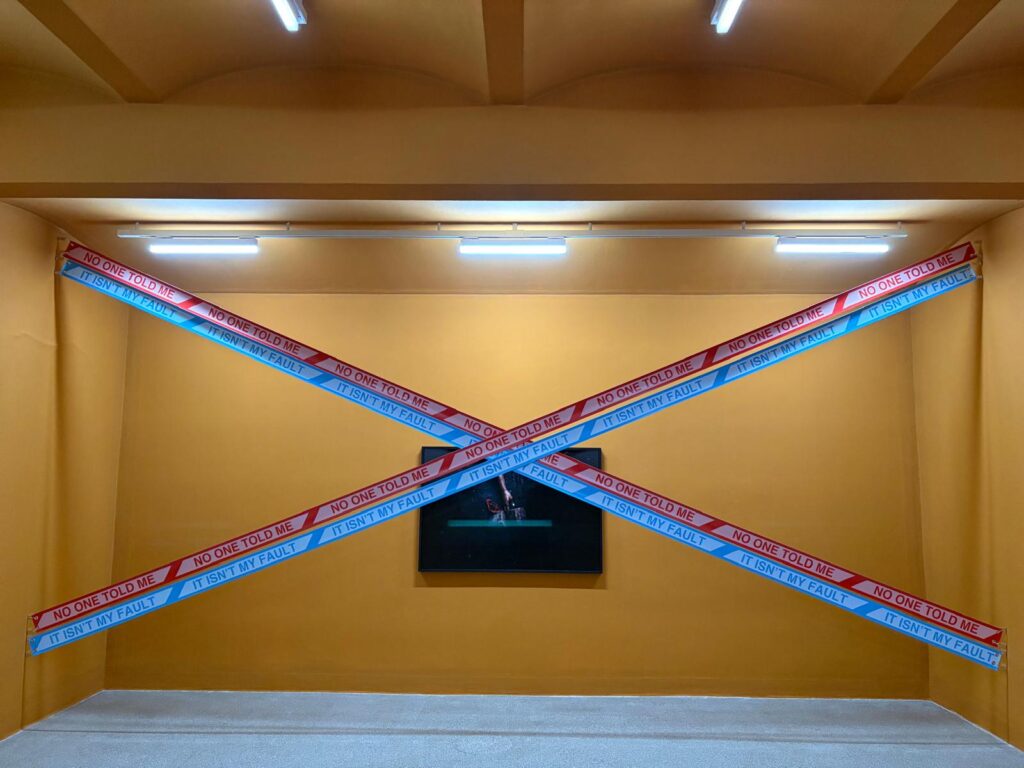
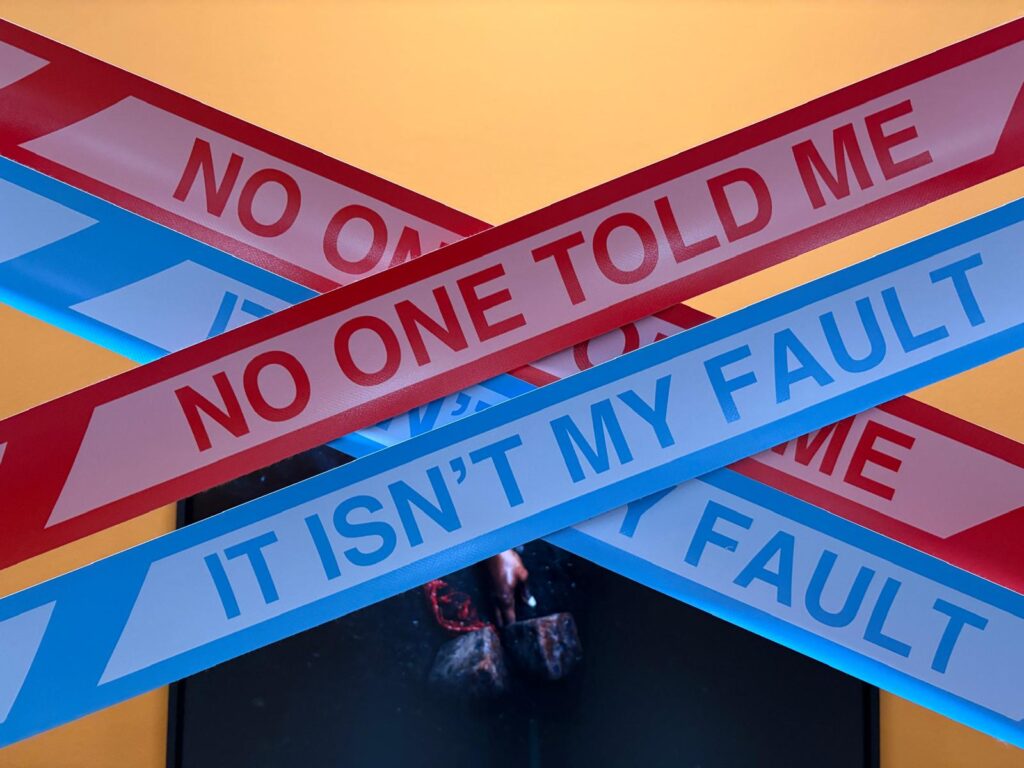
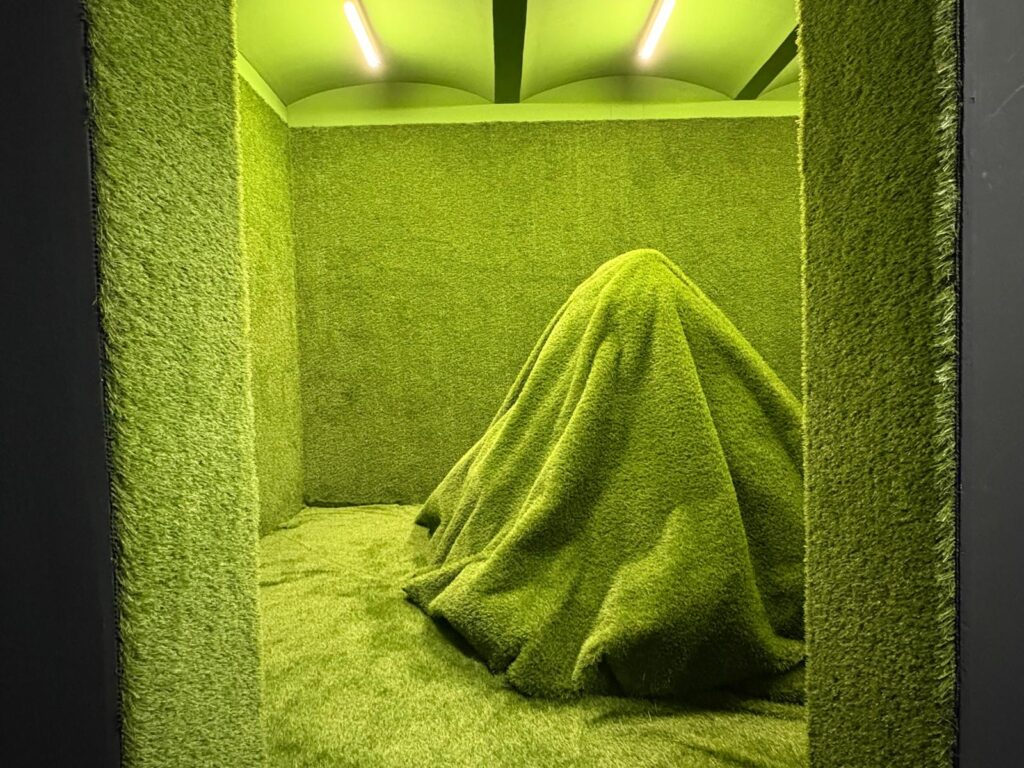
When we visited in December 2025, there were three contemporary art exhibitions to see. The first, Duane Linklater: mâcistan, explored collections and collecting through an Indigenous lens. Linklater’s uses large-scale scaffolds instead of gallery walls to present paintings and found objects. The next exhibition was Mimi Ọnụọha: Soft Zeros. This exhibition had a couple of parts: some installations involving boundary tape and a mound covered in artificial grass: symbols of culpability and what hides in plain sight. The real highlight was her 2025 film Ground Truths, a ‘docu-fiction’ about training a machine learning model to look for Black burial grounds and mass graves. Finally there was Cevdet Erek: Secession Ornamentation, a site-specific installation whose sound elements extended beyond the gallery walls.
What I liked about this blend of exhibitions is how, despite representing forms of art the Secession’s founders could barely have comprehend, they somehow embodied the objectives of the original Secession movement. Firstly, the idea of a Gesamtkunstwerk, or ‘total art’. We’ve talked about this before on the blog – it basically means thinking about art as an immersive environment rather than just one object. A century ago, that meant creating beautiful furniture, objects, architecture and other elements. Today, the original architecture plays host to contemporary decorative elements, audio and visual art, objects, environments, and sculptures.
There was also a real feeling of international artistic exchange. Duane Linklater is an artist of Omaskêko Cree heritage. Mimi Ọnụọha is a Nigerian-American artist and academic. Cevdet Erek is a Turkish visual artist and musician. The exhibitions were stand-alone, but together represented a really rich blend of perspectives and ideas. I saw a lot more that was new here than at the Kunsthistorisches Museum earlier in my visit.
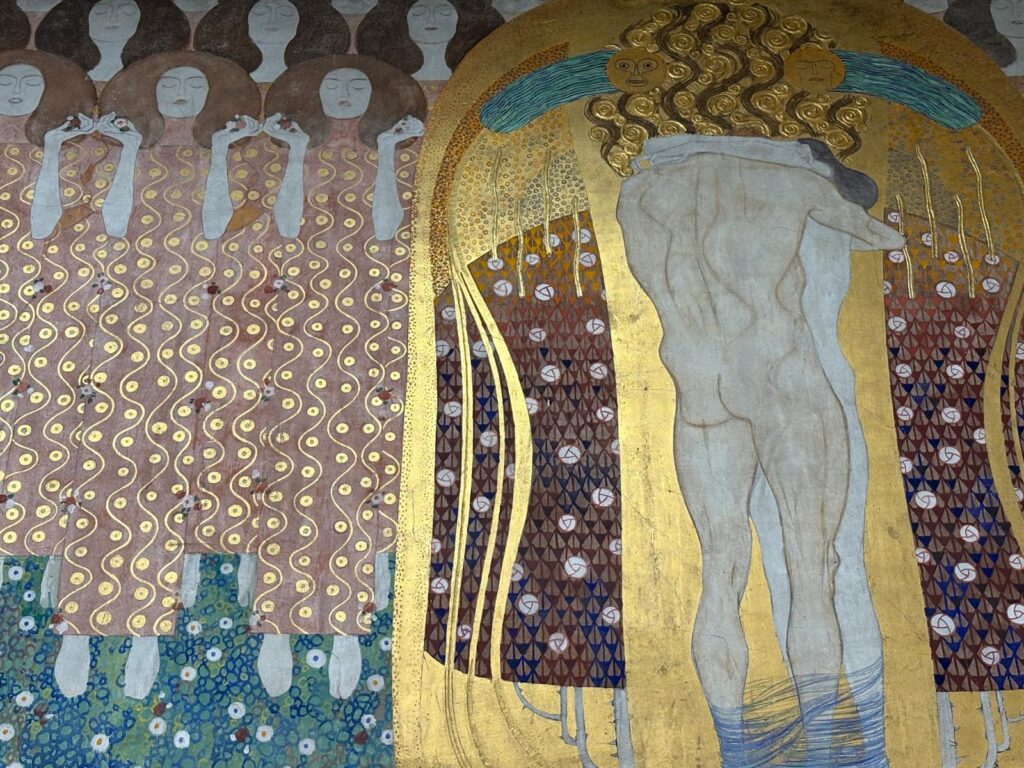
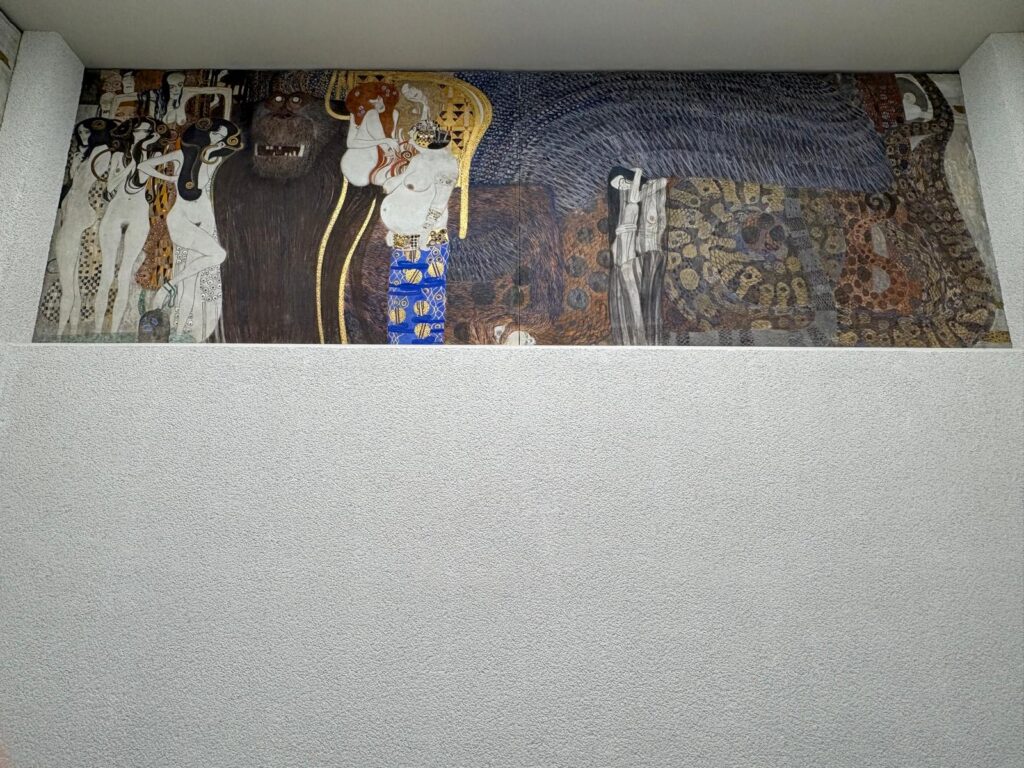
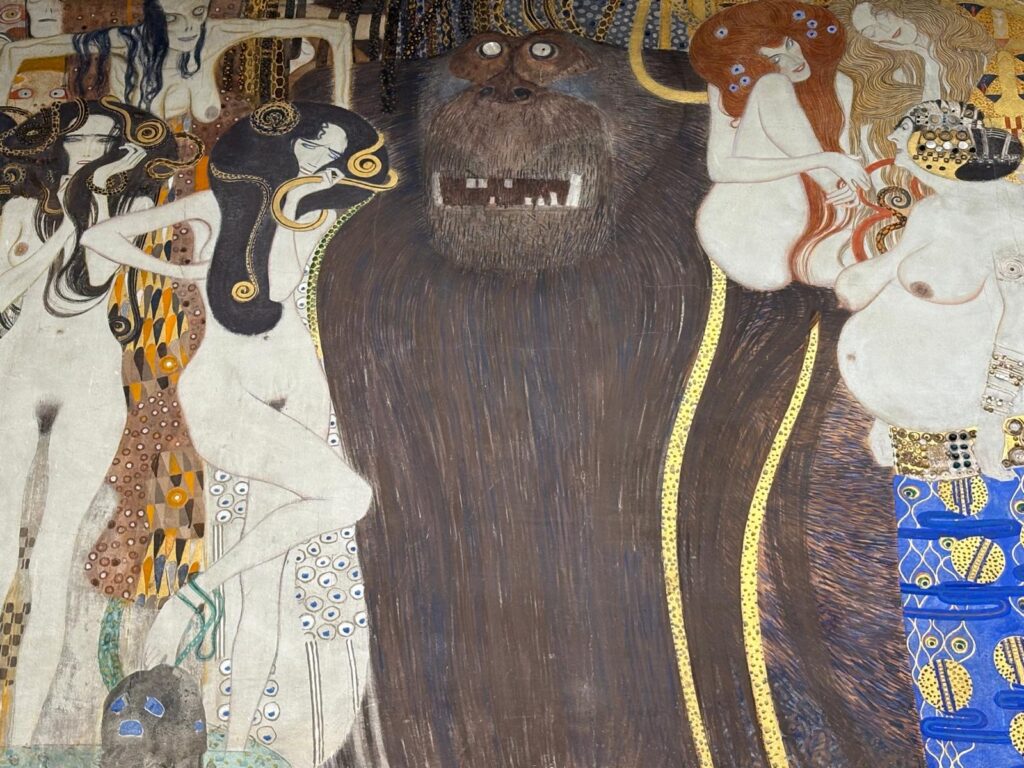
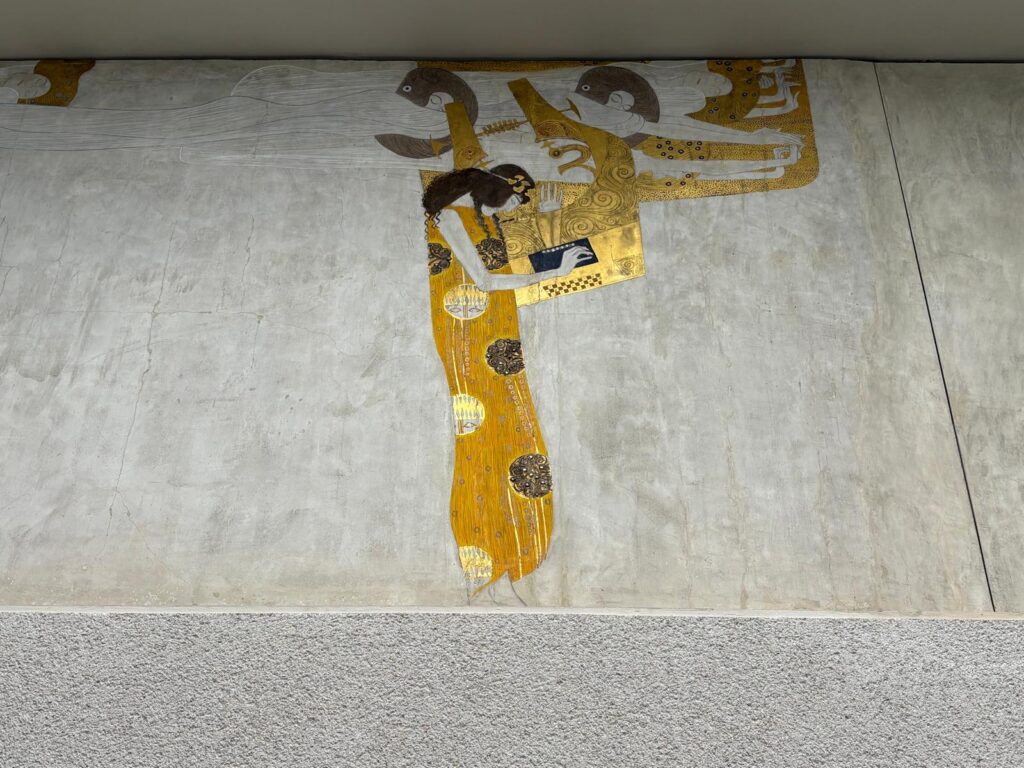
The Beethoven Frieze
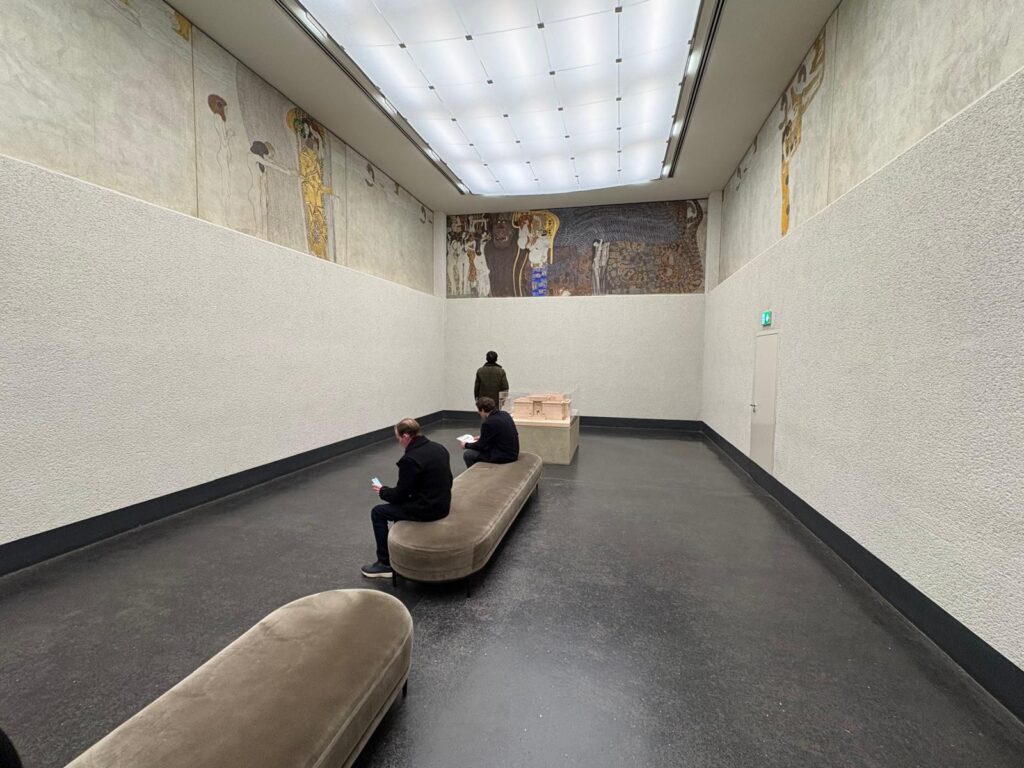
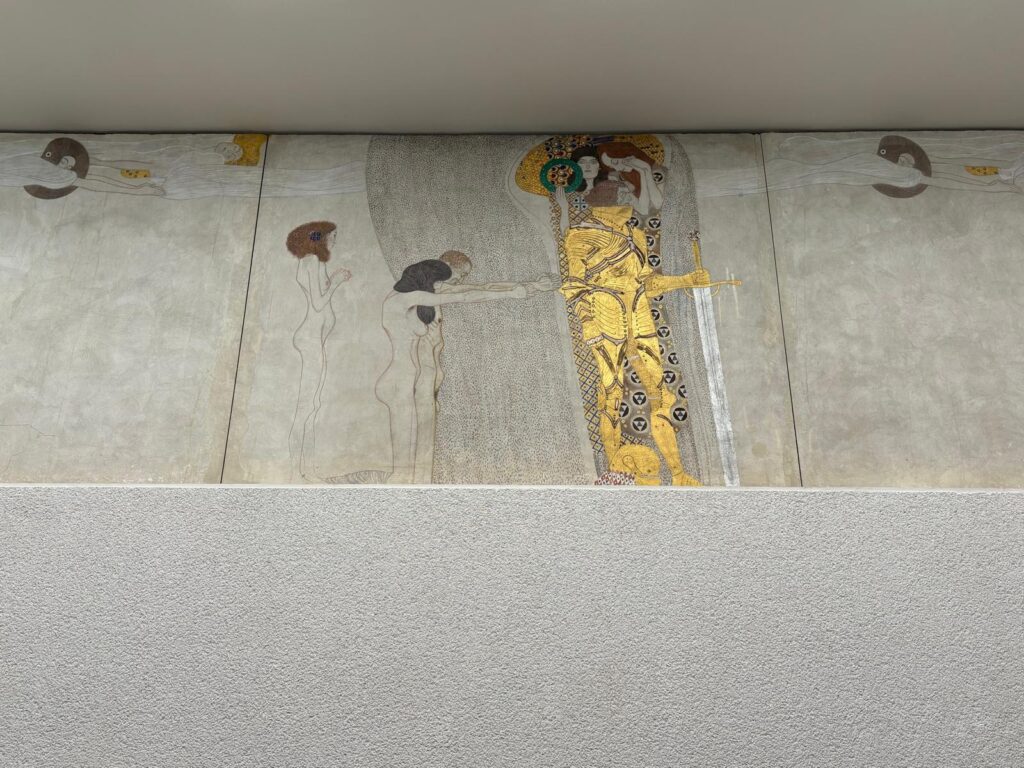
To finish up I’d like to spend a bit of time on the Beethoven Frieze, which for me was the highlight of my visit to the Secession. It is a work by Gustav Klimt: he painted it in 1902 for an exhibition themed around Beethoven. Its subject is an interpretation of Beethoven’s 9th Symphony (the one with Ode to Joy) by Richard Wagner. Klimt intended it as a temporary work of art, just for the exhibition. It has had a long and eventful afterlife.
Carl Reininghaus was the first purchaser in 1903. Klimt added over 100 preparatory sketches to the purchase. Serena Lederer encouraged her husband August to purchase it next, in 1915. It stayed with Serena Lederer (now a widow) until after the Anschluss, when she fled to Hungary to avoid Nazi persecution. Her son Erich recovered it after the war (thanks to Nazi forces storing it safely in that salt mine), but sold it to the Austrian government in 1973 in return for $750,000 and export licenses for the family’s other works by Klimt. Family members later challenged this sale unsuccessfully.
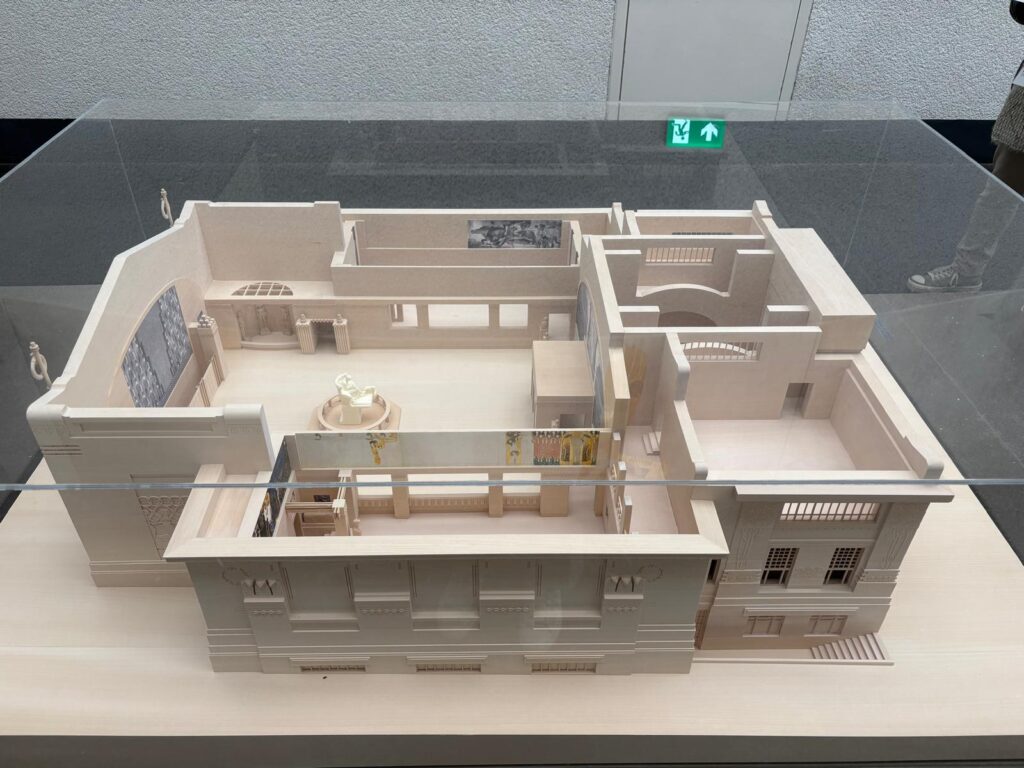
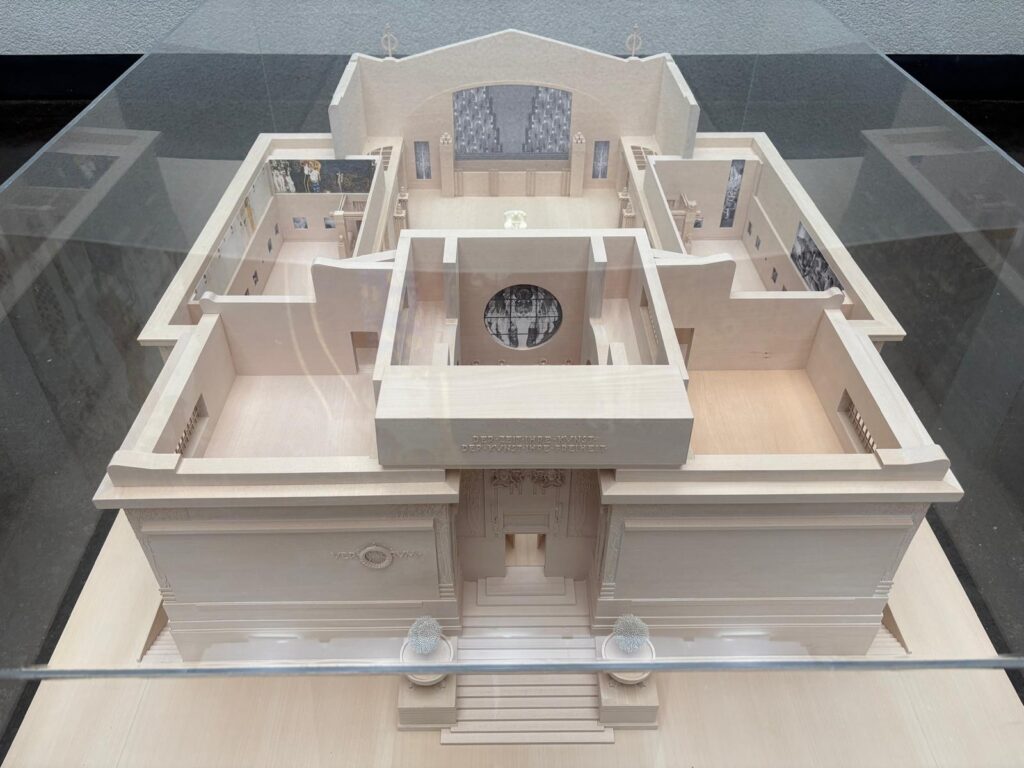
So the frieze remains today in the collection of the Austrian government. After significant investment including building a climate controlled basement room, the frieze moved back to the Secession building in 1986. So today we see it back in its original location (building) but not its original location (room).
I thought it was a great visitor experience. Since 2020, visitors can use high-quality headphones within the Frieze room, on which Beethoven’s 9th Symphony is playing. Experiencing both together brings visitors close to the Secession’s aim of creating a synthesis of the arts by presenting art and music in harmony. The theme of man’s quest for happiness comes into focus as you take your time and contemplate the frieze from beginning to end. After seeing the Secession’s contemporary art mission in action upstairs, the Beethoven Frieze was a perfect ending, reminding me of where this movement started and how the members of the Secession attempted to create something new and unique.
Trending
If you see this after your page is loaded completely, leafletJS files are missing.