Long-time London resident and avid museum and theatre-goer. I started this blog in 2014, and got serious about it in 2020 when I realised how much I missed arts and culture during lockdowns. I go to a lot more events than anyone would think is sensible, and love sharing my thoughts in the forms of reviews, the occasional thought piece, and travel recommendations when I leave my London HQ.
A return to Lisbon – in much better weather than my previous trip – provides an opportunity to discover the city anew.
Back in Lisbon, With a Day to Spare
In hindsight, it’s fairly easy to see why I didn’t entirely enjoy my first trip to Lisbon. I made the most of it, for sure. But we came late in the year, and the weather was appalling. It rained most of the time we were there. Not the Lisbon you see on everyone’s Instagram reels. Additionally, it was 2021. It’s only looking back that I can see how much stress I was under, at that point, from the pandemic, the shifting rules, the risk of getting ill…
So my first trip to Lisbon was educational, and a decent break from London, but left something to be desired. I knew from the outset that this trip was going to be different. Different time of year, different activities, different purpose for being in the city. Not tourism, but a conference with an extra day added on so I could get reacquainted with the city. And rather than staying in the Neoclassical Baixa district, as we did last time, this time I was in the modern city centre, high up above the old town. I liked this change – things felt a bit more open up here, and a bit easier to navigate, with cultural institutions still within reach for those wanting to explore the city.
Which brings us to today’s walk. The other benefit to being up at the top of a hilly city is that you can plan a leisurely downhill stroll, followed by some mode of transport to get you back up the hill at the end of it. This is exactly what I did on my free day in Lisbon. I used ChatGPT to get me started with planning – explaining some of the places I’d been before, my interests, and asking it to put together an itinerary. This mode of travel planning has come a long way since my Paris walking tour of 2023, but in the end I used the LLM’s efforts as a jumping-off point rather than a fixed itinerary.
Walking Tour of Lisbon: Around the Parque Eduardo VII
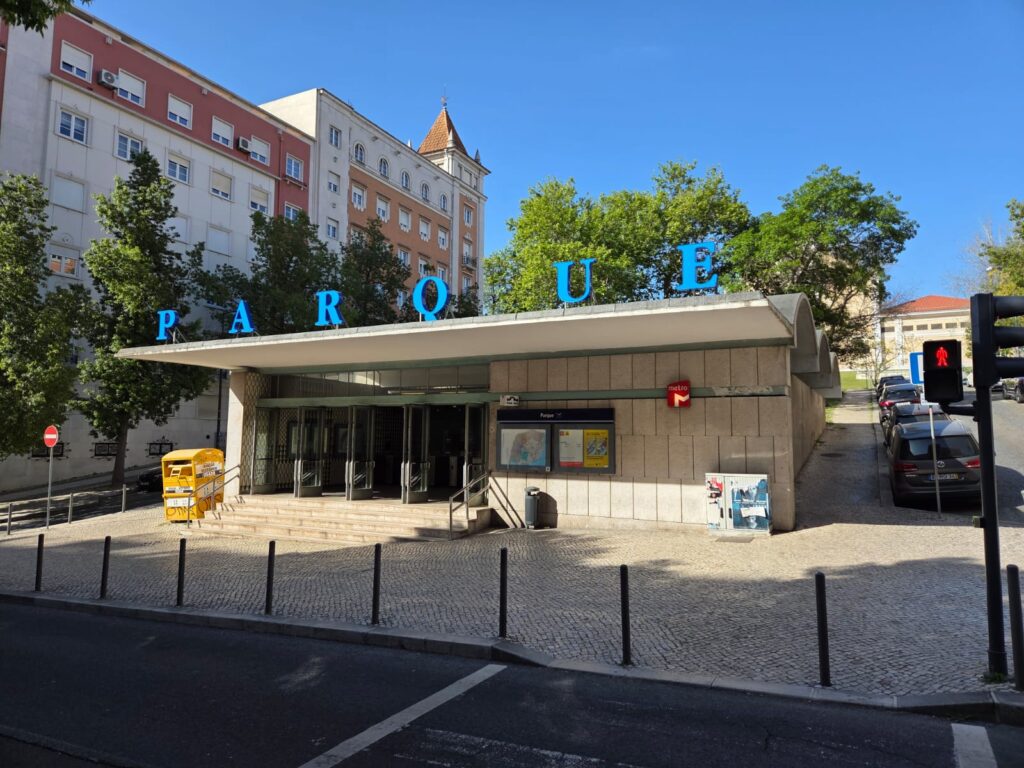
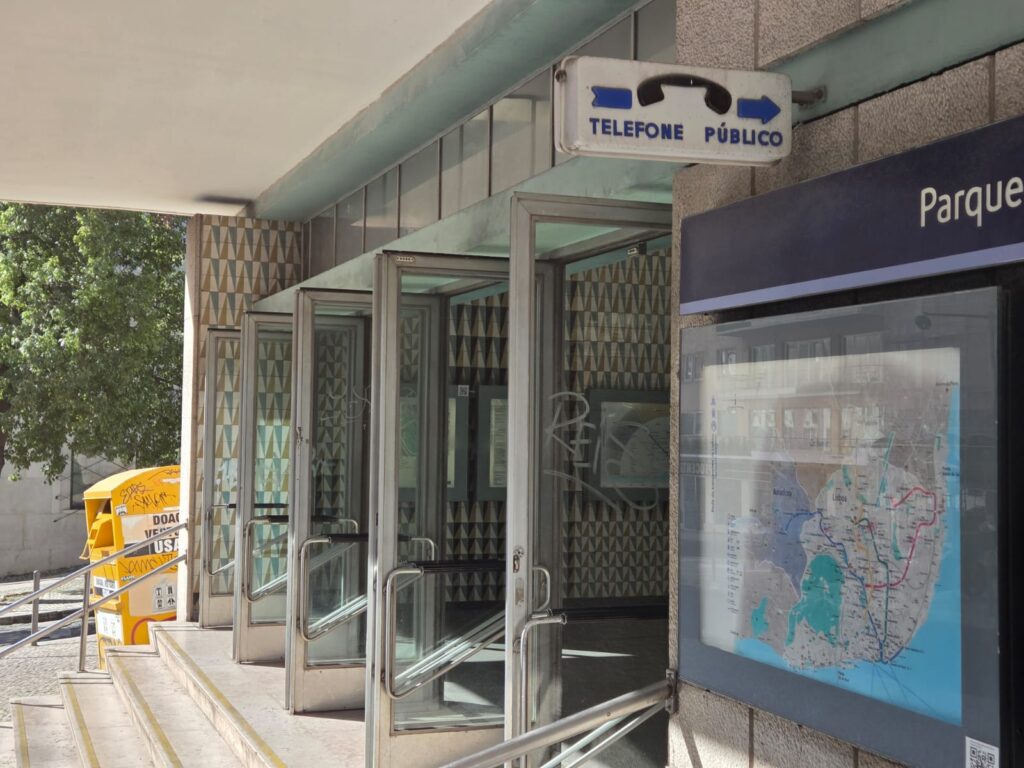
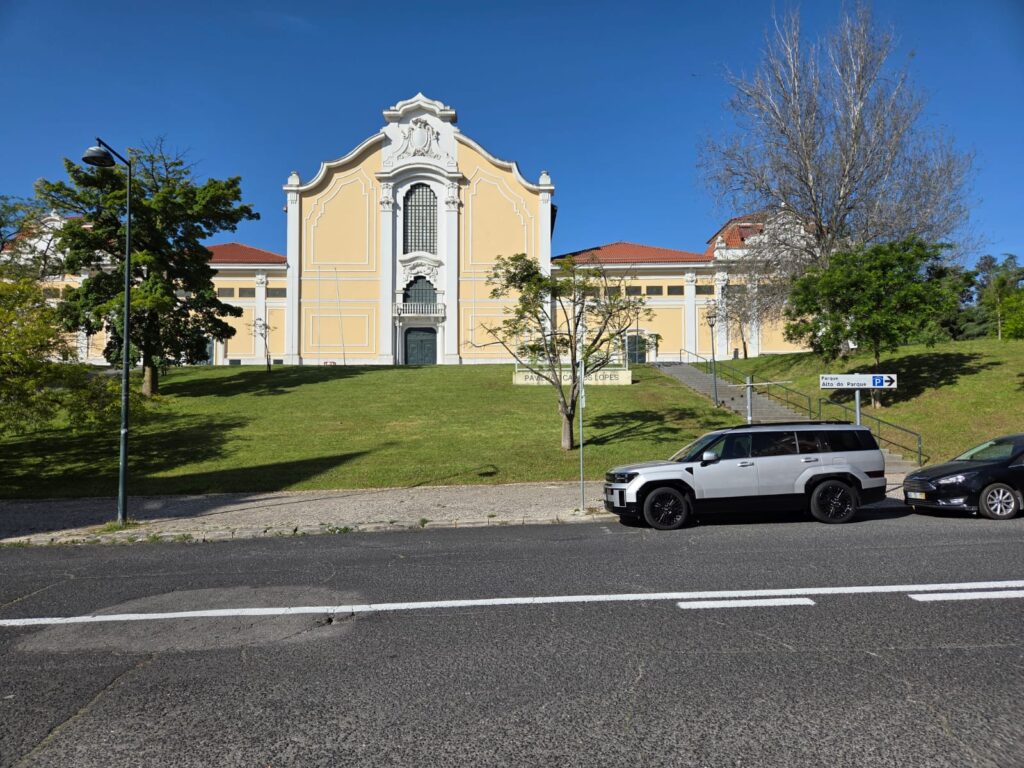
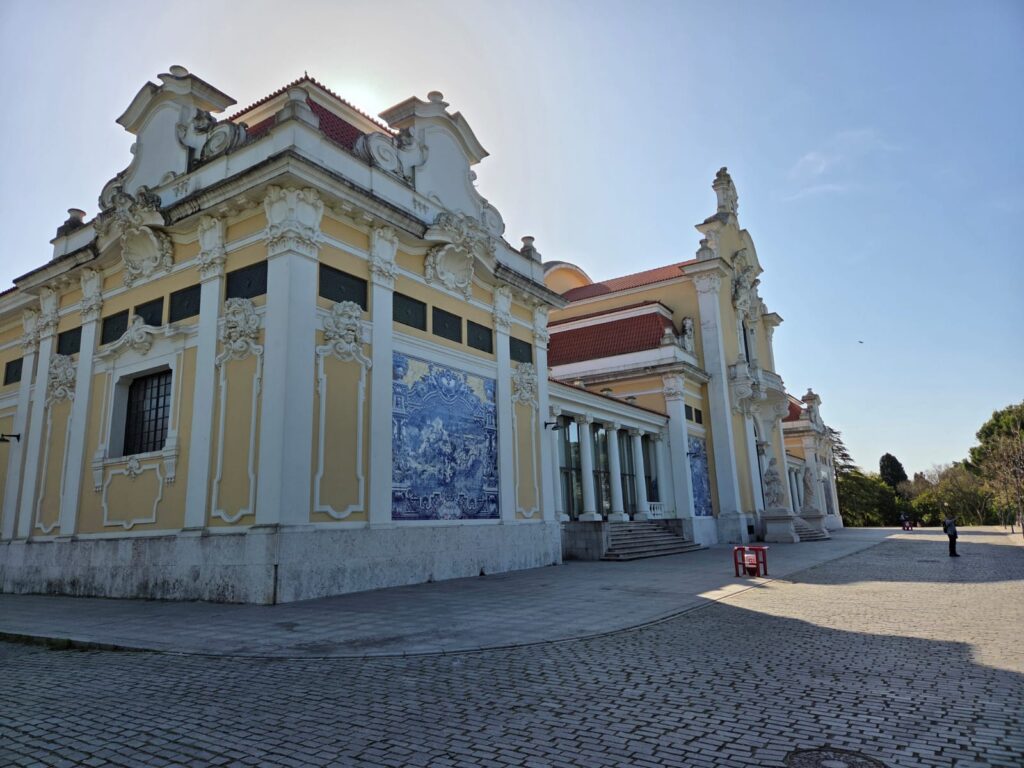
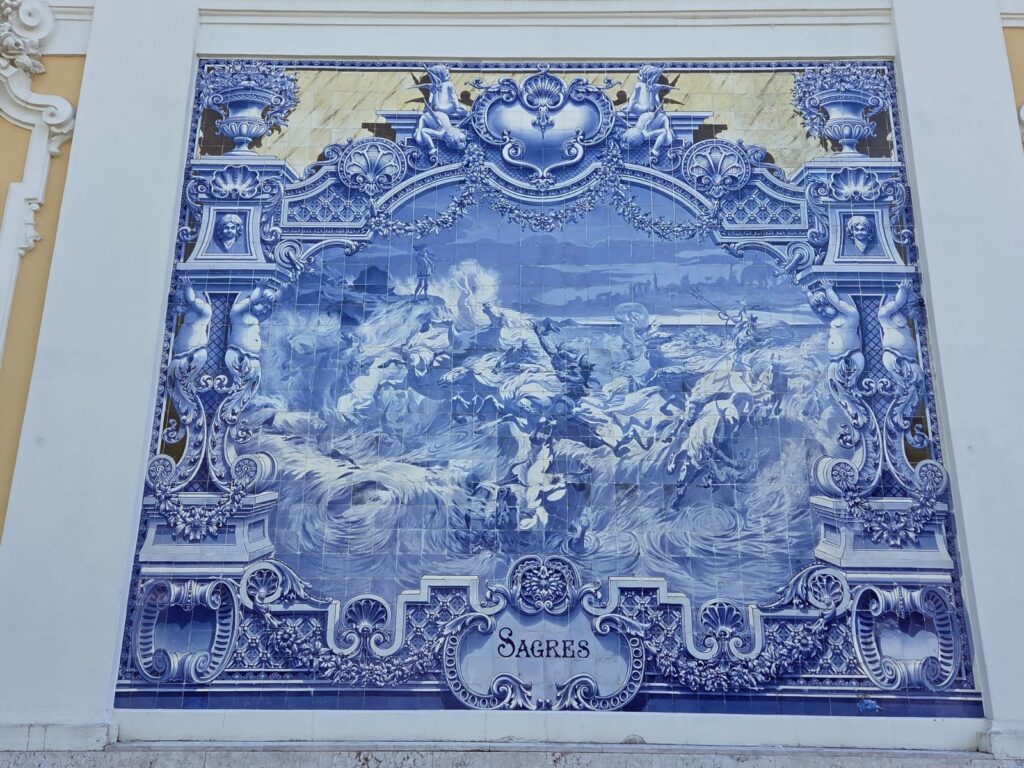
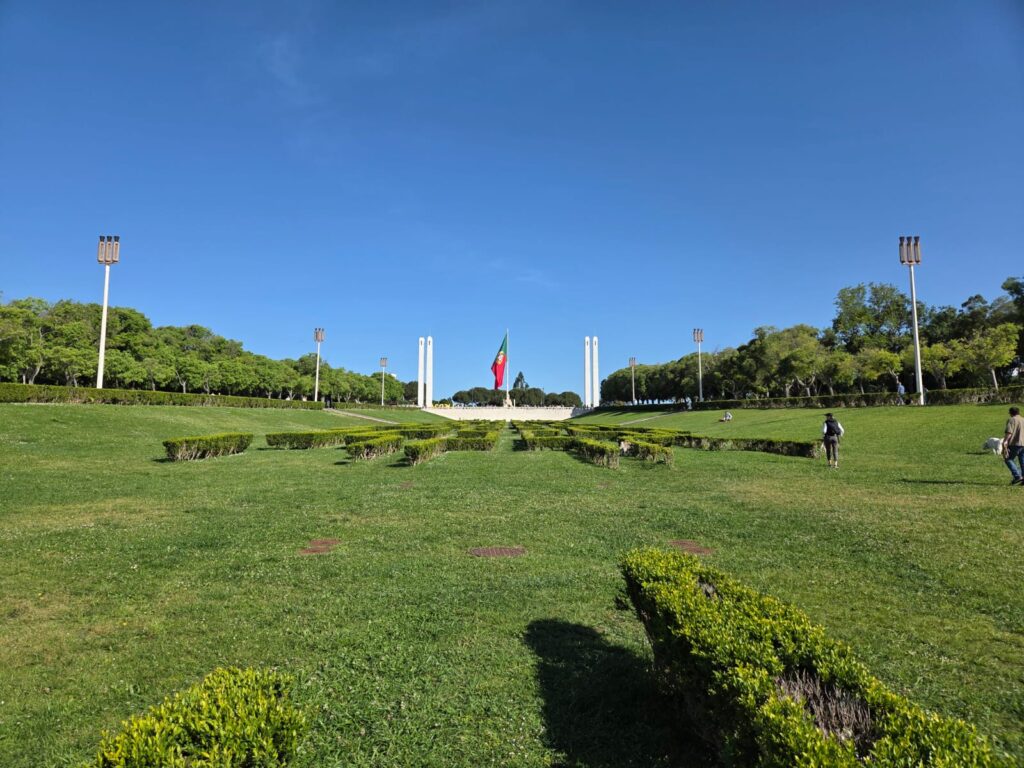
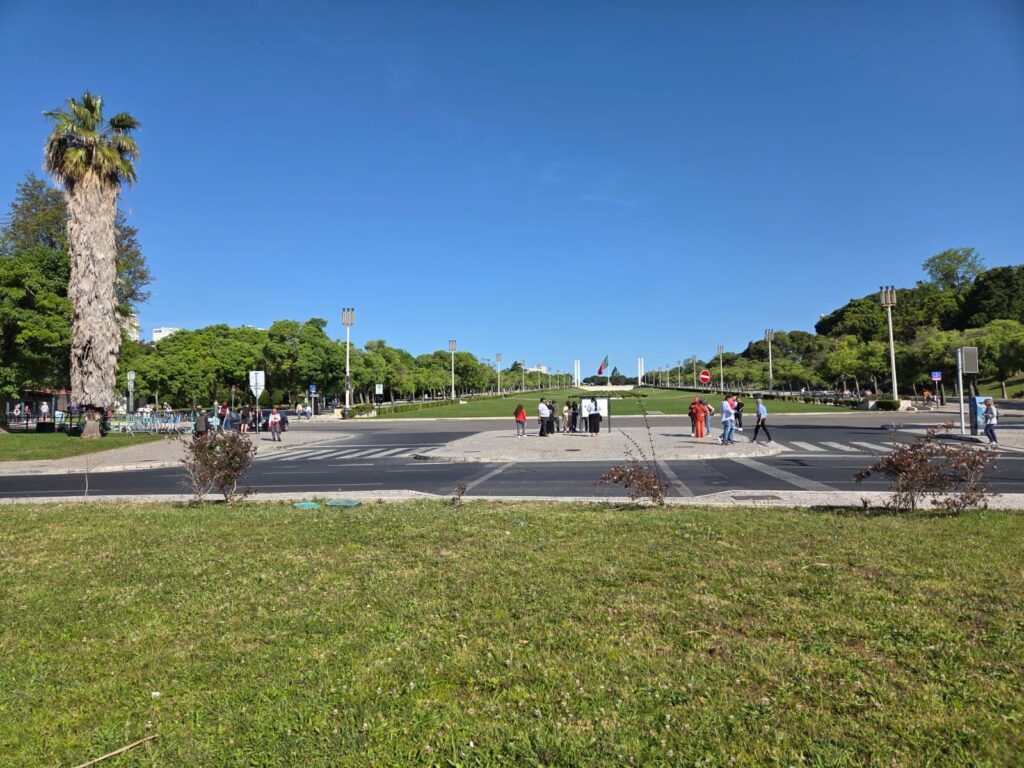
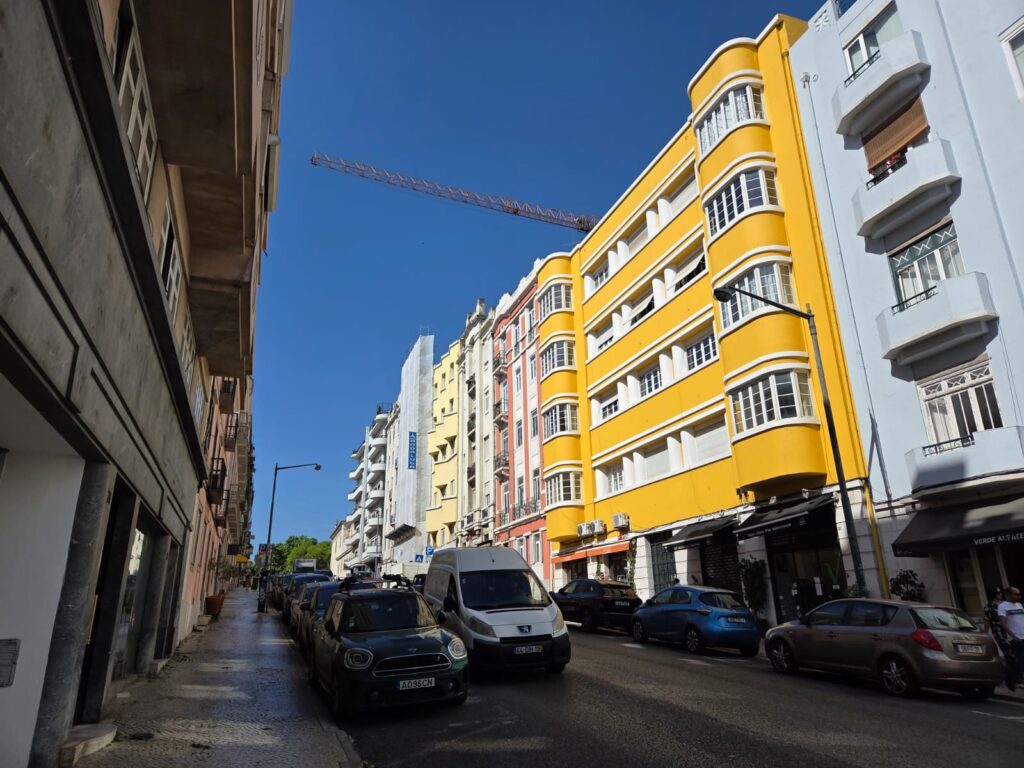
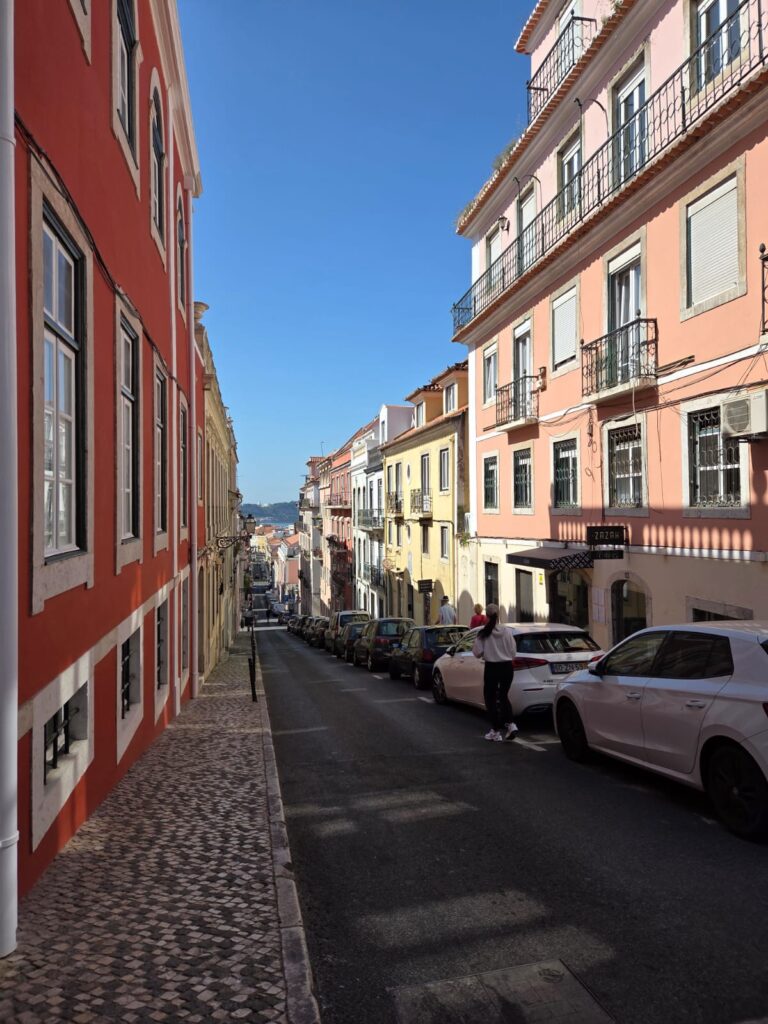
I had a choice, first of all, about where to start my walk. My hotel was very close to the Gulbenkian Museum gardens. I visited the Museu Calouste Gulbenkian on my last trip (closed for renovations at the time of writing), but I hadn’t yet visited the Centro de Arte Moderna Gulbenkian. Should I start there? Or at the Miradouro do Parque Eduardo VII – the viewing point complete with huge Portuguese flag? In the end, I decided to give myself a gentler start, meeting the Parque Eduardo VII along its eastern edge, and wandering downhill to the Praça Marquês de Pombal. I’d seen these places before, so this gave me a nice opportunity to get reacquainted with them. Along the way, I admired some of Lisbon’s many nice façades.Some of the façades are in a better state than others.I liked this metro station I encountered along the way. If you’re staying elsewhere in the city, this is a good way to access the park and its surroundings. Lisbon’s metro, including this station, opened in 1959. It retains a certain mid-century charm.This is the Pavilhão Carlos Lopes, or Carlos Lopes Pavillion. It has an interesting history. It started life as the Pavillion of Portuguese Industries during the 1922 International Exhibition in Rio de Janiero. After the exhibition it was dismantled and sent back to Portugal (where most of the elements had originated). It has stood in this park since 1932, and has served over the years as a sporting, cultural, and events venue.A look back up the hill at that big flag I mentioned. It doesn’t look it from here, but it is 20 x 12 metres, on a 35 metre flagpole.
From the Praça Marquês de Pombal to the Sociedade Nacional de Belas Artes
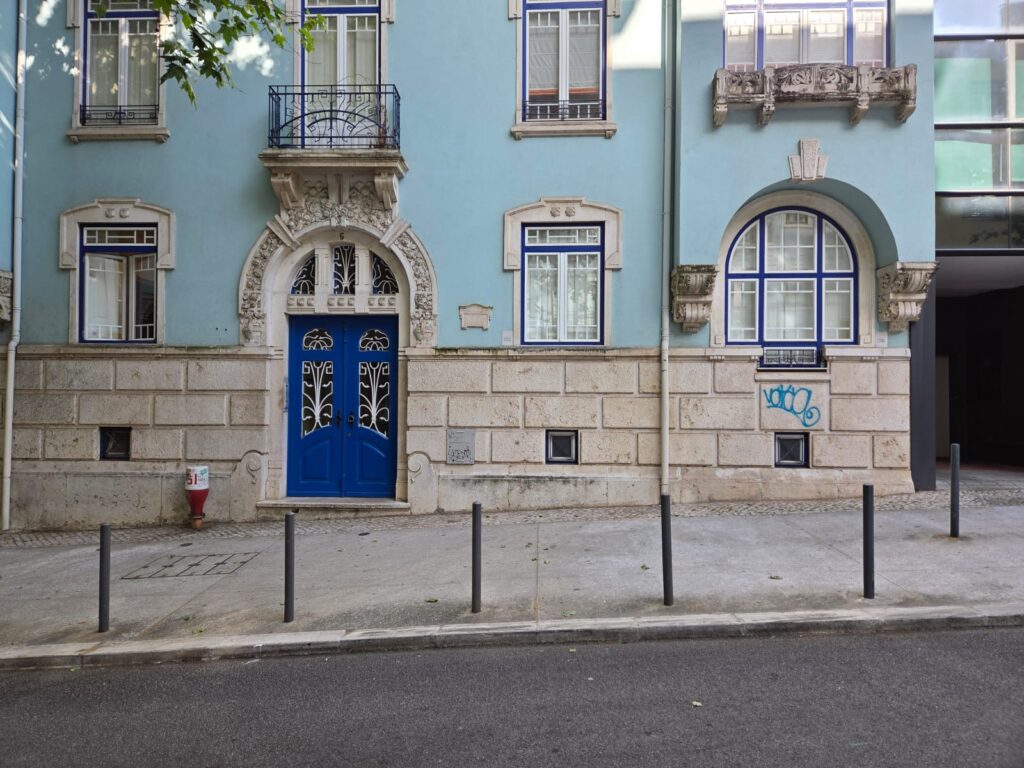
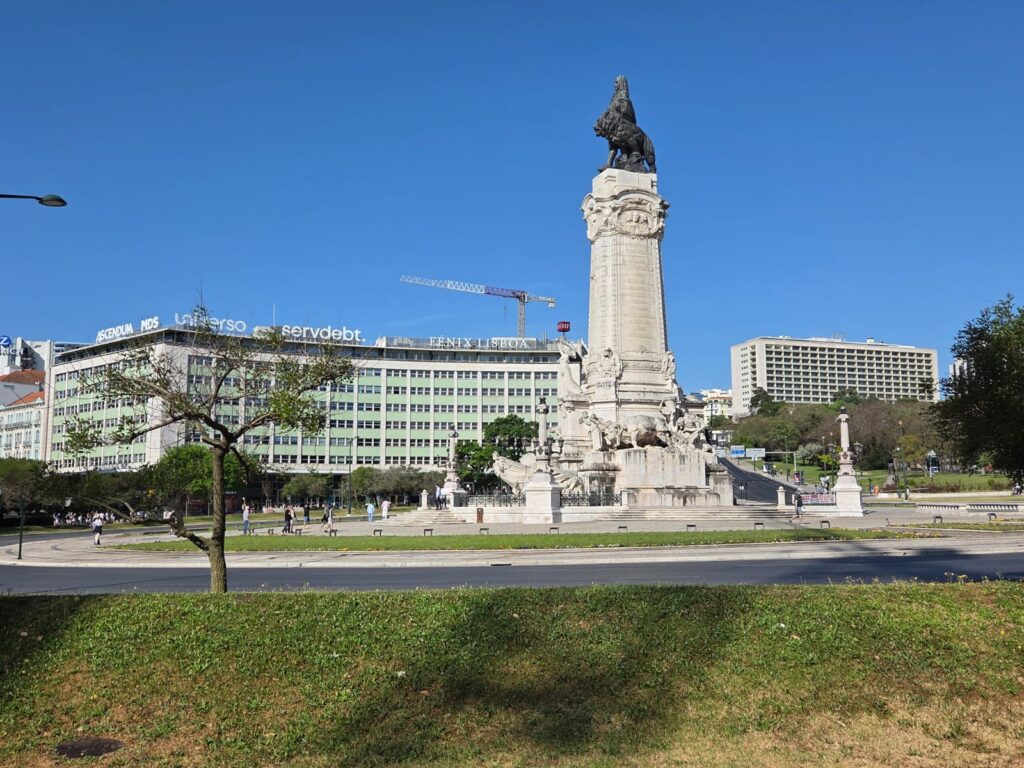
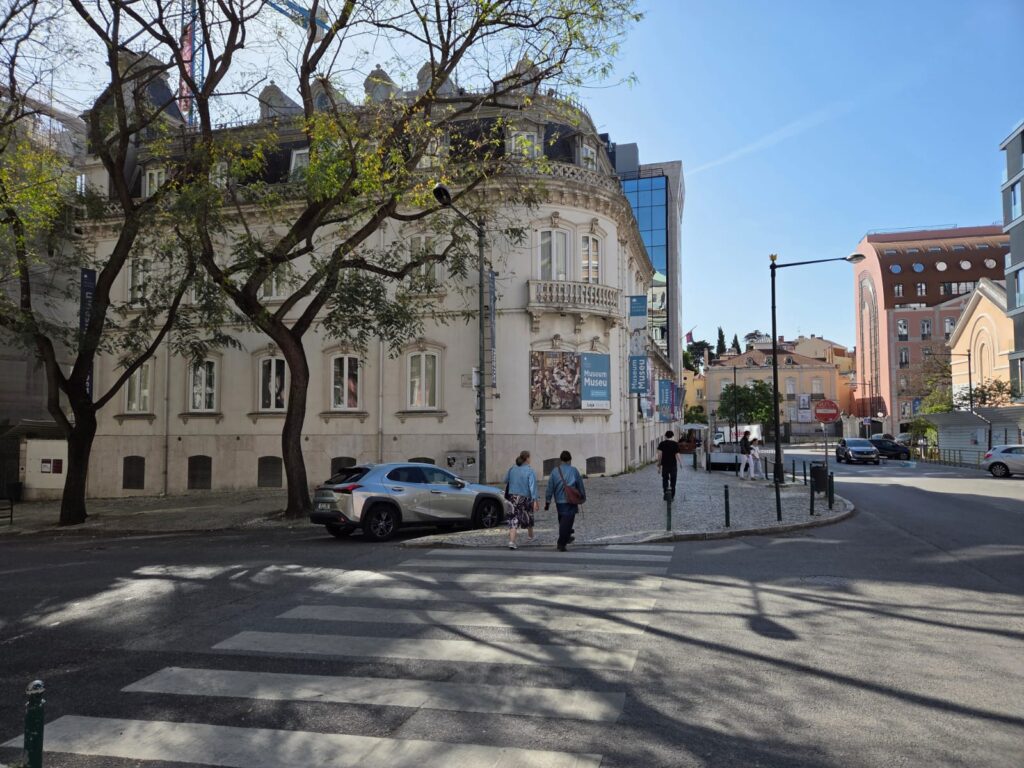
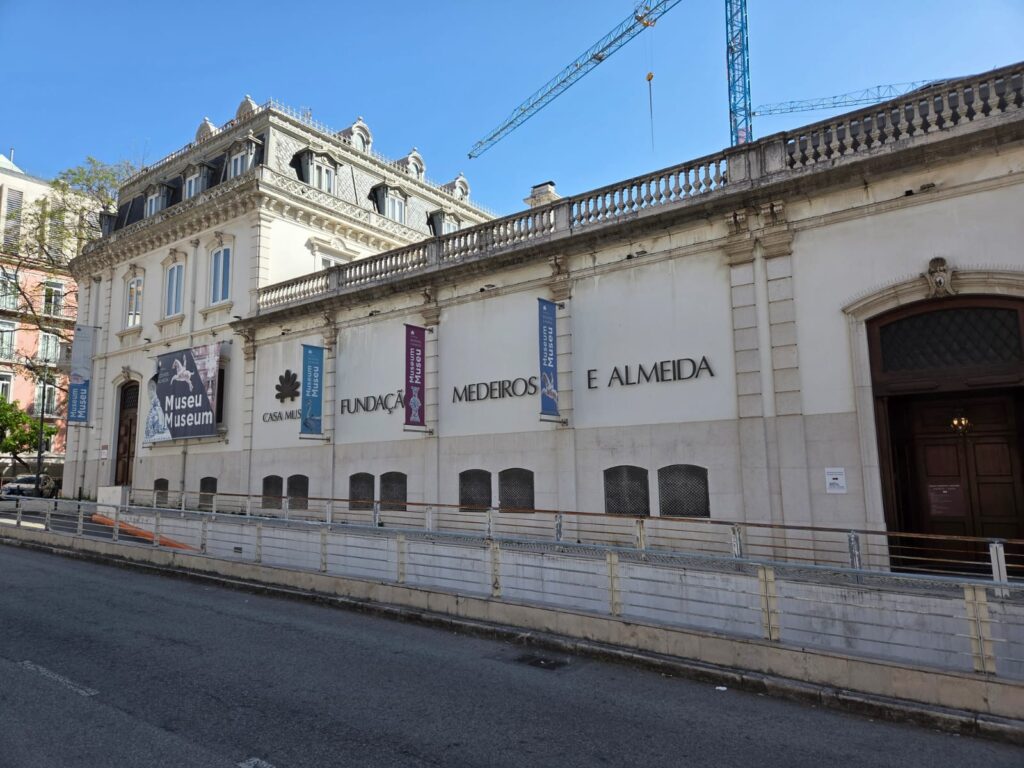
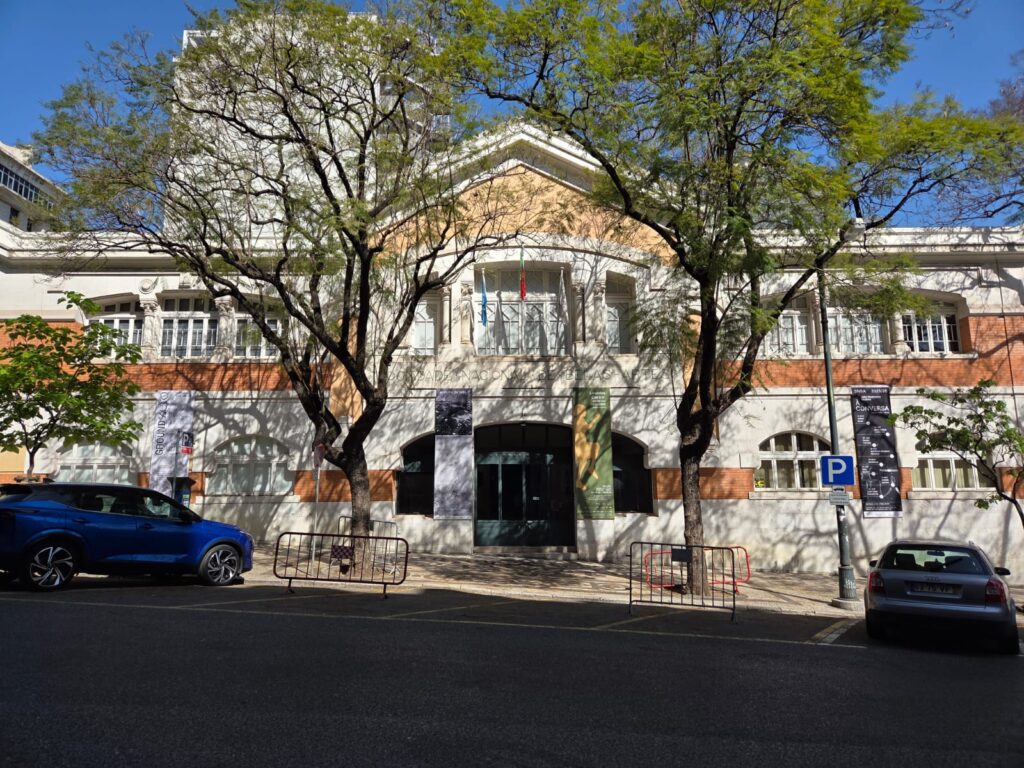
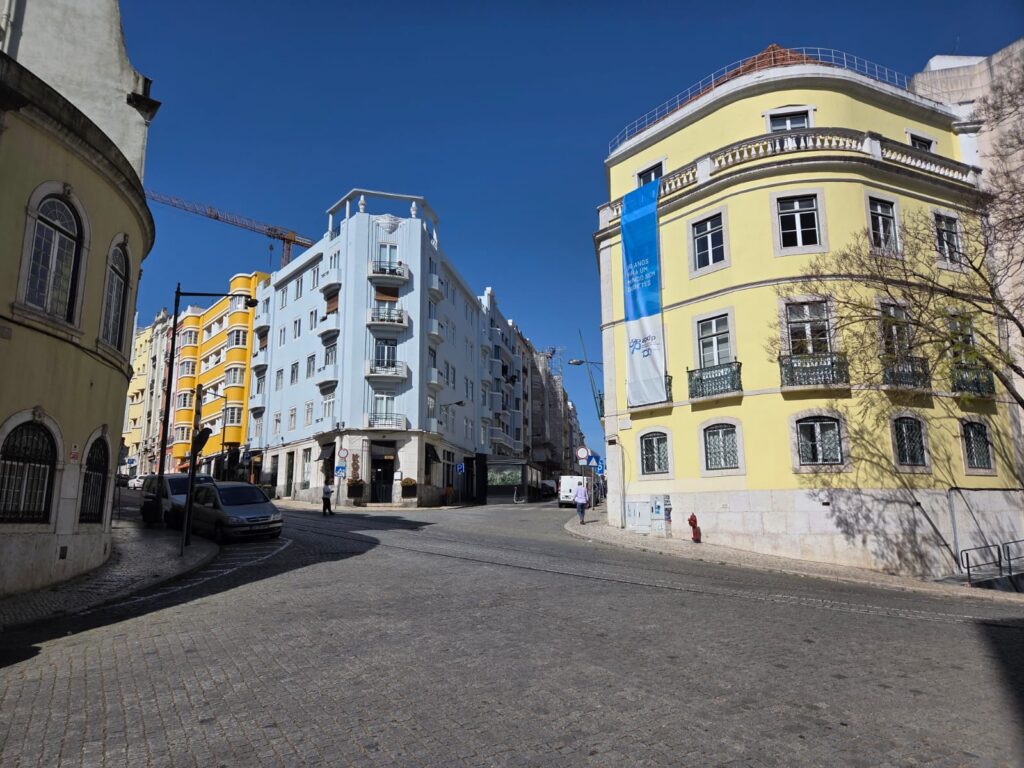
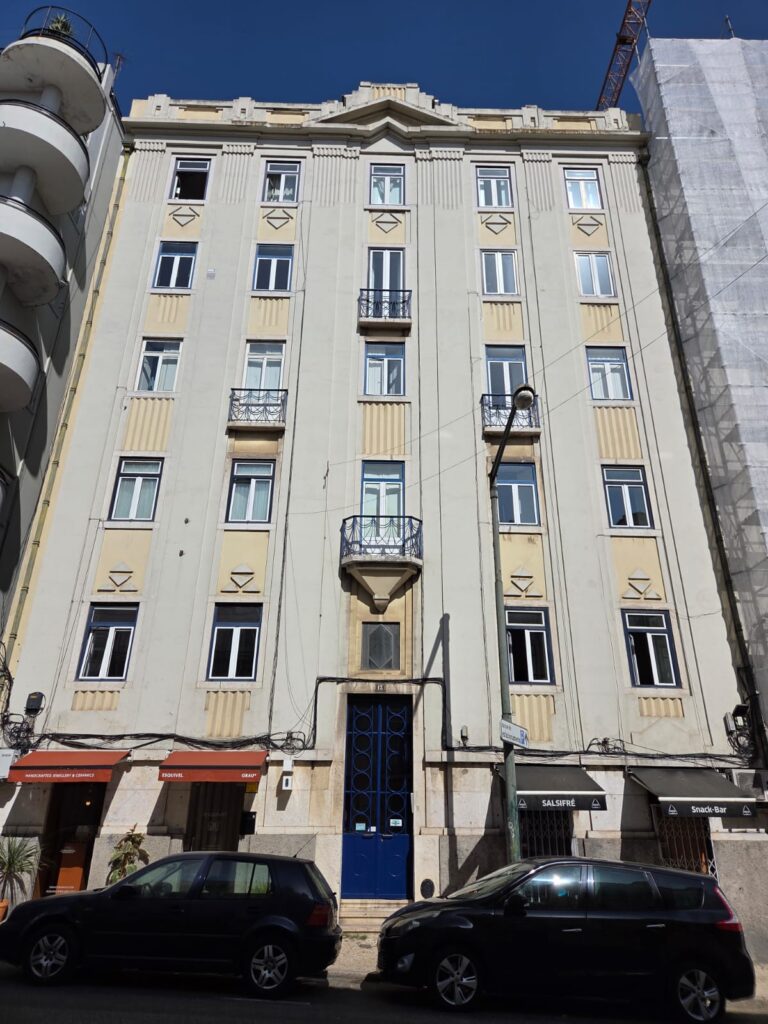
We now turn our attention downtown, starting with the Praça Marquês de Pombal. This square, at the bottom of the hill and park, features a statue of the 1st Marquis of Pombal, Sebastião José de Carvalho e Melo. His Wikipedia page says he “despotically ruled” the Portuguese Empire from 1750 to 1777 as Chief Minister to Dom José I. This period included the catastrophic 1755 Lisbon Earthquake, and Pombal was instrumental in the rebuilding of the city. The statue dates to 1934: another period of authoritarian rule, which I guess makes sense.We’re now approaching my first museum stop of the day. This is the Museu Medeiros e Almeida, and there is a separate post explaining all about it. The building itself has an interesting history, including a stint as property of the Vatican State. But the important point in its history as a museum is its acquisition in 1943 by António Medeiros e Almeida, who extensively remodelled it over his lifetime, first as a home and then as an intended house museum. The people of Lisbon are seemingly not early risers, so I had a wonderful experience as the only person in the museum at opening time, setting off the motion-detector lights as I walked around. The museum’s collection includes furniture, decorative arts, paintings and sculpture, jewellery, devotional objects, and more.Just around the corner is the Sociedade Nacional de Belas Artes, the National Society of Fine Arts. The organisation dates to 1901, while this building, the work of architect Álvaro Augusto Machado, dates to 1913. The Society hosts exhibitions, art courses, and other educational activities. The Cinemateca Portuguesa, with a museum, cinema and film archive, is also nearby, making this a nice little cultural quarter.More nice façades, including these cheerful Art Deco ones.And this one, which I am not sure of the date of but drew my attention.
In and Around the Rua da Escola Politécnica
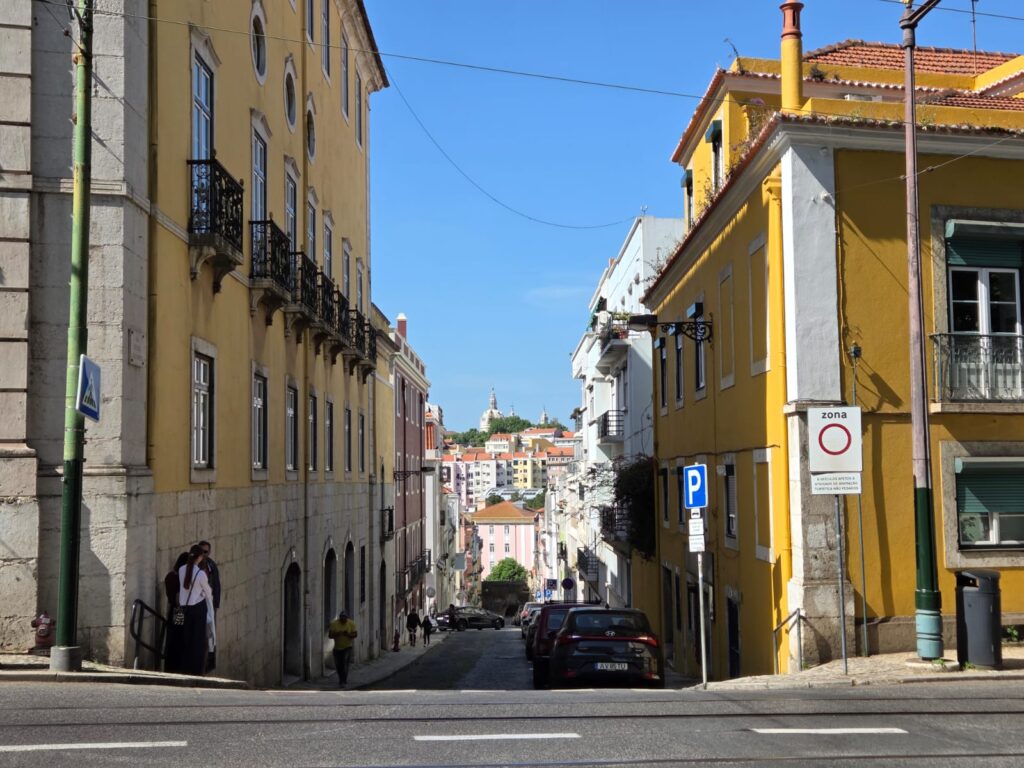
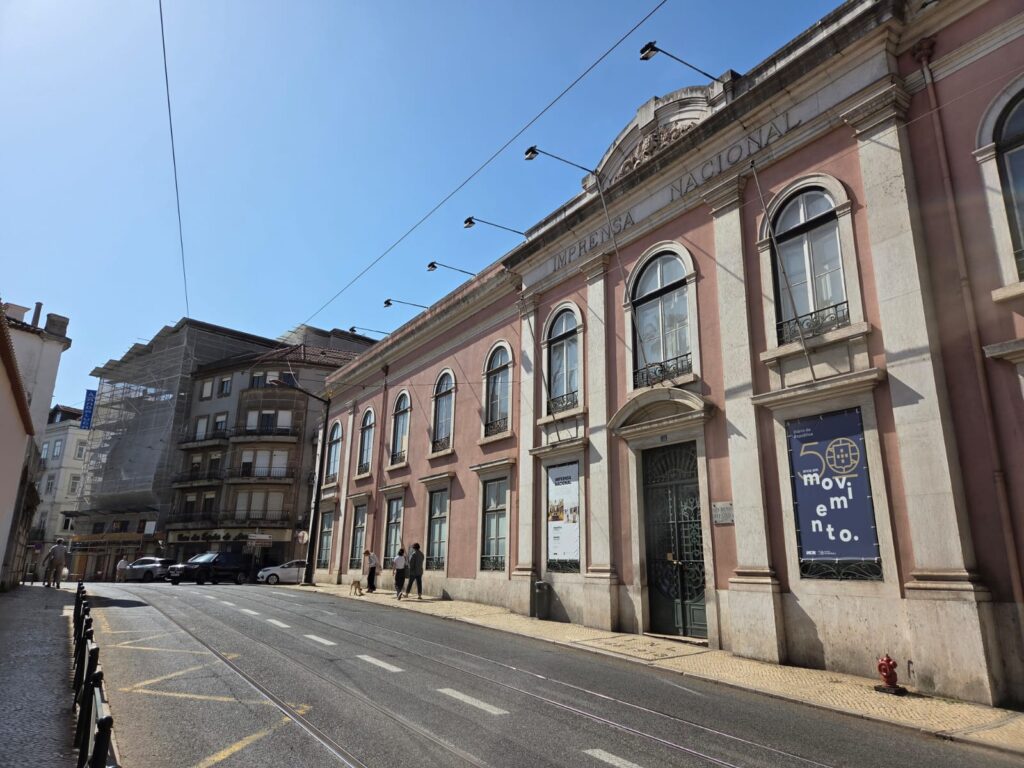
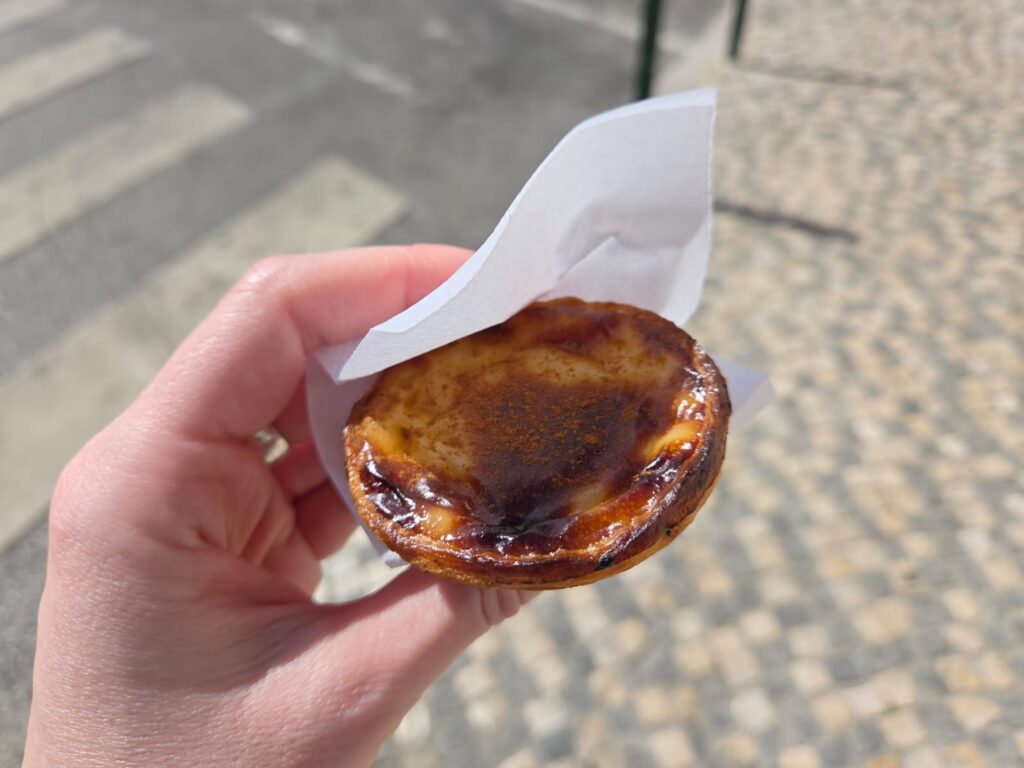
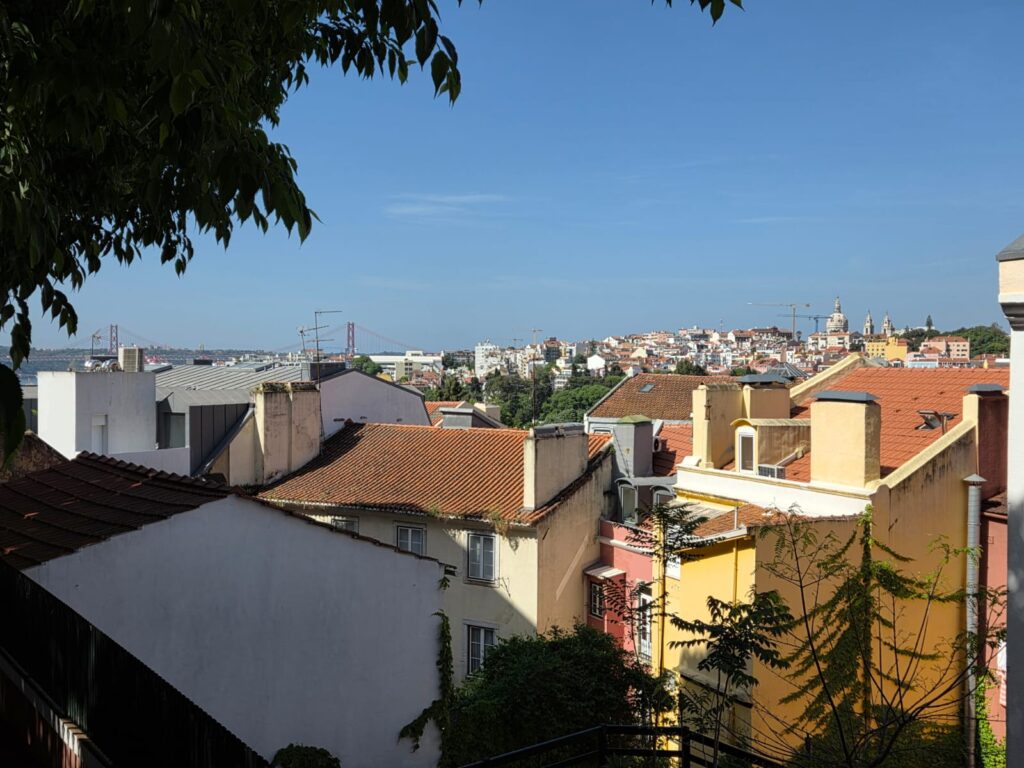
From the Rua da Escola Politécnica we get a nice view down to the Basílica da Estrela. This minor basilica and former convent was built on the orders of Dona Maria I of Portugal, who was known as ‘the Pious’ in Portugal and ‘the Mad’ in Brazil.This is one of several buildings around Lisbon under the care of the INCM, a merger of the national press and the mint. I believe this is its library – the interior looks quite nice in this picture.Another lovely view downhill – look what a difference this nice weather makes!And then it’s time to refuel with, of course, a pastel de nata. These egg custard tarts originated in nearby Belém. You can read about Belém, and the experience of eating pastéis de nata there, in my guide to Lisbon. Or you can get them from one of hundreds of little shops around the city, and they will almost always be perfect – crispy pastry, filling still warm, and with an optional dusting of cinnamon.I then found myself drawn to the Jardim do Príncipe Real. This lovely 19th century public garden holds a weekly farmers’ market that seems to be well-frequented by locals. I purchased some honey to take home with me. It has great views.It also has this enormous Buçaco cedar, which is believed to date from the garden’s original planting in 1869. Its canopy stretches more than 20 metres.
The Miradouro de São Pedro de Alcântara and Igreja de São Roque
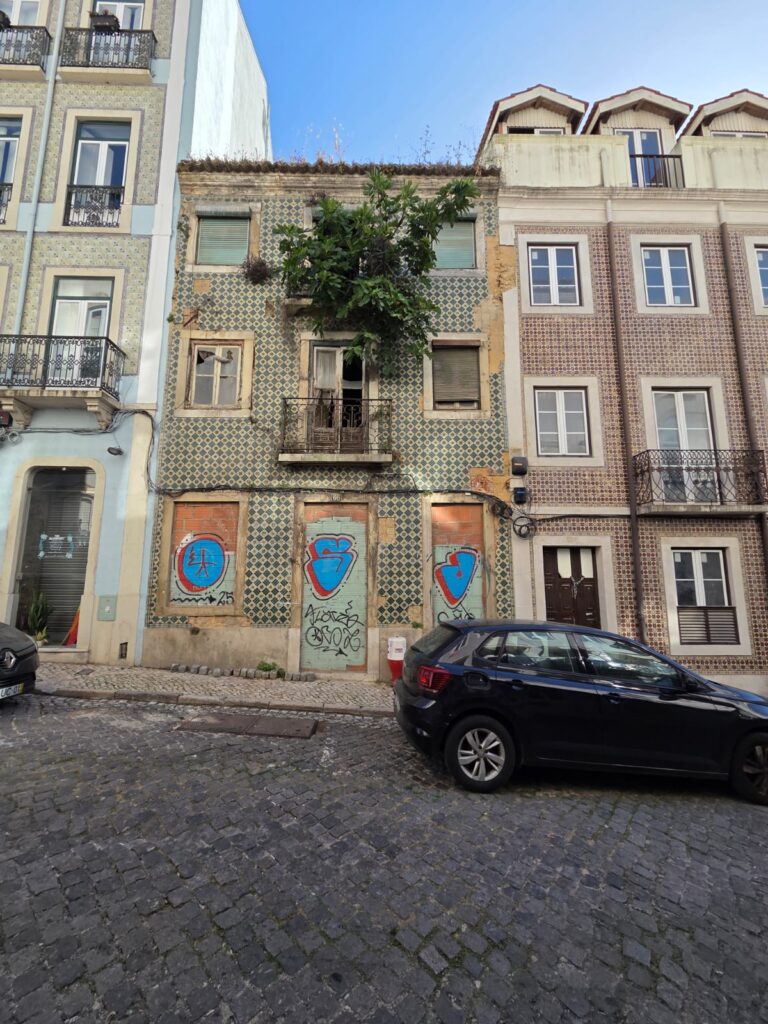
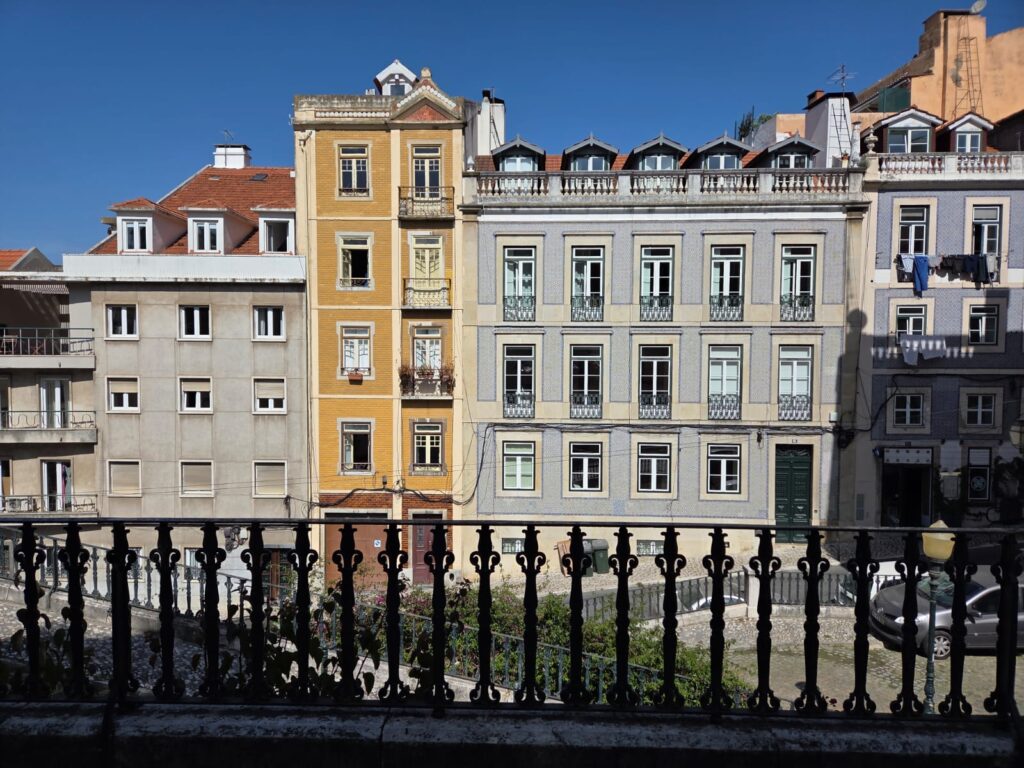
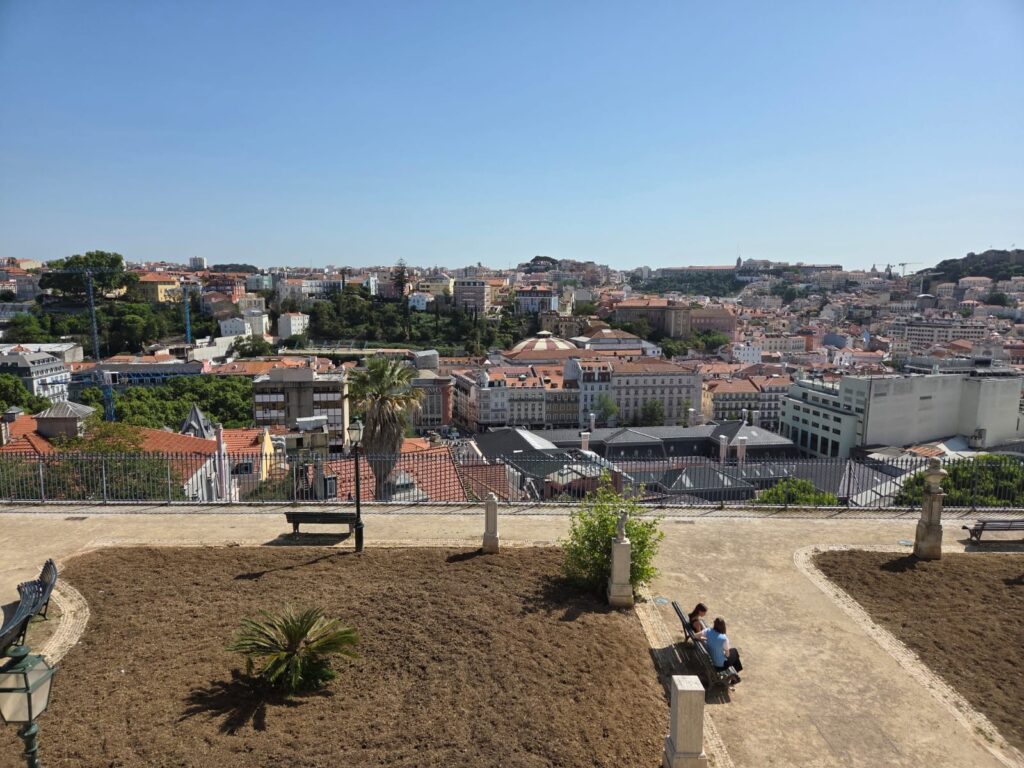
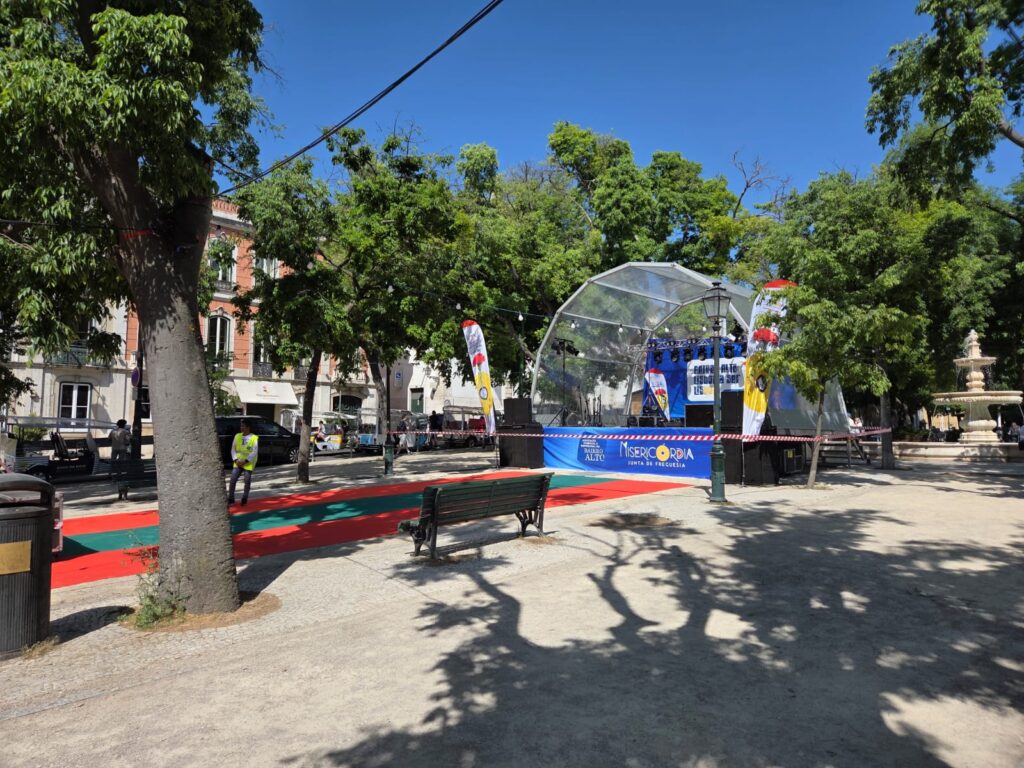
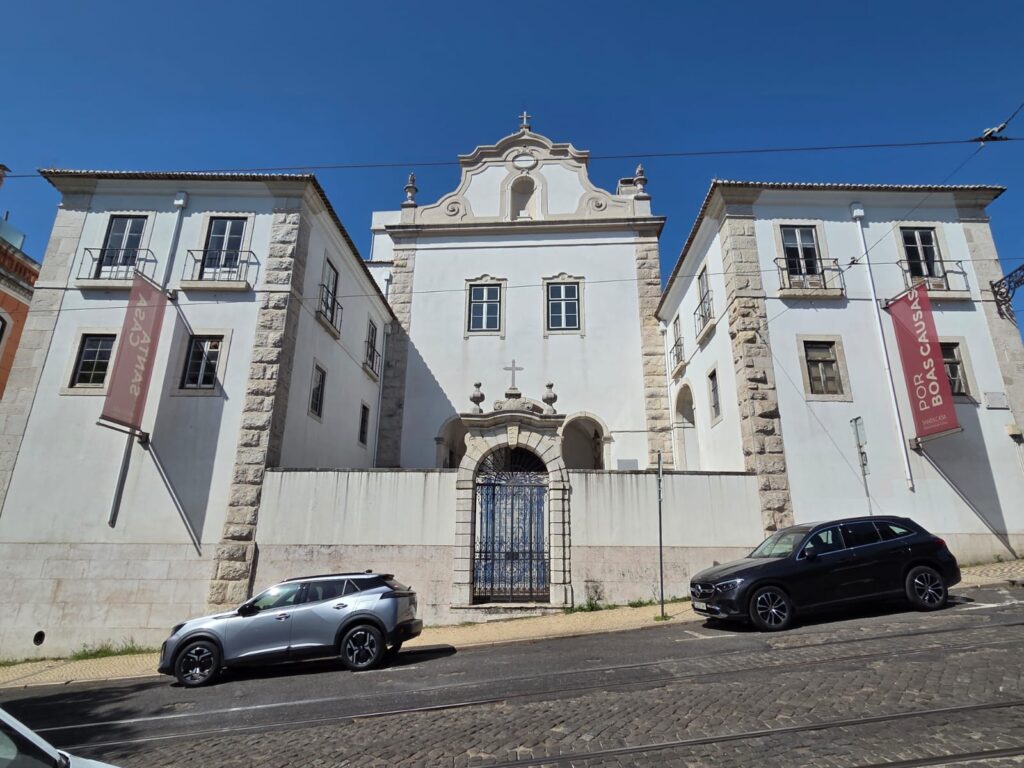
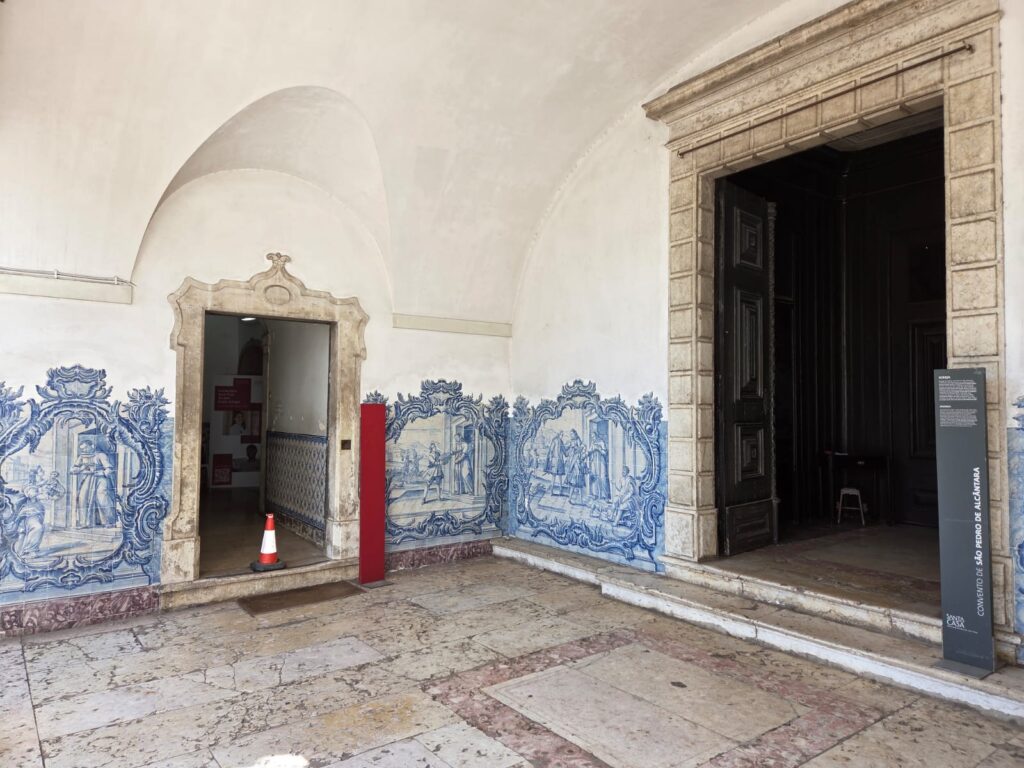
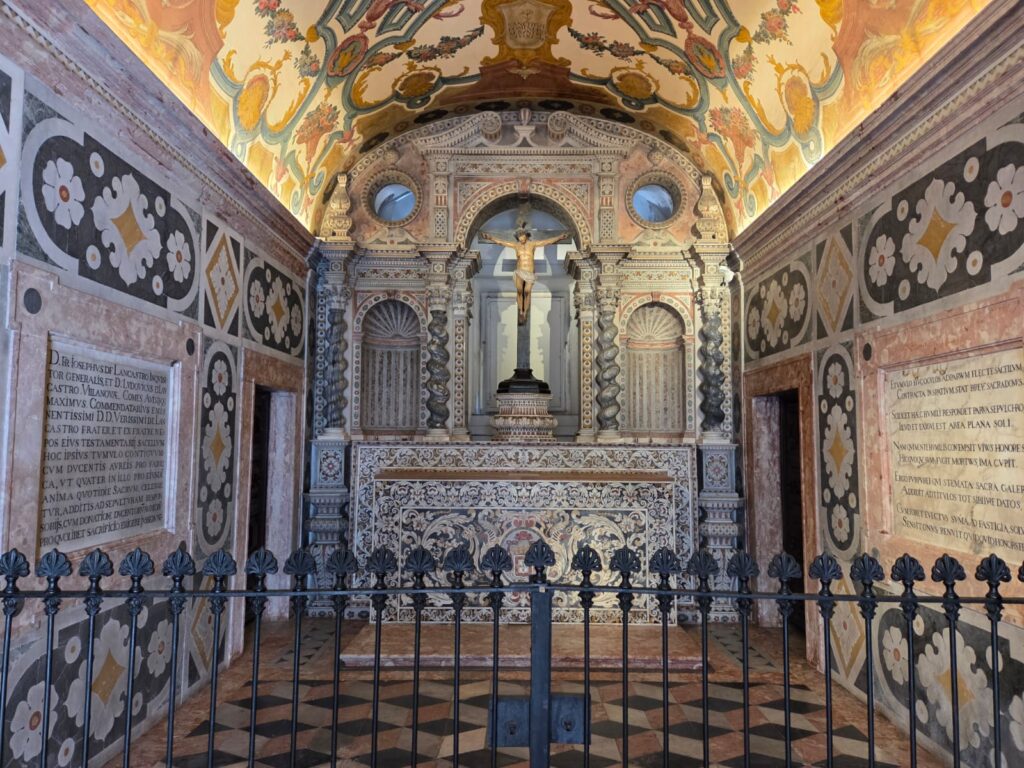
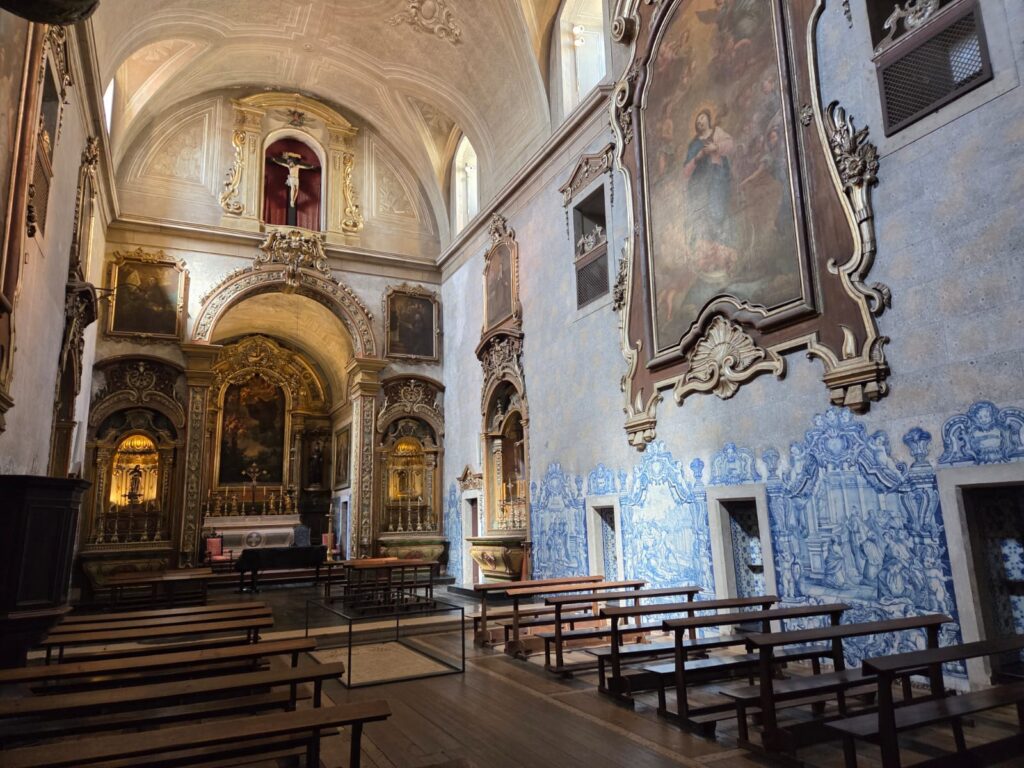
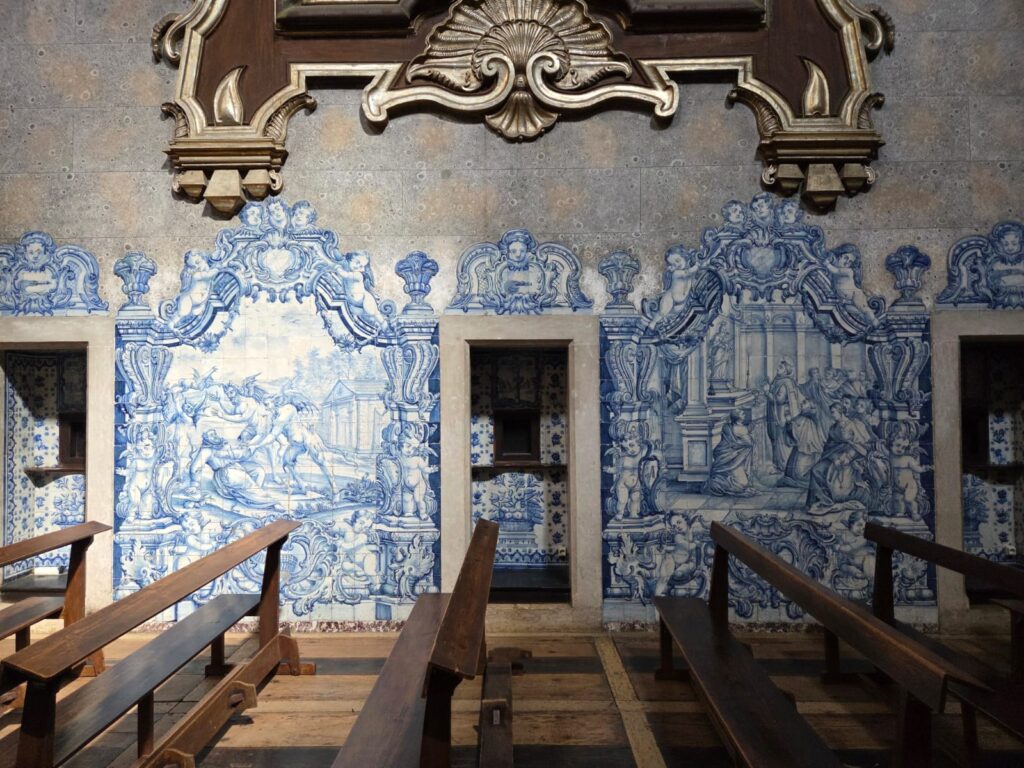
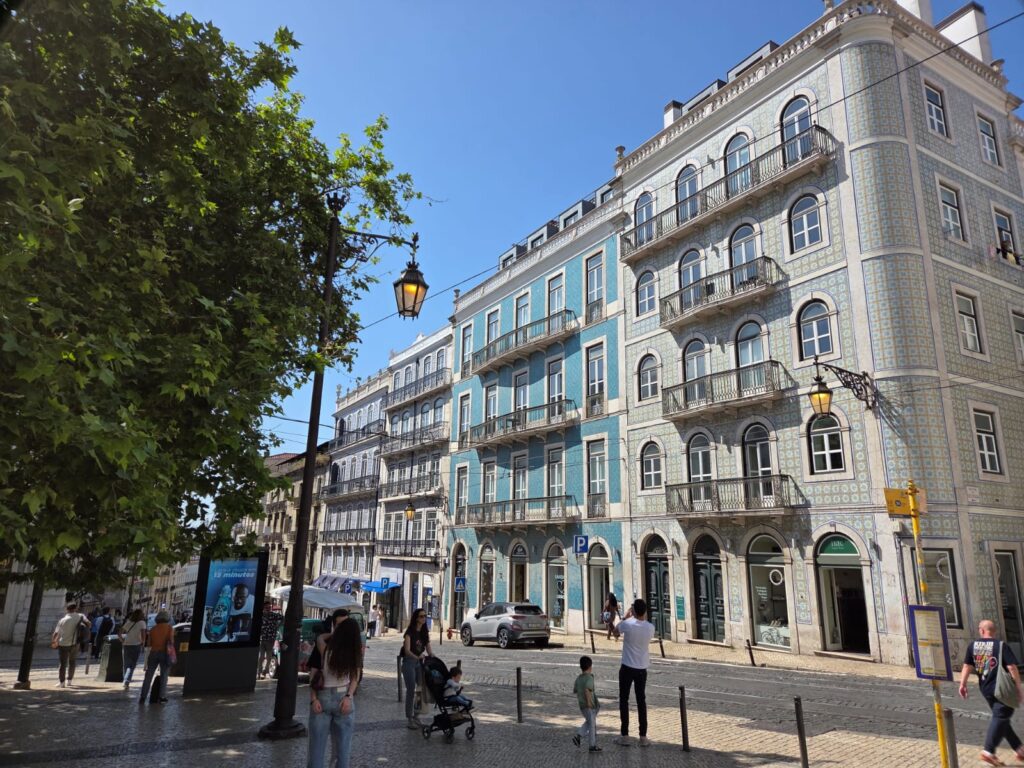
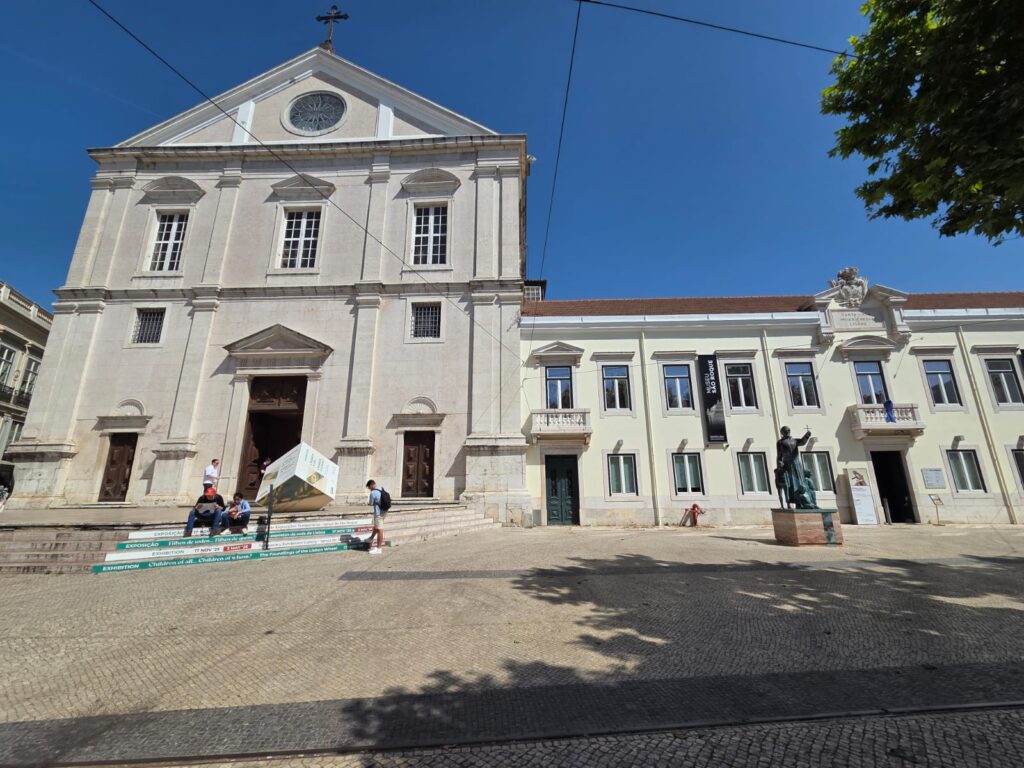
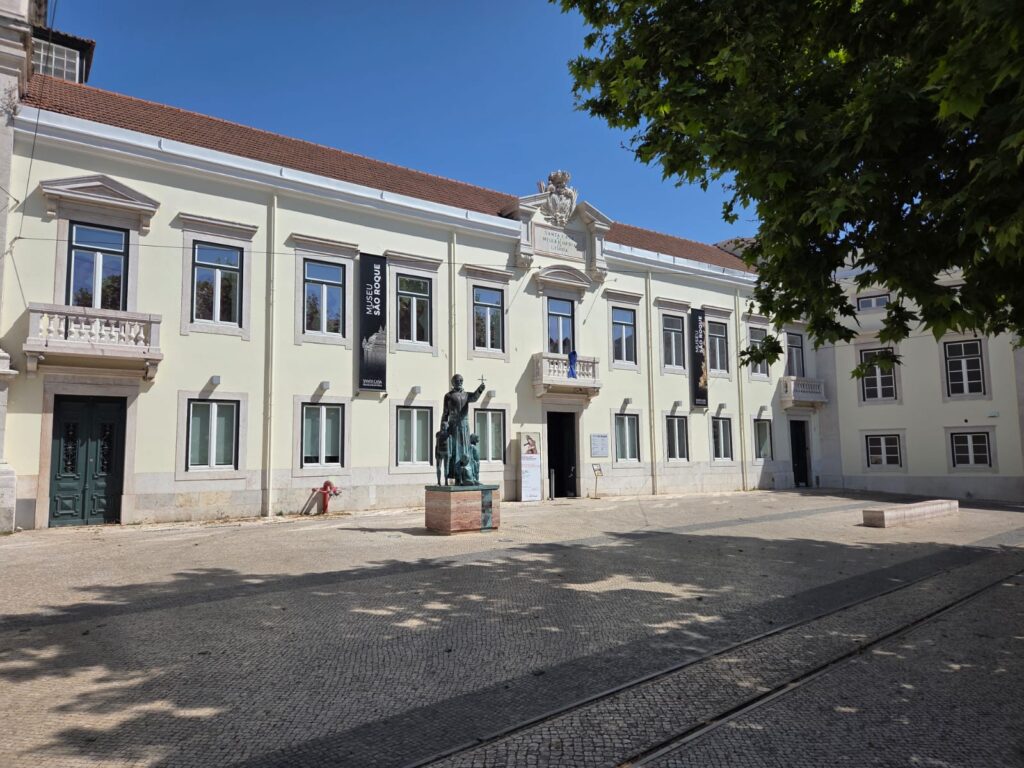
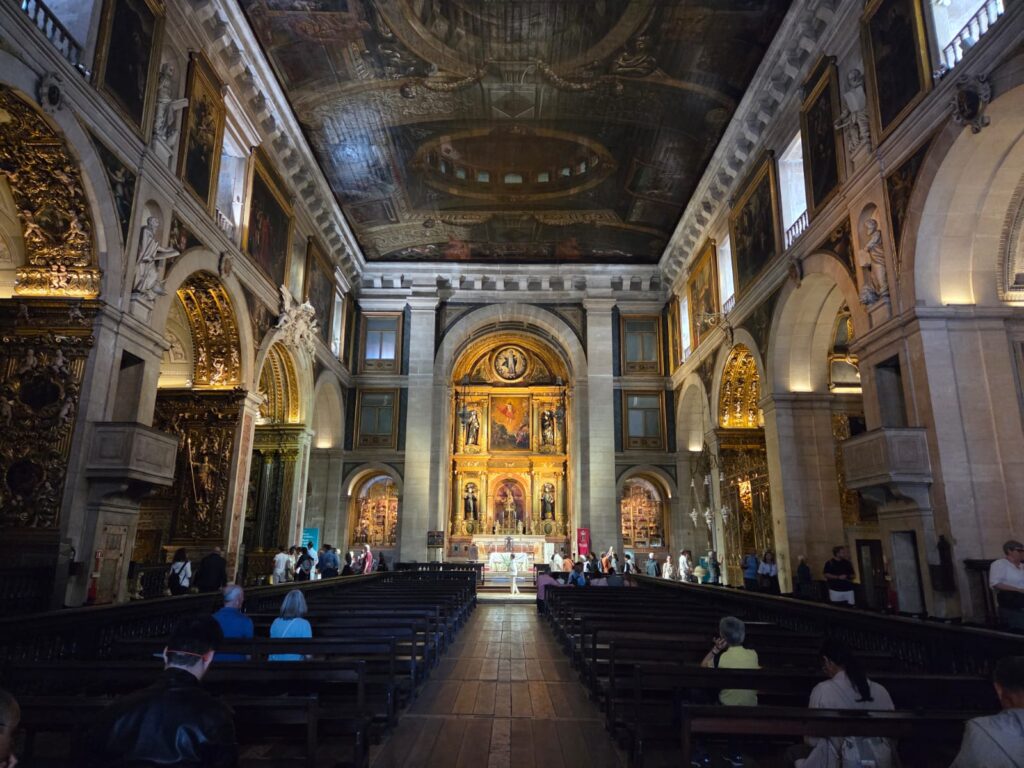
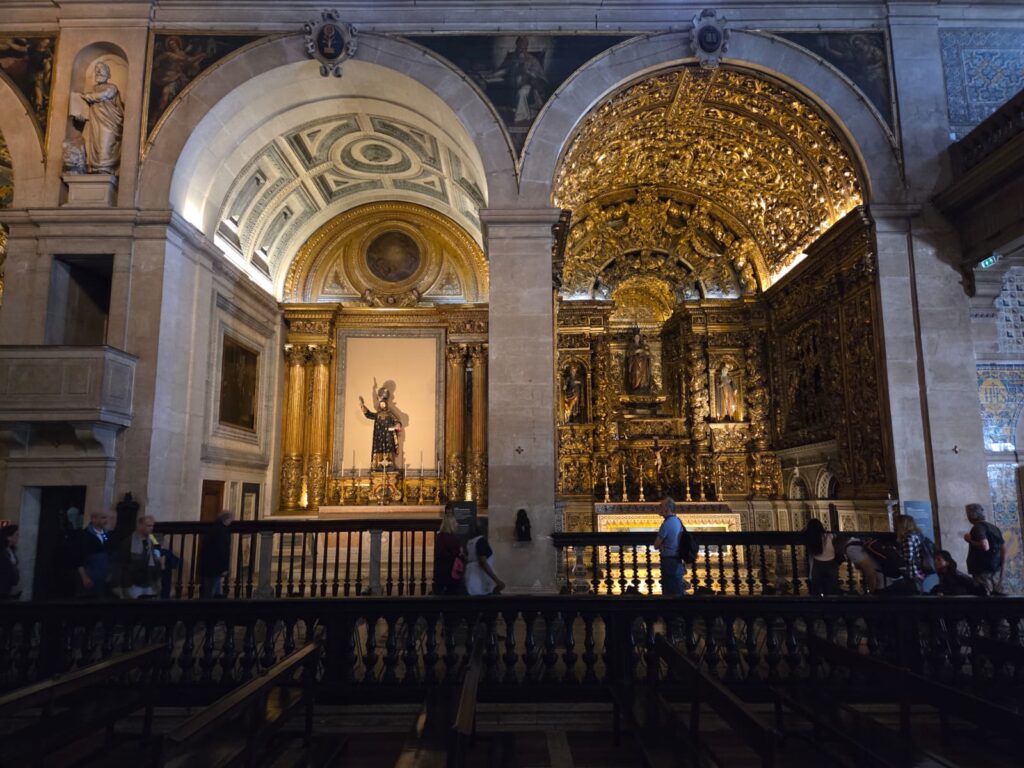
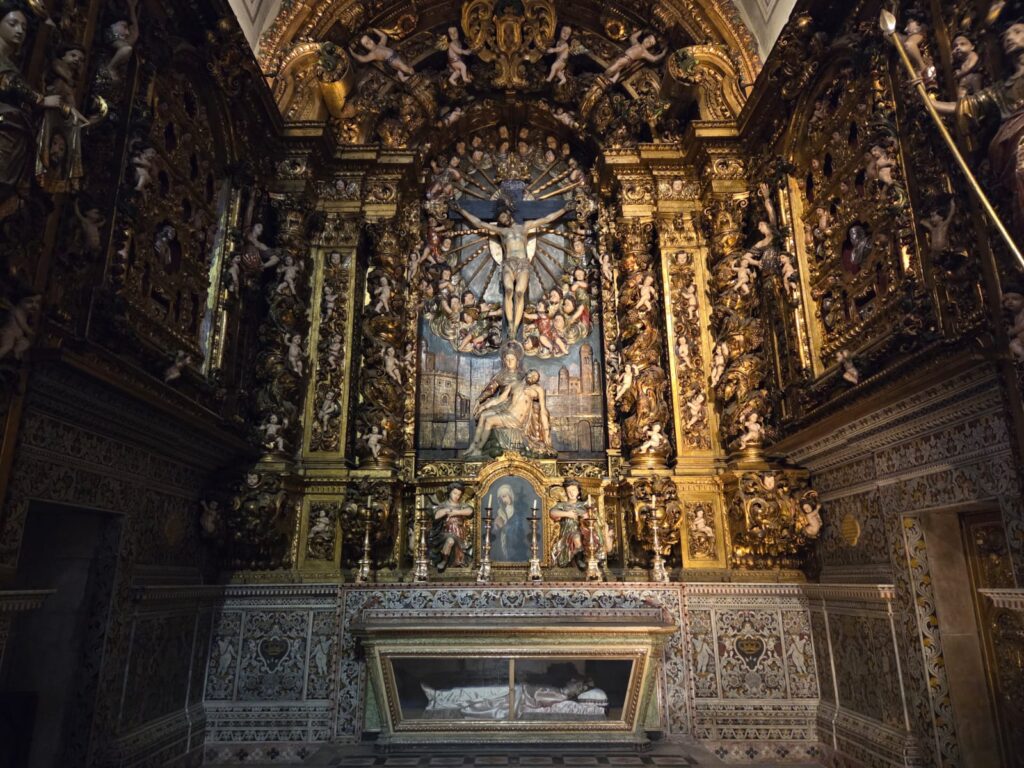
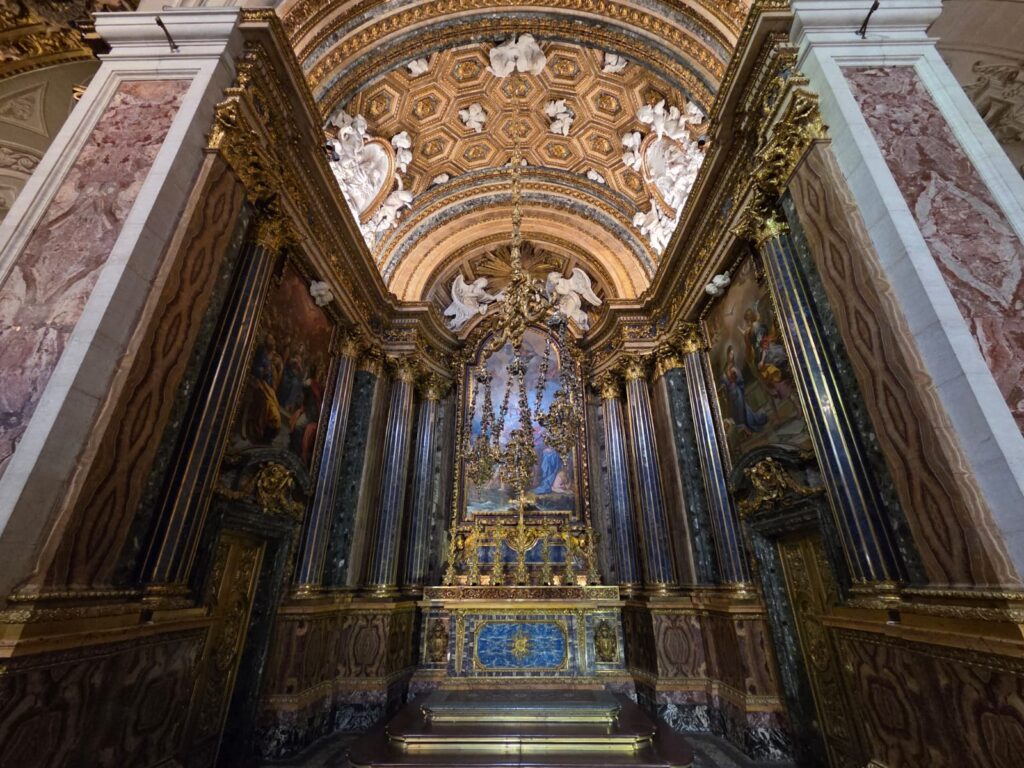
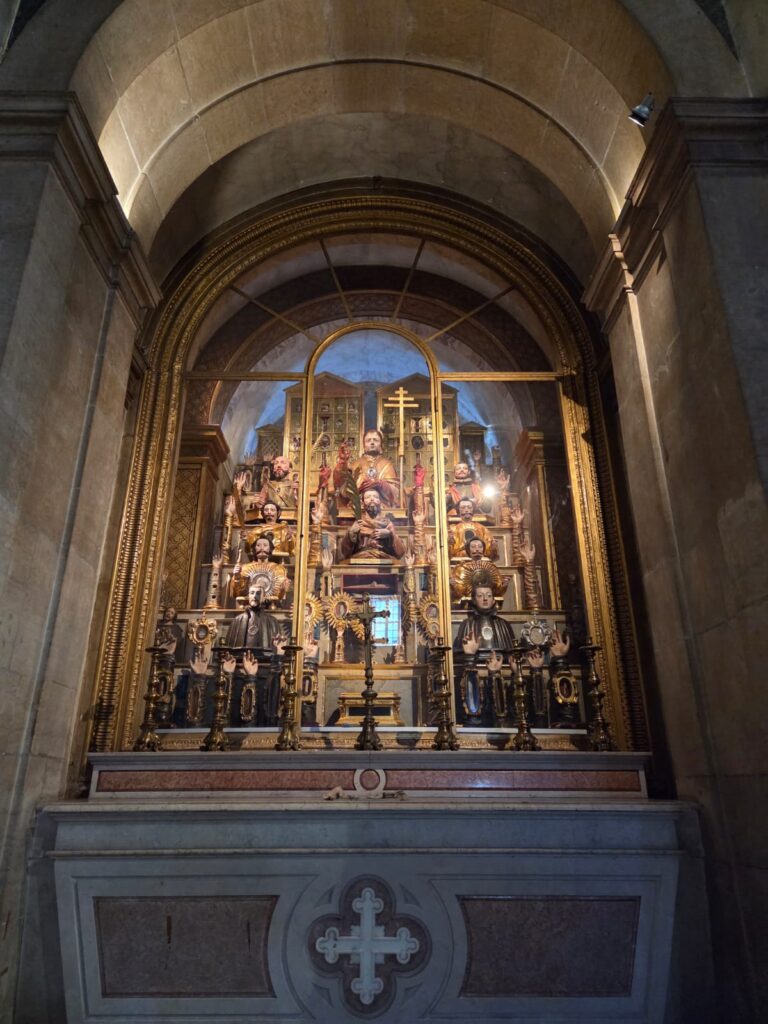
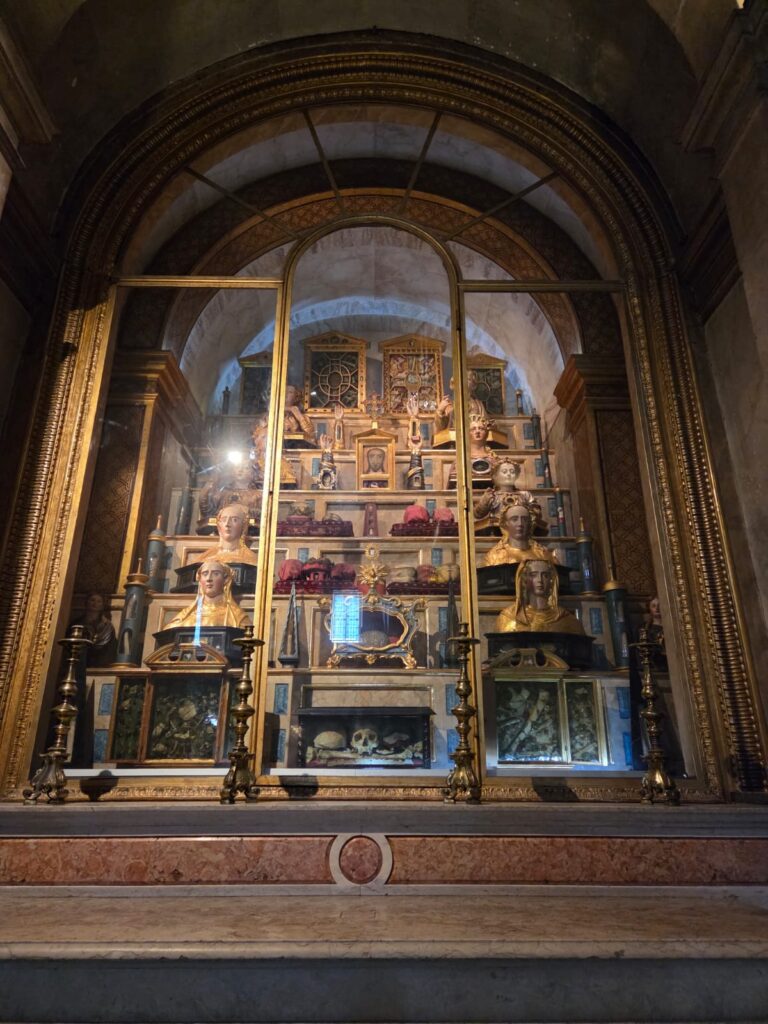
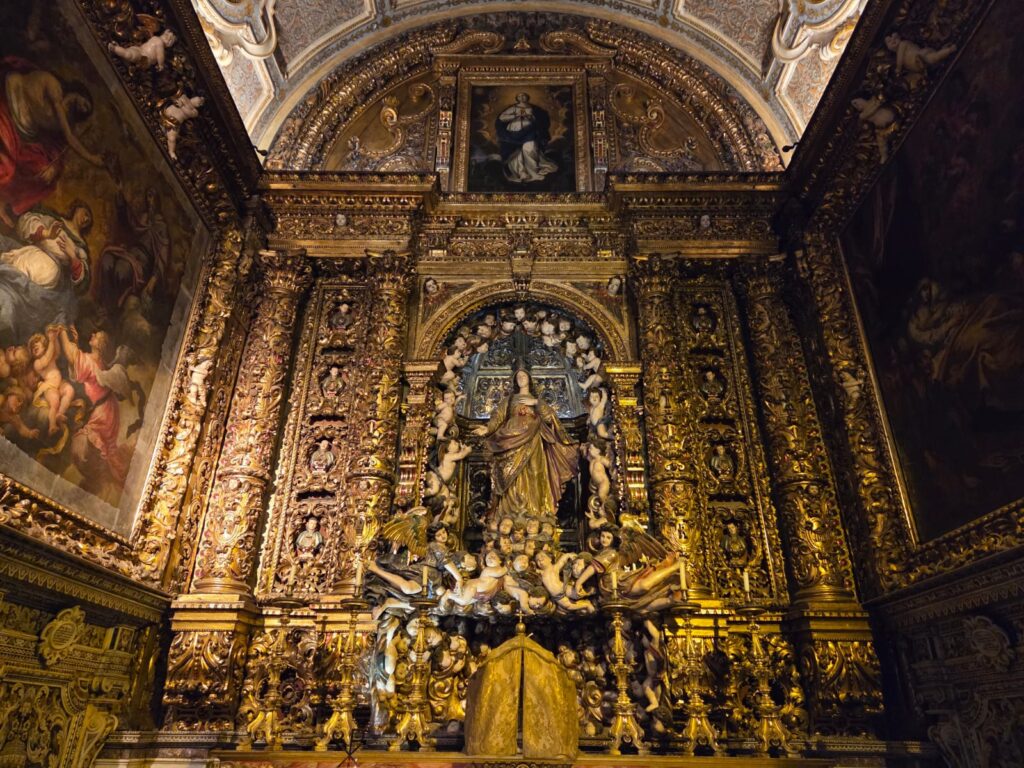
My object, in walking along the Rua da Escola Politécnica, was to get to the Miradouro de São Pedro de Alcântara. Miradouro, in Portuguese, means ‘lookout’ or ‘viewing point’. And, being a hilly city, Lisbon has many of them. This is a popular one, looking out over the Baixa district downtown.It’s here that we have the first concrete evidence that this is a special day in Lisbon. The 25th of April is Freedom Day (Dia da Liberdade), commemorating the 1974 Carnation Revolution. More on this later.Before leaving this area I backtracked to see if I could enter the religious complex I’d seen on the corner. Turns out I could! This is the Convento de São Pedro de Alcântara, a 17th century Franciscan monastery. Like many churches and other historic buildings in Lisbon, it features beautiful azulejos, or tiles. These Baroque examples show the life of Saint Peter of Alcantara.Azulejos are not limited to historic and significant buildings. Many residential and commercial buildings have a tiled façade. I’m sure it’s practical and easy to keep clean in a hot climate.And our next stop is the Igreja de São Roque, or Church of Saint Roch, the saint who protects from the plague. This church was originally the first Jesuit church in Portugal and one of the first Jesuit churches anywhere. It was home to the Jesuits for about two centuries until they were expelled in the mid-eighteenth century. Since then it has belonged to the Lisbon Holy House of Mercy, a charitable organisation.The chapels in the interior really reminded me of churches I saw in Peru. I guess this makes sense, as there was a strong Jesuit influence in South America.The Chapel of Saint John the Baptist is perhaps the most luxurious of the lot. Commissioned by Dom João V in 1740, it was funded by the immense wealth then flowing from Brazil to Portugal. It was assembled in Rome, and consecrated by Pope Benedict XIV before being shipped to Lisbon. This chapel introduced the Rococo style to Portugal.Plenty of reliquaries, divided by gender.As well as the church there is a museum, which covers for some reason Asian as well as religious art. I thought about visiting but needed to press on if I wanted to see all I wanted to see more of the city.
Our Walking Tour of Lisbon Continues with the Convento do Carmo
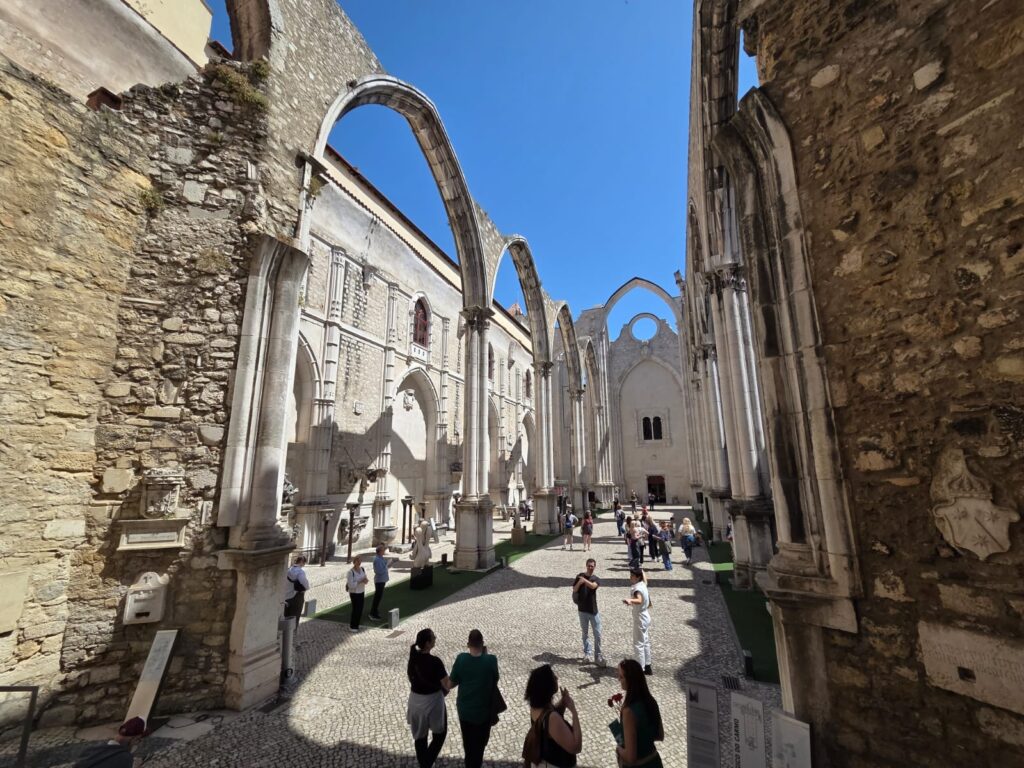
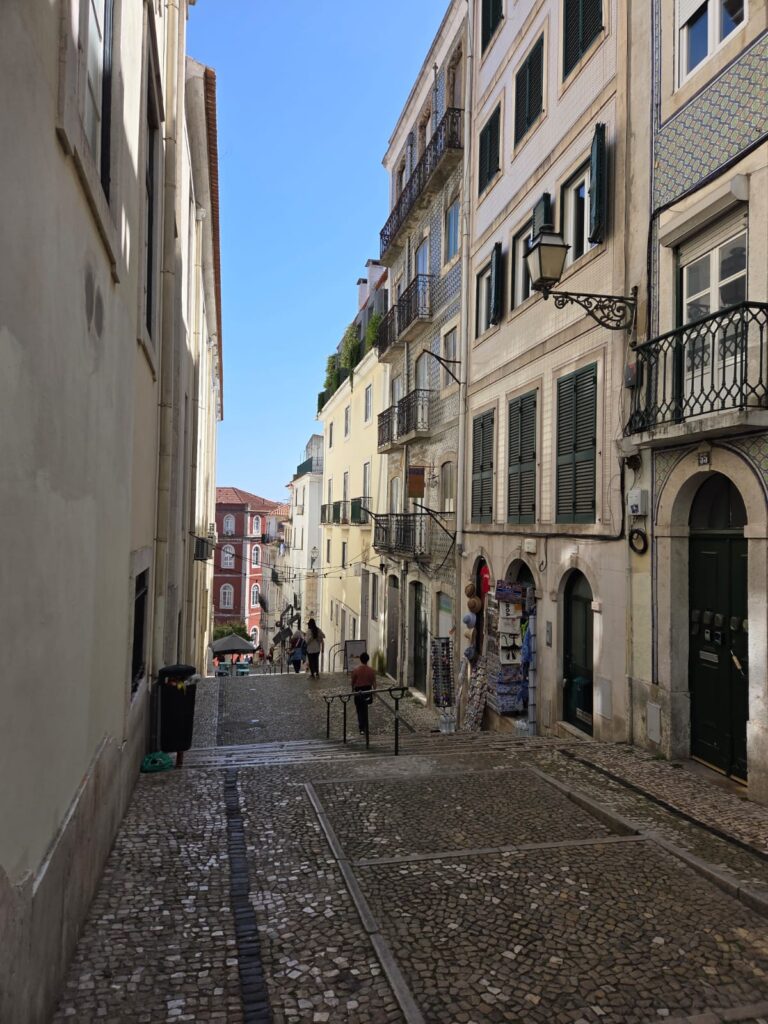
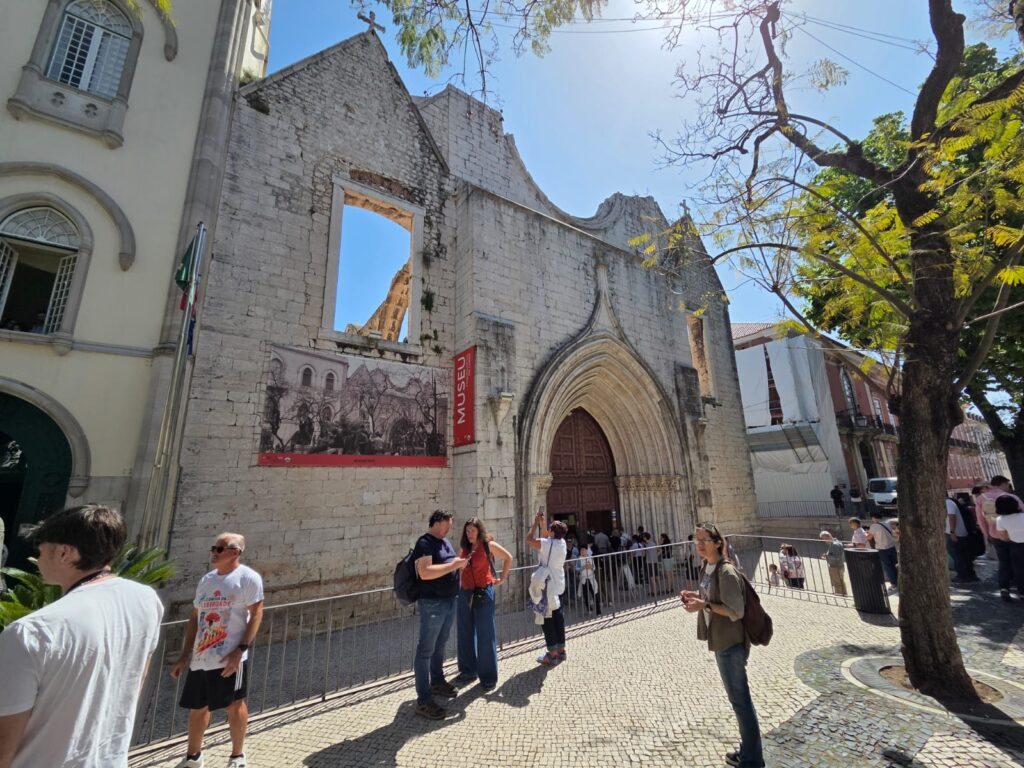
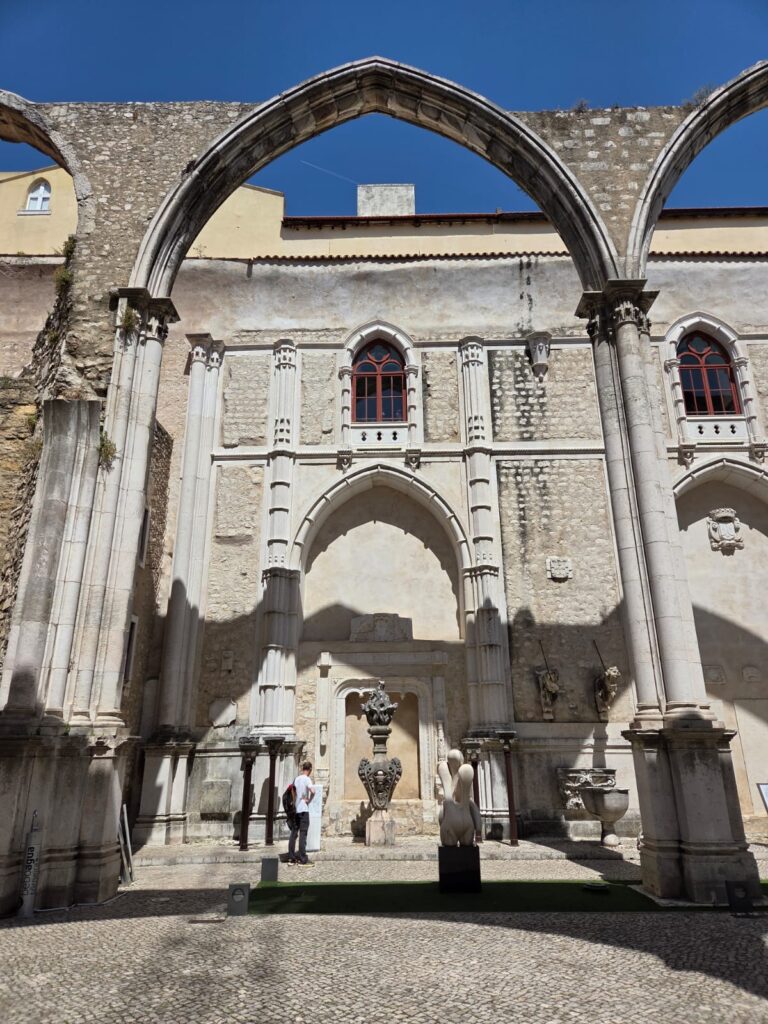
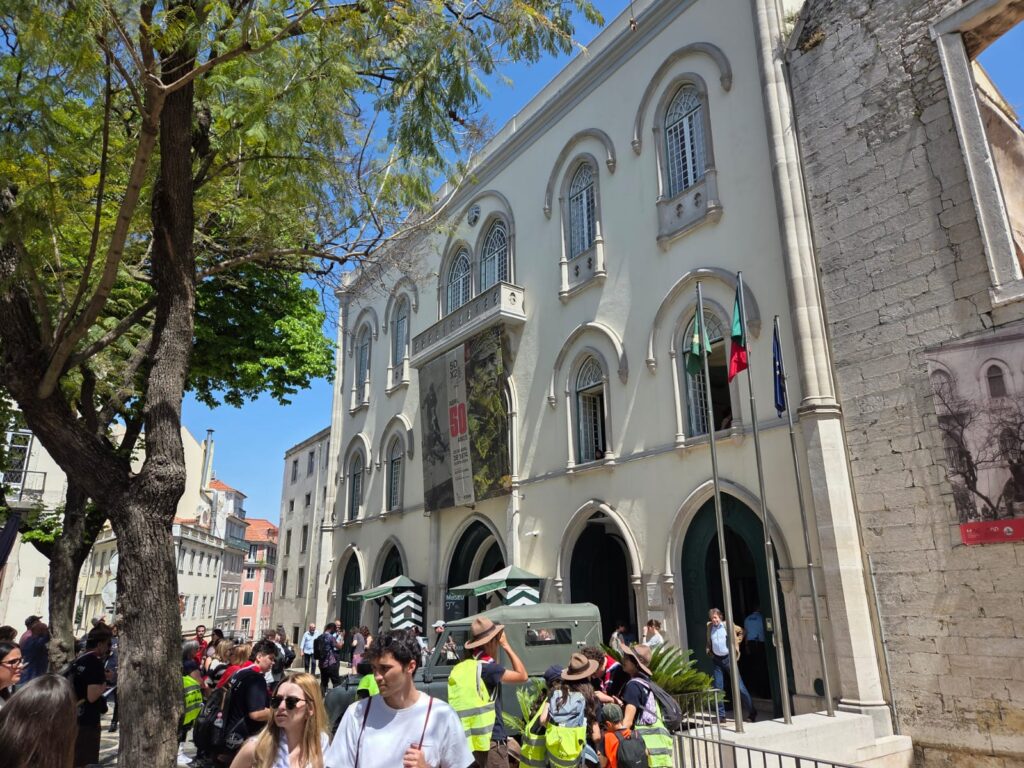
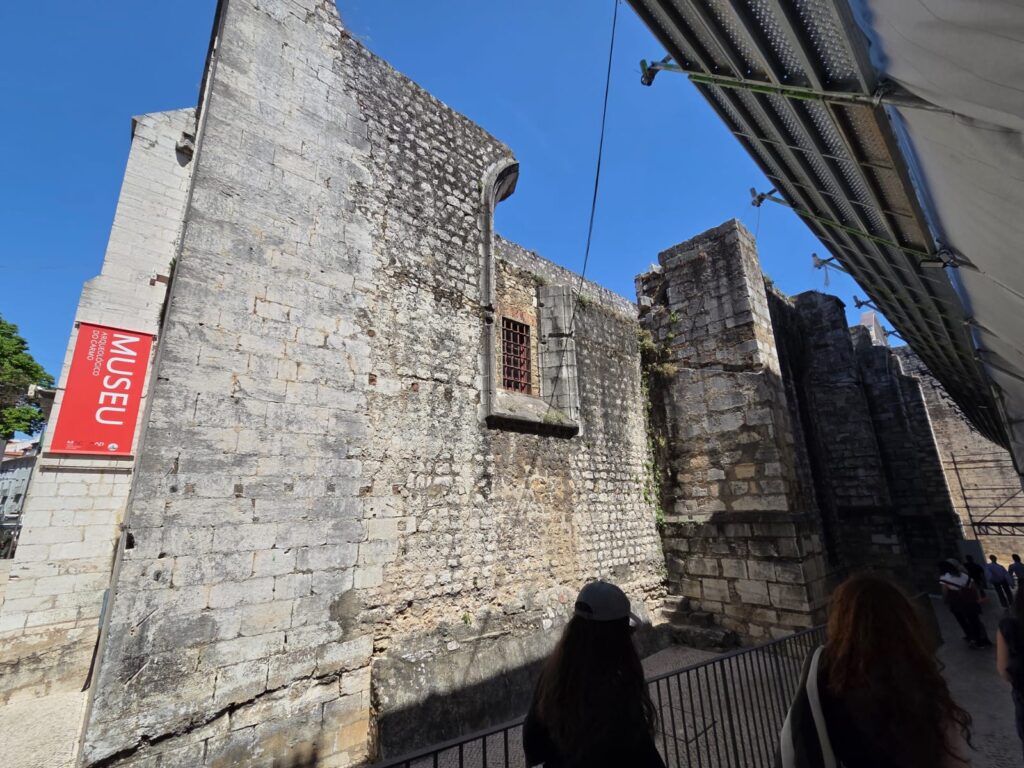
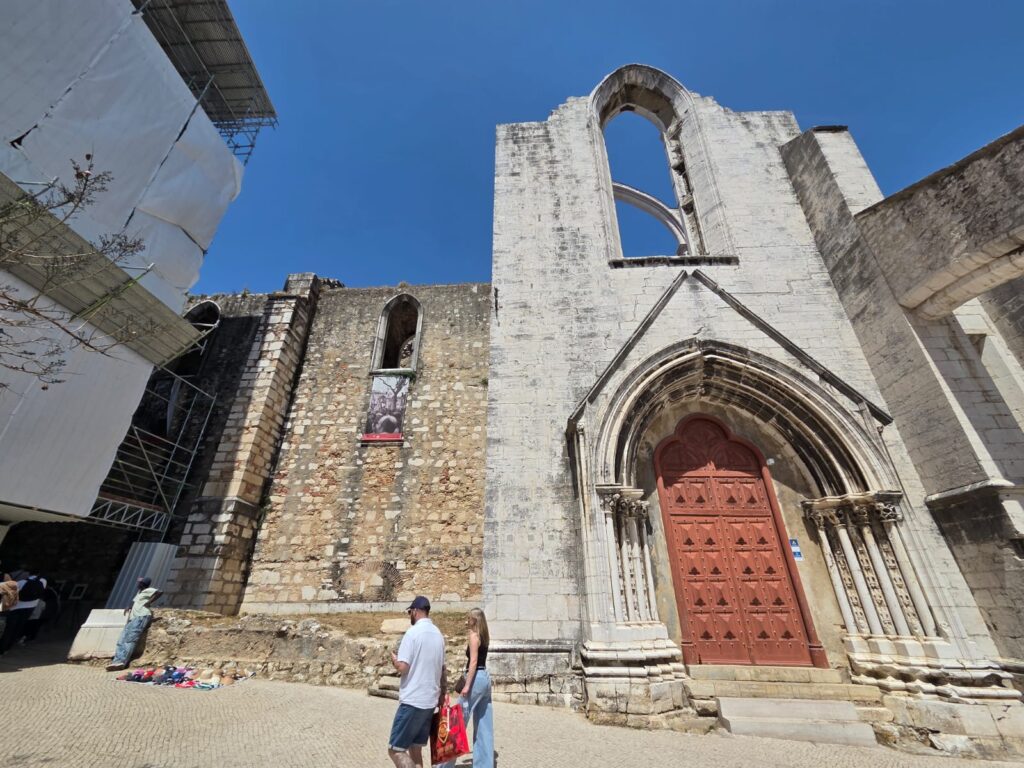
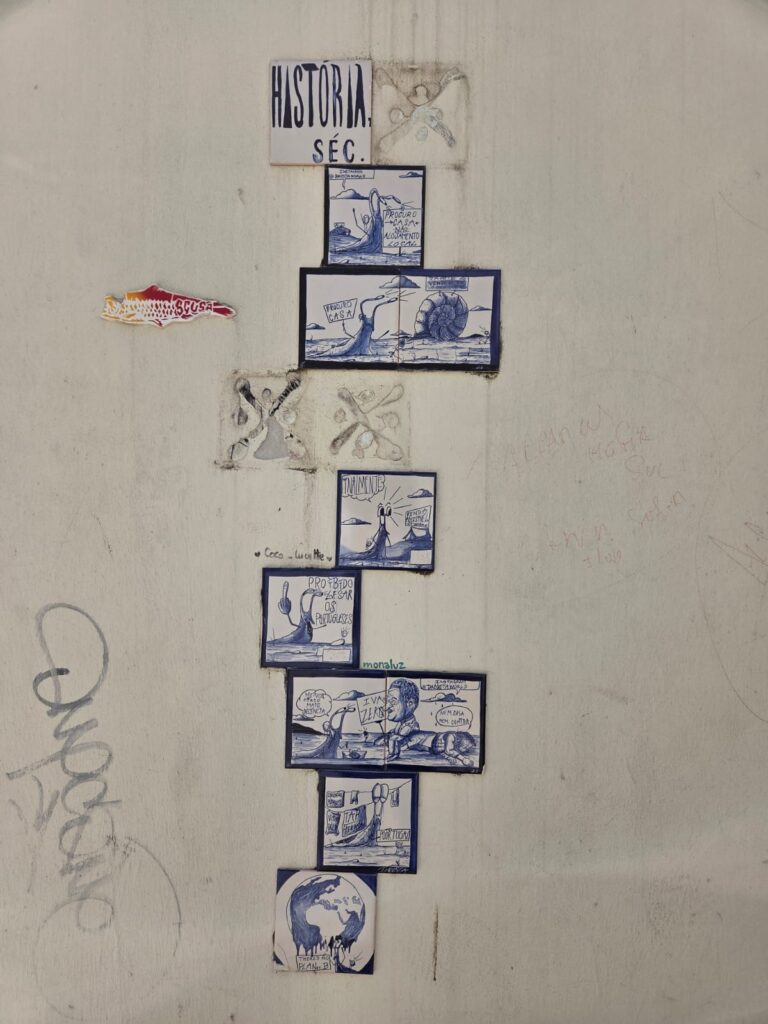
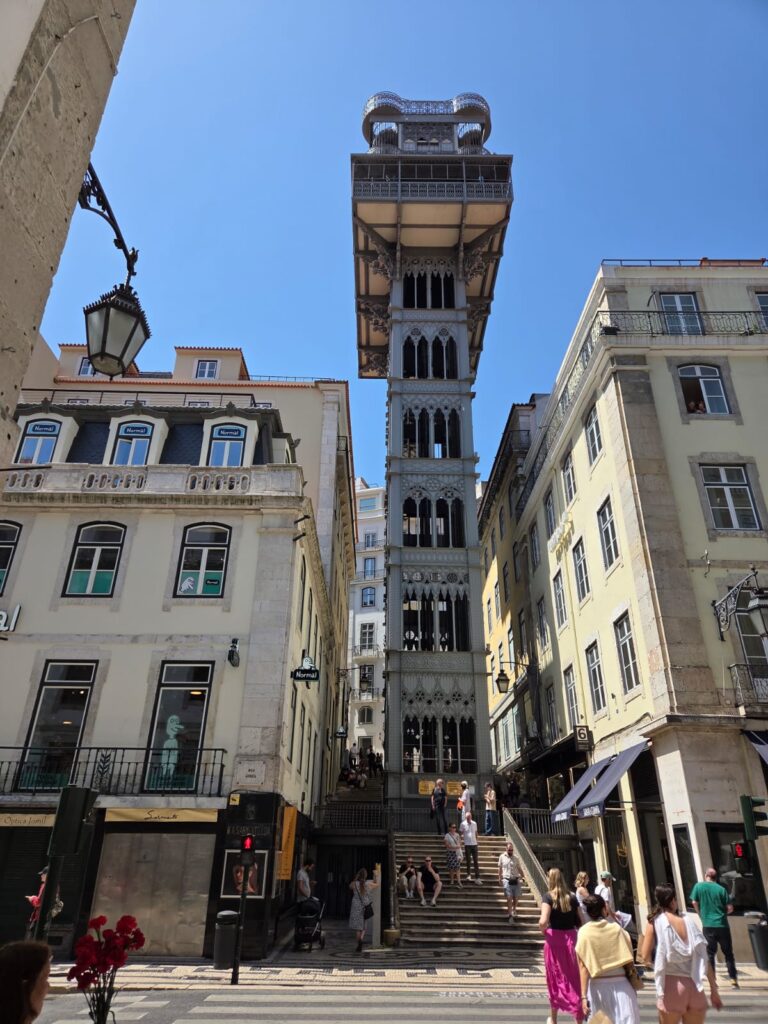
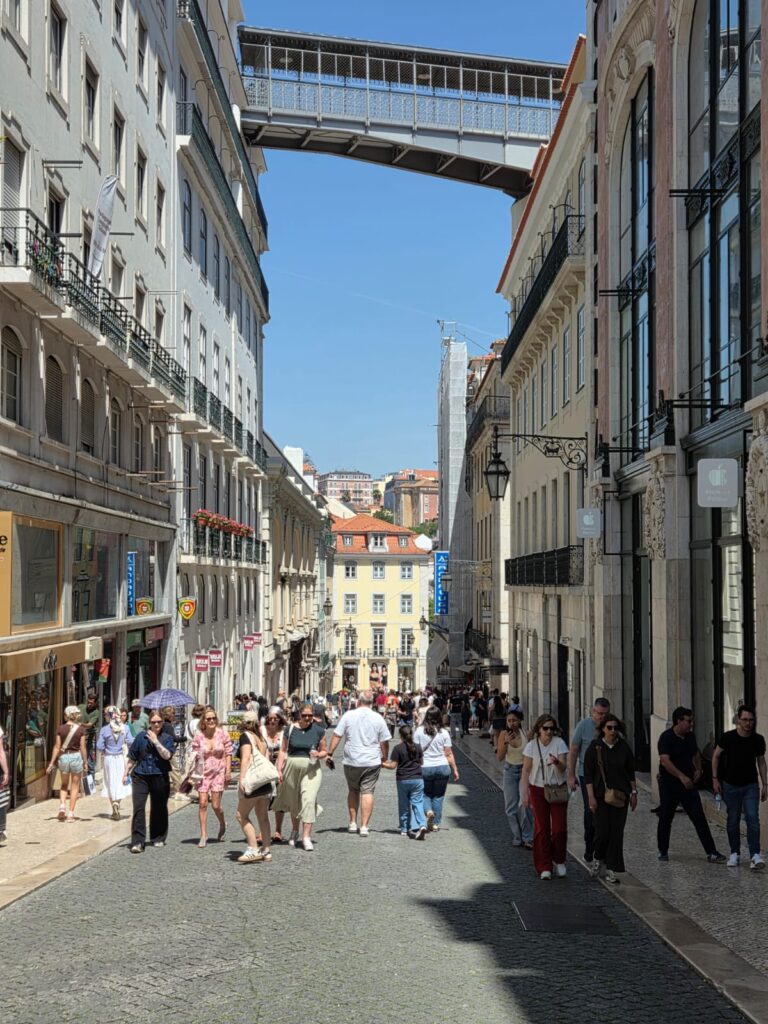
Another view of the streets of Lisbon’s Old Town as we head towards our next stop.And that is the Convento do Carmo. This former Carmelite convent was founded in 1389. The 1755 earthquake caused significant damage. There were some attempts at repairs, but religious orders were evicted from Portugal before the convent and church were fully rebuilt. Today the ruined church functions as an archaeological museum.I had sort of wanted to go here last time I was in Lisbon, but the Urban Geographer’s general opinion of archaeology is that it’s a “pile of old rocks”, and so not something worth queuing for, especially in rainy weather. I think the queue outside the convent is permanent, but it moved quickly and I soon got inside the complex. The archaeological museum is small but interesting, and the film about the convent’s history well worth watching. More soon in a separate post.The Convento do Carmo is on the Largo do Carmo – a significant public square at the best of times, but especially on 25 April. Right next to the convent (actually part of the complex) is now the Museu da Guarda Nacional Republicana. Back in 1974, at the time of the Carnation Revolution, this was the Carmo Barracks. It was the focal point of the revolution and refuge for Prime Minister Marcelo Caetano leading up to his resignation. This event led directly to the restoration of democracy in Portugal and independence for its colonies. On 25 April 2026 the museum was busy, as were the flower sellers in the square outside.A side view of the convent and then some modern azulejos. We’re on our way down to the Rua do Carmo, a modern shopping street.As we learned last time we were in Lisbon, one of the ways it deals with its many levels is with elevators. This is the Elevador de Santa Justa, which the Urban Geographer and I took last time we were here. We’re now down in the lower levels of the city.
The End of Today’s Walking Tour of Lisbon
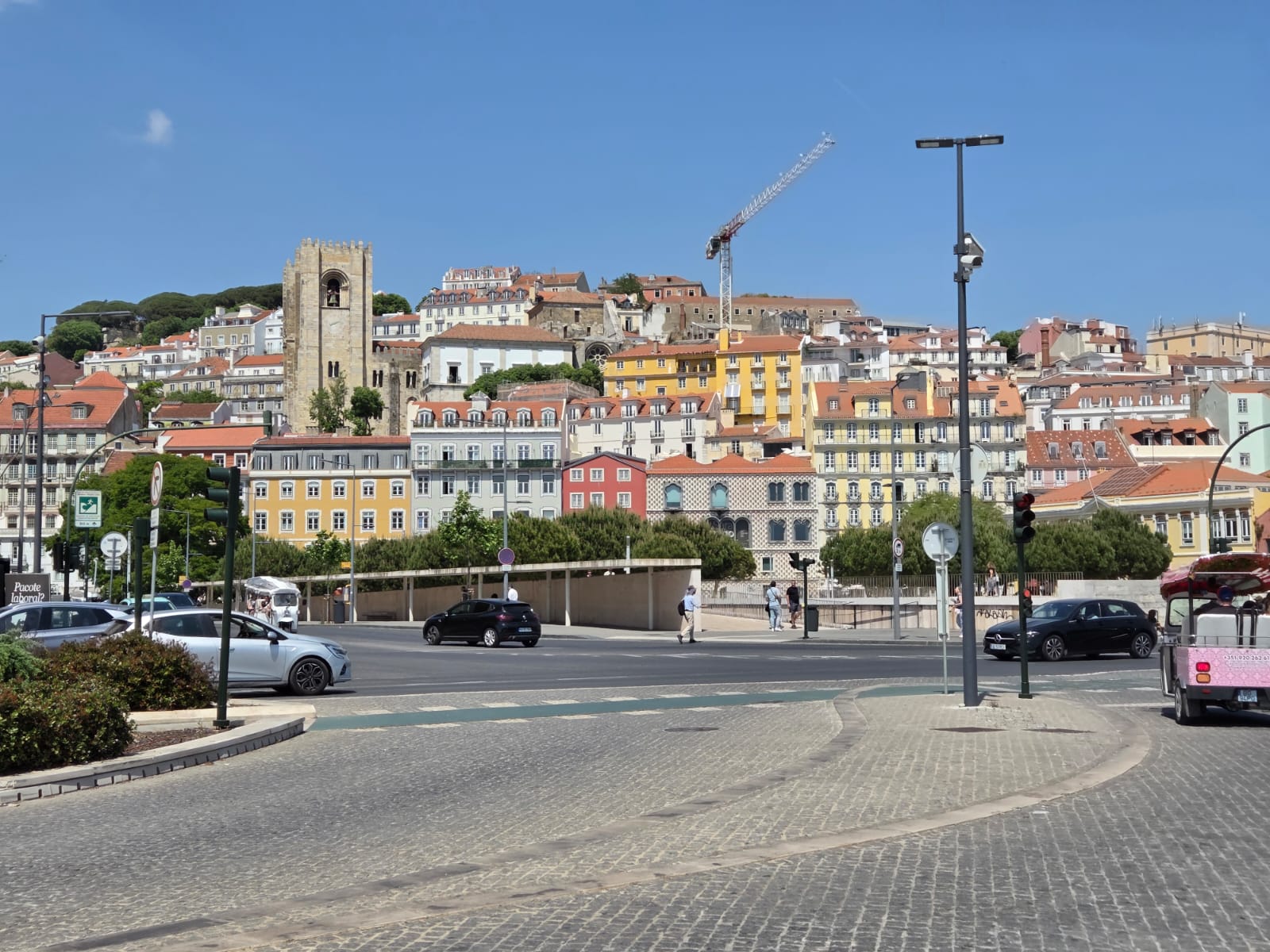
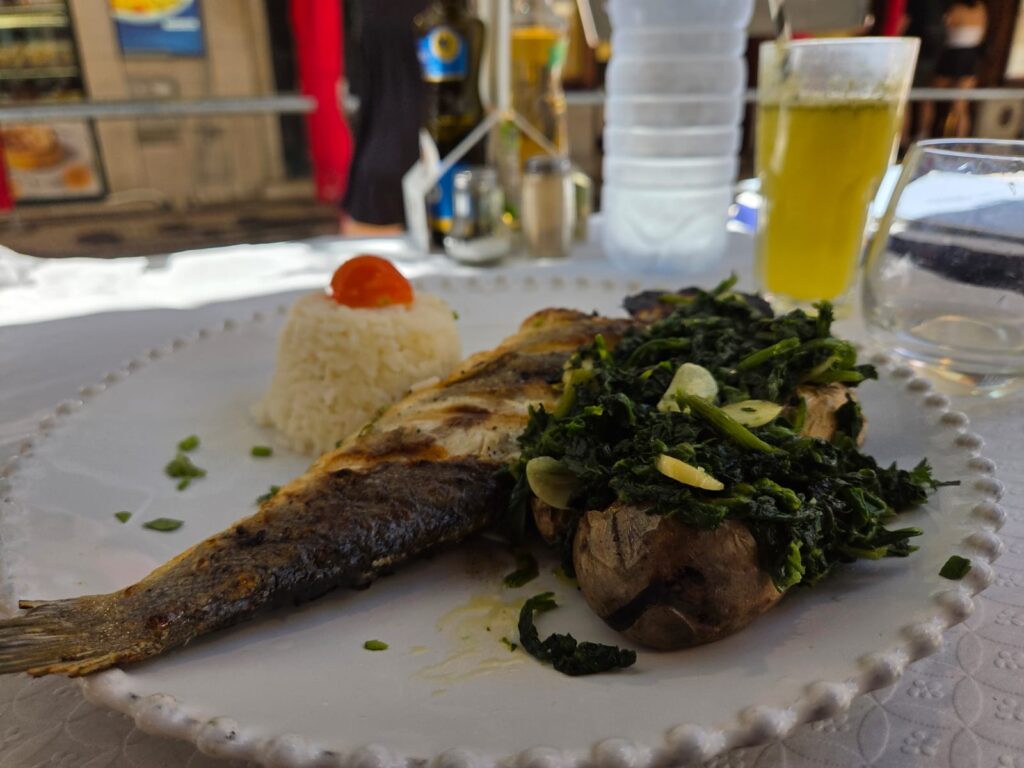
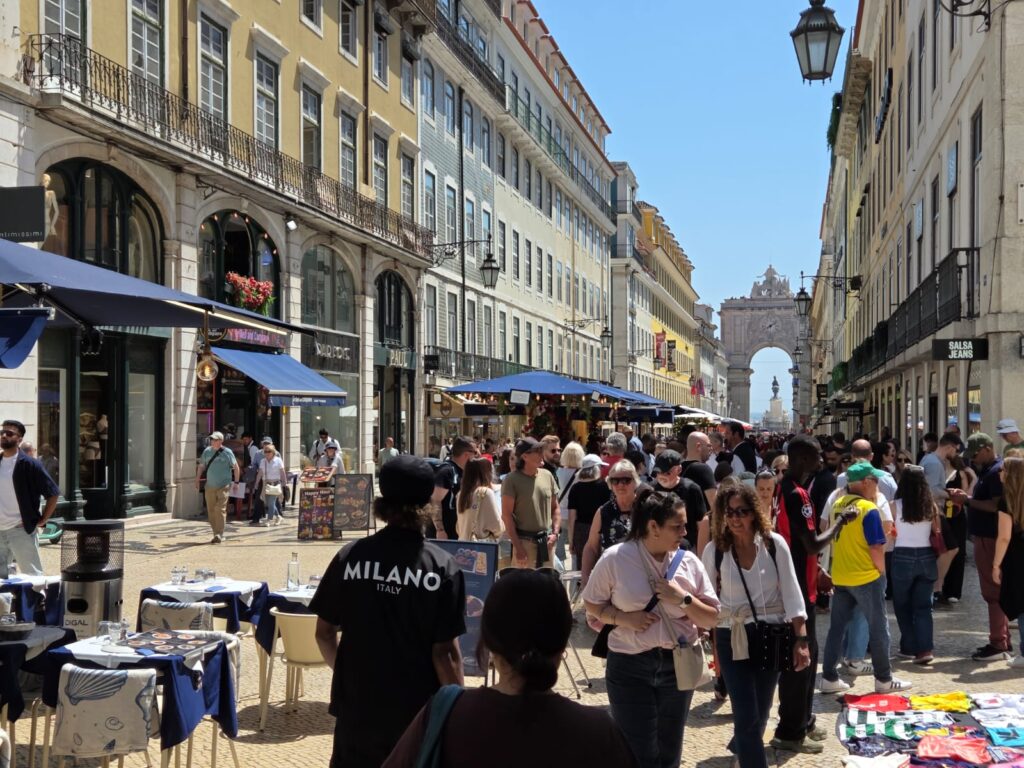
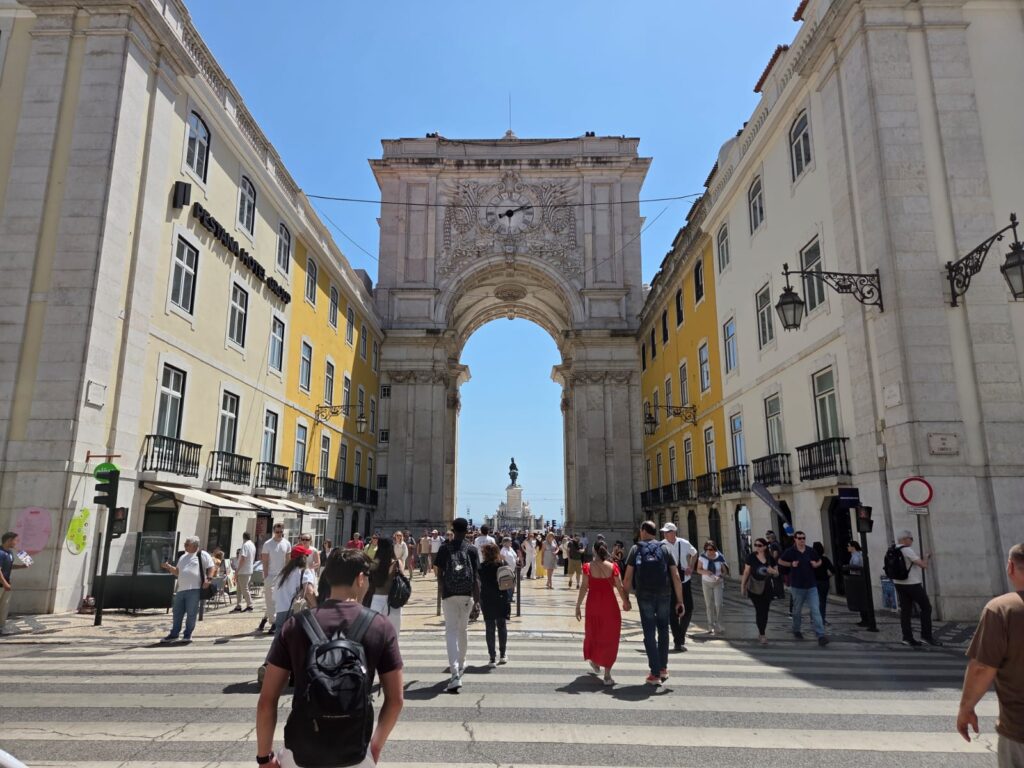
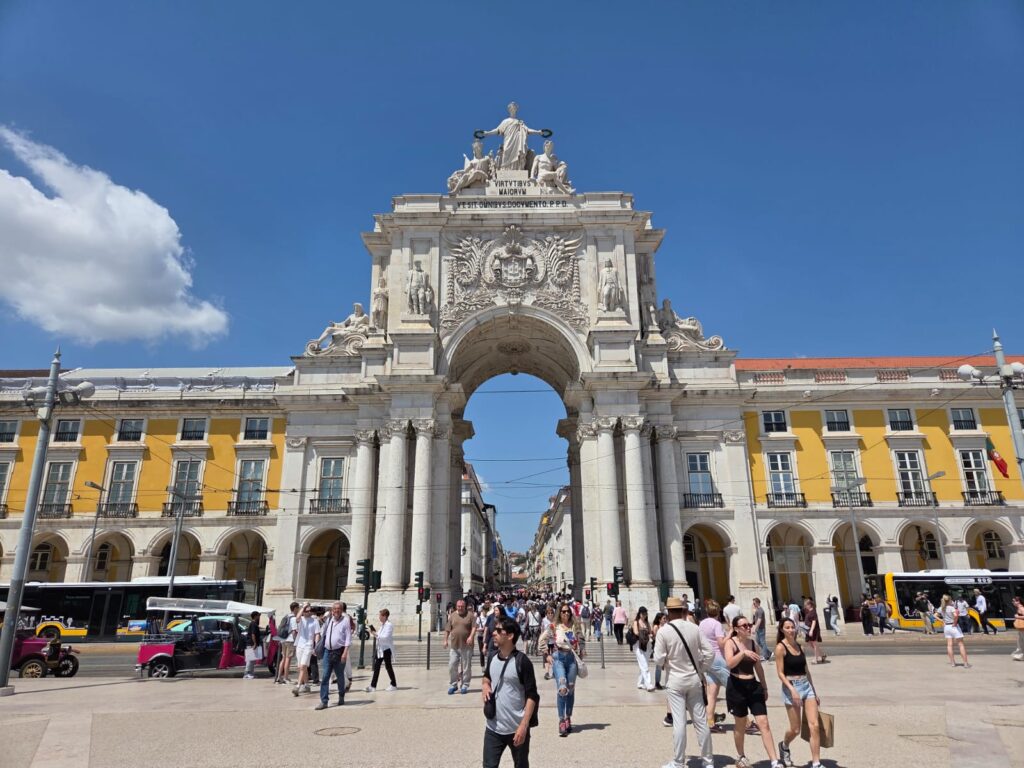
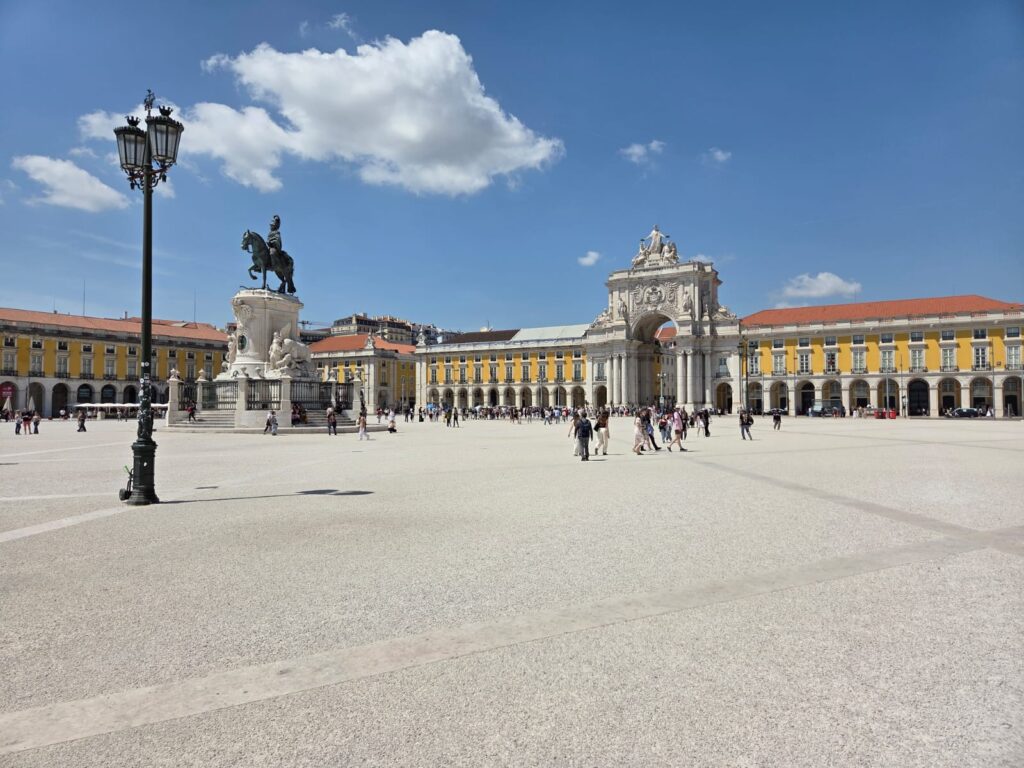
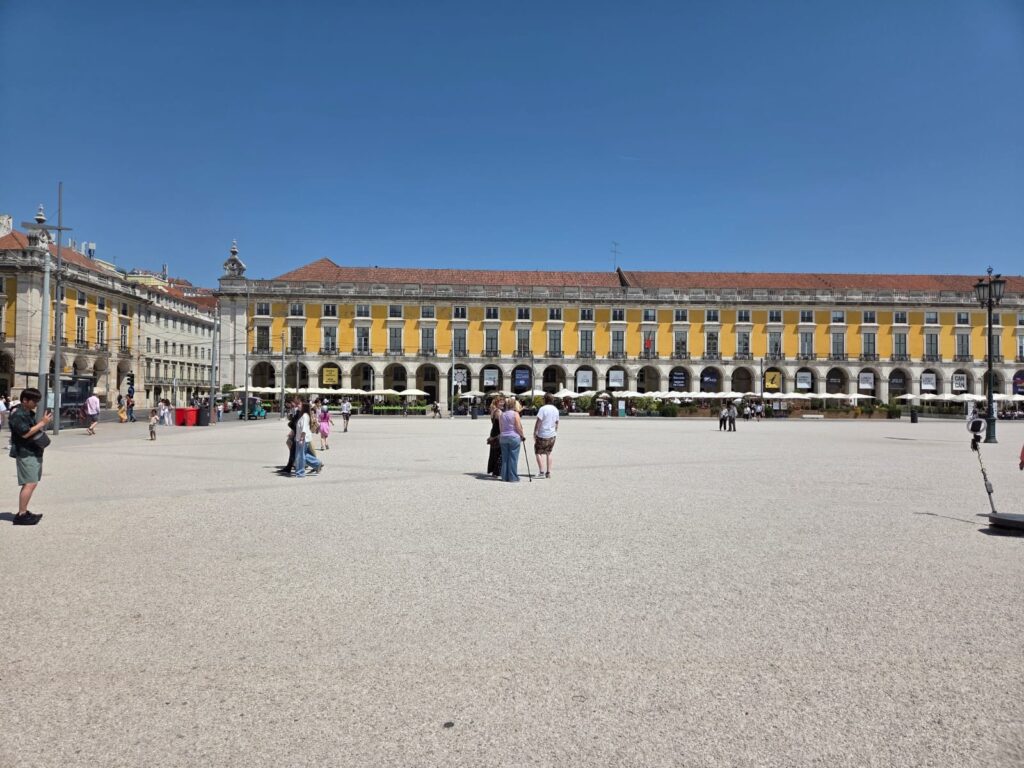
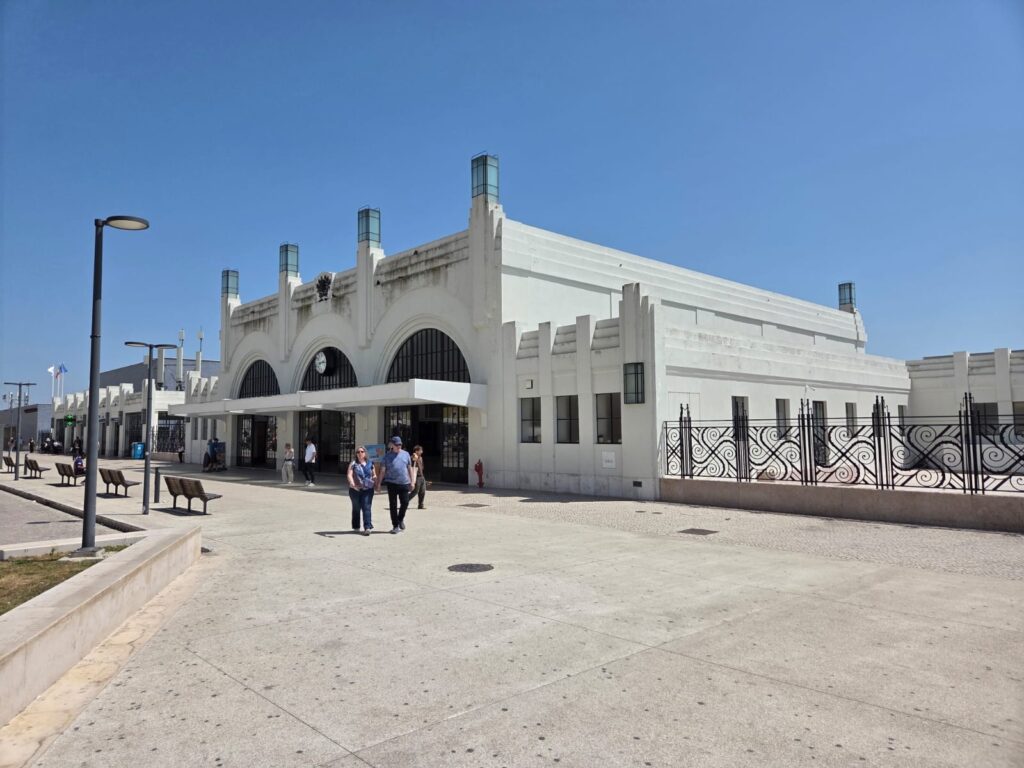
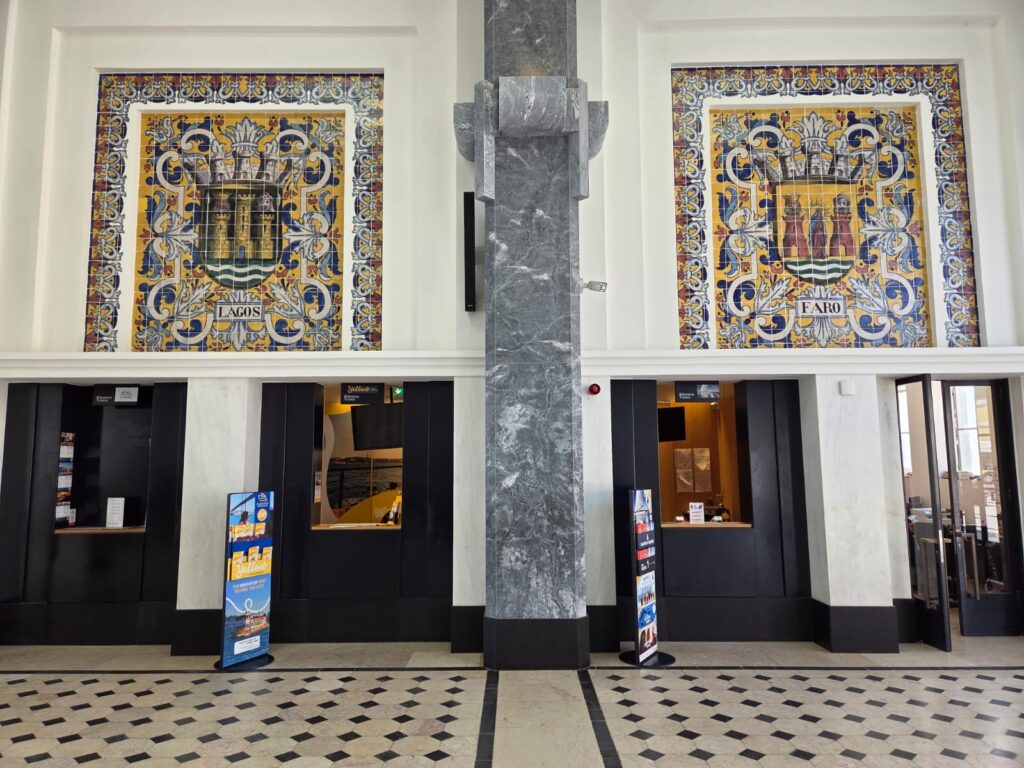
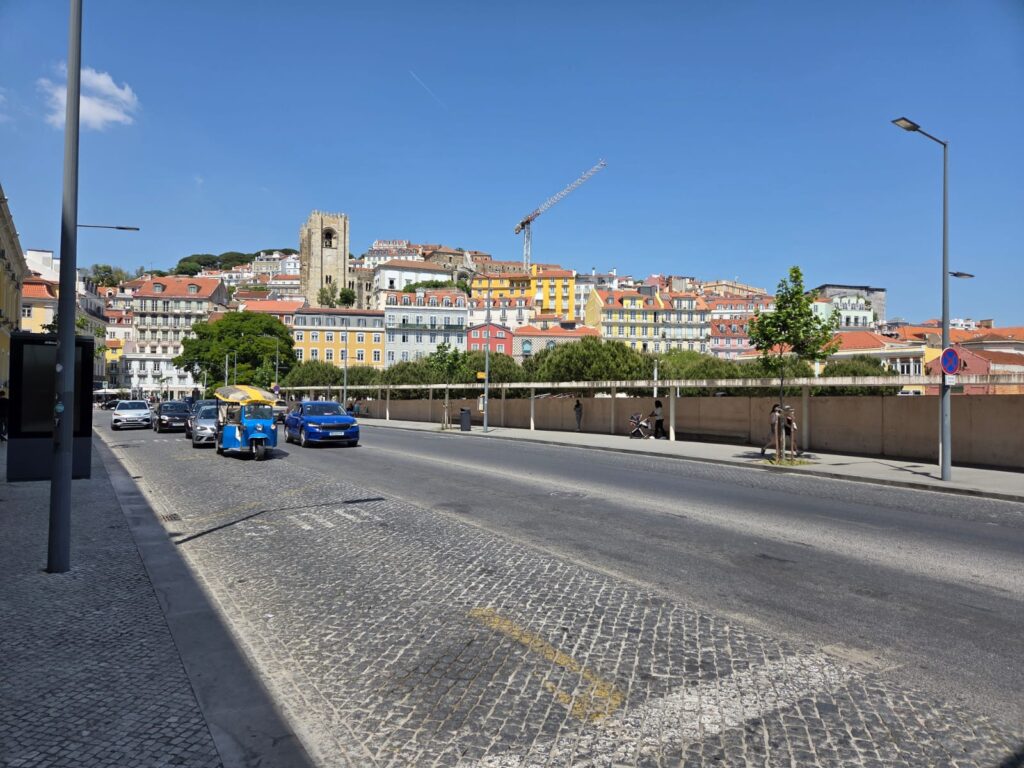
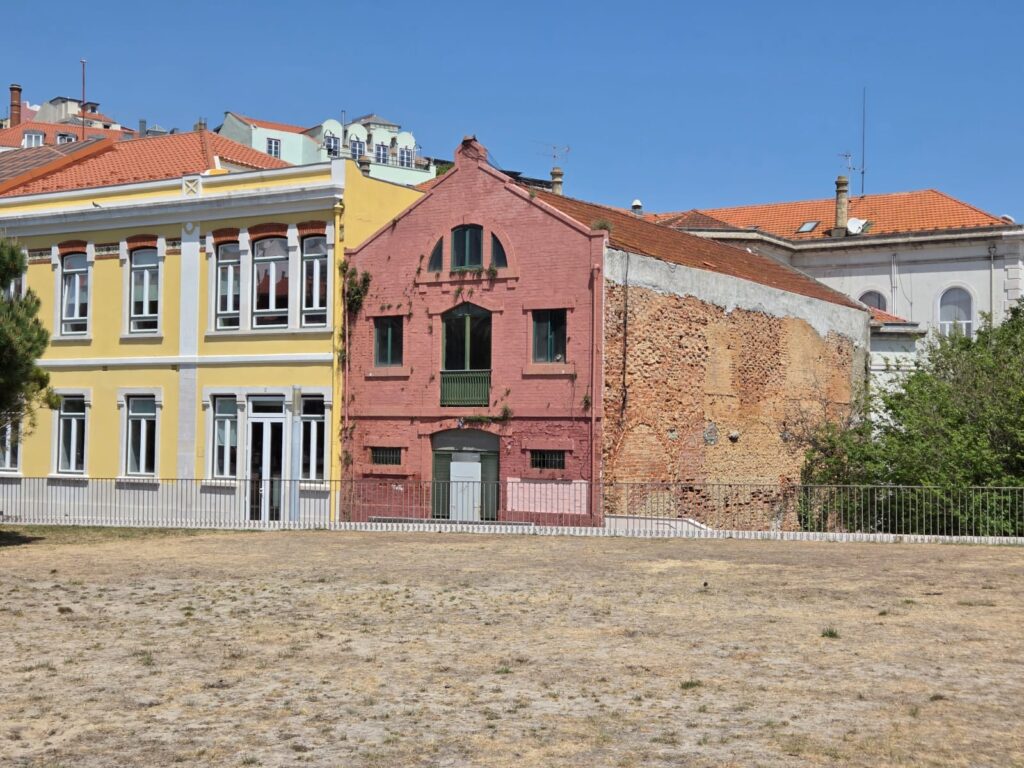
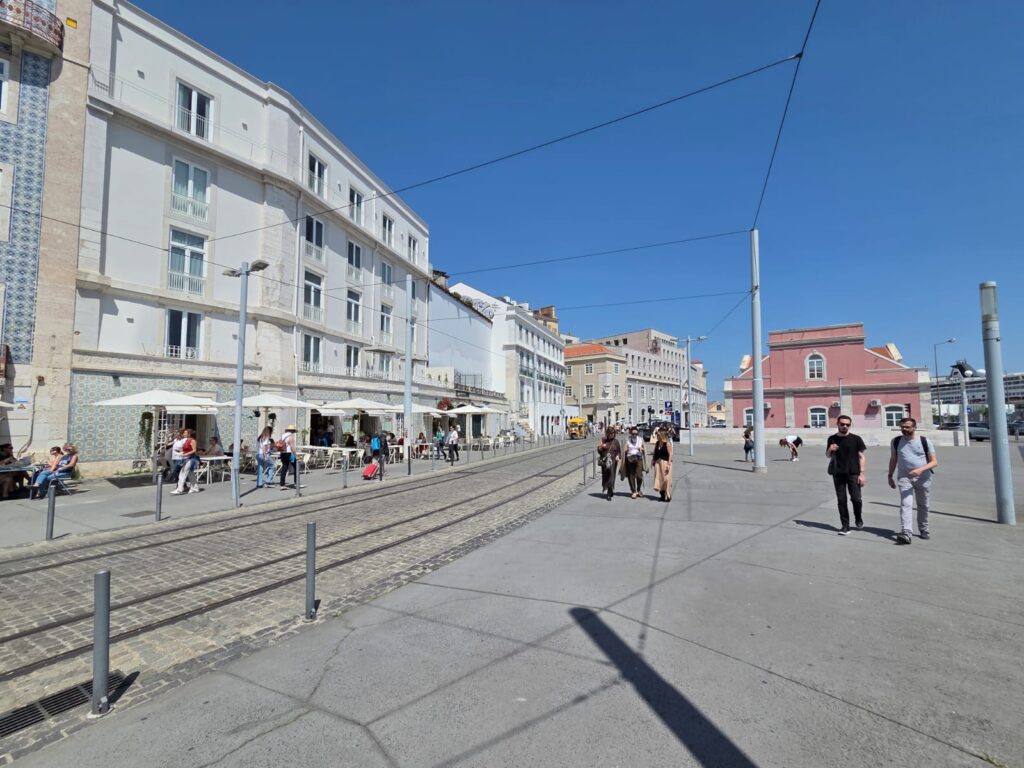
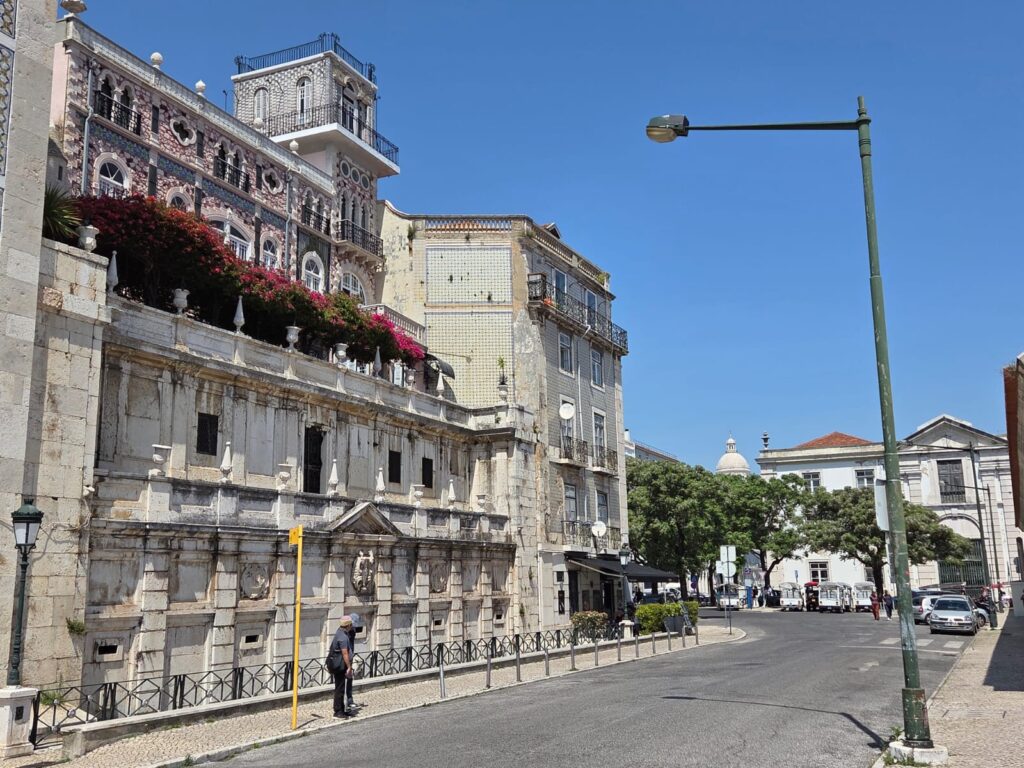
Before we continue, another quick refuelling stop. Are a lot of the restaurants around the Baixa tourist traps? Most likely. But do they still serve tasty food? Yes, they do.And with that added energy, I continue along the Rua Augusta towards the Arco Triunfal (Triumphal Arch).The Arco Triunfal, also known as the Arco da Rua Augusta, commemorates the city’s rebuilding after the 1755 earthquake. It has statues of various historical figures, with an allegorical group by Célestin Anatole Calmels at the top representing Glory rewarding Valor and Genius.The arch forms one entrance to the Praça do Comércio, one of the largest plazas in Portugal. This nice riverfront spot was home to the Ribiera Palace until the 1755 earthquake. A lot of government departments had their headquarters here before the 1974 revolution.I then continued my wanderings along the waterfront. I stopped in for a quick look at the Estação Fluvial Sul e Sueste (South and Southeast River Station). Designed by Designed by Cottinelli Telmo, it was inaugurated in 1932 and still serves its original purpose.I had in mind at this point that I was heading either to the Fado Museum (fado being a traditional style of music), or to the Aljube Museum – Resistance & Freedom. To be honest, I was running out of steam a little by this point. But I nonetheless continued towards the Alfama, an originally Moorish and later working-class neighbourhood.I admired a few more historic buildings along the way.And, right about here, I called it a day. I’d achieved my aim of seeing Lisbon from top to bottom. I’d explored some museums I didn’t visit on my last trip. And I’m trying very hard to learn that you don’t have to pack everything into a single visit. Maybe I’ll come back to Lisbon again in future, and maybe I won’t. Either way, I enjoyed sharing this lovely, sunny day with you.
Trending
Travelers' Map is loading... If you see this after your page is loaded completely, leafletJS files are missing.