
Museu Medeiros e Almeida, Lisbon
One man’s passion, and deep pockets, have resulted in a significant collection in the form of the Museu Medeiros e Almeida.

A Museum Outing in Lisbon
My last post was a walking tour of Lisbon, starting near my hotel in the higher part of the city, and finishing down by the river Tagus. I’d consulted ChatGPT to see what an itinerary for a second-time visitor might look like, but mostly figured it out for myself. I don’t remember, to be honest, whether my visit to the Museu Medeiros e Almeida started out as an AI-generated suggestion, or was my own. Either way, it was mostly convenience that drew me here. I’m an early riser, so my walk started with outdoor spaces, but I figured I could be at this museum right about opening time.
And so I was. What I hadn’t counted on, for some reason, was Anglo-Saxon vs. Iberian timing. It was precisely opening time when I arrived, but I couldn’t quite work out where the entrance was. That’s because they hadn’t opened up yet. I saw movement a minute or two later, and was thus the first person in for the day. And the only person for the majority of my visit. It was slightly confusing at first – there were some sort of renovations going on so the route to the ticket desk and back to start my visit wasn’t the most obvious.
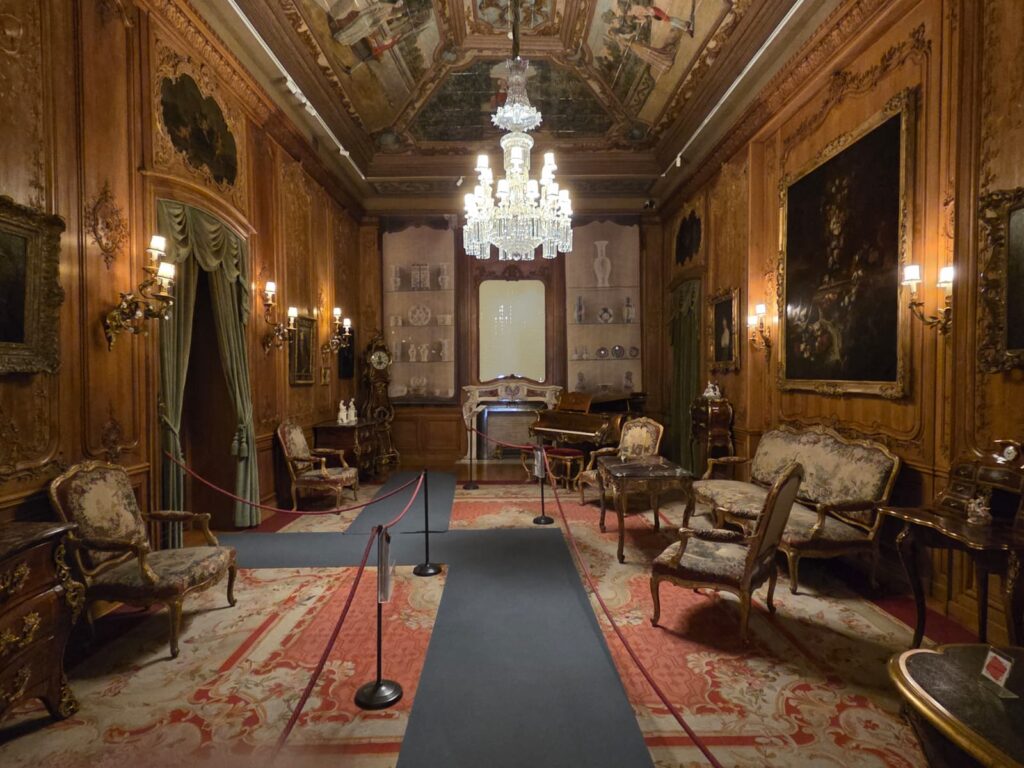
But once I was underway, it felt very luxurious. In a stark contrast to the other house museum we’re going to visit in Lisbon, I didn’t see anyone my whole visit, apart from the lady at the ticket desk and the attendant at the front door. I assume they manage everything through cameras and sensors rather than a physical presence. This meant basically a VIP experience. The whole place to myself, tripping motion sensor lights as I walked through the various rooms. Pristine views of each and every space and object.
So whatever else I might have thought about the Museu Medeiros e Almeida, this timing predisposed me to enjoy it. I’ll explain a bit of the background before getting back into the visitor experience.
A Question of Timing, Resources and Vision
The Museu Medeiros e Almeida is one of the most important collections of decorative arts in Portugal. But how did it come into being? That, friends, is a direct result of one man’s passion, combined with good timing and deep pockets. The man was António de Medeiros e Almeida. Born in Lisbon in 1895, both of young António’s parents hailed from the Azores. It was a prosperous household, and António attended good schools before entering medical school in 1914. He lasted three years there, before giving up medicine in favour of business and heading to Germany for a very interestingly-timed year of work experience.
Already as a young man in the early 1920s, Medeiros e Almeida showed an interest in automobiles. He purchased a Morris Cowley with a friend, and later contacted William Morris (not that one, a different one who was later Lord Nuffield) and became an importer for Morris, MG, Wolseley and Riley cars. English cars didn’t sell well at first, until an improvement in their suspension in the early 1930s made them better-suited to Portuguese cobblestones. Business took off.
The cars were just the start. Medeiros e Almeida was also a pioneer of civil aviation in Portugal, investing in the first company to schedule passenger flights to the Azores. He had significant business interests there, primarily in alcohol and sugar. He also got into hotels. At one point, António de Medeiros e Almeida was running more than twenty companies simultaneously, all of them turning a profit.
If that sounds like a boatload of disposable income, I think it was just that. Medeiros e Almeida had married Margarida Rita de Jesus de Castelbranco Ferreira Pinto Basto (wow, what a name), but didn’t have children. And so he had plenty of time and resources to indulge a growing passion for collecting. The post-war period in particular was a good time to snap up a bargain from antique dealers or at auction, and Medeiros e Almeida collected across many categories.
The Collection Becomes the Museu Medeiros e Almeida
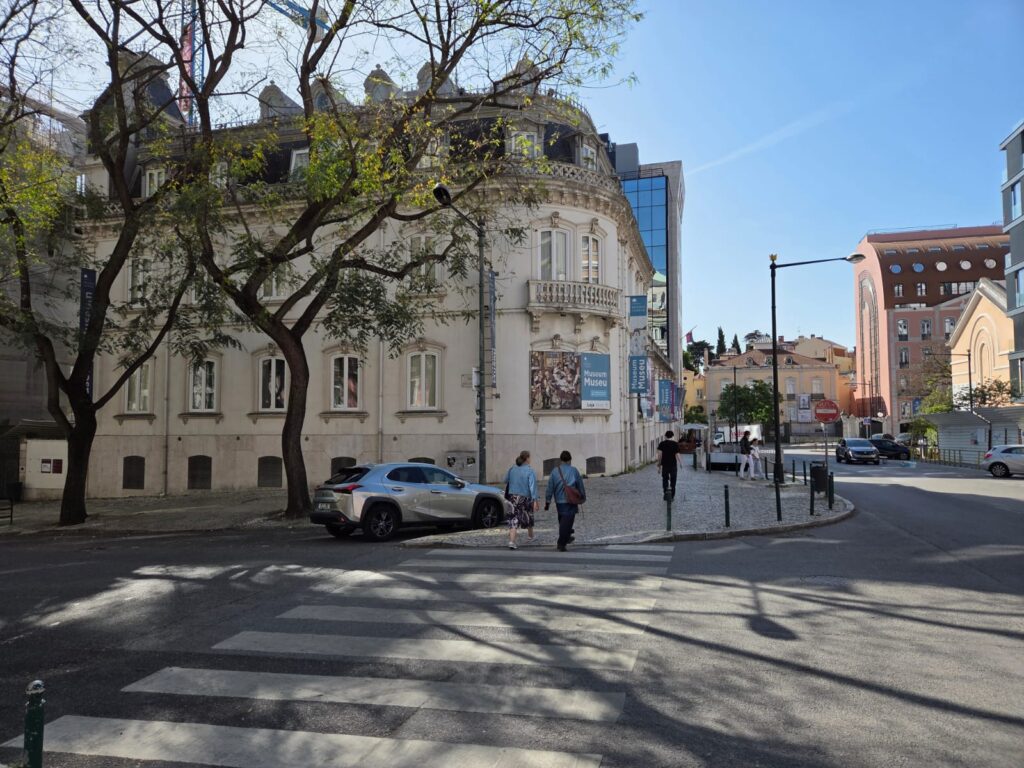
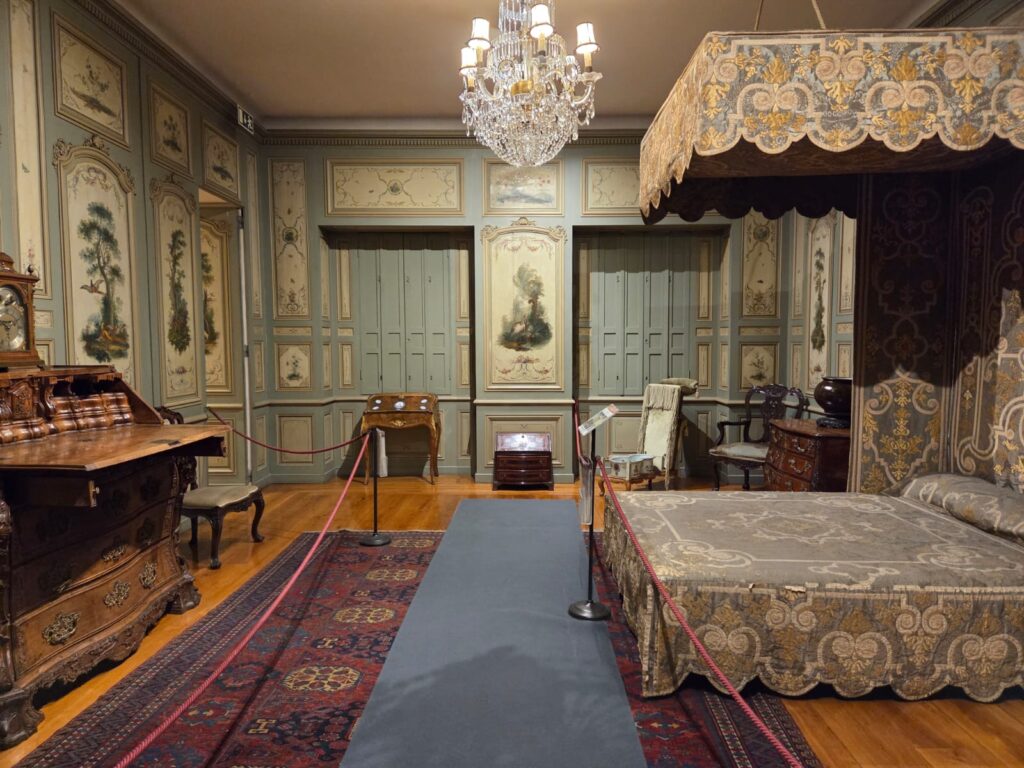
The building housing the Museu Medeiros e Almeida is a 19th century manor in central Lisbon. Before Medeiros e Almeida purchased it in 1943, it had already been altered in the 1920s from its original, Parisian appearance. The couple probably chose it primarily as it was close to António’s parents, and had fashionable architect Carlos Chambers d’Oliveira Ramos refurbish it to their tastes.
The house made an excellent backdrop for Medeiros e Almeida’s growing collection. Already in the 1960s the couple had started to think about creating a museum to keep the collection together in perpetuity. They hired architect Alberto Cruz in 1971 to construct a new wing in the garden. António and Margarida moved into an adjoining house. Margarida died in 1971, and António in 1986. Given his business acumen, it’s not surprising he had made all the necessary arrangements. As well as a Foundation to take possession of the collection and eventually run the museum, this also included instructions on how to fund it: selling the other assets and investing in the construction of a rental property.
It was nonetheless not until 2001 that the museum opened its doors. This generally seems to be the way of things – it’s why I was so astonished to read that the Herschel Museum of Astronomy apparently opened the same year its own foundation acquired the Herschels’ former home. In this case there wasn’t even a full inventory of the collection at the time Medeiros e Almeida died. That would take time, along with the rental property scheme. Then there’s the planning of the museum itself, staffing it, and readying it for the public. There was a proposal to open this museum sooner, but in the end it was optimistic by more than a decade.
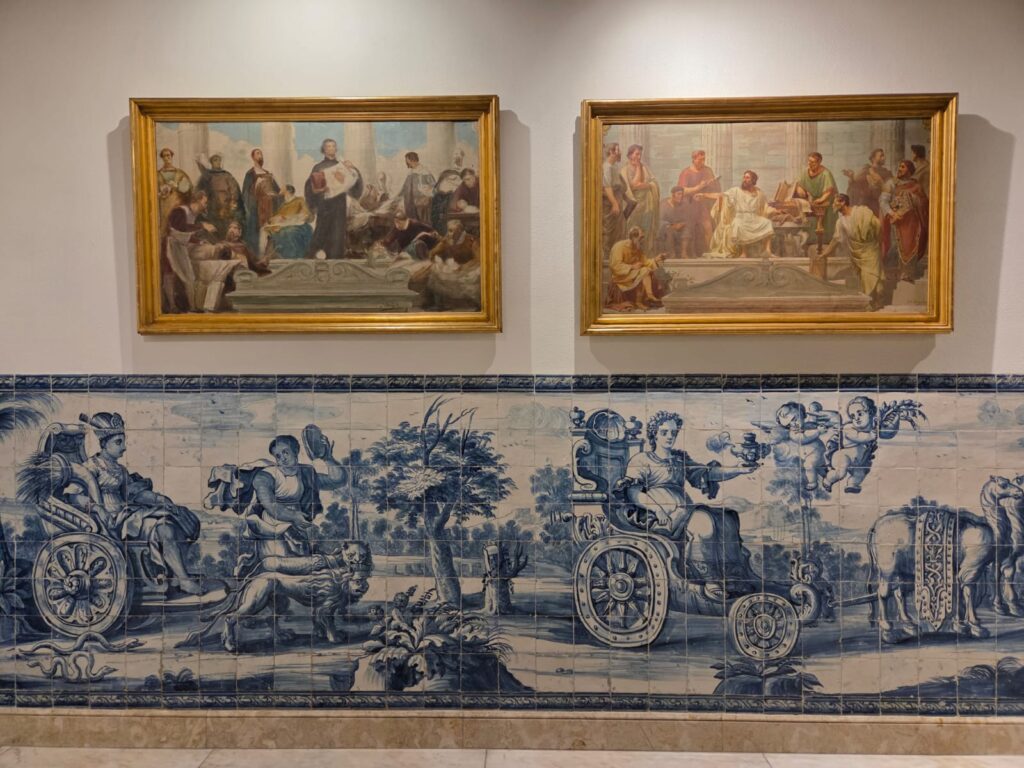
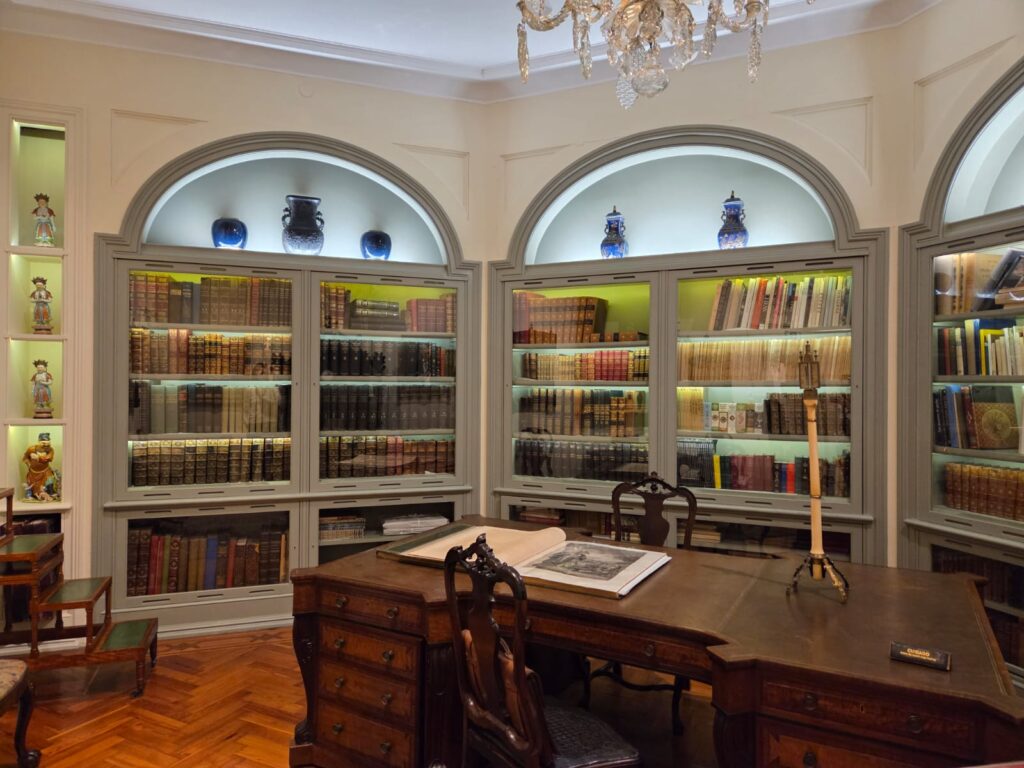
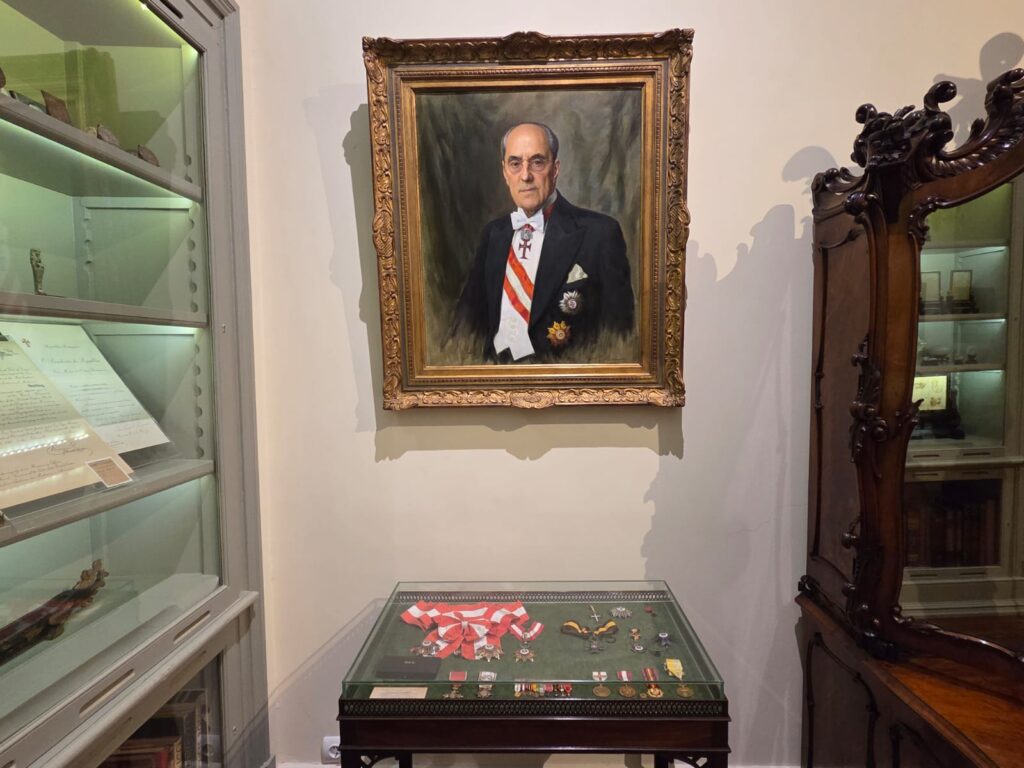
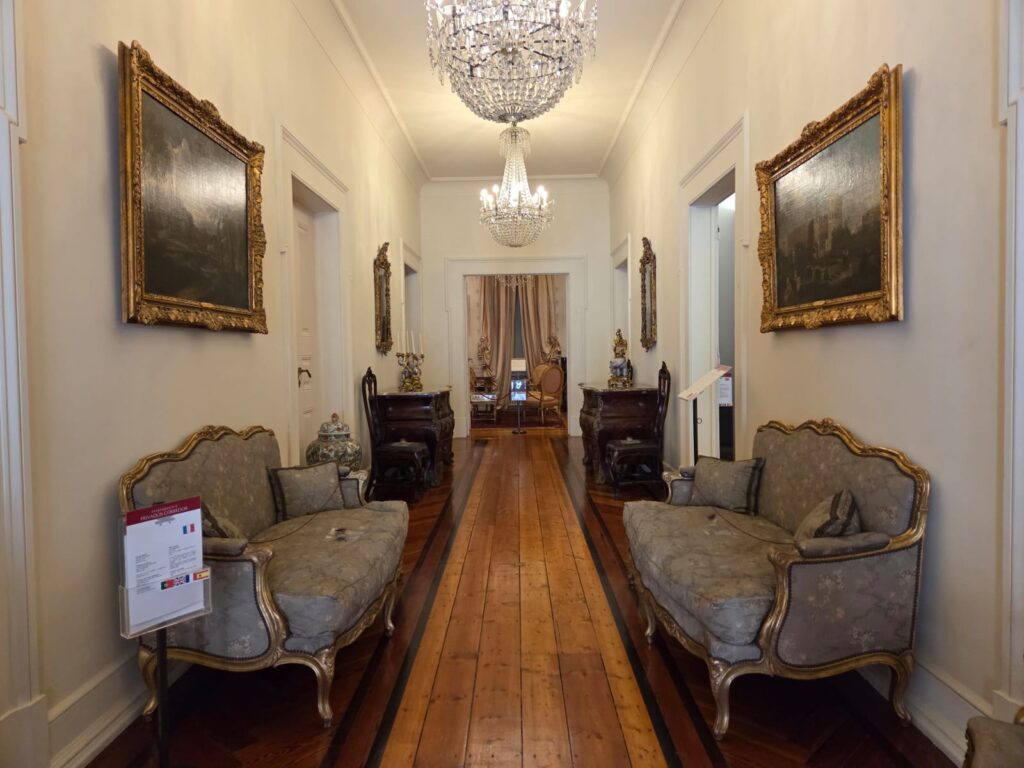
The Medeiros e Almeida Collection
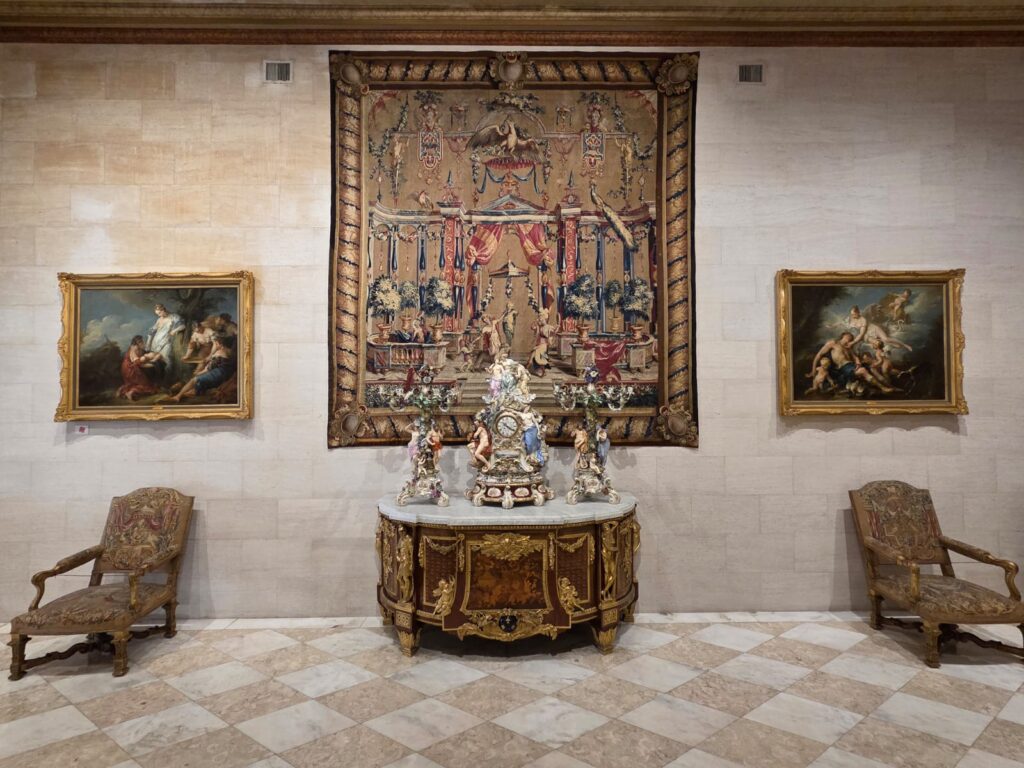
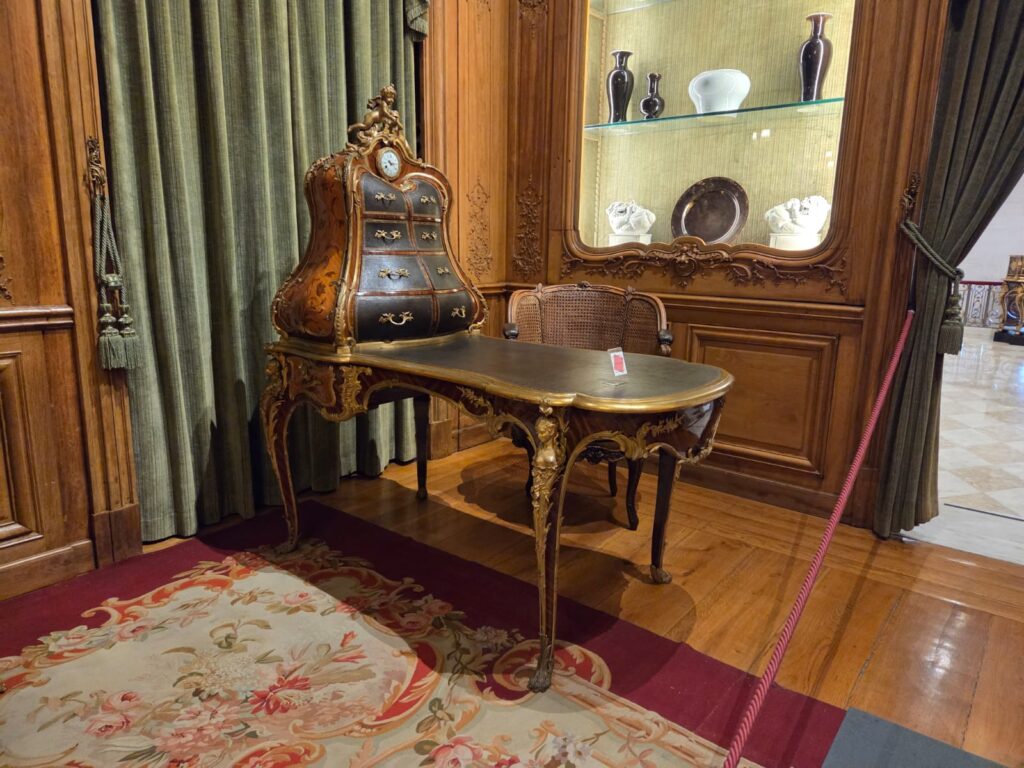
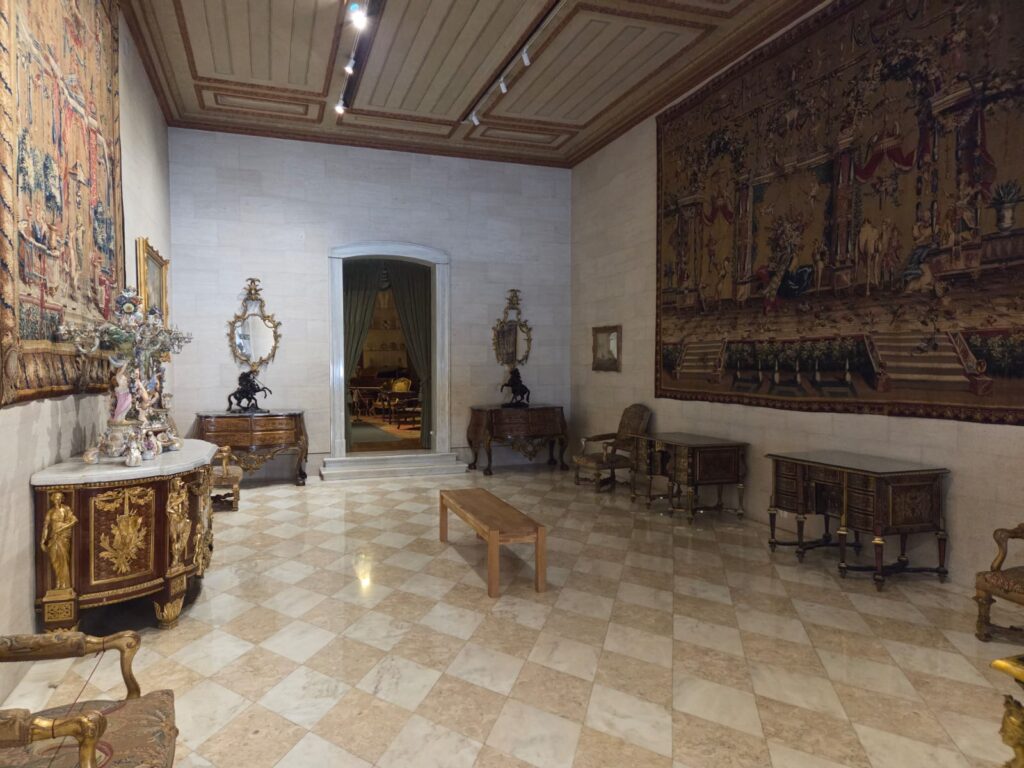
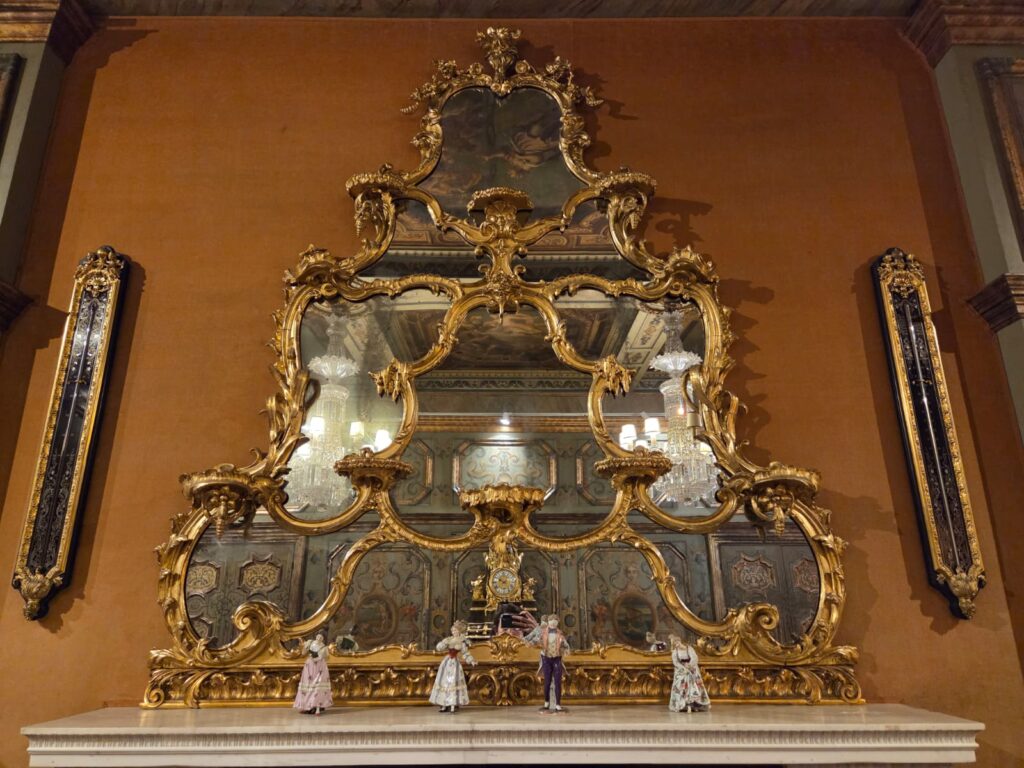
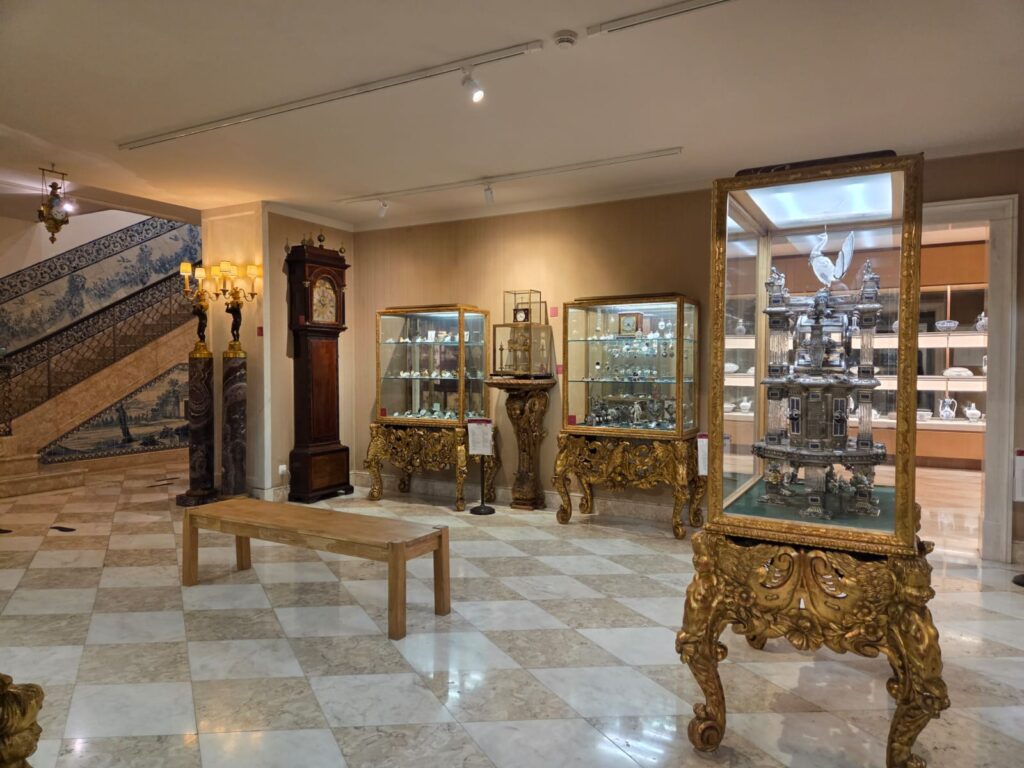
I’ve referenced this being a decorative arts collection. But what exactly did António de Medeiros e Almeida collect? A lot. Let’s start with the decorative arts, which is a category of objects combining beauty and function. Furniture, porcelain, silver, that kind of thing. In terms of the furniture first of all, Medeiros e Almeida had a definite taste for French cabinet-makers. There are various nice examples of furniture from the Louis XIV/XV period (or in that style), in techniques such as ormolu, marquetry, or tortoiseshell inlay. The most famous name I spotted was a bureau by André-Charles Boulle.
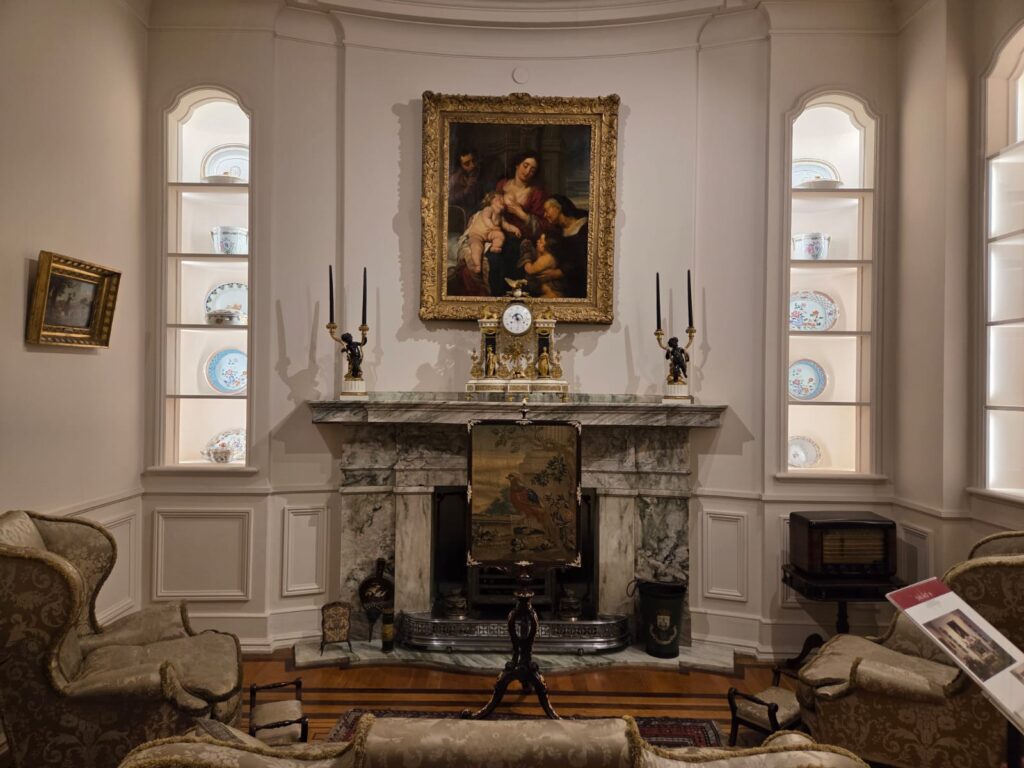
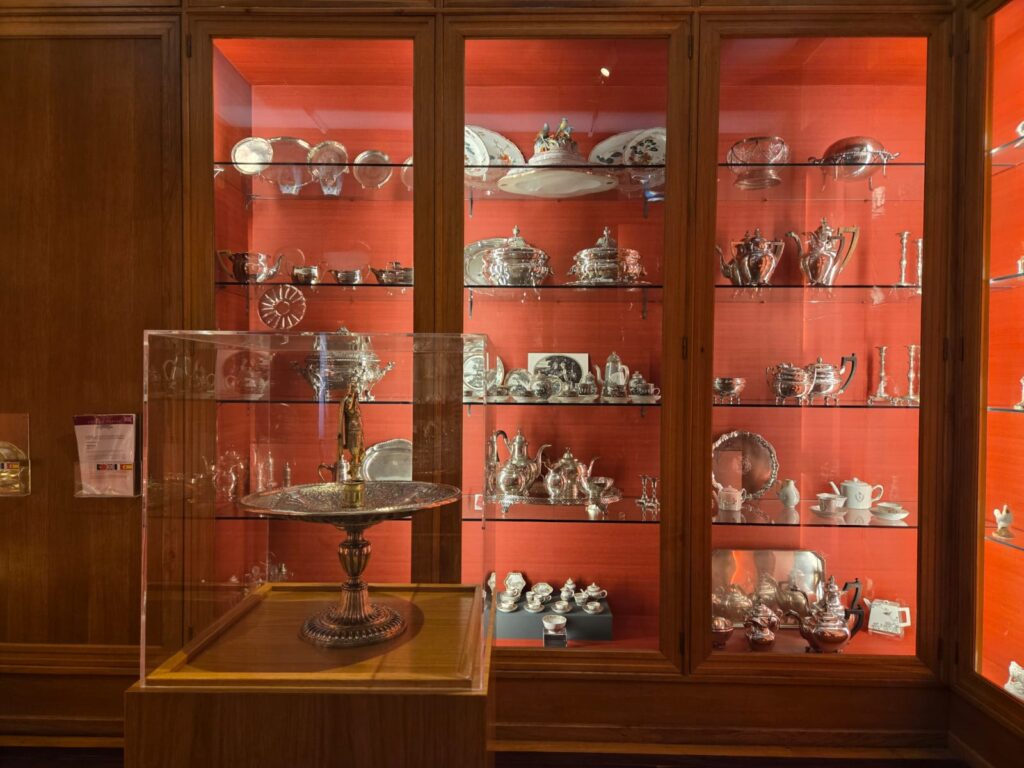
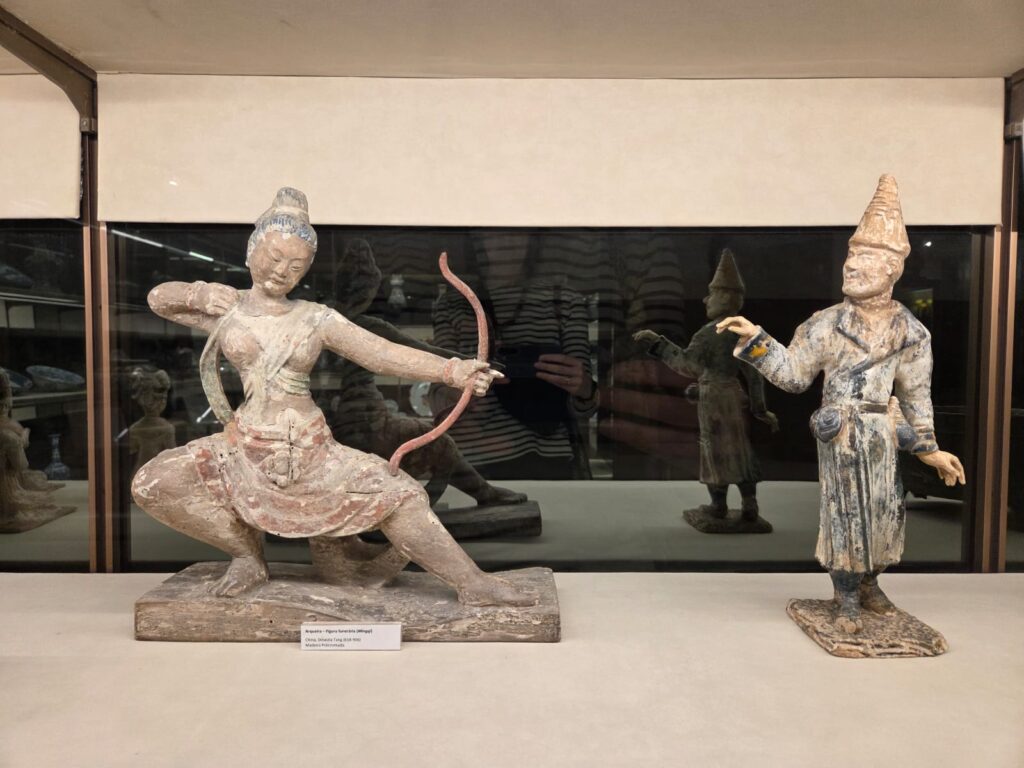
Porcelain and silver are not really my thing, but I could appreciate the quality of what I saw on display. The examples of work by Portuguese silversmiths were particularly interesting. What I did like were the early Chinese ceramics. Medeiros e Almeida collected many examples of Han and Tang Dynasty burial vessels, including fascinating tomb figures depicting people and animals. The museum also has examples of some of the earliest works made in China for Portuguese clients, in the Ming Dynasty. There’s a lot more in terms of Chinese porcelain, but those were, for me, the highlights.
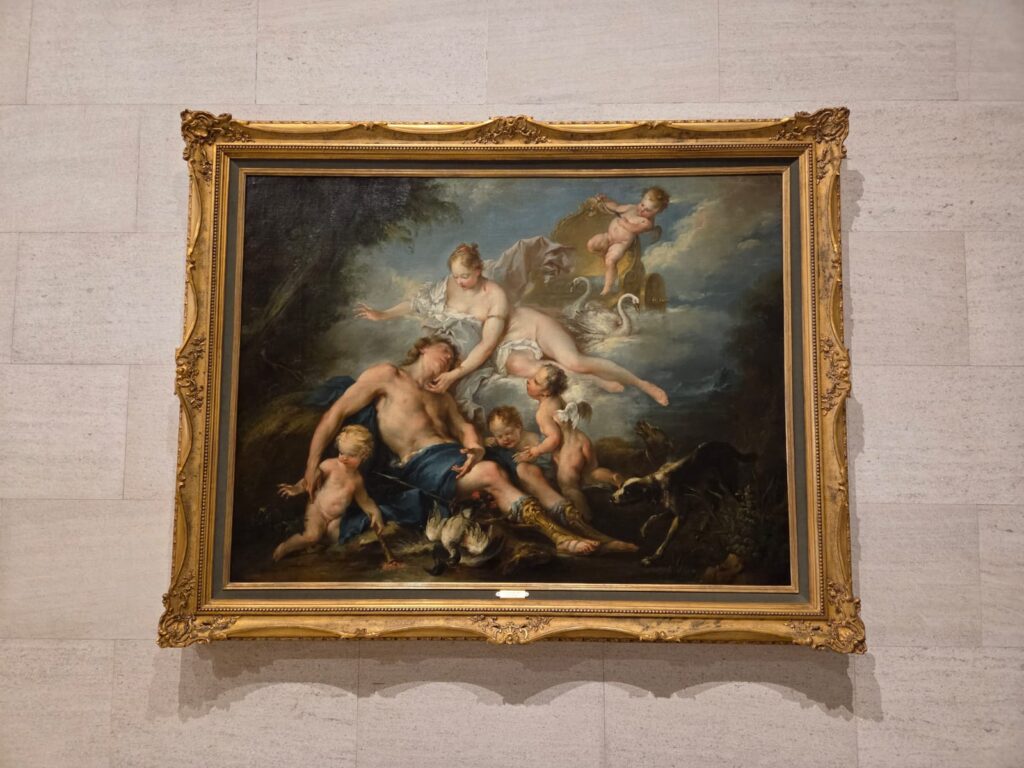
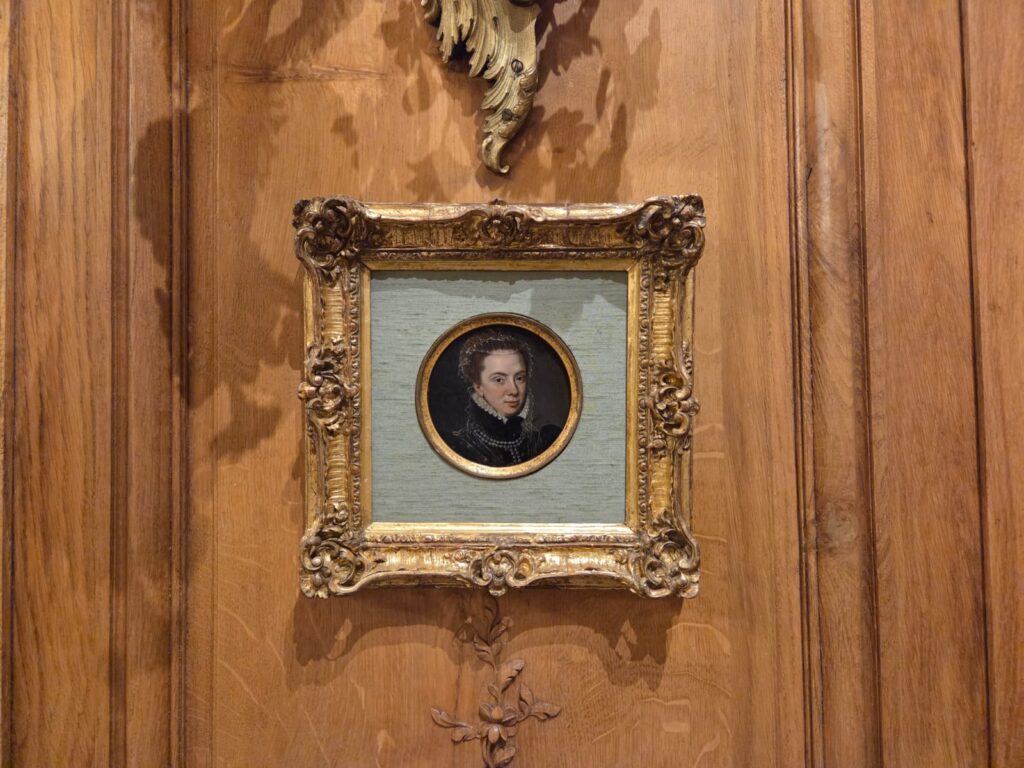
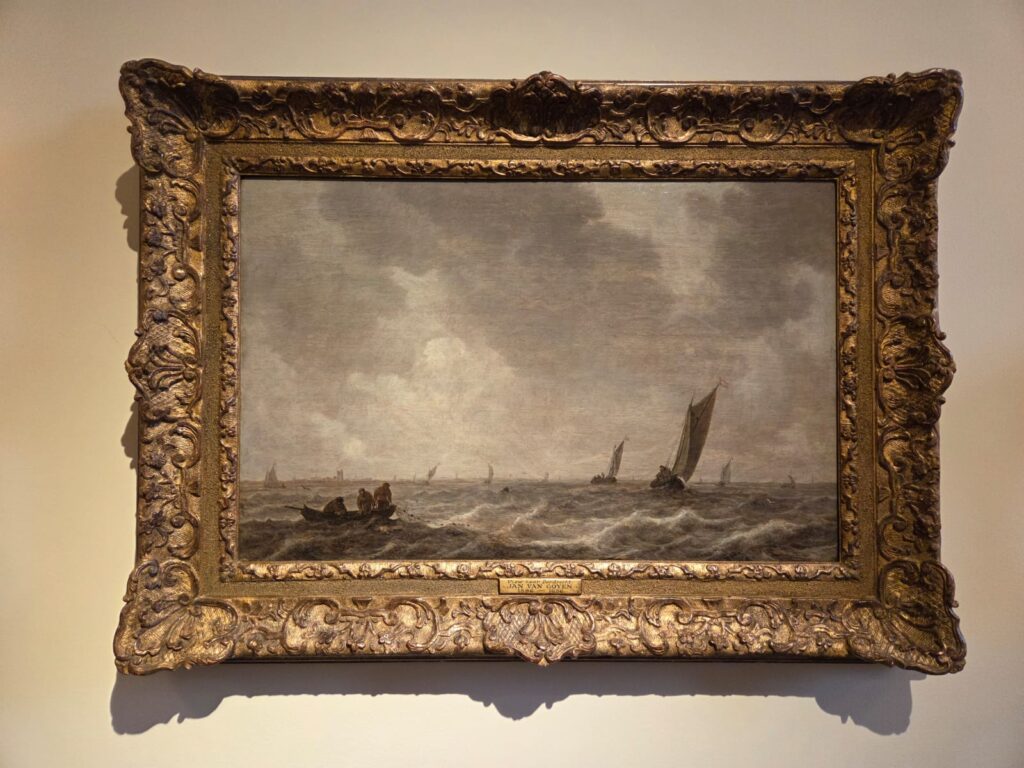
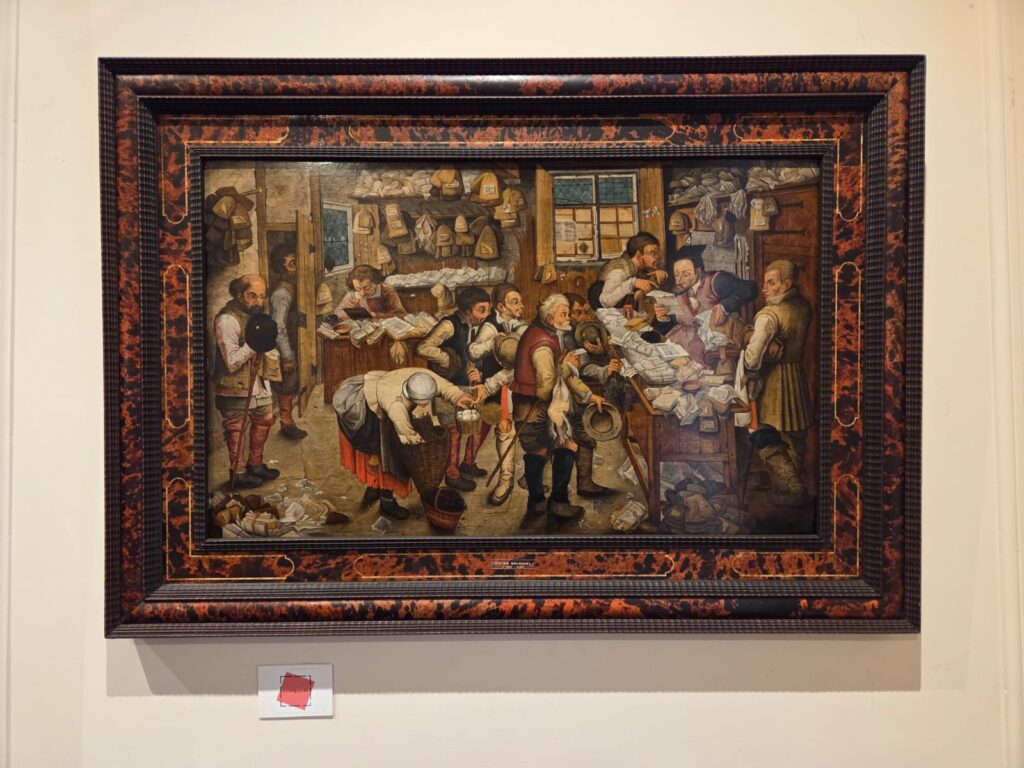
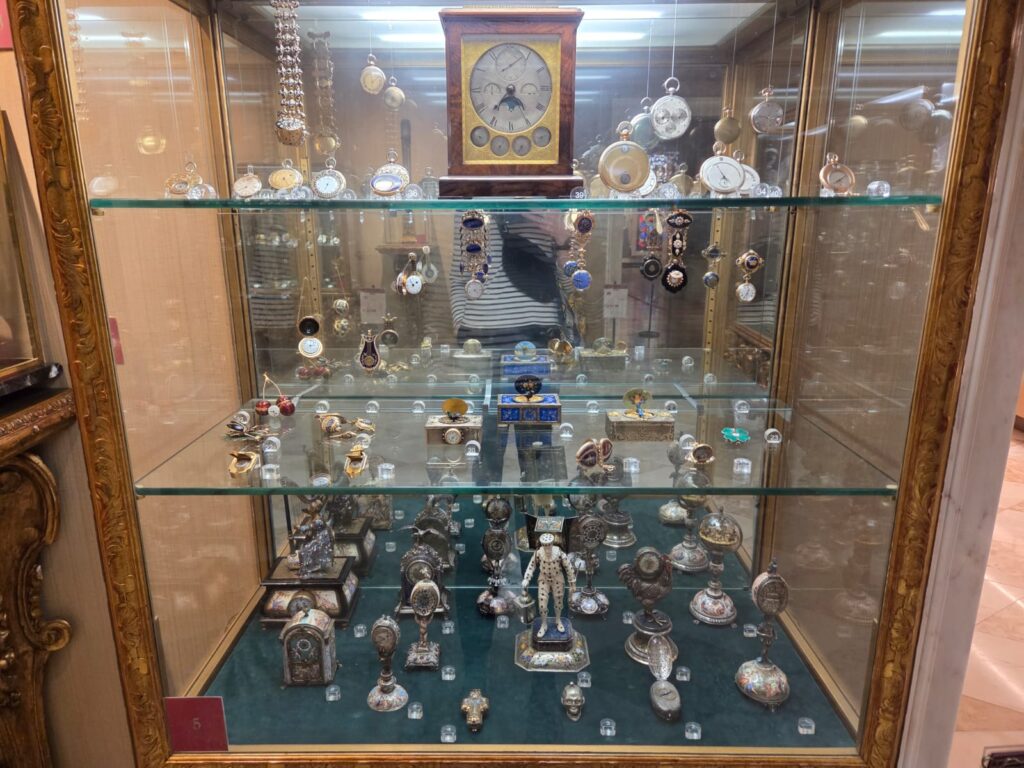
Clocks were another major focus of the collection, but I just can’t get excited about them as a rule.* What I do like are paintings, and there are plenty of those, too. There are Brueghels-aplenty, with Jan and Pieter the Younger both represented. There are works by Tiepolo, Ribera, Boucher and Delacroix. As well as a good set of seascapes (what else?) by Jan van Goyen. Very much an Old Masters bent, which is what was most valued at the time Medeiros e Almeida was collecting, but with more of a Dutch focus than an Iberian one, and just a splash of Rococo.
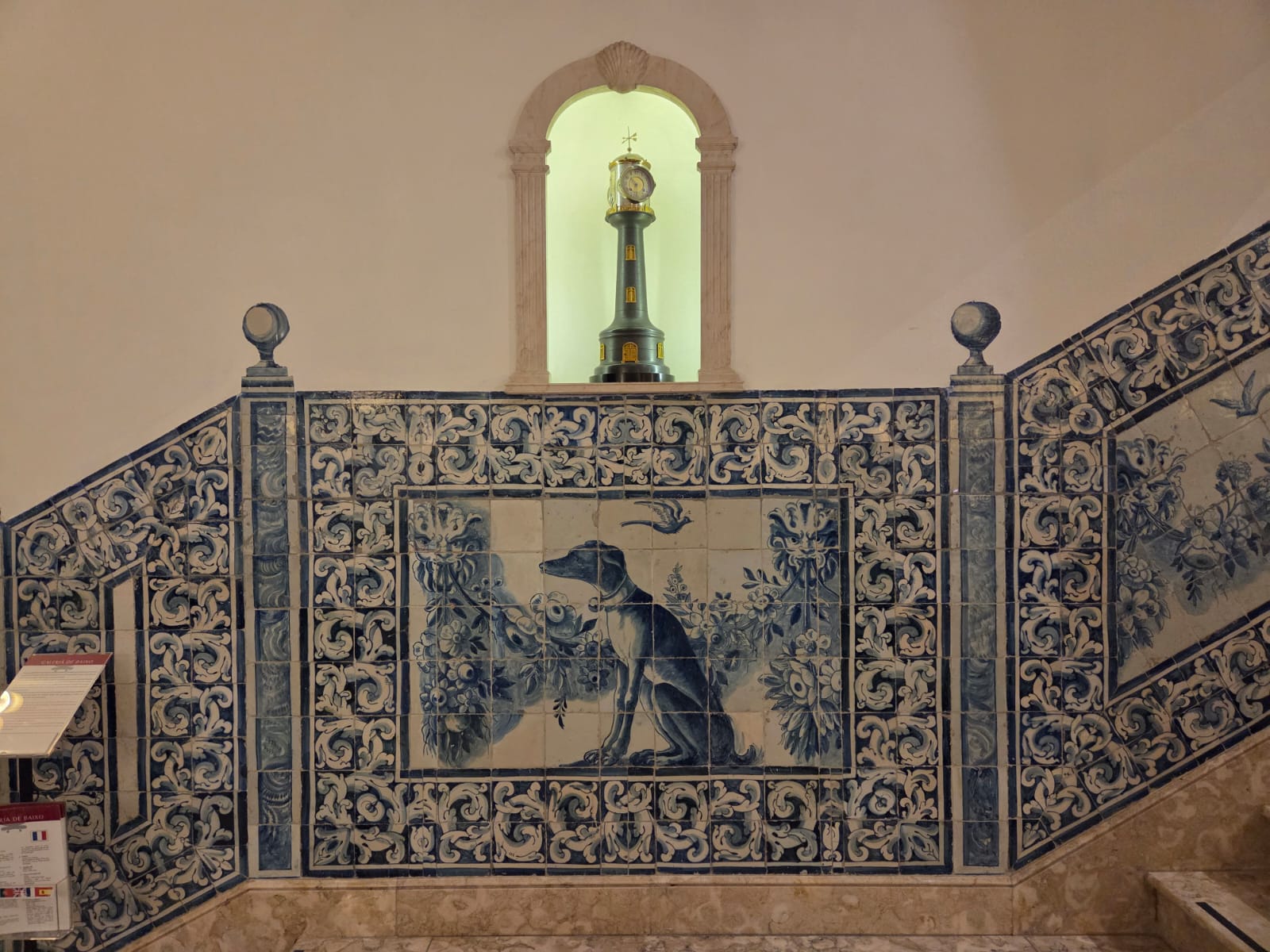
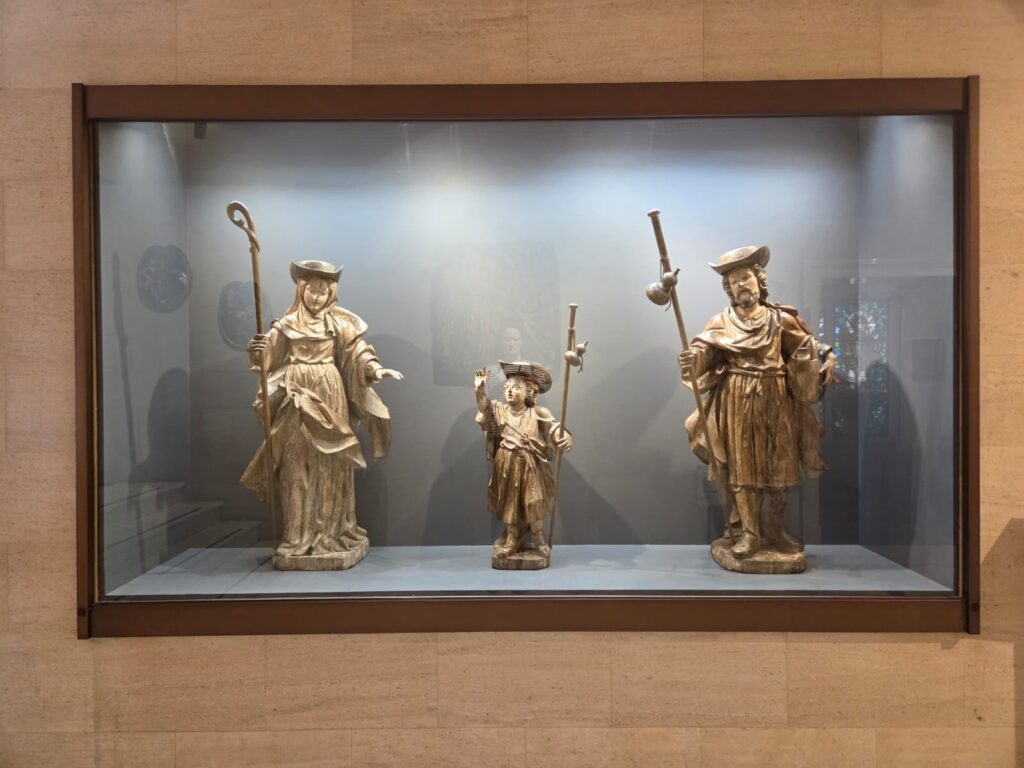
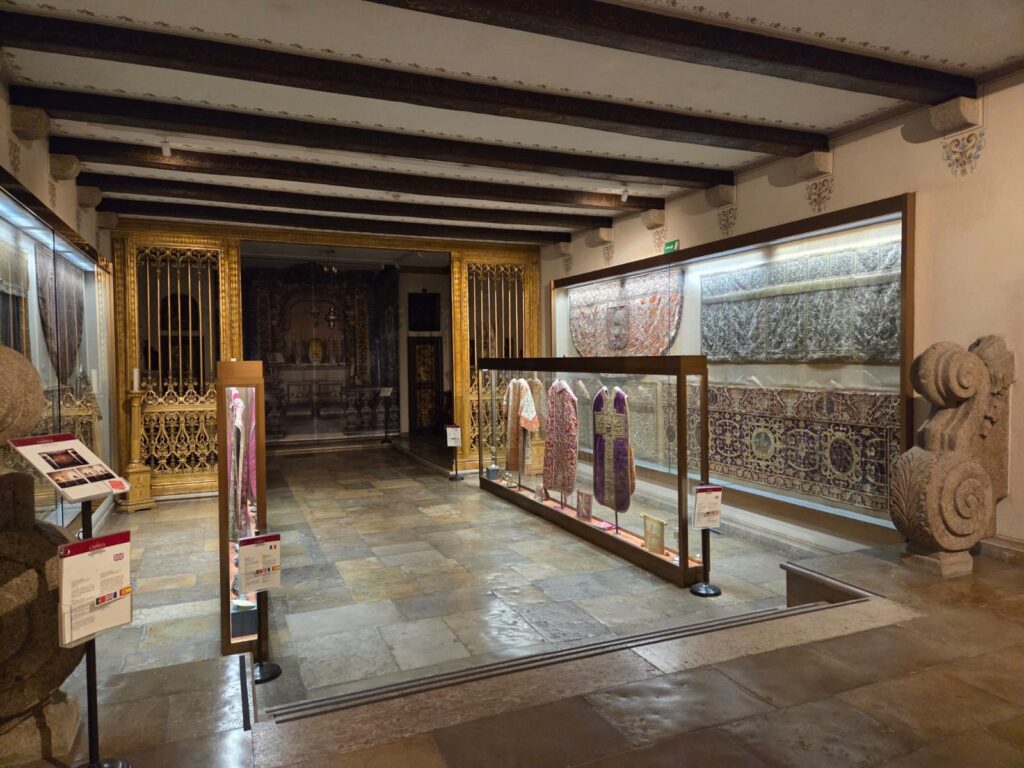
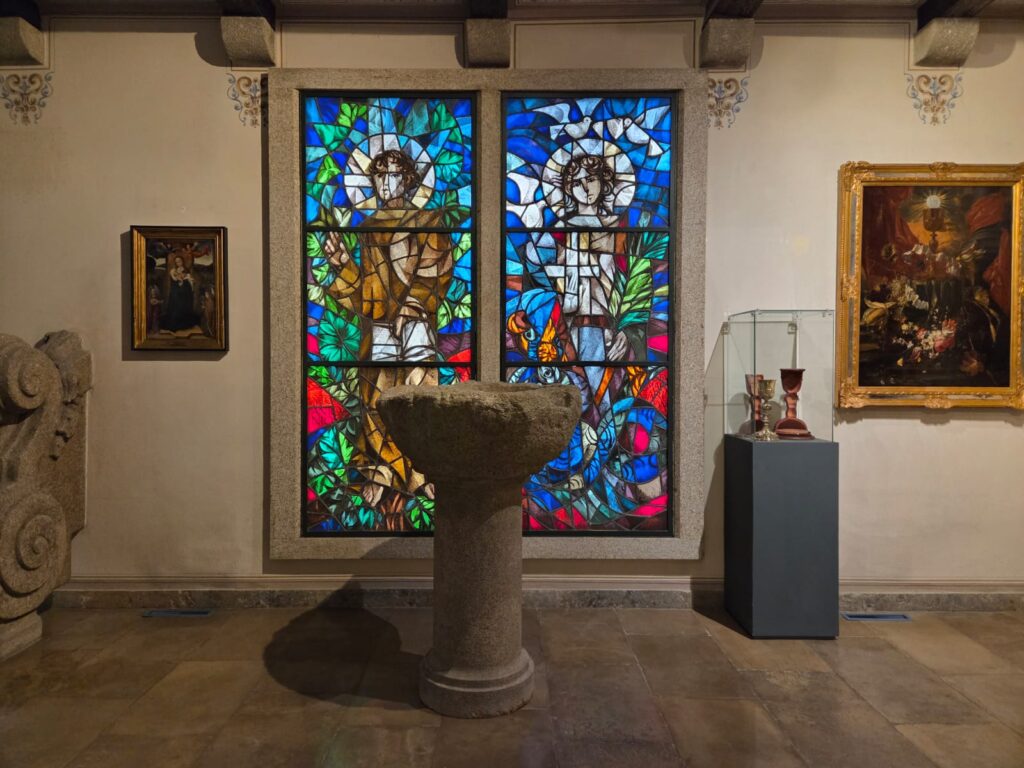
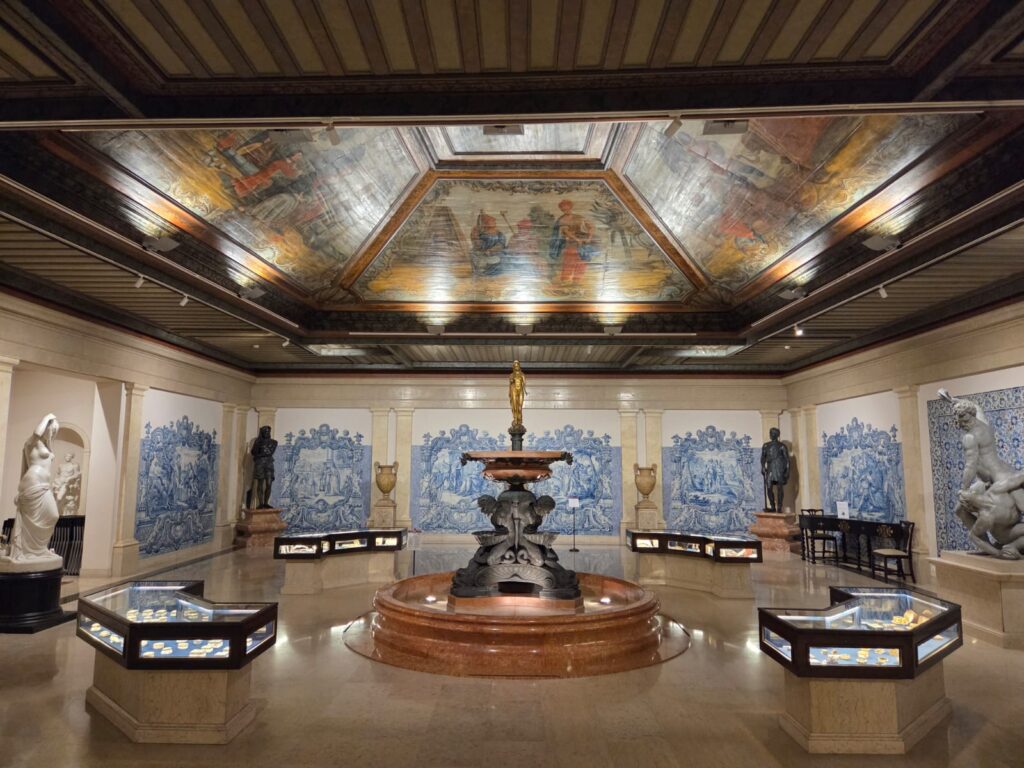
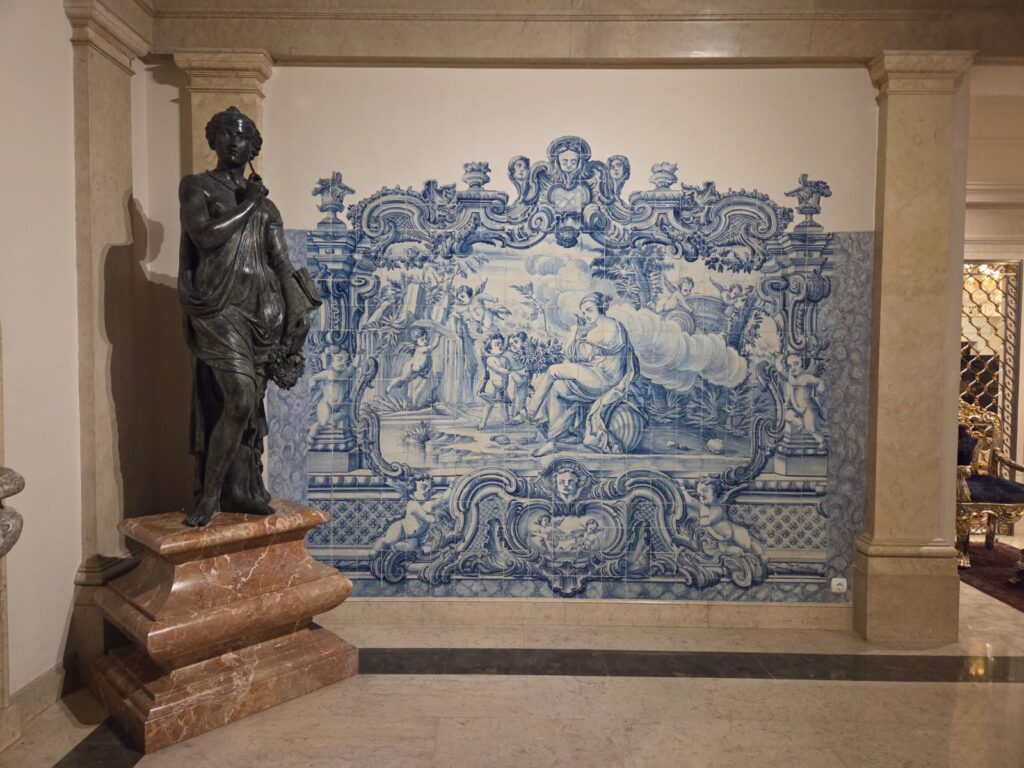
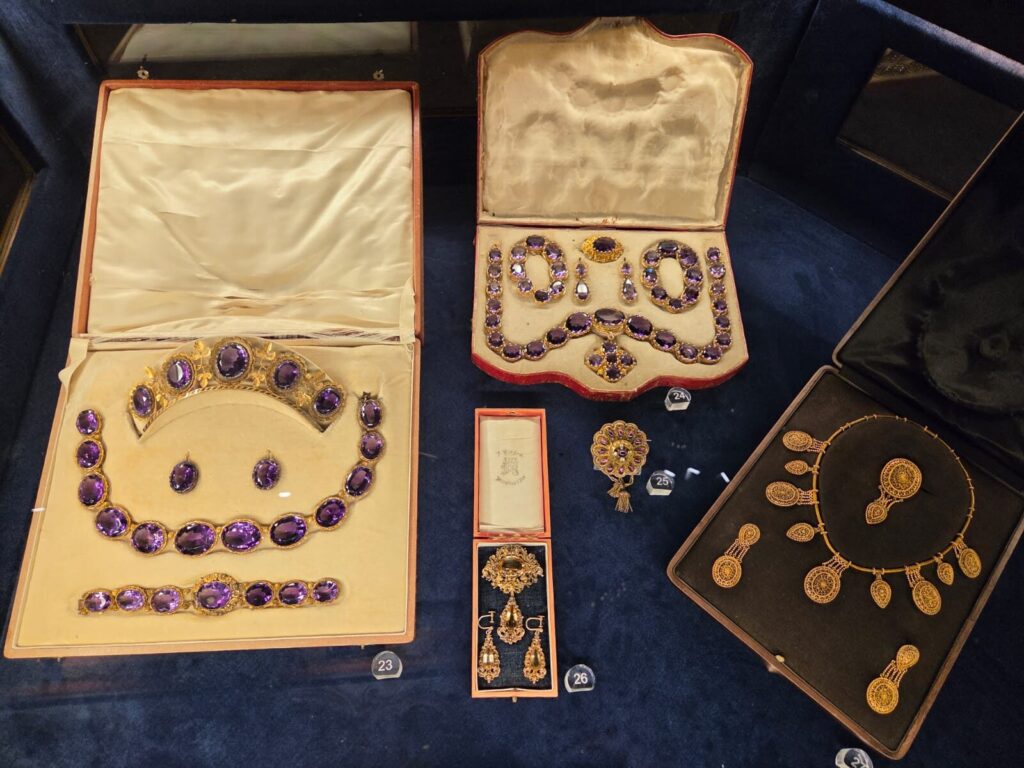
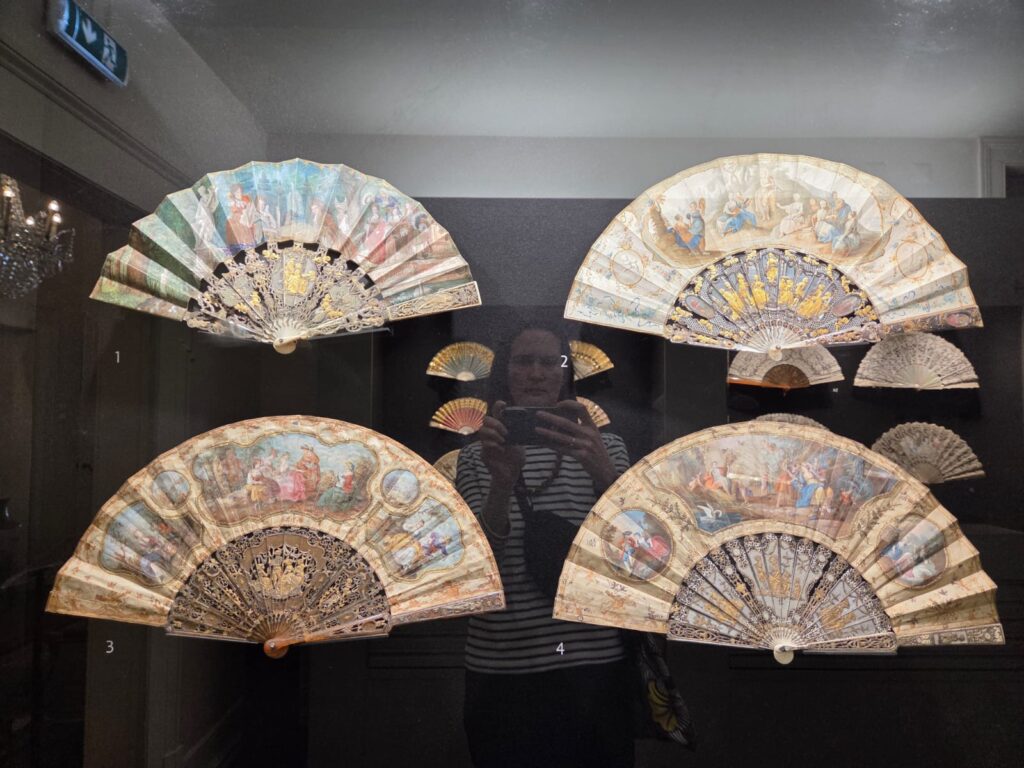
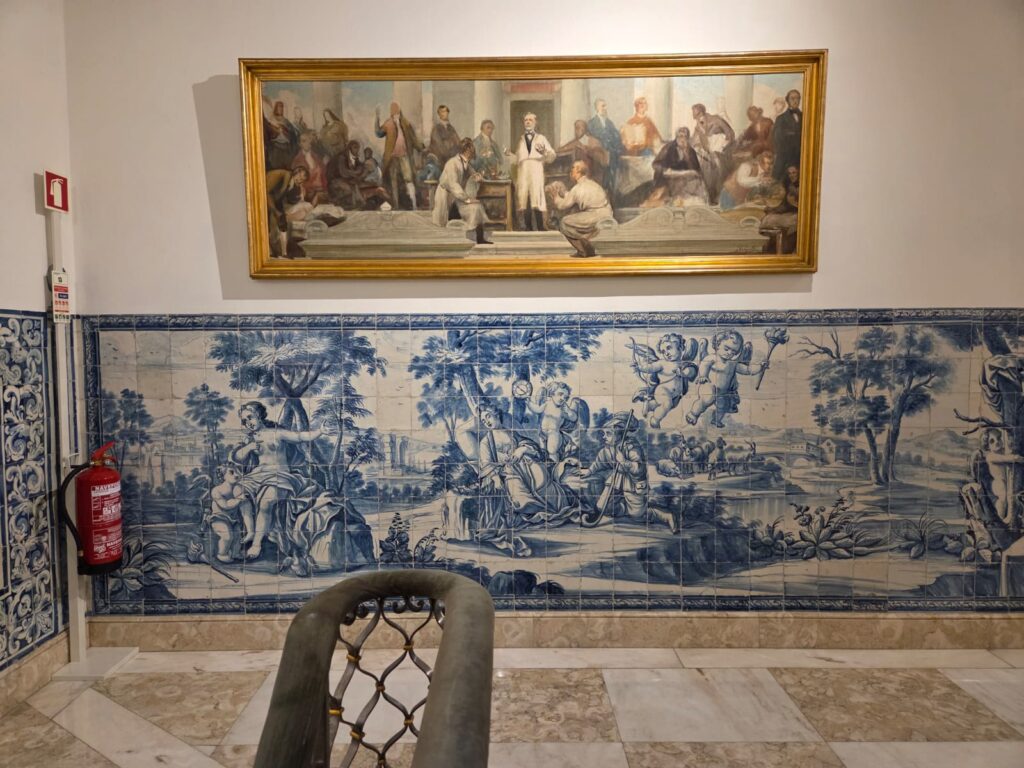
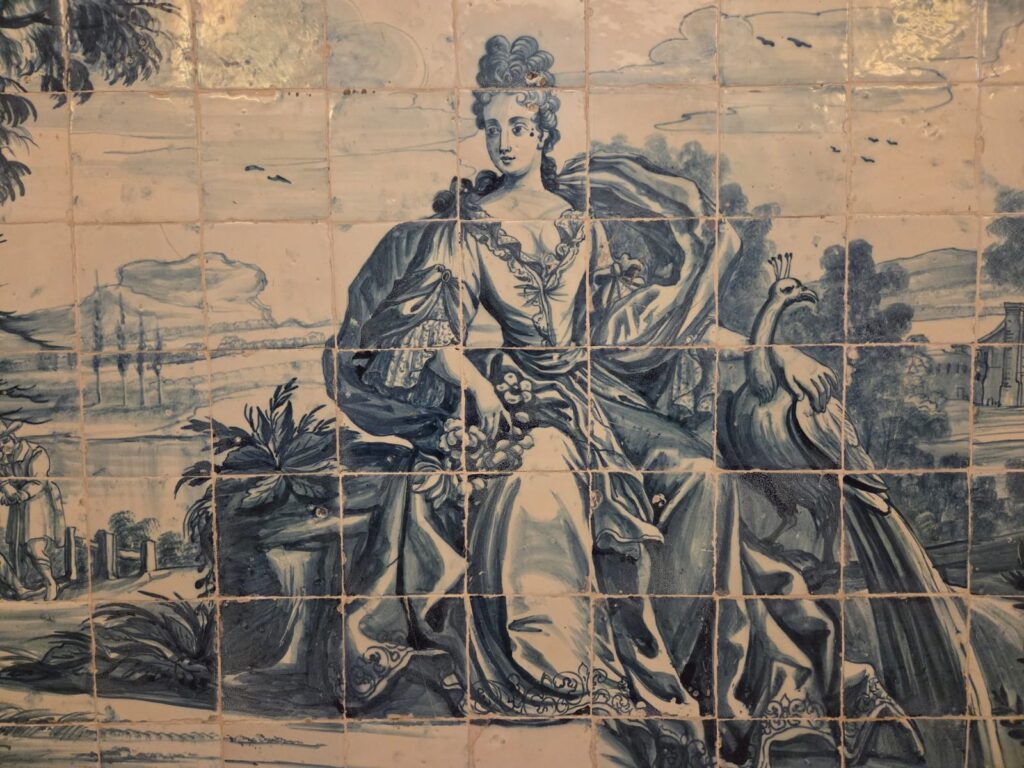
A few other collections round out the museum. Jewellery, first of all, azulejos (Portuguese tiles), and religious artworks amongst them. Something for almost everyone!
*With the possible exception of the French Revolutionary watch made for the 10-hour day, which I saw in another house museum and thought was cool. Or electrical horology, which I did get excited about at The Clockworks.
A Home and a Museum
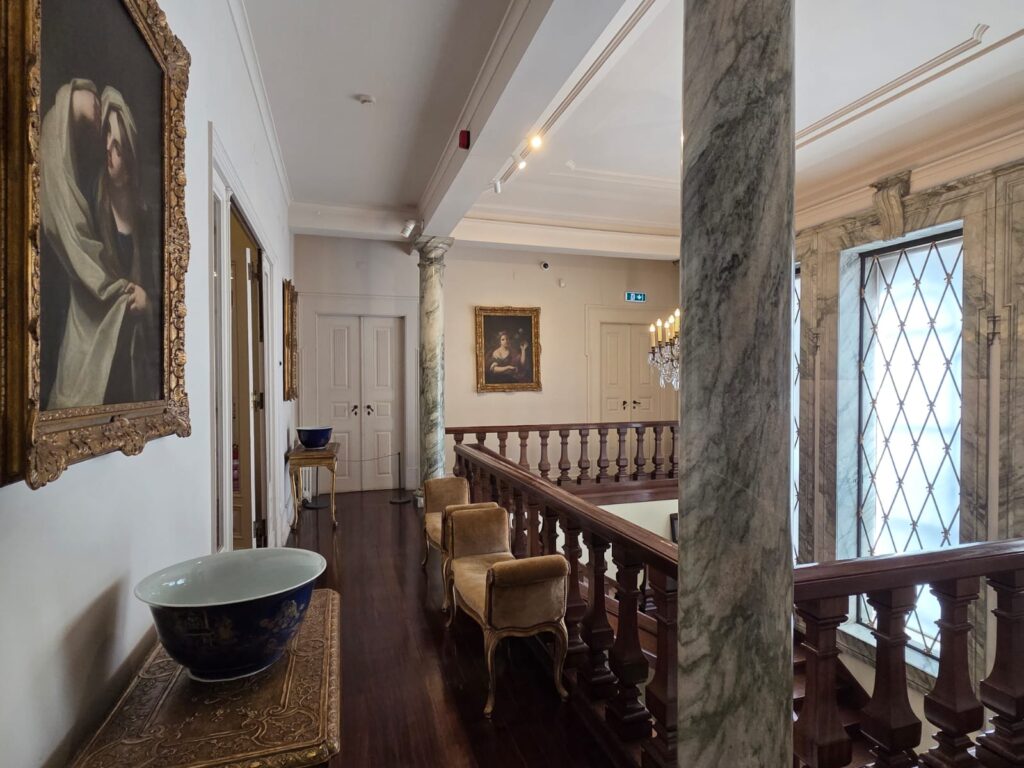
While I was saying above that decorative arts aren’t necessarily my thing, I do love a house museum. I love the collecting impulse in all its forms. And it’s endlessly interesting to me how people transform their private passions into a public space. In the case of the Museu Medeiros e Almeida, we have a place that is consciously a house and a museum. An interesting variation on the genre.
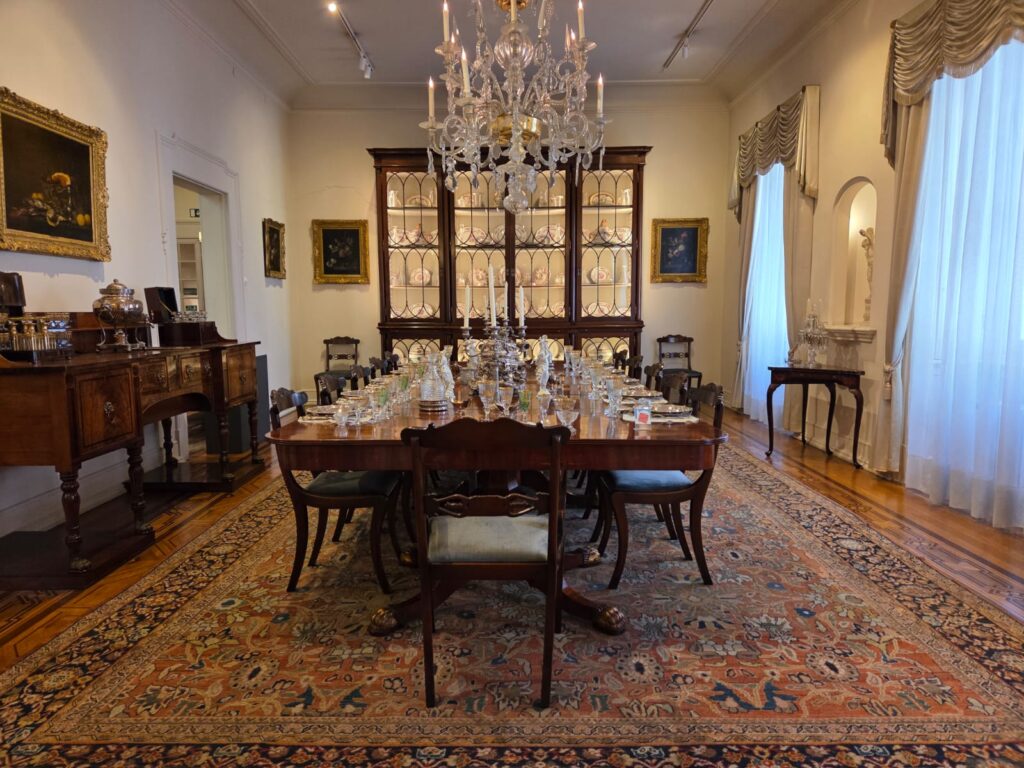
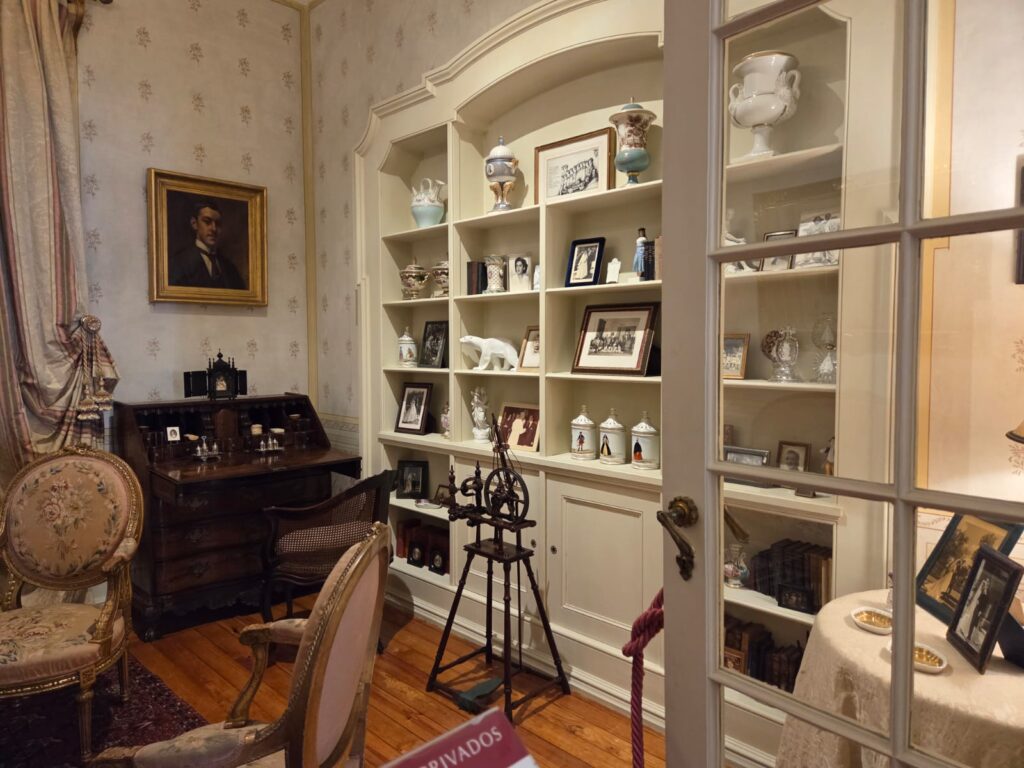
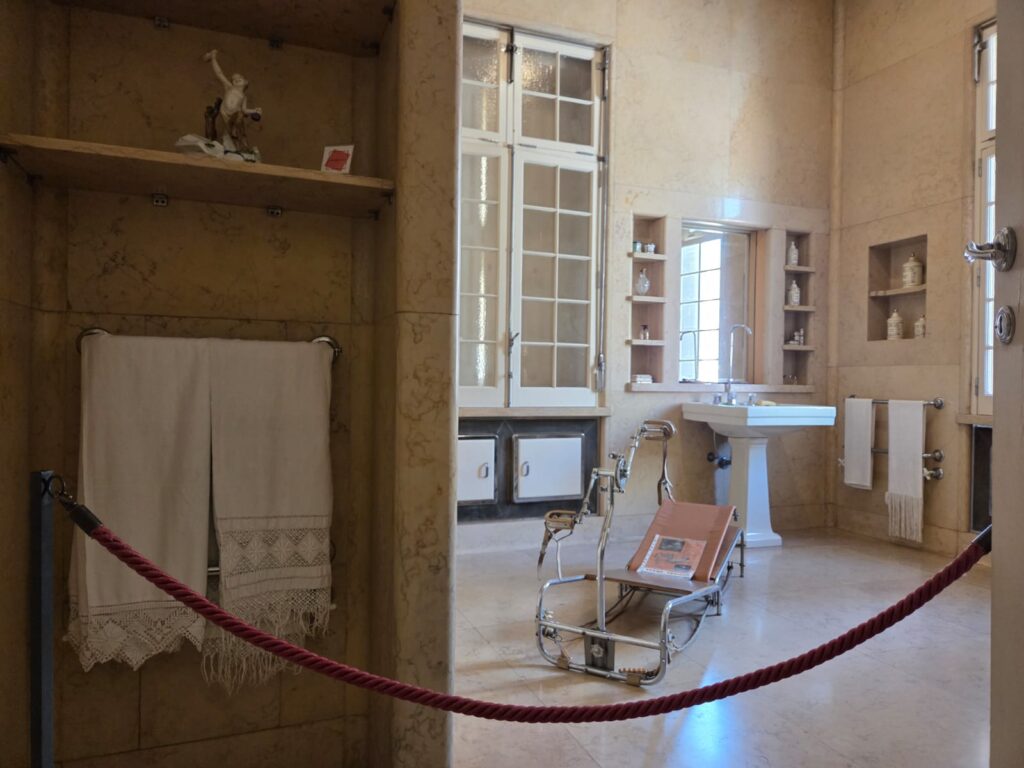
What I mean by this is that, by design, the building’s new wing is set up more as a museum to display various parts of the collection, while the original house remains set up mostly as a house. There’s a great moment, for instance, where you get a view of Medeiros e Almeida’s imported American home gym equipment in the bathroom. A stark contrast to the room elsewhere with a marble fountain (with water). Not that you can’t have a working fountain inside a home. But most people don’t.
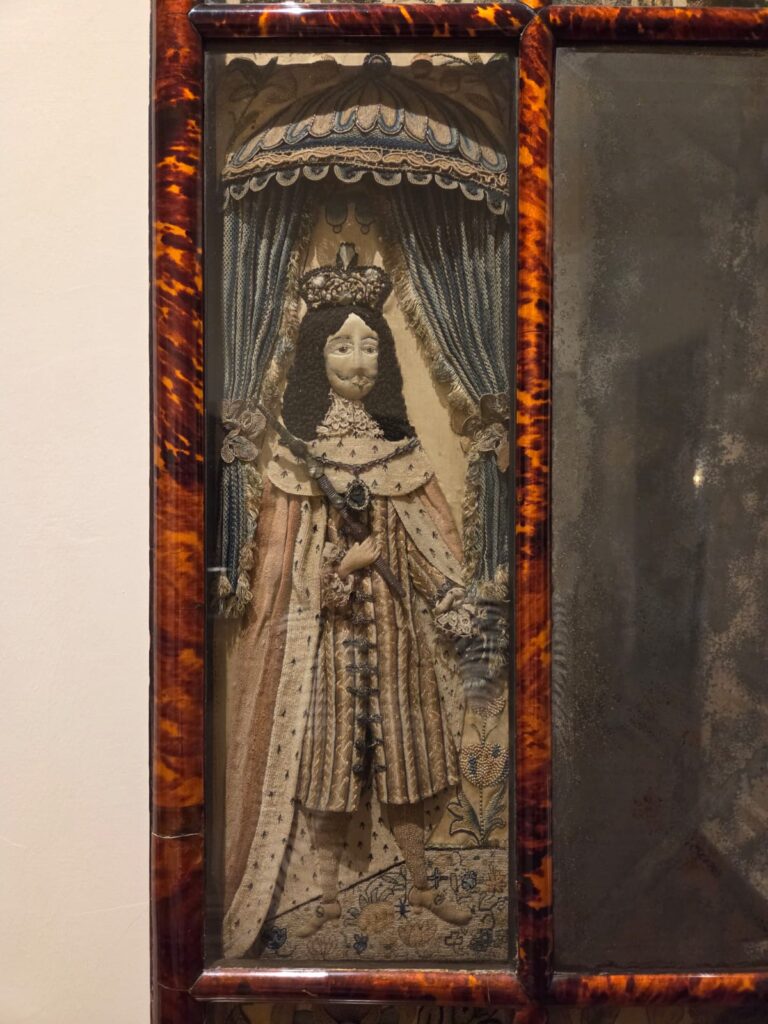
This sense of public and private lives was what I found most interesting about the Museu Medeiros e Almeida. A video about António and the history of the collection comes right near the end of the visit. So you’re mostly building a picture of the collector and his intent through the collection itself. Inspecting his clocks (if that’s your thing) and stepping into his office. Admiring his eye for early English needlework, and looking at his medicine cabinet. It’s not a home that has been frozen in time. Nor is it fully a museum. It’s some kind of in-between space, which makes it really fascinating.

Do I Recommend the Museu Medeiros e Almeida?
That is a good question. And, as is often the case on the Salterton Arts Review, that depends. I would say that it’s probably not something you visit on a first trip to Lisbon. Unless you really love French furniture or clocks or Han Dynasty ceramics. In which case crack on. But otherwise a first visit will probably take you to the miradouros, Belém, and some of the more obvious museums.
In what circumstances, then, do I recommend the Museu Medeiros e Almeida?
- If you just love decorative arts generally
- If, as above, you love one of the categories within the collection
- If you, like me, are an early riser and fancy the idea of having a museum all to yourself
- If you want to avoid the tourist trap museums in Lisbon (the closest one to my hotel was a Bansky Museum) and do something more authentic
- If you like the idea I raised in my walking tour post of exploring a little cultural quarter. Within a block of the museum, you’ll find the Cinemateca Portuguesa and Sociedade Nacional de Belas Artes. Plus at least one nice looking café. Not bad for a few hours away from the more heavily-touristed areas of Baixa and Alfama
- If you love house museums, or are just a big old museum nerd like I am
Plenty of reasons, then, to visit. Having been unsure about whether I would visit at all on my free day in Lisbon, I’m glad I did. As well as learning the story of this particular collection and its owner, the Museu Medeiros e Almeida taught me something about a Lisbon I can’t see any more, a Lisbon of the past. And giving that tangible link to history is a very nice legacy.
Trending
If you see this after your page is loaded completely, leafletJS files are missing.